in the population sciences published by the Max Planck Institute for Demographic Research Konrad-Zuse Str. 1, D-18057 Rostock · GERMANY www.demographic-research.org
DEMOGRAPHIC RESEARCH
VOLUME 20, ARTICLE 23, PAGES 559-594
PUBLISHED 26 MAY 2009
http://www.demographic-research.org/Volumes/Vol20/23/ DOI: 10.4054/DemRes.2009.20.23
Research Article
Correlates of infant and childhood mortality:
A theoretical overview and new evidence from
the analysis of longitudinal data of the Bejsce
(Poland) parish register reconstitution study of
the 18th-20th centuries
Krzysztof Tymicki
© 2009 Krzysztof Tymicki
This open-access work is published under the terms of the Creative Commons Attribution NonCommercial License 2.0 Germany, which permits use, reproduction & distribution in any medium for non-commercial purposes, provided the original author(s) and source are given credit.
1 Introduction 560
1.1 Aims of the paper 560
1.2 Theoretical background 561
2 Data and methods 564
2.1 The Bejsce parish reconstitution study 564 2.2 Sample selection and preparation 567 2.3 Choice and specification of hazard model 568
3 Results 572
3.1 Descriptive findings 572
3.2 Hazard model of infant mortality 576
3.2.1 Sex of the child 580
3.2.2 Age of mother at birth 580
3.2.3 Multiple vs. single births 581
3.2.4 Birth rank and the number of siblings 581
3.2.5 Season of a child’s birth 583
3.2.6 Presence of extended family (grandmothers and grandfathers) 584
3.2.7 Presence of parents 586
4 Discussion 586
Correlates of infant and childhood mortality:
A theoretical overview and new evidence
from the analysis of longitudinal data of the Bejsce (Poland) parish
register reconstitution study of the 18th-20th centuries
Krzysztof Tymicki 1
Abstract
This paper has two main goals. The first is to review the context for studying infant mortality, which includes a review of the theoretical framework, the covariates used to examine mortality over the first 60 months of life, and the major findings of empirical studies. Second, the paper adds some new empirical evidence that comes from the longitudinal reconstitution of church registers of Bejsce parish, located in the south of Poland. This rich database allows for an analysis of mortality trends of cohorts born between the 18th and 20th centuries in the parish. The analysis includes a reconstruction of descriptive measures of infant and childhood mortality, and a hazard model of mortality over the first 60 months of life. The hazard model has been calculated for each cohort separately in order to demonstrate the change in the relative importance of analyzed factors during the process of mortality decline in the parish. Obtained mortality patterns are discussed with reference to the theoretical context presented in the first part of the paper.
1 Institute of Statistics and Demography, Warsaw School of Economics–SGH. Al. Niepodległości 162,
1. Introduction
1.1 Aims of the paper
This paper’s aim is to analyze infant and childhood mortality patterns in a historical population which underwent the demographic and epidemiologic transitions. This empirical analysis refers to a theoretical context and a review of up-to-date research, which presented in the first part of the paper. Although the topic of infant and childhood mortality is one of the most popular topics in empirical demography, the motivation to raise this issue once again results from a unique opportunity to study the records of early mortality patterns over 200 years, within one historical population of Bejsce parish, located in the south of Poland. This provides a good opportunity to trace changes in the relative importance of various mortality factors during the change in fertility levels from high to low
In traditional and historical societies, infant mortality was one of the main barriers preventing the growth of populations. Over the course of the demographic transition, the improvement in infant and child survival leads to rapid population growth, and, subsequently, to a shift in reproductive behavior (Galloway, Lee, and Hammel 1998; Matthiessen and McCann 1978; Schofield, Reher, and Bideau 1991). From this perspective, the decline in fertility might be seen as a response of couples to the improvement in the survival chances of their offspring. Therefore, assuming they had no deliberate control over reproduction, most of the couples “overproduced” children. This overproduction was related to the anticipation of high and varying mortality levels during first months and years after childbirth.
For that reason, the topic of mortality at young ages is one of the “cornerstones” in demography, and it has been used for the description of demographic transitions in historical European societies (for instance: Bideau, Desjardins, and Brignoli 1997). Subsequently, elaborated models and methods were applied to the analysis of developing countries which exhibited (or still exhibit) levels and patterns of infant mortality typical for Europe in the past. Thus, this topic is still alive in demography, although the research area expanded beyond Europe and other developed countries.
could potentially increase or decrease the number of surviving offspring, and thus have an impact on reproductive success.
1.2 Theoretical background
In order to provide a comprehensive theoretical framework for the analysis of infant and childhood mortality, it is necessary to review the terminology used in this field. Since the incidence of mortality strongly depends on the age of the child, it is important to distinguish stages of life which could be characterized by different levels of intensity, as well as by different causes of deaths.
For the purposes of mortality analysis, researchers have split the first five years of life into periods which have a critical effect on survival (see: Dupaquier 1997; Knodel and Hermalin 1984):
• Neo-natal mortality describes mortality over the first month of life. Additionally, within this period we can distinguish perinatal mortality, which refers to fetal mortality and mortality over the first week of life.
• Post-neonatal mortality covers the period from one month to twelve months of life.
• Infant mortality is a wider term used to embrace mortality over the whole first year of life.
• Early childhood refers to the period between the first birthday and fifth birthday of the child.
These periods differ not only in the intensity of events (deaths), but also in the causes of the events. In the case of neo-natal and perinatal mortality, deaths mostly result from fetal malformation, low birth weight, high susceptibility to infections, or abnormalities of body functions. As estimated by Dupaquier (Dupaquier 1997), mortality during the first week of life was, in the historical population of Europe, incredibly high, ranging from 5% to 10%; and neo-natal mortality usually reached 10% to 15% of the total number of births. It has to be noted that these figures might be overestimated since they include children who were actually stillbirths, but were baptized privately prior to the formal church ceremony. This was also a usual practice in historical Poland, since the laws of the Catholic Church with respect to baptisms were flexible, and an infant could be baptized by anyone who was Catholic and performed the rite in “good will” (Kumor 1976).
mortality during the post-neonatal period (one to 12 months of life) reached 30% of the total number of births.
The causes of death during the first months and years of life may be roughly divided between endogenous and exogenous (Lalou 1997). The term endogenous refers to deaths caused by factors that are independent of pathological socioeconomic and cultural conditions into which a child is born. The endogenous causes are therefore associated with biological and genetic factors influencing the survival chances after birth. It has to be noted that the endogenous factors are strongly influenced by environmental factors such as poor hygienic conditions. It is quite difficult to imagine an exogenous factor which would not operate through endogenous causes of a child’s death. In our opinion, such a solely exogenous cause is preferential infanticide, which is determined culturally, and is not affected by any biological mechanisms.
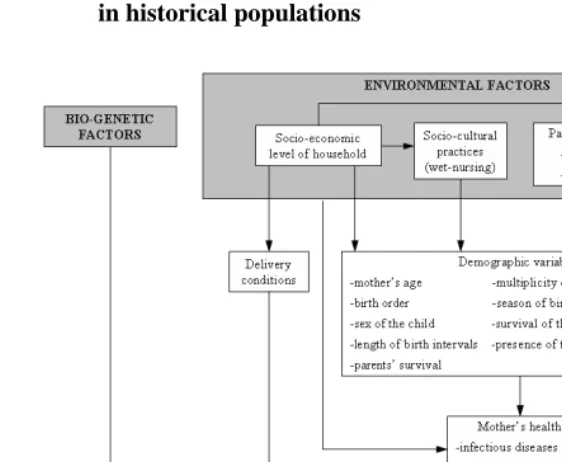
The above-defined terminology provide a useful frame of reference for the study of mortality determinants over the first five years of human life. Figure 1 presents schematically the relationships between endogenous and exogenous determinants. It has to be stressed that the biological (endogenous) factors are closely related and influenced by cultural (exogenous) factors.
The figure presented below shows two distinct coincidental chains, namely environmental and bio-genetic factors. The biological factors, such as developmental deficiencies or chromosomal anomalies, are usually assumed to be the main causes of death in the first days of life. However, the environmental (cultural) factors, also contribute to the survival chances by influencing the mother’s health, either directly or through demographic variables. The mother’s poor health status might translate into a premature or hypothrophic2 birth. Therefore, in both of these coincidental chains, the
mother is the most important factor through which the external environment influences the fetal development of the child.
A child’s health status might also be influenced directly by demographic variables like sex, survival status of adjacent siblings, season of birth, survival of parents, or presence of extended family. Especially the sex of the newborn child greatly influenced its fate. Male infants are much more likely to die within the first 24 hours after delivery than female infants. It has to be noted that exogenous (environmental) factors affect not only the mother’s health, but also the child’s health. Apart from the bio-genetic factors, exogenous (environmental) factors—such as epidemics, wars, and famines— determined child survival to a large extent.
Figure 1: Conceptual framework for analyzing the interrelation between endogenous and exogenous determinants of mortality at young ages in historical populations
Source: Modified from (Lalou 1997: 206)
Moreover, in historical societies, delivery itself was a rather perilous and traumatic event for both mother and child, thus influencing the health status of both. Poor sanitary conditions and a lack of professional medical care could cause severe malformations and a deterioration in a mother’s reproductive system. This in turn could increase the chances of failed deliveries in the future, and could endanger the mother’s life. Malnutrition during the early stages of a girl’s life could be the cause of difficulties in childbirth in adulthood.
Livi- Bacci 1991; Lummaa 2003; Scott, Duncan, and Duncan 1995). These exogenous shocks might have affected infant mortality as well as the health status of populations. The latter was greatly influenced by nutrition, which was negatively connected with the mentioned exogenous shocks (Livi-Bacci 1991). Periods of malnutrition associated with these shocks affected infant mortality directly by lower food intake and, indirectly,
via the health status of adult women, which resulted in lower birth weights and faster weaning.
Since parish registers do not provide the accurate information that is required to conduct an analysis of the direct effects of endogenous and exogenous causes, this paper focuses on the analysis of the effects of demographic variables (from Figure 1) on infant and early childhood mortality. Therefore, like most of historical data-based analyses, we are only able to account for indirect effects of endogenous causes using demographic variables. The characteristics of the variables used in the analysis, along with the theoretical background, are provided in the following sections.
2. Data and methods
2.1 The Bejsce parish reconstitution study
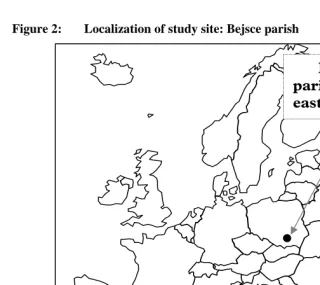
The Bejsce parish register reconstitution study is, to our knowledge, a unique type of reconstitution study for Poland. It provides us with an opportunity to investigate demographic trends in a historical population of the parish, and to add some new results to the growing body of evidence coming from the investigation of parish register data (compare Figure 2).
At the beginning of the year 1965, the Institute of Anthropology of the Polish Academy of Science started a research program under the supervision of Professor Edmund Piasecki, which set out to collect demographic and anthropometric data using techniques of parish registers reconstitution. The research team chose Bejsce parish, located in south central Poland, because it fulfilled all the research criteria.
These criteria restricted the possible choices to big rural parishes located on fertile soil which had long and continuous histories of settlement; and which, most importantly, had well-preserved parish registers from the 17th to the 20th centuries.
Figure 2: Localization of study site: Bejsce parish
Bejsce
parish:
South-east of Poland
Although the primary goal was to reconstruct anthropometric data, the research team decided to reconstruct only data that allowed them to trace the demographic history of the whole population, and of particular families. Parish register reconstitution data has many advantages, and its use in demography is well-established. However, we have to be aware that these kinds of data have some shortcomings. (for review see: Kasakoff and Adams 1995; Saito 1996; Voland 2000).
population living in the area. The validity bias in the analysis of family- and individual-level data from parish registers reconstitution is caused by the migration process. First,
“stayers” and “leavers” might differ with respect to some of their personal characteristics, their lives, and their reproductive opportunities; and these differences might correlate with some aspects of their reproductive behavior, such as age at marriage, number of offspring, and age at death. Therefore migration could be assumed to influence the probability of such events. Second, migration affects the probability of detecting demographic events, a problem that is sometimes referred to as censoring bias
(Voland 2000). For example, the estimation of the age at marriage might be affected by migration (Desjardins 1995). The argument is that late marriage occurs mostly after the typical age for migration, and for this reason tends to be excluded from the analysis. Thus the age at marriage will be lower for the stayers than for the leavers, and parish registers can therefore be expected to systematically underestimate the true mean age at marriage.
It seems that most of the problems described above do not affect the quality of data from Bejsce in a significant way. Due to the nature of the parish (low migration, relatively good economic prospects, homogeneity with respect to religion), the records are quite complete and representative for the whole community of Bejsce parish. The data reconstructed by Piasecki (1990) cover the demographic history of Besjce back to 1586 (the oldest preserved record comes from the register of marriages), but the earliest data on births (baptisms) comes from the year 1607. Although the parish registers go back to the end of 16th century, due to low reliability and incompleteness of the early
parish records, the scope of the analysis should be restricted to the years 1746-1968. The register data were verified with the use of data on taxation of inhabitants, and tested with respect to linkages between individuals within families. Although the research team put much effort into verifying the information and building a complete dataset, many variables suffer from a high proportion of missing values. In the next section, we will provide more details on the treatment of missing values in the present analysis.
individual level modeling. While the results of analyses based on data from Bejsce could not be generalized for the whole Polish population, it should be noted that the population of Bejsce was a quite typical historical population that underwent the demographic transition. With respect to general demographic trends, the Bejsce parish resembles other European parishes with well-established reconstitution studies, such as the Krummhorn database (for instance: Voland 2000). The unique quality and the unusual advantages of the Bejsce data have to do with the longitudinal nature of the data (over 200 years of history) and the reliability of the reconstitution process, which allows for an analysis of the data both on the aggregated level (using the Lexis diagram), and through individual-level modeling.
2.2 Sample selection and preparation
In order to analyze the mortality of children during the first 60 months of life, we have selected, from the total sample reconstructed on the basis of parish registers, cases with complete information about the dates of birth and death. We have excluded stillbirths because the objective of the study was to examine exogenous mortality. Cases were excluded from the analysis when the death of the mother occurred before the death of the child (over the period under examination). The death of the mother could severely decrease the chances of the infant’s survival due to the lack of maternal care or a difficult delivery. The whole sample contained only 200 cases where the mother died before her child during the period of 60 months that is under observation.
The individuals were censored in the case of death during the first 60 months of life. Moreover, since we wanted to capture the differential effect of covariates during the first 12 months of life and thereafter, it was necessary to split the initial sample. One sample was used to model the risk of death during the first 12 months, and the second sample was used to model the risk of death in the period of 12 to 60 months of life.
βˆ Most of the databases constructed on the basis of parish registers suffer from a high fraction of missing values. This is mostly related to the lack of information about dates of birth and death. Data from Bejsce is no exception here. Although we restricted our analysis only to those individuals with known birth and death dates, we had to solve the problem of missing values appearing at the covariates used in the hazard model. The proportion of missing values in the cases of some covariates was as high as 40%. In the cases of covariates with missing values, we have used a univariate imputation of missing values implemented in STATA software by Royston (Royston 2004). The univariate imputation implemented in STATA imputes missing values for a single variable as a function of several covariates, each with a complete dataset using multiple regressions. Thus we have used all other covariates with a complete record to predict missing values. We have used univariate imputation, along with the bootstrap method, for creating imputed values. As noted by Royston (Royston 2004), the bootstrap method has the advantage of robustness, since it is not necessary to assume that is normally distributed. In order to predict missing values, we have used logit regression, since the predicted variables were binary outcomes. As the covariates for prediction of missing values, we used all variables with complete records (without missing values). In the initial phase of database preparation, we have also considered the application of multivariate imputation of missing values, since this method returns lower standard errors of predicted variables. Ultimately, however, we have chosen the univariate method since it is less cumbersome, and because, in the case of our analysis, the difference between predicted variables is not significant.
2.3 Choice and specification of hazard model
In order to account for the effect of various correlates on the risk of death, we applied the Gompertz hazard model. The Gompertz model is usually applied to model human mortality, and this model was the best fit for the empirical data. In addition, the Gompertz model is suitable for modeling data with monotone hazard rates that either increase or decrease exponentially with time, and the ancillary parameter
γ
controls the shape of the baseline hazard. This seems to be the case with human mortality at the beginning of the lifespan, which sharply decreases with time. In order to check the validity of this assumption, we have based our choice on the Akaike Information Criterion (AIC) defined as:)
(
2
ln
2
L
k
c
where k is the number of model covariates, c is the number of model-specific distributional parameters, and L is the log-likelihood value. The Gompertz model has the lowest value of AIC, and we have therefore selected this model.
Following the formulation of the Gompertz model proposed by Blossfeld et al. (Blossfeld, Golsh, and Rohwer 2007), the transition rate is given by:
0
)
exp(
)
(
t
=
b
ct
b
≥
r
(2)By default STATA uses the exponential link function for the b parameter, so we can rewrite the equation (2):
0
),
exp(
),
exp(
)
(
t
=
b
ct
b
=
B
β
c
=
γ
r
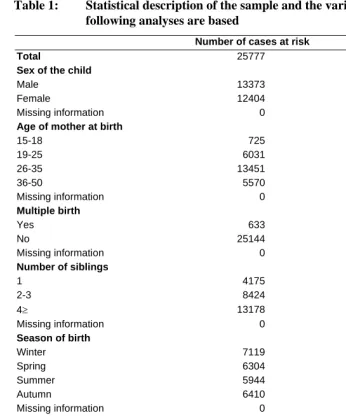
(3)Table 1: Statistical description of the sample and the variables on which the following analyses are based
Number of cases at risk Number of events
Total 25777 6782
Sex of the child
Male 13373 3108
Female 12404 3674
Missing information 0
Age of mother at birth
15-18 725 211
19-25 6031 1528
26-35 13451 3428
36-50 5570 1615
Missing information 0
Multiple birth
Yes 633 259
No 25144 6523
Missing information 0
Number of siblings
1 4175 861
2-3 8424 2029
4≥ 13178 3892
Missing information 0
Season of birth
Winter 7119 1848
Spring 6304 1627
Summer 5944 1597
Autumn 6410 1710
Missing information 0
Birth cohort of the child
1737-1819 6569 1725
1820-1917 13680 4105
1918-1944 3438 619
1945-1968 2090 333
Missing information 0
Presence of the maternal grandmother
Alive 8594 2125
Died 6872 1609
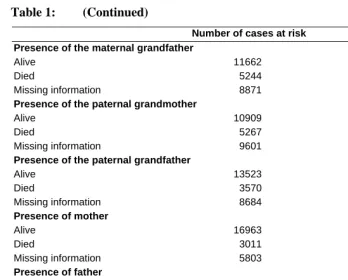
Table 1: (Continued)
Number of cases at risk Number of events Presence of the maternal grandfather
Alive 11662 3048
Died 5244 1502
Missing information 8871 2232
Presence of the paternal grandmother
Alive 10909 2932
Died 5267 1382
Missing information 9601 2469
Presence of the paternal grandfather
Alive 13523 3566
Died 3570 986
Missing information 8684 2231
Presence of mother
Alive 16963 4442
Died 3011 1153
Missing information 5803 1186
Presence of father
Alive 19201 4931
Died 5842 1583
Missing information 734 268
Presence of both parents
Alive 18685 4820
Died 1625 545
3. Results
In this section, we present and discuss the results of the empirical analysis of infant and childhood mortality in Bejsce parish. The first part contains the descriptive results: mortality rates and Kaplan-Meier estimates of survival function. In the second part, we present the results of the Gompertz model of mortality.
3.1 Descriptive findings
The trends in human mortality over the first five years of life exhibit a surprisingly constant pattern across time and space, with dramatically higher mortality in the neo-natal period, and lower mortality in the period of later childhood. The critical period after the birth of the child brings different risks with respect to sex. Usually boys have much higher mortality rates than girls in the neo-natal period. As we shall see later, such differences are mainly due to socioeconomic and physiological mechanisms. Male pregnancies are usually much more difficult, and much more often result in premature or hypothrophic deliveries and fetal malformation. Also, the efficiency of the immune system is much weaker for male infants due to increased level of androgens. Aside from sex, another variable which strongly influenced the risk of death is the birth cohort. Over the course of the epidemiological transition, we notice a significant improvement in child survival. Therefore, we split our descriptive analysis with respect to sex and birth cohort of infants in Bejsce parish.
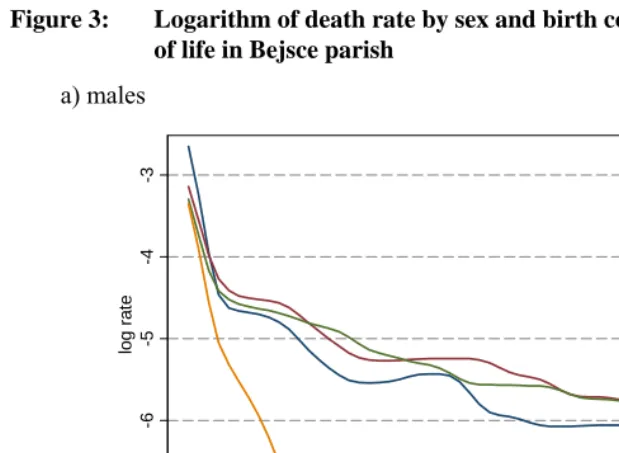
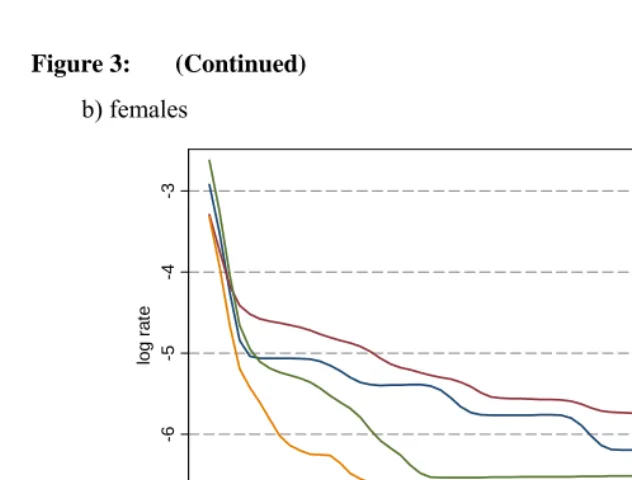
As may be seen from Figure 3, Bejsce parish was no exception to the general trend in mortality over the first five years of life3. There is a slight excess of male mortality
during the first 12 months of life. This difference seems to disappear in the later period. For males, almost 18%, out of the total number of deaths in the period of the first five years, occurred in the first month of life. An analogous figure for females yields 15%. For males, for the period of the first five years of life, 51% of deaths occurred in the first year. An analogous figure for females yields 47%.
3 The series of mortality rates presented in Figure 3 are smoothed, using the robust nonlinear running median
Figure 3: Logarithm of death rate by sex and birth cohort over first 60 months of life in Bejsce parish
a) males
-7
-6
-5
-4
-3
log r
a
te
0 20 40 60
months since birth
Figure 3: (Continued)
b) females
-7
-6
-5
-4
-3
log r
a
te
0 20 40 60
months since birth
1737-1819 1820-1917 1918-1944 1945-1968
Much more significant differences might be observed in mortality trends by cohort. Overall, mortality is highest during the first months of life, and declines thereafter. Among both males and females, the two “oldest” birth cohorts have quite similar patterns of mortality. Mortality starts to decline in the cohort born between 1918 and 1944. However, this decline does not apply to the earliest period after birth. A significant reduction in early mortality could be noticed for the cohort born after WWII.
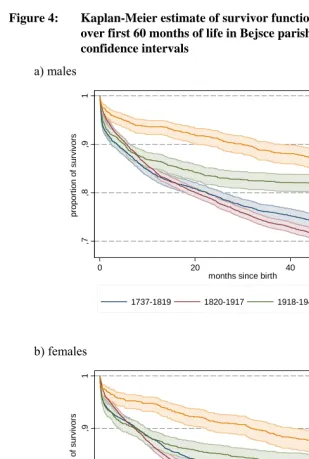
These results, presented in Figure 4, are confirmed by the analysis of the Kaplan-Meier estimate of the survivor function for the first five years of life, with respect to the sex of the child. Clearly, there are significant differences in the proportion of survivors with respect to the birth cohort, both in the cases of males and females4.
4 The differences between K-M estimates of survivor function were tested with the use of the log-rank and
Figure 4: Kaplan-Meier estimate of survivor function by sex and birth cohort over first 60 months of life in Bejsce parish. Lines plotted with 95% confidence intervals
a) males
,7
,8
,9
1
pr
opor
ti
on of
s
ur
v
iv
or
s
0 20 40 60
months since birth
1737-1819 1820-1917 1918-1944 1945-1968
b) females
,7
,8
,9
1
pr
opor
ti
on of
s
ur
v
ivor
s
0 20 40 60
months since birth
The survivor functions for the two “oldest” birth cohorts are almost overlapping, and do not exhibit any changes in the mortality pattern. As noted earlier, the cohort 1918-1944 marks an onset of improvement in infant and child survival. In line with economic progress, there was a major improvement in child survival in many historical populations. This was associated with the improvement in nutrition, hygiene, and the level of medical care. For the population of Bejsce parish, survival rates over the first five years of life also improved significantly. The Kaplan-Meier estimate of survivor function with respect to the birth cohort of the child shows that, for the youngest cohort (born after the WWII), almost 94% of children survived until their first birthdays, while for the cohort born between 1820 and 1917, the equivalent percentage was only 83% (compare Figure 4). As can be seen from Figure 4, a significant improvement in survival starts from the youngest cohort, and there was no apparent improvement in survival until the end of WWII.
Surprisingly, apart from the youngest cohort, the patterns of mortality during the first 12 months of life are quite similar for the remaining three cohorts. This might confirm the hypothesis about the physiological causes of death in early infancy. Apparently there was no radical improvement in the level of medical care and hygiene.
3.2 Hazard model of infant mortality
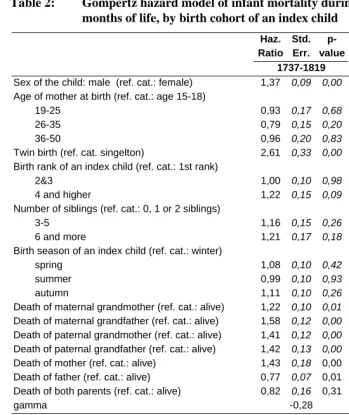
Table 2: Gompertz hazard model of infant mortality during the first 12 months of life, by birth cohort of an index child
Haz. Ratio
Std. Err.
p- value
Haz. Ratio
Std. Err.
p- value 1737-1819 1820-1917 Sex of the child: male (ref. cat.: female) 1,37 0,09 0,00 1,17 0,05 0,00
Age of mother at birth (ref. cat.: age 15-18)
19-25 0,93 0,17 0,68 0,87 0,12 0,30
26-35 0,79 0,15 0,20 0,92 0,13 0,56
36-50 0,96 0,20 0,83 1,01 0,15 0,93
Twin birth (ref. cat. singelton) 2,61 0,33 0,00 3,38 0,35 0,00
Birth rank of an index child (ref. cat.: 1st rank)
2&3 1,00 0,10 0,98 0,89 0,06 0,08
4 and higher 1,22 0,15 0,09 1,02 0,09 0,79
Number of siblings (ref. cat.: 0, 1 or 2 siblings)
3-5 1,16 0,15 0,26 1,09 0,10 0,37
6 and more 1,21 0,17 0,18 1,13 0,11 0,21
Birth season of an index child (ref. cat.: winter)
spring 1,08 0,10 0,42 0,95 0,06 0,41
summer 0,99 0,10 0,93 1,22 0,07 0,00
autumn 1,11 0,10 0,26 1,06 0,06 0,36
Death of maternal grandmother (ref. cat.: alive) 1,22 0,10 0,01 1,15 0,05 0,00
Death of maternal grandfather (ref. cat.: alive) 1,58 0,12 0,00 1,36 0,07 0,00
Death of paternal grandmother (ref. cat.: alive) 1,41 0,12 0,00 1,20 0,06 0,00
Death of paternal grandfather (ref. cat.: alive) 1,42 0,13 0,00 1,20 0,07 0,00
Death of mother (ref. cat.: alive) 1,43 0,18 0,00 1,74 0,16 0,00 Death of father (ref. cat.: alive) 0,77 0,07 0,01 0,93 0,08 0,40 Death of both parents (ref. cat.: alive) 0,82 0,16 0,31 0,78 0,11 0,08
gamma -0,28 -0,21
1918-1944 1945-1968 Sex of the child: male (ref. cat.: female) 1,11 0,11 0,26 1,24 0,23 0,24
Age of mother at birth (ref. cat.: age 15-18)
19-25 0,70 0,19 0,19 0,65 0,27 0,30
26-35 0,71 0,19 0,21 0,50 0,22 0,11
36-50 0,74 0,22 0,32 0,69 0,35 0,47
Twin birth (ref. cat. singelton) 2,77 0,51 0,00 2,25 0,81 0,02
Birth rank of an index child (ref. cat.: 1st rank)
2&3 1,08 0,16 0,60 0,65 0,16 0,08
Table 2: (Continued) Haz. Ratio Std. Err. p- value Haz. Ratio Std. Err. p- value
1918-1944 1945-1968
Number of siblings (ref. cat.: 0, 1 or 2 siblings)
3-5 1,18 0,20 0,33 3,50 0,96 0,00
6 and more 1,84 0,37 0,00 6,14 2,37 0,00
Birth season of an index child (ref. cat.: winter)
spring 1,26 0,16 0,08 0,88 0,21 0,59
summer 1,17 0,16 0,25 1,34 0,31 0,21
autumn 1,04 0,15 0,77 0,49 0,16 0,03
Death of maternal grandmother (ref. cat.: alive) 1,08 0,11 0,43 1,21 0,24 0,34
Death of maternal grandfather (ref. cat.: alive) 1,46 0,14 0,00 1,75 0,33 0,00
Death of paternal grandmother (ref. cat.: alive) 1,21 0,12 0,05 1,10 0,20 0,61
Death of paternal grandfather (ref. cat.: alive) 1,65 0,17 0,00 1,05 0,21 0,81
Death of mother (ref. cat.: alive) 1,37 0,28 0,13 2,39 0,95 0,03 Death of father (ref. cat.: alive) 1,07 0,21 0,71 2,43 0,89 0,02 Death of both parents (ref. cat.: alive) 0,59 0,17 0,06 0,48 0,22 0,11
gamma -0,32 -0,39
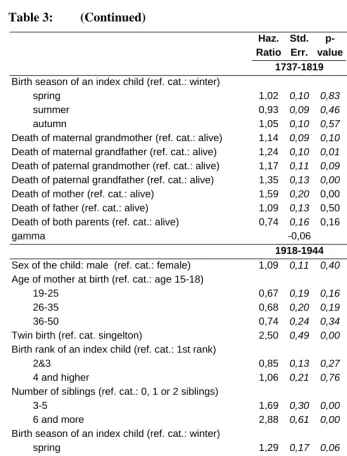
Table 3: Gompertz hazard model of infant mortality during the first 60 months of life, by birth cohort of an index child
Haz. Ratio Std. Err. p- value Haz. Ratio Std. Err. p- value 1737-1819 1820-1917 Sex of the child: male (ref. cat.: female) 1,16 0,08 0,03 1,15 0,04 0,00
Age of mother at birth (ref. cat.: age 15-18)
19-25 0,79 0,15 0,21 0,87 0,11 0,27
26-35 0,83 0,16 0,33 0,93 0,12 0,59
36-50 0,86 0,18 0,48 0,97 0,14 0,81
Twin birth (ref. cat. singelton) 1,89 0,36 0,00 2,31 0,24 0,00
Birth rank of an index child (ref. cat.: 1st rank)
2&3 1,09 0,12 0,39 0,90 0,05 0,07
4 and higher 1,10 0,14 0,47 0,93 0,07 0,31
Number of siblings (ref. cat.: 0, 1 or 2 siblings)
3-5 1,19 0,20 0,29 1,32 0,12 0,00
Table 3: (Continued) Haz. Ratio Std. Err. p- value Haz. Ratio Std. Err. p- value 1737-1819 1820-1917 Birth season of an index child (ref. cat.: winter)
spring 1,02 0,10 0,83 0,93 0,05 0,18
summer 0,93 0,09 0,46 1,05 0,05 0,37
autumn 1,05 0,10 0,57 0,97 0,05 0,58
Death of maternal grandmother (ref. cat.: alive) 1,14 0,09 0,10 1,05 0,04 0,25
Death of maternal grandfather (ref. cat.: alive) 1,24 0,10 0,01 1,28 0,05 0,00
Death of paternal grandmother (ref. cat.: alive) 1,17 0,11 0,09 1,14 0,05 0,00
Death of paternal grandfather (ref. cat.: alive) 1,35 0,13 0,00 1,19 0,06 0,00
Death of mother (ref. cat.: alive) 1,59 0,20 0,00 2,07 0,13 0,00 Death of father (ref. cat.: alive) 1,09 0,13 0,50 1,22 0,08 0,00 Death of both parents (ref. cat.: alive) 0,74 0,16 0,16 0,67 0,07 0,00
gamma -0,06 -0,05
1918-1944 1945-1968 Sex of the child: male (ref. cat.: female) 1,09 0,11 0,40 1,15 0,15 0,28
Age of mother at birth (ref. cat.: age 15-18)
19-25 0,67 0,19 0,16 0,61 0,21 0,15
26-35 0,68 0,20 0,19 0,53 0,19 0,07
36-50 0,74 0,24 0,34 0,57 0,23 0,16
Twin birth (ref. cat. singelton) 2,50 0,49 0,00 1,29 0,39 0,40
Birth rank of an index child (ref. cat.: 1st rank)
2&3 0,85 0,13 0,27 1,18 0,22 0,38
4 and higher 1,06 0,21 0,76 1,32 0,35 0,31
Number of siblings (ref. cat.: 0, 1 or 2 siblings)
3-5 1,69 0,30 0,00 2,07 0,38 0,00
6 and more 2,88 0,61 0,00 3,29 1,01 0,00
Birth season of an index child (ref. cat.: winter)
spring 1,29 0,17 0,06 0,84 0,14 0,30
summer 1,08 0,15 0,56 1,08 0,18 0,63
autumn 1,08 0,15 0,61 0,68 0,15 0,07
Death of maternal grandmother (ref. cat.: alive) 1,14 0,12 0,21 1,21 0,17 0,17
Death of maternal grandfather (ref. cat.: alive) 1,54 0,16 0,00 1,15 0,16 0,31
Death of paternal grandmother (ref. cat.: alive) 1,10 0,11 0,37 1,09 0,14 0,49
Death of paternal grandfather (ref. cat.: alive) 1,60 0,17 0,00 1,08 0,16 0,59
Death of mother (ref. cat.: alive) 2,10 0,38 0,00 1,72 1,24 0,45 Death of father (ref. cat.: alive) 1,60 0,26 0,00 2,16 0,86 0,05 Death of both parents (ref. cat.: alive) 0,45 0,12 0,00 2,65 2,17 0,23
3.2.1 Sex of the child
The sex of the newborn infant is one of the most typical correlates of survival. Girls generally experience lower infant mortality than boys, but this difference loses its statistical significance in later childhood (after the first birthday). The higher survival chances for one of the sexes could be attributed to the socio-cultural and physiological mechanisms. In the latter case, higher male mortality is mostly due to greater immaturity (slightly shorter gestation period), and differential effect of estrogens and androgens on the immune system (Worthman 1996). On the other hand, it has been well-established that parental investments are frequently sex-biased, resulting in lower survival of the less preferred sex (Kumm, Laland, and Feldman 1994). Sex-biased parental investments might take the form of lower resource investments in the less favourable child, or even infanticide.
The sex differences in mortality patterns are also apparent at the level of covariates. From the results in Tables 2 and 3, we can infer that boys born in Bejsce parish exhibited significantly higher mortality, both during the first 12 months of life and later, up to the age of five years (during the first year of life the effect is stronger). What is also interesting is the effect of the sex of a newborn child across analyzed cohorts. In both analyzed age intervals, the sex differences with respect to survival decrease with the birth cohort. In cohorts born after WWI, there are no significant differences with respect to the sex of the child.
3.2.2 Age of mother at birth
It has been shown in many studies that the relationship between maternal age at birth and the risk of child’s death follows a “J” curvilinear relationship (Knodel and Hermalin 1984). According to these findings, infant mortality is elevated among young and old mothers. This is consistent with the predictions of the physiology of pregnancy and gestation. The bodies of both old and young mothers are not selective enough with respect to malformed fetuses, which results in higher rates of stillbirths and hypothrophic births, and thus in higher infant mortality (Gray, Leridon, and Spira 1993; Weinstein, Wood, and Chang 1993; Wood 1994).
1968, which might be related to an overall improvement in child survival, rather than to the effect of the mother’s age.
3.2.3 Multiple vs. single births
The occurrence of multiple births is an important factor that can influence child and infant mortality. Its effect is mainly associated with the lower birth weight of twins or triplets, which in turn is one of the most important factors affecting neo-natal survival. The arrival of more than one child also creates an extra demand for food. Taking into account the fact that, during the early stages of infancy, breastfeeding is one of the main sources of nutrition, multiple births might lead to lower calorie intake, and thus to lower survival chances.
With the exception of the cohort born between 1945 and 1968, all twins from the other birth cohorts had significantly higher mortality than singletons. Twins have almost double the mortality rates of singletons. The effect of being a twin is especially evident during the first 12 months of life. In this period, even those twins born between 1945 and 1968 exhibit a risk of dying that is twice as high. During the whole period of first 60 months of life, the effect is weaker, but it also remains significant.
3.2.4 Birth rank and the number of siblings
newborn baby to the risk of infectious diseases brought by siblings to the household. Therefore, the death of any sibling in the household might be theoretically a predictor of infant mortality (Styś 1957, 1959).
Another important factor relating birth order to the risk of death is associated with the fact that children of higher birth order are born to an already crowded house. Therefore, they run a higher risk of catching life-threatening infections during the first critical weeks and months of life than children with fewer or no older siblings (Burnett 1991). In the present analysis, the birth rank is represented by a variable indicating whether a child was the first-born in the family (rank 1), the second- or third-born, or the fourth- or higher-born.
Variables such as birth rank and number of siblings are also related to other potential covariates of infant mortality, such as birth interval. Many studies have found that the length of the birth interval is positively correlated to the survival of the index child (Boerma and Bicego 1992; Knodel and Hermalin 1984; Palloni and Millman 1986; Retel-Laurentin and Benoit 1976). This is mostly related to the duration of breastfeeding. A shorter subsequent birth interval means a shorter period of breastfeeding, which in turn affects the survival of the index child. Also, in the case of the preceding birth interval, a positive correlation with respect to the survival of the child has been established. Children born after a short birth interval exhibit a significantly higher risk of death, especially those conceived within six months of the birth of the preceding child (Boerma and Bicego 1992; Hobcraft, McDonald, and Rutstein 1985). The main mechanism responsible for this effect is, according to researchers, the intrauterine growth retardation that can occur in pregnancies that are conceived shortly after the birth of a child. Basically, women with short intervals between pregnancies have insufficient time to restore nutritional reserves, which in turn affects the fetal growth, and, subsequently, the survival of the newborn child. In addition, the overlap between breastfeeding and gestation might have an unfavourable effect on the pregnancy outcome. Both these mechanisms lead to the low birth weight of babies, and thus to higher mortality over the first six months of life. Another possible source of influence is the post-natal mechanism associated with sibling competition over parental resources and the mother’s care. Similarly, as in the case of the birth-rank effect, siblings may compete, and this might have a negative effect on the youngest child in the family.
our analysis we are using the simplest formulation, with birth rank and number of siblings as covariates.
It has to be noted that both covariates have an ambiguous effect, both with respect to studied time from birth and birth cohort. This is particularly true for the birth rank of an index child. Clearly there is no pattern in the obtained results of estimation, both for the first 12 months of life, and for the whole period of the first 60 months of life. The direction of the effect is not straightforward, and, moreover, the estimates are far from being statistically significant. The analysis of the siblings number effect on child survival produces somewhat more coherent results. There is a positive effect of increase in the number of siblings on the risk of death, both for the model for the first 12 months of life, and for the whole period under observation. It seems that the effect is weaker among “older” cohorts, i.e., those born between 1737 and 1917. In the two “younger” cohorts, the effect is much more pronounced. Children who came from large families (six or more siblings) were much more likely to suffer from excess mortality than those with no siblings or only one or two brothers or sisters. This might be linked to the relationship between social status and the number of children. In the early period, the Bejsce parish was quite egalitarian with respect to wealth and social status. The process of stratification began around the end of 19th century. Families with a higher status
restricted fertility and transferred more resources towards the improvement of living conditions, which in turn translated into better rates of survival among young children. Therefore, the sibship size becomes more important as an explanatory variable among cohorts born after 19185.
3.2.5 Season of a child’s birth
The relationship between the month of a child’s birth and mortality has been widely explored in many historical European populations (for an excellent review see: Breschi and Livi-Bacci 1997). Despite the local variations in Europe’s climate, we can distinguish two main patterns of mortality with respect to the month of birth. In the regions where the winters are particularly cold, there is a higher risk of infant death due to respiratory infections. On the other hand, in the regions with extremely hot summers, the higher infant death rate at this time of year is associated with a higher risk of contracting infections of the digestive tract.
5 The beginning of the 20th century in the Bejsce parish marks the onset of a rapid demographic transition: the
Apart from medical reasons, the increase in infant mortality by month of birth could be associated with social and economic conditions. An excellent example is Russia in the second half of the 19th century, where the highest mortality rates were
registered for those infants born in the summer, which runs contrary to assumptions that mortality would be higher for infants born in the winter (Breschi and Livi-Bacci 1997: 161). This might, of course, be partially explained by a high degree of adaptation to severe winters. However, a more convincing explanation is that the demand for labor in the summer months was so high (four-fifths of the population worked in agriculture) that most of the females were away from home, which caused early weaning or irregular breastfeeding, and a lower degree of protection and care.
The connection between the month of birth and the risk of death is strongly related to the age of the infant. Since the first months of life are critical with respect to survival, it could be assumed that the effect of month of birth would also be stronger in this period. In the present analysis, we have included the month of birth as a dummy variable. We have grouped the months of birth into four seasons: winter (December-February – reference category), spring (March-May), summer (June-August), and autumn (September-November).
The estimation with respect to season of birth in the presented models produces rather ambiguous results. There is no clear season-specific mortality, either during the first 12 months of life or for the whole period of 60 months. With a few exceptions, there are no significant differences between the reference category and other values. The analysis with respect to the birth cohort also does not show any specific pattern. The only result that is worth mentioning is the excess of infant mortality in the first 12 months of life in the summer (for cohorts born after 1820), but statistical significance is problematic. This may, however, suggest that Bejsce parish belonged to the second seasonal mortality pattern, which is characterized by excess mortality in summer.
3.2.6 Presence of extended family (grandmothers and grandfathers)
grandchildren provides an indirect test for the theory that the phenomenon of menopause might have an adaptive meaning, and might indirectly increase the reproductive success of grandmothers. Moreover, such a positive relationship would be in accordance with the prediction of the evolutionary theory of inclusive fitness, which states that individuals might also indirectly contribute to their own reproductive success by enhancing the reproduction of relatives (Grafen 1982; Hamilton 1964).
In the present analysis, the effect of grandparents (both maternal and paternal) is included as a time constant covariate, indicating whether an index child experienced the death of one of the grandparents during the period of observation (represented by four dummy variables). These four variables (maternal grandmother and grandfather, paternal grandmother and grandfather) indicate the effect of death of a grandparent over selected periods, i.e., 0-12 months and 0-60 months.
inheritance, including partition of land. This in turn might lower the economic and social status of the young couple. In fact, couples with more land had more children, which might be associated with increased survival (Styś 1957, 1959).
3.2.7 Presence of parents
The relationship between the presence of parents and the survival of a newborn child is more straightforward than in the case of grandparents. The presence of parents, especially the mother, is crucial with respect to the physical and emotional well-being of the child. This is primarily related to insufficient nutrition (lack of breastfeeding), which might decrease the chances of survival. On the other hand, in agricultural societies the death of the father could seriously decrease the economic potential of the family. Variables indicating the presence of parents were constructed in a way that is similar to the construction of the variables indicating the presence of grandparents. The presence of parents is represented by three dummy variables. The variables equal one when the infant experienced a death of the mother, father, or both parents over the analyzed periods (0-12 and 0-60 months).
For both time periods and in every cohort, the mother’s death significantly increases the risk of death for a newborn child (compare Table 2). This effect is present even if we expand the analysis for the whole period of the first 60 months of life (compare Table 3). The death of the father has a rather ambiguous effect with respect to child survival. In the early cohorts, this event has no effect on child survival, or even increases the chances of surviving the first years of life. However, in the cohorts born between 1944 and 1968, the father’s death has a clearly negative effect on the child’s survival. Death of both parents was quite an unusual event in the analyzed sample, thus the results might diverge from the predicted pattern. The results show that the death of both parents even enhanced the survival of children, which is probably due to the low number of events.
4. Discussion
being realistic. In fact, many environmental factors (exogenous) also influence the endogenous causes of death. These include, for example, the mother’s health as a result of her nutritional status, which in turn influences the development of the child during the pregnancy.
Therefore, the investigation of the correlates of mortality at young ages is always limited, as it is not possible to control for all the possible determinants of mortality. Usually, many of the correlates are indirect measures or indicators of endogenous or exogenous causes. The most advanced studies of infant and child mortality rely on biometric variables such as birth weight, mother’s nutritional status, and duration of breastfeeding (Knodel and Kintner 1977; Kuate-Defo 1997; Sear 2001). Such analyses provide a quite accurate picture of infant mortality since the aforementioned factors are the best predictors of mortality, especially during the early stages of life.
Unfortunately, researchers working with data drawn from historical or traditional contemporary populations usually do not have detailed biometric information about the newborn child or mother. In fact, it is impossible to reconstruct such information for historical European populations in a way that would allow for the construction of a database that would be useful for quantitative analysis. The only exceptions here are studies of breastfeeding habits, which usually show that early weaning leads to a sharp increase in infant mortality (Forste 1994; Knodel and Kintner 1977; Manda 1999; Rosenberg 1989).
Due to these obvious limitations, researchers working with historical data have had to find alternative measures and correlates in order to describe the patterns of infant mortality. These measures, which can be easily calculated on the basis of historical data, indirectly reflect the condition of the index child, as well as the condition of the mother.
The present analysis sought to include all the covariates that could be created on the basis of the parish register reconstitution database. To our knowledge, this study of infant and early childhood mortality is the only one based on historical data that uses such a rich set of covariates. Moreover, using data from Bejsce, we are able to assess the change in the effect of covariates over a period of more than two centuries. This might in turn contribute to a better understanding of demographic correlates of epidemiological transition. Although these alternative measures are far from being free from all distortions, they show surprisingly constant patterns across populations and time.
families were usually more closely spaced, and short birth intervals might have decreased survivorship. This is associated with the fact that closely spaced children usually experience shorter periods of breastfeeding, which in turn influences nutritional status and survival. The effect of birth rank, in addition to the increased risk of transmission of infectious diseases mentioned previously, may also be attributed to the fact that having many siblings means shorter birth intervals. Thus, as noted by Knodel and Hermalin (Knodel and Hermalin 1984: 1102), the strong relationship between infant and early childhood mortality and the birth rank (or ultimate number of children) might be mediated by the length of birth intervals, breastfeeding patterns, genetic causes, and the combination of family resources and parental care practices. Moreover, mothers who have experienced many pregnancies might exhibit so-called mother’s depletion syndrome: when a woman does not have time to recover from a pregnancy both physically and nutritionally, more frequent pregnancy losses and lower birth weight babies may result (Jelliffe and Maddocks 1964).
However, so-called demographic variables are not the only factors that influence survival at young ages. As shown in the present study, the presence of grandparents (both maternal and paternal) might greatly enhance an infant’s survival. This research focuses on the effect of the extended family in the context of infant and early childhood mortality because of its importance from the perspective of the evolutionary approach to human reproductive behavior (Beise and Voland 2002; Sear Mace, and McGregor 2000; Voland and Beise 2001). From this perspective, the increased survival of grandchildren provides a rationale for the evolutionary origins of menopause in humans (Hawkes 2003; Shanley and Kirkwood 2001). If post-reproductive females are able to increase the survivorship of their grandchildren, they are contributing indirectly to their widely understood inclusive fitness.
Apparently, purely demographic variables are not the only factors that affect endogenous mortality. Other factors, like birth season and cohort, have been shown to have an effect. In all populations which underwent the demographic transition, this process was associated with an improvement in infant survival, which subsequently led to changes in reproductive behavior. Both in historical and traditional populations, the improvement in infant survival was associated with the wider availability of professional medical care and the popularization of hygiene (Morel 1991). Thus most of the studies that cover the period of demographic transition show substantial improvement in infant survival over time, and the present study is no exception.
“proxy” variables accurately describe long-term, and possibly universal correlates of mortality at young ages in many historical and traditional populations. It should be mentioned that, in addition to these mechanisms, the levels of infant mortality were greatly influenced by short-term shocks like famines or epidemics (Cotts Watkins and Menken 1985; Scott, Duncan, and Duncan 1995). These short-term shocks had an effect on infant survival, on developmental conditions, and also on future reproduction and maturation (Lummaa 2003).
References
Beise, J. and Voland, E. (2002). A multilevel event history analysis of the effects of grandmothers on child mortality in a historical German population (Krummhörn, Ostfriesland, 1720-1847). Demographic Research 7(13): 470-494.
doi:10.4054/DemRes.2002.7.13.
Bideau, A., Desjardins, B., and Brignoli, H.P. (1997).Infant and Child Mortality in the Past. Oxford: Clarendon Press.
Bijur, P.E., Golding, J., and Kurzon, M. (1988). Childhood Accidents, Family Size and Birth Order. Social Science and Medicine 26(8): 839-843. doi:10.1016/0277-9536(88)90176-1.
Blake, J. (1981). Family Size and the Quality of Children. Demography 18(4): 421-442.
doi:10.2307/2060941.
Blossfeld, H-P., Golsh, K., and Rohwer, G. (2007). Event History Analysis with STATA. London: Lawrence Erlbaum Associates.
Boerma, J.T. and Bicego, G.T. (1992). Preceding Birth Intervals and Child Survival: Searching for Pathways of Influence. Studies in Family Planning 23(4): 243-256. doi:10.2307/1966886.
Breschi, M. and Livi-Bacci, M. (1997). Month of Birth As a Factor in Children's Survival. In: Bideau, A., Desjardins, B., and Brignoli, H.P. (eds.). Infant and Child Mortality in the Past. Oxford: Clarendon Press: 157-173.
Burnett, J. (1991). Housing and the Decline of Mortality. In: Schofield, R., Reher, D., and Bideau, A. (eds.). The Decline of Mortality in Europe. Oxford: Clarendon Press: 158-176.
Cohen, J.E. (1975). Childhood Mortality, Family Size and Birth Order in Pre-Industrial Europe. Demography 12(1): 35-55. doi:10.2307/2060731.
Cotts Watkins, S. and Menken, J. (1985). Famines in Historical Perspective. Population and Development Review 11(4): 647-675.
Desjardins, B. (1995). Bias in Age at Marriage in Family Reconstitutions: Evidence from French- Canadian Data. Population Studies 49(1): 165-169.
doi:10.1080/0032472031000148306.
Forste, R. (1994). The Effects of Breastfeeding and Birth Spacing on Infant and Child Mortality in Bolivia. Population Studies 48(3): 497-511.
doi:10.1080/0032472031000147996.
Galloway, P.R., Lee, R.D., and Hammel, E.A. (1998). Infant Mortality and the Fertility Transition: Macro Evidence from Europe and New Findings From Prussia. In: Montgomery, M.R. and Cohen, B. (eds.). From Death to Birth. Mortality Decline and Reproductive Change. Washington, D.C.: National Academy Press: 182-226.
Grafen, A. (1982). How to Measure Inclusive Fitness. Nature 298: 425-426.
doi:10.1038/298425a0.
Gray, R., Leridon, H., and Spira, A. (1993). Biomedical and Demographic Determinants of Reproduction. Oxford: Clarendon Press.
Hamilton, W.D. (1964). The Genetical Evolution of Social Behaviour: I and II. Journal of Theoretical Biology 7(1): 1-52.
Hawkes, K. (2003). Grandmothers and the Evolution of Human Longevity. American Journal of Human Biology 15(3): 380-400. doi:10.1002/ajhb.10156.
Hobcraft, J.N., McDonald, J.W., and Rutstein, S.O. (1985). Demographic Determinants of Infant and Early Child Mortality: A Comparative Analysis. Population Studies 39(3): 363-385. doi:10.1080/0032472031000141576.
Jelliffe, D.B. and Maddocks, I. (1964). Notes on Ecologic Malnutrition in the New Guinea Highlands. Clinical Pediatrics 3: 432-438. doi: 10.1177/000992286400300710.
Kasakoff, A.B. and Adams, J.W. (1995). The effect of migration on ages at vital rates events: a critique of family reconstitution in historical demography. European Journal of Population 11(3): 199-242. doi:10.1007/BF01264948.
Knodel, J. and Hermalin, A.I. (1984). Effects of Birth Rank, Maternal Age, Birth Interval, and Sibship Size on Infant and Child Mortality: Evidence From 18th and 19th Century Reproductive Histories. American Journal of Public Health
74: 1098-1106.
Knodel, J. and Kintner, H. (1977). The Impact of Breast Feeding Patterns on the Biometric Analysis of Infant Mortality. Demography 14(4): 391-409.
Kuate-Defo, B. (1997). Effects of Infant Feeding Practices and Birth Spacing on Infant and Child Survival: a Reassessment From Retrospective and Prospective Data.
Journal of Biosocial Science 29(3): 303-326. doi:10.1017/S0021932097003039.
Kumm, J., Laland, K.N., and Feldman, M.W. (1994). Gene-Culture Co-evolution and Sex-Ratios: The Effects of Infanticide, Sex-Selective Abortion, Sex Selection, and Sex-Biased Parental Investment on the Evolution of Sex Ratios. Theoretical Population Biology 46(3): 249-278.
Kumor, B. (1976). Przepisy Prawne w Sprawie Chrztu Dzieci w XVI-XVIIIw.
Przeszłość Demograficzna Polski 9: 41-56.
Lalou, R. (1997). Endogenous Mortality in New France: At the Crossroads of Natural and Social Selection. In: Bideau, A., Desjardins, B., and Brignoli, H.P., (eds.). Infant and Child Mortality in the Past. Oxford: Clarendon Press: 203-215. Livi-Bacci, M. (1991).Population and Nutrition. An Essay on European Demographic
History. Cambridge: Cambridge University Press.
Lummaa, V. (2003). Early Developmental Conditions and Reproductive Success in Humans: Downstream Effects of Prenatal Famine, Birthweight, and Timing of Birth. American Journal of Human Biology 15 (3): 370-379.
doi:10.1002/ajhb.10155.
Manda, S. (1999). Birth Intervals, Breastfeeding and Determinants of Childhood Mortality in Malawi. Social Science and Medicine 48: 301-312.
doi:10.1016/S0277-9536(98)00359-1.
Matthiessen, P.C. and McCann, J.C. (1978). The Role of Mortality in the European Fertility Transition: Aggregate-Level Relations. In: Preston, S.H. (ed.). The Effects of Infant and Child Mortality on Fertility. New York : Academic Press: 47-68.
Miller, J.E., Trussell, J., Pebley, A.R., and Vaughan, B. (1992). Birth Spacing and Child Mortality in Bangladesh and the Philippines. Demography 29(2): 305-318.
doi:10.2307/2061733.
Modin, B. (2002). Birth Order and Mortality: a Life-Long Follow-Up of 14,200 Boys and Girls Born in Early 20th Century Sweden. Social Science & Medicine 54(7): 1051-1064. doi:10.1016/S0277-9536(01)00080-6.
D., and Bideau, A., (eds.). The Decline of Mortality in Europe. Oxford: Clarendon Press: 196-219.
Palloni, A. and Millman, S. (1986). Effects of Inter-Birth Intervals and Breastfeeding on Infant and Early Childhood Mortality. Population Studies 40(2): 215-236. Pebley, A.R., Hermalin, A.I., and Knodel, J. (1991). Birth Spacing and Infant Mortality:
Evidence for Eighteenth and Nineteenth Century German Villages. Journal of Biosocial Science 23(4): 445-459. doi:10.1017/S0021932000019556.
Peccei, J.S. (1995). A Hypothesis for the Origin and Evolution of Menopause.
Maturitas 21: 83-89.
Piasecki, E. (1990). Ludnosc Parafii Bejskiej w Swietle Ksiag Metryklanych z XVIII-XX W. Studium Demograficzne. Population of the Bejsce Parish (Kielce voivodeship, Poland) in the light of parish registers of the 18th-20th centuries. A demographic study. Warszawa: PWN.
Retel-Laurentin, A. and Benoit, D. (1976). Infant Mortality and Birth Intervals.
Population Studies 30(2): 279-293. doi:10.2307/2173610.
Rosenberg, M. (1989). Breast-Feeding and Infant Mortality in Norway 1860-1930.
Journal of Biosocial Science 21(3): 335-348. doi:10.1017/S0021932000018034.
Royston, P. (2004). Multiple Imputation of Missing Values. The Stata Journal 4(3): 227-241.
Saito, O. (1996). Historical Demography: Achievements and Prospects. Population Studies 50(3): 537-553. doi:10.1080/0032472031000149606.
Schofield, R., Reher, D., and Bideau, A. (1991). The Decline of Mortality in Europe. Oxford: Clarendon Press.
Scott, S., Duncan, S.R., and Duncan, C.J. (1995). Infant Mortality and Famine: a Study in Historical Epidemiology in Northern England. Journal of Epidemiology and Community Health 49(3): 245-252. doi:10.1136/jech.49.3.245.
Sear, R. (2001). Evolutionary Demography of Rural Gambian Population. PhD thesis, University College London.
Shanley, D.P. and Kirkwood, T. (2001). Evolution of Human Menopause. BioEssays
23: 282-287. doi:10.1002/1521-1878(200103)23:3<282::AID-BIES1038>3.0. CO;2-9.
Styś, W. (1957). The Influence of Economic Conditions on the Fertility of Peasant Women. Population Studies 11: 136-148. doi:10.2307/2172109.
Styś, W. (1959). Współzależność Rozwoju Rodziny Chłopskiej i Jej Gospodarstwa. Wrocław: Wrocławskie Towarzystwo Naukowe.
Voland, E. (1998). Evolutionary Ecology of Human Reproduction. Annual Review of Anthropology 27: 347-374. doi:10.1146/annurev.anthro.27.1.347.
Voland, E. (2000). Contributions of Family Reconstitution Studies to Evolutionary Reproductive Ecology. Evolutionary Anthropology 9(3): 134-146.
doi:10.1002/1520-6505(2000)9:3<134::AID-EVAN3>3.0.CO;2-M.
Voland, E. and Beise, J. (2001). Opposite Effects of Maternal and Paternal Grandmothers on Infant Survival in Historical Krummhörn. Rostock: Max Planck Institute for Demographic Research (MPIDR working paper; WP-2001-026).
Weinstein, M., Wood, J.W., and Chang, M.-C. (1993). Age Patterns of Fecundability. In: Gray, R., Leridon, H., and Spira, A., (eds.). Biomedical and Demographic Determinants of Reproduction. Oxford: Clarendon Press: 209-227.
Wood, J.W. (1994). Dynamics of Human Reproduction: Biology, Biometry, Demography. New York: Aldine de Gruyter.