Journal of Applied Pharmaceutical Science Vol. 3 (01), pp. 117-121, January, 2013 Available online at http://www.japsonline.com
DOI: 10.7324/JAPS.2013.30123 ISSN 2231-3354
Management of Pain in Cancer Patients at a South Indian Hospital
Sivanandy Palanisamy*
1, Lakshmi S Nair
1, Shahid Hassan
1, Gurusamy Moorthy Sivakumar
2and Arunachalam
Sumathy
31
Department of Pharmacy Practice, KMCH College of Pharmacy, Coimbatore-48, Tamilnadu, India.
2
Department of Pharmacology, Vels University, Chennai-117, Tamilnadu, India.
3
Department of Pharmaceutical Chemistry, Grace College of Pharmacy, Palakkad, Kerala, India.
ARTICLE INFO ABSTRACT
Article history:
Received on: 14/10/2012 Revised on: 29/10/2012 Accepted on: 05/11/2012 Available online: 28/01/2013
The main objectives were to study the incidence of cancer in the locality, pattern of drug prescribed and management of pain in cancer patients. In a total of 30 patients, 18 (60%) were male and 12 (40%) were female. Patients between the age group 51 and 60 were found to be more (n=7; 23.33%) to get hospitalized for the treatment of cancer. Right breast cancer (n=3; 10%) is more predominant in the cancer patients as a past medical history, which is followed by Left breast cancer, Penis cancer, Acute myeloid leukemia in 6.66% (n=2) and Non- Hodgkin lymphoma, B-cell acute lymphoblastic leukemia, T-cell lymphoma, Acute lymphocytic leukemia and airway obstruction, Burkett’s lymphoma, Right lung cancer, Carcinoma of mild transverse colon, etc. Diagnosis in the study population shown that Hodgkin lymphoma (n=4; 13.33%) and Right breast cancer (n=4; 13.33%) were predominant cancer, which is followed by B-cell acute lymphoblastic leukemia, left breast cancer, penis cancer, acute myeloid leukemia in each of 2 (6.66%) patients. The most commonly used pain medications were Tramadol and Diazepam, these drugs are prescribed in 8 patients each (26.66%), and it is followed by Morphine, Phenobarbital and Flurazepamwere found in 4 patients each (13.33%).
Key words:
Cancer, Pain, Opioids,
Hodgkin’s lymphoma, Breast cancer.
INTRODUCTION
Cancer is known medically as a malignant neoplasm, is a broad group of various diseases, all involving unregulated cell growth. In cancer, cells divide and grow uncontrollably, forming malignant tumours, and invade nearby parts of the body. The cancer may also spread to more distant parts of the body through the lymphatic system or bloodstream. Not all tumours are cancerous. Benign tumours do not grow uncontrollably, do not invade neighbouring tissues, and do not spread throughout the body. There are over 200 different known cancers that afflict humans (Cancer research, UK).
Pain in Cancer Patients
Pain in cancer may be caused by the tumour itself or by medical interventions in the diagnosis and treatment of the disease.
Transitory (acute) cancer pain is usually caused by treatment, and long-term (chronic) pain may be caused by either treatment or the disease itself. Tumours can cause pain by irritating or damaging nerves, by activating specialised pain sensitive nerve fibres (nociceptors), or by releasing chemicals that make nociceptors responsive to normally non-painful stimuli.
Radiotherapy and chemotherapy are examples of treat-ments that can sometimes produce significant pain persisting long after the disease has been cured. Approximately half of all cancer patients have pain (Cancer research, UK).
Sign and symptoms of pain
Pain makes complex thought more difficult – it impairs attention control, working memory, mental flexibility, problem solving, and information processing speed (Jemal A et al., 2011) – and pain is associated with increased depression, anxiety, fear, and anger (Holland et al., 2009). Persistent pain reduces function, appetite and overall quality of life, and is demoralizing and debilitating for both patients and caregivers (O'Dell et al., 2009).
* Corresponding Author
Causes of pain
Pain may be caused by damage or disease affecting body tissue that activates specialised pain sensitive nerve endings called nociceptors (nociceptive pain), or it may be caused by damage or disease affecting the nervous system itself (neuropathic pain). Between 40 and 80 per cent of cancer pain patients experience neuropathic pain (Seitz et al., 1998).
Management of Cancer Pain
More than half of patients with advanced cancer and pain will need strong opioids, and these in combination with non-opioids can produce acceptable analgesia in 70–90 per cent of cases. Sedation and cognitive impairment usually occur with the initial dose or significant increase in dosage of a strong opioid, but improve after a week of consistent dosage (Samaras et al., 2010). Analgesics should not be taken "on demand" but "by the clock" (every 3–6 hours), with each dose delivered before the preceding dose has worn off, in doses sufficiently high to ensure continuous pain relief. Patients taking slow-release morphine should also be provided with immediate-release ("rescue") morphine to use as necessary, for pain spikes (breakthrough pain) that are not suppressed by the regular medication.Tricyclic antidepressants, class I antiarrhythmic, or anticonvulsants are the drugs of choice for neuropathic pain. Up to 90 per cent of patients at death are using such "adjuvants". Many adjuvants carry a significant risk of serious complications (Samaras et al., 2010). Anxiety reduction can reduce the unpleasantness of pain but is least effective for moderate or severe pain. Since anxiolytics such as benzo- diazepines and major tranquilizers add to sedation, they should only be used to address anxiety, depression, disturbed sleep or muscle spasm (Brenner et al., 2007).
Main objectives of the cross sectional retrospective observational study were to identify the co-morbidities, past and present illness; to study the incidence of cancer in the study population; to study the pattern of drug prescribed in cancer patients and to study the management of pain in cancer patients.
METHODOLOGY
Study Site
The study was conducted at a 700 bed multi-specialty private corporate hospital, which has all facilities under one roof with wide range of specialties such as Nephrology, Urology, Oncology, General Medicine, Diabetology, Surgery, Obstetrics, Gynecology, Cardiology, Cardiothoracic surgery, Pulmonology, Orthopedics, Ophthalmology, Dentistry, ENT, Physical medicine etc. Oncology department of the hospital was included in this
study, which has enormous potential for the cancer patients and prescription for cancer pain medication.
Design of the study
Cross sectional retrospective observational study.
Study period
Consent from the Hospital Authority
The protocol of the study which includes the objectives and methodology were submitted to the Chairman, KMCRET & KMCH. The authorization of the Chairman and Medical Director were obtained to carry out the study.
Inclusion/ exclusion criteria
Prescription with pain medications prescribed for the cancer patients in the hospital were included in the study.
RESULTS AND DISCUSSION
A retrospective observational study to monitor the pain medications in the cancer patients prescription was carried out for a period of three months at a multi-speciality private corporate hospital in Coimbatore.
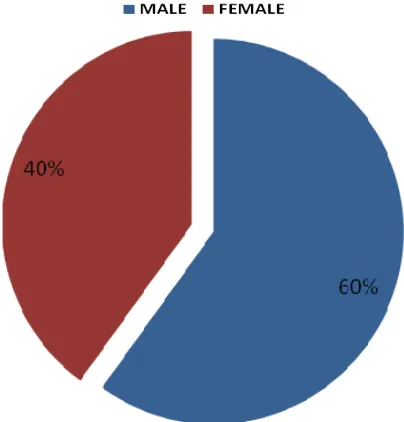
The retrospective observational study revealed that, out of 30 patients, 18 (60%) were male and 12 (40%) were female. This is constrast to a study by A Al-Rowaili, et al. (2008), Male participant accounted for 41% of the sample; the mean age was 52 years (SD± 14.8, range 18-85). This indicates that cancer is more predominant in male than in female patients in this locality. This observation is consistent with the study by YeonSooJeon, et al. (2012), male patients (n=54; 56.2%) were found to be more than female (Figure: 1).
Fig. 1: Gender wise distribution of patients.
Fig. 2: Age distribution in the study population.
Demographic study revealed that 4 (13.33%) patients were smoker, 3 (10%) were alcoholic and 6 (20%) were both smoker and alcoholic. But, majority of the study population was found to be non-smoker and non-alcoholic (n=17; 56.66%). Past medical history of the study population revealed that Right breast cancer (n=3; 10%) is more predominant, which is followed by Left breast cancer, Penis cancer, Acute myeloid leukemia in 6.66% (n=2) and Non- Hodgkin lymphoma, B-cell acute lymphoblastic leukemia, T-cell lymphoma, Acute lymphocytic leukemia and airway obstruction, Burkett’s lymphoma, Right lung cancer, Carcinoma of mild transverse colon, Metastatic pancreatic cancer and diabetes mellitus and chronic obstructive pulmonary disease, Cervix cancer and right breast cancer, Immature teratoma, Oesophagus middle carcinoma, Bronchogenic carcinoma, Myelo-dysplastic syndrome and pure red cell aplasia, Hodgkin’s with TB and DM, Hypertension with metastatic pancreatic cancer, HTN with acute lymphoblastic leukemia, Hodgkin’s and DM (n=1; 3.33%). etc. This finding revealed that the entire study population were affected by any one type of cancer in their life before getting admission in to the hospital. No one is newly diagnosed with cancer after getting admission in to the hospital. Amlodipine (n=2; 6.66%) and Cytosine (n=2; 6.66%) were the most commonly used
in the past medication history for the management of past
.
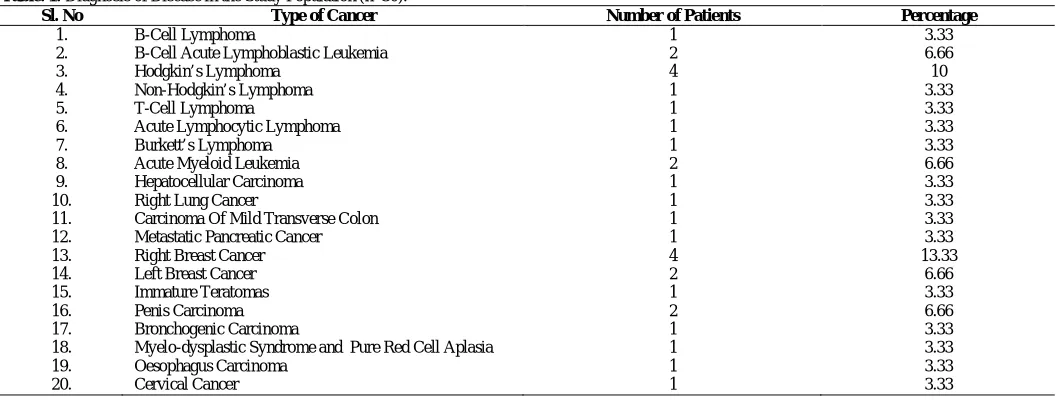
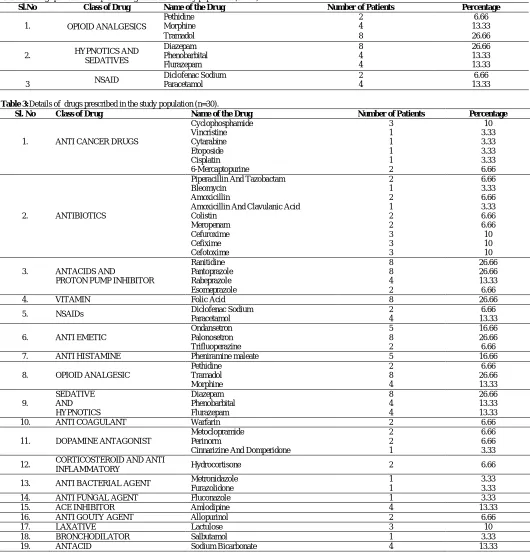
medical illness, which is followed by 6-mercaptopurine, methotrexate, salbutamol, prednisolone, rituximab, vincristine, dexamethasone, palonosetron, ondansetron, rifampicin, isoniazid and pyrazinamide (n=1; 3.33%).Diagnosis in the study population shown that Hodgkin lymphoma (n=4; 13.33%) and Right breast cancer (n=4; 13.33%) were predominant cancer, which is followed by B-cell acute lymphoblastic leukemia, left breast cancer, penis cancer, acute myeloid leukemia in each of 2 (6.66%) patients, etc. others types were observed in each one patient. This findings are similar with a study done by Susan L Beck, et al. (2001) in that breast cancer was common in about 54.4 percent of the study population (Table: 1). We found that Loss of weight in 26.66 percent (n=8), breathlessness in 16.66 (n=5), back pain in 16.66 (n=5), mild pain in left maxilla, constipation and abdominal pain in each 13.33 (n=4) percent were common co-morbid conditions in the study population. Eye pain and anorexia were found in 3 patients each, which is followed by episodic vomiting, akinesia and hic-cough (n=1; 3.33%), fever and hyponatremia (n=2; 6.66%). The most commonly used pain medications were Tramadol and Diazepam, these drugs are prescribed in 8 patients each (26.66%), and it is followed by Morphine, Phenobarbital and Flurazepam were found in 4 patients each (13.33%). The first three drugs were used for the management of pain and to restore the normal life of the cancer patient, but the next three drugs are used to relieve anxiety or fear and to make the palm calm. In the Non-steroidal anti-inflammatory category; Paracetamol was found in 4 prescriptions and Diclofenac sodium in 2 prescriptions (Table 2). Evaluation of prescription in the cancer patients shown that, in the anticancer category, cyclophosphamide was most commonly prescribed in 3 patients (10%); in the antibiotics, cefuroxime, cefotoxime and cefixime were in 3 patients each (10%). Ranitidine and pantoprazole were prescribed in each of 8 patients (26.66%); antiemetic-ondansetron prescribed in 8 patients (26.66); the same number of study population also prescribed with folic acid as a vitamin supplement. (Table: 3).
Table. 1: Diagnosis of Disease in the Study Population (n=30).
Sl. No Type of Cancer Number of Patients Percentage
1. B-Cell Lymphoma 1 3.33
2. B-Cell Acute Lymphoblastic Leukemia 2 6.66
3. Hodgkin’s Lymphoma 4 10
4. Non-Hodgkin’s Lymphoma 1 3.33
5. T-Cell Lymphoma 1 3.33
6. Acute Lymphocytic Lymphoma 1 3.33
7. Burkett’s Lymphoma 1 3.33
8. Acute Myeloid Leukemia 2 6.66
9. Hepatocellular Carcinoma 1 3.33
10. Right Lung Cancer 1 3.33
11. Carcinoma Of Mild Transverse Colon 1 3.33
12. Metastatic Pancreatic Cancer 1 3.33
13. Right Breast Cancer 4 13.33
14. Left Breast Cancer 2 6.66
15. Immature Teratomas 1 3.33
16. Penis Carcinoma 2 6.66
17. Bronchogenic Carcinoma 1 3.33
18. Myelo-dysplastic Syndrome and Pure Red Cell Aplasia 1 3.33
19. Oesophagus Carcinoma 1 3.33
CONCLUSION
Management of pain in cancer patient plays a major role in the quality of life of cancer patients. In this study the incidence of cancer is more in male than in female patients. Pain in the study subjects were managed mostly with opioid analgesics than other pain medications. Sedatives, hypnotics and tranquilizers were used
of cancer is very important in the cancer patients to improve the quality of life. This study has several limitations, since it was a short term study and the numbers of study subjects were less. Further modification and elaboration of the study is needed in the future to get remarkable correlation with the disease, pain and its management. This study further suggests that the education of all
Table 2: Drugs prescribed for pain management in the study population (N=30).
Sl.No Class of Drug Name of the Drug Number of Patients Percentage
1. OPIOID ANALGESICS
Pethidine 2 6.66
Morphine 4 13.33
Tramadol 8 26.66
2. HYPNOTICS AND
SEDATIVES
Diazepam 8 26.66
Phenobarbital 4 13.33
Flurazepam 4 13.33
3 NSAID
Diclofenac Sodium 2 6.66
Paracetamol 4 13.33
Table 3:Detailsof drugs prescribed in the study population (n=30).
Sl. No Class of Drug Name of the Drug Number of Patients Percentage
1. ANTI CANCER DRUGS
Cyclophosphamide 3 10
Vincristine 1 3.33
Cytarabine 1 3.33
Etoposide 1 3.33
Cisplatin 1 3.33
6-Mercaptopurine 2 6.66
2. ANTIBIOTICS
Piperacillin And Tazobactam 2 6.66
Bleomycin 1 3.33
Amoxicillin 2 6.66
Amoxicillin And Clavulanic Acid 1 3.33
Colistin 2 6.66
Meropenam 2 6.66
Cefuroxime 3 10
Cefixime 3 10
Cefotoxime 3 10
3. ANTACIDS AND
PROTON PUMP INHIBITOR
Ranitidine 8 26.66
Pantoprazole 8 26.66
Rabeprazole 4 13.33
Esomeprazole 2 6.66
4. VITAMIN Folic Acid 8 26.66
5. NSAIDs Diclofenac Sodium 2 6.66
Paracetamol 4 13.33
6. ANTI EMETIC
Ondansetron 5 16.66
Palonosetron 8 26.66
Trifluoperazine 2 6.66
7. ANTI HISTAMINE Pheniramine maleate 5 16.66
8. OPIOID ANALGESIC
Pethidine 2 6.66
Tramadol 8 26.66
Morphine 4 13.33
9.
SEDATIVE AND HYPNOTICS
Diazepam 8 26.66
Phenobarbital 4 13.33
Flurazepam 4 13.33
10. ANTI COAGULANT Warfarin 2 6.66
11. DOPAMINE ANTAGONIST
Metoclopramide 2 6.66
Perinorm 2 6.66
Cinnarizine And Domperidone 1 3.33
12. CORTICOSTEROID AND ANTI
INFLAMMATORY Hydrocortisone 2 6.66
13. ANTI BACTERIAL AGENT Metronidazole 1 3.33
Furazolidone 1 3.33
14. ANTI FUNGAL AGENT Fluconazole 1 3.33
15. ACE INHIBITOR Amlodipine 4 13.33
16. ANTI GOUTY AGENT Allopurinol 2 6.66
17. LAXATIVE Lactulose 3 10
18. BRONCHODILATOR Salbutamol 1 3.33
management principles is an essential endeavour to improve the care of such patients.
ACKNOWLEDGEMENT
We thank our chairman Dr. Nalla G. Palaniswami and trustee madam Dr. Dhavamani D. Palaniswami, our Principal Dr. A. Rajasekaran and Vice-Principal Dr. KSG. Arul Kumaran for providing excellent environment and support to carry out the work in fruitful manner.
CONFLICT OF INTEREST
None Declared
REFERENCES
Al-Rowaili, SA Al-aqeel1, LS Al-Naim and AI AL-Diab. Appropriateness of Cancer Pain Management inSaudi teaching Hospital. GJO 2008; 5: 37-43
Brenner DJ, Hall EJ. Computed tomography: an increasing source of radiation exposure. N Engl J Med 2007; 357(22): 2277–2284
Holland, James F. Holland-Frei cancer medicine. 2009. New York: McGraw-Hill Medical. 8 edition
How many different types of cancer are there? : Cancer Research UK, Cancer Help UK". 2012
Jemal A, Bray F, Center MM, Ferlay J, et al. Global cancer statistics. Cancer journal for clinicians 2011; 61(2): 69–90
O'Dell, Michael D. Stubblefield, Michael W. Cancer rehabilitation principles and practice. 2009. New York. Demos Medical. p 983
Samaras V, Rafailidis PI, Mourtzoukou EG, Peppas G, et al. Chronic bacterial and parasitic infections and cancer: a review. J Infect DevCtries 2010; 4(5): 267–281
Seitz HK, Poschl G, Simanowski UA. Alcohol and cancer. Recent Dev Alcohol 1998; 14: 67–95
Susan LB and Geoffrey F. Prevalence and management of cancer pain in South Africa. Pain 2001; 94: 75–84
YeonSooJeon,Jung Ah Lee,Jin Woo Choi,Eu Gene Kang, et al. Efficacy of Epidural Analgesia in Patients with Cancer Pain: A Retrospective Observational Study. Yonsei Med J 2012; 53(3): 649-653
How to cite this article: