Doctor of Education (EdD) Theses and Dissertations
11-1-2014
Immediate Impacts of Short-Term Study Abroad
Programs on Students at a Small, Religious,
Comprehensive University
Robert D. Larson Jr.
This research is a product of the Doctor of Education (EdD) program at George Fox University.Find out moreabout the program.
This Dissertation is brought to you for free and open access by the Theses and Dissertations at Digital Commons @ George Fox University. It has been accepted for inclusion in Doctor of Education (EdD) by an authorized administrator of Digital Commons @ George Fox University.
Recommended Citation
Larson, Robert D. Jr., "Immediate Impacts of Short-Term Study Abroad Programs on Students at a Small, Religious, Comprehensive University" (2014).Doctor of Education (EdD).Paper 43.
IMMEDIATE IMPACTS OF SHORT-TERM STUDY ABROAD PROGRAMS ON
STUDENTS AT A SMALL, RELIGIOUS, COMPREHENSIVE UNIVERSITY
By
ROBERT D. LARSON, JR.
FACULTY RESEARCH COMMITTEE:
Chair: Terry Huffman, Ph.D.
Members: H. David Brandt, Ph.D. and Gerald Tiffin, Ph.D.
Presented to the College of Education George Fox University
in partial fulfillment of the requirements for the degree of
Doctor of Education
ABSTRACT
This exploratory study examines the impact of short-term study abroad programs on
students at one small, religious, comprehensive university on the West Coast. In particular, four
dimensions of influence are investigated: academic impact, personal impact, social impact, and
spiritual impact. The primary objective of this investigation is to determine whether the
short-term study abroad programs at this institution provide substantive opportunities for student
growth in these four dimensions. A secondary objective utilizes Astin’s Student Involvement
Theory to discover the extent to which student engagement affects this student growth. The
literature review examines the impact of study abroad experiences in each of this study’s four
dimensions, as well as the implications of study abroad duration on student outcomes. All
participants in this study attend the same university and enrolled in a short-term study abroad
program nine-months prior to participating in this research. The survey instrument relied on
student self-assessment. Findings revealed that the short-term study abroad experience did have a
measurable impact on study participants. Each of the four dimensions studied exhibited areas of
positive impact, with the greatest impact occurring in the areas of personal and social growth.
While less substantial, some degree of impact was felt in the areas of academic and spiritual
growth. Further, the research found a positive correlation between quality and quantity of student
investment in the short-term study abroad experience and the impact that students realized as a
result. This study builds on a shallow base of scholarship specifically pertaining to the impact of
short-term study abroad. Due to its methodology, this study is limited in its universality. The
findings and conclusions are directly applicable to the institution and participants studied, but are
ACKNOWLEDGMENTS
Completing a dissertation is the final step one must take to earn their doctorate; the
pinnacle moment, perhaps, of one’s lifelong educational journey. It is not, however, an
individual endeavor. To be sure, this document is the result of an untold number of hours
hunched over my kitchen table or in the Sterling Room for Writers at the Central Library in my
hometown of Portland, Oregon. But even more so, what follows is the product of an incredible
network of educators, mentors, colleagues, students, friends, and family who have ardently
supported me throughout my life and who continued to encourage, inspire, and pray for me while
I pursued this long-held aspiration.
I am immensely grateful for the support of my Chair, Terry Huffman, Ph.D., who guided
me through this process with heartfelt wisdom and kindness. As well, my committee members
Gerald Tiffin, Ph.D. and H. David Brandt, Ph.D., provided invaluable feedback to strengthen
both the research and final document. I am especially indebted to Dave for helping me winnow
through various options to ultimately select a dissertation topic that was academically important,
personally fulfilling, and professionally inspiring. The value of his wisdom and friendship
throughout this program cannot be understated.
The “Define Better Cohort” has been a steady presence since our first class together.
Thank you for challenging me, encouraging me, and celebrating with me on this journey to
become "better.” Heather and Natalie, I am thankful for you most of all. You will forever be my
Black Bears!
For all the educators that spoke into my life over the years, thank you for investing your
difference. Of particular note, Cheryl Jacobson, Dan Lindquist, Rick Stern, and John Deeder
each made a profound impact on my life. And I would be remiss, if I did not acknowledge the
three professors that guided my own short-term study abroad experiences. John Herzog, Bob
Jenson, and Linda Samek opened my eyes to the value of such programs and informed this
research in ways that they will likely never know.
My journey into higher education would not have occurred without faithful mentors like
Loren and MaryAnn Anderson, Erv Severtson, Laura Majovski, and Lauralee Hagen. My friend
and mentor, Michael Fuller, gave me my first job in higher education, and in doing so, helped me
find my life’s vocation. I will never be able to repay him for giving me this gift. Similarly, I am
thankful for the many colleagues and students that I have had the privilege of working with and
for at Pacific Lutheran University, California Lutheran University, and George Fox University.
The countless friends that encouraged me and kept me sane through this process are to be
commended. Special thanks to the Family Night crew, Valerie and Michael, Vangie, Lindsay,
Geoff, Ryan, Justin, Matt, Ben, the men of the Upper Room, my Colossae Church family, and so
many others that I can’t possibly name.
Lastly, I could not have achieved this milestone without the unmatched love and
unconditional support of my parents, Robert Sr. and JoAnn Larson. From my earliest years, they
taught me to value and fully pursue my educational opportunities. They encouraged me to dream
without limits and then walked alongside me in pursuit of those dreams. In doing so, they
inspired in me an intellectual curiosity that has yet to be quenched. To say “Thank you” would
be inadequate. I love you, very much.
This dissertation is dedicated to my grandfathers,
Virgil Thomas Gellatly and Arbury Carvel Larson,
who were two of my first “teachers.”
Both understood the importance of education
and attended college without earning their degrees.
Both sought to provide a better future for their family.
TABLE OF CONTENTS
ABSTRACT... ii
ACKNOWLEDGMENTS ... iii
TABLE OF CONTENTS... vi
INDEX OF TABLES... ix
CHAPTER 1 ...1
Introduction...1
Statement of the Problem...4
Research Questions...4
Working Hypothesis ...5
Theoretical Framework...5
Key Terms...7
Limitations and Delimitations...9
CHAPTER 2 ...10
Review of the Literature ...10
Impact of Study Abroad...12
Academic impact ...13
Linguistic ...13
Motivation and attainment ...14
Career preparation...16
Personal impact...17
Self-Confidence ...18
National identity...20
Social impact...21
Global perspective ...21
Culture...23
Spiritual impact...26
Impact of Program Duration ...28
CHAPTER 3 ...35
Methods...35
Setting ...35
Participants and Sampling Strategy ...36
Research Ethics...36
Research Design...38
Data Collection and Analytical Procedures ...39
Role of the Researcher ...39
Potential Contributions of the Research ...40
CHAPTER 4 ...42
Findings ...42
Demographic and Background Summary of Participants...42
Findings: Research Questions...44
Research question #1: Academic impact ...44
Research question #2: Personal impact...45
Research question #3: Social impact ...46
Research question #4: Spiritual impact...47
Research question #5: Student Engagement ...48
CHAPTER 5 ...53
Discussion ...53
Research Question #1: Academic Impact ...53
Research Question #2: Personal Impact ...55
Research Question #3: Social Impact ...57
Research Question #4: Spiritual Impact ...58
Research Question #5: Student Engagement ...59
Further Discussion ...61
Application for George Fox University ...62
Application for Study Abroad Practitioners ...63
Suggestions for Further Study ...64
Concluding Thoughts...66
REFERENCES ...67
APPENDIX B – Survey Instrument ...71
INDEX OF TABLES
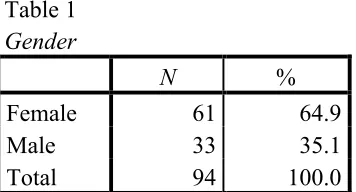
TABLE 1 – Gender...42
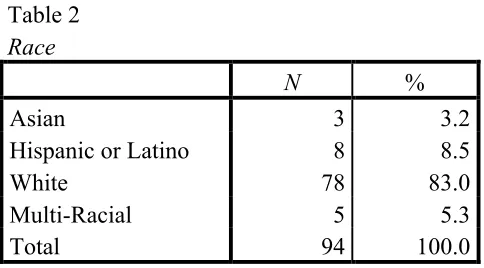
TABLE 2 – Race...43
TABLE 3 – Prior International Travel...43
TABLE 4 – Prior Study Abroad ...43
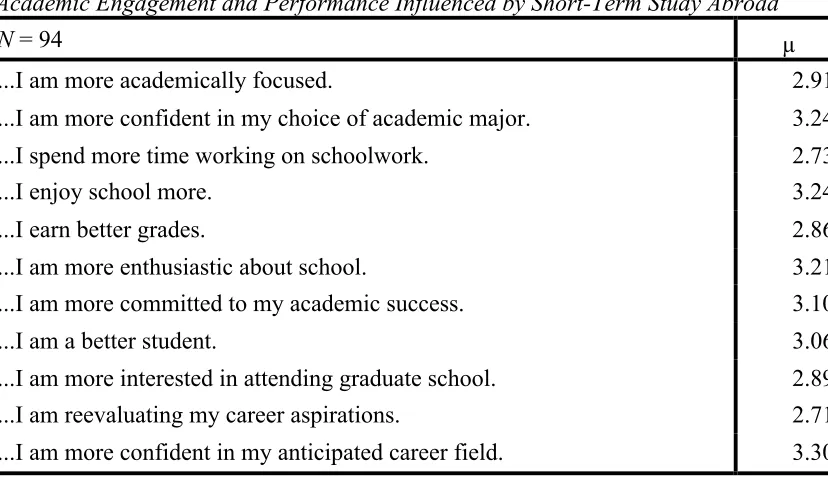
TABLE 5 – Academic Engagement and Performance ...45
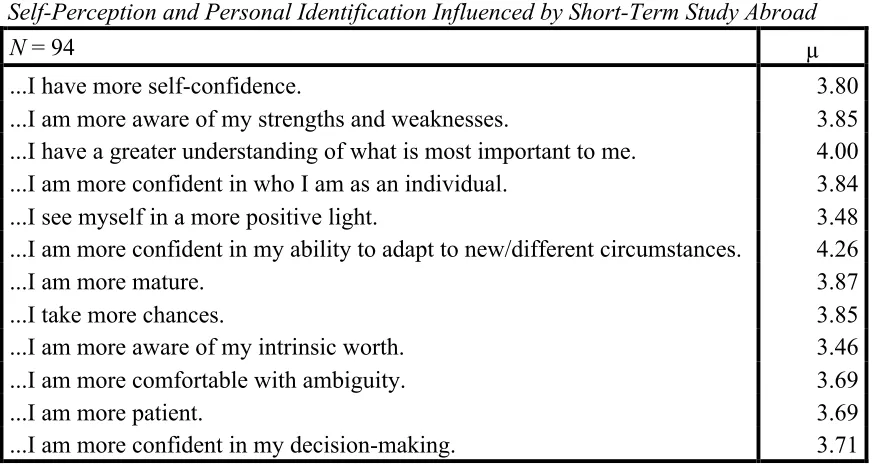
TABLE 6 – Self-Perception and Personal Identification...46
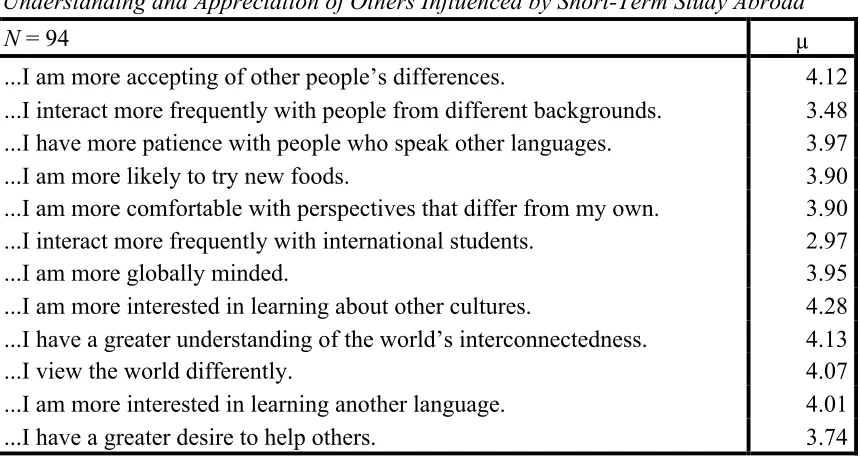
TABLE 7 – Understanding and Appreciation of Others ...47
TABLE 8 – Spiritual Faith and Habits ...48
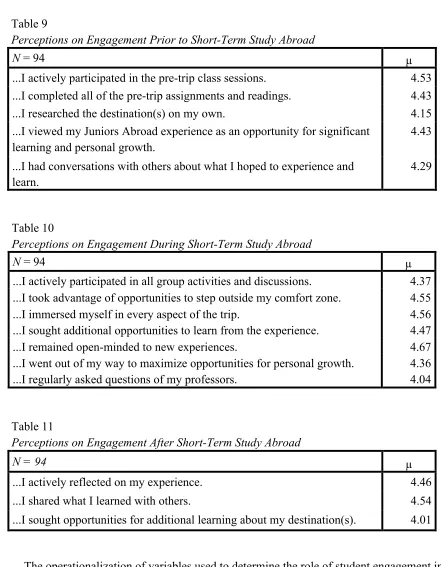
TABLE 9 – Perceptions on Engagement Prior to Short-Term Study Abroad...49
TABLE 10 – Perceptions on Engagement During Short-Term Study Abroad...49
TABLE 11 – Perceptions on Engagement After Short-Term Study Abroad...49
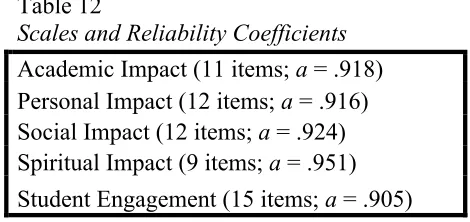
TABLE 12 – Scales and Reliability Coefficients ...50
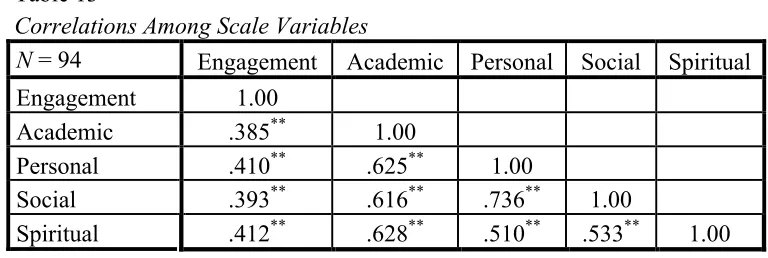
TABLE 13 – Correlations Among Scale Variables...51
CHAPTER 1
Introduction
There is little question among university educators that in our increasingly global society,
students must be exposed to different cultures and need to learn to appropriately engage with
people whose backgrounds differ from their own (Kehl & Morris, 2007). Now more than ever
before, training in cultural competency has become an educational imperative for understanding
humankind, successfully competing in the international job market, and to otherwise function
productively in an interconnected world. As colleges and universities search for ways to enhance
their cross-cultural offerings, many have increased their emphasis on study abroad programs as a
key component of a broader strategy. These international experiences, regardless of their
structure, create a vastly different educational environment than the traditional classroom-based
education students receive at their home institutions. Even when these programs use a strict
classroom format, the mere act of learning in another culture still produces a powerful learning
experience for the student (Wessel, 2007). “Study abroad is primarily about intentionally moving
beyond one’s local comfort zone and attempting to navigate in an environment different from
one’s own. It is about discovering worlds beyond those the student already knows” (Rust,
Dhanatya, Furuto, & Kheiltash, 2007, p. 12).
Over the past decade, study abroad programs nationally have seen a steady increase in
participation rates. For the 2008-09 academic year, the number of Americans studying abroad
was 260,327, just shy of the all-time record of 262,416 set the prior year (Chow & Bhandari,
in the past 20 years. Early reports by the Institute of International Education (2010), the leading
nonprofit that tracks study abroad participation, indicate that this uncharacteristic decline was
reversed in 2009-10. Since 1996-97, the number of participants has grown over 370%, from a
total of just under 100,000. However, despite the impressive historical growth rate of 9.7%
(Commission on the Abraham Lincoln Study Abroad Fellowship Program, 2005), the average
undergraduate student is highly unlikely to study abroad as a part of his or her academic career
(Dolby, 2007; Sambrook, 2008). According to 2004 figures published by the Commission on the
Abraham Lincoln Study Abroad Fellowship Program the total number of students participating
in study abroad programs “represents only 3% of students enrolled in 4-year undergraduate
programs and only 1% of all students in postsecondary education” (Dolby, 2007, p. 142).
Although these aggregate numbers describe the total population of college students
studying abroad, it is beneficial to analyze the data further as there exists within the realm of
study abroad programs a wide variety of offerings and options. For instance, the duration of a
student’s international experience can range from one week to more than one year. As could be
expected with such variance, the student experiences and outcomes of study abroad differ widely
depending on a number of factors. Of the over 260,000 students studying abroad in 2008-09,
nearly 55% participated in short-term programs, defined as those that are eight or less weeks in
duration and typically take place during the summer or January term (Chow & Bhandari, 2010).
This represents an abnormal decline in both the number of students participating in short-term
programs, down 5,500 from the previous year, as well as in the share of all study abroad
participants, down nearly 2% (Chow & Bhandair, 2010). Not surprising, however, is that with
the exception of 2008-09, short-term trips have continually represented a greater share of all
share in recent years. The accessibility of these short-term programs allows students to more
easily overcome the academic, financial, and social costs associated with studying abroad, while
still affording them the opportunity to receive academic credit in an overseas environment
(Sambrook, 2008). Despite the ease of short-term programs, still more than 40% of all study
abroad participants took advantage of mid-length programs, defined as one or two quarters, or
one semester in length, representing a small increase in both the number of participants and
overall share. Long-term programs, defined as those lasting for an academic or calendar year,
also bucked recent declining enrollment trends, experiencing nearly negligible growth in overall
share and number of participants (Chow & Bhandari, 2010).
Although most schools have established study abroad programs, the percentage of
students actually participating in these programs is relatively small and study abroad experiences
are still a fairly uncommon student occurrence at most institutions. Some schools have begun
setting goals for study abroad participation, with a number of schools making some form of
study abroad a requirement for graduation. George Fox University is among the schools that has
committed to exposing students to study abroad opportunities. In 2010, U.S. News and World
Report ranked the school 49th out of nearly 1,400 colleges and universities for the percentage of
students that have an international experience prior to graduation (George Fox University, 2010).
Just over 54% of all traditional undergraduate students participate in these programs, with a
significant majority taking advantage of the short-term Juniors Abroad Program. This program
consists of three week long, faculty-led trips to various destinations around the world each May
and June, and is the primary emphasis of this research study. Some George Fox students do
participate in mid-length or long-term programs lasting a semester or full year, but this is far less
Statement of the Problem
The purpose of this study was to examine the academic, personal, social, and spiritual
outcomes of short-term study abroad experiences of George Fox University students nine months
after returning from their overseas experience. Using self-assessment surveys, this research
attempted to determine the impact of such experiences in the four dimensions listed above. The
objective of this investigation was to determine if short-term study abroad programs provided
substantive opportunities for student growth.
Research Questions
Given the stated purpose and methodology outlined in the problem statement, this study
sought to answer the following research questions:
1) To what extent are students’ academic engagement and performance influenced as a
result of a short-term study abroad experience?
2) To what extent are students’ self-perception and personal identity influenced as a
result of a short-term study abroad experience?
3) To what extent are students’ understanding and appreciation of others influenced as
a result of a short-term study abroad experience?
4) To what extent are students’ spiritual faith and habits influenced as a result of a
short-term study abroad experience?
5) To what extent does student engagement, as defined by Astin’s Student Involvement
Working Hypothesis
From the onset of this study, the researcher’s working hypothesis was that short-term
study abroad programs do have a positive impact, to some degree, on the academic, personal,
social, and spiritual lives of student participants. The extent to which these programs impact
students was assumed to be less than those students participating in longer-term study abroad
experiences, but greater than those students who did not participate in any study abroad program.
Further, this working hypothesis was predicated on the assumption that those students who more
actively engaged in the study abroad course and experience were influenced to a greater extent
than those who were less engaged.
Theoretical Framework
After more than 20 years researching and writing about student development theory in
higher education, Alexander Astin set out to articulate his own theory of student development.
The need for this new theory was grounded in the seemingly convoluted literature that had, up
until that point, failed to create unifying themes. The publishing of “Student involvement: A
development theory for higher education” in 1984 was an attempt by Astin to simplify the
discussion. At its core, Astin argues that the greater “physical and psychological energy that the
student devotes to the academic experience” (p. 518), the greater the outcome of that academic
experience will be. Astin notes that the concept of student involvement has much in common
with the concept of effort. However, effort alone is only part of involvement. The primary focus
of this theory is on behavior, although Astin acknowledges that internal motivation does
contribute to involvement.
1. Involvement refers to the investment of physical and psychological energy in
various objects. The objects may be highly generalized (the student
experience) or highly specific (preparing for a chemistry examination).
2. Regardless of its object, involvement occurs along a continuum; that is,
different students manifest different degrees of involvement in a given object,
and the same student manifests different degrees of involvement in different
objects and different times.
3. Involvement has both quantitative and qualitative features. The extent of a
student’s academic work, for instance, can be measured quantitatively (how
many hours the student spends studying) and qualitatively (whether the
student reviews and comprehends reading assignments or simply stares at a
textbook and daydreams).
4. The amount of student learning and personal development associated with any
educational program is directly proportional to the quality and quantity of
student involvement in that program.
5. The effectiveness of any educational policy or practice is directly related to
the capacity of that policy or practice to increase student involvement. (Astin,
1984, p. 519)
To support this theory, Astin outlines existing research on student development that
relates elements of the college experience to successful outcomes, the most notable being student
retention and increased graduation rates. These elements include: living on campus, participation
in an honors program, academic involvement, student-faculty interaction, athletic involvement,
key indicator and predictor of college success. In crafting this new theory, Astin was most
compelled by its simplicity. At the most rudimentary level, Astin’s theory states that one gets out
of an activity what one puts into that activity. Additionally, Astin noted that this theory could “be
used both by researchers to guide their investigation into student development––and by college
administrators and faculty––to help them design more effective learning environments” (p. 518).
For the purposes of this research study, the primary area of investigation was related to
Astin’s fourth postulate noted previously. As this research sought to understand the impact of
short-term study abroad programs on college students, special consideration was made regarding
the students’ own investment in the study abroad experience. Did they intentionally choose to
immerse themselves in every aspect of the experience, with a commitment to suck the very
nectar from their time overseas? Or did they instead commit minimal effort to the experience,
content to merely be physically present in a foreign country?
Key Terms
Academic Impact – One of four dimensions of influence under investigation in this study. This
concept refers to any self-reported change in students’ scholastic habits, skills, focus, direction,
achievement, attitude, approach, and/or commitment, which happens as a result of a short-term
study abroad experience.
Immersion - Any experience in which an individual is embedded into a culture different from
her or his own for a period of time which requires interaction with elements of that culture.
Long-Term Student Abroad Programs – Any academic program that occurs outside of a
student’s home country that lasts for one semester or more. Although some research does make a
specifically concerned with short-term programs, all programs that exceed eight weeks in length
will be grouped with, and referred to as, long-term programs.
Mid-Length Student Abroad Programs – Any academic program that occurs outside of a
student’s home country that lasts for one or two quarters, or one semester in duration.
Personal Impact – One of four dimensions of influence under investigation in this study. This
concept refers to any reported change in students’ perception, including identity,
self-confidence, self-awareness, self-worth, and/or values, which happens as a result of a short-term
study abroad experience.
Short-Term Student Abroad Programs – Any academic program that occurs outside of a
student’s home country that lasts for fewer than eight weeks in duration. These programs often
take the form of travel tours, study trips, or service-oriented trips and usually take place during
January terms or during the summer break.
Social Impact – One of four dimensions of influence under investigation in this study. This
concept refers to any self-reported change in students’ views of others or the world in general,
including acceptance and appreciation of cultural differences, language, traditions, differing
values, and/or perspectives, which happens as a result of a short-term study abroad experience.
Spiritual Impact – One of four dimensions of influence under investigation in this study. This
concept refers to any self-reported change in students’ faith, including specific beliefs,
importance of faith, spiritual habits or disciplines, and/or the role of faith in daily life, which
happens as a result of a short-term study abroad experience.
Study Abroad – Any academic experience that occurs outside of a student’s home country that
Limitations and Delimitations
Students took part in this research study nine months after participating in a short-term
study abroad program. While this allowed the influence of the experience to play out over the
course of nearly an entire academic year, in most cases the senior year, student self-perception of
the specific impact of their study abroad experience versus other significant life experiences or
regular maturation may not have been taken into affect. This study was also dependent on
student self-assessment. While a pre- and post-test research design may have yielded specifically
quantifiable effects of the study abroad experience, the researcher elected to rely on student
self-assessment, recognizing that this decision may have potentially introduced biases stemming from
the social desirability effect.
Additionally, this study was delimited to students at George Fox University who
participated in the Juniors Abroad program in summer 2013. Other students that participated in
this program’s 25-year history were not included, nor were students that participated in other
study abroad programs at the university, all of which were at least mid-length in duration.
Further, short-term study abroad students at other colleges and university were not studied, as it
CHAPTER 2
Review of the Literature
From the advent of higher education in North America, students have included
international travel in their educational experience. In the earliest years, it was thought that the
colonial colleges offered strong educational programs but were unable to develop proper worldly
gentlemen. Although not a normative activity, some students who were enrolled at colonial
colleges took advantage of the “great schools” and culture of England and the European
continent. While a number of these students enrolled to seek formal degrees, others went abroad
for a “Grand Tour” that offered a general engagement with European society and ways (Hoffa,
2007). Not surprisingly, however, these foreign educational endeavors were largely limited to
young men from wealthy, landowning families.
With several less-than notable international initiatives notwithstanding, the University of
Delaware is largely credited as the first American institution of higher education to develop a
formal study abroad program (Cubillos & Robbins, 2004). In 1923, the university sent eight
students to France for a yearlong intensive language and cultural immersion program. The
program and model, which later became known as the Junior Year Abroad, grew quickly by
attracting transfer students from other colleges, and was soon copied by other institutions (Hoffa,
2007). From those initial eight students, formal study abroad programs have grown steadily in
the United States, eventually topping a quarter of a million students studying abroad in 2007-08
Not surprisingly, research investigating the effectiveness of such programs has also
grown in the past 90 years. Kauffmann and Kuh (1984), in a study presented to the American
Educational Research Association, indicated that between 1958 and 1984 more than 30 research
studies were conducted to assess the effects of study abroad on the personal development of
college and university students in the United States. Subsequently, the number of studies
conducted has skyrocketed. Despite this growth in the amount of research conducted, it is
common to find authors and researchers still articulating a general dearth of research on the
topic, or more specifically, research that effectively informs practice. Some of this sentiment is
communicated as a criticism of the field in general. However, the majority is portrayed while
addressing study limitations or as suggestions for enhancing the understanding of this
burgeoning area of scholarship through future research. Chieffo and Griffiths (2004) offer a
statement that encapsulates this line of thinking: “Professionals in international education have
long lamented the lack of a concrete quantitative foundation of data upon which to base
recruitment and program design strategies in order to maximize student learning outcomes” (p.
165). In a report published by the Great Lakes Colleges Association, the authors both
acknowledge and excuse this lack of research:
The number of evaluative instruments that focused on student learning and/or program
design was small. Given the comparatively recent emergence of study abroad as a critical
component of a liberal education, and the acknowledged difficulty in assessing outcomes
that are largely comprised of experiential learning, the scarcity of instruments focusing
on learning or program design was not unexpected. (2008, p. 4)
Further critiques of study abroad scholarship are often leveled at elements of research
(Dwyer, 2004; Great Lakes Colleges Association et al., 2008), limited use of pre- and post-trip
assessment (Kehl & Morris, 2007), inadequate reflection time prior to assessment (Kauffmann &
Kuh, 1984), and nonexistent links between student assessment and program design (Great Lakes
Colleges Association et al., 2008; Kehl & Morris, 2007).
The existing body of research does leave significant room for further exploration, thus
establishing the need and opportunity for this study. Still, much valuable research has been
conducted, particularly in regard to the impact of study abroad experiences in the lives of higher
education students. This literature review is largely organized around these findings, categorized
by the four dimensions of impact that this study seeks to address: Academic, personal, social,
and spiritual. Specific attention is paid to the differences that program length has on program
impact.
Impact of Study Abroad
Rust et al. (2007) end their description of study abroad’s purpose by stating, “It is about learning
new languages, cultures, and ways of life” (p. 12). Growth in these three specific areas is among
the most significant outcomes of study abroad, as is partially demonstrated by the volume of the
study abroad literature dedicated to outcomes. At the same time, the growth that can and does
occur through these foreign encounters is considerably broader. Sandell (2007) argues that the
most substantial areas of impact are in a student’s “professional role, international perspectives,
personal development, and intellectual development” (p. 13). A review of existing research
indicates a good degree of agreement with Sandell’s categories, which although not the same, fit
the four focus dimensions of this study well. In fact, only spiritual impact appears to be
Academic impact
By virtue of their place in the academic curriculum, and if for no other reason than the
awarding of academic credit, it is reasonable to expect study abroad programs to produce
academic outcomes. Though many aspects of study abroad are categorized as experiential
learning, as opposed to academic learning, considerable research substantiates the academic
growth that occurs through these programs (Cubillos & Robbins, 2004; Dwyer, 2004; Jones &
Bond, 2000). According to Kauffmann and Kuh: “It is interesting that students involved in a
highly experiential learning activity would report and, to a certain extent, exhibit increased
interest in reflective thought usually associated with academic activities” (1984, p. 13).
Intended to evaluate the liberal education outcomes of study abroad programs at it’s
member institutions, a joint report produced by the Great Lakes Colleges Association,
Associated Colleges of the Midwest, and Associated Colleges of the South (Great Lakes
Colleges Association et al., 2008), promoted academic growth as one of the most compelling
reasons students should study internationally. The report highlights academic gains in both
academic expertise, such as enhanced understanding of community or regional dynamics, and
specific content knowledge, such as language acquisition or linguistic gain. Cubillos and
Robbins (2004) noted similar gains in both technical expertise and content. Though linguistic
impact is neither a specific focus of this research study, nor a goal of most short-term study
abroad programs, any discussion of the academic impact of study abroad experiences must
include its mention.
Linguistic. Countless studies are concerned solely with foreign language learning,
program design to facilitate such learning, and evaluation of programmatic elements that may
quantify study abroad’s impact on the foreign language skills, there is near consensus that
overseas learning experiences do positively aid language acquisition or linguistic skill
development (Cubillos & Robbins, 2004; Dwyer, 2004; Jones & Bond, 2000; Sandell, 2007).
This is hardly an unexpected finding, as language immersion has been a root motivation of study
abroad since its origin, and serves as a repeatedly endorsed methodology for language
acquisition. The extent of study abroad’s impact in this area, and the factors that produce this
impact, are less agreed upon. Using a paired-sample of participants’ writing, Cubillos and
Robbins (2004) found that “brief and structured foreign sojourns may have significant and
lasting impact” on foreign language skills (p. 29). Jones and Bond (2000) found the opposite in
their research of those studying abroad for anywhere between two and 10 weeks. They indicate
that “despite the growing popularity of such immersion experiences, there is little evidence that
those of short duration, less than a semester, are viable strategies to learn culture and language”
(p. 34). Still, while not endorsing these trips as a primary language learning method, Jones and
Bond do admit that “language proficiency improved for each length of stay but improved more
with longer stays” (p. 41). This disagreement in findings is indicative of much of the study
abroad literature that focuses on language skills. Beyond the linguistic gains achieved through
study abroad experiences, researchers have found growth in a wide-range of other academic
areas.
Motivation and attainment. A study of more than 3,700 alumni of programs operated by
the Institute for the International Education of Students (IES), a recognized leader in study
abroad programming, found that these international experiences had a profound impact on
measures of academic attainment (Dwyer, 2004). Among the most notable findings of this study,
commitment to their academic studies. This largely confirms a previous finding by Kauffmann
and Kuh (1984), which counters some widely-held apprehension about study abroad.
Apprehension that still exists nearly 30 years later:
Some faculty at Midmen College have periodically expressed concern about the
“academic” rigor of the study abroad program, and suggested the activity is intellectually
“soft” and is perceived by the students and others as a [sic] easy way to obtain academic
credit. The data reported here suggest that study abroad was related to an increase in
some students’ motivation for learning and appreciation for reflection, behaviors believed
necessary for intellectual development and subsequent academic learning. (pp. 13-14)
Elsewhere in their discussion, Kauffmann and Kuh indicated that the proportion of
students who articulated a marked increase in motivation for and interest in academic work as a
result of the study abroad experience was nearly half. In addition to this increased motivation,
Kauffmann and Kuh also found that returning students had greater interest in the “arts, literature,
and culture” (p. 13) than before travelling overseas. Similarly, Lewis (2005) concluded that the
vast majority of those surveyed exhibited greater propensity for interdisciplinary studies, with
many enrolling in courses outside their majors. Malmgren and Galvin (2008) confirmed previous
research, finding that study abroad participants have a greater degree of educational engagement
than those choosing not to study abroad. Other findings reported by Dwyer (2004) are
noteworthy for the specific results they reveal about increased academic motivation. Of those
surveyed, 87% indicated that their study abroad experience influenced successive educational
pursuits. Most notably, 63% were influenced to change or expand their major field of study, and
At least one research study also credits study abroad with increased graduation rates.
After following three incoming freshman classes at the University of Minnesota, Malmgren and
Galvin (2008) found that those who had studied abroad graduated at a higher rate than their
classmates who remained on campus. Perhaps even more significant for higher education
practitioners, students of color and those identified by the university as “at risk” that participated
in a study abroad program also realized higher graduation rates. Malmgren and Galvin (2008),
along with Dwyer (2004), are quick to point out that their findings may or may not be the result
of study abroad alone. It is possible, they speculate, that students self-selecting to study abroad
may be intrinsically more motivated academically.
Another indicator of academic motivation stemming from a study abroad experience is
the desire to study abroad again (Dwyer, 2004; Lewis, 2005; Rowan-Kenyon & Niehaus, 2011).
While each of these studies posits different reasons for this interest, ranging from desire for
greater learning to increased confidence, all acknowledge at least some degree of increased
intellectual curiosity. In the study conducted by Lewis (2005), nearly half of all respondents had
studied abroad again within six years of their initial experience. Another key finding is that for
those students engaging in a short-term study abroad experience, often these experiences propel
them to at least consider another study abroad experience of greater length (Dwyer, 2004; Lewis,
2005; Rowan-Kenyon & Niehaus, 2011).
Career preparation. In much the same way that study abroad experiences inspire greater
academic interest, research indicates that students also find greater career interest, in terms of
aspirations, preparation, and effectiveness, following an overseas educational experience.
According to a study by Sandell (2007) among students at a public university in the
sample size, nearly 70% of respondents indicated that their study abroad program was relevant to
their chosen career field. Additionally, 75% believed the experience enhanced their professional
ability, and a slightly higher percentage indicated that the experiences would have a lasting
impact on their professional practice. A particular challenge admitted by the author was that the
career-related questions were focused on professional practice, even though the participants were
still undergraduate students not yet in professional roles. Still, the results are consistent with
other studies that did not have similar limitations.
Included in the previously mentioned study conducted by Dwyer (2004), was a section
devoted to career impact. Most significant among this study’s findings were that 76% of
participants believed that over the course of the study abroad experience they developed skills
that would help them professionally or influence their career path. A slightly smaller group,
62%, indicated that this experience inspired them to pursue a particular career direction.
However, it should also be noted that only 12% changed their career plan as a result. The
inference to be made is that, while igniting passion for a career direction, the study abroad
experience did not cause the vast majority of students to alter their previously chosen career path.
Another remarkable finding is that roughly one in five respondents were influenced by their
experience to pursue a career overseas.
Personal impact
“It seems that coping with novel situations in a foreign culture with the support of a
mentor (faculty leader) and a small group experiencing similar challenges is a suitable vehicle
for encouraging certain aspects of personal growth” (Kauffmann & Kuh, 1984, p. 14). Though a
significantly larger portion of the study abroad literature reports on academic and cultural
Not coincidentally, assessment and measurement of internal factors such as personal identity,
self-confidence, tolerance for ambiguity, and maturity is difficult. Still, after observing students
using a modified field study, Jones and Bond (2000) found that study abroad does serve as a
catalyst for personal adjustment and change, as students live and interact in an environment that
differs from their own. A finding that is summarily endorsed by Dwyer (2004).
Self-Confidence. Of the personal change that occurs during study abroad programs,
enhanced self-confidence is perhaps the most widely reported. The discussion of impact on
confidence level includes increased belief in understanding of specific functional knowledge
(Chieffo & Griffiths, 2004; Cubillos & Robbins, 2004) or skill sets (Rowan-Kenyon & Niehaus,
2011), as well as in a more generic idea of confidence or belief in self (Dwyer, 2004). A key
finding of a qualitative study conducted by Rowan-Kenyon and Niehaus (2011) was that the
experience of being immersed in a foreign location, even for short periods of time, gave students
a tremendous confidence boost in their ability to travel. This was especially telling, considering
that several study participants had previous international travel experience. This enhanced
confidence in one’s ability to travel, subsequently led the majority of students to take the risk of
further international travel. Lewis (2005) reported a similar result, indicating that students’ desire
to participate in additional study abroad, specifically in programs of extended lengths, was
derived from this increased confidence in travel ability.
Another aspect of growth in self-confidence is a greater tolerance for ambiguity. In two
studies, conducted 20 years apart, Chieffo and Griffiths (2004) and Kauffmann and Kuh (1984)
found that students participating in study abroad programs had an easier time dealing with and
accepting the unknown. According to Kauffmann and Kuh, nearly half of respondents attributed
Of the nearly 130 study participants, 53% indicated that they gained self-confidence in their
personal well-being. In Dwyer’s (2004) report two decades later, the percentage of students
expressing similar increased confidence and tolerance for ambiguity was considerably greater.
Almost nine out of 10 participants revealed that their overseas experiences enabled them to better
handle the unknown. Indeed, 96% reported increased self-confidence after studying abroad.
Chieffo and Griffiths (2004) reported that 27% of respondents indicated they experienced
personal growth related to adaptability, flexibility, and patience.
At least two other consistent findings relating to increased confidence were revealed in
multiple studies. Both Dwyer (2004) and Sandell (2007) note that participants concluded their
overseas experiences with a greater sense of maturity, which both authors attribute to increased
confidence. Sandell goes on to assert that this maturation led students to enhanced
decision-making, a result also presented by Kauffmann and Kuh (1984). In that particular study, nearly
40% of participants indicated that they were better positioned to make their own decisions as a
result of studying abroad. Moreover, increased self-confidence helps students better develop
their personal identities as well (Great Lakes Colleges Association et al., 2008).
In concluding this discussion on the enhanced self-confidence associated with
participating in overseas education, it is important to note that an increase in self-confidence
does not occur for all students. There is research to indicate that for some students these
experiences lead to heightened anxiety instead. Due to many of the same factors that some
researchers attribute to increased confidence, Jones and Bond (2000) found that, particularly for
younger students, anxiety is a common result of the culture shock that can develop in a foreign
National identity. “Although global perspectives are certainly a worthy goal of
study-abroad programs, it appears that understanding the role of the United States in the world is an
important part of a shifting awareness for the students” (Dolby, 2007, p. 152). As students leave
the United States, they are not only confronted with places, peoples, and cultures that are
different than their own, they are often brought face-to-face with their own identity as
Americans. Dolby’s research focused on this aspect of study abroad. In conducting small group
interviews with 50 students from three large research universities who went abroad for one
semester, the author found that upon return most students were better able to articulate what it
means to be an American citizen, something they struggled to articulate prior to their study
abroad experiences. This finding is similar with that of Chieffo and Griffiths (2004) who found
that nearly 30% of those surveyed viewed the United States differently after they had studied
abroad, and of Medina-Lopez-Portillo (2004) who observed that students returned with a deeper
understanding of the United States, particularly its global politics. Both Chieffo and Griffiths and
Medina-Lopez-Portillo (2004) also identified a greater willingness among study abroad
participants to openly criticize the United States following their return.
For Dolby (2007), questions related to national identity were particularly significant due
to the fact that her research was conducted in 2004, while the United States was engaged in
armed conflict in both Afghanistan and Iraq. As a result, students were much more aware, many
to the point of concern, about the significance of being an American abroad. Respondents
indicated a heightened awareness of American stereotypes, especially those of the “ugly and
loud” American. Further, most respondents were intentional about distancing themselves from
these common labels and acknowledged the importance, even to the point of pride, in being
rejected an “exclusionary and ethnocentric” (p. 149) identity, while also rejecting its opposite,
denying their American identity completely. So long as they were not viewed as “‘that type’ of
American” (p. 149), students were content to be known as American citizens. Due to the ongoing
military conflicts, students were often forced by locals to represent or defend American policy or
actions, regardless of how they felt personally. As a result, most learned to adapt their national
identity based on the circumstances and conversations in which they found themselves.
“Students actively constructed and strove to personify this good American, who is respectful of
other cultures and people, open-minded, and willing to be critical of the United States’ role in the
world” (p. 151).
Social impact
Researchers who initially set out to specifically quantify the linguistic impact of study
abroad, often times find themselves addressing the non-linguistic growth that occurs as well. In
their 2004 study, Cubillos and Robbins note the clear change seen by study participants on
important non-linguistic measures. In particular, participants saw significant growth in the areas
of global mindedness and cultural awareness and appreciation. Perhaps it is not surprising that
these two areas are, outside of language acquisition, two of the more frequently cited benefits of
study abroad.
Global perspective. There is no commonly accepted definition of the phrase “global
perspective” that exists within the literature, which perhaps is indicative of the need for more
research and publishing on the subject. Still, the concepts included in this notion are pervasive.
These concepts include changes in global-mindedness, worldview, understanding of
globalization and increased interconnectedness, insight into the role and position of the United
there is resounding evidence that study abroad programs make a positive impact in these areas
(Chieffo & Griffiths, 2004; Dolby, 2007; Dwyer, 2004; Great Lakes Colleges Association et al.,
2008; Kauffmann & Kuh, 1984; Kehl & Morris, 2007; Lewis, 2005; Medina-Lopez-Portillo,
2004; Rowan-Kenyon & Niehaus, 2011; Sandell, 2007).
When students choose to participate in a study abroad program, they do so from a
particular frame of reference of themselves and of the world, one which will most certainly be
challenged by this foreign experience. “Living in a different culture required participants to deal
with circumstances and ideas that were not easily assimilated into their present world view”
(Kauffmann & Kuh, 1984, p. 15). The previously mentioned IES study of 3,700 program alumni
found that 95% of respondents believed their international study experience “has had a lasting
impact on how they view the world” (Dwyer, 2004, p. 160). Perhaps the most significant aspect
of this study is that respondents spanned nearly 50 years of study abroad experiences, indicating
that this nearly-unanimous impact is felt continually years after returning from a study abroad
program. Additionally, this study included a control group of alumni that did not study abroad.
The result was a statistically significant difference between those that traveled abroad and those
that didn’t.
In another large-scale study, specifically focused on students who had participated in
short-term study abroad programs at the University of Delaware in the past year as compared to a
control group that enrolled in similar courses on campus, Cheiffo and Griffiths (2004) reported
that nearly 30% of the more than 1,500 participants indicated they learned to view the world
differently. Again, there was a significant difference between those that participated in study
abroad and those that hadn’t. Study abroad students were more likely to recognize that “the
different perspective than the U.S. on global issues” (p. 172). The authors stop short of claiming
causation, but do conclude that “those who travel may develop a greater sensitivity towards other
world views” (p. 172).
Other findings in this study included a greater propensity by study abroad participants to
understand their relative wealth and privilege, a far greater awareness of our increasingly global
society, and increased engagement in internationally-minded activities after their program
concluded. Similarly, Lewis (2005) found that among those study abroad participants surveyed,
100% indicated that their understanding of globalization, and particularly its costs and benefits,
had been impacted by their study abroad experience. Lewis conducted this study among students
who had all participated in the same short-term study abroad course over a six-year period
focused on the environment and conservation in Latin America.
Culture. Much like in the previous section, the study abroad literature provides neither a
singularly agreed upon term for what amounts to cultural appreciation, nor a set of defined
elements that should be considered in such a definition. Instead, the literature uses a wide variety
of terms to discuss the significant growth that occurs in this area as a result of study abroad
programs. Among the terms used are “intercultural awareness” (Chieffo & Griffiths, 2004, p.
167), “culture learning” (Jones & Bond, 2000, p. 44), “cultural development” and “cultural
tolerance” (Dwyer, 2004, p. 151), and “intercultural sensitivity” (Medina-Lopez-Portillo, 2004,
p. 191). Other researchers fail to articulate a specific name for this area of growth, instead
choosing to describe the growth or broadly categorize it as culture. What makes the task of
definition especially difficult is the potential for overlapping concepts, particularly in regard to
areas of global perspectives and national identity. Despite the varied language used by
definition of “Social Impact” provided in Chapter 1: “Any change in students’ views of others,
including acceptance and appreciation of cultural differences, language, traditions, differing
values, and/or perspectives.”
A key distinction found in the literature is between cultural awareness and appreciation.
While most research studies point to growth in the appreciation and understanding of other
cultures stemming from an increased knowledge of those cultures, some discussions go no
further than the increased knowledge itself. Rust et al. (2007) and Jones and Bond (2000) limit
their discussion to the importance of learning about foreign cultures. Cubillos and Robbins
(2004) take a similar position, though they very briefly mention creating “personal bonds” with
the host culture (p. 29).
With one of their stated goals being to determine whether study abroad participants
acquire intercultural awareness, Chieffo and Griffiths (2004) found that not only did this occur,
but that participants developed a greater appreciation and understanding as a result of this
increased awareness. Students who participated in study abroad reported higher scores, at
statistically significant levels, than those students who did not participate on all of this study’s
measures of intercultural awareness. Among these measures were a higher degree of patience
and empathy with foreign language speakers and a higher propensity to consider the similarities
and differences of people in other countries. The researchers also noted that the most frequent
responses to the survey instrument’s one open-ended question were focused on the
“knowledge/appreciation of another country or culture” (p. 173) and the respect for others.
Additionally, this study found that returning students are more motivated to listen to non-English
Kauffmann and Kuh (1984) described a marked increase in students’ appreciation of
cultural differences that they encountered while studying overseas. This same study also noted
that as a result of these foreign experiences, students were more apt to express a desire to help
others, particularly those that differ from themselves. Dwyer (2004) and Sandell (2007) noted
similar findings, with students engaging in more interaction with people from different cultures,
both during and after studying abroad. In fact, Sandell notes that nine out of 10 “respondents
agreed or strongly agreed with the statement that study abroad influenced them to seek out a
great diversity of friends” (p. 158). Part of the explanation for this result is that students come
away from these experiences with a more complete understanding of their own perspectives,
values, and biases, which are shaped by their own culture. Additionally, six out of 10
respondents reported that their study abroad experience inspired a passion within them to learn
about other cultures.
Utilizing the Intercultural Development Inventory (IDI) created by Hammer and Bennett
in 1997, Medina-Lopez-Portillo (2004) found that one-third of the University of Maryland
students participating in the university’s Taxco, Mexico program achieved significant
development in intercultural sensitivity. Roughly two-thirds of the students participating in the
alternate, and slightly longer Mexico City program also advanced to a higher level of
intercultural sensitivity. This was measured using a pre- and post-trip administration of the IDI.
A significant finding from the qualitative portion of this study was that students returned with “a
deeper understanding of the Mexican culture and it’s people” (p. 191), and perhaps more
importantly, a broader vocabulary to discuss cultural differences and issues. Instead of talking
personal experience, citing specific examples from their program that demonstrated cultural
understanding.
Spiritual impact
In 2004, the Higher Education Research Institute at UCLA released a report on the
spirituality of college students in the United States. Based on data collected from more than
100,000 freshmen students at almost 250 institutions, this seminal study was one of the most
complete and data-rich efforts to investigate the spiritual lives of students.
The study revealed that today’s college students have very high levels of spiritual interest
and involvement. Many are actively engaged in a spiritual quest and are exploring the
meaning and purpose of life. They also display high levels of religious commitment and
involvement. (Higher Education Research Institute, 2004, p. 3)
Though this research study was focused on a broad understanding of spirituality, not any
particular faith tradition, the findings were a vastly important insight into the current generation
of college students. The results were so striking and clear that many colleges and universities,
regardless of their faith tradition or lack thereof, began to take matters of student faith more
seriously. Furthermore, institutions began to recognize the role they play in creating space for
students to explore faith and spirituality. A key finding of this report was that as a group,
freshmen expected their institutions to play a role in their own personal spiritual growth and
development. Students saw colleges as a place that should encourage their spiritual expression
while also helping develop their personal values and self-understanding through programmatic
efforts (2004).
With regard to study abroad, there is good reason to believe that the spiritual life of
own campus and local culture, they are confronted with the other, challenging their way of
thinking. “This first hand experience with another culture and religious beliefs different from
one’s own produces a ‘shake-up’ of one’s values and beliefs that is probably like none other
previously experienced” (Reinhard, 2005, p. 104). A bevy of anecdotal evidence seems to
support this conclusion. In their book “Transformations at the Edge of the World: Forming
Global Christians Through the Study Abroad Experience,” Morgan and Smedley (2010) share
essays written by Christian study abroad practitioners who describe the various ways in which
their particular programs lead to spiritual growth. However, these first-hand accounts rely
heavily on storytelling to make the case for impact.
An exhaustive search of existing literature unearthed one research study that addressed
spiritual growth as a result of study abroad. After recognizing a true absence of research on this
topic, Reinhard’s (2005) dissertation tackled the topic head on, while admitting that constructs
such as faith development are extremely difficult to measure. This mixed-methods research study
measured the spiritual development of Greenville College students participating in a
semester-long study abroad program in Africa. To assess the impact of the trip, Reinhard used a pre- and
post-trip administration of the Faithful Change Questionnaire developed by William E. Slater, as
well as post trip student interviews. Further, Reinhard also conducted research with a control
group of students that remained on campus for the semester.
This study resulted in two key findings. First, students who spent a semester abroad
scored significantly higher on faith development upon return from the experience overseas.
Second, the data indicates that the change in scores between pre- and post-experience is
significantly different for students that studied abroad than for those students in the control
would experience more growth than the average student on campus, Reinhard also included a
separate control group of students “enrolled in an intentionally faith-challenging course” (p. 104)
that “deals extensively with one’s relationship between self and transcendent reality” (p. 105).
Once again, those studying abroad scored significantly higher than the students enrolled in this
course on campus, a result that surprised the researcher. Even when breaking down the concept
of faith development, the study abroad students still experienced greater growth. Reinhard’s
study looked at both matters of vertical faith (the relationship between an individual and God)
and horizontal faith (the relationship between an individual and humanity), with both pointing to
more significant impact on study abroad participants. On the qualitative side of the study,
Reinhard notes that he witnessed a greater willingness and stronger ability to share how faith had
been impacted during the semester from those that had studied abroad. The responses to
questions were noticeably more complete and detailed than those that had remained on campus.
The results of this research are significant, if for no other reason than the fact that it
appears to be among the only research conducted in this area. At the same time, it should be
noted that the sample size for this study was extremely small, especially as it relates to the
quantitative portion. A total of 11 students participated in both the pre- and post-trip assessments,
while only 30 students participated in the on campus control group.
Impact of Program Duration
“Conventional wisdom in the study abroad field has held that more is better; that is, the
longer students study abroad the more significant the academic, cultural development and
personal growth benefits that accrue” (Dwyer, 2004, p. 151). As was noted in Chapter 1, study
mid-length and long-term programs have been a staple of study abroad since its inception, short-term
programs are a newer phenomenon that continues to grow in popularity among both students and
schools. Today, there is as much diversity in programs as there is among college students
(Cubillos & Robbins, 2004), and the reasons for this diversity are plentiful. Some students lack
the confidence, skill, or willingness to risk traveling abroad for an extended period
(Rowan-Kenyon & Niehaus, 2011). For others, the choice to study abroad is much more practical. Rust et
al. (2007) note that the curriculum of many academic programs is structured in such a manner
that study abroad is practically prohibited for students wanting to graduate on time. Often this
leaves short-term study abroad programs as the only option available to students (Lewis, 2005).
With the growing popularity of short-term study abroad programs, research focused on
identifying and assessing the relative strengths of these specific programs has increased as well.
In the mid-1990s, researchers Bond and Jones (1994) indicated that they could not find any
studies investigating the impact of short-term immersion programs. They do acknowledge a
growing body of anecdotal evidence gleaned from faculty observations during and following
these programs, but no formal academic research had been conducted on the topic. A decade
later, Chieffo and Griffiths (2004) lamented the still limited body of research on the topic:
“Nearly half of the students earning credit overseas are doing so for a period of fewer than eight
weeks leaving educators to explain or defend with only spotty evidence what the benefits of
these short-term sojourns might be” (p. 166). Jones and Bond (2000) concur and even suggest
that as the popularity of short-term programs grows, there is little research that shows that
programs shorter than a semester are viable strategies for student growth. Short-term study
abroad programs now account for over half of the study abroad population, a threshold first
of research conducted on short-term study abroad has increased considerably in recent years,
there still exists broad disagreement on the value of such experiences. This disparity exists for
the comparison of short-term programs versus not studying abroad, as well as for short-term
programs versus longer study abroad programs (Kehl & Morris, 2007).
After observing students participating in short-term immersion trips lasting between two
and 10 weeks, Jones and Bond (2000) confidently state that improvement did, in fact, occur.
Specifically, the authors note positive impacts in “personal adjustment, language acquisition, and
culture learning” (p. 44). With regard to linguistic improvement, all students, regardless of length
of stay, saw improvement. Nevertheless, as Dwyer (2004) contends, students who stay in a
foreign country the longest tend to experience the greatest gain. Relative to cultural and language
learning, Jones and Bond fully endorse “short-term language and cultural immersion
experiences, as a viable strategy for educational goal attainment” (p. 44), as they found that
regardless of length of stay, study participants experienced growth. Similarly, Chieffo and
Griffiths (2004) found that for those students studying abroad for as little as one month,
significant growth occurs, particularly in engagement with and appreciation for the host culture
and confidence in the functional ability and knowledge of students. This study also noted a
significantly greater propensity to engage in internationally minded activities upon return and
that participating students had a greater appreciation for the arts, as compared to those students in
the control group that remained on the University of Delaware campus. Lastly, study abroad
participants were more likely to describe their educational experiences in broader more
experiential terms than the academically focused language used by the control group. Other
researchers express less certainty in reporting their results. For example, Cubillos and Robbins
significant and lasting impact on the linguistic, cultural, and pedagogical skills” (p. 29) of
participants.
Of those studies taking a more pessimistic view of short-term study abroad, most avoid
stating that these programs have no impact. Instead, they typically indicate an insufficiency of
evidence demonstrating that a positive impact exists (Kehl & Morris, 2007). Still others, like
Medina-Lopez-Portillo (2004) reflect the commonly held concern that short-term experiences
can, for at least some students, be seen as less than educational. Among some students, “Their
comments and descriptions convey the impression that for them, study abroad provided a
pleasant vacation in beautiful and historic Taxco; they had relatively little time to examine and
reflect upon cultural, socio-economic and political issues” (p. 190).
While recognizing that some positive impact does take place in short-term experiences,
the results of their study led Kehl and Morris (2007) conclude that institutions using study
abroad as a tool to grow the global perspectives of students should advocate for mid-length or
long-term programs. This is due to the statistically significant differences realized between those
study participants that went abroad for short-term programs versus those in semester-long
programs. In comparing both groups to one another and with a third group of students who
intended to study abroad but had not yet done so, the semester-long participants had a
statistically significant difference in global-mindedness scores than both the short-term
participants and the future participants. At the same time, the study found insufficient evidence
to conclude a difference for short-term participants and those planning to study abroad.
The 2004 study conducted by Dwyer yielded interesting results in comparing the
experiences and impact of 50 years of study abroad participants in full-year, semester, and