Cost-eff ectiveness of two versus three or more doses of
intermittent preventive treatment for malaria during
pregnancy in sub-Saharan Africa: a modelling study of
meta-analysis and cost data
Silke Fernandes, Elisa Sicuri, Kassoum Kayentao, Anne Maria van Eijk, Jenny Hill, Jayne Webster, Vincent Were, James Akazili, Mwayi Madanitsa, Feiko O ter Kuile, Kara Hanson
Summary
Background In 2012, WHO changed its recommendation for intermittent preventive treatment of malaria during pregnancy (IPTp) from two doses to monthly doses of sulfadoxine-pyrimethamine during the second and third trimesters, but noted the importance of a cost-eff ectiveness analysis to lend support to the decision of policy makers. We therefore estimated the incremental cost-eff ectiveness of IPTp with three or more (IPTp-SP3+) versus two doses of sulfadoxine-pyrimethamine (IPTp-SP2).
Methods For this analysis, we used data from a 2013 meta-analysis of seven studies in sub-Saharan Africa. We developed a decision tree model with a lifetime horizon. We analysed the base case from a societal perspective. We did deterministic and probabilistic sensitivity analyses with appropriate parameter ranges and distributions for settings with low, moderate, and high background risk of low birthweight, and did a separate analysis for HIV-negative women. Parameters in the model were obtained for all countries included in the original meta-analysis. We did simulations in hypothetical cohorts of 1000 pregnant women receiving either IPTp-SP3+ or IPTp-SP2. We calculated disability-adjusted life-years (DALYs) for low birthweight, severe to moderate anaemia, and clinical malaria. We calculated cost estimates from data obtained in observational studies, exit surveys, and from public procurement databases. We give fi nancial and economic costs in constant 2012 US$. The main outcome measure was the incremental cost per DALY averted.
Findings The delivery of IPTp-SP3+ to 1000 pregnant women averted 113·4 DALYs at an incremental cost of $825·67producing an incremental cost-eff ectiveness ratio (ICER) of $7·28 per DALY averted. The results remained robust in the deterministic sensitivity analysis. In the probabilistic sensitivity analyses, the ICER was $7·7 per DALY averted for moderate risk of low birthweight, $19·4 per DALY averted for low risk, and $4·0 per DALY averted for high risk. The ICER for HIV-negative women was $6·2 per DALY averted.
Interpretation Our fi ndings lend strong support to the WHO guidelines that recommend a monthly dose of IPTp-SP from the second trimester onwards.
Funding Malaria in Pregnancy Consortium and the Bill & Melinda Gates Foundation.
Copyright © Fernandes et al. Open Access article distributed under the terms of CC BY-NC-SA.
Introduction
Malaria during pregnancy can lead to poor health outcomes in both mother and child.1 In 2007, 32 million
pregnant women were at risk of malaria infection in sub-Saharan Africa.2 The prevention and consequences
of diseases and their related treatments during pregnancy are generally complex from an epidemiological, public health, and economic perspective because both the mother and her unborn baby are often aff ected. Plasmodium falciparum infection in pregnant women in sub-Saharan Africa is most importantly associated with maternal anaemia, perinatal mortality, and low birthweight caused by intrauterine growth restriction and prematurity, especially in women pregnant for the fi rst or second time.1 At present, the control of malaria
during pregnancy consists of intermittent preventive
treat ment during pregnancy (IPTp) with sulfadoxine-pyrimethamine, the provision of insecticide-treated bednets, and eff ective case management of clinical malaria.3 Findings from several economic evaluations
have shown that two doses of IPTp with sulfadoxine-pyrimethamine (IPTp-SP) versus case management only or placebo is highly cost eff ective.4–6 However, the
emergence and spread of strains of P falciparum resistant to sulfadoxine-pyrimetha mine has led to rising concerns about the ongoing eff ectiveness of IPTp-SP.7
After an expert meeting in June, 2012, WHO recom-mended that all pregnant women, unless receiving co-trimoxazole prophylaxis, should receive IPT-SP monthly from their second trimester onwards.8,9 The
clinical evidence behind this decision was provided in a meta-analysis by Kayentao and colleagues10 that
Lancet Glob Health 2015;
3: e143–53
See Comment page e116
London School of Hygiene & Tropical Medicine, Keppel Street, London, UK
(S Fernandes MSc, J Webster PhD, Prof K Hanson ScD); ISGlobal, Barcelona Ctr. Int. Health Res. (CRESIB), Hospital Clínic-Universitat de Barcelona, Barcelona, Spain (E Sicuri PhD); Liverpool School of Tropical Medicine, Liverpool, UK
(K Kayentao MD,
A M van Eijk PhD, Jenny Hill PhD, Prof F O ter Kuile PhD); Malaria Research and Training Centre, Department of Epidemiology of Parasitic Diseases, Faculty of Medicine, Pharmacy and Dentistry, University of Sciences, Techniques and Technologies of Bamako, Bamako, Mali (K Kayentao); KEMRI/CDC Research and Public Health Collaboration,
Kisumu, Kenya (V Were MSc,
F O ter Kuile); Navrongo Health Research Centre, Navrongo, Ghana (J Akazili PhD); and College of Medicine, University of Malawi, Blantyre, Malawi
(M Madanitsa MD) Correspondence to: Silke Fernandes, Faculty of Population Health and Policy, Department of Global Health and Development, London School of Hygiene & Tropical Medicine, London WC1H 9SH, UK
compared three or more doses versus two doses of IPTp-SP. Their fi ndings suggested that receiving three or more doses (weighted mean of actual doses received was 2·79) of IPTp-SP were associated with higher birthweight and a lower risk of low birthweight (relative risk=0·80, 95% CI 0·69–0·94) than were two doses of IPTp-SP (weighted mean of actual doses received was 1·65). The results of the meta-analysis were consistent and did not show evidence for heterogeneity, despite studies being done in areas of varying levels of sulfadoxine-pyrimethamine resistance.10
In addition to the epidemiological evidence, it is crucial for policy makers to understand the cost-eff ectiveness and cost drivers of any new regimen.
We aimed to estimate the incremental cost-eff ectiveness of IPTp-SP com paring three or more (SP3+) doses with two (SP2) doses. Our cost-eff ectiveness model incorporated pri mary and secondary endpoints (low birthweight, anaemia, and maternal parasitaemia) in Kayentao and colleagues’ meta-analysis.10
Methods
Study design
Details of the study setting, population, and intervention for each trial included in this analysis are reported elsewhere.10 Kayentao and colleagues10 previously
synthesised data from seven trials done in six countries (Burkina Faso, Kenya, Malawi [two trials], Mali, Tanzania, and Zambia). Four studies included all pregnant women irrespective of the number of pregnancies they had had,
whereas recruitment for the remaining three was restricted to women who were pregnant for the fi rst or second time only. Four studies included women with or without HIV, the study in Zambia included only those with HIV, and the two west African trials did not screen for HIV status. The malaria transmission settings were either holoendemic (fi ve trials) or hyperendemic (two trials). The trials were done between 1994 and 2008, with six taking place between 2002 and 2008. The average age of women enrolled in the trials was 22·8 years, excluding the Tanzanian trial for which data were unavailable.10
Eff ects
4345 (69%) of 6281 women in the meta-analysis were pregnant for either the fi rst or second time, a proportion higher than that occurring in the general population in the six countries.11–16 We therefore used the baseline
risks and measures of eff ects stratifi ed by gravidity listed by Kayentao and colleagues.10 We considered for
inclusion in the model only statistically signifi cant outcomes (p value ≤0·05) in either of the gravidae subgroup results. Data for clinical malaria were not available so, as a surrogate measure, we used maternal peripheral parasitaemia multiplied by the proportion of pregnant women with parasitaemia who had documented fever in high to medium transmission areas (7%; 107 of 1563).17 There was no diff erence in the
risk of serious adverse events between the SP3+ and SP2 group. Additionally, evidence from large-scale passive surveillance in Blantyre District, Malawi, suggests that adverse reactions to sulfadoxine-pyrimethamine (eg, Steven-Johnson syndrome) were rare (1·7 cases per 100 000 exposures in adults).18
The fi nal cost-eff ectiveness model included low birthweight, moderate to severe maternal anaemia (haemoglobin <80 g/L, 70 g/L, or 60 g/L), and clinical malaria as outcomes. The relative risks were estimated with random eff ects log binomial regression models as described by Kayentao and colleagues.10 We used the
median baseline risk in the SP2 group and the relative risk for each outcome of interest to calculate the intervention-group risk. Outcomes were not strat ifi ed by HIV status, but the cost-eff ectiveness of IPTp-SP3+ for HIV-negative women was explored in a sensi tivity analysis.
Costs
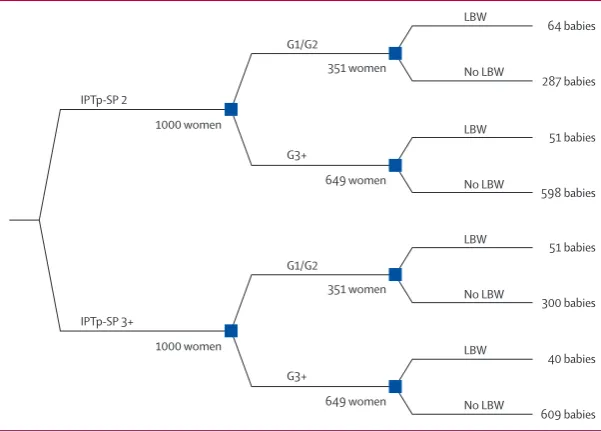
We included the variable cost to the health provider and household in the model, but excluded the fi xed costs such as training, dissemination or policy change of extending an existing intervention to a higher frequency of dosing, because they were regarded as negligible. We excluded cost savings due to averting clinical outcomes from this analysis because data were not available. We calculated economic costs (including indirect cost of time spent travelling to and waiting at the health Figure 1: The decision tree
The decision tree model shows the example for LBW. All numbers are the results published by Kayentao and colleagues.10 The example shown here is representative of a setting with moderate LBW risk and included all
pregnant women independent of HIV status (positive, negative, unknown). The same structure was used for severe anaemia and clinical malaria. LBW=low birthweight. IPTp-SP=intermittent preventive treatment with sulfadoxine-pyrimethamine. SP2=two doses of IPTp-SP during pregnancy. SP3+=three or more doses of IPTp-SP during pregnancy. G1/G2=women who have had one or two pregnancies. G3+=women who have had three or more pregnancies.
64 babies
287 babies 351 women
649 women
51 babies
598 babies
51 babies
300 babies
40 babies
609 babies LBW
G1/G2
IPTp-SP 2
IPTp-SP 3+
G3+
No LBW
LBW
No LBW
LBW
No LBW
LBW
No LBW 351 women
1000 women 1000 women
649 women G1/G2
facility) and fi nancial costs and expressed them in constant 2012 US$ by using the local consumer price index19 and average 2012 exchange rates.20 All cost data
collection was approved by the Institutional Review Board of the London School of Hygiene & Tropical Medicine and by the institution or country in which the data were collected.
The health provider costs comprise the cost of sulfadoxine-pyrimethamine and the value of nurses’ time to administer IPTp-SP. For details about how costs were estimated, see the appendix. Household costs included the direct (transport) and indirect (value of time spent travelling to and waiting at the health facility) costs of women attending antenatal care at least three times during the second and third trimester versus twice, and the arbitrary assumption was made that 25%
of the costs (direct and indirect) of these visits were attributed to IPTp-SP (varied to 0% and 100% in deterministic sensitivity analysis; appendix).
Statistical analysis and modelling
We adopted a societal perspective (which takes into account the cost of the intervention to the health provider but also the additional cost to the recipient of the intervention) because attendance at antenatal care is inadequate in many settings and therefore the cost to households of increasing the number of visits could be substantial. We developed separate but structurally identical decision tree models (fi gure 1) with a lifetime horizon for each outcome because data for concurrence of outcomes were un available. To model the cost-eff ectiveness in a population with a gravidity distribution representative of the six countries,
Base New value (%
change compared with base case)
Incremental cost
Incremental DALYs
Incremental cost-eff ective-ness ratio
% change
Base case NA NA 825·7 113·4 7·3 NA
Simultaneously change relative risk: all outcomes (all gravidae), lower value NA All low 825·7 225·6 3·7 –49·7%
Simultaneously change relative risk: all outcomes (all gravidae), higher value NA All high 825·7 15·4 53·7 637·1%
Simultaneously change relative risk: low birthweight (all gravidae), lower value NA All low 825·7 223·3 3·7 –49·2%
Simultaneously change relative risk: low birthweight (all gravidae), higher value NA All high 825·7 16·3 50·7 595·7%
Low and high background risk of low birthweight (G1/G2 and G3+), lower value NA All low 825·7 45·8 18·0 147·5%
Low and high background risk of low birthweight (G1/G2 and G3+), higher value NA All high 825·7 218·3 3·8 –48·0%
Increase antenatal care visits and IPTp-SP doses in SP3+ group 2·79 4·0 1585·1 113·7 14·0 92·0%
Relative risk low birthweight G3+ 95% CI, lower value 0·79 0·49 (–38·0%) 825·7 186·6 4·4 –39·2%
Relative risk low birthweight G3+ 95% CI, higher value 0·79 1·00 (26·6%) 825·7 62·2 13·3 82·3%
Nurses monthly cost of labour: min and max meta-analysis countries , lower value 542·76 101·93 (–81·2%) 427·9 113·4 3·8 –48·2% Nurses monthly cost of labour: min and max meta-analysis countries, higher value 542·76 1243·30 (129·1%) 1457·8 113·4 12·9 76·6%
Relative risk low birthweight G1/G2 95% CI, lower value 0·80 0·68 (–15·0%) 825·7 150·1 5·5 –24·5%
Relative risk low birthweight G1/G2 95% CI, higher value 0·80 0·95 (18·8%) 825·7 67·5 12·2 68·0%
Discount rate, lower value 0·03 0·00 (–100·0%) 825·7 239·0 3·5 –52·5%
Discount rate , higher value 0·03 0·05 (66·7%) 825·7 78·0 10·6 45·3%
Disability weight low birthweight , lower value 0·11 0·05 (–50·0%) 825·7 79·4 10·4 42·8%
Disability weight low birthweight, higher value 0·11 0·16 (50·0%) 825·7 147·4 5·6 –23·1%
Sulfadoxine-pyrimethamine drug price, lower value 0·20 0·10 (–50·0%) 709·2 113·4 6·3 –14·1%
Sulfadoxine-pyrimethamine drug price, higher value 0·20 0·41 (100·0%) 1058·6 113·4 9·3 28·2%
Low birthweight attributable mortality risk, lower value 6·9% 3·5% (–50·0%) 825·7 91·2 9·1 24·4%
Low birthweight attributable mortality risk, higher value 6·9% 10·4% (50·0%) 825·7 157·8 5·2 –28·2%
Average health-care worker time per administration of sulfadoxine-pyrimethamine 95% CI, lower value
8·31 6·59 (–20·7%) 724·4 113·4 6·4 –12·3%
Average health-care worker time per administration of sulfadoxine-pyrimethamine 95% CI, higher value
8·31 10·03 (20·7%) 927·0 113·4 8·2 12·3%
Percentage of household costs attributed to intermittent preventive treatment, lower value 25% 0% (–100·0%) 722·7 113·4 6·4 –12·5% Percentage of household costs attributed to intermittent preventive treatment, higher value 25% 100% (300·0%) 1134·6 113·4 10·0 37·4% Changes to structural model assumptions
Intervention delivered to primigravidae and secundigravidae only NA NA 825·7 178·4 4·6 –36·4%
HIV-negative only NA NA 825·7 139·0 5·9 –18·4%
Health provider perspective NA NA 722·7 113·4 6·4 –12·5%
Direct cost only NA NA 752·4 113·4 6·6 –8·9%
DALY=disability-adjusted life year. NA=not applicable.
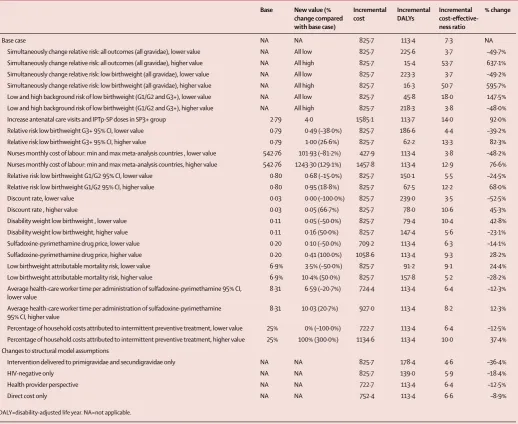
Table 1: Deterministic sensitivity analysis—parameter inputs and results
each arm was stratifi ed into women pregnant for the fi rst or second time (G1/G2) and those pregnant for the third or more time (G3+). Subsequently we modelled the effi cacy of the intervention in a population with the gravidity distribution (G1/G2 vs G3+) as foundin the most recent Demographic and Health Survey from the six countries.11–16
We calculated disability-adjusted life-years (DALYs) averted in each arm for each outcome separately and in total. When available, we used disability weights from the 2010 Global Burden of Disease (GBD) study; otherwise we used 2004 GBD study estimates.21,22 We calculated
DALYs with a 3% discount rate,23 as per conventional
practice, with no age weighting (appendix). We calculated the incremental cost-eff ectiveness ratio for a hypothetical cohort of 1000 women by dividing the incremental cost of the intervention by the incremental DALYs averted.
In the deterministic sensitivity analysis, we varied key variables and model assumptions to assess their relative contributions to uncertainty (table 1, fi gure 2). The 95% CI for all relative risk estimates in the G3+ subgroup included the value one.10 However, because no
epidemiological evidence exists to suggest that more doses of IPTp-SP could result in higher numbers of low birthweight, severe anaemia, or maternal malaria cases, we capped the upper estimates of relative risks at 1·00 in the deterministic sensitivity analysis.
To gauge the robustness and uncertainty of all estimates and assumptions simultaneously, we did a probabilistic sensitivity analysis (ie, Monte Carlo simulation) using 10 000 iterations, producing a point estimate and 95% CIs for the diff erence in eff ects and costs based on percentiles and an average incremental cost-eff ectiveness ratio. In the probabilistic sensitivity analyses, we used all value ranges as reported in the meta-analysis so it would explicitly refl ect the results published by Kayentao and colleagues,
representative of a setting with moderate risk of low birthweight. We used commonly used cost-eff ectiveness guidelines to assign an appropriate distribution to each parameter.24 Finally, we calculated the probability of
IPTp-SP3+ being cost eff ective for three frequently applied policymaker willingness-to-pay thresholds and plotted our results in a cost-eff ectiveness acceptability curve.25 We
refer to these thresholds as low (US$39·72), middle (US$238·33), and high (US$756·09; appendix).
We repeated the probabilistic sensitivity analyses described above for settings with a low or high low-birthweight risk by imputing the minimum (for low risk) or maximum (for high risk) value of the baseline risk range of low birthweight in both subgroups as presented by Kayentao and colleagues in place of the assumed control group risk (baseline risk in the SP2 group, representative of a setting with moderate risk).
IPTp-SP is contraindicated for women receiving cotrimoxazole prophylaxis.26 We therefore also did a
probabilistic sensitivity analysis for HIV-negative women. We changed baseline risks and relative risks for all outcomes and subgroups to those reported by Kayentao and colleagues for HIV-negative women.
We used STATA (version 12.0) for analysis of obser-vational, exit survey, and Demographic and Health Survey data. We used Microsoft Excel 2013 for the decision tree model in the probabilistic sensitivity analysis using Visual Basic for Applications.
Role of the funding source
The funding institution had no role in the model design and development, data collection, analysis and inter pretation, or preparation, review, or approval of the paper. SF and ES had full access to all data in the model and take full responsibility for integrity of the
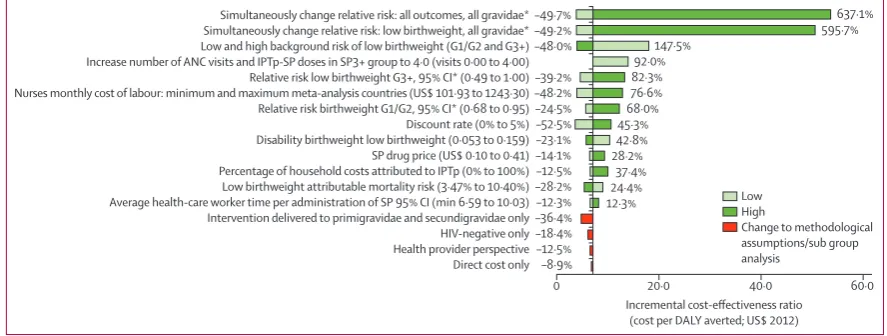
Figure 2: Tornado diagram—deterministic sensitivity analysis
The variable ranges imputed for each variable are shown in parentheses. The light green bars show the direction and magnitude of change in the incremental cost-eff ectiveness ratio, when the input variable is set to its minimum value; the dark green bars show the direction and magnitude of change when the input variable is set to its maximum. See appendix for more information.ANC=antenatal care. DALY=disability-adjusted life-years. G1/G2=Women who have had one or two pregnancies. G3+=women who have had three or more pregnancies. IPTp-SP=intermittent preventive treatment with sulfadoxine-pyrimethamine. SP=sulfadoxine-pyrimethamine. SP2=two doses of IPTp-SP during pregnancy. SP3+=three or more doses of IPTp-SP during pregnancy. *Relative risk capped at one, see methods and appendix..
–49·7% –49·2% –48·0%
–39·2% –48·2% –24·5% –52·5% –23·1% –14·1% –12·5% –28·2% –12·3% –36·4% –18·4% –12·5% –8·9% Simultaneously change relative risk: all outcomes, all gravidae* Simultaneously change relative risk: low birthweight, all gravidae* Low and high background risk of low birthweight (G1/G2 and G3+) Increase number of ANC visits and IPTp-SP doses in SP3+ group to 4·0 (visits 0·00 to 4·00) Relative risk low birthweight G3+, 95% CI* (0·49 to 1·00) Nurses monthly cost of labour: minimum and maximum meta-analysis countries (US$ 101·93 to 1243·30) Relative risk birthweight G1/G2, 95% CI* (0·68 to 0·95) Discount rate (0% to 5%) Disability birthweight low birthweight (0·053 to 0·159) SP drug price (US$ 0·10 to 0·41) Percentage of household costs attributed to IPTp (0% to 100%) Low birthweight attributable mortality risk (3·47% to 10·40%) Average health-care worker time per administration of SP 95% CI (min 6·59 to 10·03) Intervention delivered to primigravidae and secundigravidae only HIV-negative only Health provider perspective Direct cost only
0 20·0
Incremental cost-effectiveness ratio (cost per DALY averted; US$ 2012)
40·0
637·1% 595·7% 147·5%
92·0% 82·3% 76·6% 68·0% 45·3% 42·8% 28·2%
37·4% 24·4% 12·3%
60·0 Low
High
Base case (low,high) Distribution for probabilistic sensitivity analysis
Source
Cost estimates
Health-care worker time cost
Health-care worker time per IPTp-SP administration (min; 95% CI) 8·31 (6·59–10·03) Gamma Observational studies (Ghana, Kenya, Malawi)*
Number of doses in SP2 group 1·65 Point estimate Kayentao et al (2013)10
Number of doses in SP3+ group 2·79 Point estimate Kayentao et al (2013)10
Nurses’ monthly cost of labour (US$2012; 95% CI) 542·76 (373·94–711·58) Gamma Ministry of Health data†
Drug cost
Average SP price per administration (US$2012; 95% CI) 0·20 (0·19–0·22) Lognormal International procurement databases‡ Household cost
Antenatal care visit direct cost (US$2012; 95% CI) 0·47 (0·42–0·53) Gamma Exit surveys Mali (N=778, Kenya=613)
Antenatal care visit indirect cost (US$2012; 95% CI) 1·17 (1·13–1·21) Gamma Exit surveys Mali (N=778, Kenya=613)
DHS data analysis
Percentage women in DHS with 0 antenatal care visits (95% CI) 8·40 (8·15–8·65) Dirichlet DHS meta-analysis countries§ Percentage of women in DHS with one antenatal care visit (95% CI) 3·90 (3·72–4·07) Dirichlet DHS meta-analysis countries§ Percentage of women in DHS with two ANC visits (95% CI) 12·78 (12·48–13·09) Dirichlet DHS meta-analysis countries§ Percentage of women in DHS with three or more antenatal care visits
(95% CI)
74·92 (74·53–75·32) Dirichlet DHS meta-analysis countries§ Proportion G1/G2 women in meta-analysis countries (95% CI) 35·10 (34·05–36·14) Beta DHS meta-analysis countries§ DALY calculations
Discount rate r (range) 0·03 (0·00–0·05) Point estimate Assumption
Average age (years) 22·83 Point estimate Kayentao et al (2013)¶,10
Life expectancy for women aged 20–24 years (95% CI) 47·24 (41·79–51·51) Lognormal Wang et al (2010)||,27
Life expectancy at birth (95% CI) 57·96 (52·91–64·80) Lognormal Wang et al (2010)||,27
Length disability: malaria during pregnancy (3·5 days; range 2–6) 0·010 (0·005–0·016) Gamma Assumption Length disability: malaria-related anaemia (21 days; range 14–42) 0·06 (0·04–0·12) Gamma Price et al (2001)28
Length disability: low birthwieght (95% CI) 57·96 (52·91–64·80) Lognormal Wang et al (2010)27
Disability weight infectious disease: severe acute episode (95% CI) 0·21 (0·14–0·30) Lognormal Salomon (2010)21
Disability weight maternal anaemia: moderate (95% CI) 0·06 (0·04–0·09) Lognormal Salomon et al (2010)21
Disability weight low birthweight 0·11 Point estimate World Health Organization22
Mortality estimates
Low birthweight attributable neonatal mortality risk (95% CI) 6·93% (4·36–9·50) Beta Marchant et al (2012)29
Case fatality rate: malaria during pregnancy (95% CI) 0·33% (0·26–0·45) Beta Sicuri et al (2010)5
Case fatality rate: moderate to severe anaemia in pregnancy 1·0% Beta Brabin el al (2001)30
Measures of eff ect: primary and secondary endpoints used in model Low birthweight
G1/G2: ACR per 1000 pregnant women (range) 181·00 (51·00–231·00) Point estimate** Kayentao et al (2013)10
G1/G2: relative risk (95% CI) 0·80 (0·68–0·95) Lognormal Kayentao et al (2013)10
G3+: ACR per 1000 pregnant women (range) 78·00 (42·00–212·00) Point estimate** Kayentao et al (2013)10
G3+: Relative risk (95% CI) 0·79 (0·49–1·27††) Lognormal Kayentao et al (2013)10
Moderate to severe maternal anaemia (<80 g/L,<70 g/L, or <60 g/L)
G1/G2: ACR per 1000 pregnant women (range) 36·00 (0·00–65·00) Point estimate** Kayentao et al (2013)10
G1/G2: relative risk (95% CI) 0·60 (0·36–0·99) Lognormal Kayentao et al (2013)10
G3+: ACR per 1000 pregnant women (range) 14·00 (0·00–63·00) Point estimate** Kayentao et al (2013)10
G3+: relative risk (95% CI) 1·18 (0·56–2·48††) Lognormal Kayentao et al (2013)10
Maternal parasitaemia
G1/G2: ACR per 1000 pregnant women (range) 130·00 (20·00–359·00) Point estimate** Kayentao et al (2013)10
G1/G2: relative risk (95% CI) 0·54 (0·37–0·80) Lognormal Kayentao et al (2013)10
G3+: ACR per 1000 pregnant women (range) 31·00 (00·00–263·00) Point estimate** Kayentao et al (2013)10
G3+: relative risk (95% CI) 0·97 (0·75–1·24††) Lognormal Kayentao et al (2013)10
Proportion of parasitaemic pregnant women with documented fever (%; 95% CI)
0·07 (0·03–0·38) Beta Van Eijk and colleagues‡‡,17
data and the model as well as accuracy of all analyses. SF had fi nal responsibility for the decision to submit for publication.
Results
We estimated a total of 555·7 DALYs per 1000 women in the SP2 group and 442·3 DALYs per 1000 women in the SP3+ group. The total number of DALYs averted per 1000 women amounted to 113·4, of which 112·4 (99·1%) can be attributed to low birthweight, 0·9 (0·8%) to severe anaemia, and 0·1 (0·1%) to clinical malaria in the mother.
Table 2 shows the average time to give one dose of IPTp-SP and the average monthly nurses’ labour. We estimated the total health provider cost of giving one dose of IPTp-SP as US$0·63, of which $0·43(68·3%) was the cost of nurses’ time and $0·20 (31·7%) the cost of the drug.
Table 2 shows the direct cost of transport and indirect cost of time to the household, giving a total household cost of $1·64 per antenatal care visit of which $0·41 (25%) was attributed to IPTp-SP. The antenatal care attendance of women in the six countries was high, with 74·9% attending three or more times, 12·8% twice, 3·9% once, and 8·4% never (table 2).
The total economic cost of providing treatment to 1000 women was $1948·64 for IPTp-SP3+ and $1122·97 for IPTp-SP2, giving an incremental cost of $825·67 per 1000 women. $102·99 (12·5%) of the total incremental
cost in the base case was the household cost of IPTp-SP, and the remaining $722·68 (87·5%) was the health provider cost. Total incremental fi nancial cost was $752·38 per 1000 women.
The cost of delivering IPTp-SP3+ to 1000 pregnant women in the base case scenario (table 2) gives an incremental cost-eff ectiveness ratio of $7·28 per DALY averted. For the deterministic sensitivity analysis, fi gure 2 and table 1 show the results and percentage change for changes in parameter inputs, changes to methodological assumptions, or subgroup analysis in which the variation resulted in at least 5% change in the incre mental cost-eff ectiveness ratio. The base case incre-mental cost-eff ectiveness ratio was substantially below the low willingness-to-pay threshold of $39·72 per DALY averted. Although some variations in the deterministic sensitivity analysis resulted in substantial percentage changes in the incremental cost-eff ectiveness ratio, only two relatively radical changes (in which relative risks for all outcomes and subgroups were varied to the upper limit of the 95% CI reported) increased the ratio beyond the low willingness-to-pay threshold of $39·72 and none of them resulted in a change beyond the middle willingness-to-pay threshold of $238·33.
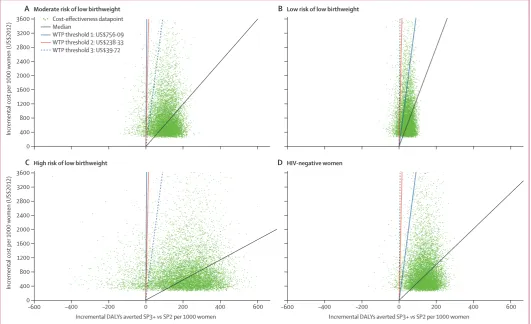
The probabilistic sensitivity analyses for settings with a moderate risk of low birthweight (fi gure 3A) resulted in an incremental cost of $825·18 (95% CI 299·74–2541·85)
Base case Distribution for probabilistic
sensitivity analysis
Source
(Continued from previous page)
Secondary endpoints (not used in model)§§
Placental malaria ACR per 1000 women (all gravidae; range) 63·00 (00·00–256·00) Point estimate** Kayentao et al (2013)10
Placental malaria relative risk (all gravidae; 95% CI) 0·51 (0·38–0·68) Lognormal Kayentao et al (2013)10
Secondary endpoints (not statistically signifi cant, only relative risk shown; for information only, not used in model)¶¶
Preterm delivery relative risk (G1/G2; 95% CI) 0·95 (0·81–1·11) ·· Kayentao et al (2013)10
Preterm delivery relative risk (G3+; 95% CI) 0·85 (0·56–1·27) ·· Kayentao et al (2013)10
Miscarriage relative risk (G1/G2; 95% CI) 1·75 (0·97–3·13) ·· Kayentao et al (2013)10
Miscarriage relative risk (G3+; 95% CI) 0·90 (0·37–2·19) ·· Kayentao et al (2013)10
Stillbirth relative risk (G1/G2; 95% CI) 1·14 (0·79–1·65) ·· Kayentao et al (2013)10
Stillbirth relative risk (G3+; 95% CI) 1·24 (0·61–2·50) ·· Kayentao et al (2013)10
Neonatal death relative risk (G1/G2; 95% CI) 0·74 (0·45–1·24) ·· Kayentao et al (2013)10
Neonatal death relative risk (G3+; 95% CI) 1·31 (0·59–2·93) ·· Kayentao et al (2013)10
Parameters are shown for all countries included in the meta-analysis by Kayentao and colleagues’ meta-analysis:10 Burkina Faso, Malawi, Mali, Kenya, Tanzania, Zambia. ACR=assumed control group risk.
DALY=disability-adjusted life-years. DHS=Demographic and Health Survey. G1/G2=women in fi rst or second pregnancy. G3+=women in third or more pregnancy. IPTp-SP=intermittent preventive treatment with sulfadoxine-pyrimethamine. SP2=two doses of IPTp-SP during pregnancy. SP3+=three or more doses of IPTp-SP during pregnancy. *Data for time needed to give one dose of IPTp-SP were obtained in observational studies in Ghana (n=18), Kenya (n=40) and Malawi (n=18); data from Ghana were the only data representative of a west African setting. †Salary scale and an average allowance package for nurses from Ministry of Health in Burkina Faso, Malawi, Mali, Kenya, Tanzania, and Zambia for 2012. ‡Cost per dose of IPTp-SP was calculated for three doses accounting for 5% wastage, 10% insurance and freight, and 10% transport. §The most recent Demographic and Health Survey datasets were: Burkina Faso (2010), Kenya (2008–09), Malawi (2010), Mali (2006), Tanzania (2009–10), Zambia (2007). ¶Average age was calculated from all trials included in the meta-analysis by Kayentao and colleagues,10 except for the trial done in Tanzania because age data were not available to investigators. ||The life expectancy was analysed
from the Global Burden of Disease 2010 database for the subgroups of interest (ie, women only, aged 20–24 years, meta-analysis countries and at birth, both sexes and meta-analysis countries, respectively). **The range shows the risk in low-risk and high-risk populations and will only be used in deterministic sensitivity analysis. ††We capped relative risk values in the deterministic sensitivity analysis at 1 because there is no evidence that suggests giving more doses of IPTp-SP could result in higher numbers of low birthweight, severe anaemia, or clinical malaria; in the probabilistic sensitivity analysis, distributions were assigned to the 95% CIs as reported by Kayentao and colleagues10 irrespective of them including 1·0). ‡‡Passive case detection in the control of malaria in pregnancy in low transmission areas in Africa;
a meta-analysis of observational studies of the association between fever and malaria infection; unpublished data that were presented at conference. §§No data available to be able to use placental malaria as a proxy for clinical malaria, it was therefore not used in the model. ¶¶Endpoints that were not statistically signifi cant in any of the subgroups (G1/G2 or G3+) were excluded from the model and are listed here.
and 106·56 incremental DALYs averted (95% CI–17·23 to 201·71) per 1000 women. We estimated the average incremental cost-eff ectiveness ratio at $7·74 per DALY averted (median 5·96).
The probabilistic sensitivity analyses results for settings with low and high low-birthweight risk are shown in fi gures 3B and 3C. The average incremental cost-eff ectiveness ratio was $19·41 per DALY (median 13·87) averted for low-risk settings (incremental cost $819·00 [301·61–2482·48] and 42·20 incremental DALYs averted [–17·57 to 88·68]) and $3·99 per DALY averted (median 2·82) for high-risk settings (incremental cost $814·06 [299·01–2468·15] and 204·11 incremental DALYs averted [95% CI –107·29 to 425·63]). The simulations for setting with a low risk of low-birthweight were more densely concentrated around the median, with a higher proportion of points in the northwest quadrant of the cost-eff ectiveness plane. For settings with a high risk of low birthweight the estimates were more widely distributed around the median in both directions, but the overall proportion of simulations
falling into the northeast quadrant was higher than in moderate-risk and low-risk settings.
Figure 3D shows the results of probabilistic sensitivity analyses for HIV-negative women. We calculated the incremental cost at $821·28 (299·50–2549·81) and the incremental DALYs averted at 132·53 (15·87 to 231·89). The incremental cost-eff ectiveness ratio was $6·20 per DALY averted (median 5·02). The simulations for HIV-negative women are more densely concentrated around the median in the northeast quadrant than in the probabilistic sensitivity analyses that included all women.
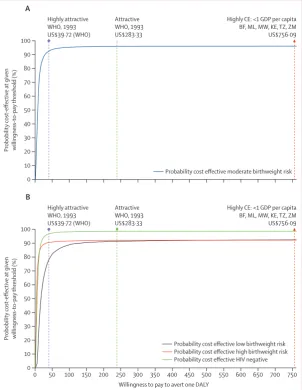
In fi gure 4, the probability of IPTp-SP3+ being cost-eff ective is shown in a cost-cost-eff ectiveness acceptability curve for willingness-to-pay values up to $800 per DALY averted. The probability of IPTp-SP3+ falling below the highly attractive threshold of $39·72 and hence being highly cost-eff ective was 92·4% for moderate risk of low birthweight, 78·1% for low risk of low birthweight, and 90·4% for high risk of low birthweight, and 96·6% for HIV-negative women.
Figure 3: Cost-eff ectiveness planes
The graphs show the results of four diff erent Monte Carlo Simulations with 10 000 iterations each using the value ranges and distributions specifi ed in table 2. The assumed control group risk point estimates for low birthweight in both gravidae subgroups were varied in the three scenarios, representing cost-eff ectiveness in moderate risk (A), low risk (B), and high risk (C) of low birthweight settings. Panel D shows the results for the simulation using input parameters reported for HIV-negative women by Kayentao and colleagues.10 For the moderate risk of low birthweight setting, we used
the base case parameter values of the assumed control group risk reported by Kayentao and colleagues; for low-risk and high-risk groups we used the minimum and maximum value of the parameter range. All other values, ranges, and distributions were kept the same. WTP=willingness to pay. DALYs=disability-adjusted life-years. SP2=two doses of IPTp-SP. SP3+=three or more doses of IPTp-SP.
0 400 800 1200 1600 2000 2400 2800 3200 3600
Incremental cost per 1000
women (US$2012)
A Moderate risk of low birthweight B Low risk of low birthweight
–600 –400 –200 0 200 400 600
0 400 800 1200 1600 2000 2400 2800 3200 3600
Incremental cost per 1000
women (US$2012)
Incremental DALYs averted SP3+ vs SP2 per 1000 women
C High risk of low birthweight
–600 –400 –200 0 200 400 600
Incremental DALYs averted SP3+ vs SP2 per 1000 women
D HIV-negative women
Cost-effectiveness datapoint Median
Discussion
Our fi ndings suggest that, at just $7·28 per DALY averted, IPTp-SP3+ can be a highly cost-eff ective intervention when incorporated into an existing antenatal care package. In settings with moderate malaria transmission, IPTp-SP3+ has a 92·4% probability of being highly cost-eff ective using a threshold of $39·7 per DALY averted. It is substantially more cost-eff ective than many health interventions recommended for imple mentation in sub-Saharan Africa (ie, rotavirus vaccination recommended at $43 per DALY averted or PMTCT at $37– 69 per DALY averted).27 Furthermore, our deterministic
sensitivity analysis indicates that IPTp-SP3+ remains highly cost-eff ective under a wide range of assumptions about key parameter values as well as structural
assumptions. The incremental cost-eff ectiveness ratio was more than the willingness-to-pay threshold of $39·7 in only two extreme cases. Finally, our modelling results in fi gures 3 and 4 suggest that three or more doses of IPTp-SP would be highly cost eff ective for settings with low to high baseline risk of low birthweight. IPTp-SP3+ for HIV-negative women has an even higher probability of being cost eff ective (96·6%). Therefore, our fi ndings not only lend support to the new WHO guidelines for IPTp-SP, with monthly dosing at each scheduled antenatal-care visit, but also show the cost-eff ectiveness of IPTp-SP3+ irrespective of whether all women or only HIV-negative women are considered (panel).
In estimating costs, we deliberately used a conservative approach by including both incremental staff time needed to give the intervention and the incremental costs to women of additional antenatal-care visits. This means that the costs shown here are likely to overestimate the actual cost and therefore underestimate the cost-eff ectiveness. Policy makers might take a more limited perspective on costs and therefore be interested in the results in the sensitivity analysis, which showed that, when only the costs to the health provider are considered, IPTp-SP3+ was even more cost eff ective (table 1 and fi gure 2). Furthermore, the incremental cost would be substantially reduced if it included cost savings due to a reduction in the number of babies born with low birthweight in particular, but also due to the number of cases of severe anaemia and clinical malaria averted. The probabilistic sensitivity analyses included the full range of the 95% CI reported for relative risks, even when these were not statistically signifi cant and the range included one, implying that IPTp-SP2 could possibly be more effi cacious than IPTp-SP3+ in a particular gravidity subgroup. Provision of more doses of IPTp-SP is highly unlikely to result in more cases of low birthweight, severe anaemia, or clinical malaria. We nevertheless chose to include the full 95% CI range in the probabilistic sensitivity analyses so the analysis could refl ect the results presented by Kayentao and colleagues.10 This choice explains the
simulation points on the northwestern quadrant of the cost-eff ectiveness plane (positive incremental costs and negative incremental DALYs) and the inclusion of zero in the 95% CI of the incremental DALYs averted.
Our model had several limitations. In their meta-analysis,10 Kayentao and colleagues pointed out
some potential sources of bias, which could have led to the overestimation of the eff ectiveness of IPTp-SP3+, including the fact that only one of the seven trials was placebo-controlled; and the meta-analysis results could not be stratifi ed by bednet use. Because of the unavailability of information about concurrence of outcomes, we were unable to construct one decision tree model for all three outcomes, but had to sum up our results from three independent decision tree models. Although not ideal, this is unlikely to have had an eff ect on our results because the largest proportion Figure 4: Cost-eff ectiveness acceptability curves
The curves show the probability of three doses of intermittent preventive treatment with sulfadoxine-pyrimethamine being cost eff ective at any given willingness-to-pay (WTP) value for moderate (A), and low and high (B) low birthweight risk settings as well as for HIV-negative women only. The vertical lines indicate three WTP thresholds. BF=Burkina Faso. DALY=disability adjusted life year. GDP=gross domestic product. ML=Mali. MW=Malawi. KE=Kenya. TZ=Tanzania. WHO=World Health Organization. ZM=Zambia. CE=cost eff ective.
0 10 20 30 40 50 60 70 80 90 100
Highly attractive WHO, 1993 US$39·72 (WHO)
Attractive WHO, 1993 US$283·33
Highly CE: <1 GDP per capita BF, ML, MW, KE, TZ, ZM US$756·09
Probobility cost
-effective at given
willingness-to-pay threshold
(%)
A
0 50 100 150 200 250 300 350 400 450 500 550 600 650 700 750 0
10 20 30 40 50 60 70 80 90 100
Highly attractive WHO, 1993 US$39·72 (WHO)
Attractive WHO, 1993 US$283·33
Highly CE: <1 GDP per capita BF, ML, MW, KE, TZ, ZM US$756·09
Probobility cost
-effective at given
willingness-to-pay threshold
(%)
Willingness to pay to avert one DALY
B
(99·4%) of the DALYs averted originated from the low-birthweight cases averted and therefore the likelihood of double counting aff ecting the fi nal results is minimal. Data for the number of episodes of clinical malaria during pregnancy were not available from the meta-analysis because these were rarely reported in the source trials; therefore we approximated this parameter by multiplying the risk of maternal parasitaemia by the average proportion of pregnant women with parasitaemia who had documented fever (6·8%) obtained from another meta-analysis.17 Although not
ideal, this approximation is unlikely to have aff ected the cost-eff ectiveness substantially because our surrogate measure of clinical malaria contributed less than 0·5% to the total DALYs averted.
A further limitation is that we calculated the hypo-thetical cost to the household of 100% coverage of antenatal care with at least two visits for the IPTp-SP2 arm and of at least three visits for the IPTp-SP3+ arm, translating into one incremental visit for all women attending care up to two times. However, we are aware that the potential cost of attending antenatal care might be much higher for women who never attend antenatal care, and the cost to the health provider of encouraging those women is unknown. Our model is based on the assumption that, on average, 2·8 doses were given in the IPTp-SP3+ groups and 1·6 doses were given in the IPTp-SP2 group. We acknowledge that monthly IPTp as recommended by WHO (if the average number of visits per woman exceed 2·8 visits) would result in higher costs, and the incremental effi cacy of adding more doses of IPTp is unknown. However, we showed in the sensitivity analysis that increasing the costs based on an average of four antenatal care visits in the IPTp-SP3+ group increased the incremental cost-eff ectiveness ratio to $13·98 per DALY averted and IPTp-SP3+ remained highly cost eff ective.
Although IPTp-SP3+ is very likely to be highly cost eff ective, implementation of this new policy will present challenges. The proportion of women who received at least two doses of IPTp-SP is well below 60%32 in most
countries, which is in contrast with high antenatal care attendance in many countries (average number of visits in the six countries was 3·3). The reasons for low IPTp coverage seem to be diverse and include drug stockouts and unclear messages given to health providers about IPTp, especially about timing of the dose.32 The
introduction of IPTp-SP3+ could simplify the message to health professionals because it has to be given monthly at each scheduled visit, except during the fi rst trimester. WHO has also recorded a “declining eff ort to scale-up IPTp in a number of countries”.8 To reverse this
trend and ensure access and uptake of IPTp-SP in these settings, substantial eff orts are needed for the benefi ts of monthly IPTp-SP to be realised. In other settings, such as Mali, average attendance is much lower, with 2·6 visits per woman and 30·2% never attending
antenatal care.12 In such settings, additional eff orts are
needed to encourage women to attend care earlier and more frequently. The household and provider costs of this attendance would need to be added to those of simply providing an additional intervention within an existing visit, and would reduce the cost-eff ectiveness of the intervention.
The diminishing eff ort in implementing IPTp-SP could partly be driven by health providers’ awareness of the increase in sulfadoxine-pyrimethamine resistance, particularly in eastern and southern Africa, the decrease in malaria transmission,33 and the hope for a new
intervention to replace IPTp-SP soon. Although sulfadoxine-pyrimethamine resistance and malaria transmission intensity are heterogeneous across Africa, the results of the meta-analysis are consistent and do not show evidence for heterogeneity by resistance or endemicity level despite being done in areas with both low and high sulfadoxine-pyrimethamine resistance and intense perennial and highly seasonal transmission. However, all seven trials included in the meta-analysis were done in areas with either holoendemic malaria, where transmission is intense and occurs all year long, or in hyperendemic areas, with intense but highly seasonal transmission and periods of no malaria transmission during the dry season.10 Therefore, our
fi ndings may not be representative of other parts of Africa with less intense transmission and where the relative contribution of malaria to low birthweight might be smaller. Nevertheless, we hypothesise that women living in low transmission areas who might have lower levels of acquired immunity could benefi t from the more frequent regimen as infections are more likely to result in symptomatic malaria and potentially preterm low birthweight.34,35
Panel: Research in context
Systematic Review
We did no systematic review for this cost-eff ectiveness analysis. The baseline risks and measures of eff ect used in our analysis were taken from a meta-analysis based on a systematic review
published by Kayentao and colleagues in 2013.1 Other
observational studies were either conducted by our own team, other people from the MiP consortium, or the literature was searched.
Interpretation
References
1 Desai M, ter Kuile FO, Nosten F, et al. Epidemiology and burden of malaria in pregnancy. Lancet Infect Dis 2007; 7: 93–104.
2 Dellicour S, Tatem AJ, Guerra CA, Snow RW, ter Kuile FO.
Quantifying the number of pregnancies at risk of malaria in 2007: a demographic study. PLoS Med 2010; 7: e1000221.
3 World Health Organization. A strategic framework for malaria prevention and control during pregnancy in the African region. AFR/MAL/04/01. Brazzaville: WHO Regional Offi ce for Africa, 2004.
4 Goodman CA, Coleman PG, Mills AJ. The cost-eff ectiveness of
antenatal malaria prevention in sub-Saharan Africa.
Am J Trop Med Hyg 2001; 64 (suppl 1–2): 45–56.
5 Sicuri E, Bardaji A, Nhampossa T, et al. Cost-eff ectiveness of intermittent preventive treatment of malaria in pregnancy in southern Mozambique. PloS One 2010; 5: e13407.
6 Wolfe EB, Parise ME, Haddix AC, et al. Cost-eff ectiveness of sulfadoxine-pyrimethamine for the prevention of malaria-associated low birth weight. Am J Trop Med Hyg 2001; 64: 178–86.
7 Naidoo I, Roper C. Mapping ‘partially resistant’, ‘fully resistant’, and ‘super resistant’ malaria. Trends Parasitol 2013; 29: 505–15. 8 World Health Organization. Intermittent preventive treatment in
pregnancy (IPTp): Key documents and guidelines. http://www.who. int/malaria/areas/preventive_therapies/pregnancy/en/index.html (accessed Jan 18, 2014).
9 World Health Organization. WHO evidence review group meeting
report: IPTp-SP. 2012. http://www.who.int/malaria/mpac/ sep2012/iptp_sp_erg_meeting_report_july2012.pdf (accessed Jan 18, 2014).
10 Kayentao K, Garner P, van Eijk AM, et al. Intermittent preventive therapy for malaria during pregnancy using 2 vs 3 or more doses of sulfadoxine-pyrimethamine and risk of low birth weight in Africa: systematic review and meta-analysis. JAMA 2013; 309: 594–604. 11 Institut National de la Statistique et de la Démographie. Burkina
Faso Demographic and Health Survey 2010. Institut National de la Statistique et de la Démographie. http://dhsprogram.com/Data. 12 Direction Nationale de la Statistique et de l’Informatique Bamako.
Mali Demographic and Health Survey 2006. Direction Nationale de la Statistique et de l’Informatique, Bamako, Mali.
http://dhsprogram.com/Data.
13 Central Statistical Offi ce Ministry of Health. Zambia demographic and health survey 2007. http://dhsprogram.com/Data.
14 National Bureau of Statistics Nairobi. Kenya Demographic and Health Survey 2008–09. Nairobi, Kenya, National Bureau of Statistics. http://dhsprogram.com/Data.
15 National Statistical Offi ce. Malawi demographic and health survey 2010. National Statistical Offi ce http://dhsprogram.com/Data. 16 National Bureau of Statistics. Tanzania demographic and health survey
2010. National Bureau of Statistics. http://dhsprogram.com/Data. 17 Van Eijk AM, Hill J, Ter Kuile F. Passive case detection in the
control of malaria in pregnancy in low transmission areas in Africa; a meta-analysis of observational studies of the association between fever and malaria infection. Presented Oct 11, 2011, at sixth EDCTP Forum in Addis Ababa, Ethiopia. 2011.
18 Gimnig JE, MacArthur JR, M’Bang’ombe M, et al. Severe cutaneous reactions to sulfadoxine-pyrimethamine and trimethoprim-sulfamethoxazole in Blantyre District, Malawi. Am J Trop Med Hyg
2006; 74: 738–43.
19 International Monetary Fund. World economic outlook database. Consumer price index by country for 2012. http://www.imf.org/ external/pubs/ft/weo/2012/02/weodata/index.aspx (accessed Sept 5, 2013).
20 OANDA. Historical currency converter 2012. http://www.oanda. com/currency/historical-rates/ (accessed Sept 5, 2013).
21 Salomon JA, Vos T, Hogan DR, et al. Common values in assessing health outcomes from disease and injury: disability weights measurement study for the Global Burden of Disease Study 2010.
Lancet 2012; 380: 2129–43.
22 World Health Organisation. Global burden of disease 2004 update: disability weights for diseases and conditions. http://www.who.int/ healthinfo/global_burden_disease/GBD2004_DisabilityWeights.pdf (accessed Aug 3, 2013).
23 Nice International. Methods for Economic Evaluation Project: The Gates Reference Case, 2014. http://www.york.ac.uk/media/che/ documents/MEEP report fi nal PDF.pdf.
Alternatively, in terms of sulfadoxine-pyrimethamine resistance levels, the consistency of the eff ect estimates across the trials suggests that the results are generalisable within the limits of the resistance levels seen in the settings included in the studies, which are at present representative of more than 90% of sub-Saharan Africa.7 The notable exceptions are
super-resistant areas, which are restricted to three hot-spots of resistance in northern Tanzania, western Kenya and southern Uganda, where data suggest that resistance undermines malaria control eff orts in pregnant women. For a detailed discussion of the implications of sulfadoxine-pyrimethamine resistance for our results, see the appendix.
Despite the fear that sulfadoxine-pyrimethamine resistance can render IPTp-SP ineff ective and the need for alternative drugs to replace sulfadoxine-pyrimethamine or alternative strategies that use a more diagnostic-based test-and-treat intervention to replace IPTp with sulfadoxine-pyrimethamine in these areas, our fi ndings show that IPTp-SP3+ in combination with insecticide-treated bednets provides highly cost-eff ective protection from malaria for pregnant women in most of sub-Saharan Africa. This fi nding stands irrespective of whether the intervention is given to all women, to women who have given birth once or twice, or to HIV-negative women only. The incremental cost-eff ectiveness ratio was robust to changes in low-birthweight risk. Our fi ndings therefore lend strong support to WHO guidelines that recommend a monthly dose of IPTp-SP from the second trimester onwards. Caution is needed, however, when extrapolating the fi ndings to areas with low or unstable malaria transmission or areas with high drug resistance (such as the three hotspots listed above). Policy makers in a wide range of settings should therefore be confi dent that changing to monthly sulfadoxine-pyrimethamine for IPTp will be a good use of their health budgets.
Contributors
SF, FOtK, KH, and ES had the idea for and designed the model. SF, FOtK, KK, AMvE, JW, JH, VW, JA, and MM acquired the data. SF, KH, and ES analysed and interpreted the data. SF and KH wrote the fi rst draft of the paper. ES, FOtK, KK, AMvE, JW, JH, VW, JA, and MM critically revised subsequent drafts of the paper. SF and ES did the statistical analyses. FOtK and KH obtained funding. KH supervised the study.
Declaration of interests
We declare no competing interests.
Acknowledgments
24 Briggs AS, Claxton K. Decision Modelling for Health Economic Evaluation. Oxford: Oxford University Press,2006.
25 Hoch JS, Briggs AH, Willan AR. Something old, something new, something borrowed, something blue: a framework for the marriage of health econometrics and cost-eff ectiveness analysis.
Health Econ 2002; 11: 415–30.
26 World Health Organization. Updated IPTp-SP policy
recommendation 2012. http://www.who.int/malaria/publications/ atoz/who_iptp_sp_policy_recommendation/en/
(accessed Feb 3, 2014).
27 Wang H, Dwyer-Lindgren L, Lofgren KT, et al. Age-specifi c and sex-specifi c mortality in 187 countries, 1970–2010: a systematic analysis for the Global Burden of Disease Study 2010. Lancet 2012;
380: 2071–94.
28 Price RN, Simpson JA, Nosten F, et al. Factors contributing to anemia after uncomplicated falciparum malaria. Am J Trop Med Hyg
2001; 65: 614–22.
29 Marchant T, Willey B, Katz J, et al. Neonatal mortality risk associated with preterm birth in East Africa, adjusted by weight for gestational age: individual participant level meta-analysis.
PLoS Med 2012; 9: e1001292.
30 Brabin BJ, Hakimi M, Pelletier D. An analysis of anemia and pregnancy-related maternal mortality. J Nutr 2001; 131: 604S–14S. 31 World Health Organization. Choosing Interventions that are
Cost Eff ective (WHO-CHOICE): cost eff ectiveness thresholds. http://www.who.int/choice/costs/CER_thresholds/en/ (accessed Feb 3, 2014).
32 van Eijk AM, Hill J, Larsen DA, et al. Coverage of intermittent preventive treatment and insecticide-treated nets for the control of malaria during pregnancy in sub-Saharan Africa: a synthesis and meta-analysis of national survey data, 2009–11. Lancet Infect Dis 2013;
13: 1029–42.
33 World Health Organization. World Malaria Report 2013. http:// www.who.int/malaria/publications/world_malaria_report_2013/en/ (accessed Feb 3, 2014).
34 Newman RD, Hailemariam A, Jimma D, et al. Burden of malaria during pregnancy in areas of stable and unstable transmission in Ethiopia during a nonepidemic year. J Infect Dis 2003; 187: 1765–72. 35 Rijken MJ, McGready R, Boel ME, et al. Malaria in pregnancy in the