Page 1 of 5
A quickly, effectively screening process of novel corona virus
disease 2019 (COVID-19) in children in Shanghai, China
Yu Shi1#, Xiangshi Wang2#, Gongbao Liu1#, Qirong Zhu2, Jianshe Wang2, Hui Yu2, Chuanqing Wang3,
Libo Wang4, Mingzhi Zhang4, Lingen Zhang5, Guoping Lu5, Zhujin Lu5, Jian Yu6, Zhongwei Qiao7,
Ying Gu8, Guomei Shen9, Hong Xu10,11, Mei Zeng2, Xiaowen Zhai11,12, Guoying Huang11,13
1Division of Medical Administration, 2Department of Infectious Disease, 3Department of Hospital Infection Control, 4Department of Respiration, 5Department of Critical Care Medicine, 6Department of Traditional Chinese Medicine, 7Department of Medical Image, 8Department of Nursing, 9Outpatient and Emergency Management Office, 10Department of Nephrology/Rheumatology, 11Hospital Administration, 12Department of Hematology/Oncology, 13Heart Center, National Children’s Medical Center, Children’s Hospital of Fudan University, Shanghai 201102, China Contributions: (I) Conception and design: Y Shi, X Wang, G Liu, M Zeng, X Zhai, G Huang; (II) Administrative support: M Zeng, X Zhai, G Huang; (III) Provision of study materials or patients: X Wang, M Zeng; (IV) Collection and assembly of data: Y Shi, G Liu; (V) Data analysis and interpretation: Y Shi, G Liu; (VI) Manuscript writing: All authors; (VII) Final approval of manuscript: All authors.
#These authors contributed equally to this work.
Correspondence to: Mei Zeng. Department of Infectious Disease, Children’s Hospital of Fudan University, Shanghai 201102, China. Email: [email protected]; Xiaowen Zhai. Department of Hematology/Oncology, Children’s Hospital of Fudan University, Shanghai 201102, China. Email: [email protected]; Guoying Huang. Heart Center, Children’s Hospital of Fudan University, Shanghai 201102, China. Email: [email protected].
Background: A recent cluster of pneumonia cases in China was caused by the severe acute respiratory syndrome coronavirus 2 (SARS-CoV-2). We report the screening and diagnosis of corona virus disease 2019 (COVID-19) in our hospital.
Methods: Developed a procedure for the identification of children cases with COVID-19 in outpatient and emergency department of our hospital, then we observed how this process works.
Results: (I) There were 56 cases considered suspected cases, and 10 cases were confirmed as COVID-19. (II) Of the 10 confirmed COVID-19 cases admitted in our hospital, 5 were males and 5 were females, aged from 7 months to 11 years, the average age is 6.0±4.2 years, 6 cases were mild pneumonia, the others were upper respiratory tract infection. (III) We followed up 68 patients in isolation at home until symptoms disappeared. Non were missed in the patient’s first visit. The sensitivity of this method is 100% and the specificity is 71.3%.
Conclusions: Our screening process works well, and it is also necessary to establish a screening network in the hospital.
Keywords: Corona virus disease 2019 (COVID-19); severe acute respiratory syndrome coronavirus 2 (SARS-CoV-2); child; diagnosis
Submitted Feb 19, 2020. Accepted for publication Mar 10, 2020. doi: 10.21037/atm.2020.03.22
View this article at: http://dx.doi.org/10.21037/atm.2020.03.22
Introduction
In December, 2019, a series of pneumonia cases of unknown cause emerged in Wuhan, Hubei, China (1,2). The situation has continued to evolve rapidly since then and just one month later, as at 16 February, 68,594
laboratory-confirmed cases and 1,667 deaths have been reported. Meanwhile, on 7 January 2020, the 2019 novel coronavirus (2019-nCov), currently named severe acute respiratory syndrome coronavirus 2 (SARS-CoV-2), was officially announced as the causative agent by Chinese authorities (3). The corona virus disease 2019 (COVID-19) is considered
a relative of the deadly severe acute respiratory syndrome (SARS) and Middle East respiratory syndrome (MERS) coronaviruses, both of which are characterized by flu-like symptoms including fever, cough and anhelation and have the possibility of transmission from animal to humans (4). Updating the understanding of the disease caused by SARS-CoV-2 infection is currently urgently warranted. Recently, the number of children and neonate cases infected with SARS-CoV-2 has gradually increased (5,6). Although, the number of children infected with COVID-19 is far less
than that of adults, situation report of confirmed childhood
infection constantly raise public concerns. As of February 19, a total of 10 children have been diagnosed in Shanghai and all have been admitted to our hospital Children’s
Hospital of Fudan University. The rapidly spreading of COVID-19 suggests that children cases should not be neglected from the epidemic control. Thus, we aim to describe quickly, effectively and calm outpatient process to deal with the disease. We hope our study findings will inform the global community of the emergence of this novel coronavirus and its clinical features.
Methods
Patients
From January 19 to February 15, 2020, we collected information on demographic characteristics, exposure history of SARS-CoV-2 among all visited patients in our outpatient/emergency department.
Procedure
Based on the clinical guideline of 2019-nCoV released by Chinese Center for Disease Control and Prevention (China CDC) and the WHO’s COVID-19 guideline, we developed a procedure for the identification of children cases with COVID-19 in outpatient and emergency department of our hospital (Children’s Hospital of Fudan University). Our hospital was the only designated hospital for children’s SARS-CoV-2 infection in Shanghai.
On January 17, 2020, a multidisciplinary team (MDT) was established to cope with the COVID-19 outbreak. Medical administrators and hospital administrators conduct daily consultations and discussions on new suspected cases and management of the diagnosed cases.
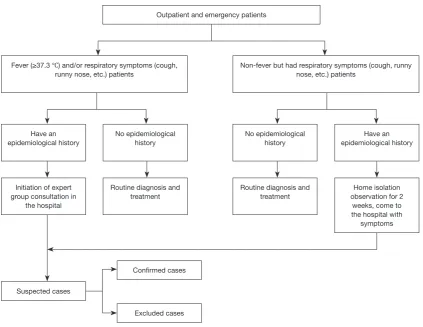
A suspected case entered the following process (Figure 1). A rapid screening algorithm for COVID-19 cases
suspected and confirmed in children was shown in Figure 2. Once a suspected case was identified, the joint field epidemiology team comprising members from the China CDC together with provincial, local municipal CDCs and district CDCs would be informed to initiate detailed field investigations and collect respiratory specimens for centralized testing at the National Institute for Viral Disease Control and Prevention, China CDC, in Beijing. A joint team comprising staff from China CDC and local CDCs
conducted detailed field investigations for all suspected and confirmed COVID-19 cases.
[image:2.595.54.279.86.437.2]According to the 5th edition of the National Health and Health Commission of People’s Republic of China’s 2019-nCoV-infected pneumonia diagnosis and treatment
Figure 1 Outpatient and emergency procedures for suspected patients. A case considered as an observation case or a suspected case is determined by the MDT director, infection-control. MDT, multidisciplinary team.
Outpatient/emergency triage [45,889]
Temperature measurement and epidemiology
Suspected cases initiated the report to MDT director, Infection-control [124]
Security escort the child to designated fever clinic
COVID-19 specialist collect medical history, conduct physical examination, order protected bedside chest radiography, collect
specimens (blood routine and nasopharyngeal swabs), and transport it to the laboratory using container for biological material
transfer
Initiation of expert group consultation in the hospital
Observation cases [68]
Home isolation Health education and
follow-up
Suspected cases [56]
program (7) and the WHO’s COVID-19 guideline (8), a screening criteria for suspected COVID-19 case was implemented in the outpatient and emergency department of our hospital. The suspected case was defined as presenting symptoms of fever or respiratory infection, along with any of the following significant epidemiology: (I) history of travel or residence in either Wuhan City and surrounding areas, or communities with confirmed COVID-19 cases within 14 days before the onset of symptoms; (II) direct person-to-person contact with
confirmed COVID-19 infected individual (positive nucleic
acid test) within 14 days before the onset of symptoms; (III) direct person-to-person contact with the patient with presenting symptoms of fever or respiratory infection from either Wuhan City and surrounding areas within 14 days before the onset of symptoms; (IV) cluster onset.
The above screening process was approved by the hospital’s ethics committee and agreed that it will not infringe the rights of children visiting the clinic, minimizing the risk of COVID-19 in-hospital transmission.
Results
From January 19 to February 8, 2020, there were 45,889 patients visited our outpatient/emergency clinics, among them the number of patients presenting symptoms of fever or respiratory infection was 18,432. Our COVID-19 screening
procedure identified 124 patients with significant epidemiology
and went through further MDT experts’ consultation. There were 56 cases considered suspected cases, and 10 cases were
confirmed as COVID-19. The diagnosis and epidemiology of
these 56 patients were shown in Tables 1 and 2.
Of the 10 confirmed COVID-19 cases admitted in our hospital, 5 were males and 5 were females, aged from 7 months to 11 years, the average age is 6.0±4.2 years, 6 cases were mild pneumonia, the others were upper respiratory tract infection. The average hospitalization day is 10 days, 4 cases have been discharged. Five cases’ epidemiology were
direct person-to-person contact with confirmed COVID-19
[image:3.595.87.511.80.407.2]infected individual (positive nucleic acid test) within 14 days before the onset of symptoms, 5 cases had history of travel or residence in either Wuhan City and surrounding areas,
Figure 2 Rapid screening algorithm for COVID-19 cases suspected and confirmed in children.
Outpatient and emergency patients
Fever (≥37.3 ℃) and/or respiratory symptoms (cough, runny nose, etc.) patients
Have an epidemiological history
Initiation of expert group consultation in
the hospital
Suspected cases
No epidemiological history
Routine diagnosis and treatment No epidemiological
history
Routine diagnosis and treatment
Confirmed cases
Excluded cases
Have an epidemiological history
Home isolation observation for 2
weeks, come to the hospital with
symptoms Non-fever but had respiratory symptoms (cough, runny
or communities with confirmed COVID-19 cases within 14 days before the onset of symptoms.
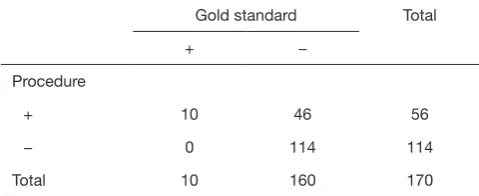
We followed up 68 patients in isolation at home until symptoms disappeared. Non were missed in the patient’s first visit. The sensitivity of this method is 100% and the
specificity is 71.3% (Table 3).
Discussion
We reported on our work in the COVID-19 outbreak and the identification of childhood COVID-19 cases in a tertiary children medical center. As the only designated hospital for children’s SARS-CoV-2 infection in Shanghai, we have established a set of triage and mechanisms for the
identification of cases with COVID-19. From January 19 to
February 12, 2020, 56 children were treated with suspected
COVID-19 and none was missed in the patient’s first visit.
It is important to ask about epidemiology, especially if you have contact with fever patients.
We found that children have mild clinical symptoms and less pneumonia, other research has shown that few of the early cases occurred in children, and almost half the 425 cases were in adults 60 years of age or older, although our case definition specified severe enough illness to require medical attention, which may vary according to the presence of coexisting conditions (9). Furthermore, children might be less likely to become infected or, if infected, may show milder symptoms, and either of these situations would account for underrepresentation in the confirmed case count (10). The possible cause is: children have a smaller range of activities than adults and have less chance of being exposed to public places. Other possible causes are children have fewer primary lung diseases and have weak immune responses. Some researchers have found that children under 6 years of age responded to natural infection with a relatively narrow response. Adults, however, have a much broader response (11).
Shanghai is a national metropolis with a population of more than 24 million. The central city densely populated especial for large shopping malls and restaurants. Therefore, it is very important to establish an isolation system from
the root of human flow. The municipal government strictly
requires the isolation system in the community. The community staff shall register one by one the personnel returning from other provinces and cities, measure their body temperature, and immediately guide them to the designated hospital for treatment in case of any abnormality.
[image:4.595.44.289.97.228.2]This has played a significant role in the overall prevention Table 1 Diagnosis of 56 suspected patients
Diagnosis n %
COVID-19 10 17.8
Upper respiratory infection (URI) 23 41.1*
Bronchitis 4 7.1
Pneumonia 16 28.6
Acute appendicitis 2 3.5
Mediastinal tumor 1 1.9
Total 56 100
[image:4.595.45.288.279.378.2]*, the proportion of URI was higher than COVID-19, P<0.01.
Table 2 Epidemiology of 56 suspected patients
Epidemiology n %
1 30 53.6*
2 19 33.9#
3 7 12.5
4 0 0
Total 56 100
According to the 5th edition of National Health and Health Commission of People’s Republic of China’s 2019-nCoV-infected pneumonia diagnosis and treatment program. Epidemiology: 1, history of travel or residence in either Wuhan City and surrounding areas, or communities with confirmed COVID-19 cases within 14 days before the onset of symptoms; 2, direct person-to-person contact with confirmed COVID-19 infected individual (positive nucleic acid test) within 14 days before the onset of symptoms; 3, direct person-to-person contact with the patient with presenting symptoms of fever or respiratory infection from either Wuhan City and surrounding areas within 14 days before the onset of symptoms; 4, cluster onset. *, the proportion of standard 1 was higher than standard 2,3,4, P<0.05; #, the proportion of standard 2 was higher than standard 3 and 4, P<0.01.
Table 3 Sensitivity and specificity of this procedure
Gold standard Total
+ −
Procedure
+ 10 46 56
− 0 114 114
Total 10 160 170
[image:4.595.45.285.583.681.2]and control of the city (12).
It is also necessary to establish a screening network in the hospital. In the outpatient department, from the pre examination and triage, the suspicious cases and ordinary cases are separated based on the epidemic history and patients’ symptoms. The suspicious cases will enter the special consulting room and been collected the medical history in detail, also have some relevant auxiliary examination. The team of experts will make consultation for the judgement whether these patients would be admitted to the hospital for further nucleic acid detection. In the inpatient department, we also need to investigate the epidemic history before admission. The suspected cases should be admitted in the infectious ward directly. Only after the exclusion of the new coronavirus infection, these patients will be transferred to the general ward. Since there is no effective therapy or vaccine, the best measures now are to control the source of infection, early diagnosis, reporting, isolation, supportive treatments, and timely publishing epidemic information to avoid unnecessary panic (13).
Acknowledgments
Funding: None.
Footnote
Conflicts of Interest: The authors have no conflicts of interest
to declare.
Ethical Statement: The authors are accountable for all aspects of the work in ensuring that questions related to the accuracy or integrity of any part of the work are appropriately investigated and resolved. The above screening process was approved by the hospital’s ethics committee [No. (2020)29] and agreed that it will not infringe the rights of children visiting the clinic, minimizing the risk of COVID-19 in-hospital transmission. Written informed consent was obtained from the patient for publication of this study and any accompanying images.
Open Access Statement: This is an Open Access article distributed in accordance with the Creative Commons Attribution-NonCommercial-NoDerivs 4.0 International License (CC BY-NC-ND 4.0), which permits the non-commercial replication and distribution of the article with the strict proviso that no changes or edits are made and the original work is properly cited (including links to both the formal publication through the relevant DOI and the license). See: https://creativecommons.org/licenses/by-nc-nd/4.0/.
References
1. Eurosurveillance Editorial Team. Note from the editors: novel coronavirus (2019-nCoV). Euro Surveill 2020. doi: 10.2807/1560-7917.ES.2020.25.3.2001231.
2. Zhu N, Zhang D, Wang W, et al. A Novel Coronavirus from Patients with Pneumonia in China, 2019. N Engl J Med 2020;382:727-33.
3. Gralinski LE, Menachery VD. Return of the Coronavirus: 2019-nCoV. Viruses 2020. doi: 10.3390/ v12020135.
4. Wang W, Tang J, Wei F. Updated understanding of the outbreak of 2019 novel coronavirus (2019-nCoV) in Wuhan, China. J Med Virol 2020;92:441-7.
5. Zhu H, Wang L, Fang C, et al. Clinical analysis of 10 neonates born to mothers with 2019-nCoV pneumonia. Transl Pediatr 2020;9:51-60.
6. Hagino T, Hiryu S, Fujioka S, et al. editors. Adaptive SONAR sounds by echolocating bats. 5th International Symposium on Underwater Technology; 2007 APR 17-20; Tokyo, Japan: IEEE.
7. Teeling EC, Springer MS, Madsen O, et al. A molecular phylogeny for bats illuminates biogeography and the fossil record. Science 2005;307:580-4.
8. Chiu C, Xian W, Moss CF. Flying in silence: Echolocating bats cease vocalizing to avoid sonar jamming. Proc Natl Acad Sci U S A 2008;105:13116-21. 9. Huang C, Wang Y, Li X, et al. Clinical features of
patients infected with 2019 novel coronavirus in Wuhan, China. Lancet 2020;395:497-506.
10. Li Q, Guan X, Wu P, et al. Early Transmission Dynamics in Wuhan, China, of Novel Coronavirus-Infected Pneumonia. N Engl J Med 2020. [Epub ahead of print].
11. Meade P, Kuan G, Strohmeier S, et al. Influenza Virus
Infection Induces a Narrow Antibody Response in Children but a Broad Recall Response in Adults. mBio 2020. doi: 10.1128/mBio.03243-19.
12. Al-Amri S, Bharti R, Alsaleem SA, et al. Knowledge and practices of primary health care physicians regarding updated guidelines of MERS-CoV infection in Abha city. J Family Med Prim Care 2019;8:455-61.
13. Chen Y, Liu Q, Guo D. Emerging coronaviruses: Genome structure, replication, and pathogenesis. J Med Virol 2020;92:418-23.