ACRYLAMIDE: A POSSIBLE RISK FACTOR FOR CARDIAC HEALTH
TARANBIR SINGH, AJAY SINGH KUSHWAH*
Department of Pharmacology, Amar Shaheed Baba Ajit Singh Jujhar Singh Memorial College of Pharmacy, Bela - 140 111, Ropar, Punjab, India. Email: [email protected]
Received: 02 May 2018, Revised and Accepted: 15 June 2018 ABSTRACT
Acrylamide (ACR) is an important industrial chemical agent also a food contaminant formed when food rich in carbohydrates is processed at high temperatures (120°C) such as cooking, frying, roasting, toasting, and baking. It happens when amino acid asparagine reacts with sugars, especially glucose and fructose as a result of the Maillard reaction. Its potential to cause damage to humans and animals makes it a cause for concern. After its outbreak in 2002, extensive study has been going on to prevent its formation in food. Neurological effects are by far well established for ACR along with systemic toxic effects. Diet contributes to the high proportion of ACR intake on daily basis; other exposure media are occupational, environmental, and smoking. A number of studies justifying ACR cardiotoxicity, its clear mechanism and its relevance to humans are less, but some research papers suggest the possibility of cardiotoxicity or developmental cardiotoxicity. In this review, ACR cardiac toxic effects and mechanism pathway have been discussed along with mitigation strategies.
Keywords: Acrylamide, Cardiotoxicity, Maillard reaction, Mitigation strategies, Alternative mitigation strategies.
INTRODUCTION
Acrylamide (ACR), an industrially produced α, β-unsaturated reactive molecule, colorless, non-volatile crystalline solid, soluble in water and has a molecular weight of 71.08. It is an important industrial chemical widely used to synthesize ACR. Polyacrylamide has found many applications as the soil conditioner; in water waste treatment; in the cosmetic, paper, and textile industries; and in the laboratory as solid support for electrophoresis and various analytical techniques [1]. In April 2002, ACR was discovered by the Swedish National Food Authority in carbohydrate-rich foods which are subjected to deep frying, toasting, and baking at the temperature above 120°C. ACR was classified as a Group 2A carcinogen by the International Agency for Research on Cancer [2] and category 2 mutagen by the European Union (2002) [3], its formation in food caused worldwide concern. In 2002, Tareke et al. analyzed the occurrence of ACR in food heated under laboratory conditions and in commercially available foodstuff and concluded that ACR levels were quite high in food subjected to heating. Carbohydrate-rich foods have higher ACR content as compared to protein-Carbohydrate-rich foods [4]. Subsequent research demonstrated ACR formation in food when heated at the higher temperature above 120°C [1].
ACR is known as a byproduct of Maillard reaction which is the key reaction for ACR formation. In another initiative, researchers from 14 countries, joined together in a research project called heat-generated food toxicants (HEATOX) to evident the potential toxic threat ACR poses to humans. A total of 50 compounds has been highlighted as potential carcinogens [5].
It is of health concern because high quantities are being consumed on daily basis, which poses the more serious problem, especially Western countries where foods such as chips and other potato products are widely consumed [6] because potato products have known to contain higher amounts (117–4215 μg/kg). Potential human dietary mean ACR intake in the general population has been estimated to range from 0.31 to 1.1 μg/kg/day body weight (b.w.) for adults (>18 years), 0.43 and 1.4 μg/kg/day b.w. for adolescents (11–17 years), and 0.70 and 2.05 μg/kg/ day b.w. for children’s (3–10 years). Major contributors to exposure for adults were fried potatoes, coffee, and soft bread [7]. Foods contributing to dietary intake of ACR differ from country to country [8]. After
findings of ACR in food, many epidemiological studies have emerged investigating the relation of ACR and cancer and various associated toxic effects. It is reported to cause neurotoxicity [9,10], reproductive toxicity [11,12], hepatotoxicity [13], carcinogenicity [14,15], and possible developmental cardiotoxicity [16]. Neurotoxicity is the only informed toxicity observed in humans so far, other toxicological data is based on animal studies. ACR, soft electrophilic toxicant, reacting on thiol groups of proteins (cysteine, homocysteine) and glutathione (GSH) as well as protein-bound-SH groups (kinesin, dynein), whereas the metabolite glycidamide is harder electrophilic compound, reacting with nucleophilic centers of adenine and guanine in the DNA [17,18]. Hemoglobin adducts have been used as biomarkers of exposure and to estimate internal dose in occupationally exposed populations [19,20].
There are a number of studies now evident the occurrence of ACR in food and its potential risk causing capability, but this review will focus on the possible cardiotoxicity associated to ACR and summarize methods which can be utilized to reduce the formation of ACR in food. Nevertheless, few studies have been published regarding the cardiotoxic effect of ACR.
OCCURRENCE IN FOOD
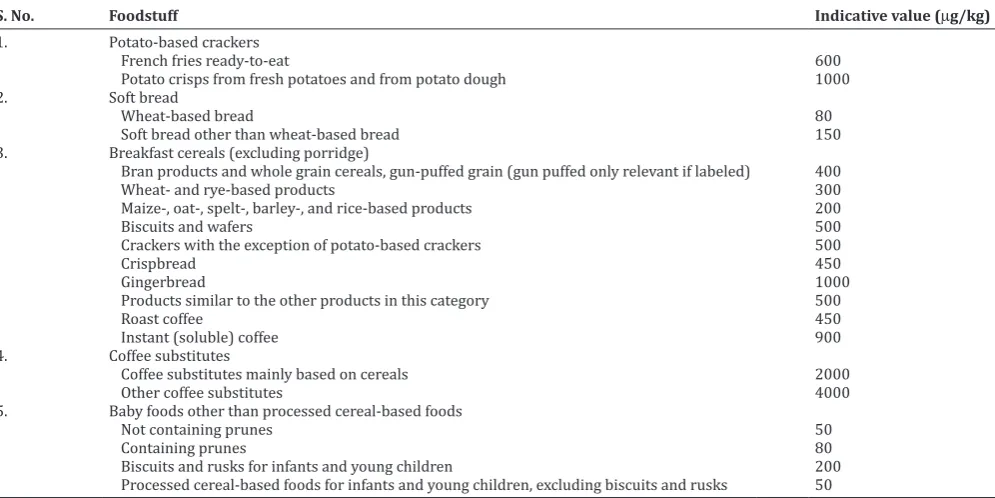
People are exposed to different amounts of ACR through diet, smoking, drinking water, environmental and occupational exposure, but dietary exposure is prominent. ACR primarily found in plant-based foods; treated starchy foods such as potato, cereal, and bakery products [3,21]. A large number of data has been collected by the European Food Safety Authority, Table 1, represents levels of ACR in processed foods (values based on the European Food Safety Authority monitoring data from 2007 to 2010) [7,22,23].
The 2006 exposure assessment for ACR (AA) presented by Food and Drug Administration includes evaluation of 66 food categories (ethnic and regional foods) included. Table 2 represents the data and level of ACR in food. Mean intake was observed to be 0.4 μg/kg b.w. per day [24].
FORMATION
The Maillard reaction is a key reaction for ACR formation: It is the reaction between the naturally present amino acid and reducing © 2018 The Authors. Published by Innovare Academic Sciences Pvt Ltd. This is an open access article under the CC BY license (http://creativecommons. org/licenses/by/4. 0/) DOI: http://dx.doi.org/10.22159/ajpcr.2018.v11i10.27073
sugar within the food [25,26]. ACR is formed within the food during processing, when food is subjected to toasting, roasting, and frying at high temperature. The formation depends on the presence of precursors and the processing conditions such as pH value, temperature, and time. Different pathways of ACR formation are known, but formation through Maillard reaction between the amino acid (asparagine) and sugar (glucose and fructose) is the major pathway [25,27-29]. The α-NH2 of asparagine participates in a nucleophilic addition reaction with the aldehyde group of glucose to form a Schiff base, which undergoes Amadori rearrangement to form a derivative. The latter can undergo decarboxylation to produce ACR (Fig. 1). Research shows that the reducing sugars are the major limiting factor in potatoes [30-32], while free amino acid- asparagine is the major limiting factor in cereal products [33-35].
Asparagine and reducing sugar reaction are the major routes, other routes (from amino acids and fatty acid) also been shown to generate ACR (Fig. 2). The fatty acid oxidation product of acrolein and ammonia, acrylic acid produces ACR [36], which showed that acrolein and ammonia as an important precursor of ACR [37,38]. It is known that acrolein and acrylic acid are produced by degradation of lipids, especially from triglycerides, at the high temperature [23,26,39]. Degradation of amino acids with ammonia can give rise to ACR formation by thermal decay [40]. ACR produce from asparagine and from amino acids that generate acrylic acid directly and produce β-alanine, aspartic acid, and carnosine or indirectly formed cysteine and serine [1]. Zyzak et al. [29] were the first to show that 3-aminopropionamide, a biogenic amine formed during the Maillard reaction. Granvogi and Schieberle provided concrete evidence of the intermediacy of 3-APA in the reaction to ACR [41,42]. Bagdonaite et al. [43] reported the high content of 3-APA in potatoes, but no content was detected in roasted coffee.
As the mechanism of ACR came into light, suppression of these two precursors turned out to be a useful approach in the reduction of ACR in food. Multiple studies have been conducted up-to-date unfolding the toxicological profile of ACR. Neurotoxic properties are well documented, also non-neurotoxic effects such as genotoxic, carcinogenic, reproductive, and developmental effects have been studied on the basis of rodent studies. The review will focus on information concerning cardiotoxicity of ACR.
CARDIOTOXICITY
No epidemiological studies have been reported so far for ACR-induced cardiac abnormalities. Furthermore, the studies conducted suggesting cardiotoxicity are few. Still one cannot disregard the fact that ACR has potential to cause cardiotoxicity/cardiac ill effects. More studies are needed to enlighten the cardiac abnormalities associated with ACR.
Pre-clinical studies data
Animal experiments on rodents conducted by Field et al. and Friedman et al. suggested that no placental or lactational transfer of ACR or its active metabolite in utero or suckling offspring. Schettgen et al. [44] investigated ACR in mother’s (mothers exposed through food) blood is able to cross human placenta and determined the internal exposure Table 1: Distribution of ACR level in different food categories (µg/kg) by EFSA [22]
S. No. Foodstuff Indicative value (µg/kg)
1. Potato-based crackers
French fries ready-to-eat 600
Potato crisps from fresh potatoes and from potato dough 1000
2. Soft bread
Wheat-based bread 80
Soft bread other than wheat-based bread 150
3. Breakfast cereals (excluding porridge)
Bran products and whole grain cereals, gun-puffed grain (gun puffed only relevant if labeled) 400
Wheat- and rye-based products 300
Maize-, oat-, spelt-, barley-, and rice-based products 200
Biscuits and wafers 500
Crackers with the exception of potato-based crackers 500
Crispbread 450
Gingerbread 1000
Products similar to the other products in this category 500
Roast coffee 450
Instant (soluble) coffee 900
4. Coffee substitutes
Coffee substitutes mainly based on cereals 2000
Other coffee substitutes 4000
5. Baby foods other than processed cereal-based foods
Not containing prunes 50
Containing prunes 80
Biscuits and rusks for infants and young children 200
Processed cereal-based foods for infants and young children, excluding biscuits and rusks 50
ACR: Acrylamide, EFSA: European Food Safety Authority
Table 2: Mean Intake of ACR from different foods (µg/kg/b.w./day) (FDA, 2006)
Food Mean AA* intake
(µg/kg b.w./day) Cumulative percentile
French fries 0.070 0.16
Potato chips 0.045 0.28
Breakfast cereal 0.040 0.38
Cookies 0.028 0.47
Brewed coffee 0.027 0.53
Toast 0.023 0.60
Pies and cakes 0.018 0.65
Crackers 0.017 0.73
Soft breads 0.014 0.77
Chile corn carne 0.014 0.80
Corn snacks 0.011 0.82
Pizza 0.007 0.87
Burrito 0.006 0.88
Peanut Butter 0.003 0.89
Breaded chicken 0.003 0.90
Bagels 0.003 0.90
Soup mix 0.003 0.91
of neonates in relation to the body burden of the mother suggesting that the transplacental exposure to ACR could affect newborn. The concentration of ACR-Hb adduct in the blood of neonates were half of the adduct level found in the blood of the mother. ACR-Hb adduct levels in mother and neonates showed a good correlation. This study suggested that transplacental exposure of fetus to acrylamide might raise concerns.Hence, this study proves the hypothesis by field and Friedman wrong. ACR can be hypothesized to cause developmental cardiotoxicity, but no concrete evidence was generated for ACR toxicity to neonates.
In 2008, Mogda et al. [45] reported ACR (2.8 mM for 6 weeks)-induced oxidative stress and myocardial damage in rats. Histopathological findings of the heart tissue showed hemorrhage of the myocardial muscle fibers accompanied by myocardial degeneration and loss of
striations suggesting signs of cardiac toxicity. In another rodent study, ACR administered 0.34g/kg diet for 11 days showed reduced organ weight, reduced levels of antioxidant in heart tissue. An absolute and relative weight of liver, testes, and heart was recorded. Absolute decrease in heart weight was recorded 0.64±0.034 as compared to negative control 0.70±0.10 and level of tissue antioxidant levels showed a significant decrease compared to control group indicating oxidative damage by ACR [46].
Swamy et al. [47] studied the effect of different doses 0.2, 0.4, and 0.6 mg of ACR in developing chick embryo heart. Damage to the heart tissue was proportional to the dose: 0.2 mg - mild degeneration, 0.4 mg - tissue degeneration with necrotic and degenerative changes, and 0.6 mg - collapsed myocardial fibers. Impaired antioxidant defense, analyzed by measuring superoxide dismutase (SOD), GSH peroxidase, catalase, and GSH S-transferase activity.
Rat cardiomyocyte properties with prolonged exposure to ACR concentrations corresponding to dietary levels appeared with altered morphology and increase in the number of immunoreactive signals for connexin 43 at cell junction related to cardiac pathologies. Alteration in the cardiomyocyte morphology, contractions properties, and gap junction distribution was reported in response to ACR toxicity [48].
Jayadev et al. [49] evaluated dietary ACR exposure in male F344 rats. Hematological data, serum enzyme levels, and body and organ weights were analyzed, a significant increase in these parameters was observed in response to toxic insult. A marked increase in lipase levels, decrease in total cholesterol to high-density lipoprotein (HDL) ratio was observed. Lower HDL is an important marker of an increased risk of cardiovascular disease and the ACR related decrease in HDL may be an indicator of disruption in cardiovascular physiology.
Concurrent exposure of aluminum (50 mg/kg b.w.) and ACR (20 mg/kg b.w.) toxicant to rats produced additive/synergistic Fig. 1: Acrylamide formation from asparagine [32]
interactions in hearts of rats. Morphological and physiological changes in cells were observed resulting from coexposure. Significant reduction in b.w. and heart weight were reported. Increased free radical production, leading to the membrane damage evidenced by lipid peroxidation in the form of malondialdehyde (MDA) and increased level of advanced oxidation products in cardiac tissue.GSH levels depleted in heart, decreased the permeability of membrane leading to leakage of enzymes creatine kinase and lactate dehydrogenase, their activities reflect the alterations in the heart. Histological examination of heart showed inflammation and marked vascular congestion [50].
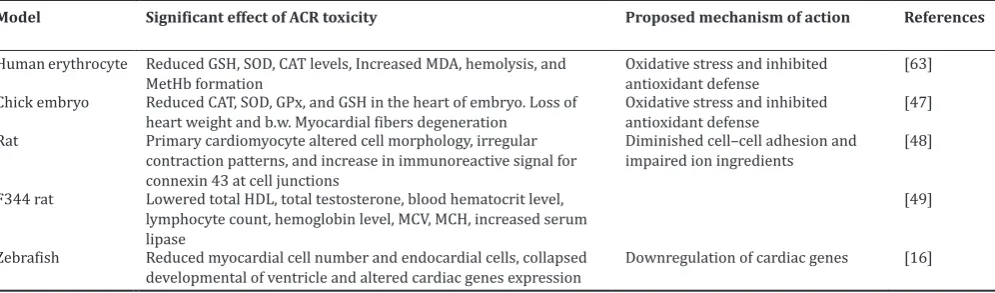
Recently, a pioneer acute toxicity study showed cardiac developmental toxicity of ACR in zebrafish during cardiogenesis. Cardiomyocyte proliferation was reduced significantly and reduced myocardial and endothelial cell number indicated subsided development of ventricle and atrium. Cardiomyocyte proliferation was reduced significantly and reduced myocardial and endothelial cell number and down regulated expression of cardiac progenitor genes indicated subsided development of ventricle and atrium. The study findings conclude that prenatal period may be more vulnerable to ACR developmental cardiotoxicity in humans; transplacental exposure of ACR is the cause of concern to neonate’s health and heart could be the target for the developmental cardiotoxicity and potential risk factor for congestive heart failure [16]. Table 3 represents the studies evaluating the effect of phytochemicals on ACR toxicity. Table 4 represents the studies of ACR toxicity evaluation.
Underlying mechanism
ACR toxicity is likely related to its binding to sulfhydryl groups on protein by forming covalent bonds with electron-rich residues on biological macromolecules and inactivating the enzymes involved in
DNA repair [17,18,51]. ACR alkylates proteins such as hemoglobin, enzymes, and DNA [1], through a Michael addition-type reaction, which has implications for its genotoxicity and carcinogenic potential. Hemoglobin ACR adduct formation emerged as a useful biomarker of human exposure [52,53]. Similar was observations were reported in other studies [20,44,54].
Oxidative stress
A heart is composed primarily of long-lived, post-mitotic cells, which prefer fatty acids as the substrate for energy production, so it becomes more susceptible to oxidative damage than other tissues [55].
Oxidative stress, a consequence of increased production of free radical and reactive oxygen species and/or decrease in antioxidant defense, leads to damage and disruption of biological membrane and macromolecules [56]. Availability of more evidence shows that cardiovascular mechanisms are strongly linked to the production of free radicals or imbalance between antioxidants–oxidants [57,58]. It is well known that there is an indirect and direct relation between oxidative damage that shares a mutual pathway of molecular and cellular damage. Numerous studies represent the relationship between neurotoxicity and oxidative stress [9,17,59-62]; the review emphasizes the relation between ACR oxidative stress and cardiotoxicity.
In an in vitro study, ACR-induced oxidative stress in human erythrocytes; increases MetHb formation, SOD activity, MDA formation, and hemolysis due to the destruction of erythrocytes cell membrane [64]. Reactive oxygen species are continuously generated by the slow autooxidation of hemoglobin produces methemoglobin; unable to carry oxygen [63]. Chronic administration of acrylamide at a dose
Table 3: Effect of phytochemicals on ACR toxicity
Treatment Model Effect of treatment on ACR toxicity Proposed mechanism of action References
Catechin and neem leaves extract Rat Restore GSH, MDA, and CAT in liver and modulate injuries in liver, kidney, lung, heart, spleen, and stomach
Detoxification with GSH, antioxidant, and anti-inflammatory activities [45]
Curcuma longa powder Rat Restore body and organ weight, GSH, MDA, SOD in liver, heart, and kidney. AST, ALT, ALP in liver
Detoxification with GSH,
antioxidant and anti-inflammatory, hepatoprotective
[46]
Extra virgin olive oil Rat Restore GSH, CAT, Gpx, SOD, in heart, decrease CK-MB, LDH in heart, decrease in lipid profile, and modulate injuries in cardiac muscle
Antioxidant and Anti-inflammatory, Lipid level lowering, cardioprotective [50]
GSH: Glutathione reduced, MDA: Malondialdehyde, CAT: Catalase, SOD: Superoxide dismutase, GPx: Glutathione peroxidase, LDH: Lactate dehydrogenase, AST: Aspartate aminotransferase, ALT: Alanine transaminase, ALP: Alkaline phosphatase, CK-MB: Creatine kinase-muscle/brain
Table 4: ACR cardiotoxicity evaluation
Model Significant effect of ACR toxicity Proposed mechanism of action References
Human erythrocyte Reduced GSH, SOD, CAT levels, Increased MDA, hemolysis, and
MetHb formation Oxidative stress and inhibited antioxidant defense [63]
Chick embryo Reduced CAT, SOD, GPx, and GSH in the heart of embryo. Loss of
heart weight and b.w. Myocardial fibers degeneration Oxidative stress and inhibited antioxidant defense [47] Rat Primary cardiomyocyte altered cell morphology, irregular
contraction patterns, and increase in immunoreactive signal for connexin 43 at cell junctions
Diminished cell–cell adhesion and
impaired ion ingredients [48]
F344 rat Lowered total HDL, total testosterone, blood hematocrit level, lymphocyte count, hemoglobin level, MCV, MCH, increased serum lipase
[49]
Zebrafish Reduced myocardial cell number and endocardial cells, collapsed
developmental of ventricle and altered cardiac genes expression Downregulation of cardiac genes [16]
which does not induce neurotoxicity alters blood viscosity. Increased blood viscosity means decreased fluidity of blood which might increase chances of cardiovascular disease [65].A subsequent study evaluated the toxicity of ACR exposure in male F344 rats. Hematological finding show decreased levels of hemoglobin, mean corpuscular volume, mean corpuscular Hb and mean corpuscular Hb concentrations, and lowered hematocrit value [49]. These systemic effects can be a possible cause of anemia, and anemia is strongly known to link with cardiovascular disease [66]. A Korean cohort study, enrolled 476,529 Korean adults to investigate the relationship between hemoglobin concentration and the incidence of cardiovascular disease. To minimize bias, subjects with previous history of cardiovascular disease or cancer were excluded. Those with extreme or low level (above 10 g/dl or above 20 g/dl) Hb levels were also excluded. Finally, 407,858 subjects were included, both men and women. The subjects were subdivided into different quintiles due to a gender difference in hemoglobin levels. The findings of the study demonstrated a positive correlation between hemoglobin levels and cardiovascular disease risk factors. Low or high hemoglobin levels showed a high risk for CVD both for men and women [67]. Some of the parameters were left out such as red blood cell distribution width (RDW), mean corpuscular volume, and mean corpuscular hemoglobin which is linked to CVD, especially RDW, it is known to be related to CVD mortality [68]. Furthermore, anemia or low hemoglobin levels contribute to myocardial ischemia and left ventricular hypertrophy [69]. The link between anemia and hypoxia; anemia can cause hypoxia due to decreased hemoglobin level and through several other hemodynamic and no hemodynamic compensatory mechanisms [70]. Another cohort study conducted by Choncol and Neilson [71], the study states that hemoglobin levels are independently associated with increased risk for new cardiac events. As ACR-induced oxidative stress has been observed to alter the hemoglobin levels, it may be an indicator of perturbation in cardiovascular physiology.
Depletion of antioxidants due to ACR toxicity has been indicated in various studies. Decreased level of GSH and SOD results in increased oxidative damage to proteins and DNA. Mogda et al. and Shawakia et al. [45,46] reported a significant decrease in antioxidant levels and lipid peroxidation in heart tissues. ACR forms covalent bonds with sulfhydryl groups of proteins, however, the reactivity of free thiols is greater than that of other soft nucleophile centers, and consequently, the preferential in vivo target is SH groups on protein cytosine residues and GSH [19] which explains depletion of GSH stores due to the oxidative stress. ACR generates reactive oxygen species which enhances lipid peroxidation. Cellular fatty acids are readily oxidized by ROS to produce lipid peroxyl radicals and lipid hydroperoxides [72]. Lipid peroxyl radicals propagate into MDA. MDA as the biomarker of lipid peroxidation is used to investigate oxidative damage of proteins induced by ACR [45,46].
Increase levels of cholesterol, triglycerides, and HDL levels are related to cardiac abnormalities. Cardiovascular disease related to increasing lipids levels are atherosclerosis, endothelial dysfunction, vascular inflammation, myocardial infarction, coronary heart disease, and peripheral artery disease [73]. ACR-induced reduction in HDL level may increase the risk of cardiovascular disease [49]. Lower HDL is an important marker of an increased risk of cardiovascular disease [74].
Gene expression
Downregulated expression of cardiac genes is reported in a recent study by Huang et al. [16] during cardiogenesis. Altered cardiac gene expression strongly linked to disrupted cardiogenesis which resulted in the formation of the cardiovascular system deficient embryo of zebrafish. This is the only study up-to-date representing the alteration in gene expression due to ACR in the heart.
Myocardial apoptosis
Loss of cardiac myocytes is a fundamental part of the myocardial injury that initiates or aggravates cardiomyopathy and leads to
premature death [75,76]. An important mode of myocardial cell loss is apoptosis [77-79] which has been demonstrated in the myocardium of heart failure patients [80,81]. Apoptosis may be one of the pathways for ACR to induce cardiac injury but no apoptosis have been reported in the above-cited studies.
MITIGATION STRATEGIES
No treatment is currently devised or known for ACR cardiotoxicity; antioxidants might emerge as potential therapeutics in the near future. Modifying our eating habits or modifying the food itself turned might be the treatment we need as “Prevention is better than cure.”
Establishment of a reliable, rapid, and simple test method still remains a challenge although a number of the potential strategies and analytical methods have been developed. This review summarizes the mitigation strategies for preventing the formation of ACR in food.
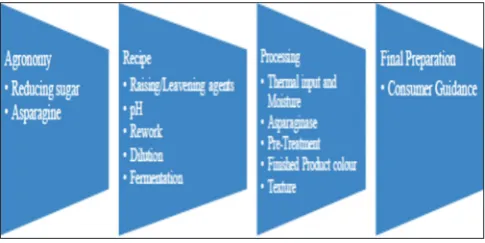
Falling ACR in food at domestic and industrial level can help out the community not only form food hazards but also make awareness about the food safety. Food Drink Europe a confederation of Food industry provides ACR toolbox (Fig. 3). The “toolbox” reflects the results of more than 10 years of cooperation between the food industry and national authorities of the European Union to investigate pathways of formation of ACR and potential intervention steps to reduce exposure.
Toolbox defines food products based on potato-based products, cereal/grain-based products, coffee, roasted grain and substitutes, infant foods. The objective of the toolbox is to provide practical tools that food manufacturers can evaluate to reduce ACR according to a particular situation. The Agronomical approach involves minimizing reducing sugar, selection of crop varieties free of asparagine. Recipe changes including the addition of calcium salts and amino acids, change in pH, and fermentation process in potato-based products. In case of cereal-based products, focus on mitigation of ACR in whole grain and bran products. Pretreatment with commercially available enzyme asparaginase accounts for the majority of more recent measures in the toolbox. Some effective mitigation methods have been used only for few specific products because they are in direct with conflict with health target [82].
Food business operators follow ALARA: “As low as reasonably achievable,” means that food business operators should take every reasonable measure to reduce the presence of a given contaminant in a final product taking into account other legitimate considerations, change of parts of a process, or even a whole process if technologically feasible by operator can be done. The tools identified contained in the Food Drink Europe Toolbox are possible trial planned to limit ACR levels in finishing product through interventions at various stages of manufacturing [83].
In respect to these, this review will summarize the effective and potentially exploitable technological interventions of ACR minimization. The strategies up-to-date can be summarized into two prominent approaches.
1. Removal of precursor - agronomical selection.
2. Interference with the Maillard reaction - Processing and ultimately prevent the formation of undesirable Maillard products.
Raw materials
Asparagine content is higher in potatoes products, which represents the major factor for the high amount of ACR formation [84-87]. The correlation between sugar content and ACR in 16 different varieties was reported by De Wilde [88]. Potato varieties with low reducing sugar can be effective in reduction of ACR level [31,89,90]. Variety, harvest year, fertilization, storage, soil properties, condition influence formation of ACR in potatoes products [87,91,92], and cereal products [93].
Soil properties highly influence the crop yield due to fertility, water holding capacity, temperature, and drainage. A study investigated the effect of tuber mineral composition, on the expression of asparagine and reducing sugar in tubers [94]. Fertilization is a major factor in crop production; nitrogen fertilization level greatly affects the formation of ACR. Decreased nitrogen fertilization enhances ACR formation due to increased reducing sugar level [91], whereas moderate level in combination with potassium results in decreased ACR level by reducing asparagine and reducing sugar level [95]. The effect of nitrogen and sulfur fertilization on free amino acids, sugars, and ACR formation potential; the effect is type and variety dependent increase in sugars and amino acids on deprivation of nitrogen fertilization, also increased ACR in response to increased nitrogen [96]. Legal fertilization limit should be taken into account to obtain ACR free crop. Climate condition near to harvest period may affect the susceptibility of ACR formation. De Meulenaer et al. showed the significant impact of variable climatological conditions on reducing sugar and total free amino acid of tubers [97].
Harvested tubers are stored up for months, storage duration influence sugar accumulation in tubers. Senescent sweetening results from an enzymatic process which occurs more rapidly at higher storage temperature (>8°C) followed by sprout growth [33]. Cold temperature and senescent sweating are the causes of sugar accumulation in potatoes during storage. Storing at low temperature (>8°C) [98] turned out to be a useful approach with major effect on reducing sugar accumulation [99-103]. Storing at 8°C proved to ideal temperature [104] and reducing sugar is not influenced at 8°C [87,105].
Process changes
Initial strategies involved the control of processing conditions; cutting, blanching, lowering pH, frying, drying, use of additives such as enzymes, amino acids/protein rich substances, antioxidants, divalent, and monovalent cations have been extensively studied and utilized to mitigate ACR formation.
The peripheral region of tubers have high reduced sugar content, slicing the region may contribute to ACR reduction [106]. Blanching is an important process in the production of French fries, during this process enzymes are inactivated a gelatinized layer of starch is developed which limits oil absorption and improve texture [107]. Blanching assisted reduction in ACR formation in the final product [5,108-111]. Hence, these conditions can be manipulated to optimize reducing sugar extraction and ACR free final product. However, potential loss of mineral and vitamin occurs on excessive blanching.
Time and baking temperature have the strong correlation information of ACR, level of ACR increases with increment in temperature [112,113], but a slow linear decrease occurs with time [114]. The similar correlation of baking temperature and time was observed [115,116]. ACR could also be formed at the temperature below 100°C (Biedermann and Grob). Higher temperature combined with prolonged heating times produces the reduced level of ACR due to elimination/ degradation reactions [117]. It can be a tool of interest that can be exploited industrially but such intense heat treatment is responsible for changes in sensory attributes, such as color, flavor, and texture and these changes may lead to the formation of the inconsumable
product [118]. A water content of food may have some role in the formation of ACR during heating. Lower moisture promotes ACR formation [114,119,120]; keeping humidity high proven to be effective in ACR mitigation in bakery products [112]. The approach is utilized for foods with relatively high residual moisture, whereas for most cereal derivatives lower moisture contents are required. In respect to the above problem, the use of deck ovens appeared to be more convenient and more advantageous in reducing ACR then convection ovens, which are based on forced air circulation.
Use of additives
Use of additives such as organic acids, amino acids, and mono- and divalent cations, as a mitigating strategy to control ACR content in foods, has been extensively discussed.
Mono- and divalent cations reduce ACR formation. They could interact with asparagine and prevent the formation of Schiff base, ultimately reduction in ACR [90,121-123]. Antioxidants can play important role in the reduction of ACR, an addition of rosemary herb, bamboo leaves extract to the oil used for frying potatoes slices resulted in decreased ACR formation [124,125]. Biedermann et al. [126] reported a weak decrease in ACR level by the addition of ascorbic acid to the potato model. However, controversy surrounds the antioxidants potential to reduce ACR, positive and negative relationships have been observed [28,125,127-130]. The correlation between antioxidant phytochemicals and ACR has been reviewed [61]. The variation in result might be due to the presence of amino acids in extracts, decrease in pH, or the variability might be due to different food models. Effect of additives such as amino acids or protein-rich substances reduced the ACR content in foods [115,131,132]. Formation of ACR decreased 50% when cysteine and methionine were added to the cracker and potato dough [133,134]. On the contrary, cysteine does not contribute the formation of ACR in crisps bread was investigated [135] due to acidic pH, adduct formation could not occur. High pH favors ACR formation, acidic pH and enzymatic extraction had no significant effect on concentrations [136]. Reduced pH drastically reduces ACR levels during frying and baking [115,137] but at the expense of high levels of process contaminants such as 3-monochloropropane-1, 2-diol [138]. Instability of Schiff base at acidic pH might be the reason for ACR formation reduction.
Enzymatic approach emerged as a potential approach by means of which ACR reduction could be done. Fermentation can effectively reduce the ACR level before food processing step [138].
Asparaginase is an enzyme distributed in animals, plants, and living organism [139]. It has received “generally recognized as safe” status from the US government. It has also been given a favorable evaluation as a food additive by the Joint FAO/WHO expert committee. It has been known to possess excellent therapeutic properties and clinically acceptable for its antitumor activity. Microbial production was initially reported in Escherichia coli and other bacterial strains such as Corynebacterium glutamicum, Erwinia carotovora, and Staphylococcus aureus [140]. It accounts for the 40% of the total worldwide sale of antileukemic and antilymphoma agents [141]. Numerous studies have been emerged monitoring the mitigation of ACR formation by means of asparaginase treatment. Prevent as from DSM and Acrylaway from Novozymes A/S are the two commercially available products used in industry for ACR mitigation [142]. Asparagine hydrolyzes to aspartic acid and ammonia can reduce ACR formation in foods by removal of the precursor asparagines [29,33,143-148]. Blanching can enhance the performance of enzyme [149].
ALTERNATIVE STRATEGIES
technology provides the accelerated drying process at the lower temperature. Vacuum lowers the boiling point of water and it leads to evaporation at lower temperatures. This way the drying can take place at a lower temperature (below 100°C) without compromising the final product properties [151].
A combined conventional and vacuum baking process effectively reduces ACR formation in biscuits by decreasing the thermal load. The dough was partially baked at 220°C for 2–4 min under usual situation was post-baked under vacuum drying at 180°C and 500 mbar for 4–6 min until desired moisture content was obtained [152]. Frying condition significantly alters the formation of ACR level, since it is the final stage where ACR is formed. Vacuum frying of potatoes slices at reduced oil bath temperature has been demonstrated to reduce ACR level 98% preserving nutritional value [153]. Browning and flavor development caused by the Maillard reaction occur at this step. Frying at high thermal load generates higher ACR [154,155]. As frying occurs at a temperature of 160–195°C, lowering the temperature is the way to reduce ACR, which is more suitable if done under vacuum conditions. 51% ACR content reduction as the frying temperature decreased from 180°C to 165°C and 63% reduction during vacuum frying as the temperature drop was 140–125°C in potato chips of different potato cultivars [156]. Vacuum frying operates below atmospheric pressure, preferably at, <50 Torr [157]. The boiling point of both oils and the moisture in food are lowered due to low pressure [158]. Furthermore, lack of air prevents oxidation which provides food with better nutrition and quality [159-161]. 50% reduction of ACR formation was achieved by vacuum roasting in coffee beans as compared to conventional roasting [162]. Radiofrequency (RF) a promising approach has been introduced as the final drying step to decrease thermal load, doing so desired moisture content is attained in the final product. Earlier, RF has been utilized in food processing such as thawing of frozen foods, tempering, cooking, and roasting successfully [163]. Few studies have been carried out evaluating the effect of RF on ACR formation. The effect of RF heating on ACR formation was investigated in leavened cakes and short dough biscuits. The alternative baking process provided 35% decrease in ACR in short dough biscuits then in baked by conventional heating [164]. Another study examined the effect of RF post-drying of partially baked cookies on the ACR content, texture, and color of the final product. ACR content reduction was reported to be 52.3% and 30% reduction when post-dried in RF oven and subjected to conventional baking in the oven. RF in combination with conventional baking resulted in less surface browning of cookies [165]. Kocadagli et al. stated that MRP (Maillard Reaction Products) might be considered as useful recipe modifiers to have less ACR in cookies to be obtained by means of a combined conventional baking and RF post-baking drying process. It delivers acceptable color and texture properties to cookies containing less ACR [166]. Fiore et al. reported that the ACR concentration was 250% higher in the conventional cooked samples then in those cooked in a combined RF oven. They concluded that RF cooking could be proposed as an effective mitigation strategy for ACR formation in potato samples [167].
The main motive of the process should be preserving the attributes of the final product which are directly linked to commercial success. For satisfying the market and industrial demand, a need to create new approach is demanded which offers high variability with efficiency.
Infrared radiation processing has become quite popular in recent years and is being utilized for the different thermal process in the industry such as drying, frying, and pasteurization [168]. Infrared drying has been extensively studied in recent years. It offers numerous advantages, such as intermittent energy source, easy control of the process parameters, uniform temperature distribution, and clean operational environment along with space saving [169-171]. IR can be integrated easily with convective, conductive, vibration, freeze, vacuum, and microwave technologies which increase its applicability to a wider extent [166,172-174]. Par-cooking far-infrared heating and dry steam treatments used to make low-fat crisps may also reduce ACR. Specific studies utilizing solely infrared radiation heating in the reduction of ACR are fewer, however, from the perspective of the decrease in thermal load; reduction in degradation and
preserving food quality with less energy requirement, IR heating is an efficient method. A recent study by Omotosho et al. evaluated the effect of conventional frying and infrared frying on the ACR formation in Musa paradisiaca. IR frying showed a significant reduction in ACR formation in the ripe and unripe sample [175].
CONCLUSION
Cardiotoxicity of ACR is not fully elucidated as only few research papers have demonstrated this toxicity. Evidence suggests that oxidative stress mechanism and altered myocardial gene expression plays a vital role in ACR-induced cardiotoxicity. Accordingly, dietary components which possess antioxidant properties are likely to be protective against ACR-induced cardiotoxicity. The prenatal period may be a window of vulnerability to ACR in humans and efforts should be made to reduce the transplacental exposure of AA to the fetus and pregnant mother. A firm conclusion cannot be drawn based on few studies; more research is needed to establish the cardiotoxicity of ACR.
AUTHORS CONTRIBUTION
Taranbir Singh has majorly performed role in concept, design, literature survey, data and scientific writing.
Ajay Singh Kushwah has provided the help in developed concept and designs the intellectual content, innovations, and also provides scientific advice, guidance, and mentorship in scientific writing.
CONFLICT OF INTEREST
The authors declare that there is no conflict of interest regarding the publication of this article.
REFERENCES
1. Friedman M. Chemistry, biochemistry, and safety of acrylamide. A review. J Agric Food Chem 2003;51:4504-26.
2. IARC. Acrylamide. In: IARC Monographs on the Evaluation of Carcinogenic Risks to Humans. Some Industrial Chemicals. Vol. 60. Geneva, Switzerland: WHO; 1994. p. 389-433.
3. European Union Risk Assessment Report, Acrylamide. Luxembourg: Office for Official Publications of the European Communities; 2002. p. 1-207.
4. Tareke E, Rydberg P, Karlsson P, Eriksson S, Törnqvist M. Analysis of acrylamide, a carcinogen formed in heated foodstuffs. J Agric Food Chem 2002;50:4998-5006.
5. HEATOX: Heat-generated Food Toxicants: Identification, Characterization and Risk Minimization. Vol. 21. Lund, Sweden: Lund University; 2007. p. 25-7.
6. Katz JM, Winter CK, Buttrey SE, Fadel JG. Comparison of acrylamide intake from western and guideline-based diet using probabilistic technique and linear programming. Food Chem Toxicol 2012;50:877-83. 7. EFSA. Scientific Opinion. Update on acrylamide levels in food from
monitoring years 2007 to 2010. EFSA J 2011;10:1-38.
8. Medeiros VR, Mestdagh F, De Meulenser B. Acrylamide formation in fried potato products-presents and future, a critical review on mitigation strategies. Food Chem 2012;113:1138-54.
9. LoPachin RM. The changing view of acrylamide neurotoxicity. Neurotoxicology 2004;25:617-30.
10. LoPachin RM, Ross JF, Reid ML, Das S, Mansukhani S, Lehning EJ,
et al. Neurological evaluation of toxic axonopathies in rats: Acrylamide and 2,5-hexanedione. Neurotoxicology 2002;23:95-110.
11. Zenick H, Hope E, Smith MK. Reproductive toxicity associated with acrylamide treatment in male and female rats. J Toxicol Environ Health 1986;17:457-72.
12. Tyl RW, Friedman MA. Effects of acrylamide on rodent reproductive performance. Reprod Toxicol 2003;17:1-3.
13. Awad ME, Abdel-Rahman MS, Hassan SA. Acrylamide toxicity in
isolated rat hepatocytes. Toxicol In Vitro 1998;12:699-704.
14. Friedman MA, Dulak LH, Stedham MA. A lifetime oncogenicity study in rats with acrylamide. Fundam Appl Toxicol 1995;27:95-105. 15. Johnson KA, Gorzinski SJ, Bodner KM, Campbell RA, Wolf CH,
Friedman MA, et al. Chronic toxicity and oncogenicity study on
16. Huang M, Jiao J, Wang J, Xia Z, Zhang Y. Exposure to acrylamide induces cardiac developmental toxicity in zebrafish during cardiogenesis. Environ Pollut 2018;234:656-66.
17. LoPachin RM, Gavin T. Molecular mechanism of acrylamide neurotoxicity: Lessons learned from organic chemistry. Environ Health Perspect 2012;120:1650-7.
18. Schwöbel JA, Koleva YK, Enoch SJ, Bajot F, Hewitt M, Madden JC,
et al. Measurement and estimation of electrophilic reactivity for
predictive toxicology. Chem Rev 2011;111:2562-96.
19. Calleman CJ. The metabolism and pharmacokinetics of acrylamide: Implications for mechanisms of toxicity and human risk estimation. Drug Metab Rev 1996;28:527-90.
20. Hagmar L, Törnqvist M, Nordander C, Rosén I, Bruze M, Kautiainen A,
et al. Health effects of occupational exposure to acrylamide using
hemoglobin adducts as biomarkers of internal dose. Scand J Work Environ Health 2001;27:219-26.
21. SNFA Swedish National Food Administration: Analysis of Acrylamide in Food; 2002.
22. Matthaus B, Haase NU. Acylamide in ready to eat foods. In: Kotzekidou P, editors. Food Hygiene and Toxicology in Ready-to-Eat
Foods. 1st ed. New York: Academic Press; 2016. p. 353-82.
23. Gertz C, Klostermann S. Analysis of acrylamide and mechanisms of its formation in deep-fried products. Eur J Lipid Sci Technol 2002;104:762-71.
24. Dinovi M. The 2006 Exposure Assessment for Acrylamide 2006. Available from: https://www.fda.gov/Food/ FoodborneIllnessContaminants/ ChemicalContaminants/ucm2006782.htm.
25. Stadler RH, Blank I, Varga N, Robert F, Hau J, Guy PA, et al. Food
chemistry: Acrylamide from maillard reaction products. Nature 2002;419:449-50.
26. Mottram DS, Wedzicha BL, Dodson AT. Acrylamide is formed in the maillard reaction. Nature 2002;419:448-9.
27. Yaylayan VA, Wnorowski A, Perez CL. Why asparagines needs carbohydrate to generate acrylamide. J Agric Food Chem 2003;51:1753-7. 28. Becalski A, Lau BP, Lewis D, Seaman SW. Acrylamide in foods:
Occurrence, sources, and modeling. J Agric Food Chem 2003;51:802-8. 29. Zyzak DV, Sanders RA, Stojanovic M, Tallmadge DH, Eberhart BL,
Ewald DK, et al. Acrylamide formation mechanism in heated foods.
J Agric Food Chem 2003;51:4782-7.
30. De Wilde T, De Meulenaer B, Mestdagh F, Verhé R, Govaert Y,
Fraselle S, et al. Acrylamide formation during frying of potatoes:
Thorough investigation on the influence of crop and process variables. Commun Agric Appl Biol Sci 2004;69:109-12.
31. Sanny M, Jinap S, Bakker EJ, van Boekel MA, Luning PA. Is lowering reducing sugars concentration in french fries an effective measure to reduce acrylamide concentration in food service establishments? Food Chem 2012;135:2012-20.
32. Weisshaar R. Acrylamide in heated potato products - Analytics and formation routes. Eur J Lipid Sci Technol 2004;106:786-92.
33. Amrein TM, Schonabachler B, Escher F, Amado R. Acrylamide in gingerbread : Critical factors for formation and possible ways for reduction. J Agric Food Chem 2004;2004:4282-8.
34. Stadler RH. The Formation of Acrylamide in Cereal Products and Coffee. Cambridge: Woodhead Publishing Limited; 2006. p. 23-40. 35. Claus A, Carle R, Schieber A. Acrylamide in cereal products: A review.
J Cereal Sci 2008;47:118-33.
36. Yasuhara A, Tanaka Y, Hengel M, Shibamoto T. Gas chromatographic investigation of acrylamide formation in browning model systems. J Agric Food Chem 2003;51:3999-4003.
37. Mestdagh F, Castelein P, Van Peteghem C, De Meulenaer B. Importance of oil degradation components in the formation of acrylamide in fried foodstuffs. J Agric Food Chem 2008;56:6141-4.
38. Lingnert H, Grivas S, Jägerstad M, Skog K, Törnqvist M, Åman P. Acrylamide in food: Mechanisms of formation and influencing factors during heating of foods. Scand J Nutr 2002;46:159-72.
39. Umano K, Shibamoto T. Analysis of acrolein from heated cooking oils and beef fat. J Agric Food Chem 1987;35:909-12.
40. Sohn M, Ho CT. Ammonia generation during thermal degradation of amino acids. J Agric Food Chem 1995;43:3001-3.
41. Granvogi M, Schieberle P. Thermally generated 3-aminopropionamide as a transient intermediate in the formation of acrylamide. J Agric Food Chem 2006;54:5933-8.
42. Granvogi M, Jezussek M, Koehler P, Schieberle P. Quantification of 3-aminopropionamide in potatoes - A minor but potent precursor in acrylamide formation. J Agri Food Chem 2004;52:4751-57.
43. Bagdonaite K, Derler K, Murkovic M. Determination of acrylamide during roasting of coffee. J Agric Food Chem 2008;56:6081-6.
44. Schettgen T, Kütting B, Hornig M, Beckmann MW, Weiss T,
Drexler H, et al. Trans-placental exposure of neonates to acrylamide –
a pilot study. Int Arch Occup Environ Health 2004;77:213-6. 45. Mansour MK, Ibrahim E, El-Kholy MM, El- Madawy SA. Antioxidant and
histopathological effect of catechin and neem leaves extract in acrylamide toxicity of rats. Egypt J Comp Path Clin Path 2008;21:290-313.
46. El-Halim SS, El-Adawi AE. Modulation of acrylamide-induced
oxidative damage in rat tissues by Curcuma longa. Med J Cairo Univ
2008;74:639-47.
47. Swamy MV, Subbaiah KV, Bukke S, Raju KT. Toxic effect of acrylamide on body weight, the study of antioxidants and histoarchitecture of heart in the developing Chick embryo. Indian J Appl Res 2013;3:27-30.
48. Walters B, Hariharan V, Huang H. Dietary levels of acrylamide affect rat cardiomyocyte properties. Food Chem Toxicol 2014;71:68-73. 49. Raju J, Roberts J, Taylor M, Patry D, Chomyshyn E, Caldwell D,
et al. Toxicological effects of short-term dietary acrylamide exposure
in male F344 rats. Environ Toxicol Pharmacol 2015;39:85-92. 50. Ghorbel I, Khemakhem M, Boudawara O, Marrekchi R, Jamoussi K,
Ben Amar R, et al. Effects of dietary extra virgin olive oil and its
fractions on antioxidant status and DNA damage in the heart of rats co-exposed to aluminum and acrylamide. Food Funct 2015;6:3098-108. 51. Hinson JA, Roberts DW. Role of covalent and non covalent
interactions in cell toxicity: Effects of proteins. Annu Rev Pharmacol Toxicol 1992;32:471-510.
52. Paulsson B, Grawé J, Törnqvist M. Hemoglobin adducts and micronucleus frequencies in mouse and rat after acrylamide or N-methylolacrylamide treatment. Mutat Res 2002;516:101-11. 53. Pérez HL, Segerbäck D, Osterman-Golkar S. Adducts of acrylonitrile
with hemoglobin in nonsmokers and in participants in a smoking cessation program. Chem Res Toxicol 1999;12:869-73.
54. Bergmark E. Hemoglobin adducts of acrylamide and acrylonitrile in laboratory workers, smokers and nonsmokers. Chem Res Toxicol 1997;10:78-84.
55. Sohal RS, Weindruch R. Oxidative stress, caloric restriction, and aging. Science 1996;273:59-63.
56. Trevisan M, Browne R, Ram M, Muti P, Freudenheim J, Carosella AM,
et al. Correlates of markers of oxidative status in the general
population. Am J Epidemiol 2001;154:348-56.
57. Dhalla NS, Temsah RM, Netticadan T. Role of oxidative stress in cardiovascular diseases. J Hypertens 2000;18:655-73.
58. Elahi MM, Kong YX, Matata BM. Oxidative stress as a mediator of cardiovascular disease. Oxid Med Cell Longev 2009;2:259-69. 59. Yousef MI, El-Demerdash FM. Acrylamide-induced oxidative stress
and biochemical perturbations in rats. Toxicology 2006;219:133-41. 60. Prasad SN, Muralidhara. Evidence of acrylamide induced oxidative stress
and neurotoxicity in drosophila melanogaster - Its amelioration with spice active enrichment: Relevance to neuropathy. Neurotoxicology 2012;33:1254-64.
61. Kahkeshani N, Saeidnia S, Abdollahi M. Role of antioxidants and phytochemicals on acrylamide mitigation from food and reducing its toxicity. J Food Sci Technol 2015;52:3169-86.
62. Uthra C, Shrivastava S, Jaswal A, Sinha N, Reshi MS, Shukla S, et al.
Therapeutic potential of quercetin against acrylamide induced toxicity in rats. Biomed Pharmacother 2017;86:705-14.
63. Catalgol B, Ozhan G, Alpertunga B. Acrylamide-induced oxidative stress in human erythrocytes. Hum Exp Toxicol 2009;28:611-7. 64. Abugo OO, Rifkind JM. Oxidation of hemoglobin and the enhancement
produced by nitroblue tetrazolium. J Biol Chem 1994;269:24845-53.
65. Arıhan O, Seringeç NB, Gürel Eİ, Dikmenoğlu NH. Effects of
oral acrylamide intake on blood viscosity parameters in rats. Clin Hemorheol Microcirc 2011;47:45-52.
66. Mozos I. Mechanisms linking red blood cell disorders and cardiovascular diseases. Biomed Res Int 2015;2015:682054.
67. Kim MY, Jee SH, Yun JE, Baek SJ, Lee DC. Hemoglobin concentration and risk of cardiovascular disease in korean men and women - The korean heart study. J Korean Med Sci 2013;28:1316-22.
68. Patel KV, Ferrucci L, Ershler WB, Longo DL, Guralnik JM. Red blood cell distribution width and the risk of death in middle-aged and older adults. Arch Intern Med 2009;169:515-23.
69. Bellotto F, Cati A. Anemia and myocardial ischemia: Relationships and interferences. Recenti Prog Med 2006;97:153-64.
70. Metivier F, Marchais SJ, Guerin AP, Pannier B, London GM. Pathophysiology of anemia: Focus on the heart and blood vessels. Nephrol Dialysis Transplant 2000;15:14-8.
72. Rice-Evans C, Burdon R. Free radical-lipid interactions and their pathological consequences. Prog Lipid Res 1993;32:71-110.
73. Upadhyay RK. Emerging risk biomarkers in cardiovascular diseases and disorders. J Lipids 2015;2015:971453.
74. Miller M, Seidler A, Kwiterovich PO, Pearson TA. Long-term predictors of subsequent cardiovascular events with coronary artery disease and “desirable” levels of plasma total cholesterol. Circulation 1992;86:1165-70.
75. Lorell BH. Transition from hypertrophy to failure. Circulation 1997;96:3824-7.
76. Francis GS, Carlyle WC. Hypothetical pathways of cardiac myocyte hypertrophy: Response to myocardial injury. Eur Heart J 1993;14 Suppl J:49-56.
77. Sabbah HN, Sharov VG. Apoptosis in heart failure. Prog Cardiovasc Dis 1998;40:549-62.
78. Sharov VG, Sabbah HN, Shimoyama H, Goussev AV, Lesch M,
Goldstein S, et al. Evidence of cardiocyte apoptosis in myocardium of
dogs with chronic heart failure. Am J Pathol 1996;148:141-9. 79. Li Z, Bing OH, Long X, Robinson KG, Lakatta EG. Increased
cardiomyocyte apoptosis during the transition to heart failure in the spontaneously hypertensive rat. Am J Physiol 1997;272:H2313-9. 80. James TN. Normal and abnormal consequences of apoptosis in the
human heart. Annu Rev Physiol 1998;60:309-25.
81. Olivetti G, Abbi R, Quaini F, Kajstura J, Cheng W, Nitahara JA, et al.
Apoptosis in the failing human heart. N Engl J Med 1997;336:1131-41. 82. Richard S, Alfred S. Acrylamide Formation Mechanisms. In:
Gokmen V, editors. Acrylamide in Food: Analysis, Content and
Potential Health Effects. 1st ed. New York: Academic Press; 2016.
p. 1-17.
83. Food Drink Europe. Food Drink Europe Acrylamide Toolbox. Food Drink Europe; 2011. p. 2-47. Available from https://www. fooddrinkeurope.eu
84. Amrein TM, Bachmann S, Noti A, Biedermann M, Barbosa MF,
Biedermann-Brem S, et al. Potential of acrylamide formation, sugars,
and free asparagine in potatoes: A comparison of cultivars and farming systems. J Agric Food Chem 2003;51:5556-60.
85. Amrein TM, Schönbächler B, Rohner F, Lukac H, Schneider H,
Keiser A, et al. Potential for acrylamide formation in potatoes: Data
from the 2003 harvest. Eur Food Res Technol 2004;219:572-8. 86. Becalski A, Lau BP, Lewis D, Seaman SW, Hayward S, Sahagian M,
et al. Acrylamide in French fries: Influence of free amino acids and
sugars. J Agric Food Chem 2004;52:3801-6.
87. De Wilde T, De Meulenaer B, Mestdagh F, Govaert Y, Vandeburie S,
Ooghe W, et al. Influence of storage practices on acrylamide formation
during potato frying. J Agric Food Chem 2005;53:6550-7.
88. De Wilde T, De Meulenaer B, Mestdagh F, Govaert Y, Ooghe W,
Fraselle S, et al. Selection criteria for potato tubers to minimize acrylamide
formation during frying. J Agric Food Chem 2006;54:2199-205. 89. Fiseler K, Grob K. Legal limit for reducing sugars in prefabricates
targeting 50 ųg/kg acrylamide in French Fries. Eur Food Res Technol
2005;220:451-58.
90. Lindsay RC, Jang S. Chemical intervention strategies for substantial suppression of acrylamide formation in fried potato products. Adv Exp Med Biol 2005;561:393-404.
91. De Wilde T, De Meulenaer B, Mestdagh F, Govaert Y, Vandeburie S,
Ooghe W, et al. Influence of fertilization on acrylamide formation
during frying of potatoes harvested in 2003. J Agric Food Chem 2006;54:404-8.
92. Torres MD, Parreño WC. Thermal processing and quality optimization. Adv Potato Chem Technol 2009;2009:163-219.
93. Springer M, Fischer T, Lehrack A, Freund W. Development of acrylamide in baked products. Getreide Mehl Und Brot 2003;57:274-8. 94. Whittaker A, Marotti I, Dinelli G, Calamai L, Romagnoli S,
Manzelli M, et al. The influence of tuber mineral element composition
as a function of geographical location on acrylamide formation in different italian potato genotypes. J Sci Food Agric 2010;90:1968-76. 95. Hesuser H, Gerendas J, Sattlemacher B. Einfluss der N-und K-Dunung
auf die gehalte an reduzierenden zuckern und freien aminosauren. Kartoffelbau 2005;56:10512-17.
96. Muttucumaru N, Powers SJ, Elmore JS, Mottram DS, Halford NG. Effects of nitrogen and sulfur fertilization on free amino acids, sugars, and acrylamide-forming potential in potato. J Agric Food Chem 2013;61:6734-42.
97. De Meulenaer, De Wilde T, Mestdagh F, Govaert Y, Ooghe W,
Fraselle S, et al. Comparison of potato varities between seasons
and their potential for acrylamide formation. J Sci Food and Agric 2008;88:313-8.
98. Chuda Y, Ono H, Yada H, Ohara-Takada A, Matsuura-Endo C,
Mori M, et al. Effects of physiological changes in potato tubers
(Solanum tuberosum L.) after low temperature storage on the level
of acrylamide formed in potato chips. Biosci Biotechnol Biochem 2003;67:1188-90.
99. Blenkinsop RW, Copp LJ, Yada RY, Marangoni AG. Changes in
compositional parameters of tubers of potato (Solanum tuberosum)
during low-temperature storage and their relationship to chip processing quality. J Agric Food Chem 2002;50:4545-53.
100. Viklund GÅ, Olsson KM, Sjöholm IM, Skog KI. Variety and storage conditions affect the precursor content and amount of acrylamide in potato crisps. J Sci Food Agric 2008;88:305-12.
101. Viklund GÅ, Olsson KM, Sjöholm IM, Skog KI. Acrylamide in crisps: Effect of blanching studied on long-term stored potato clones. J Food Compos Anal 2010;23:194-8.
102. Knutsen SH, Dimitrijevic S, Molteberg EL, Segtnan VH, Kaaber L, Wicklund T. The influence of variety, agronomical factors and storage on the potential for acrylamide formation in potatoes grown in Norway. LWT Food Sci Technol 2009;42:550-6.
103. Burton WG, Wilson AR. The sugar content and sprout growth of tubers of potato cultivar Record, grown in different localities, when stored at 10, 2 and 20°C. Potato Res 1978;21:145-61.
104. Kumar D, Singh BP, Kumar P. An overview of the factors affecting sugar content of potatoes. Ann Appl Biol 2004;145:247-56.
105. Noti A, Biedermann-Brem S, Biedermann M, Grob K, Albisser P, Realini P. Storage of potatoes at low temperature should be avoided to prevent increased acrylamide formation during frying or roasting. Mitt Leb Hyg 2003;94:167-80.
106. Foot RJ, Haase NU, Grob K, Gondé P. Acrylamide in fried and roasted potato products: A review on progress in mitigation. Food Addit Contam 2007;24 Suppl 1:37-46.
107. Moreira RG, Castell-Perez EM, Barrufet M. Deep fat frying:
Fundamentals and Applications. Food Science and Nutrition. 1st ed.
Gaithersburg, MD: Springer US Publisher; 1999. p. 305.
108. Vinci RM, Mestdagh F, De Muer N, Van Peteghem C, De Meulenaer B. Effective quality control of incoming potatoes as an acrylamide mitigation strategy for the french fries industry. Food Addit Contam Part A Chem Anal Control Expo Risk Assess 2010;27:417-25. 109. Pedreschi F, Kaack K, Granby K, Troncoso E. Acrylamide
reduction under different pre-treatments in French fries. J Food Eng 2007;79:1287-94.
110. Pedreschi F, Travisany X, Reyes C, Tronsco E, Pedreschi R. Kinetics of extraction of reducing sugar during blanching of potatoes slices. J Food Eng 2009;91:443-7.
111. Mestdagh F, De Wilde T, Fraselle S, Govaert Y, Ooghe W, Degroodt JM,
et al. Optimization of the blanching process to reduce acrylamide in
fried potatoes. LWT Food Sci Technol 2008;41:1648-54.
112. Ahrné L, Andersson CG, Floberg P, Rosén J, Lingnert H. Effect of crust temperature and water content on acrylamide formation during baking of white bread: Steam and falling temperature baking. LWT Food Sci Technol 2007;40:1708-15.
113. Lukac H, Amrein TM, Perren R, Conde-Petit B, Amadò R, Escher F. Influence of roasting conditions on the acrylamide content and the color of roasted almonds. J Food Sci 2007;72:33-8.
114. Elmore JS, Koutsidis G, Dodson AT, Mottram DS, Wedzicha BL. Measurement of acrylamide and its precursors in potato, wheat, and rye model systems. J Agric Food Chem 2005;53:1286-93.
115. Rydberg P, Eriksson S, Tareke E, Karlsson P, Ehrenberg L, Törnqvist M. Investigation of factors that influence the acrylamide content of heated foodstuffs. J Agric Food Chem 2003;51:7012-8. 116. Pollien P, Lindinger C, Yeretzian C, Blank I. Proton transfer reaction
mass spectrometry, a tool for on-line monitoring of acrylamide formation in the head space of maillard reaction systems and processed food. Anal Chem 2003;75:5488-94.
117. Biedermann M, Beidermann-Brem S, Noti A, Grob K. Methods for determining the potential of acrylamide formation and its elimination in raw material for food preparation, such as potatoes. Mitt Lebensmittelunters Hyg 2002a;93:653-67.
118. Anese M, Bortolomeazzi R, Manzocco L, Manzano M, Giusto C, Nicoli MC. Effect of chemical and biological dipping on acrylamide formation and sensory properties in deep-fried potatoes. Food Res Int 2009;42:142-7.
119. Sadd P, Hamlet C. The formation of acrylamide in UK cereal products. Adv Exp Med Biol 2005;561:415-29.
120. Taeymans D, Wood J, Ashby P, Blank I, Studer A, Stadler RH, et al.
Areview of acrylamide: An industry perspective on research, analysis,
121. Gokmen Vand Senyuva HZ. Food Chemistry Acrylamide Formation is Prevented by Divalent Cations During the Maillard Reaction 2007;103:196-203.
122. Pedreschi F, Granby K, Risum J. Acrylamide mitigation in potato chips by using NaCl. Food Bioprocess Technol 2010;3:917-21. 123. Tomoda Y, Hanaoka A, Yasuda T, Takayama T, Hiwatashi A. Methods
of Decreasing Acrylamide in Food Cooked Under Heat. US Patent Application; 20040126469.
124. Zhang Y, Zhang Y. Effect of natural antioxidants on kinetic behaviour of acrylamide foramtion and elimination in low-moisture asparagine-glucose model system. J Food Eng 2008;85:105-15.
125. Zhang Y, Chen J, Zhang X, Wu X, Zhang Y. Addition of antioxidant of bamboo leaves (AOB) effectively reduces acrylamide formation in potato crisps and French fries. J Agric Food Chem 2007;55:523-8. 126. Biedermann M, Noti A, Beidermann-Brem S, Mozzetti V, Grob K.
Experiments on acrylamide formation and possibilities to decrease the potential of acrylamide formation in potatoes. Mitt Lebensmittelunters Hyg 2002b;93:668-87.
127. Bassama J, Brat P, Bohuon P, Boulanger R, Günata Z. Study of acrylamide mitigation in model system: Effect of pure phenolic compounds. Food Chem 2010;123:558-62.
128. Fernandez S, Kurppa L, Hyvönen L. Content of acrylamide decreased in potato chips with addition of a proprietary flavonoid spice mix (Flavomare) in frying. Innov Food Technol 2003;18:24-6.
129. Zhu F, Cai YZ, Ke J, Corke H. Evaluation of the effect of plant extracts and phenolic compounds on reduction of acrylamide in an asparagine/glucose model system by RP-HPLC-DAD. J Sci Food Agric 2009;89:1674-81.
130. Zhu F, Cai YZ, Ke J, Corke H. Compositions of phenolic compounds, amino acids and reducing sugars in commercial potato varieties and their effects on acrylamide formation. J Sci Food Agric 2010;90:2254-62. 131. Vattem DA, Shetty K. Composition of Legume Proteins and Methods
of use Thereof for Reducing Acrylamide in Cooked Foods 2005. Patent No. US20050048172.
132. Yaylayan VA, Locas CP, Wnorowski A, O’Brien J. Mechanistic pathways of formation of acrylamide from different amino acids. Adv Exp Med Biol 2005;561:191-203.
133. Elder VA. Method for Enhancing Acrylamide Decomposition 2005. Patent No. US20050118322.
134. Levine RA, Smith RE. Sources of variability of acrylamide levels in a cracker model. J Agric Food Chem 2005;53:4410-6.
135. Flückiger R, Salih E. Method to Limit Acrylamide in Heated Foods 2006. Patent No. WO2006017526.
136. Eriksson S. Acrylamide in Food Products : Identification, Formation and Analytical Methodology. Institutionen för Miljökemi Stockholms Universitet 2005. Available from: https://www.su.diva-portal.org/ smash/get/diva2:197454/FULLTEXT01.pdf;25/02/2018.
137. Jung MY, Choi DS, Ju JW. A novel technique for limitation of acrylamide formation in fried and baked corn chips and in French fries. J Food Sci 2003;68:1287-90.
138. Sadd PA, Hamlet CG, Liang L. Effectiveness of methods for reducing acrylamide in bakery products. J Agric Food Chem 2008;56:6154-61. 139. Wriston JC Jr. Asparaginase. Methods Enzymol 1985;113:608-18. 140. Thandeeswaran M, Mahendran R, Gopikrishnan KK, Nawaz KA,
Palaniswamy M, Jayaraman A. Screnning and production
of anticarcinogenic enzyme from Escherichia coli CTLS20:
L-Asparaginase. Int J Pharm Pharm Sci 2016;8:244-8.
141. Kumar R, Sedolkar KV, Triveni GA, Kumar SM, Shivannavar TC, Gaddad MS. Isolation, screening and characterization of L-asparaginase production fungi from medicinal plants. Int J Pharm Pharm Sci 2016;8:281-3.
142. Xu F, Oruna-Concha MJ, Elmore JS. The use of asparaginase to reduce acrylamide levels in cooked food. Food Chem 2016;210:163-71. 143. Ciesarová Z, Kiss E, Boegl P. Impact of L-asparaginase on acrylamide
content in potato products. J Food Nutr Res 2006;45:141-6.
144. Pedreschi F, Kaack K, Granby K. The effect of asparaginase on acrylamide formation in french fries. Food Chem 2008;109:386-92. 145. Hendriksen HV, Kornbrust BA, Østergaard PR, Stringer MA.
Evaluating the potential for enzymatic acrylamide mitigation in a
range of food products using an asparaginase from Aspergillus oryzae.
J Agric Food Chem 2009;57:4168-76.
146. Hendriksen HV, Budolfsen G, Baumann MJ. Asparaginase for acrylamide mitigation in food. Asp App Biol 2013;116:41-50. 147. Kukurová K, Morales FJ, Bednáriková A, Ciesarová Z. Effect of
L-asparaginase on acrylamide mitigation in a fried-dough pastry model. Mol Nutr Food Res 2009;53:1532-9.
148. Kukurova K, Ciesarova Z, Mogol B, Açar OC, Gökmen V. Raising
agents strongly influence acrylamide and HMF formation in cookies and conditions for asparaginase activity in dough. Eur Food Res Technol 2013;237:1-8.
149. Lisinska G, Kalum L. The effects of enzymes on fat content and texture of French fries. Food Chem 2007;102:1055-60.
150. Mogol BA, Gokmen V. Science direct thermal process contaminants : Acrylamide, chloropropanols and furan. Curr Opin Food 2016;7:86-92. 151. Nimmol C, Devahastin S. Vacuum infrared drying. In: Pan Z,
Atunglu GG, editors. Infrared Heating for Food and Agricutural
Processing. 1st ed. FL, USA: CRC Press; 2011. p. 141-67.
152. Mogol BA, Gökmen V. Mitigation of acrylamide and
hydroxymethylfurfural in biscuits using a combined partial conventional baking and vacuum post-baking process: Preliminary study at the lab scale. Innov Food Sci Emerg Technol 2014;26:265-70. 153. Belkova B, Hradecky J, Hurkova K, Forstova V, Vaclavik L,
Hajslova J, et al. Impact of vacuum frying on quality of potato crisps
and frying oil. Food Chem 2018;241:51-9.
154. Viklund G, Mendoza F, Sjo I, Skog K. An experimental set-up for studying acrylamide formation in potato crisps. J Food Sci Technol 2007;40:1066-71.
155. Gokmen V, Palazoglu TK, Senyuva HZ. Relation between the acrylamide formation and time–temperature history of surface and core regions of French fries. J Food Eng 2006;77:972-6.
156. Grande C, Moriera RG, Tichy SE. Reduction of acrylamide formation in potato chips by low-temperature vacuum frying. J Food Sci 2004;69:405-11.
157. Moriera RG. Vacuum frying versus conventional frying - An overview. Eur J Lipid Sci Technol 2014;116:723-34.
158. Garayo J, Moreira R. Vacuum frying of potato chips. J Food Eng 2002;55:181-91.
159. Da SP, Moreira RG. Vacuum frying of high-quality fruit and vegetable-based snacks. LWT Food Sci Technol 2008;41:1758-67.
160. Shyu S, Hau L, Hwang LS. Effect of vacuum frying on the oxidative stability of oils. J Am Oil Chem Soc 1998;75:1393-8.
161. Shyu S, Sun L. Effects of processing conditions on the quality of vacuum fried apple chips. Food Res Int 2001;34:133-42.
162. Anese M, Nicoli MC, Verardo G, Munari M, Mirolo G, Bortolomeazzi R,
et al. Effect of vacuum roasting on acrylamide formation and reduction
in coffee beans. Food Chem 2014;145:168-72.
163. Piyasena P, Dussault C, Koutchma T, Ramaswamy HS, Awuah GB. Radio frequency heating of foods : Principles, applications and related properties — A review. Crit Rev Food Sci Nutr 2003;43:587-606. 164. Anese M, Sovrano S, Bortolomeazzi R. Effect of radiofrequency
heating on acrylamide formation in bakery products. Eur Food Res Technol 2008;226:1197-203.
165. Palazoglu TK, Coskun Y, Kocadagli T, Gokmen V. Effect of radio frequency postdrying of partially baked cookies on acrylamide content, texture, and color of the final product. J Food Sci 2012;77:113-7. 166. Kocadagli T, Palazoglu K. Mitigation of acrylamide formation in
cookies by using Maillard reaction products as recipe modifier in a combined partial conventional baking and radio frequency post-baking process. Eur Food Res Technol 2012;235:711-7.
167. Fiore A, Di Monaco R, Cavella S, Visconti A, Karneili O, Bernhardt S,
et al. Chemical profile and sensory properties of different foods cooked by a new radiofrequency oven. Food Chem 2013;139:515-20. 168. Sakai N, Hanzawa T. Applications and advances in far-infrared heating
in Japan. Trends Food Sci Techol 1994;51:357-62.
169. Navari P, Gevaudan A. Studies on infrared and convective drying of nonhygroscopic solids. In: Mujumdar AS, Roques MA, editors. Drying 92. New York: Hemisphere Press; 1992. p. 685-94.
170. Dosti MS, Maure D, Tonthat QA, Chatingy R. Preliminary measurements on the drying of thick porous material by combinations of intermittent infrared and continuous convection heating. In: Mujumdar AS, Roques MA, editors. Drying’ 89; New York: Hemisphere Press; 1989. p. 456-73.
171. Mongpraneet S, Abe T, Tsurusaki T. Accelerated drying of welsh onion by far infrared radiation under vacuum conditions. J Food Eng 2002;55:147-56.
172. Togrul H. Suitable drying model for infrared drying of carrot. J Food Eng 2006;77:610-19.
173. Nowak D, Lewicki PP. Infrared drying of apple slices. Innov 174.Food Sci Emerg Technol 2004;5:353-60.
174. Sandu C. Infrared radiative drying in food engineering : A process analysis. Biotechnol Prog 1986;2:109-19.
175. Elizabeth OO, Anuoluwapo S, John OJ. Effect of deep and infrared
rays frying on the acrylamide concentration formation in Musa
![Fig. 1: Acrylamide formation from asparagine [32]](https://thumb-us.123doks.com/thumbv2/123dok_us/982776.1121212/3.595.114.482.443.747/fig-acrylamide-formation-from-asparagine.webp)