Volume 2009, Article ID 901965,12pages doi:10.1155/2009/901965
Research Article
Power Allocation and Admission Control in Multiuser
Relay Networks via Convex Programming: Centralized and
Distributed Schemes
Khoa T. Phan,
1Long Bao Le,
2Sergiy A. Vorobyov,
3and Tho Le-Ngoc
41Department of Electrical Engineering, California Institute of Technology (Caltech), Pasadena, CA 91125, USA 2Department of Aeronautics and Astronautics, Massachusetts Institute of Technology, Cambridge, MA 02139, USA 3Department of Electrical and Computer Engineering, University of Alberta, Edmonton, AB, Canada T6G 2V4 4Department of Electrical and Computer Engineering, McGill University, Montreal, QC, Canada H3A 2A7
Correspondence should be addressed to Sergiy A. Vorobyov,[email protected]
Received 27 November 2008; Accepted 6 March 2009
Recommended by Shuguang Cui
The power allocation problem for multiuser wireless networks is considered under the assumption of amplify-and-forward cooperative diversity. Specifically, optimal centralized and distributed power allocation strategies with and without minimum rate requirements are proposed. We make the following contributions. First, power allocation strategies are developed to maximize either (i) the minimum rate among all users or (ii) the weighted-sum of rates. These two strategies achieve different throughput and fairness tradeoffs which can be chosen by network operators depending on their offering services. Second, the distributed implementation of the weighted-sum of rates maximization-based power allocation is proposed. Third, we consider the case when the requesting users have minimum rate requirements, which may not be all satisfied due to the limited-power relays. Consequently, admission control is needed to select the number of users for further optimal power allocation. As such a joint optimal admission control and power allocation problem is combinatorially hard, a heuristic-based suboptimal algorithm with significantly reduced complexity and remarkably good performance is developed. Numerical results demonstrate the effectiveness of the proposed approaches and reveal interesting throughput-fairness tradeoffin resource allocation.
Copyright © 2009 Khoa T. Phan et al. This is an open access article distributed under the Creative Commons Attribution License, which permits unrestricted use, distribution, and reproduction in any medium, provided the original work is properly cited.
1. Introduction
Recently, a new form of diversity, namely, cooperative diver-sity, has been introduced to enhance the performance of wireless networks [1, 2]. It has been noticed that besides smart cooperative diversity protocol engineering, efficient radio resource management also has profound impacts on performance of wireless networks in general and relay net-works in particular [3]. Consequently, there are numerous works on radio resource (such as time, power, and band-width) allocation to improve performance of relay networks (e.g., see [4–8] and references therein). However, a single
user scenario is typically considered in these existing works which neglects and simplifies many important network-wide aspects of cooperative diversity.
In this paper, we consider a more general and practical network model, in which multiple sources and destination
(e.g., network throughput) for multiuser relay networks is an interesting but challenging problem, and thus, deserves more investigation.
This paper considers resource allocation problems for multiuser relay networks under two different scenarios. Particularly, we first consider applications in which users do not have minimum rate requirements. This scenario is appli-cable for wireless networks which offer best-effort services. Under the assumption that the channel state information (CSI) of wireless links is available, we derive optimal power allocation schemes to maximize either (i) the minimum rate of all users (max-min fairness); or (ii) the weighted-sum of rates (weighted-weighted-sum fairness). We show that the corresponding optimization problems are convex; therefore, their optimal power allocation solutions can be efficiently obtained using standard convex programming algorithms. Numerical results show that the max-min fairness provides a significant performance improvement for the worst user(s) at the cost of a loss in network throughout, while the weighted-sum fairness provides larger network throughput. In addition, by changing the weights of different users, we can differentiate users’ throughput performance which would be useful in provisioning wireless networks with nonhomogeneous services. In general, these formulations provide different tradeoffs between the network throughput and fairness which can be chosen by network operators depending on their offering services.
Centralized implementation of power allocation schemes requires a central controller to collect CSI of all wireless links in order to find an optimal solution and distribute the solution to the corresponding wireless nodes. This would incur large communications overhead and render the power allocation problem difficult for online implementation. To resolve this problem, we propose distributed implementation for the power allocation which requires each user to collect CSI only from its immediate neighbors. Such distributed algorithm requires correspondingpricing informationto be transferred from relays to destination nodes and requested power levels to be transferred in the reversed direction. An iterative algorithm, which implements this strategy, should converge to an optimal solution which must be the same as that obtained by centralized implementation. The proposed distributed algorithm can be used in infrastructureless wireless networks such as sensor and ad hoc networks.
In addition, we also consider applications in which users have minimum rate requirements to maintain their QoS guarantees. Such applications include networks which must provide QoS and/or real-time services such as voice and video. Due to limitation of power resource, minimum rate requirements for all users may not be satisfied simul-taneously. This motivates the investigation of admission control where users are not automatically admitted into the network. Such the joint technique for another application to multiuser downlink beamforming and admission control has been first developed in [11]. In particular, we propose an algorithm to solve the joint admission control and power allocation problem. Such algorithm first aims at maximizing the number of users that can be admitted while meeting their minimum rate requirements. Then, optimal power
allocation is performed for the admitted users. We show that this 2-stage optimization problem can be equivalently reformulated as a single-stage problem which assists us in developing a heuristic-based approach to efficiently solve the underlying joint admission control and power allocation problem. Through numerical analysis, we observe that the power required by the heuristic algorithm is only slightly larger than that required by the optimal solution using exhaustive search. However, the complexity in terms of running time of the former is much lower than that of the latter. Since such heuristic-based approach uses convex opti-mization, the joint admission control and power allocation problem can be solved efficiently even for large networks.
Note that although this paper considers similar problems as in [12, 13], it is significantly different from [12, 13], especially in the system implementation and modeling. In terms of mathematical methods, the approach used in this paper is based on general convex optimization while that in [12,13] was based on geometric programming. Specifically, it was assumed in [12, 13] that each user is relayed by
one relay. This current research considers a more general scenario where one user is assisted by several relays and focuses on efficient power allocation to the relays. Moreover, while this work assumes that one source transmit power is independent of the others, sources were assumed to share their power resource in [12,13]. Another new contribution in this paper is the development of a distributed power allocation algorithm. In addition, although the admission control concept is similar in both previous and current works, a new heuristic algorithm is derived by relaxing the binary variables, and user is dropped if it has largest gap between its achievable rate and target rate. In [13], no such binary relaxation was required and user was dropped because it required the most power.
The rest of this paper is organized as follows. InSection 2, a multiuser wireless relay model with multiple relays is presented. Two power allocation problems are discussed in
Section 3, and their centralized implementation is
devel-oped. Section 4 presents a distributed algorithm to imple-ment the power allocation scheme presented in Section 3. The optimal joint admission control and power allocation problem and its solution are presented inSection 5. Numer-ical results are given inSection 6, followed by the conclusion
inSection 7.
2. System Model and Assumptions
Consider a multiuser relay network whereM source nodes Si,i ∈ {1,. . . M} transmit data to their corresponding destination nodesDi,i∈ {1,. . . M}. There areLrelay nodes Rj, j∈ {1,. . .,L}which are employed to assist transmissions from source to destination nodes. The set of relays assisting the transmission ofSiis denoted byR(Si). The set of sources using the Rj relay is denoted by S(Rj), that is, S(Rj) = {Si | Rj ∈ R(Si)}. In other words, one particular relay can forward data for several users. Amply-and-forward (AF) cooperative diversity is assumed.
0
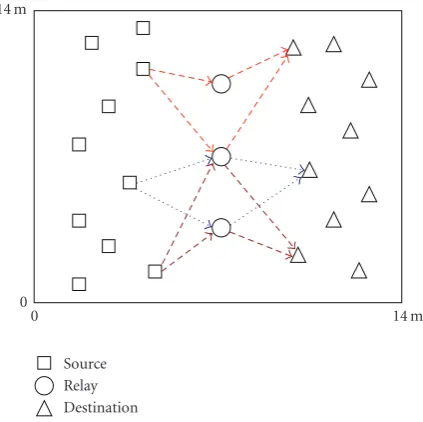
Figure1: Multiuser wireless relay network.
channels, (e.g., different frequency bands) and time division multiplexing is employed by AF cooperative diversity for each user. One possible implementation for our considered network model is as follows. The available bandwidth is equally divided into as many bands as the number of users. Each user is allocated one frequency band and communication between each source and destination pair via relay nodes is carried out in a time multiplexing manner [2], that is, each sourceSitransmits data to its chosen relays in the set R(Si) in the first stage and each relay amplifies and forwards its received signal toDi in the second stage. Note that our approaches can still be used for other possible implementations as long as the assumption of orthogonal transmissions is satisfied.
The system model under investigation is illustrated in
Figure 1. Note that this model is quite general, and it covers
a large number of applications in different network settings. For example, this model can be applied to cellular wireless networks which use relays for uplink with one destination base station (BS) or downlink with one source BS and many destinations. The model can also be directly applied to multihop wireless networks such as sensor/ad hoc or wireless mesh networks. Moreover, in our model, each source can be assisted by one, several, or all available relays. Therefore, it captures most relay models considered in literature.
LetPSi denote the power transmitted bySi. The power transmitted by the relayRj ∈R(Si) for assisting the source Si is denoted byPSRij. For simplicity, we present the signal model for linkSi-Di only. In the first time interval, source Si broadcasts the signal xi with unit energy to the relays Rj ∈ R(Si). The received signal at relayRj can be written additive circularly symmetric white Gaussian noise (AWGN)
at the relayRjwith varianceNRj. The channel gain includes the effects of path loss, shadowing, and fading. In the second time interval, relay Rj amplifies its received signal and retransmits it to the destination node Di. After some manipulations, the received signal at the destination nodeDi can be written as
rDi modified AWGN noise atDiwith equivalent varianceNDi+ (PSi ratio-combining is employed at the destination nodeDi, the Signal-to-Noise Ratio (SNR) of the combined signal at the destination nodeDican be written as [2]
Note that we consider the case when the source-to-relay link is (much) better than the source-to-destination link, which is a typical outcome of a good relay selection by each source node. This is a practical assumption since source nodes are likely to use the closely located relays. The following lemma is in order.
Lemma 1. The rate function of userSidefined asri=log(1 + γi) (b/s/Hz) is a concave increasing function of PSi
Rj,Rj ∈ R(Si).
Proof. We start by rewritingγias
γi= Furthermore, since the log function is concave increasing, and using the composition rule [14], it can be concluded that ri is concave increasing as well, that is, by increasing the power allocated at the relays to user Si, its rate ri is increased. In addition, the maximum achievable rate ri is equal to log(1 +Rj∈R(Si)1/α
Si
Rj). However, sinceriis concave increasing, the incremental increase of rate w.r.t. PSi
Rj is smaller for largerPSi
Rj.
programming, the latter provides some insights into opti-mization problems under consideration as will be shown shortly.
3. Power Allocation: Problem Formulations
In general, resource allocation in wireless networks should take into account the fairness among users. It is known that an attempt to maximize the sum rate of all users can significantly degrade the performance of the worst user(s). To balance fairness and throughput performance for all users, we consider two different optimization criteria for developing power allocation algorithms. The first criterion aims at maximizing minimum rate among all users. In essence, this criterion tries to make rates of all users as equal as possible. For the second criterion, users are given different weights, and power allocation is performed to maximize the weighted-sum of rates for all users. In this case, large weights can be allocated to users in unfavorable condition in order to prevent severe degradation of their performance. Moreover, this objective also captures the scenarios in which one needs to perform QoS differentiation for users. Then, the users of higher service priority can be allocated larger weights. For both aforementioned optimization criteria, we add constraints on the total maximum power that each relay can use to assist the corresponding users.
3.1. Max-Min Rate Fairness-Based Power Allocation. The power allocation problem under max-min rate fairness can be mathematically formulated as
maximize
{PSiR j≥0}
min Si
ri, (6a)
subject to: Si∈S(Rj)
PSi Rj≤P
max
Rj , j=1,. . .,L, (6b)
where Pmax
Rj is the maximum power available in relay Rj. The left-hand side of (6b) is the total power that relayRj allocates to its assisted users which is constrained to be less than its maximum power budget. Instead of constraining the transmit power for a particular relay as in (6b), we can equivalently limit the sum of power transmitted by its relayed source nodes, or limit its received sum of power. This constraint is required to avoid overloading relays in the network.
Numerical results show that although this power allo-cation criterion results in a loss in network throughput, it helps to improve performance of the worst users. Therefore, this criterion is applicable for networks in which all users are (almost) equally important. This could be the case, for example, when all wireless users pay the same subscription fees, and thus, demand similar level of QoS. It can be seen that the set of linear inequality constraints with positive vari-ables in the optimization problem (6a) and (6b) is compact and nonempty. Hence, the optimization problem (6a) and (6b) is always feasible. Moreover, since the objective function mini=1,...,Mriis an increasing function of the allocated powers, the inequality constraints (6b) should be met with equality at optimality. Introducing a new variablet, the optimization
problem (6a) and (6b) can be equivalently rewritten in a standard form as
minimize
{PR jSi≥0, t≥0} −t
, (7a)
subject to:t−ri≤0, i=1,. . .,M, (7b)
Si∈S(Rj)
PSi Rj ≤P
max
Rj , j=1,. . .,L. (7c)
The objective function (7a) is linear, and thus, convex. The constraints (7b) are convex due to Lemma 1, while the constraints (7c) are linear, and thus, also convex. Therefore, the optimization problem (7a)–(7c) is convex. Moreover, at least one of the constraints (7b) must be met with equality at optimality. Otherwise,tcan be increased, or equivalently, −tcan be decreased, and thus, contradicting the optimality assumption. The convexity of the formulated power alloca-tion problem is very useful to obtain its optimal solualloca-tion by using any standard convex optimization algorithm such as interior-point algorithms [14]. In the special case when all users share the same set of relays, we have the following result.
Proposition 1. Consider a special case when all users have the same set of relays (e.g., users are assisted by all relays). Then the rates of all users are equal at optimality.
Proof. Suppose that there is at least one user achieving the rate strictly larger than the minimum rate at optimality. Without loss of generality, letΩbe the set of users achieving minimum rate and suppose that userlhas rate larger than that of any useri ∈ Ω at optimality. Note that there exists at least one relay j which has nonzero allocated power PSl
Rj >0 at optimality. If we take an arbitrarily small amount of power ΔP from PSl
Rj and allocate an amount of power equal to ΔP/|Ω| to each user i ∈ Ω, where |Ω| denotes the cardinality of set Ω, then the resulting rate of user l is still larger than the minimum rate of all users while we can improve the minimum rates for all users in Ω. This is a contradiction to the optimality condition. Hence, the proposition is proved.
3.2. Weighted-Sum of Rates Fairness-Based Power Allocation.
As discussed above, the max-min rate fairness-based power allocation tends to improve performance of the worst user at the cost of total network throughput degradation. The weighted-sum of rates maximization can potentially achieve certain fairness for different users by allocating large weights to users in unfavorable channel conditions while maintaining good network performance in general. Let wi denote the allocated weight for user Si, then the weighted-sum of rates based power allocation problem can be mathematically posed as
maximize
{PR jSi≥0}
M
i=1
wiri, (8a)
subject to: Si∈S(Rj)
PSi Rj≤P
max
In general, users of higher priority are given larger weights. Specifically, all users can be grouped into different classes and users in the same class are assigned same weight. It can be seen that the constraints (8b) must be met with equality at optimality. Otherwise, the allocated powers can be increased to improve the objective value, that contradicts the optimality assumption. In addition, it can be verified that the optimization problem (8a) and (8b) is convex; therefore, its optimal solution can be obtained by any standard convex optimization algorithm.
We conclude this section by noting that power allocation schemes based on other possible fairness criteria can also be considered. For instance, the proportional fairness criterion can be adopted. In terms of system-wide performance metric such as the network throughput, this criterion can ensure more fairness than the weighted-sum of rates, while achieving better performance than the max-min fairness in term of the network throughput [15]. It can be shown that the objective function to be maximized for the pro-portional fairness-based power allocation scheme isMi=1ri.
Consequently, this objective function can be reformulated as a convex function using the log function. Due to space limitation, investigation of this scheme is not presented in this paper.
4. Distributed Implementation for
Power Allocation
To relax the need for centralized channel estimation and to implement online power allocation for multiuser relay networks, we propose a distributed algorithm for solving the problem (8a) and (8b). The distributed algorithm is developed based on the dual decomposition approach in convex optimization (see, e.g., [16, 17] and references therein). An application of this optimization technique for distributed routing can be also found in [18].
4.1. Dual Decomposition Approach. The main idea behind the dual decomposition approach is to decompose the original problem into independent subproblems that are coordinated by a higher-level master dual problem. Toward this end, we first write the Lagrangian function by relaxing the total power constraint for all relays as follows:
Lµ,PSi corresponding to theLlinear constraints on the maximum powers available in relay nodes. Using the fact that
L
the Lagrangian in (9) can be rewritten as
Lµ,PSi
Then, the corresponding dual function of the Lagrangian can be written as
Since the original optimization is convex and strong duality holds, the solution of the underlying optimization problem can be obtained by solving the corresponding dual problem
minimize gµ, (13a)
subject to: μj≥0, j=1,. . .,L. (13b)
The dual function in (12) can be found by solving the followingMseparate subproblems, which correspond toM different users,
maximizeLiµ,PSi
Rj) corresponds to theith component of the Lagrangian. Let L∗i(µ) be the optimal value ofLi(µ,P
The distributed power allocation algorithm is developed by iteratively and sequentially solving the problems (14a) and (14b) and (15a) and (15b). This algorithm is known as a primal-dual algorithm in optimization theory [14]. The Lagrange multiplierμj ≥0 represents the pricing coefficient for each unit power at relay j. Therefore,μjPRSij can be seen as the price which userSimust pay for using powerPRSij at each relayRj∈R(Si). Then, the optimization problem (14a) and (14b) as a whole can be seen as an attempt of userSito maximize its rate minus the total price that it has to pay given the price coefficients at relays. Moreover, the weightwican be seen as a “gain” coefficient for each unit rate for userSi.
4.2. Implementation. The master dual problem is solved in a distributed fashion with assistance of all relay. Specifically, each relayRjfirst broadcasts its initial “price” value, that is, Lagrange multipliers μj, j = 1,. . .,M. These price values are used by the receivers to compute the optimal power levels that the relays should allocate to that particular user. The optimal power values are then sent back to the relays, so as to yield the next value of the Lagrange multipliers μj, j = 1,. . .,M. This procedure is repeated until the solution converges to the optimal one.
and (14b) allows each userSito find optimal allocated power
which is unique due to the strict concavity.
Using the fact thatg(µ) is differentiable, the following iterative gradient method can be used to update the dual variablesμj, j=1,. . .,M
where t is the iteration index, ζ is the sufficiently small positive step size, and [·]+
denotes the projection onto the feasible set of nonnegative numbers. The dual variables μj(t), j = 1,. . .,M will converge to the dual optimal μopt as t → ∞, and the primal variable PSi
Rj(μ(t))|opt will also converge to the primal optimal variable PSi
Rj(μopt)|opt. Updatingμj(t) based on (17) can be interpreted as the relay Rj updates its price depending on the requested levels from its users. The price is increased when the total requested power resource from users is larger than its maximum limit. Otherwise, the price is decreased. This so-called “price-based” allocation is very popular in wired networks to control congestion, that is, rate control for Internet [19]. We summarize the distributed power allocation algorithm as follows.
Distributed Power Allocation Algorithm.
(i)Parameters: The receiver of each user estimates/ collects its weighted coefficientwiand channel gains of its transmitter-relay and relay-receiver links. (ii)Initialization: Set t = 0 and initialize μj(0) for
each relay j equal to some nonnegative value and broadcast this value.
(iii)Step 1. The receiver of userSisolves its problem (16) and then sends the solutionPSi
Rj(µ(t))|optto its relays. (iv)Step 2. Each relay Rj receives the requested power levels and updates its prices with the gradient iter-ation (17) using the information received from the receivers of its assisted users. Then, it broadcasts the new valueμj(t+ 1), j=1,. . .,M.
(v)Step 3. Sett=t+ 1 and go to Step 1 until satisfying the stopping criterion.
The convergence proof of the general primal-dual algo-rithm can be found in [16, 17]. This algorithm requires message exchange only between relays and their assisted receivers. These message exchanges are performed using single-hop communications. Therefore, the total overhead would be the overhead involved in one message exchange
operation multiplied by the number of iterations. Moreover, after optimal solution is first reached, the algorithm needs very few iterations to reach its new optimal solution which can be changed due to small changes in channel gains and users’s partnership (i.e., a set of relays which help each user may slightly change due to users’ mobility). In contrast, a centralized algorithm would require the full knowledge of all channel gains, relay power limits, and users’ partnership information at a central controller before calculating an optimal solution which is then forwarded to each user for implementation. These information exchanges need to be performed over multihop transmissions, and it has to be done frequently due to frequent changes in wireless channel and system parameters. Considering these factors, our proposed distributed algorithm is clearly significantly better than the centralized algorithm in terms of the data overhead. The stopping criterion for the proposed algorithm is that the difference of congestion prices and/or allocated relay power in two consecutive iteration must be smaller than a predetermined value (e.g., 10−6).
5. Joint Admission Control and
Power Allocation
As noticed before, if users have minimum rate requirements, an admission control mechanism should be employed to determine which users to be admitted into the network due to limited power resources at relays. Then, radio resources are allocated to admitted users in order to ensure that each admitted user achieves the required QoS performance. This scenario is important for real-time/multimedia applications.
5.1. Power Minimization-Based Allocation for Relay Networks.
Consider a resource allocation problem which aims at minimizing the total relay power. In addition, each user has a minimum rate requirement. For the above described wireless systems with multiple users and multiple relays, the problem of minimizing the transmit power given the constraints on minimum rates for users can be mathematically posed as
minimize
5.2. Joint Admission Control and Power Allocation. The joint admission control and power allocation problem can be mathematically posed as a two-stage optimization problem [11]. All possible sets of admitted usersS0,S1,. . .with possi-bly maximal cardinality (can be only one or several sets) are found in the first admission control stage, while the optimal set of admitted usersSk is the one among the setsS0,S1,. . . which requires minimum transmit power in the second power allocation stage. Once the candidate sets of admitted users are determined, the power allocation problem can be shown to be a convex programming problem. However, the admission control problem is combinatorially hard, which introduces high complexity for practical implementation. Therefore, a low-complexity solution approach for the joint admission control and power allocation problem is highly desirable.
5.3. Reformulation of Joint Admission Control and Power Allocation Problem. The admission control problem can be mathematically written as
maximize
{si∈{0,1},PSiR j≥0} M
i=1
si, (19a)
subject to: ri≥riminsi, i=1,. . .,M, (19b)
Si∈S(Rj)
PSi Rj ≤P
max
Rj , j=1,. . .,L, (19c)
where si,i = 1,. . .,M denotes the indicator function for user Si, that is,si = 0 corresponds to the situation when user Si is not admitted, while si = 1 means that user Si is admitted. Note that the constraint (19b) is automatically satisfied for the users who are not admitted. The indicator variables help to represent the admission control problem in a more compact form. However, the combinatorial nature of the admission control problem still remains due to the binary variablessi.
Following the conversion steps similar to those used in [11,13], the joint admission control and power allocation problem can be converted to the following one-stage opti-mization problem:
maximize
{si∈{0,1}, PSiR j≥0}
M
i=1
si−(1−) L
j=1
Si∈S(Rj)
PSi
Rj, (20a)
subject to: The constraints (19b), (19c), (20b)
where is some constant which is chosen such that (jPRmaxj )/(
jPRmaxj + 1)<<1.
The problem (20a) and (20b) is a compact mathematical formulation of the joint optimal admission control and power allocation problem. Moreover, it is always feasible since in the worst case no users are admitted, that is,si = 0, for alli=1,. . .,M.
Although the original optimization problem (20a) and (20b) is NP-hard, its relaxation for whichsi,i = 1,. . .,M are allowed to be continuous can be shown to be a convex programming problem by using Lemma 1. In the follow-ing subsection, we propose a reduced-complexity heuristic
algorithm to perform joint admission control and power allocation. Albeit theoretically suboptimal, the heuristic algorithm performance very close to the optimal solution for most testing instances summarized in the next section.
5.4. Proposed Algorithm. The following heuristic algorithm, which has some similarities to the one in [11], can be used to solve (20a) and (20b).
Joint Admission Control and Power Allocation Algorithm.
(i)Step 1. SetS:= {Si|i=1,. . .,M}.
(ii)Step 2. Solve convex problem (20a) and (20b) for the sources inS withsi being relaxed to be continuous in the interval [0, 1]. Denote the resulting power allocation values asPSi
Rj ∗
, j=1,. . .,M.
(iii)Step 3. For eachSi∈S, check whether
r∗i ≥rimin, ∀Si∈S. (21)
If this is the case, then stop and PSi Rj ∗
are power allocation values. Otherwise, remove the userSiwith largest gap to its targetrimin, that is,
Si=arg min Si∈S
"
r∗i −rimin<0 #
, (22)
from the setSand go to Step 2.
It can be seen that after each iteration, either the set of admitted users and the corresponding power allocation levels are determined or one user is removed from the list of most possibly admitted users. Since there areMinitial users, the complexity is bounded above by that of solving M convex optimization problems with different dimensions, where the dimension of the problem depends on the iteration. It is worth mentioning that the proposed reduced-complexity algorithm always returns one solution.
6. Numerical Results
Consider a wireless relay network as shown in Figure 1 with ten users and three relays distributed in a two-dimensional region of a size 14 m×14 m. The relays are fixed at coordinates (10, 7), (10, 10), and (10, 12). The source and destination nodes are deployed randomly in the area inside the box areas [(0, 0), (7, 14)] and [(12, 0), (14, 14)], respectively. In our simulation, each user is assisted by two relays. The noise power is taken to be equal toN0 = 10−5. All users and relays are assumed to have the same minimum ratermin and maximum transmit powerPmax
1.7 1.8 1.9 2 2.1 2.2 2.3 2.4
Wo
rs
t
u
se
r
ra
te
10 20 30 40
Maximum relay powerPmax Rj
Max-min rate
Equal power allocation (EPA) Weighted-sum of rates
Figure2: Worst user rate versusPmax Rj .
1.5 2 2.5 3 3.5 4
Rat
e
of
hig
h
pr
ior
it
y
user
10 20 30 40
Maximum relay powerPmax Rj
Weighted-sum of rates: unequal coefficients Weighted-sum of rates: equal coefficients Equal power allocation (EPA)
Max-min rate
Figure3: Rate of high-priority users versusPmax Rj .
6.1. Numerical Results for Power Allocation Problem. In this subsection, the locations of the source and destination nodes are fixed and the source nodes transmit power PSi,i = 1,. . .,M are chosen to be 1. The channel gain for each transmission link is affected by the path loss and Rayleigh fading. The pass loss component isa=[1/d]2, wheredis the Euclidean distance between two transmission ends, while the variance of the Rayleigh fading equals to 1 in our simulations. Instantaneous channel fading gains are assumed to be known and not varied during the time required to compute the solu-tions, that is, it is assumed that the algorithms can provide their solutions faster than the time variation of the channel fading. The results are averaged over 800 channel instances.
10 15 20 25 30 35 40 45
N
etw
or
k
thr
oug
h
put
10 20 30 40
Maximum relay powerPmax Rj
Weighted-sum of rates: unequal coefficients Weighted-sum of rates: equal coefficients Equal power allocation (EPA)
Max-min rate
Figure4: Network throughput versusPmax Rj .
0.88 0.89 0.9 0.91 0.92 0.93 0.94 0.95 0.96 0.97 0.98
F
air
ness
inde
x
FI
10 20 30 40
Maximum relay powerPRjmax
Max-min rate
Equal power allocation (EPA) Weighted-sum of rates
Figure5: Fairness index versusPmax Rj .
Figure 2shows the data rate of the worst user(s) versus
0 0.2 0.4 0.6 0.8 1
‘P
ri
ce
’
values
10 20 30 40 50 60 70 80 90 100 Iteration
(a)
0 10 20 30 40
Re
la
y
p
o
w
er
10 20 30 40 50 60 70 80 90 100 Iteration
(b)
Figure6: Evolution of “price” values and power allocated at each relay.
(with variation of about 0.35 b/s/Hz). In other words, as expected, the weighted-sum of rates maximization based power allocation scheme can introduce unfairness in terms of the achievable rate of the worst user, especially when relays have low-power limits. Moreover, it can be seen that with large power available at the relays, that is, largerPmax
Rj , all three schemes provide better performance for the worst users, and thus, for all users.
In our second example, we show that by proper weight setting, the weighted-sum of rates maximization based power allocation scheme provides the flexibility required to support users with differentiated service requirements. Particularly, we suppose that users 1 and 2 have higher priority than other users, and set the corresponding weights as w1 = w2 = 5,w3 = · · · = w10 = 1 in the optimization problem (8a) and (8b).Figure 3displays the resulting rate of the high-priority users. We observe that users 1 and 2 have indistinguishable performance, so only one curve for each scheme is plotted. The results obtained by EPA and by weighted-sum of rates maximization with equal weight coefficients are also plotted in the same figure for reference. Over the wide range of the relay power limits, the weighted-sum of rates maximization scheme outperforms the EPA. The performance of the EPA is quite close to that of the weighted-sum of rates maximization withequal
weight coefficients. On the other hand, the weighted-sum of rates maximization withunequalweight coefficients provides noticeable rate enhancement to the high-priority users as compared to other users, especially when the relays have severe power limitation, for example, a rate gain of about 0.2 b/s/Hz whenPmax
Rj = 10. Both Figures2and3indicate that the performance difference between different algorithms becomes smaller for larger relay power limits. In other words, this reveals an interesting property that when the relays have more (or unlimited) available power, different (relay) power
allocation strategies have much less impact on the user rate performance, which is limited by the source transmit power in this case.
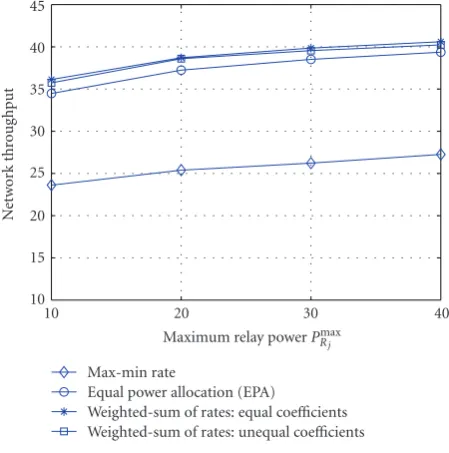
Figure 4 shows the network throughput for the
afore-mentioned power allocation schemes. It can be seen that there is a significant loss in the network throughput for the max-min rate fairness-based power allocation scheme, since the objective is to improve the performance of the worst users. This confirms that achieving the max-min fairness among users results in a performance loss for the whole system. It can be also seen that the weighted-sum of rates fairness-based scheme results in maximum throughput. Moreover, the rate gain of the weighted-sum of rates scheme over the EPA scheme is about 1.8 b/s/Hz over the range of the relay power limits. This gain comes at the cost of higher complexity in system implementation to optimize the power levels. The weighted-sum of rates based scheme with unequal weights achieves slightly worse performance as compared to its counterpart with equal weights while providing better performance for the high priority users, that is, users 1 and 2
inFigure 3.
In the next example, we study the fairness behavior by showing the fairness index which is calculated as FI = (Mi=1ri)
2
/(MMi=1r2i) [21] for different power allocation schemes. Specifically, we plot the fairness index versusPmaxRj
in Figure 5. The fairness index is closer to 1 when the
power allocation, or equivalently rate allocation, becomes fairer. Clearly, the max-min fairness scheme achieves the best fairness for all the users, and the weight-sum of rates fairness scheme is least fair. It is implied from Figures2,3,4, and5 that our proposed approaches equip network operators with different design options each of which presents a different tradeoffbetween throughput and fairness for the users.
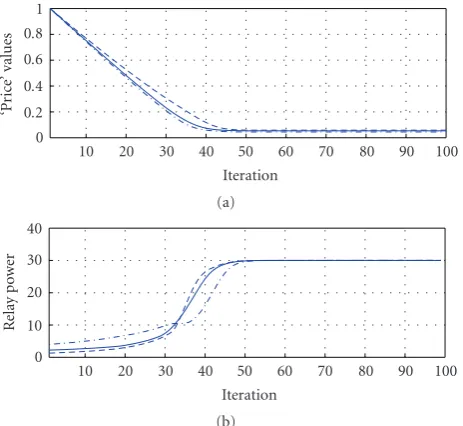
Figures6and7show the evolution of different parame-ters of the proposed distributed algorithm for a specific chan-nel realization. Particularly,Figure 6shows the evolution of the price valuesμj, j = 1, 2, 3 and the power at each relay.
Figure 7displays the rates for all ten users and the sum rate
of all users. The update parameterζis set to 0.001. With such choice of parameter, we can see that after about 50 updates, the algorithm converges to the optimal solution obtained by solving the optimization problem centrally.
6.2. Results for Joint Admission Control-Power Allocation. In this subsection, QoS requirements for users will be presented in minimum rate and/or the corresponding minimum SNR (there is one-to-one mapping between these two quantities).
Figure 8 displays the power required at the relays for all
users to achieve a minimumγminwhenP
3 4 5 6 7 8
Us
er
d
at
a
ra
te
s
10 20 30 40 50 60 70 80 90 100 Iteration
(a)
45 50 55 60 65 70
N
etw
or
k
thr
oug
h
put
10 20 30 40 50 60 70 80 90 100 Iteration
(b)
Figure7: Evolution of data rate for each user and user sum rate.
0 10 20 30 40 50 60 70
Tr
an
sm
it
p
o
w
er
10 11 12 13 14 15 16 17 18 19
Minimum SNRγmin i
Min power Max power Sum power
Figure8: Required relay power.
the SNR target γmini ≥ 18 dB for all users. In such a case, admission control is necessary to drop some users.
In this simulation example, we investigate the perfor-mance of the proposed joint admission control and power allocation algorithm withPSi = 1 and different minimum SNR/rate requirements as shown in Tables1and2forPmax
Rj ∈ {10, 20}. It is assumed that the channel gain is due to the path loss only and the locations of the source and destination nodes are fixed. Different values ofγmini /riminhave been used. For reference, we also consider theoptimaladmission control and power allocation scheme using exhaustive search over all feasible user subsets. Afeasibleuser subset contains the maxi-mumpossible number of users and is selected as theoptimum
user subset if it requires the smallest transmit power. The
Table1: Simulation cases and results with PSi = 1,PRmaxj = 10
(running time in seconds).
Optimum allocation Proposed algorithm
SNR/rate 12 dB/4.0746 b/s/Hz 12 dB/4.0746 b/s/Hz
# users served 9 9
Users served 1, 2, 3, 4, 6, 7, 8, 9, 10 1, 2, 3, 4, 6, 7, 8, 9, 10 Transmit power 20.3619 20.4446
Running time 18.72 5.39
SNR/rate 13 dB/4.3891 b/s/Hz 13 dB/4.3891 b/s/Hz
# users served 6 6
Users served 1, 2, 7, 8, 9, 10 1, 2, 7, 8, 9, 10 Transmit power 22.9531 23.0342 Users served 2, 3, 7, 8, 9, 10 —
Transmit power 23.7717 —
Running time 458.07 9.60
SNR/rate 14 dB/4.7070 b/s/Hz 14 dB/4.7070 b/s/Hz
# users served 4 4
Users served 7, 8, 9, 10 7, 8, 9, 10 Transmit power 25.6046 25.6195 Running time 850.28 11.78
SNR/rate 15 dB/5.0278 b/s/Hz 15 dB/5.0278 b/s/Hz
# users served 2 2
Users served 8, 10 8, 10
Transmit power 7.5310 7.5320 Running time 930.11 12.92
SNR/rate 16 dB/5.3509 b/s/Hz 16 dB/5.3509 b/s/Hz
# users served 1 1
Users served 8 8
Transmit power 9.8002 9.8025 Running time 931.11 13.15
simulation parameters and the performance results for the
optimal admission control and power allocation scheme, and the proposed heuristic scheme are recorded in the columns “optimum allocation” and “proposed algorithm”, respectively. Note that the running time is measured in sec-onds. It can be seen that the proposed algorithm determines exactly the optimal number of admitted users in all cases except whenPmax
Rj =20,γ
min
i =13 dB. The transmit power required by our proposed algorithm is just marginally larger than that required by the optimal admission control and power allocation based on exhaustive search. However, the running time for the proposed algorithm is dramatically smaller than that required by the optimal one. This makes the proposed approach attractive for practical implementation. As expected, whenγmin
i increases, a smaller number of users is admitted with a fixed amount of power. For example, when Pmax
Rj =10, nine users and four users are admitted with SNR
γmin
i = 12 dB and 14 dB, respectively. Similarly, when the relays have more available power, a larger number of users are likely to be admitted for a givenγmin
i threshold. For instance, whenγmin
i = 13 dB, eight and six users are admitted with Pmax
Table2: Simulation cases and results withPSi=1,PRjmax=20.
Optimum allocation Proposed algorithm
SNR/rate 13 dB/4.3891 b/s/Hz 13 dB/4.3891 b/s/Hz
# users served 8 8
Users served 1, 2, 3, 4, 7, 8, 9, 10 1, 2, 4, 6, 7, 8, 9, 10 Transmit power 47.8044 53.0789 Users served 1, 2, 4, 6, 7, 8, 9, 10 —
Transmit power 52.9265 —
Users served 2, 3, 4, 6, 7, 8, 9, 10 —
Transmit power 53.8572 —
SNR/rate 14 dB/4.707 b/s/Hz 14 dB/4.707 b/s/Hz
# users served 5 5
Users served 2, 7, 8, 9, 10 2, 7, 8, 9, 10 Transmit power 45.1756 45.2087
SNR/rate 15 dB/5.0278 b/s/Hz 15 dB/5.0278 b/s/Hz
# users served 2 2
Users served 8, 10 8, 10
Transmit power 7.5310 7.5818
Table3: Performance comparison withPSi = 1,PmaxRj = 10 (20
runs).
SNR/rate 12 dB/4.0746 b/s/Hz 13 dB/4.3891 b/s/Hz
INFO 1 0 0
INFO 2 20 20
INFO 3 19 18
INFO 4 1.23% 1.31%
INFO 5 ≈38 ≈50
In the last example, we provide a comparative inves-tigation on the performance of our proposed algorithm and the optimal algorithm. Due to a long running time required to obtain intensive results for the optimal algorithm based on the exhaustive search, only 20 different sets of data for each γmin
i /rimin are tested. Each set of data has different locations for source and destination nodes which are generated randomly. All other parameters remain the same, for example, Pmax
Rj = 10,PSi = 1, and the SNR thresholdsγmin
i ∈ {12 dB, 13 dB},i=1,. . ., 10. The results are shown inTable 3in terms of the following comparison metrics: (INFO 1) is the number of simulation runs in which the proposed algorithm providesdifferent number of admitted usersas compared to the optimum allocation using exhaustive search; (INFO 2) is the number of simulation runs in which the algorithms provide the same number of admitted users as the optimum algorithm; (INFO 3) is the number of cases in which both algorithms provide the same set of admitted users; (INFO 4) and (INFO 5) show, respectively, the average increase percentage in the required powerand theaverage improvement ratio in running time offered by the proposed algorithm as compared to the optimum allocation using exhaustive search. We can see that the proposed algorithm performs remarkably well with dramatically smaller running time as compared to
the optimal algorithm, while the performance loss in the required power is acceptable.
7. Conclusion
In this paper, two power allocation schemes have been proposed for wireless multiuser relay networks based on amplify-and-forward cooperative diversity to maximize either the minimum rate among all users or the weighted-sum of rates. The proposed approaches make use of a com-putationally efficient convex programing. The distributed algorithm for the weighted-sum of rates maximization based power allocation has been also developed by using the dual decomposition approach. Numerical results demonstrate the effectiveness of the proposed methods and reveal interesting tradeoffbetween throughput and fairness for different power allocation schemes. Moreover, the joint admission control and power control algorithm for the scenario in which users have minimum rate requirements which aims at minimizing total relay power has been developed. Because the underlying problem is nonconvex and combinatorially hard, the subop-timal algorithm which achieves excellent admission control performance while requiring moderate computational cost is proposed. However, whether distributed joint admission control and power allocation is possible remains an interest-ing open research problem.
Acknowledgments
The first author is grateful to D. S. Michalopoulos from the Aristotle University of Thessaloniki, Greece for discussions on the subject. This work was supported by the Natural Sciences and Engineering Research Council (NSERC) of Canada, and the Alberta Ingenuity Foundation, AB, Canada.
References
[1] R. Knopp and P. A. Humblet, “Information capacity and power control in single-cell multiuser communications,” in
Proceedings of the IEEE International Conference on Commu-nications (ICC ’95), vol. 1, pp. 331–335, Seattle, Wash, USA, June 1995.
[2] J. N. Laneman, D. N. C. Tse, and G. W. Wornell, “Cooperative diversity in wireless networks: efficient protocols and outage behavior,”IEEE Transactions on Information Theory, vol. 50, no. 12, pp. 3062–3080, 2004.
[3] L. Le and E. Hossain, “Multihop cellular networks: potential gains, research challenges, and a resource allocation frame-work,”IEEE Communications Magazine, vol. 45, no. 9, pp. 66– 73, 2007.
[4] Y. Li, B. Vucetic, Z. Zhou, and M. Dohler, “Distributed adaptive power allocation for wireless relay networks,”IEEE Transactions on Wireless Communications, vol. 6, no. 3, pp. 948–958, 2007.
[5] I. Maric and R. D. Yates, “Bandwidth and power allocation for cooperative strategies in Gaussian relay networks,” in
[6] J. Tang and X. Zhang, “Cross-layer resource allocation over wireless relay networks for quality of service provisioning,”
IEEE Journal on Selected Areas in Communications, vol. 25, no. 4, pp. 645–655, 2007.
[7] D. S. Michalopoulos and G. K. Karagiannidis, “PHY-layer fairness in amplify and forward cooperative diversity systems,”
IEEE Transactions on Wireless Communications, vol. 7, no. 3, pp. 1073–1083, 2008.
[8] J. Luo, R. S. Blum, L. J. Cimini, L. J. Greenstein, and A. M. Haimovich, “Decode-and-forward cooperative diversity with power allocation in wireless networks,”IEEE Transactions on Wireless Communications, vol. 6, no. 3, pp. 793–799, 2007. [9] K. T. Phan, L. B. Le, S. A. Vorobyov, and T. Le-Ngoc,
“Central-ized and distributed power allocation in multi-user wireless relay networks,” inProceedings of the 43rd IEEE International Conference on Communications (ICC ’09), Dresden, Germany, June 2009.
[10] T. Nechiporenko, K. T. Phan, C. Tellambura, and H. H. Nguyen, “On the capacity of rayleigh fading cooperative systems under adaptive transmission,”IEEE Transactions on Wireless Communications, vol. 8, no. 4, pp. 1626–1631, 2009. [11] E. Matskani, N. D. Sidiropoulos, Z.-Q. Luo, and L. Tassiulas,
“Convex approximation techniques for joint multiuser down-link beamforming and admission control,”IEEE Transactions on Wireless Communications, vol. 7, no. 7, pp. 2682–2693, 2008.
[12] K. T. Phan, T. Le-Ngoc, S. A. Vorobyov, and C. Tellambura, “Power allocation in wireless relay networks: a geometric programming-based approach,” in Proceedings of the IEEE Global Telecommunications Conference (GLOBECOM ’08), pp. 1–5, New Orleans, La, USA, November-December 2008. [13] K. T. Phan, T. Le-Ngoc, S. A. Vorobyov, and C. Tellambura,
“Power allocation in wireless multi-user relay networks,”IEEE Transactions on Wireless Communications, vol. 8, no. 5, pp. 2535–2545, 2009.
[14] S. Boyd and L. Vandenberghe, Convex Optimization, Cam-bridge University Press, CamCam-bridge, UK, 1st edition, 2004. [15] F. P. Kelly, A. K. Maulloo, and D. K. H. Tan, “Rate control
for communication networks: shadow prices, proportional fairness and stability,” Journal of the Operational Research Society, vol. 49, no. 3, pp. 237–252, 1998.
[16] D. P. Bertsekas, Nonlinear Programming, Athena Scientific, Belmont, Mass, USA, 2nd edition, 1999.
[17] D. P. Palomar and M. Chiang, “A tutorial on decomposition methods for network utility maximization,”IEEE Journal on Selected Areas in Communications, vol. 24, no. 8, pp. 1439– 1451, 2006.
[18] L. Xiao, M. Johansson, and S. P. Boyd, “Simultaneous routing and resource allocation via dual decomposition,”IEEE Transactions on Communications, vol. 52, no. 7, pp. 1136– 1144, 2004.
[19] S. H. Low and D. E. Lapsley, “Optimization flow control. I. Basic algorithm and convergence,”IEEE/ACM Transactions on Networking, vol. 7, no. 6, pp. 861–874, 1999.
[20] M. Grant and S. Boyd, “CVX: Matlab software for disciplined convex programming,” February 2008, http://stanford.edu/
∼boyd/cvx.