University of Windsor University of Windsor
Scholarship at UWindsor
Scholarship at UWindsor
Electronic Theses and Dissertations Theses, Dissertations, and Major Papers
1-1-2007
Behavioural responses of an intraguild predator: The effects of
Behavioural responses of an intraguild predator: The effects of
intraguild predation on population dynamics.
intraguild predation on population dynamics.
Angela G. Brommit University of Windsor
Follow this and additional works at: https://scholar.uwindsor.ca/etd
Recommended Citation Recommended Citation
Brommit, Angela G., "Behavioural responses of an intraguild predator: The effects of intraguild predation on population dynamics." (2007). Electronic Theses and Dissertations. 7026.
https://scholar.uwindsor.ca/etd/7026
BEHAVIOURAL REPSONSES OF AN INTRAGUILD PREDATOR: THE EFFECTS OF INTRAGUILD PREDATION ON POPULATION DYNAMICS
by
Angela G. Brommit
A Thesis
Submitted to the Faculty of Graduate Studies through Biological Sciences
in Partial Fulfillment o f the Requirements for the Degree of Master of Science at the
University of Windsor
Windsor, Ontario, Canada
Library and Archives Canada
Bibliotheque et Archives Canada
Published Heritage Branch
395 W ellington Street Ottawa ON K1A 0N4 Canada
Your file Votre reference ISBN: 978-0-494-35053-9 Our file Notre reference ISBN: 978-0-494-35053-9
Direction du
Patrimoine de I'edition
395, rue W ellington Ottawa ON K1A 0N4 Canada
NOTICE:
The author has granted a non exclusive license allowing Library and Archives Canada to reproduce, publish, archive, preserve, conserve, communicate to the public by
telecommunication or on the Internet, loan, distribute and sell theses
worldwide, for commercial or non commercial purposes, in microform, paper, electronic and/or any other formats.
AVIS:
L'auteur a accorde une licence non exclusive permettant a la Bibliotheque et Archives Canada de reproduire, publier, archiver,
sauvegarder, conserver, transmettre au public par telecommunication ou par I'lnternet, preter, distribuer et vendre des theses partout dans le monde, a des fins commerciales ou autres, sur support microforme, papier, electronique et/ou autres formats.
The author retains copyright ownership and moral rights in this thesis. Neither the thesis nor substantial extracts from it may be printed or otherwise reproduced without the author's permission.
L'auteur conserve la propriete du droit d'auteur et des droits moraux qui protege cette these. Ni la these ni des extraits substantiels de celle-ci ne doivent etre imprimes ou autrement reproduits sans son autorisation.
In compliance with the Canadian Privacy Act some supporting forms may have been removed from this thesis.
While these forms may be included in the document page count,
their removal does not represent
Conformement a la loi canadienne sur la protection de la vie privee, quelques formulaires secondaires ont ete enleves de cette these.
ABSTRACT
Omnivores feed at more than one trophic level and affect population dynamics within communities. Behavioural observations demonstrated that the omnivore, Dicyphus hesperus, preferred more vulnerable herbivores as prey over intraguild prey. Regardless
CO-AUTHORSHIP STATEMENT
ACKNOWLEDGEMENTS
STATEMENT OF ORIGINALITY
TABLE OF CONTENTS
ABSTRACT iii
CO-AUTHORSHIP STATEMENT iv
ACKNOWLEDGEMENTS v
STATEMENT OF ORIGINALITY vi
LIST OF TABLES ix
LIST OF FIGURES xi
CHAPTER
I. General introduction 1
References 14
II. “Determining prey preference in an omnivore: Predation behaviour of an intraguild predator in the presence of intraguild prey and shared prey”
Introduction 19
Material and methods 22
Results 24
Discussion 26
References 33
III. “Functional response of an omnivore: Intraguild prey versus shared prey”
Introduction 43
Material and methods 47
Results 50
Discussion 51
References 58
IV. “Population dynamics of the intermediate predator and prey in the presence/absence of an intraguild predator and alternative food source”
Introduction 71
Material and methods 75
Results 77
V. General discussion and conclusions 100
References 109
LIST OF TABLES CHAPTER
II. CHAPTER II
Table 2-1: Mean (±SE) encounter rate, predation rate, success ratio and handling time for starved Dicyphus hesperus females when provided whitefly and Encarsia formosa pupae...37 Table 2-2: Mean (±SE) encounter rate, predation rate, success ratio and
handling time for starved Dicyphus hesperus females when provided two-spotted spider mites and Phytoseiuluspersimilis.3% Table 2-3: Mean (±SE) encounter rate, predation rate, success ratio and
handling time for starved Dicyphus hesperus females when provided two-spotted spider mites and whitefly pupae... 39 Table 2-4: Mean (±SE) time spent prey feeding, searching and plant
feeding for starved Dicyphus hesperus females when provided whitefly and Encarsia formosa pupae... 40 Table 2-5: Mean (±SE) time spent prey feeding, searching and plant
feeding for starved Dicyphus hesperus females when provided two-spotted spider mites and Phytoseiulus persimilis... 41 Table 2-6: Mean (±SE) time spent prey feeding, searching and plant
feeding for starved Dicyphus hesperus females when provided two-spotted spider mites and whitefly pupae...42 III. CHAPTER III
Table 3-1: Results of the ANOVAs testing the fit of the modified
Holling’s (1959) disk equation to the observed data for Dicyphus hesperus fed different densities of greenhouse whitefly, Encarsia formosa, two-spotted spider mites and Phytoseiulus persimilis..68
Table 3-2: Mean (±SE) number of Encarsia formosa, Phytoseiulus persimilis, two-spotted spider mites and whitefly killed by
Dicyphus hesperus across all prey densities in 6 h ... 69
IV. CHAPTER IV
Table 4-1: The experimental design was a full-factorial design with the presence/absence of mullein and the presence/absence of D. hesperus... 93
LIST OF FIGURES CHAPTER
I. CHAPTER I
Figure 1-1: Hypothetical food webs depicting true omnivory and trophic omnivory... 18 III. CHAPTER III
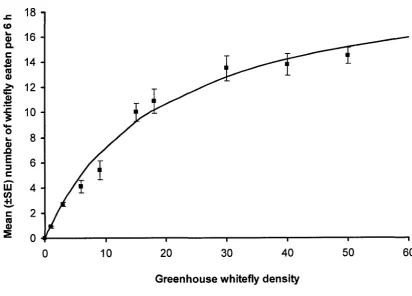
Figure 3-1: Functional response of Dicyphus hesperus at different prey densities of greenhouse whitefly...62 Figure 3-2: Functional response of Dicyphus hesperus at different prey
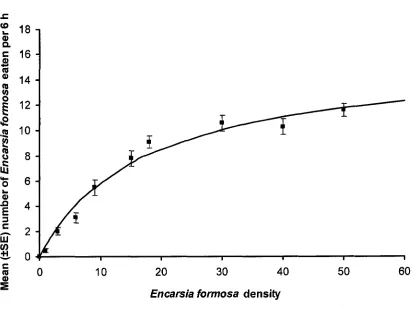
densities of Encarsia form osa...63 Figure 3-3: Functional response of Dicyphus hesperus at different prey
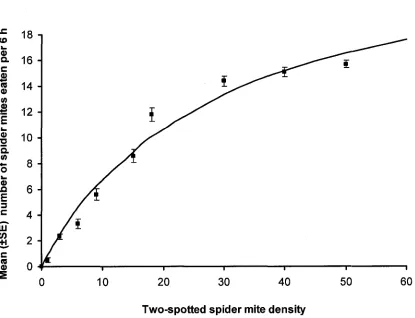
densities of two-spotted spider mites... 64 Figure 3-4: Functional response of Dicyphus hesperus at different prey
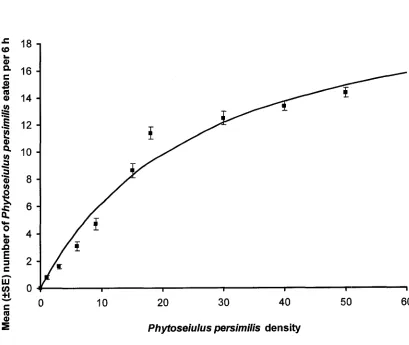
densities of Phytoseiulus persimilis... 65 Figure 3-5: Mean (±SE) number of greenhouse whitefly and Encarsia
formosa consumed per hour by D. hesperus...66
Figure 3-6: Mean (±SE) number of two-spotted spider mites and
Phytoseiulus persimilis consumed per hour by D. hesperus... 67
IV. CHAPTER IV
Figure 4-1: Mean (±SE) number of two-spotted spider mites in the presence/absence of Dicyphus hesperus and mullein... 95 Figure 4-2: Mean (±SE) number of Phytoseiulus persimilis in the
presence/absence of Dicyphus hesperus and mullein...96 Figure 4-3: Mean (±SE) number of greenhouse whitefly in the
presence/absence of Dicyphus hesperus and mullein... 97 Figure 4-4: Mean (±SE) number of Encarsia formosa in the
presence/absence of Dicyphus hesperus and mullein... 98 Figure 4-5: Percent parasitism of greenhouse whitefly pupae by Encarsia
Chapter 1
General introduction
In natural environments, natural enemies - predators, parasitoids, and pathogens - are major biotic factors that limit the population levels of phytophagous insects, thereby maintaining phytophagous insects at lower levels than would be expected given the abundance of their food sources (Holt and Lawton 1993). Species within a community are usually linked by direct and indirect interactions including various forms of predation and competition (Holt 1977). Understanding the multiple predator effects that govern herbivore population dynamics will further our understanding of species interactions and ultimately, community structure.
The goal of this thesis was to investigate the mechanisms governing omnivorous interactions within natural enemy communities, specifically intraguild predation and the outcomes on population dynamics. The population dynamics between predator and prey species are governed by numerous mechanisms including (but not limited to) predator functional and numerical responses to prey density, availability of food resources (both target and nontarget prey species), prey preference, and the degree of polyphagy
(Symondson et al. 2002). Some of these mechanisms will be discussed in more detail in subsequent sections.
Types of Omnivory
1978). Empirical observations have, however, shown that omnivory is very common in both natural and managed communities of terrestrial arthropods (Polis et al. 1989; Polis 1991; Coll and Guershon 2002). Zoophytophagous omnivory (Figure 1-1), as defined by diet, can be facultative or obligatory depending on the relative importance of prey and plant materials needed to develop (Coll and Guershon 2002). Facultative omnivores are opportunistic and supplement their diet to increase fitness. For example, western flower thrips Frankliniella occidentalis (Pergande) (Thysanoptera: Thripidae) are primarily herbivorous, but they will consume the eggs of Phytoseiulus persimilis Athias-Henriot (Acarina: Phytoseiidae) (Jenssen et al. 2003). Obligate omnivores derive some benefit from plants that cannot be derived from prey and they must, therefore, consume both resources to complete their diet. For example, Gillespie and McGregor (2000) found that plant feeding by Dicyphus hesperus Knight (Heteroptera: Miridae) was required in order to acquire water necessary for prey feeding and development.
Intraguild predation
Intraguild predation is a widespread and important interaction in many natural communities (Polis et al. 1989). Members of a guild are organisms within a community that use similar resources and thus are potential competitors. Intraguild predation occurs between members of the same guild when these members engage in predator-prey interactions with one another (Polis et al. 1989) (Figure 1-1). Most predators eat what they can subdue as diets are usually established by size ranges and predators eat from all trophic levels (Polis et al. 1989; Polis 1991; Cohen et al. 1993). Therefore, most
generalist intraguild predators are larger than their intraguild prey.
Intraguild predation offers a number of benefits for the intraguild predator. First, predation on guild members, as with any food item, yields nutritional gains. As trophic level increases, there is an increase in nitrogen within the organism, thus feeding on prey from higher trophic levels supplies more nitrogen resources to the predator with fewer prey items (Deniro and Epstein 1981). Second, feeding on other guild members results in a direct reduction of competition. Finally, an intraguild predator, in the case of mutual predation, can consume the more vulnerable life stages of its own future intraguild predators, thereby eliminating them (Polis et al. 1989). It is clear that the impact of intraguild predation on population dynamics is more complex than predation or competition alone.
predator via its offspring. Omnivorous intraguild predation occurs when the intraguild predator consumes the intermediate predator directly (Polis et al. 1989; Rosenheim and Harmon 2006). It has been suggested that omnivorous intraguild predation would have a greater potential to disrupt biological control than coincidental intraguild predation in cases where the predator does not distinguish between parasitized and unparasitized hosts (Rosenheim and Harmon 2006).
Rosenheim and Harmon (2006) did a meta-analysis of the literature using 25 published articles to determine: (1) whether intraguild predation led to elevated herbivore populations and (2) whether coincidental intraguild predation was less disruptive to biological control than omnivorous intraguild predation. Rosenheim and Harmon (2006) noted that, across all studies, intraguild predators had variable effects on herbivore populations ranging from dramatic decreases in herbivore populations to outbreaks in herbivore populations and this duality in the literature led to an overall effect size that was not different from zero. They concluded that experimental literature on intraguild predation in insect communities does not support any single, dominant outcome for herbivore populations. Given that the effect of intraguild predators is not unilateral, other mechanisms, such as the type of intraguild predator present, may be responsible for the variation in population outcomes.
between parasitized and unparasitized prey early during the parasitoid’s development and developed an increasing preference for unparasitized hosts as the parasitoid matured. Therefore, their results suggested that the addition of a coincidental intraguild predator to herbivore/intermediate predator systems would result in a lower overall herbivore
population. Predicting preference for an omnivorous intraguild predator is more difficult. Rosenheim and Harmon (2006) found that the effects of an omnivorous intraguild
predator were more varied than the effects of a coincidental intraguild predator.
Omnivorous intraguild predators were just as likely to elevate herbivore density as they were to decrease herbivore density. The role of intraguild predation in population dynamics is clearly complex, but it is an important interaction as scientists continue to exploit natural enemies for the biological control of herbivorous insects in natural and managed systems.
Most naturally occurring herbivorous insect populations are attacked by both monophagous and polyphagous natural enemies (Hassell and May 1986), yet biological control practices were rooted in classical biocontrol by specialist natural enemies (Symondson et al. 2002). The role of specialists versus generalist predators as effective biocontrol agents has long been debated (Koss and Synder 2005). Specialists employ a search and destroy strategy and have higher prey mortality per natural enemy.
Generalists subsist on nontarget food resources allowing them to persist in the
other words, fluctuations in specific prey populations would have no effect on omnivore
populations. This is in contrast to the highly coupled population dynamics between specialist predators and their prey. There is growing evidence that generalist predators can effectively suppress pest populations (Symondson et al. 2002; Chang and Kareiva 1999). In addition, generalist predators can simultaneously attack different unrelated prey species and impact several pest populations.
The different strategies used by specialists and generalists, when combined together, may have an additive effect that further reduces herbivore populations. For this
reason, the debate pertaining to generalist and specialist predators has shifted from concerns of superiority to potential interference between natural enemies when generalists and specialists are used together in multi-species systems of biocontrol. Intraguild predation may result in the elimination of the intermediate predator (specialist) or coexistence of the intraguild predator and intermediate predator. For coexistence to occur, the intermediate predator must be superior to the intraguild predator at exploiting shared resources (Polis et al. 1989). Rosenheim and Harmon (2006) note, however, that there is no reason why the intraguild predator could not be the best competitor (and therefore the best biological control agent) and simultaneously improve herbivore
suppression while exploiting the intermediate predator as a food source. This situation, of course, would be unstable and eventually lead to the exclusion of the intermediate
predator and/or the shared prey.
Another concern is that the predation pressure experienced by a particular
of a generalist species upon a single species of prey will also depend on the composition of the other species in the generalist’s diet (Holt 1977). Before adding an omnivore to an herbivore/intermediate predator system, it is important to determine the alternative food sources that would be available to a generalist predator and examine any prey preferences the generalist may have.
Prey preference of an omnivore
Despite the potential number of prey species available to generalist predators, they often have preferences for certain prey species which could have important
consequences for prey populations (Richards 1982). A predator’s preference for different prey species may be an active choice and/or a passive selection (Pastorok 1981). An active choice preference is dependent on the selectivity of the predator for different prey species. A passive selection preference is based on prey vulnerability (i.e. prey escape responses such as mobility), thus it is the prey that determines the outcome of the encounter, not a choice made by the predator (Pastorok 1981).
In addition, preference may be influenced not only by the abundance and
susceptibility of the prey species in question, but also by the abundance and susceptibility
Prey preference by an intraguild predator predicts three outcomes on herbivore population dynamics. First, if the intraguild predator prefers the intraguild prey
(intermediate predator) over the shared prey, then the herbivore could be released from predation. Second, if the intraguild predator prefers the herbivore over the intraguild prey, then control of the herbivore population will be enhanced. Third, if the intraguild
predator exhibits no preference between the herbivore prey or intraguild prey, then control of the herbivore population may not be impacted depending on the ratio of herbivore to intraguild prey as the intraguild predator would have the highest predation on the most numerous prey.
So far, previous studies have supported the above predictions. Snyder and Ives (2001) found that pea aphid (Acyrthosiphon pisum (Harris) (Homoptera: Aphididae)) populations were released from regulation by Aphidius ervi Haliday (Hymenoptera: Braconidae) when the generalist predator Pterostichus melanarius (Illiger) (Coleoptera: Carabidae) preferred aphids parasitized by A. ervi to unparasitized aphids. Heinz and Nelson (1996) found that population suppression of Bemisia argentifolii (Powell and Bellows) (Homoptera: Aleyrodidae) was increased when the generalist predator
Delphastus pusillus Leconte (Coleoptera: Coccinellidae) showed a partial preference for
the pest insect compared to the parasitoid. McGregor and Gillespie (2005) found no preference in Dicyphus hesperus Knight (Heteroptera: Miridae) for parasitized and unparasitized whitefly (Trialeurodes vaporariorum Westwood (Homoptera:
In addition to predator prey preference, the mobility of prey may affect its
vulnerability to predation. If an intermediate predator is more mobile than an herbivore, the herbivore could be more vulnerable to predation by the intraguild predator than the intermediate predator. For example, mobility could increase predator success rate by increasing the encounter rate or it could decrease success rate by enabling the prey to escape (Eubanks and Denno 2000).
The nutritional quality of food items may also influence feeding choices of omnivores (Agrawal et al. 1999). Interestingly, this includes plant quality, as this can affect the diet of omnivores as well. The western flower thrips, F. occidentalis, showed increased predation on spider mite (Tetranychus turkestani Ugarov and Nikolski (Acari: Tetranychidae)) eggs and decreased herbivory when plant quality was reduced (Agrawal et al. 1999). Janssen et al. (2003) found that an increase in plant quality resulted in a decrease in predation of Phytoseiulus persimilis eggs by western flower thrips. Eubanks and Denno (1997) found that when high quality bean pods were made available,
omnivorous big-eyed bugs (Geocoris spp. (Hemiptera: Lygaeidae)) shifted their behaviour away from predation, thus resulting in an increase in aphid numbers. In contrast, Weiser and Stamp (1998) found that it may be maladaptive for
zoophytophagous species to feed only on plants when prey are abundant, as
The effectiveness of a predator population on the suppression of a pest population will also depend, to some extent, on the searching efficiency of the predator population. The searching efficiency of a predator population is influenced by many factors including (but not limited to) prey density (functional response), prey distribution, predator density (numerical response) and any alternative prey or competing predator species (Hassell 1978). The numerical response of a predator is a predator’s ability to increase its numbers with increasing prey density. Functional response is defined as changes in the prey consumption rate by predators with respect to changes in prey density over a given time interval (Solomon 1949; Holling 1959a; Holling 1959b). The functional response curve is defined by two parameters, the attack coefficient and the handling time. The attack coefficient (or instantaneous search rate) is the probability that a given predator will encounter a given prey during its searching lifetime (Hassell 1978). The attack coefficient is influenced by many aspects such as predator versus prey mobility, success rate of the predator, distribution of the prey, size and complexity of the arena, and
motivation of the predator. The handling time refers to the amount o f time spent chasing, killing, eating and digesting a single prey item (Hassell 1978). Holling (1959a)
recognized three types of functional response curves: Type I where the response rises linearly to a plateau; Type II where the number of prey eaten per predator increases decelerating to a plateau (the maximum number of prey that can be eaten by each predator per unit time); and Type III where the response is represented be a sigmoidal increase in hosts attacked.
digestion limited (Sabelis 1992, van Rijn et al. 2005). As an example, if a predator requires 10 minutes to consume a prey item, they could potentially consume 6 prey items in one hour, assuming there was unlimited prey and no satiation. However, the same predator may, in reality, only consume 4 prey in one hour as a result of the time it takes
to empty the gut. It is clear that satiation can influence foraging behaviour, and therefore, it is important that satiation patterns for predators be determined for alternate prey in order to understand the predation process.
Species within a community are usually linked by direct and indirect interactions through interspecific competition. Interspecific competition is defined as the negative effects that one species has upon another by consuming or controlling access to a resource that is limited in availability or through susceptibility to shared predators and can be mediated through interference competition, exploitative competition, apparent
competition and cannibalism (Holt 1977). Interference competition occurs when one species reduces the access of a competitor to a limited resource through behavioural interactions. Exploitation competition occurs when two consumer species indirectly compete for a limited shared resource (Polis et al. 1989).
1977). Thus, predator density is partly determined by the diversity and abundance of
prey species (Holt 1977).
The concept of apparent competition may be important in biological control. According to predator-mediated apparent competition theory, the addition of an intraguild predator should not disrupt suppression of herbivore populations. If the intraguild predator consumes the occasional intermediate predator, the effect may be an increase in the density of the intraguild predator, which would result in greater predation pressure on the herbivore population, ultimately resulting in a lower equilibrium density of the pest species. Heme and Putman (1966) posited that Panonychus ulmi (Koch) (Acari: Tetranychidae) was maintained at a low density in peach orchards by the phytoseiid Typhlodromus caudiglans Schuster (Acari: Phytoseiidae) even though T. caudiglans frequently subsidized its diet with alternative prey. Typhlodromus caudiglans
was able to increase its density by consuming additional food sources, thereby increasing the predation pressure on the pest species and is an example of successful pest
suppression through predator-mediated apparent competition.
Summary
Mylius et al. 2001). Therefore, it is important that we back up theoretical predictions with empirical evidence.
Some important mechanisms to explore when examining the potential impact of an omnivorous predator on population dynamics are predator preferences for intraguild
prey versus shared prey, searching efficiency of a predator population and the effects of interspecific competition. Over the next three chapters, I will address several of these issues with the goal of gaining a deeper understanding of multi-trophic level interactions between omnivores, specialist predators and their prey. I begin with a chapter on the use of observational studies to examine the mechanisms of prey preference by omnivores. I assess the preference o f the intraguild predator (omnivore) for the intraguild prey versus shared prey via encounter rate, predation rate, success ratio, and handling time and I compare the time invested in prey feeding and searching for prey with the time invested in plant feeding. In the third chapter, I measure an omnivore’s ability to impact
population dynamics in a multi-species system using functional response curves and satiation patterns. The fourth chapter is an empirical study on population dynamics. I measure the population dynamics of the intermediate predator and the shared prey with
References
Agrawal AA, Kobayashi C, Thaler JS (1999) Influence of prey availability and induced host-plant resistance on omnivory by western flower thrips. Ecology 8: 518-523 Chang GC, Kareiva P (1999) The case for indigenous generalists in biological control.
Theoretical Approaches to Biological Control. Cambridge, UK: Cambridge University press, ppl03-l 15
Cohen JE, Pimm SL, Yodzis P, Saldana J (1993) Body sizes of animal predators and animal prey in food webs. Journal of Animal Ecology 62: 67-78
Coll M, Guershon M (2002) Omnivory in terrestrial arthropods: Mixing plant and prey diets. Annual Review of Entomology 47: 267-297
Deniro MJ, Epstein S (1981) Influence of diet on the distribution of nitrogen isotopes in animals. Geochimica et Cosmochimica Acta 45: 341-351
Denno RF, Finke DL (2006) Multiple predator interactions and food-web connectance: implications for biological control. In: Brodeur J, Boivin G (eds) Trophic and guild interactions in Biological Control. Springer, The Netherlands, pp. 45-70 Eubanks MD, Denno RF (1997) The effects of plant quality and alternative prey on the
suppression of aphid populations by an omnivore. Bulletin of the Ecological Society of America 78: 85
Eubanks MD, Denno RF (2000) Health food versus fast food: the effects of prey quality and mobility on prey selection by a generalist predator and indirect interactions among prey species. Ecological Entomology 25: 140-146
Entomology 25: 380-386
Hassell MP (1978) The Dynamics of Arthropod Predator-Prey Systems. Princeton university press, Princeton, New Jersey
Hassell MP, May RM (1986) Generalist and specialist natural enemies in insect predator- prey interactions. Journal of Animal Ecology 55: 923-940
Heinz KM, Nelson JM (1996) Interspecific interactions among natural enemies of Bemisia in an inundative biological control program. Biological Control 6: 384-
393
Heme DHC, Putman WL (1966) Toxicity of some pesticides to predacious arthropods in Ontario peach orchards. Canadian Entomologist 98: 936-942
Holling, CS (1959a) The components of predation as revealed by a study of small
mammal predation of the European pine sawfly. Canadian Entomologist 91: 293- 320
Holling, CS (1959b) Some characteristics of simple types of predation and parasitism. Canadian Entomologist 91: 385-398
Holt RD (1977) Predation, apparent competition, and the stmcture of prey communities. Theoretical Population Biology 12: 197-229
Holt RD, Lawton JH (1993) Apparent competition and enemy-free space in insect host parasitoid communities. American Naturalist 142: 623-645
Holt RD, Lawton JH (1994) The ecological consequences of shared natural enemies. Annual Review of Ecology and Systematics, 25: 495-520
Janssen A, Willemse E, Van Der Hammen T (2003) Poor host plant quality causes omnivore to consume predator eggs. Journal of Animal Ecology 72: 478-483 Koss AM, and Synder (2005) Alternative prey disrupt biocontrol be a guild of generalist
predators. Biological Control 32: 243-251
McGregor RR, Gillespie DR (2005) Intraguild predation by the generalist predator Dicyphus hesperus on the parasitoid Encarsia formosa. Biocontrol Science and
Technology 15: 1-9
Mylius S, Klumpers K, de Roos AM, Persson L (2001) Impact of omnivory and stage structure on food web composition along a productivity gradient. American Naturalist 158: 259-276
Pastorok RA (1981) Prey vulnerability and size selection by Chaoborus larvae. Ecology 62:1311-1324
Pimm SL, Lawton JH (1978) On feeding on more than one trophic level. Nature 275: 542-544
Polis GA (1991) Complex trophic interactions in deserts - An empirical critique of food web theory. American Naturalist 138: 123-155
Polis GA, Holt RD (1992) Intraguild predation: the dynamics of complex trophic interactions. Trends in Ecology and Evolution 7: 151-154
Polis GA, Myers CA, Holt RD (1989) The ecology and evolution of intraguild predation: potential competitors that eat each other. Annual Review of Ecology and
Systematics 20: 297-330
Rosenheim JA, Harmon JP (2006) The influence of intraguild predation on the
suppression of a shared prey population: an empirical reassessment. In: Brodeur J, Boivin G (eds) Trophic and guild interactions in Biological Control. Springer, The Netherlands, pp. 1-20
Sabelis MW (1992) Predatory arthropods. In: Crawley MJ (ed) Natural Enemies: the population biology of predators, parasites and diseases. Blackwell, pp. 225-264 Snyder WE, Ives AR (2001) Generalist predators disrupt biological control by a specialist
parasitoid. Ecology 82: 705-716
Solomon ME (1949) The natural control of animal populations. Journal of Animal Ecology. 18: 1-35
Symondson WOC, Sunderland KD, Greenstone MH (2002) Can generalist predators be effective biocontrol agents? Annual Review of Entomology 47: 561-594
van Rijn PCJ, Bakker FM, van der Hoeven WAD, Sabelis MW (2005) Is arthropod predation exclusively satiation-driven? Oikos 109: 101-116
Weiser LA, Stamp NE (1998) Combined effects of allelochemicals, prey availability, and supplemental plant material on growth of a generalist insect predator.
Predator —► Intraguild predator
Herbivore —► Omnivore
Plant
Herbivore
Plant
a) True omnivory b) Trophic omnivory
Chapter 2
Determining prey preference in an omnivore: Predation behaviour of an intraguild
predator in the presence of intraguild prey and shared prey
Introduction
Omnivory is very common in terrestrial arthropods in both natural and managed communities (Polis et al. 1989; Polis 1991; Coll and Guershon 2002). Omnivores are often extreme generalists feeding on resources that belong to different trophic levels, therefore, they are able to persist in variable environments (Coll and Guershon 2002). Omnivory can be defined in various ways depending on their resource use and
interactions with other members of the food web. True omnivores, or zoophytophagous omnivores, are consumers that feed on both animal and plant food sources (Coll and Guershon 2002) whereas trophic omnivory is defined as feeding on more than one trophic level (Pimm and Lawton 1978). True omnivory, therefore, fits within the definition of trophic omnivory. Trophic omnivory also includes intraguild predation, in which predators consume potential competitors (Coll and Guershon 2002).
The nutritional quality of food items may influence feeding choices of omnivores (Agrawal et al. 1999). Nitrogen is a critical nutrient required for the growth and
development of organisms (Fagan et al. 2002). The nitrogen content in herbivorous
insects is generally lower than that of predatory insects and may be a limiting growth factor for predatory insects in terrestrial ecosystems (Fagan et al. 2002). As trophic levels increase, there is an increase in nitrogen (Deniro and Epstein 1981). It has been suggested that predator performance is enhanced by eating more nitrogen rich prey via intraguild predation (Denno and Fagan 2003). Furthermore, nitrogen content varies among herbivore species, suggesting that some herbivores are more beneficial to eat than others (Fagan et al. 2002). McGregor et al. (1999) found that whitefly (Trialeurodes vaporariorum Westwood (Homoptera: Aleyrodidae)) were a better-quality food item for
the growth and development of Dicyphus hesperus Knight (Fleteroptera: Miridae) compared to spider mites (Tetranychus urticae Koch (Acari: Tetranychidae)). Diet choice by an intraguild predator, therefore, may play an important role in determining the population dynamics of potential prey.
Despite the potential number of prey species available, generalist predators often have discemable preferences for certain insect species which could have important consequences for prey populations (Richards 1982). A predator’s preference for different prey species may be an active choice by the predator and/or a passive selection due to the vulnerabilities of the prey (Pastorok 1981). Mobility is a prey trait that may affect a prey’s vulnerability to predation. If an intraguild prey is more mobile than an
higher order predator (Eubanks and Denno 2000). Alternately, a mobile intraguild prey may be encountered by the higher order predator more frequently, thereby increasing the frequency that prey type is killed by the predator compared to a less mobile or stationary herbivorous prey type.
Prey preference by an intraguild predator predicts three outcomes on herbivore population dynamics. First, if the intraguild predator prefers the intraguild prey over the shared prey, then the herbivore could be released from predation. Second, if the
intraguild predator prefers the herbivore over the intraguild prey, then regulation of the herbivore population will be enhanced. Third, if the intraguild predator exhibits no preference between the herbivore prey or intraguild prey, then regulation of the herbivore population may not be impacted depending on the ratio of herbivore to intraguild prey as the intraguild predator would have the highest predation on the most numerous prey.
It is clear that prey preference of an intraguild predator can have important consequences on intraguild and herbivore prey population dynamics. This can have important consequences for regulation of herbivorous species in natural and managed ecosystems. Biological control is the use of natural enemies - predators, parasitoids, and
Dicyphus hesperus is a zoophytophagous mirid that feeds not only a variety of
prey, but also on a variety of host plants including mullein (Verbascum thapsus L. (Scrophulariaceae)) and tomato (Lycopersicon esculentum Mill. (Solanaceae)) (McGregor et al. 1999; Gillespie and McGregor 2000; Sanchez et al. 2004). This generalist omnivore is currently used as a biological control agent to suppress pest populations of greenhouse whitefly (T. vaporariorum) and two-spotted spider mites (T. urticae in tomato greenhouses in British Columbia, Ontario and Quebec, Canada
(McGregor et al. 1999; Sanchez et al. 2003). Also present in this system are the
specialist natural enemies of those pest species, namely the parasitoid Encarsia formosa Gahan (Hymenoptera: Aphelinidae) and the predatory mite Phytoseiulus persimilis Athias-Henriot (Acarina: Phytoseiidae). As a higher order predator, D. hesperus engages in intraguild predation by preying upon the specialist natural enemies of the herbivore species. In this chapter, feeding preferences of an intraguild predator (omnivore) for intraguild prey versus shared prey are assessed. In addition, behavioural activities such as the amount of time spent prey feeding, searching for prey, plant feeding and resting and grooming are compared for different sets of prey species.
Materials and Methods
Insect origins and rearing
Predator
Dicyphus hesperus were originally collected from white stem hedge nettle,
Stachys albens A. Gray (Lamiaceae) in the foothills of the Sierra Nevada Mountains at an
Colonies were maintained on tobacco plants, Nicotiana tabacum L. (Solanaceae) at 24 °C with a 16 h light and 8 h dark diel cycle. Adult D. hesperus oviposited on caged plants
for 7 days, prior to removal of adults from the plants. Eggs were allowed to hatch and nymphs were fed previously frozen eggs of Ephesitia kuehniella Zeller (Lepidoptera: Pyralidae) ad libitum, until development to adult. This procedure allowed for
synchronized cohorts of adults. Prey
Two-spotted spider mites were reared on tomato leaves. Encarsia formosa and P. persimilis were ordered from Koppert Biological Systems, Scarborough, Ontario, Canada
and greenhouse whitefly were obtained from Applied Bionomics, Sidney, British Columbia, Canada. Only the pupal stages of greenhouse whitefly and E. formosa were used during these experiments.
Experimental Setup
Adult Dicyphus hesperus females (1 week old) were starved for 72 h prior to the start of each experiment. Arenas consisted of a piece of tomato leaf (Early Cascade Hybrid) placed upside down in a 5 cm diameter Petri dish. Predatory females were provided two treatments of prey consisting of either spider mites and P. persimilis (20 of each),
was only used once. Each treatment was replicated 20 times. Prey were not replaced during the experiment.
Statistical analysis
Encounter rate was calculated for each species by dividing the total number of encounters for each species by the total time spent searching (i.e. walking). Predation rate for each species was measured as the number of prey killed per hour. The success ratio for each species was calculated as the number of encounters followed by feeding, divided by the total number of encounters with that prey. Handling time for each species was measured as the mean time spent eating one prey item. These data were analyzed using a MANOVA (SPSS v. 13.0). To compare differences in time allocated to the different behaviours paired t-tests with a Bonferroni correction was used with an alpha of
P = 0.017 (SPSS v. 13.0).
Results
Dicyphus hesperus had a higher predation rate (F1 3 6 = 6.391, P = 0.016) and
marginally higher success ratio (F1 3 6 == 3.123, P — 0.086) for whitefly pupae than for E.
formosa pupae when presented at the same time (Table 2-1). No differences in encounter
rate (Fi, 36 = 0.545, P = 0.465) and handling time (Fi; 36 = 1.633, P = 0.210) were
measured for D. hesperus attacking whitefly and E. formosa (Table 2-1).
Mean encounter rate was greater for D. hesperus attacking spider mites than P. persimilis (Table 2-2: Fi, 3 5 = 15.635, P < 0.001). In addition, D. hesperus had a higher
predation rate (Fi; 35 = 229.123, P < 0.001) and success ratio (F1 3 5 = 92.361, P < 0.001)
difference in mean handling time for D. hesperus attacking spider mites and P. persimilis (Table 2-2: FM 5 = 2.295, P = 0.139).
Dicyphus hesperus had a higher encounter rate (Fi, 33 = 9.372, P = 0.004),
predation rate ( F i^ = 67.448, P < 0.001), success ratio (Fi; 3 3 = 12.050, P = 0.001) and handling time (Fi, 3 3 = 101.392, P < 0.001) for whitefly pupae than for spider mites when present at the same time (Table 2-3).
In the presence o f whitefly and E. formosa, D. hesperus spent more time prey feeding than searching for prey (Table 2-4: ti; 1 9= -8.27, P < 0.001) and plant feeding
(Table 2-4: ti, 19 = -11.24, P < 0.001). In the presence of whitefly and E. formosa, D.
hesperus spent more time searching for prey than plant feeding (Table 2-4: tj, 1 9= 3.16, P
= 0.005).
In the presence o f spider mites and P. persimilis, D. hesperus spent more time prey feeding than searching for prey (Table 2-5: ti, 19 = -4.53, P < 0.001) and plant
feeding (Table 2-5: ti, 1 9= -19.14, P < 0.001). In the presence of spider mites and P.
persimilis, D. hesperus spent more time searching for prey than plant feeding (Table 2-5:
t 1; 1 9= 25.33, P < 0.001).
In the presence of spider mites and whitefly, D. hesperus spent more time prey feeding than searching for prey (Table 2-6: ti, 19 = -43.13, P < 0.001) and plant feeding
(Table 2-6: ti, 19 = -34.95, P < 0.001). In the presence of spider mites and whitefly, D.
hesperus spent marginally more time searching for prey versus plant feeding (Table 2-6:
Discussion
The intraguild predator fed on both the intraguild prey and the shared prey when presented simultaneously. The presence of spider mites and whitefly did not prevent predation on P. persimilis and E. formosa. Therefore, D. hesperus and P. persimilis
interact by both competing for prey and through intraguild predation by D. hesperus on P. persimilis. Similarly, D. hesperus and E. formosa interact by both competing for prey
and through intraguild predation. In both cases the intraguild predator had a higher predation rate and success ratio for the shared prey than for the intraguild prey despite equal numbers of both prey types. Thus, intraguild predation on the specialist natural enemy (intraguild prey) is likely to be minimized in natural settings as the herbivore is present in much higher numbers than the intraguild prey. Higher encounter rate for the herbivore prey, combined with a preference for the herbivore prey, suggests that competition for the herbivore prey is likely to be the more important interaction regulating population dynamics between these species.
Dicyphus hesperus had a preference for spider mites over the intraguild predator
P. persimilis. This preference appears to be caused by trait differences in the prey types
(passive selection) as opposed to being an active choice of the predator. Dicyphus hesperus had a higher encounter rate for the herbivorous mite than for the predaceous
addition, the predatory mites that were encountered but not killed escaped by running away from D. hesperus, resulting in a lower success ratio for this prey type.
Venzon et al. (2001) studied the foraging behaviour of an intraguild predator,
Orius laevigatus (Fieber) (Heteroptera: Anthocoridae), with an intraguild prey, P.
persimilis, and a shared prey, spider mites, on cucumber leaf discs in Petri dishes. They
found no difference between predation rates of spider mites and P. persimilis by the intraguild predator. However, the density of P. persimilis was four times lower than that of spider mites and they multiplied the predation rate of P. persimilis by four to
compensate for the lower densities. Therefore, they assumed that predation by the intraguild predator would increase by a magnitude of 4 if the density was increased by an equal magnitude. This may have been a false assumption and could explain the
difference between their results and the results of this study. Venzon et al. (2001) also found an equal encounter rate between spider mites and P. persimilis, but they followed the same procedure as described above. In contrast to the results of this study, Venzon et al. (2 0 0 1) found the same success ratio for the intraguild predator consuming spider mites
and P. persimilis, but the handling times for the two prey types differed. This may be attributed to differences between O. laevigatus and D. hesperus (the intraguild predator species) in their ability to subdue the different prey species.
Differences in prey mobility do not explain the differential predation by D. hesperus on the herbivore prey, whitefly, in the presence of E. formosa parasitized
whitefly, as both prey types were immobile. Although encounter rate for whitefly and E. formosa were similar, the omnivore killed more whitefly than parasitized whitefly. There
harder to feed upon by the omnivore. Parasitized pupae have a hardened cuticle, which may have made cuticle penetration more difficult for the omnivore (Hoelmer et al. 1994). In addition, as a parasitoid matures inside the whitefly pupae, the fluid contents of the whitefly are used up and air pockets form inside the pupal case. These air spaces may interfere with fluid uptake by D. hesperus (Hoelmer et al. 1994).
Castane et al. (2004) found that two other mirid predators, Dicyphus tamaninii Wagner and Macrolophus caliginosus Wagner, had a strong preference for unparasitized whitefly pupae versus those parasitized by E. formosa. In contrast, McGregor and Gillespie (2005) measured intraguild predation by D. hesperus on greenhouse whitefly pupae versus pupae that had been parasitized by E. formosa and concluded that although D. hesperus readily consumed parasitized pupae, they did not display a preference
between the two prey types. Labbe et al. (2006) using the same host-parasitoid-predator system measured predation by D. hesperus in non-choice experiments and observed that
D. hesperus did not preferentially attack parasitized versus unparasitized whiteflies.
choose the specialist natural enemies as prey. However, Matsumura et al. (2004)
evaluated the relationship between predator performance and prey nitrogen content using the intraguild predator Pardosa littoralis Banks (Araneae: Lycosidae), when fed a diet of intraguild prey Grammonota trivittata Banks (Araneae: Linyphiidae), or Prokelisia dolus Wilson (Hemiptera: Delphacidae) as the herbivorous prey. They found predator
performance decreased as a result of intraguild predation and concluded that predator performance was likely based on foraging efficiency rather than nitrogen content.
Similarly, Kagata and Katayama (2006) demonstrated that Harmonia axyridis Pallas (Coleoptera: Coccinellidae) (an intraguild predator) expressed a decrease in growth when fed Coccinella septempunctata L. (Coleoptera: Coccinellidae) (intraguild prey) compared to aphids (Acyrthosiphon pisum Harris and Aphis craccivora Koch
(Homoptera: Aphididae)) (herbivorous prey). They offered two explanations for the reduction in predator performance when predators engaged in intraguild predation. First, there was a cost associated with intraguild predation. In this case, the intraguild predator did not have a large advantage over the intraguild prey and risked becoming the
intraguild prey. Also, prey consumption decreased because the intraguild predator was less efficient at capturing and subduing the intraguild prey compared to the herbivorous prey. Second, nitrogen-use efficiency decreased when fed the intraguild prey compared to the herbivorous prey. Kagata and Katayama (2006) suggested that if C.
septempunctata larvae have more nitrogen than H. axyridis requires then H. axyridis
McGregor et al. (1999) found that whitefly were a better-quality food item for the growth and development o f D. hesperus compared to spider mites. Fittingly, this study found that D. hesperus had a higher encounter rate, predation rate and success ratio for whitefly than for spider mites when offered together. This suggests that D. hesperus has a strong preference for whitefly over spider mites and that D. hesperus is foraging optimally.
Although whitefly are a superior food for the growth and development of D. hesperus compared to spider mites, there may be another explanation for the observed
preference between these to herbivores. Whitefly pupae are immobile, whereas spider mites are mobile. In this study the immobile whitefly pupae remained randomly placed on the tomato leaflet throughout the trial, whereas spider mites were able to move about. Even though they did not move off the leaf, they did redistribute themselves in such a manner that resulted in D. hesperus encountering them less often compared to the whitefly pupae. This indicates that the increased mobility of spider mites provides them with an advantage over whitefly pupae, by decreasing the number of times they are encountered by the intraguild predator. It is hard to say whether spider mite mobility or the nutritional gains of whitefly were responsible for the higher success ratio of D. hesperus for whitefly. Although spider mites are mobile, they are not that fast and they
are considerably smaller than D. hesperus. In actuality, D. hesperus, upon encountering spider mites, would often be the one to walk away, perhaps in search of higher quality whitefly.
Dicyphus hesperus is an obligate omnivore, as plant feeding is required in order to
digestion digestive enzymes are injected into prey and the liquefied contents are withdrawn through the stylets. As plants can be an alternative food source for D.
hesperus, it was important to examine the amount of time D. hesperus spent prey feeding
and searching for prey versus plant feeding. Dicyphus hesperus spent more time prey feeding and searching for prey than plant feeding under all three prey combinations.
Eubanks and Denno (1999) advocate that zoophytophages that endure periods of prey scarcity by feeding on plants usually have lower survival rates than individuals feeding consistently on prey. This is consistent with Sanchez et al. (2004) who compared the success of developing D. hesperus nymphs raised on prey versus mullein and found that on mullein without prey 30% of nymphs completed development, whereas about 90% completed development on most host plants with prey. Although D. hesperus can survive on mullein and, in fact, plant feeding is required for prey feeding and
Water is lost continually through extra-oral digestion and plant feeding is one way to regain water (Pollard 1988; Gillespie and McGregor 2000). Gillespie and McGregor (2000) posit that plant feeding in D. hesperus to gain water may occur in proportion to predation levels irrespective of prey quantity or quality. This explains why D. hesperus did not spend all its time prey feeding or searching for prey.
In summary, the presence of the shared prey did not prevent predation on the intraguild prey. However, the intraguild predator, through active choice and passive selection, preferred the herbivore prey over the intraguild prey. In addition, the intraguild predator expressed a preference for one herbivorous species over the other. This study suggests that differential escape success, nutritional quality and other prey defenses of the intraguild prey and the shared prey are important traits to consider when determining preference and the effect of intraguild predation on a prey population. Given the greater number of herbivore prey than intraguild prey in real life food webs, and the preference for herbivore prey, the population dynamics of the intraguild predator and intraguild prey are more likely regulated by competitive interactions than intraguild predation. With respect to regulation of managed agro-ecosystems, the addition of the omnivore D. hesperus should result in enhanced herbivore population suppression, with minimal
References
Abram PA (2006) The prerequisites for the likelihood of generalist-specialist coexistence. The American Naturalist 167: 329-342
Agrawal AA, Kobayashi C, Thaler JS (1999) Influence of prey availability and
induced host-plant resistance on omnivory by western flower thrips. Ecology 8:
518-523
Castane C, Alomar O, Goula M, Gabarra Rosa (2004) Colonization of tomato
greenhouses b the predatory mirid bugs Macrolophus caliginosus and Dicyphus tamaninii. Biological Control 30: 591-597
Coll M, Guershon M (2002) Omnivory in terrestrial arthropods: Mixing plant and prey diets. Annual Review of Entomology 47: 267-297
Deniro MJ, Epstein S (1981) Influence of diet on the distribution of nitrogen ' isotopes in animals. Geochimica et Cosmochimica Acta 45: 341-351 Denno RF, Fagan WF (2003) Might nitrogen limitation promote omnivory among
carnivorous arthropods? Ecology 84: 2522-2531
Eubanks MD, Denno RF (1999) The ecological consequences o f variation in plants and prey for an omnivorous insect. Ecology 80: 1253-126
Eubanks MD, Denno RF (2000) Health food versus fast food: the effects of prey quality and mobility on prey selection by a generalist predator and indirect interactions among prey species. Ecological Entomology 25: 140-146 Fagan WF, Siemann E, Mitter C, Denno RF, Huberty AF, Woods HA, Elser JJ
Gillespie DR, McGregor RR (2000) The functions of plant feeding in the
omnivorous predator Dicyphus hesperus: water places limits on predation. Ecological Entomology 25: 380-386
Hoelmer, K, Osborne LS, Yokomi, RK (1994) Interactions of the whitefly predator Delphastus pusillus (Coleoptera: Coccinellidae) with parasitized sweetpotato
whitefly (Homoptera: Aleyrodidae). Biological Control 23: 136-139 Kagata K, Katayama N (2006) Does nitrogen limitation promote intraguild
predation in an aphidophagous ladybird? Entomologia Experimentalis et Applicata 119: 239-246
Labbe RM, Cloutier c, Brodeur J (2006) Prey selection by Dicyphus hesperus of
infected or parasitized greenhouse whitefly. Biocontrol Science and Technology 16: 485-494
McGregor RR, Gillespie DR (2005) Intraguild predation be the generalist predator Dicyphus hesperus on the parasitoid Encarsia formosa. Biocontrol Science and
Technology 15: 219-227
McGregor RR, Gillespie DR, Quiring DMJ and Foisy, MRJ (1999) Potential use of Dicyphus hesperus Knight (Heteroptera: Miridae) for biological control of pests
of greenhouse tomatoes. Biological Control 16: 104-110
Matsumura M, Trafelet-Smith GM, Gratton C, Finke DL, Fagan WE, Denno RF
(2004) Does intraguild predation enhance predator performance? A stoichiometric perspective. Ecology 85: 2601-2615
observation sessions. Behaviour Research Methods, Instruments, & Computers, 32: 446-449
Pastorok RA (1981) Prey vulnerability and size selection by Chaoborus larvae. Ecology 62: 1311-1324
Pimm SL, Lawton JH (1978) On feeding on more than one trophic level. Nature 275: 542-544
Polis GA (1991) Complex trophic interactions in deserts - An empirical critique of food web theory. American Naturalist 138: 123-155
Polis GA, Myers CA, Holt RD (1989) The ecology and evolution of intraguild
predation: potential competitors that eat each other. Annual Review of Ecology and Systematics, 20: 297-330.
Pollard SD (1988) Partial consumption of prey: the significance of prey water loss on estimates of biomass intake. Oecologia 76: 475-476
Richards LJ (1982) Prey selection by an intertidal beetle: field test of an optimal diet
model. Oecologia 55: 325-332
Roitberg BD, Gillespie DR, Quiring DMJ, Alma CR, Jenner WH, Perry J, Peterson JH, Salomon M, VanLaerhoven S (2005) The cost of being an omnivore:
mandible wear from plant feeding in a true bug. Naturwissenschaften 92: 431-434 Sanchez JA, Gillespie DR, McGregor RR (2003) The effects of mullein (Verbascum
thapsus) on the population dynamics of Dicyphus hesperus (Heteroptera: Miridae)
in tomato greenhouses. Biological Control 28: 313-319
history traits in the zoophytophagous predator Dicyphus hesperus. Entomologia Experimentalis et Applicata 112: 7-19
Venzon M, Janssen A, Sabelis M (2001) Prey preference, intraguild predation and population dynamics of an arthropod food web on plants. Experimental and
Table 2-1: Mean (±SE) encounter rate, predation rate, success ratio and handling time for starved Dicyphus hesperus females when provided whitefly and Encarsia formosa pupae.
Whitefly E. formosa
Encounter rate 26.14 ±6.34/h 20.42± 3.30/h Fi, 36 = 0.545 P = 0.465 Predation rate 2.50 ± 0.34/h 1.27 ± 0.24/h Fi,36 = 6.391 P = 0.016
Table 2-2: Mean (±SE) encounter rate, predation rate, success ratio and handling time for starved Dicyphus hesperus females when provided two-spotted spider mites and
Phytoseiulus persimilis.
Spider mites P. persimilis
Table 2-3: Mean (±SE) encounter rate, predation rate, success ratio and handling time for starved Dicyphus hesperus females when provided two-spotted spider mites and whitefly pupae.
Spider mites Whitefly
Table 2-4: Mean (±SE) time spent prey feeding, searching and plant feeding for starved Dicyphus hesperus females when provided whitefly and Encarsia formosa pupae.
Behavior Mean (±SE)
Prey feeding 1.18± 0.08/ha
Searching 0.44 ± 0.05/h b Plant feeding 0.23 ± 0.03/h c
Table 2-5: Mean (±SE) time spent prey feeding, searching and plant feeding for starved Dicyphus hesperus females when provided two-spotted spider mites and Phytoseiulus
persimilis.
Behavior Mean (±SE)
Prey feeding 0.95 ± 0.05/h a
Searching 0.77 ± 0.03/h b
Plant feeding 0.18 ± 0.0 2/h c
Table 2-6: Mean (±SE) time spent prey feeding, searching and plant feeding for starved Dicyphus hesperus females when provided two-spotted spider mites and whitefly pupae.
Behavior Mean (±SE)
Prey feeding 1.66 ± 0.04/ha Searching 0.17 ± 0.02/h b Plant feeding 0 . 1 1 ± 0.0 2/h c
Chapter 3
Functional response of an omnivore: Intraguild prey versus shared prey
Introduction
Most naturally occurring herbivorous insect populations are attacked by both monophagous and polyphagous natural enemies (Hassell and May 1986) and these predator-prey relationships can be exploited to regulate herbivorous insect populations both in natural environments and in managed systems. Omnivory, which is defined as feeding on more than one trophic level (Pimm and Lawton 1978) is a common form of predation (Polis et al. 1989; Polis 1991; Coll and Guershon 2002). Intraguild predation is a type of omnivory defined as predation that occurs between organisms that exploit a common resource (Polis et al. 1989). Omnivores are often extreme generalists that feed on a variety of resources and with such flexible diets are able to persist in variable environments (Coll and Guershon 2002).
Westwood (Homoptera: Aleyrodidae)) were a better-quality food item for the growth and
development of Dicyphus hesperus Knight (Heteroptera: Miridae) compared to two- spotted spider mites (Tetranychus urticae Koch (Acari: Tetranychidae)). Diet choice by
an intraguild predator, therefore, may play an important role in determining the population dynamics of potential prey.
Predation pressure experienced by a focal herbivore may be alleviated when omnivorous natural enemies feed on other prey species or other host plants (Coll and Guershon 2002). The impact of a generalist predator on the population dynamics of any one species of prey will also depend on the demographics of other species in the
generalist’s diet (Holt 1977). Before adding an omnivore to an herbivore/intermediate predator system, it will be important to determine the alternative food sources that would
be available to a generalist predator and examine the impact o f the generalist predator on population dynamics of each of the potential prey species within the food web.
chapter, the functional response of an omnivorous predator to prey density in a homogeneous environment is evaluated.
The functional response curve is defined by two parameters, the attack coefficient and the handling time. The attack coefficient (or instantaneous search rate) is the
probability that a given predator will encounter a given prey during its searching lifetime (Hassell 1978). The attack coefficient is influenced by many aspects such as predator versus prey mobility, success rate of the predator, distribution of the prey, size and complexity of the arena, and motivation of the predator. The handling time refers to the amount of time spent chasing, killing, eating and digesting a single prey item (Hassell
1978).
Holling (1959a) recognized three types of functional response curves: Type I where the response rises linearly to a plateau; Type II where the number of prey eaten per predator increases decelerating to a plateau (the maximum number of prey that can be eaten by each predator per unit time); and type III where the number of prey consumed is slow initially, usually attributed to learning by the predator to recognize and find the prey, followed by a rapid increase in prey consumption per predator, which then decelerates to a plateau.
Holling’s (1959b) disc equation, which describes the functional response curve, assumes that predators are primarily time-limited (handling time and search time), but this is not always the case. Predators may also be digestion limited (Sabelis 1992, van Rijn et al. 2005). In other words, if a predator requires 10 minutes to consume a prey item they could potentially consume 6 prey items in one hour assuming there was
consume 4 prey in one hour as a result of gut fullness. It is clear that satiation influences foraging behaviour and therefore it is important that satiation patterns for predators be determined for alternate prey in order to understand the predation process.
Dicyphus hesperus is a zoophytophagous mirid that feeds not only on a variety of
prey, but also on a variety of host plants including mullein (Verbascum thapsus L. (Scrophulariaceae)) and tomato (Lycopersicon esculentum Mill. (Solanaceae))
(McGregor et al. 1999; Gillespie and McGregor 2000; Sanchez et al. 2004). Dicyphus hesperus, a generalist predator, is currently used as a biological control agent to suppress
pest populations of greenhouse whitefly (T. vaporariorum) and two-spotted spider mites (T. urticae) in tomato greenhouses in British Columbia, Ontario and Quebec, Canada
(McGregor et al. 1999; Sanchez et al. 2003). Also present in this system are the
specialist natural enemies of those pest species, namely the parasitoid Encarsia formosa Gahan (Hymenoptera: Aphelinidae) and the predatory mite Phytoseiulus persimilis Athias-Henriot (Acarina: Phytoseiidae). Dicyphus hesperus also engages in intraguild predation by preying on the specialist natural enemies of the pest species.
The goal of this study was to compare the functional response of D. hesperus when feeding on greenhouse whitefly, two-spotted spider mites, E. formosa, and P. persimilis, in order to estimate the potential effect of intraguild predation when D.
hesperus is used in combination with E. formosa and P. persimilis to control whitefly and
Materials and Methods
Insect origins and rearing
Predator
Dicyphus hesperus were originally collected from white stem hedge nettle,
Stachys albens A. Gray (Lamiaceae) in the foothills of the Sierra Nevada Mountains at an
elevation of ca. 300 m near Woody, CA USA (Lat 35°42.9’N, long 116°49.1 ’W).
Colonies were maintained on tobacco plants, Nicotiana tabacum L. (Solanaceae) at 24 °C with a 16 h light and 8 h dark diel cycle. Adult D. hesperus oviposited on caged plants
for 7 days, prior to removal of adults from the plants. Eggs were allowed to hatch and nymphs were fed previously frozen eggs of Ephesitia kuehniella Zeller (Lepidoptera: Pyralidae) ad libitum, until development to adult. This procedure allowed for
synchronized cohorts of adults. Prey
Two-spotted spider mites were reared on tomato leaves. Encarsia formosa, and P. persimilis were supplied by Koppert Biological Systems, Scarborough, Ontario,
Canada and greenhouse whitefly were supplied by Applied Bionomics, Sidney, British Columbia, Canada. Only the pupal stages of greenhouse whitefly and E. formosa were used during these experiments.
Experimental Setup
Functional response
densities were offered to D. hesperus females. The densities tested were 1, 3, 6, 9,15,
18, 30,40, and 50 for all prey types (whitefly, E. formosa, spider mites, and P. persimilis). One individual D. hesperus female and one density of prey species was
tested per arena, and the number of dead prey was recorded 6 h after omnivore release.
Each predatory female was only used once. Every prey density was replicated 10 times for each of the 4 prey types. Prey were not replaced during the experiment.
Data were fit to a modified Holling’s (1959b) disc equation, the “random-predator” equation (Rogers, 1972), which is considered more appropriate as it incorporates the depletion of prey over time (Hazzard and Ferro, 1991):
Na aN
TP _ 1 + aThN ’
where N a is the number of prey attacked, Tis the total time of prey exposure, Pis the
number of predators, N is the initial prey density, a is the attack rate and This the handling time.
Satiation
Before each experiment, 1 week old adult D. hesperus females were fed the test prey for 24 h and then starved for 24 h. Arenas consisted of a piece of tomato leaf placed upside down in a 5 cm diameter Petri dish. One predatory female was placed in an arena with 20 individuals of the same prey and allowed to feed for 6 hours. There were 4 prey
types, consisting of whitefly, E. formosa, spider mites, and P. persimilis. Every hour, the number of dead prey was recorded, the prey were removed and replaced with another 2 0
Statistical analysis
Functional response
Data on prey killed were analyzed using a one-way analysis of variance (ANOVA) of the mean number of prey killed at each density (Wells and McPherson 1999). Functional response parameters were calculated and the curve was plotted for untransformed data, using nonlinear regression (STATISTICA v. 6.0). Significance of the regression models was evaluated by ANOVA and the variance explained by the model was expressed by the coefficient of determination (as per Moura et al. 2006).
In order to test for a difference between the parameters (attack coefficient and handling time) of the four prey types a model incorporating indicator variables (Juliano and Williams 1985; Neter and Wasserman 1974) was used:
N a _ [ab + d a ( s ) \ N
T P ~ \ + [ab + d*(s)] * [Thb + d h ( s ) ] N ’
where s is the indicator variable for prey populations. Parameters for two prey types were analyzed at a time. One prey type was represented by ab for attack coefficient and Thb
for handling time and s = 0 , 5 = 1 for the other prey type. The parameters daand dth are therefore estimates of the differences in the attack coefficient and handling times,
respectively, between the two prey types being analyzed. There were 6 comparisons in
total. The differences between parameters for the four prey types were tested using t- tests of the hypotheses that d a - 0 and dth - 0 (Juliano and Williams 1985; Neter and Wasserman 1974).
Satiation
Results
Type of Functional Response. The proportion of all 4 prey types consumed by D. hesperus during 6 h declined with increasing prey density, representing a type II
functional response (Figures 3-1 to 3-4). The modified Holling’s (1959) disk equation fit the observed data and the estimated models accounted for a significant portion of the initial variance of the data for all prey species (Table 3-1). The mean number of prey consumed by D. hesperus across all prey densities was affected by prey type (F3; 356 =
2.523, P = 0.058). Dicyphus hesperus ate marginally more whitefly pupae (P = 0.093) and spider mites (P = 0.075) than E. formosa pupae across all prey densities (Table 3-2). Dicyphus hesperus was able to find all 4 prey species when offered at low densities
(Figures 3-1 to 3-4).
Param eters of Functional Response. The attack coefficients (or instantaneous search rate) (a) (hours'1) for D. hesperus with whitefly, E. formosa, spider mites and P. persimilis as prey were similar (Table 3-3). However, the attack coefficient for D.
hesperus with whitefly was marginally higher than with P. persimilis as prey (P = 0.077).
Handling time, or time taken for D. hesperus to find, capture and consume prey (in minutes) was shortest with spider mites and P. persimilis, followed by whitefly pupae and longest when consuming E. formosa pupae (Table 3-3).
Satiation. The number of prey consumed by D. hesperus in one hour changed over time (Fs, iso = 16.60, P < 0.001). There was an effect of prey type on the mean number of prey consumed by D. hesperus (Fis 36 = 14.03, P < 0.001). Overall, D. hesperus