universities
Author: King Costa (PhD)
Affiliation: Global Centre for Academic Research, 385 Boundary Road, Akasia, Pretoria, South Africa. www.researchglobal.net
Email: [email protected]
Orcid ID: https://orcid.org/0000-0001-9132-9132
Key Words: Research, supervision, postgraduate, challenges, institutions of higher learning, university, education
ABSTRACT
Postgraduate students in South Africa and other parts of the world, particularly in developing nations struggle to complete the research component of their studies. According to the National Development Plan ( 2013) it has become a requirement for South African institutions to play a pivotal role in knowledge production so as to transform South Africa from a resource-based economy towards a knowledge-based economy. In pursuit of meeting this requirement and further to increase subsidy from the Department of Higher Education and Training (DHET), South African institutions of higher learning have been on the drive for recruiting postgraduate students en masse. One of the main problems facing South African institutions is that the number of students enrolled does not correspond to those who graduate at the end of the postgraduate programme study period. This study is a systematic review of literature on challenges in postgraduate supervision and further proposes a possible solution. Five South African institutions of higher learning’s postgraduate throughput data is carefully studied and substantiated by previous research on postgraduate supervision challenges at these particular institutions. Study findings present challenges related to research capacity development and burden of supervision at these institutions. Collaborative methods of supervision such as the C.O.S.T.A model are hereby proposed as possible solutions to the current throughput problem in South Africa
2 TABLE OF CONTENTS
ABSTRACT ... 1
1. ORIENTATION ... 4
1.1 Introduction... 4
1.2 Problem statement ... 5
1.3 Goals, Objectives and Research Question of the study. ... 6
1.3.1 Goals ... 6
1.3.2 Objectives ... 6
1.3.3 Research Question ... 6
1.3.4 Rationale and motivation for the study ... 7
1.4 The significance of the study ... 7
2. RESEARCH METHODOLOGY ... 8
2.1 Introduction... 8
2.2 Research Design ... 9
2.3 Method of data collection ... 10
3. PRESENTATION OF RESULTS AND DISCUSSION ... 14
3.1 Challenges in Postgraduate Supervision - Global Perspective... 14
3.1.1 Sweden (Europe) ... 14
3.1.2 Malaysia (Asia) ... 14
3.1.3 New Zealand ... 14
3.2 African Perspective ... 15
3.2.1 Nigeria ... 15
3
3. 3 South African Perspective ... 16
(a) Category One - Universities ... 17
(b) Category Two - Universities of Technology ... 17
(c) Category Three - Comprehensive Universities ... 17
3.3.1 The magnitude of the problem in South Africa ... 17
3.3.2 Enrolment and graduation data of a large university in Kwazulu-Natal ... 18
3.3.3 Enrolment and graduation data of a large comprehensive university - Open Distance Learning ... 20
3.3.4 Enrolment and graduation data of a medium comprehensive university in Eastern Cape ... 23
3.3.5 Enrolment and graduation data of a medium university of technology in Kwazulu-Natal ... 25
3.3.6 Enrolment and graduation data of a small university in Limpopo ... 27
3.4 Implications of the phenomenon and discussion ... 28
3.4.1 Introduction ... 28
3.4.2 Burden of Supervision ... 29
3.4.3 The concept of coaching as a development model ... 32
3.4.4 The C.O.S.T.A Coaching Model of Supervision ... 33
4. CONCLUSION ... 39
REFERENCES ... 40
LIST OF FIGURES ... 45
4 1. ORIENTATION
1.1 Introduction
Knowledge-based economies think of universities as drivers for change and innovation through the work of postgraduate research studies. Currently, South African institutions of higher learning are faced with pandemic of low throughput in the postgraduate levels. As such, enrolments of postgraduate students in all public university system do not correspond with the completion rate. This situation places South Africa as relatively the lowest in higher education completion rates in comparison to other countries. This presents one of the major challenges as investigated in this study.
Postgraduate research is critical in discovery and creation of new knowledge, investigating a phenomenon or providing solutions and strategies across wide contexts in our socio-economic and political landscape. As much as the general trend for postgraduate students is to investigate and write reports as a requirement for partial or wholly for Masters or PhD studies, research plays a vital role in the development of any nation, and institutions of higher learning provide this platform through postgraduate research (Okoduwa, et al., 2018).
5
institutions have to continually monitor and improve their supervision programmes.
Research activity in a South African university has thus become a priority, target and a requirement. Research follows a structured, replicable, systematic and universally accepted formal process designed to solve complex problems, to uncover new facts or to explain relationships of variables within a particular context or content range. Research helps to find reliable answers to a problem in a systematic and objective way. Understanding that “systematic and objective” way presents a lot of problems to most postgraduate researchers who often find themselves faced a paradox, to an extent of giving up on their studies, resulting in the problematic low postgraduate throughput (Bopape, 2018) in South African universities.
1.2 Problem statement
The purpose of the problem statement is primarily to provide effective explication for the primary reasons as to why the researcher undertook to investigate a particular study, as postulated by Rubin and Babbie (2009).
Postgraduate students in South Africa and other parts of the world, particularly in developing nations struggle to complete the research component of their studies as noted by Mutula (2009) and many other scholars. Researchers have further noted that postgraduate research is faced with challenges of “demand, supply, quality and returns on investment” in terms of capacity and meeting beneficiary needs.
6
problems in research capacity and utility. This study seeks to answer the research question as raised in 1.3.3 below and propose a model for supervision.
1.3 Goals, Objectives and Research Question of the study.
1.3.1 Goals
Researchers (Mouton, 1996) have defined the importance of goals in any study simply as concrete and measurable milestones that indicate processes and activities from the beginning to the end of the study. The goal of this study is to describe the magnitude of the problem in research supervision and recommend a possible solution.
1.3.2 Objectives
The objectives of a research study are described by Mouton (1996) as a route to a destination for any particular study. The objectives of this study are:
To explore general consensus on the root-cause of the challenges in postgraduate research supervision
To understand the effects of these challenges on the postgraduate students
To present a possible solution to curb the scourge of the problem.
1.3.3 Research Question
7 1.3.4 Rationale and motivation for the study
This study is motivated by the need for a coherent empirical validation of a postgraduate supervision model. Scholars have recognized a vast array of innovative supervisory models that have been proposed, as evidenced by many studies (Delaney, 2009). Of main importance, the number of students from different universities who register with our coaching centre – the Global Centre for Academic Research, have inspired the need to investigate the problem further.
1.4 The significance of the study
This study could:
Assist to improve the level of morale of postgraduate researchers,
Provide necessary skills for researchers to undertake their studies,
Provide necessary engagement between supervisor and students, thereby improving bilateral relations,
Encourage sound and well-informed scholarship thereby improving knowledge base provision from universities
Improve throughput within universities and confidence of students
8 2. RESEARCH METHODOLOGY
2.1 Introduction
The purpose of this section is to provide a clear step by step the researcher followed in coming to a conclusion is support of the research question. This study is a qualitative
systematic review research that was based on naturalistic ontological paradigm. A
systematic literature review is a research method and therefore, it differs from a literature review (Wilson, 2013). Systematic reviews “present a comprehensive summary of research based knowledge that can aid both practitioners and policy makers in decision making” (Brettle, 2009).
Furthermore, the study was descriptive in the beginning in giving a full picture of the phenomena. The research design section clearly depicts methods of investigation the researcher followed.
9 2.2 Research Design
According to Kumar (2011: 95) a research design is a strategy or an articulate plan of the research study methods that the researcher used in order for answering the key study question. This process includes approaches to the research, strategies, chosen methods including methods of data collection, analysis and interpretation.
The ontological position of the researcher on this topic is a naturalistic intepretivist approach. The researcher pursued a systematic literature review methods, randomly drawing data from published studies in the following databases:
Mendeley.
Google Scholar databases.
UL Space (University of Limpopo)
Advance He
SRHE
CHET
10 2.3 Method of data collection
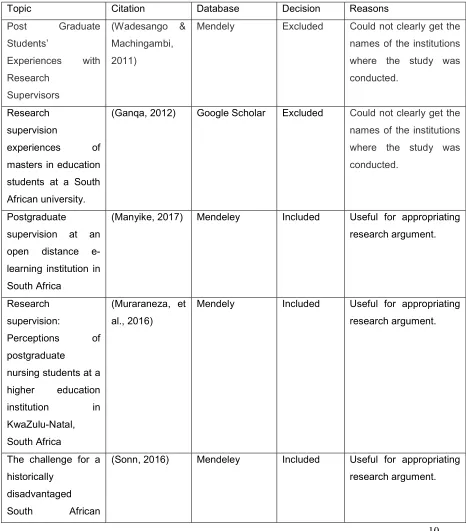
Table 1: List of sources and databases where study data was collected
Topic Citation Database Decision Reasons
Post Graduate
Students’
Experiences with
Research Supervisors
(Wadesango & Machingambi, 2011)
Mendely Excluded Could not clearly get the
names of the institutions where the study was conducted.
Research supervision
experiences of masters in education students at a South African university.
(Ganqa, 2012) Google Scholar Excluded Could not clearly get the names of the institutions where the study was conducted.
Postgraduate
supervision at an open distance e-learning institution in South Africa
(Manyike, 2017) Mendeley Included Useful for appropriating research argument.
Research supervision:
Perceptions of postgraduate
nursing students at a higher education institution in KwaZulu-Natal, South Africa
(Muraraneza, et al., 2016)
Mendely Included Useful for appropriating research argument.
The challenge for a historically
disadvantaged South African
11
university to produce more postgraduate students
Factors influencing the through-put rates of masters students at the University of Limpopo
(Bopape, 2018) UL SPACE - Theses and Dissertations (Public
Administration)
Included Useful for appropriating research argument.
Attitudes,
Perceptions and Barriers to Research and Publishing among Research and Teaching Staff: A Case Study
(Okoduwa, et al., 2018)
Google Scholar Excluded Could not clearly get the names of the institutions where the study was conducted.
Perceptions of research structures and service quality within various faculties at Durban University of Technology: staff
and students
perspective
(Ngibe & Lekhanya, 2016)
Google Scholar Included Useful for appropriating research argument.
Postgraduate Research
Experience Survey 2017
(Slight, 2017) Advance HE Excluded Could not clearly get the names of the institutions where the study was conducted.
Challenges in Postgraduate
Studies:
12
Assessments by Doctoral Students in a Swedish University Supervision of post-graduate students in higher education
(van Rensburg, et al., 2016)
Google Scholar Excluded Could not clearly get the names of the institutions where the study was conducted.
A qualitative inquiry into the challenges and complexities of research
supervision:
viewpoints of postgraduate
students and faculty members.
(YOUSEFI, et al., 2015)
Google Scholar Excluded Could not clearly get the names of the institutions where the study was conducted
Challenges of research conduct among postgraduate research students in an African University
(Desmennu & Owoaje, 2018)
Google Scholar Included Useful for appropriating research argument for an African perspective.
It’s A Jungle Out There: Challenges In Postgraduate
Research Writing
(Jeyaraj, 2018) Google Scholar Excluded Could not clearly get the names of the institutions where the study was conducted.
The supervision of
research for
dissertations and theses
(Lessing & Lessing, 2004)
Common Mistakes Committed and Challenges Faced in
(Manchishi, et al., 2015)
13
Research Proposal Writing by University
of Zambia
Postgraduate Students
Postgraduate research
supervision: a critical review of current practice
(McCallin & Nayar, 2012)
SRHE (Society for Research into Higher Education)
Excluded Could not clearly get the names of the institutions where the study was conducted.
This study includes both descriptive and prescriptive research dynamics. In descriptive studies, researchers examine a situation as it is in its current state which is mainly achieved through identification of particular attributes based on observation or exploration of correlations between two or more phenomena (Williams, 2011). The study ends up the a prescriptive argument as a model solution for the problem raised in this study and in pursuit of answer the key question under investigation. Researcher argued that Prescriptive decisions are more focussed with providing methods for “making optimal decisions” while descriptive investigators focus on the methods of decision making (Divekar, et al., 2012). While the researcher found out that there has been a lot of published research on the phenomenon of postgraduate supervision challenges, it became clear that there has not been more solutions forthcoming to curb this problem prevailing as challenges in postgraduate research
14 3. PRESENTATION OF RESULTS AND DISCUSSION
3.1 Challenges in Postgraduate Supervision - Global Perspective
3.1.1 Sweden (Europe)
The problem characterised as challenges of postgraduate students with regard to research is a global phenomenon across prominent and less prominent universities alike. A study conducted in Sweden found that students faced challenges in accessing information related to their research and culture shock (Ezebilo, 2012). The study cited lack of preparation for postgraduate studies and poor mentorship. Some students were found to lack confidence in presenting their own work due to lack of guidance and language problems.
3.1.2 Malaysia (Asia)
In another study conducted in Malaysia, the challenges resulting from lack of a formalised research writing structure were investigated; it was found that students were burdened by academic language and concepts (Jeyaraj, 2018). The researcher argued that the findings indicated important needs of students and suggested that attending to these issues could improve timely completion rates and enhance student learning experience.
3.1.3 New Zealand
in New Zealand (McCallin & Nayar, 2012), of which the recommendations of the review were:
The need to constantly develop faculty through supervisor education
15 3.2 African Perspective
3.2.1 Nigeria
Bringing the debate closer in Africa, another study was conducted in 2018 in Nigeria, focussing on barriers to research and training of postgraduate students at University of Ibadan (Desmennu & Owoaje, 2018). Of the total of 137 sampled
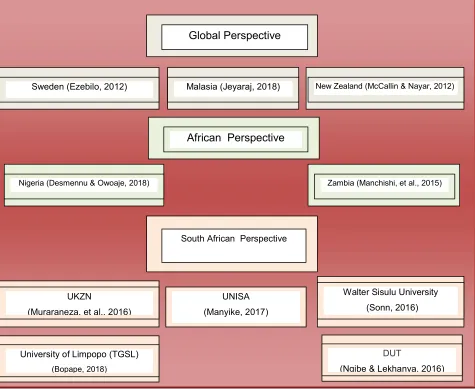
Figure 1- Global Perspective of postgraduate supervision challenges
African Perspective
South African Perspective
New Zealand (McCallin & Nayar, 2012)
Malasia (Jeyaraj, 2018) Sweden (Ezebilo, 2012)
Nigeria (Desmennu & Owoaje, 2018) Zambia (Manchishi, et al., 2015)
UKZN
(Muraraneza, et al., 2016)
UNISA (Manyike, 2017)
Walter Sisulu University (Sonn, 2016)
University of Limpopo (TGSL)
(Bopape, 2018)
DUT
(Ngibe & Lekhanya, 2016)
16
population (67% were full doctoral students), 91% percent of the respondents indicated a need for training on proposal development while 56% indicated lack of access to research materials.
3.2.2 Zambia
In Zambia, a study was conducted that comprised postgraduate students and their lecturers on challenges regarding postgraduate research supervision (Manchishi, et al., 2015). The study found a plethora of challenges facing students, including but not limited to the following:
Understand of the contents of a Research Proposal
Critical Analysis and synthesis of literature reviewed
Understanding of research language and concepts
Poor referencing styles and plagiarism
Unavailability of lecturers for consultation
Negative feedback from supervisors
Limited time for proposal writing
Lack of research materials
3. 3 South African Perspective
17 (a) Category One - Universities
Large (enrolments of 30 000 and above): UP, NWU, UKZN
Medium (enrolments of 20 000–29 999): UFS, Wits, UCT, SU,
Small (enrolments below 20 000): UL, UWC, UFH, RU
(b) Category Two - Universities of Technology
Large (enrolments of 30 000 and above): TUT
Medium (enrolments of 20 000–29 999): CPUT, DUT
Small (enrolments below 20 000): VUT, CUT, MUT
(c) Category Three - Comprehensive Universities
Large (enrolments of 30 000 and above): Unisa, UJ
Medium (enrolments of 20 000–29 999): WSU, NMMU
Small (enrolments below 20 000): Univen, UZ
In this section of the review, the researcher selected studies on the current subject under review from universities as representation of their specific category.
3.3.1 The magnitude of the problem in South Africa
18
graduates per million. This will transform South Africa from a resource-based economy to be an empowered knowledge-based economy. This requirement has propelled forward-thinking policy makers and academics to recognize the need to focus on increasing enrollments and production of postgraduates students (Thaver, 2013).
To present the magnitude of the problem in South Africa, the researcher purposively selected and scanned five institutions of learning made up of two universities, a large one in Kwazulu-Natal and a small one in Limpopo; two comprehensive universities, an open distance learning (ODL) university and a medium institution in the Eastern Cape and finally a medium university of technology in Kwazulu-Natal.
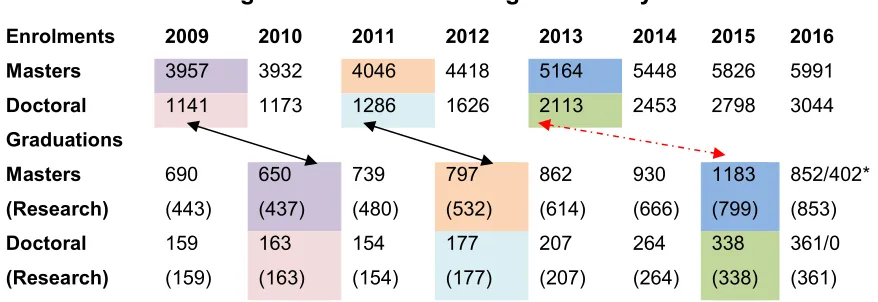
3.3.2 Enrolment and graduation data of a large university in Kwazulu-Natal
Enrolments 2009 2010 2011 2012 2013 2014 2015 2016
Masters 3957 3932 4046 4418 5164 5448 5826 5991
Doctoral 1141 1173 1286 1626 2113 2453 2798 3044
Graduations Masters (Research) 690 (443) 650 (437) 739 (480) 797 (532) 862 (614) 930 (666) 1183 (799) 852/402* (853) Doctoral (Research) 159 (159) 163 (163) 154 (154) 177 (177) 207 (207) 264 (264) 338 (338) 361/0 (361)
Table 2, UKZN Postgraduate Data (Data Source: CHET, compiled by: King Costa)
Critical data analysis
19
year for full time students and two years for part-time students. A doctoral degree study time ranges between four semesters for full-time students and eight semesters for part-time students.
A closer look at the number of students who enrolled for Master’s degrees in 2009 reflects a wide gap when compared to those who graduated in 2010. Approximately 83.6% (3307) of students did not make it through in record time of two years, assuming all had taken a part-time route. Doctoral degrees at UKZN can be completed within four semesters for fulltime students and eight semesters for part-time students. Looking at the period under discussion (2009 -2010), almost 85.7 students who registered for doctoral studies did not complete. Assuming all students who registered for doctoral studies were on part-time studies in this period, only 4.5% completed their studies in 2012.
In 2011, 4046 students enrolled for Masters while 1286 students enrolled for Doctoral studies at the same time. At the end of 24 months, approximately 19.7% of those enrolled graduated, with only 13.1% accounting for notable collective research output for Masters students in 2012. Assuming all students who registered for doctoral studies were on part-time studies in this period, only 20.5% completed their studies in 2014.
20
A research supervision study conducted in 2012 at the University of Kwazulu-Natal into the perceptions of postgraduate nursing students found that 62.2% of students rated the level of research supervision as moderate on a scale of low to high (Muraraneza, et al., 2016). The researchers note that there is a disparity of relationship between duration of supervision and students’ perceptions of supervisor’s research capability. The study recommendations were summed up as follows:
There was a need to include the research module into the curriculum of nurse educators
There was a need to adopt online research supervision to accommodate all students.
There was significant lack of guidance in the conceptual development of the research proposal, which led to discouragement, demotivation and theses dropout as postulated by Ssegawa and Rwelamila (2009).
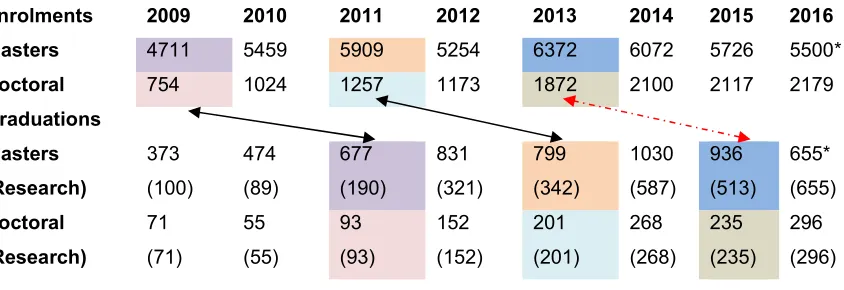
3.3.3 Enrolment and graduation data of a large comprehensive university - Open Distance Learning
Enrolments 2009 2010 2011 2012 2013 2014 2015 2016
Masters 4711 5459 5909 5254 6372 6072 5726 5500*
Doctoral 754 1024 1257 1173 1872 2100 2117 2179
Graduations Masters (Research) 373 (100) 474 (89) 677 (190) 831 (321) 799 (342) 1030 (587) 936 (513) 655* (655) Doctoral (Research) 71 (71) 55 (55) 93 (93) 152 (152) 201 (201) 268 (268) 235 (235) 296 (296)
21 Critical data analysis
Just like an interpretation of the data in the previous table, it is clear that the intake of students is not matching the number of those who complete a programme. A master’s programme at this institution’s Graduate School of Business Leadership runs for 36 months while a doctoral programme is expected to run for 72 months (UNISA, 2018). Of the master’s students who enrolled in 2011, only 14.4 percent successfully completed their degrees in 2011. Conversely, 85% of master’s students did not graduate.
In 2013, 13.5% of students who had enrolled for master’s degrees in 2011 successfully completed their degrees while 16% of students who had enrolled for doctoral studies successfully completed their degrees. On the reverse, 5110 students did not graduate.
Doctoral students who enrolled in 2009 would have completed their programmes in 2014 as per information on the website (UNISA, 2018). Of the students enrolled on the programme, 35.5% successfully completed their degrees in 2014. A study that looked into the perceptions of supervisors at an Open Distance Learning institution of higher learning, conducted by Manyike (2017) provided the following recommendations :
Workshops be conducted to orientate novice researchers and supervisors. The researcher encourages a “community of practice” to enhance skills transfer from experienced supervisors to novice supervisors.
Introduction of mentorships in postgraduate research for both students and supervisors. The purpose of these workshops will be to enhance relationship building for stakeholders and empower them on research methods.
22
Generally, this study which had supervisors as research participants did not find much problems regarding the perceptions of supervision at institution. However, some of issues raised in this study corroborate studies (Lessing & Schulze, 2003) which suggested training of supervisors in research methods, among others. Another study investigating supervision of doctoral and masters students in the same institution (Roets, 2016) also suggested the need for training and development of research supervisors in content-specific programmes.
23 3.3.4 Enrolment and graduation data of a medium comprehensive university in Eastern Cape
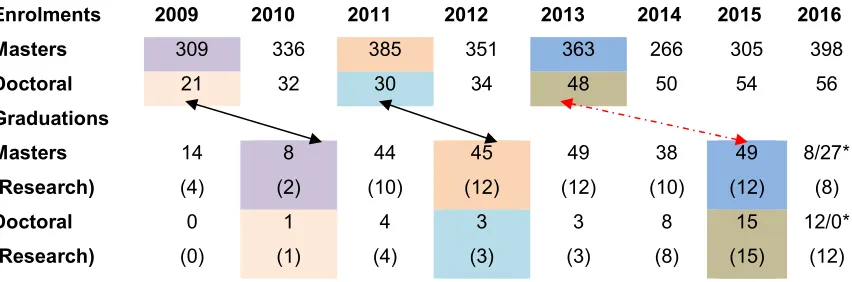
Enrolments 2009 2010 2011 2012 2013 2014 2015 2016
Masters 309 336 385 351 363 266 305 398
Doctoral 21 32 30 34 48 50 54 56
Graduations Masters (Research) 14 (4) 8 (2) 44 (10) 45 (12) 49 (12) 38 (10) 49 (12) 8/27* (8) Doctoral (Research) 0 (0) 1 (1) 4 (4) 3 (3) 3 (3) 8 (8) 15 (15) 12/0* (12)
Table 4: WSU Postgraduate Data (Data Source: CHET, compiled by: King Costa)
Critical data analysis
For a typical 2-year master’s degree programme, of the students who enrolled in 2009, only 2.6% completed their degrees in 2010. Conversely, approximately 97.4% did not complete their degrees. In 2012 only 11.7% of those registered the previous year completed their master’s degree, with a total of 340 students lost in the pipeline.
Assuming students took three years to complete a master’s degree, 13.5% of the 2013 cohort graduated in 2015. On the reverse 314 students did not complete their degrees.
24
(Sonn, 2016). The study further found out that postgraduate students’ problems included:
Poor relationship between supervisor and students
Formulating the problem statement
Proposal writing
Lack of professional writing skills
Sonn (2016) postulated an inference that some of the reasons attributable to students’ struggle to complete degrees lie solely on “inadequate, sporadic or unskilled supervision” at WSU. The problem of delayed response from supervisors affect the students career and academic progress as they cant graduate on time. The study asserts that this diminish the students’ sense of achievement, compromising their self worth and wellbeing as in Magano (2013). According to participants in Sonn (2016), the delay indicated the lack of skill on the part of supervisors as also corroborated in other thematic discussions of the results of this study.
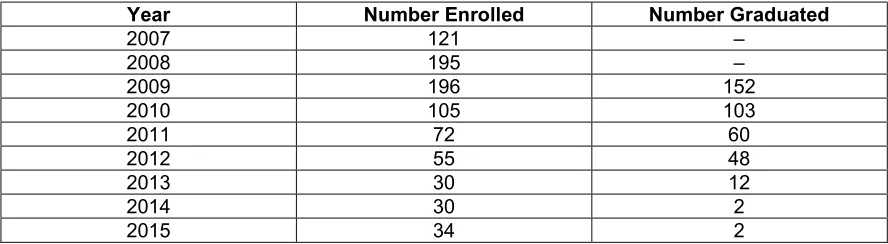
Table 5: Throughput rate of BEd (Hons) students since 2009 at one of the institutions’ site in Eastern Cape
Year Number Enrolled Number Graduated
2007 121 ‒
2008 195 ‒
2009 196 152
2010 105 103
2011 72 60
2012 55 48
2013 30 12
2014 30 2
2015 34 2
25 Table 5 indicates the magnitude of the problem since 2012, the year the Department of Higher Education and Training (DHET) introduced the requirement for postgraduate studies to include a module on research. There is a notable decline compared to the numbers that were enrolled and those that completed in this period. This clearly demonstrates how this institution is capable to deliver coursework component as opposed to research-based components of study programmes.
3.3.5 Enrolment and graduation data of a medium university of technology in Kwazulu-Natal
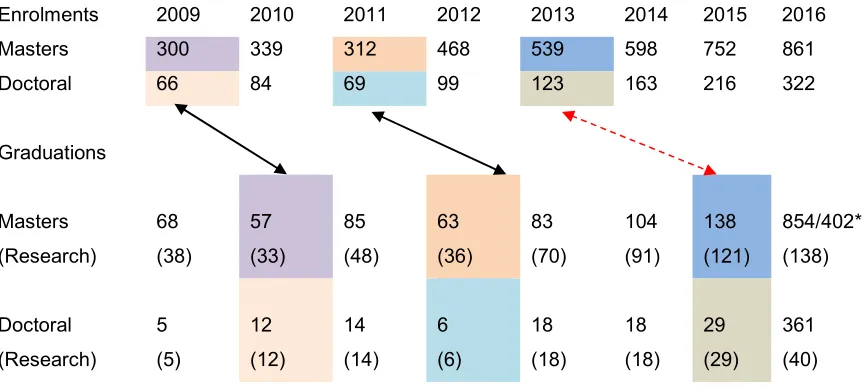
Enrolments 2009 2010 2011 2012 2013 2014 2015 2016
Masters 300 339 312 468 539 598 752 861
Doctoral 66 84 69 99 123 163 216 322
Graduations Masters (Research) 68 (38) 57 (33) 85 (48) 63 (36) 83 (70) 104 (91) 138 (121) 854/402* (138) Doctoral (Research) 5 (5) 12 (12) 14 (14) 6 (6) 18 (18) 18 (18) 29 (29) 361 (40)
26 Critical data analysis
When looking at enrolment stats, of the students who enrolled in 2009 for a two year master’s degree, only 19% successfully completed their degrees. Of those who completed their degrees, only 11% accounted to notable research output by the institution. Assuming that it took 3 years to complete a master’s degree, only 28.3% successfully graduated, with 16% accounting to the notable institutional research output. Assuming that it takes 4 years to complete a doctoral degree at this institution, only 6% graduated at the end of study period.
A study was conducted in 2016 entitled “Perceptions of research structures and service quality within various faculties at Durban University of Technology: staff and students perspective: staff and students perspective” across six faculties of the university (Ngibe & Lekhanya, 2016). The researchers investigated these perceptions against for service dimensions: reliability, responsiveness, assurance and empathy. The results presented a negative perception from research participants on these quality dimensions, particularly the responsiveness and assurance dimensions.
27 3.3.6 Enrolment and graduation data of a small university in Limpopo
Enrolments 2009 2010 2011 2012 2013 2014 2015 2016
Masters 1659 1798 1771 1743 1654 1612 1169 1214
Doctoral 138 163 193 189 217 249 208 246
Graduations
Masters 199 244 185 273 321 287 237 138/68*
Doctoral 17 10 17 17 14 25 25 13/13*
Table 7: University of Limpopo Postgraduate Data (Data Source: CHET, compiled by: King Costa)
Critical data analysis
Same as universities reviewed above in this section of the study, there is a poor throughput of both masters and doctoral programmes at this university. Students who enrolled for a 2-year masters programme in 2009 were a record total of 1659 compared to a total of approximately 244 who successfully completed their masters programme in 2012. According to Bopape (2018), some students were given an extension of extra one year to complete their studies. Assuming that all students received this extension in an particular period of study, in this example the researcher picked up 2013 to 2015 period for purposes of illustration, only 14.3% of those who had registered successfully completed their degrees.
28 Academic support inadequate to support postgraduate students. It was
recommended that more supervisors be recruited.
Students were not fully prepared for postgraduate students. This included establishment of their psycho-social support during the period of study.
The university needs to establish research seminars to empower both students and faculty in a collaborative manner.
Students need to be capacitated with academic writing standards for their research projects
3.4 Implications of the phenomenon and discussion
3.4.1 Introduction
The overall purpose of this section is to propose the significance of the general field of study and then further identify where a new contribution or solution to the problem could be made. Literature has revealed a number of problems related to
the way postgraduate supervision is perceived in institutions of higher learning from a global perspective in general and South African universities in particular. Scholars have argued that the academic research supervision development has been constrained and impaired by lack of conceptual understanding of what supervision is (Pearson & Kayrooz, 2004). Part of the challenges are emanating from the general tendency to equate postgraduate research supervision with research training and research roles of the supervisor, while others view supervision as constituting teaching (Johnston, 1999).
29
beyond over a long period of time. Problems highlighted, yet not new as there has been so much written on the subject, included:
Low throughout in universities
Poor or no preparation of students for postgraduate studies
Research language barriers – students do not understand research concepts and application in relation to their studies
Poor supervision – leaving students with no option but to drop out
Supervision misconceptions
Poor institutional research support
Supervisor burden/ backlog and pile-ups
No or low publishing, thereby making research outputs inaccessible
Literature presents these challenges as general inadequacy that Mutual (2009) summarised as follows:
Research capacity
Research productivity
Research utility
3.4.2 Burden of Supervision
30
INSTITUTION QUAL/ENROL 2009 2010 2011 2012 2013 2014 2015 2016
UKZN D-Staff 562 588 606 663 688 670 655 667
Enrolments 1141 1173 1286 1626 2113 2453 2798 3044 M-Staff 499 493 479 443 445 470 488 491
Enrolments 3957 3932 4046 4418 5164 5448 5826 5991 UNISA D-Staff 487 488 469 612 629/ 690 732 834
Enrolments 754 1024 1257 1173 1872 2100 2117 2179 M-Staff 364 366 372 452 489 533 532 574
Enrolments 4711 5459 5909 5254 6372 6072 5726 5500*
WSU D-Staff 54 66 73 70 80 84 79 82
Enrolments 21 32 30 34 48 50 54 56
M-Staff 165 188 180 165 190 200 210 206
Enrolments 309 336 385 351 363 266 305 398
DUT D-Staff 58 65 73 88 97 112 125 134
Enrolments 66 84 69 99 123 163 216 322 M-Staff 203 251 261 279 277 281 291 286
Enrolments 300 339 312 468 539 598 752 861 UL D-Staff 156 153 147 132 139 154 139 170
Enrolments 138 163 193 189 217 249 208 246 M-Staff 384 346 328 299 322 335 217 214
Enrolments 1659 1798 1771 1743 1654 1612 1169 1214
31 Table 8 presents a comparative analysis of students enrolment at each institution in relation to number of qualified staff to conduct research supervision at these institutions. According to Table 8 we see a clear picture of the burden of supervision particularly at all universities and to a lesser extent at WSU. If the minimum time required for supervision is 1000 hours (Wingfield, 2012) for an individual postgraduate student, therefore there is a clear indication of supervision capacity challenges.
Figure 2: Burden of supervision
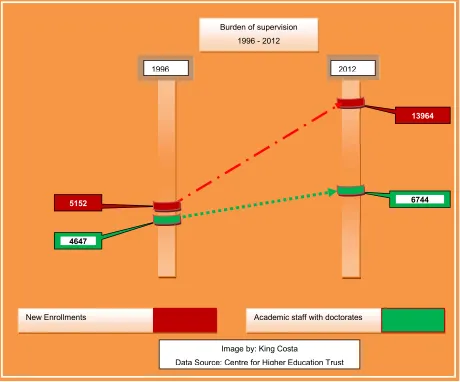
Figure 3: Burden of supervision, source: CHET
13964
Image by: King Costa
Data Source: Centre for Higher Education Trust
New Enrollments Academic staff with doctorates
1996 2012
5152
4647
6744
32
For institutions to be able to provide effective support to postgraduate students, it is critical that they have capacity in terms of numbers of teaching/supervisors with appropriate qualifications. A closer look at Figure 2 below in comparison with statistical presentation of five institutions reviewed above indicates capacity problems, preparedness of institutions for postgraduate studies and the burden of supervision. The Centre for Higher Education Trust postulated that in 2012 South Africa had 6744 academics with doctoral degrees against 13964 enrolled doctoral students as depicted in Figure 3.
3.4.3 The concept of coaching as a development model
Coaching is widely known as a process whereby one individual helps another to unlock their natural ability; to perform, learn and achieve; to increase awareness of the factors which determine performance; to increase their sense of self-responsibility and ownership of their performance; to self-coach; to identify and remove internal barriers to achievement (MacLennan, 1995).
Whitemore (2002) postulated that in terms of sports coaching, a coach appears to be someone who has accumulated a considerable amount of notable and verifiable experience accumulated over time in a particular field, whose main function is to assist a sports-person identify specific shortcomings in his/her performance and come up with means to deal with those deficiencies.
33
thinking on the characteristics of a leadership/life coach, business or executive coach (Whitemore, 2002). Many researchers have viewed coaching and mentoring as synonymous with the process of supervision (Lubbe, et al., 2005). Lubbe,at al.,(2005) further stated that the role of the supervisor as mentors is to guide students through all intellectual matters pertinent to their studies including but not limited to:
Appropriateness of the students’ choice of research design
Articulation of the research problem
Essentials of quality, rigor and progress in their literature review
Development of proper theoretical frameworks to enable clear and unambiguous results interpretation
Related problems related to the research process and final write-up.
Just as coaching in practice involves a contracting period where the coachee seeks the services of the coach, institutions that see coaching as a model for supervision must include the student in the process selection of s supervisor.
3.4.4 The C.O.S.T.A Coaching Model of Supervision
34
The C.O.S.T.A model promotes collaboration and collegiality though provision of real-time problem solution in a seminar/workshop based mode where students, sometimes from different universities, come together for a common purpose of understanding research protocols and how these can be applied to their individual studies.
The programme proposes that students attend these sessions, where the first step is to learn about concepts and research language. This is critical as it introduces them to key terminology that will be used in their research projects. This step is not passed until students demonstrate knowledge and understanding of concepts and context of use including content requirements for particular studies. When this is done then the issue of research question is raised before getting to the topic. The topic comes after carefully selecting a research question. This can’t be done without understanding literature review.
The advantage of this model is that while using basic principles of coaching, whereby the coachee must find results, it provides support to students in a structured a coherent manner from the coaches/supervisors and fellow students.
Table 9 below presents a 5-step framework of the model for further perusal.
35
the research project. Seminars/workshops are followed up by one-on-one interaction with the student by a supervisor. Student submissions, which are uploaded on an interactive online portal, are then viewed by a team of peers who will submit their findings to the chief supervisor. The process introduces the student to the peer review system.
The model eliminates the concept of the popular Master Apprentice Model (MAM) currently practised in most institutions of higher learning. This model is primarily key in bringing most of the challenges investigated in this study across institutions of higher learning.
The C.O.S.T.A model covers five distinct yet important steps. The first step introduces students to research concepts. This is a step of ensuring the students are fully prepared to go through with the research project. This step prompts students to prepare essays for presentations on key concepts and conventions of research methods and methodologies and identify the difference. Through this stage students are taken through a process of question and topic. Philosophical assumptions and their impact on research questions are dealt with, ultimately helping students to prepare a conceptual framework of their chosen studies.
36 Table 9: C.O.S.T.A Coaching Model of Supervision
STEP DESCRIPTOR APPLICATION
STAGE SIGNIFICANCE S T E P 1
C
CONNECTIONConnection between the supervisor and the student is critical. The suggested method is the GROW model to determine the preparedness and willingness of the student. E S T A B L IS H M E N T O F R E S E A R C H ’S F O U N D A T IO N A L S K IL L S
CONCEPTS In-depth introduction to research language and
applicable concepts. This cannot be done in one week, it should be a minimum of full three months programme. S T E P 2
O
OBJECTIVES This deals with the objective of the project.
The student should be able to articulate the following: Introduction, Background, Study Objectives, Assumptions/hypothesis, The Study Significance, Study limitations, Delimitations and Research Question. R E S E A R C H E R ’S IN T E N T IO N (R es e ar ch P ro p o sa l) S T E P 3
S
SITUATION Thorough assessment of literature on the subject and
identification of gaps.
Formulation of a Theoretical Framework and Conceptual Framework and knowledge of the difference between the two.
Application of Blooms’ complex thinking skills (critical analysis, synthesis and evaluation).
37 S T E P 4
T
TACT Qualitative MethodsCredibility: In addressing credibility, investigators attempt to demonstrate that a true picture of the phenomenon under scrutiny is being presented Transferability: Investigators provide sufficient detail of the context of the fieldwork for a reader to be able to decide whether the prevailing environment is similar to another situation with which he or she is familiar and whether the findings can justifiably be applied to the other setting.
Dependability: Researchers should at least strive to enable a future investigator to repeat the study. Confirmability : Researchers must take steps to demonstrate that findings emerge from the data and not their own predispositions
R E S E A R C H M E T H O D O L O G Y A N D T R U S T W O R T H IN E S S Quantitative Methods Validity Reliability S T E P 5
A
ASSEMENT Ability to make judgment on the strength and
weakness of the study.
Provision of a cogent argument in support of study objectives and its benefits to targeted audience. Implications and recommendations.
38 Figure 4: Literature Review - created by King Costa
39 4. CONCLUSION
This paper examined the challenges of postgraduate challenges at institutions of higher learning in South Africa and further proposed a C.O.S.T.A model for community of practice as a solution for these challenges. A lot of studies have been conducted on this phenomenon and all findings in these studies point to challenges particularly on the area of research capacity and development. Challenges presented on this paper are real and South African institutions need to look at pragmatic ways to improve the situation. The numbers of students enrolled at any given year during the period under review do not correspond with those who graduate. Based on the current challenges that require capacity for institutions to be able to provide effective supervision, which currently remains impossible due to the ratios of students to supervisor at these institutions, the researcher concludes by suggesting the following:
Institutions need to include research curriculum in postgraduate studies
Institutions need to take a closer look at previous and current studies on challenges of postgraduate studies, and seek methods of dealing with these
Institutions need to increase research capacity at postgraduate level
40 REFERENCES
Bopape, A. M., 2018. FACTORS INFLUENCING THE THROUGH-PUT RATES OF, Plokwane: s.n.
Brettle, A., 2009. Systematic reviews and evidence based library and information practice.. Evidence Based Library and Information Practice, 4(1), pp. 43-50.
Cock, L., 2008. Transformational challenges facing contemporary social work : a exploratory study, Pretoria: Unisa.
Delaney, D., 2009. A review of the literature on effective PhD supervision. Dublin: University of Dublin, Trinity College.
Desmennu, T. & Owoaje, T., 2018. Challenges of research conduct among postgraduate research students in an African University. Academic Journals,
13(9), pp. 336-342.
Divekar, A. A., Bangal, S. & Sumangala, D., 2012. The study of prescriptive and descriptive models of. (IJARAI) International Journal of Advanced Research in Artificial Intelligence, 1(1).
Donaldson, J. P., 1987. Role Stress as Experienced by the Hospital Social Worker, Georgia: Georgia Southern College.
Ezebilo, E. E., 2012. Challenges in Postgraduate Studies: Assessments by Doctoral Students. Higher Education Studies;, 2(4).
41
Ganqa, N. H., 2012. Research supervision experiences of masters in education,
s.l.: UNIVERSITY OF FORT HARE.
Gatfield, T., 2005. An Investigation into PhD Supervisory Management Styles: Development of a dynamic conceptual model and its managerial implications..
Journal of Higher Education Policy and Management, 27(3), p. 311.
Govender, K. & Dhunpath, R., 2011. Student experiences of the PhD cohort model : working within or outside communities of practice?. Perspectives in Education, 29(1), pp. 88-99.
Jeyaraj, J., 2018. It’s A Jungle Out There: Challenges In Postgraduate Research Writing. Journal of Language Studies, 18(1).
Johnston, T., 1999. Research Supervision – Setting the Scene.. In A. Holbrook & S. Johnston (Eds.), Supervision of Postgraduate Research in Education, Review of Australian Research in Education,, Volume 5, pp. 17-31.
Lessing, A. C. & Schulze, S., 2003. Lecturers' experience of postgraduate supervision in a distance education context. South African Journal of Higher Education, 17(2).
Lessing, N. & Lessing, A., 2004. THE SUPERVISION OF RESEARCH FOR DISSERTATIONS AND THESES. Acta Commercii, Volume 4, pp. 73-87.
42
Magano, M. D., 2013. The Lament of a Female Postgraduate PhD Student at a South African University: An Academic Wellness Perspective. International Journal of Higher Education, 2(2).
Manchishi, P., Ndhlovu, D. & Mwanza, D., 2015. Common Mistakes Committed and Challenges Faced in Research Proposal Writing by University of Zambia Postgraduate Students. International Journal of Humanities, Social Sciences and Education, 2(3), pp. 126-138.
Manyike, T. V., 2017. Postgraduate supervision at an open distance e-learning institution in South Africa. South African Journal of Education, Volume 2.
McCallin, A. & Nayar, S., 2012. Postgraduate research supervision: a critical review of current practice, Teaching in Higher Education. Society for Research into Higher Education, 17(1), pp. 63-74.
Mouton, J. &. M. H. C., 1996. Basic Concepts in the Methodology of the Social.
Pretoria: HSRC Publishers.
Muraraneza, C., Mtshali, F. & Mthembu, S., 2016. Research supervision: Perceptions of postgraduate nursing students at a higher education institution in KwaZulu-Natal, South Africa. African Journal of Health Professions Education,
8(2).
Ngibe, M. & Lekhanya, L., 2016. Perceptions of research structures and service quality within various faculties at Durban University of Technology: staff and students. Problems and Perspectives in Management, 14(1).
43
Ospina, S., 2004. Qualitative Research. Encyclopedia of Leadership.
Pearson, M. & Kayrooz, C., 2004. Enabling critical reflection on research supervisory practice.. International Journal for Academic Development, 9(1).
Roets, L., 2016. Supervision of doctoral and master’s students in theODL context in the field of tourism: an integrated review. African Journal of Hospitality, Tourism and Leisure, 5(4).
Shai, M., 2017. Removing the mask. 1 ed. Johannesburg: Red Oister.
Slight, S., 2017. Postgraduate Research Experience - Experiences and personal outlook of, s.l.: s.n.
Sonn, R., 2016. THE CHALLENGE FOR A HISTORICALLY DISADVANTAGED.
South African Journal of Higher Education , 30(2).
Ssegawa, J. K. & Rwelamila, P. D., 2009. The research skill factor as a cause for high postgraduate attrition rate.. Journal of Engineering, Design and Technology,
Volume 7, pp. 293-322.
Thaver, B. L. H. a. C. J., 2013. Inducting BEd Hons students into a research culture and the world of research. South African Journal of Higher Education,
27(5), p. 1135‒1148.
Tintswalo, V. M., 2017. Postgraduate supervision at an open distance e-learning institution in South Africa. South African Journal of Education, Volume 2.
UNISA, 2018. Master's and doctoral degrees. [Online]
https://www.unisa.ac.za/sites/corporate/default/Apply-for-44
admission/Master%27s-&-doctoral-degrees/FAQs-for-master%27s-and-doctoral-degrees Accessed 5 12 2018].
University of Kwzulu-Natal, n.d. School of Education. [Online] Available at: https://soe.ukzn.ac.za/postgraduate-information/masters/application-criteria/ [Accessed 4 December 2018].
van Rensburg, G., Mayers, P. & Roets, L., 2016. SUPERVISION OF POST-GRADUATE STUDENTS IN HIGHER EDUCATION. Trends in Nursing, 3(1).
Wadesango, N. & Machingambi, S., 2011. Postgraduate Students' Experiences with Research Supervisor. Journal of Sociology and Social Anthropology, 2(1), pp. 31-37.
Whitmore, J., 2002. Coaching for Performance: GROWing People, Performance and Purpose. s.l.:Nicholas Brealey Publishing.
Wilson, V., 2013. Research Methods: Systematic Reviews. Evidence Based Library and Information Practice, pp. 83-84.
45 LIST OF FIGURES
Figure 1- Global Perspective of postgraduate supervision challenges ... 15
Figure 2: Burden of supervision ... 31
Figure 3: Burden of supervision, source: CHET ... 31
Figure 4: Literature Review - created by King Costa ... 38
LIST OF TABLES Table 1: List of sources and databases where study data was collected ... 10
Table 2, UKZN Postgraduate Data (Data Source: CHET, compiled by: King Costa) ... 18
Table 3: UNISA Postgraduate Data (Data Source: CHET, compiled by: King Costa) ... 20
Table 4: WSU Postgraduate Data (Data Source: CHET, compiled by: King Costa) ... 23
Table 5: Throughput rate of BEd (Hons) students since 2009 at one of the institutions’ site in Eastern Cape ... 24
Table 6:DUT Postgraduate Data (Data Source: CHET, compiled by : King Costa) ... 25
Table 7: University of Limpopo Postgraduate Data (Data Source: CHET, compiled by: King Costa) ... 27
Table 8: Burden of supervision demonstration - compiled by King Costa ... 30