O R I G I N A L R E S E A R C H
Pulmonary Function In
fl
uences the Performance
of Berlin Questionnaire, Modi
fi
ed Berlin
Questionnaire, and STOP-Bang Score for
Screening Obstructive Sleep Apnea in Subjects
with Chronic Obstructive Pulmonary Disease
This article was published in the following Dove Press journal:
International Journal of Chronic Obstructive Pulmonary Disease
Qinhan Wu1,2
Liang Xie1,2
Wenjing Li1,2
Guiling Xiang1,2
Weiping Hu1,2
Hong Jiang1,2
Xu Wu1,2
Xiaodan Wu1,2
Shanqun Li 1,2
1Department of Pulmonary Medicine, Zhongshan Hospital, Fudan University, Shanghai, People’s Republic of China; 2Clinical Centre for Sleep Breathing Disorder and Snoring, Zhongshan Hospital, Fudan University, Shanghai, People’s Republic of China
Purpose:The co-existence of chronic obstructive pulmonary disease (COPD) and obstruc-tive sleep apnea (OSA) has been described as the overlap syndrome. The objecobstruc-tive of the study is to investigate the performance of Berlin Questionnaire (BQ), modified Berlin Questionnaire (MBQ), and STOP-Bang score in screening overlap syndrome from COPD subjects and investigate how pulmonary function interferes with questionnaire scoring.
Subjects and Methods:Among 116 COPD subjects included in this study, 62 were overlap syndrome subjects and 54 were COPD subjects without OSA. Subjects included were asked to
fill out the questionnaires to collect demographic characteristics of subjects and questionnaire scores of BQ, MBQ, and STOP-Bang; perform pulmonary function test to confirm their COPD diagnosis; and perform polysomnography.
Results:AUC (area under the curve) of BQ, MBQ, and STOP-Bang score in screening OSA among patients with COPD was 0.71 (0.64–0.79), 0.75 (0.67–0.83), and 0.72 (0.64–0.80). In COPD subjects without OSA, FEV1%pred was statistically associated with the misdiagnosis of BQ (P= 0.0091), MBQ (P= 0.0143), and STOP-Bang (P= 0.0453). In patients with overlap syndrome, FVC%pred affected the risk of misdiagnosis of the three questionnaires (BQ: P= 0.0413; MBQ: P= 0.0150; STOP-Bang: P= 0.0241). BMI and neck circumferences (NC) were negatively correlated with FEV1%pred (BMI: P= 0.0454; NC: P= 0.0230) and FVC%pred (BMI: P= 0.0042; NC: P= 0.0367) in overlap subjects. In contrast, BMI was positively correlated with FEV1/FVC (P= 0.0141) and FEV1%pred (P= 0.0391) in COPD subjects without OSA.
Conclusion: BQ, MBQ, and STOP-Bang score performed well in COPD subjects for
screening OSA. The diagnosis of the three questionnaires was more accurate in subjects with lower FEV1%pred or FVC%pred value. Pulmonary function might exert influence on the diagnosis efficacy of the three questionnaires through BMI and neck circumference.
Keywords: pulmonary disease, chronic obstructive, sleep apnea, obstructive, surveys and questionnaires, pulmonary ventilation
Introduction
Chronic obstructive pulmonary disease (COPD) is a common, preventable, and treatable disease that is characterized by persistent respiratory symptoms and largely irreversible
airflow obstruction,1,2 which affects over 10% of adult population worldwide.3
Obstructive sleep apnea (OSA) is characterized by periods of partial or total intermittent
Correspondence: Shanqun Li; Xiaodan Wu
Department of Pulmonary Medicine, Zhongshan Hospital, Fudan University, 180 Fenglin Road, Shanghai 200032, People’s Republic of China Tel/Fax +86 21 64048687 Email [email protected]; [email protected]
International Journal of Chronic Obstructive Pulmonary Disease
Dove
press
open access to scientific and medical research
Open Access Full Text Article
International Journal of Chronic Obstructive Pulmonary Disease downloaded from https://www.dovepress.com/ by 118.70.13.36 on 24-Aug-2020
collapse of the upper airway, resulting in nocturnal hypoxemia and arousals from sleep,4with the prevalence of 9% to 38% in
general population,5and 10% to 66% among COPD subjects.6
The co-existence of both disorders has been described as the
overlap syndrome (OVS).7
Studies have demonstrated, both daytime and
noctur-nal, PaO2was significantly lower, while PaCO2was
sig-nificantly higher in OVS subjects than those of COPD
subjects without OSA, and the pulmonary artery pressure (PAP) was higher in overlap patients both at rest and
during steady-state exercise.8The OVS is associated with
an increased risk of comorbid cardiovascular disease and diabetes, death, and hospitalization.9,10 Furthermore, if OSA was treated by continuous positive airway pressure
in time, the mortality and morbidity were significantly
decreased in OVS patients.11Therefore, it is very essential to screen out OSA from COPD patients.
Diagnosis of OSA requires overnight recordings with por-table limited-channel recorders (respiratory polygraph) or full polysomnography (PSG), either at home or in a sleep
laboratory,12which are expensive, time-consuming, and not
suitable for routine screening. Therefore, different question-naires have been widely used as screening tools for OSA in
clinical practice, such as Berlin,13 modified Berlin
questionnaire,14and STOP-Bang score.15Berlin and modified Berlin Questionnaire combine information about snoring, apnea, daytime sleepiness or fatigue, obesity, and hyperten-sion, while STOP-Bang questionnaire collects information about snoring, tiredness, observed apnea, hypertension, age, sex, body mass index (BMI), and neck circumference.
However, few studies have reported the diagnostic performance of these questionnaires in screening OVS
among COPD subjects.16,17Moreover, no study has
inves-tigated whether COPD-related paraments would exert effects on the performance of these diagnostic question-naires. Therefore, this study was conducted to evaluate the
value of Berlin Questionnaire (BQ), modified Berlin
Questionnaires (MBQ), and STOP-Bang score in screen-ing OVS from COPD subjects, and investigate whether the pulmonary function parameters affect the diagnostic accu-racy of these questionnaires in COPD population.
Subjects and Methods
Study Design
It is a cross-section study approved by the ethics
commit-tees of Zhongshan Hospital affiliated to Fudan University,
Shanghai, China.
When patients were recruited, written informed consent was obtained, and data were collected by questionnaire survey. Demographic information (age, sex, state of smok-ing, and drinking), comorbidities, and acute exacerbation of
COPD were obtained by questionnaire. BMI (a person’s
weight in kilograms divided by the square of your height in meter) and neck circumference was measured and calcu-lated by two nurses before patientsfilled out questionnaires.
Modified Medical Research Council (mMRC) scale was
used to assess dyspnea,18and health status impairment was
assessed by the COPD assessment test (CAT).19The prior
probability of OSA was investigated using the Berlin,13
modified Berlin,14and STOP-Bang questionnaire.15 When questionnaires were completed, we performed pulmonary function test and polysomnography (PSG) test to confirm their diagnosis.
Based on Berlin, modified Berlin, and STOP-Bang
questionnaire diagnosis, we compared lung function para-meters of patients correctly diagnosed and misdiagnosed by questionnaires, and analyzed the correlation between lung function parameters and diagnostic questionnaire scores in COPD subjects without OSA and OVS subjects. Univariate logistic regression analysis was used to assess whether pulmonary function parameters affected the accu-racy of questionnaires’diagnosis.
Thereafter, to explore the mechanism by which lung func-tion affected diagnostic quesfunc-tionnaire scores, we analyzed the correlation between lung function parameters and BMI or neck circumference separately, for BMI is an important scor-ing element in all three questionnaires, while neck circumfer-ence is a scoring element in STOP-Bang questionnaire. Based on the analyses above, we draw the conclusions that pulmon-ary functions of COPD subjects do exert effect on the
diag-nosis of Berlin, modified Berlin, and STOP-Bang
questionnaire by their correlation with BMI and neck circumference.
Subjects
Patients from the Pneumology Department of Zhongshan hospital were invited, screened, and enrolled into this study from September 2015 to October 2019.
The inclusion criteria were (1) Age≥40 years,≤80; (2)
Diagnosis of COPD by GOLD guidelines.1,2
The exclusion criteria were (1) Sleep less than 4 hours tested by PSG; (2)Patients on home oxygen therapy or mechanical ventilation; (3) Acute exacerbation of COPD in the preceding month; (4) Other lung diseases; (5) Sleep disorders other than OSA; (6) Active or unstable
International Journal of Chronic Obstructive Pulmonary Disease downloaded from https://www.dovepress.com/ by 118.70.13.36 on 24-Aug-2020
cardiovascular diseases; (7) Non-controlled arterial hyper-tension; (8) Severe dementia; (9) Severe untreated psychia-tric conditions; (10) Neuromuscular disease; (11) Unwilling or undisciplined patient.
OSA-Related Questionnaires
Berlin questionnaire (BQ) comprises three categories including 10 questions. Part (category) 1 of BQ includes
information on snoring and apnea, part 2 reflects daytime
sleepiness or fatigue, and part 3 combines information about obesity and hypertension. BMI cut-off point was adjusted from 30.0 to 25.0 in MBQ compare to BQ.
High risk of OSA is defined as≥2 positive results of the
three categories of BQ or MBQ. STOP-BANG question-naire is a tool involving 3 subjective items (snoring, tired-ness, and observed apnea) and 5 objective items (hypertension, age, sex, body mass index (BMI), and
neck circumference), a score ≥ 3 is regarded as having
a moderate to severe risk of OSA.
Pulmonary Function Examination
Spirometry was performed by Jaeger machine (Master Screen PFT, Hochberg, Germany) in Pulmonary Function Laboratory of Zhongshan Hospital according to the
guide-lines of the American Thoracic Society.20 COPD was
diagnosed if forced expiratory volume in 1 second and forced vital capacity ratio (FEV1/FVC) below 70%, after inhalation of bronchodilators.1
Polysomnography
PSG was tested in Sleep Center of Zhongshan Hospital by
a PSG recorder (Respironics, Alice-5 Respironics,
Pittsburgh, Pennsylvania, USA) within 1 week after pul-monary function examination, including electromyogram,
electrocardiogram, electrooculogram, oronasal flow,
thor-acoabdominal movements, arterial oxygen saturation, body position, and snoring sounds. Breathing was recorded with nasal pressure transducer. PSG reports were analyzed by two skilled specialists followed by
guideline.21 Apnea was defined as a decrease of at least
90% of airflow from baseline, lasting 10 s or longer, and
hypopnea was defined as≥30% decrease of airflow lasting
at least 10 s, associated with either an arousal or a≥3% O2 saturation according to American Academy of Sleep
Medicine criteria.22 The mean number of apneas and
hypopneas per hour of sleep (Apnea–Hypopnea Index
[AHI]) was calculated, and OSA was diagnosed if the
Apnea–Hypopnea Index (AHI) was≥5 events per hour.12
Statistical Analysis
Consecutive data are presented as the mean ± SD (standard deviation) or median (interquartile range [IQR]) depending on whether they were normally distributed.
Categorical data were shown as number (percentage). The differences of continuous variables between groups were compared by Student’s t-tests or Mann–Whitney rank-sum tests, and Chi-square tests or Fisher’s exact test were used for analyzing categorical variables. Spearman test or Pearson test was used to determine correlations between variables. Multivariate regression model was established to investigate relationships between AHI (dependent variable) and possible determinants with OSA. Pulmonary function parameters were analyzed by univariate logistical analysis to show whether they were associated with an increased risk of misdiagnosis with questionnaires. The sensitivities, specifi -cities, positive predictive value (PPV), negative predictive value (NPV), and area under the curve (AUC) values were
calculated to compare the diagnosed efficacy of a
STOP-Bang score (≥3), BQ, and MBQ (high-risk) classification
with PSG results (AHI≥5) in predicting OSA. The accepted
significance level for all tests was set as 5%, and statistical analyses were performed using Stata software (version 13.0, stataCorp LP, Texas, USA).
Results
Demographic Characteristics
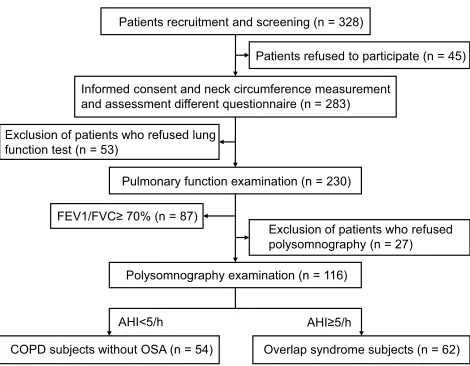
Flow diagram for participants included in this study is displayed inFigure 1.
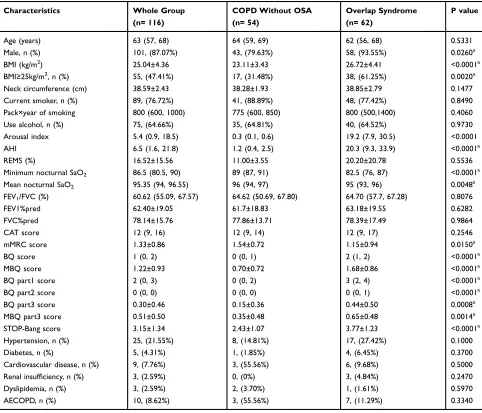
Table 1presents the descriptive information on demo-graphics, disease characteristics, and the scores of ques-tionnaires for all subjects (n = 116), and for those with COPD alone (n = 54) and concomitant OSA (n = 62).
OVS was more common in men and obese subjects.
Minimum and mean nocturnal SaO2are significantly lower
in the subjects with OVS compared with the subjects with COPD alone. Individuals with OVS also had higher (worse) scores of STOP-Bang (P<0.0001), Berlin Questionnaire
(P<0.0001), and modified Berlin Questionnaire
(P< 0.0001). However, OVS subjects are less likely to suffer from dyspnea since their mMRC scores (P= 0.015) are lower (better) than COPD subjects.
Parameters Associated with Apnea
–
Hypopnea Index in COPD Subjects
Table 2shows the correlation between AHI and potential-related parameters. Later, a multivariate regression modelInternational Journal of Chronic Obstructive Pulmonary Disease downloaded from https://www.dovepress.com/ by 118.70.13.36 on 24-Aug-2020
was established to investigate independent relationships between AHI (dependent variable) and possible
determi-nants with OSA (Table 3).
These analyses showed that BMI was positively corre-lated with AHI in the subjects with OVS (P= 0.0002), and it was an independent risk factor of OSA in COPD patients. These analyses also indicated that pulmonary function parameters were not correlated with AHI in COPD subjects.
Performance of Berlin, Modi
fi
ed Berlin
Questionnaire, and STOP-Bang Score
The diagnostic performance of three questionnaires in identifying OSA from COPD patients are summarized in Table 4. All three questionnaires showed a good perfor-mance in COPD subjects for screening OSA. Compared to
STOP-Bang, BQ and MBQ had higher specificity and
PPV, but lower sensitivity and NPV. The accuracy of MBQ was slightly higher than other two, but the
differ-ence was not significant (BQ vs MBQ: P= 0.1148, MBQ
vs SB: P= 0.4452). Therefore, BQ, MBQ, and STOP-Bang are all suitable for screening OSA patients from COPD subjects in clinical application, among which MBQ has the best diagnostic efficacy.
Pulmonary Function Parameters Affected
the Risk of Questionnaire Misdiagnosis
Patients with the overlap syndrome, who are correctly
identified by BQ, MBQ, and STOP-Bang among all the
COPD subjects, had significantly lower spirometric
para-meters than those of the misdiagnosed (S-Table 1). In
COPD patients without OSA, the scores of BQ, MBQ, and STOP-Bang were positively correlated with FEV1% pred, while questionnaire scores were negatively
corre-lated with FVC%pred in patients with OVS (S-Table 2).
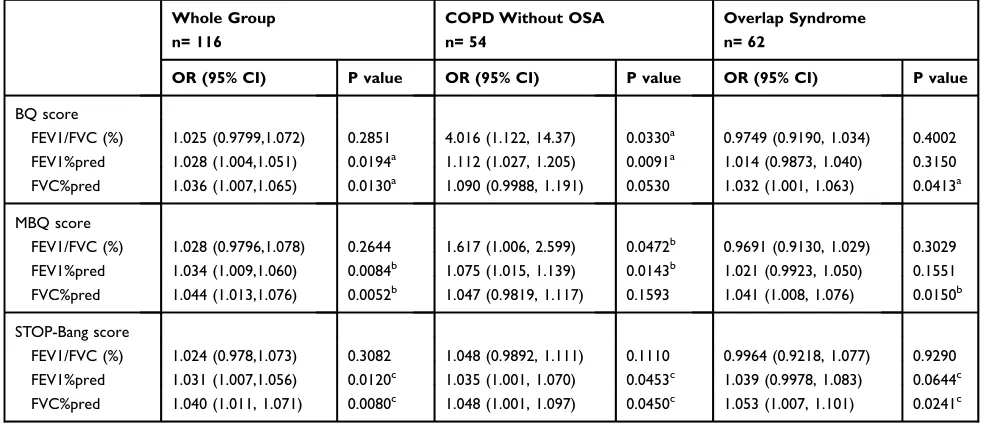
Therefore, univariate logistic regression analysis was used to assess the impact of spirometric parameters on the
risk of questionnaires misdiagnosis (Table 5). FEV1%pred
and FVC%pred of all COPD patients were statistically associated with the risk of misdiagnosis of BQ (FEV1% pred: OR= 1.028, P= 0.0194; FVC%pred: OR= 1.036, P= 0.0130), MBQ (FEV1%pred: OR= 1.034, P= 0.0084; FVC%pred: OR= 1.044, P= 0.0052), and STOP-Bang
(FEV1%pred: OR= 1.031, P= 0.0120; FVC%pred:
OR= 1.040, P= 0.0080).
In COPD patients without OSA, FEV1/FVC and FEV1%pred were statistically associated with the risk of misdiagnosis of BQ (FEV1/FVC: OR= 4.016, P= 0.0330; FEV1%pred: OR= 1.112, P= 0.0091) and MBQ (FEV1/ FVC: OR= 1.617, P= 0.0472; FEV1%pred: OR= 1.075, P= 0.0143), while FEV1%pred and FVC%pred were sta-tistically associated with the risk of STOP-Bang misdiag-nosis (FEV1%pred: OR= 1.035; P= 0.0453; FVC%pred: OR= 1.048, P= 0.0450).
In addition, FVC%pred was statistically associated with the risk of misdiagnosis by BQ (OR= 1.032 P= 0.0413), MBQ (OR= 1.041, P= 0.0150), and STOP-Bang (OR= 1.053, P= 0.0241) in patients with the overlap syndrome.
These evidence suggested that COPD patients with higher pulmonary function parameters had more chances to get a misdiagnosis by BQ, MBQ, and STOP-Bang questionnaire.
Pulmonary Function Parameters Were
Correlated with BMI and Neck
Circumference
Correlation analyses were conducted to explore the rela-tionship between spirometric parameters and BMI or neck circumference.
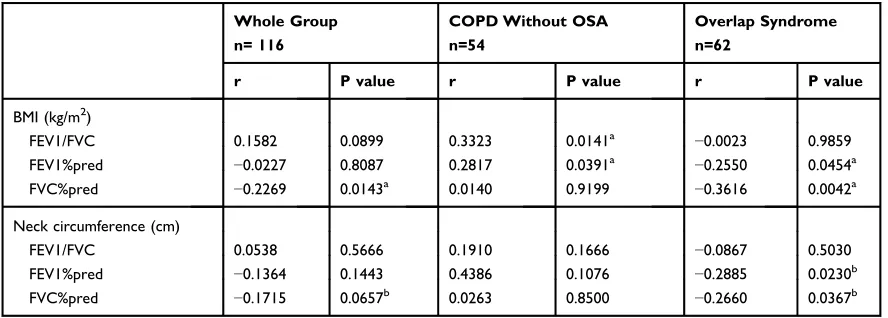
For COPD subjects without OSA, BMI was positively correlated with FEV1/FVC (P= 0.0141) and FEV1%pred (P= 0.0391), while in OVS group BMI was negatively correlated with FEV1%pred (P= 0.0454) and FVC%pred
(P= 0.0018) (Table 6). The analyses also showed, in
sub-jects whose BMI<25kg/m2, FEV1/FVC (P= 0.0027) and
FEV1%pred (P= 0.0215) were positively correlated with
BMI, while in BMI≥25, FEV1%pred (P= 0.0280) and
Patients recruitment and screening (n = 328)
Patients refused to participate (n = 45)
Informed consent and neck circumference measurement and assessment different questionnaire (n = 283)
Pulmonary function examination (n = 230)
Polysomnography examination (n = 116) FEV1/FVC≥ 70% (n = 87)
COPD subjects without OSA (n = 54) Overlap syndrome subjects (n = 62) AHI≥5/h
AHI<5/h Exclusion of patients who refused lung function test (n = 53)
Exclusion of patients who refused polysomnography (n = 27)
Figure 1Flow diagram for participants in this study.
International Journal of Chronic Obstructive Pulmonary Disease downloaded from https://www.dovepress.com/ by 118.70.13.36 on 24-Aug-2020
Table 2Correlation Between Potentially Risk Factors and Apnea–Hypopnea Index
Variable Whole Group
(n = 116)
COPD Without OSA (n = 54)
Overlap Syndrome (n = 62)
r P value r P value r P value
Age (years) −0.0016 0.9868 0.1352 0.3298 0.0691 0.5935
Neck circumference (cm) 0.1095 0.2419 0.0658 0.6363 −0.0422 0.7448
BMI (kg/m2) 0.4814 ≤0.0001a 0.0321 0.8179 0.4524 0.0002a
FEV1/FVC (%) 0.1089 0.2446 0.0638 0.6465 0.2333 0.0704
FEV1%pred 0.0986 0.2926 0.1767 0.2011 0.0415 0.7507
FVC%pred −0.0236 0.8026 0.1843 0.1822 −0.1683 0.1948
Note:aSignificant correlation with Apnea–Hypopnea Index.
Abbreviations:r, correlation coefficient; COPD, chronic obstructive pulmonary disease; OSA, obstructive sleep apnea syndrome; BMI, body mass index; FEV1/FVC, forced expiratory volume in 1 second and forced vital capacity ratio; FEV1%pred, percentage of predicted forced expiratory volume in 1 second; FVC%pred, percentage of predicted forced vital capacity ratio.
Table 1Demographic Data and Characteristics of the COPD Subjects
Characteristics Whole Group
(n= 116)
COPD Without OSA (n= 54)
Overlap Syndrome (n= 62)
P value
Age (years) 63 (57, 68) 64 (59, 69) 62 (56, 68) 0.5331
Male, n (%) 101, (87.07%) 43, (79.63%) 58, (93.55%) 0.0260a
BMI (kg/m2) 25.04±4.36 23.11±3.43 26.72±4.41 <0.0001a
BMI≥25kg/m2, n (%) 55, (47.41%) 17, (31.48%) 38, (61.25%) 0.0020a
Neck circumference (cm) 38.59±2.43 38.28±1.93 38.85±2.79 0.1477
Current smoker, n (%) 89, (76.72%) 41, (88.89%) 48, (77.42%) 0.8490
Pack×year of smoking 800 (600, 1000) 775 (600, 850) 800 (500,1400) 0.4060
Use alcohol, n (%) 75, (64.66%) 35, (64.81%) 40, (64.52%) 0.9730
Arousal index 5.4 (0.9, 18.5) 0.3 (0.1, 0.6) 19.2 (7.9, 30.5) <0.0001
AHI 6.5 (1.6, 21.8) 1.2 (0.4, 2.5) 20.3 (9.3, 33.9) <0.0001a
REMS (%) 16.52±15.56 11.00±3.55 20.20±20.78 0.5536
Minimum nocturnal SaO2 86.5 (80.5, 90) 89 (87, 91) 82.5 (76, 87) <0.0001a
Mean nocturnal SaO2 95.35 (94, 96.55) 96 (94, 97) 95 (93, 96) 0.0048a
FEV1/FVC (%) 60.62 (55.09, 67.57) 64.62 (50.69, 67.80) 64.70 (57.7, 67.28) 0.8076
FEV1%pred 62.40±19.05 61.7±18.83 63.18±19.55 0.6282
FVC%pred 78.14±15.76 77.86±13.71 78.39±17.49 0.9864
CAT score 12 (9, 16) 12 (9, 14) 12 (9, 17) 0.2546
mMRC score 1.33±0.86 1.54±0.72 1.15±0.94 0.0150a
BQ score 1 (0, 2) 0 (0, 1) 2 (1, 2) <0.0001a
MBQ score 1.22±0.93 0.70±0.72 1.68±0.86 <0.0001a
BQ part1 score 2 (0, 3) 0 (0, 2) 3 (2, 4) <0.0001a
BQ part2 score 0 (0, 0) 0 (0, 0) 0 (0, 1) <0.0001a
BQ part3 score 0.30±0.46 0.15±0.36 0.44±0.50 0.0008a
MBQ part3 score 0.51±0.50 0.35±0.48 0.65±0.48 0.0014a
STOP-Bang score 3.15±1.34 2.43±1.07 3.77±1.23 <0.0001a
Hypertension, n (%) 25, (21.55%) 8, (14.81%) 17, (27.42%) 0.1000
Diabetes, n (%) 5, (4.31%) 1, (1.85%) 4, (6.45%) 0.3700
Cardiovascular disease, n (%) 9, (7.76%) 3, (55.56%) 6, (9.68%) 0.5000
Renal insufficiency, n (%) 3, (2.59%) 0, (0%) 3, (4.84%) 0.2470
Dyslipidemia, n (%) 3, (2.59%) 2, (3.70%) 1, (1.61%) 0.5970
AECOPD, n (%) 10, (8.62%) 3, (55.56%) 7, (11.29%) 0.3340
Notes:Data are presented as mean±SD, median (IQR), or n (%);a
Significant statistical difference between COPD without OSA group and overlap syndrome group. Abbreviations:COPD, chronic obstructive pulmonary disease; OSA, obstructive sleep apnea syndrome; BMI, body mass index; AHI, Apnea–Hypopnea Index; REMS, rapid eye movement sleep; SaO2, oxygen saturation; mMRC, Modified Medical Research Council; CAT, COPD assessment test; BQ, Berlin Questionnaire; MBQ, modified Berlin Questionnaire; AECOPD, acute exacerbations of chronic obstructive pulmonary disease; FEV1/FVC, forced expiratory volume in 1 second and forced vital capacity ratio; FEV1%pred, percentage of predicted forced expiratory volume in 1 second; FVC%pred, percentage of predicted forced vital capacity ratio.
International Journal of Chronic Obstructive Pulmonary Disease downloaded from https://www.dovepress.com/ by 118.70.13.36 on 24-Aug-2020
Table 3Multivariate Regression for Parameters Associated with Apnea–Hypopnea Index
Variable Whole Group
(n = 116)
COPD Without OSA (n = 54)
Overlap Syndrome (n = 62)
B P value B P value B P value
Age (years) −0.2057 0.2620 0.0119 0.6400 −0.6981 0.0270a
Neck circumference (cm) −2.416 0.0010a −0.0105 0.9020 −2.301 0.0150a
BMI (kg/m2) 2.669 <0.0001a 0.0343 0.6710 1.889 0.0010a
FEV1/FVC (%) 0.3142 0.1970 −0.0812 0.0680 0.6955 0.0540
FEV1%pred −0.1223 0.3840 0.0489 0.1920 0.0483 0.6490
FVC%pred 0.0248 0.8360 0.0121 0.4730 −0.4349 0.3060
Notes:a
Significant correlation with Apnea–Hypopnea Index; Age, neck circumference, BMI, FEV1/FVC, FEV1%pred, and FVC%pred were entered into the multivariable model.
Abbreviations:COPD, chronic obstructive pulmonary disease; OSA, obstructive sleep apnea syndrome; BMI, body mass index; FEV1/FVC, percentage of forced expiratory volume in 1 second and forced vital capacity ratio; FEV1%pred, percentage of predicted forced expiratory volume in 1 second; FVC% pred, predicted forced vital capacity ratio.
Table 4Performance of Berlin Questionnaire, Modified Berlin Questionnaire, and STOP-Bang in Identifying OSA Among COPD Subjects
Questionnaire Prevalence of OSA (n/N [%]) =62/116 (53.45%)
Sensitivity Specificity PPV NPV AUC
BQ 0.53 0.89 0.85 0.62 0.71 (0.64–0.79)
MBQ 0.65 0.85 0.83 0.68 0.75 (0.67–0.83)
STOP-Bang 0.84 0.59 0.70 0.76 0.72 (0.64–0.80)
Note:Data in parentheses are 95% CIs or n/N (%).
Abbreviations:AUC, area under the curve; OSA, obstructive sleep apnea syndrome; PPV, positive predictive value; NPV, negative predictive value; BQ, Berlin Questionnaire; MBQ, modified Berlin Questionnaire.
Table 5Univariate Logistic Regression Analysis of Pulmonary Function Parameters Affecting the Risk of Misdiagnosis with Questionnaires
Whole Group n= 116
COPD Without OSA n= 54
Overlap Syndrome n= 62
OR (95% CI) P value OR (95% CI) P value OR (95% CI) P value
BQ score
FEV1/FVC (%) 1.025 (0.9799,1.072) 0.2851 4.016 (1.122, 14.37) 0.0330a 0.9749 (0.9190, 1.034) 0.4002 FEV1%pred 1.028 (1.004,1.051) 0.0194a 1.112 (1.027, 1.205) 0.0091a 1.014 (0.9873, 1.040) 0.3150 FVC%pred 1.036 (1.007,1.065) 0.0130a 1.090 (0.9988, 1.191) 0.0530 1.032 (1.001, 1.063) 0.0413a MBQ score
FEV1/FVC (%) 1.028 (0.9796,1.078) 0.2644 1.617 (1.006, 2.599) 0.0472b 0.9691 (0.9130, 1.029) 0.3029 FEV1%pred 1.034 (1.009,1.060) 0.0084b 1.075 (1.015, 1.139) 0.0143b 1.021 (0.9923, 1.050) 0.1551 FVC%pred 1.044 (1.013,1.076) 0.0052b 1.047 (0.9819, 1.117) 0.1593 1.041 (1.008, 1.076) 0.0150b
STOP-Bang score
FEV1/FVC (%) 1.024 (0.978,1.073) 0.3082 1.048 (0.9892, 1.111) 0.1110 0.9964 (0.9218, 1.077) 0.9290 FEV1%pred 1.031 (1.007,1.056) 0.0120c 1.035 (1.001, 1.070) 0.0453c 1.039 (0.9978, 1.083) 0.0644c FVC%pred 1.040 (1.011, 1.071) 0.0080c 1.048 (1.001, 1.097) 0.0450c 1.053 (1.007, 1.101) 0.0241c Notes:The data are presented as the odds ratio (OR) (95% CI); we performed univariate logistic regression. Pulmonary function parameters significantly associated with the risk ofa
BQ,b MBQ, andc
STOP-Bang misdiagnosis.
Abbreviations:CI, confidence interval; OR, odds ratio; COPD, chronic obstructive pulmonary disease; OSA, obstructive sleep apnea syndrome; BQ, Berlin Questionnaire; MBQ, modified Berlin Questionnaire; FEV1/FVC, forced expiratory volume in 1 second and forced vital capacity ratio; FEV1%pred, percentage of predicted forced expiratory volume in 1 second; FVC%pred, percentage of predicted forced vital capacity ratio.
International Journal of Chronic Obstructive Pulmonary Disease downloaded from https://www.dovepress.com/ by 118.70.13.36 on 24-Aug-2020
FVC%pred (P= 0.0251) was negatively correlated with BMI (Table 7).
Neck circumferences of OVS subjects are negatively correlated with FEV1%pred (P= 0.0230) and FVC%pred (P= 0.0367) (Table 6).
Discussion
This study evaluated the performance of BQ, MBQ, and STOP-Bang in identifying OSA patients from COPD in the study and investigated how pulmonary function affects the accuracy of questionnaire diagnosis. We found all the three questionnaires were suitable for screening OSA patients from COPD subjects in clinical application,
among which MBQ has the best diagnostic efficacy. The
diagnosis of the three questionnaires was more accurate in subjects with lower FEV1%pred or FVC%pred value, and
pulmonary function exert influence on the diagnosis
efficacy of the three questionnaires through BMI and
neck circumference.
The co-existence of COPD and OSA was defined by
OVS and is associated with an increased risk of comorbid cardiovascular disease and diabetes, mortality and hospi-talization if OSA was left untreated.7,9-11 Therefore, it is very essential to have OVS screened out from COPD patients in time. Since the standard diagnosis of OSA is
expensive and time-consuming,12 different questionnaires
have been used as screening tools for OSA.
An ideal sleep-disordered breathing screening score should have a high sensitivity to avoid false-negative
results, but also be specific enough to avoid referral of
low-risk patients for costly and time-consuming sleep
monitoring.23 Analyses of this study showed the
speci-ficity of BQ was higher than STOP-Bang, while the
sensitivity was lower in BQ, which was in accordance with the previous study reported the performance of
questionnaires in subjects without COPD.23–25 The
per-formance of MBQ is slightly better than BQ, for they
both displayed a high specificity moderate, but BQ
showed a relatively poor sensitivity. According to the
Asia-Pacific obesity definition, the cut-off point of BMI
was adjusted to 25.0 in MBQ compare to BQ, which might be the reason for the superiority of MBQ in our study population.
In order to investigate how pulmonary function affected the accuracy of questionnaire diagnosis, analyses were con-ducted to discover the relationship between pulmonary func-tion parameters and BMI or neck circumference.
Table 6Pulmonary Function Parameters Were Correlated with Body Mass Index and Neck Circumference
Whole Group n= 116
COPD Without OSA n=54
Overlap Syndrome n=62
r P value r P value r P value
BMI (kg/m2)
FEV1/FVC 0.1582 0.0899 0.3323 0.0141a −0.0023 0.9859
FEV1%pred −0.0227 0.8087 0.2817 0.0391a −0.2550 0.0454a
FVC%pred −0.2269 0.0143a 0.0140 0.9199 −0.3616 0.0042a
Neck circumference (cm)
FEV1/FVC 0.0538 0.5666 0.1910 0.1666 −0.0867 0.5030
FEV1%pred −0.1364 0.1443 0.4386 0.1076 −0.2885 0.0230b
FVC%pred −0.1715 0.0657b 0.0263 0.8500 −0.2660 0.0367b
Notes:a
Significant correlation between pulmonary function parameters and BMI;b
significant correlation between pulmonary function parameters and neck circumference.
Abbreviations:r, correlation coefficient; COPD, chronic obstructive pulmonary disease; OSA, obstructive sleep apnea syndrome; BMI, body mass index; FEV1/FVC, forced expiratory volume in 1 second and forced vital capacity ratio; FEV1%pred, percentage of predicted forced expiratory volume in 1 second; FVC%pred, percentage of predicted forced vital capacity ratio.
Table 7 Correlation Between Body Mass Index and Pulmonary Function Parameters
BMI BMI<25kg/m2
n=61
BMI≥25kg/m2
n=55
r P value r P value
FEV1/FVC 0.3773 0.0027a 0.0329 0.8116 FEV1%pred 0.2939 0.0215a −0.2963 0.0280a FVC%pred 0.1636 0.2076 −0.3046 0.0251a Notes:a
Significant correlation between pulmonary function parameters and BMI. Abbreviations:r, correlation coefficient; BMI, body mass index; FEV1/FVC, forced expiratory volume in 1 second and forced vital capacity ratio; FEV1%pred, percen-tage of predicted forced expiratory volume in 1 second; FVC%pred, percenpercen-tage of predicted forced vital capacity ratio.
International Journal of Chronic Obstructive Pulmonary Disease downloaded from https://www.dovepress.com/ by 118.70.13.36 on 24-Aug-2020
In COPD subjects without OSA, we assume the posi-tive correlation between BMI and pulmonary could be explained by the disease characteristic of COPD itself. COPD is a chronic wasting disease associated with
sig-nificant loss of weight, body water compartments, and
muscle mass.28,29 Studies have reported body weight is
negatively correlated with FEV1.30–32 According to
a series of articles on the obesity paradox in COPD,33
compared with normal BMI, low BMI is a risk factor for accelerated lung function decline, whilst high BMI has a protective effect.34These research results were in
accor-dance with our finding in COPD subjects without OSA.
Therefore, we assumed the mechanism behind the associa-tion between the accuracy of the three quesassocia-tionnaires and FEV1%pred was related to the correlation between BMI and the severity of COPD. Patients with severe COPD had more severe weight loss, and low BMI accelerated the decline in lung function. As a result, subjects with severe COPD were inclined to receive lower questionnaire scores. Therefore, in COPD without OSA group, subjects were more likely to get a correct diagnosis by BQ, MBQ, and STOP-Bang score.
Our study demonstrated an interesting result that the correlation between BMI and pulmonary function was reversed in COPD subjects with and without OSA. The correlation between pulmonary function and BMI in COPD patients without OSA was consistent with that in non-obese patients, while the correlation in patients with overlap syndrome was consistent with that in obese patients. Therefore, we assumed the reversed correlation was led by the difference in the proportion of obesity in patients with COPD alone and patients with OVS. Our analyses indicated BMI was an independent risk factor for the prevalence of OSA in COPD subjects, and the
propor-tion of obese subjects in overlap group was significantly
higher than COPD subject without OSA, which is in accordance with the results from other studies.26,27
Many studies have demonstrated an association between excess weight or weight gain and pulmonary
dysfunction.35–38 Boriek AM has reported the reduced
curvature of the diaphragm musclefibers in obese subjects
suggesting that obesity leads to respiratory muscle dys-function in patients with COPD and reduces the value of
FEV1%pred and FVC%pred.39Thisfinding was consistent
with the overlap group of our study. Therefore, we assumed in OVS subjects FVC%pred exerted interference impact on diagnosis of the questionnaires through its negative interaction with BMI and neck circumference.
Since high BMI raised the score of all three questionnaires and neck circumference upregulated STOP-Bang score, the higher BMI and neck circumference were, the subjects were more likely to get a correct diagnosis by BQ, MBQ, and STOP-Bang score in OVS subjects.
Our study also demonstrated the severity of OSA and COPD were not correlated. However, mMRC-assessed
dyspnea18 was more severe in COPD subjects without
OSA than the overlap subjects, and the reason behind it remains to be investigated.
To our knowledge, this is the first article to compare
the performance of BQ, MBQ, and STOP-Bang score for screening OSA in subjects with COPD and investigate how pulmonary function affects the accuracy of question-naire diagnosis. However, our study was limited by the sample size and all the included subjects were Asian. Also, because of the open invitation for participation in the study, patients with more frequent symptoms and greater concern about having OSA may have accepted the invita-tion. Therefore, our sample failed to represent the actual prevalence of overlap syndrome in patients with COPD.
Conclusion
In conclusion, our study demonstrated that BQ, MBQ, and STOP-Bang score showed a good performance in COPD subjects for screening OSA, and the accuracy of MBQ was slightly higher than the other two. In COPD subjects with-out OSA, patients with low FEV1%pred were associated with increased diagnosis accuracy of BQ, MBQ, and STOP-Bang score, while OVS patients with low FVC%pred had more chances to get a correct diagnosis by the three ques-tionnaires. Pulmonary function could exert influence on the diagnostic efficacy of the three questionnaires through its association with BMI and neck circumference. BMI was positively correlated with FEV1/FVC and FEV1%pred in COPD subjects without OSA, while negatively correlated with FEV1%pred and FVC%pred in OVS subjects. However, more studies are needed to investigate the effects of lung function on BQ, MBQ, and STOP-Bang score in the whole population or other specific populations.
Abbreviations
COPD, chronic obstructive pulmonary disease; OSA, obstructive sleep apnea syndrome; BMI, body mass index;
AHI, Apnea–Hypopnea Index; REMS, rapid eye movement
sleep; SaO2, oxygen saturation; mMRC, Modified Medical
Research Council; CAT, COPD assessment test; BQ, Berlin
Questionnaire; MBQ, modified Berlin Questionnaire;
International Journal of Chronic Obstructive Pulmonary Disease downloaded from https://www.dovepress.com/ by 118.70.13.36 on 24-Aug-2020
AECOPD, acute exacerbations of chronic obstructive pul-monary disease; FEV1/FVC, forced expiratory volume in 1 second and forced vital capacity ratio; FEV1%pred, per-centage of predicted forced expiratory volume in 1 second; FVC%pred, percentage of predicted forced vital capacity ratio; SD, standard deviation; IQR, interquartile range; PPV, positive predictive value; NPV, negative predictive value; CI, confidence interval; OR, odds ratio.
Data Sharing Statement
The datasets used and/or analyzed during the current study are available from the corresponding author on reasonable request.
Ethics Approval and Consent to
Participate
This study received ethical approval from the Zhongshan Hospital Institutional Review Board. The objective of the study and its requirements was explained to the subjects, and all participants provided written informed consent. This study was conducted according to the Helsinki Declaration.
Acknowledgments
This work was supported by grants from the National Key Research and Development Program of China (NO. 2018YFC1313600) and the National Natural Science Foundation of China (No. 81570081, 81770083).
Author Contributions
All authors contributed to data analysis, drafting or
revis-ing the article, gave final approval of the version to be
published, and agree to be accountable for all aspects of the work.
Disclosure
The authors report no conflicts of interest in this work.
References
1. Vogelmeier CF, Criner GJ, Martinez FJ, et al. Global strategy for the diagnosis, management, and prevention of chronic obstructive lung disease 2017 report. GOLD executive summary. Am J Respir Crit Care Med.2017;195(5):557–582. doi:10.1164/rccm.201701-0218PP 2. Vestbo J, Hurd SS, Agusti AG, et al. Global strategy for the diagnosis,
management, and prevention of chronic obstructive pulmonary dis-ease: GOLD executive summary. Am J Respir Crit Care Med. 2013;187(4):347–365. doi:10.1164/rccm.201204-0596PP
3. Diaz-Guzman E, Mannino DM. Epidemiology and prevalence of chronic obstructive pulmonary disease. Clin Chest Med. 2014;35 (1):7–16. doi:10.1016/j.ccm.2013.10.002
4. Guilleminault C, Tilkian A, Dement WC. The sleep apnea syndromes.Annu Rev Med.1976;27:465–484. doi:10.1146/annurev. me.27.020176.002341
5. Senaratna CV, Perret JL, Lodge CJ, et al. Prevalence of obstructive sleep apnea in the general population: a systematic review.Sleep Med Rev.2017;34:70–81. doi:10.1016/j.smrv.2016.07.002
6. Weitzenblum E, Chaouat A, Kessler R, Canuet M. Overlap syn-drome: obstructive sleep apnea in patients with chronic obstructive pulmonary disease.Proc Am Thorac Soc.2008;5(2):237–241. doi:10. 1513/pats.200706-077MG
7. Flenley DC. Sleep in chronic obstructive lung disease.Clin Chest Med.1985;6(4):651–661.
8. Chaouat A, Weitzenblum E, Krieger J, Ifoundza T, Oswald M, Kessler R. Association of chronic obstructive pulmonary disease and sleep apnea syndrome.Am J Respir Crit Care Med.1995;151 (1):82–86. doi:10.1164/ajrccm.151.1.7812577
9. Marin JM, Soriano JB, Carrizo SJ, Boldova A, Celli BR. Outcomes in patients with chronic obstructive pulmonary disease and obstruc-tive sleep apnea: the overlap syndrome.Am J Respir Crit Care Med. 2010;182(3):325–331. doi:10.1164/rccm.200912-1869OC
10. Hang LW, Hsu JY, Chang CJ, et al. Predictive factors warrant screen-ing for obstructive sleep apnea in COPD: a Taiwan National Survey.
Int J Chron Obstruct Pulmon Dis. 2016;11:665–673. doi:10.2147/ COPD.S96504
11. Machado MC, Vollmer WM, Togeiro SM, et al. CPAP and survival in moderate-to-severe obstructive sleep apnoea syndrome and hypoxae-mic COPD.Eur Respir J.2010;35(1):132–137. doi:10.1183/090319 36.00192008
12. Kapur VK, Auckley DH, Chowdhuri S, et al. Clinical practice guide-line for diagnostic testing for adult obstructive sleep apnea: an American Academy Of Sleep Medicine Clinical Practice Guideline.
J Clin Sleep Med.2017;13(3):479–504. doi:10.5664/jcsm.6506 13. Netzer NC, Stoohs RA, Netzer CM, Clark K, Strohl KP. Using the
Berlin Questionnaire to identify patients at risk for the sleep apnea syndrome.Ann Intern Med.1999;131(7):485–491. doi:10.7326/0003-4819-131-7-199910050-00002
14. Sharma SK, Vasudev C, Sinha S, Banga A, Pandey RM, Handa KK. Validation of the modified Berlin questionnaire to identify patients at risk for the obstructive sleep apnoea syndrome.Indian J Med Res. 2006;124(3):281–290.
15. Chung F, Yegneswaran B, Liao P, et al. STOP questionnaire: a tool to screen patients for obstructive sleep apnea.Anesthesiology.2008;108 (5):812–821. doi:10.1097/ALN.0b013e31816d83e4
16. Faria AC, da Costa CH, Rufino R. Sleep Apnea Clinical Score, Berlin Questionnaire, or Epworth Sleepiness Scale: which is the best obstructive sleep apnea predictor in patients with COPD?Int J Gen Med.2015;8:275–281. doi:10.2147/IJGM.S86479
17. Soler X, Liao SY, Marin JM, et al. Age, gender, neck circumference, and Epworth sleepiness scale do not predict obstructive sleep apnea (OSA) in moderate to severe chronic obstructive pulmonary disease (COPD): the challenge to predict OSA in advanced COPD. PLoS One.2017;12(5):e0177289. doi:10.1371/journal.pone.0177289 18. Mahler DA, Harver A. A factor analysis of dyspnea ratings,
respira-tory muscle strength, and lung function in patients with chronic obstructive pulmonary disease.Am Rev Respir Dis.1992;145(2 Pt 1):467–470. doi:10.1164/ajrccm/145.2_Pt_1.467
19. Jones PW, Harding G, Berry P, Wiklund I, Chen WH, Kline Leidy N. Development andfirst validation of the COPD assessment test.Eur Respir J.2009;34(3):648–654. doi:10.1183/09031936.00102509 20. Miller MR, Hankinson J, Brusasco V, et al. Standardisation of
spirometry. Eur Respir J. 2005;26(2):319–338. doi:10.1183/09031 936.05.00034805
21. Redline S, Sanders MH, Lind BK, et al. Methods for obtaining and analyzing unattended polysomnography data for a multicenter study. Sleep Heart Health Research Group. Sleep. 1998;21(7):759–767. doi:10.1093/sleep/21.7.759
International Journal of Chronic Obstructive Pulmonary Disease downloaded from https://www.dovepress.com/ by 118.70.13.36 on 24-Aug-2020
22. Berry RB, Budhiraja R, Gottlieb DJ, et al. Rules for scoring respira-tory events in sleep: update of the 2007 AASM manual for the scoring of sleep and associated events. Deliberations of the sleep apnea definitions task force of the American Academy of Sleep Medicine. J Clin Sleep Med. 2012;8(5):597–619. doi:10.5664/ jcsm.2172
23. Marti-Soler H, Hirotsu C, Marques-Vidal P, et al. The NoSAS score for screening of sleep-disordered breathing: a derivation and valida-tion study. Lancet Respir Med. 2016;4(9):742–748. doi:10.1016/ S2213-2600(16)30075-3
24. Peng M, Chen R, Cheng J, Li J, Liu W, Hong C. Application value of the NoSAS score for screening sleep-disordered breathing.J Thorac Dis.2018;10(8):4774–4781. doi:10.21037/jtd.2018.07.46
25. Hong C, Chen R, Qing S, et al. Validation of the NoSAS score for the screening of sleep-disordered breathing: a hospital-based retrospec-tive study in China. J Clin Sleep Med. 2018;14(02):191–197. doi:10.5664/jcsm.6930
26. Zhu J, Zhao Z, Nie Q, et al. Effect of lung function on the apnea-hypopnea index in patients with overlap syndrome: a multicenter cross-sectional study.Sleep Breath.2019. doi:10.1007/ s11325-019-01961-w
27. Bednarek M, Plywaczewski R, Jonczak L, Zielinski J. There is no relationship between chronic obstructive pulmonary disease and obstructive sleep apnea syndrome: a population study.Respiration. 2005;72(2):142–149. doi:10.1159/000084044
28. Wilson DO, Rogers RM, Hoffman RM. Nutrition and chronic lung disease.Am Rev Respir Dis.1985;132(6):1347–1365. doi:10.1164/ arrd.1985.132.6.1347
29. Baarends EM, Schols AM, van Marken Lichtenbelt WD, Wouters EF. Analysis of body water compartments in relation to tissue depletion in clinically stable patients with chronic obstructive pulmonary disease.Am J Clin Nutr.1997;65(1):88–94. doi:10.1093/ajcn/65.1.88 30. Karadag F, Karul AB, Cildag O, Altun C, Gurgey O. Determinants of BMI in patients with COPD. Respirology. 2004;9(1):70–75. doi:10.1111/j.1440-1843.2003.00533.x
31. Wilson DO, Rogers RM, Wright EC, Anthonisen NR. Body weight in chronic obstructive pulmonary disease. The National Institutes of Health Intermittent Positive-Pressure Breathing Trial. Am Rev Respir Dis.1989;139(6):1435–1438. doi:10.1164/ajrccm/139.6.1435 32. Marquis K, Debigare R, Lacasse Y, et al. Midthigh muscle
cross-sectional area is a better predictor of mortality than body mass index in patients with chronic obstructive pulmonary disease.
Am J Respir Crit Care Med. 2002;166(6):809–813. doi:10.1164/ rccm.2107031
33. Gruberg L, Weissman NJ, Waksman R, et al. The impact of obesity on the short-term and long-term outcomes after percutaneous coron-ary intervention: the obesity paradox?J Am Coll Cardiol.2002;39 (4):578–584. doi:10.1016/S0735-1097(01)01802-2
34. Sun Y, Milne S, Jaw JE, et al. BMI is associated with FEV1 decline in chronic obstructive pulmonary disease: a meta-analysis of clinical trials.Respir Res.2019;20(1):236. doi:10.1186/s12931-019-1209-5 35. Heederik D, Miller BG. Weak associations in occupational
epide-miology: adjustment for exposure estimation error.Int J Epidemiol. 1988;17(4):970–974. doi:10.1093/ije/17.4.970
36. Bande J, Clement J, Van dW KP. The influence of smoking habits and body weight on vital capacity and FEV1 in male Air Force personnel: a longitudinal and cross-sectional analysis. Am Rev Respir Dis. 1980;122(5):781–790.
37. Cotes JE, Gilson JC, John C. Effects of inactivity, weight gain and antitubercular chemotherapy upon lung function in working coal-miners.Ann Occup Hyg.1967;10(4):327–335.
38. Chen Y, Horne SL, Dosman JA. Body weight and weight gain related to pulmonary function decline in adults: a six year follow up study.
Thorax.1993;48(4):375–380. doi:10.1136/thx.48.4.375
39. Boriek AM, Lopez MA, Velasco C, et al. Obesity modulates dia-phragm curvature in subjects with and without COPD.Am J Physiol Regul Integr Comp Physiol. 2017;313(5):R620–r629. doi:10.1152/ ajpregu.00173.2017
International Journal of Chronic Obstructive Pulmonary Disease
Dove
press
Publish your work in this journal
The International Journal of COPD is an international, peer-reviewed journal of therapeutics and pharmacology focusing on concise rapid reporting of clinical studies and reviews in COPD. Special focus is given to the pathophysiological processes underlying the disease, inter-vention programs, patient focused education, and self management
protocols. This journal is indexed on PubMed Central, MedLine and CAS. The manuscript management system is completely online and includes a very quick and fair peer-review system, which is all easy to use. Visit http://www.dovepress.com/testimonials.php to read real quotes from published authors.
Submit your manuscript here:https://www.dovepress.com/international-journal-of-chronic-obstructive-pulmonary-disease-journal
International Journal of Chronic Obstructive Pulmonary Disease downloaded from https://www.dovepress.com/ by 118.70.13.36 on 24-Aug-2020