Journal of Asthma and Allergy
Dovepress
R e v i e w open access to scientific and medical research
Open Access Full Text Article
Dietary pattern and asthma: a systematic
review and meta-analysis
Nan Lv1
Lan Xiao1
Jun Ma1,2
1Palo Alto Medical Foundation
Research institute, 2Department
of Medicine, Stanford University School of Medicine, Stanford, CA, USA
Correspondence: Jun Ma Palo Alto Medical Foundation Research institute, 795 el Camino Real, Ames Building, Palo Alto, CA, USA Tel +1 650 853 4809
Fax +1 650 329 9114 email [email protected]
Background: The literature on the relationship between diet and asthma has largely focused on individual nutrients, with conflicting results. People consume a combination of foods from various groups that form a dietary pattern. Studying the role of dietary patterns in asthma is an emerging area of research. The purpose of this study was to systematically review dietary patterns and asthma outcomes in adults and children, to review maternal diet and child asthma, and to conduct a meta-analysis on the association between asthma prevalence and dietary patterns in adults.
Methods: We searched Medline, Scopus, and ISI Web of Knowledge up to January 2014. Two researchers independently reviewed studies meeting the inclusion criteria using the American Dietetic Association quality criteria. A linear mixed model was used to derive the pooled effect size (95% confidence interval) for each of three dietary pattern categories (healthy, unhealthy, and neutral).
Results: Thirty-one studies were identified (16 cross-sectional, one case-control, 13 cohort, and one randomized controlled trial), including 12 in adults, 13 in children, five in pregnant woman–child pairs, and one in both children and pregnant woman–child pairs. Six of the 12 adult studies reported significant associations between dietary patterns and asthma outcomes (eg, ever asthma and forced expiratory volume in one second). Seven of ten studies examining the Mediterranean diet showed protective effects on child asthma and/or wheeze. Four of the six studies in mother-child pairs showed that maternal dietary patterns during pregnancy were not associated with child asthma or wheeze. The meta-analysis including six adult studies, the primary outcome of which was the prevalence of current or ever asthma, showed no association with healthy, unhealthy, or neutral dietary patterns.
Conclusion: The evidence suggests no association of dietary patterns with asthma prevalence in adults or of maternal diet with child asthma or wheeze. The Mediterranean diet in children may prevent asthma or wheeze, but randomized controlled trials are lacking.
Keywords: dietary pattern, asthma, systematic review, meta-analysis, adults, children
Introduction
Over the past few decades, the prevalence of asthma has markedly increased. In the USA, the number of people with asthma increased from 20.3 million (6.3 million children and 14 million adults) in 2001 to 25.6 million (6.8 million children and
18.7 million adults) in 2012.1,2 Worldwide, asthma affects approximately 300 million
people, and this number is expected to reach 400 million by 2050.3
Although contributory, genetic factors alone cannot account for the rapid increase
in the prevalence of asthma.4 It has been hypothesized this increase is largely caused
by environmental changes (eg, urbanization) and modification of lifestyle behaviors
Video abstract
Point your SmartPhone at the code above. If you have a QR code reader the video abstract will appear. Or use:
http://dvpr.es/1vD4NEw
Journal of Asthma and Allergy downloaded from https://www.dovepress.com/ by 118.70.13.36 on 24-Aug-2020
For personal use only.
Number of times this article has been viewed
This article was published in the following Dove Press journal: Journal of Asthma and Allergy
Dovepress
Lv et al
(eg, dietary transition).5 Notably, the transition from
a traditional to a modern diet is characterized by an increased intake of preserved foods, salt, refined sugar, and saturated fat, and a decreased intake of fruit, vegetables, milk, and dietary fiber.6
Previous studies of the relationship of diet and nutrition with asthma have focused on either individual nutrients (eg, long-chain polyunsaturated fatty acids, vitamin D, and
antioxidants)6–8 or individual food groups (eg, fruit,
vege-tables, and fish).9–11 However, diet is a complex combina-tion of foods from various groups and nutrients, and some nutrients are highly correlated. It would be challenging to separate the effect of a single nutrient or food group from that of others in free-living populations. Chance findings may arise from indiscriminate multiple statistical testing and from inadequate control for confounding in observational studies. The available evidence from intervention trials focusing on the efficacy of single nutrients as disease-modifying agents in asthma is largely inconsistent.12,13
More recently, a few studies have investigated the asso-ciation between overall dietary patterns and asthma. Due to the rapid evolution of research on this topic, it is worth performing a comprehensive literature review. One recently published meta-analysis of eight cross-sectional studies in children concluded that the Mediterranean diet might
pro-tect against ever asthma and current wheeze.14 To date, no
reviews of dietary pattern studies in adult asthma have been published. The objectives of this research were to systemati-cally review the up-to-date findings on the effects of dietary patterns on asthma outcomes in adults and children as well as the effects of maternal dietary patterns on asthma outcomes in children, and to conduct a meta-analysis of published studies examining the effect of dietary patterns on asthma prevalence in adults.
Methods
We followed the PRISMA (Preferred Reporting Items for Systematic Reviews and Meta-Analyses) statement to prepare
the manuscript.15
Literature search strategy
An electronic literature search was conducted using Med-line (PubMed), Scopus, and ISI Web of Knowledge in January 2014 and extended back to 1950. The terms used to search titles and abstracts were (asthma OR wheezing OR wheeze OR lung function) AND (diet OR dietary OR food pattern). Further details on the literature search are shown in the Appendix 1. Only original studies with human
subjects and published in English were included. In addition, cross-referencing from the articles found was used to com-plete the search. To be included in the systematic review, a study needed to have at least one dietary pattern predefined and measured (eg, Mediterranean) or generated from usual dietary intake using a multivariate statistical method and examine the effect or association of the dietary pattern(s) with one or more asthma outcome.
inclusion criteria
The meta-analysis included studies of dietary patterns and asthma prevalence in adults meeting the following criteria: primary outcomes included prevalence of current or ever asthma, which was most commonly reported in the reviewed studies for adults (the number of studies assessing other asthma outcomes was too small to perform a meta-analysis); a dietary pattern score was calculated or dietary patterns were identified using a statistical method such as principal com-ponent analysis (PCA; selective solo or oligo food groups, eg, fruit and vegetables or fruit and fish, were not eligible); and odds ratio (OR) was calculated to determine the associa-tion between the dietary pattern(s) and asthma prevalence. Two researchers (NL and LX) independently reviewed the identified relevant articles and judged whether they met the inclusion criteria for meta-analysis. Uncertainties and discrepancies were resolved by consensus after discussing with a senior researcher (JM).
Quality assessment
The same two researchers (NL and LX) independently rated all the research articles included in the systematic review using the American Dietetic Association Quality Criteria Checklist.16 The scientific soundness of the articles was rated using ten validity questions. Based on the answers, one of the three quality ratings was assigned: positive (answered “yes” to six or more validity questions, including four priority questions), negative (answered “no” to six or more validity questions), or neutral (the rest of the situations). Only articles with a positive or neutral quality rating were included in the meta-analysis.
Assessment of dietary patterns
and data extraction
When statistically derived using PCA or factor analysis, usu-ally multiple dietary patterns were reported. Two researchers (NL and LX) independently grouped all dietary patterns into three categories: healthy, unhealthy, or neutral, based on constituent foods of each pattern suggested by PCA or main
Journal of Asthma and Allergy downloaded from https://www.dovepress.com/ by 118.70.13.36 on 24-Aug-2020
Dovepress Dietary pattern and asthma
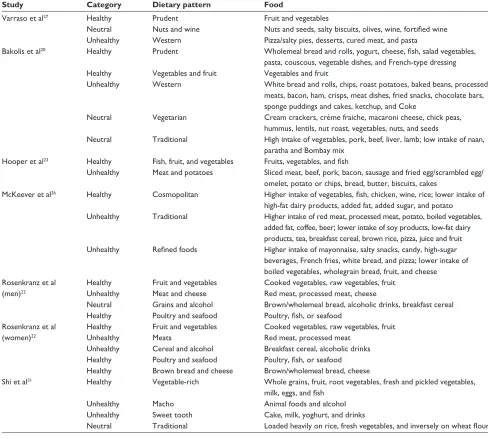
factor loadings. Any disagreements were discussed with the senior researcher (JM). Table 1 shows dietary patterns, cat-egories, and constituent foods. A healthy dietary pattern was characterized by high intakes of fruit, vegetables, whole grains, and/or fish. An unhealthy dietary pattern tended to have high loadings of refined grain, red meat, processed meat, fast foods, high sugar foods, and/or high fat foods. A neutral dietary pat-tern generally consisted of a mixture of healthy and unhealthy food items. The same two researchers (NL and LX) indepen-dently extracted the data to be used for meta-analysis.
Statistical analysis
We performed a meta-analysis to evaluate the asso-ciation of dietary patterns with asthma prevalence
in adults. Studies reported dietary pattern scores either as continuous variables or categorized them into tertiles or quintiles. Linear mixed models were used to derive the pooled effect sizes and 95% confidence intervals (CIs) for healthy, unhealthy, and neutral dietary patterns and
to assess heterogeneity between studies.17 In addition,
heterogeneity and publication bias were visually evalu-ated using Begg’s funnel plots, which displayed the scatter patterns of effect estimates against standard errors from the included studies, with a vertical line indicating the pooled estimate and diagonal lines showing the expected
95% CIs around the estimate.18 All statistical analyses
were conducted using SAS version 9.2 (SAS Institute Inc., Cary, NC, USA).
Table 1 Dietary patterns, categories, and constituent foods from six adult studies included in the meta-analysis
Study Category Dietary pattern Food
varraso et al27 Healthy Prudent Fruit and vegetables
Neutral Nuts and wine Nuts and seeds, salty biscuits, olives, wine, fortified wine Unhealthy western Pizza/salty pies, desserts, cured meat, and pasta
Bakolis et al20 Healthy Prudent Wholemeal bread and rolls, yogurt, cheese, fish, salad vegetables,
pasta, couscous, vegetable dishes, and French-type dressing Healthy vegetables and fruit vegetables and fruit
Unhealthy western white bread and rolls, chips, roast potatoes, baked beans, processed meats, bacon, ham, crisps, meat dishes, fried snacks, chocolate bars, sponge puddings and cakes, ketchup, and Coke
Neutral vegetarian Cream crackers, crème fraiche, macaroni cheese, chick peas, hummus, lentils, nut roast, vegetables, nuts, and seeds
Neutral Traditional High intake of vegetables, pork, beef, liver, lamb; low intake of naan, paratha and Bombay mix
Hooper et al23 Healthy Fish, fruit, and vegetables Fruits, vegetables, and fish
Unhealthy Meat and potatoes Sliced meat, beef, pork, bacon, sausage and fried egg/scrambled egg/ omelet, potato or chips, bread, butter, biscuits, cakes
McKeever et al26 Healthy Cosmopolitan Higher intake of vegetables, fish, chicken, wine, rice; lower intake of
high-fat dairy products, added fat, added sugar, and potato Unhealthy Traditional Higher intake of red meat, processed meat, potato, boiled vegetables,
added fat, coffee, beer; lower intake of soy products, low-fat dairy products, tea, breakfast cereal, brown rice, pizza, juice and fruit Unhealthy Refined foods Higher intake of mayonnaise, salty snacks, candy, high-sugar
beverages, French fries, white bread, and pizza; lower intake of boiled vegetables, wholegrain bread, fruit, and cheese Rosenkranz et al
(men)22
Healthy Fruit and vegetables Cooked vegetables, raw vegetables, fruit Unhealthy Meat and cheese Red meat, processed meat, cheese
Neutral Grains and alcohol Brown/wholemeal bread, alcoholic drinks, breakfast cereal Healthy Poultry and seafood Poultry, fish, or seafood
Rosenkranz et al (women)22
Healthy Fruit and vegetables Cooked vegetables, raw vegetables, fruit
Unhealthy Meats Red meat, processed meat
Unhealthy Cereal and alcohol Breakfast cereal, alcoholic drinks Healthy Poultry and seafood Poultry, fish, or seafood Healthy Brown bread and cheese Brown/wholemeal bread, cheese
Shi et al31 Healthy vegetable-rich whole grains, fruit, root vegetables, fresh and pickled vegetables,
milk, eggs, and fish
Unhealthy Macho Animal foods and alcohol
Unhealthy Sweet tooth Cake, milk, yoghurt, and drinks
Neutral Traditional Loaded heavily on rice, fresh vegetables, and inversely on wheat flour
Journal of Asthma and Allergy downloaded from https://www.dovepress.com/ by 118.70.13.36 on 24-Aug-2020
Dovepress
Lv et al
Results
Search results
Of 1,514 references identified, 1,484 were excluded based on review of title (n=1,395), language (n=84), and study
type, abstract, and full text (n=5), as shown in Figure 1. One
reference was added on cross-referencing. Thirty-one studies were eligible for systematic review, including 12 in adults, 13 in children, five in pregnant woman–child pairs, and one in both children alone and pregnant woman–child pairs. Six studies in adults were excluded from meta-analysis because asthma prevalence was not measured (three studies assessed asthma control, quality of life, lung function, and/or inflam-matory markers) or was not a primary outcome (three studies assessed chronic obstructive pulmonary disease or persistent cough with phlegm as a primary outcome).
Scientific quality
One19 of the 31 studies was published as a conference
abstract only and was not included in our quality review.
Twenty-eight studies were rated positive (scoring 8 or 9 out
of 10; Tables 2–4). One20 of the two studies rated as neutral
was a case-control study that received a quality score of 8, but did not clearly describe whether potential confounding factors were comparable for the cases and controls, although the potential confounding variables were adjusted for in the
analyses. The other study21 was a randomized controlled trial
(RCT) that did not clearly describe the method of randomiza-tion or the amount of exposure to intervenrandomiza-tion. No study was excluded from meta-analysis based on quality ratings.
Adult dietary patterns and asthma
Systematic review
Table 2 shows the main characteristics and results of the 12 studies in adults, published between 2006 and 2013. These
papers included four cross-sectional studies,22–25 six cohort
studies,26–31 one case-control study,20 and one RCT.21 Six of
them were conducted in Europe,20,23–27 two in Australia,21,22
two in the USA,28,29 and two in Asia.30,31 Sample sizes ranged
Included studies (n=31)
Reference added on cross-referencing (n=1) Reference excluded on full-text review – No dietary pattern measured or derived (n=4) – Dietary pattern was analyzed as a moderator (n=1) Reference excluded on abstract review
– No dietary pattern measured or derived (n=73) – Not original research (eg, review, editorial; n=8) – Not in humans (n=1)
– No relevant asthma outcome measured (n=1) – Already reported in a bigger study (n=1)
Reference excluded on title, language, study type review – Irrelevant to the topic of interest (n=909)
– Not original research (eg, review, editorial; n=356) – Non-English language (n=130)
Total reference identified (n=1,514)
Candidate abstracts (n=119)
Candidate full-text articles (n=35)
Systematic review: adults (n=12)
Systematic review: pregnant women and child (n=6a)
Systematic review: children (n=14a)
Meta-analysis: adults (n=6)
Reference excluded from meta-analysis – Asthma prevalence was not measured (n=3) – Asthma prevalence was not a primary outcome (n=3)
Figure 1 Results of search for relevant studies.
Note: aOne study investigated the effects of both children’s and maternal dietary patterns on asthma prevalence in children.
Journal of Asthma and Allergy downloaded from https://www.dovepress.com/ by 118.70.13.36 on 24-Aug-2020
Dovepress Dietary pattern and asthma
Table
2
Summary of 12 studies reporting an association between dietary patterns and asthma outcomes in adults
Study
a and
location
Sample and study design
Asthma outcome
Dietary pattern
Primary results
Adjusted confounders
Quality score (rating)
b
Rosenkranz et al
22 Australia n = 156,035; male 62.2 ± 10.6 years; female 60.2 ± 10.2 years;
55% female; cross- sectional
ever asthma
PCA: 4 dietary patterns for men (“fruit and vege
table
”, “meats and
cheese”, “grains and alcohol”, “poultry and seafood”) and 5 for women (“fruit and vege
table
s”,
“meats”, “poultry and seafood”, “cereal and alcohol”, “brown bread and cheese”); 12-item FFQ For men, a risk factor for asthma was meat/cheese (OR 1.18, 95% C
i
1.08–1.28). For women, protective factor for asthma was cheese/brown bread (OR 0.88, 95% C
i 0.82–0.94).
Age group, education, weight status, physical activity weekly minutes quartile, smoking status
8 (positive)
Shi et al
31
People’s Republic of China
n = 1,486, cohort ever asthma PC A : 4 d ie ta ry p at te rn s (“ m ac ho ”,
“traditional”, “sweet tooth”, “vege
table
rich”); 33-item FFQ
“Traditional” pattern (rice, fresh vege
table
s) was positively associated
with ever asthma (OR 2.25, 95% C
i
1.45–3.51).
Age, sex, smoking, income, manual job, BM
i, energy, MSG
intake, all other dietary pattern scores
8 (positive)
Bakolis et al
20 UK 59 9 ca se s an d 85 4 co nt ro ls;
16–50 years; 60% female; case-control study (Current) asthma, quality of life PCA: 5 dietary patterns (“prudent”, “vege
table
and fruit”,
“w
estern”, “vegetarian”,
“traditional”); over 200-item FFQ
No clear relation between the dietary patterns and asthma outcomes was observed.
Age, sex, BM
i, social class,
housing tenure, employment status, whether a single parent, smoking, passive smoke exposure at home, total energy intake, ethnicity, number of siblings, paracetamol and supplement use, all other dietary patterns
8 (neutral)
Hooper et al
23
Germany, UK, Norway
n
=
1,174; 29–55 years;
cross-sectional
Current asthma, asthma symptom score, F ev1 PCA: 2 dietary patterns (“meats and potatoes” and “fish, fruit and vege
table
s”); 158-, 198-, or
204-item FFQ
No association was observed between the dietary patterns and current asthma, asthma symptoms, and F
ev
1
.
Age, sex, social class, smoking status, exercise, BMI, quintiles of total energy intake, other dietary pattern
8 (positive)
McKeever et al
26
The Netherlands
Cross-sectional: n=12,648; 41.5
± 11.2 y ears; 52% f emale; cohort: n = 2,911; 45.0 ± 9.5 years; 50% female Cross-sectional: F ev 1 ,
prevalence of asthma and wheeze; cohort: Fev
1
decline
PCA: 3 dietary patterns: (“cosmopolitan”; “traditional”; “refined foods”); 178-item FFQ “Traditional diet” (high intake of meat and potatoes and lower intake of soy and cereal) was negatively associated with F
ev
1
(5th versus
1st quintile
−
94.4 mL; 95% C
i
−
123.4,
−
65.5 mL). “Cosmopolitan”
was positively associated with wheeze (OR 1.3, 95% C
i 1–1.5) and
asthma (OR 1.4, 95% C
i 1–1.9). No
dietary patterns were associated with lung function decline.
A ge , s ex , s m ok in g st at us , p ac k-years
of smoking, education level, location
8 (positive)
v
arraso et al
27
France
n
=
54, 672; asthmatics
52.5
±
6.5 years;
nonasthmatics 52.7
±
6.5 years;
100% female; cohort
Current asthma, adult- onset asthma, and frequency of asthma attacks Factor analysis: 3 dietary patterns: (“prudent”; “
w
estern”;
“nuts and wine”); 66-item FFQ
No dietary pattern was associated with asthma incidence or current asthma.
w
estern pattern (pizza, salty
pies, desserts, and cured meat) was a
Age, energy intake, BM
i, smoking,
physical activity, menopausal status, education, multivitamin supplement use
8 (positive) (
Continued
)
Journal of Asthma and Allergy downloaded from https://www.dovepress.com/ by 118.70.13.36 on 24-Aug-2020
Dovepress
Lv et al
Table 2 ( Continued ) Study
a and
location
Sample and study design
Asthma outcome
Dietary pattern
Primary results
Adjusted confounders
Quality score (rating)
b
risk factor for asthma attacks (highest versus lowest tertile OR 1.79, 95% C
i
1.11–3.73) while n
uts and wine pattern
was protective (highest versus lowest tertile OR 0.65, 95% C
i 0.31–0.96).
Sexton et al
21 New Zealand 38 a du lts w ith s ym pt om at ic
asthma; high intervention: 38.0
± 4. 2 ye ar s, 88 % fe m al e;
low intervention: 37.0
±
4.0 years,
67% female; control: 40.2
±
4.0 years, 67% female;
12-week RCT
Asthma control (ACQ), asthma-related quality of life, FEV
1
,
FVC, inflammatory markers. Mediterranean diet; 142-item FFQ
With significantly increased Mediterranean score, the high intervention group achieved small but insignificant improvement in asthma-related quality of life and prebronchodilator F
ev 1 and F v C. N o ch an ge s w er e ob se rv ed in a st hm a
control or inflammatory markers.
Age, sex
6 (neutral)
Shaheen et al
24 UK n = 2,942; male 65.7 ±
2.9 years; female
66.6
±
2.7 years;
47% female; cross- sectional
Fev 1 , F v C, F ev 1 /F v C
PCA: 2 dietary patterns (“prudent”; “traditional”); 129-item FFQ A “prudent” pattern was positively associated with F
ev
1
(men, adjusted
coefficient 0.18 L, 95% CI 0.08–0.28 L; women, adjusted coefficient 0.08 L, 95% C
i 0.00–0.16 L) and F
v
C
(men, adjusted coefficient 0.03; 95% C
i 0.00–0.05; women, adjusted
coefficient 0.03; 95% CI 0.01–0.04) in both men and women. Age, height, smoking status, pack- years, smoke in home, age left education, home ownership status, number of rooms, number of cars, social class, fat mass, activity score, energy intake, alcohol, dietary supplement use, birth weight, father’
s social class at bir
th,
inhaled or oral ster
oid use
,
paracetamol use
8 (positive)
Barros et al
25 Finland n = 174; 40 ± 15 years;
82% female; cross- sectional Asthma control (controlled defined as F ev1
$
80%, FeNO
#
35 ppb, and ACQ
score
,
1)
Mediterranean diet; 86-item FFQ Mediterranean diet reduced 78% (OR 0.22, 95% C
i 0.05–0.85) the risk
of uncontrolled asthma.
Sex, age, education, inhaled corticosteroids, energy intake
8 (positive)
v
arraso et al
28
USA
n
=
72,043; 30–55 years;
100% female; cohort
Prevalence of adult- onset asthma between 1984 and 2000 PCA: 2 dietary patterns (“prudent”; “
w
estern”);
116-item FFQ
Dietary patterns were not associated with adult-onset asthma. Age, smoking status, pack-years, pack-years
2, exposure to
secondhand tobacco smoke, menopausal status, race-ethnicity, spouse’s educational attainment, physician visits, US region, BM
i,
physical activity, multivitamin use, energy intake
8 (positive)
v
arraso et al
29
USA
n
=
42,917; 40–75 years;
100% men; cohort
Prevalence of adult- onset asthma between 1986 and 1998 PCA: 2 dietary patterns (“prudent”; “
w
estern”);
131-item FFQ
Dietary patterns were not associated with adult-onset asthma. Age, smoking, pack-years, pack- years
2, race/ethnicity
, ph
ysician
visits,
US region, BM
i, physical
activity, multivitamin use, energy intake
8 (positive)
Journal of Asthma and Allergy downloaded from https://www.dovepress.com/ by 118.70.13.36 on 24-Aug-2020
Dovepress Dietary pattern and asthma
from 38 in the RCT to 156,035 in the cross-sectional studies. Two studies27,28 included female subjects only and one29 male subjects only, while the remaining examined both sexes, with
one22 examining men and women separately.
All studies used food frequency questionnaires (FFQs) to measure dietary intakes, with the number of food items or groups ranging from 12 to over 200. Ten studies20,22–24,26–31 derived at least two dietary patterns a posteriori using PCA (n=9) or factor analysis (n=1). Two studies21,25 calculated a Mediterranean diet score defined a priori.
Asthma outcomes evaluated in these studies included prevalence of ever or current asthma, asthma-related quality of life, asthma symptoms, lung function (forced expiratory volume in one second, forced vital capacity), frequency of asthma attacks, asthma control (Asthma Control Questionnaire alone or plus fractional exhaled nitric oxide), and asthma-related inflammatory markers. The findings were mixed. Among the 12 studies, six reported significant association between dietary patterns and ever asthma,22,31 forced expiratory volume in one second,24,26 frequency of asthma attacks,27 and risk of uncontrolled asthma.25 Although the asthma outcomes varied across these studies, potentially protective dietary patterns tended to include cheese/brown bread, nuts and wine, a prudent pattern diet (fruit, vegetables, oily fish, and wholemeal cereals), and the Mediterranean diet. At the same time, potentially risky dietary patterns tended to include meats/cheese, Chinese traditional pattern (rice and fresh vegetables), the Netherlands traditional diet (meat and potatoes), and Western pattern (pizza, salty pies,
desserts, and cured meat). In contrast, one cross-sectional,23
one case-control,20 and three cohort studies28–30 reported no association. An RCT with 38 adults who had symptomatic asthma showed no effect of two Mediterranean diet inter-ventions on asthma control, lung function, asthma-related quality of life, or inflammatory markers compared with
no-intervention control.21
Results of meta-analysis
The meta-analysis included three cohort studies,26,27,31 two
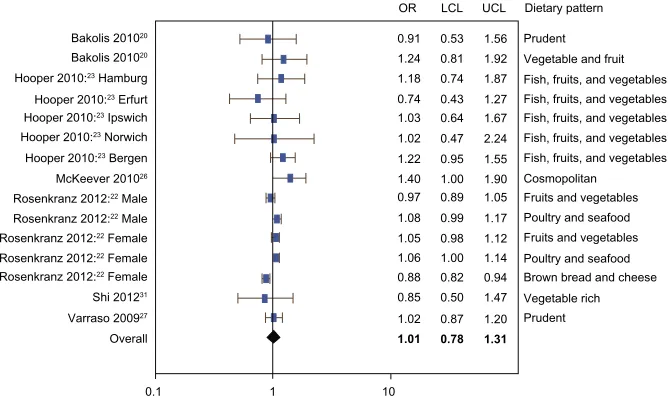
cross-sectional studies,22,23 and one case-control study.20 Figures 2–4 show that there was no evidence of associa-tion between the prevalence of current or ever asthma and healthy (OR 1.01, 95% CI 0.78–1.31), unhealthy (OR 1.04, 95% CI 0.93–1.16), or neutral (OR 1.01, 95% CI 0.73–1.41) dietary patterns. The mixed model results show that the random effect estimates were zero, suggesting very small or negligible variance between versus within studies.
Butler et al
30
Singapore
n
=
52,325; 45–74 years;
cohort
Prevalence of new- onset asthma between baseline and follow-up PCA: 2 dietary patterns (“meat-dim sum”; “vege
table
-
fruit-soy”); 165-item FFQ
Dietary patterns were not associated with new-onset asthma. Age, total energy intake, dialect group
, sex,
smoking status,
age
at
s
ta
rt
in
g
to
s
m
ok
e,
c
ig
ar
et
te
s
per
day, adult environmental tobacco smok
e exposur
e,
education,
(nonstarch polysaccharide intake)
8 (positive)
Notes:
aThe
first
six
studies
were
included
in
meta-analysis
because
all
examined
ever
or
current
asthma
as
the
primary
outcome;
bquality
was
scored
and
rated
independently
using
the
American
Dietetic
Association
Quality
Criteria
Checklist. Pack-years was defined as the number of packs smoked per day multiplied by the number of years smoked. The authors adjusted for both pack-years and the square of pack-years (pack-years
2).
Abbreviations:
ACQ,
asthma
control
questionnaire;
BMI,
body
mass
index;
CI,
confidence
interval;
FFQ,
food
frequency
questionnaire;
OR,
odds
ratio;
PCA,
principal
compon
ent
analysis;
FVC,
forced
vital
capacity;
FEV
1
, forced
expiratory volume in one second; MSG, monosodium glutamate; RCT, randomized controlled trial.
Journal of Asthma and Allergy downloaded from https://www.dovepress.com/ by 118.70.13.36 on 24-Aug-2020
Dovepress
Lv et al
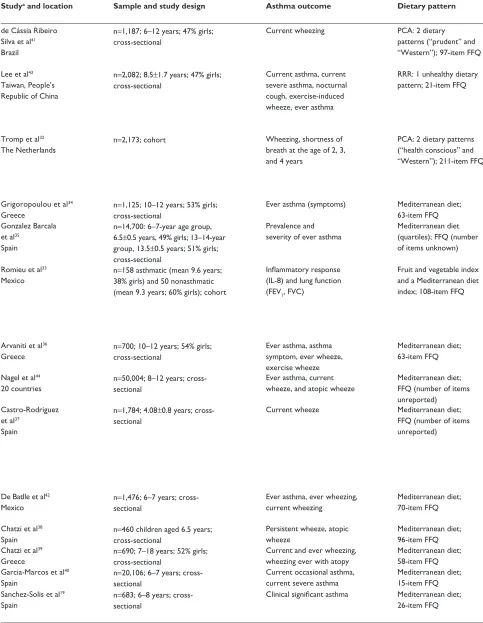
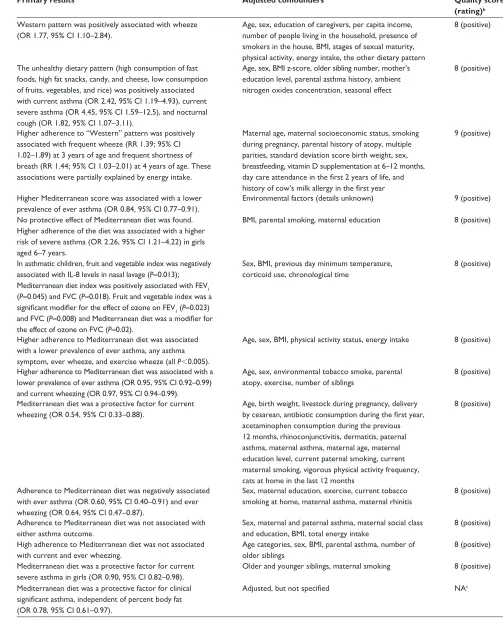
Table 3 Summary of 14 studies reporting the association between dietary patterns and asthma outcomes in children
Studya and location Sample and study design Asthma outcome Dietary pattern Primary results Adjusted confounders Quality score
(rating)b de Cássia Ribeiro
Silva et al41
Brazil
n=1,187; 6–12 years; 47% girls; cross-sectional
Current wheezing PCA: 2 dietary
patterns (“prudent” and “western”); 97-item FFQ
western pattern was positively associated with wheeze (OR 1.77, 95% Ci 1.10–2.84).
Age, sex, education of caregivers, per capita income, number of people living in the household, presence of smokers in the house, BMi, stages of sexual maturity, physical activity, energy intake, the other dietary pattern
8 (positive)
Lee et al43
Taiwan, People’s Republic of China
n=2,082; 8.5±1.7 years; 47% girls; cross-sectional
Current asthma, current severe asthma, nocturnal cough, exercise-induced wheeze, ever asthma
RRR: 1 unhealthy dietary pattern; 21-item FFQ
The unhealthy dietary pattern (high consumption of fast foods, high fat snacks, candy, and cheese, low consumption of fruits, vegetables, and rice) was positively associated with current asthma (OR 2.42, 95% Ci 1.19–4.93), current severe asthma (OR 4.45, 95% Ci 1.59–12.5), and nocturnal cough (OR 1.82, 95% Ci 1.07–3.11).
Age, sex, BMi z-score, older sibling number, mother’s education level, parental asthma history, ambient nitrogen oxides concentration, seasonal effect
8 (positive)
Tromp et al32
The Netherlands
n=2,173; cohort wheezing, shortness of
breath at the age of 2, 3, and 4 years
PCA: 2 dietary patterns (“health conscious” and “western”); 211-item FFQ
Higher adherence to “western” pattern was positively associated with frequent wheeze (RR 1.39; 95% CI 1.02–1.89) at 3 years of age and frequent shortness of breath (RR 1.44; 95% Ci 1.03–2.01) at 4 years of age. These associations were partially explained by energy intake.
Maternal age, maternal socioeconomic status, smoking during pregnancy, parental history of atopy, multiple parities, standard deviation score birth weight, sex, breastfeeding, vitamin D supplementation at 6–12 months, day care attendance in the first 2 years of life, and history of cow’s milk allergy in the first year
9 (positive)
Grigoropoulou et al34
Greece
n=1,125; 10–12 years; 53% girls; cross-sectional
ever asthma (symptoms) Mediterranean diet; 63-item FFQ
Higher Mediterranean score was associated with a lower prevalence of ever asthma (OR 0.84, 95% Ci 0.77–0.91).
environmental factors (details unknown) 9 (positive) Gonzalez Barcala
et al35
Spain
n=14,700: 6–7-year age group, 6.5±0.5 years, 49% girls; 13–14-year group, 13.5±0.5 years; 51% girls; cross-sectional
Prevalence and severity of ever asthma
Mediterranean diet (quartiles); FFQ (number of items unknown)
No protective effect of Mediterranean diet was found. Higher adherence of the diet was associated with a higher risk of severe asthma (OR 2.26, 95% Ci 1.21–4.22) in girls aged 6–7 years.
BMi, parental smoking, maternal education 8 (positive)
Romieu et al33
Mexico
n=158 asthmatic (mean 9.6 years; 38% girls) and 50 nonasthmatic (mean 9.3 years; 60% girls); cohort
Inflammatory response (iL-8) and lung function (Fev1, FvC)
Fruit and vegetable index and a Mediterranean diet index; 108-item FFQ
in asthmatic children, fruit and vegetable index was negatively associated with iL-8 levels in nasal lavage (P=0.013); Mediterranean diet index was positively associated with Fev1
(P=0.045) and FvC (P=0.018). Fruit and vegetable index was a significant modifier for the effect of ozone on FEV1 (P=0.023)
and FvC (P=0.008) and Mediterranean diet was a modifier for the effect of ozone on FvC (P=0.02).
Sex, BMi, previous day minimum temperature, corticoid use, chronological time
8 (positive)
Arvaniti et al36
Greece
n=700; 10–12 years; 54% girls; cross-sectional
ever asthma, asthma symptom, ever wheeze, exercise wheeze
Mediterranean diet; 63-item FFQ
Higher adherence to Mediterranean diet was associated with a lower prevalence of ever asthma, any asthma symptom, ever wheeze, and exercise wheeze (all P,0.005).
Age, sex, BMi, physical activity status, energy intake 8 (positive)
Nagel et al44
20 countries
n=50,004; 8–12 years; cross- sectional
ever asthma, current wheeze, and atopic wheeze
Mediterranean diet; FFQ (number of items unreported)
Higher adherence to Mediterranean diet was associated with a lower prevalence of ever asthma (OR 0.95, 95% Ci 0.92–0.99) and current wheezing (OR 0.97, 95% Ci 0.94–0.99).
Age, sex, environmental tobacco smoke, parental atopy, exercise, number of siblings
8 (positive)
Castro-Rodriguez et al37
Spain
n=1,784; 4.08±0.8 years; cross- sectional
Current wheeze Mediterranean diet;
FFQ (number of items unreported)
Mediterranean diet was a protective factor for current wheezing (OR 0.54, 95% Ci 0.33–0.88).
Age, birth weight, livestock during pregnancy, delivery by cesarean, antibiotic consumption during the first year, acetaminophen consumption during the previous 12 months, rhinoconjunctivitis, dermatitis, paternal asthma, maternal asthma, maternal age, maternal education level, current paternal smoking, current maternal smoking, vigorous physical activity frequency, cats at home in the last 12 months
8 (positive)
De Batlle et al42
Mexico
n=1,476; 6–7 years; cross- sectional
ever asthma, ever wheezing, current wheezing
Mediterranean diet; 70-item FFQ
Adherence to Mediterranean diet was negatively associated with ever asthma (OR 0.60, 95% Ci 0.40–0.91) and ever wheezing (OR 0.64, 95% Ci 0.47–0.87).
Sex, maternal education, exercise, current tobacco smoking at home, maternal asthma, maternal rhinitis
8 (positive)
Chatzi et al38
Spain
n=460 children aged 6.5 years; cross-sectional
Persistent wheeze, atopic wheeze
Mediterranean diet; 96-item FFQ
Adherence to Mediterranean diet was not associated with either asthma outcome.
Sex, maternal and paternal asthma, maternal social class and education, BMi, total energy intake
8 (positive) Chatzi et al39
Greece
n=690; 7–18 years; 52% girls; cross-sectional
Current and ever wheezing, wheezing ever with atopy
Mediterranean diet; 58-item FFQ
High adherence to Mediterranean diet was not associated with current and ever wheezing.
Age categories, sex, BMi, parental asthma, number of older siblings
8 (positive) Garcia-Marcos et al40
Spain
n=20,106; 6–7 years; cross- sectional
Current occasional asthma, current severe asthma
Mediterranean diet; 15-item FFQ
Mediterranean diet was a protective factor for current severe asthma in girls (OR 0.90, 95% Ci 0.82–0.98).
Older and younger siblings, maternal smoking 8 (positive) Sanchez-Solis et al19
Spain
n=683; 6–8 years; cross- sectional
Clinical significant asthma Mediterranean diet; 26-item FFQ
Mediterranean diet was a protective factor for clinical significant asthma, independent of percent body fat (OR 0.78, 95% Ci 0.61–0.97).
Adjusted, but not specified NAc
Notes: aLast 8 studies were included in a previously published meta-analysis study;14 bquality was scored and rated independently using the American Dietetic Association
Quality Criteria Checklist; cthis conference abstract was not rated due to insufficient information.
Abbreviations: BMI, body mass index; CI, confidence interval; FFQ, food frequency questionnaire; OR, odds ratio; PCA, principal component analysis; FVC, forced vital
capacity; Fev1, forced expiratory volume in one second; iL, interleukin; RR, relative risk; RRR, reduced rank regression.
Journal of Asthma and Allergy downloaded from https://www.dovepress.com/ by 118.70.13.36 on 24-Aug-2020
Dovepress Dietary pattern and asthma
Table 3 Summary of 14 studies reporting the association between dietary patterns and asthma outcomes in children
Studya and location Sample and study design Asthma outcome Dietary pattern Primary results Adjusted confounders Quality score
(rating)b de Cássia Ribeiro
Silva et al41
Brazil
n=1,187; 6–12 years; 47% girls; cross-sectional
Current wheezing PCA: 2 dietary
patterns (“prudent” and “western”); 97-item FFQ
western pattern was positively associated with wheeze (OR 1.77, 95% Ci 1.10–2.84).
Age, sex, education of caregivers, per capita income, number of people living in the household, presence of smokers in the house, BMi, stages of sexual maturity, physical activity, energy intake, the other dietary pattern
8 (positive)
Lee et al43
Taiwan, People’s Republic of China
n=2,082; 8.5±1.7 years; 47% girls; cross-sectional
Current asthma, current severe asthma, nocturnal cough, exercise-induced wheeze, ever asthma
RRR: 1 unhealthy dietary pattern; 21-item FFQ
The unhealthy dietary pattern (high consumption of fast foods, high fat snacks, candy, and cheese, low consumption of fruits, vegetables, and rice) was positively associated with current asthma (OR 2.42, 95% Ci 1.19–4.93), current severe asthma (OR 4.45, 95% Ci 1.59–12.5), and nocturnal cough (OR 1.82, 95% Ci 1.07–3.11).
Age, sex, BMi z-score, older sibling number, mother’s education level, parental asthma history, ambient nitrogen oxides concentration, seasonal effect
8 (positive)
Tromp et al32
The Netherlands
n=2,173; cohort wheezing, shortness of
breath at the age of 2, 3, and 4 years
PCA: 2 dietary patterns (“health conscious” and “western”); 211-item FFQ
Higher adherence to “western” pattern was positively associated with frequent wheeze (RR 1.39; 95% CI 1.02–1.89) at 3 years of age and frequent shortness of breath (RR 1.44; 95% Ci 1.03–2.01) at 4 years of age. These associations were partially explained by energy intake.
Maternal age, maternal socioeconomic status, smoking during pregnancy, parental history of atopy, multiple parities, standard deviation score birth weight, sex, breastfeeding, vitamin D supplementation at 6–12 months, day care attendance in the first 2 years of life, and history of cow’s milk allergy in the first year
9 (positive)
Grigoropoulou et al34
Greece
n=1,125; 10–12 years; 53% girls; cross-sectional
ever asthma (symptoms) Mediterranean diet; 63-item FFQ
Higher Mediterranean score was associated with a lower prevalence of ever asthma (OR 0.84, 95% Ci 0.77–0.91).
environmental factors (details unknown) 9 (positive) Gonzalez Barcala
et al35
Spain
n=14,700: 6–7-year age group, 6.5±0.5 years, 49% girls; 13–14-year group, 13.5±0.5 years; 51% girls; cross-sectional
Prevalence and severity of ever asthma
Mediterranean diet (quartiles); FFQ (number of items unknown)
No protective effect of Mediterranean diet was found. Higher adherence of the diet was associated with a higher risk of severe asthma (OR 2.26, 95% Ci 1.21–4.22) in girls aged 6–7 years.
BMi, parental smoking, maternal education 8 (positive)
Romieu et al33
Mexico
n=158 asthmatic (mean 9.6 years; 38% girls) and 50 nonasthmatic (mean 9.3 years; 60% girls); cohort
Inflammatory response (iL-8) and lung function (Fev1, FvC)
Fruit and vegetable index and a Mediterranean diet index; 108-item FFQ
in asthmatic children, fruit and vegetable index was negatively associated with iL-8 levels in nasal lavage (P=0.013); Mediterranean diet index was positively associated with Fev1
(P=0.045) and FvC (P=0.018). Fruit and vegetable index was a significant modifier for the effect of ozone on FEV1 (P=0.023)
and FvC (P=0.008) and Mediterranean diet was a modifier for the effect of ozone on FvC (P=0.02).
Sex, BMi, previous day minimum temperature, corticoid use, chronological time
8 (positive)
Arvaniti et al36
Greece
n=700; 10–12 years; 54% girls; cross-sectional
ever asthma, asthma symptom, ever wheeze, exercise wheeze
Mediterranean diet; 63-item FFQ
Higher adherence to Mediterranean diet was associated with a lower prevalence of ever asthma, any asthma symptom, ever wheeze, and exercise wheeze (all P,0.005).
Age, sex, BMi, physical activity status, energy intake 8 (positive)
Nagel et al44
20 countries
n=50,004; 8–12 years; cross- sectional
ever asthma, current wheeze, and atopic wheeze
Mediterranean diet; FFQ (number of items unreported)
Higher adherence to Mediterranean diet was associated with a lower prevalence of ever asthma (OR 0.95, 95% Ci 0.92–0.99) and current wheezing (OR 0.97, 95% Ci 0.94–0.99).
Age, sex, environmental tobacco smoke, parental atopy, exercise, number of siblings
8 (positive)
Castro-Rodriguez et al37
Spain
n=1,784; 4.08±0.8 years; cross- sectional
Current wheeze Mediterranean diet;
FFQ (number of items unreported)
Mediterranean diet was a protective factor for current wheezing (OR 0.54, 95% Ci 0.33–0.88).
Age, birth weight, livestock during pregnancy, delivery by cesarean, antibiotic consumption during the first year, acetaminophen consumption during the previous 12 months, rhinoconjunctivitis, dermatitis, paternal asthma, maternal asthma, maternal age, maternal education level, current paternal smoking, current maternal smoking, vigorous physical activity frequency, cats at home in the last 12 months
8 (positive)
De Batlle et al42
Mexico
n=1,476; 6–7 years; cross- sectional
ever asthma, ever wheezing, current wheezing
Mediterranean diet; 70-item FFQ
Adherence to Mediterranean diet was negatively associated with ever asthma (OR 0.60, 95% Ci 0.40–0.91) and ever wheezing (OR 0.64, 95% Ci 0.47–0.87).
Sex, maternal education, exercise, current tobacco smoking at home, maternal asthma, maternal rhinitis
8 (positive)
Chatzi et al38
Spain
n=460 children aged 6.5 years; cross-sectional
Persistent wheeze, atopic wheeze
Mediterranean diet; 96-item FFQ
Adherence to Mediterranean diet was not associated with either asthma outcome.
Sex, maternal and paternal asthma, maternal social class and education, BMi, total energy intake
8 (positive) Chatzi et al39
Greece
n=690; 7–18 years; 52% girls; cross-sectional
Current and ever wheezing, wheezing ever with atopy
Mediterranean diet; 58-item FFQ
High adherence to Mediterranean diet was not associated with current and ever wheezing.
Age categories, sex, BMi, parental asthma, number of older siblings
8 (positive) Garcia-Marcos et al40
Spain
n=20,106; 6–7 years; cross- sectional
Current occasional asthma, current severe asthma
Mediterranean diet; 15-item FFQ
Mediterranean diet was a protective factor for current severe asthma in girls (OR 0.90, 95% Ci 0.82–0.98).
Older and younger siblings, maternal smoking 8 (positive) Sanchez-Solis et al19
Spain
n=683; 6–8 years; cross- sectional
Clinical significant asthma Mediterranean diet; 26-item FFQ
Mediterranean diet was a protective factor for clinical significant asthma, independent of percent body fat (OR 0.78, 95% Ci 0.61–0.97).
Adjusted, but not specified NAc
Notes: aLast 8 studies were included in a previously published meta-analysis study;14 bquality was scored and rated independently using the American Dietetic Association
Quality Criteria Checklist; cthis conference abstract was not rated due to insufficient information.
Abbreviations: BMI, body mass index; CI, confidence interval; FFQ, food frequency questionnaire; OR, odds ratio; PCA, principal component analysis; FVC, forced vital
capacity; Fev1, forced expiratory volume in one second; iL, interleukin; RR, relative risk; RRR, reduced rank regression.
Journal of Asthma and Allergy downloaded from https://www.dovepress.com/ by 118.70.13.36 on 24-Aug-2020
Dovepress
Lv et al
Table
4
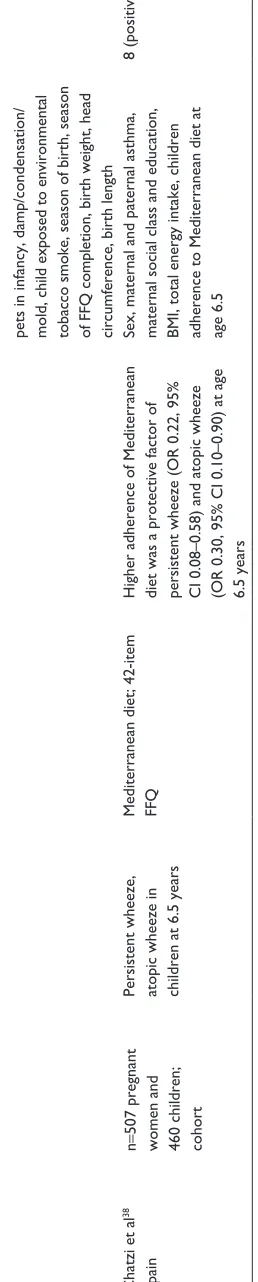
Summary of six studies reporting the association between maternal dietary patterns and wheeze in children
Study and location Sample and study design
Outcome
Dietary pattern
Primary results
Adjusted confounders
Quality score (rating)
a
Chatzi et al
45
Spain, Greece
n
=
2,516 pregnant
woman-infant pairs; cohort Wheeze in the first year of life Mediterranean diet; 100-item FFQ Adherence to Mediterranean diet during pregnancy was not associated with wheeze in the first year of life Maternal age; education; maternal history of asthma; smoking during pregnancy; parity; duration of breastfeeding; child’s age at assessment; child’s sex
8 (positive)
Miyake et al
49
Japan
n
=
763 pregnant
woman-infant pairs; cohort
w
heeze in toddlers
aged 16–24 months
Factor analysis: 3 dietary patterns (“healthy”, “w
estern” and “Japanese”);
150-item FFQ
Only maternal “
w
estern” dietary
pattern was a protective factor of child wheezing (OR 0.59, 95% C
i
0.35–0.98)
Maternal age, gestation at baseline, residential municipality at baseline, family income, maternal and parental education, maternal and parental history of asthma, atopic eczema and allergic rhinitis, changes in maternal diet in the previous one month, season at baseline, maternal smoking during pregnancy, baby’s older siblings, baby’s sex, baby’s birth weight, household smoking in the same room as infant, breastfeeding duration, and age of infant at third survey
8 (positive)
Castro-Rodriguez et al
46
Spain
n
=
1,409 pregnant
woman-infant pairs (mean age, 16.6
±
2.5 months);
cohort
ever wheezing during the first year Mediterranean diet; FFQ (number of item unreported)
Mediterranean diet score (excluding olive oil) was not associated with infants’ ever wheezing during the first year. However, olive oil was protective of ever wheezing (OR 0.57, 95% C
i 0.4–0.9)
Sex, exclusive breastfeeding, day care attendance, eczema, maternal asthma, smoking during pregnancy, siblings, mold on household wall, preterm birth, olive oil
8 (positive)
Lange et al
48
USA
n
=
1,376 pregnant
woman-child pairs; cohort Recurrent wheeze at 3 years Mediterranean diet; Alternate Healthy Eating Index modified for pregnancy; PCA: 2 dietary patterns (“prudent” and “w
estern”); 166-item FFQ
No maternal dietary pattern was associated with recurrent wheeze in children Child sex, maternal race, maternal education level, household income, maternal and paternal history of asthma, presence of children ,12 years of age at home, maternal prepregnancy BM
i, breast-feeding
duration, and passive smoke exposure
8 (positive)
Shaheen et al
47
UK
n
=
14,541 pregnant
women and 14,062 children; cohort
ea
rly
w
he
ez
in
g
phenotypes at 2.5 years; whe
ez
in
g
at
3
.5
y
ea
rs
;
as
th
m
a,
w
he
ez
in
g
at
7 years; lung function
and bronchial
responsiveness at
8–9 years
PCA: 5 dietary patterns (“health conscious”, “traditional”, “processed”, “vegetarian” and “confectionery”); 51-item FFQ Maternal dietary patterns were not associated with asthma and related outcomes after adjusting for confounding variables energy intake, maximum smoked, infections, antibiotics and paracetamol use during pr
egnancy;
maternal
education level, housing tenure, financial difficulties, prepregnancy BM
i, ethnicity, age, parity, history of
asthma, eczema, rhinoconjunctivitis, migraine; child’s sex, gestational age, breast fed in first 6 months, day care at 8 months, multiple pregnancy,
8 (positive)
Journal of Asthma and Allergy downloaded from https://www.dovepress.com/ by 118.70.13.36 on 24-Aug-2020
Dovepress Dietary pattern and asthma
Publication bias and heterogeneity
Figure 5 shows funnel plots of studies examining the asso-ciation between healthy, unhealthy, and neutral dietary patterns separately and the prevalence of current or ever asthma. The plots were roughly symmetrical, suggesting little evidence of publication bias, and almost all the studies lay within the diagonal lines indicating 95% CIs, suggesting negligible between-study heterogeneity, which is consistent with the model-based results described above.
Child dietary patterns and asthma
The main characteristics and results of the 14 studies in chil-dren, published between 2006 and 2013, are shown in Table 3.
Twelve studies were cross-sectional and two32,33 were cohort
studies. Nine of them were conducted in Europe,19,32,34–40 three in America (one in Brazil41 and two in Mexico33,42), and one in Asia.43 One other study44 was an international study conducted in 20 countries. All studies examined both boys and girls with sample sizes ranging from 158 (cohort) to 50,004 (cross-sectional).
Eight of these studies (shown in the footnote to Table 2) were included in a recent meta-analysis14 to investigate whether the Mediterranean diet has a protective effect on ever asthma and current wheeze and whether these relationships were spe-cific to the Mediterranean regions. The meta-analytic results showed adherence to the Mediterranean diet was negatively associated with current wheeze (OR 0.79, 95% CI 0.66–0.94;
P=0.009) and current severe wheeze (OR 0.66, 95%
CI 0.48–0.90; P=0.008) in Mediterranean regions, and with
ever asthma (OR 0.86, 95% CI 0.75–0.98; P=0.027) in
non-Mediterranean regions. When considering all regions together, the authors concluded adherence to the Mediterranean diet tended to have a protective effect on current wheeze and ever asthma but not on current severe wheeze.
The meta-analysis14 excluded six studies for the fol-lowing reasons: three studies derived dietary patterns a posteriori,32,41,43 one measured lung function as the lone outcome,33 and two34,35 reported data published in other stud-ies that were included in the meta-analysis. The limited addi-tional studies on dietary patterns and child asthma or wheeze precluded another meta-analysis. Among these six studies, five found either a beneficial effect of the Mediterranean diet or a detrimental effect of an unhealthy (eg, Western) pattern. Interestingly, one study reported that the Mediterranean diet
was a risk factor for severe asthma in girls aged 6–7 years.35
The authors speculated this could be due to a reverse causal effect (families of children with severe asthma may improve their diet) and residual confounding.
pets in infancy, damp/condensation/ mold, child exposed to environmental tobacco smoke, season of birth, season of FFQ completion, birth weight, head circumference, birth length
Chatzi et al
38
Spain
n
=
507 pregnant
women and 460 children; cohort Persistent wheeze, atopic wheeze in children at 6.5 years Mediterranean diet; 42-item FFQ Higher adherence of Mediterranean diet was a protective factor of persistent wheeze (OR 0.22, 95% Ci 0.08–0.58) and atopic wheeze (OR 0.30, 95% C
i 0.10–0.90) at age
6.5 years
Sex, maternal and paternal asthma, maternal social class and education, BM
i, total energy intake, children
adherence to Mediterranean diet at age 6.5
8 (positive)
Note:
aQuality was scored and rated independently using the American Dietetic Associati
on Quality Criteria Checklist.
Abbreviations:
BMI, body mass index; CI, confidence interval; FFQ, food frequency questionnaire; OR, odds ratio; PCA, principal component analysis.
Journal of Asthma and Allergy downloaded from https://www.dovepress.com/ by 118.70.13.36 on 24-Aug-2020
Dovepress
Lv et al
Overall, the meta-analysis and six additional studies suggest that the Mediterranean diet is potentially protective against child asthma.
Maternal dietary patterns
and child asthma
Table 4 shows the main characteristics and results of the six studies reporting an association between maternal dietary patterns and asthma prevalence in children. All were cohort studies published between 2008 and 2013, with four con-ducted in Europe,38,45–47 one in the USA,48 and one in Asia.49 Sample sizes ranged from 460 to 14,062.
All studies used FFQs to measure dietary intakes, with number of food items or groups ranging from 42 to 166.
Three studies38,45,46 calculated a Mediterranean diet score defined a priori. Two studies47,49 derived dietary patterns
using PCA or factor analysis. One study48 used a
combina-tion of both a posteriori and a priori approaches to measure dietary patterns.
These studies examined the association between mater-nal dietary patterns and wheezing prevalence in children between the ages of one and 7 years. The heterogene-ity of the study populations and outcomes precluded a meta-analysis. However, four of the six studies did not find any association between maternal dietary patterns
and prevalence of wheezing. One study38 reported a
protective effect of maternal Mediterranean diet pattern on persistent wheeze (OR 0.22, 95% CI 0.08–0.58) and
Overall
0.1 1 10
Varraso 200927
Shi 201231
Rosenkranz 2012:22 Female
Rosenkranz 2012:22 Female
Rosenkranz 2012:22 Female
Rosenkranz 2012:22 Male
Rosenkranz 2012:22 Male
McKeever 201026
Hooper 2010:23 Bergen
Hooper 2010:23 Norwich
Hooper 2010:23 Ipswich
Hooper 2010:23 Erfurt
Hooper 2010:23 Hamburg
Bakolis 201020
Bakolis 201020 0.91
OR LCL UCL Dietary pattern
Prudent Vegetable and fruit Fish, fruits, and vegetables Fish, fruits, and vegetables Fish, fruits, and vegetables Fish, fruits, and vegetables Fish, fruits, and vegetables
Fruits and vegetables
Fruits and vegetables Poultry and seafood
Poultry and seafood Brown bread and cheese Vegetable rich Prudent Cosmopolitan 1.24
1.18 0.74 1.03 1.02 1.22 1.40 0.97 1.08 1.05 1.06 0.88 0.85 1.02 1.01
1.56 1.92 1.87 1.27 1.67 2.24 1.55 1.90 1.05 1.17 1.12 1.14 0.94 1.47 1.20 1.31 0.53 0.81 0.74 0.43 0.64 0.47 0.95 1.00 0.89 0.99 0.98 1.00 0.82 0.50 0.87 0.78
Figure 2 Meta-analysis of observational studies examining the association between healthy dietary patterns and prevalence of current or ever asthma.
Abbreviations: OR, odds ratio; LCL, lower confidence limit; UCL, upper confidence limit.
Overall Hooper 2010:23 Bergen
Hooper 2010:23 Ipswich
Hooper 2010:23 Erfurt
Hooper 2010:23 Hamburg
Bakolis 201020
Varraso 200927
OR
1.30 0.95 0.68 1.59 1.41 0.96 1.10 1.10 1.18 1.06 1.05 0.79
0.1 1 10
1.26 1.04 0.98
2.27 1.86 1.29 3.02 3.22 1.36 1.60 1.60 1.28 1.13 1.12 2.00 2.07 1.16 1.26 Western
Western Meats and potatoes Meats and potatoes Meats and potatoes Meats and potatoes Meats and potatoes Netherlands traditional Refined foods Meats and cheese Meats Cereal and alcohol Macho Sweet tooth 0.75
0.48 0.36 0.84 0.62 0.68 0.80 0.80 1.08 0.99 0.98 0.31 0.76 0.93 0.76
LCL UCL Dietary pattern
Hooper 2010:23 Norwich
Shi 201231
Shi 201231
Rosenkranz 2012:22 female
Rosenkranz 2012:22 female
Rosenkranz 2012:22 male
McKeever 201026
McKeever 201026
Figure 3 Meta-analysis of observational studies examining the association between unhealthy dietary patterns and prevalence of current or ever asthma.
Abbreviations: OR, odds ratio; LCL, lower confidence limit; UCL, upper confidence limit.
Journal of Asthma and Allergy downloaded from https://www.dovepress.com/ by 118.70.13.36 on 24-Aug-2020
Dovepress Dietary pattern and asthma
atopic wheeze (OR 0.30, 95% CI 0.10–0.90) in offspring
at age 6.5 years. Another study49 conducted in Japan found
a beneficial effect of maternal “Western” dietary pattern
on wheeze (OR 0.59, 95% CI 0.35–0.98; P=0.02) in
tod-dlers aged 16–24 months. The authors noted that this “Western” dietary pattern in Japan might be comparatively healthier than the typical Western dietary pattern in the USA, because it was characterized by low intake of soft drinks, confectionery, and fruit, in addition to high intake of vegetable oil, salt-containing seasonings, beef, pork, processed meat, eggs, chicken, and white vegetables. Adherence to this “Western” dietary pattern was actually
positively associated with a high intake of α-linolenic
acid, vitamin E, and β-carotene, which were shown in
some studies to have a beneficial effect on asthma and
wheezing.7,9,50,51 The Japanese study suggests that dietary
patterns are region-specific and population-specific, and that caution is necessary when interpreting the results of studies in diverse populations. Overall, these studies show weak evidence of any association between maternal dietary pattern and child wheezing.
Discussion and conclusion
Taken together, studies in adults and pregnant woman–child pairs failed to show that dietary patterns were associated with asthma outcomes. Only studies in children suggested a protective effect of the Mediterranean diet on current wheeze and ever asthma.
Compared with studying individual foods or nutrients, an evaluation of dietary patterns may shed light on the combinatorial effects of foods and/or nutrients on the health outcome of interest. Studying the overall effect of dietary patterns on asthma is an emerging literature; however, the findings so far have been inconsistent. We offer several possible explanations for the inconsistency and suggestions for future research.
First, the heterogeneous results may be partially explained by the notable variation in FFQs used for measuring dietary intakes and statistical approaches for deriving dietary patterns. For example, in adult studies, the FFQs included between 12 and over 200 food items or groups, which could influence the selection of foods loaded on the dietary patterns. Although most of the FFQs were validated, the dietary
Overall Shi 201231
Rosenkranz 2012:22 Male
Bakolis 201020
Bakolis 201020
Varraso 200927
OR
0.93
1.43
0.68
0.96
2.25
10 1
0.1
1.01
1.10 Nuts and wine
Vegetarian
British traditional
Grains and alcohol
Chinese traditional 2.20
1.03
1.04
3.51
1.41 0.79
0.93
0.45
0.88
1.45
0.73
LCL UCL Dietary pattern
Figure 4 Meta-analysis of observational studies examining the association between neutral dietary patterns and prevalence of current or ever asthma.
Abbreviations: OR, odds ratio; LCL, lower confidence limit; UCL, upper confidence limit.
Log odds ratio Log odds ratio Log odds ratio
Healthy Unhealthy Neutral
A B C
Standard error
−0.4 −0.2 0 −0.6 −0.4 −0.2 0 0.2 0.4 0.6 −0.3 −0.2 −0.1 0 0.1 0.2 0.3 0.4
0.2 0.1 0
0.2 0.1
0
0.1 0
Standard error Standard error
0.2 0.4 0.2 0.4
Figure 5 Funnel plots of studies in meta-analysis.
Journal of Asthma and Allergy downloaded from https://www.dovepress.com/ by 118.70.13.36 on 24-Aug-2020
Dovepress
Lv et al
patterns derived from them explained only a small to medium percentage of total variance, ranging from 11% to 58% in the five adult studies that reported this information.
Two approaches, a priori and a posteriori, have been used to generate dietary patterns. Both approaches have strengths and weaknesses. The a priori approach focuses on a predefined dietary pattern based on prior knowledge of a specific diet (eg, Mediterranean) and its relationship to disease. Therefore, this approach is limited by current knowledge and could involve uncertainties in selecting individual components of the diet index and subjective
decisions of defining cutoffs.52 In contrast, the a posteriori
approach provides opportunities to open up new areas of diet-disease research and detect dietary patterns specific to the region and/or population of interest. However, it involves important but arbitrary decisions, including the number of components to extract, the method of rotation, consolidation
of food items into groups, and labeling of the components.53
Researchers should choose the appropriate method accord-ing to the study objectives and dietary characteristics of the study population.
Most studies in children (eleven of 14) and pregnant woman–child pairs (four of six) used an a priori approach and defined the dietary pattern using a Mediterranean diet index, whereas ten of 12 studies in adults utilized an a posteriori approach to derive dietary patterns statistically (eg, with PCA). In addition to the Mediterranean diet, future studies may also examine the association between healthy dietary patterns in other regions (eg, the widely promoted Dietary
Approaches to Stop Hypertension in the USA54) or
alterna-tive diet quality indices (eg, the Healthy Eating Index55) and
asthma outcomes. If using the a posteriori approach, the reliability and validity of the dietary patterns generated from FFQs can be examined using a different source of dietary data (eg, dietary records). To examine the reproducibility of the dietary patterns, sensitivity analyses can be performed to test whether the arbitrary choices made during PCA or factor analysis influence the results and whether similar dietary
pat-terns can be obtained using randomly split samples.52
Statistical approaches used to derive dietary patterns a posteriori have included PCA, factor analysis, cluster analy-sis, and to a lesser extent, reduced rank regression. Some review papers detailed each of these approaches.56,57 Different from the exploratory approaches (eg, PCA, factory analysis, and cluster analysis), reduced rank regression defines linear combinations of food intakes that maximally explain the outcome variable (eg, an asthma outcome). In other words, in contrast with PCA and factor analysis, which derive dietary
patterns to maximally explain the variance in food intake among participants, reduced rank regression identifies dietary patterns to maximally explain the outcome variable. Among the studies reviewed in this paper, most used PCA, two used factor analysis, and only one in children used reduced rank regression. This may be another reason why many studies of dietary patterns using PCA or factor analysis found no associations with asthma outcomes. The appropriate statisti-cal method should be chosen based on study objectives. In doing so, one must keep in mind that PCA, factor analysis, and cluster analysis identify existing dietary patterns while reduced rank regression is likely to yield useful information for hypothesis generation but may not describe actual intake
patterns in the population.58
Second, the heterogeneity of reported results is also possibly attributable to the varied number of confounders controlled for in the studies. For example, the number of confounders controlled for ranged from five to 19 in the observational studies among adults. Confounding could pose challenges for interpretation of the diet–asthma relationship.
Nurmatov et al59 have proposed a comprehensive list of
pri-mary and secondary confounders that should be considered in future epidemiologic studies examining the early-life diet and asthma relationship in children. The authors suggested that the primary confounders should account for maternal and child characteristics, socioeconomic status, environ-mental exposures, and dietary factors, while the secondary confounders could be confirmed using appropriate statistical tests. Confounders in the diet–asthma relationship are differ-ent between children and adults; therefore, further research is needed to investigate confounders in the adult population. Future observational studies should select confounders based on existing knowledge of the causal mechanism in the diet– asthma relationship and suggestive evidence from statistical analysis. The criteria for selection of confounders should also be reported in observational studies, so readers can be well informed to reach a valid and reliable interpretation of findings.60 In addition, very few population-based studies have been conducted to investigate the association between dietary patterns and asthma outcomes. National survey data (eg, the National Health and Nutrition Examination Survey) may be leveraged to examine the diet–asthma association and identify potential covariates.
Lastly, the inconsistent findings underline the importance of prospective studies and RCTs in helping to better under-stand the role of dietary patterns in the etiology and disease course of asthma. People’s dietary patterns often change over time through the lifespan and because of changes in
Journal of Asthma and Allergy downloaded from https://www.dovepress.com/ by 118.70.13.36 on 24-Aug-2020