Team Flow:
The Missing Piece in Performance
Thesis submitted in fulfillment of the
requirements for the degree of
Doctor of Philosophy by Research
College of Sport and Exercise Science
Erez Mosek
Student ID: 3851299
Victoria University
Abstract
Attempts have been made to understand the complex dynamic relationships involved in
team sports and explain the nature of successful performance. In sports, these components are
particularly relevant because athletes often attribute peak performances and outcomes to
psychological states such as team flow. This thesis focused on exploring team flow state as an
independent construct whose dimensions need to be identified by research. The purpose of
this thesis was to conceptualize team flow state and develop an inventory to measure it.
The thesis included four interconnected studies. In Study 1, I used a phenomenological
qualitative research design to capture team flow state experiences of athletes, coaches, and
sport psychologists. Thematic analysis of the data generated 14 team flow dimensions, seven
similar to individual flow and seven new team flow dimensions. In Study 2, I developed the
Team Flow State Inventory (56-item TFSI) based on the content of the team flow
theoretical model created in Study 1. The analysis of the qualitative data for the
dimensions generated 102 raw data statements which were divided between 32 first-order
themes, creating a pool of items for the TFSI. Confirmation of the structure, content
validity and comprehensibility of the 56 item TFSI was provided by five flow experts, who
made suggestions and confirmed the face, content validity, and comprehensibility of the
inventory. A pilot study further supported the clarity and comprehensibility of the inventory.
In Study 3, I performed CFA which determined the internal structure and psychometric
characteristics, as well as the goodness of fit of the TFSI with the hypothesized theoretical
model of team flow. A sample of 358 active athletes in various team sports was recruited to
complete the 56-item TFSI. Because the 56-item version of the TFSI did not produce a
satisfactory fit, item-deleted alphas, and standardized residual covariance were used to
improve the model fit by omitting one item from each dimension. Results showed all fit
and CFI = 0.92. Internal validity was also satisfactory with Cronbach alpha coefficients that
ranged from α =.69 to α =.87. These results confirmed the acceptable construct validity of the
TFSI. In study 4, I examined and established significant discriminant validity between the
TFSI and measures of individual flow (Flow State Scale-2; FSS-2), team cohesion (Group
Environment Questionnaire; GEQ), and collective efficacy (Collective Efficacy
Questionnaire for Sports; CEQS), indicating that team flow is a construct that is independent
of individual flow and distinct from team cohesion and collective efficacy.
The contributions of this thesis lies in offering a new conceptualisation of team flow in
sport as an independent concept, designing the 42-item TFSI, a valid and reliable inventory
for measuring experiences of team flow state, the 42-item TFSI, and suggesting future
Doctor of Philosophy Student Declaration
“I, Erez Mosek, declare that the PhD thesis entitled "Team Flow: The Missing Piece in
Performance" is no more than 100,000 words in length including quotes and exclusive of
tables, figures, appendices, bibliography, references, and footnotes. This thesis contains no
material that has been submitted previously, in whole or in part, for the award of any other
academic degree or diploma. Except where otherwise indicated, this thesis is my own work”.
Signature Date
Acknowledgements
It has been a long road to finally reach this point. Alone I would not have been able to
make it. Therefore, I would like to thank the people who contributed their time, thoughts,
energy, and concern to assist me in completing my journey.
First of all to my principal supervisor, Professor Tony Morris, who devoted his
experience, wisdom and time to ensure that every initiative was properly developed. To my
co-supervisor, associate Professor Anthony Watt, who encouraged me to express myself, and
motivated me to move forward. I would also like to express my gratitude to all the athletes,
coaches, and sport psychologists who were willing to meet with me and share their personal
experiences or dedicate time to fill out the inventories which formed the core of these studies.
This project could not have been completed without the assistance of colleagues like:
Professor Roni Lidor who shared with me his knowledge and assisted in recruiting
participants; Yossi Bonen (Matchas), a friend and a basketball coach who offered warm
encouragement and support in locating participants; Associate Professor Daryl Marchant,
who was willing to expose his students to my work; Grace Schirripa, a senior officer in the
Graduate Research Centre, who provided me with the informative knowledge I needed, and
acted behind the scenes to ensure all administrative requirements were met; Professor Mark
B. Andersen provided professional guidance in the interviewing process.
I have respect and admiration for Victoria University and especially for the College of
Sport and Exercise Science, which enabled me to follow my academic quest to the
completion of this thesis. I am also very grateful to the generosity of the Australian
government that partly funded this thesis.
I was fortunate to have many friends who encouraged me through this long journey, but
I mostly cherish the support of my family who gave me the confidence and love to achieve
Table of Contents
ABSTRACT ... i
DOCTOR OF PHILOSOPHY PROFORMA ... iii
ACKNOWLEDGEMENTS ... IV TABLE OF CONTENTS... v
LIST OF TABLES ... xi
LIST OF FIGURES... Xiii CHAPTER 1: INTRODUCTION ………... 1
CHAPTER 2: LITERATURE REVIEW ………. 5
Individual Flow ………. 6
Origin of Individual Flow ………. 6
Peak Performance and Flow………. 7
Peak Experience and Flow………... 8
Development of the Concept of Flow ……….. 9
Dimensions of Individual Flow………... 11
Challenge-skill Balance ……… 11
Merging of action and awareness ………... 13
Clear goals ……… 14
Unambiguous feedback ……… 14
Concentration on the task at hand ………... 14
Sense of control ……… 15
Loss of self-consciousness ……… 15
Time transformation ……… 15
Autotelic experience ………... 16
Measurement of Individual Flow ………... 19
Interviews………... 22
Questionnaires……….. 25
The Flow State Scale-2 ………... 25
The Dispositional Flow Scale-2 ………... 26
Short Flow Scale and Core Flow Scale ……….. 27
Research on Individual Flow.………... 28
Influence of Personal, Situational, and Contextual Factors on Individual Flow ….. 29
Factors Facilitating, Preventing, and Disrupting Flow ………. 31
Research on Individual Flow and Performance ……… 35
Is Flow Controllable? ……… 36
Interventions to Enhance Flow………. 37
Imagery………. 38
Mindfulness……….. 46
Hypnosis………... 55
Team Flow……… 66
Characteristics of Teams………... 67
Concept of Team Flow ………..69
Developments in the Conceptualisation of Team Flow……… 71
Research on Team Flow ………72
Concepts Related to Team Flow ………... 82
Group Cohesion……… 82
Collective Efficacy ………84
Team Collapse……….. 84
CHAPTER 3: CONCEPTUALISATION OF TEAM FLOW (STUDY 1)……… 88
Conceptualisation of Team Flow ……… 90
Method ……… 91
Participants ……… 91
Measures ………... 91
Demographic Form ………... 91
Interview Guide ……… 92
Procedure ……….. 93
Data Analysis……… 95
Results and Discussion………. 96
Team Flow Dimensions and Themes……… 97
The Team Flow Model ………. 110
Limitations……… 112
Further Research………... 113
Conclusion……… 114
CHAPTER 4: DEVELOPMENT AND FACE AND CONTENT VALIDATION OF THE TEAM FLOW STATE INVENTORY (STUDY 2)………... 115
Method……….. 115
Content Development of the Team Flow State Inventory………. 115
Face and Content Validity of the Team Flow State Inventory………. 122
Comprehensibility of the Team Flow State Inventory……….. 124
CHAPTER 5: INITIAL PSYCHOMETRIC ANALYSIS OF THE TEAM FLOW
STATE INVENTORY (STUDY 3)……… 128
Factor Analysis Procedures for Inventory Development……….. 129
The Theoretical Model of Team Flow……….. 130
Confirmatory Factor Analysis of Team Flow State Inventory ………. 132
Method ……….. 132
Participants ……… 132
Measures ………... 134
Demographic Form………... 134
Team Flow State Inventory………... 135
Procedure ……….. 136
Data Analysis ……… 138
Results ……….. 141
The 56-item Team Flow State Inventory……….. 141
The 42-item Team Flow State Inventory ……….. 147
Model Fit for the 56-Item and 42-Item Team Flow State Inventory……… 153
Reliability of the 42-item TFSI ……… 154
Discussion……… 155
Limitations……… 157
Further research ……… 159
Conclusion ……… 160
CHAPTER 6: CRITERION VALIDITY OF THE TEAM FLOW STATE INVENTORY (STUDY 4) ………... 162
Method……….. 165
Participants ………... 165
Measures………... 165
Flow State Scale -2………... 165
Group Environment Questionnaire……….. 167
Collective Efficacy Questionnaire for Sports……….. 168
Procedure………. 169
Data Analysis ……….. 170
Results ………. 171
Discriminant Validity between Team Flow and Individual Flow ………… 171
Discriminant Validity between Team Flow and Group Cohesion……….. 173
Discriminant Validity between Team Flow and Collective Efficacy …….. 175
Discussion………. 176
Limitations……… 179
Further Research………... 180
Conclusion……… 180
CHAPTER 7: GENERAL DISCUSSION………. 181
Theory and Research……… 184
The Team Flow Model ………. 186
Further Development of the Team Flow State Inventory……….. 188
Further Research………190
Implications for Practice………... 192
Concluding Remarks………. 195
APENDICES
Appendix A-Demographic Form.……….. 226
Appendix B-Semi Structured Interview Guide for Team Flow……….. 227
Appendix C-Informed Consent Form for Team Flow Interview……….. 228
Appendix D-Raw Data Statements, First Order Themes and General Dimensions of Team Flow………. 229
Appendix E-Letter to Flow Experts on Team Flow ……… 234
Appendix F-Informed Consent Form for Team Flow State Inventory……….. 239
Appendix G-Team Flow State Inventory (56-Item) ……… 240
Appendix H-Team Flow State Inventory (42-Item) ……… 249
Appendix I-Flow State Scale-2 ……….. 256
Appendix J-Group Environment Questionnaire ………. 258
List of Tables
Table 2.1 Imagery Interventions Enhancing Flow and Performance ……… 41
Table 2.2 Mindfulness Interventions Enhancing Flow and Performance ……….. 49
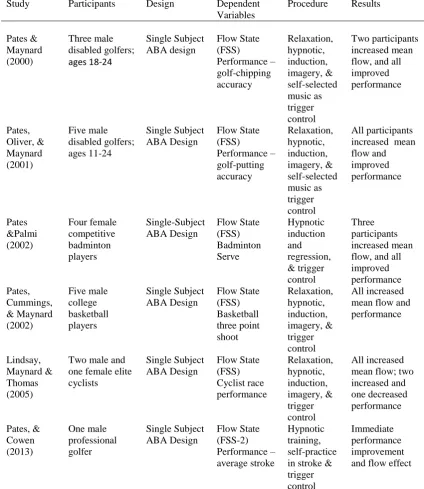
Table 2.3 Hypnosis Interventions Enhancing Flow and Performance ……… 58
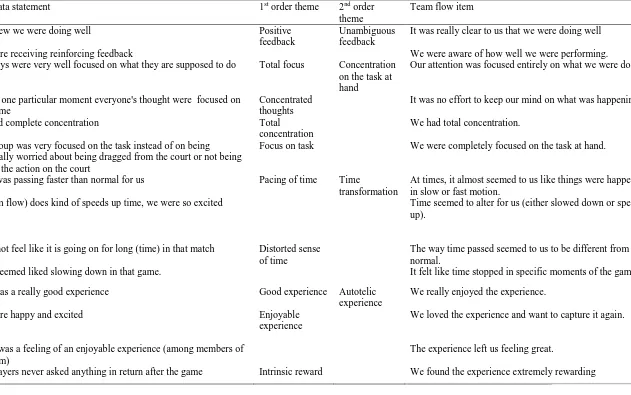
Table 4.1 Raw Data Statements, 1st Order Themes, 2nd Order Themes, and Team Flow Items
Corresponding to Individual Flow Items………..……... 118
Table 4.2 Raw data statements, 1st Order Themes, 2nd Order Themes, and New Team Flow
Items………..………..…………. 122
Table 5.1 Distribution of Participants by Sport Domain ……….. 135
Table 5.2 Dimensions and Examples of Items of the Team Flow State Inventory ………… 137
Table 5.3 Dimensions, Factor Loadings, and Itemsof the 56-Item Team Flow State
Inventory ………... 145
Table 5.4 Inter-Correlations among Dimensions of the 56-item Team Flow State
Inventory ………... 147
Table 5.5 Dimensions, Factor Loadings, and Itemsof the 42-Item Team Flow State
Inventory………...…. 150
Table 5.6 Inter-Correlations among Dimensions of the 42-item Team Flow State
Inventory ………... 153
Table 5.7 CFA Fit Indices: 56-Item Team Flow State Inventory and 42-Item Team Flow
State Inventory Model Fit Values………..……… 155
Table 5.8 Internal Consistency Coefficients for the 42-Item Team Flow State Inventory
Table 6.1 Dimensions of the Flow State Scale-2 and Descriptive Items ……….. 167
Table 6.2 Correlations between the Team Flow State Inventory and Flow State Scale-2 (n =
206) ……… 173
Table 6.3 Correlations between the Team Flow State Inventory and Group Environment
Questionnaire (n = 174) ………... 175
Table 6.4 Correlations between the Team Flow State Inventory and Collective Efficacy
List of Figures
Figure 2.1 The “Flow Channel” where skills and challenge are balanced (Egbert, 2003)… 12
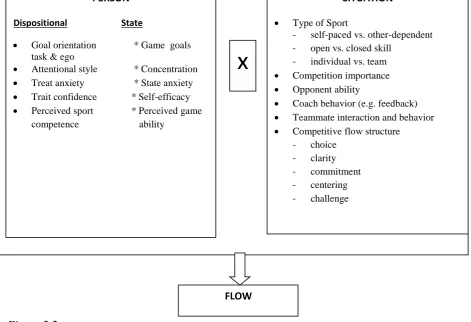
Figure 2.2 Personal and situation factors (disposition and state) underlying the flow
experience in sport.……… 30
Figure 2.3 Proposed model of flow in teams ……… 73 Figure 2.4 Antecedents and indicators of the collective flow experience ……… 80
Figure 5.1 Proposed model of dimensions, items, and errors of team flow state…………. 132
Figure 5.2 CFA model of dimensions, items, and errors, of the 56-item Team Flow State Inventory ……….. 143
CHAPTER 1: INTRODUCTION
Team flow is described as a state of optimal experience involving a team's total
absorption in a task, as well as a state of consciousness that optimizes performance (Cosma,
1999). Although much has been learned about the terms - team (e.g., Carron, Hausenblas, &
Eys, 2005) and flow (e.g., Csikszentmihalyi, 1975, 1990), the combination of the two,
creating the term team flow, has typically been neglected. The current research was
conducted to better understand the construct of team flow and to develop an inventory to
measure team flow. The attainment of these aims should enable the development of specific
interventions for facilitating and maintaining team flow.
Flow is identified as a key construct in the field of positive psychology (e.g.,
Nakamura & Csikszentmihalyi, 2002). Flow has been the focus of a great deal of interest
since its inception by Csikszentmihalyi in 1975 and has become the most studied optimal
experience in sport (Swann, et al., 2017), thereby gaining worldwide attention (Bonaiuto, et
al., 2016). Flow has been described as a state of optimal experience involving total
absorption in the task at hand, and the creation of a state of mind where optimal performance
is capable of occurring (Csikszentmihalyi, 1990; Russell, 2001).
A state of flow is a valued experience and source of motivation for many individuals
undertaking physical activity. This is true whether one is engaged in high-level competitive
sport activities or in a fitness endeavor. Flow may also occur in non-sport contexts such as
learning, work, surgery, and dancing as long as the necessary skills needed to meet the
challenge are present (Egbert, 2003). The ability to attain flow can elevate an experience to
high levels of enjoyment and achievement, thereby transforming the experience from the
mundane to the optimal (Jackson, 1996; Jackson & Csikszentmihalyi, 1999).
The apparent associations between flow state and peak performance makes
facilitating the optimal experiential state of flow should place performers in the most
opportune position to operate at their best (Jackson, 1996). Knowledge of these factors is
important in helping athletes reach optimal performances (Russell, 2001).
Many attempts have been made to understand the complex dynamic relationships
involved in team sports and explain the nature of successful performance (Harmison, 2006).
Positive psychology emphasizes the importance of deepening our understanding of optimal
human functioning by exploring themes such as positive subjective experiences and
excellence in performance (Seligman & Csikszentmihalyi, 2000). In sport, these themes are
particularly relevant since athletes often attribute peak performances and outcomes to
psychological states such as flow (Kennedy, Miele, & Metcalfe, 2014). Sport teams are intact,
dynamic groups with common identities, goals, and objectives. Individuals who perform in
teams are required to collaborate to achieve their common goals (Myers, Payment, &Feltz,
2004). In team sports the outcome is rarely a result of physical differences among competitors
(Mugford, 2006); it is more often the emotional and mental aspects that contribute to the
biggest differences in performance.
Teamwork behaviours, which facilitate the achievement of collective tasks, require
team members to work together to achieve effective team performance (Taggar & Brown,
2001). The collective nature of a team task implies that team members interact and share
resources as individual efforts are aligned and coordinated (Vander Vegt & van de Vliert,
2002). Sport leaders, in team sports, stress the need for strong interaction with others using
positive reinforcement in their communications (Burnes & O’Donnelle, 2011). The diverse
processes or dimensions of teamwork behaviours include communication, coordination, and
cooperation. In some cases, these dimensions are ill-defined and difficult to clearly
impedes the production of valid generalizations about the functioning of teams (Rousseau,
2006).
Interest in team flow is based on the assumption that teams will perform best when they
achieve team flow. It is therefore expected that when a team achieves flow the athletes will be
more in tune with each other and experience positive emotions, eventually leading to the
successful achievement of individual and team goals (Cosma, 1999). Since team sports are
characterized by high competitive aspirations, and are consistently striving to outperform
opposing teams, understanding and enhancing team flow provides a major contribution to
team performance (Burnes & O’Donnelle, 2011).
Over the last 35 years, research in sport psychology has focused mostly on individual
flow states. Much qualitative research has described the subjective experience of flow among
athletes (e.g., Jackson, 1996; Swann, Crust, Keegan, Piggott, & Hemmings, 2015). Within the
sport domain, flow has primarily been studied from the individual point of view (Culbertson,
Fullagar,Simmons, & Zhu, 2015; Jackson & Csíkszentmihályi, 2002; Jackson &Kimiecik,
2008), while research on team flow remains scarce. The only researchers, known to date, who
developed a specific scale for measuring team flow, are Cosma (1999) and Lazarovitz (2003).
Cosma used the Flow State Scale (FSS; Jackson & Marsh, 1996) and Lazarovitz used the
Dispositional Flow Scale-2 (DFS-2; Jackson & Eklund, 2002) as the foundation for their team
flow scales - the Flow State Scale Teams (FSST) and the Teams Dispositional Flow Scale
(TDFS) by modifying the wording of items from individual to team perceptions,but without
taking into account the added value and different characteristics of team flow compared to
individual flow. Thus, to facilitate research examining the importance of team flow to any
team or group, it is necessary to first clarify the conceptualisation of team flow and to develop
and evaluate reliable and valid methods with which to measure the construct. Hence, in order
team flow controllable?” If it is, then the second question is: "How can teams learn to create
and maintain a team flow that will lead to peak team performance?” Most researchers and
practitioners would agree that this ideal performance state is not a simple, one-dimensional
state, which is easily attained by teams (Hardy, Jones, & Gould, 1996). Therefore, team flow
is a worthwhile and valid concept in need of further elaboration. The present thesis is an
attempt to move forward in this direction by interviewing athletes, coaches, and sport
psychologists from a range of different sports, who are familiar with the phenomena of team
flow, and to develop a valid measure with which to evaluate team flow. This measure will
enable researchers, coaching staff, and sport psychologists to gather information about teams’
situations. Based on this information, specific interventions may be developed to achieve
CHAPTER 2: LITERATURE REVIEW
This literature review constitutes an examination of the research literature on flow and
team flow. The review begins with an analysis and appraisal of the existing theory and
research in relation to individual flow, which provides the foundation for developing
conceptualisations of team flow. I follow the origins of individual flow and describe
conceptual distinctions relating to flow, peak experience, and peak performance. I clarify
existing descriptions of flow and the nine dimensions of individual flow proposed by
Csikszentmihalyi (1975). Then, I describe and critique the research on individual flow,
specifying the methods used to explore and measure individual flow. Next, I summarize the
research findings on individual flow by identifying the facilitative, preventive, and disruptive
factors that may influence flow. Based on the claim that individual flow is controllable, I
examine three main intervention modes (imagery, mindfulness, and hypnosis), developed to
enhance experiences of flow in sport.
In contrast to the extensive literature on flow, in a thorough literature review, I found
that knowledge of team flow is limited. I therefore began by reviewing the relevant
descriptive literature on teams, including definitions and characteristics of successful sport
teams. By combining these two bodies of research, I trace the developments in the
conceptualisation of team flow. Reviewing and critiquing all the previously published studies
on team flow in sport and in the workplace enabled me to clarify and describe the current
definitions and characteristics of team flow. My final step includes presenting and discussing
the similarities and differences between team flow and the related concepts of individual flow,
group cohesion, collective efficacy, and team collapse. This review provided me with the
foundation for my current research, and led me to clarify the specific focus, goals, and
Individual Flow
Origin of Individual Flow
Flow theory and research on flow began with the desire to understand the phenomenon
of intrinsic motivation or engaging in activities that are rewarding in and of themselves,
regardless of the end product or any external benefits derived from the activity (Nakamura &
Csikszentmihalyi, 2002). This area of research has mainly focused upon the subjective
experiences of individual athletes (Salanova, Rodríguez-Sánchez, Schaufeli, & Cifre, 2014).
The field of positive psychology shifted the focus of the psychological study of human
behavior to the investigation of positive human states, which was in contrast to an earlier
dominant focus on psychopathology, weakness, and ill-health (Ryan & Deci, 2011).The goal
was to “catalyze a change in the focus of psychology from preoccupation only with repairing
the worst things in life to also building positive qualities” (Seligman & Csikszentmihalyi, 2000,
p. 5). Since then, sport psychologists have reported further advances and exciting
developments in the study of flow experiences in sport. However, according to the current
understanding of the concept of flow, several critical issues remain ambiguous. The existing
peak performance literature has been criticized for lacking a strong theoretical base along with
improperly validated measures, thus limiting its accuracy, usefulness, understandings, and
predictive power regarding athletic experience (Jackson & Kimiecik, 2008). In addition, there
are a number of conceptual issues and unclear overlaps between peak performance and other
concepts, including flow (Krane & Williams, 2006; Swan, Keegan, Piggott, & Crust, 2012).
Other concerns relate to definitions : peak performance is considered a state of accomplishment
and describes performance outcomes. However, one may perform at peak levels during parts of
an event, but not consistently throughout the event. In such circumstances, one may display an
as winning. Therefore, it is questionable whether the definition of peak performance refers
solely to objective outcomes or includes subjective experiences as well (Swann, et al., 2017).
The transition toward positive human states gradually led to further investigations of
internal states, including happiness, well-being, optimism, and flow (Buss, 2000; Seligman &
Csikszentmihalyi, 2000). With the development of applied sport psychology, considerable
attention has been given to ascertain the psychological correlates of optimal performance. The
three significant constructs related to this body of research are peak experience, peak
performance, and flow (Jackson, 2011). Flow, an intrinsically enjoyable experience, is similar
to peak performance and peak experience, since it shares the success of peak performance and
the enjoyment or value of peak experience. However, a flow experience does not necessary
involve peak performance or optimal joy, although it may involve both or either (Privette &
Bundrik, 1983). Thus, in understanding flow, it is important to clarify the conceptual
distinctions between flow, peak experience, and peak performance.
Peak Performance and Flow
Peak performance and flow share common characteristics (e.g., Jackson, 1992; Jackson,
Kimiecik, Ford & Marsh, 1998; Jackson, Thomas, Marsh, & Smethurst, 2001; Jackson &
Roberts, 1992; Mugford, 2006). Kimiecik and Jackson (2002) described peak performance in
sport as a “release of latent powers to perform optimally within a specific competition” (p.
503). Flow was considered a highly functional state, which provides intrinsic motivation to
engage in more challenging tasks (Engeser & Rheinberg, 2008; Nakamura &
Csikszentmihalyi, 2005).
Peak performance was perceived as achievements beyond those of the general expected
human potential (Privette, 1981, 1983). Flow was described as an inner experience in which
athletes typically achieve outstanding accomplishments, above and beyond their routine levels
on performance outcomes, rather than the experience itself. One might attain a flow state
without achieving positive performance outcomes (Stavrou, Jackson, Zervas, & Karteroliotis,
2007). Jackson and Roberts (1992) stipulated that flow might be a precursor or an underlying
psychological process of peak performance. However, in the majority of circumstances when
athletes experience peak performance, they also appear to be in flow. Therefore, flow
experiences constitute a combination of characteristics that typify peak performance
(Csikszentmihalyi, 1990), but in regard to flow states, the focus is on the subjective, internal
experience.
Peak Experience and Flow
Since the 1950s, researchers have attempted to examine the role peak experiences play
in enriching life (Edwards & Edwards, 2012). The conceptualisation of peak experience
includes feelings of bliss, great joy, and illumination (McInman & Grove, 1991). Maslow
(1962) referred to peak experiences as cosmic, pure psyche, absolute, and even ecstasy-related
experiences. He argued that self-actualizing people, “those who have come to a high level of
maturation, health, and self-fulfillment” (p. 43), experience peak experiences more often.
Leach (1962) described peak experience as follows:
A highly valued experience which is characterized by such intensity of perception,
depth of feeling, or sense of profound significance as to cause it to stand out, in the
subject’s mind, in more or less permanent contrast to the experiences that surround it in
time and space (p. 11).
This exceptional level of experience is pre-eminent; thus, nothing else matters, including
performance.
Peak experience, peak performance and flow were found to have similar characteristics.
Peak experiences tend to be perceptual, receptive, and passive. This sense of fusion with the
1983). Peak experience and peak performance both focus on a high level of functioning and
the achievement of desired outcomes, which closely link them to the goals of elite athletes.
This characteristic differentiates them from flow experiences, which can be part of athletes’
experiences at most levels, provided the athletes have sufficient skill to meet the necessary
challenge (Csikszentmihalyi, 1975).
Peak experiences have a mystic or transpersonal quality that is less clearly defined in
peak performance or flow. Another factor that distinguishes peak performance from flow is
that while peak performance can be analyzed and achieved only after the results are known,
flow can be felt during a break in the competition or at the end of the game. Flow can also be
experienced during the competition itself or even during practice sessions. Consequently, flow
experiences are often reported retrospectively, after the end of the game or once the task has
been achieved. Swann, Keegan, Piggott, & Crust (2012) claimed that the intersection of peak
experience and peak performance is the crux of the flow experience - a combination which is
extremely relevant in sport activities.
Development of the Concept of Flow
Csikszentmihalyi (1975) was the first researcher to introduce the concept of flow. He
described flow as “…an ongoing process which provides rewarding experiences in the
present” (p. 9), and as an experience of pure enjoyment and absorption in a task, detached
from past or future influences. Globally, millions of people participate in sport for the sheer
enjoyment and satisfaction of playing the game. The key factors that motivate people to train
and compete in sport activities are the feeling that they are mastering skills as well as doing
something they enjoy (Csikszentmihalyi, 2014). Such efforts on the part of athletes can lead
to an experience of total absorption and the feeling that they are part of the activity. This
produces an autotelic experience, that is, a self-motivating level of enjoyment.
Since sport activities are one of the most facilitative contexts for flow (Jackson, 2011),
athletes were chosen to describe situations they believed represented their best performances.
Researchers found they used phrases relevant to flow such as: “everything just seemed to
click for me”; “time stood still; "I could see everything” (e.g., Jackson & Csikszentmihalyi,
1999). Such statements led to the development of the concept of flow in the sport domain
(e.g., Csikszentmihalyi, 1975, 1982, 1990; Jackson, 1992). Experiencing flow is described as
being "in the groove" (Jackson & Marsh, 1996), "blinking out", or "having the touch"
(Abbott, 2000), and the moment “when everything gelled” (Snyder & Tardy, 2001). The
frequency and intensity of experiencing flow can vary, depending on the individual athlete’s
characteristics and performance levels. According to Csikszentmihalyi (1997), individuals
who frequently experience flow tend to have an autotelic personality:
Autotelic is a word composed of two Greek roots: auto (self), and telos (goal). An
autotelic activity is one we do for its own sake because to experience it is the main goal.
Applied to personality, autotelic denotes an individual who generally does things for
their own sake, rather than in order to achieve some later external goal (p. 117).
Autotelic personalities tend to initiate, sustain, and enjoy optimal experiences, and therefore
experience flow states often (Csikszentmihalyi, Rathunde, & Whalen, 1993; Nakamura &
Csikszentmihalyi, 2002). Previous studies that focused on elite sport athletes considered flow
to be part of their sport experience; they experienced flow, at least some of the time, during
competitions and/or training (Jackson et al,, 1998). Although flow can be experienced on a
continuum - ranging from a rare to a daily occurrence (Csikszentmihalyi, 2002) - it is not
clear how often flow is experienced by athletes at different levels and in various sport
domains (Jackson, 1992).
According to Jackson and Csikszentmihalyi (1999), flow is the simultaneous occurrence
totally focused, involved, and absorbed. All other thoughts and emotions are excluded. There
is an intrinsic experience of harmonious enjoyment in which mind and body work effortlessly
together. Flow typically occurs when individuals perceive a balance between challenges and
skills needed to accomplish or meet the demands of the situation (Csikszentmihalyi, 1990).
Therefore, flow is a state that can be facilitated through participation and striving toward
mastery of an activity (Csikszentmihalyi, 1990). It is rare for flow to be experienced during
passive leisure activities. A central element of the flow construct is the need for a perceived
challenging situation, one where the challenges of the activity are in balance with the
participant’s skills (Jackson, 2011). Factors such as repetition, motivation, exploration,
satisfaction, spending more time on the task, and taking risks may generate a state of flow and
improve performance (Whalen, 1997).
Csikszentmihalyi (1975, 2000) interviewed individuals who mentioned “enjoyment” as
the key motivating factor for participating in an activity. He interviewed chess players, rock
climbers, dancers, and others. Csikszentmihalyi focused on two different domains: play and
work. In play, intrinsic rewards are salient, while in regard to work, specifically surgery,
prestige and money are the main motivating forces driving participation. Based on the
qualitative data in Csikszentmihalyi’s research, characteristics of optimal experience and its
proximal conditions were established. Across both domains, the reported phenomenology was
remarkably similar. By interviewing elite athletes on their flow experiences, support for the
nine flow dimensions proposed by Csikszentmihalyi was established (Jackson, 1996). The
following section describes the nine flow dimensions proposed by Csikszentmihalyi.
Dimensions of Individual Flow
Challenge-skill balance. Challenge-skill balance describes the perceived balance between
the challenge presented by a situation and one's abilities to meet the challenge
drives individuals to perform the task again, at a more challenging level, by using the acquired
skills to accomplish more challenging tasks. When there is a challenge-skill discrepancy, and
the challenges are too high for the perceived skills, worry and anxiety will appear. If, on the
other hand, the challenge is too low, boredom will result. Hektner and Csikszentmihalyi
(1996) noted that "in order to maintain the enjoyment of flow, people must continually engage
in new challenges to match their increasing skills, and they must perfect their skills to meet
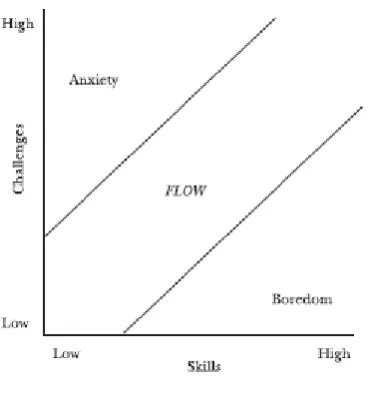
the challenges" (p. 4). The balance between challenge and skills, referred to as the "flow
channel", was suggested by Egbert (2003), and subsequently emerged as one of the most
crucial elements of flow theory, as illustrated in Figure 2.1.
Figure 2.1
The “Flow Channel” Where Skills and Challenge are Balanced (Egbert, 2003).
The skill-challenge balance depicted in Figure 2.1 shows the relationship between the
level of challenges and skills, as contributors of flow. When challenges are high and skills are
low, anxiety will appear because individuals do not have the necessary skills to meet the
challenges. When skills are high and challenges are low, boredom will ensue because the task
is not challenging enough to make the situation interesting. An activity that leads to a balance
between the perceived skills and challenges will support flow. Eventually, when increased
necessary for individuals to take on greater challenges, anxiety may appear (depicted as a
vertical line in Figure 2.1) When challenges and skills are perceived as balanced, people
appreciate the challenge and stretch their capabilities to learn new skills. Thus, individuals
who experience a challenge-skill balance are most likely to experience flow. An example of a
situation in which skills and challenges are in balance occurs when two professional sport
performers, with an equal level of skill, compete against each other. On the other hand, when
the skills of one player are much greater than those of the other, for example, when a
professional player competes with a novice player, the professional player is likely to perceive
a low-level challenge and thus will be relaxed or bored. On the other hand, the novice player,
who is aware of his/her limited skills, will perceive the challenge as unreachable and will
probably feel anxious as a result. The same relationship can be found in team sports. For
example, when a team is leading by a big margin and there are only a few minutes left until
the end of the game, the losing team is likely to perceive their skills as being insufficient to
win. In addition, the losing team will also feel that their skills cannot meet the challenge
successfully because they have no hope of winning. Therefore, the players may develop an
apathetic attitude, resulting in poor performance (Nakamura & Csikszentmihalyi, 2002).
Despite the tendency to view the challenge-skill balance dimension as the most crucial
dimension for flow, some researchers have been critical of this tendency (Fong, Zaleski,
Leach, 2015). Jackson and Marsh (1996) suggested that a sense of control can be equally
important, or even more crucial, to the experience of flow.
Merging of action and awareness. This dimension occurs when deep involvement
leads to automaticity and spontaneity -excluding everything else from the individual’s
awareness (Csikszentmihalyi, 1990; Jackson, 1996). Contrary to our usual behavior,
individuals in flow do not begin with a conscious decision-making process that leads to action
actions, but they are not necessarily aware regarding their decision-making processes.
Csikszentmihalyi (1988) argued that "moment awareness is split so as to perceive the activity
from 'outside’, the flow is interrupted" (p. 151). He also suggested that people can usually
maintain the merging of action and awareness for short periods. Flow is broken when
individuals question themselves about how they are doing and what should be done
differently. Such questions do not reach individuals’ awareness during flow experiences.
Clear goals. This dimension refers to setting goals in advance for the short and long
term. Setting goals enables one in a flow state to experience a strong sense of what one is
going to do. Goals must be stated in a clear way, so that performers know what they are
expected to do. Goals should be settled and agreed upon in advance. Individuals in flow have
a strong sense of what they are aiming to do, in both the short and the long-term
(Csikszentmihalyi, 1990; Jackson, 1996).
Unambiguous feedback. Feedback has been described as information conveyed to
athletes about the extent their performance and behaviour corresponding to expectations (Hein
& Koka, 2007). Unambiguous feedback refers to the involvement of clear and immediate
feedback that helps determine the level of success in reaching goals. The source of feedback
can be external, internal or both. For example, sometimes sports players receive immediate
feedback about their performance (e.g., in basketball when players succeed in getting the ball
into the basket and score points); However, in other situations receiving feedback is delayed
and ambiguous, received only at the end of the performance (e.g., when a gymnast performs a
floor routine).
Concentration on the task at hand. This is a state in which distracting thoughts are
minimized, the mind is focused, and people are totally absorbed and involved in the task
(Csikszentmihalyi, 1990; Jackson, 1996). Maslow (1962) described total concentration as a
of being totally immersed in the present task is a key aspect of the experience of absorption,
and is central to the definition and phenomenology of flow.
Sense of control. This dimension refers to a state of feeling calm and confident, and
being involved in exercising control without actively trying to be in control. While in flow,
people enjoy the sensation of the possibility of control, although people in flow are not
necessarily in control per se (Csikszentmihalyi, 1990; Jackson, 1996). In fact, striving to be in
control is likely to disrupt the experience of flow. In dangerous and extreme situations, people
can facilitate and maintain flow only if they are not consciously thinking and worrying about
the situation or the risk of getting injured.
Loss of self-consciousness. During this dimension, concern for the self disappears and
feelings of oneness and unity with the activity arise (Csikszentmihalyi, 1990; Jackson, 1996).
Loss of self-consciousness may be accompanied by a lack of self-security and concern about
what others might be thinking. When worries disappear, self-perceptions may be felt more
strongly and in a more positive manner. In such a state, liberating, empowering, and
refreshing experiences are possible (Jackson & Csikszentmihalyi, 1999).
Time transformation. During the flow state, an altered or distorted sense of time can
occur (Csikszentmihalyi, 1990; Jackson, 1996). At times, individuals may lose their sense of
time and feel they have unlimited time for action or they may perceive that time is passing
differently from what they normally experience (slower or faster). Time disorientation is a
consequence of an altered state of consciousness, which involves a loss of time awareness.
This may result from being fully engaged in the activity at hand, so that individuals
completely lose track of time. Losing track of time may also occur when individuals are so
familiar with a repeated behavior or pattern that they can perform the task with little or no
effort. In the field of sport, this shift of consciousness is often described as an optimal state
Autotelic experience. This dimension relates to the sense that the activity itself is
motivating, intrinsically-rewarding, and involves a deep sense of enjoyment
(Csikszentmihalyi, 1990; Jackson, 1996). Because of these high enjoyment levels, people are
motivated to participate in the activity for its own sake - without taking outcomes into
account. Csikszentmihalyi (1990) hypothesized that individuals with an autotelic personality
may have an increased likelihood to experience flow. An autotelic personality refers to one’s
tendency to engage in an activity for its own sake (Csikszentmihalyi, 1975, 1990), and can be
described as the propensity to experience the state of flow (e.g., Asakawa, 2004, 2010).
The nine dimensions of flow are interdependent and interconnected. Flow is
experienced as a unified experience, "flowing" from moment to moment. These nine flow
dimensions have been supported and discussed in prior research (e.g., Jackson, 1995, 1996;
Jackson & Marsh, 1996). A critique was raised regarding the necessity of experiencing all
nine dimensions, with particular emphasis on certain dimensions. Jackson and Eklund (2002)
viewed the nine dimensions of flow as representing the optimal psychological state of flow.
However, it may not be necessary for all nine dimensions of flow to occur prior to an
individual entering a state of flow. In a purposive sample of eight school leaders, MacNeill
and Cavanagh (2013) interviewed each school leader about a memorable flow experience.
Data analysis showed that only four of the flow dimensions were mentioned in their in-school
experiences, namely challenge-skill balance, clear goals, autotelic experience, and
unambiguous feedback. Although this limited identification of flow dimensions could have
been related to the small number of participants, it does raise questions regarding the number
and type of dimensions that are essential for identifying flow experiences. In the sport
domain, Jackson (1996) investigated how many dimensions occur simultaneously. She
reported that all athletes mentioned themes that applied to at least three flow dimensions; 93%
Inomata (2005) found that 5.8 of the nine flow dimensions matched their athletes'
experiences. These studies did not clarify whether consistency existed among the dimensions,
such as typical combinations of dimensions that essentially define the quality of the flow
experience (Swann et al., 2012).
Even in reference to the perceived balance between challenge and skills - the dimension
considered most significant to flow - the necessity of this dimension for experiencing flow has
yet to be determined. The challenge-skill balance dimension showed a high correlation with
the quality of the flow experience in a sample of recreational athletes (Stein, Kimiecik,
Daniels, & Jackson, 1995). However, research evidence shows that the relationship between
perceptions of challenge and skills and the experience of flow may be mediated by the
personal characteristics of the participants, situational factors, and/or contextual factors
related to the type and setting of the activity. For instance, in a sample of elite athletes,
Jackson et al., (1998) found only a low correlation between individuals’ ratings of the
challenge-skill balance dimension and the other dimensions of flow. The result suggests that
in competitive sport environments, the perceived challenge-skill balance may not be as
important as the perception of one's skills. Moneta and Csikszentmihalyi (1996) found a
different relationship pattern between perceived challenge and flow in a study conducted
among 208 talented adolescents. The adolescents were male and female high school students
in Chicago, whose ages ranged from 14 to 17. From among all the students who volunteered
to participate in the study, their teachers nominated those who showed the greatest talent in
mathematics, science, music, athletics, and the arts. The results showed positive relationships
among ratings of the challenge, concentration, and involvement. Negative relationships were
foundamong ratings of the challenge and motivation to take part in the activity and happiness.
These variations, regarding the importance of the challenge-skill balance for different
Researchers have found the relation between the unambiguous feedback dimension and
flow to be related to feedback type. Positive feedback (internal or external) may facilitate
flow, while negative feedback may prevent or disrupt flow (Jackson, 1995; Young, 2000).
Csikszentmihalyi (1990) did not differentiate between types of feedback when describing
unambiguous feedback generated by an activity that provides individuals with information
about the progress they are making towards achieving the desired goal. However, Jackson,
Thomas, Marsh, and Smethurst (2001) pointed out that negative feedback may contribute to
errors and the disruption of flow, as a result of finding a positive correlation between negative
feedback and the number of errors made in a game. This may indicate that a focus on errors,
rather than the positive aspects of performance, can have an unwanted effect on flow.
Evidence for the positive effect of the self-monitoring technique, which focused only on
positive feedback, was provided by Kirschenbaum, Owens, and O’Connor (1998). This study
found that focusing on positive feedback contributed to improved psychological skills and
superior performance in a group of golfers. Further research should be more specific in
considering not only the unambiguity of feedback, but also the positive or negative aspects of
feedback and how these types of feedback influence flow and performance.
When considering the flow dimension of loss of self-consciousness, one should consider
the potential effects of age sport type. A central theme that preoccupies teenagers is
self-consciousness, especially in relation to popularity and concerns about self-presentation. At
times adolescents may feel they are being watched and judged, even when they are alone
(Coleman & Hendrey, 1990). For them, performing in front of a live audience that includes
parents and close friends may raise feelings of self-consciousness and disrupt flow. This
inhibition may be less pronounced in a team experience, where it may be easier to lose one's
self-consciousness, since in a team setting individuals are less concerned about their own
These reservations are in line with emerging evidence showing that the experience of
flow is not homogeneous across sports, situations, or participants. Although it appears that
some dimensions are more relevant or prevalent than others in the achievement of flow within
specific sport contexts (Jackson et al., 1998; Jackson et al., 2001; Jackson, 2011), further
systematic research is needed to clarify the patterns of interactive relationships, the relative
importance of each dimension, and the interaction between the nine theorized flow
dimensions.
Measurement of Individual Flow
The capacity to facilitate flow is contingent on the ability to conceptualize and measure
the concept. One of the major challenges facing researchers was "capturing" the flow
experience itself (Salanova, Rodrigez-Sa'nchez, Schaufeli, & Cifre, 2014), and discriminating
between proximal antecedents and the flow experience. In this section, I described the three
main techniques used to measure flow: experience sampling, interviews, and questionnaires.
In addition, I identified and explained the main measures of individual flow that have been
developed and used in research and practice.
Experience Sampling Method
Through the Experience sampling method (ESM)researchers attempt to understand
behavior as it occurs in an ordinary environment (Neisser, 1976). By using ESM it is possible
to capture flow experiences related to any activity in a natural environment (Massimini,
Csikszentmihalyi, & Carli, 1987) and collect data representative of the with-in-person
fluctuations of these experiences (Bolger, Davis, & Rafaeli, 2003). ESM has been used in a
number of research projects in the fields of medicine, social sciences, and communication
(Kuby, Larson, &Csikszentmihalyi, 2006; Myin-Germeys, et al., 2009; Andrews,
ESM is a validated, structured diary technique, used to assess subjects in their daily
living environment. Participants are signaled at random times throughout the day, usually for
at least one week. During each signal they are asked to respond to open and closed ended
questions regarding their experience (Csikszentmihalyi, & Larson, 1987; Delespaul, 1995).
This method can be used for intrapersonal as well as interpersonal comparisons. ESM
provides an opportunity to examine links between external context and internal contents of the
mind. Over the past 30 years, the technology upon which this research method is based has
changed extensively, from pagers to programmable watches, to two-way “personal assistants"
(e.g.,Kimhy, et al., 2006).
The major contribution of ESM is its access to variations in daily experiences which are
often outside the domain of observation. When reasonably accurate, the data collected
through such a systematic method is available for analysis, replication, and falsification
(Kuby, Larson, & Csikszentmihalyi, 2006). Different questions and divergent interests can be
examined with the same data, due to the random sampling of experiences (Hektner, Schmidt,
& Csikszentmihalyi, 2007). Accuracy, ecological validity, and the unique opportunity to
acquire diurnal patterns of the experience are provided through ESM (Alma, Schaufelib,
Salanovaa, Cifrea, & Sonnenscheinb, 2011).
Following the introduction of the ESM, it became possible to measure flow empirically,
in respect to everyday life experiences (Csikszentmihalyi et al., 1977; Csikszentmihalyi &
Larson 1987). Csikszentmihalyi used ESM in his early work on flow by giving respondents
pagers to wear for one week. The participants were paged by electronic signals eight times a
day. Participants used the experience sampling form (ESF) to provide their answers. The ESF
consists of 29 scaled items and 13 categorical items. The scaled items measure the intensity of
subjective feelings and include the following variables: concentration, difficulty in
person’s expectations, living up to the expectations of others, physical discomfort,
activity-related challenges, activity-activity-related skills in the activity, importance of the activity to the
person, importance of the activity to others, importance of the activity to the person’s overall
goals, success in the activity, the wish to be doing something different, and satisfaction. These
variables are measured by ten-point scales ranging from zero (not at all or low) to nine (very
or high). The remaining thirteen scaled variables are Likert scales, ranging from one to seven,
with the following positive poles: alert, happy, cheerful, strong, active, sociable, proud,
involved, excited, open, clear, relaxed, and cooperative. The categorical items serve to
reconstruct the activity, context, and aspects related to motivation and interest. All of the
categorical items are open-ended. After collecting the data, they items should be coded,
except for the categorical items, reasons for the activity, and companionship.
Quinn used Thayer's (1986) Activation-Deactivation Adjective Check List (AD ACL)
to measure arousal level, and the FSS, after modifying some items designed to fit a cognitive
task, rather than a physical task - to measure flow states. The ESM research procedure
included monitoring each participant over the course of one week, paging participants at four
randomly-selected times each day, and asking them to note, in writing, their activity and their
experience during that activity. Results showed that goal clarity, feedback clarity, and balance
of challenge and skill were the antecedents of flow, while merging of action and awareness,
sense of control, concentration on the task at hand, autotelic experience, loss of
self-consciousness, and transformation of time were considered indicators of flow. The
contributions of this research were the re-conceptualisation of the inter-relationship among the
dimensions of flow. For example, support was provided for the hypothesis that the effect of
goal clarity on flow is mediated by feedback clarity. When goals frame the cues a person
perceives and responds to, feedback clarity determines the attention devoted to perceiving and
findings show that flow as an optimal performance phenomenon, transcends different fields of
human activity, and that sharing research from different disciplines might be beneficial.
The main disadvantage of ESM is the high demands it places on participants, which
contributes to self-selection bias and selective non-response (Csikszentmihalyi, 2014). In
addition, the repeated measuring of psychological variables may, in and of itself, cause
changes in people’s recollection of their experience. Another consideration is the high cost of
implementation involved in this procedure. ESM has not been frequently used in sport
research on flow, due to reservations voiced by coaching staff and athletes regarding the
interferences it causes during a game, or even in practice sessions (Chavez, 2008). In
attempting to "catch the moment", these interferences actually disrupt the momentum. This is
especially true in regard to flow research, since the disruption may affect the players’ flow
process, and performance, perhaps even costing them the competition. These limitations led to
the exploration of other measurement techniques to examine flow, especially in the sport
domain.
Interviews
People are familiar with the interview techniques commonly used in research. In
contemporary Western society interviews have become ubiquitous. Interviews are a common
method for gaining information on everyday life experiences (Fadyl & Nicholls, 2013). From
an empirical positivistic approach, interviews are used to collect information as an evidence
base, whereas within the emotionalist approach interviews offer a pathway to capturing
participants' authentic subjective experiences (Potter & Hepburn, 2005). In line with the latter
approach, interviews are a beneficial tool for conceptualizing both new and controversial
concepts. The interview structure may be outlined as follows: (a) unstructured interviews,
which resembles naturalistic conversations with informants; (b) semi-structured interviews,
areas of exploration; and (c) in-depth interviews, which are highly focused on a particular
subject, whereby the interview questions are the bases for conversation, used by the
interviewer to pursue ideas in an in-depth manner (Britten, 1995).
Csikszentmihalyi’s (1975) early research, which brought to light the concept of flow,
was based on interviewing people regarding their experiences of flow. Interviews were held
with respondents from a variety of life domains, such as climbers, dancers, chess players,
basketball players, and artists. Jackson (1995), one of the prominent researchers in the area of
flow in sport, used interviewing as a major research tool. In her research on flow in sport,
Jackson (1992, 1995, 1996) began by examining athletes' descriptions of flow experiences, in
order to explore their understanding and the significance attached to their experiences of flow
(Jackson, 2011).Elite athletes were chosen as informants because they were expected to be
familiar and experienced with states of flow (Jackson, 1996). Jackson (1996) began her
research by engaging athletes in in-depth, unstructured face-to-face interviews, during which
she shared her understanding of experiences: "My mind isn’t wandering, I am not thinking of
something else."; "I am totally involved in what I am doing."; "My body feels great."; "I don’t
seem to hear anything."; "The world seems to be cut off from me."; and "I am less aware of
myself and my problems.” Following these quotes, she then asked the athletes to describe an
experience which for them, “stood out as being better than average… where they were totally
absorbed in what they were doing and that was very rewarding” (p.78). Sugiyama and Inomata
(2005) conducted semi-structured interviews with 29 university and semi-professional
Japanese athletes, who competed in national events. At the beginning of the interview,
participants were asked to read a written description of a flow experience followed by a
question from the interviewer regarding their recollection of experiencing a mental state
during competition which they believed corresponded to this description. If the answer was
experience occurred. After completing this part, interviewees were asked to describe their
state during the competition in which they had the flow-like experience, the preparations that
led to the experience, and their explanation regarding the type of trigger that initiated the
flow-like state. These descriptions were increasingly refined and encouraged based on
probing questions led by a semi-structured interview guide. Researchers used logic and
content validity in order to conceptualise the phenomena of flow in sport activities, based on
the qualitative analysis of data collected through interviews with key informants (Jackson,
1995; Jackson & Eklund, 2002; Jackson & Marsh, 1996; Marsh & Jackson, 1999). Qualitative
research on flow has helped to clarify the subjective meaning of the flow experience for
athletes, and has been useful in determining the consistency and variation of athletes'
description of the flow experience within the context of the dimensional model of flow
espoused by Csikszentmihalyi (Jackson, 2011).
The advantage of interviews is the ability to access rich accounts of experiences that are
not already reported in other measures (Knapik, 2006). However, due to their subjective
nature, the critique of the use of interviews for the purpose of generating original data for
research is based on methodological problems related to subjective analysis and data
interpretation of data. The idiosyncratic nature of this research method limits the possibility
for generalization. Although the methods presented in the previous sections were original at
the time they were developed, and they proved to be innovative in generating many insightful
and robust findings, they are far from being psychometrically sound. Therefore, researchers
set out to develop and validate inventories that can measure flow to the standard requirements
by traditional test theory.
Questionnaires
Questionnaires have been the main research tool used to examine flow within the sport
domain. However, a prerequisite for the construction of questionnaires is the
conceptualisation and operationalisation of relevant theories, models, and concepts. The
foundation for the structure of the measures that have been developed to measure flow in
sport was Csikszentmihalyi’s (1975) nine flow dimensions, which formed the nine subscales.
The FSS was the initial sport questionnaire for flow developed by Jackson and Marsh (1996)
as a self-report questionnaire designed to measure the state of flow when participating in a
specific activity. This questionnaire was designed to be completed immediately or soon after
the participant completes an activity. The FSS consists of 36 items with four items measuring
each of the nine dimensions of flow. Internal consistency of the nine subscales was sound and
confirmatory factor analysis supported the nine-subscale model.
The Dispositional Flow Scale (Jackson, Kimiecik, Ford, & Marsh, 1998) was also a
self-report questionnaire designed to measure the frequency with which people experience
flow in a target activity, described as their general tendency or disposition to experience flow.
This questionnaire should be administered immediately after involvement in the activity
(Jackson, 2011). Once again, the DFS comprises 36 items, with four items measuring each of
the nine dimensions. As part of the continued development of the measure, slight
modifications, including the replacement and rewording of items in order to improve factor
structure, were made to these scales, creating the FSS-2 and the DFS-2 (Jackson &Eklund,
2002).
The Flow State Scale-2.This scale was based on the original FSS (Jackson & Marsh,
1996). The FSS-2 consists of nine subscales, with four items for each subscale, based on
Csikszentmihalyi's (1990) nine theorized flow dimensions. An example item for each
allow me to meet the challenge"; Merging of action and awareness: “I made the correct movements without thinking about trying to do so”; Clear goals: "I knew clearly what I wanted to do"; Unambiguous feedback: "It was clear to me how my performance was going";
Concentration on the task at hand: "My attention was focused entirely on what I was doing";
Sense of control: "I had a sense of control over what I was doing"; Loss of
self-consciousness: "I was not concerned with what others may have been thinking of me"; Time
disorientation: "Time seemed to alter (either slowed down or speeded up)"; Autotelic
experience: "I really enjoyed the experience"; Respondents to the FSS-2 indicate the degree to
which they agree with each item on a 5-point Likert scale, ranging from 1 (strongly disagree)
to 5 (strongly agree).
A great deal of effort was invested in establishing appropriate levels of reliability and
validity for the FSS-2 (Jackson & Eklund, 2002).The internal consistency of each dimension
within the flow scale was found to be acceptable with the Cronbach alpha coefficient ranging
from α =.80 to α =.92, with a mean of α=.87 (Jackson & Eklund, 2002;Mugford, 2006). High
internal consistency indicates that all items in the subscales measure the same underlying
construct - individual flow. Construct validity varied from .17 to .72 (median r = .50)
(Jackson & Eklund, 2002). Confirmatory factor analyses of an item identification sample and
a cross-validation sample demonstrated a good fit and supported the construct validity of the
FSS-2 (Jackson, Martin, & Eklund, 2008).
The Dispositional Flow Scale-2. As in the FSS-2the nine subscales are assessed. Each
subscale or dimension comprises four items, making a total of 36 items. The wording of the
items was changed to the past tense to reflect how often each item was experienced during the
activity (Jackson & Eklund, 2002). The directions given to complete the DFS-2 instruct
respondents to think about how often they generally experience the characteristics of flow
responses on a 5-point Likert scale, ranging from 1 (never) to 5 (always). Overall, strong
support was presented for the DFS-2's construct validity (Jackson & Eklund, 2002). Item
loadings on first-order factors ranged from .29 to .86 (mean =.74). Internal consistency
estimates for the DFS-2 were reasonable, varying from.70 to .88 (mean = .82). In conclusion,
the DFS-2 and FSS-2 instruments each yielded an acceptable factor structure, a good fit, and
acceptable reliability (Jackson, Martin, & Eklund, 2008) with a first order model, involving
the nine factors, and a higher-order model, reflecting a global flow factor, demonstrating a
good fit with regard to the data.
These scales have been used and validated in a variety of sport and physical activity
settings (e.g., Martin & Cutler, 2002). Research evidence supports the multi-dimensionality of
the flow construct (e.g., Jackson &Marsh, 1996). The validity of self-report studies is
contingent on the validity and reliability of the responses. When athletes are asked to
retrospectively reflect on their sport experiences, issues may arise in relation to selective
memory and recall, social desirability, performance outcomes, and other factors linked to
respondents' sport involvement (Jackson, 2011).
Short flow scale and core flow scale. These scales were developed in light of the
practical considerations which necessitated a shorter and less time-consuming measure of
flow, designed by Jackson et al., (2008) and Martin and Jackson,(2008). The Short flow
scales, which are abbreviated versions of their predecessors, the FSS-2 and the DFS-2, both
include nine items, with each item representing one of the nine dimensions of flow. Initial
psychometric support for the short flow scales was encouraging (Jackson et al., 2008; Martin
& Jackson, 2008), but still limited.
The 10-item self-report Core Flow Scale (CFS) has a different purpose. The CFS was
designed to capture what it feels like to be in flow during a target activity (state flow) and the