Review
The Thailand Declaration of the International College
of Nutrition; Can Functional Foods and Functional
Crops Decrease the Risk of Chronic Diseases and
Provide Wellness?
Wiriya Phomkong
1, Ekasit Onsaard
1*, Dherapol Bansiddhi
1, Ram B. Singh
2,
Buncha Ooraikul
3, Arunporn Itharat
4, Fabien De Meester
5, Jagdish P. Sharma
2, Rana G. Singh
6,
Usha Singh
6, Harpal S. Buttar
7,Istvan G. Telessy
8, Toru Takahashi
9, Lech Ozimek
10, Jae-Kwan
Hwang
11, Kohei Oda
12and Douglas W. Wilson
131 Indigenous Food Research and Industrial Development Unit, Faculty of Agriculture, Ubonratchathani
University, Ubon Ratchathani, Thailand 34190; [email protected], [email protected], [email protected],
2 Halberg Hospital and Research Institute, Moradabad, India; [email protected]
3 Department of Agricultural, Food & Nutritional Science, Faculty of Agriculture, Life & Environmental
Sciences, University of Alberta, Edmonton, AB, Canada T6G 2P5; [email protected]
4 Center of Excellence on Applied Thai Traditional Medicine Research, Faculty of Medicine, Thammasat
University, Pathumthani 12120 ; [email protected]
5 The Tsim Tsoum Institute Krakow, Poland; [email protected]
6 Institute of Medical Sciences, BHU, Varanasi, India; [email protected] , [email protected] 7 Harpal S. Buttar, Faculty of Medicine, University of Ottawa, Ottawa, Canada; [email protected] 8 University of Pécs Medical School, Szigeti str 12, H-7624 Pécs, Hungary; [email protected]
9 Graduate School of Human Environmental Medicie, Fukuoka, Japan; takahashi@fwu,ac.jp 10 Department of Agricultural, Food and Nutritional Science; [email protected]
11 College of Lifescience and Technology, Yonsei University, Seoul, Korea; [email protected] 12 Kyoto Institute of Technology, Kyoto, Japan; [email protected]
13 School of Medicine, Pharmacy and Health Sciences, Durham University, Durham, UK;
* Correspondence: [email protected] Tel.: +66-45-353-519
Abstract: There is evidence that optimal nutrition is fundamental to human health and in the prevention of non-communicable diseases (NCDs) later in adult life. The identification, production and consumption of functional foods worldwide can increase health benefits for all who can access and afford such foods subject to advice from nutritionists. Recent meetings organized by the health agencies, give a crucial opportunity to make nutrition, a central part of the post-2015 sustainable human and agricultural development agenda. The aim of discussions in these meetings was to provide functional crops and foods to achieve optimal health by prevention of NCDs. It is possible that these efforts might ensure that the goals and targets set in the agenda are adequate to address the many challenges of global undernutrition as well as obesity which are major risk factors of NCDs. In many developing and middle income countries, food security provided by the governments, in one sense understandably, gave least consideration to functional foods supply and the prevention of obesity and metabolic syndrome, resulting in to emergence of NCDs. The Thailand Declaration reiterates that commitments to eradicate hunger and undernutrition as well as over-nutrition, and to increase investments in effective interventions; designers foods and designers crops. However, in planning coherent policies, our past experience on rapidly absorbed, energy-rich processed foods should be taken in to account while developing sustainable food systems. The food industry should be educated to exploit the expertise of food scientists and health professionals in designing functional foods taking cognizance of manufacturing and processing. Similarly, agriculture scientists may be actively involved in educating farmers so as to grow cash
crops providing functional foods. The aim should be to achieve an increase in the availability of functional foods to an extent, or by a policy, by which such foods are available to poors, at affordable cost to prevent hunger and undernutrition and related diseases as well as NCDs. In addition our efforts might help in developing an international consensus on how to approach the development of new designer foods by farmers and food industry to produce low glycemic index foods. Such efforts may establish an international framework for the prevention of NCDs, so that human susceptibility to these diseases is substantially diminished.
Keywords: Diet: Functional foods: Western foods: Mediterranean foods: Feeding, Plant breeding
1. Introduction
and rapidly growing towns comprising increasing number of poor urban slum dwellers and a large affluent society [1,3,4,12,15].
Although, CVDs and other chronic diseases have become major causes of deaths among affluent societies, urban slum dwellers and farmers continue to suffer more often due to communicable diseases [5-7]. This review elicits evidence to as to whether food and agriculture can play important role in the prevention of NCDs. We also discuss the role of various foods and methods of agriculture, in relation to nutrients, available during early Palaeolithic times, compared to modern foods and agriculture.
2. Food and Farming Transition
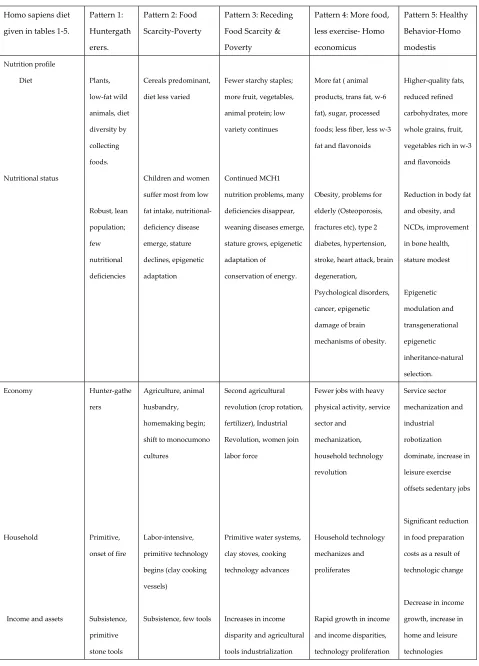
Man started farming in Mesopotamia, approximately 10,000 years ago which in turn led to unprecedented technical development, agriculture, industry and commerce. Our diet was based on an enormous variety of whole grains and wild plants prior to the agricultural revolution concerned with initial transition from Hunter-gatherers [1-3]. Farmers and Hunter-gatherers also had excellent health characteristics; enormous physical activity possibly with limited mental stress, because stress is a function of industrialization, urbanization and globalization. Alcoholism and tobacco intake are now important behavioral risk factors of CVDs and other NCDs. The foods available to early peasants were natural; whole grains, seeds, fruits, vegetables, leaves, roots, fish, meat and egg which have lower glycemic index. The foods manufactured by food industry in general are processed and preserved and have high energy and high glycemic index with poor nutrient density [1-3] (Tables 1and 2).
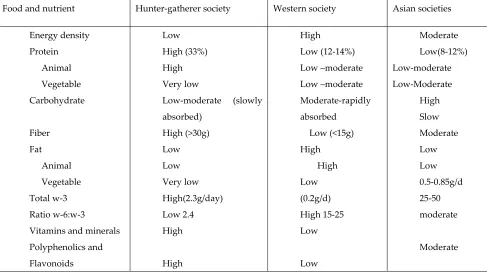
In the Western World, the quest for rapid growth of crops for greater yield of foods involved large scale use of fertilizers and biotechnology. Attention was also focused on refining and processing of foods, storing and distribution, and there was a relentless search for a better economic model [5-7]. Industrialization and urbanization caused economic development and affluence in association with greater availability of foods to populations in middle and high income countries. However, these foods are high in energy and fat but poor in nutrient density, resulting in a decrease in the consumption of omega-3 fatty acids, vitamins, flavonoids, as well as in essential and nonessential amino acids, significant increase in the intakes of carbohydrates, (mainly refined), fat (saturated, trans fat and linoleic acid) and salt compared to the early peasants in Paleolithic times (Tables 1 and 2). The protein or amino acid intake was 2.5 fold greater (33% vs. 13%) in the Paleolithic diet of Homo sapiens compared to modern Western diet consumed by Homo economicus populations. It has been estimated that diets of Homo sapiens were characterized by higher intakes of essential and non-essential amino acids, calcium, potassium, magnesium, flavonoids and w-3 fatty acids whereas the modern Western diet of Homo economicus has excess of energy-rich refined carbohydrates, w-6, trans fat and saturated fat and low in protective nutrients (Table 1 and 2). There has been marked changes in food and nutrient intakes during the last 100-160 years causing increased intake of saturated fatty acids (SFA), trans fatty acids, linoleic acid, and meat from grain-fed cattle, domesticated at farm houses, rather than meat from hunted animals [2,3].
from poverty to affluence, need functional food security. However, lower social classes 4 and 5, need food security as well as functional food security, so that they do not suffer from NCDs.
3. Thailand Declaration for Functional Food Security
This declaration is important to educate world policy makers that functional food security is a step forward ahead of food security. For JUST the sake of food security, we should not be supportive of providing high energy, rapidly absorbed foods which are known to cause obesity and metabolic syndrome [1-3]. Food security may be defined as an increase in food availability to an extent, or by a policy, by through which food is available to poor, at affordable cost to prevent hunger and undernutrition and related diseases [16,17]. In the last few decades, in many developing and middle income countries, food security provided by the governments, in one sense understandably, gave least consideration to functional foods supply and the prevention of obesity and metabolic syndrome, resulting in rapid emergence of NCDs in these countries [1-3].
The Thailand Declaration reiterates that commitments to eradicate hunger and all forms of malnutrition including over-nutrition, and to increase investments in effective interventions; designers foods and designers crops [6-9], This should be executed urgently However, in planning coherent policies, our past experience on rapidly absorbed energy-rich processed foods should be taken in to account, while developing sustainable food systems. The food industry should be educated to exploit the expertise of food scientists and health professionals in designing functional foods taking cognizance of manufacturing and processing. Similarly, agriculture scientists may be actively involved in educating farmers so as to grow functional crops. In fact policy makers could provide sustained economic models for farmers to integrate land utilization for tourism, high cash crops for industry, functional foods including specialist crops and horticultural products The Thailand Declaration also agrees with Rome Declaration which have been agreed in advance but sustainable diets and food systems need further attention in view of the review of civil society organization [6]. It seems that our 4F agenda (FUNCTIONAL FOODS & FUNCTIONAL FARMING) needs further attention on food chemistry and soil chemistry to provide functional farming, by the world experts.
Functional foods may be defined as those foods which are rich in certain nutrients that can address any physiological mechanisms while providing benefit to body systems, q.v. introduction. Functional food security means that such foods should be available at affordable cost for human consumption because of their role in providing optimal health and in the prevention of obesity and metabolic syndrome that are risk factors of NCDs [2,12,13,16-28]. It is important to plan for current and future needs taking into consideration healthcare costs which future generations may not be able to afford if functional food security is not sought. However, it is also important to educate people to understand the value of health education because knowledge of health foods and attitude towards these foods are also important in enhancing the consumption of such foods, with associated prevention strategies.
more nutrition-enhancing and more environmentally sustainable by a number of specific actions that are identified in the report [7-9,17]. There is a need to actively promote the collaboration of all relevant stakeholders viz. health care professionals, food and agricultural scientists, to make a concerted effort to close the gaps that remain regarding information on basic data on diets, foods and on nutritional status and development of wellness or diseases.
Functional food security recognizes the potential of food systems to become both more sustainable and more supportive of good nutritional outcomes and the need for a multi-sectoral approach that includes agriculture and food systems, health, sanitation, social protection, employment and education. Further studies are needed for the evaluation of agricultural food-based interventions on nutritional outcomes; and to also encourage management practices and technologies to improve sustainability and nutrition. There is a need to evaluate the impacts of markets, trade and market structure on environmental sustainability and human nutrition; and recognize the roles of consumer choice in achieving objectives of optimal nutrition and sustainability [7-9,12,17,20].
4.Functional Foods in the Prevention of Diseases
It is known that the Western diet has adverse effects; oriental foods are neutral, whereas Mediterranean-style foods are protective against NCDs [2,22-33]. The protective effects of Paleolithic diets in the form of the Mediterranean diet, Indo-Mediterranean diet, Japanese diet, and DASH diet have been documented in several previous studies [2,20-27]. It is expected that if, these diets are adopted by Homo economicus, and as such these standards will help evolve Homo modestis, either directly or by epigenetic inheritance or by natural selection [2]. Therefore, it is food security of functional foods, rather than modern western foods, which appear to be the important consideration for evolving human wellness and for prevention of NCDs.
A recent study showed that the consumption of total functional foods as well as fruits; grapes, apple, guava, star gooseberry, vegetables and nuts were strongly and inversely associated with risk of death due to NCDs[29]. The study also found that, Western type foods (red meat and eggs and refined foods) were positively associated with these causes of deaths, in both sexes. Total spices intake, mustard/olive oil intake and curd or yogurt intake, were inversely but weakly associated with causes of deaths due to NCDs, among both men and women[29]. Fruits and vegetables contain, over 600 carotenoid compounds (fat-soluble plant pigments), including lycopene, a-tocopherol, lutein, b-cryptoxanthin, zeaxanthin and beta-carotene [2,19,21-24,26,28,29]. Of these carotenoids, beta-carotene is the most widely studied which is the major vitamin A precursor and is carried in plasma and LDL particles. Carotenoids prevent lipid peroxidation by providing electrons to quench singlet oxygen. Lycopene is a potent antioxidant, the substance that gives tomatoes their red color, appears to be stronger than beta-carotene. Epidemiologic studies have correlated high tissue concentrations of lycopene with a lower risk of myocardial infarction; however, prospective, controlled trials have not yet been completed with lycopene. Tomato seeds also provide some flavanols in the tomato seed oil, which have antiplatelet effects.
5. Clinical Evidence on Diet and NCDs.
diet by two-units (range 0–9) was inversely associated with fatal CVD (HR: 0.78; 95% CI: 0.69–0.88), total CVD (HR: 0.95 (0.91–0.98)), myocardial infarction, stroke and pulmonary embolism[31]. It is clear that a better adherence to a Mediterranean-style diet was more strongly associated with fatal CVD than with total CVD. The associations were strongest for incident myocardial infarction, stroke and pulmonary embolism. The relation between fruit and vegetable intake and incidence of CAD was examined in a meta-analysis among 278 459 subjects with 9143 CAD events during a median follow-up of 11 years. Among subjects consuming more than 5 servings/day of fruit and vegetables, the pooled RR of CAD was significantly greater compared with those consuming less than 3 servings/day, (P=0.0001 vs 0.06).This meta-analysis reported that increased consumption of fruit and vegetables, from less than 3 to more than 5 servings/day is related to a 17% reduction, whereas increased intake to 3–5 servings/day is associated with a smaller and borderline significant reduction in CAD risk. These results provide strong evidence supporting that 5 or more servings per day of fruit and vegetables can provide substantial protection from CVDs.
A large cohort study, involving 72,113 female nurses who were free of CAD, stroke, diabetes, and cancer, examined the association of dietary pattern with risk of NCDs [33]. During a follow-up of 18 years, 6011 deaths occurred (3319 (52%) as a result of cancer; 1154 (19%) resulting from CVDs; and 1718 (29%) resulting from other causes. There was a 17% lower risk of total mortality among those who were most adherent to the prudent diet (highest versus lowest quintile of adherence), a 28% lower risk of CVD mortality, and 30% lower mortality from non-CVD, non-cancer causes. Cancer was not associated with the inverse prudent dietary pattern. A comparison of the highest and lowest quintiles of adherence showed that consumption of the Western diet was associated with increased total mortality (21%), CVD mortality (22%), cancer mortality (16%), and mortality from non-CVD, non-cancer causes (31%). Hence, except for cancer, risk relationships for the prudent and Western dietary patterns appear to be the inverse of each other: mortality thus was increased as adherence to the prudent diet decreased and adherence to the Western diet increased.
The INTERHEART study, (n= ACS=5761, controls=10,646) examined the relationship between dietary patterns and risk of acute coronary syndrome (ACS) [32]. The investigators identified 3 major dietary patterns viz. Oriental (high intake of tofu and soy and other sauces), Western (high in fried foods, salty snacks, eggs, and meat), and prudent (high in fruit and vegetables). Consistent with previous studies in single within-population cohort studies, the authors found an inverse association between the prudent pattern score and risk of ACS and a significant positive association between the Western pattern score and increased risk of ACS. No association of Oriental diet with risk of ACS was reported. A dietary risk score based on 7 food items on the
food-frequency questionnaire (meat, salty snacks, fried foods, fruits, green leafy vegetables, cooked vegetables, and other raw vegetables) was constructed by the authors. Further sensitivity analyses revealed a consistent association for the composite diet score between men and women and across different regions of the world (North America, Western Europe, Australia, Central Europe, Middle East, Africa, south Asia, Southeast Asia, China, and South America). On the basis of an arbitrary cut point of the score (top 3 quartiles versus the bottom quartile), the investigators estimated that 30% of myocardial infarction (MI) could be explained by unhealthy diets worldwide. The benefits of prudent dietary patterns in the INTERHAERT Study appear to be due increased intake of fruits, vegetables, and whole grains which are rich sources of functional nutrients.
between the dietary omega-6/omega-3 ratio and the risk of Alzheimer's disease. In the NHANES 2003-2008, high intake of dietary long-chain ω-3 fatty acids was associated with lower blood pressure in children born with low birth weight [36].
In a randomized, controlled intervention trial, Singh et al examined the effects of guava intake on serum total and high density lipoprotein cholesterol, lipid peroxides levels and systemic blood pressures among 120 patients with hypertension for 3 months[37]. In this study, 61 group A and 59 group B patients with essential hypertension were administered guava fruit preferably before meals in a foods-to-eat approach rather than foods-to-restrict, in a randomized and single-blind fashion for 12 weeks [37]. Nutrient intakes including saturated and total fat were significantly decreased; carbohydrates, total and soluble fiber, flavonoids and vitamins and mineral intakes were significantly higher in group A than in group B at 12 weeks. There was a significant net decrease in serum total cholesterol (9.9%), triglycerides (7.7%) and blood pressures (9.0/8.0 mm Hg) with a significant net increase in high-density lipoprotein cholesterol (8.0%) after 12 weeks of guava fruit substitution in group A than in group B. By adding moderate amounts of guava fruit in the usual diet, changes in dietary fatty acids and carbohydrates may occur, providing significant amounts of total and soluble dietary fiber and antioxidant vitamin C, potassium, flavonoids and minerals which are known to provide, lipid lowering, antihypertensive and antioxidant cardio-protective effects, without any adverse effects.
Effects of fat modified and fruits vegetable enriched diets on blood lipids and lipid peroxides in the Indian diet heart study among 621 high risk subjects revealed that diet can decrease blood lipids, blood glucose and oxidative stress and increase high density lipoprotein cholesterol[9]. In a randomized, single blind controlled trial with functional food rich diet among 406 patients of acute coronary syndromes, beneficial effects were noted within six weeks [22] and after one year of follow up [23]. The intervention group received significantly greater amount of functional foods; fruits; apple, grapes, guava, papaya, oranges, vegetables; bitter gourds, green leafy vegetables, cabbage, brinjal, carrots, ladyfingers, onion, garlic, ginger, nuts; almonds, walnuts in conjunction with 20-30 g/day of mustard oil compared to control group.
The Lyon diet heart study including Mediterranean-style diet and rapeseed oil margarine, given to 600 post heart attack patients and the Indo-Mediterranean diet heart study including fruits, vegetables and mustard oil, given to 1000 high risk subjects, also reported beneficial effects of functional food rich diets, (low in omega-6/omega-3 fatty acids) on morbidity and mortality among patients with high risk of CVDs[2,24,27,28]. The beneficial effects of this diet were attributed to decreased omega-6/omega-3 fatty acid ratio in the diets [2,19,27,28]. Anatomy of health effects of Mediterranean diets in the Greek epic prospective heart study also revealed cardio-protective effects of this diet[26]. The PREDIMED trial enrolled a total of 7,447 persons, aged 55 to 80 years including 57% women who were followed up for 4.8 years[38]. A primary end-point event occurred in 288 participants. The multivariable-adjusted hazard ratios were 0.70 (95% confidence interval CI, 0.54 to 0.92) and 0.72 (95% CI, 0.54 to 0.96) for the group assigned to a Mediterranean diet with extra-virgin olive oil and the group assigned to a Mediterranean diet with nuts, respectively, versus the control group (96 and 83 vs 109 events). No diet-related adverse effects were reported. Among persons at high cardiovascular risk, a Mediterranean diet supplemented with extra-virgin olive oil or nuts reduced the incidence of major cardiovascular events in both intervention groups compared to control group.
Mustard oil and fish oil are also functional foods due to high content of w-3 fatty acids hence both are cardio-protective [23]. Randomized, double-blind, placebo-controlled trial of fish oil and mustard oil in 360 patients with suspected acute myocardial infarction revealed that eating fish oil or mustard oil can cause significant decline in morbidity and mortality during a follow up of one year[23]. Apart from vegetable, fruits, nuts and pulses, cocoa in foods such as dark chocolates, green and black tea flavonols, probiotics and leafy vegetables which are rich in polyphenolics are other functional foods [18,40-45].
These findings indicate that this approach appears to be useful for the food industry to develop functional foods by further modifications of probiotics with omega-3 fatty acids, flavanols by adding cocoa, walnuts and black raisins, etc, based on well-conducted clinical studies for clearly identified populations.
6. Necessity of Biotechnology for Food Production
There may be substantial improvement in food production qualitatively as well as quantitatively due to use of biotechnology [46-48]. Plant breeding and genetic modifications are latest technologies for developing diversity in foods by altering nutrient content of foods to solve the problem of functional food security [4,46-49]. Agriculture played a vital role during the era of green revolution initiated by Norman Borlaug, the "Father of the Green Revolution” who saved over a billion people from starvation and developed high-yielding varieties of cereal grains. However, these food varieties were high in energy and deficient in micronutrients which are known to provide wellness and reduced risk of NCDs. I
It seems that the use of biotechnology has also upraised concerns about its potential risks to the environment as well as to human beings, resulting in emergence of obesity and metabolic syndrome. The staple crops can be enriched with micronutrients using plant breeding strategies. Now at this point of time, agriculture can again play a vital role by developing food varieties high in micronutrients, macronutrients, organic acids, trace mineral, antioxidants, flavonoids and vitamins leading to functional food security. The traits responsible for micronutrient enrichment in crops exist in their wild types or can be said that these traits are present within their genomes which can be used for substantially increasing micronutrient levels in crops without any negative impact on crop productivity [46-48]. The fruits and vegetables, which are consumed raw, can be subjected for improvement of micronutrients through application of new technologies of plant breeding and genetic engineering.
Genetic Engineering provides resources to host genes into plants via genetic mechanisms, different in
discriminate GM, conventional and organic soybeans without exception [49]. They demonstrated “substantial non-equivalence” in compositional characteristics for ‘ready-to-market soy samples.Organic soybeans showed the healthiest nutritional profile with more sugars, such as glucose, fructose, sucrose and maltose, significantly more total protein, zinc and less fiber than both conventional and GM-soy. Organic soybeans also contained less total saturated fat and total omega-6 fatty acids than both conventional and GM-soy. GM-soy contained high residues of glyphosate and AMPA (mean 3.3 and 5.7 mg/kg, respectively). Conventional and organic soybean batches contained none of these agrochemicals. There may be several obstacles toward a healthy lifespan, both political and financial related foods and farming. The sustainable development is of vital importance but require resource mobilization, measurable indicators, clarity, honesty and accountability. Prevention at population level, health equity, and the right to health would be truly transformative, if the functional food security using GM foods is used honestly[50].
“You are what you eat” was proposed by Hippocrates in the 5th century BC. Hippocrates wrote “Positive health requires knowledge of man's primary constitution (which today we call genetics) and of the powers of various foods, both those natural to them and those resulting from human skill (today's processed foods which should be rich in nutrients and slowly absorbed).
7. Conclusions
In brief, functional foods are rich in protective nutrients; omega-3 fatty acids, monounsaturated fatty acids, flavonoids, amino acids, vitamins, antioxidants and fiber with low energy density. Biotechnology including food processing and plant breeding or genetic engineering, may be used to increase protective nutrients; and reduce too much of certain nutrients causing adverse effects, (saturated fat, linoleic acid, sugar and erucic acid). In future, every attempt should be made to develop protective nutrient rich, low energy, slowly absorbed functional foods to provide functional food security, for control of under-nutrition so that there is no increase in obesity which is important for prevention of CVDs and other chronic diseases.
Conflict of interest: The authors declare that there is no conflict of interest regarding the publication of this article
References
1. Singh, R.B.; Takahashi, T.; Nakaoka, T.; Otsuka, K.; Toda, E.; Shin, H.H.; Lee, M.-K.; Beeharry, V.; Hristova, K.; Fedacko, J., et al. Nutrition in transition from homo sapiens to homo economicus. The Open Nutraceuticals Journal 2013, 6, 6-17.
2. De Meester, F. Progress in lipid nutrition: The columbus concept addressing chronic diseases. In A balanced omega-6/omega-3 fatty acid ratio, cholesterol and coronary heart disease, A.P., S.; F., D.M., Eds. World Review of Nutrition and Dietetics: Karger AG, Basel, 2009; Vol. 100, pp 110-121.
3. Lindeberg, S. Food and western disease: Health and nutrition from an evolutionary perspective. Wiley-Blackwell: UK, 2010.
4. Paine, J.A.; Shipton, C.A.; Chaggar, S.; Howells, R.M.; Kennedy, M.J.; Vernon, G.; Wright, S.Y.; Hinchliffe, E.; Adams, J.L.; Silverstone, A.L., et al. Improving the nutritional value of golden rice through increased pro-vitamin a content. Nat Biotech 2005, 23, 482-487.
5. 18th World Congress on Clinical Nutrition; Agriculture, F.a.N.a.W. Abstract Ubonratchathani University Thailand 2014.
7. UNICEF. Child nutrition interactive dashboard.
http://data.unicef.org/resources/2013/webapps/nutrition
8. WHO. Unicef-who-the world bank: Joint child malnutrition estimates - levels and trends. 9. UNICEF-WHO. The world bank: Joint child malnutrition estimates - levels and trends.
http://www.who.int/nutgrowthdb/estimates/en/
10. Lancet. Feeding the world sustainably. The Lancet 2014, 384, 1721.
11. Hristova, K.; Shiue, I.; Pella, D.; Singh, R.B.; Chaves, H.; Basu, T.K.; Ozimek, L.; Rastogi, S.S.;
Takahashi, T.; Wilson, D., et al. Prevention strategies for cardiovascular diseases and diabetes mellitus in developing countries: World conference of clinical nutrition 2013. Nutrition 2014, 30, 1085-1089. 12. Singh, R.B.; Reddy, K.K.; Meester, F.D.; Wilczynska, A.; Wilson, D.W. Ancient concepts in nutrition
and diets in hunter-gatherers. The Open Nutraceuticals Journal 2011, 4, 130-135.
13. Eaton, S.B.; Konner, M.; Shostak, M. Stone agers in the fast lane: Chronic degenerative diseases in evolutionary perspective. The American Journal of Medicine 1988, 84, 739-749.
14. Eaton , S.B.; Konner , M. Paleolithic nutrition. New England Journal of Medicine 1985, 312, 283-289. 15. Meester, F. Wild-type land-based food in health promotion and disease prevention. In Wild-type food
in health promotion and disease prevention: The columbus concept, Meester, F.; Watson, R.R., Eds. Humana Press: Totowa, NJ, 2008; pp 3-20.
16. Popkin, B.M. Global nutrition dynamics: The world is shifting rapidly toward a diet linked with noncommunicable diseases. The American journal of clinical nutrition 2006, 84, 289-298.
17. FAO. The state of food and agriculture social protection and agriculture: Breaking the cycle of rural poverty. http://www.fao.org/publications/sofa/2015/en/
18. Hristova, K.; Shiue, I.; Pella, D.; Singh, R.B.; Chaves, H.; Basu, T.K.; Ozimek, L.; Rastogi, S.S.;
Takahashi, T.; Wilson, D., et al. Prevention strategies for cardiovascular diseases and diabetes mellitus in developing countries: World conference of clinical nutrition 2013. Nutrition 2013, 30, 1085-1089. 19. Simopoulos, A.P. Evolutionary aspects of the dietary omega–6:Omega–3 fatty acid ratio: Medical
implications. In A balanced omega-6/omega-3 fatty acid ratio, cholesterol and coronary heart disease, Simopoulos, A.P.; De Meester, F., Eds. World Review of Nutrition and Dietetics: Karger AG, Basel, 2009; Vol. 100, pp 1-21.
20. Hristova, K.; Nakaoka, T.; Otsuka, K.; Fedacko, J.; Singh, R.; Singh, R.B.; Meester, F.D.; Wilczynska, A.; Wilson, D.W. Perspectives on chocolate consumption and risk of cardiovascular dis-eases and cognitive function. The Open Nutraceuticals Journal 2012, 5, 207-212.
21. Singh, R.B.; Rastogi, S.S.; Niaz, M.A.; Ghosh, S.; Singh, R.; Gupta, S. Effect of fat-modified and fruit- and vegetable-enriched diets on blood lipids in the indian diet heart study. The American journal of cardiology 1992, 70, 869-874.
22. Singh, R.B.; Rastogi, S.S.; Verma, R.; Bolaki, L.; Singh, R. An indian experiment with nutritional modulation in acute myocardial infarction. The American journal of cardiology 1992, 69, 879-885. 23. Singh, R.B.; Rastogi, S.S.; Verma, R.; Laxmi, B.; Singh, R.; Ghosh, S.; Niaz, M.A. Randomised controlled
trial of cardioprotective diet in patients with recent acute myocardial infarction: Results of one year follow up. BMJ : British Medical Journal 1992, 304, 1015-1019.
25. de Lorgeril, M.; Renaud, S.; Salen, P.; Monjaud, I.; Mamelle, N.; Martin, J.L.; Guidollet, J.; Touboul, P.; Delaye, J. Mediterranean alpha-linolenic acid-rich diet in secondary prevention of coronary heart disease. The Lancet 1994, 343, 1454-1459.
26. Trichopoulou, A.; Bamia, C.; Trichopoulos, D. Anatomy of health effects of mediterranean diet: Greek epic prospective cohort study. BMJ 2009, 338.
27. Singh, R.B.; Fedacko, J.; Vargova, V.; Pella, D.; Niaz, M.A.; Ghosh, S. Effect of low w-6/w-3 fatty acid ratio paleolithic style diet in patients with acute coronary syndromes: A randomized, single blind, controlled trial. World Heart Journal 2012, 4, 71-84.
28. Pella, D.; Dubnov, G.; Singh, R.B.; Sharma, R.; Berry, E.M.; Manor, O. Effects of an indo-mediterranean diet on the omega-6/omega-3 ratio in patients at high risk of coronary artery disease: The indian paradox. In Omega-6/omega-3 essential fatty acid ratio: The scientific evidence Simopoulos, A.P.; Cleland, L.G., Eds. Karger Basel, 2003; pp 74-80.
29. Singh, R.B.; Visen, P.; Sharma, D.; Sharma, S.; Mondo, R.; Sharma, J.P.; Sharma, M.; Tokunaga, M.; Takahashi, T.; Mishra, S., et al. Study of functional foods consumption patterns among decedents dying due to various causes of death. The Open Nutraceuticals Journal 2015, 8, 16-28.
30. He, F.J.; Nowson, C.A.; Lucas, M.; MacGregor, G.A. Increased consumption of fruit and vegetables is related to a reduced risk of coronary heart disease: Meta-analysis of cohort studies. Journal of human hypertension 2007, 21, 717-728.
31. Hoevenaar-Blom, M.P.; Nooyens, A.C.; Kromhout, D.; Spijkerman, A.M.; Beulens, J.W.; van der Schouw, Y.T.; Bueno-de-Mesquita, B.; Verschuren, W.M. Mediterranean style diet and 12-year incidence of cardiovascular diseases: The epic-nl cohort study. PloS one 2012, 7, e45458.
32. Iqbal, R.; Anand, S.; Ounpuu, S.; Islam, S.; Zhang, X.; Rangarajan, S.; Chifamba, J.; Al-Hinai, A.; Keltai, M.; Yusuf, S. Dietary patterns and the risk of acute myocardial infarction in 52 countries: Results of the interheart study. Circulation 2008, 118, 1929-1937.
33. Heidemann, C.; Schulze, M.B.; Franco, O.H.; van Dam, R.M.; Mantzoros, C.S.; Hu, F.B. Dietary patterns and risk of mortality from cardiovascular disease, cancer, and all causes in a prospective cohort of women. Circulation 2008, 118, 230-237.
34. Castro, I.A.; Barroso, L.P.; Sinnecker, P. Functional foods for coronary heart disease risk reduction: A meta-analysis using a multivariate approach. The American journal of clinical nutrition 2005, 82, 32-40. 35. Loef, M.; Walach, H. The omega-6/omega-3 ratio and dementia or cognitive decline: A systematic
review on human studies and biological evidence. Journal of nutrition in gerontology and geriatrics 2013, 32, 1-23.
36. Skilton, M.R.; Raitakari, O.T.; Celermajer, D.S. High intake of dietary long-chain omega-3 fatty acids is associated with lower blood pressure in children born with low birth weight: Nhanes 2003-2008. Hypertension 2013, 61, 972-976.
37. Singh, R.B.; Rastogi, S.S.; Singh, R.; Ghosh, S.; Niaz, M.A. Effects of guava intake on serum total and high-density lipoprotein cholesterol levels and on systemic blood pressure. The American journal of cardiology 1992, 70, 1287-1291.
38. Estruch, R.; Ros, E.; Salas-Salvadó, J.; Covas, M.-I.; Corella, D.; Arós, F.; Gómez-Gracia, E.; Ruiz-Gutiérrez, V.; Fiol, M.; Lapetra, J., et al. Primary prevention of cardiovascular disease with a mediterranean diet. New England Journal of Medicine 2013, 368, 1279-1290.
heart disease and death: Evaluation of recovered data from the sydney diet heart study and updated meta-analysis. Bmj 2013, 346, e8707.
40. Barraud, D.; Bollaert, P.E.; Gibot, S. Impact of the administration of probiotics on mortality in critically ill adult patients: A meta-analysis of randomized controlled trials. Chest 2013, 143, 646-655.
41. Rochfort, S.; Panozzo, J. Phytochemicals for health, the role of pulses. Journal of Agricultural and Food Chemistry 2007, 55, 7981-7994.
42. Sreeramulu, D.; Reddy, C.V.; Raghunath, M. Antioxidant activity of commonly consumed cereals, millets, pulses and legumes in india. Indian journal of biochemistry & biophysics 2009, 46, 112-115. 43. Velioglu, Y.S.; Mazza, G.; Gao, L.; Oomah, B.D. Antioxidant activity and total phenolics in selected
fruits, vegetables, and grain products. Journal of Agricultural and Food Chemistry 1998, 46, 4113-4117. 44. Arcan, I.; Yemenicioğlu, A. Antioxidant activity and phenolic content of fresh and dry nuts with or
without the seed coat. Journal of Food Composition and Analysis 2009, 22, 184-188.
45. Gupta, S.; Prakash, J. Studies on indian green leafy vegetables for their antioxidant activity. Plant Foods for Human Nutrition 2008, 64, 39-45.
46. Welch, R.M.; Graham, R.D. Breeding for micronutrients in staple food crops from a human nutrition perspective. Journal of experimental botany 2004, 55, 353-364.
47. Bouis, H.E. Enrichment of food staples through plant breeding: A new strategy for fighting micronutrient malnutrition. Nutrition 2000, 16, 701-704.
48. Mishra, S.N.; Singh, R.B. Physiological and biochemical significance of genetically modified foods: An overview. Open Nutraceuticals Journal 2013, 6, 18-26.
49. Bøhn, T.; Cuhra, M.; Traavik, T.; Sanden, M.; Fagan, J.; Primicerio, R. Compositional differences in soybeans on the market: Glyphosate accumulates in roundup ready gm soybeans. Food Chemistry 2014, 153, 207-215.
50. Gostin, L.O.; Friedman, E.A. The sustainable development goals: One-health in the world's development agenda. Jama 2015, 314, 2621-2622.
Table 1. Food and nutrient intake among various social groups
Food and nutrient Hunter-gatherer society Western society Asian societies
Energy density Protein Animal Vegetable Carbohydrate
Fiber Fat Animal Vegetable Total w-3 Ratio w-6:w-3
Vitamins and minerals Polyphenolics and Flavonoids
Low High (33%) High Very low
Low-moderate (slowly absorbed)
High (>30g) Low Low Very low High(2.3g/day) Low 2.4 High
High
High
Low (12-14%) Low –moderate Low –moderate Moderate-rapidly absorbed
Low (<15g) High
High Low (0.2g/d) High 15-25 Low
Low
Moderate Low(8-12%) Low-moderate Low-Moderate
High Slow Moderate Low Low 0.5-0.85g/d 25-50 moderate
Modified from Eaton et al. [13,14] and Singh et al. [1] references.
Table 2. Nutrition in transition and emergence of non-communicable diseases
Homo sapiens diet
given in tables 1-5.
Pattern 1:
Huntergath
erers.
Pattern 2: Food
Scarcity-Poverty
Pattern 3: Receding
Food Scarcity &
Poverty
Pattern 4: More food,
less exercise- Homo
economicus
Pattern 5: Healthy
Behavior-Homo modestis Nutrition profile Diet Nutritional status Plants, low-fat wild animals, diet diversity by collecting foods. Robust, lean population; few nutritional deficiencies Cereals predominant,
diet less varied
Children and women
suffer most from low
fat intake, nutritional-
deficiency disease
emerge, stature
declines, epigenetic
adaptation
Fewer starchy staples;
more fruit, vegetables,
animal protein; low
variety continues
Continued MCH1
nutrition problems, many
deficiencies disappear,
weaning diseases emerge,
stature grows, epigenetic
adaptation of
conservation of energy.
More fat ( animal
products, trans fat, w-6
fat), sugar, processed
foods; less fiber, less w-3
fat and flavonoids
Obesity, problems for
elderly (Osteoporosis,
fractures etc), type 2
diabetes, hypertension,
stroke, heart attack, brain
degeneration,
Psychological disorders,
cancer, epigenetic
damage of brain
mechanisms of obesity.
Higher-quality fats,
reduced refined
carbohydrates, more
whole grains, fruit,
vegetables rich in w-3
and flavonoids
Reduction in body fat
and obesity, and
NCDs, improvement
in bone health,
stature modest Epigenetic modulation and transgenerational epigenetic inheritance-natural selection. Economy Household
Income and assets
Hunter-gathe
rers
Primitive,
onset of fire
Subsistence, primitive stone tools Agriculture, animal husbandry, homemaking begin;
shift to monocumono
cultures
Labor-intensive,
primitive technology
begins (clay cooking
vessels)
Subsistence, few tools
Second agricultural
revolution (crop rotation,
fertilizer), Industrial
Revolution, women join
labor force
Primitive water systems,
clay stoves, cooking
technology advances
Increases in income
disparity and agricultural
tools industrialization
Fewer jobs with heavy
physical activity, service
sector and mechanization, household technology revolution Household technology mechanizes and proliferates
Rapid growth in income
and income disparities,
technology proliferation
Service sector
mechanization and
industrial
robotization
dominate, increase in
leisure exercise
offsets sedentary jobs
Significant reduction
in food preparation
costs as a result of
technologic change
Decrease in income
growth, increase in
home and leisure
Professional
skill/Education
Hunting Stock breeding ,
cultivation Industry, intensive agriculture Processed unhealthy foods increased Functional foods availability increases Demographic profile Mortality Age structure Housing Food processing Low fertility, high mortality, low life expectancy Young population Rural, low density Nonexistent
Age of Malthus; high
natural fertility, short
life expectancy, high
infant and maternal
mortality
Young, very few
elderly
Rural, a few small,
crowded cities
Food storage begins
Mortality declines slowly,
then rapidly; fertility
static, then declines;
small, cumulative
population growth,
which later explodes
Chiefly young, shift to
older population begins
Chiefly rural, move to
cities increases,
international migration
begins, megacities
develop
Storage processes
(drying, salting) begin,
canning and processing
technologies emerge,
increases in food refining
and milling
Life expectancy hits
unique levels (ages
60–70), huge decline and
fluctuations in fertility
(eg, postwar baby boom)
Rapid decline in fertility,
rapid increase in
proportion of elderly
person
Dispersal of urban
population decrease in
rural green space
Numerous food-
transforming
technologies
Life expectancy
extends to ages 70
and 90 y,
disability-free period
increases
Low antenatal and
infant mortality
Increases in the
proportion of elderly
>75 y of age
Lower-density cities
rejuvenate, increase
in urbanization of
rural areas encircling
cities
Technologies create
functional foods and
food constituent
substitutes (eg,
macronutrient
substitutes)