Project Report
National Validation Framework for Water
Recycling: Overview of Priority Research
A report of a study funded by the
Australian Water Recycling Centre of Excellence
National Validation Framework for Water Recycling:
Overview of Priority Research
Project Leader
Cedric RobillotAustralian Water Recycling Centre of Excellence 240 Adelaide Street
Brisbane, QLD 4000
Contact: [email protected]
Partners
CSIRO
Curtin University Griffith University
University of New South Wales
University of Queensland Victoria University WaterFutures Melbourne Water
SA Water SouthEast Water
Sydney Water Corporation Water Corporation
About the Australian Water Recycling Centre of Excellence
The mission of the Australian Water Recycling Centre of Excellence is to enhance management and use of water recycling through industry partnerships, build capacity and capability within the recycled water industry, and promote water recycling as a socially, environmentally and economically sustainable option for future water security.
The Australian Government has provided $20 million to the Centre through its National Urban Water and Desalination Plan to support applied research and development projects which meet water recycling challenges for Australia’s irrigation, urban development, food processing, heavy industry and water utility sectors. This funding has levered an additional $20 million investment from more than 80 private and public organisations, in Australia and overseas.
ISBN: 978-1-922202-72-7 Citation:
Robillot C, Le-Clech P, Pype ML, Sidhu J, Khan S and Monis P (2016). National Validation Framework for Water Recycling: Overview of Priority Research, Australian Water Recycling Centre of Excellence, Brisbane Australia.
© Australian Water Recycling Centre of Excellence
This work is copyright. Apart from any use permitted under the Copyright Act 1968, no part of it may be reproduced by any purpose without the written permission from the publisher. Requests and inquiries concerning reproduction right should be directed to the publisher.
Date of publication: June 2016 Publisher:
Australian Water Recycling Centre of Excellence
Level 15, 240 Adelaide Street, Brisbane, Queensland 4000 www.australianwaterrecycling.com.au
This report was funded by the Australian Water Recycling Centre of Excellence through the Australian Government’s National Urban Water and Desalination Plan.
Disclaimer
Table of Contents
Introduction ... 1
Gap analysis and program scoping ... 1
Program description ... 2
Industry engagement and adoption strategy ... 4
Program outcomes ... 6
Subproject 1 overview – National validation guidelines for MBR ... 6
Subproject 2 overview – National validation guidelines for RO/NF ... 7
Subproject 3 overview: National validation guidelines for ASP ... 8
Subproject 4 overview: Comprehensive Bayesian recycled water validation ... 9
Subproject 5 overview: Methods for pathogen isolation, culture, detection and enumeration ... 10
Collaborations between subprojects ... 11
Conclusions and updated gap analysis ... 12
Appendix 1 - Program outputs ... 15
Appendix 2
– NatVal subproject 1: National validation guidelines for membrane
bioreactors ... 17
Appendix 3 – NatVal subproject 2: National validation guidelines for reverse osmosis and
nanofiltration membranes ... 22
Appendix 4
– NatVal subproject 3: National validation guidelines for activated sludge
processes ... 28
Appendix 5 –
NatVal subproject 4: Comprehensive Bayesian recycled water validation
... 33
Appendix 6
–
NatVal subproject 5: Methods for pathogen isolation, culture, detection and enumeration
... 41
Introduction
Goal Two of the Australian Water Recycling Centre of Excellence (AWRCoE) is that “A national validation framework for water recycling be established”. In a first phase, the structure and essential components of a national framework for validation of recycled water systems were identified and a pathway for implementation was recommended which included two core components:
The creation of a Protocol Development Group (PDG) as the centre piece of the proposed national validation framework and responsible for the development of nationally accepted guidelines for the validation of water recycling technologies, and
The implementation of a research program aimed at addressing priority knowledge gaps identified as barriers to a national validation framework and transferring outcomes of the research to nationally endorsed guidelines and validation protocols.
The research program referred to as NatVal Priority Research Program was delivered from September 2013 to December 2015 with a total cash and in-kind value of approximately $6.3 million.
This program-level report provides an overview of the research conducted and describes how the five subprojects under this priority research program contributed individually and collaboratively to the objectives mentioned above. This report is supplemented by five executive summaries (in appendices) providing further details on each subproject and associated research outcomes. In addition, a number of standalone technical reports and publications have been released by the subproject research teams which are available on the AWRCoE website.
Gap analysis and program scoping
The initial scoping report delivered by Water Quality Research Australia on behalf of AWRCoE entitled “NatVal Road Map Report - The road map to a national validation framework for water recycling schemes” (Muston & Halliwell 2011) included a systematic analysis of knowledge gaps which could be considered as barriers to implementation of the recommended framework.
These gaps covered a range of areas such as governance and policies, risk assessment and treatment technologies. The research needed to fill gaps associated with technology and risk assessment was also identified as summarised in Table 6 adapted from Muston and Halliwell (2011).
Based on this gap analysis and taking into considerations time and resource factors, the AWRCoE Project Advisory Committee (PAC) for the NatVal project developed a list a priority research projects as follows:
Validation of membrane bioreactors (MBR);
Integrity monitoring of Reverse Osmosis (RO) membranes for virus rejection; Validation of biological systems;
Validation of ozone processes;
Development of an integrated testing strategy in a multiple barrier approach;
Standardisation of methods for pathogen (including virus) isolation, culture, detection and enumeration; and
Methods for quantitative microbial risk assessment in source water characterisation.
Following this initial process, Melbourne Water was able to make its existing research data on ozone disinfection available and the validation of ozone disinfection was no longer considered a research need. Proposals were sought from research providers and following a PAC review and Research Advisory Committee (RAC) endorsement process, the list of research projects was finalised as:
Validation of MBR;
Validation of RO and Nano-Filtration (NF) membranes; Validation of Activated Sludge Treatment (AST) processes;
Development of an integrated testing strategy in a multiple barrier approach; and
Program description
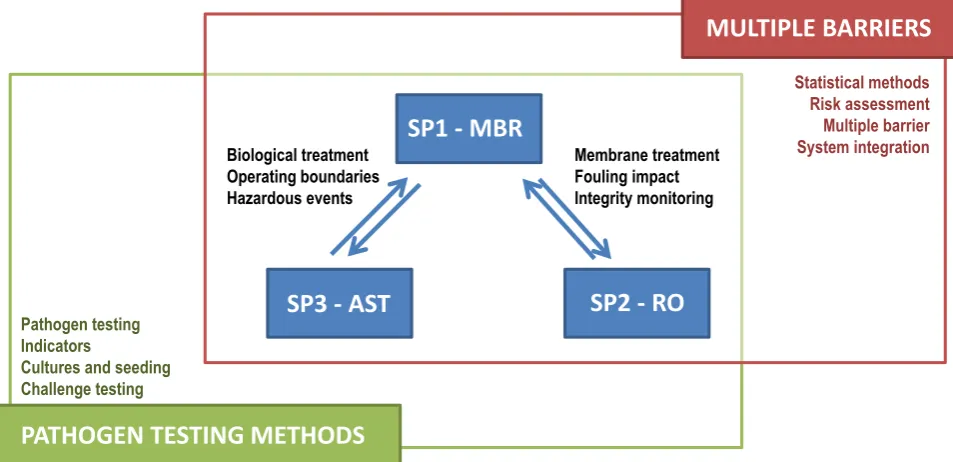
The program was organised in five independent subprojects, with three of the five subprojects (SP1, SP2 and SP3) dedicated to the development of validation protocols for specific treatment processes and two subprojects (SP4 and SP5) focusing on research which can support the validation of treatment processes generally (Figure 1).
Figure 1. Overview of NatVal Priority Research Program.
Figure 2 describes governance arrangements for the NatVal Priority Research Program underpinned by the following elements:
The Project Advisory Committee (PAC), composed of international and national experts, met on a three- to six-monthly basis and focused on the overall NatVal research program and the effective integration of its subprojects. The PAC reviewed progress and milestone reports, attended key workshops, contributed via its designated members to each of the subproject advisory working groups and provided recommendations to the AWRCoE Research Advisory Committee (RAC). The PAC convenor is a member of the RAC.
The Subproject Advisory Working Groups (SAWGs) were composed of one PAC member (subproject champion), the Program Manager, representatives from industry partners and independent experts as required. SAWGs operated strictly in an advisory role, assisting the Program Manager in the assessment of subproject progress and providing guidance to research teams.
The Program Manager coordinated the delivery of the program (including budgeting, progress tracking, milestone reviews and reporting) and managed day-to-day interaction with subproject leaders. The Program Manager was the main point of interface with the Protocol Development Group.
PATHOGEN TESTING METHODS
MULTIPLE BARRIERS
SP1 - MBR
SP2 - RO
SP3 - AST
Biological treatment Operating boundaries Hazardous events
Membrane treatment Fouling impact Integrity monitoring
Pathogen testing Indicators
Cultures and seeding Challenge testing
Figure 2. NatVal Priority Research Program governance framework.
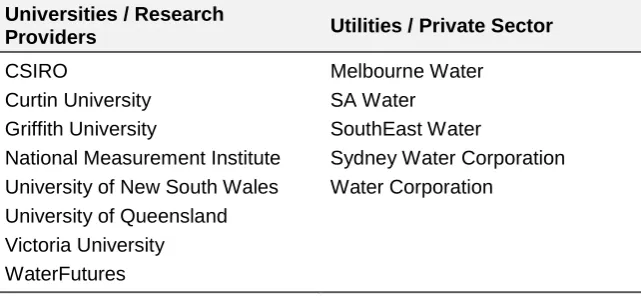
Participants to the program included a number of research institutions and utilities across a number of states as summarised in Table 1. The overall program budget was approximately $6.3 million including $3.4 million as in-kind.
Table 1. NatVal Priority Research Program participants.
Universities / Research
Providers Utilities / Private Sector CSIRO
Curtin University Griffith University
National Measurement Institute University of New South Wales University of Queensland Victoria University WaterFutures
Melbourne Water SA Water
SouthEast Water
Industry engagement and adoption strategy
In addition to the industry partners directly involved in subprojects, each research team conducted specific engagement with industry as required by their research activities. This included consultation with utilities, manufacturers and regulators and direct technical engagement through site visits and requests for operator input.
At the AWRCoE and NatVal program level, a number of stakeholder consultation initiatives have been undertaken to support the development of the National Validation Framework (referred to as WaterVal), including:
Initial roadshows and workshops to identify the key requirements and benefits of a national validation framework;
Specific workshops involving all relevant sectors (regulators, utilities, designers, manufacturers, operators and researchers) to develop recommendations for the design of the framework and to identify knowledge gaps and focus areas for research; and
Engagement of industry partners through their representation on various committees such as Subproject Advisory Working Groups, PAC and RAC.
To ensure effective adoption of research outputs and to facilitate the translation process, milestones were aligned across subprojects and focused on outcomes as follows:
Milestone 1 – Contract execution
Milestone 2 – Literature reviews and preliminary draft validation protocols (where applicable) Milestone 3 – Interim report of experimental research activities
Milestone 4 – Final report on all experimental research and final draft validation protocols (where applicable)
Milestone 5 – Final project report and close-out.
The three subprojects focusing on specific treatment technologies were tasked with developing draft validation protocols and to achieve further consistency, a validation protocol template (AWRCoE 2015) was developed by the PDG and made available to the researchers at the start of the program. As described in Table 2, it includes nine steps against which researchers were able to map their research outputs and to some extent structure their reports. For example, the literature review was split across elements 1 to 4 whereas the monitoring and validation research outputs could be structured around steps 4 to 7.
Table 2. Validation protocol template steps
Step Description
1 Identification of the mechanisms of pathogen removal by the treatment process unit 2 Identification of target pathogens and/or surrogates that are the subject of the
validation study
3 Identification of factors that affect the efficacy of the treatment process unit in reducing the target pathogen
4 Identification of operational monitoring parameters that can be measured continually and are related to the reduction of the target pathogen
5 Identification of the validation method to demonstrate the capability of the treatment process unit
6 Description of a method to collect and analyse data to formulate evidence-based conclusions
7 Description of a method to determine the critical limits, as well as an operational monitoring and control strategy
Researchers and the PDG were able to formally engage at two combined workshops and researchers were invited to contribute to PDG discussions on specific protocols on an ad-hoc basis. In combination with the use of the validation protocol template, this approach allowed a relatively seamless translation of research outputs into consistent protocols (Table 3) which are now integrated within WaterVal. This optimised research output translation process is not limited to these projects but can also be applied to future research on treatment technologies.
Table 3. Translation of NatVal Priority Research Program outputs into validation protocols.
Technology Research inputs Membrane
Bioreactor
The MBR technology is considered in many decentralised systems and despite the understanding that high LRVs can be achieved, proponents and manufacturers have experienced difficulties in demonstrating that the system integrity could be continuously monitored.
Subproject 1 provided the underlying evidence for a national validation protocol and delivered:
A comprehensive review of log reduction data from literature and operational sites to establish default LRVs for MBR;
An evidence based operating envelope and monitoring program dealing with hazardous events and under which the risk to public health can be managed consistently; and
A promising validation method relying on the online monitoring of permeate turbidity for which further evidence will be required.
Reverse Osmosis and Nano-Filtration
High pressure membrane filtration is known to deliver very high removal of pathogens however, based on current integrity monitoring techniques, only much lower removal credits can be granted by regulators. There is a lack of consistency between jurisdictions about the potential impact of operating conditions on surrogates and about the type and frequency of integrity monitoring considered acceptable.
Subproject 2 provided the underlying evidence for a national validation protocol and delivered:
A comprehensive literature review of log reduction data, hazardous events and integrity monitoring techniques;
A thorough assessment of the impact of operating conditions on the suitability of surrogates and indicators leading to the definition of conservative integrity testing conditions; and
A method to obtain approval for up to 4-log removal credits based on a range of surrogates and best practice integrity monitoring strategies.
Ozone Disinfection
Ozone disinfection is not in widespread use for recycled water in Australia but the availability of a validation protocol would facilitate adoption in specific applications. While this process is well known in drinking water applications, the translation to recycled water applications required new evidence and a specific strategy.
Program outcomes
Subproject 1 overview – National validation guidelines for MBR
An executive summary for subproject 1 can be found in Appendix 2.Challenges
Lack of removal performance and operational monitoring data able to be directly compared No direct or indirect continuous integrity monitoring strategy available
No clear evidence on the impact of hazardous events on MBR removal performance Guidelines only available in Victoria.
Outcomes
A critical review of current literature on LRV achieved by MBR (more than 1000 LRV data points obtained) and validation reports/guidelines was conducted.
A sampling campaign took place with a total of 180 visits to 11 different full scale MBRs in order to create a database of MBR performance and operation.
Bayesian Belief Networks, created and trained on the data collected, were used to identify significant influencing factors. Operation under the following conditions was confirmed to lead to a higher likelihood of a poor LRV: low HRT, high permeability, high permeate turbidity and low MLSS. These conditions were used to define a conservative operational envelope for validation testing.
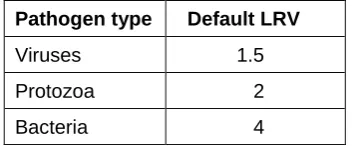
Probability density functions (PDF) were fit to all data collected from literature and data from site sampling to establish default LRVs and a corresponding operating envelope. The 5th percentile of resulting LRV PDFs were collated and the most conservative values for viruses, bacteria and protozoa were rounded down to form the basis of default LRVs, summarised in Table 4.
Table 4. Tier 1 default LRV for each type of pathogen.
Pathogen type Default LRV
Viruses 1.5
Protozoa 2
Bacteria 4
Consequences of hazardous events were scoped in detail including chemical cleaning and membrane ageing due to their perceived impact on pathogen removal. An overview matrix of process failures from pilot testing and full-scale site investigation was provided which also considered recovery times. For 0.04 μm hollow fibre membranes operating at low to moderate flux (6 – 25 L/(m2
h)), intensive clean in place (CIP) and regular chemically enhanced backwash did not reduce LRV below typically observed process variability (5th percentile).
Subproject 2 overview – National validation guidelines for RO/NF
An executive summary for subproject 2 can be found in Appendix 3.Challenges
Lack of evidence on impact of operating conditions on the LRV of pathogen surrogates and on measures of integrity
Lack of consistency on the type/frequency of integrity monitoring required to achieve LRVs. Outcomes
A critical review of current literature was conducted to consider the removal mechanisms by RO/NF membranes, monitoring techniques and correlations with virus surrogates.
The benefits, limitations and LRVs achievable using a range of surrogates or techniques were reviewed, in continuous or pulsed mode. These included Electrical Conductivity (EC), Total Organic Carbon (TOC), Dissolved Organic Matter (DOM), Sulfate, fluorescent dyes (Rhodamine WT, Uranine and TrasarTM) and S::CANTM.
The impact of operating factors on the rejection of surrogates was assessed to ensure that the selected surrogates are not better rejected than viruses (conservative approach) but also to select the most appropriate conditions to conduct validation testing.
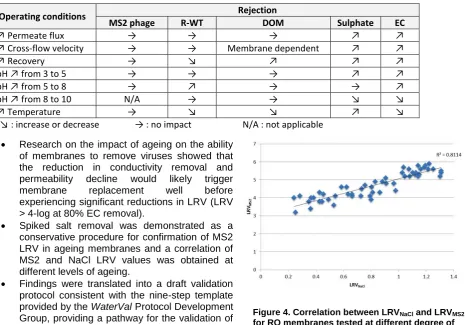
The rejections of MS2 phage, R-WT, DOM, sulphate and EC were studied as a function of cross-flow velocity, permeate flux, recovery, membrane types, feed temperature, pH and ion strength within the operating range determined by membrane manufacturers, as summarised in Table 5. Overall, the removal of MS2 phage was not significantly influenced by typical changes in operating conditions and membrane types, LRVs being higher than 4-log under all conditions. Only the solutes (sulfate and EC) were significantly impacted by changes in operating conditions.
Table 5. Impact of changes in operating conditions on the rejection of surrogates.
Operating conditions Rejection
MS2 phage R-WT DOM Sulphate EC
↗ Permeate flux → → → ↗ ↗
↗ Cross-flow velocity → → Membrane dependent ↗ ↗
↗ Recovery → ↘ ↗ ↗ ↗
pH ↗ from 3 to 5 → → → ↗ ↗
pH ↗ from 5 to 8 → ↗ → → ↗
pH ↗ from 8 to 10 N/A → → ↘ ↘
↗ Temperature → ↘ ↘ ↗ ↘
↗↘ : increase or decrease → : no impact N/A : not applicable
Research on the impact of ageing on the ability of membranes to remove viruses showed that the reduction in conductivity removal and permeability decline would likely trigger membrane replacement well before experiencing significant reductions in LRV (LRV > 4-log at 80% EC removal).
Spiked salt removal was demonstrated as a conservative procedure for confirmation of MS2 LRV in ageing membranes and a correlation of MS2 and NaCl LRV values was obtained at different levels of ageing.
Findings were translated into a draft validation protocol consistent with the nine-step template provided by the WaterVal Protocol Development Group, providing a pathway for the validation of LRVs of up to 4-log.
Figure 4. Correlation between LRVNaCl and LRVMS2 for RO membranes tested at different degree of ageing during four cycling experiments.
Subproject 3 overview: National validation guidelines for ASP
An executive summary for subproject 3 can be found in Appendix 4.Challenges
Lack of removal performance and operational monitoring data able to be directly compared Lack of evidence on impact of operating parameters on the LRV of pathogens and surrogates No guideline for the validation of the activated sludge process (ASP).
Outcomes
The subproject included a comprehensive literature review to identify pathogen removal mechanisms and factors which may influence such removal. In general, pathogen reduction during the activated sludge process is driven by three mechanisms; (i) adsorption to suspended solids followed by settling of sludge flocs; (ii) natural decay of pathogens due to environmental stress; and (iii) predation by other organisms such as protozoa.
The pathogen and indicator microorganism removal efficiency varies according to the treatment process type, retention time, O2 concentration, pH, temperature, biological flora present in
activated sludge, and the efficiency in removing suspended solids. Also, large scale activated sludge treatment processes are influenced by a range of physical and chemical factors including the level of aeration, mixing and seasonal temperature variations.
The study involved sampling three activated sludge treatment plants, Oxley Creek (sub-tropical), Beenyup (mediterranean), Boneo (cool temperate) and a trickling filter plant, Rosny (mild temperate oceanic) representing different geographical regions and population sizes. The performance of each plant was assessed by measuring LRVs and collecting a range of physicochemical parameters, both from historical records and during the current study.
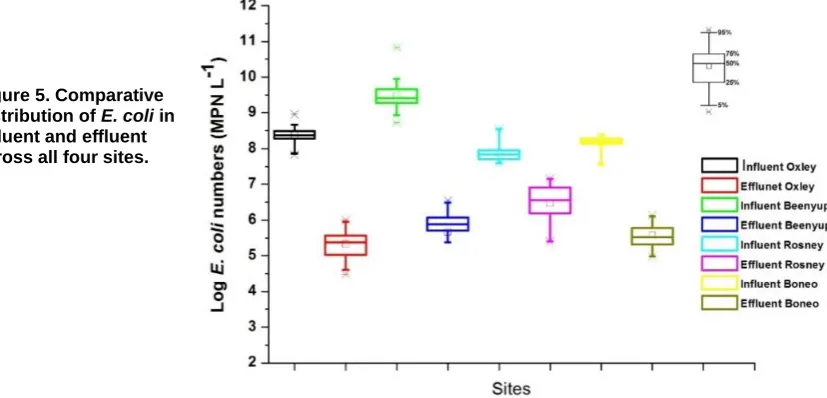
It was demonstrated that the ASP plants could consistently achieve E. coli removal with LRV geometric means ranging from 2.5 to 3.4 log10 (Figure 5). Virus LRVs were of comparable magnitude to those measured for E. coli
but were site-specific for all three viruses tested.
Figure 5. Comparative distribution of E. coli in influent and effluent across all four sites.
Human adenovirus was consistently detected in both influent (106 to 108 L-1) and effluent samples (103 to 105 L-1). The LRVs determined in the ASP WWTPs had a geometric means from 2.1 to 2.7 log10 indicating that adenovirus can be used as a conservative indicator.
Subproject 4 overview: Comprehensive Bayesian recycled water
validation
An executive summary for subproject 4 can be found in Appendix 5. Challenges
Lack of a framework to provide consistency in the approach taken to validate an overall “system” in addition to the validation of its individual components
Compounding of multiple conservative assumptions leads to the requirement for additional treatment steps and adding cost to recycled water schemes.
Outcomes
A review of risk management tools applicable to water treatment led to the identification of key principles for a multiple barrier validation framework. Such framework should clarify the relationship between contaminants, indicators and surrogates and ensure the quantification of risk and treatment effectiveness is transparent and readily auditable.
Validation approaches for recycled water schemes tend to consider each process individually without quantifying the benefits of synergies and multiple barrier reliability. Multiple conservative assumptions are compounded, potentially leading to an over-investment in treatment steps. Probabilistic analysis, using conventional Monte Carlo assessment or Bayesian Networks (BNs) provides alternative means of combining LRVs from multiple barriers.
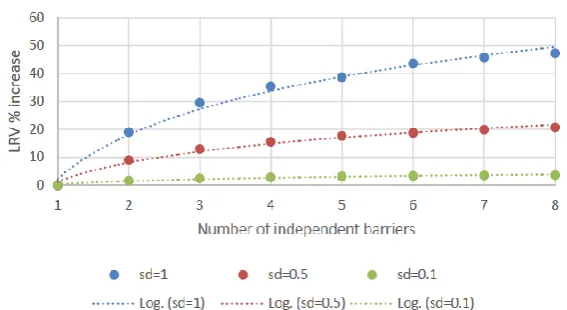
Where LRVs are known to be uncertain, current techniques adopt lower-range values such as 5th percentile values. Using a Monte Carlo simulation to combine barriers rather than the current approach based on summing individual LRVs can provide benefits, especially in cases where LRV distributions are quite broad (Figure 6). The same level of conservatism (e.g., the use of a 5th percentile LRV value) can be maintained regardless of the number of barriers.
Figure 6. Relative increase in attributable LRV for a combined multiple barrier 5th percentile, compared to summed individual barrier 5th percentiles
BNs were assessed as a platform for recycled water treatment validation, developing a Bayesian validation framework which is consistent with risk-based management principles. These networks capture beliefs about a system in a concise form and relationships between variables can be unambiguously defined and therefore audited. Relationships can also be ‘learned’, combining historical data and expert opinion with new information generated through validation testing. BNs can accommodate the equivalent of Monte Carlo simulations for quantitative risk assessment as well as the consideration of discrete hazardous events within different risk exposure scenarios. The concepts of “naïve” and “semi naïve” BNs was also introduced for water recycling systems.
This proved to be of significant value for identifying the predictive capability of various operational parameters in complex systems where relationships between what can be measured and pathogen LRVs are often not well defined.
Subproject 5 overview: Methods for pathogen isolation, culture, detection
and enumeration
An executive summary for subproject 5 can be found in Appendix 6. Challenges
Various methods are used for isolation, culture and detection of reference pathogens, which makes comparison of data difficult
Methods are in some cases limited in application due to highly variable results Lack of consistency on virus indicators and surrogates.
Outcomes
A literature review was conducted focusing on indicators and surrogates for viruses, bacteria and protozoa, leading to specific recommendations for water recycling applications.
Shortly before the commencement of this project, Keegan et al. (2012) reported method improvements for virus concentration and culture and the focus of virus method improvement was to verify the reports of Keegan et al. (2012).
Virus recoveries were inconsistent for both viruses used and for different concentration techniques (direct PEG or filtration + PEG) suggesting that a processing step was causing a loss of spiked virus (or infectivity). Overall, the direct PEG method gave better recoveries for both adenovirus and coxsackievirus, although recovery rates were lower than reported by Keegan et al. (2012) for samples collected from the same locations. Future work should focus on using a wider range of primary and secondary effluents.
In terms of Cryptosporidium, recovery methods based on initial sample dilution followed by concentration using either calcium carbonate precipitation or filtration were compared in primary and secondary effluent. Recoveries were very similar in primary effluent but the calcium carbonate flocculation method performed consistently better in secondary effluent. The infectivity of oocysts recovered appeared to vary, and in primary effluent, the infectivity was higher for oocysts recovered by direct centrifugation and filtration. Given its simplicity, the performance of the direct centrifugation method is still adequate for oocyst concentration, but including a recovery control is essential to identify changes in recovery performance.
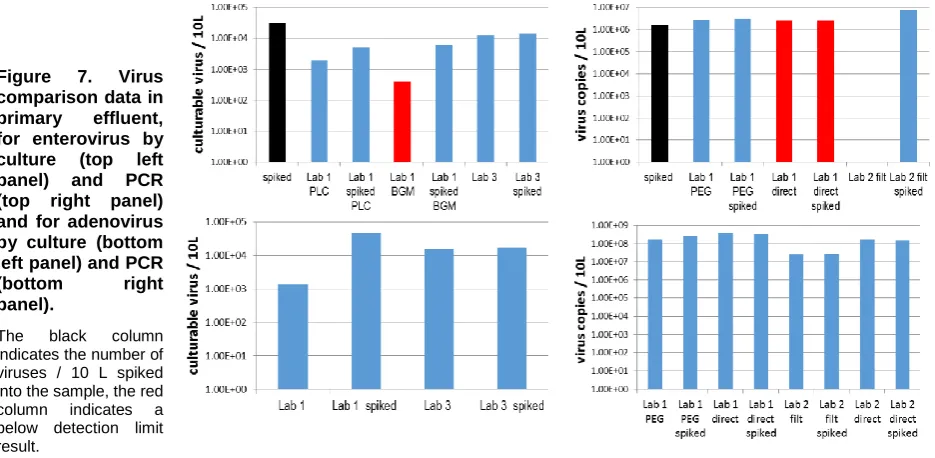
A single round of inter-laboratory comparison was conducted for virus and Cryptosporidium analyses. The results for the primary effluent samples for both viruses (Figure 7) and Cryptosporidium were comparable across the different laboratories, particularly for adenovirus detection by PCR. There was greater variation between the results from the different laboratories for secondary effluent, most likely due to differences in assay detection limit, low levels of virus present and also potentially due to differences in recovery rate.
Figure 7. Virus comparison data in primary effluent, for enterovirus by culture (top left panel) and PCR (top right panel) and for adenovirus by culture (bottom left panel) and PCR (bottom right panel).
The black column
Collaborations between subprojects
As discussed above and summarised in Figure 1, three of the five subprojects (SP1, SP2 and SP3) were dedicated to the development of validation protocols for specific treatment processes, whereas two subprojects (SP4 and SP5) were focusing on research which can support the validation of treatment processes generally. All subprojects shared some technical or research elements and the program aimed to align approaches facilitate the direct exchange of data.
Three program level workshops were organised at project inception (July 2013), at the start of the experimental research program (April 2014) and approximately two-third of the way through the said program (February 2015). Subproject leaders were encouraged to identify key interface points and links between their respective research activities. Specific areas which led to significant collaboration include:
Identification of adequate pathogen indicators and surrogates for specific treatment processes. The literature review conducted by SP5 was expanded to include the consideration of viral indicators for MBR. Several meetings took place between the SP1 and SP5 project teams and content expert PAC members before a consensus was reached on the microorganisms which were to be sampled and tested as part SP1 field campaigns.
Use of Bayes Nets to identify key influencing factors and relevant operating parameters for specific treatment technologies.
MBR features a large number of potentially interrelated factors that could contribute to LRV. As a collaboration between SP1 and SP4, a Bayesian network was constructed and successfully implemented to assess the impact of these factors on indicator LRV. The MBR Bayesian network was trained on over 100 site visits worth of data. Node connections were informed through an iterative process, incorporating expert knowledge workshops and automated structure learning. Similarly, the teams explored the application of BNs to pathogen LRV estimation from data collected from full-scale activated sludge systems as part of SP3. The data provided included influent/effluent pathogen concentrations from four activated sludge sewage treatment plants. Based on the complex biological nature of these systems, it was apparent that a naïve/semi naïve BN approach was more suitable than a causal model, however clear links between operating conditions and LRV could not be established.
Review and comparison of methods for the concentration and enumeration of viruses and protozoa.
Conclusions and updated gap analysis
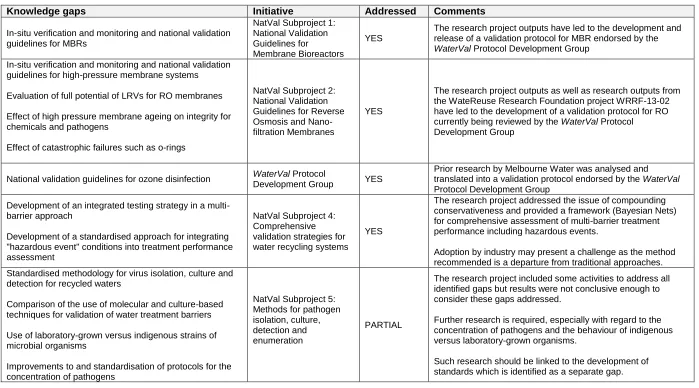
The technology and risk management gaps identified in “NatVal Road Map Report - The road map to a national validation framework for water recycling schemes” (Muston & Halliwell, 2011) led to the design of the NatVal Priority Research Program. Table 6 summarises the systematic assessment of how these gaps were addressed by the research conducted under this program (this does not cover gaps in areas such as governance and policies).
The key areas which remain significant gaps and potential barriers to further adoption of a national validation framework were identified as follows:
Quantification of microorganisms in raw and treated water
The research conducted under this program demonstrated the complexity associated with the concentration and enumeration of viruses and protozoa, not only in primary effluent but also in treated water. It also highlighted issues with spiking of indicator microorganisms with the evidence pointing towards a different behaviour between spiked and indigenous organisms. This reinforces the need to develop certified standards (to confirm the performance of the analytical techniques) and reference methods which can be implemented in a consistent manner across multiple laboratories.
Validation of activated sludge processes (secondary treatment)
The research program outcomes emphasised the complex relationships between environmental factors, operating parameters and pathogen removal performance. It also highlighted the variability between sites, designs and operating environment. Nevertheless, there is an increasing body of knowledge confirming that significant LRV can be achieved for a range of pathogens through activated sludge treatment. Further research is required to identify key influencing factors and to establish standard operating envelopes and critical control points. Chemicals
Principles applied to the research under this program, including the process of translation of research outcomes into validation guidelines and recommendations, are not specific only to the validation of pathogen removal. A similar approach could be followed to establish validation protocols for the removal of chemicals by a range of processes such as RO/NF.
Packed beds
Table 6. Knowledge gap areas for which further research was recommended.
Knowledge gaps Initiative Addressed Comments
In-situ verification and monitoring and national validation guidelines for MBRs
NatVal Subproject 1: National Validation Guidelines for
Membrane Bioreactors
YES
The research project outputs have led to the development and release of a validation protocol for MBR endorsed by the WaterVal Protocol Development Group
In-situ verification and monitoring and national validation guidelines for high-pressure membrane systems
Evaluation of full potential of LRVs for RO membranes
Effect of high pressure membrane ageing on integrity for chemicals and pathogens
Effect of catastrophic failures such as o-rings
NatVal Subproject 2: National Validation Guidelines for Reverse Osmosis and Nano-filtration Membranes
YES
The research project outputs as well as research outputs from the WateReuse Research Foundation project WRRF-13-02 have led to the development of a validation protocol for RO currently being reviewed by the WaterVal Protocol
Development Group
National validation guidelines for ozone disinfection WaterVal Protocol
Development Group YES
Prior research by Melbourne Water was analysed and translated into a validation protocol endorsed by the WaterVal Protocol Development Group
Development of an integrated testing strategy in a multi-barrier approach
Development of a standardised approach for integrating "hazardous event" conditions into treatment performance assessment
NatVal Subproject 4: Comprehensive validation strategies for water recycling systems
YES
The research project addressed the issue of compounding conservativeness and provided a framework (Bayesian Nets) for comprehensive assessment of multi-barrier treatment performance including hazardous events.
Adoption by industry may present a challenge as the method recommended is a departure from traditional approaches. Standardised methodology for virus isolation, culture and
detection for recycled waters
Comparison of the use of molecular and culture-based techniques for validation of water treatment barriers
Use of laboratory-grown versus indigenous strains of microbial organisms
Improvements to and standardisation of protocols for the concentration of pathogens
NatVal Subproject 5: Methods for pathogen isolation, culture, detection and enumeration
PARTIAL
The research project included some activities to address all identified gaps but results were not conclusive enough to consider these gaps addressed.
Further research is required, especially with regard to the concentration of pathogens and the behaviour of indigenous versus laboratory-grown organisms.
Knowledge gaps Initiative Addressed Comments
In-situ verification and monitoring and national validation guidelines for biological wastewater systems
Biological process surrogates and indicators
NatVal Subproject 3: National Validation Guidelines for Activated Sludge Treatment
PARTIAL
The research project was focused on activated sludge
treatment. Outputs did not directly lead to the development of a validation protocol. Gaps remain in the identification of suitable physico-chemical surrogate parameters that can be linked to pathogen reduction performance.
A similar WateReuse Research Foundation project has started in 2015 and the combined results of this and the NatVal project may help address this gap.
In-situ verification and monitoring and national validation guidelines for low-pressure membrane systems
Correlation of LRV with pressure decay on new and aged membranes to assess long-term removal of viruses
NO
The use of Direct Integrity Testing is currently recognised in a number of (jurisdiction specific) validation guidelines.
The development of a national validation protocol is under consideration by WaterVal
Suitable chemical indicators for various treatment processes
Enhanced surrogate measures for chemical treatment performance
Management and risk assessment of transformation products
NO The focus of this phase of research was on pathogens. Chemicals may be considered in a second phase.
Efficacy and prediction of pathogen removal in packed
beds and adsorption systems NO
This remains a gap which is of significance to the industry and may be considered under WaterVal
Needs assessment and development of priority reference
standards for validation of water recycling schemes NO
This remains a gap which is of significance to the industry and may be considered under WaterVal in conjunction with further research on pathogen concentration and quantification methods Benchmarking of water quality and of different
technologies using bioanalytical tools NO
The use of bioanalytical tools will require further demonstration before it can be considered by regulators.
Characterisation of water source (focusing on stormwater) NO Need for more cost-effective methods for assessing UV
RED using actinometric methods NO
This gap is very technology-specific and best addressed at manufacturer or utility level
Evaluation of particle counters for on-line monitoring of
membrane performance NO
Appendix 1 - Program outputs
Table 7 provides a summary of the program outputs. It does not include manuscripts under preparation. Table 7. Overview of program outputs.
Subproject Selected outputs 1 –
MBR
Technical reports
Subproject report including executive summary, literature review, research report, draft MBR validation protocol and MBR default values report.
Peer-reviewed journal articles
Trinh T, Branch A, Hambly AC, Carvajal G, Coleman HM, Stuetz RM, Drewes JE, Le-Clech P, Khan SJ, 2014, 'Hazardous events in membrane bioreactors - Part 1: Impacts on key operational and bulk water quality parameters', Journal of Membrane Science, vol. 497, pp. 494 – 503.
Branch AD, Trinh T, Zhou B, Leslie G, Le-Clech, 2015, 'Chemical cleaning in membrane bioreactors: Implications for accreditation in water recycling', Australian Water Association: Water Journal, vol. 42, no. 4, pp. 60 – 64.
Branch A, Trinh T, Carvajal G, Leslie G, Coleman HM, Stuetz RM, Drewes JE, Khan SJ, Le-Clech P, 2016, 'Hazardous events in membrane bioreactors - Part 3: Impacts on microorganism log removal efficiencies', Journal of Membrane Science, vol. 497, pp. 514 – 523.
Conference papers
Branch A; Leslie G; Le-Clech P, 2014, 'The current state of under validation of MBR in Australia', Australian Water Association AWA (ed.), presented at Ozwater 2014, Brisbane, 29 April - 1 May 2014.
Branch A; Trinh T; Zhou B; Leslie G; Le-Clech P, 2015, 'Chemical cleaning in Membrane Bioreactors: Implications for accreditation in water recycling', in Australian Water Association AWA (ed.), presented at Ozwater 2015, Adelaide, 12 - 14 May 2015.
2 – RO/NF
Technical reports
Subproject report including executive summary, literature review, research report and draft RO/NF validation protocol.
Peer-reviewed journal articles
Pype M.-L., Lawrence M.G., Keller J. and Gernjak W. (2016) Reverse osmosis integrity monitoring in water reuse: The challenge to verify virus removal - A review. Water Research, 98 384-395. doi:10.1016/j.watres.2016.04.040.
Conference papers
Subproject Selected outputs 3 –
AST
Technical reports
Subproject report including executive summary, literature review, research report and draft AST validation protocol.
Peer-reviewed journal articles
Ahmed W, Sidhu JP, Smith K, Beale DJ, Gyawali P, Toze S, 2015, ‘Distributions of fecal markers in wastewater from different climatic zones for human fecal pollution tracking in Australian surface waters’, Applied Environmental Microbiology, vol. 82, no. 4, pp. 1316 – 23.
Conference papers
Sidhu JP, Ahmed W, Smith K, Palmer A, Hodgers L, Wylie J, Nichlos C, Low J, Toze S, 2015, ‘Comparative removal of enteric virus during activated sludge process’, International Water Association IWA, presented at IWA World Water Congress 2014, Lisbon, 21 – 26 September 2014.
4 – Multiple Barriers
Technical reports
Subproject report including executive summary, research report, case studies and Bayes primer report.
Peer-reviewed journal articles
Carvajal GE, Roser DJ, Sisson SA, Keegan A, Kahn SJ, 2015, ‘Modelling pathogen log10 reduction values achieved by activated sludge treatment using naive and
semi-naive Bayes network models’, Water Research, vol. 85, pp. 304 – 15.
Conference papers
Carvajal GE, Roser DJ, Sisson SA, Kahn SJ, 2015, ‘Multivariate analysis of activated sludge pathogen removal through Bayesian network modelling’, in Australian Water Association AWA (ed.), presented at Ozwater 2015, Adelaide, 12 - 14 May 2015. 5 –
Methods
Technical reports
Appendix 2 – NatVal subproject 1: National validation
guidelines for membrane bioreactors
Subproject 1 (SP1) has critically assessed the current state of membrane bioreactor (MBR) validation in Australia and conducted a significant research program in order to propose a streamlined and appropriate validation protocol. A successful validation protocol will ensure that a process can and will continually meet log removal value (LRV) requirements for pathogens. SP1 focused on determination of the relationship between MBR operational parameters and LRV in order to highlight the key influencing parameters. In addition, online monitoring options were evaluated for their capacity to correlate with and provide continual assurance pathogen reduction performance. Furthermore, hazardous events that were perceived to compromise the removal efficiency of pathogens, such as chemical cleaning, were investigated with respect to their impact on overall pathogen reduction. The findings of this project have underpinned the development of a national validation protocol for MBR.
Subproject 1 Leader
Pierre Le-ClechUNESCO Centre for Membrane Science and Technology The University of New South Wales, Sydney, NSW 2052 Contact: [email protected]
Subproject 1 Partners
University of New South Wales Victoria UniversityMelbourne Water
Subproject 1 Research Report
Branch A & Le-Clech P 2015, National Validation Guidelines for Water Recycling: Membrane Bioreactors, Australian Water Recycling Centre of Excellence, Brisbane.
ISBN: 978-1-922202-67-3
Introduction
This subproject was initiated to develop appropriate validation guidelines for MBRs in Australia. The uncertainty as to whether an MBR can be accredited to the required LRV presents significant financial risk for suppliers and designers. In at least one instance, no efforts were made to validate a MBR due to fears that overall scheme delivery would be slowed. Instead, an ultrafiltration unit was placed after the MBR, essentially introducing 100% membrane redundancy and resulting in an increase CAPEX and in energy consumption estimated at 30%.
Only one state based validation guideline developed by the Victorian Department of Health exists for MBR in Australia. The industry perspective is that this guideline is very conservative and potentially difficult to implement, especially for smaller schemes. Regardless, the fact that only one state based guideline exists is evidence that there is insufficient guidance in other states, which has led to inconsistent and case by case assessment of MBRs in Australia.
From the regulators perspective, there is significant uncertainty about the effect and significance of operational parameters for MBR pathogen reduction performance, and on the capacity of online monitoring options to correlate with LRV. There is still limited available data on the suitability of surrogates used for performance monitoring with respect to target pathogens.
The overall aim of this subproject was to develop validation protocols for MBRs in water recycling schemes. In order to achieve this, multiple objectives were identified:
Objective 1. Collect data from literature, existing validation reports/guidelines and sampling activities in order to identify the LRV applicable to MBR and the mechanisms responsible, identify significant factors that influence LRV and to establish the current practice for MBR validation in Australia.
Objective 2. Perform multivariate analysis, including the use of Bayesian Belief Networks, to isolate the complex relationships between operational parameters and determine factors that significantly influence LRV.
Objective 3. Assess the potential for online monitoring to correlate with LRV in order to provide continual assurance.
Objective 4. Document and quantify the impact of various hazardous events that could lead to diminished LRV in MBRs including integrity failure and shock loading as well as events that occur during operation such as ageing of membranes and chemical cleaning.
Objective 5. Translate evidence based conclusions from research outputs, as well as the perspectives gained from a review of current practice into appropriate validation guidelines for MBR, consistent with the 9-step validation protocol template as developed by the WaterVal Protocol Development Group.
The team conducted a critical review of current literature on LRV achieved by MBR (more than 1000 LRV data points obtained), validation reports/guidelines, and a sampling campaign with a total of 180 visits to 11 different full scale MBRs in order to create a database of MBR performance and operation. Bayesian Belief Networks, created and trained on the data collected, were used to identify significant influencing factors. The new data obtained, combined with the assessment of current validation practice, was used to populate the 9-step validation protocol template provided by the Water Protocol Development Group. Outputs of this research have been used in the development of proposed validation guidelines for MBRs. This subproject summary is supported by a detailed research report (Branch and Le-Clech, 2015).
Review of MBR literature on LRV and Online Monitoring
Published scientific literature was evaluated in order to identify the mechanisms and expected performance of pathogen removal in MBRs as well as potential online monitoring strategies.
It is not typical for all pathogens to accumulate within the bioreactor of an MBR after being rejected by the membrane for two reasons: (1) biological predation will occur to some extent and (2) overall accumulation can be limited through sludge wasting (ie proportional to solids retention time).
Turbidity is the most convenient online monitoring technique to infer membrane integrity and hence pathogen removal in MBR. Turbidity measures light (or laser) scatter at 90°, proportional to the amount of suspended solids in a solution. An MBR contains a significant amount of MLSS adjacent the membrane (2,000 – 14,000 mg/L). As a result, significant loss of membrane integrity should result in spikes in turbidity due to transfer of detectable quantities of SS. At this point, corrective actions such as diversion of product water could take place automatically to protect against loss of containment of pathogens. Direct membrane integrity testing techniques, such as pressure decay testing (PDT), are not favoured in MBR due to the difficulty in maintaining control PDT in the harsh operating environment, the limitation to specific membrane configurations (certain hollow fibre and tubular, not flat sheet) and the lack of correlation between PDT and LRV in MBR; due to the action of mechanisms other than pure size exclusion.
Even though more than 1000 LRV data points has been reported in over 30 published papers for MBR in the last 20 years, the corresponding operational data is not often reported or provided in a consistent manner. As a result, no correlations or identification of statistically significant operating parameters could be made directly from literature alone.
Review of Current Validation Practices
Key elements were evaluated from the Victorian validation guidelines (VDoH 2013) and also from two validation reports, two recycled water quality management plans and one set of validation testing results. Turbidity was the chosen monitoring technology in all situations. In one case, an attempt was made to correlate turbidity with MLSS and achievable LRV. Operating parameters were documented in most reports, however analysis of their influence on LRV was limited or non-existent.
Default or indicative values for LRV in MBR were claimed based on direct microfiltration listed in the Australian Guidelines for Water Recycling Phase 1 2006, Table 3.8, for two of five sites. No indicative value is listed for MBR in VDoH 2013, although there is one for activated sludge alone.
Three of the five sites conducted challenge testing and the indicators used for virus, bacteria and protozoa were predominantly somatic coliphages (FRNA bacteriophage at 1 site), Escherichia coli and Clostridium perfringens, respectively. These indicators were consistent with surrogates listed in VDoH 2013. However, no attempt was made to correlate the use of these indicators with target pathogens, enteroviruses and Cryptosporidium. Sampling frequency and period was less than that recommended in VDoH 2013 and different in all cases, with the total number of sampling events varying between 14 and 30 over a period of 7 to 14 weeks. The VDoH 2013 recommends analysis of 3 different fouling conditions, at 3 points in the filtration cycle for 6 consecutive cycles each on non-consecutive days, spread over extreme seasonal periods unless a worst case period can be justified. This equates to a minimum of 54 samples taken over a year. One site did not need to conduct challenge testing as it provided literature for performance of the membranes and had historical challenge test data on the activated sludge plant that was upgraded.
Sampling and Analysis of Full Scale Site Data
No adequate data set, containing both microorganism removal and operational parameters, was available to allow correlation and determination of influencing factors on LRV. MBR removal mechanisms are complex and interdependent, leading to difficulties when applying simplistic modelling approaches. Indicator LRV data for viruses (somatic coliphage, FRNA bacteriophage), bacteria (E. coli) and protozoan (C. perfringens) was collected alongside a shortlist of operational and monitoring parameters during a sampling campaign across 11 full scale MBRs for a total of 180 site visits. Bayesian belief networks were constructed to elucidate significant relationships and determine influencing parameters.
Consequences of Hazardous events on MBR LRV
Consideration of hazardous events and likely monitoring/control strategies is important for on-going validation of MBR systems and the potential consequences of hazardous events were scoped in detail. Chemical cleaning and membrane ageing were included as hazardous events due to their perceived impact on pathogen removal by the membrane.
An overview matrix of process failures from pilot testing and full scale site investigation was provided which also considered recovery times.
To date, chemical cleaning has been assessed at 3 full-scale sites. For 0.04 μm hollow fibre membranes operating at low to moderate flux (6 - 25L/(m2h)) intensive clean in place (CIP) and regular chemically enhanced backwash did not reduce LRV below typically observed process variability (5th percentile) as shown in Figure 8 and Figure 9. However, when 0.4 μm flat sheet membranes operated at high flux (30 L/(m2h)) underwent intensive CIP with NaOCl and Oxalic acid, a significant reduction in LRV occurred. Permeability change before and after cleaning was negligible for hollow fibre membranes, but increased 5 fold upon cleaning flat sheet membranes. A significant change in permeability from nominal conditions is considered to be a site specific indicator that membrane rejection may have reduced.
Figure 8. LRV for total coliforms, E. coli and Clostridium perfringens and turbidity for 5 days following a CIP
Pilot scale assessment of hazardous events demonstrated that plugging and shielding of damage to hollow fibre membranes could occur rapidly (< 15 min) and result in recovery of LRV to nominal values. Plugs were reversible and could be removed during backflush. High NaCl intrusion reduced virus rejection, believed to be due to dispersion of particles from sludge, but recovered within 2 days, upon washout from the reactor. Most other chemical shock loads induced severe fouling, that may have mitigated excess breakthrough as a result of reduced activated sludge performance.
Establishment of default LRV values for MBR
A default or indicative LRV could be used to provide a basis for conservative accreditation of MBR systems where extensive validation testing is not considered feasible.
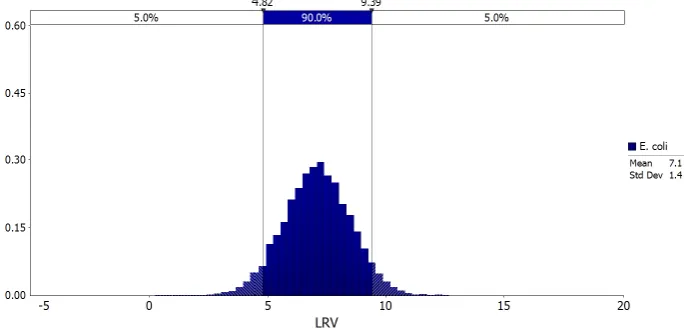
Probability density functions (PDF) were fit to all data collected from literature (n > 1000 LRVs) and data from site sampling (example in Figure 10). In addition, an operating envelope was established based on the same sites and sources. Also, the results from sampling of 2 sites to a total of 8 samples for Cryptosporidium, Giardia, enteroviruses, reoviruses and adenoviruses were reported (all > 4 LRV).
Figure 10. E. coli LRV probability density function from site visits and validation reports
The 5th percentile of resulting LRV PDFs were collated and the most conservative sets of viruses, bacteria and protozoa were rounded down to form the basis of default LRV. The following values were proposed as conservative indicative LRVs for MBR:
Virus: 1.5 Bacteria: 4.0 Protozoa 2.0
The 95th percentile of permeate turbidity for the corresponding operating envelope was 0.4 NTU. Hence, as long as permeate turbidity remains less than 0.4 NTU and MBRs are operated within the range of conditions specified in Table 8 of Appendix C, LRVs are likely to remain above default values.
Proposal of a Validation Protocol
The findings of this research were translated into a draft validation protocol consistent with the template provided by the PDG.
The proposed validation protocol is based extensively on the existing VDoH 2013 guidelines however, some alterations were made including a reduction in sampling requirements, consideration of eligibility for pre-validation and listing significant influencing parameters as a result of Bayesian analysis.
Appendix 3 – NatVal subproject 2: National validation
guidelines for reverse osmosis and nanofiltration
membranes
This subproject aimed to create a framework based on literature review, operational experience from stakeholders, experimental results, scientific knowledge and manufacturer software to develop validation and verification monitoring protocols for the rejection of pathogens (in particular viruses) using online monitoring and challenge testing techniques for RO/NF. The full research report compiles all experimental data produced and describes how this translated into a validation protocol for RO/NF.
Subproject 2 Leader
Marie-Laure PypeAdvanced Water Management Centre University of Queensland
Level 4, Gehrmann Building, Research Road Saint Lucia QLD 4072, AUSTRALIA
Contact: [email protected]
Subproject 2 Partners
The University of Queensland The University of New South Wales Curtin UniversityVictoria University
West Australian Water Corporation
Subproject 2 Research Report
Pype M-L, Alvarez de Eulate E, Antony A, Arrigan D, Busetti F, Le-Clech P & Gernjak W 2015, National Validation Guidelines for Water Recycling: Reverse Osmosis Membranes, Australian Water Recycling Centre of Excellence, Brisbane.
ISBN: 978-1-922202-31-4
Introduction
Validation and monitoring of treatment by high pressure membranes (reverse osmosis - RO, and nanofiltration - NF) is critical to ensure the risk to public health associated with pathogens is adequately managed. To-date, there is no accepted Australian or international validation protocol for this type of membranes, despite conventional monitoring techniques such as electrical conductivity (EC; only for RO), total organic carbon (TOC) or sulphate rejection having been used for this purpose albeit based on ad-hoc approval by regulators. An agreed validation protocol establishing a correlation between log removal value (LRV) and indirect continuous online monitoring would provide confidence to recycled water treatment plant operators and project developers. In particular, the ability to accredit LRV of three and above could reduce the investment costs and simplify treatment process trains by removing unnecessary treatment barriers.
The team conducted a literature review, considering the three types of removal mechanisms by RO/NF membranes and focusing on those involved in virus removal. The review also covered monitoring techniques and correlations with virus surrogates (MS2 phage) based on removal data gathered from the literature.
An experimental study was conducted to assess the impact of operating conditions on the rejection of surrogates in order to establish conservative operating conditions under which testing should be conducted. The team also considered new integrity monitoring techniques based on the spiking (continuous or pulse) of surrogates that can be monitored online or semi-continuously. Finally, the impact of fouling/ageing cycles on the rejection of MS2 phage and EC was systematically assessed.
Two studies were conducted in parallel on (i) the development of a new electrochemical sensor for online measurement of sulphate and (ii) testing the commercially available sensor S::CAN in full-scale.
Literature review
High pressure membrane filtration is a very effective physical barrier to remove inorganic and organic contaminants including pathogens such as viruses. Viruses are the smallest pathogens and the ones found in wastewater can be as small as 24 nm. High pressure membranes are using three different types of removal mechanisms: size exclusion, charge repulsion and adsorption/diffusion. The main removal mechanism for viruses is size exclusion, and charge repulsion improves their removal. Membrane studies generally used MS2 phage as virus model due to its characteristics being similar to enteric viruses (size and surface charge). The advantages of this surrogate are the possibility to culture in high quantity and the fact that it is harmless to human health. However, its quantification is time consuming (24h) and not practical in full-scale application. Hence, it is advantageous to find a non-biological surrogate to avoid the risk involved in performing challenge test with native viruses. Moreover, the use of non-biological surrogate allows online or near online measurement which is currently not possible with live organism such as bacteriophages.
The aim of the project was not to develop a new surrogate or a new monitoring technique, but to provide all the information necessary to support a validation framework. Several surrogates and membrane integrity monitoring are found in the literature and have been described previously. Electrical conductivity, TOC and sulphate are already used in full-scale to monitor the integrity of RO membranes. Dissolved organic matter is another surrogate naturally present in feed water gaining interest. From the literature data, a correlation study has been conducted in order to determine the best potential surrogate for MS2 phage. This correlation study proved that R-WT is a good substitute to MS2 phage in contrast to EC. Sulphate and DOM have the potential to be used to validate the RO/NF process up to 3 LRV, which is lower than MS2 phage but higher than EC. Thus, they are of high interest in the context of NF/RO validation and have been selected for further research.
Rhodamine WT (R-WT)
Pulsed marker technique
This technique is a deviation of the R-WT monitoring technique. A high concentration of dye is pulse-spiked in the feed side and monitored online by fluorescence detection in the permeate side. This technique permits validating RO membrane for 3.3 – 4.3 LRV using uranine (Surawanvijit et al., 2015). Uranine is also a non-reactive, non-toxic tracer dye (Smart and Laidlaw, 1977; Behrens et al., 2001) having a MW of 332 g mol-1, which is lower than R-WT.
TRASAR
TMTRASARTM (Nalco company) is a fluorescent tracer dye attached to an antiscalant and it is also gaining interest (Kelle Zeiher et al., 2003; Portillo, 2015). The cities of San Diego (California, USA) and Big Spring (Texas, USA) conducted a study comparing MS2 phage and TRASARTM integrity monitoring techniques (MWH, 2007; Steinle-Darling et al., 2015). TRASARTM was dosed continuously as pure chemical to the RO feed and the permeate concentration was determined using a portable microprocessor-based analyser (TRASARTM Pen Fluorometer, Nalco). Under this condition, the TRASARTM marker achieved more than 4 LRV.
Total organic carbon (TOC)
Total organic carbon measurement is one of the current online techniques used in full-scale to monitor RO membranes but it can only be used to validate LRVs typically below 3 due to the limited rejection of organics by the RO process (Adham et al., 1998; Kitis et al., 2003; Kumar et al., 2007). It can also be argued that TOC rejection varies during operation as it is a function of the organic composition. Nevertheless, TOC compounds are smaller than viruses by at least an order of magnitude and thus TOC will generally be more conservative than virus measurement.
Electrical conductivity (EC)
Electrical conductivity is one of the current online techniques used to monitor the integrity of the RO process. It measures all the ions present in the feed and permeate water. This technique can currently validate this process for 1.4 - 2 LRV (Zornes et al., 2010).
Sulphate
Sulphate (SO42-) is already used in some plants to monitor the integrity of RO membranes and is measured offline by ion chromatography. The advantage of sulphate is its natural presence in feed water which can be used to validate LRV of up to 3-log (Kruithof et al., 2001a). In the case of low sulphate feed concentration, MgSO4 can be spiked into feed water. The full research report refers to research conducted within this project to develop a new online sulphate sensor using electrochemical techniques. Different tests have been carried using a commercially available ionophore which binds to sulphate ions. The ionophore helps to transfer sulphate from one phase (the RO feed or permeate) into the sensor phase. A sulphate sensor prototype was developed with a limit of detection (LOD) of 0.6 µM using this commercially available ionophore combined to a pre-concentration step. Selectivity studies for a range of anions (PO43-, H2PO4-, SO32-, NO3-, CH3COO-, OH-, Cl- and SCN-) were carried out which showed potential interferences by the ions PO43-, NO3-, OH-, Cl-. To date, chloride ions interfere in the sulphate measurement, but this might be reduced using electrolysis to remove chloride, and the use of new, improved ionophores.