CSEIT1833571 | Received : 05 April 2018 | Accepted : 20 April 2018 | March-April-2018 [ (3 ) 3 : 1533-1537 ]
© 2018 IJSRCSEIT | Volume 3 | Issue 3 | ISSN : 2456-3307
FPGA Based Vending Machine
Neyon Das*, Rahul Mandal, Anindita Mitra, Biswarup Maiti, Subhadeep Nandy, Debarshi Datta
Electronics & Communications Engineering, Brainware Group Of Institutions S.D.E.T(M.A.K.A.U.T.), Kolkata, West Bengal, India
ABSTRACT
A vending machine is a automated machine that provide items such as beverages, alcohol, cigarette, snacks, lottery tickets, train tickets to consumers automatically, after paying money by a credit card, or specially designed card is inserted into the machine. The requirements of the vending machines are increasing day by day in the modern world. The Field Programmable Gate Array (FPGA) based vending machine is flexible, reprogrammable, uses less power and faster response than micro-controller based vending machine. The vending machine accepts coins as inputs in any sequence and delivers products when required amount is deposited and gives back the change if entered amount is greater than the price of product. There are option of cancellation means a user can withdraw the request any time and entered money will be returned back without any product . The proposed algorithm is implemented in Very High Speed Integrated Circuit Hardware Description Language(VHDL). The proposed design is implemented on Xilinx Spartan-6 FPGA development board. The design is implemented The vending machine accepts coins as inputs in any sequence and delivers products when required amount is deposited and gives back the change if entered amount is greater than the price of product.
Keywords: Vending Machine, FSM, Mealy Machine, Moore Machine, Xilinx
I.
INTRODUCTION
Vending Machines are used to purchase various products like Coffee, Snacks, Cold Drink, alcohol, lottery, train tickets etc. when money or card is inserted into it. Vending Machines have been in existence since 1880s. The first commercial coin operated machine was introduced in London and England used for selling post cards. The vending machines are easily accessible and faster than the conventional method for purchasing. In present days, these can be found everywhere like at railway stations selling train tickets, in schools and offices vending drinks and snacks, in banks as ATM machine and provides even diamonds and platinum jewellers to customers. Previous CMOS based machines are slower than the FPGA based machines. The FPGA based machine is also more flexible, programmable and can be reprogrammed. But in
micro-controller based machine, if someone wants to change the design, the whole architecture has to be changed again but in FPGA user can easily increase the number of products. In this paper an approach is proposed to design a Finite State Machine(FSM) based Vending Machine with auto-billing features. The machine also supports a cancellation feature means that the user can withdraw the request and the money will be returned to the consumer.
with total price. The machine will demand for servicing when the products are not available inside the machine.
II.
RELATED WORK
Various researches have been carried out in order to design the Vending Machines. A few of them are discussed here as: Fauziah Zainuddin[4] proposes a vending machine for steaming frozen food using conceptual modelling. In which the process of three main states (user selection state, freezer state and steaming state) has been modelled using process approach, which emphasized on the process flow or control logic to construct the model for steamed buns vending machine application. Conceptual modelling is described in [5]. In [6] the concept of automatic mobile payment is discussed. This concept is based on the short message payment with the main control module M68HC11 and GPRS module MC35. Thee various methods of designing VHDL based machines are discussed in [7], [8] and [9]. Also in [10] the passenger’s requirements for ticketing system are given. In [11] a coffee vending machine is designed using single electron encoded logic(SEEL). The designed circuit is tested and its power and switching time is compared with the CMOS technology.[12]
III.
OPERATION OF VENDING MACHINE
(1) When the user puts in money, money counter tells the control unit, the amount of money inserted in the Vending Machine.
(2) When the user presses the button to purchase the item that he wants, the control unit turns on the motor and dispenses the product if correct amount is inserted
(3) If there is any change, machine will return it to the user.
(4) The machine will demand for servicing when the products are not available inside the machine .The operating frequency of this vending machine is of 485.779MHz.
IV.
FSM
A finite state machine (FSM) is a digital sequential circuit that consists on number of pre-defined states that are controlled by one or more inputs[2]. The finite state machine remain stable until the inputs changes.
There are two types of finite state machines: 1-
Synchronous FSMs 2-Asynchronous FSMs.
Synchronous FSMs have a clock input and are also called Mealy machines, while asynchronous FSMs are without clock input and are also called Moore machines[2][3]. The proposed algorithm for FPGA based vending machine is a sequential circuit which is based on Mealy Model. [1]
Vending Machine totally depend on the present state, while in a Mealy machine Model the output is depend on the present state 306 as well as the previous input. The Mealy and Moore machines models are shown in Figure 1. and in Figure 2. respectively. In a Finite State Machine the circuit’s output is defined in a different set of states i.e. each output is a state. A State Register to hold the state of the machine and a next state logic to decode the next state. An output register defines the output of the machine. In FSM based machines the hardware gets reduced as in this the whole algorithm can be explained in one process.
Two types of State machines are:
MOORE Machine: In Moore machine model the output only depends on the present state. The MOORE machine model is shown in figure 2.
Figure 3. Fsm Diagram Of Vending Machine
Figure 3 shows the Vending machine controller( top-level and states diagrams). The signals are ni=nickel_in, di=dime_in, qi=quarter_in, no=nickel_out, do=dime_out and co=candy_out. Controller responds with three outputs: candy_out, to dispense a candy bar, plus nickel_out and dime_out, asserted when change is due.
Figure 1 also shows the states of the corresponding FSM. The numbers inside the circle represents the total amount deposited by the customer(only nickels, dimes and quarters are accepted). State 0 is the idle state. From it, if a nickel is deposited, the machine moves to state 5; if a dime, to state 10; or if a quarter, to state 25. Similar situations are repeated for all states, upto state 20. If state 25 is reached then a candy bar is dispensed, with no change. However, if state 40 is reached for example, then a nickel is delivered, passing therefore the system to state 35, from which a dime is delivered and a candy bar dispensed. The three states marked with double circles are those from which a candy bar is delivered and the machine returns to state 0.
This problem will be divided into two parts: in the first the fundamental aspects related to the design of the vending machine controller are treated; in the second, additional (and indispensible) features are added. The first part is studied in the section, while the second is proposed as a problem. The introduction of such additional features is necessary for safety reasons; since we are dealing with money, we must assure that none of the parts, (machine or customer) will be hurt in the transaction.
There are 10 states, so four bits are necessary to encode them(so four flip flops will be inferred). Recall that the compiler includes such states in the order that they are listed, so st0= “0000” (decimal 0), st5= “0001” (decimal 1)…. st45= “1001” (decimal 9). Therefore, in the simulations, such numbers are shown instead of state names.
V.
RESULTS AND DISCUSSION
Figure 4. Simulation Results
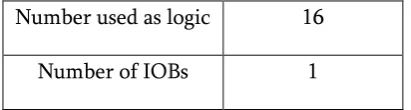
Table 1. Comparison Table Synthesis Parameter Previously Used
Number Slice Registers
56
Number of Slice LUTs
35
Number used as Flip-Flops
Number used as logic 16
Number of IOBs 1
Table 2. Device Utilization Summary Of Vending Machine
Synthesis Parameter Used presently
Number Slice Registers 4
Number of Slice LUTs 8
Number used as Flip-Flops 4
Number used as logic 8 balance money. Vending Systems enhances productivity, reduces system development cost, and accelerates time to market. It gives fast response and is easy to use by an ordinary person. The designed machine can be used for many applications and we can easily enhance the number of selections.
VII.
ACKNOWLEDGEMENT
The authors would like to thank the Department of Electronics and Communication, Brainware Group of Institutions for providing the ISE design suite 14.2 admin Spartan 6 FPGA board.
VIII.
REFERENCES
[1]. Design and Implementation of Vending Machine using Verilog HDL,Muhammad Ali Qureshi , Abdul Aziz , Hafiz Faiz Rasool ,
Muhammad Ibrahim,Usman Ghani and
Hasnain Abbas. 2011 2nd International Conference on Networking and Information Technology IPCSIT vol.17 (2011) © (2011) Mohd.Izham Ibrahim (2009) "Conceptual Modeling for Simulation: Steaming frozen Food Processing in Vending Machine" International Conference on Computer Science and Information Technology, University Malaysia Pahang, pp.145-149.
[5]. B. Caulfield & M.O Mahony (2005) "Passenger Requirements of a Public Transport Ticketing System" Proceedings of the 8th International IEEE Conference on Intelligent Transportation Systems Vienna, Austria, pp-32-37.
[6]. Peter Minns & Ian Elliott, "FSM-based Digital Design using Verilog HDL", John Wiley & Sons Ltd 2008.
[7]. Xilinx Inc., Spartan 3 Data sheet: http://ww w.xilinx.com.
[8]. Bhaskar "VHDL primer" Second Edition. [9]. C. J Clement Singh, K Senthil Kumar, Jayanto
(2007) "Single Electron Device based Automatic Tea Vending Machine" proceedings of International Conference on Information and Communication Technology in Electrical Sciences (ICTES 2007) , pp 891-896.
[10]. Zhang Wen & Zhang Xin Long (2010) "Design and Implementation of automatic vending machine Based on the short massage payment" International Conference on Information and Communication technology in Electrical Sciences, Neijiang, Sichuan, China.pp.978-981. [11]. M. Zhou, Q. Zhang & Z. Chen (2006), "What
Can Be Done to Automate Conceptual Simulation Modelling?" Proceedings of the 2006 Winter Simulation Conference, pp. 809-814.