Discourse Relation Recognition by Comparing Various Units of Sentence
Expression with Recursive Neural Network
Atsushi Otsuka, Toru Hirano, Chiaki Miyazaki, Ryo Masumura, Ryuichiro Higashinaka, Toshiro Makino and Yoshihiro Matsuo
NTT Media Intelligence Laboratories NTT Corporation
{otsuka.atsushi, hirano.tohru, miyazaki.chiaki, masumura.ryo, higashinaka.ryuichiro,
makino.toshiro, matsuo.yoshihiro}@lab.ntt.co.jp
Abstract
We propose a method for implicit discourse relation recognition using a recursive neural network (RNN). Many previous studies have used the word-pair feature to compare the meaning of two sentences for implicit dis-course relation recognition. Our proposed method differs in that we use various-sized sentence expression units and compare the meaning of the expressions between two sen-tences by converting the expressions into vec-tors using the RNN. Experiments showed that our method significantly improves the accu-racy of identifying implicit discourse relations compared with the word-pair method.
1 Introduction
Discourse relation recognition is a technique to iden-tify the type of discourse relation between two sen-tences. Because discourse relation contributes to the coherence of sentences, it has potential applications in many natural language processing (NLP) tasks. For example, in text summarization, it makes sum-mary documents more consistent by using discourse relations and structures (Gerani et al., 2014). Simi-larly, in conversational systems (Higashinaka et al., 2014), discourse relations can help the system select contextually appropriate system utterances.
Discourse relations are categorized into explicit and implicit relations. Explicit relations have a dis-course marker such as a connective, making them easy to identify with a high degree of accuracy (Pitler and Nenkova, 2009). Implicit discourse rela-tions, in contrast, have no discourse marker between
sentences. Previous studies have proposed many methods for implicit discourse recognition, among them reasoning-based (Sugiura et al., 2013) and pattern-based (Saito et al., 2006) methods. Many of these earlier studies (Marcu and Echihabi, 2002; Lin et al., 2009; Pitler et al., 2009; Wang et al., 2012; Lan et al., 2013; Biran and McKeown, 2013; Ruther-ford and Xue, 2014) focused on using word pairs or their derivative features. For example, take the two following sentences:
A1:I like summer.
B1:I prefer winter.
In this case, we can easily identify the relation as “comparison” by focusing on the word pair “
sum-mer-winter”. However, there is emerging evidence
that word pairs may no longer have a role to play in implicit discourse relation recognition (Park and Cardie, 2012). This is because identification is not always possible by using just word pairs. When we consider the following sentences,
A2:I got soaked by the sudden rain yesterday.
B21:Did you forget your umbrella at the office?
B22:The rain was so heavy that my umbrella was
useless.
discourseA2−B21 andA2−B22 have different relations. discourse A2 −B21 is causal relation: B21 explains the reason forA1, andA2−B22 is
ex-^ĞŶƚĞŶĐĞϭ
^ĞŶƚĞŶĐĞϮ
ZEE
ZEE
^ĞŶƚĞŶĐĞϭ sĞĐƚŽƌƐ
^ĞŶƚĞŶĐĞϮ sĞĐƚŽƌƐ
LJŶĂŵŝĐ WŽŽůŝŶŐ
ŝĨĨĞƌĞŶĐĞ sĞĐƚŽƌ
&ĞĂƚƵƌĞ
sĞĐƚŽƌ &ODVVLILHU䠄^sD䠅
ŝƐĐŽƵƌƐĞ ZĞůĂƚŝŽŶ
>ĂďĞů ƌĞĂƚŝŶŐǀĞĐƚŽƌƐŽĨǀĂƌŝŽƵƐ
ĞdžƉƌĞƐƐŝŽŶ ƵŶŝƚƐƵƐŝŶŐƚŚĞZEE &ĞĂƚƵƌĞĐƌĞĂƚŝŽŶĨƌŽŵǀĞĐƚŽƌƐĨŽƌƌĞůĂƚŝŽŶƌĞĐŽŐŶŝƚŝŽŶ
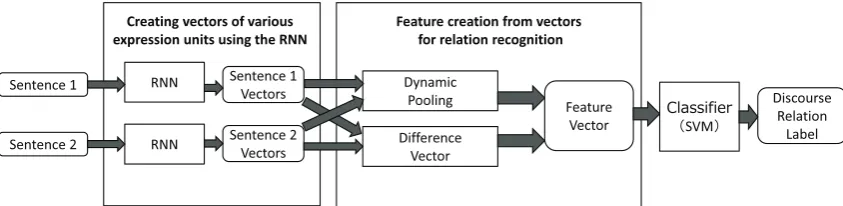
Figure 1: Overview of proposed discourse relation recognition.
ே峘
ŋƖƘƇƇƈƑŌ ං峑ŋƅƜŃƄŃƕƄƌƑŌ 峄峠ቨ島峊ŋŬŃƊƒƗŃƖƒƄƎƈƇŌ
આ 峙 ே 峘 ං 峑 峄峠ቨ島 峊 આ峙
ŋƜƈƖƗƈƕƇƄƜŌ
:RUG
ே峘ං峑 ŋƅƜŃƄŃƖƘƇƇƈƑŃƕƄƌƑŌ
ே峘ං峑峄峠ቨ島峊 ŋŬŃƊƒƗŃƖƒƄƎƈƇ ƅƜŃƄŃƖƘƇƇƈƑŃƕƄƌƑŌ
6HJPHQW EXQVHWVX
આ峙ே峘ං峑峄峠ቨ島峊 ŋŬŃƊƒƗŃƖƒƄƎƈƇ ƅƜŃƄŃƖƘƇƇƈƑŃƕƄƌƑŃƜƈƖƗƈƕƇƄƜŌ 6HQWHQFH
આ峙峄峠ቨ島峊
ŋŬŃƊƒƗŃƖƒƄƎƈƇ ƜƈƖƗƈƕƇƄƜŌ ං峑峄峠ቨ島峊ŋŬŃƊƒƗŃƖƒƄƎƈƇŃƅƜŃƄŃƕƄƌƑŌ 'HSHQGHQF\
આ 峙 e ே 峘 e ං 峑 e 峄峠ቨ島 峊 ŋŬŃƊƒƗŃƖƒƄƎƈƇ ƅƜŃƄŃƖƘƇƇƈƑŃƕƄƌƑŃƜƈƖƗƈƕƇƄƜŌ
GHSHQGHQF\ VWUXFWXUH
6\QWDFWLF6WUXFWXUH
511 6WUXFWXUH
Figure 2: RNN structure in Japanese dependency structure.
tracted for both cases, making little contribution to relation recognition. If we can use pairs of longer expressions such as “I got soaked-forget your
um-brella” and “I got soaked by the sudden rain - so
heavy that my umbrella was useless”, it will be
eas-ier to perform relation recognition because the units employed are more specific and distinguishing of discourse relations.
This paper proposes a novel method for implicit discourse relation recognition that compares various expression units between two sentences. The small-est units of a sentence expression are words, and the largest are the entire sentence. To consider various expression units, we turn to a recursive neural net-work (RNN) based approach. The RNN is the neural network based method to create vectors of various expression units on the basis of the syntactic struc-ture of a sentence and has been applied to various NLP tasks (Socher et al., 2011; Li et al., 2014; Liu et al., 2014). Here, we employ the RNN based ap-proach for implicit discourse recognition and show that our proposed method significantly outperforms the word pair based approach.
In this paper, we demonstrate through experi-ments using Japanese conversational data that our method can improve the estimation performance of implicit discourse relation recognition more than the conventional word pair method. In the following sections, we first describe our proposed method us-ing the RNN with Japanese sentences in Section 2. Section 3 explains the experiments we performed on implicit discourse recognition in Japanese dialogue, and we discuss the results in Section 4. Finally, we conclude in Section 5.
2 Discourse relation recognition by comparing various units of sentence expressions
WŽŽůŝŶŐƐŝnjĞ͗
⋇&RPSXWH WKH VLPLODULW\IRUHDFK
FRPELQDWLRQRI YHFWRUV
⋉([WUDFWRQH VLPLODULW\IURP HDFKZLQGRZV
ǁŽƌĚϭͺϭ ǁŽƌĚϭͺϮ ǁŽƌĚϭͺϯ ƐĞŐŵĞŶƚϭͺϭ
ƐĞŶƚĞŶĐĞϭ
ǁŽƌĚ ϭͺϭ
ǁŽƌĚϭͺϭ
ǁŽƌĚϭͺϭ
ƐĞŐŵĞŶƚϭͺϭ
ƐĞŶƚĞŶĐĞϭ
ǁŽƌĚϮͺϭ ǁŽƌĚϮͺϮ ǁŽƌĚϮͺϯ ǁŽƌĚϮͺϰ ǁŽƌĚϮͺϱ ƐĞŐŵĞŶƚϮͲϭ
ƐĞŐŵĞŶƚϮͲϮ
ĚĞƉĞŶĚĞŶĐLJϮͲϭ ĚĞƉĞŶĚĞŶĐLJϮͲϮ ƐĞŶƚĞŶĐĞϮͲϰ
^ĞŶƚĞŶĐĞ ϭ
^ĞŶƚĞŶĐĞ Ϯ
6LPLODULW\PDWUL[6
⋈ 6SOLWXSWKH VLPLODULW\PDWUL[E\
ZLQGRZVL]H
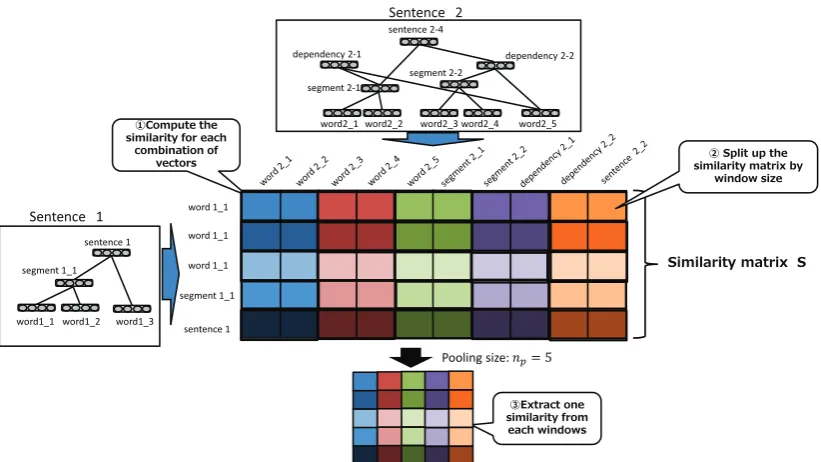
Figure 3: Overview of Dynamic Pooling.
similarity, as follows:
sim(v1, v2) = |v1·v2
v1||v2| (2)
wherev1 andv2denote vectors extracted from sentences 1 and 2, respectively. The row and column order of the matrix is placed depth-first in the RNN tree, right-to-left. Specifically, ma-trix elements00, which is the first element of similarity matrixS, is the degree of similarity between the left-most word vectors in each sen-tence.
In DP, the similarity matrix is split up into a sub-matrix by a grid window. The size of the grid window is computed depending on pool-ing sizenp. If sentences 1 and 2 haveN and M vectors, respectively, the grid window size is[npN]×[Mnp]. We extract a maximum similar-ity value element in each sub-matrix to create a pooled matrix. This pooled matrix is con-sistently fixed-length because the grid window size dynamically varies depending on sentence length. Similarity information between two sentences is consolidated into a fixed-length feature by the DP.
Difference vectors
Recent studies of word embeddings such as word2vec (Mikolov et al., 2013b) have re-vealed that difference vectors are meaningful. In the well-known word2vec example, the vec-tor operation “king - man + woman = queen” holds. That is, the difference vector “king - man
” represents the information of kingship. Fol-lowing this insight, we use the difference vec-tor in the hope that it can capture some rela-tions between sentences. The difference vector is computed by subtracting two vectors,v1and v2,
diff(v1, v2) = |v1−v2
v1−v2| (3)
where vectors v1 and v2 denote vectors cre-ated by the RNN. In this paper, we utilize the mean vector of all difference vectors created by a combination of all the vectors (i.e., vectors that correspond to all the cells in the matrix S in Fig. 3) of two sentences as a feature vector.
3 Experiment
фƐůŝŶĞс͞ϭ͟ƐƉĞĂŬĞƌс͟͞х
ᬑẁ䛿䛚㓇䜢㣧䜎䜜䜎䛩䛛䠛 ;ŽLJŽƵĚƌŝŶŬĂůĐŽŚŽůŝĐďĞǀĞƌĂŐĞƐŝŶLJŽƵƌĚĂŝůLJůŝĨĞ͍Ϳ фͬƐх
фƐůŝŶĞс͞Ϯ͟ƐƉĞĂŬĞƌс͟͞х
фĐŽŶŶĞĐƚŝǀĞĐĂƚĞŐŽƌLJсΗ/ŵƉůŝĐŝƚ͞ĐůĂƐƐсΗyWE^/KE͞ƚLJƉĞсΗ/ŶƐƚĂŶƚŝĂƚŝŽŶΗ ƌĞůс͞ϭΗŵĂƌŬĞƌсΗ䛯䛯䛸䛘䜀;&ŽƌĞdžĂŵƉůĞͿͬ͞х
䝇䝭䝜䝣䜰䜲䝇䜢䜘䛟㣧䜏䜎䛩䚹 ;/ŽĨƚĞŶĚƌŝŶŬ^ŵŝƌŶŽĨĨͲŝĐĞ͘Ϳ фͬƐх
фƐůŝŶĞс͞ϯ͟ƐƉĞĂŬĞƌс͟͞х
фĐŽŶŶĞĐƚŝǀĞĐĂƚĞŐŽƌLJс͞/ŵƉůŝĐŝƚ͟ĐůĂƐƐс͞KEd/E'Ez͟ ƚLJƉĞс͞ĂƵƐĞ͟ƌĞůс͞Ϯ͟ŵĂƌŬĞƌс͞䛺䛬䛺䜙䠄ĞĐĂƵƐĞͿͬ͞х
䝇䝑䜻䝸䛧䜎䛩䜘䛽䚹;/ƚŚĂƐĂƌĞĨƌĞƐŚŝŶŐƚĂƐƚĞ͘Ϳ фͬƐх
фƐůŝŶĞс͞ϰ͟ƐƉĞĂŬĞƌс͟͞х
᪥ᮏ㓇䛿㣧䜏䜎䛩䛛䠛;ŽLJŽƵĚƌŝŶŬ:ĂƉĂŶĞƐĞ^ĂŬĞ͍Ϳ фͬƐх
фƐůŝŶĞс͞ϱ͟ƐƉĞĂŬĞƌс͟͞х
фĐŽŶŶĞĐƚŝǀĞĐĂƚĞŐŽƌLJс͞/ŵƉůŝĐŝƚ͟ĐůĂƐƐс͞KDWZ/^KE͟ƚLJƉĞс͞ŽŶƚƌĂƐƚ͟ ƌĞůс͞Ϯ͟ŵĂƌŬĞƌс͞䛷䜒;ƵƚͿͬ͞х
᪥ᮏ㓇䛿䛒䜎䜚㣧䜏䜎䛫䜣䚹;/ƌĂƌĞůLJĚƌŝŶŬ:ĂƉĂŶĞƐĞ^ĂŬĞ͘Ϳ фͬƐх
фƐůŝŶĞс͞ϲ͟ƐƉĞĂŬĞƌс͟͞х
⊂≉䛾䛜䛩䜛;ŝƚƐƚĂƐƚĞŝƐƐŽƵŶŝƋƵĞ͘Ϳ
фĐŽŶŶĞĐƚŝǀĞĐĂƚĞŐŽƌLJс͞džƉůŝĐŝƚ͟ĐůĂƐƐс͞KEd/E'Ez͟ ƚLJƉĞс͞ĂƵƐĞ͟ ƌĞůс͞ϱ͟х
䛾䛷䚹;ĞĐĂƵƐĞͿ фͬĐŽŶŶĞĐƚŝǀĞх фͬƐх
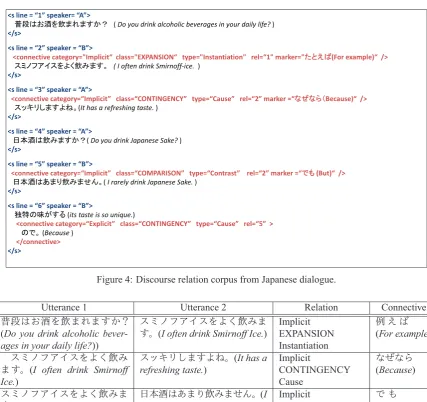
Figure 4: Discourse relation corpus from Japanese dialogue.
Utterance 1 Utterance 2 Relation Connective
ීஈ͓ञΛҿ·Ε·͔͢ʁ (Do you drink alcoholic bever-ages in your daily life?))
εϛϊϑΞΠεΛΑ͘ҿΈ· ͢ɻ(I often drink Smirnoff Ice.)
Implicit ɹ ɹ ɹ ɹ
EXPANSION ɹ
Instantiation
ྫ ͑ ɹ ɹ (For example)
ɹεϛϊϑΞΠεΛΑ͘ҿΈ
·͢ɻ(I often drink Smirnoff
Ice.)
εοΩϦ͠·͢ΑͶɻ(It has a
refreshing taste.)
Implicit ɹ ɹ ɹ
CONTINGENCY Cause
ͳͥͳΒɹɹ (Because)
εϛϊϑΞΠεΛΑ͘ҿΈ· ͢ɻ(I often drink Smirnoff Ice.)
ຊञ͋·ΓҿΈ·ͤΜɻ(I
rarely drink Japanese sake.)
Implicit ɹ ɹ ɹ
COMPARISON Contrast
Ͱ ɹ ɹ
(But)
ຊञ͋·ΓҿΈ·ͤΜɻ(I
rarely drink Japanese sake.)
ಠಛͷຯ͕͢ΔͷͰɻ(Because
I think its taste is so unique.)
Explicit ɹ ɹ ɹ
CONTINGENCY Cause
ͷͰ ɹɹɹ (Because)
Table 1: Examples of utterance pairs and discourse relations extracted from Fig. 4.
for the experiment. Next, we describe our experi-mental methodology and comparative methods. Fi-nally, we present the experimental results.
3.1 Dataset
In this paper, we focus on conversational dialogue because we want sophistication of dialogue analysis by using discourse relations.
The annotation framework follows the Penn Dis-course Treebank (PDTB), a corpus of English texts from the Wall Street Journal in which the relations
between abstract objects in discourse are annotated (Prasad et al., 2008). The PDTB has four classes (CONTINGENCY, COMPARISON, EXPANSION, and TEMPORAL) and 16 types of discourse rela-tion within its hierarchical structure. In the PDTB, the discourse relations are decided with connectives:
“because” , “and”, “but”, and so on. If a discourse
We annotated PDTB-style discourse relations to the Japanese conversational dialogue corpus created by Higashinaka et al. (2014). Figure 4 shows the annotated Japanese conversational dialogue corpus. We provide connective tags to each utterance if they have a connective. Connective elements have five at-tributes: category, which denotes discourse relation category and can be either explicit or implicit;class, which includes the four discourse relations; type, which denotes detailed relation types;rel, which de-notes an utterance line number that has a discourse relation; andmarker, which denotes the connective appropriate for discourse relation if the relation is
Implicit. Table 1 gives a tabular view of the
utter-ance pairs from Fig. 4.
Note that there is another dialogue corpus anno-tated with PDTB-style discourse relations (Tonelli et al., 2010); however, they focus on the design of the corpus and do not tackle the problem of discourse relation recognition.
3.2 Experimental method and results
We evaluate our proposed approach using the anno-tated conversational dialogue corpus. We created an implicit discourse relation classifier using an SVM with training data consisting of utterance pairs that have an explicit discourse relation. Explicit relations are more certain than implicit relations, so explicit relational data have been used as training data (Pitler and Nenkova, 2009).
We performed the evaluation by classifying three discourse relations (CONTINGENCY, COMPARI-SON , and EXPANSION) using classifiers. Here, we do not use the TEMPORAL relation class be-cause far fewer utterance pairs have a relation to TEMPORAL than the other relations. Training data consisted of 5,000 utterance pairs for each relation. Test data were utterance pairs that have an implicit discourse relation, with each relation containing 500 utterance pairs by random sampling.
We evaluated our proposed method along with several comparative methods. All the methods de-rive features for two sentences to be classified by the SVM. The features used by the methods are de-scribed as below.
• Comparative methods
Word pair
The word pair feature is a basic feature for discourse recognition. Input sentences are split into words by a morphological analyzer MeCab1 (we used this analyzer throughout the paper). We create word pair tokens from the combination of words between two sentences. Finally, the word pair feature is created by creating word-pair appearance frequency vectors.
Vector centroid
We create a sentence vector by computing the centroid of all word vectors in the sen-tence and use the vector as a feature. Here, word vectors are given by the word2vec model created using Japanese Wikipedia data. Note that the word centroid vector reflects the whole meaning of the sentence without syntactic structure or word order.
RNN sentence
The RNN sentence feature is the root node vector of the RNN structure. Parameters of the RNN are trained with data consist-ing of 100,000 utterances from the afore-mentioned dialogue corpus. The sentence vector differs from the word centroid vec-tor in that it includes the information of syntactic structure.
• Proposed methods
RNN + DP
The RNN+DP feature is a concatenation vector with the RNN sentence vector and Dynamic Pooling vector (window size: 5).
RNN + DP + diff
The RNN+DP+diff feature is a concatena-tion vector with the RNN sentence vector, Dynamic Pooling, and a difference vector.
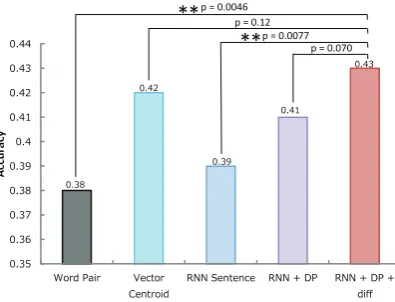
Figure 5 shows the results of the overall classi-fication accuracy and McNemar’s testing, and Ta-ble 2 shows the implicit discourse classification per-formance for each discourse relation by using pre-cision, recall, and F-score. As can be seen in Fig. 5, our proposed method(RNN + DP + diff)had the
㔝⌫䜘䜚䝃䝑䜹䞊䛜ዲ䛝䠄/ůŝŬĞƐŽĐĐĞƌƚŚĂŶďĂƐĞďĂůůͿ
䝃䝑䜹䞊䜘䜚㔝⌫䛜ዲ䛝;/ůŝŬĞďĂƐĞďĂůůƚŚĂŶƐŽĐĐĞƌͿ 㔝⌫䛜ዲ䛝䠄/ůŝŬĞďĂƐĞďĂůů䠅
䝃䝑䜹䞊䛜ዲ䛝;/ůŝŬĞƐŽĐĐĞƌͿ 㔝⌫䜘䜚䝃䝑䜹䞊䛜ዲ䛝䠄/ůŝŬĞƐŽĐĐĞƌƚŚĂŶďĂƐĞďĂůůͿ
䝃䝑䜹䞊䜘䜚㔝⌫䛜ዲ䛝;/ůŝŬĞďĂƐĞďĂůůƚŚĂŶƐŽĐĐĞƌͿ 㔝⌫䛜ዲ䛝䠄/ůŝŬĞďĂƐĞďĂůů䠅
䝃䝑䜹䞊䛜ዲ䛝;/ůŝŬĞƐŽĐĐĞƌͿ 䞉
䞉 䞉
䞉
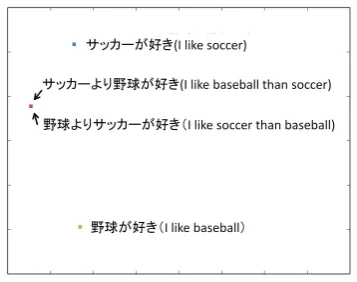
Figure 6: Visualization of RNN sentence vectors.
㔝⌫䜘䜚䝃䝑䜹䞊䛜ዲ䛝䠄/ůŝŬĞƐŽĐĐĞƌƚŚĂŶďĂƐĞďĂůůͿ
䝃䝑䜹䞊䜘䜚㔝⌫䛜ዲ䛝;/ůŝŬĞďĂƐĞďĂůůƚŚĂŶƐŽĐĐĞƌͿ 㔝⌫䛜ዲ䛝䠄/ůŝŬĞďĂƐĞďĂůů䠅
䝃䝑䜹䞊䛜ዲ䛝;/ůŝŬĞƐŽĐĐĞƌͿ
㔝⌫䛜ዲ䛝䠄/ůŝŬĞďĂƐĞďĂůů䠅 䝃䝑䜹䞊䛜ዲ䛝;/ůŝŬĞƐŽĐĐĞƌͿ
㔝⌫䜘䜚䝃䝑䜹䞊䛜ዲ䛝䠄/ůŝŬĞƐŽĐĐĞƌƚŚĂŶďĂƐĞďĂůůͿ 䝃䝑䜹䞊䜘䜚㔝⌫䛜ዲ䛝;/ůŝŬĞďĂƐĞďĂůůƚŚĂŶƐŽĐĐĞƌͿ
䞉
䞉
䞉
Figure 7: Visualization of word centroid vectors. Note that the vector “I like soccer more than baseball” overlaps with the vector “I like baseball more than soccer.”.
In the example in Table 3, the inputs classified correctly by all methods were identified by extract-ing the characteristic content words from each ut-terance. For example, in the first example, the re-lation is identified as COMPARISON by extracting the pair “skiing-snowboarding”. In contrast, in the last example, while the relation is difficult to identify as EXPANSION by extracting the pairs “makeup
- magazine” or “makeup - learn”, we can identify
the relation by extracting the expression pairs “your
makeup techniques - by reading a magazine”. By
taking advantage of the various units of expression in a sentence, our approach appropriately identifies the discourse relation between two sentences.
Our experimental results show that the RNN vec-tors are not always superior to word centroid vecvec-tors because there are cases where it is not necessary to consider syntax. Sometimes, word pairs are better suited for obtaining the generic topic of a sentence. However, we also found that implicit discourse rela-tion recognirela-tion requires to detect slight differences in expressions in sentences. For example, Figs. 6 and 7 compare RNN vectors and word-centroid vec-tors in the visualization of vector space. The sen-tences “I like baseball more than soccer.” and “I like
soccer more than baseball.” are in different places
in Fig. 6. If the first sentence is “I like soccer.” and the second sentence is “I like soccer more than
base-ball.”, the discourse relation between two sentences
is EXPANSION (I like soccer. Moreover, I like
soc-cer more than baseball.). However, if the second
sentence is “I like baseball more than soccer.”, the most appropriate discourse relation is COMPARI-SON (I like soccer. But I like baseball more than
soccer.). The RNN vectors are able to capture these
different structures, enabling our proposed method to recognize discourse relations more precisely.
5 Conclusion
We proposed an implicit discourse relation detection method using various units of expressions between two sentences. All expressions are converted into vectors by the RNN and then applied to Japanese de-pendency structures. Experimental results showed that our approach performs better than the conven-tional word-pair features method. This paper is the first to show that various expression units in sen-tences are effective for implicit discourse relation recognition.
Sara Tonelli, Giuseppe Riccardi, Rashmi Prasad, and Ar-avind Joshi. 2010. Annotation of Discourse Relations for Conversational Spoken Dialogs. Proc of the Sev-enth International Conference on Language Resources and Evaluation (LREC 2010), pages 19–21.