ABSTRACT
BRAITHWAITE, SUSAN SMITH. Ethics in Paramedic Practice: A Qualitative Case Study of Paramedic Perceptions of Ethical Decision-Making in Practice. (Under the direction of Dr. Susan J. Barcinas).
The purpose of this qualitative study is to understand how practicing paramedics perceive ethics in patient care, specifically the process of navigating ethical decision-making in emergent situations. The Iserson Model for ethical decision making in emergency
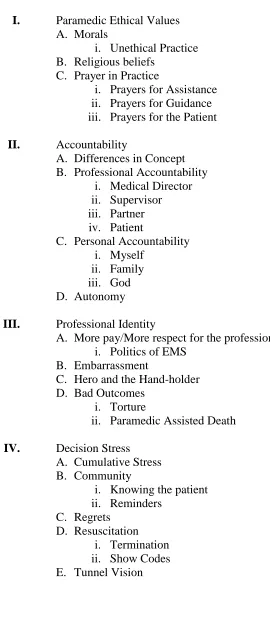
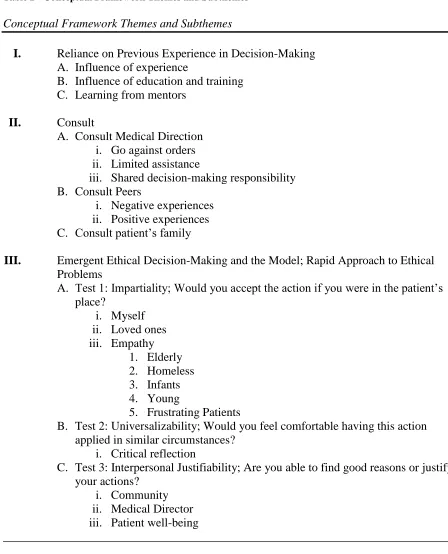
medicine was used as the conceptual framework. This exploratory case study utilized semi-structured interviews of thirteen North Carolina certified and educated paramedics, nine men and four women, as the primary method of data collection. Open-coding and theoretical framework coding were the two methods used. Paramedics ethical values, accountability, professional identity, and decision stress were the themes determined during the initial coding process. Reliance on previous experience in decision-making, consult, emergent ethical decision-making and the Iserson Model, “Rapid Approach to Ethical Problems” were themes determined during the theoretical framework coding process. Findings suggest that participants do not routinely use a process driven application as they make emergent
decisions. They do, however, frequently consider feelings of empathy (a step in the Iserson Model) as they navigate such decisions. Findings further suggest the participants both learn ethical decision-making from peers and mentors in a community of practice through
Ethics in Paramedic Practice: A Qualitative Case Study of Paramedic Perceptions of Ethical Decision-Making in Practice
by
Susan Smith Braithwaite
A dissertation submitted to the Graduate Faculty of North Carolina State University
in partial fulfillment of the requirements for the degree of
Doctor of Education
Adult and Community College Education
Raleigh, North Carolina 2014
APPROVED BY:
_______________________________ ______________________________
Dr. Susan J. Barcinas Dr. Kevin Brady
DEDICATION
BIOGRAPHY
Born in Pennsylvania and having lived in Florida, Susan Smith Braithwaite moved to North Carolina in 1999. In 2000 she transitioned from full-time paramedic and part-time EMS instructor to a full-time program director at a community college. She has since remained in adult education, and is now a professor at Western Carolina University. This represented a long time career goal and a return to teach at her alma mater, a graduate of the Emergency Medical Care program in 1988.
ACKNOWLEDGMENTS
To the many friends and family that have supported the pursuit of a dream inspired by Dr. Weissner. Brittany and Lindsay, my beautiful daughters, who gave me the motivation to keep moving no matter how hard the journey. As a single mother, I felt they deserved the best life I could give them, and believed a graduate education was the way to give it. I missed many hours with my family to pursue this dream. My mother, Margaret Smith, spent hours reading my papers. Thank you for helping me believe in myself. I wanted to make you proud. This diploma is for you.
Along the way I added some very special people. Pam Earp and Twyla Wells have been with me since the first day of class and through every challenge along the way. I am so indebted and proud of you both. We did it. To Robert Braithwaite, who joined the journey as I was working on my dissertation and became more than a supportive friend, but grew into the love of my life. To the Noltes’, for giving me a warm home away from home to keep the dream alive while I drove and wrote. To Amanda, a very dear lifelong friend.
To the thirteen brave men and women that fought through tears and difficult
TABLE OF CONTENTS
LIST OF TABLES……….………. x
LIST OF FIGURES………..……… xx
CHAPTER 1: INTRODUCTION ... 1
PURPOSE OF THE STUDY/RESEARCH QUESTION ... 2
CONCEPTUAL FRAMEWORK ... 3
SIGNIFICANCE OF THE STUDY ... 5
DEFINITION OF TERMS ... 7
RESEARCH METHOD ... 9
SUMMARY ... 10
CHAPTER 2: THE LITERATURE REVIEW ... 12
INTRODUCTION ... 12
HISTORICAL PERSPECTIVE ... 13
EMERGENCY MEDICAL SERVICES OVERVIEW ... 17
EMERGENCY MEDICAL SERVICES LITERATURE ... 22
Themes in EMS literature. ... 23
Professional ethics. ... 24
Stress and job retention. ... 25
Decision-making. ... 26
Resuscitation decisions. ... 28
ETHICS INTRODUCTION AND DEFINITIONS ... 30
FOUNDATIONS OF ETHICS IN LITERATURE ... 33
Modern period philosophy: Immanuel Kant. ... 34
Contemporary period philosophy: Lawrence Kohlberg. ... 35
CURRENT TRENDS IN ETHICS LITERATURE ... 37
Feminist perspectives. ... 39
Bioethics. ... 42
Iserson model. ... 45
Attributes... 45
EXPERIENTIAL LEARNING THEORIES IN LITERATURE ... 48
Constructivism: the orientation. ... 50
Fenwick’s perspectives: the framework. ... 51
Experiential learning: the theoretical assumption. ... 53
John Dewey. ... 54
David Kolb. ... 56
Situated learning: the perspective. ... 58
Reflection on experience... 60
Summary and consideration of learning theories... 62
CHAPTER 3: METHODOLOGY ... 65
INTRODUCTION ... 65
PURPOSE AND RESEARCH QUESTION ... 65
CONCEPTUAL FRAMEWORK ... 65
RESEARCH DESIGN ... 68
Statement of positionality. ... 69
Statement of subjectivity... 70
Researcher role... 71
QUALITATIVE PARADIGM ... 72
CASE STUDY METHOD ... 73
Justification for case study method. ... 76
RESEARCH PROCESS ... 77
Setting. ... 77
Sampling. ... 78
Data collection. ... 79
Interview protocol. ... 80
Data analysis. ... 81
Coding strategies. ... 82
RESEARCH PROTOCOL ... 83
Ethical concerns. ... 83
Issues of trustworthiness and validity. ... 84
Limitations of study. ... 86
Strengths of study. ... 87
Presentation of participant data. ... 88
SUMMARY ... 88
CHAPTER 4: RESEARCH FINDINGS ... 89
INTRODUCTION ... 89
COLLECTIVE PARTICIPANT PROFILES ... 90
INDIVIDUAL PARTICIPANT PROFILES ... 94
Rick. ... 94
Laura. ... 96
James. ... 98
Ben. ... 101
Michael. ... 104
Brian. ... 106
Kevin. ... 108
Michelle. ... 111
John. ... 113
Meagan. ... 115
Amanda. ... 117
Scott. ... 120
COLLECTIVE OVERVIEW ... 124
OPEN-CODING FINDINGS ... 125
Paramedic ethical values. ... 127
Morals. ... 129
Unethical practice. ... 129
Religious beliefs... 130
Prayer in practice. ... 132
Prayers for assistance. ... 132
Prayers for guidance. ... 134
Prayers for the patient. ... 137
Accountability. ... 140
Differences in concept. ... 141
Professional accountability. ... 141
Medical Director. ... 142
Supervisor. ... 142
Partner. ... 143
Patient. ... 144
Personal accountability. ... 145
Myself. ... 145
Families. ... 146
God. ... 146
Concept of autonomy. ... 147
Professional identity... 149
More pay and more respect. ... 149
Politics of EMS. ... 150
Embarrassment. ... 151
The hero and the hand-holder. ... 153
Hero... 155
Hand-holder. ... 155
Bad outcomes. ... 156
Torture... 159
Paramedic assisted death... 161
Decision stress. ... 163
Cumulative stress. ... 165
Community. ... 168
Knowing the patient. ... 171
Reminders. ... 175
Regrets. ... 177
Resuscitation. ... 180
Termination. ... 183
Show codes. ... 185
Tunnel vision. ... 187
ISERSON MODEL AS A CONCEPTUAL FRAMEWORK ... 191
Reliance on previous experience in decision-making. ... 192
Influence of experience. ... 194
Influence of education and training. ... 195
Learning from mentors. ... 197
Consult. ... 202
Consult medical direction. ... 204
Go against orders. ... 206
Limited assistance. ... 210
Shared decision-making responsibility. ... 214
Consult peers. ... 216
Negative experiences. ... 218
Positive experiences. ... 221
Consult patient’s family. ... 222
Emergent ethical decision-making and the model: rapid approach to ethical problems. ... 223
Test 1: Impartiality ... 226
Myself. ... 226
Loved ones. ... 230
Empathy. ... 231
Test 2: Universalizability - ... 244
Critical reflection. ... 247
Test 3: Interpersonal justifiability ... 250
Community. ... 252
Medical director. ... 255
Patient well-being. ... 258
Summary of Iserson model findings. ... 260
CHAPTER SUMMARY ... 261
CHAPTER 5: IMPLICATIONS FOR THE FUTURE ... 265
STUDY FINDINGS ... 265
DISCUSSION OF STUDY FINDINGS ... 266
Finding #1 ... 278
Finding #2 ... 279
Finding #3 ... 281
Finding #4 ... 283
Finding #5 ... 285
Finding #6 ... 288
CONCLUSIONS ... 289
IMPLICATIONS FOR FUTURE: PRACTICE, THEORY, AND RESEARCH ... 290
Educators and curriculum developers should consider scenario based training with discussion, case study presentations, and simulation for use with relevant ethical
dilemmas. ... 291
Ethical decision-making should be incorporated into preceptor and mentor preparation training. ... 294
Ethical practice situations should be incorporated into clinical paperwork for students to include a review of calls involving ethical decisions and post-dilemma discussion or debriefing. ... 297
Individual values, community based ideals and empathy should be incorporated into ethics training. ... 298
The relevancy of the Iserson model in current paramedic practice is needed. ... 301
IMPLICATIONS FOR THEORY ... 302
Research addressing the consideration of an EMS specific ethical decision-making model is needed... 303
IMPLICATIONS FOR FUTURE RESEARCH... 308
There is a need for EMS research to further develop understanding of ethics specific to practice. ... 309
There is a need for EMS research to further develop understanding of ethics specific to practice. ... 309
Research addressing the proposed and revised model for ethical decision-making is needed to determine efficacy. ... 310
Research that illuminates the patient perspective is needed. ... 310
There is a need for further research specific to EMS practice on Iserson model. ... 311
CHAPTER SUMMARY ... 312
REFERENCES ... 313
APPENDICES ... 324
APPENDIX A - IRB EXEMPTION REQUEST ... 325
APPENDIX B - INITIAL CONTACT AND CONFIRMATION LETTER ... 330
APPENDIX C - INFORMED CONSENT FORM ... 331
APPENDIX D - INTERVIEW PROTOCOL ... 335
APPENDIX E – THE HIPPOCRATIC OATH ... 338
LIST OF TABLES
LIST OF FIGURES
CHAPTER 1: INTRODUCTION
Emergency Medical Services has become a common expectation of today’s American life. A call for help through an easily accessed telecommunication system, 9-1-1, typically results in the dispatch of highly trained medical professionals that are able to care for the traumatized or critically ill patient from the time of arrival on scene through treatment and transport to the hospital, including, if necessary, further transfer to trauma centers or invasive heart centers. The highest certification level within the Emergency Medical Services (EMS) system is the paramedic. Paramedics are responsible for life and death decisions, with a radically increased level of autonomy in recent years. The rapid growth of EMS systems nation-wide, in combination with advancing medical science, has proven challenging for educators who strive to prepare competently trained professionals who can meet the growing demand. Currently, there is a lack of EMS literature to inform training as well as disparities among states in governing the provision of training programs. Ethical practice, as an
example, is scarcely represented in EMS education publications. A popular version of an initial paramedic textbook, Mosby’s Paramedic Textbook (2012), offers an eight page
overview of the topic in a 1,565 page text. Further, navigation of ethical practice and related decision-making receives little attention. While the impetus for greater understanding of ethics in paramedic practice is apparent, the resources or processes for teaching or guiding ethics in practice are not. Of similar note, there is no theoretical explanation for how paramedics learn ethical practice, specifically ethical decision-making.
specifically ethical decision-making. It also serves as a first step towards contributing empirical information to guide future development of improved ethics training in paramedic instruction. The required didactic component for paramedic ethics trainings is negligible. There is no requirement for a scenario based practice, nor a component in clinical internship training for ethical decision-making. Of similar note, no evaluation method to verify
competence in ethical decision-making exists in the national curriculum standard (National Highway Traffic and Safety Administration, (NHTSA) 1998).
The paramedic profession has undergone exponential growth since its inception in the late 1960’s. The new degree of autonomy and increased reliance on the understanding and
ability of competent paramedics further suggests an increased demand for ethical practice. While overall training and internship requirements have changed dramatically, ethics, as a didactic requirement in initial paramedic training programs, has not changed to reflect this critical need for the paramedic’s ability to make ethical decisions.
Purpose of the Study/Research Question
This exploratory qualitative case study investigated the following research question: What are paramedic perceptions of ethical decision-making in practice? Given the lack of ethics training in EMS education, it is assumed that learning ethical practice in patient care occurs through on-the-job experience. Ultimately, the study findings will contribute to several gaps in the literature to varying degrees, including EMS studies on ethical
Conceptual Framework
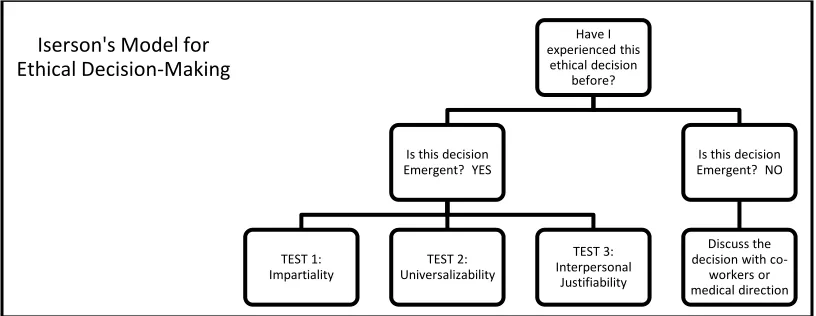
Iserson’s Rapid Approach to Ethical Problems in an Emergency has been adapted as
the conceptual framework for this study. The Iserson Model is the only method that offers a suggested series of steps in emergent ethical medical situations, and it is published in recent paramedic texts (Sanders, 2012). As an emergency room physician, Dr. Iserson was
discouraged when he faced ethical decisions and noted that the only ethics literature that existed to guide practitioners was laborious and suggested courses of action which often took days to accomplish, involving the input of several professionals. The emergency room physician, like the paramedic, makes emergent decisions, often in completely autonomous or time sensitive circumstances.
Iserson’s Model is simplistic. Iserson et al. (1995) suggest the “rules of thumb give the emergency medicine practitioner a process to use for emergency ethical decision-making even in cases where there is not time to go through a detailed systematic process of ethical deliberation” (p. 44). In such cases, Iserson et al. (1995) advocate that the first actual step,
when immersed in an ethical dilemma, is to reflect and see if a prior ethical decision may have yielded a “rule” applicable to the current situation. Patients are individuals with
circumstances that are unique to each emergency situation. Ethical decisions in practice that are of similar nature may or may not occur in such frequency and clarity as to allow the paramedic to consider them as the “rule.” Nonetheless, this first reflective step is important
(Iserson et al., 1995, p. 45). If no prior experience is helpful to the situation at hand, Iserson et al. (1995) suggest that the best decisions are those with communication to other
practitioners or especially the Medical Director. Often, particularly in decisions of patient resuscitation, there is no time for deliberation or communication with other resources. If no options to extend decision time exist, Iserson et al. (1995) suggest three successive questions:
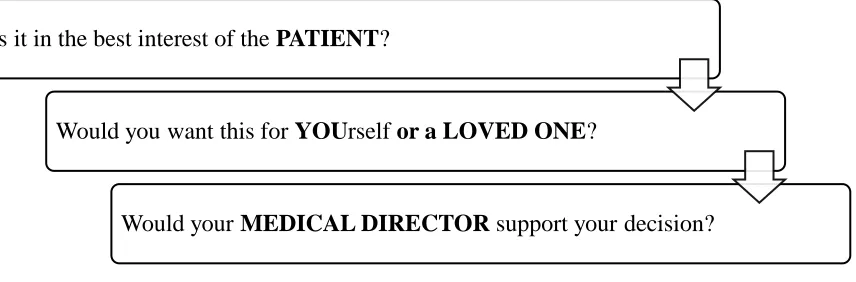
1) Impartiality Test, Would you be willing to have this action performed if you were in the patient’s place?, 2) Universalizability Test, Are you willing to have this action
performed in all relevantly similar circumstances?, and 3) Interpersonal Justifiability Test, Are you able to provide good reasons to justify your actions to others? (p. 46). It is the three aforementioned strategies that capture the intensity of the paramedic’s need to
rapidly process a critical decision as an autonomous agent operating for the wellbeing of the patient. This approach also captures the essential notion of ethics in health care to “do no harm,” in that they expressly seek a decision that represents the best care as another would
want for themselves. Questions one and two ask the paramedic to put themselves in the place of the patient as they consider actions. The final question, justifiability, suggests that although the situation may be critical, consider the mitigating circumstances and authority of the opinions that are considered. Paramedics answer to the patient and loved ones in a literal and immediate sense. Paramedics further answer to the organizational guidelines,
and as the highest certified team member responsible for decisions that are often ethical in nature, require an easily adaptable model that considers the uniqueness of such autonomous circumstances and is exclusive of interaction with other professionals. Acknowledging that the Iserson Model appears to be most suitable for situations of autonomy and emergency in patient care, this research study adapted the model as a lens through which to explore understandings of the practice of ethics in EMS settings.
Significance of the Study
No literature exists to explain how paramedics perceive ethical practice in patient care. No literature exists to describe the process of ethical decision-making in the paramedic context. This research will not only contribute to our understandings of ethics in paramedic practice, but will inform the education and research communities insofar as future
educational protocols could potentially be based on research, rather than inference. Undeniably the research and education communities are responsible for preparing paramedics that are as competent in ethical decision-making as they are in treatment decisions. The purpose of this qualitative case study is to understand how practicing paramedics perceive ethics in patient care, specifically, ethical decision-making.
For example, paramedics are initially taught to manage patients with chest pain using the cognitive domain. Lectures address the anatomy, physiology, assessment, treatment, and disease processes of cardiac emergencies. Building upon the cognitive foundation, paramedics are then taught the associated psychomotor skills that relate to the assessment and treatment of chest pain patients. Affective domain learning requires the paramedic to demonstrate delivery of the combined knowledge and skills as a team leader able to make rapid decisions that are communicated to the patient care team, and yet calm the patient so as to reduce anxiety that can worsen chest pain.
Paramedic education programs do not require ethics to be taught within the
psychomotor domain. However, ethical practice is a learned behavior, much like a skill. The application of ethical decision-making or navigating ethical situations in the specific practice of pre-hospital patient care considers reasoning and judgment inclusive of the laws,
organizational guidelines, norms, and values of the medical practice. Receiving minimal classroom exposure through lecture, the field application of ethics is not included in current curriculum, so the “skill” is never practiced. Of similar note, considerations of ethical practice are not addressed as a part of clinical internships. The practice and application of ethics and ethical decision-making should be addressed through the affective domain, linked to classroom and clinical internship settings. Ostensibly, continuing education programs for practicing field paramedics should also incorporate such enhanced teaching strategies.
While the connection of learning to classroom and internship is apparent and
the professional context of EMS. This research study was developed in consideration of the literature that specifically relates to learning that occurs through experiences, as supported by experiential learning theory. Experience through field internships is designed for paramedic training programs to form concrete memories associated with learning that can lead to competency. The study of such perceptions of field practice can be used to inform and to plan future learning experiences. Kolb (1984) suggests that experience gives “a concrete,
publicly shared reference point for testing the implications and validity of ideas created during the learning process” (p. 21).
While the intended audience for this research is the EMS education community for use in the development and delivery of paramedic training in ethical practice and decision-making, conceivably, other professional contexts may also consider the findings of this research. Findings of this study are essential to further research that seeks to further connect ethical practice in context with individual experiences and understandings. By connecting ethics to stories of paramedics in practice, understanding takes on a richness whereby the decisions take on the life of the practitioner and inform our views of ethics in situated experiences.
Definition of Terms
Paramedic is a medical professional, usually a member of the emergency medical
service, who primarily provides pre-hospital advanced medical and trauma care. A
emergency medical and surgical treatment facilities, such as trauma centers (Sanders, 2012, p. 3).
Emergency Medical Services (abbreviated to the initials "EMS") are a branch of
emergency services dedicated to providing out-of-hospital acute medical care and/or transport to definitive care, to patients with illnesses and injuries which the patient, or the medical practitioner, believes constitutes a medical emergency (Sanders, 2012, p. 3).
Medical Ethics, or Bioethics, is primarily a field of applied ethics, the study of moral
values and judgments as they apply to medicine. As a scholarly discipline, medical ethics encompasses its practical application in clinical settings as well as on its history, philosophy, theology, and sociology. Medical ethics tends to be understood narrowly as an applied professional ethics. The two fields often overlap and the distinction is more a matter of style than professional consensus. Medical ethics shares many principles with other branches of healthcare ethics, such as nursing ethics (Sanders, 2012, p. 109).
Ethics is the major branch of philosophy, encompassing proper conduct and good
living. It is significantly broader than the common conception of ethics as the analyzing of right and wrong. A central aspect of ethics is "the good life" - the life worth living or that is simply satisfying, which is held by many philosophers to be more important than moral conduct (Sanders, 2012, p. 109).
Morals in the "normative" sense, refers directly to what is right and wrong, regardless
While morals and ethics exist in an intertwined existence, ethics is most commonly referred to when describing behavior in professional practice. For this reason, ethics will be the chosen term in this study with reference to decisions in professional paramedic practice. Research Method
The research question is situated in a social context, specific to a particular aspect of professional practice. Merriam (2009) describes such an endeavor by stating that “qualitative
researchers are interested in understanding how people interpret their experiences, how they construct their worlds, and what meaning they attribute to their experiences” (p. 5).
Qualitative research seeks to allow the participants and the context under study to emerge in findings through a rich descriptive explanation, yet requires the selection of a methodology and design that achieves the stated goal and lends credibility to the outcome.
Summary
Modern EMS has evolved rapidly, if not explosively, as a profession and yet still faces challenges that are inherent to its development and inception in the 1960’s. Indeed,
many of the concerns faced by EMS educators relate to the development of a new profession under the auspices of a governmental oversight that was never designed to keep up with medical advances and the universal need for widespread EMS. EMS education as a community of professionals has lacked for research that is specific to EMS practice. The concern is compounded by a disparity among EMS systems and training programs from state to state in a unique, and relatively young by comparison, branch of medicine.
Ethics, the ability to make sound ethical decisions with autonomy in the most emergent of settings, is an important aspect of paramedic practice, yet it receives little attention in education programs, no consistency among programs of study, with little to no suitable literature to suggest best practices for application. This research addressed the gap in literature specific to how paramedics perceive ethics and ethical decision-making in practice. While insight was gained as to the decision-making process as paramedics navigate ethical decisions, the “heaviness” associated with years of such decisions was also described
by participants. Future study and development of best practices for training are the intended outcomes for the understanding gained from this study.
an in depth description of the research methodology, an exploratory case study within the tenets of the qualitative paradigm. Chapter Four presents the research findings through the participants’ voice. Chapter Five is a summation of major findings and suggested
CHAPTER 2: THE LITERATURE REVIEW Introduction
Three thematic areas of literature are reviewed in this chapter. First, supporting literature on Emergency Medical Services (EMS) professional publications and journal articles will be discussed. EMS as a profession came into focus in the two most recent decades, and limited literature exists to fill emergent needs in the profession that include: critical stressors to the paramedic, job turnover, and issues surrounding recent changes in resuscitation protocol.
The second area of literature, ethics theory, as an expansive and aged theory base, is deliberately introduced in a historical lineage dating from Immanuel Kant in the late 1700’s to the current trends in work place ethics, such as bioethics. Specifically, the Iserson Model for ethical decision-making will serve as the theoretical framework for this study. Each of the theoretical perspectives in ethics were chosen, firstly because they directly connect with one another as generations of thought, and secondly for the direct relationship to context of practice based ethics chosen for this study.
Experiential learning theories have long been considered for the development and application of professional education, particularly in the health profession where a clinical aspect of training requires field practice.
Historical Perspective
Central to the understanding of current paramedic training and education in the United States is the acknowledgement of its beginning. Just as EMS exists as a unique branch of medicine, the history and inception of the profession has an interesting place in the current trends of EMS training and education. Specifically, three historical underpinnings have formed the EMS system and training programs in widespread use today: military history, civilian medical research, and federal legislation. Finally, an overview of civilian EMS education programs in the United States is offered to summarize the relationship to the Department of Transportation legislation.
The modern EMS system has a history that in part originates with wartime management and transfer of wounded soldiers. Although the use of helicopters to move wounded soldiers began during the Korean conflict, military trained corpsmen, for the first time in military history, were used to provide urgent care during flight to field hospitals during the Vietnam War. Military practice has not only revolutionized the transport of soldiers to include a medically trained caregiver, but also the general science of treatment in the traumatized patient. “The management of trauma patients has historically been strongly influenced by lessons learned in military conflicts and wars” (Eastman, 2007, p. 193). To
date, trauma care remains greatly impacted by wartime research.
formation. For example, in 1960 the use of Cardiopulmonary Resuscitation was being shown to be efficacious for patients in cardiac arrest. Seeking to reduce cardiac mortality and
morbidity, the “chain of survival” advanced by the American Heart Association, suggested that an organized system should begin with the call for help and include the rapid response, assessment, treatment, and transport of the cardiac patient to the nearest hospital. Still the dominant influence of emergent care, perhaps advancement in care of the critically ill patient has placed the greatest need for decision-making in the emergent pre-hospital setting
(Sanders, 2012).
Perhaps the greatest catalyst to organized EMS came with a federal dictate in 1966. The percentage of Americans who owned vehicles to travel on the new interstate highways resulted in a dramatic increase in motor vehicle collision mortality and morbidity. Indeed, in 1965, “49,000 deaths were due to motor-vehicle accidents,” (NRC, 1966, p. 5) more than the combined mortality for eight years of the Vietnam conflict. In 1966, the National Research Council published a paper entitled “Accidental Death and Disability, The neglected Disease
of Modern Society” that was affectionately called the “White Paper.” This insight offered by military trained officials led to the first systematic approach to pre-hospital care and the transport of the sick and injured beginning in the same year when Congress passed the Highway Safety Act that led to the creation of the U.S. Department of Transportation and the National Highway Traffic and Safety Administration.
hours and American Heart Association guideline for cardiac emergencies and CPR, almost to the exclusion of other physical problems. Ill-equipped to oversee EMS training programs, the U.S. Department of Transportation (DOT) offered minimal guidelines and delegated education and certification of providers to the states. The disparities among the fifty states’ offerings of EMS education continued to increase through the decades that followed. It wasn’t until 1988 that the first standardized national curriculum for paramedics offered
learning objectives and clinical competencies for EMS training institutions. Recognized as a need by the National Association of EMS Physicians and the National Association of State EMS Directors, funding was authorized for the development of “The EMS Agenda for the Future,” published in 2000. The “agenda” offered a summary of recommendations. Among
them, the need for EMS research was addressed such to “include research related objectives in the education processes of EMS providers and managers” (NHTSA, 1996, p. 67). In 2013, the DOT remains the federal oversight agency for EMS in the United States, and EMS educators are still working to correct the disparity in training practices and provide a unified and universal set of standards for practice in accordance with the “agenda.”
accepted goal for paramedic training includes a cognitive curriculum component coupled with psychomotor skill proficiency and practices through scenarios, followed by clinical internships under the direction of an approved paramedic preceptor (field trainer) to refine the affective domain requirements of paramedic practice.
In a unique branch of medicine, the practicing EMS professional operates with an unusual degree of autonomy while under the direction of a physician medical director. Certified paramedics, having completed a training program and passed a certification exam, follow prescribed protocols for advanced patient care that are set forth by the medical director. Current cardiac care, for example, is delivered in the field with a consistency and effectiveness that matches Emergency Department care. Paramedics assess heart rhythms, give drugs, defibrillate, and ultimately may terminate resuscitation efforts in the pre-hospital environment. This autonomy and reliance on critical decision-making has escalated at a rate well beyond the inclusion of enhanced training programs, which are still struggling for a universal oversight and set of standards. Just as research driven literature is imperative to competent medical practice in pre-hospital medicine, there is a need for research which informs the best education practices for educating EMS professionals. According to the EMS Workforce Agenda (2011),
understanding of workforce issues and methods that attempt to address these issues vary greatly across both state and local levels (p. 2)
Emergency Medical Services Overview
Misconceptions related to common terms of the profession occur frequently. Perhaps this is due to the overuse of “emergency medical” as it is applied to both the service and the
professionals that provide that service. The term Emergency Medical Services (EMS) describes the systematic approach to providing medical care, universally, for citizens both urban and rural, both injured and ill. The systematic approach to EMS includes ten essential components that were outlined in 1988 by the National Highway Traffic Safety
Administration for the implementation of statewide EMS assessment programs. The components include policy, human resources, training, transportation, communications, medical direction, trauma systems, and evaluation. Essentially, each state is responsible for administratively assuring EMS system access from the point of the 9-1-1 call through the delivery to an appropriate hospital and the means to verify that every aspect of care and transportation between the two was delivered to the highest standard. The relationship between federal government and state oversight of EMS is historically rooted to a document prepared by the National Research Council (1966) entitled “Accidental Death and Disability: The Neglected Disease of Modern Society.” Affectionately called the “white paper,” this
research concluded that the leading cause of death in America was injury, and that
Highway Traffic Safety Act established the Department of Transportation (DOT) to fund and oversee the implementation of training and the development of statewide EMS systems (NHTSA, 1996). While the DOT remains the federal oversight for EMS, each state remains tasked with the provision of both educational requirements for EMS professionals and EMS system delivery.
The term paramedic refers to the highest certification of EMS professional. The term Emergency Medical Technician (EMT) is often found in combination with a certification level. For example, EMT-Basic would suggest certification at the entry level for EMS services, while EMT- Paramedic, would suggest the highest level of pre-hospital
certification. The National Registry of EMT’s has advanced job titles and descriptions in combination with a national standard for examining and certifying EMS professionals, such as the paramedic. While inconsistencies still exist among the states, the definition provided by the National Registry of EMT’s is the accepted standard, “paramedics provide the most
advanced care of all EMS professionals” (https://www.nremt.org). Able to offer care
consistent with the hospital emergency room for cardiac patients, the paramedic functions as the team leader and directs care on scene. Skills include advanced airway management, a wide variety of drugs, and cardiac procedures from infield pacing to defibrillation. Paramedics specialize in rapid assessment using diagnostic techniques made mobile for transport, such as twelve lead electrocardiographic monitoring.
Emergency Departments of hospitals, doctor’s offices, and cardiac catheterization labs in hospitals. Paramedics practice in the air through fixed wing transport services that move ill or injured patients internationally, and helicopter response to move patient emergently. Paramedics respond by ground to move patients from smaller (tertiary) hospitals to larger trauma, cardiac, neonate, or burn specialty hospitals. Moving beyond the initial paramedic certification program, many paramedics add critical care certifications to work for inter-facility transport services. Of similar note, paramedic certification is often combined with police, and firefighting certification in an approach referred to as “public safety.” Still other paramedics work for the federal government on military bases or in prisons.
Just as the variety of practice settings varies, the variety of shifts and organizational structure varies. Some paramedics work 24 hour shifts two to three times per week with as little as 24 hours off between. Some work twelve hour shifts. Paramedics are employed privately, through hospitals, or through state, federal, county, and city municipalities. Pay remains an issue addressed in crisis by managers as they struggle with high turnover and vacancies. As the paramedic profession evolved from state to state, the certification process suffered a lack of continuity and professional education that ultimately affected the pay in comparison with other allied health professions of similar education requirements.
operates in close relationship to the physician. In contrast, the EMS provider responds to patient situations without the direct supervision of the physician. In this case the provider must be trained to assess the patient and determine a course of treatment that is consistent with the physician Medical Director’s wishes. The accepted terms for this relationship are on-line or standing order medical direction (Sanders, 2012). The paramedic arrives on scene and using a set of treatment protocols encompassing emergent medical and trauma care, assesses the patient, determines the specific treatment appropriate and delivers it, operating as an extension of his or her Medical Director. This relationship affords the paramedic a great deal of practice autonomy and further underscores the uniqueness of the EMS practice.
The first standardized national curriculum, complete with learning objectives and clinical competencies for paramedics, was offered in 1988. Recognized as a need by the National Association of EMS Physicians and the National Association of State EMS
Directors, funding was authorized for the development of “The EMS Agenda for the Future,”
published in 2000. In an effort to assess the climate of Emergency Medical Services across the nation and determine a future course of action, the agenda became well known to managers and educators of EMS. The agenda offered a summary of recommendations that still remains the beacon for state systems today. Among the key recommendations, the need for EMS research was addressed such to “include research related objectives in the education processes of EMS providers and managers” (NHTSA, 1996, p. 67). The lack of EMS
Prevailing as the universally accepted goal for the future of EMS Education, the agenda vision statement suggests that based on the National EMS Education Standards, revised and adopted in 1998, education should “represent the intersection of the EMS Professional and
the formal education system” with programs based on “sound educational principles and broadly recognized as an achievement worthy of formal academic credit” (NHTSA, 1996, p.
1). The education agenda serves as a master plan for unifying the education of paramedics through a national certification process for paramedics and the accreditation of the
educational programs from which they graduate.
In 2014, the disparity among paramedic training programs is obvious. Programs are offered as baccalaureate degrees through universities and as certificate programs through hospitals or municipalities. Emergency Medical Technician (EMT) and paramedic programs are being offered as minors in conjunction with programs of study such as Exercise
Physiology or Athletic Training. The NHTSA goal for all training to be offered through accredited programs that achieve a national standard curriculum will further allow for research-based best practices in both didactic and field training curricula. The area of paramedic ethics, once adequately researched, could be adopted through the national standard and delivered with a consistency allowing paramedic practice across the nation a level of competency in ethical decision-making.
As noted, the national standard curriculum has provided for a set of universal
governments still determine both systems requirements and certification processes for the provision of EMS in their jurisdiction. As a result, the paramedic profession is plagued with a job description that is little understood, a lack of national liscensing that would allow recognition among the other allied health professions, a resultant low pay, and inconsisent training practices. The “National EMS Research Agenda (EMS Research Agenda)” identifies “two primary barriers that have inhibited the development of a strong research
program in EMS: a paucity of well-trained researchers with an interest in EMS research and a lack of reliable funding sources to support research” (NHTSA, 2011, p. 22). Specific to the intent of this research study, “the quality and scope of EMS education program data needs
improvement. A national effort will be needed to lead the development of common data definitions for educational programs and graduates” (NHTSA, 2011, p. 25).
Emergency Medical Services Literature
patient care, and the social or behavioral considerations that are germane to paramedic practice. The majority of EMS literature relates to the medical science aspect of the
profession. The limited research related to the behavioral aspects has been conducted with a focus on the greatest threats to the workforce in EMS.
Research in EMS literature that has been conducted in the qualitative tradition is nearly non-existent. Most medical research favors the more generalizable and scientifically validated quantitaive approach. Binder and Chapman (1995) suggest that “qualitative research methodologies, though often used in other fields and in medical educational
investigations, have not been used to study problems in emergency medicine” (p. 1). Binder
and Chapman (1995) argue for more qualitative studies in order to expand our understanding of emergency medicine processes stating that “these methodologies address qualitative data and provide a process of describing, interpreting, and explaining the dynamics of a
population or phenomenon” (p. 1).
Professional ethics. Perhaps the qualitative study most closely related to the proposed research study is authored by Sine and Northcutt (2008), entitled “A qualitative analysis of the central values of professional paramedics.” Sine and Northcutt (2008) also note the critical need for ethical decision-making increasing with the level of autonomy and expectation of the modern paramedic. “Changes in the organization and provision of prehospital emergency healthcare in the last decade create new moral challenges for emergency medicine; these changes also accentuate the need for paramedics to make rapid and reasoned ethical judgements” (Sine & Northcutt, 2008, p. 335). Rather than focusing on
how paramedics learn such ethical decision skills, this study explores the values related to such decisions. The article “describes how the professional life of the paramedic is one in which competing values must constantly be weighed against each other in ‘real time’ with little opportunity for deliberation and reflection” (Sine & Northcutt, 2008, p. 336). Sine and
Northcutt (2008) conducted an interactive qualitative study in which a group of seasoned paramedics were read case studies involving ethics in patient care. As the group discussed the cases, they determined values and the relationship and importance of each value to the application of ethics to patient care. The values determined to be “central” are: patient
advocacy, treatment and procedures (competence), bias to be ignored, compassion, survivor care, medical authority (respect), and objectivity. Sine and Northcutt (2008) concluded that “compassion and objectivity compete against each other because they are two elements of the ethical decision existential core” (p. 341). As a part of their findings, Sine and Northcutt
accomplish what is necessary to prepare the paramedic for ethical practice and ethical decision-making.
Stress and job retention. EMS has been plagued with a high turnover often associated with the high stress of managing critical incidents and low pay. Studies specifically addressed concepts such as job stressors and job satisfaction, coping, and psychological distress associated with patient care in EMS. Arguably, decision-making in the practice of patients’ care, particularly those associated with critical incidents, is a major job stressor.
The current literature shows that paramedics struggle with stress and balancing empathy and duty when such decisions are made. Two separate studies published in the
Pre-Hospital Disaster Medicine address the effects of stress. “A significant portion of an EMT's
job satisfaction and psychological well-being is associated with the degree to which they are experiencing job-related stress, and, furthermore, this distress level appears to be clinically elevated” (Boudreaux, Mandry, & Brantly, 1997, p. 242). In addition to job-related stress
effecting perceptions of well-being and satisfaction, “results suggest that patient care is a critical factor in daily stress among EMT’s, both on workdays and post-workdays, providing preliminary evidence for a carryover effect” (Boudreax, Jones, Mandry, & Brantley, 1996, p. 188). Job satisfaction is of concern to the profession and job turnover relative to stress.
themes among EMS professionals regarding future career moves, motivation for the career, and beliefs about the EMS profession. Many of the respondents used EMS as a career path to another profession. Patterson et al. (2005) also found that most “respondents believed the job was stressful yet rewarding” (p. 162). Whether leaving the profession in pursuit of another allied health profession, or as a result of the job stress and its negative impact on personal lives, this study identified factors that appear likely to contribute to low employee retention in this occupation. While stressors are not specifically cited in this article, common stressors that are the subject of other articles include: danger associated with the job, stress of life or death decisions, treatment of elderly and pediatric patients, advancements in science, and changes in patient care to include in-field termination of resuscitation
decisions. In the sections that follow, specific themes in literature are referenced.
Decision-making. Decision-making as a particular aspect of the EMS profession is
the subject of numerous quantitative studies. Concerned for the effectiveness of decisions made in field, studies have addressed key dimensions of paramedic decisions such as: decision-making with limited point of view, mistakes in pre-hospital care decisions,
decisions made in high acuity emergency calls, and paramedic judgment regarding pediatric trauma patients. The intent of such students is to inform the community about the practice of decision-making, for better or worse, in pursuit of best practices. Yet, no decision-making studies address the best methods to instruct and prepare for such practices.
Common situations with ethical underpinnings encountered by EMS personnel and mangers include; denying or delaying transport of patients with non-emergency conditions, use of lights and sirens for patient transport, determination of medical futility in the field, termination of resuscitation, restriction of EMS provider duty hours to prevent fatigue, substance abuse by EMS providers, disaster triage and difficulty in switching from individual care to mass-casualty care, and the challenges of child maltreatment recognition and reporting (Becker et al., 2013, p. 487)
The care of patients in non-emergent conditions, resuscitation and child abuse are noted as themes in this study. Also noting the “paucity of literature regarding the ethical dilemmas
encountered by EMTs in the out-of-hospital setting” (Heilicser, Stocking, & Seigler, 1996, p. 239) designed a study to “suggest educational and policy approaches for dealing with the full range of ethical problems that confront EMTs” (Heilicser et al., 1996, p. 239). Similar to the
findings of this study and the Becker et al. (2013) study, results show “the most described conflicts involving do-not-resuscitate (DNR) situation” followed by “inappropriate calls and difficult patients, problems with other professionals, transport problems and problems with minors… attitude problems and disrespect, and dilemmas in field triaging and trauma”
(Heilicser et al., 1996, p. 241).
French and Casali (2008) completed a mixed methods study in Australia that focused on factors such as gender, experience, and age. None of these factors was found to influence ethical decision-making, however the study did determine that “the most significant ethical principle used by ambulance professionals is the rights based reasoning (morality).” This lies
organization as utility” (French & Casali, 2008, p. 50). While participants believed they
acted in ethical decision-making on behalf of the patients’ best interest, they believed that the organization they worked for acted using a “cost/benefit approach” that French and Casali (2008) describe as dichotomy on the approaches to care that should be addressed (p. 50).
Dr. Kenneth Iserson (2008) co-authored an article entitled “Fight or Flight: The Ethics of Emergency Physician Disaster Response.” This work represents a paradigm shift from the Iserson et al. (1995) text used for the conceptual framework on this research. In this article, Iserson et al. consider the decisions of health care workers as they respond in
situations of disaster. Iserson et al. (2008) note that many responders describe a conflict between “a duty to treat during disasters and social crisis, as well as moral reasons that may
limit or override such a duty (p. 1). The effects of fear in the decision to participate in care giving situations with noted danger to the care giver were further addressed in the article. While not specifically addressing the need for ethical decision-making training to prepare responders, Iserson et al. (2008) suggest that preparation and policies should be offered to encourage providers in such situations. Dr. Iserson is the author of the model used for the theoretical framework in this study, first published in 1986, the second edition was updated in 1995. Of note, no further publication of this text has been issued since. While the Iserson Model of practice context is that of an emergency room physician, the degree of autonomy and emergency nature of ethical decisions are comparable to that of patient care situations in emergency medical services response.
pointed to the efficacy of pre-hospital cardiac arrest resuscitation. Deemed comparable in hospital practices, the complications of moving arrest patients led to the changes in EMS protocol that allow the paramedic to manage and terminate cardiac arrest resuscitations in field. This specific practice of ethical care, as it relates to the decision to begin and end efforts in cardiac arrest, was the subject of a study regarding paramedic perceptions of the new protocol. Grudzen et al. (2009) found that “participants view the ability to forgo or halt resuscitation in the field as empowering and do not believe it presents harm to patients or families under most circumstances” (p. 537).
“The Ethics of Resuscitation: How do Paramedics Experience Ethical Dilemmas
When Faced with Cancer Patients with Cardiac Arrest?” (Nordby & Nøhr, 2012, p. 68) is the only qualitative study currently addressing ethics in EMS. This study crosses several of the themes presented in this study: ethics, decision-making, qualitative study, and resuscitation. In a Canadian study, Verbeek, Morrison and Guru (1999) determined that out-of hospital DNR policies would preserve that patient’s right to decide, alleviate stress for both caregiver
The theme that ambulancemen have to obey strict protocols that require them to resuscitate unless there is “the most obvious” case of death or unless the doctor
instructs otherwise, merely begs to moral issue and indicates, if the foregoing analysis is correct, that such a strict protocol is mistaken (p. 4 ).
While current protocols favor EMS honoring DNR’s, this study underscores the
ethical challenges in cardiac arrest resuscitation of terminal patients. Gillon (1991) and Iserson (1991) favor further advancement in the paramedic’s decision-making autonomy to withhold attempts to resuscitate without obvious death and DNR, in the case of terminal patients. Naess, Steen and Steen (1996) studied the ethics of decisions made by Oslo Norway paramedics facing out-of-hospital resuscitation. Findings are congruent with
participant findings of this study. The discontinuation of CPR in younger patients is difficult even when attempts have failed. Respondents also emphasized the right to die a natural death for an elderly or seriously ill patient. Paramedics were less likely to start CPR in situations of bystander expectations that include family acceptance of the patient’s death or the unwillingness of family to witness the patient’s existence in a negative state.
Ethics Introduction and Definitions
As it is nearly impossible to understand ethics and morals as separate concepts, many philosophers and theorists offer definitions for each, with significant overlap. Veatch (2012) by example, defines moral principles as “general and abstract characteristics of morally right action” (p. 10), yet a part of “normative ethics.” Hakim (2006) defines ethics as “the study of moral conduct” (p. 660). Walker (2007) suggests that morality “consists of a family of
and that “ethics tries to find out whether certain things are really right or good” (p. 13). While the historical perspective of ethics frequently connects to moral understanding or moral development theories, I will seek to clarify terminology and delineate those theories which have most directly impacted ethics as it applies to the practice of health care. Perhaps the more expansive and foundational concept is that of moral philosophy. Hoffman (2000) suggests that “moral principles are grounded in bodies of philosophical and religious thought that are rooted in the histories of many cultures” (p. 222). Origins of moral philosophy reach
back to the most ancient of times and yet have added dimension in the last century to include social applications. May (1996) describes his view of moral theory “to be understood as framed by the specific socialization of various societies” (p. 3). Agreeing that children come
to “have moral institutions as a result of childhood socialization” (p. 3), May (1996) believes that “adults are motivated to act in specific moral ways because of the socialization patterns they have been exposed to” (p. 4). Other theorists have focused on the tenants of cognitive
development, believing that morality emerges as children learn in stages of moral thinking. Progression through developmental stages is considered in a hierarchical fashion that is universal, realizing the “speed and endpoint of development may differ considerably from person to person and from culture to culture” (Kuhmerker, 1991, p. 19). Feminist
scholarship suggests that “moral orientation or the standpoint taken in solving moral
and applications of moral philosophy shift among the aforementioned theoretical underpinnings, central to all remains the broad definition that “morals refer to social
standards or customs, dealing with what is right or wrong in a practical sense” (Sanders, 2012, p. 109).
Ethics, by definition, seems a more focused concept within the broader definition for morals. Like “morals”, ethics considers the application of right and wrong to decisions and judgments, but rather in the context of “honorable actions designed by a group with expected conformity” (Sanders, 2012, p. 109). While the commonality remains the concept of right and wrong, the more explicit is that the individual’s concept of right and wrong now relates
to the decisions made through membership to a group, such as a profession. May (1996) suggests that “professional roles are thought to create responsibilities by virtue of the professional’s agreement to take on a certain set of tasks in society” (p. 109). Individuals
often assume a separate identity as the member of a profession, regarding themselves in the way the society regards that profession. It can be argued that one can operate as a moral individual and yet make an unethical decision, a decision that is acceptable to societal or even religious identity, yet is unacceptable within the norms of the specific context of application, such as a profession. Still others, such as Noddings (2007) argue that ethics and morality are intertwined such that the “individual thus described as a rational agent, not a real, full-bodied individual with attachments, emotions, and community affiliations” (p. 178), would follow rules and customs associated with a moral life in any circumstance, alone, or in social context. The ethical underpinnings of a profession are accompanied by a set of
unique claims to the role of ethics in professional practice. The Hippocratic Oath (see Appendix E) has origins to the ancient Pythagoreans, yet remains the revised and current assumption of ethics by oath for contemporary physicians (Markel, 2004). While
recognizing that physicians are indebted members of society by their learned skills and ability, they must apply a test of impartiality for the “good” of the patient. Ethics, then,
becomes a choice connected with learned collective practice and not solely the will of the individual. Lammers and Verhey (1987) suggest that “the one swearing this oath adopted more than a set of rules and skills; he or she adopted an identity and the goods and standards of medicine as a practice were owned as one’s own and gave shape to integrity with one’s identity” (p. 77). Beyond the suggestion that a practitioner must be moral to espouse ethical
principle, the individual assuming the oath is seemingly offered a higher ethical standard by association. Walker (2009) suggests that we are “situated observers whose observations are
shaped not only by moral assumptions, but by much of what we take for granted
experientially, socially, institutionally, and culturally” (p. 10). Ethics is a learned precept “in
the particular communities of judgment from their typical application within those communities to particular situations” (Walker, 2009, p. 10).
Foundations of Ethics in Literature
ethical wisdom- the recognition of the fundamental importance of the ethical in the life of man and of doing good as the basic principle of human activity” (p. 32). In his historical
overview, Hakim (2006) describes Socrates’ time period as “Ancient Period; The Spirit of Greek philosophy” (p. v). Immanuel Kant (724-1804) is said to be a Modern Period
philosopher. Kohlberg is considered a Contemporary Period philosopher. Kant and Kohlberg have been chosen from numerous theorists for the dominance of their work, their relationship to each other, and to current trends in ethical theory. Finally, the Iserson Model, considered a specific example of a current trend in ethics, will be presented as a specific framework for the study of ethical decision-making in EMS.
Modern period philosophy: Immanuel Kant. Born in Germany in 1724, Immanuel Kant emerges from the history of philosophy as a dominant voice in the study of morality. Kant’s view of the human mind included three faculties: sensibility, understanding, and
reason. While sensibility of the surrounding world gave way to understanding of the same, reasoning incorporated soul, God, and world. In Kant’s view, “knowledge is limited to the combined role of sensibility and understanding,” whereas “pure reason in its function with objects of thought that have no connection to sensible realm” (Hakim, 2006, p. 394). “According to Kant, the basis of moral action is duty” (Ruggerio, 2004, p. 146). While moral reasoning includes a sense of duty or obligation, “Kant clearly sees that oughtness entails freedom” (Hakim, 2006, p. 395). The concept of freedom to do as we ought was the
essential element that allowed Kant to examine the will. Confines of obligation or law clouded examination of human will. Kant is quoted by Hakim (2006) as stating “perfect
of the sensible world is capable of at any moment of his existence” (p. 396). Moral intention, with perfection as an unattainable goal, existed as an endless movement between knowledge and reasoning as influenced by free will, by God, or law. Described as a philosopher from the formalist school, Kant is perhaps most credited with his views on moral judgment, and differentiated by Munsey (1980) as the intersection between “morality as internal principles from external events and expectations” (p. 43). Kant, in summary, was an early ethics
philosopher believing that humans are capable of being rational and therefore self-governing of their own actions. Later philosophers, such as Lawrence Kohlberg, would build on this belief.
Contemporary period philosophy: Lawrence Kohlberg. Lawrence Kohlberg, born in 1927, is well known for his theory of moral development. In an epilogue for a book entitled The Kohlberg Legacy: For the Helping Professions, Kohlberg describes his own personal search for the meaning of morality. Among conflicting philosophies, Kohlberg found Kant’s principle, “treat every human being as an end in himself, not only as a means”
(Kuhmerker, 1991, p. 13), as the fundamental essence of justice. Kohlberg’s graduate study and professional career sought to step back from the understandings of moral judgment and universal justice to the “study of reasoning and its development” (Kuhmerker, 1991, p. 14).
The culmination of research across decades, cultures and disciplines resulted in a theory of moral development using three levels: pre-conventional, conventional, and
two stages. The first stage, the desire to seek approval of others as “conformity to
stereotypical images” and the second stage, “orientation toward authority, fixed rules, or the maintenance of social order” (Munsey, 1980, p. 92). The third post-conventional level,
according to Kohlberg, may not be reached by all adults as it includes a genuine interest in the welfare of others and the demands of individual “conscience in accord with self-chosen ethical principles” (Munsey, 1980, p. 93). For example, Kohlberg suggests that the
differences between the second, and the highest level of moral development for the practicing paramedic, may be doing what is right for the patient so that in turn the professional may egocentrically attain accolades and enjoy job security. At the third level, the paramedic practicing compassionate and ethically sound patient care does so strictly for the good of the patient. In this case, the paramedic merely enjoys this behavior as an achievement of “self-chosen ethical principle” (Munsey, 1980, p. 93). Believing the human beings progressed
through stages of moral development via interactions with their social environments, Kohlberg also reasoned that these stages could not be “jumped” and that progression, not regression, was a given. Perhaps the most criticized point of Kohlberg’s theory is the
assumption that “adequate normative ethical theory is a definition of sound moral judgment”
(Munsey, 1980, p. 172). Cognitive moral development according to stages is presumably the quest for sound moral judgment. Kuhmerker (1991) summarizes, “Kohlberg placed moral meaning making and conscious concern for principles of justice at the center of his theory” (p. 36). Hoffman further critiques Kohlberg as a follower of Kant, reasoning the pursuit of justice and caring as an assumption for moral behavior is too limiting, “I prefer to view
all situations” (Hoffman, 2000, p. 20). While caring and justice may run congruently in a given dilemma, they also conflict. Kohlberg, to date a dominant voice in childhood cognitive and developmental psychology, believed that “moral development in children proceeds not
by their learning a particular value system and adopting it uncritically, but rather by embracing a critical standpoint from which they can come to appreciate or reject given values” (May, 1996, p. 19). Thus said, Kohlberg, in keeping with the “Kantian image of the self as pure, rational agent” (Gilligan, Ward & Taylor, 1988, p. 22), views the morally
developed adult as capable and objective of moral judgment in situations of human choice. Current Trends in Ethics Literature
The justice tradition of ethics philosophy is inclusive of two core principles, personal liberty, and a social contract. Kittay and Meyers (1987) state that “together, these elements form the basis for the ideal of individual autonomy that distinguishes the justice tradition” (p. 4). Autonomy, for philosophers such as Immanuel Kant, considers the individual to be self-governing, in that “each person is the source of moral and political principles that person obeys” (Kittay & Meyers, 1987, p. 5). As autonomous individuals, they are free to conduct
their lives as they see fit “provided they do not violate others” (Kittay & Meyers, 1987, p. 5). It is the notion of autonomy that instigates the key difference between justice tradition and the care perspective on ethics. Autonomy grants the individual entitlement of protection and a pursuit of happiness, yet it does not entitle the individual to aid. “Though it is morally
epistemology, the care perspective contradicts the justice ethics on this, and other beliefs. Kittay and Meyers (1987) suggest that “theoretically the distinction between justice and care
cuts across the familiar divisions between thinking and feeling, egoism and altruism,
theoretical and practical reasoning” (p. 20). This distinction presents a “shift in the focus of
attention from concerns about justice to concerns about care and changes the definition of what constitutes a moral problem” (Kittay & Meyers, 1987, p. 20). In the context of health
care professions, both ethical principles (justice and caring) may factor in and compete during the process of ethical practice. Hoffman (2000) suggests that in such cases, caring is “logically subordinate to justice obligations in situations where the two conflict” (p. 224).
By its very nature and inception, the notion of providing care to the sick and injured
incorporates the ethic of a universal right to good care. Can the medical care delivered to a patient be separated from the ethic of caring and empathy? Hoffman (2000) suggests that both caring and justice “share an empathetic motive base- empathy defined as an affective
response- more appropriate to another’s situation than one’s own” (p. 4). For some theorists, the vacillation between an ethic of justice and care in patient care resides with gender
scholarship. Gilligan, Ward, and Taylor (1988) hypothesized “1) that there are two distinct modes of moral judgment- justice and care- in the thinking of men and women; 2) that these are gender related; and 3) that modes or moral judgment might be related to modes of self-definition” (p. 23). In the sections that follow, the feminist perspectives of Gilligan,
Feminist perspectives. Carol Gilligan advances a psychology theory that challenges “justice perspective fails to capture the import of the concerns expressed by women, the ethical practice strategies employed by women, and the course of women’s distinctive moral development” (Kittay & Meyers, 1987, p. 7). Gilligan et al. (1988) found that the
conflicting voices of moral reasoning that represented justice and caring were “although not gender specific,” they were “gender related, suggesting that the gender differences
recurrently observed in moral reasoning signify differences in moral orientation” (p. 8). Can gender related ethics in the notion of “caring” be applied to a care giving profession such as
healthcare? To answer this question, Gilligan et al. (1988) conducted a study that imposed emotions associated with masculine voice, as justice, and feminine voice, as care.
Perceptions regarding the intimate relationship of physician to patient were examined for feelings of achievement and nurturance that would further translate into associations of vulnerability differences in the genders. This study found that male physicians associated fear in intimate connection with patients as a potential for failure, while women articulated “a
perspective which links achievement with attachment” such that Gilligan et al. (1988) suggest that women’s perceptions “may heal the breach in medicine between patient care and scientific success” (p. 262).