Mary Haskett).
One major goal of this study was to advance the research on physically abused children by examining changes in parent and child behavior over time and whether behaviors observed in parent-child interactions demonstrated bidirectional effects contributing to changes in behavior over time. A second goal was to examine whether observed child behavior when the children were in first grade, predicted teacher reports of child behavior in first grade. Participants included 93 parent-child dyads from a longitudinal study designed to examine factors that might contribute to physically abused children’s successful transition
from preschool to early elementary school. The children ranged in age from 5 to 7 years old and were identified as having a documented history of physical abuse. Parent and child behavior were measured using the Parent Child Interaction (PCI) observational coding scheme. The Teacher Report Form (TRF) of the Child Behavior Checklist was used to measure children’s internalizing and externalizing behavior at school. It was hypothesized,
within the context of physical abuse, that: (1) parent behavior would change over time such that positive parenting behavior would decrease and negative parenting behavior would increase; (2) child behavior would change over time such that the child’s positive mood would decrease and negative mood would increase; (3) there would be a reciprocal effect between parent and child behavior over time; and (4) observed child behavior in the lab when the children were in first grade would predict teacher reports of internalizing and
by
Mary Hollings Whitehouse
A dissertation submitted to the Graduate Faculty of North Carolina State University
in partial fulfillment of the requirements for the degree of
Doctor of Philosophy
Psychology
Raleigh, North Carolina 2013
APPROVED BY:
_______________________________ ______________________________
Mary E. Haskett Marc A. Grimmett
Committee Chair
________________________________ ________________________________
DEDICATION
To Mom: The older I get, the more like you I become. And that’s a good thing. I wish
you were still here to see it and give that knowing smile you always had. I am who I am— and continue to become—largely because of you. I love you.
To Dad: I am my father’s daughter—and I like that very much. You have walked through every bit of this with me, knowing more than most what I was getting into and going through at different points along the way. I am thankful for your presence and
encouragement and am grateful that we are not only family but also friends and colleagues. I love you.
To Ryan: Although you may not fully understand what it is I have been doing these past few years, know that it has made me a better parent—and advocate—for you. My hope is that I can continue to be the kind of parent you need.
To Al: You have been, without a doubt, my biggest supporter, encourager, listener, and cheerleader. You’ve kept me grounded and balanced, making sure I endured this process
BIOGRAPHY
Mary Whitehouse is from Fayetteville, North Carolina. She received her Bachelor’s degree in
Psychology with minors in Russian and History at the University of North Carolina at Greensboro in 2002. In 2006, she completed a Master of Divinity degree from Campbell University in Buies Creek, North Carolina. At that time, Mary worked as a chaplain resident at WakeMed in Raleigh, North Carolina where she made the decision to return to the field of psychology. In the fall of 2007, she entered the doctoral program in School Psychology at North Carolina State University. While completing her doctorate, Mary conducted research on reading fluency as well as child maltreatment. For four years, she worked in the
Department of Psychology’s Advising Office as an advisor to undergraduate psychology
majors. Additionally, she served as a primary instructor for Abnormal Psychology. Mary and her husband also became adoptive parents to their son who is originally from Ukraine. Mary’s primary areas of interest include working with children, parenting and family work,
ACKNOWLEDGEMENTS No part of this process is done in isolation.
To my advisor and committee members: “Thank you” just doesn’t seem to cover it. You have
supported me in so many ways throughout this process—and challenged me to become a better professional and a better researcher. Thank you for your willingness and availability, for being reasonable and in my corner, for coming together as my dream team.
To my co-workers in the Advising Office: We started as co-workers but quickly became friends and an extra base of support throughout this process. Thank you for the
encouragement, the reality checks, and most of all, the laughter.
To my fellow school psychology students: Thank you for your friendship, shared knowledge, and shared understanding. Thank you for blazing trails, being unofficial advisors, and for the ways in which you’ve taught me and the others in our respective programs.
To those of you who have served as supervisors in the field: You have helped me grow and become more well-rounded professionally. Your support, challenges, and insights have helped me to become a more independent practitioner. I cannot thank you enough.
and my capabilities even when I did not. Thank you for your warm welcome, for treating me as an integral part of the school and team, and for allowing me to explore and establish more of my professional identity.
To the Hardisons: You’ve encouraged me to keep going and get to the finish line both on the road and in this process. You’ve taught me about parenting and sharpened my clinical skills
in ways you probably never knew. And you, all of you, have helped me keep perspective and reminded me of why I started this process in the first place. I love you all in ways that words cannot express.
TABLE OF CONTENTS
LIST OF TABLES ... vii
LIST OF FIGURES ... viii
Introduction ... 1
Adjustment of Abused Children: Internalizing and Externalizing Problems ... 5
Parenting Behavior and Children’s Adjustment ... 9
Parenting Behaviors in Abuse Samples ... 12
Parent-Child Interactions in Abuse Dyads ... 13
Bidirectional Effects of Parent-Child Interactions ... 16
Bidirectional Effects and Externalizing Behavior in Children ... 18
Bidirectional Effects and Internalizing Behavior in Children ... 24
The Present Study ... 26
Method ... 31
Participants ... 31
Table 1 ... 33
Measures ... 34
Parenting Behavior... 34
Table 2 ... 36
Child Behavior ... 40
Socioemotional Adjustment: Child Behavior ... 42
Procedures ... 43
Results ... 46
Descriptive Statistics ... 46
Table 3 ... 48
Table 4 ... 50
Table 5 ... 52
Table 6 ... 54
Table 7 ... 55
Table 8 ... 56
Table 9 ... 58
Table 10 ... 60
Table 11 ... 63
Table 12 ... 65
Table 13 ... 68
Table 14 ... 70
Data Reduction: Parenting Behavior ... 73
Statistical Analyses ... 74
Table 15 ... 75
Missing Data ... 77
Table 16 ... 78
Figure 1 ... 80
Figure 2 ... 83
Figure 3 ... 84
Figure 4 ... 85
Figure 5 ... 86
Discussion ... 87
Considerations in Interpretation of the Findings ... 89
Limitations ... 93
Sample Size and Missing Data ... 93
Sample Demographics ... 95
Future Directions ... 97
References ... 100
Appendices ... 126
Appendix A. Population of the County by Race and Ethnicity ... 127
Appendix B. Census Data Regarding County-wide Family Structure by ... Household ... 130
Appendix C. Poverty Status for Families in Wake County ... 133
Appendix D. Description of Parent Behaviors ... 134
LIST OF TABLES
Table 1 Cases of Substantiated Abuse and Abuse Demographics in the
County ... 33
Table 2 Demographic Characteristics of Children and Parents ... 36
Table 3 Number of Participants, Mean Scores, and Standard Deviations of Measures at Time One... 48
Table 4 Number of Participants, Mean Scores, and Standard Deviations of Measures at Time Two ... 50
Table 5 Number of Participants, Mean Scores, and Standard Deviations of Measures at Time Three ... 52
Table 6 Skew and Kurtosis of Variables at Time One ... 54
Table 7 Skew and Kurtosis of Variables at Time Two ... 55
Table 8 Skew and Kurtosis of Variables at Time Three ... 56
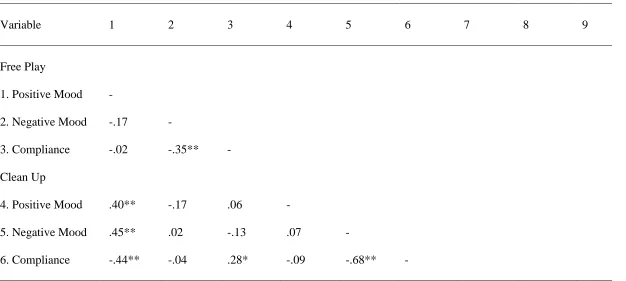
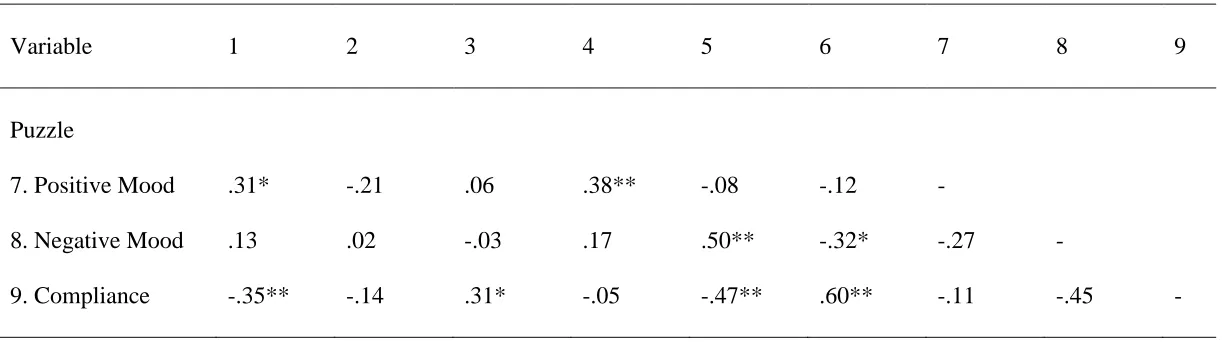
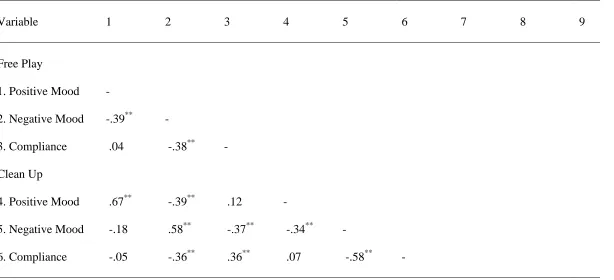
Table 9 Correlations Among Child Behavior Variables by Segment at Time 1. 58 Table 10 Correlations Among Means of Parent Behaviors and Child Behavior by Segment at Time One... 60
Table 11 Correlations Among Child Behavior Variables by Segment at Time 2. 63 Table 12 Correlations Among Means of Parent Behaviors and Child Behavior by Segment at Time Two ... 65
Table 13 Correlations Among Child Behavior Variables by Segment at Time 3. 68 Table 14 Correlations Among Means of Parent Behaviors and Child Behavior by Segment at Time Three ... 70
Table 15 Rotated Factor Loading Scores of PCI Dimensions ... 75
LIST OF FIGURES
Figure 1 Full Model ... 80
Figure 2 Positive Parenting Behavior and Positive Mood ... 83
Figure 3 Negative Parenting Behavior and Negative Mood ... 84
Figure 4 Positive Parenting Behavior and Child Compliance ... 85
Introduction
Research over the past several decades indicates that abused children are more likely than their non-abused peers to experience internalizing problems (e.g., withdrawal,
depression, anxiety) and externalizing problems such as noncompliance, aggression, hostility (e.g., Kaufman & Cicchetti, 1989; Salzinger, Feldman, Hammer, & Rosario, 1991; Shonk & Cicchetti, 2001; Toth, Manly, & Cicchetti, 1992). Although it is often assumed that abusive parenting directly caused these negative child outcomes, research indicates that children are not passive recipients of their environment (DelVecchio & Rhoades, 2010; Hipwell et al., 2008). Instead, parents and children interact in a reciprocal relationship in which the behavior of one affects the behavior of the other (Sameroff, 1995).
Increasingly, researchers have begun to examine this reciprocal relationship between parents and children, specifically within the framework of Patterson’s (1982; 2002) coercion
theory. Negative patterns of interaction between parents and children have been observed in families in which parents engage in harsh or negative parenting behavior and/or children engage in antisocial or oppositional behaviors (e.g., Combs-Ronto, Olson, Lukenheimer, & Sameroff, 2010; Larsson, Viding, Rijsdijk, & Plomin, 2008; Nicholson, Deboeck, Farris, Boker, & Borkowski, 2011; Verhoeven, Junger, van Aken, Dekovic, & van Aken, 2010; Yates, Obradovic, & Egeland, 2010), all of which may increase the risk for abuse to occur. Although reciprocal influences of parent and child behavior have been described in
children are at very high risk for both concurrent and long-term adjustment problems, understanding the bidirectional influences of parents and children in these families is important. The present study was designed to begin to fill several gaps in the literature. A developmental psychopathology framework guided this investigation.
there was theoretical support for bidirectional parent-child interaction patterns in this population.
Another component of the developmental psychopathology framework is the examination of sensitive developmental periods (Cicchetti, 1993). It is during these developmental periods that change can occur so that an individual may continue on—or deviate from—an adaptive trajectory (Cicchetti & Cohen, 1995). The patterns of interaction between parents and children may be most likely to shift during these sensitive
developmental periods (e.g., formal school entry for children). The transition from preschool to formal schooling (i.e., kindergarten and first grade) is a time of significant developmental changes for children across multiple domains of functioning (e.g., social, cognitive, and language skills). It is also a time during which disruptive behavior patterns may emerge and stabilize, and continue into the period of school entry. It is important, then, to identify factors that contribute to persistent or discontinuing patterns of problem behavior in children
(Combs-Ronto et al., 2010). The present investigation examined the reciprocal nature of the parent-child relationship during the child’s transition into formal schooling in order to determine ways in which this relationship contributed to behavior patterns for children. Specifically, parent and child behavior was observed when the children were in preschool, kindergarten, and first grade.
are evaluated without controlling for the initial levels of those behaviors (Hipwell et al., 2008). Furthermore, most longitudinal studies on bidirectional parent-child influences focus on brief time periods (e.g., one year or less). Thus, it can be difficult to determine whether bidirectional effects are fairly stable or whether they change across development (Pardini, 2008). Indeed, very few longitudinal studies have examined whether the bidirectional effects of child behavior and parenting practices change over time (Pardini, Fite, & Burke, 2008). Therefore, a second aim of this study was to determine whether patterns of interaction became stable over time by examining the bidirectional effects of parent and child behavior across multiple time points during children’s entry into school.
Developing an understanding of the ways in which parents’ and children’s behavior
change and affect one another over time is relevant for developing quality service delivery and interventions for these families (Haskett, Neupert, & Okado, under review). Parent training is the most common intervention service provided to parents involved with child protective services (Barth et al., 2005; Hurlburt, Barth, Leslie, Landsverk, & McCrae, 2007). However, many programs do not provide direct training in the home or with the child
present study was not an intervention study, it was hoped that this study might provide insight into the interactive patterns of abusive parents and their children, which might then inform areas of focus for service delivery and intervention.
In sum, the purpose of the present study was threefold: (1) to evaluate the changes over time in physically abused children’s behavior (i.e., positive and negative mood and
compliant behavior) during interactions with their abusive parents, (2) to evaluate the changes over time in positive and negative dimensions of parenting behavior (e.g., positive regard for the child, negative regard for the child, sensitivity, intrusiveness, flat affect) among physically abusive parents, and (3) to evaluate the bidirectional effects of parent and child behavior in a sample of young, physically abused children as they transition from preschool to kindergarten and then to first grade. What follows is a review of the literature as it pertains to adjustment of abused children and the influences of parent behavior and
reciprocal parent-child interactions.
Adjustment of Abused Children: Internalizing and Externalizing Problems Given the substantial literature documenting a strong link between parenting practices and children’s adjustment, it is not surprising that children who experience physical abuse are
at risk for a host of adjustment problems. In general, physical abuse is defined as
Ward, & McPherson, 2006; Jaffee & Gallop, 2007; Tabone et al., 2011), decades of research indicate that children who have experienced physical abuse are at high risk for emotional, behavioral, and social adjustment problems. Results from a variety of studies consistently indicate that many physically abused children demonstrate internalizing problems such as depression, low self-concept, anxiety, and somatic complaints (Kaufman & Cicchetti, 1989; Lynch & Cicchetti, 1998; Salzinger, Feldman, Hammer, & Rosario, 1991; Shonk &
Cicchetti, 2001; Wolfe & Mosk, 1983). To illustrate, in a sample of physically abused, neglected, and nonmaltreated school-aged children and adolescents, those who were physically abused were rated by parents as having higher levels of depression, anxiety and withdrawal than those who were neglected or who had no history of maltreatment (Wodarski et al., 1990). Similar results were found by Toth and colleagues (1992) who evaluated rates of depression among maltreated and nonmaltreated children as they participated in a summer day camp program. The maltreated children (ages 7 to 12 years) were subdivided into those who had been physically abused and those who were neglected. Child self-report (e.g., Child Depression Inventory) and teacher rating scales (e.g., Child Behavior Checklist-Teacher’s Report Form; CBCL-TRF; Achenbach & Rescorla, 2001) were used to obtain a measure of children’s depressive symptoms. Children from physically abusive environments
anxiety, depression) compared to their nonmaltreated peers. These results were based on child and teacher report of child adjustment. Parent reports of child adjustment were
collected by Johnson and colleagues (2002), who examined adjustment of children (ages 6 to 8) who experienced physical abuse or witnessed physical violence. Children who
experienced physical abuse obtained higher scores for depression compared to children who witnessed physical violence.
Results from a variety of studies indicate that maltreated children also demonstrate more externalizing behavior (e.g., aggression, delinquency) than their nonmaltreated peers (Alessandri, 1992; Bolger & Patterson, 2001; Deater-Deckard, Ivy, & Petrill, 2006; Gershoff, 2002; Keiley, Howe, Dodge, Bates, & Pettit, 2001; Moylan et al., 2010; Shonk & Cicchetti, 2001). These behaviors are especially evident in children who have been physically abused (Kaufman & Cicchetti, 1989; Pears, Kim, & Fisher, 2008; Sternberg et al., 1993). For example, Shonk and Cicchetti (2001) examined adjustment and behavior and academic problems in children ages 5 to 12 who attended a summer day camp. Both the children’s
2005; Maas, Herrenkohl, & Sousa, 2008; Stouthamer-Loeber, Loeber, Homish, & Wei, 2001).
Concerns about the adjustment of abused children are heightened by longitudinal and retrospective studies that show long-term negative adjustment of individuals who experience abuse in childhood. For example, in a longitudinal study examining the timing of physical abuse and its long term effects on externalizing behaviors, mothers and teachers rated
children’s externalizing behaviors using the Child Behavior Checklist (CBCL; Achenbach &
Rescorla, 2001). Children who experienced physical abuse in early childhood (prior to age 5) obtained higher scores on externalizing behavior problems at age 5 than did nonabused children. These results indicate that children who are abused early in life are more likely to develop and maintain these behaviors over time and across domains (e.g., home and school) compared to children abused late in childhood. Likewise, children with an initial experience of abuse between ages 6 and 9 demonstrated a more rapid increase in externalizing behavior problems (as rated by teachers) into adolescence (Keiley et al., 2001). More recently, Kaplow and Widom (2007) examined the timing of physical abuse and its long term effects on
internalizing behaviors. Participants were identified based on court documents that
occurred after age 6. Others examining the age of onset as predictors of later
psychopathology have found that children abused at an earlier age had lower levels of self-esteem (Bolger, Patterson, & Kupersmidt, 1999), higher levels of anxiety (Kaplow, Dodge, Amaya-Jackson, & Saxe, 2005), and greater difficulty with daily living skills (English, Graham, Litrownik, Everson, & Bangdiwala, 2005) than children who were abused later.
In summary, abused children are at high risk for developing serious and long-lasting adjustment problems. Currently, service delivery and intervention are not as effective as one might hope for or expect (Casanueva et al., 2008). Research from several bodies of literature can help us understand better the parent-child relationships and interactions in families in which abuse occurs. First, there is substantial literature pointing to the relation between parenting practices and children’s adjustment. That literature includes research based on the
general population and studies of parenting of physically abusive mothers and fathers. Second, studies that describe the interactions between abusive parents and their children can be informative. Finally, investigations of bidirectional influences of parent-child interactions over time can inform intervention approaches. These three bodies of literature are described below.
Parenting Behavior and Children’s Adjustment
activities, requiring conformity to family and societal norms, keeping track of child’s peer relationships and school work), and avoidance of harsh punishment (e.g., spanking) (Amato & Fowler, 2002; Baumrind, 1968; 1978; Darling & Steinberg, 1993; Maccoby & Martin, 1983; Rollins & Thomas, 1979). However, optimal parenting varies across family contexts. For example, Deater-Deckard and Dodge (1997) found that physical punishment used at a moderate level is a normative disciplinary style in African American families and is not problematic for African American children. In some instances (e.g., poor neighborhoods where violence occurs), higher levels of parental control are necessary for the safety of the child (Baldwin, Baldwin, & Cole, 1990). Family context (e.g., race/ethnicity and/or single or dual parent home) also may make a difference in parenting behavior. For example, physical discipline has been correlated with an increase in externalizing problems in European American children but not in African American children (Deater-Deckard, Dodge, Bates, & Pettit, 1996). Among poor, minority students in single parent families, restrictive and autocratic parenting was associated with high levels of school achievement (Baldwin et al., 1990).
and consistency (Baumrind, 1967; Maccoby & Martin, 1983). These parenting behaviors have been associated with many indicators of positive child adjustment (e.g., Belsky, 1984; Palmer & Hollin, 2001, Paulson, 1994). For example, parental responsiveness has been associated with fewer behavior problems among children in African American families, especially those with a lower socioeconomic status (Bradley, Corwyn, Burchinal, McAdoo, & Coll, 2001). Authoritative parenting (e.g., parents and children work together to make decisions or solve problems) has been associated with fewer depressive symptoms and higher academic achievement among adolescents, regardless of race or ethnicity (Radziszewska, Richardson, Dent, & Flay, 1996). Chen and colleagues (2000) found that maternal warmth was a significant predictor for children’s perceived competence and self-worth. Maternal warmth also was associated with a reduction in children’s depressive symptoms over time.
Deater-Deckard and colleagues (2006) found that self-reported parental warmth and sensitivity were related to fewer externalizing problems in children as reported by parents. Likewise, parents who exhibited warmth and responsiveness tended to have children who were more cooperative and showed more empathy with peers (Whiteside-Mansell, Bradley, Tresch Owen, Randolph, & Cauce, 2003; Zhou et al., 2002). In sum, studies with normative samples indicate a positive relation between positive parental behavior and children’s
socioemotional adjustment.
Harrist et al., 1994; Kim et al., 2003). These behaviors have been associated with poor child adjustment. For example, harsh and negative parenting (i.e., hostile/coercive) behaviors have been found to be associated with elevated rates of depression in children (Dallaire et al., 2006). Deater-Deckard and colleagues (2006) found that high levels of physical punishment were associated with high rates of parent-rated externalizing behavior in children. Likewise, negative parent behaviors (e.g., physical and/or verbal punishment, low warmth, and high directiveness) have been associated with observed aggressive and hostile behavior in children (Rose-Krasnor, Rubin, Booth, & Coplan, 1996). In sum, results from studies in which
negative parenting behaviors were examined indicated a significant relation between negative parenting behavior and poor socioemotional adjustment in children.
Lau and colleagues (2006) observed physically abusive parents in three different structured interaction tasks with their children. Results indicated that physically abusive parents were not likely to communicate empathy, praise or reassurance to their children. These parents also were likely to be critical, intrusive, and use emotionally controlling behavior (e.g., guilt, criticism) when interacting with their children. In sum, physically abusive parents are likely to engage in low rates of positive parenting behaviors and resort to negative parenting behaviors with their children. Given the links documented between parenting practices and child behavior, these types of parenting behaviors are likely to result in poor adjustment among abused children.
Parent-Child Interactions in Abuse Dyads
Researchers use a variety of methods for measuring parent behaviors, including observation of parent and child interactions, self-reports of parenting behavior, child report of parenting behavior, or a combination of these measures (e.g., Chen, Liu, & Li, 2000; Deater-Deckard, Ivy, & Petrill, 2006; Palmer & Hollin, 2001; Pettit, Bates, & Dodge, 1993).
may be inconsistencies among respondents in reports of child behavior (Sternberg et al., 1993). For these reasons, many researchers who seek to understand reciprocal influences of parent behavior and child adjustment incorporate observational methods to examine
interactions between physically maltreating parents and their children (Wilson et al., 2008; e.g., Alessandri, 1992; Borrego, Timmer, Urquiza, & Follett, 2004; Haskett, Ahern, Ward & Allaire, 2006; Valentino, Cicchetti, Toth, & Rogosch, 2006).
Because child abuse often occurs as part of ongoing patterns of interactions between abusive parents and their children (Urquiza & Timmer, 2002), parent-child interactions are a valuable focal point for study. Observations of parent and child behaviors during interactions can provide insight into parenting behaviors that may lead to behavioral problems in
children. For example, Timmer and colleagues (2002) observed the interactions between parents and children (age 4) in 30 dyads. Approximately half of the children in this sample had a history of physical abuse. Parent-child interactions were observed during three semi-structured five-minute sessions. Results indicated that physically abusive parents exhibited significantly fewer instances of positive behavior and praise in their interactions with their children compared to nonabusive parents. Physically abusive parents also demonstrated more negative behaviors in the parent-child interactions, but the group difference was not
As part of the Lehigh longitudinal study, Herrenkohl and colleagues (1984) studied a large sample of young children (ages 18 months to 6 years), some of whom had a history of physical abuse. Observers rated mother and child behaviors during parent-child interactions in the home. Observer ratings were factor analyzed separately for mother and child, and a three-factor solution was selected as most meaningful for each. These three factors, which were similar for both parent and child, were warmth (e.g., achievement oriented, enjoyed self, involved with the other, warm, facilitated each other’s work), nervousness (e.g., nervous
about self, frustrated with the task, embarrassed about the other), and hostility (e.g.,
controlling, hostile and/or frustrated toward other, irritability, impeding each other’s work).
Results indicated that physically abusive parents were more hostile and exhibited less supportive behavior with their children; their children were more negative, less warm, and less task-involved when interacting with their parents (Herrenkohl et al., 1984; Herrenkohl, Herrenkohl, Egolf, & Wu, 1991).
To summarize, findings from observational studies dating back to the 1980s indicate that physically abusive parents are likely to engage in a high rate of negative parenting behaviors (e.g., hostility, harsh discipline) and low rate of positive parenting behaviors (e.g., sensitivity and warmth). Similarly, their children show this pattern of high negative behavior and low positive behavior during interactions with their parents. What we do not know is whether physically abusive parents and their children influence each other in a reciprocal manner across time. The present study was designed to fill this gap in our knowledge.
abuse samples, I draw from the literature, described below, on bidirectional effects of normative and clinical samples.
Bidirectional Effects of Parent-Child Interactions
Although there is substantial research to suggest that parenting behavior has a tremendous impact on children’s adjustment, children are not passive recipients of their parents’ behaviors (Del Vecchio & Rhoades, 2010). Reciprocal models of socialization
regard parent and child behaviors as recurrent and transactional changes over time and as behavioral processes that affect one another (Bell, 1968; Gross et al., 2008; Sameroff, 1995). One of the more widely cited reciprocal models is Patterson’s (1982) coercion theory. This
theory explains the behavioral contingencies that are initiated by and further affect the interactions between parent and child. These interactions are characterized by the parent’s demand for compliance by the child, the child’s refusal to comply coupled with intensified
complaints or aggressive behavior, and, finally, parental acquiescence. In other words, in order to avoid the child’s noncompliance, the parent ceases the demand and the child ceases the aversive behavior. In the end, both the child’s aversive behavior and the parent’s
acquiescence are negatively reinforced by the cessation of both the parent’s and the child’s aversive behavior. As these interactions become more common between parent and child, both members of the dyad effectively “train” one another to behave in ways that increase the
Researchers have extended Patterson’s (1982) coercion theory to physically abusive
parent-child dyads, in which the coercive cycle incorporates physical violence as a means for terminating aversive child behaviors or ensuring child compliance (Urquiza & McNeil, 1996). When parents use physical force, children may be more likely to comply with parental demands, thereby reinforcing parents’ physically coercive behaviors. Additionally, children may learn that, by escalating their level of defiance and negative behavior, they can provoke their parents to the point where parents focus more on stopping the child’s negative behavior than on forcing the child to comply with parental demands. Thus, the parent’s inability to impel the child’s behavior negatively reinforces the child’s use of negative behavior (Timmer
et al., 2002; Urquiza & McNeil, 1996). In the present study, the ways in which parents and children interact in a series of laboratory observations were examined to determine children’s
level of compliance in response to parental directives as well as parent and child positive and negative behavior directed toward one another during interactions.
In addition to examining the nature of parent-child interactions, the developmental focus of the present study was the transition from preschool into kindergarten and first grade. This developmental phase was selected because children experience many changes during the period between ages 4 and 7; such potential for growth provides opportunities for families to establish new patterns of interactions. There is an increase in children’s
interactions with peers, establishing and adhering to a routine, and being awake and active for increased periods of time (Rimm-Kaufman & Pianta, 2000). Researchers describe the transition from preschool to school entry as “a particularly compelling time to examine joint
contributions of parents and children to the development of persistent disruptive behavior” (Combs-Ronto, 2009, p. 1158). Several recent longitudinal studies have examined the
bidirectional effects of parent and child behavior in early childhood to understand the ways in which parent-child interactions affect risk status among children. These studies are not based on samples involving abuse but were selected for review because they are longitudinal in nature with a focus on early childhood. Parenting behavior (e.g., positive and negative parenting) as it relates to child adjustment (i.e., externalizing behavior, internalizing behavior) is examined in these studies, which are described below.
Bidirectional effects and externalizing behavior in children. Over the past few years, researchers have increasingly examined the bidirectional effects of parenting behavior and children’s externalizing behavior. These processes between parents and children have
been examined in samples with varying characteristics (e.g., low risk or high risk) and with the use of varying methodologies (e.g., parent report, observational studies). Increasingly, researchers are using longitudinal methods to evaluate bidirectional processes. Examples of these studies and their relevance to the present study are described below.
Bidirectional effects have been examined in samples of relatively low risk parents and children. For example, Verhoeven and colleagues (2010) focused on the bidirectional
these associations developed over time. Parenting behavior was divided along positive (i.e., responsiveness, parental involvement, positive reinforcement, inductive reasoning) and negative (i.e., lack of structure, withdrawal of love, yelling, physical punishment) dimensions. Children’s externalizing behavior was defined as attention problems and/or aggressive behavior. Measures of parents’ and children’s behavior were obtained solely
through parent report (e.g., self-report of parenting behavior; completion of the CBCL). Results from path models indicated that an increase in children’s externalizing behavior was
associated with later decreases in parental support and structure and increases in
psychological control and physical punishment from the parents. However, there was no statistically significant effect of parent behavior on children’s subsequent externalizing
behavior, so results did not support a bidirectional effect.
their children’s behavior in a negative way. Thus, it may have been difficult to detect
bidirectional effects in that sample.
In order to provide additional information regarding the etiology of bidirectional effects of parent and child behavior, Larsson and colleagues (2008) evaluated the effects of parental negativity and child antisocial behavior over time during children’s transition to elementary school. Data were collected via parent report at child ages 4 and 7. Parental negativity was measured by a parent questionnaire and specifically included items that
measured parent anger, frustration, and distance from the child. Child antisocial behavior was measured by parent report on the Strengths and Difficulties Questionnaire (SDQ; Goodman, 1997). The data were analyzed using structural equation modeling (SEM), and the model addressed the patterns of parent behavior separate from child behavior and the bidirectional effects of those behaviors over time. The model indicated that both parental negativity and child antisocial behavior were stable over time. In terms of bidirectional effects, even with the stability taken into account, there were significant influences of parental negativity at age 4 on child antisocial behavior at age 7. Likewise, there were significant effects of child antisocial behavior at age 4 on parental negativity at age 7. Results indicated that the strength of both the parent- and the child-driven effects (i.e., parent behavior influencing child
behavior and vice versa) were similar (.12 and .15 respectively), and provided evidence for bidirectionality between parents and children as the latter transitioned into school.
shared method variance inflates relations between measures (Podsakoff, MacKenzie, Lee, & Podsakoff, 2003; Reio, 2010). Additionally, there tends to be bias in reporting one’s own
behavior as well as the behavior of one’s child (e.g., Achenbach, McConaughy, & Howell, 1987; De Los Reyes & Kazdin, 2005; Duhig, Renk, Epstein, & Phares, 2000). Often, parents will over-emphasize the strength of the child’s negative behavior—particularly if the parent engages primarily in negative parenting practices or abuse (e.g., Bauer & Twentyman, 1985; Bradley & Peters, 1991; Lau et al., 2006; Milner, 2003). In spite of this limitation, however, the Larsson et al. (2008) study provides evidence for bidirectional effects of parent and child behavior over time for children who are near or at school entry.
Additionally, the two studies described here included children at very different
anticipated finding bidirectional effects in the present study.
In order to address the limitation of using a single informant, Yates and colleagues (2010) measured parent and child behavior at multiple time points with multiple informants. They evaluated the bidirectional effects of parent and child behavior over time in a sample of young children (i.e., ages 2 to 6) and their mothers who were identified as “at-risk” for negative parenting because of young maternal age, poverty, and single motherhood. The purpose of the study was to examine bidirectionality over time while taking into account contextual factors (e.g., stressful life events, relational tension, social support). Parenting quality was measured via laboratory observations of parent-child interactions at 2 and 4 years. Behavioral indicators of child noncompliance, anger, negative affect, ego control, hyperactivity, and distractibility also were observed. At age 6, the quality of the caregiving environment was evaluated by observers using the Home Observation for Measurement of the Environment (HOME; Caldwell & Bradley, 1984). Teachers completed the CBCL-TRF to obtain a measure of children’s externalizing behavior at age 6. A measure of the children’s
academic achievement also was obtained when the children were 6 years old. Researchers used path analysis to examine the trend in parenting quality, the trend in child behavior (i.e., noncompliance, anger, negative affect), and the transactional relations over time. Parenting quality and child behavior were stable over time based on the observations. Transactional relations were modest overall. However, there was a significant trend for bidirectionality in mother-son dyads such that the son’s behavior at age 2 was related to decreases in
significant decreases in levels of academic achievement at age 6. The bidirectional effects were modest for this particular study.
A similar study (Combs-Ronto, Olson, Lunkenheimer, & Sameroff, 2009) was conducted with a large sample of children (age 3 at time one; age 5.5-6 at time two) who were considered at-risk for school-age conduct problems based on high scores on the parent-report form of the CBCL. Risk factors among parents were very few. The purpose of the study was to examine the association between negative maternal parenting and disruptive child behavior across the period from preschool to formal school entry. The researchers obtained parent report measures of parenting, discipline style, and child behavior at two time points. Additionally, parents and children engaged in 45 minutes of various laboratory observation tasks (e.g., work together on challenging puzzles, free play with toys, clean-up task without parent help). Child noncompliance was also coded as part of the observed interactions. A series of regression analyses was conducted to determine the direction of associations between parent and child behaviors. Changes in negative parenting were predicted by children’s early externalizing behavior. Likewise, changes in children’s
externalizing behavior were predicted by parents’ early negative parenting. Additionally, negative parenting in the preschool years interacted with children’s early disruptive behavior
to predict teacher reports of externalizing behavior in kindergarten. Results from this study support previous evidence that the combination of early child disruptive behavior and
relationships provides an important context for understanding why some children’s problem
behavior endures (Bates, Goodnight, Fite, & Staples, 2009), then understanding patterns of parent-child interaction and how they impact broader externalizing problems becomes important as children transition to school (Combs-Ronto et al., 2010).
Taken together, results from these studies are mixed in terms of providing evidence for bidirectional effects of parent and child behavior. Some of the discrepancies across
studies may be accounted for by variation in age of child, risk factors for parents and children (i.e., low risk vs. at-risk), and methodology (i.e., solely parent report vs. multiple informants and observations). There is, however, some basis for support of bidirectional influences, particularly in samples of parents or children who are considered “at-risk” (e.g.,
Combs-Ronto et al., 2009; Yates et al., 2010). There is also support for prior theory (Patterson, 2002; Scaramella & Leve, 2004) which suggests that harsh, negative parenting behaviors and externalizing behavior in children may begin to interact in the preschool years and establish a negative, coercive interactive cycle that is maintained into school entry (Combs-Ronto et al., 2009). One aim of the present study was to determine whether those reciprocal processes were observed in a sample of physically abusive parents and their young children.
relationship as it relates to internalizing behavior is lacking. Researchers have cited two primary reasons for this lack of research. First, as mentioned previously, researchers have focused primarily on the relation from parenting to child behavior as opposed to examining both parent and child effects. In other words, research regarding internalizing problems has been examined within the context of unidirectional effects (Hipwell et al., 2008; Reitz, Dekovic, & Meijer, 2006). Second, it can be difficult to detect internalizing behavior problems in children (Reitz et al., 2006) because behaviors such as sadness, fear, and withdrawal tend to be more subtle and less likely to be disruptive compared to externalizing problems, and are therefore more likely to be overlooked by an observer (e.g., parent or teacher) (Eisenberg et al., 1999).
Researchers have developed ways to quantify behavioral indicators of internalizing problems in children. These indicators were developed as a two-factor model for mood: positive affect and negative affect (Watson, Clark, & Tellegen, 1988; Watson & Tellegen, 1985). Positive affect reflects an individual’s level of enthusiasm, alertness, and activity.
High positive affect is a state of pleasurable engagement, full engagement, and high energy. Low positive affect is indicated by sadness and lethargy. Negative affect encompasses discontented engagement and distress. This dimension includes a variety of mood states including anger, fear, contempt, hostility, guilt, and nervousness (Watson et al., 1988). These indicators have been used to develop scales primarily for self-report (or parent/teacher report for children). However, for reasons listed above, observations of affect as it relates to
An examination of the bidirectional processes of parent and child behavior in the present study was exploratory in nature as these processes were examined primarily through observed parent-child interactions. Specifically, children’s positive and negative mood, which include behaviors such as those described in conjunction with positive (e.g., demonstrations of contentment, pleasurable engagement, engagement) and negative (e.g., sadness, anger, fear, hostility) affect, were examined. These types of behaviors are consistent with measures of children’s internalizing behaviors (e.g., CBCL), and may be indicative of
internalizing problems in the present sample. Although bidirectional effects related to children’s internalizing problems were not found in a community sample (e.g., Eisenberg et
al., 1999), it was possible that a different pattern would emerge with a sample of physically abused children due to maladaptive interactions between parents and children.
The Present Study
Bidirectional effects of parent-child interactions (particularly as they relate to
examining these interactions could extend knowledge regarding the interactive patterns between parents and children in abusive families as well as the nature of any bidirectional effects of these interactions.
Researchers, child clinicians, developmental specialists and educators agree that the transition from preschool to formal schooling is a time of significant developmental change in children. Problems that may have been developing in the early years can be exacerbated when expectations for children increase during this developmental phase. In other words, difficulties navigating this transition may contribute to difficulties in children’s interactions
with others, including their parents. Negative patterns of interaction between parents and children may develop and become entrenched relatively quickly during the transition into school (Combs-Ronto et al., 2009; Del Vecchio & Rhoades, 2010). Just as negative patterns of interaction are possible, it is possible that positive trajectories of parent-child interactions also emerge as parents and children adjust and find more positive ways to interact. The present study was designed to examine the types of patterns of parent-child interactions that emerged for these families during this transition period.
Another goal of the present study was to improve on methodological approaches used in prior studies regarding this subject. First, very few longitudinal studies have been
of one year or less. It can be difficult to determine whether bidirectional effects are stable or whether they change in such a short period of time (Pardini, 2008). The present study spanned three years. Finally, of the longitudinal studies conducted to examine parent and child behaviors over time, very few control for the initial (i.e., Time 1) levels of the behaviors being studied (Hipwell et al., 2008). Thus, the estimate of the effect of parent behavior on child behavior may not be assessed accurately. In other words, without
controlling for the initial time point, large biases in estimates of effects may result (Gollob & Reichardt, 1987). Initial levels of both parent and child behaviors were controlled for in the present study.
In order to address the study’s primary goal, two key aims were investigated. First, it
provide additional knowledge regarding the patterns of parent-child interactions in abusive families. Using SEM, the bidirectional effects of the interactions were examined to determine the ways in which interactive patterns changed or stabilized over time. In keeping with transactional (e.g., Sameroff, 1995) and coercive models (e.g., Patterson, 1982; 2002) of interaction, if parent or child behavior deteriorates over time (i.e., an increase in negative behavior and/or a decrease in positive behavior), it was expected that the behavior of the other member of the dyad would deteriorate also. Parent and child behavior were measured during structured parent-child play sessions in a laboratory setting. Whether observed child behavior (i.e., positive and negative affect, compliance) during parent-child interactions in first grade was related to child internalizing and externalizing behaviors in first grade (based on teacher report via CBCL-TRF) also was examined. Research suggests that patterns of behavior may stabilize or deviate from an adaptive trajectory, particularly during sensitive developmental periods such as school entry (Cicchetti, 1993; Cicchetti & Cohen, 1995). Examining this association between observed child behavior and internalizing or
externalizing behaviors in school (e.g., Combs-Ronto et al., 2010) may provide additional insight into developmental trajectories for physically abused children in terms of adjustment in the school setting. Specific hypotheses are as follows:
1. Parenting behavior will change over time such that positive parenting behavior will decrease and negative parenting behavior will increase. 2. Child behavior will change over time such that positive mood will decrease
3. A reciprocal effect will be found between parent and child behavior over time. 4. Observed child behavior (i.e., positive and negative mood, compliance) at
Method Participants
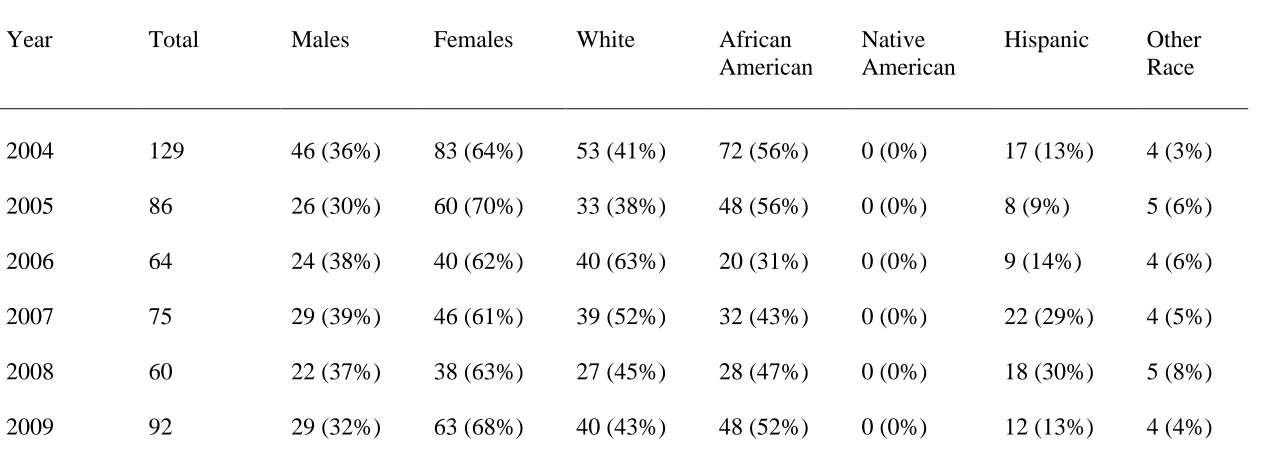
Parent/child dyads (N = 93) were recruited to participate in a study designed to examine factors that contributed to physically abused children’s adjustment during the transition from preschool into kindergarten and, subsequently, first grade. All families lived in an urban area of a large county in the South. For a summary of the demographics and characteristics of the county population, see Appendices A-C. All families were recruited from Child Protective Services (CPS). For a summary of the number of substantiated cases identified by CPS in Wake County from the years data were collected (Duncan et al., 2012), see Table 1. All children in the study had a history of substantiated physical abuse within one year prior to enrollment in the study. Criteria for inclusion in the study included (a) a
substantiated report of physical abuse within 12 months prior to enrollment in the study, (b) confirmation that the physically abusive parent and child were living in the same home, (c) an absence of sexual abuse of the child, and (d) the child was between 4 and 7 years of age. With three exceptions, the parent in the dyad was the abuser. Most dyads were enrolled prior to the child’s kindergarten entry (i.e., during preschool). Optimally, dyads were assessed at
enrollment, again when the children were in kindergarten, and, finally, when the children were in first grade, for a total of three time points. Data collection began in 2004 and continued until 2009, with families being recruited throughout that time period.
Table 1
Cases of Substantiated Abuse* and Abuse Demographics in the County
Year Total Males Females White African
American
Native American
Hispanic Other Race
2004 129 46 (36%) 83 (64%) 53 (41%) 72 (56%) 0 (0%) 17 (13%) 4 (3%)
2005 86 26 (30%) 60 (70%) 33 (38%) 48 (56%) 0 (0%) 8 (9%) 5 (6%)
2006 64 24 (38%) 40 (62%) 40 (63%) 20 (31%) 0 (0%) 9 (14%) 4 (6%)
2007 75 29 (39%) 46 (61%) 39 (52%) 32 (43%) 0 (0%) 22 (29%) 4 (5%)
2008 60 22 (37%) 38 (63%) 27 (45%) 28 (47%) 0 (0%) 18 (30%) 5 (8%)
2009 92 29 (32%) 63 (68%) 40 (43%) 48 (52%) 0 (0%) 12 (13%) 4 (4%)
*Type of abuse was not specified. This category was differentiated from Neglect, Abuse and Neglect, and Dependency.
Additionally, a majority of the children enrolled in the study were male (N = 58; 62%); the majority of parents were female (N = 75; 95%). Additional demographic
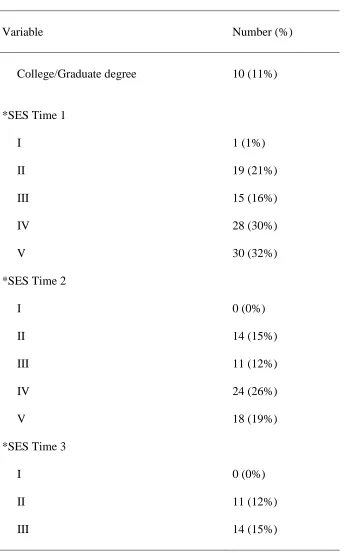
information (e.g., marital status, socioeconomic status, educational attainment, etc.) can be found in Table 2.
Measures
Parenting behavior. Parenting behavior was examined using an observational measure of parent-child interaction (PCI). The PCI procedure involved three, 7-minute structured interactions between a parent and their child. Observations of parent-child
interactions were videotaped via an unobtrusive camera installed in a clock in the room. The first interaction consisted of parent and child “free play,” in which the dyad was instructed to play together with various toys and materials (e.g., K’nex construction toys, markers, paper,
a series of magnetic numbers and tray) on the table in front of them. In the second
interaction, the “instruction” task, parents were asked to tell their child to: (1) clean up; (2)
draw a picture of a person; and (3) sit quietly while you read a magazine. The same toys present from the first situation were available on the table for the child. Additionally, newly introduced and potentially more appealing toys (e.g., Lite Brite, Play-Doh and tools) and a container of candy were placed on a bookshelf in the room. The parent was instructed prior to the session not to let the child play with those toys. The third interaction was a
“teaching/frustration” segment. Parents were instructed to help their child complete two
Table 2
Demographic Characteristics of Children (N=93) and Parents (N=78)
Variable Number (%)
Child Race
African American 66 (71%)
European American 19 (20%)
Other/Biracial 8 (9%)
Child Gender
Male 58 (62%)
Female 35 (38%)
Parent Marital Status
Single 42 (45%)
Married 24 (26%)
Divorced 9 (10%)
Separated 15 (16%)
Widow/Widower 3 (3%)
Educational Attainment
Less than high school 14 (15%)
High school 32 (34%)
Table 2, continued
Variable Number (%)
College/Graduate degree 10 (11%)
*SES Time 1
I 1 (1%)
II 19 (21%)
III 15 (16%)
IV 28 (30%)
V 30 (32%)
*SES Time 2
I 0 (0%)
II 14 (15%)
III 11 (12%)
IV 24 (26%)
V 18 (19%)
*SES Time 3
I 0 (0%)
II 11 (12%)
Table 2, continued
Variable Number (%)
IV 16 (17%)
V 13 (14%)
Parent Age
Time 1 31.5 (7.8)
Time 2 33.0 (9.3)
Time 3 34.8 (8.4)
Child Age
Time 1 4.5 (.50)
Time 2 5.4 (.50)
Time 3 6.1 (.43)
Parent IQ 89.1 (12.8)
Child IQ 90.3 (14.0)
Parenting behavior was coded from videotapes using a version of the Qualitative Ratings of Parent-Child Interactions/Young Family Interaction Coding System (YFICS; Cox & Paley, 1997). That system was originally designed and developed as a triadic or whole family coding system for use with families with children age 2-3 years. The system has been adapted for use with families of older children by using age-appropriate tasks (Paley, Cox, & Kanoy, 2001). The parenting dimensions coded for the present sample were Positive Regard for the Child, Negative Regard for the Child, Flatness of Affect, Intrusiveness, Sensitivity, and Detachment. Positive regard for the child indicated the frequency and intensity of verbal or physical warmth and positive expressions (e.g., hugs, smiles) toward the child. Negative regard indicated the frequency and intensity of verbal or physical hostile, negative behaviors (e.g., pushing away, name-calling). Flatness of affect represented the degree to which parents lacked animation in behavior and demeanor. Intrusiveness described the degree to which parents’ behavior dominated the interaction such that the child was unable to follow his or
her own interests, desires, and needs. Sensitivity indicated the degree to which parent behavior was responsive and reciprocal, based on the child’s needs. Finally, detachment indicated the parents’ level of interest and emotional involvement with the child during the
Results from previous studies indicated that, with the exception of detachment, scores from each situation were highly correlated and therefore can be combined in this way (e.g.,
Haskett, Allaire, Kreig, & Hart, 2008). Because detachment scores were not correlated across all three situations (Lewis, 2011), those scores were not included in this study.
The developers of the YFICS coding system established interrater reliability using data from 138 families. Developers found moderate to excellent interrater reliability on all parenting dimensions (Paley et al., 2001). This coding system has been used in previous studies of maltreated children in the same age range as the proposed study (e.g., Haskett et al., 2008). Interrater reliability (based on 25% of the PCI sessions) of the parenting codes has been calculated previously with this sample and the following adequate intra-class
correlation (ICC) coefficients were obtained: Positive Regard r = .75; Negative Regard r = .65, Sensitivity r = .72; Intrusiveness r = .64; and Flatness of Affect r = .69 (Lewis, 2011). Internal consistency also has been found to be adequate (ranging from r = .64 on Sensitivity to r = .80 on Negative Regard) in previous studies with physically abused children (e.g., Lewis, 2011). Regarding the validity of the coding system, cluster analysis of abusive parents’ scores on the parenting dimensions of the PCI showed clinically meaningful
expressions of enthusiasm and/or playfulness. Negative mood was the extent to which the child fussed, frowned, cried, or otherwise expressed discontentment. Included in this measure also was the degree to which the child demonstrated hostility, aggression, anger, or dislike toward the parent. Compliance was defined as the degree to which the child demonstrated willingness to listen to the parent’s suggestions and comply with the requests in a reasonable
manner. These three behaviors were coded on a scale of 1 (Not at all characteristic) to 5 (Highly characteristic). A description of the coding scales for child behavior can be found in Appendix E. As with the parenting scale, the higher the score, the more characteristic the behavior was of the observed child. Child behaviors were not highly correlated (r = .4 to .6) across all three situations. Therefore, mean scores for each dimension were not calculated. Raw scores for each dimension at each time point were used for analyses.
This coding scale has been used previously in studies examining observed child behavior (e.g., McPherson, Lewis, Lynn, Haskett, & Behrend, 2009; Paley et al., 2001). Interrater reliability across coders of child behaviors was moderate to excellent for
McPherson et al (2009), with kappa coefficients ranging from .75 to .94. Internal consistency also has been found to be adequate (α = .80) for the child behavior scales (McPherson et al.,
present study, good internal consistencies were found (ranging from r = .86 on Negative Mood and Compliance to r = .90 on Positive Mood).
For the present study, undergraduate research assistants not involved in collecting data coded the videotaped parent and child behavior; separate coding teams were used to code parent and child behavior and the teams did not have access to coded data from the other team. To code parent behavior, each coder first watched the taped parent-child
interaction while taking notes of parent behaviors. The coder then assigned a score for each of the six parent behaviors and watched the tape again to verify the scores. To code child behavior, each coder watched the taped parent-child interactions and assigned a score for each of the three child behaviors (i.e., positive mood, negative mood, compliance). Ratings were based on the quantity and quality of the interactions. Coders received a training manual and were trained in small groups until each behavior was scored reliably (80% interrater agreement with the trainer). Once trained, approximately 25% of the interactions were coded by two coders to obtain interrater agreement.
Socioemotional adjustment: Child behavior. First grade teachers of the child participants rated children’s behavior via the CBCL-TRF (Achenbach & Rescorla, 2001).
T-scores (M = 50; SD = 10) based on gender and age group for three composites: Internalizing Problems, Externalizing Problems, and Total Problems. The T-scores from the third time point (i.e., first grade) for the Internalizing and Externalizing scales were used in this study.
The CBCL-TRF is a psychometrically sound and widely used instrument (Edelbrock & Achenbach, 1985). Excellent alpha coefficients have been reported for the Internalizing (α = .90) and Externalizing (α = .95) scales (Achenbach & Rescorla, 2001). There was adequate
interrater agreement among camp counselors for internalizing (r = .64) and externalizing (r = .85) behaviors in a sample that included physically abused children (Shonk & Cicchetti, 2001). Additionally, developers reported strong discriminative and content validity of the measure, and scores on the CBCL-TRF have correlated with psychiatric diagnoses (Achenbach & Edelbrock, 1984).
Procedures
one session each year. Ideally, the initial session was scheduled when the child was in preschool, with subsequent sessions occurring at annual intervals (i.e., kindergarten and first grade).
To encourage participation, transportation to the data collection site and childcare on site were provided. Each parent received $70 in exchange for participating. To encourage continued participation in all time points of the study, payments increased by $10 each year the family participated. Parents were entered into a monthly drawing for an additional $50 gift certificate when they scheduled their appointment. Parents also received a book of local resources; children received educational materials and a small toy.
To maintain confidentiality, identification numbers were assigned to all participating families. Data were catalogued according to these numbers and contained in locked filing cabinets. A Certificate of Confidentiality, which protects families from research information being used in court proceedings, also was obtained from the Department of Health and Human Services. All procedures for the study were approved by the university’s Institutional
Review Board. At the beginning of each session, informed consent from the parents and assent from the children were obtained. All measures with parents and children were administered by teams of undergraduate research assistants who were supervised by a graduate student. Undergraduate research assistants were not informed of the families’
involvement with CPS or aware of participants’ history of abuse. The undergraduates’ lack of
knowledge regarding CPS involvement or abuse history helped ensure unbiased data
occurred in a standard order at the end of the first hour of data collection and was
immediately followed by a family snack. For parents, measures preceding the PCI were an interview about their involvement in their children’s learning, a measure of receptive
vocabulary, and a measure of mental health functioning. For children, measures preceding the PCI included a puppet interview about their parents’ caregiving behavior, a measure of
intellectual functioning, and a puzzle task to assess regulation.
Parents signed a consent form allowing their child’s teacher to be contacted for the teacher to complete rating scales regarding children’s behavior and socioemotional
Results Descriptive Statistics
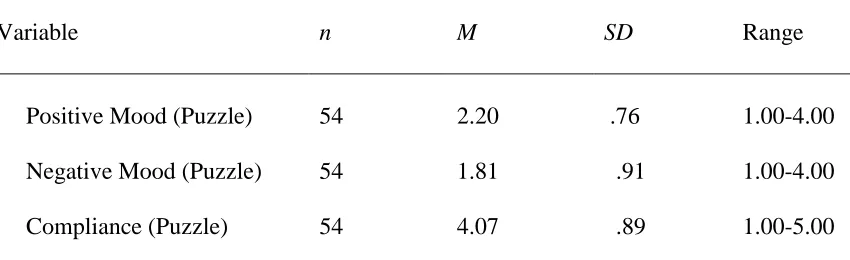
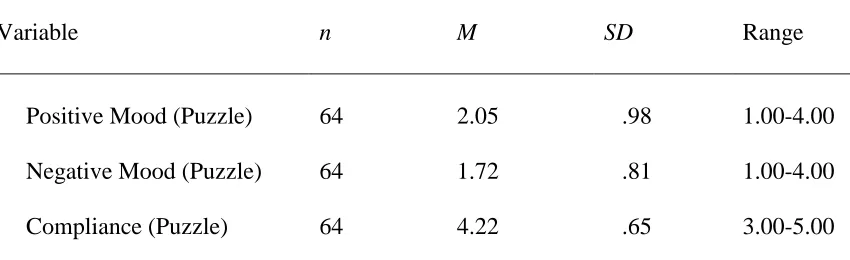
Means, standard deviations, and ranges were calculated for all variables at each time point to assess normality of the data (see Tables 3-5). Additionally, to examine the
distribution of all variables at each time point, skewness and kurtosis values were computed. Each variable’s skewness and kurtosis was converted to a z-score by computing the ratio of
skewness and kurtosis to its standard error and comparing the z-score to the value of ± 1.96 (Field, 2005). The variables of parent negative regard and child negative mood were skewed at each time point. Child compliance was skewed for Free Play during the first two time points and for Puzzle during the first time point only. Child positive mood also was skewed during the puzzle task at the second time point. Parent negative regard and child compliance were kurtotic only at the first time point. Child negative mood was kurtotic for the puzzle task at the third time point only. In cases of extreme values for skewness and kurtosis (i.e., z-scores greater than 3.29; Field, 2005), variables were transformed. Specifically, parent
negative regard at each time point, compliance for the puzzle task at the first time point, child negative mood for the free play task at the first time point, the puzzle task at the second time point and all situations for the third time point were transformed. A log transformation was selected for this process as most of the extreme scores were positive and none of the data included zeros or negative numbers (Field, 2005). Skew and kurtosis values for all
Table 3
Number of Participants, Mean Scores, and Standard Deviations of Measures at Time 1
Variable n M SD Range
Positive Parenting
Positive Regard 58 3.74 1.14 1.00-6.33
Flatness of Affect 58 3.63 .89 1.67-5.33
Negative Parenting
Negative Regard 58 2.01 .85 1.00-5.00
Intrusiveness 58 3.56 1.13 1.33-6.67
Sensitivity 58 4.22 1.06 2.00-6.33
Child Behavior
Table 3, continued
Variable n M SD Range
Positive Mood (Puzzle) 54 2.20
.76 1.00-4.00 Negative Mood (Puzzle) 54 1.81 .91 1.00-4.00
Compliance (Puzzle) 54 4.07 .89 1.00-5.00
Table 4
Number of Participants, Mean Scores, and Standard Deviations of Measures at Time 2
Variable n M SD Range
Positive Parenting
Positive Regard 68 3.54 1.25 1.00-6.00
Flatness of Affect 68 4.02 .93 2.33-6.00
Sensitivity 68 3.91 1.13 1.67-6.67
Negative Parenting
Negative Regard 68 2.10 .82 1.00-4.33
Intrusiveness 68 3.48 1.09 1.33-6.33
Child Behavior
Table 4, continued
Variable n M SD Range
Table 5
Number of Participants, Mean Scores, and Standard Deviations of Measures at Time 3
Variable n M SD Range
Positive Parenting
Positive Regard 60 3.37 1.17 1.00-6.00
Flatness of Affect 60 4.17 1.03 1.33-6.00
Sensitivity 60 3.65 .98 1.67-6.00
Negative Parenting
Negative Regard 60 2.14 .75 1.00-4.33
Intrusiveness 60 3.43 1.00 1.33-5.67
Child Behavior
Table 5, continued
Variable n M SD Range
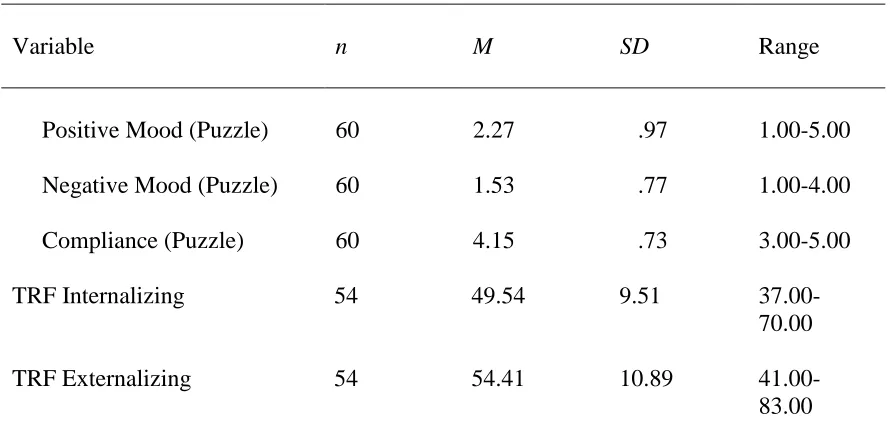
Positive Mood (Puzzle) 60 2.27 .97 1.00-5.00 Negative Mood (Puzzle) 60 1.53 .77 1.00-4.00 Compliance (Puzzle) 60 4.15 .73 3.00-5.00
TRF Internalizing 54 49.54 9.51
37.00-70.00
TRF Externalizing 54 54.41 10.89
Table 6
Skew and Kurtosis of Variables at Time 1
Variable Skew S.E. Kurtosis S.E.
Positive Parenting
Positive Regard -.14 .31 -.13 .62
Flatness of Affect -.43 .31 -.34 .62
Negative Parenting
Negative Regard .40 .31 .29 .62
Intrusiveness .08 .31 -.10 .62
Sensitivity -.11 .31 -.63 .62
Child Behavior
Positive Mood (Free Play) -.17 .32 -.20 .63 Negative Mood (Free Play) 1.03 .32 .91 .63
Compliance (Free Play) -.78 .32 2.43 .63
Positive Mood (Instruction) .41 .32 -.05 .63 Negative Mood (Instruction) .85 .32 .40 .63 Compliance (Instruction) -.22 .32 -.71 .63
Positive Mood (Puzzle) .17 .32 -.28 .64
Negative Mood (Puzzle) .85 .32 -.22 .64
Table 7
Skew and Kurtosis of Variables at Time 2
Variable Skew S.E. Kurtosis S.E.
Positive Parenting
Positive Regard -.13 .29 -.74 .57
Flatness of Affect .02 .29 -.88 .57
Sensitivity .26 .29 -.28 .57
Negative Parenting
Negative Regard .22 .29 -.39 .57
Intrusiveness .39 .29 .06 .57
Child Behavior
Positive Mood (Free Play) -.01 .30 -.82 .59 Negative Mood (Free Play) .64 .30 -.57 .59
Compliance (Free Play) -.64 .30 -.57 .59
Positive Mood (Instruction) .52 .30 -.17 .59 Negative Mood (Instruction) 1.04 .30 1.04 .59 Compliance (Instruction) -.33 .30 -.49 .59
Positive Mood (Puzzle) .63 .30 -.58 .59
Negative Mood (Puzzle) .35 .30 -1.04 .59