S E R I E S 2
Optimizing Protocols in Obstetrics
MANAGEMENT of OBSTETRIC HEMORRHAGE
OCTOBER 2012
Management of Obstetric Hemorrhage
2
Dear ACOG District II Member:
On behalf of the American Congress of Obstetricians and Gynecologists (ACOG), District II we are pleased to provide you with the second chapter of the Optimizing Protocols in Obstetrics series. While the first chapter addressed the use of oxytocin for induction, this chapter’s content focuses on the Man-agement of Obstetric Hemorrhage.
Twenty three existing hemorrhage protocols were reviewed from obstetric hospitals throughout New York State and many contained excellent educational and instructional components. However, most of these hospitals lacked the systematic approach required to ensure an effective guideline or protocol. Given the exceptional work done in this area by the California Maternal Quality Care Collaborative (CMQCC) and ACOG, the District II PSQI Committee encourages institutions to utilize these two extensive resources in the development of a hemorrhage protocol. Enclosed you will find:
• Core elements for the management of obstetric hemorrhage
• Recommendations to optimize the management of obstetric hemorrhage
• ACOG Practice Bulletin #76 – Postpartum Hemorrhage
• CMQCC hemorrhage care checklist, flow chart, table chart and training tools for measurement of blood loss
Each institution is encouraged to review its existing hemorrhage protocols, and modify them if neces-sary to maximize safe patient care, or consider the creation of a policy to optimize the management of obstetrical hemorrhage. Standardization of health care processes and reduced variation in practice has been shown to improve outcomes and quality of care.
We extend our sincere appreciation to the committee of medical experts who offered their expertise throughout the creation of this chapter. Their knowledge and dedication to this initiative is invaluable. The District II PSQI Committee continues to develop additional chapters to be added to this resource. If you have any questions regarding the enclosed materials, please contact Kelly Gilchrist, ACOG Dis-trict II Patient Safety Manager, at 518-436-3461 or [email protected].
Sincerely,
Richard L. Berkowitz, MD, FACOG Peter Bernstein, MD, FACOG Co-Chair, PSQI Committee Co-Chair, PSQI Committee
ACOG District II ACOG District II
RB/PB/kg
Optimizing Protocols in Obstetrics
NURSING INTERVENTIONS
Index: Series 2
4 Executive Summary
4 Core Elements for the Management of Obstetric Hemorrhage
5 Introduction & California Maternal Quality Care Collaborative
(CMQCC) Toolkit Overview
6 Recommendations to Optimize the Management of Obstetric Hemorrhage
ACOG PUBLICATIONS
8 ACOG Practice Bulletin # 76 – Postpartum Hemorrhage
CMQCC RESOURCES
17 Obstetric Hemorrhage Care Guidelines Checklist
22 Summary Flowchart
23 Summary Table Chart
24 Training & Tools for Measurement of Blood Loss
PAGE
3
OCTOBER 2012
Optimizing Protocols in Obstetrics
Management of Obstetric Hemorrhage
Purpose
Executive
Summary
Core Elements
4
OCTOBER 2012
Optimizing Protocols in Obstetrics
S E R I E S 2
This document reflects emerging clinical, scientific and patient safety advances as of the date issued and is subject to change. The information should not be construed as dictating an exclusive course of treatment or procedure to be followed. While the components of a particular protocol and/or checklist may be adapted to local resources, standardization of protocols and checklists within an institution is strongly encouraged.
Twenty three hospitals throughout New York State responded to a request from ACOG District II to submit their protocols regarding the diagnosis and management of obstetric hemorrhage. Although many were well written policies and protocols, the committee did not identify a single protocol that could meet the needs of all hospitals in New York State.
The work group used a number of resources, in addition to reviewing the submitted protocols, to select the ideal requirements for a comprehensive approach to obstetrical hemorrhage. These included:
1. ACOG Practice Bulletin No. 76, Postpartum Hemorrhage
2. California Maternal Quality Care Collaborative (CMQCC), Improving Health
Care Response to Obstetric Hemorrhage Toolkit
Each hospital must take into account the resources available within its own institution and community to design a protocol that will assist them in the optimal management of obstetrical hemorrhage. Each institution is encouraged to review its existing policy and protocols, and modify them if necessary to provide safe patient care, or consider the creation of a policy to optimize the management of obstetri-cal hemorrhage. The committee believes that all obstetric services must have a written hemorrhage protocol in order to ensure the highest quality of patient care.
On reviewing the submitted protocols, it is noted that many contain excellent educational and instruc-tional components. What most of them lack however, is the systematic approach required to ensure an effective guideline or protocol. The inclusion of algorithms, charts, and checklists is helpful and the following examples could be useful as hospitals strive to further improve their hemorrhage protocols. Given the previous excellent work done in this area by the California Maternal Quality Care Collabora-tive (CMQCC) and the American Congress of Obstetricians and Gynecologists (ACOG), we encour-age individuals to utilize these two extensive resources in the development of a hemorrhencour-age protocol. The following is a list of the components of any protocol that is created for the management of obstetri-cal hemorrhage. Hospitals should individualize their protocols based on an assessment of their own resources. • Definition • Risk Factors/Etiology • Initial Interventions • Medical Treatment • Surgical Treatment
• Defined Care Team and Escalation Role Clarity • Checklist Algorithm
• Transfusion Policy • Drills
5
Obstetric hemorrhage continues to cause maternal morbidity and mortality in New York and across the United States. Most of these cases occur in spite of women delivering in hospitals staffed by physicians, nurses, and support personnel who are knowledgeable, highly motivated, and well trained. Often these cases occur in hospitals that have very well written obstetric hemorrhage protocols in place. The nature of obstetric hemorrhage management is that it is a time and team dependent performance that requires preci-sion choreography. Having a “good protocol” that has never been practiced as a drill or dry run is similar to a football team that studies its plays but never works through the timing on the practice field, or a dance troupe that never rehearses before opening night.
The Hemorrhage Protocol Work Group has been assigned the task of helping to prevent serious harm as-sociated with obstetric hemorrhage. To that end, this committee has evaluated and chosen resources that can be used to design very good hemorrhage protocols. However, to be effective, your protocol must have two things that our work group cannot provide:
1. Each hemorrhage protocol must be designed and/or approved by the people who will execute it (and they must be given time and resources and permission needed to produce or thoroughly study the written protocol that will work specifically in the institution where it is designed). 2. Each hemorrhage protocol must be tested for feasibility within the institution and taught and
rehearsed through dry runs or drills to improve its quality and the precision team work necessary to effectively manage obstetric hemorrhage.
The toolkit begins with a section on, “How To Use This Toolkit” (pages 1-2) followed by a compendium of evidence-based, best practices related to obstetric hemorrhage. Obstetric hemorrhage care guidelines are presented in three forms starting with the most comprehensive “Checklist” followed by a “Table chart” and finally the most streamlined version the “Flowchart”. The comprehensive “Checklist” delineates all topics the workgroup thought should be included in a protocol except for simulation/drills topic. A comprehen-sive document exists within the tool kit related to obstetric hemorrhage drills and simulations. This docu-ment includes multiple detailed, ready to use scenarios which focus on both the technical managedocu-ment of obstetric hemorrhage, and team function, communication, and role clarity. The document finishes with a
Hospital Level Implementation Guide (pages 95-109) which addresses practical planning for implementa-tion of new evidence-based protocols and guidelines for quality improvement.
We believe a successful protocol should contain the following core elements. Links to examples from the CMQCC Toolkit are included.
Introduction
CMQCC
Toolkit
Overview
Recommendations to Optimize the Management of Obstetric Hemorrhage
OCTOBER 2012
Optimizing Protocols in Obstetrics
S E R I E S 2
Antepartum assessment is essential to identify women at risk for obstetrical hemorrhage.
• Risk factor identification
• A prewritten order set for admission to L&D includes “risk scoring” for obstetric hemorrhage • Definition checklist
n CMQCC Toolkit examples
3
Definitions & Early Recognition (pages 3-6)3
Incidence Risks & Diagnosis (pages 22-25)Each institution should develop an effective written protocol for responding to maternal
hemorrhage, including rapid emergency blood transfusion, which requires coordination among physicians, nurses, anesthesiologists and the blood bank.
• Blood bank protocols should ensure that the institution has appropriate blood products for obstetric emergencies, and they should eliminate barriers to rapid blood access when needed. n CMQCC Toolkit examples
3
Sample Hemorrhage Policy (pages 110-112)
3
Methods for developing training and tools for quantitativemeasurement of blood loss (page 126)
Other suggestions include:
• On initiation of the obstetric hemorrhage protocol, a complete set of prewritten orders should instantly be authorized and executed. The attending physician only will sign this order set after the emergency is completed.
• Debriefings should occur after every drill and after every actual OB hemorrhage emergency. This allows for continuous quality improvement.
• Flow charts, checklists, and other documentary materials needed for managing the OB hemorrhage emergency should be available to assist in the management. n See attached CMQCC examples
n CMQCC Toolkit examples
3
Surgical Treatment (pages 72-73) i. Literature Review (pages 70-71) ii. Carts, Kits and Trays (pages 26-31)3
Medical Treatment (pages 74-75)
3
Checklist/Algorithms (pages 86-92Be vigilant regarding blood loss during pregnancy, labor, and delivery, and in the early postpartum period.
• Nursing staff and physicians in the Labor, Delivery, Recovery and Postpartum areas must be trained in accurately assessing the degree of maternal hemorrhage.
• When problems are identified, the nurse assigned must notify the physician immediately. n See attached CMQCC checklist example
n CMQCC Toolkit examples
3
Definitions & Early Recognition (pages 3-6)3
Simulation & Drills (pages 32-47)Use fluid resuscitation and transfusion based on the estimation of current blood loss and the expectation of continued bleeding, regardless of apparent maternal hemodynamic stability.
• Accurately estimate blood loss n CMQCC Toolkit examples
3
Simulation & Drills (pages 32-47)
3
Transfusion Policy (pages 60-69)Work with hospital staff to conduct drills or simulation to ensure the most efficient management of obstetric hemorrhage.
• Hospitals should run drills at different times of the day to ensure that appropriate hemorrhage team members are available at all times.
• All members of the health care team should participate, including nurses, physicians and ancillary staff, as appropriate
n CMQCC Toolkit example
3
Simulation & Drills (pages 32-47)• The maternal hemorrhage team should include, in addition to a team leader:
• A surgeon with experience and expertise in controlling massive hemorrhage as well as operating room staff in case surgery is needed.
• A critical care physician or anesthesiologist who is familiar with severe hemorrhage to help with assessment of organ perfusion and cardiovascular function.
• A hematologist or clinical pathologist available on site to advise on appropriate blood products, and to coordinate and mobilize appropriate personnel to provide these products immediately.
Provide continuing medical education on hemorrhage for your entire medical team.
• Ensure all hospital staff, including physicians, nurses, laboratory personnel and others are aware of the protocol related to dealing with maternal hemorrhage. Incorporate this protocol into your hospital’s mandatory annual educational programs and ensure all new staff is oriented to it’s content.
• Findings from obstetrical quality improvement initiatives should be incorporated on an on-going basis into improvements of the hemorrhage protocol.
Management of Obstetric Hemorrhage
VOL. 108, NO. 4, OCTOBER 2006 OBSTETRICS & GYNECOLOGY 1039
ACOG
PRACTICE
BULLETIN
C
LINICALM
ANAGEMENTG
UIDELINES FORO
BSTETRICIAN–G
YNECOLOGISTSN
UMBER76, O
CTOBER2006
(Replaces Committee Opinion Number 266, January 2002)This Practice Bulletin was developed by the ACOG Com-mittee on Practice Bulletins— Obstetrics with the assistance of William N. P. Herbert, MD, and Carolyn M. Zelop, MD. The information is designed to aid practitioners in making decisions about appropriate obstetric and gynecologic care. These guidelines should not be construed as dictating an exclu-sive course of treatment or pro-cedure. Variations in practice may be warranted based on the needs of the individual patient, resources, and limitations unique to the institution or type of practice.
Postpartum Hemorrhage
Severe bleeding is the single most significant cause of maternal death world-wide. More than half of all maternal deaths occur within 24 hours of delivery, most commonly from excessive bleeding. It is estimated that, worldwide, 140,000 women die of postpartum hemorrhage each year—one every 4 minutes (1). In addition to death, serious morbidity may follow postpartum hemorrhage. Sequelae include adult respiratory distress syndrome, coagulopathy, shock, loss of fertility, and pituitary necrosis (Sheehan syndrome).
Although many risk factors have been associated with postpartum hemor-rhage, it often occurs without warning. All obstetric units and practitioners must have the facilities, personnel, and equipment in place to manage this emergency properly. Clinical drills to enhance the management of maternal hemorrhage have been recommended by the Joint Commission on Accreditation of Healthcare Organizations (2). The purpose of this bulletin is to review the etiology, evaluation, and management of postpartum hemorrhage.
Background
The physiologic changes over the course of pregnancy, including a plasma vol-ume increase of approximately 40% and a red cell mass increase of approxi-mately 25%, occur in anticipation of the blood loss that will occur at delivery (3). There is no single, satisfactory definition of postpartum hemorrhage. An estimated blood loss in excess of 500 mL following a vaginal birth or a loss of greater than 1,000 mL following cesarean birth often has been used for the diagnosis, but the average volume of blood lost at delivery can approach these amounts (4, 5). Estimates of blood loss at delivery are notoriously inaccurate, with significant underreporting being the rule. Limited instruction on estimat-ing blood loss has been shown to improve the accuracy of such estimates (6). Also, a decline in hematocrit levels of 10% has been used to define postpartum hemorrhage, but determinations of hemoglobin or hematocrit concentrations may not reflect the current hematologic status (7). Hypotension, dizziness,
pal-1040 ACOG Practice Bulletin Postpartum Hemorrhage OBSTETRICS & GYNECOLOGY
lor, and oliguria do not occur until blood loss is substan-tial—10% or more of total blood volume (8).
Postpartum hemorrhage generally is classified as primary or secondary, with primary hemorrhage occur-ring within the first 24 hours of delivery and secondary hemorrhage occurring between 24 hours and 6–12 weeks postpartum. Primary postpartum hemorrhage, which occurs in 4–6% of pregnancies, is caused by uterine atony in 80% or more of cases (7). Other etiologies are shown in the box “Etiology of Postpartum Hemorrhage,” with risk factors for excessive bleeding listed in the box “Risk Factors for Postpartum Hemorrhage.”
If excessive blood loss is ongoing, concurrent evalu-ation and management are necessary. A number of gen-eral medical supportive measures may be instituted, including provision of ample intravenous access; crystal-loid infusion; blood bank notification that blood products may be necessary; prompt communication with anesthe-siology, nursing, and obstetrician–gynecologists; and blood collection for baseline laboratory determinations.
When treating postpartum hemorrhage, it is neces-sary to balance the use of conservative management tech-niques with the need to control the bleeding and achieve hemostasis. A multidisciplinary approach often is required. In the decision-making process, less-invasive methods should be tried initially if possible, but if unsuc-cessful, preservation of life may require hysterectomy. Management of postpartum hemorrhage may vary great-ly among patients, depending on etiology of the bleeding, available treatment options, and a patient’s desire for
future fertility. At times, immediate surgery is required because time spent using other treatment methods would be dangerous for the patient. There are few randomized controlled studies relevant to the management of post-partum hemorrhage, so management decisions usually are made based on clinical judgment.
Evaluation and Management
Considerations
In an effort to prevent uterine atony and associated bleed-ing, it is routine to administer oxytocin soon after deliv-ery. This may be given at the time of delivery of the anterior shoulder of the fetus, or more commonly in the United States, following delivery of the placenta.
It may be helpful to post protocols for hemorrhage management in delivery rooms or operating suites. A sam-ple poster from the New York City Department of Health and Mental Hygiene is available at http://home2.nyc.gov/ html/doh/downloads/pdf/ms/ms-hemorr-poster.pdf.
Clinical Considerations and
Recommendations
What should be considered in the initial eval-uation of a patient with excessive bleeding in the immediate puerperium?
Because the single most common cause of hemorrhage is uterine atony, the bladder should be emptied and a bimanual pelvic examination should be performed. The finding of the characteristic soft, poorly contracted (“boggy”) uterus suggests atony as a causative factor. Compression or massage of the uterine corpus can dimin-ish bleeding, expel blood and clots, and allow time for other measures to be implemented.
If bleeding persists, other etiologies besides atony must be considered. Even if atony is present, there may be other contributing factors. Lacerations should be ruled out by careful visual assessment of the lower genital tract. Proper patient positioning, adequate operative assistance, good lighting, appropriate instrumentation (eg, Simpson or Heaney retractors), and adequate anes-thesia are necessary for the identification and proper repair of lacerations. Satisfactory repair may require transfer to a well-equipped operating room.
Genital tract hematomas also can lead to significant blood loss. Progressive enlargement of the mass indicates a need for incision and drainage. Often a single bleeding source is not identified when a hematoma is incised. Draining the blood within the hematoma (sometimes
Etiology of Postpartum Hemorrhage
Primary Uterine atony
Retained placenta—especially placenta accreta Defects in coagulation
Uterine inversion Secondary
Subinvolution of placental site Retained products of conception Infection
Inherited coagulation defects
Adapted from Cunningham FG, Leveno KJ, Bloom SL, Hauth JC, Gilstrap L 3rd, Wenstrom KD. Obstetric hemorrhage. In: Williams obstetrics. 22nd ed. New York (NY): McGraw-Hill; 2005. p. 809–54 and Alexander J, Thomas P, Sanghera J. Treatments for secondary postpartum haemorrhage. The Cochrane Database of Systematic Reviews 2002, Issue 1. Art. No.: CD002867. DOI: 10.1002/ 14651858.CD002867.
VOL. 108, NO. 4, OCTOBER 2006 ACOG Practice Bulletin Postpartum Hemorrhage 1041
placing a drain in situ), suturing the incision, and if appropriate, packing the vagina are measures usually successful in achieving hemostasis. Interventional radi-ology is another option for management of a hematoma. Genital tract hematomas may not be recognized until hours after the delivery, and they sometimes occur in the absence of vaginal or perineal lacerations. The main symptoms are pelvic or rectal pressure and pain.
The possibility that additional products of concep-tion remain within the uterine cavity should be consid-ered. Ultrasonography can help diagnose a retained placenta. Retained placental tissue is unlikely when ultrasonography reveals a normal endometrial stripe. Although ultrasonographic images of retained placental tissue are inconsistent, detection of an echogenic mass in the uterus is more conclusive. Ultrasound evaluation for retained tissue should be performed before uterine instrumentation is undertaken (9). Spontaneous expul-sion of the placenta, apparent structural integrity on inspection, and the lack of a history of previous uterine surgery (suggesting an increased risk of abnormal pla-centation) make a diagnosis of retained products of the placenta less likely, but a curettage may identify a suc-centuriate lobe of the placenta or additional placental tis-sue. When a retained placenta is identified, a large, blunt instrument, such as a banjo curette or ring forceps, guid-ed by ultrasonography, makes removal of the retainguid-ed tissue easier and reduces the risk of perforation.
Less commonly, postpartum hemorrhage may be caused by coagulopathy. Clotting abnormalities should be suspected on the basis of patient or family history
Risk Factors for Postpartum Hemorrhage
Prolonged labor Augmented labor Rapid labor
History of postpartum hemorrhage Episiotomy, especially mediolateral Preeclampsia
Overdistended uterus (macrosomia, twins, hydramnios)
Operative delivery Asian or Hispanic ethnicity Chorioamnionitis
Data from Stones RW, Paterson CM, Saunders NJ. Risk factors for major obstetric haemorrhage. Eur J Obstet Gynecol Reprod Biol 1993;48:15–8 and Combs CA, Murphy EL, Laros RK. Factors associ-ated with hemorrhage in cesarean deliveries. Obstet Gynecol 1991;77:77–82.
or clinical circumstances. Hemolysis, elevated liver enzymes, and low platelet count (HELLP) syndrome, abruptio placentae, prolonged intrauterine fetal demise, sepsis, and amniotic fluid embolism are associated with clotting abnormalities. Significant hemorrhage from any cause can lead to consumption of clotting factors. Observation of the clotting status of blood recently lost can provide important information. When a coagulopa-thy is suspected, appropriate testing should be ordered, with blood products infused as indicated. In some situa-tions, the coagulopathy may be caused or perpetuated by the hemorrhage. In such cases, simultaneous surgery and blood product replacement may be necessary.
Baseline studies should be ordered when excessive blood loss is suspected and should be repeated periodi-cally as clinical circumstances warrant. Clinicians should remember that the results of some studies may be misleading because equilibration may not have occurred. In addition, response to hemorrhage may be required before laboratory results are known. Baseline studies include a complete blood count with platelets, a pro-thrombin time, an activated partial thromboplastin time, fibrinogen, and a type and cross order. The blood bank should be notified that transfusion may be necessary.
The clot observation test provides a simple measure of fibrinogen (10). A volume of 5 mL of the patient’s blood is placed into a clean, red-topped tube and observed frequently. Normally, blood will clot within 8–10 minutes and will remain intact. If the fibrinogen concentration is low, generally less than 150 mg/dL, the blood in the tube will not clot, or if it does, it will under-go partial or complete dissolution in 30–60 minutes.
What is the appropriate medical management approach for excessive postpartum bleeding? Ongoing blood loss in the setting of decreased uterine tone requires the administration of additional uterotonics as the first-line treatment for hemorrhage (Table 1). Some practitioners prefer direct injection of methyler-gonovine maleate and 15-methyl prostaglandin (PG) F2α into the uterine corpus. Human recombinant factor VIIa is a new treatment modality shown to be effective in controlling severe, life-threatening hemorrhage by acting on the extrinsic clotting pathway. Intravenous dosages vary by case and generally range from 50 to 100 mcg/kg every 2 hours until hemostasis is achieved. Cessation of bleeding ranges from 10 minutes to 40 minutes after administration (11–14). Concern has been raised be-cause of apparent risk of subsequent thromboembolic events following factor VIIa use (15). Compared with other agents, factor VIIa is extremely expensive. Additional clinical experience in all specialties will help
1042 ACOG Practice Bulletin Postpartum Hemorrhage OBSTETRICS & GYNECOLOGY
available to control bleeding (Table 3). Hypogastric artery ligation is performed much less frequently than in years past. Its purpose is to diminish the pulse pressure of blood flowing to the uterus via the internal iliac (hypogastric) vessels. Practitioners are less familiar with this technique, and the procedure has been found to be considerably less successful than previously thought (17). Bilateral uterine artery ligation (O’Leary sutures) accomplishes the same goal, and this procedure is quick-er and easiquick-er to pquick-erform (18, 19). To furthquick-er diminish blood flow to the uterus, similar sutures can be placed across the vessels within the uteroovarian ligaments.
The B-Lynch technique is a newer procedure for stopping excessive bleeding caused by uterine atony (20). The suture provides even pressure to compress the uterine corpus and decrease bleeding. One study reported more determine factor VIIa’s role in the treatment of patients
with postpartum hemorrhage.
When is packing or tamponade of the uterine cavity advisable?
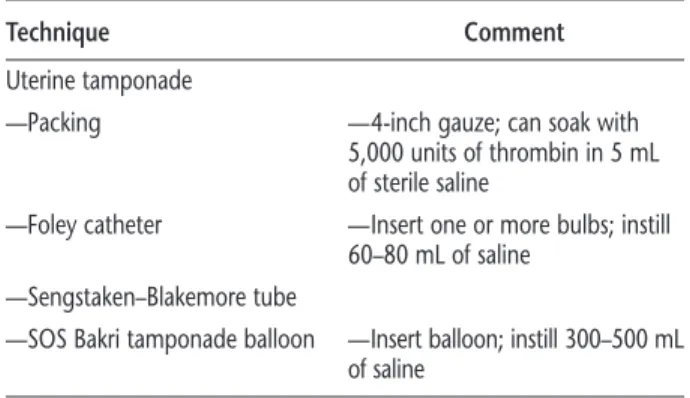
When uterotonics fail to cause sustained uterine contrac-tions and satisfactory control of hemorrhage after vaginal delivery, tamponade of the uterus can be effective in decreasing hemorrhage secondary to uterine atony (Table 2). Such approaches can be particularly useful as a tem-porizing measure, but if a prompt response is not seen, preparations should be made for exploratory laparotomy. Packing with gauze requires careful layering of the material back and forth from one cornu to the other using a sponge stick, packing back and forth, and ending with extension of the gauze through the cervical os. The same effect often can be derived more easily using a Foley catheter, Sengstaken-Blakemore tube, or, more recently, the SOS Bakri tamponade balloon (16), specifically tai-lored for tamponade within the uterine cavity in cases of postpartum hemorrhage secondary to uterine atony.
When are surgical techniques used to control uterine bleeding?
When uterotonic agents with or without tamponade measures fail to control bleeding in a patient who has given birth vaginally, exploratory laparotomy is indicat-ed. A midline vertical abdominal incision usually is pre-ferred to optimize exposure. Several techniques are
▲
▲
Table 1.Medical Management of Postpartum Hemorrhage
Drug* Dose/Route Frequency Comment
Oxytocin (Pitocin) IV: 10–40 units in 1 liter Continuous Avoid undiluted rapid IV infusion, normal saline or lactated which causes hypotension. Ringer’s solution
IM: 10 units
Methylergonovine IM: 0.2 mg Every 2–4 h Avoid if patient is hypertensive. (Methergine)
15-methyl PGF2α IM: 0.25 mg Every 15–90 min, Avoid in asthmatic patients; (Carboprost) 8 doses maximum relative contraindication if
(Hemabate) hepatic, renal, and cardiac
disease. Diarrhea, fever, tachycardia can occur. Dinoprostone Suppository: vaginal Every 2 h Avoid if patient is hypotensive. (Prostin E2) or rectal Fever is common. Stored frozen,
20 mg it must be thawed to room
temperature. Misoprostol 800–1,000 mcg rectally
(Cytotec, PGE1)
Abbreviations: IV, intravenously; IM, intramuscularly; PG, prostaglandin. *All agents can cause nausea and vomiting.
Modified from Dildy GA, Clark SL. Postpartum hemorrhage. Contemp Ob/Gyn 1993;38(8):21–9.
Table 2.Tamponade Techniques for Postpartum Hemorrhage
Technique Comment
Uterine tamponade
—Packing —4-inch gauze; can soak with 5,000 units of thrombin in 5 mL of sterile saline
—Foley catheter —Insert one or more bulbs; instill 60–80 mL of saline
—Sengstaken–Blakemore tube
—SOS Bakri tamponade balloon —Insert balloon; instill 300–500 mL of saline
VOL. 108, NO. 4, OCTOBER 2006 ACOG Practice Bulletin Postpartum Hemorrhage 1043
than 1,000 B-Lynch procedures with only seven failures (21). However, because the technique is new, many clini-cians have limited experience with this procedure (22).
Hemostatic multiple square suturing is another new surgical technique for postpartum hemorrhage caused by uterine atony, placenta previa, or placenta accreta. The procedure eliminates space in the uterine cavity by sutur-ing both anterior and posterior uterine walls. One study reported on this technique in 23 women after conserva-tive treatment failed. All patients were examined after 2 months, and ultrasound findings confirmed normal endometrial linings and uterine cavities (23).
What are the clinical considerations for suspected placenta accreta?
Abnormal attachment of the placenta to the inner uterine wall (placenta accreta) can cause massive hemorrhage. In fact, accreta and uterine atony are the two most common reasons for postpartum hysterectomy (24, 25). Risk factors for placenta accreta include placenta previa with or with-out previous uterine surgery, prior myomectomy, prior cesarean delivery, Asherman’s syndrome, submucous leiomyomata, and maternal age older than 35 years (26).
Prior cesarean delivery and the presence of placenta previa in a current pregnancy are particularly important risk factors for placenta accreta. In a multicenter study of more than 30,000 patients who had cesarean delivery without labor, the risk of placenta accreta was approximately 0.2%, 0.3%, 0.6%, 2.1%, 2.3%, and 7.7% for women experienc-ing their first through sixth cesarean deliveries, respective-ly. In patients with placenta previa in the current pregnancy, the risk of accreta was 3%, 11%, 40%, 61%, and 67% for those undergoing their first through their fifth or greater cesarean deliveries, respectively (27).
Women with placenta previa or placenta accreta have a higher incidence of postpartum hemorrhage and are more likely to undergo emergency hysterectomy
(28). In the multicenter study cited previously, hysterec-tomy was required in 0.7% for the first cesarean delivery and increased with each cesarean delivery up to 9% for patients with their sixth or greater cesarean delivery.
In the presence of previa or a history of cesarean delivery, the obstetric care provider must have a high clinical suspicion for placenta accreta and take appropri-ate precautions. Ultrasonography may be helpful in establishing the diagnosis in the antepartum period. Color Doppler technology may be an additional adjunc-tive tool for suspected accreta (29). Despite advances in imaging techniques, no diagnostic technique affords the clinician complete assurance of the presence or absence of placenta accreta.
If the diagnosis or a strong suspicion is formed before delivery, a number of measures should be taken:
• The patient should be counseled about the likelihood of hysterectomy and blood transfusion.
• Blood products and clotting factors should be avail-able.
• Cell saver technology should be considered if avail-able.
• The appropriate location and timing for delivery should be considered to allow access to adequate surgical personnel and equipment.
• A preoperative anesthesia assessment should beob-tained.
The extent (area, depth) of the abnormal attachment will determine the response—curettage, wedge resection, medical management, or hysterectomy. Uterine conserv-ing options may work in small focal accretas, but abdom-inal hysterectomy usually is the most definitive treatment.
Under what circumstances is arterial embolization indicated?
A patient with stable vital signs and persistent bleeding, especially if the rate of loss is not excessive, may be a can-didate for arterial embolization. Radiographic identifica-tion of bleeding vessels allows embolizaidentifica-tion with Gelfoam, coils, or glue. Balloon occlusion is also a technique used in such circumstances. Embolization can be used for bleeding that continues after hysterectomy or can be used as an alternative to hysterectomy to preserve fertility.
When is blood transfusion recommended? Is there a role for autologous transfusions or directed donor programs?
Transfusion of blood products is necessary when the extent of blood loss is significant and ongoing, particu-larly if vital signs are unstable. Postpartum transfusion
▲
▲
▲
Table 3.Surgical Management of Postpartum Hemorrhage
Technique Comment
Uterine curettage
Uterine artery ligation Bilateral; also can ligate uteroovarian vessels
B-Lynch suture
Hypogastric artery ligation Less successful than earlier thought; difficult technique; generally reserved for practitioners experienced in the procedure Repair of rupture
1044 ACOG Practice Bulletin Postpartum Hemorrhage OBSTETRICS & GYNECOLOGY
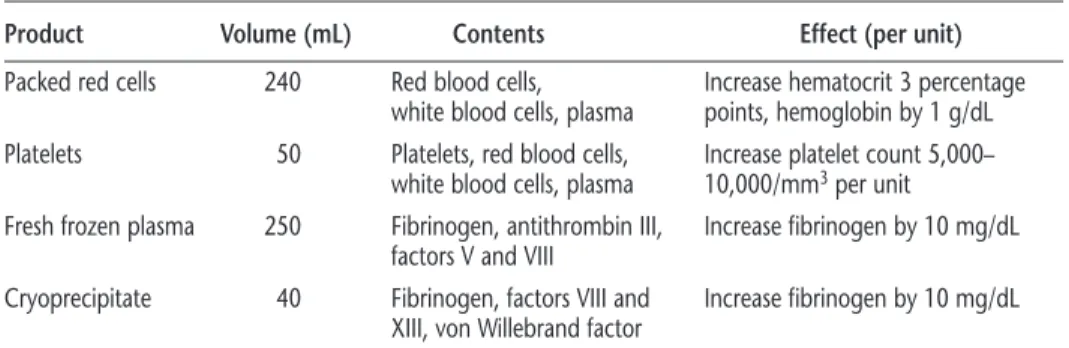
rates vary between 0.4% and 1.6% (30). Clinical judg-ment is an important determinant, given that estimates of blood loss often are inaccurate, determination of hemat-ocrit or hemoglobin concentrations may not accurately reflect the current hematologic status, and symptoms and signs of hemorrhage may not occur until blood loss exceeds 15% (8). The purpose of transfusion of blood products is to replace coagulation factors and red cells for oxygen-carrying capacity, not for volume replacement. To avoid dilutional coagulopathy, concurrent replace-ment with coagulation factors and platelets may be nec-essary. Table 4 lists blood components, indications for transfusion, and hematologic effects.
Autologous transfusion (donation, storage, retrans-fusion) has been shown to be safe in pregnancy (31, 32). However, it requires anticipation of the need for transfu-sion, as well as a minimal hematocrit concentration often above that of a pregnant woman. Autologous transfusion generally is reserved for situations with a high chance of transfusion in a patient with rare antibodies, where the likelihood of identifying compatible volunteer-provided blood is very low. Blood donated by directed donors has not been shown to be safer than blood from unknown, volunteer donors. Cell saver technology has been used successfully in patients undergoing cesarean delivery. In a multicenter study of 139 patients using such devices, no untoward outcomes were noted when compared with control patients (33).
What is the management approach for hemorrhage due to a ruptured uterus?
Rupture can occur at the site of a previous cesarean deliv-ery or other surgical procedure involving the uterine wall from intrauterine manipulation or trauma or from con-genital malformation (small uterine horn), or it can occur spontaneously. Abnormal labor, operative delivery, and placenta accreta can lead to rupture. Surgical repair is
required, with the specific approach tailored to recon-struct the uterus, if possible. Care depends on the extent and site of rupture, the patient’s current clinical condi-tion, and her desire for future childbearing. Rupture of a previous cesarean delivery scar often can be managed by revision of the edges of the prior incision followed by primary closure. In addition to the myometrial disrup-tion, consideration must be given to neighboring struc-tures, such as the broad ligament, parametrial vessels, ureters, and bladder. Regardless of the patient’s wishes for the avoidance of hysterectomy, this procedure may be necessary in a life-threatening situation.
What is the management approach for an inverted uterus?
Uterine inversion, in which the uterine corpus descends to, and sometimes through, the uterine cervix, is associ-ated with marked hemorrhage. On bimanual examina-tion, the finding of a firm mass below or near the cervix, coupled with the absence of identification of the uterine corpus on abdominal examination, suggests inversion. If the inversion occurs before placental separation, detachment or removal of the placenta should not be undertaken; this will lead to additional hemorrhage. Replacement of the uterine corpus involves placing the palm of the hand against the fundus (now inverted and lowermost at or through the cervix), as if holding a ten-nis ball, with the fingertips exerting upward pressure circumferentially (34). To restore normal anatomy, re-laxation of the uterus may be necessary. Terbutaline, magnesium sulfate, halogenated general anesthetics, and nitroglycerin have been used for uterine relaxation.
Manual replacement with or without uterine relax-ants usually is successful. In the unusual circumstance in which it is not, laparotomy is required. Two procedures have been reported to return the uterine corpus to the abdominal cavity. The Huntington procedure involves
▲
▲
Table 4.Blood Component Therapy
Product Volume (mL) Contents Effect (per unit)
Packed red cells 240 Red blood cells, Increase hematocrit 3 percentage white blood cells, plasma points, hemoglobin by 1 g/dL Platelets 50 Platelets, red blood cells, Increase platelet count 5,000–
white blood cells, plasma 10,000/mm3per unit
Fresh frozen plasma 250 Fibrinogen, antithrombin III, Increase fibrinogen by 10 mg/dL factors V and VIII
Cryoprecipitate 40 Fibrinogen, factors VIII and Increase fibrinogen by 10 mg/dL XIII, von Willebrand factor
Modified from Martin SR, Strong TH Jr. Transfusion of blood components and derivatives in the obstetric intensive care patient. In: Foley MR, Strong TH Jr, Garite TJ, editors. Obstetric intensive care manual. 2nd ed. New York (NY): McGraw-Hill; 2004. Produced with permission of The McGraw-Hill Companies.
progressive upward traction on the inverted corpus using Babcock or Allis forceps (35). The Haultain procedure involves incising the cervical ring posteriorly, allowing for digital repositioning of the inverted corpus, with sub-sequent repair of the incision (36).
What is the management approach for secondary postpartum hemorrhage?
Secondary hemorrhage occurs in approximately 1% of pregnancies; often the specific etiology is unknown. Postpartum hemorrhage may be the first indication for von Willebrand’s disease for many patients and should be considered. The prevalence of von Willebrand’s dis-ease is reported to be 10–20% among adult women with menorrhagia (37). Hence, testing for bleeding disorders should be considered among pregnant patients with a history of menorrhagia because the risk of delayed or secondary postpartum hemorrhage is high among women with bleeding disorders (38, 39).
Uterine atony (perhaps secondary to retained prod-ucts of conception) with or without infection contrib-utes to secondary hemorrhage. The extent of bleeding usually is less than that seen with primary postpartum hemorrhage. Ultrasound evaluation can help identify intrauterine tissue or subinvolution of the placental site. Treatment may include uterotonic agents, antibiotics, and curettage. Often the volume of tissue removed by curettage is minimal, yet bleeding subsides promptly. Care must be taken in performing the procedure to avoid perforation of the uterus. Concurrent ultrasound assess-ment at the time of curettage can be helpful in prevent-ing this complication. Patients should be counseled about the possibility of hysterectomy before initiating any operative procedures.
What is the best approach to managing excessive blood loss in the postpartum period once the patient’s condition is stable?
Regardless of the cause of postpartum hemorrhage, sub-sequent replacement of the red cell mass is important. Along with a prenatal vitamin and mineral capsule daily (which contains about 60 mg of elemental iron and 1 mg folate), two additional iron tablets (ferrous sulfate, 300 mg, each yielding about 60 mg of elemental iron) will maximize red cell production and restoration. Erythro-poietin can hasten red cell production in postpartum ane-mic patients to some extent, but it is not approved by the U.S. Food and Drug Administration for postoperative ane-mia, and it can be costly (40). Postpartum hemorrhage in a subsequent pregnancy occurs in approximately 10% of patients (8).
Summary of
Recommendations and
Conclusions
The following recommendations and conclusions are based primarily on consensus and expert opin-ion (Level C):
Uterotonic agents should be the first-line treatment for postpartum hemorrhage due to uterine atony. Management may vary greatly among patients, depending on etiology and available treatment options, and often a multidisciplinary approach is required.
When uterotonics fail following vaginal delivery, exploratory laparotomy is the next step.
In the presence of conditions known to be associat-ed with placenta accreta, the obstetric care provider must have a high clinical suspicion and take appro-priate precautions.
Proposed Performance
Measure
If hysterectomy is performed for uterine atony, there should be documentation of other therapy attempts.
References
1. AbouZahr C. Global burden of maternal death and dis-ability. Br Med Bull 2003;67:1–11. (Level III)
2. Preventing infant death and injury during delivery. Sentinel Event ALERT No. 30. Joint Commission on Accreditation of Healthcare Organizations. Available at: http://www.jointcommission.org/SentinelEvents/Sentinel EventAlert/sea_30.htm. Retrieved June 12, 2006. (Level III)
3. Chesley LC. Plasma and red cell volumes during pregnan-cy. Am J Obstet Gynecol 1972;112:440 –50. (Level III) 4. Pritchard JA, Baldwin RM, Dickey JC, Wiggins KM.
Blood volume changes in pregnancy and the puerperium. Am J Obstet Gyencol 1962;84:1271–82. (Level III) 5. Clark SL, Yeh SY, Phelan JP, Bruce S, Paul RH.
Emergency hysterectomy for obstetric hemorrhage. Obstet Gynecol 1984;64:376–80. (Level III)
6. Dildy GA 3, Paine AR, George NC, Velasco C. Estimating blood loss: can teaching significantly improve visual esti-mation? Obstet Gynecol 2004;104:601– 6. (Level III) 7. Combs CA, Murphy EL, Laros RK Jr. Factors associated
with postpartum hemorrhage with vaginal birth. Obstet Gynecol 1991;77:69–76. (Level II-2)
VOL. 108, NO. 4, OCTOBER 2006 ACOG Practice Bulletin Postpartum Hemorrhage 1045
▲
▲▲
▲
▲
1046 ACOG Practice Bulletin Postpartum Hemorrhage OBSTETRICS & GYNECOLOGY
25. Stanco LM, Schrimmer DB, Paul RH, Mishell DR Jr. Emergency peripartum hysterectomy and associated risk factors. Am J Obstet Gynecol 1993;168:879–83. (Level II-3)
26. Clark SL, Koonings PP, Phelan JP. Placenta previa/ accreta and prior cesarean section. Obstet Gynecol 1985;66:89–92. (Level III)
27. Silver RM, Landon MB, Rouse DT, Leveno KJ, Song CY, Thom EA, et al. Maternal morbidity associated with mul-tiple repeat cesarean delivery. Obstet Gynecol 2006;107: 1226–32. (Level II-2)
28. Zaki ZM, Bahar AM, Ali ME, Albar HA, Gerais MA. Risk factors and morbidity in patients with placenta previa ac-creta compared to placenta previa non-acac-creta. Acta Obstet Gynecol Scand 1998;77:391– 4. (Level II-3) 29. Kirkinen P, Helin-Martikainen HL, Vanninen R, Partanen
K. Placenta accreta: imaging by gray-scale and contrast-enhanced color Doppler sonography and magnetic reso-nance imaging. J Clin Ultrasound 1998;26:90–4. (Level III) 30. Petersen LA, Lindner DS, Kleiber CM, Zimmerman MB, Hinton AT, Yankowitz J. Factors that predict low hemat-ocrit levels in the postpartum patient after vaginal deliv-ery. Am J Obstet Gynecol 2002;186:737–4. (Level II-2) 31. Kruskall MS, Leonard S, Klapholz H. Autologous blood
donation during pregnancy: analysis of safety and blood use. Obstet Gynecol 1987;70:938–41. (Level III) 32. Herbert WN, Owen HG, Collins ML. Autologous blood
storage in obstetrics. Obstet Gynecol 1988;72:166–70. (Level III)
33. Rebarber A, Lonser R, Jackson S, Copel JA, Sipes S. The safety of intraoperative autologous blood collection and autotransfusion during cesarean section. Am J Obstet Gynecol 1998;179:715–20. (Level II-2)
34. Johnson AB. A new concept in the replacement of the inverted uterus and a report of nine cases. Am J Obstet Gynecol 1949;57:557–62. (Level III)
35. Huntington JL, Irving FC, Kellogg FS. Abdominal reposi-tion in acute inversion of the puerperal uterus. Am J Obstet Gynecol 1928;15:34–40. (Level III)
36. Haultain FW. The treatment of chronic uterine inversion by abdominal hysterotomy, with a successful case. Br Med J 1901;2:974–6. (Level III)
37. Demers C, Derzko C, David M, Douglas J. Gynaecolog-ical and obstetric management of women with inherited bleeding disorders. Society of Obstetricians and Gyne-cologists of Canada. J Obstet Gynaecol Can 2005;27: 707–32. (Level III)
38. Kadir RA, Aledort LM. Obstetrical and gynaecological bleeding: a common presenting symptom. Clin Lab Haematol 2000 Oct;22 suppl 1:12–6; discussion 30–2. (Level III)
39. James AH. Von Willebrand disease. Obstet Gynecol Surv 2006;61:136–45. (Level III)
40. Kotto-Kome AC, Calhoun DA, Montenegro R, Sosa R, Maldonado L, Christensen RD. Effect of administering recombinant erythropoietin to women with postpartum anemia: a meta-analysis. J Perinatol 2004;24:11–5. (Meta-analysis)
8. Bonnar J. Massive obstetric haemorrhage. Baillieres Best Pract Res Clin Obstet Gynaecol 2000;14:1–18. (Level III) 9. Hertzberg BS, Bowie JD. Ultrasound of the postpartum uterus. Prediction of retained placental tissue. J Ultra-sound Med 1991;10:451–6. (Level III)
10. Poe MF. Clot observation test for clinical diagnosis of clot-ting defects. Anesthesiology 1959;20:825–9. (Level III) 11. Bouwmeester FW, Jonkhoff AR, Verheijen RH, van Geijn
HP. Successful treatment of life-threatening postpartum hemorrhage with recombinant activated factor VII. Obstet Gynecol 2003;101:1174–6. (Level III)
12. Tanchev S, Platikanov V, Karadimov D. Administration of recombinant factor VIIa for the management of massive bleeding due to uterine atonia in the post-placental period. Acta Obstet Gynecol Scand 2005;84:402–3. (Level III) 13. Boehlen F, Morales MA, Fontaana P, Ricou B, Irion O, de
Moerloose P. Prolonged treatment of massive postpartum haemorrhage with recombinant factor VIIa: case report and review of the literature. BJOG 2004;111:284–7. (Level III)
14. Segal S, Shemesh IY, Blumental R, Yoffe B, Laufer N, Mankuta D, et al. The use of recombinant factor VIIa in severe postpartum hemorrhage. Acta Obstet Gynecol Scand 2004;83:771–2. (Level III)
15. O’Connell KA, Wood JJ, Wise RP, Lozier JN, Braun MM. Thromboembolic adverse events after use of recombinant human coagulation factor VIIa. JAMA 2006;295:293–8. (Level III)
16. Bakri YN, Amri A, Abdul Jabbar F. Tamponade-balloon for obstetrical bleeding. Int J Gynaecol Obstet 2001;74: 139–42. (Level III)
17. Clark AL, Phelan JP, Yeh SY, Bruce SR, Paul RH. Hypogastric artery ligation for obstetric hemorrhage. Obstet Gynecol 1985:66:353–6. (Level III)
18. O’Leary JL, O’Leary JA. Uterine artery ligation in the control of intractable postpartum hemorrhage. Am J Obstet Gynecol 1966;94:920–4. (Level III)
19. O’Leary JL, O’Leary JA. Uterine artery ligation for con-trol of postcesarean section hemorrhage. Obstet Gynecol 1974;43:849–53. (Level III)
20. B-Lynch C, Coker A, Lawal AH, Abu J, Cowen MJ. The B-Lynch surgical technique for the control of massive postpartum haemorrhage: an alternative to hysterectomy? Five cases reported. Br J Obstet Gynaecol 1997;104: 372–5. (Level III)
21. Allam MS, B-Lynch C. The B-Lynch and other uterine compression suture techniques. Int J Gynaecol Obstet 2005;89:236–41. (Level III)
22. Holtsema H, Nijland R, Huisman A, Dony J, van den Berg PP. The B-Lynch technique for postpartum haemorrhage: an option for every gynaecologist. Eur J Obstet Gynecol Reprod Biol 2004;115:39–42. (Level III)
23. Cho JH, Jun HS, Lee CN. Hemostatic suturing technique for uterine bleeding during cesarean delivery. Obstet Gynecol 2000;96:129–31. (Level III)
24. Zelop CM, Harlow BL, Frigoletto FD, Safon LE, Saltzman DH. Emergency peripartum hysterectomy. Am J Obstet Gynecol 1993;168:1443–8. (Level II-3)
VOL. 108, NO. 4, OCTOBER 2006 ACOG Practice Bulletin Postpartum Hemorrhage 1047 The MEDLINE database, the Cochrane Library, and the
American College of Obstetricians and Gynecologists’ own internal resources and documents were used to conduct a literature search to locate relevant articles published be-tween January 1901 and June 2006. The search was re-stricted to articles published in the English language. Priority was given to articles reporting results of original research, although review articles and commentaries also were consulted. Abstracts of research presented at sympo-sia and scientific conferences were not considered adequate for inclusion in this document. Guidelines published by or-ganizations or institutions such as the National Institutes of Health and ACOG were reviewed, and additional studies were located by reviewing bibliographies of identified arti-cles. When reliable research was not available, expert opin-ions from obstetrician–gynecologists were used.
Studies were reviewed and evaluated for quality according to the method outlined by the U.S. Preventive Services Task Force:
I Evidence obtained from at least one properly de-signed randomized controlled trial.
II-1 Evidence obtained from well-designed controlled trials without randomization.
II-2 Evidence obtained from well-designed cohort or case–control analytic studies, preferably from more than one center or research group.
II-3 Evidence obtained from multiple time series with or without the intervention. Dramatic results in uncon-trolled experiments also could be regarded as this type of evidence.
III Opinions of respected authorities, based on clinical experience, descriptive studies, or reports of expert committees.
Based on the highest level of evidence found in the data, recommendations are provided and graded according to the following categories:
Level A—Recommendations are based on good and consis-tent scientific evidence.
Level B—Recommendations are based on limited or incon-sistent scientific evidence.
Level C—Recommendations are based primarily on con-sensus and expert opinion.
Copyright © October 2006 by the American College of Obstetricians and Gynecologists. All rights reserved. No part of this publication may be reproduced, stored in a retrieval system, posted on the Internet, or transmitted, in any form or by any means, electronic, mechanical, pho-tocopying, recording, or otherwise, without prior written permission from the publisher.
Requests for authorization to make photocopies should be directed to Copyright Clearance Center, 222 Rosewood Drive, Danvers, MA 01923, (978) 750-8400.
The American College of Obstetricians and Gynecologists 409 12th Street, SW, PO Box 96920, Washington, DC 20090-6920 12345/09876
Postpartum hemorrhage. ACOG Practice Bulletin No. 76. American College of Obstetricians and Gynecologists. Obstet Gynecol 2006;108: 1039–47.
Obstetric Hemorrhage Care Guidelines: Checklist Format
version 1.4Prenatal Assessment & Planning
Identify and prepare for patients with special considerations: Placenta Previa/Accreta, Bleeding Disorder, or those who Decline Blood Products
Screen and aggressively treat severe anemia: if oral iron fails, initiate IV Iron Sucrose Protocol to reach desired Hgb/Hct, especially for at risk mothers.
Admission Assessment & Planning
Ongoing Risk
Assessment
Verify Type & Antibody Screen from prenatal record
If not available,
Order Type & Screen (lab will notify if 2nd clot needed for confirmation)
If prenatal or current antibody screen positive (if not low level anti-D from Rho-GAM),
Type & Crossmatch 2 units PRBCs
All other patients,
Send Clot to blood bank
Evaluate for Risk Factors (see below)
If medium risk:
Order Type & Screen
Review Hemorrhage Protocol
If high risk:
Order Type & Crossmatch 2 units PRBCs
Review Hemorrhage Protocol
Notify OB Anesthesia
Identify women who may decline transfusion
Notify OB provider for plan of care
Early consult with OB anesthesia
Review Consent Form
Evaluate for development of additional risk factors in labor:
• Prolonged 2nd Stage labor • Prolonged oxytocin use • Active bleeding
• Chorioamnionitis
• Magnesium sulfate treatment
Increase Risk level (see below) and convertto Type & Screen or Type & Crossmatch
Treat multiple risk factors as High Risk
Admission Hemorrhage Risk Factor Evaluation
Low (Clot only)
Medium (Type and Screen)
High (Type and Crossmatch)
No previous uterine incision Prior cesarean birth(s) or uterine surgery Placenta previa, low lying placenta Singleton pregnancy Multiple gestation Suspected Placenta accreta or percreta
≤4 previous vaginal births >4 previous vaginal births Hematocrit <30 AND other risk factors No known bleeding disorder Chorioamnionitis Platelets <100,000
No history of PPH History of previous PPH Active bleeding (greater than show) on admit Large uterine fibroids Known coagulopathy
Estimated fetal weight greater than 4 kg Morbid obesity (BMI >35)
STAGE 0: All Births: Prevention & Recognition of OB Hemorrhage
Active Management of Third Stage
Oxytocin infusion: 10-20 units oxytocin/1000ml solution titrate infusion rate to uterine tone; or 10 units IM; do not give oxytocin as IV push
Vigorous fundal massage for at least 15 seconds
Ongoing Quantitative Evaluation of Blood Loss
Using formal methods, such as graduated containers, visual comparisons and weight of blood soaked materials (1gm = 1ml)
Ongoing Evaluation of Vital Signs
If: Cumulative Blood Loss >500ml vaginal birth or >1000ml C/S -OR-
Vital signs >15% change or HR ≥110, BP ≤85/45, O2 sat <95% -OR-
Increased bleeding during recovery or postpartum,
proceed to
STAGE 1
California Maternal Quality Care Collaborative (CMQCC): Hemorrhage Taskforce (2009) visit: www.CMQCC.org for details Page 1 of 4 This project was supported by Title V funds received from the State of California Department of Public Health, Center for Family Health; Maternal Child and Adolescent Health Division
STAGE 1: OB Hemorrhage
Cumulative Blood Loss >500ml vaginal birth or >1000ml C/S -OR- Vital signs >15% change or HR ≥110, BP ≤85/45, O2 sat <95% -OR-
Increased bleeding during recovery or postpartum
MOBILIZE ACT THINK
Primary nurse, Physicianor Midwife to:
Activate OB Hemorrhage Protocol and Checklist
Primary nurse to:
Notify obstetrician (in-house and attending)
Notify charge nurse
Notify anesthesiologist
Primary nurse:
Establish IV access if not present, at least 18 gauge
Increase IV fluids rates (Lactated Ringers preferred) and increase Oxytocin rate (500 mL/hour of 10-40 units/1000mL solution); Titrate Oxytocin infusion rate to uterine tone
Continue vigorous fundal massage
Administer Methergine 0.2 mg IM per protocol (if not hypertensive); give once, if no response, move to alternate agent; if good response, may give additional doses q 2 hr
Vital Signs, including O2 sat & level of consciousness (LOC) q 5 minutes
Weigh materials, calculate and record cumulative blood loss q 5-15 minutes
Administer oxygen to maintain O2 sats at >95%
Empty bladder: straight cath or place Foley with urimeter
Type and Crossmatch for 2 units Red Blood Cells STAT (if not already done)
Keep patient warm
Physician or midwife:
Rule out retained Products of Conception, laceration, hematoma
Surgeon (if cesarean birth and still open)
Inspect for uncontrolled bleeding at all levels, esp. broad ligament, posterior uterus, and retained placenta
Consider potential etiology:
• Uterine atony • Trauma/Laceration • Retained placenta • Amniotic Fluid Embolism • Uterine Inversion
• Coagulopathy • Placenta Accreta • Uterine Rupture
Once stabilized: Modified Postpartum management with increased
surveillance
If: Continued bleeding or Continued Vital Sign instability, and <1500 mL cumulative blood loss
proceed to
STAGE 2
UTEROTONIC AGENTS for POSTPARTUM HEMORRHAGE
Drug Dose Route Frequency Side Effects Contraindications Storage
Pitocin® (Oxytocin) 10 units/ml 10-40 units per 1000 ml, rate titrated to uterine tone IV infusion Continuous Usually none
Nausea, vomiting, hyponatremia (“water intoxication”) with prolonged IV admin.
↓ BP and ↑ HR with high doses, esp IV push
Hypersensitivity to drug Room temp
Methergine®
(Methylergonivine)
0.2mg/ml
0.2 mg (not given IV) IM
-Q 2-4 hours
-If no response after first dose, it is unlikely that additional doses will be of benefit
Nausea, vomiting
Severe hypertension, esp. with rapid administration or in patients with HTN or PIH
Hypertension, PIH, Heart disease Hypersensitivity to drug
Caution if multiple doses of ephedrine have been used, may exaggerate hypertensive response w/possible cerebral hemorrhage Refrigerate Protect from light Hemabate® (15-methyl PG F2a) 250mcg/ml 250 mcg IM or intra-myometrial (not given IV)
-Q 15-90 min
-Not to exceed 8 doses/24 hrs
-If no response after 3 doses, it is unlikely that additional doses will be of benefit.
Nausea, vomiting, Diarrhea Fever (transient), Headache Chills, shivering
Hypertension Bronchospasm
Caution in women with hepatic disease, asthma, hypertension,
active cardiac or pulmonary disease Hypersensitivity to drug
Refrigerate
Cytotec® (Misoprostol)
100 or 200mcg tablets
800-1000mcg Per rectum (PR) One time
Nausea, vomiting, diarrhea Shivering, Fever (transient) Headache
Rare
Known allergy to prostaglandin Hypersensitivity to drug
Room temp California Maternal Quality Care Collaborative (CMQCC): Hemorrhage Taskforce (2009) visit: www.CMQCC.org for details Page 2 of 4 This project was supported by Title V funds received from the State of California Department of Public Health, Center for Family Health; Maternal Child and Adolescent Health Division
STAGE 2: OB Hemorrhage
Continued bleeding or Vital Sign instability, and <1500 mL cumulative blood loss
MOBILIZE ACT THINK
Primary nurse(or charge nurse):
Call obstetrician to bedside
Call Anesthesiologist
Activate Response Team:
PHONE #:________________
Notify Blood bank of
hemorrhage; order products as directed
Charge nurse:
Notify Perinatologist or 2nd OB
Initiate OB Hemorrhage Record
If selective embolization, call-in Interventional Radiology Team and second
anesthesiologist
Notify nursing supervisor
Assign single person to communicate with blood bank
Call medical social worker or assign other family support person
Team leader (OB physician):
Additional uterotonic medication: Hemabate 250 mcg IM [if not contraindicated] OR Misoprostol 800-1000 mcg PR
o Can repeat Hemabate up to 3 times every 20 min; (note-75% respond to first dose)
Do not delay other interventions (see right column) while waiting for response to medications
Bimanual uterine massage
Move to OR (if on postpartum unit, move to L&D or OR)
Order 2 units PRBCs and bring to the bedside
Order labs STAT (CBC/Plts, Chem 12, PT/aPTT, Fibrinogen, ABG)
Transfuse PRBCs based on clinical signs and response, do not wait for lab results
Primary nurse:
Establish 2nd large bore IV, at least 18 gauge. Maintain adequate fluid volume with Lactated Ringers and adequate uterine tone with oxytocin infusion
Assess and announce Vital Signs and cumulative blood loss q 5-10 minutes
Set upblood administration set and bloodwarmer for transfusion
Administer meds, blood products and draw labs, as ordered
Keep patient warm
Second nurse (or charge nurse):
Place Foley with urimeter (if not already done)
Obtain portable light and OB procedure tray or Hemorrhage cart
Obtain blood products from the Blood Bank
Assist with move to OR (if indicated)
Blood Bank:
Determine availability of thawed plasma, fresh frozen plasma, and platelets; initiate delivery of platelets if not present on-site
Consider thawing 2 FFP (takes 30 min), use if transfusing >2 units PRBCs
Prepare for possibility of massive hemorrhage
Sequentially advance through procedures
and other interventions based on etiology:
Vaginal birth
If trauma (vaginal, cervical or uterine):
• Visualize and repair
If retained placenta:
• D&C
If uterine atony or lower uterine segment bleeding:
• Intrauterine Balloon
If above measures unproductive:
• Selective embolization (Interventional
Radiology if available & adequate experience)
C-section:
• Uterine hemostatic suture, e.g.,B-Lynch
Suture, O’Leary, Multiple Squares
• Intrauterine Balloon
If Uterine Inversion:
• Anesthesia and uterine relaxation drugs
for manual reduction If Amniotic Fluid Embolism:
• Maximally aggressive respiratory,
vasopressor and blood product support If vital signs are worse than estimated or measured blood loss: possible uterine rupture or broad ligament tear with internal bleeding; move to laparotomy
Once stabilized: Modified Postpartum management with increased surveillance
Re-Evaluate Bleeding and Vital Signs
If cumulative blood loss >1500ml, >2 units PRBCs given, VS unstable or suspicion for DIC,
proceed to
STAGE 3
California Maternal Quality Care Collaborative (CMQCC): Hemorrhage Taskforce (2009) visit: www.CMQCC.org for details Page 3 of 4 This project was supported by Title V funds received from the State of California Department of Public Health, Center for Family Health; Maternal Child and Adolescent Health Division
STAGE 3: OB Hemorrhage
Cumulative blood loss >1500ml, >2 units PRBCs given, VS unstable or suspicion for DIC
MOBILIZE ACT THINK
Nurse or Physician:
Activate Massive Hemorrhage Protocol
PHONE #:_________________ Charge Nurse or designee:
Notify advanced Gyn surgeon (e.g. Gyn Oncologist)
Notify adult intensivist
Call-in second anesthesiologist
Call-in OR staff
Reassign staff as needed
Call-in supervisor, CNS, or manager
Continue OB Hemorrhage Record (In OR, anesthesiologist will assess and document VS)
If transfer considered, notify ICU
Blood Bank:
Prepare to issue additional blood products as needed – stay ahead
Establish team leadership and assign roles
Team leader (OB physician + OB anesthesiologist, anesthesiologist and/or perinatologist and/or intensivist):
Order Massive Hemorrhage Pack
(RBCs + FFP + 1 pheresis pack PLTS—see note in right column
Move to OR if not already there
Repeat CBC/PLTS, Chem 12, PT/aPTT, Fibrinogen, ABG STAT q 30-60 min
Anesthesiologist (as indicated):
Arterial blood gases
Central hemodynamic monitoring
CVP or PA line
Arterial line
Vasopressor support
Intubation
Primary nurse:
Announce VS and cumulative measured blood loss q 5-10 minutes
Apply upper body warming blanket if feasible
Use fluid warmer and/or rapid infuser for fluid & blood product administration
Apply sequential compression stockings to lower extremities
Circulate in OR
Second nurseand/or anesthesiologist:
Continue to administer meds, blood products and draw labs, as ordered
Third Nurse (or charge nurse):
Recorder
• Selective Embolization (IR)
• Interventions based on etiology not yet
completed
• Prevent hypothermia, Acidemia
Conservative or Definitive Surgery:
• Uterine Artery Ligation • Hysterectomy
For Resuscitation: Aggressively Transfuse Based on Vital Signs, Blood Loss
KEY: HIGH RATIO of FFP to RBC Either: 6:4:1 PRBCs: FFP: Platelets Or: 4:4:1 PRBCs: FFP: Platelets Unresponsive Coagulopathy:
• After 8-10 units PRBCs and
coagulation factor replacement may consider risk/benefit of rFactor VIIa
Once Stabilized: Modified Postpartum Management; consider ICU
BLOOD PRODUCTS
Packed Red Blood Cells (PRBC)
(approx. 35-40 min. for crossmatch—assuming no sample is in the lab and assuming no antibodies are present)
Transfuse O Negative blood if you cannot wait
Best first-line product for blood loss 1 unit = 450ml volume
If antibody positive, may take 1-24 hrs. for crossmatch 1 unit=450 ml volume and typically increases Hct by 3%
Fresh Frozen Plasma (FFP)
(approx. 35-45 min. to thaw for release) Highly desired if >2 units PRBCs given, or for prolonged PT, aPTT >1.5x control 1 unit = 180ml volume and typically increases Fibrinogen by 10mg/dL
Platelets (PLTS)
Local variation in time to release (may need to come from regional blood bank)
Priority for women with Platelets <50,000
Single-donor Apheresis unit (= 6 units of platelet concentrates) provides 40-50k transient increase in platelets
Cryoprecipitate (CRYO)
(approx. 35-45 min. to thaw for release) Priority for women with Fibrinogen levels <80 10 unit pack typically raises Fibrinogen 80-100mg/dL
Best for DIC with low fibrinogen and don’t need volume replacement
Caution: 10 units come from 10 different donors, so infection risk is proportionate.
California Maternal Quality Care Collaborative (CMQCC): Hemorrhage Taskforce (2009) visit: www.CMQCC.org for details Page 4 of 4 This project was supported by Title V funds received from the State of California Department of Public Health, Center for Family Health; Maternal Child and Adolescent Health Division