Graduate School of Education
Saudi Arabian Science and Mathematics Pre-service
Teachers’ Perceptions and Practices of the Integration
of Technology in the Classroom
Submitted by
Munthir Abdullah Alblaihed
To the University of Exeter as a thesis for the degree of Doctor of Philosophy in Education
July 2016
This thesis is available for Library use on the understanding that it is copyright material and that no quotation from the thesis may be published without proper
acknowledgement.
I certify that all material in this thesis which is not my own work has been identified and that no material has previously been submitted and approved for
the award of a degree by this or any other University.
Abstract
This study was conducted to explore the Saudi Arabian science and mathematics primary school pre-service teachers’ perceptions and practices of the integration of technology in the classroom. As their practice takes place within two different institutions (University and school) each has its own policy and agenda, the complexity of their practice environment rises and the context might become problematic. Thus, both personal and contextual factors within these two institutions were explored to draw a whole picture of the issue according to the sociocultural theory as the theoretical framework of the study. Case study was adopted as the research methodology using Technological Pedagogical Content Knowledge (TPACK) questionnaire, classroom observation and semi-structured interviews to collect both quantitative and qualitative data. The sample consisted of 15 participants; seven primary school pre-service teachers (science and mathematics), four university tutors and four head teachers.
Two different categories of the pre-service teachers were identified; users and non-users of technology. Interestingly, those who used technology were found to adopt traditional transmission strategy of teaching. They perceived strong agency assuming that their role is to transfer knowledge to passive learners through visual technology. In contrast, those who did not use technology assumed more active role by the pupils. Therefore, they thought visual technologies are not appropriate tools for a learner-centred strategy of teaching showing less awareness about the affordances that this type of technology could provide. Accessing guidance during teaching practice was found to be a significant element that could allow pre-service teachers to learn properly within their zone of proximal development and contribute considerably to their pedagogical identity development and their understanding of agency in the classroom. Moreover, teaching subject was found to be an important factor in shaping the pre-service teachers’ identity and practice.
Acknowledgments
I would like to express my greatest appreciation and thanks to my supervisors Dr. Nasser Mansour and Dr. Judith Kleine Staarman for their guidance, support and brilliant comments and suggestion throughout the period of my PhD study. I also would like to express my respect and appreciation to the participants who kindly participated in this research and provided me with valuable information and share with me their perceptions and thoughts which formed this thesis. Last but not least, I would like to express my deepest gratitude to my family. My sincere thanks go to my parents for supporting me throughout my study and my life in general. I also reserve my greatest gratitude to my beloved wife, Hind who spent sleepless nights supporting and encouraging me throughout my study period.
Table of Content
1
Introduction to the Study ... 12
1.1 Introduction ... 12
1.2 Rationale of the study and the literature gap ... 12
1.3 Theoretical framework ... 15
1.4 Research significance ... 17
1.5 Research questions ... 17
1.6 Overview of the research design ... 18
1.7 Contribution to knowledge ... 20
1.8 Structure of the thesis ... 20
1.9 Summary of the chapter ... 23
2
The Study Context ... 24
2.1 Introduction ... 24
2.2 General information about Saudi Arabia ... 24
2.3 Saudi Arabian Educational system ... 26
2.3.1 Ministry of Education ...26
2.3.2 Ministry of Higher Education ...27
2.3.3 Technology in Education in Saudi Arabia ...28
2.3.4 The University of Hail ...31
2.3.5 The College of Education at the University of Hail ...31
2.3.5.1 Education and Communication Technologies ...32
2.3.5.2 Producing and Using Instructional Means ...32
2.3.5.3 Aural Means for Special Education ...33
2.3.5.4 Educational TV Programmes for Children ...33
2.3.5.5 Education Technologies and Means (1) ...34
2.3.5.6 Education Technologies and Means (2) ...34
2.3.6 Teaching practice (School placement) ...34
2.3.6.1 The role of university tutor ...36
2.3.6.2 The role of head teacher ...37
2.3.6.3 The role of cooperating teacher ...37
2.3.7 Standards related to the practice schools ...38
2.4 Summary of the chapter ... 38
3
Literature Review ... 39
3.1 Introduction ... 39
3.2 ICT in education ... 39
3.2.1 What is ICT? ...40
3.2.2 The role of ICT for teaching and learning ...42
3.2.3 ICT skills and teacher preparation ...48
3.2.4 Factors beyond the pure technological skills ...50
3.2.5 Pre-service teachers and ICT use ...55
3.2.5.1 Pre-service teachers’ preparation for teaching with technology .56 3.2.5.2 Teaching subject influence on ICT use: science and math ...59
3.2.5.3 The context of teaching practice ...60
3.3 Pedagogy and ICT ... 62
3.3.2 Affordance theory ...64
3.3.3 Pre-service teachers’ knowledge of teaching with technology ...67
3.3.3.1 Pedagogical knowledge ...68
3.3.3.2 Content knowledge ...70
3.3.3.3 Pedagogical content knowledge ...71
3.3.3.4 Technological Pedagogical Content Knowledge (TPACK) ...73
3.4 Pre-service teachers’ beliefs about ICT use ... 77
3.5 Exploring the gap ... 79
3.6 Theoretical framework of the study... 83
3.6.1 Sociocultural theory ...83
3.6.2 Theory of Planned Behaviour ...89
3.6.2.1 Behavioural Beliefs ...91
3.6.2.2 Normative Beliefs ...91
3.6.2.3 Control Beliefs ...92
3.6.3 Identity and agency ...92
3.7 Summary of the chapter ... 95
4
Research Methodology ... 97
4.1 Introduction ... 97 4.2 Research paradigm ... 98 4.2.1 Ontology ...99 4.2.2 Epistemology ... 100 4.3 Methodology ... 101 4.3.1 Sampling ... 105 4.3.1.1 Questionnaire sample ... 1064.3.1.2 Observation and interview sample ... 107
4.3.2 Research methods and instruments... 107
4.3.2.1 Questionnaire ... 109
4.3.2.2 Observation ... 113
4.3.2.3 Interview ... 116
4.3.3 Ethical issues ... 120
4.3.4 Practical procedure of data collection ... 121
4.3.4.1 Obtaining permissions ... 121
4.3.4.2 Pilot work ... 122
Piloting the questionnaire ... 122
Piloting the interview ... 125
Piloting the observation ... 126
4.3.4.3 Preparing for data collection ... 126
4.3.4.4 Reviewing relevant documents ... 127
4.3.4.5 Administration of the questionnaire ... 127
4.3.4.6 Conducting the classroom observations ... 127
4.3.4.7 Conducting the interviews ... 128
4.4 Data analysis ... 130
4.4.1 Quantitative data analysis ... 130
4.4.2 Qualitative data analysis ... 133
4.4.3 Data analysis process ... 136
4.4.3.1 Stage 1: Familiarising oneself with the data ... 137
4.4.3.2 Stage 2: Generating initial codes ... 140
4.4.3.3 Stage 3: Searching for themes ... 141
4.4.3.5 Stage 5: Defining and naming themes ... 143
4.4.3.6 Stage 6: Producing the report ... 144
4.5 Research trustworthiness ... 144
4.5.1 Credibility ... 145
4.5.2 Transferability ... 147
4.5.3 Dependability ... 149
4.5.4 Confirmability ... 149
4.6 Summary of the chapter ... 150
5
Quantitative Findings ... 151
5.1 Introduction ... 151
5.2 Data analysis for the whole sample ... 151
5.2.1 Producing knowledge scales ... 152
5.2.2 Descriptive analysis of sub-scales ... 154
5.2.3 Item by item analysis ... 156
5.2.3.1 Technological Knowledge (TK) ... 156
5.2.3.2 Content Knowledge (CK) ... 158
5.2.3.3 Pedagogical knowledge (PK) ... 160
5.2.3.4 Pedagogical content knowledge (PCK) ... 162
5.2.3.5 Technological content knowledge (TCK) ... 164
5.2.3.6 Technological pedagogical knowledge (TPK) ... 165
5.2.3.7 Technological pedagogical content knowledge (TPACK) ... 167
5.3 Data analysis by subject area ... 169
5.3.1 Testing for differences between knowledge sub-scale means by subject area ... 169
5.3.2 Comparison of item responses by subject area ... 173
5.4 Limitations ... 176
5.5 Summary of the chapter ... 177
6
Qualitative Findings (Part 1) ... 179
6.1 Introduction ... 179
6.2 Pre-service teachers’ perceptions of using ICT in the classroom ... 179
6.2.1 The importance of technology in education ... 180
6.2.1.1 Technology improves teaching and learning ... 181
6.2.1.2 Visual modes of technology as the ideal for primary school ... 187
6.2.2 Technology role: users vs. non-users... 193
6.2.3 Technology role: science vs. mathematics ... 197
6.2.3.1 The ‘replacement’ function of technology in science lessons ... 197
6.2.3.2 The ‘additional’ function of technology in math lessons ... 200
6.2.4 Beliefs development settings: university vs. teaching practice ... 205
6.2.5 Challenges face the pre-service teachers’ adoption of technology.... 208
6.2.5.1 Technical challenges ... 208
6.2.5.2 Time challenges ... 211
6.2.5.3 Personal challenges ... 213
6.3 The pre-service teachers’ experience with technology... 215
6.3.1 Technology use by pre-service teachers during university study ... 215
6.3.2 The pre-service teachers’ personal experience with technology ... 219
7
Qualitative Findings (part 2) ... 223
7.1 Introduction ... 223
7.2 Influence of school settings on pre-service teachers’ use of technology ... 223
7.2.1 Availability of technological equipment ... 223
7.2.2 Pupils’ interest in technology ... 225
7.2.3 Relationships with others at school ... 226
7.2.4 School building as an influential element ... 230
7.2.5 Lack of training and support ... 231
7.2.6 School expectations for the use of technology ... 232
7.3 Influence of university settings on pre-service teachers’ use of technology 241 7.3.1 Use of technology by university staff ... 242
7.3.2 Weak strategy of preparing pre-service teachers for technology ... 245
7.3.3 University expectations for the use of technology ... 246
7.4 Partnership between university and school ... 248
7.4.1 Gaps between theory and practice ... 249
7.4.2 Partnership organisation ... 255
7.4.3 Organisational challenges ... 258
7.4.4 The lack of clarity in the assessment criteria ... 259
7.5 Summary of the chapter ... 263
8
Discussion ... 264
8.1 Introduction ... 264
8.2 Answers to the research questions ... 265
8.2.1 Research question one ... 266
8.2.2 Research question two ... 267
8.2.3 Research question three ... 268
8.2.4 Research question four... 269
8.2.5 Research question five ... 270
8.2.6 Research question six ... 272
8.3 Discussion of the main findings and their meanings ... 273
8.3.1 Naïve views about technology and pedagogy ... 275
8.3.1.1 The issue of focusing on teaching rather than pupils learning .. 275
8.3.1.2 The role of the relationships with others in informing the pre-service teachers’ pedagogical identity ... 278
8.3.2 Technology and affordances: another naïve view ... 280
8.3.3 Technology affordances and perceived agency: users vs. non-users of technology ... 284
8.3.4 Technology role and pedagogy: the matter of teaching subject ... 289
8.3.4.1 The ‘replacement’ function of technology in science lessons ... 290
8.3.4.2 The ‘additional’ function of technology in math lessons ... 294
8.3.5 Contextual dimensions of beliefs and identity development ... 299
8.3.6 Challenges and perceived power within the practice context ... 305
8.4 Summary of the chapter ... 308
9
Conclusion ... 309
9.1 Introduction ... 309
9.2 Overview of the study and its findings ... 309
9.3 Contributions to knowledge... 313
9.3.2 Practical contribution ... 315
9.4 Limitations of the study ... 318
9.5 Implications ... 321
9.5.1 Implications for policy makers ... 321
9.5.2 Implications for teacher educators ... 323
9.5.3 Implications for school practitioners ... 327
9.6 Recommendations for further research... 328
9.7 Concluding remarks ... 329
10
References ... 332
List of Tables
Table 4.1: Research instruments, research questions and participants ... 109
Table 4.2: Reliability of TPACK questionnaire (Koehler, 2011) ... 124
Table 4.3: Summary of the study data ... 129
Table 4.4: Scores in relation to the level of agreement and the perceived level of knowledge 131 Table 4.5: An example of multiple coding of the same data extract ... 141
Table 5.1:Cronbach’s alpha for each of the knowledge sub-scales... 154
Table 5.2: Descriptive statistics ... 155
Table 5.3: TK item by item statistics ... 157
Table 5.4: CK item by item statistics ... 159
Table 5.5: PK item by item statistics ... 161
Table 5.6: PCK item by item statistics ... 163
Table 5.7: TCK item by item statistics ... 164
Table 5.8: TPK item by item statistics ... 166
Table 5.9:TPACK item by item statistics ... 168
Table 5.10 Mean scores and standard deviation on each knowledge by subject area ... 169
Table 5.11: Test for normality of distribution of the seven knowledge sub-scale ... 170
Table 5.12:Independent samples t-test for TK and TPACK ... 171
Table 5.13: CK, PK, PCK, TCK and TPK medians ... 172
Table 5.14:Mann-Whitney U Test for CK, PK, PCK, TCK, and TPK ... 172
Table 5.15: TK1 cross tabulation... 173
List of Figures
Figure 2.1: Map of Saudi Arabia (https://www.google.co.uk/maps/) ... 25
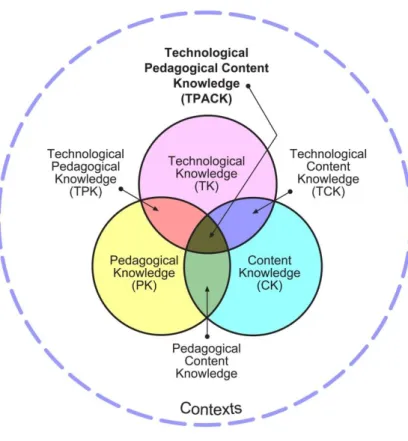
Figure 3.1: Technological Pedagogical Content Knowledge (Koehler, 2011) ... 74
Figure 3.2: Ajzen’s Theory of Planned Behaviour (From Sadaf et al.,2012:393) ... 90
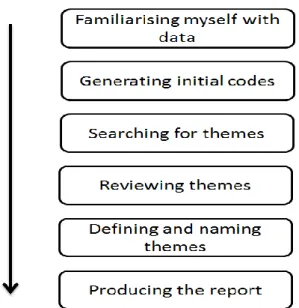
Figure 4.1: Representation of the data analysis process ... 137
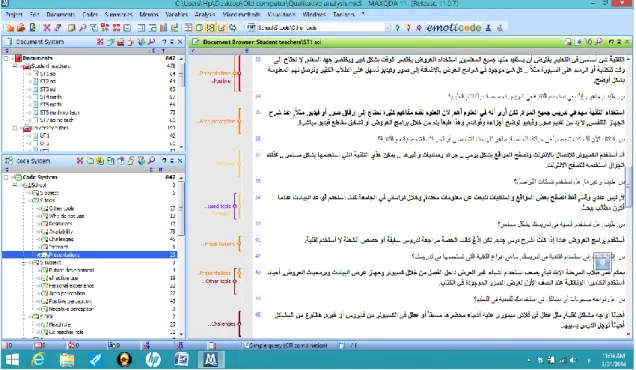
Figure 4.2: An example of qualitative data imported to MAXQDA software ... 142
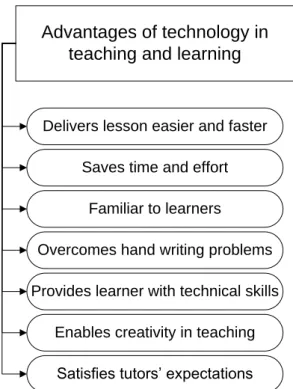
Figure 6.1: Advantages of technology in improving teaching and learning ... 187
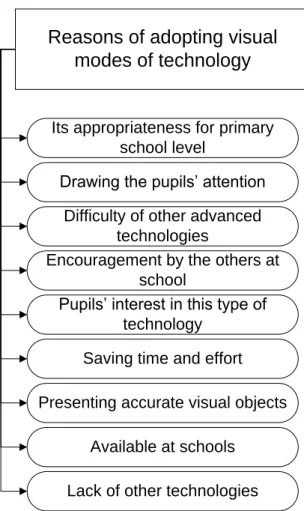
Figure 6.2: Reasons for adopting visual modes of technology ... 193
Figure 6.3: Difference of views between users and non-users of technology ... 197
Figure 6.4: The difference in technology role between science and mathematics PST ... 205
Figure 6.5: Belief development settings ... 208
Figure 6.6: Challenges facing the student teachers when using technology ... 215
Figure 6.7: Consistency and inconsistency between the use of technology during university study and teaching practice ... 219
List of appendices:
Appendix 1: TPACK questionnaire first version ... 341
Appendix 2: TPACK questionnaire final version ... 345
Appendix 3: TPACK questionnaire Arabic version for science ... 348
Appendix 4: TPACK questionnaire Arabic version for mathematics ... 350
Appendix 5: Classroom observation form ... 352
Appendix 6: Classroom observation form Arabic ... 353
Appendix 7: Pre-observation form ... 354
Appendix 8: Pre-observation form Arabic ... 355
Appendix 9: Interview schedule (pre-service teachers who use ICT) ... 356
Appendix 10: Interview schedule (pre-service teachers who do not use ICT) ... 357
Appendix 11: Interview schedule for university tutors ... 358
Appendix 12: Interview schedule for head teachers ... 359
Appendix 13: Arabic interview schedule (users of technology) ... 360
Appendix 14: Arabic interview schedule (non-users of technology) ... 362
Appendix 15: Arabic interview schedule (university tutors) ... 364
Appendix 16: Arabic interview schedule (head teachers) ... 365
Appendix 17: Certificate of Ethical Approval ... 366
Appendix 18: Approval from the local educational authority in Hail ... 370
Appendix 19: Permission form the University of Hail ... 371
Appendix 20: Consent form ... 372
Appendix 21: Information letter ... 373
Appendix 22: Consent form for pre-service teachers ... 374
Appendix 23: Consent form for university tutors ... 375
Appendix 24: Consent form for head teachers ... 376
Appendix 25: Information letter for pre-service teachers ... 377
Appendix 26: Information letter for university tutors ... 378
Appendix 27: Information letter for head teachers ... 379
Appendix 28: Arabic information letter for pre-service teachers ... 380
Appendix 29: Arabic information letter for university tutors ... 381
Appendix 30: Arabic information letter for head teachers ... 382
Appendix 31: Arabic questionnaire science pilot ... 383
Appendix 32: Arabic questionnaire math pilot ... 385
Appendix 33: Initial codes ... 387
Appendix 34: Codes map ... 390
1 Introduction to the Study
1.1 Introduction
This chapter provides a discussion about the rationale of the study and the gap in the literature that it seeks to occupy. It also presents a brief description of the study’s theoretical framework. The research significance and the research questions are also presented in this chapter. Moreover, an overview of the research design is discussed briefly in this chapter followed by this study’s contribution to knowledge. Finally, it provides an outline of the thesis structure with some details about each chapter.
1.2 Rationale of the study and the literature gap
In today’s society, Information and Communication Technology (ICT) plays a major role in individuals’ lives as well as in institutions. As a result of this technological revolution and the rapid development of digital technology, there are increasing demands for employing technology in education to cope with the ever-growing amount of knowledge and to enhance teaching and learning. Although technology was introduced into primary schools many years ago, there seem to be unexplored factors that may encourage or discourage teachers in adopting technology and influence their perceptions and practices. This is especially the case in Saudi Arabia where the use of technology for teaching and learning in primary schools is demanded by policy-makers and substantial funding is provided every year to support the adoption of technology in classrooms. In addition, higher educational institutions and universities prepare pre-service teachers to make good use of technology in their teaching. As will be shown in the literature review chapter (Chapter Three), there are increasing demands for the use of technology in educational practice around
the world to enhance teaching and learning processes. Also, pre-service teachers seem to have positive perceptions towards the role of technology in education and they seem to be well-prepared in technological skills. In addition, technological equipment and resources seem to be available to some extent in schools. However, pre-service teachers only employ technology in the classroom at a relatively low level. This limited use could be influenced by many aspects in the educational environment.
From the literature review associated with the adoption of ICT among science and mathematics pre-service teachers, it is argued that most of existing studies focused on specific aspects related to the adoption of ICT by ‘in-service’ teachers. For example, research studying pedagogy related to ICT use found that pedagogical aspects are important and need to be developed if the integration of ICT is to be successful (Jung, 2005; Pineida, 2011; Webb & Cox, 2004). Other research concerns with teachers’ beliefs and attitudes towards the use of ICT in education and found that teachers’ beliefs are important for their adoption of ICT in the classroom. However, their beliefs seem to be influenced by many factors in the learning environment (Jiomyiannis and Komis, 2007; Kalogiannakis, 2010; Sime & Priestley, 2005). In addition, some research focused on professional development projects and their role in improving the use of ICT and found that teachers use ICT properly when provided with skills and resources (Lavonen, Juuti, Aksela & Meisalo, 2006; Postholm, 2007).
Fewer researchers have studied the use of ICT in education by pre-service teachers who are influenced by many factors that influence teachers’ perceptions and practices related to the use of ICT in the classroom, such as beliefs, prior experience of ICT use, availability of resources and equipment (Kaasila & Lauriala, 2012; Tezci, 2011). However, from the literature review,
there seem to be many factors that influence the pre-service teachers’ use in particular as they are engaged in a partnership environment between two institutions (university and school), each one has its own objectives, policies and agenda. Most research into pre-service teachers’ use of ICT, as far as I am aware, focused on particular aspects related to their integration of technology. For example, some research (Sadaf, Newby & Ertmer, 2012) investigated pre-service teachers’ beliefs about specific applications of technology in teaching and learning (Web 2.0) and did not consider the partnership community that the pre-service teachers are engaged in and its influence on their adoption of ICT. The wider context is also an important element that contributes to shaping the use of technology by pre-service teachers and their perceptions about it. All aspects within the teaching and learning context must be given sufficient attention when studying this issue in order to gain a deeper understanding about how their perceptions and practices are shaped. Another study in Turkey (Tezci, 2011) studied the use of ICT by pre-service teachers and focused on internal factors (such as beliefs and experience) and external factors (such as the school support), but also without consideration of the complex partnership setting and the social relationships and their effects. Notably, most research into the use of technology by pre-service teachers investigated the issue by focusing on very limited aspects within the context, missing considerable elements in the environment that have direct relationships with their use of ICT.
It can be argued that the complexity of the partnership environment between university and school and its influence on pre-service teachers’ perceptions and practices related to the use of technology make it difficult to have a clear view about how their use of ICT in the classroom is influenced if the whole context is not taken into account. Therefore, ICT should be seen as a part of the learning
environment and the community of the partnership between university and school, and the area of focus should include all the components of these interacting systems where individual’s interact with others in a setting that consists of individuals, community, culture, traditions, and psychological and physical tools used to achieve intended outcomes according to the policies organising the activities (Engeström, 2009).
In short, there seems to be a lack of clarity in how perceptions and practices related to the use of technology in the primary school classrooms by science and mathematics pre-service teachers are influenced and shaped and about the factors that influence their adoption of technology within the complex environment of the partnership setting. This issue needs to be investigated, particularly, in Saudi Arabia where, as I am aware, there is a lack of research about the use of technology by pre-service teachers that takes into account the particular social and cultural aspects. Moreover, from my experience as a lecturer in the College of Education at the University of Hail in Saudi Arabia and as a tutor of pre-service teachers during their school placement for four years, I am aware that investigating this issue within this context is sorely needed due to the regrettable lack of use of technology by pre-service teachers. There is also a lack of clarity of the factors that shape their use of technology and their beliefs about it, such as university input, pre-service training support and the wider context.
1.3 Theoretical framework
The main purpose of the current study is to investigate Saudi Arabian mathematics and science pre-service teachers’ perceptions and practices of the integration of ICT in the classroom in primary school and how their use is
shaped within the study context. In order to gain deeper understanding about the issue under investigation in all its pedagogical, cultural and social aspects, sociocultural theory is adopted as the theoretical framework of the study. I believe that sociocultural theory allows one to look at the issue from multiple levels and that this can significantly contribute to existing knowledge about the integration of ICT into classroom activities. This should inform pre-service teachers, policy makers, teacher education programme designers and all people involved in the pre-service teachers’ practice partnership. Within sociocultural theory, multiple frameworks (TPACK, the theory of planned behaviour, affordance theory, identity and agency) are integrated to organise the focus of the study and to highlight many aspects within the context that are related to the use of technology, such as the pre-service teachers’ different forms of knowledge, their behavioural, normative, and control beliefs about the use of ICT in education, their identity and understand of agency, and how these aspects are formed and influenced in the light of sociocultural theory principles. I believe that this integration of multiple frameworks will significantly contribute to existing knowledge of the science and mathematics pre-service teachers’ use of ICT in educational practice. However, it is worth mentioning that the theory of planned behaviour is not a leading theory in this study, rather, its ideas will be considered during the study stages in order to organise the focus on the pre-service teachers beliefs and to give insights into the different forms of belief and how they are shaped in the light of the sociocultural context. The TPACK framework is also used as a first phase of the study to provide insights into the pre-service teachers’ knowledge and how they perceive their TPACK knowledge before I move on to the main phase of the study according to sociocultural theory. I believe that using these multiple frameworks as assistant
frameworks to inform the focus of the study according the sociocultural lens is valuable and will provide better and deeper understand about the issue under investigation.
1.4 Research significance
The significance of this research emerges from the expected findings which could contribute to knowledge by providing information that supports educational development and teacher preparation. It could also provide policy-makers in Saudi Arabia with a clearer view and understanding of the implementation of technology in the education system. In addition, it could promote the development of universities’ programmes by providing them with the actual needs of schools regarding teacher education.
1.5 Research questions
The study aims to explore the Saudi Arabian science and mathematics pre-service teachers’ perceptions and practices related to the integration of technology in the primary school classrooms. It seeks to answer the following research questions:
What is the science and mathematics pre-service teachers’ perceived technological pedagogical content knowledge (TPACK)?
What is the relationship between the science and mathematics pre-service teachers’ perceptions and practices of the integration of technology in the classroom?
What is the relationship between the science and mathematics pre-service teachers’ experience with technology and their practices of the integration of ICT in the classroom?
How does the school setting influence the pre-service teachers’ perceptions and practices of the integration of technology in the classroom?
How does the university setting influence the pre-service teachers’ perceptions and practices of the integration of technology in the classroom?
How does the partnership setting influence the pre-service teachers’ perceptions and practices of the integration of technology in the classroom?
1.6 Overview of the research design
The study aims to explore the Saudi Arabian science and mathematics pre-service teachers’ perceptions and practices related to the integration of technology in the primary school classrooms and to identify the key factors that influence their practice with regard to the use of technology in the classroom. The relationships between their identity development, their understanding of agency, and their recognition of technology affordances in the light of the sociocultural context of their teaching practice are examined in depth to provide insights into the pre-service teachers’ practice related to technology and their perceptions about it.
Both personal (e.g. perceived knowledge, perceptions and experiences) and contextual factors (e.g. relationships with others) were explored to draw a whole picture of the issue under investigation. To answer the research questions, I adopted case study as my methodology as this allowed me to engage more with the context and to employ multiple methods in order to collect data from the participants. I used the TPACK questionnaire, classroom observations and interviews to collect both quantitative and qualitative data about the relationship between the science and mathematics pre-service teachers’ perceptions and practices related to the integration of technology in the classroom and the influence of the practice context on their integration of technology. As a first phase, I distributed the questionnaire to all the science and mathematics
pre-service teachers at the University of Hail who were taking their school placement during the second half of the academic year. Following the questionnaire that provided me with background information about how pre-service teachers perceived their knowledge related to the use of technology, I then carried out classroom observations and interviews with seven pre-service teachers. The sample included science and mathematics pre-service teachers, users and non-users of technology. This variety among the participants provided me with the opportunity to have a more comprehensive view of the issue and allowed me to conduct comparisons between these sub-groups of participants. This, in turn, has revealed many important findings related to the relationships between the pre-service teachers’ perceptions and practices as will be shown in the findings and discussion chapters later in this thesis. In addition to the pre-service teachers, I interviewed university tutors and head teachers who supervise the pre-service teachers’ school placement. This also has revealed many important findings from other points of view from those who are involved in the pre-service teachers training and seem to have an influential role on the pre-service teachers’ development. Detailed information about the research design is presented in the methodology chapter (Chapter Four).
As mentioned, the study adopted sociocultural theory (in addition to its assistant frameworks) as its theoretical framework. The adoption of a theoretical framework is necessary to strictly guide the process of the study and limit its focus within the theory’s scope, which could negatively affect the richness of data description in general (Braun and Clarke, 2006, p.83). This could occur, for example, when the themes are pre-determined deductively based on the theoretical framework principles. However, in order to both avoid the limitations of theoretical thematic analysis and take advantage of theory as a powerful tool
to conduct research, open thematic analysis was conducted to code data inductively without fitting it into any pre-determined frame. However, the principles of sociocultural theory were considered and ‘kept in mind’ during the data analysis process which provided the opportunity for the data to speak for itself and keep the study in its right theoretical direction at the same time. Theoretical principles were applied more explicitly and intensively in the discussion chapter in order to interpret the findings which emerged from the open thematic analysis.
1.7 Contribution to knowledge
According to the study aims and objectives, and in the light of the study findings and discussion of these findings (Chapters Five to Eight), I may argue that the study provides significant contributions to theory and practice. These contributions might be implemented by teacher educators, universities, schools, and researchers in order to improve teacher education programmes and the partnership between universities and schools in relation to the use of technology in the classroom by pre-service teachers. It gives useful insights into their identity and agency development, their pedagogical knowledge development and their beliefs construction. These contributions are discussed in detail in the concluding chapter (Chapter Nine).
1.8 Structure of the thesis
The thesis is presented in nine chapters as follows: Chapter One: introduction
Introduction chapter provides an overview of the study, its rationale, significance and research questions. It also provides an overview of the theoretical
framework of the study and its research design. It suggests the contributions to knowledge that the study aims to achieve. It concludes with an outline of the structure of the thesis and its chapters.
Chapter Two: the study context
This chapter provides background information about the study context and its characteristics to offer the reader the contextual dimensions that contribute to shaping the study. The purpose of the study context chapter is to present general information about Saudi Arabia, its population, culture and educational system.
Chapter Three: literature review
This chapter reviews the relevant literature and it contains two main sections. In the first section, I review the literature related to the use of technology in education and explore the gap that this study attempts to cover. In the second section, I present the theoretical framework of the study and discuss how it could contribute to understanding the issue under investigation.
Chapter Four: methodology
This chapter presents a detailed description of the research methodology and design. The research objectives and questions are presented at the beginning of this chapter followed by the philosophical assumptions, research paradigm, ontology and epistemology. Then, the methodology of the study is presented including descriptions of sampling, research methods and instruments. Also, ethical issues and the procedure of data collection are presented, followed by the data analysis process and theoretical considerations related to the analysis. The research trustworthiness is discussed at the end of this chapter.
Chapter Five: quantitative findings
This chapter presents quantitative findings from the TPACK questionnaire. It reports findings related to the pre-service teachers technological pedagogical content knowledge (TPACK).
Chapter Six: qualitative findings (part 1)
This chapter presents the first part of the qualitative findings from the classroom observations and interviews. In this chapter I present findings related to personal aspects of the pre-service teachers such as perceptions and experiences.
Chapter Seven: qualitative findings (part 2)
This chapter continues presenting the qualitative findings related to the context and its relation to the pre-service teachers’ perceptions and practices of the integration of technology in the classroom.
Chapter Eight: discussion
The aim of this chapter is, firstly, to present brief answers to the research questions from the study findings presented in the previous chapters (5, 6 and 7); and secondly examine the meanings of the main findings which emerged from the quantitative and qualitative data analysis in relation to the wider literature in the light of sociocultural theory as a lens that enables the findings’ interpretation.
Chapter Nine: conclusion
This chapter concludes this thesis by presenting an overview of the study and its main findings. It discusses the study's contribution to knowledge including
theoretical and practical contributions. It also discusses the study limitations and presents justifications for these limitations. Implications that are suggested by this study are also presented in this chapter including implications for policy makers, teacher educators and school staff who are engaged in pre-service teachers' school placement. I conclude the chapter with recommendations for further research and concluding remarks.
1.9 Summary of the chapter
In this chapter, I have discussed the rationale of the study and the gap in the literature that it seeks to cover. I have also presented a brief description of the study’s theoretical framework, research significance and research questions. I then briefly presented an overview of the research design and the contribution to knowledge that this study aims to achieve. At the end of this chapter, I provided an outline of the structure of the thesis. In the following chapter, I will present information about the study context as these contextual aspects are very important in this study.
2 The Study Context
2.1 Introduction
This study explores the Saudi Arabian science and mathematics pre-service teachers’ perceptions and practices of the integration of technology in the primary school classrooms. As “there is a strong link between culture and learning that is reflected in how people prefer to learn and how they tend to process information” (Samovar, Porter & McDaniel, 2009, cited in Alebaikan, 2010), it is therefore important to provide background information about the study context and its characteristics to offer the reader the contextual dimensions that contributed to shaping the study. According to Hamdan (2015), the demographic and cultural characteristics of a given community could significantly influence underlying assumptions that influence educational contexts including teacher education programmes. The purpose of this chapter is to present general information about Saudi Arabia, its population, culture and educational system.
2.2 General information about Saudi Arabia
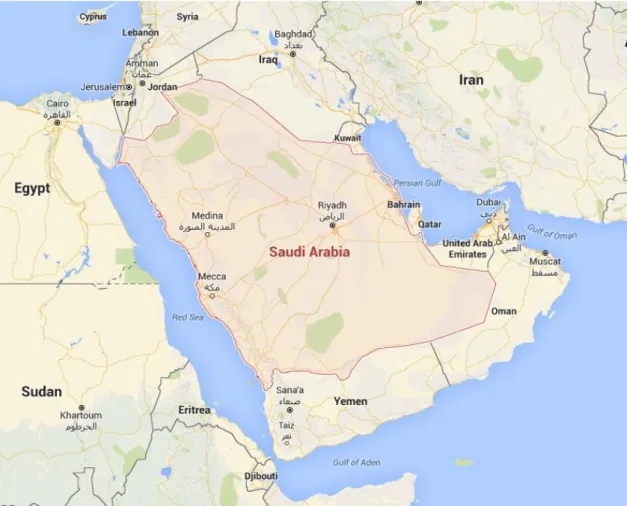
The Kingdom of Saudi Arabia is located in the south west of Asia in the Middle East occupying more than two million square kilometres of the Arabian Peninsula as shown in the map (Figure 1.1) below. According to the Central Department of Statistics and Information in Saudi Arabia, the total population is 27.2 million; two thirds of these are Saudi citizens according to the 2010 census (CDSI, 2016).
Figure 2.1: Map of Saudi Arabia (https://www.google.co.uk/maps/)
Traditionally, Saudi Arabia is regarded as the homeland of Islam where the Prophet Muhammad proclaimed it in Makkah in the 7th century and the country played an important role in the history of the Islamic Nation (Alnesyan, 2012). In its modern history, and before the discovery of oil in 1936, the country had a subsistence economy relying on limited natural resources such as farming, trading, and fishing in the coastal areas. After the oil discovery, its huge income was spent to develop the oil industry and the socioeconomic infrastructure. Many years later, and with the remarkable economic development supported by the oil industry, massive national development projects were performed in all sectors (Alsulaimani, 2010). Although Saudi Arabia (as the homeland of Islam and due to its desert life history) has a highly closed and conservative culture, its economic development has rapidly changed people’s lives and oil industry income has supported many developments, including education and technology
consumption (Hartley & Al- Muhaideb, 2007; Joseph & Lunt, 2006; Krieger, 2007; Nelson, 2010; Onsman, 2011; Ramady, 2010; Sutton, 2007, cited in AL-Zahrani, 2015).
2.3 Saudi Arabian Educational system
Saudi Arabia’s formal educational system was founded in 1925 when the Directorate of Knowledge was established, supervising only four primary schools. Within a few years, the authority of the Directorate spread over the country to include 323 schools (Ministry of Education, 2016).
2.3.1 Ministry of Education
In 1954, the Ministry of Knowledge was established to take a more important educational role in planning and supervising general education in Saudi Arabia with its three levels (primary, intermediate and secondary). The educational system during this period was for male students only, until another educational system for female students was established in 1960. Many years later, the two authorities were merged under the umbrella of the Ministry of Education, in 2002 (Ministry of Education, 2016).
Currently, the Ministry of Education in Saudi Arabian is responsible for all aspects of schooling from the age of three to 18 years old through four main stages. The first stage is the pre-school stage which accepts children between three and five years old. However, enrolling in this stage is optional and is not a condition for the enrolment in the later compulsory education starting in primary school. The second stage is the primary school stage which takes children between six and 12 years old. By the end of primary school, children need to meet the requirements of the intermediate school through continuous assessment, leading to the Primary Education Certificate. The third,
intermediate, stage lasts three years and takes children from 13 to 15 years old. In order to move to the secondary stage, children need to pass the examinations at all three sub-levels of the intermediate school to obtain the Intermediate Education Certificate. The last stage of compulsory education is the secondary school which also lasts three years, taking children from 16 to 18 years old. After the first year of this stage, student can choose a specialised path of study, either art and literature or science. Secondary school students need to pass all the three sub-level examinations in order to get the Secondary Education Certificate, which qualifies them to apply for the university programmes according to their specialised path in the secondary school (Alnesyan, 2012; Alsenaidi, 2012).
The Ministry of Education provides schools with the buildings, equipment, materials, textbooks and technology that are needed for educational and administrative purposes. It also sets general policies that are followed by the schools around the country (Alzaydi, 2010; Ministry of Education, 2011; Oyaid, 2009).
2.3.2 Ministry of Higher Education
The Ministry of Higher Education in Saudi Arabia was founded in 1975 to supervise universities around the country. It currently oversees 24 public universities in addition to eight private universities. The Ministry of Higher Education provides public universities with funds and general educational policies and allows them to establish their own programmes and internal organisation which need to be approved by the ministry. General higher education policies include undergraduate and postgraduate programmes times and credits. One of these policies is the organisation of teacher education
programmes among the universities, such as the credits and the school placement period which takes place during the programme’s last semester. It also encourages the adoption of technology in educational programmes (Ministry of Higher Education, 2015).
In 2015 the Ministry of Education and the Ministry of Higher Education were merged into one ministry (the Ministry of Education). The objectives of the new ministry are as follow:
1- Build Islamic, national and intellectual identity in relation to knowledge, skills and values.
2- Provide people with the opportunity to join general education.
3- Develop the criteria of teachers’ qualification and improve their educational competences.
4- Raise the quality of education.
5- Expand provision of educational buildings and facilities and their maintenance.
6- Develop scientific research and knowledge and invest in them, and expand postgraduate programmes.
7- Expand private education in order to achieve its objectives.
8- Raise the quality of educational outcomes to meet the requirements of development and community needs.
9- Develop the regulatory environment and activate governance.
10- Provide overseas scholarships for distinguished students to meet the requirements of national development.
11- Invest in information and communication technology. 12- Diversify fund resources and investments.
13- Promote national and international partnerships (Ministry of Education, 2016).
2.3.3 Technology in Education in Saudi Arabia
In the Saudi educational system, there are increasing demands for effective integration of technology into educational practice and the government has paid
more attention to this issue by providing substantial funding to many schemes that provide schools with technology and plan an up-to-date curriculum. Moreover, higher education institutions and universities attempt to prepare pre-service teachers by providing them with technological skills and the pedagogical implementation of technology through their courses and through pre-service training. This training takes place in schools regularly in the last semester of their BA degree under the supervision of tutors who visit them weekly over a period of approximately three months.
During recent years, the government has paid greater attention to the integration of technology in education. It has provided the majority of schools around the country with computer labs and technological equipment to be used in classrooms. All teachers are now required by policy to integrate technology into educational practice in a way that enhances teaching and learning. In addition, several national projects have been launched to promote the integration of technology in education. For example, a national project (Watani) was launched a few years ago to improve the use of computer networks in schools. This project’s aims are as follows:
To provide pupils with the skills to use ICT in education, thus preparing them for their future.
To encourage the adoption of ICT by teachers in all educational activities.
To provide an educational environment that is rich with information sources.
To improve the outcomes of the educational system by instilling students with a good experience and skills in information technology.
To encourage the creation of the information technology industry in the country.
To increase awareness about the advantages of the integration of information technology in education and the benefits of this technology for the whole society (tatweer.edu, 2005, cited in Oyaid, 2009).
Furthermore, the King Abdullah Bin Abdulaziz Public Education Development Project (Tatweer) was launched in 2008 to review and develop the educational system and to give consideration to the integration of technology in education. It provides schools with new technology, focuses on teacher training in technology, and creates partnerships with universities to improve pre-service teachers’ preparation for using technology effectively in schools (Tatweer, 2011). Although these national projects were launched to improve technology integration at schools, many studies show that the focus has been more on technological aspects (e.g. technological skills, technology equipment) rather than pedagogical applications of technology (e.g. Albugami & Ahmed, 2015; Al-Faki & Khamis, 2014; Alsulaimani, 2010). This could be a result of the ministry’s concentration on quantity rather than quality, according to Al-Zahrani (2015). He added that this focus on technology itself more than pedagogy seems to negatively influence universities and prevent their programmes from carrying out important reforms related to the effective implementation of technology. Therefore, the current study is conducted as a response to this issue, aiming to widen the scope of the focus and consider sociocultural context and its relationship to the pre-service teachers’ perceptions and practices related to the use of technology in the classroom. As the study is conducted at the University of Hail in Saudi Arabia as a case that could represent other universities in the region, in the next section, I provide some information about the University of Hail.
2.3.4 The University of Hail
The University of Hail was established in 2005 in the county of Hail in the north of Saudi Arabia under the supervision of the Ministry of Higher Education. It consists of 14 colleges, including the College of Education, which is the biggest college at the university in terms of the number of students (University of Hail, 2011). The College of Education provides many programmes that aim to prepare teachers in different subject areas and is responsible for their theoretical study for three years followed by school placement where pre-service teachers practice at schools for a whole semester. More information about the College of Education and its programmes related to technology are presented in the following section.
2.3.5 The College of Education at the University of Hail
The College of Education was established in 1983 under the supervision of the Ministry of Education as a teachers’ college. This college became part of the university when the University of Hail was founded in 2005. It provides BA degrees in several areas. The college consists of eight departments: Islamic literacy, psychology, special educational needs, curriculum and teaching methods, educational technology, education, preschool, and home economics. Each of these programmes introduces modules that span seven semesters and include school placement during the last one (College of Education, 2011). Since the current study focuses on the pre-service teachers’ use of technology in the classroom during their school placement, I present here an overview of their preparation in technology and the school placement system.
As part of all college programmes, the Educational Technology Department introduces six modules to provide students in all subject areas with the skills of
using technology and instructional means. These modules provide the same contents to students in different areas of specialism (science, mathematics, religion …etc) where they study these modules in mixed groups that contain students from all these subjects together. These modules are described below in order to give background information about how the pre-service teachers at the University of Hail are prepared with technology (Educational Technology Department, 2010):
2.3.5.1 Education and Communication Technologies
Through this module, students are taught the development of education and its relationship with educational technology, communication theory, effective communication skills, the roles of teacher and pupils in the educational communication process, and the historical development of educational technology. Students are also taught the educational process according to the system approach, the relationship between instructional means and educational technology, classification of educational technologies and their importance in the teaching and learning process, and concepts related to implications of educational technology.
2.3.5.2 Producing and Using Instructional Means
In this module, students are taught the principles of designing instructional means and educational technologies and the stages of producing some of them. These technologies include educational graphics, educational painting, transparencies, educational photography, and designing sessions using PowerPoint software. In addition, this module introduces the principles and rules of using instructional means and educational technologies and the principles of using and employing technologies and software that are useful for
education. Moreover, students are required to complete exercises and projects within this module.
2.3.5.3 Aural Means for Special Education
This module teaches students the importance and principles of educational radio; components of the radio studio; the concept, types, and preparation of radio magazine; some types of radio programmes (e.g., investigation and drama); concepts about radio work; live radio broadcasting; professionals in radio and their training; and radio production technology. Students are also taught through this module the aural means based on internet and their technology and the implications of computers in aural programmes. In addition, students complete exercises and projects related to aural means and radio programmes.
2.3.5.4 Educational TV Programmes for Children
Through this module, students are taught the principles and rules of TV programme production, the criteria of children’s TV programme production, the components of the TV studio, and the principles of configuration for the subject that needs to be recorded. In addition, students learn about camera parts, camera movement, footage size, light, colour, and filter types, educational scenario preparation, TV programme staff members and their training, technologies and skills in preparing and producing TV programmes, and the criteria of educational TV programme evaluation. Moreover, students are required to perform practical exercises and projects within this module.
2.3.5.5 Education Technologies and Means (1)
The aim of this module is to teach students about the development of educational sciences and their relationship with educational technologies, the communication process, effective communication skills, and the role of teacher and pupils in the educational communication process. It provides students with background information about the historical development of educational technology, the educational process within a system approach, the relationship between instructional means and educational technology, classification of education technologies and means, examples of education technologies and means and their importance in educational practice, and concepts related to the employment of technology in educational practice.
2.3.5.6 Education Technologies and Means (2)
Through this module, students are taught the principles of educational technologies and means design and the stages of producing some of them, including educational graphics, painting, transparencies, and educational photography. Students are also taught how to design a whole session using computer software, the principles and rules of using education technologies and means, the principles of using and employing specialised websites and forums in education, and information about new technologies that can be employed in the educational context. Moreover, students are required to complete practical exercises and projects.
2.3.6 Teaching practice (School placement)
During the last semester of each programme, students undergo their school placement. Within this period of approximately three months, pre-service teachers practise teaching in schools under the supervision of university tutors
and the help of head teachers and cooperating teachers who teach the same subject as that of the pre-service teachers. Objectives of school placement are as follows (drawn from the national guideline for teacher education programmes (Aleioni & Alfaleh, 2002)):
1- To provide pre-service teachers with practical experience that helps them to acquire professional skills and attitudes.
2- To provide them with practical experience that helps them to practice different educational activities.
3- To provide them with the opportunity to be familiar with the curriculum in the educational level they are preparing for.
4- To provide them with the opportunity to acquire initial teaching skills such as lesson planning, teaching methods, using educational means, producing educational means and classroom management.
5- To provide them with the opportunity to evaluate their abilities and their pedagogical knowledge.
6- To provide them with the opportunity to communicate directly with the pupils, teachers, and other school staff.
7- To familiarise them with the duties and responsibilities of teachers.
8- To provide them with the opportunity to perform different teaching strategies.
During the school placement, pre-service teachers are expected to meet specific standards according to the Practice Guideline. These standards are as follow:
1- Linking knowledge with real life phenomena through real life applications. 2- Using cooperative learning strategy of teaching to allow pupils to take
control over their learning.
3- Using various forms of instructional means such as video films, images, presentation hardware and software, real models and samples.
4- Using instructional means that were previously produced by the pre-service teachers themselves during their university study prior to practice.
5- Dividing pupils into small active groups to perform practical activities. In order to achieve the objectives of the school placement, pre-service teachers are supervised by university tutors, head teachers and cooperating teachers. Responsibilities within each role are outlined as follows (Aleioni & Alfaleh, 2002):
2.3.6.1 The role of university tutor
The university tutor is chosen from the university lecturers who hold at least a master’s degree in curriculum and teaching methods to supervise and support pre-service teachers during their school placement for a whole term (half of the academic year). The tutor is expected to conduct field visits and weekly meetings during the pre-service teachers practice at schools. The university tutor’s role is to perform the following:
1. Visit the pre-service teacher on at least eight occasions during the school placement, five of them in the classroom to observe the pre-service teacher’s performance.
2. Draw the pre-service teacher’s attention to various teaching methods and strategies.
3. Discuss the teaching plan with the pre-service teacher before the start of the lesson.
4. Meet the pre-service teacher individually after the classroom visit to provide him with the weakness and strength points in his performance. 5. Conduct weekly individual meetings with the pre-service teachers for at
least two hours to discuss the possible difficulties that face them, show them video clips for ideal lessons, and help them in making instructional means and to evaluate their plans and activities.
6. Assess the pre-service teachers’ performance continuously (Aleioni & Alfaleh, 2002).
2.3.6.2 The role of head teacher
The head teacher helps the university tutor in supervising the pre-service teacher in the administrative aspects such as explaining educational policy, school meetings, parents’ meetings, lesson timetable, working hours, and school activities. The head teacher in the practice school is expected to perform the following tasks:
1- Familiarise the pre-service teachers with the school policies. 2- Introduce them to the school teachers and administrative staff. 3- Supervise their training hours at schools.
4- Enable them to engage in the school staff and parents’ meetings. 5- Supervise their lesson planning on a daily basis.
6- Ensure their attendance at morning assembly and their punctuality at lessons.
7- Help them to participate in school activities. 8- Attend lessons with them from time to time.
9- Produce a report about their performance at the end of the term (Aleioni & Alfaleh, 2002).
2.3.6.3 The role of cooperating teacher
The cooperating teacher is chosen from school teachers who teach the same subject as the pre-service teacher. The cooperating teacher is expected to perform the following tasks:
1- Provide pre-service teachers with the module materials.
2- Familiarise them with the available instructional means and resources. 3- Familiarise them with any pupils with special needs.
4- Familiarise them with the pupils’ characteristics and attitudes. 5- Train them to plan their lessons according to the weeks of the term. 6- Familiarise them with the school facilities, timetables, and resources. 7- Provide them with a space in the staff room.
9- Train them in dealing with the pupils’ records and files.
10- Conduct weekly meetings to discuss their progress and any issues they might face (Aleioni & Alfaleh, 2002).
2.3.7 Standards related to the practice schools
The university regulation sets a number of standards that the practice schools need to meet:
1- Appropriate school building containing all necessary facilities and equipment such as labs, playground and gardens.
2- Readiness of the school to cooperate with the university and help in supervising the pre-service teachers and support their development.
3- The cooperating teachers in the practice school need to be highly skilled teachers (Aleioni & Alfaleh, 2002).
2.4 Summary of the chapter
In this chapter, I have presented background information about the study context where the contextual dimensions were argued to be powerful contributors to shaping the study. As the study took place in Saudi Arabia, I provided general information about Saudi Arabia. I also presented information about the Saudi Arabian educational system, giving information about the Ministry of Education, Ministry of Higher Education, and technology in Saudi Arabian education. I then provided information about the University of Hail and the College of Education where the current study took place focusing on the programmes and modules related to the use of technology by the pre-service teachers. I concluded the chapter with detailed information about the school placement system and the roles of the stakeholders within the partnership between university and school. In the following chapter, I review the relevant literature, address the gap that the current study seeks to occupy, and discuss the theoretical framework of the study.
3 Literature Review
3.1 Introduction
This chapter discusses the relevant literature of this study and is divided into two main sections: ICT in education and the study theoretical framework. In the first section, and in addition to presenting relevant definitions, I discuss teachers’ and pre-service teachers’ use of ICT in education in general regarding the reported benefits of ICT, skills needed for technology integration, and the role of context in shaping the adoption of ICT. I also discuss pedagogy and ICT use by pre-service teachers and the role of their various forms of knowledge (technology, pedagogy, and content) and their interactions in shaping their integration of ICT into practice in the light of TPACK framework. In addition, the pre-service teachers’ beliefs about ICT in education and how these beliefs shape and are shaped by their practice regarding the use of technology are discussed. At the end of this section, I identify the gap in the literature that is explored by the current study in order to provide a better understanding of the Saudi Arabian mathematics and science pre-service teachers’ perceptions and practices of the integration of ICT in the classroom and how their use is shaped during their practice.
In the second section of this chapter, I present the theoretical framework of the study, which is sociocultural theory, and discuss how it could contribute in understanding the issue under investigation.
3.2 ICT in education
In this section of the chapter I review the literature relevant to the study concerning the use of technology in the classroom by teachers and pre-service teachers.
3.2.1 What is ICT?
Today’s world is changing rapidly under deep transformations that are driven and supported by Information and Communication Technology (ICT) innovations. These new technologies and applications have the potential to bring many advantages of the society in many different ways.
The term ‘Information Technology’ was firstly suggested in an article published in 1958 in the Harvard Business Review when the writers, Leavitt and Whisler, argued that “the new technology does not yet have a single established name. We shall call it information technology” (Leavitt & Whisler, 1958 p.41). Since that time, and during the development of technology and its applications, the term ‘communication’ which refers to the knowledge, skills, and equipment required to exchange information has been included in the notion of Information Technology giving the new notion of ICT. Under the wide umbrella of ICT, there are many sub-terms according to the intended field of study that draw attention to specific kinds of ICT, such as ICT in business, ICT in sports, and ICT in education.
The general term of ICT is a wide umbrella that covers all forms of communication equipment and applications. It includes all the computer hardware and software, network technologies, television systems, satellite systems, radio, mobile phones, and many other formats of technology. Information and Communications Technology (ICT) is defined as “a broad term that encompasses all forms of computer and communications equipment and software used to create, design, store, transmit, interpret and manipulate information in its various formats” (Queensland University, 2016, p.2). ICT was also defined by the U.S. Access Board (2011) as: “Any information technology,