Wachowska, Anna (2017). In the facets of powerlessness: agency as an essential aspect of the self. (Unpublished Doctoral thesis, City, University of London)
City Research Online
Original citation: Wachowska, Anna (2017). In the facets of powerlessness: agency as an essential aspect of the self. (Unpublished Doctoral thesis, City, University of London) Permanent City Research Online URL: http://openaccess.city.ac.uk/16924/
Copyright & reuse
City University London has developed City Research Online so that its users may access the research outputs of City University London's staff. Copyright © and Moral Rights for this paper are retained by the individual author(s) and/ or other copyright holders. All material in City Research Online is checked for eligibility for copyright before being made available in the live archive. URLs from City Research Online may be freely distributed and linked to from other web pages.
Versions of research
The version in City Research Online may differ from the final published version. Users are advised to check the Permanent City Research Online URL above for the status of the paper.
Enquiries
If you have any enquiries about any aspect of City Research Online, or if you wish to make contact with the author(s) of this paper, please email the team at [email protected].
In the Facets of
Powerlessness:
Agency as an Essential
Aspect of the Self
Anna Wachowska
Portfolio for Professional Doctorate in Counselling
Psychology (DPsych)
City University London
Department of Psychology
Table of Contents
Acknowledgements ... 7
City University Declaration ... 8
List of Appendices: ... 9
List of Figures: ... 10
SECTION A: PREFACE ... 11
1. Overview ... 11
2. Thematic Connection of the Portfolio: The Issue of Powerlessness ... 11
2.1 Research Thesis ... 12
2.2 Professional Practice – Case Study ... 13
2.3 Publishable Paper: Theoretical Article with Implications for Clinical Practice ... 13
3. Personal Journey ... 14
References ... 16
SECTION B: Doctoral Research ... 19
Abstract ... 20
Chapter 1: Introduction and Literature Review ... 21
1.1 Overview ... 21
1.2 Rationale for the Present Study ... 21
1.3 Study Aims and Relevance to Counselling Psychology ... 24
1.4 Literature Review ... 26
1.4.1 Involuntary Hospitalisation: Ethical and Moral Concerns ... 26
1.4.2 The Issue of Trust... 29
1.4.3 Psychosis, Insight and Treatment ... 31
1.4.4 Retrospective Views on Involuntary Treatment ... 33
1.4.5 Psychiatry and Biomedical Model ... 34
1.4.6 The Traumagenic Neurodevelopmental Model ... 39
1.4.8 Psychodynamic Perspectives ... 40
1.4.9 Cognitive Model... 41
1.4.10 Intervention and Treatment ... 42
1.4.11 Phenomenological Understandings and Views of Self-experience in Psychosis ... 43
1.4.12 Patient Experience of Psychosis ... 44
1.4.13 Patient Experience of Involuntary Hospitalisation ... 45
1.4.14 Impact of Involuntary Hospitalisation: Status and Identity ... 49
1.4.15 In-patient Ward: Safety and Risk ... 50
1.4.16 Conclusive Remarks ... 51
Chapter 2: Methodology... 53
2.1 Overview ... 53
2.2 Design and Research Approach ... 53
2.3 Ontological and Epistemological Stance ... 53
2.3.1 Ontology ... 54
2.3.2 Epistemology ... 54
2.4 Theoretical Perspectives ... 55
2.5 Interpretative Phenomenological Analysis (IPA) ... 56
2.5.1 Rationale for IPA Methodology ... 57
2.6 Ethical Considerations ... 59
2.6.1 Approval ... 59
2.6.2 Confidentiality ... 59
2.6.3 Consent and Withdrawal ... 60
2.6.4 Distress Management ... 60 2.7 Procedures ... 61 2.7.1 Sampling Considerations ... 61 2.7.2 Recruitment ... 62 2.7.3 Participants... 63 2.7.4 Research materials ... 65 2.7.5 Interview Proceedings ... 65 2.7.6 Data Collection ... 66 2.7.7 Pilot Study ... 67 2.7.8 Transcription ... 67
2.7.9 Data Analysis and Interpretation ... 67
2.7.10 Results ... 69
2.7.11 Discussion ... 69
2.7.12 Resources ... 69
2.8 Trustworthiness, Rigor and Quality ... 70
2.9.1 Ontological and Epistemological Awareness... 75
CHAPTER 3:RESULTS ... 77
3.1 Overview ... 77
3.2 Superordinate Theme One: A Struggle for Recognition ... 79
3.2.1 Subtheme One: The Abandonment and the Falling ... 82
3.3 Superordinate Theme Two: Terrifyingly Out of Control – Striving for a Sense of Agency ... 84
3.3.1 Subtheme One: Living in Fear... 84
3.3.2 Subtheme Two: Deprivation and Re-attainment of Power ... 87
3.3.3 Subtheme Three: The Battle and Resistance – Under Attack and Refusal to Submit 91 3.3.4 Subtheme Four: The Absurd... 93
3.4 Superordinate Theme Three: Transformation and Loss ... 94
3.4.1 Subtheme One: Disillusionment and Distrust ... 95
3.4.2 Subtheme Two: The Punishment and Attribution of Blame ... 97
3.4.3 Subtheme Three: Losing Oneself: Self and Identity Redefined ... 99
3.4.4 Subtheme Four: Hopelessness, Meaninglessness and Fatalism... 105
3.4.5 Subtheme Five: Facing Shame and Stigma ... 106
3.4.6 Subtheme Six: The Confusion ... 108
3.5 Superordinate Theme Four: The Comforting and the Sanguine ... 109
3.5.1 Subtheme One: Exhilaration and Fun ... 110
3.5.2 Subtheme Two: The Care and Belonging ... 111
3.5.3 Subtheme Three: Light in the Darkness ... 112
3.5.4 Subtheme Four: Search for Meaning and Resolution ... 113
3.6 Summary ... 115
Chapter 4: Discussion ... 117
4.1 Overview ... 117
4.2 Summary of the Results in the Light of Existing Literature ... 117
4.2.1 Discussion of Super-ordinate Theme One: Struggle for Recognition ... 117
4.2.2 Discussion of Super-ordinate Theme Two: Terrifyingly Out of Control – Striving for a Sense of Agency ... 118
4.2.3 Discussion of Super-ordinate Theme Three: Transformation and Loss ... 120
4.2.4 Discussion of Super-ordinate Theme Four: The Comforting and the Sanguine ... 122
4.3 Synthesis of Interconnecting Issues: Re-traumatisation, Powerlessness as Suffering, Loss of Self, Parallel Processes and the Nurse-Patient Relationship ... 123
4.3.1 Re-traumatisation ... 123
4.3.2 Powerlessness as Suffering ... 123
4.3.3 Loss of Self ... 124
4.3.4 Parallel Processes ... 125
4.3.5 Staff-Patient Relationship: As We Relate We Create Ourselves, We are Relational (Gergen, 2009). ... 125
4.5 Suggestions for Future Research and Practice ... 128
4.6 Study Limitations ... 129
4.7 Summary ... 131
References ... 132
SECTION D: THEORETICAL PAPER ... 164
Abstract ... 164
1.1Emotion, Feeling and Affect Conceptualisations ... 165
1.2 Affect-regulation Deficits as a Root Cause of Psychopathology ... 166
1.3 Unconscious and Implicit Interpersonal Processes ... 166
1.5 Therapeutic Action and Empowerment ... 169
1.6 Conclusion ... 173
References ... 175
APPENDIX 1 A: Information Sheet for Participants (Pilot Study) ... 182
APPENDIX 1 B: Information Sheet for Participants (Main Study) ... 188
APPENDIX 2 A: The Consent Form (Pilot Study) ... 193
APPENDIX 2B: The Consent Form (Main Study) ... 196
APPENDIX 3 A: Debrief Sheet (Pilot Study) ... 199
APPENDIX 3 B: Debrief Sheet (Main Study) ... 202
APPENDIX 4A: Study Advertisement (Pilot Study) ... 205
APPENDIX 4B: Study Advertisement (Main Study) ... 207
APPENDIX 5: Recruitment Criteria Sheet ... 209
APPENDIX 6: Demographic Questionnaire ... 210
APPENDIX 7: Interview Agenda ... 212
APPENDIX 8: Ethics Release Form ... 215
APPENDIX 9: Extract from Interview Transcripts ... 224
APPENDIX : E a ple of E e ge t The es a d “u the es f o “all s I te ie .... 229
APPENDIX 11: Full Themes Table with Example Quotes ... 248
APPENDIX 13: Personal Reflexivity: The Poem ... 262 Appendix 14 - A note on the terms used in the portfolio ... 263
Acknowledgements
I sincerely wish to thank seven participants, who participated in the pilot interview and the main study and hence, made this project a reality. Their contributions to this
study and the willingness to share their time and personal experiences are greatly appreciated as this helped inform and enlighten an important and much-needed
research area.
I would like to thank my research supervisor, Dr Soren Nils Petter for his invaluable inspiration, containment, understanding and encouragement throughout this research
process.
It certainly would not have been possible for me to embark upon or complete this journey if it was not for the support and patience of my partner and family, and for
that, I wish to express my deepest gratitude.
I also wish to acknowledge how significant the company and support of fellow trainees has been for keeping me enthused on this challenging, yet rewarding path.
City University Declaration
I grant powers of discretion to City University Librarian to allow the thesis to be copied in whole or in part without any further reference to me. This permission covers only
single copies made for study purposes, subject to normal conditions of acknowledgement.
List of Appendices:
APPENDIX 1A: Information Sheet for Participants (Pilot Study) APPENDIX 1B: Information Sheet for Participants (Main Study) APPENDIX 2A: The Consent Form (Pilot Study)
APPENDIX 2B: The Consent Form (Main Study) APPENDIX 3A: Debrief Sheet (Pilot Study) APPENDIX 3B: Debrief Sheet (Main Study) APPENDIX 4A: Study Advertisement (Pilot Study) APPENDIX 4B: Study Advertisement (Main Study) APPENDIX 5: Recruitment Criteria Sheet
APPENDIX 6: Demographic Questionnaire APPENDIX 7: Interview Agenda
APPENDIX 8: Ethics Release Form
APPENDIX 9: Extract from Interview Transcripts
APPENDIX 10: E a ple of E e ge t The es a d “u the es f o “all s I te ie APPENDIX 11: Example of Full Themes Table with Example Quotes
APPENDIX 12: Counselling Psychology Review Submission Guidelines APPENDIX 13: Personal Reflexivity: The Poem
List of Figures:
Table 1: Demographic and Personal Characteristics of Participants………...…64
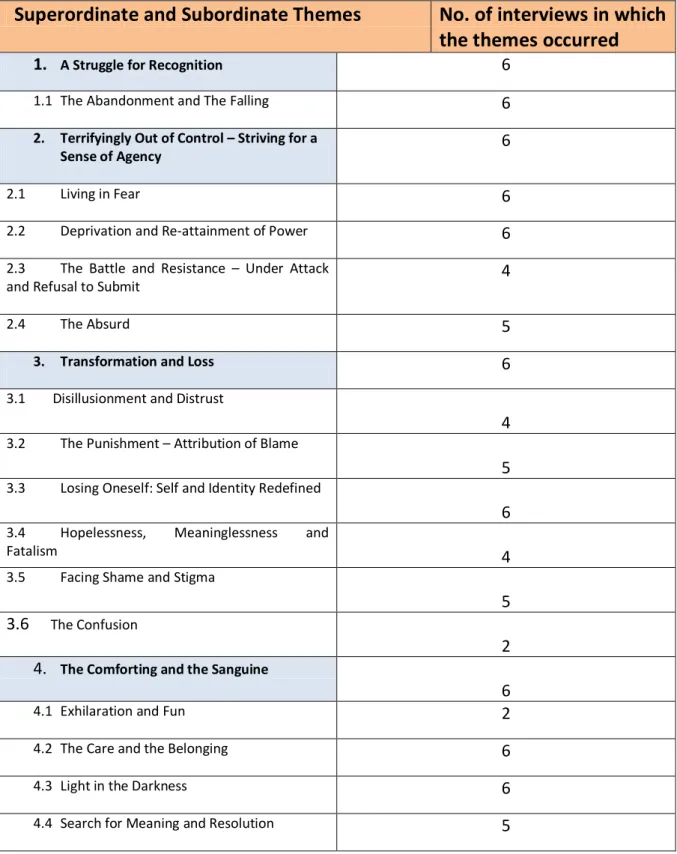
Table 2: Master Table of Superordinate and Sub-ordinate Themes……….………..78
SECTION A: PREFACE
1. Overview
The preface will introduce and provide a general review of the main components of the doctoral thesis portfolio. The current portfolio presents several pieces of work that are combined under the overarching topic-based theme of powerlessness. The portfolio comprises of four main sections. Section A includes the preface, which presents a broad overview of the portfolio itself, briefly explores the relevance of the powerlessness concept and provides an illustration of how each component of the portfolio is linked with its central theme. Section B consists of an exploratory empirical research study that focuses on the experiences of former patients that were treated involuntarily in a psychiatric ward during psychotic distress. In Section C, the case study presents a reflexive exploration of the clinical journey, portraying certain
pa a ete s of e t ap e t f o a lie t s pe spe ti e. Lastly, Section D includes the publishable paper that broaches the issue of powerlessness in the context of affect-regulation difficulties and in relation to the literature review, with an aim to consider its implications for clinical practice.
2. Thematic Connection of the Portfolio: The Issue of Powerlessness
Various manifestations of distress encountered by clinicians and allied professionals in a therapeutic context, as well as in ambulatory and in-patient settings can be conceptualised as a result of imbalances and abuse of power in relationships. Such occurrences are characterised by eliciting a sense of powerlessness and helplessness (Mack, 1994; Lord and Hutchison, 1993). A wide range of social and physical risk factors like socio-economical disadvantages, low self-esteem, high demands, chronic stress, limited resources and lack of support, may give rise to the feelings of powerlessness (Albee, 1981; Strandmark, 2004). Thus, powerlessness can involve a perceived lack of internal and personal, as well as external control over certain situations (Johnson, 1967). Buddhist, as well as psychoanalytic perspectives, in particular, draw attention to power and agency constituting an essential aspect of the self (Mack, 1994). It is also important to note that the word agency itself placesemphasis on the role that institutions play in governing the lives from outside of the self (Mack, 1994). The concept of power is, therefore, pivotal in our lives as it exists within the activities of people and within a network of relationships (Foucault, 1965, 1977, 1980a, 1980b, 1980c, 1983; Deleuze, 1988). In contrast to an individualised
perspective of the origin of personal distress, the relevance of toxic external social influences and economic inequalities has also been highlighted, which may profoundly alter identity and sense of efficacy of the most vulnerable individuals (Mirowsky and Ross, 1991; Bruce et al., 1992; Prilleltensky et al., 2000; Wilkinson, 1995, 2005). In this respect, lack of control may not always be a matter of mere subjectivity, but a reality that may prevent individuals from altering their situation, including the scope of social or material determinants in which they are embedded (Franzblau and Moore, 2001; Smail, 2001; Wilkinson, 1996).
However, it seems that the perspective on powerlessness has been poorly investigated (Aujoulat et al., 2006). The sense of possessing some form and degree of personal power inculcates a feeling that one, to some extent, is a autho of o e s life (Mack, 1994). More importantly, it is postulated that powerless states can pose a threat by fragmenting the sense of self and evoking fear centred on its dissolution, annihilation or even death (Mack, 1994). This powerful link has been demonstrated in different ways in each component of this portfolio.
The following section consists of a concise summary of each of the po tfolio s components and their objectives. The preface ends with a reflection on the personal journey undertaken throughout the training of the researcher and the learning that has followed.
2.1 Research Thesis
Section B consists of an original piece of research that constitutes the chief component of this portfolio. The study is aimed to explore the in-depth lived experience of former patients, treated involuntary on a psychiatric in-patient ward, as a result of psychotic distress and the impact such an experience had on their well-being and recovery process. The project utilised semi-structured interviews to gather the data, which has been analysed from a homogenous sample of six individuals, who were detained under Mental Health Act (1983 and 2007). Individual accounts were analysed using the qualitative methodology of Interpretative Phenomenological Analysis (IPA); emergent themes from narratives were subsequently explored, and findings and implications were discussed in the light of existing literature.
The project, in essence, is therefore concerned with the experience of coercion. Powerlessness, as defined by Freire (1973, cited in Kieffer, 1984) seems to strongly reflect the parti ipa ts a ou ts i this stud poi ti g to the role of environment on the object, as opposed to a subject that acts in and on the environment. The study
also captures distressing experiences related to the loss of social and personal identities, representing yet another dimension of powerlessness.
2.2 Professional Practice
–
Case Study
The case study in Section C focuses on the therapeutic alliance between the therapist and the client, across the nine sessions of psychodynamic therapy. The psychodynamic approach falls largely under the comprehensive subjectivist paradigm, based on hermeneutic philosophy and methaporism - an epistemological worldview underlying constructivist therapy (Alderson, 2004). However, the case study also represents a scientist-p a titio e s attempt to integrate theory and research into practice; such is demonstrated by drawing on psychodynamic theories of child development that tend to adopt a realist and positivist epistemology. The case study is, in essence, an illustration of how both the client and the therapist embark on an uncharted journey that often requires them to struggle, bear fear and pain, and confront helplessness. Thus, the case study describes the lie t s journey towards finding herself by overcoming a state of powerlessness, which seems rooted in the
lie t s i e o fli ts a d o st ai ts. The lie t s p o le s a e fo ulated ithi a
psychodynamic model with the aim of identifying the core pain. A range of therapeutic interventions is contemplated and subsequently developed. Finally, the therapeutic work is critically and reflectively evaluated.
2.3 Publishable Paper: Theoretical Article with Implications for Clinical
Practice
Section D constitutes the publishable paper and presents a critical review of some relevant theories, as well as research on affect and its relevance to human functioning and change. The objective of the paper is to promote therapeutic integration and adaptability by exploring the potential improvement of psychotherapeutic practice, and making the skill of emotion-regulation a target intervention. It has been highlighted that science has often overlooked emotions and their connection to rationality, as well as discarded the possibility that emotions are the source of a
pe so s t ue ei g Da asio, . “i e ea l life e pe ie es a shape the
emotional structuring, the section draws attention to the affect-regulation difficulties that may manifest themselves as a reversible neuropsychological breakdown, and even a failure in the development of the function of the self (Schore, 1994; 2000; 2003; 2005; Schore and Schore, 2008). Since affect has been defined as a neurophysiological state with a non-conscious experience of intensity, acquired ruptures in this domain may denote positions characterised by a lack of control
(Grotstein, 1986; Gross and Munoz, 1995; Cozolino, 2010). The article outlines an integration of findings, predominantly from research on cognitive science and neuropsychology, as informed and inspired by psychoanalytic theory and developmental psychology. It has been noted that Bo l s , ,
pioneering work on attachment constitutes, in essence, a theory of powerlessness. In other words, to broach the issue of affect-regulation deficits is to embrace the psychology of powerlessness (Grotstein, 1986). The paper will be submitted for publication to the Counselling Psychology Review (see Appendix 12 for Journal's Submission Guidelines for Authors).
3. Personal Journey
On many levels, this portfolio represents a journey that I have travelled throughout my counselling psychology training. There is a fine line, if any at all, between personal and professional development, as both are undoubtedly intertwined within this project. Therefore, for me, this journey symbolises transformation, discovery and a rather profound learning experience.
First of all, my motivation to conduct this research thesis stems from my experience of working in a psychiatric ward and the struggle I faced, as a result of being caught in what I perceived to be a dysfunctional system that I had no power to influence. This research is, therefore, essentially born from a keen interest in working with marginalised populations and the issue of power dynamics, in general. In fact, this project further fuelled my fascination towards the issue of power and powerlessness. Such is also evident by my growing commitment towards the phenomenon of psychosis, as I hope to make some contributions in combating stigma and pathologising practices, by advocating for a paradigm change within the dominant biomedical model.
Furthermore, the theme of powerlessness seemed to have consistently bubbled through both my professional, as well as personal life spheres and induced some poignant reflections on the subject. It also transcended in many ways during the process of producing this portfolio. For instance, during the data analysis stage, I struggled to contain what seemed like uncontainable or understand what appeared as incomprehensible. As an inevitable part of the existing parallel processes, I also had to
sit ith the powerlessness, which participants vividly described in their accounts. This powerlessness became more apparent as I immersed myself in writing the Results chapter. I was confronted by constraints related to the word limit, which I battled for a long time. I must reveal that I could not help feeling that I would not be
able to do justice to the accounts of individual experiences, which could be left unheard. My emotional attachment to the project and its significance was so strong that I had to work through my resistance and process my emotions, including anger, which eventually allowed me to a ept the u a epta le .
Furthermore, both the publishable paper and the case study were produced during the most professionally challenging and fruitful period of my training. This period was filled with questioning and constant self-evaluations, which resulted in a significant change in my ever-evolving self and undoubtedly helped me shape myself as a clinician, especially within scientist-practitioner affirmations (by emphasising binding theatrical knowledge). However, paradoxically, as a practitioner-scientist, I also learned to value the felt sense and intuition; as well as obtain learning and substantiate theory directly from experience. After all, it has been pointed out that counselling psychology is a pluralistic-orientated branch of psychology, which embraces the multiplicity of viewpoints and possibilities (Kasket, 2012). The publishable paper represents, what I perceive to be, a crucial developmental milestone in my journey as a trainee counselling psychologist. It helped create a solid critical reflective forum that ultimately enabled me to construct (and continue developing) my professional identity. It created a therapeutic epistemic orientation, which built a foundation upon which I stand; particularly as related to how I grew to conceptualise distress and therefore change. Thus, by focusing on the historically underexplored area in the publishable paper, I hope to make a valuable contribution to the field and demonstrate my commitment to the importance of producing long-lasting changes by addressing a root cause effectively. The thesis itself aims to increase the awareness among practitioners of the issues faced by the patients, who are treated involuntarily in an in-patient ward, taking into account the impact such experiences may have on their lives.
Finally, at some point during the completion of this research thesis, I was confronted with some major upheavals in the personal domain and was compelled to manage my own powerlessness as well. Such an experience highlighted the relevance of satiating my needs and the issue of not only professional, but personal identity also came to the surface. I believe such adversity, when placed within the context of my professional path, has led to the culmination of the process of self-discovery, not only as a professional but also as an individual. Perhaps, this may allow a more potent transition from a trainee to a fully qualified counselling psychologist.
References
Albee, G. (1981). Politics, power, prevention and social change. Prevention through political action and social change. J. Joffe, G. Albee (eds). Hanover and London: University Press of New England.
Alderson, M. (2004). The psychodynamic of work: object, epistemological considerations, concepts and theoretical premises. Sante Mentale au Quebec, 29(1), 243-60.
American Psychiatric Association (2013). Diagnostic and Statistical Manual of Mental Disorders (Fifth ed.). Arlington, VA: American Psychiatric Publishing.
Aujoulat, I., D Hoo e, W., and Deccache, A. (2006). Patient empowerment in theory and practice: Polysemy or cacophony? Patient Education and Counseling, 66(1), 13-20.
Bowlby, J. (1969). Attachment and Loss, vol. I: Attachment. New York: Basic Books. Bowlby, J. (1973). Attachment and Loss, vol. II: Separation. New York: Basic Books. Bowlby J. (1980). Attachment and Loss, vol. III: Loss. New York: Basic Books.
Bruce, M. Takeuchi, D., and Leaf, P. (1992). Poverty and psychiatric status: Longitudinal evidence from the New Haven epidemiological catchment area study.
Archives of General Psychiatry, 48, 5, 470–474.
Cozolino, L. (2010). The Neuroscience of Psychotherapy: Healing the Social Brain.
(Second Edition). Norton Series on Interpersonal Neurobiology.
Damasio, A. (2006). Descartes' Error: Emotion, Reason and the Human Brain. Vintage. Deleuze, G. (1988). Foucault (S. Hand, Trans.). Minneapolis: University of Minnesota Press.
Department of Health. (1983). Mental Health Act. London: HMSO. Department of Health. (2007). Mental Health Act. London: HMSO.
Foucault, M. (1965). Madness and civilisation (R. Howard, Trans.). New York: Vintage Books.
Foucault, M. (1977). Discipline and punish (A. Sheridan, Trans.). New York: Vintage
Books.
Foucault, M. (1980a). The confession of the flesh. In C. Gordon (Ed.),
Power/knowledge: Selected interviews and other writings (194-228). New York:
Foucault, M. (1980b). The eye of power. In C. Gordon (Ed.), Power/knowledge: Selected interviews and other writings (146-165). New York: Pantheon Books.
Foucault, M. (1980c). Truth and power. In C. Gordon (Ed.), Power/knowledge: Selected interviews and other writings (107-133). New York: Pantheon Books.
Foucault, M. (1983). Afterword: The subject and power. In H. Dreyfus and P. Rabinow (Eds.), Michel Foucault: Beyond structuralism and hermeneutics (208-216). Chicago:
University of Chicago Press.
Franzblau, S.H., and Moore, M. (2001). Socialising efficacy: a reconstruction of self-efficacy theory within the context of inequality. Journal of Community and Applied Social Psychology, Special Issue: Power, Control and Health, 11 (2), 83-96.
Freire, P. (1973). Education for critical consciousness. New York: Seabury Press.
Gross, J.J., and Munoz, R.F. (1995). Emotion regulation and mental health. Clinical Psychology: Science and Practice, 2, 151–164.
Grotstein, J. S. (1986).The Psychology of Powerlessness: Disorders of Self-Regulation and Interactional Regulation as a Newer Paradigm for Psychopathology.
Psychoanalytic Inquiry: A Topical Journal for Mental Health Professionals; Special Issue: On Power, 6 (1), 93-118.
Johnson, D.E. (1967).Powerlessness: a significant determinant in patient behaviour?
Journal of Nursing Education, 6(2), 39-44.
Kasket, E. (2012). The counselling psychologist researcher. Counselling Psychology Review, 27(2), 64.
Kieffer, C. H. (1984). Citizen empowerment: a developmental perspective. In J. Rappaport, C. Swift, and R. Hess (Eds.), Studies in Empowerment: Steps towards understanding and action (9-36). New York: Haworth.
Lord. J., and Hutchison, P. (1993), The Process of Empowerment: Implications for Theory and Practice. Canadian Journal of Community Mental Health, 12 (1), 5-22.
Mack, J. E (1994). Psychotherapy and Society: Power, powerlessness, and empowerment in psychotherapy. Psychiatry, 57 (2), 178-98.
Mirowsky, J., and Ross, C. E. (1991).Social Causes of Psychological Distress. Social Service Review, 65 (2), 331-333.
Prilleltensky, I. (2000).The role of power in wellness, oppression, and liberation: the promise of psychopolitical validity. Journal of Community Psychology, 36 (2), 116–136.
Shore, A.N. (2000). Attachment and the regulation of the right brain. Attachment and Human Development, 2 (1), 23–47.
Schore, A. N. (2003). Affect regulation and the repair of the self. New York: W. W. Norton
Schore, A. N. (2005). Attachment, affect regulation, and the developing right brain: Linking developmental neuroscience to paediatrics. Pediatrics In Review, 26, 204–211.
Schore, J.R., and Schore, A. N. (2008). Modern Attachment Theory: The Central Role of Affect Regulation in Development and Treatment. Clinical Social Work Journal, 36, 9– 20.
Schore, A.N. (1994). Affect Regulation and The Origin of The Self. Hillsdale, NJ:
Lawrence Erlbaum Associates.
Smail, D. (2010). De-psychologizing community psychology. Journal of Community and Applied Social Psychology, Special Issue: Power, Control and Health, 11 (2), 159-165.
Strandmark, M. K. (2004). Ill health is powerlessness: a phenomenological study about worthlessness, limitations and suffering. Scandinavian Journal of Caring Sciences; 18, 135–144.
Wilkinson, R. (1996). Unhealthy Societies: the Afflictions of Inequality. London: Routledge.
SECTION B: Doctoral Research
To be heard:
Qualitati e e ploratio of i di iduals’
experiences, views and meaning of psychiatric in-patient
treatment under section and its impact on the recovery process
Anna Wachowska
City University London
Abstract
Though in-patient psychiatric treatment remains an integral part of the mental health services, research that focuses on the exploration of patients e pe ie e remains scarce. Existing investigations mostly rely on quantitative methods that seem to produce inconclusive results or raise methodological concerns. The current qualitative research aims to explore how individuals experience and view their treatment in a closed psychiatric ward under section. The goal is to extract the meaning of such experiences and broaden the understanding of the impact it has on the i di iduals well-being and recovery process. Data was gathered from six former patients who had experienced psychosis at the time of their involuntary commitment onto a psychiatric in-patient ward. Semi-structured interviews were conducted, and an interpretative phenomenological analysis (IPA) was employed to investigate the data. The findings comprise of four superordinate themes: A struggle for recognition; Terrifyingly out of control - striving for a sense of agency; Transformation and loss; and The comforting and sanguine. The results suggest that involuntary hospitalisation to an in-patient ward not only provides a limited opportunity for recovery but can also be very distressing for the patient. The findings are aligned with the existing conceptualisations of involuntary treatment, potentially constituting a traumatic
e pe ie e ith de ilitati g i pa t upo i di iduals se se of self. The study also highlights the importance of the relationship with the ward staff, which seems pivotal in directly shaping patie ts pe eptio s a d e o e . Involuntary detention to a psychiatric in-patient ward, however, is a complex process that may be influenced by various contextual factors, potentially triggering a wide range of responses. Thus, contradictory nature of the phenomenon is also unravelled; although individuals share stories of great losses, some significant potential gains have also been identified retrospectively. Findings, in relation to the existing literature, are discussed, and the limitations of the study are identified. Finally, the recommendations for practice and prospective future research are also analysed.
Chapter 1: Introduction and Literature Review
1.1 Overview
The current study focuses on the experience and impact of involuntary treatment in a psychiatric in-patient ward, from the perspective of former patients, undergoing psychotic episode at the time of their hospitalisation. This chapter, therefore, begins by offering a rationale for the present study by taking a critical perspective on the existing literature on the subject and will address the importance of qualitatively researching the phenomenon in question. Next, the aims of the study and its relevance to counselling psychology are discussed. Furthermore, the section ponders upon the ethical considerations, as well as other relevant issues related to the concept of trust and insight, which are embedded in the implementation of such coercive treatments. Causal factors for psychosis are also outlined, as it is deemed important to place the researched phenomenon in the wider context, by providing the main theoretical and empirical explanations for the psychotic distress that so frequently result in an involuntary commitment to an in-patient ward. In this respect, views concerning the subjective experience of psychosis are also included. The chapter also touches upon the empirical evidence, evaluating the available treatments for psychosis. The final part of the introduction offers an evaluation of relevant qualitative studies and reflections concerning the patient experience of involuntary commitment and its implications.
1.2 Rationale for the Present Study
Despite the implementation of community care and the emphasis that has been placed on the processes associated with de-institutionalisation, an in-patient psychiatric treatment remains an integral part of mental health services (Quirk and Lelliott, 2001). The fact that psychiatric treatment is often implemented against
patie ts ill have become a source of controversy in relation to ethical justifications, as well as the best practices concerning such coercive interventions (Høyer, 2000). Initially, the concept of seeking the views of users of mental health services was met with some reluctance, and debate was raised about whether patients, who are seen
as e tall diso de ed , are capable of making valid and insightful comments about their treatment (Crawford and Kessel, 1999). Such arguments, as Bentall states (2009), do not adhere to recovery-based model and autonomy enhancing services. What is more, there has been a growing body of evidence demonstrating that severity of
e tal ill ess does ot e essa il u de i e the ability to convey views or provide valid and useful information (Awad et al. 1995). Thus, in general, patient experience has been increasingly recognised as an indicator in its own right that evaluates the quality of care and helps identify its limitations. It also forms an important element in policy and service development processes (Department of Health, 1998; Prabhakar et al., 2012; Gilburt, Rose and Slade, 2008; Stenhouse, 2011).
Nevertheless, research indicates that the dominant paradigm in psychiatry still demonstrates great resistance to seeing patients in severe distress (i.e. those experiencing psychosis) as experts and to their involvement as partners in helping to facilitate the treatment process or set a research agenda. This may be evident from the dominance of clinical neuroscience in the psychiatric and allied journals (Faulkner et al., 2002; Bental, 2009). It is often assumed that patients who are acutely unwell may not be able to recognise the need for their treatment and safety (Katsakou and
P ie e, ; O Donogue et al., 2010). Findings also seem to suggest that mental health professionals hold a more negative attitude than the public, towards
i di iduals diag osed ith e tal ill ess. Hence, psychiatrists themselves may be perpetuating many concepts that underlie biased and stigmatising attitudes towards psychotic conditions (Walter, 1998; Sartorious, 2002; Rao et al. 2009). Individuals suffering from psychosis are also most likely to report feelings and experiences of stigma and may be the most affected by them (Dinos and Stevens, 2004; Gray, 2002). Consequently, some issues have been identified around the current knowledge of the patient experience of acute psychiatric wards. Most studies concerning patient satisfaction with psychiatric treatment have utilised questionnaires as a means of collecting data and these surveys, usually generate high levels of apparent patient satisfaction (Johansson and Eklund, 2003; Noble et al., 2001). Such seems puzzling in the light of high rates of non-compliance with psychiatric treatment continuing to pose a major problem (Warner et al. 1994; Day et al., 2005; Webb et al., 1999). It has also been postulated that the use of these questionnaires raises questions on the reliability and validity; they have been criticised for lacking a clear definition, as it remains uncertain as to what the different questionnaires measure (Webb et al., 1999). Such methods have also been characterised by reductionist approach - reliance on closed questions and over simplicity that tends to underestimate and disregard factors related to the dissatisfaction of many patients, therefore possibly discouraging the expression of critical views and negative experiences (Crawford and Kessel, 1999). The relationship between satisfaction levels and treatment outcomes also appears to be weak (Ridley and Hunter, 2013). Hence, there appears to be a general lack of significant patient input in defining the outcome measures (Gilburt et al., 2008; Ridley and Hunter, 2013). As far as quantitative studies are concerned, it seems that findings support the idea that the patients are overall satisfied with their involuntary in-patient
treatment (e.g. Adams and Hafner, 1991 or Toews et al., 1986). Nevertheless, recent reviews indicate that quantitative research, as a whole, tends to generate mixed results. For instance, the study by Rooney and colleagues (1996) revealed that majority of patients who were subjected to a compulsory treatment were more optimistic towards their hospitalisation after discharge, but were not so positive six months later, as compared to the voluntary patients. Swarts et al. (2003) found that patients who had a history of multiple involuntary hospitalisations in the past were more reluctant to seek help afterwards, out of the fear of receiving coercive interventions. On the other hand, Rain et al. (2003) reported that no association was identified between the perceived coercion at the time of admission to a hospital and adherence to the treatment after discharge. Another quantitative literature review conducted in 2006 by Katsakou and Priebe, suggested that on an average, involuntary admitted patients demonstrated clinical improvement and in retrospection, perceived their hospitalisation from a rather positive lens. On the other hand, there seems to be a substantial proportion of individuals who felt their treatment was not beneficial and who also continued to uphold such a view. Thus, it appears that little is known about the factors that are responsible for both negative and positive perceptions, as the quantitative studies on the subject seem largely inconclusive (Priebe et al., 2009; Katsakou and Priebe, 2006; Katsakou, 2012).
All in all, qualitative research that focuses on exploring patie ts e pe ie e of a ute psychiatric care seems to be limited, and existing investigations mostly relied on quantitative methods (Aranda and Street, 2001; Ridley and Hunter, 2013; Greenwood et al., 1999). Moreover, it seems that there is a contrast between the high level of a general satisfaction reported consistently in studies (based on brief rating scales) and existing qualitative studies on a group of patients and many descriptions given by individuals (Gask, 1997). For instance, Lovell (1995) reported conflicting findings, as the satisfaction scale results seemed far more positive when compared to the interviews, he e sig ifi a t a eas of patie ts dissatisfa tio e e ged. Thus, qualitative research on the subject allows an individual to explore in-depth the involuntary in-patient hospitalisation experience and enables such variability to resurface (Smith et al., 1999). Furthermore, as Clyne et al. (2007) suggested, it is pertinent for professionals to familiarise themselves with lay knowledge and perspectives on compulsory treatments, in order to achieve the objectives of concordance and better outcomes.
Furthermore, an involuntary psychiatric treatment is in essence characterised by its distinct legal status (Craw and Compton, 2006) and therefore may constitute a unique experience that is likely to differ from voluntary admissions, in relation to various factors like patients perceptions (Hoge et al., 1997; Gilburt et al., 2008) or outcomes (Kallert et al., 2008). On the other hand, studies that focus on the perception of coercion seem to indicate that legal status may only be a blunt index among other
influences that are associated with such experiences (Poythress et al., 2002). However, it seems that the most existing qualitative research mainly focuses on the exploration of such specific measures (such as those linked to coercion or seclusion only), rather than on the overall experience (Katsakou and Priebe, 2007). Thus, it appears that the e isti g fi di gs a e a poo ep ese tatio of patie ts perspectives, due to the apparent division in the opinions of users and professionals, in terms of relevant factors and themes (Gilburt et al., 2008; Ridley and Hunter, 2013). Additionally, many qualitative studies also include mixed samples of both voluntary and involuntary patients (Katsakou and Priebe, 2007). Hence, above mentioned issues certainly identify an important developmental potential for future research. Overall, little in-depth research on the subject has been conducted till date (Quirk and Lelliott, 2001; Ridley et al., 2013). Therefore, it seems that there is a need for studies that would not only seek to focus on overall patient experience directly but also aim to extract the meaning and explore the impact that an in-patient psychiatric treatment under section has on individuals (Gilburt et al., 2008; Ridley et al., 2013)
Consequently, the above goal has been set for the current research project and has been developed into the following research question:
Research Question:
How individuals experience and understand their treatment in a closed ward under section and its outcomes?
1.3 Study Aims and Relevance to Counselling Psychology
Current research project is developed and designed to explore, qualitatively and from counselling psychology vantage point, the lived experience of being in a closed psychiatric ward under section. Strawbridge and Woolfe (2010) assert that the counselling psychology has evolved from and inspired by the notions concerned with the subjective world of the self and other. Cou selli g ps holog s philosophi al
underpinning is based on valuing the subjective, which leads to a call for methodological diversity and therefore a preference for idiographic over quantitative research (Nicolson, 1995; Morrow, 2007).It could be argued that placing counselling psychology as a profession, within both professional and intellectual context is overall a complex task (Strawbridge and Woolfe, 2010). This may be because, as Williams and Irving (1996) argue, counselling psychology can be viewed as having dichotomous and therefore, conflictual framework, as it is grounded not only in phenomenology, but
Practice Guidelines (2006) places emphasis on not assu i g the automatic superiority of any one way of experiencing, feeling, valuing and knowing. I fa t, the o
-assuming value base has helped to develop counselling psychology i to a oad
hu h “t a idge and Woolfe, 2010) that seeks to embrace the complexity, ambiguity, conflict, contradiction and ambivalence that often human existence itself represents.
Thus, counselling psychologists work with individuals in various settings and across diverse mental health care provisions, including prison, acute admissions and psychiatric intensive care. Within the profession, there is a desire to recognise social and political contexts and to question the underlying assumptions of the status quo within the society, as well as to critically evaluate the dominant treatment interventions. It is therefore in the interest of counselling psychologists to understand the diagnosis and the medical and political context in which distress and its treatment are embedded. At the same time, they must emphatically embrace the first person accounts as valid on their own terms (Woolfe, 1996; Hopper, 2006). This research is, hence, essentially concerned with some key phenomenological constructs, such as subjectivity, meaning making, self and identity. To be more precise, its relevance to counselling psychology therefore relates to, but is not restricted to, the study of intra and interpersonal dynamics, the issue of power, the presence and influence of stigma, the experience of distress (in this case linked to psychotic phenomena), as well as the impact of treatment interventions on the recovery process. It is argued that mental health professionals are under obligation to evaluate and ponder upon practices that induce public concern; a d o e idi g o e s t eat e t de isio s is one such practice (Gareth et al., 2009). Thus, the current study aims to provide further food for reflection for the existing debate and discussion of psychiatric involuntary in-patient treatment. Furthermore, it is highlighted that the use of coercion in a psychiatric in-patient care infrequently evokes conflicting feelings and moral dilemmas among professionals (Olofsson et al., 1998). In this respect, it may be of great significance for the personnel to enrich their knowledge of patient experience in order to provide a better quality of care (Avis, 1997).
However, it is suggested that it may not be enough to talk the talk. After all, key tasks of counselling psychologists entail not only competencies that relate to assessment, implementation of therapy or formulation, but also to the management of services and organisational development in general. The article of Hage and colleagues,
Walki g the Talk, p ese ted i The Counselling Psychologist in 2007, calls for a need within the profession to turn to community psychology, where the focus is on strengthening prevention and involvement in social action, as well as a desire to transform the world. In the light of the above context, it is anticipated that the wider implication of this study is to render and promote the views, experiences and
expertise of people in severe distress as valid and understanding the implications for informing treatment in an in-patient psychiatric setting. As such this constitutes a deeper purpose, a dedication and a message behind this project. The further contribution may result in identifying the components that could be measured to ensure the validity of patient satisfaction surveys and outcome studies. Such may perhaps provide an inspiration or guidelines towards the quality improvement of
involuntary in-patient psychiatric care. Thus, knowledge from qualitative studies, such as this one can potentially inform treatment interventions, in order to improve patient experience as well as the outcomes. There is no denying that resea he s aspiration for this project is not only to yield interesting results but also to carry some impact upon how the world is perceived. However, a lack of impact does not necessarily invalidate the quality of the research, as there is an inherent value in any enhancement of the existing knowledge after all. It is, therefore, pertinent that the results are credible and meaningful. In other words, this study aims to enhance knowledge on the subject and fill the previously recognised gaps in existing research. Finally, despite the fact that the distress is so widespread, some of its more severe forms, such as psychosis are still poorly understood and continue to be subjected to stigma and discrimination. Dealing with the diag osis of a ps hoti diso de a e particularly difficult, as society often perceives the individuals with such diagnosis as violent and unpredictable (Byrne, 2001; Cromby et al., 2013). Being sectioned can certainly add another level of difficulty as the topic itself largely remains to be a taboo and even a source of humiliation (Beveridge, 1998). It is also plausible that this study carries an empowering component as it aims to give voice to those who are often unheard. In this respect, the purpose of current research is to present a platform on
hi h justi e to i di iduals a ou ts is served by providing space and opportunity to contemplate upon the meaning of the experiences that may not be easily shared elsewhere. It has been long noted that reflecting about significant life experiences, including distress and recovery, may constitute a pivotal healing element (Hubble et al., 1999; Seligman, 1995).
1.4 Literature Review
1.4.1 Involuntary Hospitalisation: Ethical and Moral Concerns
Regulations governing compulsory hospitalisation (Mental Health Act, 1983 and 2007) state that its function is of dual nature - it aims to reduce risk to patients and public, as well as provide therapeutic interventions centred on mental health improvement. In other words, it sets to balance objectives of mental health and public safety
(Eastman and Peay, 1999). Involuntary treatments have a high ethical premium attached to them and therefore call for justification. The issue of depriving individuals of their liberty and the question whether such practices could be counterproductive had been debated for decades. The very distinct and unique legal provisions that allow the removal from the community and sanction compulsory detention, rest on a
atio ale that it is o e hu a e a d o passio ate to i i ise o e s o id
motivations, rather than to maintain or offer choices and freedom that one is unable to cope with, which may ultimately lead to more losses and possible harm to oneself or others (Church and Watts, 2007). Hope (2002), for instance, also argues that it is
i o al to suppo t o e s pe e se hoi es that i fa t a e i o g ue t with
o e s ishes o alues he well. Such vision has been referred to as otti g ith the
ights o Da idso et al., . A do i a t o je tio agai st se tio i g is that it involves a violation of basic rights to freedom and self-determination, particularly when speaking about negative liberty (freedom from interference of other people and external restraint). On the other hand, freedom can be seen as having control and
ealisi g o e s pote tial a d su h possessio of po e is k o as positi e li e t , which it is also argued that e tal diso de a nullify (Berlin, 1969). In this respect, it can be concluded that se tio i g a safegua d o esto e o e s positi e li e t ; though it is a political question whether the state should foster the negative or positive liberties or not (Berlin, 1969). Some propose that, on a fundamental level,
i olu ta o it e t does ot iolate o e s ights as the a e ipso facto denied to an individual. This a gu e t follo s the logi that dou ti g o e s sa it al ead
sig ifies o e s de ial of his o he o al pe so hood, and therefore both individual responsibility and rights. In such a case, it is highlighted that the rights and responsibilities are not unconditional (Dennet, 1984). Finally, it is argued that since individuals may not be accountable, it is a duty of the state to prevent harm, especially to others. The main argument and justification for an involuntary management is, in essence, a paternalistic one (i.e. that is it s in the best interest of an individual) and it raises the issue of the conflict between autonomy and beneficence. For instance, it has been claimed that autonom ests upo o e s rationality. Hence restoration of the former through the involuntary treatment would also restore the latter (Christman, 2011). On a similar note, it is argued that interference that is aimed to evaluate o e s auto o is, therefore, justified. However, measuring rationality or in fact, what is helpful, involves value based judgements that are conditional upon social norms. In such a case, assuming principles suggest strong paternalism, where the risk for abuse increases. Strong paternalism, as opposed to soft paternalism,
dis a ds o e s auto o a d apa it in favour of o e s est i te ests. However, yet the question of which one to promote is again a political one (Salize et al., 2002; Berlin, 1969).
Hence, it seems that balance is difficult to achieve. It has been stated that individuals that are subjected to compulsory detention, at times, complain of being given too little or in fact too much choice, which oscillates between the feeling of being intruded upon or neglected (Roberts et al., 2008). It appears that the situation also poses a challenge for carers, who tend to feel a parental responsibility towards their relatives, irrespective of their age when witnessing that their loved ones may not be able to exercise their judgement fully during the acute level of distress. At the same time, it is often the case that services themselves are under constant scrutiny for failing to
p e e t people f o aki g o hoosi g isk o da ge ous and self-destructive actions. Issues become further complicated when we start examining or deconstructing what constitutes a espo si le o a ise hoi e, as this also alters depending upon the current political and social climate (Davies, 2004). Thus, both services, as well as the society, tend to operate within double standards (Roberts et al., 2008). In addition, there seems to be a prevalence of a blame culture. In other words, freedom and choice can be distinctly promoted until an incident occurs, which prompts an intense search for blame and an increased demand for restriction and control (Carvel, 2006). Nevertheless, it is highlighted that any decision to deny an individual their freedom of choice and impose compulsory treatment on them, is a decision that is made in challenging circumstances, where a struggle to mitigate various dissonant views of everyone involved is taking place (Roberts et al., 2008). Hence, though involuntary psychiatric care is commonly questioned, at the same time it is mostly deemed or accepted as necessary (Poulsen, 1999). It has also been pointed out that any debates regarding choice and involuntary treatment may reach disappointing conclusions since alternatives are not readily available (Holloway, 2007). However, it see s that he it o es to a diag osis of se e e e tal ill ess, alues such as choice and social inclusion are not infrequently compromised (Roberts et al., 2008). One perspective assumes that recovery is not plausible when one is controlled by others and therefore subjected to compulsion (Frese et al., 2001). It is argued that recovery is strongly linked to choice and power to make decisions and have control over daily living (Appleby, 2006). Some authors, however, claim that it is possible to aim for the recovery orientated practice in all settings (Roberts et al., 2008). It is also stressed that the overreaching therapeutic goal of detention is to gradually hand back the choice and power to the concerned individuals (Roberts et al., 2008). It is pertinent to bear in mind that by nature, compulsion is more prone to misuse, when compared to any other interventions and hence, it is crucial to safeguard its good practice (Fulford and King, 2008). It has been noted that due to the power relations that are implicated in compulsory detention, there is a recurrent fear that compulsory psychiatric treatment may not be as benign, beneficial or life enhancing (Vassilev and Pilgrim, 2007). Compulsion also contains a direct conflict of values between the individuals concerned and others around them. Thus, it has been highlighted that in
order to deal with complex and conflicting values within mental health services, it is essential to develop a value-based practice that seeks to explore values and experiences of those directly concerned – patients. This is of particular significance, as detained patie ts a d p ofessio als pe spe ti es a ofte e ha a te ised a unbridgeable chasm (Dorkins et al., 2008; Bartlett, 2011).
Furthermore, in the light of medicalising and legalising approaches to involuntary commitment laws, it has been claimed that mental health care has been primarily concerned with managing alleged risk from patients towards the public and not placing enough focus on the individual needs of the patients, appropriate interventions and promotion of their civil rights (Szmukler, 2001; Brown, 2006). Concern has been expressed regarding the pa ado i al use of la guage i e tal health, a d so iologi al o k o isk a d t ust has been explored. Some authors even
o luded that e tal health se i es a e a th outli i g thei p eo upatio ith e tal diso de a d o t ol Vassile a d Pilg i , . B o also
points out that portrayal of individuals diagnosed with 'mental illness,' reduces them
to ei g illai s o categorises them as dangerous and abnormal , which thwarts endeavour to acknowledge the need and vulnerability of such individuals. The assumption that there is a direct association between having a diagnosis of 'mental illness' and dangerousness continues to prevail, despite the evidence indicating that actual danger seems grossly overestimated (Mullen, 1997; Brekke et al., 2001; Large et al., 2008; Vinkers et al., 2009). Stigma itself can leave a dehumanising effect, and when it is accompanied by illogical panic-based and injudicious responses, it may leave individuals in distress, which not only makes them more vulnerable but also puts them in a moralised position (Castel, 1991; Furedi, 1997). It has been acknowledged that the issues surrounding politics, language and discourse in mental health may be endless. What may be evident, is an ongoing tension between extensions of compulsory powers and a collaborative approach to care; a difficulty of negotiating the need and the risk (Roberts and Wolfson, 2004). Professionals often seem to be facing a challenging task of balancing the potential of liability for negligence on the one hand and even the prospect of an assault on the other (Owen et al., 2009).
1.4.2 The Issue of Trust
Attention is also drawn to the importance of trust in mental health services, as some argue that there is a paucity of research on this issue (Brown et al., 2000). It is believed that trust and trustworthiness lie at the core of professionalism and at the heart of all interpersonal relations that are in turn embedded in larger systems and institutions (Bauman and May 2001; Jessop, 2002; Luhmann, 1995). Vassilev and
Pilgrim (2007) point out that since patients with psychiatric diagnoses are treated in an exceptional manner (as under normal circumstances an ill individual can expect that their autonomy will remain untouched), the expectations that no harm will be done can be shaken. Polices driven by the risk that directly shapes in-patient
ps hiat i a e a ot o l u de i e patie t s t ust a d faith i the service but also foster an atmosphere that is not conducive to trust and collaborative relationships within the organisations. Not being in control is inevitably connected to mistrust; to a position where it is the other, that pulls strings. In other words, people feel mistrustful when they fear that so eo e else s age da a d pu pose a e i conflict with their own (Williams, 2007). Patie ts vulnerability, in conjunction with
espo ses to thei alleged da ge ous ess, suggest that trust in psychosis services is a complex and problematic phenomenon. On a fundamental level, patie ts positio of vulnerability warrants trust in order to approach and receive treatment. However, on the other hand, there seem to be many factors within the services that in the eyes of a patient may seem untrustworthy. Hence trust may be comprised of a presumption that the truster is willing and able to place trustees needs first and has no agenda to
the contrary (Williams, 2007; Poortinga and Pidgeon, 2003). This concept can easily become misplaced as patients may perceive professionals being more preoccupied with risk minimisation (though sectioning and forced medication), as opposed to effectual treatment, support and reintegration (Rose, 2002).
Vassilev and Pilgrim (2007) also note that where there are coercion and formalisation, there is distrust, which in turns reinforces the need for further coercion and legalisation. It is further proposed that involuntary detention not also violates
patie ts e pe ted ights a d alues asso iated ith auto o , e efi e e a d o -maleficence, but the concern is ultimately directed to individuals who are directly affected by such impinges. Individuals, whose pathways lead to psychiatric services have often suffered early neglect, oppression and a range of traumas and insults (Bentall, 2004; Read et al., 2003; Whitfield et al., 2005) and in such a context, concern has been expressed regarding the impact of coercive environment on patients' well-being. It is argued that trust would be of great significance for patients experiencing psychosis, whose vulnerability may be amplified not only due to experienced uncertainty, possible paranoia (or understandable fear and caution) or limited insight and confusion, but also due to the existing stigma, which the treatment itself may further reinforce by feeling intrusive and unwelcomed (Brown et al., 2008a, 2008b). It is suggested that a situation in which voluntarism and respect for human rights are diminished may cause individuals to distrust professionals in the future. It has been highlighted that other variables, such as social biases and inherent inequalities that seem to be ingrained within psychiatry, may add extra weight to the already existing biographical vulnerabilities of the patient, as it has been documented that race, class and gender, all contribute to the risk of becoming a psychiatric patient (Rogers and
Pilgrim, 2005). Thus, increased levels of uncertainty at times of psychotic crisis makes the function and maintenance of trust a vital component, but it is also more difficult to enact. Early attachment styles and experiences may shape the propensity for trust and mistrust and also influences the nature of the psychosis itself (belief about self, others, interpersonal style and affect-regulation) (Berry et al., 2007). Trust is
spe ulated to e a ital dete i a t i patie ts effe ti e e gage e t a d
cooperation with the treatment. The asymmetric power dynamic between professionals and patients, combined with a tendency towards control, may erode pathways to trust and destabilise its existence (MIND, 2004; Brown, 2008b; Vassilev and Pilgrim, 2007). However, such betrayal of trust can be conceptualised in terms of
oth o alit a d a o alit , as it ste s f o routine care as well as its corruption (Vassilev and Pilgrim, 2007). It is argued, however, that although some individuals are helped to some degree in psychiatric in-patient settings, there are too many iatrogenic risks and implications involved in such a process that negate justifications for mental health improvement (Vassilev and Pilgrim, 2007).
It e tai l a e o luded that a pe fe t model, in this case, does not exist and that the risk of adverse effects is often weighed against the probability of achieving favourable outcomes. However, the question remains whether it is morally acceptable to implement a potentially harmful intervention, especially when it is resisted. It seems that a definite answer as to whether involuntary treatment is right or wrong (and helpful or unhelpful), cannot be easily provided as the discussion is inevitably interwoven with issues related to the very foundation of psychiatry (i.e. its status as science and the very definition of 'mental disorder' and beneficence), as well as political, philosophical and human rights issues, along with the potential for political abuse and social control. Issues and questions centred on treatability and dangerousness are also implicated, and so are the discrepancies between all the above mentioned, non-exhaustive list of perspectives. It is evident that the current practice may be far from ideal and more open investigation on the subject is, hence, required (Salize et al., 2002; Christman, 2011).
1.4.3 Psychosis, Insight and Treatment
It is often accepted that lack of insight or awareness is a feature of serious psychotic breakdown and therefore it results in non-compliance with the treatment (Farnham and James, 2000). Some even go as far as to argue that the lack of insight constitutes a permanent state of distress, associated with psychiatric diagnoses such as schizophrenia (Amador and Strauss, 1993; Amador, 2006) or more, generally speaking, individuals with a history of involuntary treatments are unlikely to possess insight
(Amador, 2006). Mental capacity or more precisely the lack of it has also been at the centre of the ethical debate concerning the use of compulsion by psychiatric services.
Fu the o e, it has ofte ee a gued that patie ts la k of i sight i to thei e tal ill ess is often responsible for the negative evaluations of their treatments (Cooke et al., 2005).
Interestingly, a systematic review by Okai et al. (2007) investigated the mental capacity of psychiatric patients and revealed that the majority of psychiatric in-patients do have the capability. Authors have concluded that although incapacity is common, the majority of patients in psychiatric wards are capable of making treatment decisions. Risk factors, associated with diminished capacity, are linked to psychosis and severity of the s pto s, as ell as i olu ta t eat e t a d its refusal (Okai et al., 2007). A qualitative study by Abma (1998) also noted the paradox of patients being vulnerable and incompetent but also competent and capable of agency and decision making. It is also pertinent to note that various authors have critiqued the very Western conceptualisation of insight, arguing that the term and its foundation is relative and based on comparative judgements (Perkins and Moodley, 1993; Johnson and Orrell, 1995; Beck-Sander, 1998; David, 1998). The concept of insight implies that it is an objective cognitive phenomenon (Cooke et al., 2005). Poor insight is also treated as a cognitive error, indicating that insight is a value-laden idea that may undergo change along with social norms for behaviour or medical concepts of illness (Saravanan et al., 2004). The notion of insight usually consists of the following dimensions - awareness of abnormality of psychotic symptoms, acceptance of prescribed treatment, awareness of the social impact of illness and specific attribution of symptoms (David, 1990; David et al., 1992; Sanz et al., 1998). Thus, the very definition of insight assumes the congruence between patients and clinicians views and the meanings of distress; the latter is holding power and authority to define and legitimise specific social norms. In other words, the patient who refuses to accept well-founded diagnosis is perceived as missing i sight i to thei ill esses. The paradox of such assumptions has been widely highlighted, as psychiatric diagnoses are often imprecise and intertwined with various diagnostic biases, such as those related to ethnicity or gender (Veen et al., 2004; Minsky et al., 2003; Schwartz et al., 2000). Also, medication is often the first or the only psychiatric intervention (Kinon et al., 1993; Morrison and Bentall, 2002). It seems that coercion is seen by many psychiatrists as an essential tool making the assumption that patients do not know what is in their best interests (Kinon et al., 1993; Morrison and Bentall, 2002). There is, however, evidence suggesting that significant proportion of patients fail to respond to antipsychotic medication; although ha d to esti ate, the p opo tio of a tips hoti non – espo de ts is elie ed to be between a quarter and a third of those who receive medication (Kinon et al. 1993; Morrison & Bentall, 2002). What often seems to be overlooked is that the reasons for the patients to cease treatment may be