ap
pro
Alain ECO1.
E
Ecos healt deve envir Heal Figu Sourc2.
K
The t man healt Ther O k S T K m o 1 The projec evalua suppoproach
ojects
n Santandr SAD / CoPEcosyste
system app th, environ elopment of ronment. T th. ure 1 ce: Self-elabKnowled
theoretical-agement p th, environ re are sever Organizati knowledge g Schön, 1978 Takeuchi, 1 Knowledge monitoring on the use o current text i ct “Enhancing ation in health orted by IDRCh and S
reu, Ruth A PEH-LAC1em appro
roaches ha ment and d f the thoug They are linEc boration
ge Mana
-conceptua rocesses ha ment and d ral ways of onal Know generated 8; Kolb, 19 999). e Managem and assess of knowledg s part of the c the use of re h and environ (Canada).System
Arroyo, Anoaches a
ve started developmen ht and the ked to othe cosystemagement
al and meth ave been li developmen f understan wledge Ma by busines 984; Navas ment learn sment of lea ge as a driv conceptual an search results ment projectsm tools
nita Lujan ynd huma
to be used nt. Their ev internation er concepts m approacapproac
hodological ttle reflecte nt. ding knowl anagemen ses to impr & Guerras ning orien arnings and ver of chan nd methodolog s through kno s”, coordinates in Ec
y José Vallan health
in resoluti volution go nal agenda s such as S ches andches
aspects of ed in action edge mana t Approac rove their c , 2004; Nav nted Appro d social con nge. gical reflection owledge mana d by ECOSADohealt
eh
on of probl es together of health a ocial Deter human h the knowle n-research agement: h focuses o competitive vas, 2001; oach focuse nstruction p n developed a gement, mon D/CoPEH-LAC (th
ems linked r with the and rminants of ealth edge projects in on the use eness (Argy Nonaka & es on both processes, a s part of the itoring and (Lima, Peru) a d to f of yris & the and andKnow 3.
K
t
The S w d M C m e 2 I a n R4.
T
The unde comp cons conti relev It als and t Figu Sour The cons begin appr inclu envir have (Cha wledge ManaKnowled
theoretic
approach a Systemic a which takes developed, Maturana & Constructiv meaningful experiences 2012; Rodri Implicative action resea networks de Rodriguez-VThe Conc
Knowledg erstood as a plex proble struction of inuous and vant inform so promote the knowle ure 2 rce: Self-ela approach a struction of nning the n roach the p ude, politica ronmental e as change arron, 2012 gement lear Santandreuge Mana
cal-conce
articulated: and compl s the notion among oth & Varela, 20 ve and qu and collabo s and know iguez, 2004 e methodo arch and co eveloped, a Villasante, 2ceptual a
ge Manage a theoretic/ ems in a sys meaningfu systematic mation and k es the dialo edge system Pr aboration, allows to ta learnings a need of und roblems we al / adminis issues. It a e generator 2; Lebel, 20 rning oriente u, A., Arroyoagement
eptual an
ex thinkin ns of chang ers (Meado 009). alitative E orative lear ledge deve 4; De Sous ologies fro ollaborative among othe 2006;Fals-and meth
ement lear /conceptua stemic and ul learnings c process o knowledge gue across ms (Santan rocesses inspiration ckle interve and the cha derstanding e seek to co strative and also conside rs that shou 005). ed approach o, R., Lujan,learning
nd meth
ng and tra e points, u ows, 1997; Epistemolo rning zone eloped capit a-Santos, 2 om which ta e research, ers (Granda -Borda, 200hodologi
rning orien al and meth transdiscip for change of collection constructio the bound dreu, 2013 are comp Andres Sa ention proc ange assess g and addre ontribute to d economic ers, the role uld guide a and System A. and J. Vag oriente
odologic
nsdisciplin ncertainty Morin, 200 ogy from w sense, syst talization, a 2011; Gonz akes more socio-prax a, 2009; Gu 07; Hannemical appr
nted Appro hodological plinary way e as part of n, processin on made in aries betwe 3). plex and nchez (IDR cesses that sment. It r essing using o solve and cultural as e that unce lso the planm tools in Eco alle / ECOSA
ed Appro
cal appro
nary appro and transd 07; Nicoles which takes tematizatio among othe zález-Rey, notions of is and anal udynas & E man & Ridllroach
oach has t approach f y. It contrib f a collabor ng and critic dividually a een the diffuncertain RC) emphasize ecognizes f g a system d the social spects) and ertainty and nning of ac ohealth proje AD/CoPEH-LA
oach
oach
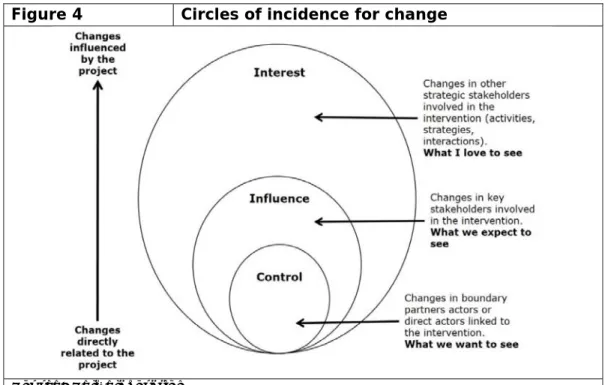
oach from isciplinarity cu, 1996; the notion on of ers (Jara, 2 2007). participator ysis of soci via, 1990; le, 2005). to be for address butes to the ative cal analysis and collecti ferent acto n e the from the ic and com contexts ( d the d trial and e tivities ects AC | 2 y ns of 2010, ry ial ing e s of vely. rs plex that errorCons a sys and inter T T T T T Figu Sour The syste 2007 The prod chan O v O k p c Achi the a to ev inter chan sidering tha stematic an problems w rvention Ch The intenti The deliber The unreal The emerg The perform ure 3 rce: Self-ela approach e em by usin 7). Results of ucts and ou nge quality Outputs un verifiable bu Outcomes, key stakeho policies and communitie ievements activities pe valuate how rvention. Th nges that us at processe nd dialogic we seek to hange Strat onal strat rate strate ized strate ing strate med strate Ch aboration b enables the g a new no f the inter utcomes. It (Santandre nderstood a ut not alwa , understoo olders’ beha /or actions s or institu s, understo erformed a w close we hey help to se to be pa s are comp manner, pr resolve. Th tegy consid tegy, analy egy, analyz egy, analy gy, analyze egy, analyz hange St based on He identificat otion of resu vention ha ts aggregat eu, 2013). as changes ys tangible od as subje aviors, attit s of the invo tions (Earl, od as chan nd results a come to m show the c art of institu plex and un romoting a he starting ering five c yzes what w zes what w zes what co es the oppo zes what w rategy enrry Mintz ion of learn ults and ac ave to be u te analysis Then, Resu directly re e, measurab ctive chang tudes and p olved in the , Carden, & nges resulti achieved (o eet the stra contributio utions or pr ncertain, it complex o point is the components we planned e could do. ould not or ortunities w we did and/o zberg nings and c hievements understood allows to e ults include lated to the ble with ind ges influenc practices, t e intervent & Smutylo, ng from the outputs and ategic goal ns of interv rograms vis addresses overview of e definition s: . . r did not do we could to or continue hange poin s (Meadow as complem explain and : e interventi dicators; ced by the he knowled ion for indiv
2002). e aggregat d outcomes s originally ventions to sions. interventio the contex of an o. ok advanta e doing. nts of a com s, 1997; M mentary jo value the ion, objecti interventio dge, relatio viduals, gro e analysis o s). They all y planned in achieve m ns in xts age. mplex orin, int vely on on ns, oups, of ow n the ajor
Know The carri syste inter The inter al., 2 W w t p in o m W a a k c a in W t in r a in wledge Mana approach a ed out in th em. It cons rvention, ei approach id rvention inf 2002): What we e which the in he control practices or nter sector often hired making (see What we li actors on w and who are knowledge, community accompany nterest in a What we lo he interven nterest ar elations, ac academia a nterest in t gement lear Santandreu articulates t he interven siders those ther expec dentifies an fluences on expect to s ntervention l area. For r relationsh ial activitie or have dir e, monitori ike to see hom the in e located in behaviors leaders tha the interve achieving th ove to see ntion is limi rea. For exa
ctions or po nd the com he results a rning oriente u, A., Arroyo the results ntion toward e results dir ted or unex nd assesses three grou see, refers has a grea example, i ips of the t s or spaces rect technic ng and dec on the key tervention n the influe or relations at without b ention and he results; e, refers to ited to influ ample, refe olicies of de mmunity wh achieveme ed approach o, R., Lujan, of the inter ds the resu rectly relat xpected. s three type ups of actor to changes at potential it refers to technical an s that go to cal respons cision). y stakehol has a high ence area. s of technic being part participate and changes of uence the c ers to chang ecision mak ho know the nt. and System A. and J. Va rvention, th ults of the k ed and the es of chang rs linked in s in the bou l to influenc changes in nd administ ogether with ibility policy lders, refer potential t . For exam cians, acad of the man in the acti f strategic change, who ges in know kers in the e interventi m tools in Eco alle / ECOSA he advocac knowledge ones influe ges (outcom different w undary pa ce and who n knowledge trative team h the interv y or proces rs to chang to influence ple, refers emics, poli agement te vities beca c stakehold o are locate wledge, beh public, priv ion and hav
ohealth proje AD/CoPEH-LA cy and rese manageme enced by th mes) that th ways (Earl e artners on o are locate e, attitudes ms that ma vention and ss decision ges of key e the chang to changes cy makers eam use of their ders on wh ed in the havior, vate sector, ve some ects AC | 4 arch ent he he et ed in s, nage d are ge s in and r hich ,
Figure 4 Circles of incidence for change
Source: Self-elaboration
5.
Knowledge Management learning oriented System
The design and implementation of a Knowledge Management Systemcontributes to operationalize the Knowledge management approach, and promotes the construction of reliable information for decision-making, monitoring, evaluation and assessment of the quality of changes, the systematization of learning and communication of results (Santandreu, 2013). In general, a Learning oriented Knowledge Management System should be:
Systematic, has to plan and integrate all the activities and actions to be implemented by the intervention.
Participatory, has to involve all actors that take part of the intervention, both into the design and the collection and interpretation of the data, information and knowledge socially constructed.
Collaborative, has to provide participatory problem solving processes, considering the exchange and the search of common solutions agreed by the various key stakeholders involved in the intervention.
Learning and change oriented, has to support the identification of change points, build and develop lessons learned and recommendations.
Decision making oriented, has to increase the availability, access and quality of data, information and knowledge in order to improve the management and the results communication processes and contribute to make evident the change quality.
The Knowledge Management System organizes tools that are used dialogical and systemic manner for:
Monitoring and evaluation of change. Information and communication of results. Systematization of learnings.
Knowledge Management learning oriented approach and System tools in Ecohealth projects
Santandreu, A., Arroyo, R., Lujan, A. and J. Valle / ECOSAD/CoPEH-LAC | 6
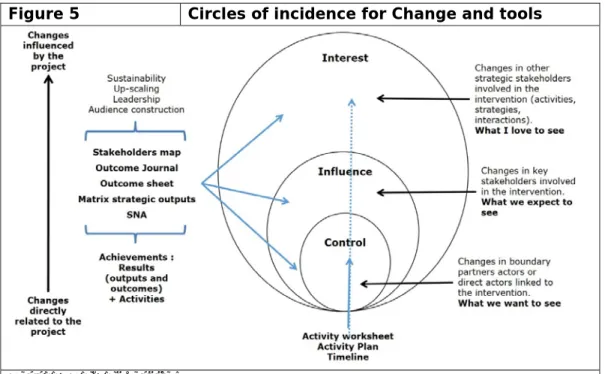
Figure 5 Circles of incidence for Change and tools
Source: Self-elaboration
5.1 Monitoring and evaluation of the Changes
Monitoring and evaluation of the Changes (M&E) is understood as both the process and the interrelated set of tools that enable valuation of the stakeholders that are key for the change, the measurement of results and the building and analysis of achievements as part of a Change Strategy. It also enable the planning of activities, the measurement of the performance as part of a management strategy and value the change quality.
Monitoring is a continuous and systematic process of collection of information related to the implementation of the activities and achievement of results. Evaluation is the interpretation and value of the information gathered during monitoring that analyze the extent in which the implementation of the activities contributed to achieve the objectives in relation to the timeframe and the invested resources. Evaluation can be implemented periodically, at mid-term, at the end of the intervention or a period after the end. However, the knowledge management approach articulates the evaluation to the research and the systematization, as three joint faces of the same collaborative learning process (Jara, 2010, 2012). Four types of tools are articulated as part of the monitoring and evaluation of changes:
Matrix of Strategic Outputs for monitoring and valuation of outputs.
Outcome Journal and the Outcome Sheets for monitoring and evaluation of outcomes.
Matrix of achievements for monitoring and valuation of achievements. Stakeholders Map and the Stakeholders Sheets for monitoring and
assessing the change actors.
Performance Strategy Journal for monitoring and value the activity progress in relation with the objectives achievement.
Social Network Analyses contribute for monitoring and value the sustainability, up-scaling, leadership and audience construction. 5.2 Information and communication of results
Information and communication of results means the interrelated set of tools that capture data and provide information to support management and decision-making functions and the activities that allow to interpret and make accessible the
information and knowledge socially constructed as part of a process. It seeks to transform the data into reportable information (communication of results) for either decision-making or policy advocacy, helping to short the gap between the new knowledge and the action.
There are three tools used for information and communication of the results: Databases for data documentation.
Content management system/Intranet for easy access to data, information and knowledge socially constructed.
Communication Plan (internal and external) for the organization of communication products and communication protocols.
5.3 Systematization of learnings
Systematization of learnings socially constructed is understood as both the process and the interrelated set of instruments to document the information available, analyze it critically to understand what has happened, identify significant learnings, develop lessons to build new knowledge and present the results achieved
adequately to the needs and interests of the various actors that are part of the process. In this sense, systematization facilitates transforming knowledge and those learnings individually constructed into knowledge and learnings useful to others (Jara, 2010, 2012, De Zutter, 1997).
There are three tools used for systematization of learnings:
Activity Worksheets for documenting activities, outcomes and learnings. Timeline to get a general understanding of the process.
Systematization Plan for construction of learnings, lessons learned and recommendations.
6
References
Charron, D. (2012). Ecohealth research in Practice. Innovative Applications of an
Ecosystem Approach to Health. (D. Charron, Ed.) (p. 282). Ottawa: Springer /
International Development Research Centre.
De Sousa-Santos, B. (2011). Epistemologías del Sur. Revista Internacional de
Filosofia Iberoamericana Y Teoria Social, 54, 17–39.
Earl, S., Carden, F., & Smutylo, T. (2002). Mapeo de Alcances (p. 160). Cartago: LUR, IDRC. Retrieved from
www.outcomemapping.ca/download.php?file=/resource/files/Mapeo_all Manual.pdf
Fals-Borda, O. (2007). La investigación acción en convergencias disciplinarias. LASA
Knowledge Management learning oriented approach and System tools in Ecohealth projects
Santandreu, A., Arroyo, R., Lujan, A. and J. Valle / ECOSAD/CoPEH-LAC | 8
http://historiactualdos.blogspot.com/2008/11/la-investigacin-accin-en-convergencias.html
González-Rey, F. (2007). Investigación cualitativa y subjetividad. Los procesos de
construcción de la información (p. 155). Mexico D.F.: McGraw-Hill
Interamericana Editores.
Granda, E. (2009). El saber en salud pública en un ámbito de perdida de antropocentrismo y ante una visión de equilibrio ecológico. In La salud y la
vida 1 (p. 1187.222). Quito: Ministerio de Salud Pública de Ecuador, OPS/OMS,
CONASA, Consejo Nacional de Educación Superior, Universidad de Cuenca, Universdad Nacioanl de Loja, ALAMES.
Gudynas, E., & Evia, G. (1990). La praxis por la vida. Introducción a las
metodologias de la ecologia social (Primera., p. 274). Montevideo: CIPFE,
CLAES, Nordan.
Hanneman, R., & Ridlle, M. (2005). Introduction to social network methods.
Riverside. Retrieved from http://revistaredes.rediris.es/webredes/text.htm
Jara, O. (2010). Dilemas y desafíos de la sistematización de experiencias. San José: CEP Centro de Estudios y Publicaciones Alforja.
Jara, O. (2012). Sistematización de experiencias, investigación y evaluación : aproximaciones desde tres ángulos. Educacación Global Reserche, (February), 56–70.
Lebel, J. (2005). Salud: un enfoque ecosistémico (pp. 1–53). Bogotá: Alfaomega / Centro Internacional de Investigaciones para el Desarrollo.
Maturana, H., & Varela, F. (2009). El árbol del conocimiento: las bases biológicas
del entendimeinto humano (19th ed., p. 172). Santiago de Chile: Universitaria.
Meadows, D. (1997). Lugares donde intervenir en un sistema. Retrieved from http://www.cacitgroup.com
Morin, E. (2007). Introduccion al pensamiento complejo (Novena., p. 167). Barcelona: Editorial Gedisa.
Nicolescu, B. (1996). La Transdisciplinariedad (p. 123). Paris: Ediciones Du Rocher. Rodriguez, L. (2004). La teoría del aprendizaje significativo. In J. Cañas, J. Novak,
& F. González (Eds.), Concept Maps: Tehory, Methodology, Technology. Pamplona.
Rodriguez-Villasante, T. (2006). La socio-praxis: un acoplamiento de metodologías implicativas. In M. Canales (Ed.), Metodologías de investigación social.
Introducción a los oficios (primera., pp. 379–406). Santiago: LOM Ediciones.
Santandreu, A. (2013). Gestión del Conocimiento orientada al aprendizaje en proyectos de investigación colaborativa. México, D.F.: Iniciativa de Liderazgo en Ecosalud para Enfermedades Transmitidas por Vectores en América Latina y el Caribe. Retrieved from http://www.ecosaludetv.org/