(IJSBAR)
ISSN 2307-4531
(Print & Online)
http://gssrr.org/index.php?journal=JournalOfBasicAndApplied
---
62
Analysis of Defficiencies in Building Structure as a
Contributing Factor to Building Failure
Mohamad Budi Hartono
a*, Anik Ratnaningsih
b, Dewi Junita Koesoemawati
ca,b,cCivil Engineering, Jember University,Jl. Kalimantan 37 Jember 68121 aEmail: [email protected]
bEmail: [email protected] cEmail: [email protected]
Abstract
Building failure is a state where a building is in ruins and/or unusable after the final delivery of construction. Many factors cause building failure, ranging from imperfect planning, poor use of materials, implementation of untechnical work, incorrect use of space functionality and improper and/or imprecise maintenance. Previous studies have researched about planning, supervision and implementation, but this study focuses on the analysis of building structure deficiencies at the operational stage for 4 main multi-storey buildings of the Jember State Islamic Institute (IAIN Jember – Institut Agama Islam Negeri Jember). This study aims to determine the condition, reliability and functioning of the buildings, as an initial step to identify the occurrence of building failures. It studies on buildings above ten years using a visual method and a building structure test of hammer test method. The results showed that of the 4 buildings that suffered the highest minor damage to the structural elements was found in the lecture building with a percentage of damage to the structure of 6.45%. The highest architectural damage was on the staff buildings with 16.90%. The highest utility damage was found at 6.03% also on the staff building. The methods used was capable in recognizing and evaluating the damage on the buildings which it could then be applied to prevent building failures.
Keywords: Building failure; Structure deficiency; Structural analysis.
--- * Corresponding author.
63
1.Introduction
The definition of a building according to Indonesian government regulations is that a building is a physical form resulting from construction work that integrates with the place of its standing, partly or entirely [1]. Its main function is as a place for human activities and a divider or protector from the elements.
Buildings must be planned to be able to withstand working loads, including live load, dead load, earthquake load, wind load and special loads. Buildings may be allowed to be damaged but not be allowed to collapse before its planned age [2]. Generally, the damage is categorized into three damage types; namely, structural, architectural and utility damage [3]. To minimalize the damage, a frequent and accurate maintenance of the building is necessary. This preventive treatment is an effective way to prolong the service capacity and structural component function of a specific building. It would also give comfort and security to the users of the building [4].
1.1. Criteria for building structural elements
Building structures are mainly classified into 2 (two) parts, the lower structure (such as the foundation which includes other structures that lay under the ground) and the upper structures (such as columns, blocks, concrete plates, stairs or other building structures that are above ground). The elements of building structures are divided into three such as in the following table:
Table 1: Building structure elements
Structure Architecture Utility
Foundation Wall Clean water drains
Column Jamb Sewer
Beam Leaf doors Sanitary equipment
Concrete roof plate Shutters Electrical installation
Concrete floor plate Floor covering Air conditioning installation
Ceiling Roof coverings
1.2. Damage Classifications
The classification of damage on building structure elements is divided into three types of damage, namely light/minor damage, moderate damage and heavy damage [5]. A damage on the building structure element must be immediately identified and repaired as to not affect the other functioning building structure elements. According to Indonesian Government Laws [6], the damage category’s limitations are identified from the building structure elements. This is defined in the following table:
64
Table 2: Classification of building damage
No Category Damage description
1. Structural damage a. Minor damage is damage that does not reduce the overall structural service
function, such as small cracks in the structure of beams, columns and walls with a gap width between 0.075 to 0.6 cm.
b. Moderate damage is damage to structural components that can reduce strength but overall service capacity is still in a safe condition, such as large cracks in the beam, column and wall structure with a gap width greater than 0.6 cm.
c. Heavy damage is damage to structural components that can reduce its overall strength so that the structural service capacity of some or all buildings are in an unsafe condition. This can be such as a division and collapse of the load bearing wall, split buildings due to failure of the binding elements, and damage of 50% or more of the main elements deeming it as unlivable.
2. Architectural
Damage
a. Minor damage is damage that does not interfere with the function of the building in terms of architectural elements, such as damage to finishing work (such as peeling off paint) that does not cause functional or aesthetic disturbances and does not cause danger to its occupants.
b. Moderate damage is damage that can interfere with the function of the building in terms of architecture (function, comfort, aesthetics) such as damage to parts of the building, namely broken windows and doors that can reduce the aesthetics of the building and reduce the comfort of its inhabitants.
c. Heavy damage is damage that greatly interferes with the function and aesthetics of the building and can pose a danger to its occupants.
3. Utility Damage a. Minor damage is damage or malfunction of utility sub-components that
will not cause interference or reduce the function of utility components. b. Moderate damage is damage or malfunction of utility sub-components that
cause interference or reduce component functions.
c. Heavy damage is damage or malfunction of the utility sub-component which can cause severe interference or result in total malfunction of the utility component.
Classification of damage levels of building structure elements can be classified according to the value in
percentage of damage to elements, Minor Damage (Rusak Ringan - RR) : ≤ 30 %, Moderate Damage (Rusak
Sedang - RS) : > 30 % - 45 %, Heavy Damage (Rusak Berat - RB) : > 45 % - 65 %, Total Damage (Rusak Total
65
1.3. Building failure
A building is deemed as a failed building when one or more of the building structure elements does not function normally [7]. Nowadays, many of the buildings in Indonesia has minimal maintenance where it may cause the conditions of the buildings to deteriorate quickly and increases the chances of building failure.
1.4. Previous studies
In the previous researches, building failure analysis is focused on the stages of the planning, monitoring and implementation process. Main factors causing the failure is due to the use of substandard materials, errors in building design and construction implementation methods [8]. It can also be caused by corrupt practices and the lack of skills and expertise of project implementers in carrying out development work [9]. There are many parties in the implementation of development such as owner, architect, structural planner, government and contractor contribute to the occurrence of building failures. These people may have less than desirable human resources and proficiency in developing the building [10].
Other dominant factors to building failure is due to incongruity of specifications between the design and the field, thus causing the building structural elements to be unable to shoulder the work load [11]. This is due to the lack of expertise of the construction planner and the skills of the project implementer. A lack of adequate project equipment can also cause the construction failure [12]. Weak project implementation from supervision, poor material use, bad project execution are also factors causing the building failure. Projects must follow a technical standard to minimize failures [13]. Non-compliance of the construction service party to follow government regulations such as using below standard materials and technical execution has been one of the main factors of many collapsed buildings [14].
This research carries out analysis of structural deficiencies at the operational stages of the building or after the final delivery of the results of construction services. It uses visual methods and structural testing using hammer tests as one of the preventive measures to prevent building failures.
The purpose of this study is to analyze the level of damage of buildings and to analyze building maintenance strategies that are suitable and on target.
2.Research Methodology
The problem limits of this research is that it does not carry out a detailed analysis of the structure bottom in more detail. However, it carries out research on 4 main buildings of the multi-storey campus building of the State Islamic Institute of Jember (IAIN Jember – Institut Agama Islam Negeri Jember) over 10 years old using visual methods, questionnaires and testing the existing structures using the hammer test tool.
The visual method used is by conducting a direct assessment in the field and after that an evaluation of the results obtained is assessed. Evaluation data obtained are mainly primary and secondary data. Primary data is obtained by survey and observation. Secondary data is obtained directly from the field in the form of previous
66
research data and other related data such as plan drawings, structural calculations, and other related data (such as plan drawings, structural calculations and other data obtained through the Government of the Republic of Indonesia regulations).
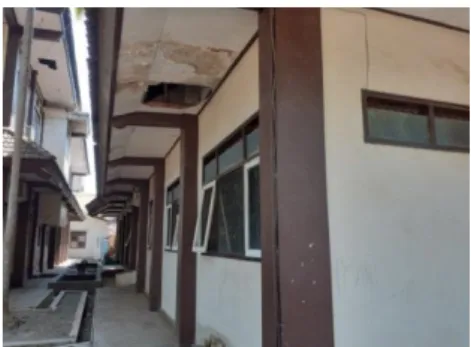
Figure 1: Condition of structural elements of the IAIN Jember employment building
Figure 2: Condition of structural elements of the IAIN Jember lecture building
Figure 3: The condition of the structural elements of the building of the IAIN Jember technical implementation unit
67
2.1. Research Stages
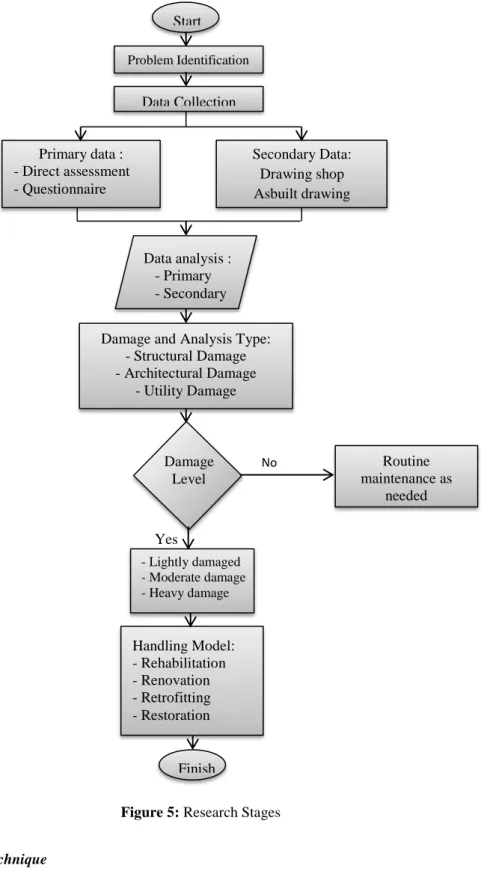
In general, the stages of activities in this study can be illustrated through the flow chart below:
Figure 5: Research Stages
2.2. Data collection technique
Data collection techniques in this study are as follows: Start Problem Identification Data Collection Primary data : - Direct assessment - Questionnaire Secondary Data: Drawing shop Asbuilt drawing Data analysis : - Primary - Secondary Yes No Damage Level - Lightly damaged - Moderate damage - Heavy damage Handling Model: - Rehabilitation - Renovation - Retrofitting - Restoration Finish Routine maintenance as needed Damage and Analysis Type:
- Structural Damage - Architectural Damage
68
1. Observation Technique
This observation technique was carried out by collecting data directly at the location of the buildings. This is to understand and pinpoint the damaged parts and the surrounding environment of the campus for identification. The technical implementation is carried out by detailing measurements and observations of the forms of damage to the building structure which is then recorded and analyzed. As for the data needed, it includes the initial planning drawings, work plan and requirements, structural calculations and others.
2. Question List Technique (Questionnaire)
Questionnaire technique is a technique of gathering information in the form of a list containing questions about research used to analyze the opinions of respondents who know the history of buildings. Questions asked to respondents are about the chronology of the campus development, starting from the planning process, job handover to the building maintenance process and management. As for the data needed, it includes data about the tender process, the construction time, constraints that may occur during implementation, supervision techniques by supervisory consultants and how the maintenance management are carried out.
2.3. Hammer test
The hammer Test is a concrete quality check tool that is used without damaging the concrete (Non-Destructive Test). The test method is by giving impact loads (collisions on the concrete surface using a mass that is activated by using a certain amount of energy. This tool can also be used to determine the uniformity of concrete materials in building structures. The hammer test is very sensitive to the presence of stone particles in certain parts of the concrete surface. Therefore, the measurement must be carried out several times around the measurement location to find a mean result. This tool could estimate the compressive strength of existing concrete and find concrete characteristic values by using the following formula:
σbk = σbm – 1,6.s ... ... (1) where:
σbk = Characteristic compressive strength
σbm = Average compressive strength
s = Standard deviation
3. Result and Discussion
The percentage of damage to building structures obtained from the calculation results can be seen in the following table:
69
Table 3: Example of calculation of percentage of damage to staff buildings
No Scope Component Unit Total
Volume Damage Volume Percentage (%) Damage Level
1. Structure Column m3 61,58 1,70 2,76 Minor Damage
Beam m3 24,40 0,44 1,78 Minor Damage
Concrete roof plate m3 4,55 0,63 13,92 Minor Damage
Concrete floor plate m3 40,51 0,34 0,83 Minor Damage
Average 4,82 %
2. Architect Wall m2 1.802,50 39,56 2,19 Minor Damage
Jamb unit 45,00 14,00 33,33 Minor Damage
Leaf doors unit 21,00 8,00 38,10 Minor Damage
Shutters unit 48,00 16,00 33,33 Minor Damage
Floor covering m2 408,77 28,26 6,91 Minor Damage
Ceiling m2 478,88 18,00 3,76 Minor Damage
Roof coverings m2 519,76 3,60 0,69 Minor Damage
Average 16,90 %
3. Utility Clean water drains m1 141,44 0 0 Minor Damage
Sewer m1 138,40 0 0 Minor Damage
Sanitary equipment unit 24,00 6,00 25,00 Minor Damage
Electrical installation unit 78,00 4,00 5,13 Minor Damage
Air conditioning
installation
unit 18,00 0 0 Minor Damage
Average 6,03 %
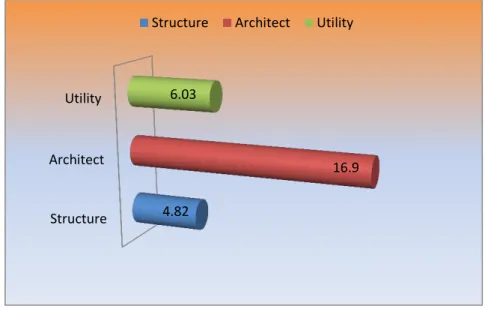
Figure 6: Example graph of percentage of damage to buildings of staff buildings
Figure 6 above is an example of the results of the calculation of the percentage of damage for staffing buildings. It can be seen that the average value of the percentage of damage to each structural element is ≤ 30%, which means that the condition of the staffing building is slightly damaged.
Structure Architect Utility 4.82 16.9 6.03
70
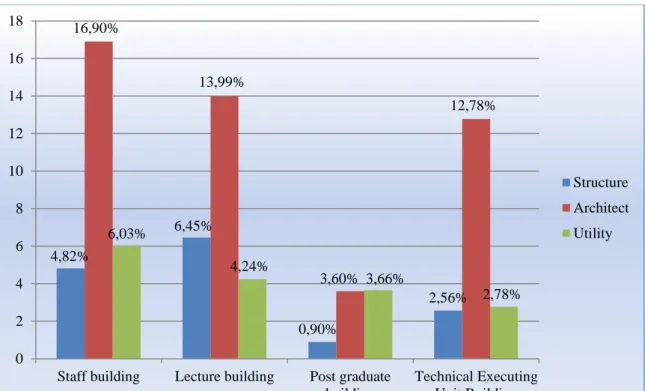
Figure 7: Recapitulation of the percentage of damage to 4 buildings
Figure 7 above is a recapitulation of the results of the calculation of the percentage of damage in the four main buildings of the IAIN campus building (staff building, lecture buildings, post graduate building and Technical Executing Unit Building) which is over 10 years old.
Table 4: The fourth category of damage to buildings
No. Building name Building
Completion
Damage rate category Action
1. Staff building 1994 Minor Damage Architectural
improvements
2. Lecture building 2006 Minor Damage Architectural
improvements
3. Post graduate building 2009 Minor Damage Architectural
improvements
4. Technical Executing Unit Building 2010 Minor Damage Architectural
improvements
From the results of data analysis, the damage level category in the four main buildings of the IAIN Jember campus is in the category of minor damage, so that only repairs are needed on the architectural elements and routine maintenance, as shown in table 4.
0 2 4 6 8 10 12 14 16 18
Staff building Lecture building Post graduate
building Technical Executing Unit Building Structure Architect Utility 4,82% 16,90% 6,03% 6,45% 13,99% 12,78% 0,90% 2,56% 4,24% 2,78% 3,60% 3,66%
71
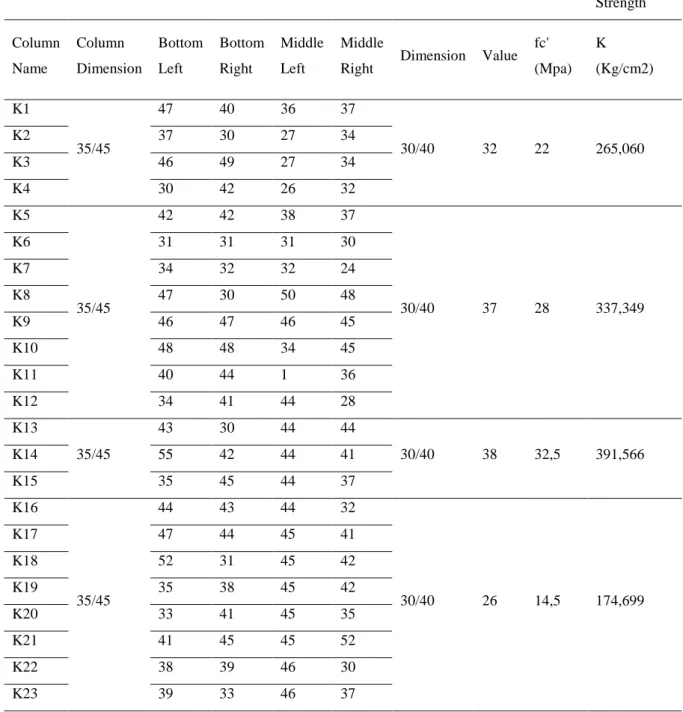
In addition to identification of damage to buildings, testing was also carried out using a hammer test to estimate the compressive strength of concrete in the elements of columns, beams and floor plates. The results of calculations using the hammer test can be seen in Table 5 showing the estimated value of the compressive strength of the concrete. The results show that it is classified as low, meaning that the structural conditions of the structural elements of the building are in good condition.
Table 5: Example of recapitulation of hammer test results in staff buildings.
Column Block Quality Compressive
Strength Column Name Column Dimension Bottom Left Bottom Right Middle Left Middle
Right Dimension Value
fc' (Mpa) K (Kg/cm2) K1 35/45 47 40 36 37 30/40 32 22 265,060 K2 37 30 27 34 K3 46 49 27 34 K4 30 42 26 32 K5 35/45 42 42 38 37 30/40 37 28 337,349 K6 31 31 31 30 K7 34 32 32 24 K8 47 30 50 48 K9 46 47 46 45 K10 48 48 34 45 K11 40 44 1 36 K12 34 41 44 28 K13 35/45 43 30 44 44 30/40 38 32,5 391,566 K14 55 42 44 41 K15 35 45 44 37 K16 35/45 44 43 44 32 30/40 26 14,5 174,699 K17 47 44 45 41 K18 52 31 45 42 K19 35 38 45 42 K20 33 41 45 35 K21 41 45 45 52 K22 38 39 46 30 K23 39 33 46 37
72
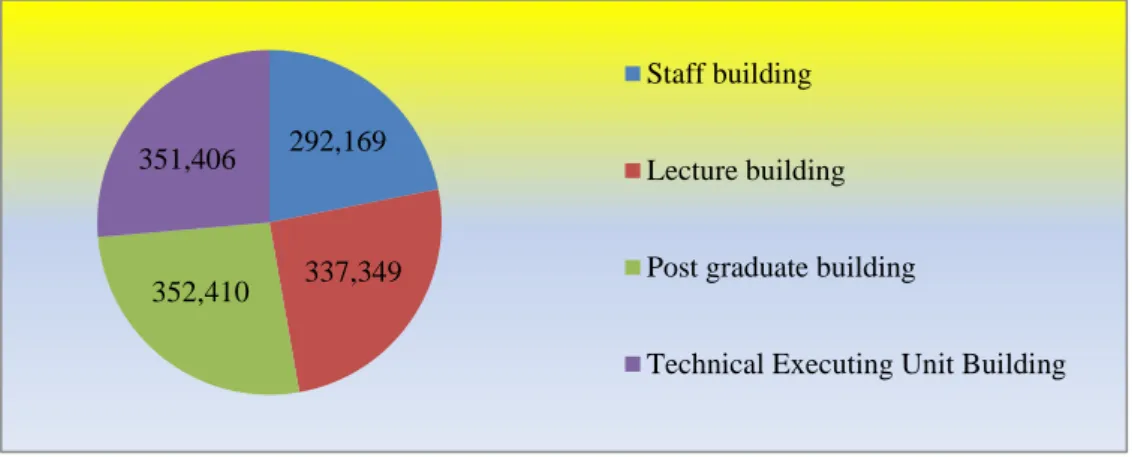
Figure 8: Recapitulation of the average compressive strength value of 4 buildings.
From the resulting calculations, it can be seen that the lowest average compressive strength is found in the staff building at 292,169 kg / cm2. This value is still above the value required by Indonesian government regulations for high-rise buildings of 225 kg / cm2 [15].
4. Conclusion
Based on the result analysis of the data and discussions, some conclusions are achieved as follows:
1. The results of the identification of damage to the four main buildings of IAIN Jember obtained data showing that most minor damage occurred in the architectural component. Buildings that suffered most architectural damage was found in the buildings of staffing buildings with a percentage value of architectural damage of 16.90%.
2. The hammer test results show that the quality of the structural components in the four main buildings of IAIN Jember are in good condition.
5. Recommendation
From the results of this study, it is recommended to regularly research and carry out recordings for the historical database of the buildings. The results of this study can also be used as a reference for building maintenance actions to be more accurate and on time.
Acknowledgement
The author would like to thank the parties who have helped in completing this research. Hopefully, the results of this study can be used when determining a maintenance budget.
References
[1] UU No 28, “BANGUNAN GEDUNG,” 2002.
Staff building
Lecture building
Post graduate building
Technical Executing Unit Building 292,169
337,349 352,410
73
[2] A. A. Aziz, T. Adi, Y. Tanojo, and I. Nurhuda, “PERENCANAAN STRUKTUR GEDUNG CENTER OF ADVANCES SCIENCE ( CAS ) INSTITUT TEKNOLOGI BANDUNG,” vol. 6, pp. 285–295, 2017.
[3] A. David, “Structural serviceability of buildings,” 2019.
[4] C. P. Au-Yong, A. S. Ali, and F. Ahmad, “Preventive Maintenance Characteristics towards Optimal Maintenance Performance: A Case Study of Office Buildings,” World J. Eng. Technol., vol. 2, no. 3, pp. 1–6, 2014.
[5] E. Engineering, A. Ghobarah, H. Abou-elfath, and A. Biddah, “Response-based damage assessment of Structures RESPONSE-BASED DAMAGE ASSESSMENT OF STRUCTURES,” vol. 9845, no. January, 1999.
[6] Dirjen PU Cipta Karya, Pedoman Teknis Bangunan Tahan Gempa Direktorat Jenderal Cipta Karya. 2006.
[7] O. S. O and R. Abdulwahab, “Building Collapse in Nigeria ( 2009- 2019 ), Causes and Remedies – A Review Building Collapse in Nigeria ( 2009- 2019 ), Causes and Remedies – A Review A building structure can be defined as an artistically and aesthetically created,” no. June, 2019.
[8] B. S. Olusola, “An assessment of failure of building components in Nigeria,” vol. 4, no. January, pp. 279–286, 2009.
[9] T. Zuofa and E. G. Ochieng, “Project Failure : The Way forward and Panacea for Development,” vol. 9, no. 11, pp. 59–71, 2014.
[10] G. M. Ayininuola, “Assessment of building failures in Nigeria : Lagos and Ibadan case study ASSESSMENT OF BUILDING FAILURES IN NIGERIA :,” no. February 2005, 2014.
[11] F. Kistiani, “Kontribusi Sertifikasi SDM Konstruksi Terhadap Kegagalan Konstruksi Dan Kegagalan Bangunan Studi Kasus Provinsi Jawa Tengah,” vol. 105, pp. 1–10, 2016.
[12] O. C. Okereke, “Causes of failure and abandonment of projects and project deliverables in Africa,” vol. VI, no. I, pp. 1–16, 2017.
[13] M. Hamma-adama and T. Kouider, “Causes of Building Failure And Collapse I n Nigeria : Professionals ’ View American Journal of Engineering Research ( AJER ),” no. 12, pp. 289–300, 2017. [14] L. A. Asante and A. Sasu, “The Challenge of Reducing the Incidence of Building Collapse in Ghana :
Analyzing the Perspectives of Building Inspectors in Kumasi,” 2018.