‘Sensory Intelligence’. An Exploratory Programme
Evaluation in a Secondary School Autism Resource Base.
by
Linda Mary Falkner
This thesis is submitted to Cardiff University in partial
fulfilment for the degree of Doctorate in Educational
Psychology
i
ABSTRACT
Up to 95% of the autistic population are considered to have atypical sensory modulation which can lead to mal-adaptive strategies for self-regulation. Some argue that atypical and fluctuating sensory profiles could be ‘core’ autistic features underlying behavioural manifestations and poor academic and life-long prognoses. Evidence also suggests that this is more prevalent in the general population than previously thought, resulting in sensory modulation becoming an emerging field in mental health and well-being.
Despite empirical evidence suggesting that adolescents can be taught adaptive self-regulation strategies, and secondary schools being sensory challenging, school-based interventions with evidence bases to support them, remain sparse in the literature. Barriers include the heterogeneity of autism, austerity, ‘intervention overload’ in schools, and a significant ‘research-practice’ divide undermining effectiveness in messy ‘real-life’ contexts. Little is currently known about what works, for whom and in what context, as a result.
Diverse fields, using insights from process rather than product orientated techniques from Implementation Science and Realist evidence bases, are, however,
bridging their own research-practice divides with some success. Consequently, the aims of this study were to adopt process-orientated approaches to explore if the‘Sensory
Intelligence’ programme was worthy of further investigation and potentially offered a role for educational psychologists.
Using a Case Study approach in an Autism Resource Base attached to a mainstream secondary school, Deductive Thematic Analysis enabled three main themes and ten sub-themes to be generated based on interviews with the participants, field notes and individual sensory profiles. The programme was considered ‘definitely viable’ by all three groups despite some tension regarding respective responsibilities. Considerable process issues were identified providing insights for ways forward including the need for detailed implementation planning via a systemic approach. Key roles were also implicated for Educational Psychologists working at individual, group and organisational levels.
ii
ACKNOWLEDGEMENTS
I would like to thank the staff, parents and children who participated in the study for their willingness, enthusiam, time and contributions. Without them this study could not have taken place.
I would also like to thank my supervisor Andrea Higgins for her patience, encouragement, and skilled guidance, which was invaluable.
My gratitude is also extended to my peer-supervisor, Denise, for her encouragement and insights to help minimise researcher-bias.
And, finally, to my husband Peter, family and friends, thank you for your support and patience over a journey that took much longer than expected.
iii
CONTENTS
Abstract ... i
Acknowledgements ... ii
Contents ... iii
List of tables ...viii
List of abbreviations ...xiii
Glossary of terms ... xiv
Introduction ... 1
Overview of Chapter One ... 1
Sensory Processing, Sensory Modulation and Life Experiences ... 1
Sensory Modulation as an Emerging Field... 5
1.3.1 Sensory Modulation ‘Differences’ as a social and cultural construction. ... 5
1.3.2 Potential advantages of atypical sensory modulation in modern society. ... 7
1.3.3 Potential disadvantages of atypical sensory modulation in modern society. ... 9
Main Theoretical Perspectives ... 11
1.4.1 Sensory Integration Theory. ... 11
1.4.2 Sensory Processing Sensitivity. ... 12
1.4.3 Atypical sensory modulation and autism... 15
Sensory Sub-types in Autism ... 16
The Need for an Individualised Approach ... 17
School Environments, Sensory Processing and Autism ... 18
School-based Sensory Intervention Programmes ... 20
Process Issues for Interventions in ‘Real Life’ Contexts ... 21
Atypical Sensory Processing and Educational Psychology ... 23
Summary of Chapter One ... 24
Outline of the Remainder of the Thesis ... 25
Literature Review ... 27
Outline of Chapter Two ... 27
iv
The Choice of a Realist Review ... 29
2.3.1 A Paucity of Research in This Area... 30
2.3.2 Key sources and search strategy. ... 31
The ‘EMMIE’ Approach ... 35
Types of sensory intervention ... 41
2.5.1 Sensory integration treatment. ... 41
2.5.2 Single modality sensory-based interventions. ... 46
2.5.2.1 The Self-Discovery Programme... 47
2.5.2.2 Sound-based interventions. ... 51
2.5.3 Cognitive incorporating multiple modality sensory approaches. ... 54
2.5.3.1 Cognitive behaviour therapy for self-regulation. ... 54
2.5.3.2 The Alert Program for self-regulation. ... 60
2.5.4 Environmental modifications. ... 68
Summary of the Literature Review ... 77
Rationale for the Current Study ... 82
Critical Appraisal of the ‘Sensory Intelligence’ intervention programme and associated theory. ... 87
2.8.1 A dynamic, interwoven relationship between person, task and environment. ... 88
2.8.2 Self-administered and personalised sensory modulation interventions can aid optimum functioning in modern day life. ... 90
Methodology ... 94
Overview ... 94
3.1.1 Ontological and epistemological position... 94
3.1.2 Axiological considerations. ... 96
Case Study Research Design ... 97
3.2.1 The CIPP framework. ... 99
3.2.2 The case. ... 101
3.2.3 Participant recruitment. ... 102
3.2.4 Planned involvement of participants. ... 106
3.2.5 Programme content. ... 107
3.2.6 Programme delivery. ... 109
Data Collection Methods ... 110
v
3.3.1.1 The Adolescent-Adult Sensory Profile. ... 111
3.3.1.2 The Sensory Profile Checklist Revised. ... 112
3.3.1.3 The sensory matrix. ... 113
3.3.1.4 The Sensory Processing Sensitivity (SPS) Scale (Child). ... 114
3.3.1.5 Summary of sensory profiles used. ... 114
3.3.2 Field notes. ... 115
3.3.3 Semi-structured interviews (children and parents). ... 115
3.3.4 Focus group (staff). ... 116
Data Analysis Methods ... 117
3.4.1 Thematic analysis. ... 120
3.4.2 Context-Mechanisms-Outcome configurations. ... 124
Ethical Considerations ... 125
Trustworthiness ... 127
Reporting of the Findings ... 129
Reflexivity as a Researcher ... 129
Results ... 133
Introduction ... 133
4.1.1 Overview of main themes. ... 133
4.1.2 Main theme A: Does it do exactly what it says on the tin? ... 136
4.1.2.1 Sub-theme: ‘I didn’t know that before’... 136
4.1.2.2 Sub-theme: ‘It makes sense of behaviour’. ... 138
4.1.2.3 Sub-theme: ‘Practical strategies for positive change’. ... 140
4.1.2.4 Sub-theme: ‘We are all individuals; we all have our things’... 142
4.1.2.5 Summary of main theme ‘Does it do exactly what it says on the tin?’ ... 144
4.1.3 Main theme B: ‘Opening up that conversation’. ... 145
4.1.3.1 Sub-theme: ‘I’m listening’ (Relationships). ... 146
4.1.3.2 Sub-theme: Whose job is it anyway? ... 148
4.1.3.3 Sub-theme: Where does the expertise lie? ... 149
4.1.3.4 Summary of main theme ‘Opening up that conversation’. ... 152
4.1.4 Main theme C: ‘It would be better if…’ ... 152
vi
4.1.4.2 Sub-theme: ‘Many hands make light work’. ... 157
4.1.4.3 Sub-theme: A ‘can do’ approach to tackling ‘real-life’ constraints... 160
4.1.4.4 Summary of main theme ‘It would be better if…’. ... 163
4.1.5 Interconnection between themes. ... 163
4.1.6 What are the sensory-perceptual profiles of children attending a secondary school ARB? 163 4.1.7 Summary of chapter 4. ... 166
Discussion and Conclusion ... 167
Overview of Chapter 5... 167
Key Findings in Relation to the Research Questions ... 167
5.2.1 What C-M-O configurations are required for the successful implementation of the ‘Sensory Intelligence’ programme in an Autism Resource Base attached to a mainstream secondary school? ... 167
5.2.2 What are the potential benefits and limitations of the ‘Sensory Intelligence’ approach for this population? ... 175
5.2.3 Which sensory-perceptual profiles, if any, might benefit most from the ‘Sensory Intelligence’ approach? ... 180
5.2.4 What is the impact on the students of the Sensory Intelligence approach? ... 181
5.2.5 What is the impact of parental involvement? ... 183
5.2.6 Can this intervention be delivered effectively to children in Years 7 – 11 who attend an ARB? 184 5.2.7 What do the participants suggest could be improvements to the ‘Sensory Intelligence’ intervention programme? ... 186
Summary of the main findings of the study. ... 194
Strengths and limitations of the study ... 195
Implications for EP Professional Practice ... 203
Future Research ... 208
Unique Contribution to the Field... 209
Reflexive Summary ... 210
Concluding Comments ... 212
References ... 214
Appendices ... 251
vii
Appendix 2: Gatekeeper Letter to Head of Autism Resource Base
... 253
Appendix 3: Information Sheet – Parents/carers and Resource
Base Staff ... 255
Appendix 4: Written Consent Forms ... 259
Appendix 5: Pupil Information and Consent Form ... 261
Appendix 6: Staff Consent Form ... 264
Appendix 7: PowerPoint Presentation Slides (Parents) ... 266
Appendix 8: PowerPoint Presentation Slides (Children) ... 274
Appendix 9: Sample Pages from ‘Sensory Intelligence. Why it is
more important that EQ or IQ’. (Lombard, 2007) ... 279
Appendix 10: Debrief Form (Adults) ... 285
Appendix 11: Debrief Form (Children) ... 287
Appendix 12: Semi-structured Interview Schedule - Parents ... 289
Appendix 13: Semi-structured Interview Schedule – Children ... 291
Appendix 14: Focus Group Schedule ... 293
Appendix 15: Outline of 8-week Sensory Intelligence Intervention
... 295
Appendix 16: CIPP Process and Product Evaluation Checklist . 298
Appendix 17: Sensory Matrix Summary Score Sheet ... 300
Appendix 18: Children’s Case Study ‘Pen Pictures’ ... 301
Appendix 19: Deviations from the Intended Design of the Study
... 306
Appendix 20: Example of The Recording of ‘Noticings’ (Stage 1)
... 309
viii
ix
LIST OF TABLES
Table 1Relationships between Behavioural Responses and Neurological Thresholds
(Dunn, 1997) ... 4
Table 2
Search Terms for the Realist Review. ... 31
Table 3
Flow Diagram of Literature Search and Study Selection. ... 33
Table 4
Summary of Studies Selected and Key Areas of Focus. ... 34
Table 5
EMMIE Evidence and Five-point Scales for Assessing Quality in Each Dimension. ... 37
Table 6
Six Factors to Inform the Assessment of the Methodological Adequacy of a
Systematic Review in Terms of Estimating Effect Sizes. ... 40
Table 7
Essential Elements of Sensory Integration Treatment. ... 42
Table 8
EMMIE-Q Scoring forLydon, Healy, & Grey (2017). ... 45
Table 9
EMMIE-Q Scoring forthe Self-Discovery Program (Powell, Barlow, & Bagh, 2005).... 51
Table 10
EMMIE-Q Scoring for Sound-based Interventions (Villasenor, Smith, & Jewell, 2018 incorporating Al-Ayadhi, Al-Drees, & Al-Arfaj, 2013). ... 54
x Table 11
EMMIE-Q Scoring for Cognitive Behaviour Therapy for Self-Regulation
(Edgington, Hill, & Pellicano, 2016). ... 60
Table 12
EMMIE-Q Scoring for The Alert Program (Gill, Thompson-Hodgetts & Rasmussen, 2018 & MacCobb, Fitzgerald, & Lanigan-O’Keeffe, 2014). ... 67
Table 13
EMMIE-Q Scoring for Sound-absorbing Wall and Halogen Light Installation.
(Kinnealey et al., 2012). ... 72
Table 14
EMMIE-Q Scoring for Standard Earmuffs and Noise-cancelling Headphones
(Ikuta et al., 2016). ... 74
Table 15
EMMIE-Q Scoring for ‘Safe Havens’ and Raising Teacher Awareness
(Mandy et al., 2016). ... 77
Table 16
Summary of EMMIE Review of the Literature of Sensory Modulation Interventions
Deemed Suitable for Autistic Adolescents in Secondary School Environments. ... 79
Table 17
Five Methodological Principles, for Case Studies, Underlying a Critical Realist Position.98
Table 18
Participant Recruitment Procedure. ... 103
Table 19
Participant Information: Children’s Age, Year Group and
xi Table 20
Participant Information: Parents. ... 106
Table 21
Summary of Planned Involvement of Participants. ... 107
Table 22
Sensory Intelligence Programme Theory. ... 108
Table 23
Core Components of the ‘Sensory Intelligence’ Programme. ... 109
Table 24
Scoring Criteria for the AASP... 112
Table 25
Sensory Tree to Understand Behaviours (Lombard, 2015). ... 114
Table 26
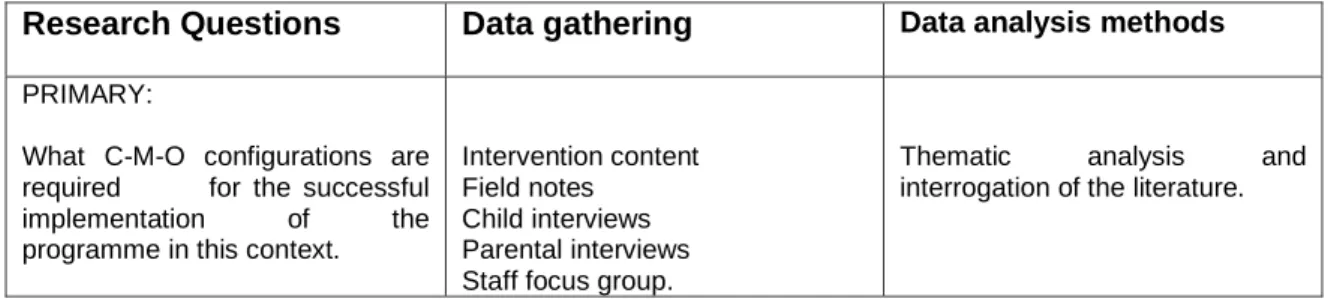
Research Questions, Data Gathering and Analysis Methods. ... 118
Table 27
Braun & Clarke’s (2013) Key Stages Adhered to in this Study. ... 122
Table 28
Ethical Considerations Included in this Study. ... 126
Table 29
Lincoln & Guba (1985) 4 Criteria for Trustworthiness in Qualitative Research... 128
Table 30
A 15-point Checklist of Criteria for Good Thematic Analysis (taken from
xii Table 31
Thematic Map... 135
Table 32
Illustrative Quotes for Sub-theme ‘I didn’t know that before’. ... 138
Table 33
Illustrative Quotes for Sub-theme ‘It makes sense of behaviour’. ... 140
Table 34
Illustrative Quotes for Sub-theme ‘Practical strategies for positive change’... 142
Table 35
Illustrative Quotes for Sub-theme ‘We are all individuals; we all have our things’. ... 144
Table 36
Illustrative Quotes for Sub-theme ‘I’m listening’ (Relationships). ... 147
Table 37
Illustrative Quotes for Sub-theme ‘Whose job is it anyway?’ ... 149
Table 38
Illustrative Quotes for Sub-theme ‘Where does the expertise lie’?... 151
Table 39
Illustrative Quotes for ‘Programme Development’ ... 156
Table 40
Illustrative Quotes for Sub-theme ‘Many hands make light work’ from the parents. ... 160
Table 41
Illustrative Quotes for Sub-theme: ‘A ‘can do’ approach to ‘real-life’ restraints’
xiii Table 42
Summary of the Children’s Sensory Profiles. ... 164
Table 43 Conjectured CMO. ... 168 Table 44 Re-conjectured CMO 1. ... 172 Table 45 Re-conjectured CMO 2. ... 174 Table 46
Proposed Changes to the Sensory Intelligence Intervention Based on the
Recommendations of the Participants and Available Literature. ... 192
Table 47
Strengths and Limitations of the Approaches Incorporated in the Study. ... 197
Table 48
xiv
List of Abbreviations
AIT Auditory Integration Therapy
AP Alert Programme
ARB Autism Resource Base
ASC Autistic Spectrum Conditions
ASI Ayers’ Sensory Integration
BPS British Psychological Society
CBT Cognitive Behaviour Therapy
CIPP Context, Input, Process and Product
C-M-O Context-Mechanism-Outcome
CYP Children and Young Persons
DSM 5 Diagnostic and Statistical Manual of Mental Disorders 5th Edition
EMMIE Effect, Mechanism, Moderator, Intervention, Economic
ECHP Education, Care and Health Plan.
EP Educational Psychologist
EPHPP Effective Public Health Practice Project
ESEA Education, Elementary & Secondary Act
MUPS Medically unexplained physical symptoms
OT Occupational Therapist
RAMESES Realist & Meta-narrative Evidence Syntheses: Evolving Standards
SCERTS Social Communication, Emotional Regulation & Transactional Support
SDP Self-Discovery Programme
SEN Special Educational Needs
xv
SMD Sensory Modulation Disorder
SSP Short Sensory Profile
xvi
GLOSSARY OF TERMS
Atypical sensory modulation. The under or over-response to sensory input from the body or the environment which can be apparent in all sensory domains.
Gene x Environment interaction. The focus on the interaction of genetic presentation with environmental triggers.
Fluctuating profiles. The presence of high and low thresholds in the same modality.
Habituation. The process where inhibitory neurons decrease or block the neuronal activity related to an event or stimulus due to recognition that something familiar has occurred which does not require attention.
Hypersensitivity. Low sensory threshold causing sensitivity toward stimuli.
Hyposensitivity. High sensory threshold contributing towards insensitivity towards stimuli unless intense.
Local processing bias. A focus on details rather than global properties,
Low registration. A high but passive sensory profile.
Neurological threshold. The threshold at which neurons fire.
Programme theory. Explanatory accounts of how an intervention is considered to work.
Proprioception. The sense of self-movement and body position.
Sensitization. The neurological enhancing of potentially important stimuli.
Savantism. Domain-specific abilities which are both superior to the individual’s other skills and superior to the majority of the general population.
Self-regulation. The ability to adjust to changing conditions through internal processes that are coupled with behaviours to maintain a sense of control over arousal level,
supporting meaningful interactions with the environment by reducing stress and promoting a sense of calmness.
Sensory diet. Activities introduced in daily living routines to meet sensory needs in a prolonged manner.
xvii
Sensory discrimination. The central process of distinguishing between and organising temporal and spatial characteristics of sensory stimuli. It is the ability to correctly register (or recognise) sensory input on a neurological level in order to use it functionally.
Sensory ergonomics. These are recommended changes in the physical environment, based on the individual’s sensory needs to ensure a better match for the person.
Sensory intelligence. The insight and understanding of how the brain perceives sensory information from the environment to incorporate necessary accommodations to enhance optimal levels of functioning via self-regulation.
Sensory Integration Theory. A theory originally credited to A. Jean Ayres that has the key assumption that it is possible to remediate atypical sensory processing through interventions due to plasticity within the central nervous system.
Sensory modulation. This refers to the ability of the individual to regulate and organise responses to sensations in an adaptive manner, appropriate to situational demands
Sensory processing.The ability of the central nervous system to receive, organise and make sense of internal and external sensory input from contextual experience. It is an umbrella term incorporating sensory modulation, sensory discrimination and sensory based motor output.
Sensory Processing Disorder. Sensory processing patterns that are deemed extreme and considerably interfere with psychosocial functioning and/or participation/involvement in daily life.
Sensory Processing Sensitivity. A temperament incorporating sensory sensitivities, depth of emotional response and processing of information due to a highly sensitive nervous system, considered to be evident in up to 20% of the population of many species and to have an evolutionary benefit.
Sensory snacks. Activities introduced in daily living routines to meet sensory needs in the moment rather than in a prolonged manner.
Vestibular sense. Sense of balance and spatial orientation for the purpose of coordinating movement with balance.
1
Introduction
Overview of Chapter One
In this chapter, an overview of the research area is introduced to map out, in broad terms, the conceptual and theoretical territory, as suggested by Pawson, Greenhalgh, Harvey, & Walshe (2004) in the tradition of the Realist approach. This will commence with a consideration of the key concepts and their definitions, acknowledging that these are not always clearly defined in the literature.
This is followed by a discussion of whether the key topic of this study; sensory modulation differences, should be considered a social and cultural construction in modern day society given that it is associated with advantages as well as disadvantages in everyday life. Whilst disadvantages have been given more attention in the literature, two diverse theoretical perspectives are beginning to converge, suggesting that atypical sensory modulation may be an aspect of natural neurodiversity.
It has also been suggested that the development of conscious awareness of natural sensory preferences can facilitate adaptive rather than mal-adaptive coping strategies. This has led to sensory modulation research as an emerging field attracting multi-professional interest due to wide-ranging applications, including mental health and well-being. The implications of this topic for autistic adolescents, and whether such programmes are worthy of further investigation are discussed. The importance and challenge of developing an intervention in a ‘real-life’ context such as an Autism Resource Base (ARB) attached to a mainstream secondary school is explored. The distinctive contribution of the research and potential roles for educational psychologists are also indicated.
Sensory Processing, Sensory Modulation and Life Experiences
Sensory Processing is the ability of the central nervous system to receive, organise and make sense of internal and external sensory input from contextual experiences. It involves interaction between neurological thresholds for alerting to sensory input; the ability to self-regulate and to manage the sensory input being experienced (Dunn, 2001). Sensory Processing encompasses seven different senses: auditory, visual, tactile, olfactory, taste, proprioception and vestibular (Miller, et al., 2007).
Differences in sensory processing can be separated into two broad constructs, (1) difficulties in sensory discrimination and sensory based motor output, placing the person at
2
risk of or resulting in deficits in postural stability, visual-motor control and motor planning, and (2) differences in sensory responsivity, which has implications for the modulation of sensory information from the environment (Lombard, 2015; Reynolds et al., 2017). Sensory modulation is, therefore, a subset of the broader term ‘sensory processing’. This will be the key focus of this study.
Lombard (2015) provided a useful analogy of a coin to encapsulate the relationships between the different terms:
• Sensory processing(Analogy of a coin – this is the coin).
Sensory processing has been proposed as the umbrella term covering various sensory functions: sensory modulation, sensory discrimination and sensory based motor output.
• Sensory modulation (Analogy of a coin -this is one side).
Modulation involves matching the body’s energy level and attention to the demands of the environment. It requires the brain to filter information and attend to certain information while disregarding other stimulation.
• Sensory discrimination (Analogy of a coin – this is the other side).
Sensory Discrimination is the central process of distinguishing between and organising temporal and spatial characteristics of sensory stimuli. It is the ability to correctly register (or recognise) sensory input on a neurological level in order to use it functionally. It is associated with sensory-based motor output. (p. 5).
The researcher has noted, nevertheless, that many studies still refer to the more generic term ‘sensory processing’ in their studies without specifying whether their focus is on either or both of ‘sensory modulation’ and ‘sensory discrimination’. Where this is unclear, it is considered prudent to use the same terminology as the authors to avoid any misrepresentation.
Occupational therapists appear to agree that understanding sensory modulation requires attention to both neurological threshold (how sensitive) and reactivity (active or passive responses to stimuli) across all seven modalities (Dunn, 2014). Sensory modulation incorporates both physiological reactions and behavioural responses.
3
Physiologically, the nervous system operates excitatory and inhibitory neuronal activity via synaptic transmission altering the structure and/or function of nerve cells. Excitatory neurons increase the activity related to a particular event or stimulus. This is known as sensitization, whereas inhibitory neurons decrease or block the neuronal activity related to an event or stimulus, which is referred to as habituation (Lombard, 2015). These cellular mechanisms of habituation and sensitization affecting synaptic transmission underlie sensory modulation. When sensory modulation is working efficiently, the nervous system responds to some stimuli whilst ignoring others. Without habituation, people would be constantly distracted by each and every new stimulus in the environment rather than being able to focus on that which is most relevant and important at the time.
Accumulating evidence from physiological (e.g. Zuckerman, 1999) and
neurological studies (e.g. Schaaf et al., 2010) have identified individual differences in the processing of sensory events in the nervous system. Distinct patterns of sensitization and habituation responses have been shown in skin conductance measures, for example (Brown, Tollefson, Dunn, Cromwell, & Filion, 2001). Physiological measurement is, however, beyond the scope of this study, which necessarily focuses on behavioural manifestations.
Behaviourally, people with low thresholds react quickly and frequently to stimuli whilst those with high thresholds respond less readily to stimuli and, in both cases, such responses can either be active and passive. Sensory modulation refers to the ability of the individual to regulate and organise responses to sensations in an adaptive manner,
appropriate to situational demands (Humphery, 2002; Lombard, 2015). An example of an active response, for someone with a low threshold for auditory processing, would be to turn down music in order to concentrate on a conversation. An example of a passive response, from the same person, would be avoidance by not engaging in conversation because of music in the background. Responses can be conscious or unconscious (Dunn, 2014).
Dunn (1997) has provided a useful Behavioural Response continuum to illustrate relationships between neurological thresholds and reactivity, and she has suggested four main classifications of Low Registration, Sensation Seeking, Sensation Avoiding and Sensory Sensitive, which will be adopted throughout this study. These are illustrated in Table 1.
4 Table 1
Relationships between Behavioural Responses and Neurological Thresholds (Dunn, 1997) Neurological Threshold Continuum Passive behavioural response Active behavioural response
High LOW REGISTRATION SENSATION SEEKING
Low SENSORY SENSITIVE SENSATION AVOIDING
Measurement of neurological thresholds and active versus passive responses to stimuli, from a behavioural perspective, is predominantly dependent on the use of standardised parental or self-report questionnaires, such as the Sensory Profile (Dunn, 1999) and the Adolescent, Adult Sensory Profile (AASP) (Brown and Dunn, 1999), respectively. Extremities (‘atypical modulation’) are usually represented by resultant scores at least two standard deviations from the mean.
The interaction of genetic (Goldsmith, Arnerson, & Gernsbacher, 2006) and
environmental factors (Dunn, 2003) are considered to underlie individuality in responses to excitation and inhibition causing people to have different thresholds for noticing,
responding to and avoiding certain sensations. Patterns also emerge across ages suggesting both developmental influences and stability over time (Ben-Sasson, Carter, & Briggs-Gowan, 2010). Differences in responsiveness have been linked to temperament (Rothbart, Ahadi, Hershy, & Fisher, 2001) and personality traits (Aron and Aron, 1997), with
implications for emotional development and psychopathology (Gouze et al., 2012).
Dunn (2003) considered that ‘the experience of being human’ is imbedded in the sensory events of everyday life, because they strongly influence daily choices,
interests/hobbies, careers, living arrangements and other ways of organising our lives. Blackwell, et al. (2014) further suggested that sensory modulation should be conceived of as a multifaceted concept which encompasses management of emotions, attention and behaviour as well as physiological arousal.
Researchers have also begun to identify distinct sensory processing patterns in children and adults with various conditions such as Fragile X (e.g. Belser and Sudhalter, 1995), autism (e.g. Baranek, 1999), brain disorders such as Dementia (e.g. Ragneskog &
5
Kihlgren, 1997) and Schizophrenia (Light & Braff, 2000) suggesting that sensory processing may have a very pervasive influence on human experience.
Sensory Modulation as an Emerging Field
According to Barnes, Vogel, Beck, Schoenfeld, & Owen (2008) multiple models have been used to describe ‘sensory processing’ with sensory modulation contained within it, and the concept remains a contentious issue within the field of Occupational Therapy. Ismael, Lawson & Hartwell (2018) considered that studies predominantly relying on questionnaires and behavioural observations have been hampered by inconsistency in ways of conceptualizing and measuring the different aspects of sensory processing. The field remains at an early stage of development, as a result (Gouze, et al., 2012).
Despite such an emergent stage of conceptual development, the field of sensory modulation is a rapidly developing multi-professional approach. Applications, which started with occupational therapy paediatrics, are now being considered relevant for all ages, pathology and non-pathology, including wellness promotion and mental health (Scanlan & Novak, 2015). This is on the understanding that individuals can be guided cognitively to develop conscious awareness of their largely unconscious sensory preferences to facilitate the use of suitable sensory modulation approaches to manage emotions, attention and behaviour more easily (Lombard 2015; Dunn, 2014). In this way, ‘mal-adaptive coping mechanisms’ for modulation difficulties (Johnson, 1975) have the potential of being replaced by more adaptive and socially-acceptable coping mechanisms.
Clear understanding of the relationships between sensory modulation and life experiences has, however, been hampered by a lack of cross-disciplinary communication to date (Gouze et al., 2012; Lombard, 2015). Edgington, Hill, & Pellicano (2016), amongst others, argued that the development of a ‘holistic’ multidisciplinary approach is an extremely important way forward. The researcher suggests that such an application is highly relevant within the sphere of Educational Psychology professional practice and that EPs should consider becoming active contributors to the development of this emerging holistic multidisciplinary approach.
1.3.1 Sensory Modulation ‘Differences’ as a social and cultural construction.
Atypical sensory modulation is deemed to be the under or over-response to sensory input from the body or the environment (Hanft, Miller, and Lane, 2000), and sensation-seeking (Smith
6
and Sharp, 2013), which can be apparent in all sensory domains. Within the tactile domain, for example, over-responsivity may manifest in extreme dislike of being touched, under-responsivity could result in not noticing when being touched or bruised and sensation-seeking could be the active pursuit of tactile experiences such as stroking a dog or swimming. An aversion to noisy places (over-responsivity), not noticing when your name is called (under-responsivity) and a craving for loud music (sensation-seeking) are also examples of the range in the auditory domain.
Engel-Yeger, et al. (2018) have suggested that sensory processing patterns, which do not impair daily life activities, should be considered individual/specific trait
characteristics. If they are ‘extreme’ and significantly interfere with psychosocial functioning and/or participation/involvement in daily life, however, they need to be considered as ‘sensory processing disorders’.
The concept of ‘atypical’ sensory processing could be considered a social and cultural construction, nevertheless (Linton, 1998). Heller (2003) emphasised the importance of acknowledging a mismatch between the evolution of the human central nervous system and brain, on the one hand, and rapid changes to modern day life, on the other, arguing that such a mismatch could cause challenges for a substantial minority of the population. Valued talents in the ‘hunter and gatherer’ era, such as the ability to notice deer and other animals easily amid forest camouflage, for example, could cause individuals with the same talents difficulties blocking out subtle visual distractions in modern day society and busy classrooms, in particular (Fisher, Godwin, & Seltman, 2014; Heller, 2003). Heller further indicated that the world is now much noisier than when our ears were designed thousands of years ago whilst evolutionary adaptation may remain minimal over this time span.
Amid increasing awareness of sensory-processing insights from research with children and adults with disabilities, it has also been suggested that sensory processing challenges are more universally applicable than previously thought (Dunn, 2009). Personality research, for example, has estimated that up to 20% of the population have ‘Sensory Processing Sensitivity’ (Aron & Aron, 1997) which includes a low sensory threshold. This theoretical strand will be discussed in section 1.4.2.
Gere, Capps, Mitchell, & Grubbs (2009) also found that their sample of 80 6 to 11-year-old gifted children, had more intense sensory sensitivities, as measured by the
7
Autism (Robertson & Simmons, 2013; Little, Dean, Tomchek, & Dunn, 2016), ADHD and specific language impairment (Little, et al., 2018), bipolar disorders (Engel-Yeger, et.al., 2018), cerebral palsy (Pavao & Rocha, 2017), general learning difficulties (Engel-Yeger, Hardal-Nasser, & Gal, 2016) and preterm infants (Cabral, Da Silva, Martinez, & Tudella, 2016).
Whilst it has been estimated that between 15 – 20% of the general population are deemed to have atypical sensory modulation (Ben-Sasson, Hen, Fluss, Cermak, Engel-Yeger, & Gal, 2009), it may be as high as 95% in the autistic population (Tomchek & Dunn, 2007; Baker, Lane, Angley, & Young, 2008), however, and relatively stable over the lifetime of individuals with autism (Billstedt, Gillberg, & Gillberg, 2007). The implications of atypical sensory processing are likely to be more readily apparent in autism, as a result, making autism a particularly fruitful area for investigation.
The recent inclusion of atypical sensory processing, which includes modulation, as part of the criteria for Autistic Spectrum in the publication of the most recent Diagnostic and Statistical Manual of Mental Disorders 5th Edition (DSM 5: American Psychiatric Association, 2013) also reflects an increasing recognition of its impact, and the possibility that sensory processing plays a central role in autism (Edgington, Hill, & Pellicano, 2016). This criteria includes ‘hyper- or hypo-reactivity to sensory input or unusual interests in sensory aspects of the environment, (e.g., apparent indifference to pain/temperature, adverse response to specific sounds or textures, excessive smelling or touching of objects, visual fascination with lights or movement)’.
1.3.2 Potential advantages of atypical sensory modulation in modern society.
Potential advantages of atypical sensory modulation, in modern day life, may have been neglected in the literature, overshadowed by study of disadvantages (Dean, Little, Tomchek, & Dunn, 2018), despite sensory preferences having significant implications for aptitudes in both employment/careers and hobbies (Baron-Cohen, Wheelwright, Skinner, Martin, & Clubley, 2001; Dunn, 2016). A rapid growth in the Positive Psychology approach, however, may help alter this imbalance. Positive Psychology focuses on
promoting optimal functioning and well-being through identifying strengths and skills that enable individuals and communities to thrive (Seligman, Ernst, Gillham, Reivich, & Linkins, 2009). Ciarrochi et al. (2016) has added the concept of ‘Contextual Positive
8
Psychology’ as an important development. ‘Context’ refers to situational and historical events that influence behaviour. They recommended that both contexts and inner strengths should be key areas of focus.
Positive aspects of atypical sensory modulation, in conjunction with enhanced sensory discrimination, may be implicated in a very small subset of individuals with autism showing ‘savantism’, domain-specific abilities which are both superior to the individual’s other skills and superior to the majority of the general population (Baron-Cohen &
Lombardo, 2017). Neurobiological evidence suggest that some, but not all, non-savant individuals with autism show superior performance on local, detail-focused tasks (Haigh, 2017), superior auditory processing under certain conditions (O’Riordan & Passetti, 2006), including pure tones (O’Conner, 2012) and a higher sensitivity to touch (Robertson & Simmons, 2015).
Jolliffe & Baron-Cohen (1997) identified a cognitive style associated with a local processing bias; a focus on details rather than global properties, which is also enhanced in autism and can be more or less advantageous depending on task demands (Robinson & Baron-Cohen, 2017). Particular talents have been identified in recognising repeating patterns in stimuli resulting in hyper-systemizing which can enhance ability in pattern-based subjects such as Mathematics (Baron-Cohen, Wheelwright, Skinner, Martin, Clubley, 2001; James, 2009) and the Sciences (Baron-Cohen, Ashwin, Ashwin, Tavassoli & Chakrabarti, 2009). This remains a contentious issue, however. Baron-Cohen, Ashwin, Ashwin, Trvassoli, & Chakrabarti (2009) suggested that sensory hypersensitivity gives rise to excellent attention to detail, which is a prerequisite for hyper-systemizing. Bennett & Heaton (2012) considered, on the other hand, that superior working memory, as well as attention to detail, was implicated in their study of skilled individuals with autism, which included Music, ICT, Art, and Mechanical ability as well as Mathematics.
In Personality research Ahadi & Basharpoor (2010) further indicated that individuals with Sensory Processing Sensitivity also tend to be more conscientious and better at avoiding errors as they are greatly aware of subtleties and small changes in the environment.
Dean et al. (2018) also researched the contribution of sensory processing to protective factors. Their study of 51 children aged 6 – 11 from the general US population investigated specific relationships between sensory processing patterns and behaviour,
9
focusing particularly on challenging and adaptive behaviours. The study provided
correlational evidence that sensory avoiding (active low threshold) predicts resiliency and adaptability, in addition to internalising behaviour such as depression, whilst sensory seeking (active high threshold) predicts resiliency and depression. Sensory sensitivity (passive low threshold), on the other hand, predicts externalising behaviour, and a higher intensity of reaction to sensory stimuli, such as aggression.
Dean et al. (2018) suggested that interventions focusing on teaching children to notice their responses to sensory stimuli and to actively plan a reaction may be helpful in reducing externalising behaviour. They hypothesised that a key component of the seeking pattern is active engagement with the environment, and another is the sensory
characteristics of the environment. Establishing individual sensory profiles followed by collaboration in modifying environments that support socially acceptable self-regulation strategies is suggested to be an important way forward for sensory intervention
programmes (Lombard, 2007;2015; Dunn, 2014).
1.3.3 Potential disadvantages of atypical sensory modulation in modern society.
Potential disadvantages of sensory modulation differences in modern society have been studied in much more depth than positive affects (Dean et al., 2018). This substantial body of research has identified wide-ranging and, in some cases, potentially debilitating implications for this population. A narrative review of the literature suggests that sensory over- and under-responsivity and associated emotional reactivity may contribute to a range of behavioural difficulties (Edgington, Hill, & Pellicano, 2016).This includes challenging behaviour (e.g. Pisula et al., 2017), in conjunction with stereotypical, repetitive behaviour and ‘shut down’ or ‘meltdown’, particularly, but not exclusively in the autistic population (Keke-Szabo & Szokolszky, 2012).
Atypical sensory modulation is also associated with poorer academic achievement (Koenig & Rudney, 2010; Turner, Remington, & Hill, 2017), sleep difficulties (Reynolds, Lane, & Thacker, 2012), and obesity as a result of ‘emotional eating’ as a maladaptive self-regulation strategy (Herbert, 2018). Sensory modulation differences can also have a
considerable impact on families, with respect to parental stress, employment, family and leisure activities (Schaaf, Toth-Cohen, Johnson, Outten, & Benevides, 2011; Gourley, Wind, Henninger, & Chinitz, 2012). Schaaf et al. (2011) found, for example, that
10
socialization with other families outside the home could be limited as a result of the child’s sensory modulation differences because of the danger of the autistic child ‘running wild’ or ‘damaging items’ in unfamiliar surroundings.
There is also arguably a degree of agreement that individuals with atypical sensory modulation in modern day society are at a higher risk of mental health issues such as anxiety and depression (Pfeiffer, Kinnealey, Reed, & Herzberg, 2005; Engel-Yeger and Dunn, 2011; Kreslins, Robertson & Melville, 2015).
Evidence of an elevated risk of premature mortality, due to suicide, is also emerging among individuals on the autistic spectrum compared with the general population, particularly when depressed (Hirvikoski et al., 2016; Cassidy, et al., 2014). Cassidy, et al. (2014) reported that 66% of their Swedish cohort of 374 adults with a late diagnosis of Asperger’s syndrome, self-reported suicidal ideation; 35% self-reported plans or attempts at suicide, and 31% self-reported depression. Depression is a known risk factor for completed suicide and, according to the Barraclough, Bunch, Nelson, & Sainsbury (1974) study of 100 cases, more than 90% of people who die by suicide have depression.
Whilst the influence of sensory processing challenges on suicidal ideation has yet to be systematically addressed in the literature, Bitsika, Sharpley, & Mills (2016) found a significant correlation between sensory processing profiles and depressive symptoms in a sample of 150 young males with autism, with low registration (high threshold but passive reactivity) the most powerful predictor of depressive symptoms. This was supported by Serafini et al. (2017) in their study of 281 euthymic participants. Engel-Yeger, et al. (2018) subsequently provided strong correlational evidence associating specific sensory profiles, such as low registration and sensory sensitivity, (both passive response modes to stimuli) with depression/hopelessness. They also indicated, however, that
sensation-seeking (an active response mode) may have protective benefits. Meredith, Rappel, Strong, & Bailey (2015) also suggested that some sensory intervention approaches, which enhance self-regulation, may incorporate protective elements.
Further research to clarify to what extent sensory processing patterns play a potentially fundamental role in the pathophysiology of people with major affective disorders and to tease out factors providing resilience as well as vulnerability is clearly indicated.
11 Main Theoretical Perspectives
Atypical sensory processing (which includes modulation) continues to be described as both a ‘disorder’ and a ‘difference’, in the literature. The two main theoretical
approaches, from a behavioural perspective, are Sensory Integration Theory (SIT) (Ayers, 1972) which has traditionally taken a ‘disorder’ or ‘deficit’ position, until recently (Dunn, 2014) and Sensory Processing Sensitivity (SPS) (Aron and Aron, 1997), from personality research. The latter conceptualise SPS as a ‘difference’ which has evolutionary advantages, and as such, is an aspect of human neurodiversity. The two approaches will be considered separately below.
1.4.1 Sensory Integration Theory.
The strand of empirical work originally credited to A. Jean Ayres and her theory of Sensory Integration (Ayres, 1972) is well established in the Occupational Therapy (OT) literature (Lane and Schaaf, 2010). Ayres was an occupational therapist, a psychologist and a post-doctoral neuroscientist (Miller, Anzalone, Lane, Cermak & Osten, 2007). The theory, based on work with children who had disabilities, suggested that impairment in their ability to process sensory information may contribute towards their difficulties (Kinnealey & Miller, 1993). A key assumption was that it was possible to remediate atypical sensory processing through interventions based on sensory integration theory, due to plasticity within the central nervous system (Pollock, 2009).
Sufficient divergence in theory and practice across the field of Occupational
Therapy led to Ayres’ Sensory Integration (ASI) being trade-marked in 2007 to distinguish it from other sensory approaches (Pollock, 2009). ASI therapy typically involves intensive, direct intervention on a one-to-one basis in an environment that has a variety of specialized equipment. This can include large pieces of equipment such as big balls/rolls, trampolines and suspended equipment designed to provide intensive proprioceptive, vestibular and tactile stimulation.
Early theoretical work was hampered by insufficiently robust methodology but in the last decade, amid the call for ‘evidence-base practice’ for the Occupational Therapy profession, this has increasingly been addressed (Mailloux & Miller-Kuhaneck, 2014). Supportive evidence of the approach’s ability to remediate any underlying impairment remains elusive, nevertheless (May-Benson and Koomar, 2010; Lang, Register, Lauderdale, Ashbaugh & Haring. 2010).
12
The core assumption of the theory; that sensory integration therapy can change the central nervous system, is not supported by empirical evidence (Pollock, 2009; Lang et al., 2010; Dunn, 2014) contributing to concern that Sensory Integration Therapy is still being used by many occupational therapists (Thompson-Hodgetts & Magill-Evans, 2018). In their survey of 211 occupational therapists working in 16 countries, Thompson-Hodgetts & Magill-Evans (2018) reported that 98% used such approaches for children with autism and would recommend the approaches for 57% of the children they treated. The occupational therapists were particularly influenced by country of residence and more likely to use it if outside of North America or Australia; had clinical experience of over 5 years and if their mentor had recommended the approach. Pollock (2009), amongst others, argued that for such a resource-intensive intervention, the time and resources devoted to this therapy meant that the child was not receiving another type of intervention which may be more beneficial.
Studies using sensory integration approaches targeting adaptive behaviour rather than attempting to ‘fix’ sensory profiles are having more success, (Schaaf et al., 2014) suggesting that at least some of the elements of the programme could help enable people to cope with modern day challenges. It would, therefore, be premature to discount the
approach in its entirety.
Dunn (2014) suggested that ecological models of human development and behaviour emphasizing the person as they are situated in their own lives, in conjunction with evidence from strengths-based approaches, has also led to some acceptance of individual differences in sensory processing as a normal aspect of ‘neuro-diversity’ in the field of Occupational Therapy. She used Sensory Processing ‘Differences’ as a preferred term of reference, as a result.
1.4.2 Sensory Processing Sensitivity.
Jung (1915) suggested that certain people possessed ‘innate sensitiveness’ of both a sensory and emotional nature and a trait of high sensitivity. He argued that such innate sensitiveness predisposed some people to be especially impacted by negative or traumatic childhood experiences. Jung also noted positive aspects of being highly sensitive, however, resulting in ‘an enrichment of the personality’ under better circumstances.
This trait was subsequently linked with various other theoretical concepts including introversion (e.g. Eysenck, 1981), inhibitedness in children (e.g. Kagan, 1994), reactivity
13
(e.g. Rothbart, 1989), innate shyness (e.g. Daniels & Plomin, 1985) and has also been referred to as ‘behavioural inhibition to the unfamiliar’ (Kagan et al., 1984).
Aron and Aron (1997) coined the term ‘Sensory Processing Sensitivity’ (SPS) to describe this temperamental trait. They developed the Highly Sensitive Person Scale via large-scale interviewing to identify people displaying these attributes. This scale,
containing 27 items, has shown good content validity, reliability, convergent validity, and discriminant validity (Smolewska, McCabe, & Woody, 2006). Questions probing to ascertain sensitivity to sensory data using a seven-point Likert Scale include ‘Do you seem to be aware of subtleties in your environment?’ and ‘Are you easily overwhelmed by things like bright lights, strong smells, coarse fabrics, or sirens close by?’
Pluess et al. (2018) subsequently developed a 12-item Highly Sensitive Child (HSC) scale for use with children and adolescents. Lionetti, Aron, Aron, Klein, & Pluess, (2019) have more recently developed an observer-rated instrument; the Highly Sensitive Child-Rating System (HSC-RS), to capture different levels of sensitivity to the
environment in children aged 3 – 5 years.
Evidence from observations, questionnaires, cross-over interactions, functional Magnetic Resonance Imaging (fMRI) and genotype studies provide support for SPS as an innate personality trait possessed by circa 15-20% of the population, equally distributed across genders and cultures (Aron, Aron, & Jagiellowicz, 2012). Non-human research has also discovered similar traits including enhanced environmental sensitivity in up to 20% of the population of at least 100 other species, ranging from sunfish (Wilson, Coleman, Clark, & Biederman, 1993) to primates (Suomi, 1997) supporting the argument that this trait serves an important evolutionary function.
According to Wilson et al. (1993) this significant minority sub-group, within most species, observe and think carefully before acting, with the benefit of a more sensitive nervous system designed to detect subtle differences. The remaining 80% are bolder and prone to act without complete information. Two different, but complementary inherited traits are considered to advantage the species, which could be important for survival when faced with environmental challenges.
Whilst Aron & Aron (1997) considered SPS to be a single unitary construct, others, such Smolewska et al., (2006), identified three: low sensory threshold (sensitivity to
14
sensory stimuli), ease of excitation (becoming emotionally overwhelmed by internal and external demands) and aesthetic awareness and appreciation, the latter being considered a positive consequence of noticing and experiencing more deeply than others.
SPS is reported to be valued more in certain cultures than others, such as China (Chen et al., 1992), Thailand and, to a certain extent, Denmark (Zeff, 2010). In his clinical interviews of 30 highly sensitive males, Zeff (2010) reported that in Western society, particularly USA and Canada, reflection and sensitivity is considered a particularly negative trait in men, however.
Correlational evidence has associated SPS and negative childhood experiences with anxiety, including social phobia and depression (Neal, Edelmann, and Glachan, 2002). According to Boterberg & Warreyn (2016) children with high SPS are also more likely to complain of medically unexplained physical symptoms (MUPS), eating and sleeping problems compared to children with average or low SPS. Neuroimaging studies have also found that both reward and fear areas of the brain are more easily activated in ‘inhibited’ adolescents (e.g. Bar-Haim et al., 2009).
Aron (2002) reported that many people with SPS intuitively adapt their
environments and participate in activities which aid their self-regulation, but this is not always the case, placing them at risk of stress and symptoms of ill health (Benham, 2006). In a recent study by Brindle, Moulding, Bakker, & Nedeljkovic, (2015) it was suggested that the relationship between SPS and negative affect may be mediated by emotional regulation. Brindle et al. (2015) added that a lack of access to effective emotional
regulation strategies could lead to a level of learnt helplessness, potentially impacting more widely on the person’s subsequent use of emotional regulation strategies. The argument of Dean et al. (2018) that individuals benefit from being taught to notice their response to sensory stimuli and to actively plan socially acceptable self-regulation strategies is likely to be very relevant in this respect.
The investigation of SPS has a rapidly growing interdisciplinary and international evidence-base, encompassing, amongst others, the fields of Developmental Psychology (e.g. Pluess et al., 2018), Personality and Individual Differences (e.g. Boterberg &
Warreyn, 2016), and Neuropsychology and Pathology (e.g. Ellis et al., 2011). It has yet to make a discernible impact in the field of Educational Psychology, however. Several books for the general public have been published by clinical psychologists and lay researchers,
15
based on clinical interviews and personal experience, offering advice on adult life,
parenting and schooling, nevertheless (e.g. Aron, 2002; Zeff, 2010; Davenport, 2015). The importance of positive home and school experiences and the implications of negative experiences for mental health are emphasised in such publications. Anecdotal evidence from clinical interviews and personal experience are not considered methodologically sound, however, on the grounds of potential investigator bias (Yin, 2009).
1.4.3 Atypical sensory modulation and autism.
Whilst Robinson & Simmons (2012) identified a significant linear correlation between sensory features and broader autistic traits in the general population, the relationship between the two remains unclear.Mayer (2017), in her study of 591 neuro-typical student participants provided evidence that aneuro-typical sensory processing exists throughout the neuro-typical population and is not specific to autism. Atypical sensory processing has also been found in parents (Uljarevic, Prior, & Leekham, 2014) and siblings (De La Marche, Steyaert, & Noens, 2012) of children with autism, suggesting a possible genetic link.
Available evidence suggests some differences in the profile of atypical sensory related behaviours in children with autism compared with those with other developmental disorders (Ermer and Dunn, 1998; Baranek, David, Poe, Stone, & Watson, 2006). Few studies have directly compared children with autism and neuro-typical children with sensory modulation ‘disorder’, however (Schoen, Miller, Brett-Green, & Nielsen, 2009; Tavassoli et al., 2017; Fernandez-Andres, Sanz-Cerverza, Salgado-Burgos, Tarraga-Minguez, & Pastor-Cerezuela, 2018).
Schoen et al. (2009) identified some differences in physiological arousal and sensory reactivity in children with autism compared with children presenting ‘sensory modulation disorder’ (SMD). Using the Short Sensory Profile (Dunn, 1999) both groups were reported to have significantly more sensory-related behaviours than typically
developing children. Similarities between the two groups included impairment in auditory filtering and tactile sensitivity, but profiles differed. The autism group had more atypical taste/smell sensitivity and sensory under-responsivity while the SMD group presented more sensory seeking behaviour. Tavassoli et al., (2017) also identified greater symptoms of sensory under-responsivity in the autism group but there were no significant differences on sensation seeking or over-reactivity in any modality. They concluded that given the
16
considerable overlap in sensory symptoms in ASC and SPD, sensory symptoms alone are not adequate to differentiate these two groups.
Context may be a confounding factor, however. Fernandez-Andres et al., (2018) compared family and school contexts. Whilst no differences were found for some of the sensory modalities in the home environment, under-responsiveness was identified to a greater extent, as a prominent and exclusive sensory symptom of children with ASC, within a school environment. They hypothesised that the greater demands, requirements and environmental factors making the sensory surroundings in the school more varied, abundant and unpredictable, could have contributed to greater detection of sensory difficulties.
The relationship between senses and behavioural manifestation is clearly complex suggesting that the transaction of the person, activity and context is paramount with respect to a person’s ability to participate effectively in modern day life (Dunn, Little, Dean, Robertson, & Evans, 2016). This suggests that intervention research needs to explore the importance of contextual factors, in combination with sensory profiles, as a result.
Sensory Sub-types in Autism
In the light of great heterogeneity in sensory features across the autistic population (Ausderau et al., 2014); other diagnostic groups, such as ADHD and specific language impairment (Little, Dean, Tomchek, & Dunn, 2016), recent research has focussed on identifying subtypes of children based on sensory processing patterns (Lane, Molley, & Bishop, 2014; DeBoth & Reynolds, 2017). Sensory subtype research is deemed
particularly important for several reasons; to help clarify whether atypical sensory
processing is a core component of autism or a co-morbid phenomenon (Ben- Sasson et al., 2009; Marco, Leighton, Hinkley, Hill, & Nagarajan, 2011); to establish its relationship with core autistic features (Leekam, Prior, & Uljarevic, 2011; Robinson & Simmons, 2012; Lundqvist, 2015; Leekham, 2016; Robertson & Baron-Cohen, 2017) and to design suitably individualised interventions to influence both the developmental course of sensory
processing aspects of behaviour in autism and to support the child’s sensory processing as they participate in their daily lives (Dunn et al., 2016).
The identification of unique patterns of sensory processing associated with autism is proving extremely elusive, however, (Lane, Young, Baker, & Angley, 2010; Ermer and Dunn, 1998; Lane, Molley, & Bishop, 2014; DeBoth & Reynolds, 2017). Many studies
17
have been hindered by variability in investigative approaches, such as differences in assessment measures used, a reliance on imprecise parent reports and inclusion or otherwise of diagnostic sub-groups, making interpretation and comparison of studies difficult. Heterogeneity in the autistic population is another major issue (Uljarevic et al., 2017), which has led to some researchers to refer to ‘autisms’ rather than ‘Autism’ as a unitary concept (Wing, Gould, & Gillberg, 2011).
Physiological and behavioural evidence is now amassing to suggest that the
severity of sensory processing issues within any modality is more pertinent, in autism, than definitive sub-groups (Schaaf et al., 2010). Hyper- and hypo-reactivity has been shown to occur in the same child and even within the same modality (Lombard, 2015; Bogdashina, 2003; Haigh, 2017). Haigh (2017) further suggested that deficits in complex sensory processing may appear in the form of greater trial-to-trial variability reducing the stability of the sensory information, which impacts upon further sensory processing and impairs the individual’s ability to interact with their environment. Inconsistent sensory information would interfere with the compilation of processing and selective attention and decrease the capacity to generalise, as a result (Gerrard & Rugg, 2009; Haigh, 2017). Researchers, such as Lane et al. (2010), consider that such ‘fluctuating’ profiles may be a particular issue in autism as opposed to other conditions.
Given the considerable heterogeneity within the autistic population (McKay, Greig, & Connolly, 2017), which may have contributed to a lack of progress in the development of effective and evidenced-based interventions, there is a compelling argument to work with a fairly homogenous subgroup of CYP with autism (Gerrard & Rudd, 2009; Amaral, 2011) to facilitate ways forward. Regard for individual sensory profiles when formulating intervention approaches, even with homogenous groups, also remains important,
nevertheless.
The Need for an Individualised Approach
Despite growing evidence to support the premise that contextual factors may influence the results, Uljarevic et al. (2017), amongst others, advise that in sensory-based interventions with CYP with autism, the individual characteristics of the pupils should also be a key area of focus. This data can be omitted, however. Very few intervention studies consider individual differences in sensory processing, namely the relative performance of each child across specific sensory domains. The SCERTS early intervention programme
18
(Prizant, Wetherby, Rubin, & Laurent, 2003) is a rare exception. There is a tendency to treat samples as homogeneous groups of ‘typical’ or ‘atypical’ sensory processors, often based on imprecise parent report measures (Lane et al., 2010).
Inconsistencies in results and the enigma of ‘non-responders’ who show no evidence of improvement (Strain, Schwartz, & Barton, 2011; Vivant et al., 2014) may be associated, at least in part, with heterogeneity within each group. McKay, Greig, &
Connolly (2017) called for the urgent need for more detailed assessment of the individuals’ strengths and weaknesses for advising on and planning interventions. Howe and Stagg (2016) also advised against any ‘one size fits all’ approach with dealing with sensory challenges, placing the emphasis on schools to work with individual child profiles.
Uljarevic et al. (2017) added that sensory profiling remains relatively superficial despite the inclusion of sensory features in the DSM-5 (American Psychiatric Association, 2013). The further development of sensory profiling techniques is vital to facilitate the provision of comprehensive and individualised sensory profiles, which may be critical for determining “what works for whom, and why” when it comes to designing and evaluating intervention strategies (Trembath & Vivanti, 2014, p 58).
McKay, Greig, & Connolly further indicated that small-scale qualitative studies have their place in building up a case-by-case understanding. Lickel, MacLean, Blakeley-Smith, & Hepburn (2012) added that success in working with youths with autism may necessitate an individualized approach which requires time, flexibility and creative problem-solving.
School Environments, Sensory Processing and Autism
According to Turner, Remington, & Hill, (2017) Children and Young People (CYP) with autism constitute 11% of all children with special educational needs in
England, of which 70% are educated in mainstream settings. Humphrey and Lewis (2008) consider that school is a particularly stressful and anxiety-provoking place for many pupils with autism and one in five are excluded at least once. Government figures for 2013 to 2014 further indicated that only 28% of young people with autism achieved five good GCSEs (A* -C) compared to 66% of students overall (Turner et al., 2017).
Kuhunock and Kelleher (2015) highlighted a wide range of challenges for sensory sensitive pupils in schools including bright (fluorescent) lighting; additional visual
19
stimulation on wall/hanging displays; people moving about the room; learning activities providing touch, movements and smells; background noise in class exacerbated by poor acoustics in conjunction with high levels of noise in cafeterias and hallways.
In a study conducted by Ashburner, Ziviani, & Rodgers (2008), of 28 autistic children aged 6 -10 years, compared with their neuro-typical peers, under-responsive/seeks sensation and auditory filtering were significantly negatively associated with academic performance and attention to cognitive tasks. The children had difficulty tuning into verbal instructions in the presence of background noise. High levels of tactile sensitivity were also associated with attention difficulties. Humphrey and Lewis (2008) also identified high levels of anxiety moving through corridors full of children pushing into each other.
Studies investigating the views of autistic adolescents regarding their sensory challenges within the classroom are rare. Howe and Stagg (2016) elicited written questionnaire responses from 14 CYP aged between 12 – 17 who presented atypical sensory processing, as measured by the AASP (Brown and Dunn, 2002), however. Data indicated a wide range of sensory profiles, confirming heterogeneity in this sphere, with severity of symptoms a more pertinent issue. All the participants reported difficulties with at least one sense whilst 86% scored outside of the normal range on two or more quadrants. 88% were affected by auditory processing, 75% by tactile processing, 50% by visual processing and 38% by smell. All participants felt that their sensory difficulties affected their learning with the majority reporting a reduction in concentration. Noise was
particularly distracting. Physical discomfort ranged from actual pain (“shouting makes my stomach hurt”) to more minor issues (“the scraping sound makes my tummy feel strange”). Howe and Stagg (2016) also supported Humphrey and Lewis’ (2008) evidence of atypical sensory processing contributing to feelings of anxiety.
Not all reports were negative, however, with many positive comments related to enhanced sensory processing as a bonus (e.g. “I know what’s going on because my hearing is so good”). Self-awareness of negative sensory experiences was also viewed positively, as having some control over these was deemed an important method of elevating stress and anxiety. A consistency found across all the data, however, was that sensory experiences were not a constant state, as they were mediated by stress and context.
Pfeiffer et al. (2017) further indicate that parents of autistic children often intuitively incorporate strategies either directly related to sensory factors of the home