Research Online
Research Online
Australian Health Services Research Institute Faculty of Business and Law January 2019
Topic 3: Clinical skill development
Topic 3: Clinical skill development
John CurriePamela E. Grootemaat Peter D. Samsa
Elizabeth J. Halcomb Cristina J. Thompson
Follow this and additional works at: https://ro.uow.edu.au/ahsri
Research Online is the open access institutional repository for the University of Wollongong. For further information contact the UOW Library: [email protected]
Abstract Abstract
The Department of Health announced an Independent Review of Nursing Education – Educating the Nurse of the Future (the Review) as a measure in the 2018/19 Federal Budget in May 2018. This is the third of 4 literature reviews to inform the Review. The results of these literature reviews prompt and inform discussion about particular issues. This literature review focusses on clinical skill development. These are important issues for policy development and decision-making about the future of nursing education in Australia.
Keywords Keywords
topic, 3:, clinical, skill, development Publication Details
Publication Details
J. Currie, P. Grootemaat, P. Samsa, E. Halcomb & C. Thompson, Topic 3: Clinical skill development (Centre for Health Service Development, Australian Health Services Research Institute, University of Wollongong, 2019).
Topic 3
Clinical skill development
Literature reviews to support the Independent Review of Nursing
Education – Educating the Nurse of the Future
Jane Currie
Pam Grootemaat
Peter Samsa
Elizabeth Halcomb
Cristina Thompson
Suggestion citation:Currie J, Grootemaat P, Samsa P, Halcomb E, Thompson C. (2019) Topic 3: Clinical skill development. Centre for Health Service Development, Australian Health Services Research Institute, University of Wollongong.
Disclaimer:
The project was funded by the Australian Government Department of Health. Information contained in this publication does not necessarily reflect the views of the Australian Government Department of Health. This literature review has been prepared to support consultations
relating to the national ‘Independent Review of Nursing Education – Educating the Nurse of
the Future’. The Independent Review is coordinated by the Office of the Commonwealth Chief
Nursing and Midwifery Officer within the Australian Government Department of Health, under the Chairmanship of Professor Steven Schwartz.
Acknowledgements:
This document is based on work conducted by the Centre for Health Service Development a multidisciplinary research centre of the Australian Health Services Research Institute and the School of Nursing based at the University of Wollongong. The authors acknowledge all
individuals who contributed to the various phases of the project. We wish to particularly thank the members of the National nursing education working group and International nursing
education advisory team who willingly contributed their professional expertise to assist with
the development of the four literature reviews.
Appreciation is also extended to the topic team leaders: Dr Malcolm Masso, Dr Kate Williams,
Dr Jane Currie and Ms Cristina Thompson (Project lead), also to Professor Elizabeth (Liz) Halcomb for her intellectual leadership and to all members of the topic teams particularly the
personnel from the Centre for Health Service Development. The research librarians and
administrative assistants who worked on this project are also acknowledged. Finally, we wish to recognise the advice and assistance provided by Ms Liza Edwards Principal Nursing Adviser and
Adjunct Professor Debra Thoms the Commonwealth Chief Nursing and Midwifery Officer, from
the Australian Government Department of Health.
The Topic 3 team would like to acknowledge the contribution of Associate Professor Patrea
Andersen for her advice and assistance relating to the simulation literature.
Contents
Abbreviations ... iii
Key messages ... iv
1 Introduction ... 1
1.1 Aims and objectives ... 1
1.2 Project governance and implementation ... 1
1.3 Topic 3 Clinical skills development ... 2
2 Methods ... 4
2.1 Conducting a literature review... 4
2.2 PRISMA flow diagram ... 8
2.3 Methodological quality ... 9
3 Introduction to the presentation of the results ... 11
4 Student registered nurses ... 12
4.1 Clinical skills ... 12
4.2 Approaches to teaching and learning ... 21
4.3 Interprofessional education ... 32
4.4 Assessment of learning ... 35
4.5 Clinical placements ... 37
4.6 Simulation... 58
5 Student enrolled nurses ... 68
5.1 Standards of practice ... 68
5.2 Australian literature ... 70
6 Nurse practitioner candidates ... 73
6.1 Standards of practice ... 73
6.2 International literature... 74
6.3 Australian literature ... 75
7 Summary of the results ... 79
7.1 Student registered nurses ... 79
7.2 Student enrolled nurses ... 80
7.3 Nurse practitioner candidates ... 81
8 Discussion ... 82
8.1 Student registered nurses ... 82
8.2 Student enrolled nurses ... 83
ii
8.4 Recommended issues for further consultation ... 84
References ... 86
Glossary of terms ... 124
List of figures
Figure 1 Project governance and implementation framework ... 2Figure 2 PRISMA Flow diagram ... 8
List of tables
Table 1 Sub-topics for Topic 3 ... 6Table 2 Inclusion / exclusion criteria ... 7
Table 3 Relevant sources about student registered nurses ... 12
Table 4 Prevalence and examples of reviews identifying specific technical and non-technical skills ... 13
Table 5 Educational preparation of a registered nurse by country ... 15
Table 6 Prevalence of studies focusing on specific skills ... 18
Table 7 Sample of included reviews related to approaches to teaching and learning and education for student registered nurses ... 24
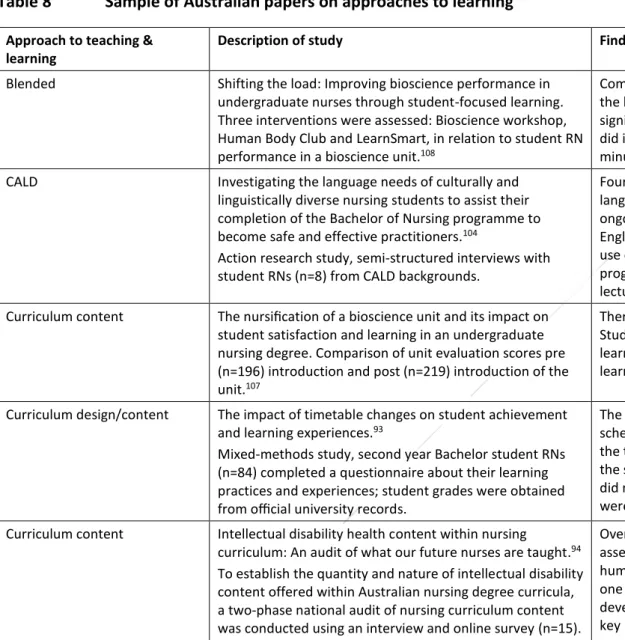
Table 8 Sample of Australian papers on approaches to learning ... 30
Table 9 Examples of IPE and educational frameworks reported in the reviews ... 33
Table 10 Included international literature on clinical placement ... 41
Table 11 Characteristics of positive placement experiences ... 43
Table 12 Clinical placements Australian literature... 54
Table 13 Examples of reviews relating to simulation and student registered nurses ... 61
Table 14 Examples of Australian studies relating to simulation and student registered nurse skill development ... 67
Table 15 Contemporary activities scale282 ... 69
Table 16 Included papers with a focus on enrolled nurses ... 72
Table 17 Included reviews / studies with a focus on nurse practitioner candidates ... 77
List of appendices
Appendix 1 Membership of the national nursing education working group, international nursing education advisory team and contributing team members ... 113Appendix 2 Search strategy and search terms ... 117
Abbreviations
Abbreviation Definition
ACEN Accreditation Commission for Education in Nursing APRN Advanced Practice Registered Nurse
BN Bachelor of Nursing
CALD Culturally and Linguistically Diverse
CCNE Commission on Collegiate Nursing Education CoI Community of Inquiry
ED Emergency Department EI Emotional Intelligence EN Enrolled Nurse
ESL English as a Second Language
IELTS International English Language Testing System IEPS Interdisciplinary Education Perception Scale IPE Interprofessional Education
IPL Interprofessional Learning
NCLEX National Council Licensure Examination NMBA Nursing and Midwifery Board of Australia NMC Nursing and Midwifery Council
NONPF National Organization of Nurse Practitioner Faculties NP Nurse Practitioner
OSCE Objective Structured Clinical Examination PEP Professional Experience Placement
RIPLS Readiness for Interprofessional Learning Scale RN Registered Nurse
RTO Registered Training Organisation SBE Simulation Based Education TAFE Technical and Further Education
iv
Key messages
At the centre of Topic 3 is the concept of the clinical skill development of registered and enrolled nurses and nurse practitioners. The main factors contributing to the development of clinical skills were the methods by which skills were taught and consolidated, specifically the educational approaches to learning, including simulation, interprofessional education and clinical placements.
Student registered nurse (RN) pre-registration clinical skills
Student RN pre-registration educational programs have been acute care focused, with less emphasis on chronic and complex care, aged care, primary health care and mental health. There are no explicit core skills, knowledge and attributes defined for student RNs to be
able to safely perform in Australia.
Inconsistencies in the educational content and the methods used to teach this content were identified in Australian studies.
There was an emphasis in the literature on studies related to teaching non-technical skills (e.g. communication, empathy, teamwork), indicating the importance of these skills and an eagerness to understand how best to teach them.
Student RN approaches to teaching and learning
The diversity and novelty of approaches to learning indicated a genuine shift away from traditional didactic pedagogy. The motivation for most approaches was to ensure the clinical relevance of education and the capacity for students to apply what they have learned. It was difficult to identify the optimal approach to learning as most of the approaches to learning studied held some advantage over traditional lectures and the quality of the evidence meant that definitive conclusions could not be drawn.
Student RN simulation
Simulation appeared to be a well accepted and a frequently-used approach to teach both technical and non-technical skills. The volume of literature and diversity of simulation approaches conveyed the enthusiasm and commitment of academics to ensure authentic and clinically-applicable learning experiences.
There was conflicting evidence regarding the optimal simulation approach, although several studies indicated that high to medium fidelity simulation was amongst the most effective. Studies also indicated that simulation was most effective for the development of
psychomotor and cognitive skills.
The educational preparation of those delivering simulation differed and was sometimes unclear or not reported.
In relation to simulation and approaches to teaching and learning, there is a need for well designed studies that provide evidence of student learning, its translation to the clinical setting and impact on patient care outcomes.
Student RN clinical placements
A number of studies focused on student attitudes to placements in specific settings such as aged care, mental health and primary care. These studies reported that students were often initially negative towards placements in these areas.
Clinical facilitation and the attitude of staff in clinical areas appeared to be the most important factors in student satisfaction with clinical placement experiences. It is unclear what impact these two components have on learning and skill competence as these were not measured in the studies included in this review.
The education of facilitators and RN preceptors can improve their confidence and their perceived preparedness to facilitate students. In instances where a university had direct and regular engagement with the clinical setting, this also appeared to strengthen the quality of the clinical placement.
In some studies, the authors referred to the challenges of obtaining a sufficient quantity and quality of clinical placements for their students.
Student enrolled nurse
Enrolled nurses (ENs) are an understudied group within the nursing profession in Australia and internationally.
There is limited evidence underpinning EN education. Nurse Practitioner candidate
The educational preparation of nurse practitioner (NP) candidates is understudied in the literature.
There may be value in exploring a prescriptive approach to NP education that includes specified core clinical skills, including those required to manage primary and chronic and complex care presentations.
1
Introduction
The Australian Government, Department of Health1 announced an ‘Independent Review of
Nursing Education – Educating the Nurse of the Future’ (the Review) as a measure in the 2018/19 Federal Budget in May 2018. It will examine how current educational preparation in Australia equips nurses to meet the future needs of the Australian community. The Review is scheduled for completion in 2019 and this project represents an important initial phase. The Department of Health commissioned a team from the Centre for Health Service Development and School of Nursing, University of Wollongong, to complete a series of literature reviews on particular topics identified as highly relevant to the Review.
1.1 Aims and objectives
This is the third of four literature reviews to inform the national ‘Independent Review of Nursing Education – Educating the Nurse of the Future’ in Australia.
Each topic has research questions that have been specified by the Department of Health. The results of these literature reviews are presented to prompt and inform discussion and
conversation about particular issues that in summary relate to: 1. Fitness for purpose, work readiness and transition to practice. 2. Nursing as a career choice.
3. Clinical skill development.
4. Future directions in health care delivery.
These are important issues for policy development and decision-making about the future directions of nursing education in Australia. The aim of nursing education is that it adequately prepares nurses of all levels and endorsement, to safely and competently perform their roles; it is from this perspective that these reviews have been framed.
The three nursing designations in-scope for these literature reviews are: Enrolled Nurses (ENs), Registered Nurses (RNs) and Nurse Practitioners (NPs).
1.2 Project governance and implementation
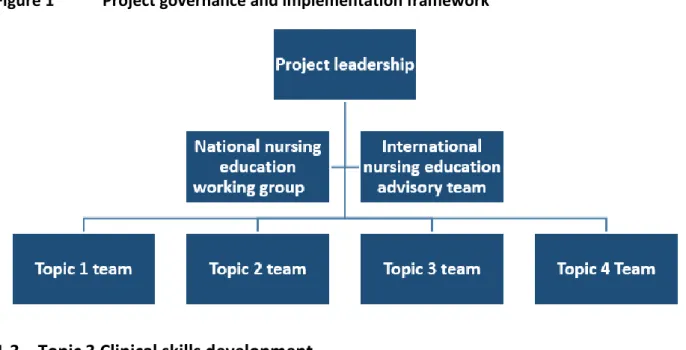
The project governance structure is outlined in Figure 1. To ensure an appropriate breadth and depth of nursing expertise a national working group of nursing educators and clinicians was established and complemented by an international nursing education advisory team. The national nursing education working group comprises exceptional nursing educators and clinicians drawn from across Australia. The members of this working group have reviewed the search strategy and topic maps, advised on literature selection, in several instances contributed with analysis, synthesis and write-up of sections and reviewed and commented upon the draft version of each literature review.
An international advisory team comprising three experts in nursing education from the United States (US) and United Kingdom (UK) has facilitated exploration of the international context. These international team members have been actively engaged and provided advice on issues
___________________________________________________________________________
Page 2
arising during the course of the project. They have also reviewed and commented upon the draft version of each literature review prior to their final submission to the Department. The work of producing the literature reviews has occurred through four topic teams which included academic staff predominantly from the University of Wollongong, University of Sydney and Western Sydney University. Project leadership was provided by the Centre for Health Service Development and critical review and revision of the draft literature reviews supported by the School of Nursing, University of Wollongong. All personnel contributing to this project are acknowledged in Appendix 1.
Figure 1 Project governance and implementation framework
1.3 Topic 3 Clinical skills development
The literature review for Topic 3 addressed the following:
What factors contribute to optimal skill development? Examine current trends and interventions utilised to develop clinical skills in pre-registration (registered and enrolled) nursing programs and NP programs - including immersion in clinical settings and the use of simulation.
This question focuses on the period of education prior to qualification and enrolment as an EN, registration as a RN or endorsement as a NP. The evidence gathered and synthesised for Topic 3 came from studies undertaken during the pre-registration training period, thus excluding any studies involving or relating to ENs, RNs or NPs. The definition of the training period used for this review was from the point of enrolment into a nursing educational program, to the completion of the program.
The definition of clinical skills used in this review includes the technical and non-technical skills, knowledge and attributes required of an EN, RN and NP. Technical skills include clinically focused procedures such as medication administration and performing a wound dressing. These skills can usually be measured in their performance against an existing standard or best practice guideline. Examples of non-technical skills include leadership, communication, critical thinking, teamwork, emotional intelligence and resilience. The non-technical skills are less
objectively measured and assessed. For this reason they are sometimes referred to as ‘soft skills’ in the literature. A glossary of definitions is provided. Although important to course completion, academic skills were out of scope of this review, unless they had a direct relationship to clinical skills, such as numeracy and literacy.
Nursing is a practice profession. In order to safely care for patients there are certain skills, knowledge and attributes that all nurses are expected to possess. The skills required of an EN, RN and NP are different in terms of their breadth, depth and complexity. For this reason the approach to their educational preparation differs to enable the post-holder to perform at the required level. In Australia, each nursing designation is guided by the standards of practice provided by the Nursing and Midwifery Board of Australia2, and these standards are discussed
further in subsequent sections. The purpose of the standards is to provide an expectation of the skills, knowledge and attributes that can be expected of an EN, RN or NP.
Healthcare delivery is an ever changing landscape and standards of practice are regularly reviewed to maintain relevance and currency. It is important that the standards reflect the combination of both technical and non-technical skills, as well as the philosophy underpinning nursing itself. Nursing adopts a holistic, person-centered approach and it acknowledges that care and compassion, are equally as important as technical and non-technical skills. In this way contemporary nursing continues to honour and reflect the values of its founding traditions. In the words of Nightingale:
‘The very first requirement in any hospital is that it does the sick no harm’.3
In clinical practice the balancing act between the delivery of technical and non-technical skills is challenging. The general public and clinical services have high expectations of nurses’ standards of practice. Therefore, the educational preparation of nurses must be rigorous, evidence-based and relevant to current and future health systems. The breadth of knowledge and skills, clinical reasoning and critical thinking required of nurses in their daily practice is extraordinary. It is important that their basic education provides the EN, RN or NP with the skills, knowledge and attributes to meet the challenges that they will face on entry into the workforce.
___________________________________________________________________________
Page 4
2
Methods
The short timeframe for implementation of this project (approximately six weeks), necessitated a focused and robust methodology flexible enough to adapt to emerging issues and
requirements.
Through these literature reviews the current state and future directions for nursing education are reported, as interpreted from careful analysis of international literature reviews, primary Australian research studies and the grey literature. The literature reviews have uncovered a large quantity of literature on each of the four topic areas. It is not intended to present a detailed analysis of the totality of literature available, as might be the case with a systematic review. Instead, a purposeful narrative review of existing literature is provided, with focus on the implications of key issues for contemporary nursing education in Australia.
These reviews recognise both the technical components of educational preparation as well as the non-technical and philosophical emphasis on nursing as a caring profession. At the heart of nursing and nursing education is the therapeutic relationship between nurse and patient which is built upon the delivery of safe, kind and compassionate nursing.4
2.1 Conducting a literature review
There are multiple forms of literature review which are distinguished by their characteristics and associated methodologies. Grant and Booth5, p 91 developed a typology of 14 review types
and concluded that ‘…few review types possess prescribed and explicit methodologies and many fall short of being mutually exclusive. The term “literature review” is generic’.
In nursing and health care, common forms of literature review include the systematic review, integrative review and narrative review. It is important to discriminate between these forms of review. Systematic reviews are used to answer highly specific questions about an intervention or aspect of clinical practice6, particularly where high levels of evidence may be required.
Systematic reviews report in detail on individual studies using explicit criteria and critically evaluate the level of evidence using an accepted hierarchy or classification system.7 The
completion of a systematic review usually requires a substantial timeframe. Integrative reviews are used in nursing research to create and organise a body of literature. They are frequently preferred as they allow the combination of diverse methodologies and aim to provide an in-depth understanding of the topic under study.8
Where the purpose of the review is to explore broad or complex issues, deepen understanding through integration of findings and critically reflect on the literature a narrative review is preferred , which is the approach adopted for this review. The value of expert-led narrative review for policy makers lies in a ‘… meaningful synthesis of research evidence relevant to such complex situations that incorporates a broad range of sources and multi-level interpretation and critique’9, p 2. The completeness of searching is determined by time/scope constraints, there
may be no formal quality assessment or appraisal of each paper, the synthesis can be tabular with narrative commentary and the analysis uses key features to characterise the quantity and quality of literature.5
An effective literature review requires an appropriate understanding of the issue or topic of focus; defined parameters and boundaries; a clear search and selection strategy; intelligent
critical analysis and synthesis that leads logically to conclusions that address the original research question(s); good structuring to enhance flow and readability and accurate referencing to identify relevant sources.
2.1.1 General methods
For all four literature review topics common search parameters were established with appropriate limits and exclusions. The short project timeframe led to a focus on both
international and Australian peer-reviewed academic literature retrieved from a specific range of databases: Scopus, CINAHL Plus, Medline and Health Source (Nursing / Academic edition). Database searching was supplemented with snowball searching (pursuing references of references and tracking citations forward in time).
Each topic team was supported by a research librarian from the University of Wollongong who advised on database selection and search term combinations. The research librarians assisted with preliminary searches and prepared reports on journal impact on the basis of the final sources selected for inclusion in each literature review.
Every effort was made to enhance the efficiency of searching by seeking out systematic reviews, meta-analyses, meta-syntheses and other literature reviews. This often provides a prompt overview of the spectrum of issues relevant to the particular topic. If the search results did not generate appropriate or adequate reviews then additional peer reviewed literature was identified.
Searching the academic and grey literature focused on literature from Australia and other English speaking countries, specifically; the United Kingdom (UK), Ireland, the United States (US), Canada, and New Zealand (NZ). These countries were selected as their experiences in nursing education are more likely to be generalisable to the Australian context.
___________________________________________________________________________
Page 6
2.1.2 Topic specific methods
Reviewing the literature involved three steps, which occurred concurrently.
Step 1: Searching for existing reviews of the literature (however named) to identify the
evidence from the international literature, while recognising that this literature includes some Australian studies.
Step 2: Searching for primary studies undertaken in Australia to investigate the factors
contributing to optimal skill development. This included exploration of approaches to learning, the use of simulation, clinical placement, interprofessional education (IPE) and the assessment of learning including competency. As well as searching specific databases, a hand search of the journals Collegian, Nurse Education Today and Nurse Education in Practice was undertaken. In addition, snowball searching occurred to pursue references and resulted in a small collection of additional studies. Literature was also obtained via consultation with experts in the field and a search of the following prominent authors: Professor Tracey Levett-Jones; Professor Debra Nestel; and Mrs Sharon MacLean.
Step 3: Searching for grey literature, focused on websites with .gov, .edu and .org from
Australia, the UK, Ireland, the US, Canada, and NZ (or their equivalents) using the Google search engine.
Following an initial scoping of the literature available, the concepts inherent to Topic 3 were deconstructed into six sub-topics the first of which focused on the clinical skills that are currently required for each nursing role, EN, RN and NP. The clinical skills sub-topic was fundamental to discussions of optimal skill development and the transparency of educational preparation for nursing roles.
Table 1 Sub-topics for Topic 3
Sub-topic Comments
Clinical skills To identify the clinical skills currently required for each nursing role: EN, RN, and NP.
Approaches to teaching and learning
Exploration of current approaches to teaching and learning to identify approaches commonly applied to nursing curriculum and how successful they are in facilitating optimal skill development e.g. peer learning, team based learning.
Interprofessional education
Interprofessional education has become a contemporary focus in the delivery of nursing education. Exploration of the application of interprofessional education to investigate the outcomes of this approach and the international perspective on its mandatory inclusion in nursing programs.
Assessment of learning Exploration of the methods of skill assessment to provoke further discussion on the standardisation of assessments, including national examinations, oral viva voce and objective structured clinical examinations.
Clinical placement Exploration of clinical placement hours, with a view to identifying underlying rationale for the quantity of clinical hours and the competencies assessed during those clinical hours. Exploration of the contexts of clinical placements, for example, paediatrics, aged care, critical care, mental health.
Simulation Investigation of the types of simulation used, the purpose and outcomes of simulation in developing clinical skills and examples relating to the use of simulation as a substitute for clinical placement hours.
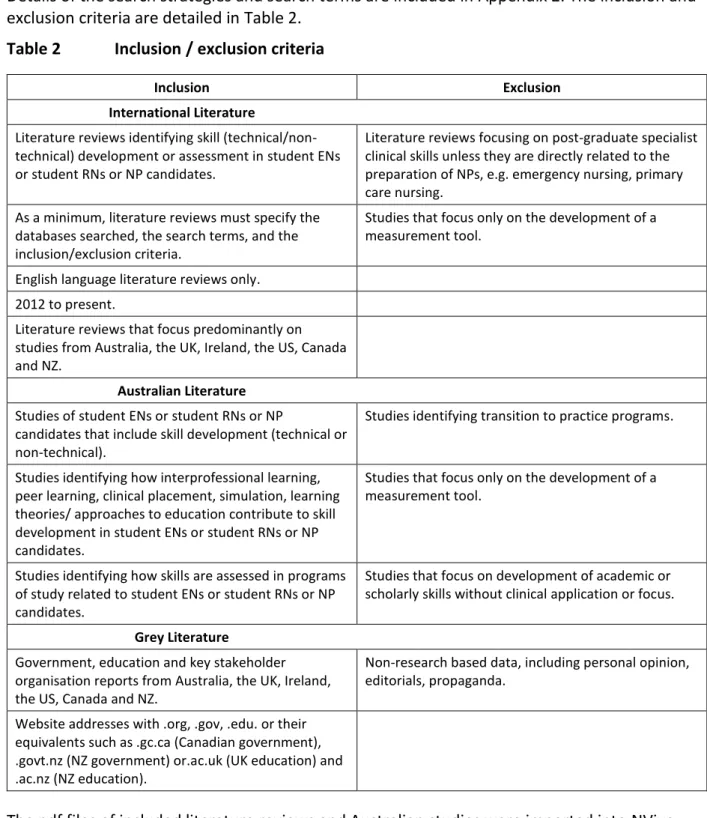
Details of the search strategies and search terms are included in Appendix 2. The inclusion and exclusion criteria are detailed in Table 2.
Table 2 Inclusion / exclusion criteria
Inclusion Exclusion
International Literature International Literature
Literature reviews identifying skill (technical/non-technical) development or assessment in student ENs or student RNs or NP candidates.
Literature reviews focusing on post-graduate specialist clinical skills unless they are directly related to the preparation of NPs, e.g. emergency nursing, primary care nursing.
As a minimum, literature reviews must specify the databases searched, the search terms, and the inclusion/exclusion criteria.
Studies that focus only on the development of a measurement tool.
English language literature reviews only. 2012 to present.
Literature reviews that focus predominantly on studies from Australia, the UK, Ireland, the US, Canada and NZ.
Australian Literature Australian Literature
Studies of student ENs or student RNs or NP
candidates that include skill development (technical or non-technical).
Studies identifying transition to practice programs.
Studies identifying how interprofessional learning, peer learning, clinical placement, simulation, learning theories/ approaches to education contribute to skill development in student ENs or student RNs or NP candidates.
Studies that focus only on the development of a measurement tool.
Studies identifying how skills are assessed in programs of study related to student ENs or student RNs or NP candidates.
Studies that focus on development of academic or scholarly skills without clinical application or focus.
Grey Literature Grey Literature
Government, education and key stakeholder organisation reports from Australia, the UK, Ireland, the US, Canada and NZ.
Non-research based data, including personal opinion, editorials, propaganda.
Website addresses with .org, .gov, .edu. or their equivalents such as .gc.ca (Canadian government), .govt.nz (NZ government) or.ac.uk (UK education) and .ac.nz (NZ education).
The pdf files of included literature reviews and Australian studies were imported into NVivo (2018). NVivo was then used to facilitate analysis and synthesis of the content of those papers by coding the results, discussion and conclusion sections to identify:
the skill focus of the paper how the skill was taught
what was learned and how learning was measured factors affecting skills development and learning.
___________________________________________________________________________
Page 8
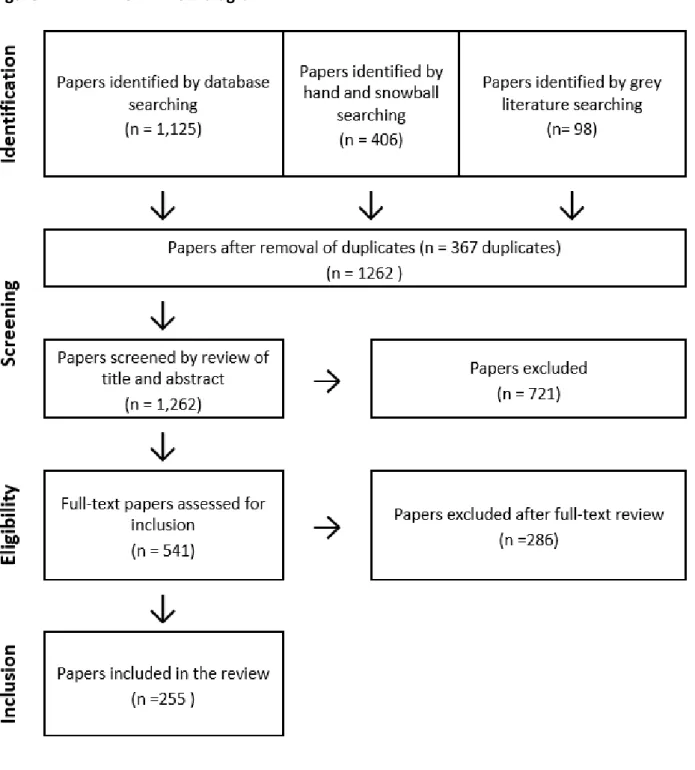
The inclusion and exclusion criteria for the international reviews, Australian primary research papers and the grey literature are shown in Table 2. References obtained through all search strategies were screened for relevance by title and then entered into an Endnote database for management, where duplicates were then removed. References were culled by title and/or abstract and continuing to apply inclusion and exclusion criteria. Full text of remaining articles were obtained for further review and 286 were excluded, leaving a final sample of 255 papers. The eligibility process is outlined below in Figure 2.
2.2 PRISMA flow diagram
The flow diagram shown below in Figure 2 summarises the results of searching the academic and grey literature.
2.3 Methodological quality
2.3.1 General issues
At the outset of the literature reviews it was difficult to predict the volume of relevant and available literature for each topic. The process of sifting through what may be a very large volume of literature can be aided by using an evidence hierarchy that clearly explains the differing levels and quality of evidence. ‘Levels of evidence’ are often represented as a pyramid with the highest levels of evidence at the top that is, systematic reviews and randomised controlled trials. This makes sense when assessing, for example the efficacy of an intervention. It can be challenging when conducting narrative reviews to apply this hierarchy as a substantial proportion of useful literature may not have been derived from these higher levels of evidence. While initially it was anticipated that this process could be aided through using an appropriate critical appraisal tool to describe each of the included studies it soon became apparent that this would not be possible within the available timeframe. Throughout each literature review summaries and syntheses of key sources are provided in tabular form, however these are deliberately not exhaustive. In collaboration with the Department of Health a decision was made that the available time was better invested in comprehensive analysis and intelligent synthesis of findings.
2.3.2 Topic-specific issues
Due to time constraints, no formal assessment of the quality of the literature reviews included in this review was undertaken. However, it was noted that, in general, within the international literature the research questions addressed were well defined, and the methods clearly articulated, including inclusion and exclusion criteria. The majority reported the degrees of potential bias in the studies. There was limited detail regarding the excluded studies and the reasons for exclusion. The quality of the evidence was noted frequently in the literature reviews in terms of the sample size and the number of sites at which studies had been undertaken. There was a lack of experimental research, particularly randomised controlled trials. The following examples are indicative of many similar observations:
‘Although every paper claimed the benefits of questioning in fostering thinking processes, more needs to be done to reinforce the empirical evidence on the subject’.10
‘Overall, use of a constellation of instruments and a lack of high quality study designs mean that there are still some gaps in evidence of effects that need to be addressed’.11
‘This study included a limited number of studies in the meta-analysis, and many studies were conducted with a small number of participants due to the early stage of research on simulation-based education’.12
The quality of the Australian primary studies included in this review reflect these observations about the international literature. One of the most significant limitations of the studies was that there were very few attempts to evaluate the degree to which the learning about skills, knowledge and attributes was translated from the research setting into real-time clinical practice. Whilst they provide valuable information, such studies are complex to conduct given the range of variables. The majority of studies focused on self-reported data, such as student satisfaction or perceived level of learning, which offers only a unilateral perspective. Further, very few studies offered longitudinal data in relation to skill development and maintenance of
___________________________________________________________________________
Page 10
knowledge, skills and attributes. The report on journal impact for included papers is included as Appendix 3.
3
Introduction to the presentation of the results
Topic 3 includes a range of sub-topics and covers three nursing roles in training –student EN student RNs, and NP candidates. Student RNs are also known as nursing students and student nurses. In this review, to differentiate between the other two groups of students (EN and NP), the term ‘student RNs’ is used throughout the document. Most of the focus of Topic 3 is on what happens in the educational setting, except for the sub-topic on clinical placements. The range of issues incumbent to Topic 3 presented challenges in terms of how best to present the findings, particularly as the results of some reviews/studies may have a bearing on more than one issue (e.g. a study that involves student RNs undertaking an interprofessional clinical placement). The findings are primarily structured in terms of the three nursing designations (student EN, student RN and NP candidate). The vast majority of the literature identified focused on student RNs, requiring a detailed series of sub-headings in that section of the report. Despite extensive searching, limited literature was found around student ENs and NP candidates.
Given the very short time-frame to complete the review, it was never intended that the findings would include a detailed description of every literature review or study included in the review. However, it is important to present the findings in sufficient detail so that the evidence
supporting the interpretations is clear to the reader. Therefore, tables summarising included sources have been used to provide this evidence and to indicate the emphasis or trend within the literature.
___________________________________________________________________________
Page 12
4
Student registered nurses
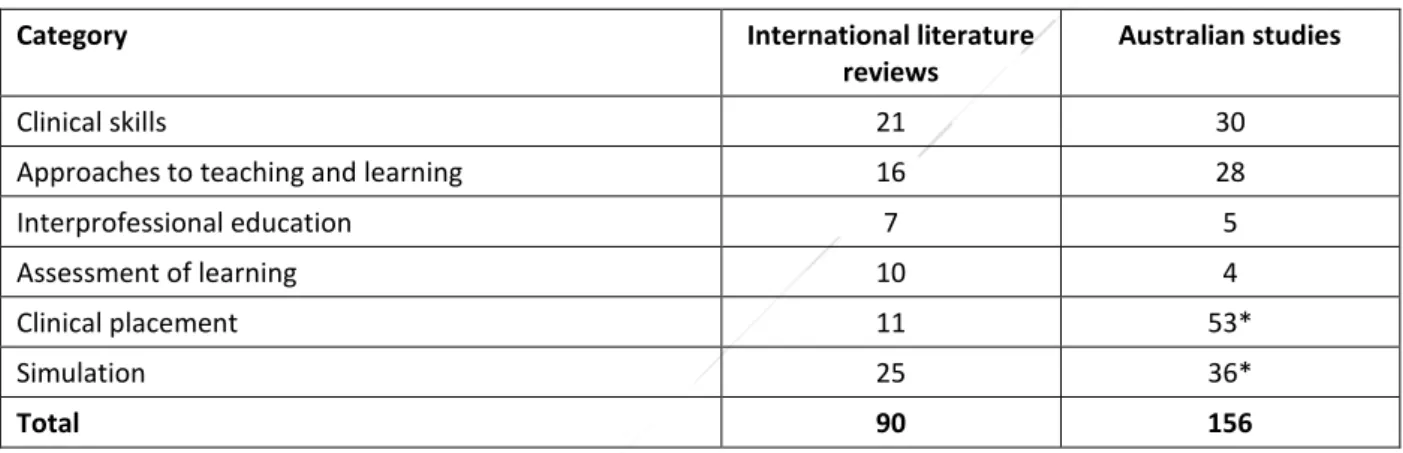
The overwhelming majority of international reviews and Australian studies that were identified, explored the factors contributing to clinical skill development amongst student RNs. These included approaches to learning, assessment of competency, clinical placements and simulation (Table 3). Analysing such a large volume of literature was extremely challenging in the time-frame available for this review. In the presentation of the results there are a number of summary tables which provide an overview of the available data. Where possible, the reviews and studies were purposefully sampled. The studies that were most relevant have been explored in greater detail and presented in this report. It is acknowledged that nursing
education differs between the countries included in the reviews (Australia, the UK, Ireland, the US, Canada and NZ). Combined with the heterogeneity of interventions and outcomes this made direct comparisons of the reviews impossible. Instead the included reviews have been analysed for trends.
Table 3 Relevant sources about student registered nurses
Category International literature
reviews
Australian studies
Clinical skills 21 30
Approaches to teaching and learning 16 28 Interprofessional education 7 5 Assessment of learning 10 4
Clinical placement 11 53*
Simulation 25 36*
Total 90 156
*Includes one literature review of Australian studies
4.1 Clinical skills
In this section an overview of the clinical skills reported in the literature is presented. A discussion of the standards of practice is included to provide context to the educational preparation of student RNs across the countries included in this review.
4.1.1 International literature
An extraordinary range of clinical skills were reported across the international literature, which is an indication of the breadth and depth of skills and knowledge required to safely perform in the RN role. Many papers reported approaches to learning and the application of simulation, some of which focused on the educational design rather than identifying the skills being taught or the factors impacting skill development. Several papers focused specifically on the
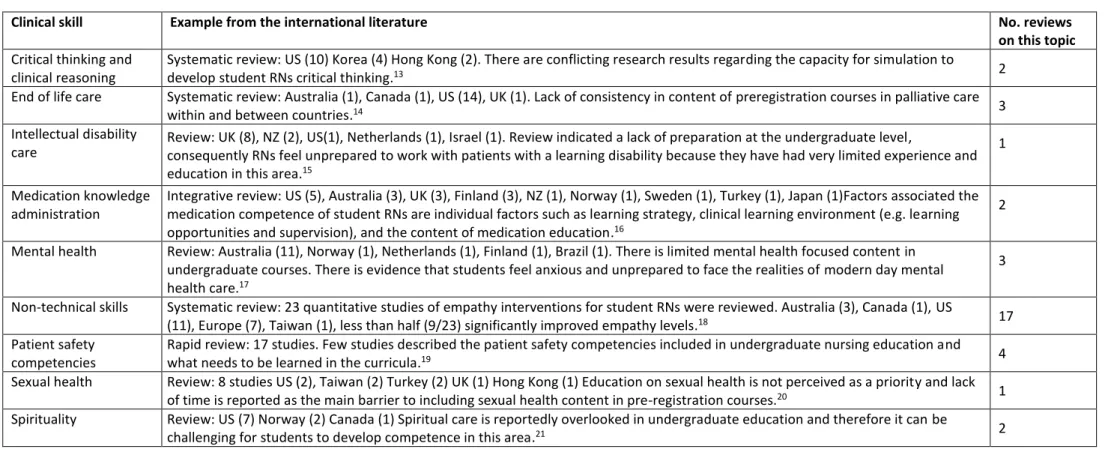
development of a single clinical skill (n=21) and others focused on the development of nursing skills in a specific context, such as simulation, clinical placement and IPE. Table 4 summarises the prevalence of skills identified across all of the reviews. There were 17 reviews relating to non-technical skills, perhaps indicating an enthusiasm to explore how these soft skills can be developed. These non-technical skills included communication (n=4), collaboration (n=3), cultural competence (n=2), empathy (n=2), moral courage (n=2), and one review each that focussed on teamwork, resilience, emotional intelligence, and conflict resolution.
Table 4 Prevalence and examples of reviews identifying specific technical and non-technical skills
Clinical skill Example from the international literature No. reviews
on this topic
Critical thinking and clinical reasoning
Systematic review: US (10) Korea (4) Hong Kong (2). There are conflicting research results regarding the capacity for simulation to
develop student RNs critical thinking.13 2
End of life care Systematic review: Australia (1), Canada (1), US (14), UK (1). Lack of consistency in content of preregistration courses in palliative care
within and between countries.14 3
Intellectual disability
care Review: UK (8), NZ (2), US(1), Netherlands (1), Israel (1). Review indicated a lack of preparation at the undergraduate level, consequently RNs feel unprepared to work with patients with a learning disability because they have had very limited experience and education in this area.15
1
Medication knowledge administration
Integrative review: US (5), Australia (3), UK (3), Finland (3), NZ (1), Norway (1), Sweden (1), Turkey (1), Japan (1)Factors associated the medication competence of student RNs are individual factors such as learning strategy, clinical learning environment (e.g. learning opportunities and supervision), and the content of medication education.16
2
Mental health Review: Australia (11), Norway (1), Netherlands (1), Finland (1), Brazil (1). There is limited mental health focused content in undergraduate courses. There is evidence that students feel anxious and unprepared to face the realities of modern day mental health care.17
3
Non-technical skills Systematic review: 23 quantitative studies of empathy interventions for student RNs were reviewed. Australia (3), Canada (1), US
(11), Europe (7), Taiwan (1), less than half (9/23) significantly improved empathy levels.18 17
Patient safety competencies
Rapid review: 17 studies. Few studies described the patient safety competencies included in undergraduate nursing education and what needs to be learned in the curricula.19 4
Sexual health Review: 8 studies US (2), Taiwan (2) Turkey (2) UK (1) Hong Kong (1) Education on sexual health is not perceived as a priority and lack of time is reported as the main barrier to including sexual health content in pre-registration courses.20 1
Spirituality Review: US (7) Norway (2) Canada (1) Spiritual care is reportedly overlooked in undergraduate education and therefore it can be
___________________________________________________________________________
Page 14
The tendency for educational programs to emphasise acute care content,22-24 was a point of
discussion in the international reviews, relating to primary health care and other specific clinical settings. Several authors stated that their motivation for conducting the review was to explore how a specific skill was integrated into nursing education, because the skill was not adequately taught and therefore once qualified, nurses would not be equipped to deliver specific care or skills. This was particularly prevalent in the reviews of mental health education,17 end of life
care,14 intellectual disability,15 sexual health,20 and spiritual care.21 In a review of undergraduate
nursing students’ understanding of mental health, the authors state:
With emerging recognition of the indiscriminate and widespread effect of mental health related illnesses, many authors have turned their attention to the
preregistration nursing curriculum and its modest investment in preparing
graduates for the upward trajectory of mental health related presentations.17, p 160
In their review of mental health education, Barry and Ward17 found inconsistency in the
provision of mental health education in Australia. The review draws on four studies from Australia, in which there was significant variation in the number of theoretical tuition hours devoted to mental health and the number of clinical placement hours.17
A review by Australian authors, Neville and Goetz,25 sought to examine the educational
strategies used to deliver mental health content. The review included papers from Australia (n=5), US (n=4), NZ (n=2), and UK (n=1). The impetus for their review stemmed from an Australian report on the mental health content in student RN educational preparation. The report, entitled Mental Health Nurse Education Taskforce, identified three recommendations: an increase in mental health content, strengthening of mental health nursing leadership and increased consumer participation.25 The authors concluded that the inclusion of mental health
content is not only an important issue for Australia, nursing faculties internationally are closely monitoring their curricula as well.
Prioritising content within nursing programs has clearly been a challenge for nursing curricula and the presence of inconsistency in the content of programs, even within the same
country,14,17,26 was identified in several reviews. This issue was further compounded by the
limited description of the educational programs in included studies which made it difficult for review authors to understand the specific content in terms of the number of hours of face-to-face teaching, how the programs were taught, and the clinical practicum experience of the student RNs.14,27
Of interest, there was no clear articulation of exactly what skills students needed to acquire within any of the reviews. The skills that were discussed in the reviews related to both acute and chronic care, with an emerging trend for literature to focus on the soft, non-technical skills such as resilience and empathy.
4.1.2 Standards for practice
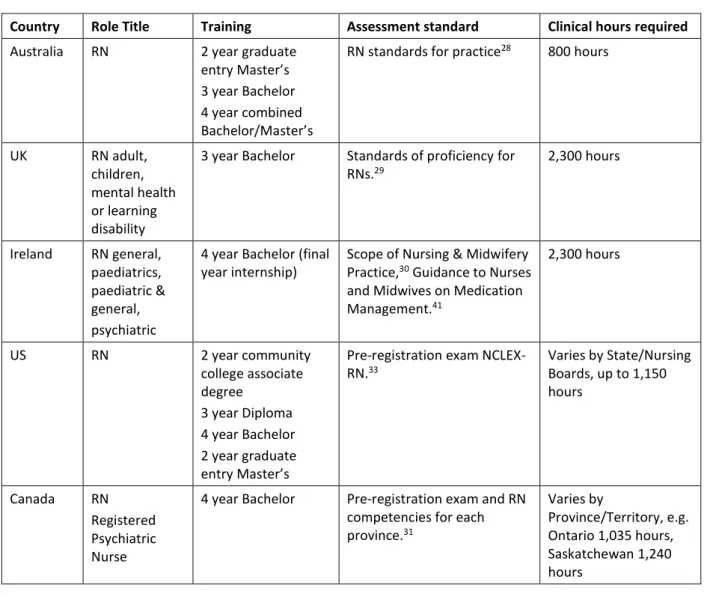
The requirements of nursing regulatory authorities in each of the countries of interest were explored to understand the skills knowledge and attributes which student RNs require for graduate practice (Table 5). In Australia,28 the UK,29 Ireland,30 Canada,31 and NZ,32 the skills,
knowledge and attributes required of RNs are guided by a series of standards of practice or competencies that are endorsed by the relevant registering body. In the US, specific
competencies for RNs’ practice were not identified and the readiness for practice of a graduate was assessed via a national examination, the National Council Licensure Examination -
Registered Nurse (NCLEX-RN).33 Examinations are also used in Canada and NZ. Furthermore,
each of the countries of interest had nursing curriculum accreditation processes through which any program leading to registration as a nurse is formally reviewed and accredited.29,34-40
Across the six countries (Australia, the UK, Ireland, the US, Canada and NZ) the level of detail in the competency documents and accreditation standards was fairly broad. This means that there is a degree of interpretation in terms of curriculum content and the approach to the delivery of that content, with limited guidance on the exact content of programs and the methods by which the content should be taught. For example, in the Canadian Association of Schools of Nursing Program Standards36 there is some broad guidance on program content as
follows:
The curriculum provides learning experiences related to primary health care, health promotion, prevention, curative, supportive, rehabilitative, and end-of-life care, across the life-span of individuals, families, groups, communities and populations; promotes interprofessional practice and addresses regulatory entry to practice
competencies.36, p. 23
Table 5 Educational preparation of a registered nurse by country
Country Role Title Training Assessment standard Clinical hours required
Australia RN 2 year graduate entry Master’s 3 year Bachelor 4 year combined Bachelor/Master’s
RN standards for practice28 800 hours
UK RN adult, children, mental health or learning disability
3 year Bachelor Standards of proficiency for RNs.29 2,300 hours Ireland RN general, paediatrics, paediatric & general, psychiatric
4 year Bachelor (final year internship)
Scope of Nursing & Midwifery Practice,30 Guidance to Nurses
and Midwives on Medication Management.41 2,300 hours US RN 2 year community college associate degree 3 year Diploma 4 year Bachelor 2 year graduate entry Master’s
Pre-registration exam NCLEX-RN.33 Varies by State/Nursing Boards, up to 1,150 hours Canada RN Registered Psychiatric Nurse
4 year Bachelor Pre-registration exam and RN competencies for each province.31 Varies by Province/Territory, e.g. Ontario 1,035 hours, Saskatchewan 1,240 hours
___________________________________________________________________________
Page 16
Country Role Title Training Assessment standard Clinical hours required
NZ RN 3 year Bachelor Pre-registration State Final Exam and competencies for the RN scope of practice.32
1,100 hours
Following recent concerns around the standards of nursing practice presented in the Willis
Report42 and the Francis Report,43 the Nursing & Midwifery Council (NMC), UK, has reviewed its
standards for registration. Through a series of consultations entitled Programme of Change for
Education the NMC has used expert advice and existing evidence to generate the Standards of
Proficiency for RNs.29 In the Appendix B of the proficiency document, the NMC describe the
skills and procedures that RNs are to be able to demonstrate at the point of registration to adequately assess care needs and to plan, provide and manage person-centred care. For example:
Part 1: Procedures for assessing people’s needs for person-centred care
1. Use evidence-based, best practice approaches to take a history, observe, recognise
and accurately assess people of all ages:
1.1 mental health and wellbeing status
1.1.1 signs of mental and emotional distress or vulnerability
1.1.2 cognitive health status and wellbeing
1.1.3 signs of cognitive distress and impairment
1.1.4 behavioural distress based needs
1.1.5 signs of mental and emotional distress including agitation,
aggression and challenging behaviour
1.1.6 signs of self-harm and/or suicidal ideation
1.2 physical health and wellbeing
1.2.1 symptoms and signs of physical ill health
1.2.2 symptoms and signs of physical distress
1.2.3 symptoms and signs of deterioration and sepsis.29, p 32
The development of a set of procedures could be considered somewhat reductionist, and task-orientated representing a departure from the person-centered philosophy underpinning the nursing profession. The nursing role is clearly more complex than being able to complete a list of specific procedures and tasks. However, the NMC have integrated both the technical and non-technical skills into their practice standards using a person-centred approach thereby attempting to reinforce the nursing philosophy underpinning them. The provision of an explicit list of skills, knowledge and attributes is conceptually alluring in terms of reducing inconsistency amongst the performance of graduates. As yet, however, there is no evidence to demonstrate that these kind of specific practice standards impact on student learning, reduce
inconsistencies in graduates’ clinical skills, knowledge and attributes or improve clinical
outcomes and patient safety. Further research is required to evaluate how these standards are translated into nurse education, clinical skills acquisition and provision of quality clinical care.
4.1.3 Australian Literature
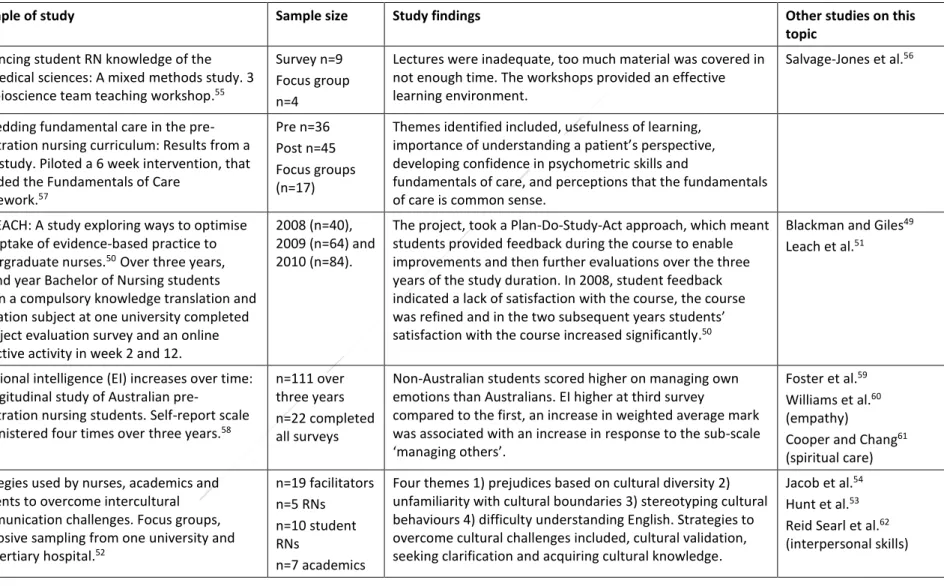
Thirty Australian studies were included relating to technical (n=19) and non-technical skills (n=11). As with the international reviews, the range of skills covered was diverse. The skills have been summarised and examples of the studies provided in Table 6. There are some obvious similarities to the international reviews, particularly in relation to the non-technical skills of empathy and communication. There is also a greater focus on cultural topics in the Australian literature.
Four studies focused on medication administration.44-47 Medication incidents are one of the
most common types of clinical incidents to be reported in Australian hospitals.48 One of these
studies, undertook a cross-sectional exploratory investigation of second year Bachelor of Nursing students at two Universities.44 Students at each University received parallel medication
administration instruction, including a two-hour lecture, followed by a three-hour clinical laboratory session in which written steps for medication administration were discussed along with observation of a 10 minute medication administration video followed by rehearsal of the skill. Thereafter, the two faculties differed in their approach to ongoing rehearsal of the skill, one faculty rehearsed in the laboratory setting under supervision of a nurse educator and the other rehearsed in clinical practice. Both sets of students were assessed using a similar process involving a competency assessment process against existing standards for medication
administration using different approaches to clinical skill practice and assessment of competency. Students self-assessed their preparedness for medication administration by completing a validated preparedness questionnaire (n=88). All students perceived they were well prepared for medication administration and there was no statistically significant difference between the two groups in terms of preparedness, indicating that both approaches to rehearsal of this skill were successful.
Three studies focused on evidence-based practice in undergraduate nursing education.49-51 One
study used a pre (n=84) - post (n=33) test survey design to explore the impact of research education on student nurse attitude, skill and uptake of evidence-based practice following exposure to a 16-week research program.51 Students favoured evidence-based practice and
there was no statistically significant increase in attitude between pre and post data. There was a statistically significant increase in the frequency of use of evidence-based practice and development of associated skills. Participation in the research program appeared to lead to an improvement in the frequency of reading and reviewing and using research findings to inform clinical practice.
Three studies focused on intercultural issues.52-54 One study focused specifically on student
attitudes to Indigenous people and Indigenous health following completion of a specific course focused on Australian Indigenous Health.53 The study administered two surveys, the Attitude
Toward Indigenous Australia Scale (18 item) and the investigator developed Knowledge Interest and Confidence Scale, at the beginning and end of the course. Five hundred and two of 944
enrolments, completed the baseline survey and 249 the follow up; 1.4% of participants were Australian Indigenous people and 6.4% had experience working with Australian Indigenous people. The survey results reported a statistically significant decrease (50.6 to 49.1, p = 0.017) in scores on negative attitudes towards Australian Indigenous peoples and a statistically significant increase (15.5 to 19.1, p< 0.001) in scores on knowledge, interest and confidence in working with Australian Indigenous peoples.
___________________________________________________________________________
Page 18
Table 6 Prevalence of studies focusing on specific skills
Skill Example of study Sample size Study findings Other studies on this
topic
Biomedical science knowledge
Advancing student RN knowledge of the biomedical sciences: A mixed methods study. 3 day bioscience team teaching workshop.55
Survey n=9 Focus group n=4
Lectures were inadequate, too much material was covered in not enough time. The workshops provided an effective learning environment.
Salvage-Jones et al.56
Caring Embedding fundamental care in the pre-registration nursing curriculum: Results from a pilot study. Piloted a 6 week intervention, that included the Fundamentals of Care
framework.57
Pre n=36 Post n=45 Focus groups (n=17)
Themes identified included, usefulness of learning, importance of understanding a patient’s perspective, developing confidence in psychometric skills and
fundamentals of care, and perceptions that the fundamentals of care is common sense.
Evidence-based practice
EVITEACH: A study exploring ways to optimise the uptake of evidence-based practice to undergraduate nurses.50Over three years,
second year Bachelor of Nursing students within a compulsory knowledge translation and utilisation subject at one university completed a subject evaluation survey and an online reflective activity in week 2 and 12.
2008 (n=40), 2009 (n=64) and 2010 (n=84).
The project, took a Plan-Do-Study-Act approach, which meant students provided feedback during the course to enable improvements and then further evaluations over the three years of the study duration. In 2008, student feedback indicated a lack of satisfaction with the course, the course was refined and in the two subsequent years students’ satisfaction with the course increased significantly.50
Blackman and Giles49
Leach et al.51
Emotional intelligence
Emotional intelligence (EI) increases over time: A longitudinal study of Australian
pre-registration nursing students. Self-report scale administered four times over three years.58
n=111 over three years n=22 completed all surveys
Non-Australian students scored higher on managing own emotions than Australians. EI higher at third survey
compared to the first, an increase in weighted average mark was associated with an increase in response to the sub-scale ‘managing others’.
Foster et al.59
Williams et al.60
(empathy)
Cooper and Chang61
(spiritual care) Intercultural Strategies used by nurses, academics and
students to overcome intercultural communication challenges. Focus groups, purposive sampling from one university and one tertiary hospital.52
n=19 facilitators n=5 RNs n=10 student RNs
n=7 academics
Four themes 1) prejudices based on cultural diversity 2) unfamiliarity with cultural boundaries 3) stereotyping cultural behaviours 4) difficulty understanding English. Strategies to overcome cultural challenges included, cultural validation, seeking clarification and acquiring cultural knowledge.
Jacob et al.54
Hunt et al.53
Reid Searl et al.62
Skill Example of study Sample size Study findings Other studies on this topic
Intimate partner violence
Nursing students’ perceptions and
understanding of intimate partner violence. Focus group and survey of Bachelor of Nursing students.63
Focus group n=27 Survey n=58
Results indicated that student nurses had limited awareness of intimate partner violence and they did not have a clear understanding of the role of a nurse in clinically managing IPV. The authors suggest that greater education is required. Medication
administration
An education intervention to improve nursing students’ understanding of medication safety. Series of short digital recordings as part of a problem-based learning approach. Investigator designed survey.46
n=28 second year Bachelor of nursing
students
89% agreed the message related to safe medication practice was appropriate for Bachelor students. 68% agreed the learning tool was useful, 68% agreed the learning was applicable to current practice.
Lapkin et al.47
Aggar and Dawson.44
Coyne et al.45
Mental health Undergraduate nursing and midwifery students’ experiences of the Mental Health First Aid course. 13-hour course, students’ experience explored via a 19 item investigator developed survey.64
n=66 89% participants strongly agreed they would recommend the course to others, 66% strongly agreed the course was relevant. Positive qualitative comments, greatest learning was an increase in insight about mental illness.
Numeracy skills
Identifying strategies to assist final semester nursing students to develop numeracy skills: A mixed methods study. Final-year student RNs at one university.65
n=390 Three strongest predictors of success for passing the first numeracy test were 1) being an international student 2) practice quiz score of >59% 3) perception of confidence. Providing contextualised quizzes and hands on practice-based activities enhanced learning.
Patient safety Patient safety content and delivery in pre-registration nursing curricula: A national cross-sectional survey study. Online survey.66
n=16 Australian universities
Dedicated teaching hours focused on patient safety ranged from 1 to 120 hours, common topics were infection prevention and control, medication safety. Laboratory and tutorial sessions were the most common teaching strategy for patient safety topics.
Usher et al.67 and Usher
et al.68 (Pressure injury)
Gibson et al.69 (Risk
screening) Stomski et al.70
Physical assessment
Too much knowledge for a nurse? Use of physical assessment by final-semester nursing students . Online survey.71
n=239 Cardiovascular and neurological examinations were the most common amongst the fifteen core skills identified. Barriers to physical assessment included, lack of confidence, lack of nursing role models, not enough practice.
Birks et al.72
Skills - general Undergraduate student nurses’ self-reported preparedness for practice. Casey Fink
n=113 Most students perceived they were well prepared for practice, simulation and clinical skills practice were
___________________________________________________________________________
Page 20
Skill Example of study Sample size Study findings Other studies on this
topic
Readiness for Practice Survey of final year Bachelor students.73
considered helpful in facilitating skill development. Students were least prepared for 1) venepuncture 2) assisting intubation 3) caring for a person who has experienced physical trauma 4) inserting a guedel airway
4.2 Approaches to teaching and learning
4.2.1 International literature
Sixteen reviews of the literature reported a diverse collection of approaches to teaching and learning in undergraduate nursing education. These included reviews of peer learning,74-76
online learning,77,78 reviews that synthesised studies to explore optimal approaches,79-82
blended learning,83,84 problem based learning,10,85 mobile devices,86,87 and one review on social
media.88 The breadth and variety of techniques is perhaps an indication of the multiplicity of
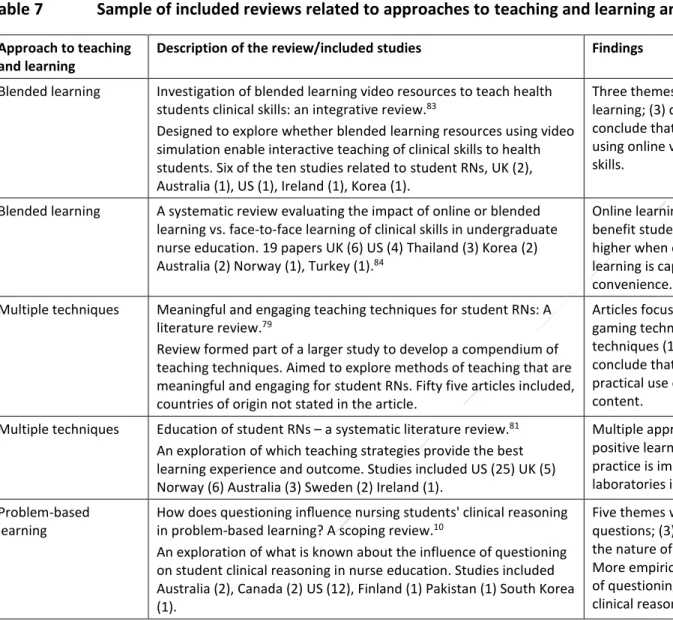
approaches adopted to teach RN students and the general move away from traditional approaches, particularly the didactic lecture. To understand the spread of the reviews, those not discussed in detail below are provided in Table 7.
Common to the reviews were discussions of the theory-practice gap and how to best achieve engagement from students and enable them to apply learning to clinical practice.79-81 In the
review of teaching techniques by Crookes,79 the authors conclude that:
… nursing students need to be taught in a way that emphasises the practical use of the information they glean from the classroom so that they can become more
engaged with the content.79, p 242
In the spirit of bridging the theory-practice gap, four of the reviews sought to identify the optimal approaches to the delivery of student RN education.79-82 Methods that appeared most
effective were blended learning approaches, particularly combinations of lectures, online resources and clinical skills laboratory activities.
In their meta-analysis, Lee and colleagues82 reported that non-traditional teaching methods
were more effective at developing critical thinking in student RNs compared to traditional methods. The analysis included a total of eight studies, 50% used a randomised pre-test post-test control group design. The learning techniques used to facilitate critical thinking skills across the eight included studies were, problem-based learning (3), concept mapping (3), collaborative methods and bioscientific methods (2). Each of these methods held some degree of success in achieving critical thinking learning outcomes, although the problem-based learning appeared least effective. Lee and colleagues82 concluded that whilst the approach to learning is
important, the way forward is to ensure that education focused on critical thinking is
implemented throughout the curriculum continuously. They cautioned that greater focus on the quality of research around teaching methods is required, to ensure the generalisability of the results.
A systematic review by Gill80 explored the optimal approaches to teaching pharmacology.
Twenty studies were included, eight of which compared online against blended learning techniques. Results indicated that online learning was flexible and enhanced procedural knowledge. Two included studies compared students who received information in a lecture against those who received video demonstrations of medication administration and reported that the latter group were more effective in providing patient education and were more
effective at resolving patients’ concerns. These two were the only studies to report a behaviour change in the participants. Whilst not all of the studies in this review were conclusive, there appeared to be a genuine link between improvements in learning and approaches to learning
___________________________________________________________________________
Page 22
that incorporated diverse modes of delivery. The least effective methods of delivery were traditional lecture, problem-based learning and flipped classroom.80
Similar to the other reviews, Gill80 highlighted some significant issues with the studies included
in their review. For example, the majority were single-site design, with significantly different intervention exposures, ranging from courses that ran for one day up to 14 months. The assessment of learning outcomes tended to focus on pre and post-test self-reported increases in knowledge and student satisfaction rather than more objective measures of learning and its application to clinical practice.
Given the heterogeneity of the literature and limited evidence base, it is difficult to recommend one specific learning approach as better than another, given the quality of the designs and the various contexts in which the designs were tested in the studies. The literature did not highlight the quality of teaching/education or the skills required of the educator. It is apparent that educators are looking to use novel and creative approaches, beyond that of the traditional lecture, to engage and motivate nursing students to learn. In the integrative review by Crookes79 the authors conclude that:
What is clear from a study of the literature is that nursing students crave knowledge
that reflects “outcomes beyond the class”89 and expect that the knowledge is
communicated in a way that makes the content memorable and effective.79, p 241
One of the reviews focused on social media as a platform for teaching and learning clinical, academic and professional skills.88 The review included 12 studies, eight focused solely on
undergraduate student RNs, four of which were from Australia. There were certain benefits reported of social media, such as the flexibility of using the various platforms (Twitter, Facebook, YouTube, Google+, Ning.com) and the confidence to ask a question that a student wouldn’t have otherwise felt comfortable to ask in a face-to-face setting. Six of the studies were quantitative and none were sufficiently rigorous to identify the efficacy of social media platforms on student RN learning.
Two reviews related to problem-based learning.10,85 A qualitative systematic review included
eight studies from Australia (2), Thailand (2), and one each from Canada, South Africa, Turkey and the UK.85 The review reported that the two key ingredients to using problem-based
learning in student RN education is to encourage students to self-regulate their own learning and to learn within a social environment. A second review on the application of questioning in problem-based learning is reported in Table 7.10
Three reviews focused on peer-learning, meaning learning from one’s peers.74-76 An integrative
review of ‘near-peer’ learning included ten studies from the US (3), Australia (2), UK (3), and one each from Norway and Hong Kong.74 The review did not clearly define the term ‘near-peer’
learning, and the term appeared to refer to the use of student RNs in either the same year or one year above the peers (other student RNs) that they are teaching. The lack of clarity in language relating to peer-teaching has been previously highlighted as a concern.76 Where
reported, the focus of skills taught through near-peer learning were clinical skills, in clinical laboratory settings. The preparation for the near-peer role varied considerably, with one study reporting a two-day training package and another a three-hour orientation session. A