Celebrating Scholarship and Creativity Day Undergraduate Research
4-26-2018
Responding to a Code Blue
Responding to a Code Blue
Anne BjellandCollege of Saint Benedict/Saint John's University, [email protected]
Elleni Oberle
College of Saint Benedict/Saint John's University, [email protected]
Kelsey O'Malley
College of Saint Benedict/Saint John's University, [email protected]
Dana Stanton
College of Saint Benedict/Saint John's University, [email protected]
Kendra Sukke
College of Saint Benedict/Saint John's University, [email protected] See next page for additional authors
Follow this and additional works at: https://digitalcommons.csbsju.edu/ur_cscday
Part of the Nursing Commons Recommended Citation
Recommended Citation
Bjelland, Anne; Oberle, Elleni; O'Malley, Kelsey; Stanton, Dana; Sukke, Kendra; and Zilka, Madelyne, "Responding to a Code Blue" (2018). Celebrating Scholarship and Creativity Day. 16.
https://digitalcommons.csbsju.edu/ur_cscday/16
This Presentation is brought to you for free and open access by DigitalCommons@CSB/SJU. It has been accepted for inclusion in Celebrating Scholarship and Creativity Day by an authorized administrator of DigitalCommons@CSB/SJU. For more information, please contact [email protected].
Responding to a Code Blue
College of Saint Benedict/St. John’s University
Annie Bjelland, Elleni Oberle, Kelsey O’Malley, Dana Stanton, Kendra Sukke, and Maddie Zilka
Introduction
Good Samaritan Society-Bethany (GSSB) is a skilled nursing facility located in Brainerd, Minnesota. The facility houses around 100 residents on three long-term care units and a
transitional care unit. They provide hospice services along with skilled nursing services. GSSB employs an array of nursing staff. The staff consists of RNs, LPNs, CNAs, TMAs, and
unlicensed nursing staff. Over the course of two months, with help from the Director of Nursing, we identified several quality improvement foci. The most pressing topic identified was code blue preparedness, competence and confidence.
Focus
Quality Improvement Problem Identified
The issue that we identified at GSSB is code blue response preparedness in the long-term care setting, especially related to skill proficiency and competence. The lack of preparedness to successfully use a code blue cart and respond to a code is an area of weakness at this facility. It is evident that there is a lack of staff education and organization regarding the use of the code blue carts. Cardiopulmonary resuscitation (CPR) certification is required for all licensed nursing staff except CNAs, therefore, not all staff members are CPR/BLS certified. A significant amount of nursing assistants and trained medical assistants are not BLS certified, since certification is only required of the overnight staff. Due to the lack of training, when a code does occur at the facility it greatly impedes the workflow. When this issue is addressed, it will help provide a safer environment for residents along with an overall increased competency in staff. One way to implement this education is through a simulation in which staff will respond to a mock code within the facility. We will provide a questionnaire to staff before and after the simulation to
evaluate their confidence, proficiency, and education level. Our goal is to increase staff confidence and proficiency regarding code blue response.
Opportunity for Improvement
The Director of Nursing (DON), in agreement with the nurse managers at GSSB, have identified a lack of preparedness for using code blue carts and responding to codes. Staff have noted that there is a tendency to avoid responding to codes due to a lack of confidence in skills and knowledge. The DON has also indicated that there is room for improvement relating to the education of cardiac arrest, code blue scenarios, and how to better handle such situations in a long-term care facility.
Problems, Reasoning and Impact
The possible problems at the facility that have been identified include falls, depression, pressure ulcers, refusal of cares, understaffing, polypharmacy, and code blue cart
proficiency/confidence. The problem that we selected is the use of code blue carts and the lack of confidence and code response preparedness as observed by the DON. Code blues are not called on a regular basis at this facility; subsequently, many staff members have little experience responding to a true code blue. This facility has on average two code blues per year. Due to the lack of experience, staff confidence concerning code response is low. This fact is amplified if staff are not BLS certified and/or do not understand how to use the facility code blue carts. The facility also identified an inadequate amount of equipment; specifically, they only have two automated external defibrillators (AEDs) for approximately 100 residents.
Initial Look
CPR competency and proficiency along with education on the use of a code blue cart and AED is extremely important when responding to an emergency situation. Through conversations
with the DON and other nursing staff at the facility, we determined that this is an area that needs to be addressed. After identifying this area as an issue, we developed a questionnaire to evaluate staff education levels and current feelings toward responding to a code blue situation. Currently, GSSB’s policy and procedure regarding CPR requires that all licensed nursing staff (RN’s and LPN’s) must be certified in CPR and non-licensed staff members such as the Certified Nursing Assistant (CNA) and Trained Medical Assistants (TMAs) must receive guidance and payment assistance in taking certification courses. CPR/AED certification provides basic education to staff members, enabling them to improve skill proficiency, preparedness and confidence related to emergency response situations. This causes staff hesitancy when responding to an emergency, therefore putting the resident at risk for poor outcomes.
Code blue carts are used when a resident at GSSB is coding (found pulseless or not breathing) and/or choking. As stated by staffing personnel, an RN runs the code, an LPN can bring the code blue cart to the location of the resident or incident and are able to provide CPR, and CNAs can initiate CPR if they are the first to respond to the emergency and are BLS certified.
Analyze
Current Evidence
Current research recognizes the need for increased education and practice regarding code blue scenarios. Multiple studies have shown the effectiveness of mock codes regarding increased confidence and proficiency of nursing staff. Overall, the current evidenced based data support the implementation and maintenance of mock code blues.
Simulation manikins. In “Use of Portable Simulation Manikins to Increase the
Kowalski discuss how creating a mock code program benefited both caregivers and patients in code blue situations. Nurse educators at a Children’s Hospital in Boston recognized a need for more education and experience regarding codes due to reports of “increased stress and
performance anxiety during emergency situations” (Billings & Kowalski, 2009, p. 250). The nurse educators required inpatient surgical staff nurses at this hospital to attend one mock code per year in efforts to decrease stress and anxiety. However, if was identified that “more advanced training was needed, so simulation was introduced” (Billings & Kowalski, 2009, p. 250). The goal of the simulation was to increase confidence, improve performance, and decrease stress of the caregivers responding to emergency situations. These goals coincide with the long-term goal of improving patient outcomes and safety (Billings & Kowalski, 2009).
The nurse educators evaluated the success of the program based upon anecdotal feedback. The feedback included anecdotes regarding “noticeable improvement in emergency communication techniques in both mock codes and actual codes, an increased comfort level with the different roles, an increase in the early detection of deteriorating patient conditions, and an overall increase in confidence during emergency situations” (Billings & Kowalski, 2009, p. 251). The results of the study provide strong evidence that mock codes and simulations can increase confidence, improve performance, decrease stress of the caregivers and improve patient outcomes and safety.
Mock code to maintain skills. Although nursing professionals are required to obtain
basic life support (BLS) certification through an accredited program every two years, research shows that the skills and knowledge learned through this program are lost before the two-year time period is over. Ruby Chu and Tracey Robilotto recognize the need for mock code training in the article “Mock code training to enhance CPR skills.” This article states that when an
individual does not utilize the skills needed in a code blue situation, these skills deteriorate quickly. “A quasi-experimental study showed that after CPR training, nurses’ CPR skills mean score increased from 9.42% to 78.3%. However, 3 months after the training, nurses’ CPR skills mean score decreased to 67.8%” (Chu & Robilotto, 2018, p. 11). Chu and Robilotto offer
simulation and mock codes as a strategy to increase the frequency of BLS education in efforts to maintain their skills and knowledge. This training allows for nurses to practice critical decision-making and problem-solving skills in a safe manner that will not harm patients.
In this article, Chu and Robilotto provide the mock code process that they used as a model as well as a mock code critique form that is used to evaluate the effectiveness of the simulation. Some of the skills and knowledge that are being evaluated include utilizing equipment and administering medications that would be necessary in an emergency situation. Through their study, they found that “mock codes help increase staff members’ self-confidence, teamwork, and response time” (Chu & Robilotto, 2018, p. 14). They also emphasized the need for a debriefing session after the simulation to discuss how it went and implement more
education. Overall, this article discusses the issue of how the knowledge and skills required for a code blue situation deteriorate over time. The solution to this problem, providing mock codes through simulation, has proven to be effective according to Chu and Robilotto.
In situ mock code program. The importance of confidence and proficiency in
responding to an emergent situation is vital to patient outcomes. Seen in both acute care and long-term care settings, the medical emergencies that are high risk and low volume, lead to increased anxiety and lack of ability to recall proper steps in how one should respond (Herbers & Heaser, 2016). Mayo Clinic recognized the importance and need for improving the confidence in staff, leading to the development of an in situ mock code program.
Mayo clinic conducted in situ mock codes on each unit for two years each quarter and collected data from the participating staff. The Mayo Clinic followed the 2010 guidelines of the American Heart Association (AHA) for in-hospital arrest response, which recommended
response times for assessing the patient and calling for help. These guidelines are as follows: calling for help to be within 20 seconds of discovery, initiating chest compressions to be within 60 seconds, and delivering the first shock within 180 seconds (Herbers & Heaser, 2016). In order to evaluate effectiveness, certain criteria were looked at without staff knowledge prior to each code. The criteria evaluated was the response times in comparison to the AHA
recommendations, proper CPR technique and the ability of the nurses to use emergency medical equipment (Herbers & Heaser, 2016). The following questions were asked and assessed prior and post implementation of the in situ mock codes in order to evaluate the confidence of each staff (I am confident in my ability to perform chest compressions on a patient who has no pulse; Overall, I am confident in my ability to participate in a code 45 (medical emergency); I am confident in my ability to be a team leader during a code 45 (Herbers & Heaser, 2016).
The result of the in situ mock code show there is a clear association with continuing education and practice with the improvement of response time. Seen in the first year there was a 12% improvement on the assessment and calling for help. There was a positive effect on the following actions of initiating chest compressions and delivering the first shock (Herbers & Heaser, 2016). Following the first year the results show that there was a 52% improvement in response time. This time response can be seen via the evaluation of the pre and post survey questions in direct correlation with an increase in staff perceived confidence levels.
Effective delegation. As stated by O’Donoghue, “Optimal outcomes for victims of
(O’Donoghue, 2015, p. 309).” Delegation is one of the beginning steps in responding to a code, as one's role on a team may differ from another. Determining these roles in order to delegate properly is an important aspect that all team members must understand in order to create an effective team and create a safer environment for each patient. Along with the importance of team dynamics, O’Donoghue identifies that debriefing to “assess the conduct and results” can aid in bettering the outcome of future events (O’Donoghue, 2015, p.310). In one study, there were four areas identified as being the most valuable for improving the outcome of each patient. These included, team training, debriefing, identification of the team leader, and limiting the number of responders in the room. There needs to be a grave importance set on the continuation of
education and training in order to improve outcomes and by identifying team roles, clear instructions can be given in order to alleviate the stress or working with new team members.
BLS education. “Cardiac Arrest: A need to understand the determinants of basic life
support-A nursing perspective” by Hina Nizar Karim speaks about the importance of
understanding basic life support (BLS). Karim emphasizes that the chances of survival for the individual depends on the implementation of early and effective cardiopulmonary resuscitation (CPR) (Karim, 2016, p. 42). Karim found that many studies brought attention to the fact that nurses BLS skills deteriorate over a period of time.
After understanding the need to be competent in basic life support, Karim discovered many studies that involved several different teaching approaches, supplying positive outcomes on the knowledge of staff involved. PowerPoint presentations and hands on practice on manikins provided staff with a positive and interactive way to practice their BLS skills, ultimately
impacting their retention of knowledge (Karim, 2016, p.45). Karim investigated many different studies that were done and concluded that facilities should have BLS mock drills at least every 6
months. By doing so, it would help facilitate the BLS knowledge and help prevent decline in skill and understanding (Karim, 2016, p.46).
It was made very evident throughout this article that being competent and knowledgeable in basic life support can truly make a difference on the life of another human being. Continuous education and mock drills allow those within the healthcare field, specifically nurses in this article, to be ready at any given time to perform CPR and BLS skills and to feel confident as well.
Unique code blue education. “Code Carnivals: Resuscitating Code Blue Training With
Accelerated Learning” by Vicky Keys et al. discusses a three-part learning series regarding code blue emergencies developed at a Washington State medical center. The learning series was introduced after nursing staff stated their need and desire to have practice with code blue situations through an educational needs survey (Keys et al., 2009, p. 560). The three-part series that was developed included a Code Carnival, random unannounced code blue drills, and ongoing unannounced code blue drills. Through this series, staff was able to “practice basic emergency skills, to have hands-on experience with resuscitation equipment, and to identify and clarify the role of code responders” (Keys et al., 2009, p. 561). The first component, the code carnival, is a unique approach to educating staff members on code blue situations.
In an effort to create a stress free and stimulating learning environment, a carnival was set up in the hospital with different game stations where staff members could test their knowledge and practice technique with resuscitation equipment. For example, a game called Pin the Defibrillator Pads on Anne was testing the proper use of an AED. The second and third component took a more straightforward approach.
The second component included 17 unannounced code drills on every unit and occurred on every shift implemented by nurse educators. After the call light was initiated, the first person to enter the room became the first responder who reacted depending on their role. After the code drill, a debriefing session took place where “staff were asked how they felt the drill went and whether they would have done anything differently or if they were unsure of the role of a responder” (Keys et al., 2009, p. 563). The third event in the training series was the transition to drills occurring quarterly on each unit led by charge nurses. The charge nurses were provided with the proper equipment and instructions regarding how to implement quarterly drills (Keys et al., 2009). Overall, this three-part series including a code carnival and code drills allowed staff to learn and practice the required skills in a safe and relaxing environment. According to Keys et al., “staff indicated that they felt more prepared and much more comfortable with a Code Blue” after this three-part education series (Keys et al., 2009, p. 564). This study provides evidence that both traditional and non-traditional education strategies can be successful in preparing staff for code blue emergencies.
Ambulatory setting. Jane Kusler-Jenson wrote an article titled, “Cardiac Emergency
Situation: Drilling for Success in the Ambulatory Setting. This article speaks about an
ambulatory surgery setting, and how the use of simulations is beneficial. Although, this is not a long-term care facility, it is a facility where seeing an emergency situation, such as a cardiac emergency, would be an uncommon occurrence. Kusler-Jenson speaks to how an emergency is handled extremely different in an ambulatory surgery center than a hospital. Specifically tying into the understanding that there is no specialized team to answer a cardiac emergency.
2014, p.385). This is also applicable to a long-term care facility, as they do not have a specific response team, and everyone needs to be prepared for a situation like this to occur.
Kusler-Jeson speaks about the importance of simulation-based learning within her article. It is evident that during a simulation, there is an emphasis on the application of knowledge, skills, and critical thinking. This type of learning allows the staff to function as if it were a real emergency. Not only does the simulation allow staff to practice in a safe environment, but it also allows them to teach, practice and evaluate their critical thinking skills (Kusler-Jenson, 2014, p.386).
Kusler-Jenson provides a ten-step guide to creating a simulation drill and outlines each step in great detail. After any simulation, Kusler-Jenson reiterates the importance of observing and evaluating. It is stated that “Feedback from the observers is critical to discuss during the debriefing session” (Kusler-Jenson, 2014, p.392).
After explaining in vivid detail throughout the article, Kusler-Jenson concludes that a simulation is indeed an effective way to teach when speaking in terms of emergency situations. This article also states that using things such as a simulation drill can help promote personal competence and can in return provide a foundation for improved outcomes (Kusler-Jenson, 2014, p.392).
Interdisciplinary approach. Cynthia Perez writes about the effectiveness of having a
code blue team in her article “Calming the chaos: Simulated code interdisciplinary team
training”. The team at Oregon Health & Science University (OHSU) is made up of six members including an ICU fellow, an anesthesiologist, a respiratory therapist, and three critical care nurses who are all certified in advanced cardiac life support (ACLS). Similar to many other facilities, OHSU found their code-blue responders lacking confidence and skills required to respond
effectively to emergency scenarios. The “staff identified the need for more clearly defined roles” in these situations and therefore developed the code-blue team (Perez, 2014). The roles of these team members addressed three main responsibilities - drugs, defibrillator, and documentation. From here, a program of mock codes was introduced into regular practice approximately two times a month.
OHSU’s approach to improve clinical team performance was different than other facilities. Rather than have all nursing staff participate in simulations, a select few participated within a team. Having a designated code blue response team is becoming more common in acute care settings. The short-term goal of this program was to “identify and assess skill deficits and systems problems in emergency medical response” (Perez, 2014). Additionally, the long-term goal was to have improved code blue response achieved through frequent practice of the required skills needed to manage emergency situations. Through this program, members of the team practiced cognitive, technical, and behavioral skills.
The findings from this study were statistically significant and demonstrated improvement in code response from the baseline values. After frequent mock codes, the response team
correctly identified the cardiac rhythm 94% of the time compared to the baseline of 71%, resulting in p = .01. Also, the response team was able to provide prompt defibrillation when needed 82% of the time compared to the baseline of 47%, creating p = .005 (Perez, 2014). Overall, the simulation program at OHSU has improved the success of code response. Perez also identified an issue of ensuring that all interdisciplinary roles are present when needed. This has been especially difficult to ensure during the night shift according to Perez (Perez, 2014).
Despite this barrier, the interdisciplinary approach has been proven to be effective and should be considered within other facilities.
Influential Factors Impacting the Problem and Root Causes
Below are influential factors impacting code blue cart and code preparedness in GSSB (including, but not limited to, proficiency and confidence) and root causes for a lack in
preparedness within this facility.
Code Blue Cart Disorganization
Something as simple as the organization of a code blue cart could be a factor affecting confidence in the emergency situation. The code blue carts as seen in figure #1 are disorganized and disheveled. The cart appeared to be cluttered with various medical supplies, some of which are not applicable to a nurse’s scope of practice. Although the cart did have the required
equipment needed in the event of a code, it can be concluded that it would be difficult to find what was needed due to the disorganization. A recommended intervention is to purchase new carts that have an organizational system in place such as drawers, bins, and labels to identify where items should be located.
Figure #1. This figure shows the current state of the code blue cart at BGSS.
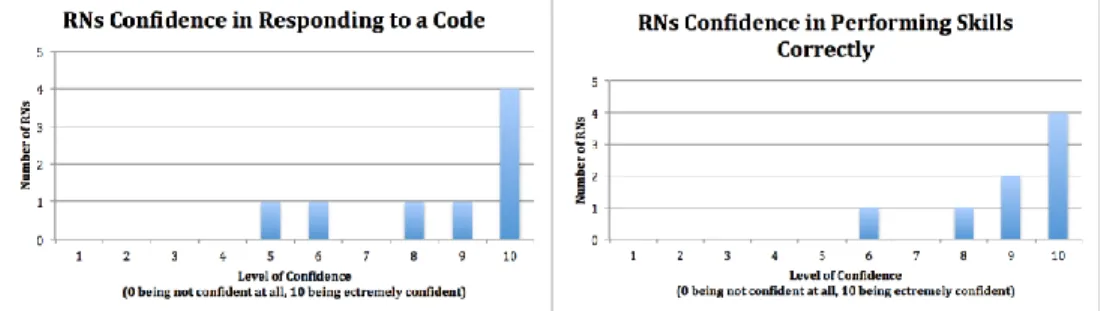
Education regarding code blues and code blue cart usage may vary between staff within the GSSB facility. By passing out a questionnaire to RN, LPN and CNA nursing staff, we were able to determine some of the variations in confidence and proficiency. Out of eight RNs who filled out the questionnaire, all but one individual has responded to a code blue and have never avoided responding because of lack of proficiency and/or confidence. However, of those eight, one does not know where the code blue cart is located in the facility. There were six LPNs who completed the questionnaire, three have responded to a code and three have not, and all of them have identified they know where the code blue cart is located and have never avoided responding to a code because of a lack of proficiency or confidence. 10 CNAs filled out the questionnaire, none of which have ever responded to a code before and have never avoided responding to a code because of a lack of proficiency or confidence. Three of the 10 staff do not know where the code blue carts are located, potentially inhibiting a fast response time when a code blue is called. All staff felt that additional education would help them feel more prepared and confident if a code were to be called. Among the three groups of staff, there was a large amount of variation in how confident they would be in responding to a code, performing it correctly, and knowing how to use a code blue cart. The data that was collected can be seen in the graphs below. One
comment left on the question anonymously, included, “I feel that training staff throughout the building with mock codes would alleviate a lot of fear of codes/use of code blue carts.” Another, when asked “How much training on codes have you had?” responded with, “Not enough”. It is evident that some of the staff at GSSB would like to further their knowledge and skills
Figure #2. Figure #3.
Figure #4 Figure #5
Figure #6. Figure #7.
Figure #10
Figure #2-10. These figures represent RN, CNA and LPN questionnaire responses regarding code blue confidence and proficiency.
Identifying Resident Code Status
Identifying the code status of a resident is key to ensure that the residents of the facility are receiving the care that respects their wishes. Many individuals staying at GSSB have a Do Not Resuscitate (DNR) order in their Electronic Medical Record (EMR) as identified in their advance directive. A DNR order means that the resident wishes to not have CPR and/or
extensive measures performed in the case of a code or if their health status declines. In contrast, several residents may have orders for a full code or specify which life-saving measures they want to include in their plan of care as evidenced in their EMR.
According to GSSB’s CPR policy and procedure, there must be a list of all advance directive orders kept in a three-ring binder accessible to nursing staff. It is important for the nursing staff to have a physical copy of the code status orders in case of a power outage or for situations in which the EMR is delayed (page 2). This policy allows nursing staff to quickly and accurately identify a resident’s code status in an emergency code situation.
Figure #11. This figure displays page 2 in GSSB’s policy and procedure regarding access and identification of resident code status.
Quickly and accurately identifying the code status of a resident in an emergency situation can be stressful and must be completed in a timely manner. Figure #12 is part of the Order Listing Report that is printed every day at 12:00AM and located on each unit. After reviewing this report, it is evident that identifying the correct code status of an individual during an
emergency situation can be difficult. A nurse manager at GSSB looks at the information located in the EMR and Order Listing Report and creates a new list from that information. This list states the code status of each resident on that unit in a user-friendly manner. This allows nursing staff to quickly identify the code status of an individual and respond accordingly to an emergency. This process can decrease overall stress about incorrectly identifying the code status of a resident.
Figure #12. These figures show the current order Listing Report of resident code status that is accessed in the three-ring binder located at each unit within GSSB.
Figure #13. This image is the list of residents’ code status, created by a nurse manager for one of the units within GSSB. This list is created from information found in the EMR as well as the Order Listing Report.
Code Blue Cart Item Checklist
GSSB requires staff to complete a checklist for each code blue cart within the facility. This checklist should be completed each month in order to determine whether all of the necessary supplies are located on the cart. It has been identified that this task is not being completed according to policy. There are many inconsistencies found on this checklist such as
months not being completed and missing items in which it is stated that “management was notified”. However, the problem did not seem to be resolved, as evidenced by future months not being filled out. This form was not able to be located on one of the units within the facility, inhibiting nursing staff from being able to complete this list and review items on the cart. Without this checklist being completed accurately, necessary items needed for a code blue may not be available when needed in emergency situations. The inability to find required equipment in an efficient manner can increase response time and as a result cause poor resident outcomes.
Figure #14. This figure shows one of the code blue cart checklists located at one of the units within the facility.
Monthly AED Checklist
GSSB requires staff to complete a monthly AED check to ensure that the kit is working properly, is intact, and has the required items included within it. The AEDs in the facility are not being checked as evidenced by the lack of forms being completed and available to the staff. Figure #15 displays the checklist that should be at each AED site. Not completing this checklist and ensuring the AED is properly functioning can inhibit staff from being able to respond to an emergency effectively. If an AED is not functioning properly, staff will remain unaware of this until an emergency occurs. In an emergency situation, it is vital that interventions are
implemented as soon as possible in order to ensure a higher potential for success. The absence of a monthly AED check is a systems failure that directly affects staff’s failure to rescue ratio; as well as directly affecting residents and their outcomes.
Figure #15. This figure shows the AED Checklist that should be located with each AED within the facility so that staff can complete in order to ensure it is working properly.
Code Blue Record Sheet
GSSB has a code blue record and a cardiac arrest form for nursing staff to reference during a code blue or other emergency. The code blue record form is located on the code blue cart; however, staff may not know how to properly utilize the form due to the disorganized layout and lack of education regarding the form. The cardiac arrest form is something the nursing staff need to find on their own and is not easily accessed. If a staff member is unsure of the steps that are needed to be taken, these forms could help them feel more confident. Both of these forms contain information that is not under the scope of practice of a registered nurse, such as inserting an airway. This could create a potential problem if a staff member from GSSB
implemented an intervention outside of their scope of practice.
Figure #16 & #17. These figures show a form to fill out and a procedure to carry out in a code blue or cardiac arrest situation.
Applicability of Equipment
When reviewing the items on the cart, it became apparent that some of the supplies were not applicable to a code in a long-term care facility. For example, there were suction catheters on the cart, which are not something a RN could use during a code. Along with these supplies, the suction machines on the code blue cart are required to be plugged in, and a code can occur anywhere, and access to an outlet should not be something concerning during a code, therefore, the use of this type of suction does not seem to be realistic and applicable.
Location of AED and Code Blue Carts
There are currently two code blue carts located within GSSB, one being located on the transitional care unit and the other on station two. The cart on station two is shared between
stations one, two, and three. The facility does have a third code blue cart but stated that it has not been put together, so it is not in use. The facility also has two AEDs, one is on the code blue cart in the TCU and the other is on station 3. The AED located on station three is shared between this station and the assisted living building.
Development
Possible Solutions
In order to improve proficiency and confidence in performing basic life support during a code, we identified several solutions to improve the present lack of knowledge amongst nursing staff. First, we contemplated presenting educational information to nursing staff concerning proper response to code blues that occur among residents. In addition, we brainstormed ideas to efficiently identify resident code status with a visual representation, such as a symbol or bracelet. We further discussed running a mock code within the facility, which would create a simulation that specifically focuses on how to respond appropriately and confidently to a code situation. As stated above, the code blue carts appeared to be unorganized. Therefore, we considered going through the carts and making sure that only the appropriate code supplies were on it.
Solution
After discussing several possible solutions and collecting evidence-based data, we
decided that running a mock code to improve overall Basic Life Support (BLS) confidence in the facility would be the most effective strategy. From gathering data pertaining to code blues, we determined that running a mock code along with supplemental education and creation of a BLS annual competency checklist will increase staff knowledge and confidence as well as improve resident outcomes. The mock code is a relatively simple and cost-free exercise to plan and implement. According to several studies including the articles mentioned above by Herbers &
Heaser, Billings & Kowalski, Chu & Robilotto, running a mock code creates a real-life situation where staff can practice their skills in a risk-free environment. This environment fosters
confidence in skills and refreshes knowledge. To supplement the mock code, we created an educational handout to be presented at a mandatory staff meeting led by the DON. The staff will have the handouts at their disposal in the weeks leading up to the mock code. We also created the annual Basic Life Support Competency checklist as a tool to assess the skills, abilities and
knowledge of BLS certified staff. We will be using this checklist to assess the staff during the mock code as a group and using it as an educational tool in the debriefing session. Running a debriefing session after the mock code is supported by the aforementioned articles by Chu & Robilotto, Keys et al., Kusler-Jenson. The debriefing sessions included our observations, how they performed on the checklist/documentation sheet, their overall thoughts and feelings and recommendations for improvement. Last, we discovered a need for an updated and improved code blue documentation form. The previous documentation form had areas that were outside of the nursing staff’s scope of practice; such as insertion of an airway. The non-licensed nursing staff is supplemented with a plethora of RNs and LPNs, therefore we chose to gear the
documentation sheet to the scope of practice of both LPNs and RNs. The new form is relatively cost efficient to implement and encourages ease of use. The new documentation form is more detailed, making it an improved case record if needed to be used in the court of law.
Plan, Solution, Resources and Partnership
To implement our solution, we provided BLS education to the facility in the form of an educational handout presented at the mandatory all staff meeting by the DON. We also
disseminated the handouts to all of the nursing units/stations and laminated copies that were placed on the facility’s code blue carts. We organized two mock codes for the nursing staff in
hopes of improving confidence. The resources required for the mock codes include: an area reserved to run the codes, practice manikin, training AED, facility code blue carts, facility policies and cooperation of staff and the DON. We determined that it would be most effective if we ran two codes, one for the day shift and one for the evening shift staff. After each mock code, we provided a debriefing session in the form of group discussion and PowerPoint presentation. Resources required for the debriefing session include: PowerPoint presentation, computer, space reserved for debriefing and the new documentation forms, annual skills competency checklist and the educational handouts as well as the post code survey. We had all RNs, LPNs, and CNAs complete a pre-questionnaire regarding knowledge and confidence when a code blue occurs. After the codes we had the staff that participated in the codes fill out the post-questionnaire. We created an educational flyer regarding BLS information based on the facilities code policy and procedure. We partnered with the DON and the nurse managers to reorganize the code blue carts.
Project Evaluation
The evaluation of the effectiveness of our educational handout combined with the results of our mock code will be completed with a formal survey. The survey is a modification of the pre-code survey. The first questions assess confidence levels on code response, skill proficiency, and code blue cart use. Questions four through six are phrased as yes or no questions. These questions assess knowledge and proficiency in code blue cart location, if the staff feel that more education would be useful and necessary, and if they found the code beneficial. Question seven is open ended and requests that participants identify anything else they would need to be proficient and confident in their skills outside of this practice setting. The questionnaire is modified from the pre-mock code survey in order to compare results and success of the exercise, modifications needed, proficiency and confidence in skills. We will also be using the
competency checklist we created to assess the staff during the mock code as a group. These results will be shared with staff during the debriefing session post mock code. During the debriefing session we will also be asking for verbal feedback from the staff who participated. This feedback may include: thoughts, feelings, likes, dislikes and suggestions for future code blue education and preparation.
Solution Objectives
By implementing a mock code in the facility, we hope to increase the overall code blue cart and code response preparedness in nursing staff. Additionally, we hope to improve staff’s knowledge and proficiency in running a code blue. After providing education to staff and running a mock code, we hope that nursing staff will understand the specific roles each individual plays as they respond to the code. Next, we plan to improve confidence and proficiency related to the skills associated with basic life support. Staff should be able to adequately demonstrate skill proficiency in CPR and AED utilization. Last, we plan to implement location awareness in responding to a code blue. Nursing staff should be able to quickly locate all code blue cards and AEDs throughout the facility in a timely manner.
Dissemination and Evaluation
Organizational Commitment
To ensure the organization was committed to the project, we met with the DON several times to discuss the details of implementing our mock code. We discussed handing out an educational flyer a few weeks in advance and confirmed the date of the code multiple times to ensure staff attendance. In addition, we discussed our project numerous times with the nurse managers and asked for their input and feedback regarding code blues at GSSB.
There are numerous staff members at GSSB who are supportive of our project. First, the DON initially recommended code blue education at the facility and organization of the code blue carts. The DON has been very supportive of all of our questions and concerns, offering
constructive input and feedback as needed. Additionally, the nurse managers have shown support for our project and have been extremely willing to provide us with the relevant information regarding code blues and the locations of the code blue carts and AEDs in the facility. Together, the DON and nurse managers provided us with the facility’s policy and procedures, code blue cart documentation, and additional relevant data pertaining to the use of the code blue cart and running a mock code.
Implementation Antagonists
We have identified several factors that could result in staff members being against the implementation of our project. For example, the mock code is going to take time out of the work day and may cause the floor nurses to fall behind schedule in their medication passes and
charting. The nursing staff may not appreciate running a mock code if it will interfere with workflow. Another factor we have identified is the cost to the facility to update the code blue carts. There are three code blue carts in GSSB and they are all disorganized. In order to
completely modify the carts organization, the facility may have to invest in some new supplies. In addition, the AED is not located next to the code blue cart on Station 2 and purchasing another AED would be difficult financially for the facility.
Staff Motivation
One way we will keep staff motivated is the creation of a competency sign-off sheet that will need to be completed annually by all members, including RNs, LPNs, NAs, and TMAs. This will require staff to refresh their knowledge and skills each year, pushing them to stay up to date
on the proper procedure when responding to a code. The date of our mock code will not be shared with general staff; therefore, it will be as real as possible, and staff will be motivated to be prepared at all times.
Implementation
Our implementation plan began by surveying nursing staff to determine their overall confidence and proficiency in responding to a code blue. We then located the code blue carts within the facility and reorganized them to the best of our abilities. We completed the code blue cart checklist for each cart and confirmed that the carts contained the proper equipment
necessary to run a code. Next, we created an educational flyer that contained basic code blue information, the specific locations of the AEDs and code blue carts, and the roles and
responsibilities of nursing staff. The DON presented this information in their mandatory staff meeting and informed the staff that there would be a mock code within the next few weeks. The flyers were placed at each nursing station and on the code blue carts as a frequent educational reminder to staff. We performed two mock codes to include both day and evening shifts and included a debriefing session afterwards to discuss successes and failures of the simulation. Additionally, we handed out our post-questionnaire in order to identify if there was an increase in confidence and knowledge among staff. We also created an annual skills checklist and a new document form.
Post-Code Questionnaire
In total, there were nine participants who participated in the mock codes. Eight out of nine staff felt the mock code was both beneficial/educational and were able to locate all of the code blue carts; this result addresses learner outcome number one: Staff will be able to locate all code blue carts and AEDs throughout the facility. Seven out of nine participants feel that
additional education would be beneficial. To see improvement, we recommend that the facility run mock codes more frequently for nursing staff to practice their skills. Seven participants reported their confidence level as five or greater on a likert scale. On the likert scale 1 being not confident at all and 10 being extremely confidant. Six people reported that they were confident in performing code specific skills; which supports learner outcome number two: Staff will
demonstrate skill proficiency in CPR and AED utilization. Four people felt confident in using the code blue cart. Our debriefing discussion yielded qualitative data. A structural malfunction was identified by the participants. The structural defect identified was the malfunction of the
overhead paging system. Staff were unable to hear the overhead page in resident rooms along with in the TCU. The participants suggested that the code be called over the walkie-talkies as well as the overhead paging system. Participants also identified that there was a need for more structured delegation while running the code. One person stated the importance of each staff member knowing their role. Our educational handout was structured to help staff identify their role and specifically listed each role. In order to increase knowledge of roles we would suggest increased dissemination of the educational handout.
Facility
Target Audience
Our target audience includes the health care staff members working at the GSSB who would be responding to a code blue situation. To specify, the audience includes those who are a CPR certified such as RN’s, LPN’s, NA’s, or TMA’s. The audience also includes all general facility staff that are BLS certified.
The mock code will take place in the activity room located near station three. We will use a simulation manikin to run the code. We have chosen this setting to make the mock code as lifelike and similar to the employees’ day to day work setting. The code will be called in the same manner that it would normally be called, via the overhead paging system and through the use of walkie talkies. Staff should then respond as if it were a true code situation. The code blue carts and AED will be in the designated locations. The locations include: AED on station three, code blue cart on station two, and AED/code blue cart on station six. The facility has provided us with a training AED to use in the actual code simulation.
Presentation Learner Outcomes
Our first outcome is: Staff will understand the specific roles each individual plays as they respond to the code. The second outcome focuses on the skills associated with basic life support: Staff will demonstrate skill proficiency in CPR and AED utilization. The third outcome
emphasizes the importance location awareness plays in responding to a code: Staff will be able to locate all code blue carts and AEDs throughout the facility.
Strategies to Meet Learner Outcomes
As a group, we created an educational handout that included general information about how to respond to a code situation. The handout provided information on the location of the code blue carts, specific roles for the RN, LPN, NA/TMA; and the step by step actions for a code blue. This information was presented to the staff at their mandatory staff meeting on Monday, March 26th, by the Director of Nursing. The handout was also disseminated on this day as well as placed in various places on the units. The various strategies used to disseminate the information include verbal teaching, educational handout, active learning via the mock code, and a verbal debriefing session post mock code.
Methods of Evaluation
To evaluate the effectiveness of the mock code, we had the participants of the code complete the post code questionnaire. The questionnaire determined whether staff felt more confident responding in a code as well as knowing the locations of the code blue carts and AEDs within the facility. In addition, we left a section for the participants to identify what else could be done to improve their confidence and proficiency in responding to a code.
Conclusion
The problem identified at GSSB was a lack of confidence and proficiency in code blue response. This problem was identified through conversations with nursing staff including the DON, RN’s, LPN’s, and other staff. Facility policies were analyzed and updated according to current evidence-based data. A mock code blue was conducted at the facility after education was provided to nursing staff. Through a debriefing session and post questionnaire, staff indicated that the mock code was a beneficial learning experience. It is recommended that GSSB continue to provide code blue education and practice.
References
Billings, D. M., & Kowalski, K. (2009). Use of Portable Simulation Manikins to Increase the Frequency of Mock Code Training on Four Inpatient Surgical Units. The Journal of Continuing Education in Nursing,40(6), 250-251. doi:10.3928/00220124-20090522-04. Chu, R., & Robilotto, T. (2018). Mock code training to enhance CPR skills. Nursing made
incredibly easy, (16),11-15.
Herbers, M. D. (2016). IMPLEMENTING AN IN SITU MOCK CODE QUALITY
IMPROVEMENT PROGRAM. American Journal Of Critical Care, 25(5), 393-399. doi:10.4037/ajcc2016583.
Karim, H. N. (2016). Cardiac arrest: A need to understand the determinants of basic life
support- A nursing perspective. I-Manager's Journal on Nursing, 6(1), 42-47. Retrieved from https://search.proquest.com/docview/1797270463?accountid=14070.
Keys, V., Malone, P., Brim, C., Schoonover, H., Nordstrom, C., & Selzler, M. (2009). Code Carnivals: Resuscitating Code Blue Training with Accelerated Learning. The Journal of Continuing Education in Nursing, (40), 560-564.
Kusler-Jensen, J. (2014). Cardiac emergency simulation: Drilling for success in the
ambulatory setting. Association of Operating Room Nurses.AORN Journal, 99(3), 385-94. http://dx.doi.org/10.1016/j.aorn.2013.09.014.
O'Donoghue, S. C. (2015). Nurses' Perceptions of Role, Team Performance, and Education Regarding Resuscitation in the Adult Medical-Surgical Patient. MEDSURG Nursing, 24(5), 309-317.
Perez, C. (2014). Calming the chaos: Simulated code interdisciplinary team training. American nurse today: official journal of ANA, American Nurses Association,9(9).