chapter 21
Managing the tender process
Summary 21.221.1 Introduction to tender management 21.2 21.2 Determining the tender format and scope 21.3
Restricted or open tender • International versus local procurement • Estimated- versus fixed-quantity contract • Splitting tender awards • Primary/secondary contracts versus rebids • Use of local agents in international procurement • Tender frequency and timing
21.3 Defining needs 21.9
Selection of medicines for the tender • Quantification 21.4 Selecting suppliers for tender participation 21.10
Types of potential pharmaceutical suppliers • Locating and contacting qualified suppliers • Evaluating new suppliers • Monitoring and evaluating supplier performance
21.5 Preparing and issuing tender documents 21.13 21.6 Adjudicating the tender 21.15
Preparing during the open period • Receiving and opening tender offers • Collating offers for adjudication • Managing the adjudication process 21.7 Issuing contracts to winning bidders 21.18 21.8 Laws governing international agreements 21.18 21.9 Monitoring performance and product
quality 21.18
21.10 The procurement information system 21.19 Product records • Records related to tendering and ordering • Records to monitor supplier and facility performance • Quality assurance records • Accounts receivable and payable • Reporting
Assessment guide 21.24
References and further readings 21.26
illustrations
Figure 21-1 Example of a timetable for an annual tendering system 21.9
Figure 21-2 Papua New Guinea pharmaceutical tender 21.14
Figure 21-3 Sample tender adjudication report by item by supplier 21.17
Figure 21-4 Sample product card 21.20
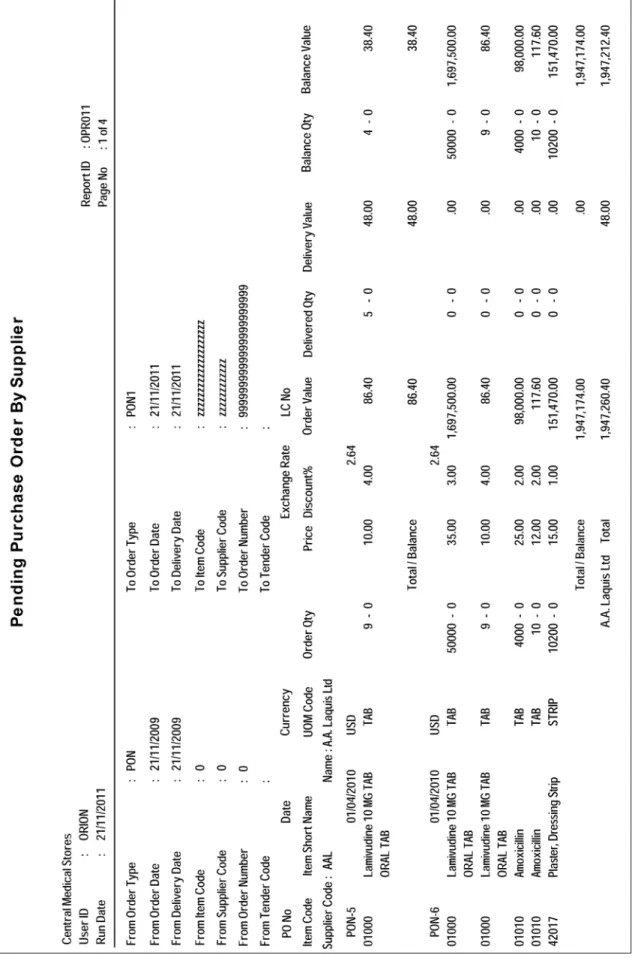
Figure 21-5 Sample pending purchase orders by item report 21.21
Figure 21-6 Sample pending purchase orders by supplier report 21.22
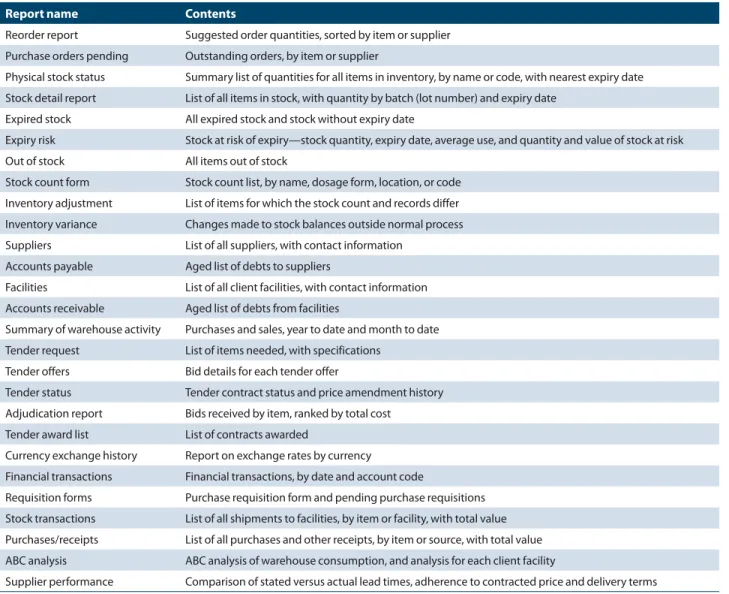
Table 21-1 Comparison of procurement methods 21.3 Table 21-2 Standard procurement reports 21.23 boxes
Box 21-1 WHO’s prequalification program 21.5 Box 21-2 Advantages and disadvantages of buying through
local agents 21.8 country study
CS 21-1 El Salvador: improving efficiency through joint tendering 21.4
annexes
Annex 21-1 Prequalifying new suppliers 21.27 Annex 21-2 Criteria for evaluating suppliers 21.28
19 Quality assurance for pharmaceuticals 20 Quantifying pharmaceutical requirements 21 Managing the tender process
Distribution Use
21.1 Introduction to tender management
Many of the major policy and management issues relevant to pharmaceutical procurement were covered in Chapter 18. Several types of procurement methods are used for phar-maceuticals, but the procurement method chosen for each medicine should—
• Obtain the lowest possible purchase price for high-quality products
• Ensure suppliers’ reliability, in terms of both quality and service
• Maintain transparency in the process and minimize the opportunity for illicit influences on procurement decisions
• Achieve these objectives with the least possible profes-sional and clerical staff time and within the shortest possible lead time
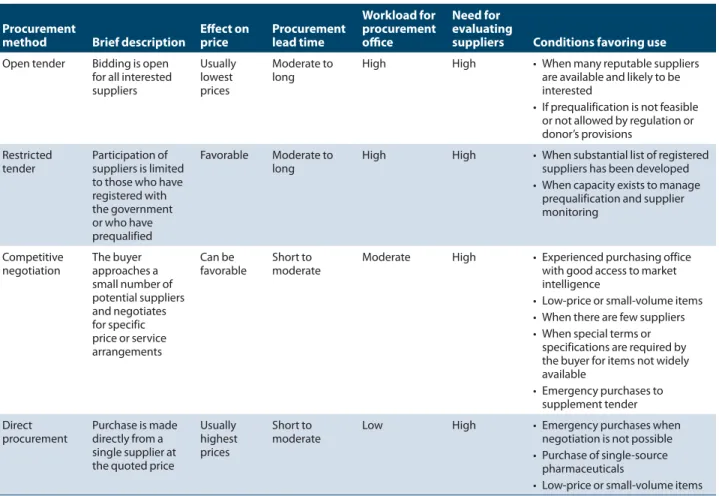
Table 21-1 summarizes the most frequently used methods to purchase pharmaceuticals.
This chapter focuses on the management of competitive tenders. Some global procurement mechanisms, such as the united Nations Children’s Fund (uNICEF), the Supply Chain Management System, and the Global Fund’s volun-tary pooled procurement system, use negotiation as a
pri-mary tactic to establish contracts on high-use and high-cost items; as discussed in Chapter 18, these large procurement systems need to ensure multiple source options to assure steady supply and to be certain that multiple suppliers stay in the particular market. However, most modern laws and regulations covering public-sector procurement require competitive procurement methods. Negotiation can be legitimate when only a few suppliers are available for a particular product, but negotiation is not generally recom-mended when using public funds.
Country Study 21-1 shows how El Salvador lowered costs by making its tendering process more efficient.
This chapter discusses the best practices in managing the standard tender processes used to purchase pharmaceu-ticals. Historically, the tender process has been an annual cycle in most public-sector health systems. In some situa-tions, tenders are conducted two or three times per year; however, some procurement offices have begun entering into multiyear framework contracts to reduce the adminis-trative burden of managing frequent tender cycles. Global procurement systems such as uNICEF and uSAID’s Supply Chain Management System also use these sorts of frame-work contracts for selected products.
As discussed in Chapter 18, Internet-based approaches, including “e-procurement” with “reverse auctions,” have been advocated for public-sector procurement, with the The primary function of a procurement office is to obtain
the required items at the right time, in the correct quanti-ties, and at the most favorable prices. The procurement office compiles a list of requirements, identifies potential suppliers, selects the most cost-effective supplier for each product, secures firm supply contracts, and makes sure that the suppliers and the health system comply with contract terms. Competitive tenders are recommended for most pharmaceutical procurement in public-sector pharmaceutical systems, so this chapter addresses the principles of efficient tender management, focusing on the most common tendering models.
To maximize the benefit of pharmaceutical purchases, corruption and favoritism in procurement must be mini-mized. Equally important is avoiding the appearance of favoritism, so the tender process should be as transparent as possible under national procurement laws.
A formal tender process includes medicine selection, quantification, preparation of tender documents and con-tracts, notification and invitation to bid, formal bid open-ing, collation of offers, adjudication and supplier selection,
contract award, performance monitoring of suppliers and clients, and enforcement of contract terms if necessary. Reliable suppliers are the cornerstone of effective procure-ment, and a prequalification process is recommended; tender adjudication and selection of suppliers is the criti-cal step that determines the costs of medicines and defines the integrity of the procurement process. Adjudication should be based on formal written criteria and must be free from influence by special interests.
Accurate and timely information is critical at each stage of the process, and lack of effective information systems is a main cause of procurement delays and inefficiencies. The information system must be able to—
• Produce information for quantification and tender documents
• Collate offers for adjudication
• Issue notifications of award and purchase orders • Track order status and compliance with contract
terms
• Manage communications with contract suppliers • Track suppliers’ performance for future tenders
most experience occurring in Latin America. These meth-ods, however, have not yet been proven for pharmaceutical procurement.
The standard steps in the normal tender cycle are— 1. Determine the tender format and scope.
2. Define requirements—select and quantify medicines and supplies.
3. Select suppliers to participate in the tender. 4. Prepare and send tender documents. 5. Receive and open offers.
6. Collate offers for adjudication. 7. Adjudicate the tender.
8. Issue contracts to winning bidders. 9. Monitor performance and product quality. 10. Enforce contract terms as needed.
Each of these steps requires informed decisions about which of several possible procedures best fits the particu-lar situation. In most countries, options will be limited by procurement laws and regulations, but even in the most restrictive legal settings, the procurement program has sev-eral choices to make. The goal of this chapter is to provide
information to help procurement managers make the best choices for their own situations.
21.2 Determining the tender format and scope
Some countries have procurement regulations that spec-ify the tender format for pharmaceutical purchasing. The World Bank and some bilateral donors may mandate spe-cific tender formats for procurement financed by loans or donated funds (see References and Further Readings). However, in many cases, flexibility exists in structuring the tender; in those situations, options include—
• Restricted versus open tender • Local or international scope • Estimated or fixed tender quantities • Split or single tender awards
• Primary/secondary contracts or rebids
• Required or optional use of local agents in inter-national tenders
• Annual or biannual tenders versus multiple tenders during the year
Table 21-1 Comparison of procurement methods Procurement
method Brief description Effect on price Procurement lead time
Workload for procurement office
Need for evaluating
suppliers Conditions favoring use Open tender Bidding is open
for all interested suppliers
Usually lowest prices
Moderate to
long High High • When many reputable suppliers are available and likely to be interested
• If prequalification is not feasible or not allowed by regulation or donor’s provisions
Restricted
tender Participation of suppliers is limited to those who have registered with the government or who have prequalified
Favorable Moderate to
long High High • When substantial list of registered suppliers has been developed • When capacity exists to manage
prequalification and supplier monitoring
Competitive
negotiation The buyer approaches a small number of potential suppliers and negotiates for specific price or service arrangements Can be
favorable Short to moderate Moderate High • Experienced purchasing office with good access to market intelligence
• Low-price or small-volume items • When there are few suppliers • When special terms or
specifications are required by the buyer for items not widely available
• Emergency purchases to supplement tender Direct
procurement Purchase is made directly from a single supplier at the quoted price
Usually highest prices
Short to
moderate Low High • Emergency purchases when negotiation is not possible • Purchase of single-source
pharmaceuticals
Restricted or open tender
One of the most important decisions to make is whether the tender will be restricted to suppliers who are prequalified because they have demonstrated reliability, or whether the tender will be open to any supplier who is interested. This decision is required whether the tender is local or interna-tional.
A restricted tender with prequalification involves developing a list of registered suppliers based on past performance, references from previous clients, and docu-mentation of product quality. Then, only those registered suppliers may participate in tenders. This process avoids the necessity of trying to decide whether the lowest bidder is eligible to be awarded the contract. With prequalifica-tion, by definiprequalifica-tion, the lowest bidder should be qualified for the contract.
When prequalification works well, substandard suppliers are kept out of the tender process entirely. Prequalification is not beneficial, however, if it protects favored suppliers from competition. In some countries, a new supplier finds sur-viving the prequalification process virtually impossible, no matter how reliable the new supplier may actually be.
Prequalification can be extremely time-consuming, espe-cially if policy requires that suppliers be prequalified sepa-rately for each medicine. This problem can be mitigated
through ABC analysis and prequalifying only high-demand, category A medicines while prequalifying low-demand products by lot (see Chapter 40 for details). As noted below, however, proper postqualification requires just as much time. The policy question is where the time should be allo-cated in the tender process.
To help countries procure quality pharmaceuticals, the World Health Organization (WHO) operates a prequalifi-cation program for HIV/AIDS, tuberculosis, and malaria medicines. See Box 21-1 for more information. Many inter-national donors that provide procurement funding accept WHO prequalification or documentation of a supplier’s or product’s approval by a so-called stringent regulatory authority as evidence that the supplier is eligible for prequal-ification in a tender (see Chapter 19).
Although a country’s laws may require that a pharmaceu-tical supplier and its products be registered in the procuring country, procurement managers may wish to follow WHO’s international standards for prequalifying potential bidders first and then add a requirement that successful bidders must register their products locally.
An open tender with postqualification makes the tender available to all interested bidders. Suppliers’ bids and docu-mentation are solicited, received, and reviewed with respect to registration status, product quality, technical and finan-cial capacity, and past performance.
In El Salvador, the Strategies for Enhancing Access to Medicines (SEAM) Program’s 2001 assessment found that some essential medications were lacking in both public health care facilities and those of nongovern-mental organizations (NGOs). At the Ministry of Public Health and Social Welfare (MSPAS, from its initials in Spanish), purchasing had been decentralized, decreas-ing the ability to negotiate prices for pharmaceuticals in large volumes and providing little management capacity for inventory management. Although the NGO sec-tor was small, these organizations provided services in rural areas that did not have access to MSPAS services. Because they bought small volumes, the NGOs could not negotiate favorable prices for their medicines, which lim-ited the availability of essential medicines.
On the basis of the SEAM assessment and recommenda-tions, MSPAS authorities developed a pharmaceutical procurement system based on joint tendering for medi-cines from the national Essential Medimedi-cines List to select products, their suppliers, and unit prices for the thirty hospitals and 362 public and NGO health units.
From late 2002 to 2005, MSPAS held three joint tender processes. The 2003 purchases resulted in a lower num-ber of tenders, a 45 percent decrease in the median unit prices for the medicines, and greater efficiency in spending on medications and use of the budget appro-priation.
The three-year experience showed that a joint bidding program based on the national Essential Medicines List could be implemented, and the following lessons were learned—
• The active participation of hospitals in the program’s design contributed to its acceptance and to ensuring transparency in the evaluation of tender bids. • Joint tendering within the network of public
hos-pitals resulted in greater efficiency in spending on medications, a reduction in the number of tender processes, and improved quality assurance of medi-cines.
• To optimize the benefits of joint purchasing, an effective logistics system must accompany it. Country study 21-1
An open tender can arguably increase the pool of prospective suppliers, but complications and delays in postqualification often occur. In addition, a well-managed prequalification process can generate good competition. Pharmaceuticals are unlike some other commodities, in that product quality is both crucial and difficult to ensure. Therefore, the success of open tenders with postqualifica-tion depends on the capacity of the procurement program to winnow out unqualified suppliers and poor-quality prod-ucts after bids have been received, in some cases, from all over the world. The procurement office must go through a process similar to that used in prequalification. The differ-ence is the need to screen many more suppliers and prod-ucts. Moreover, bids are usually submitted with a time limit on price validity (see Chapter 39). Screening all suppliers and products after bid opening and within the period of price validity may be difficult. In one Indian state, for exam-ple, price validity was specified as 180 days, while the con-tract award typically took twelve to fifteen months (Heltzer et al. 2008). If delays like this occur, prices have to be recon-firmed, and in some cases, rebidding may be needed.
Poorly defined criteria for postqualification can also exclude qualified bidders, especially when the criteria favor developing local industry over assuring medicine quality. Finally, postqualification may be used for fraudulent pur-poses, if, for example, someone in the procurement agency wants to tilt business toward preferred companies.
Prequalification is generally accepted as an essential procurement practice. The Interagency Guidelines for Establishing a Model Quality Assurance System specifically state that prequalification is a key element in ensuring prod-uct quality (WHO et al. 2007). Following this lead, many countries have formally incorporated prequalification and restricted tendering into their procurement regulations; for example, Tanzania’s Public Procurement and Regulatory Authority has published regulations and bid documents for use in the health sector that explicitly provide for restricted, prequalification-based tendering. Such practices have also been a feature of many successful pharmaceutical procure-ment programs around the world.
As these arguments make clear, the eventual goal of most procurement programs should be tenders limited to regis-tered, prequalified suppliers. Prequalification avoids wasting time on suppliers that do not perform according to contract and helps minimize the possibility of introducing substan-dard products. However, aggressively seeking out potential new suppliers that may wish to become registered is impor-tant for maintaining competitive pressure on established suppliers.
International versus local procurement
In most developing countries, the national pharmaceuti-cal industry produces only a limited range of products.
The World Health Organization set up the Pre-qualification of Medicines Progamme in 2001 to facilitate access to quality medicines for HIV/AIDS, malaria, and tuberculosis. Originally, the program was intended to give uN procurement agencies, such as uNICEF, a range of quality medicine suppliers from which to choose. Over time, the program has become a useful tool for anyone purchasing medicines on a large scale, including countries themselves. For example, the Global Fund to Fight AIDS, Tuberculosis and Malaria disburses money for medicines that have been prequali-fied through the WHO process.
Manufacturers applying to the program must present extensive information on their product to allow quali-fied assessment teams to evaluate its quality, safety, and efficacy. The manufacturer must also open its manufac-turing sites to an inspection team that assesses working procedures for compliance with WHO good manufac-turing practices. The assessment teams work with regula-tors from the developing countries where the medicines
will be used to make sure that the process is transparent and trusted by the end users. The program also prequali-fies quality-control laboratories.
WHO’s prequalification process takes a minimum of three months if the product meets all the required dards. When products do not meet the appropriate stan-dards, the process can be longer and ultimately result in no prequalification for a product. WHO also carries out random quality-control testing of prequalified medicines that have been supplied to countries.
Medicines on the prequalification list include both brand-name and generic products. Since 2001, reproduc-tive health products and zinc (for childhood diarrhea) have been added to the program. Also included are fixed-dose combinations, which are assessed based on the same principles used by the European Agency for the Evaluation of Medicinal Products and the u.S. Food and Drug Administration.
Source: WHO 2010b.
Box 21-1
Therefore, most products must be procured via interna-tional markets. Nevertheless, countries with a local indus-try often require that public tenders give it some preference, such as following the World Bank example of granting a 15 percent price preference to locally manufactured prod-ucts. However, greater price preferences make it difficult to achieve value for money—which is critical when national pharmaceutical budgets are limited. In all cases, the qual-ity assurance requirement must be maintained. A strong national drug regulatory authority uses its product registra-tion process to assure quality.
For many items, an international competitive tender, whether open or restricted, almost always results in lower prices than a tender limited to the local market. For some inexpensive items that cost a lot to ship, such as parenteral solutions, purchasing locally may be cheaper if the manu-facturing plant meets acceptable quality standards. Facility licensing through a strong, independent drug regulatory authority is crucial.
In countries with a large pharmaceutical industry, such as India, international tendering is largely unnecessary; however, some countries that have an enormous number of companies licensed to manufacture pharmaceuticals may only have a few that meet international production and quality assurance standards. In such circumstances, establishing sufficiently stringent prequalification criteria to assure product quality while supporting national economic development demands is a challenge. Failure in this difficult balancing act can result in substandard products entering the health system.
One common constraint on international procurement is pharmaceutical registration. Countries with pharmaceuti-cal registration systems normally require that all medicines purchased through public tender be registered locally. Both restricted and open tenders can be limited to products regis-tered in the purchasing country. This requirement may limit or eliminate international procurement if the registration process is complicated and time-consuming, but in most countries, some flexibility is available to assure access to essential medicines.
Some countries expedite or even waive registration for new medicines that are considered vital to public health, such as antiretroviral medicines. In many cases where reg-istration is waived, a donor is financing the purchase and helps make the case for a waiver.
Countries in some regions, particularly Latin America, have attempted to move toward regional harmonization of pharmaceutical registration, with virtually automatic regis-tration granted if the product is either registered within the region or originates from a country recognized as having effective pharmaceutical regulatory systems. In an example of such harmonization, Namibia accepted products already registered in International Conference on Harmonization countries or South Africa to streamline its registration of
antiretrovirals. However, regional harmonization generally faces many barriers, including concerns that products from the region’s stronger economies could have an unfair advan-tage.
In sum, much has been debated about regional harmoni-zation, but the discussions have not advanced very far. Time will determine whether meaningful harmonization can be achieved.
Estimated- versus fixed-quantity contract
Two basic options exist for defining purchase quantity: the traditional fixed-quantity, scheduled-delivery purchasing contract, and the estimated-quantity, periodic-order con-tract.
The fixed-quantity contract specifies guaranteed quanti-ties (with a small variation sometimes allowed) and delivery in either one large shipment or smaller, separate shipments over the life of the contract. The purchaser accepts the risk that quantities for specific items may be too high (resulting in overstocks) or too low (resulting in shortages). If the pur-chaser actually needs more than the projected quantity (plus permitted variation), the price may be adjusted for addi-tional quantities, depending on the contract.
With the second type of contract—the estimated-quantity, periodic-order (draw-down) system—the tender quantity is just an estimate rather than a firm order. A contract price is negotiated for each medicine, and the purchaser or mem-bers of the purchasing group order periodically from con-tract suppliers at the concon-tract price throughout the concon-tract term. In a pooled procurement system, orders can be placed directly by group members or channeled to the supplier through a central procurement office. Purchasers order only the quantities of each item needed, regardless of the quantity stipulated in the original tender estimate.
The supplier delivers to purchasers at the contract price throughout the term of the contract, regardless of the varia-tion between projected and actual total quantity purchased under the contract. The supplier takes the risk that actual quantities will differ from those estimated: if the quantities are higher, it is not a problem (assuming the supplier has the necessary capacity), but if purchases are significantly lower than estimates, the supplier may not participate in future tenders. This system benefits the purchaser, because the purchaser’s financial liability is limited to each order, and if demand changes, the purchaser is not burdened with unneeded stock or pressed to cover shortages. However, in the interest of maintaining a mutually beneficial relationship with a supplier, the purchaser must make every effort to reli-ably estimate demand and should communicate any signifi-cant changes—either increases or decreases—in projected order quantities.
Pharmaceutical tenders for most developing countries have been made for many years as fixed-quantity, scheduled-
delivery tenders, and suppliers serving these procure-ment programs might be expected to resist the change to estimated-quantity contracts. However, many large-scale procurement programs serving developing countries suc-cessfully use the estimated-quantity, drawdown contract.
When the draw-down system is used, prices should be guaranteed for the entire period of the contract. If possible, prices should be negotiated as CIF (cost, insurance, and freight) or CIP (carriage and insurance paid), with no extra charges for freight and insurance (see Chapter 39).
In the 1970s and 1980s, when inflation was a persistent problem around the world, tendering more than once a year or including an escalator clause effective after a certain number of months, based on inflation, was often necessary. Although inflation is no longer a severe problem in most places, circumstances in some countries, such as Yugoslavia in the mid-1990s and Zimbabwe in the 2000s, can warrant adding an inflation factor to tender agreements. In such contexts, a guaranteed-quantity tender or a procurement system policy to make most purchases at the lowest con-tract price possible (that is, before an escalator clause takes effect) may produce the best results for the health system. Guaranteed access to foreign currency greatly helps to man-age procurement in high inflationary situations.
In countries where access to funds and foreign exchange is sporadic and uncertain, tendering on a periodic basis, as funds become available, may be necessary. This procedure almost always requires a fixed-quantity, scheduled-delivery tender format.
Similarly, if most products must be imported and lead times are extremely long, fixed-quantity, scheduled-delivery contracts are best, because the drawdown system requires reasonable access to contract suppliers. This type of con-tract functions acceptably with lead times of up to four to five months, but it would be difficult to manage where lead times are routinely greater than one year. One option is to limit tender participation to suppliers that can provide shorter lead times (assuming such sources are available). This strategy might produce an overall price increase but could potentially reduce waste. A total cost analysis exercise (described in Chapter 40) would help model the potential impact of such a change.
In some situations, combining the formats might be best: negotiating fixed-quantity contracts for products that can be purchased most cost-effectively in large single quantities and using estimated-quantity contracts for other products. Splitting tender awards
Some procurement programs routinely split contract awards among two or three suppliers, with the rationale of main-taining capacity with several suppliers or avoiding depen-dence on one supplier for a critical medicine. However, any health system procurement program that routinely splits
tenders is almost certainly not getting the best possible pric-ing, and the opportunity exists for “bid rigging”—suppliers agreeing beforehand what bids will be offered, with the real-ization that all will benefit from a share of the pie.
Split tenders may be desirable in some circumstances— for example, when a country is making one huge annual purchase of essential medicines, the risk of supplier default is real, and the public health consequences will be severe if default occurs and the medicines are not available. In addi-tion, large global procurement programs may determine that split awards are needed to modulate the global market and maintain competition and assure access to essential products (Chapter 18).
Primary/secondary contracts versus rebids
When a supplier defaults, delays in receiving medicines have usually already occurred by the time the problem is under-stood. Rebidding contracts through the entire tender proce-dure will likely result in stockouts or high-priced emergency purchases, or both. A primary/secondary contract system can avoid rebidding delays by providing an immediate option if the contract winner cannot perform. This sort of system is used by the Organisation of Eastern Caribbean States (OECS) Pharmaceutical Procurement Service and is common to many pharmaceutical purchasing groups.
In a primary/secondary system, two contract awards are made, with the primary award to the bidder offering the lowest price and the secondary award to the second-lowest bidder, provided that the secondary supplier is one that is expected to be able to supply under all conditions. The sec-ondary contract should be used only when the primary sup-plier is unable to perform.
Primary/secondary awards are useful only if two require-ments are met: the second-lowest price is reasonably close to the lowest and thus worth locking in, and a reliable second-ary supplier is prepared to accept that status and guarantee the price in case the primary supplier defaults. If either con-dition is not met, a secondary award is not worthwhile.
Some countries have regulations prohibiting these types of contracts, requiring that a new tender be made in the case of default. World Bank international competitive bidding tender procedures call for rebids when a supplier defaults, but some flexibility for local purchasing and local competi-tive bidding usually exists in such cases.
Use of local agents in international procurement Multinational manufacturers and exporters are commonly represented by local representatives in developing countries. The decision to require, encourage, or avoid buying through local agents in international tenders affects the range of for-eign suppliers, the efficiency of communication between the buyer and the supplier, and the choice of trade and
payment terms. Major advantages and disadvantages of buy-ing through local agents are listed in Box 21-2.
Chapters 8 and 39 further discuss the potential for con-tracting with local distributors to provide warehousing and transport services.
Tender frequency and timing
Tender planning must take into account the time required for each step. The time required to develop or revise a tender list, including medicine selection and quantification, varies widely, but may require two to six months in some settings. The time required to select suppliers for tender
participa-tion can also be considerable; in one African country, the first prequalification process took more than one year.
If standard documents are not available, preparing docu-ments for tender can take at least a month after quantifica-tion is completed. Some countries, such as Tanzania and uganda, have overcome this problem by developing stan-dard bidding documents. The time spent waiting for tender offers depends on geographic scope (local versus interna-tional) and in some cases on regulations of the government or the funding agency. A reasonable response time for local tenders is likely to be fifteen to twenty days, and for inter-national tenders, forty-five to sixty days. Collating offers is quicker with computerized systems, but at least one month Potential advantages
1. Speeds and improves communication. Local agents may be authorized to make decisions without a special contact with the foreign supplier. When necessary, the local agent may be better able to contact the appropriate person at the foreign sup-plier’s office.
2. Locates least-expensive acceptable supplies. In com-petitive tenders, the interest of the local agents lies in locating inexpensive suppliers, including sources that might not otherwise have come to the attention of the purchaser.
3. Facilitates payment. Local agents can sometimes accept local currency and allow deferred payment. Currency conversions can be troublesome, and some countries specify that payments be made in local currency to local agents.
4. Expedites delivery. Local agents often handle port clearing. For instance, when port-clearing fees require negotiation, local agent knowledge and experience can frequently save money and time. 5. Speeds receipt of emergency supplies. Local agents
often maintain stocks within the country, which speeds receipt of emergency supplies and may reduce the amount of warehouse space required. 6. Affords greater legal recourse. The presence of an
in-country agent affords greater opportunity for legal action if the supplier defaults.
7. Introduces new products. Occasionally, new products or formulations are introduced that are cost-effective alternatives to existing products. The agent is neces-sarily biased but may provide scientific articles in support of the product. Other information sources
should be sought to supplement the introductory information provided by the agent.
8. May offer potential for using primary distributor. In some countries, government warehousing and distribution costs possibly may be eliminated by implementing a prime vendor contract with a local distributor that will warehouse and distribute medi-cines directly to public health facilities.
Potential disadvantages
1. May slow and confuse communication. If untrained, unmotivated, poorly supervised, or part time, a local agent may lengthen and confuse arrangements with the foreign supplier. In addition, if the purchaser requires specific product information, a local agent may impede communication.
2. May increase cost. Local agents may add as much as 15 to 30 percent to the visible cost, even though their commission is often much less. Higher unit prices are also paid for low-volume purchases through local agents, compared to direct purchase. 3. Serves as a source of black-market pharmaceuticals.
Licensed importers can be a major source of phar-maceuticals for illicit use, and local agents need to be regulated through licensure and regular inspection of records and stocks.
4. May completely default on an order. Local agents who are not financially stable may go out of business and disappear. Two or three local suppliers should be kept available as backup for emergency tenders. 5. Attempts to increase medicine consumption. Local
agents employ detail men or company representa-tives to visit health system physicians to encourage product use, as well as to request new medicines. Box 21-2
should be allowed for this process. Some online tendering systems capture supplier bids through the procurement agency’s Web portal, which can greatly facilitate collection and collation of bids (note that this is not the same pro-cess as in e-tendering with reverse auction). Adjudication and contract award should also be faster in computerized systems, but again, one month should be allowed, and at least two months with manual systems. After contracts are awarded, the lead time between orders to the supplier and initial deliveries may be a month or less with local tenders, but international suppliers’ lead times usually range from three months to one year, and on occasion even longer.
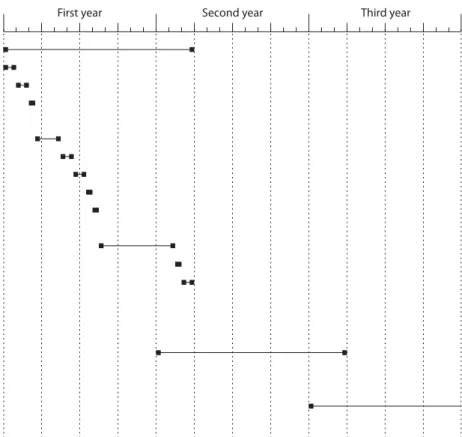
Efficient procurement offices spread the tender workload throughout the year, with overlap from one tender cycle to the next; when contracts have been awarded for the first cycle, planning for medicine selection for the next cycle should begin. Frequent communication with clients and with suppliers is needed to make sure that the tender pro-ceeds according to schedule. Many procurement offices use spreadsheets to simplify tender tracking, but all procure-ment staff members need to use a common spreadsheet format to avoid misunderstandings that can result from dif-ferent people developing their own. Figure 21-1 illustrates an annual tender cycle of fifteen months, with overlap.
The frequency of tendering should be attuned to the funding cycle, and for international tenders, to the
avail-ability of foreign exchange (particularly if inflation is an issue). Tendering once a year is not appropriate when funds, including foreign exchange, are released in monthly installments, because bids will expire before the funds for the actual awards become available. This can also be a problem where funds are released late from the govern-ment treasury but revert back if not spent by the end of the fiscal year.
21.3 Defining needs
As discussed in Chapter 18, restricting the number of phar-maceuticals on a procurement list can increase effective procurement volume for those pharmaceuticals. A central agency will usually be more efficient than a large number of health facilities operating independently when it comes to selecting a restricted list of essential medicines. If selection is totally decentralized, the benefits of group purchasing will be lost. On the other hand, if the health facilities do not have real input into which medicines are selected, they will not feel that their needs are being served and will lose a feeling of ownership, which may result in facilities making direct pur-chases outside the tender contracts, undermining the integ-rity of the system. A balance needs to be struck between centralized and decentralized elements of procurement.
First year Second year Third year
First cycle (15 months)
Review medicine selections (1 month) Determine quantities needed (1 month) Reconcile needs and funds (.5 month) Procurement method: open tender Open period for offers (2 months) Collate offers (1 month) Evaluate samples (1 month)
Tender board selects suppliers (.5 month) Notify suppliers, sign contracts (.5 month) Monitor order status
Supplier produces, ships medicines (6 months) Receive and check medicines (.5 month) Make payment (1 month)
Medicines ready for distribution and consumption
Second cycle (15 months)
(Individual steps as for the first cycle) Third cycle (15 months)
(Individual steps as for the first cycle)
Selection of medicines for the tender
The medicine selection committee (see Chapter 16), which is often known as the formulary committee, should meet before each tender to finalize the list of medicines. If, for example, a tender is scheduled for June and quantification takes three months plus one month for clarification and ten-der document preparation, the medicine selection commit-tee would meet in January.
Requests for additions or changes to the procurement list should be compiled throughout the year by the procurement agency, the selection committee, or both. Often, provisions are in place to obtain special approval for purchasing items not included on the essential medicines list.
Requests for additions to the list should be made in writ-ing with justification for the addition and (if applicable) the name of the product to be replaced. Members of the techni-cal staff of the procurement agency or medicine selection committee should compile information from the medical literature on the new product (and on the therapeutic cate-gory the product represents) for the selection committee. Some procurement programs require that for each addition to the list a similar product be deleted, unless the proposed addition represents a new therapeutic category. usually, however, the list of products continues to grow, which can present problems in both managing and financing procure-ment.
Analyses of past procurements using methods such as VEN (vital, essential, nonessential), ABC, and therapeu-tic category analysis (see Chapter 40) should be compiled before the meeting of the medicine selection committee to focus deliberations and help in rationally limiting the pro-curement list.
After the selection committee has met, the procurement office develops a list of the approved medicines for quantifi-cation. In computerized procurement agencies, this process may take one or two weeks.
Quantification
As discussed in Chapter 20, the procurement office is responsible for producing a reasonably accurate estimate of pharmaceutical requirements for each tender, but much of this responsibility can be decentralized. Some health systems ask each level with decision-making authority to compile its own list of estimated quantities required for medicines on the procurement list. The central procurement office then compares the lists with past consumption, checks for any known changes affecting demand, clarifies questions directly with the client, and compiles the overall list for pro-curement.
Quantification can consume considerable time in pro-grams that are decentralized but require multiple layers of review. With four levels of management authority (health
area, regions/districts, provinces, and national) involved in reviewing estimates, developing a list of medicine needs for procurement may take six to nine months. If the quantifica-tion process extends to six months or more, a full year may pass by the time the pharmaceuticals are actually received. In that time, needs may change, and money is wasted if the pharmaceuticals purchased no longer match current needs.
Methods for procurement quantification—consumption-based, morbidity-quantification—consumption-based, and proxy consumption—are dis-cussed in Chapter 20. The choice of method is based largely on the type and reliability of data on medicine usage, patient use, and morbidity patterns.
Countries should avoid making one major effort to quan-tify medicines and then relying on the same data for several years thereafter. No matter how accurate the original quanti-fication may have been, given changes from year to year, the earlier projections become increasingly unreliable guides to later procurement needs.
When the quantification has been completed, the respon-sible committee (it may be a tender board or a special pro-curement committee) should review and approve the list of medicines and the quantities proposed. Having the procure-ment office estimate the actual cost before the list is sent to the committee for review, and definitely before the actual tendering is executed, is important. If cost estimates are not done, the subsequent evaluation of tender offers may indi-cate that costs exceed funding.
21.4 Selecting suppliers for tender
participation
The selection of suppliers has a profound effect on the quality and cost of pharmaceuticals acquired. Inadequate safeguards in supplier selection may result in the purchase of medicines that are ineffective, unsafe, or even deadly. As discussed in Chapter 18, hidden costs resulting from late deliveries, complete default on confirmed orders, losses caused by poor packaging, or short expiration dates—com-mon problems with unreliable suppliers—may raise the actual medicine cost to several times the original contract cost.
New suppliers are constantly coming into the market, while others are changing to new fields, merging, or going out of business altogether. New companies may have diffi-culties with quality control and packaging for export during their first years of production but later become reliable, low-cost producers. At the same time, a company long known for high-quality products and prompt service may become seriously deficient as a result of changes in management or regional distributors. A multinational company offering an attractive price may provide excellent service in one country and poor service in a nearby country, solely because of its choice of in-country representatives.
An efficient procurement office must therefore be able to closely monitor supplier performance and consider the relevant information during both prequalification or postqualification.
Types of potential pharmaceutical suppliers
Government pharmaceutical factories, local private manu-facturers, and foreign manufacturers are primary sources of pharmaceuticals, because these companies do the manufac-turing themselves. Donors, international procurement ser-vices, independent foreign exporters, and local importers and distributors are secondary sources; they obtain pharma-ceuticals from manufacturers for resale.
As discussed, both donor financing and national procure-ment laws and regulations may determine the options for supplier selection.
Pharmaceutical manufacturers. Pharmaceutical man-ufacturers can be classified as research-based and non– research-based producers. The well-known multinational pharmaceutical companies are research based in that their reputation and, to a large extent, their profitability depend on new pharmaceuticals developed through research. These pharmaceuticals are patented and vigorously promoted by brand name. Nevertheless, many such firms also produce a line of pharmaceuticals that they sell by generic name at a lower price than their brand-name products. These phar-maceuticals are often made on the same production line and sometimes in the same batch as the brand-name product. Quality standards are identical; only the packaging and appearance of the medicine are different.
Non–research-based firms range from small, one-factory, local companies to large national or multinational generic pharmaceutical manufacturers that frequently market phar-maceuticals only by their nonproprietary names. Although they may have less name recognition, many generic manu-facturers produce products equal in quality to those of any brand-name company.
International procurement services. International pro-curement services are sometimes nonprofit companies or arms of international agencies. Sometimes these services operate as private, for-profit entities. They provide services from one or more warehouses, and they vary with regard to selection of medicines, prices, means of quality assur-ance, payment terms, restrictions placed on the buyer, and nature and timeliness of service provided. Some well- established international procurement agencies are listed in the annual International Drug Price Indicator Guide (MSH). Some procurement agencies, such as Crown Agents, do not maintain inventory but are ad-hoc purchasing agents that must go through the sometimes lengthy process of negotiating prices with individual manufacturers and then arranging shipment from the manufacturer to the pur-chaser.
These agencies can play a valuable role in international tenders, providing competitive international prices for a range of products and access to small quantities of pharma-ceuticals—sales that may not interest primary manufactur-ers. Their proposals should be evaluated by the same criteria used for other sources of supply, and they should specify the name of the manufacturer and the mechanism for quality assurance, like any commercial distributor.
Independent international wholesale exporters. Independent international wholesale exporters—some-times known as “jobbers”—purchase pharmaceuticals from a variety of manufacturers for resale. Many of these com-panies around the world specialize in exports to develop-ing countries. Most exportdevelop-ing countries exercise less strict control over jobbers than over manufacturers, a practice that can open purchasers to risk of procuring poor- quality products. Hence, it is essential to get the name of the pri-mary manufacturer and make sure that the distributor provides bona fide quality assurance documents and cer-tifications from the exporting-country regulatory agency with each registration request, tender offer, and shipment. Forged certification documents have been received in some countries from less reliable foreign exporters. WHO has developed prequalification procedures related specifically to wholesalers. Procurement offices should consider adapt-ing the WHO procedures when qualifyadapt-ing wholesalers as suppliers.
Local importers and distributors. Local importers and distributors—also known as wholesalers—are often major forces in the local pharmaceutical market, both financially and politically. Like foreign distributors, these companies may not closely examine the quality of the products sup-plied by the manufacturers with which they work. In many countries, these companies have exclusive rights to rep-resent certain manufacturers, and tender offers for these manufacturers’ products come through the local distributor. Again, the procurement office may wish to adapt and apply the WHO wholesaler prequalification criteria when qualify-ing this type of supplier.
Locating and contacting qualified suppliers
Generally, identifying qualified suppliers should be done through a systematic prequalification process or by advertis-ing an open tender followed by a rigorous postqualification evaluation.
Open public tenders can be publicized through local newspaper notices and Internet tender portals, such as dgMarket (http://www.dgmarket.com). Increasingly, pro-curement agencies are posting tender notices to their own websites (for example, Tamil Nadu Medical Services Corporation and Tanzania’s Medical Stores Department). Notices can be sent to international newspapers, trade direc-tories, and journals with wide circulation. The World Bank
has published guidelines on e-tendering for programs that it finances (World Bank 2009).
Agencies that are required to purchase only from pre-qualified suppliers may still publicize their intent to pur-chase through an international notice, in addition to contacting prequalified suppliers directly. This “safeguard” practice informs the prequalified suppliers and may also arouse the interest of new suppliers.
Even when all foreign suppliers in a tender are repre-sented by local agents, notice through international chan-nels may be faster and more reliable than depending on local agents to alert foreign suppliers. Earlier notification allows suppliers more time to prepare offers and thus increases the probability of competitive offers.
Contacts with international agencies. Contacts with international agencies may be an effective way for a pro-curement office with little international experience to iden-tify potential suppliers. This arrangement may be especially useful in places without central government authority, such as in the early days of East Timor’s independence, when uNICEF procured pharmaceuticals on behalf of the interim government.
The WHO prequalification scheme can guide countries to suppliers that provide quality-assured products, and the Global Fund’s voluntary pooled procurement mecha-nism also helps countries access quality products at com-petitive prices. Other global initiatives, such as Stop TB and the Global Drug Facility, Roll Back Malaria and the Affordable Medicines for Malaria program, and WHO’s AIDS Medicines and Diagnostics Service, offer information on suppliers of specialized products, and in some cases, on comparative pricing.
Contacts with other procurement offices. As discussed in Chapter 18, even where a formal, regional multicountry pooled procurement system is not realistic, countries in a region may be able to develop a coordinated information- sharing process among their national procurement offices— sharing information on prices and supplier performance.
Information on international prices. To know whether potential suppliers are offering competitive prices, procure-ment offices need a point of reference or sufficient experi-ence in the market to make accurate cost estimates. One such reference for international prices for essential medi-cines, the annual International Drug Price Indicator Guide, contains the catalog prices from several international pro-curement agencies and actual tender prices received by developing-country procurement agencies. The Global Fund’s Global Price Reporting Mechanism is an important source of comparative pricing data from countries that pur-chase medicines through Global Fund grants. Reference prices can also come from one of the nonprofit international procurement agencies, and most of them provide a price catalog on request. The global initiatives discussed above can provide pricing information related to their specific
mandates. Chapter 18 lists various price-reporting refer-ences.
Evaluating new suppliers
When considering contract awards to previously unknown suppliers, establishing how product quality will be assured is essential. If the procurement office does not have a way to test products, it may argue against an award to a foreign supplier whose products are either not approved through the WHO prequalification process or not registered by a stringent regulatory authority. As noted, procurement laws, regulations, or policies may require that national suppliers be given preference (or at least access to the tender), but in many cases, these suppliers do not have international certifi-cation. The procurement office is still responsible for exclud-ing substandard suppliers from the tender.
In addition to deciding whether a supplier is generally reliable, which of the supplier’s products are of acceptable quality must be determined. Some suppliers may produce good-quality liquids but not tablets or injections. A supplier may have difficulty producing certain medicines because of a lack of quality raw materials or a lack of certain equipment.
Some procurement programs establish a list of critical medicines for which potential quality issues exist and limit suppliers for those products. Trying to qualify each supplier separately for each medicine on the tender list certainly will add substantial time to the pre- or postqualification process. In a West African country that decided to prequalify suppli-ers separately for each medicine, the prequalification pro-cess for one tender took nearly eighteen months.
Procurement staff must develop a formal system of deter-mining suppliers’ reliability to eliminate suppliers that are substandard. Two aspects are involved: evaluating potential new suppliers (for pre- or postqualification) and rating the performance of current and past suppliers.
Evaluation of new (unknown) suppliers should be approached through formal prequalification and through testing products received when feasible, followed by perfor-mance monitoring.
Formal prequalification. As mentioned, prequalifica-tion is the process of developing a list of registered suppliers based on past performance, references from previous cli-ents, and documentation of product quality before they are invited to submit bids on tenders. Although establishing an initial list of prequalified suppliers can be time-consuming, it expedites the tender evaluation because every bidder is qualified. A rigorous prequalification process will include references from past clients and inspections of manufactur-ing sites by quality experts (WHO 1999).
Annex 21-1 lists information one should check when con-sidering a new supplier. Sample registration forms used by the international nonprofit procurement agencies can be requested from the agencies.
Test performance on trial purchases. As part of their monitoring process, procurement programs should, if pos-sible, test samples of products received. Products from new suppliers should be tested more often than products from established, trusted suppliers. Purchasers should generally not procure products that are needed to treat critical illness or that absolutely require timely delivery from completely new suppliers. For example, an unknown supplier might be awarded a contract for vitamin B complex, but not for gen-tamicin.
Monitoring and evaluating supplier performance After a contract is awarded, monitoring the supplier’s ser-vice and quality should provide the basis for decisions regarding future purchases. In many countries, monitor-ing is done informally and without written records, which makes assembling data for review by procurement commit-tees difficult. Successful purchasing agencies use a formal monitoring system, as described in Section 21.9 on procure-ment information.
In general, suppliers that have performed poorly should be excluded from the next tender. Some procurement agen-cies give a probationary re-approval to suppliers that have had problems, such as too many partial shipments or exces-sive lead times, but offer high-quality products at competi-tive prices. If problems recur, the nonperforming suppliers are then barred from the next tender. If a supplier’s problems are sufficiently grave, it can be barred for a two-year period and then be forced to prequalify again.
Some procurement offices use a point system, assign-ing values to performance criteria such as those shown in Annexes 21-1 and 21-2. The relative weights of each cate-gory vary; for example, in some situations, the lead time may be very important and be given a high weight; in other situations, it may be a minor factor. In countries with strong regulatory control of the pharmaceutical market, product quality may be given a low weight, because all registered products are assumed to be of acceptable quality.
Rating systems offer two options for ranking applica-tions: in one, a minimum passing score is used; in the other, suppliers are ranked from top to bottom overall, and contract preference is given to higher-ranked suppliers when prices are equivalent. A supplier with a much higher rank might get the contract despite a competitor’s offer of lower prices.
Because ratings of supplier reliability and quality have a tremendous effect on the number and quality of suppliers that participate in a tender, the ratings must be as impartial as possible, with criteria written into the tender adjudication process. Ratings will always be subjective to some extent, so to ensure impartiality, the entire procurement commit-tee, or at least a multiperson team, should be responsible for assigning supplier ratings.
21.5 Preparing and issuing tender documents
After selection, quantification, and preparation of the ten-der list are completed, bid packages are sent out to suppliers or posted on a website. For restricted tenders, packages are made available to all prequalified bidders; in open tenders, they are made available to all interested bidders. The tender package typically includes the documents discussed below. (See References and Further Readings for sources of tender documents that can be adapted.)
Invitation to bid. This describes the scope of the
procure-ment, the purchasing group that is soliciting offers, the conditions under which bids will be accepted, the address for submission, the date and time bids are due, and the dates to be covered by the contract.
Instructions to bidders. These cover how to submit
docu-ments, including how to state prices; dates of bid validity; what currencies to use; what documents are required in addition to bid forms; bid and performance bonds (if applicable; see Chapter 39); precautions against undue contact with procurement office staff; format for submit-ting offers; domestic preference (if any); criteria for bid evaluation; and procedures involved in adjudication, award, and notification. Forms should be appended for performance and bid bonds and for documenting domestic preference and value added, if applicable. In addition, the procurement manager should indicate
in the tender document itself how suppliers’ offers will be evaluated. This step shows all suppliers the importance of the various requirements specified in the tender. Figure 21-2 shows an evaluation matrix introduced by Papua New Guinea to assess the potential suppliers for pharma-ceutical tenders.
Bidding documents usually include a statement indi-cating that the procurement committee may reject any or all bids. Rejection of all bids is justified when no effective competition exists or bids are not substantially responsive.
Conditions of contract. Thesediscuss general conditions in
the contract that will be signed with successful bidders and any special conditions applicable to the current pro-curement (see Chapter 39).
General technical specifications. These provide
informa-tion on good manufacturing practices (GMP) standards, pharmacopoeial standards, nomenclature and descrip-tion required for each product, shelf life and expira-tion date parameters, labeling instrucexpira-tions, packaging instructions, GMP and quality assurance certificates required, and other evidence of product quality to be submitted with the tender and with each shipment. Specific pharmacopoeial standards should be listed for
each product; if any of a range of standards is adequate (British Pharmacopoeia, U.S. Pharmacopeia, European Pharmacopoeia, or International Pharmacopoeia), it
should be noted. If special packaging or labeling is required for a subset of products, this requirement should be indicated on the schedule of requirements (see below), but a generic statement of packaging and labeling applied to all products should be included in the general technical specifications. Instructions about label-ing (contents and language) and package inserts can be included in the technical specifications, unless specific requirements exist for a subset of products. These should be indicated on the tender list.
If all products are to be shipped to the same destina-tion, on the same delivery schedule, by whatever means is most efficient and cost-effective, this specification can be stated in the conditions of contract. If different instruc-tions apply to certain products, they should be stipulated in the schedule of requirements.
Schedule of requirements, or tender list. This provides a
concise description of each product and the quantity required, along with any technical specifications unique to that item. If it can be printed with sufficient space for suppliers to enter offers, having suppliers use this space for bids greatly simplifies the collation of offers. Sufficient space should be provided so that the supplier can enter all relevant information, including the name of the origi-nal manufacturer.
The schedule of requirements should include the International Nonproprietary Name (INN), or generic name (for combination products, the name of each generic component), the strength in metric units for each component, the basic unit (tablet, capsule, vial, bottle), the package size, and the number of packages needed. Some tenders list both the total number of packages Figure 21-2 Papua New Guinea pharmaceutical tender
TENDEr EVaLuaTION sHEET
Indicator Weight Comment
1. Financial 30%
1.1 Form of bid 30% Lowest
2. Performance 30%
2.1 Delivery 5% Within specified time—5%
2.2 Years experience supplying Papua New Guinea
(PNG) 5% 2 years or more—5%
2.3 Past contracts 5% PNG—3%; developing countries—2% (within last 5 years)
2.4 Packaging 5% As specified in tender—5%
2.5 Financial capacity 5% Acceptable bid bond supplied—5%
2.6 Evidence of financial capacity 5% Banker’s details and financial records—5%
3. Quality 40%
3.1 Product documentation submitted as per
conditions of bid 15% Documents submitted for all pharmaceutical and medical equipment products—15% > 80% required documentation—10%
60–80% required documentation—7.5% 30–60% required documentation—5% 0–30% required documentation—0% 3.2 Manufacturer’s certifications submitted as per
form of bid 15% Manufacturer’s certifications received for all pharmaceutical and medical equipment products—15% > 80% required documentation—10%
60–80% required documentation—7.5% 30–60% required documentation—5% 0–30% required documentation—0% 3.3 Manufacturer’s labeling submitted as per form
of bid 10% Manufacturer’s labeling received for all pharmaceutical and medical equipment products—15% > 80% required documentation—10%
60–80% required documentation—7.5% 30–60% required documentation—5% 0–30% required documentation—0%
and the total number of basic units needed, to avoid misunderstanding and to allow for the possibility that a supplier may offer a different (but acceptable) package size representing the same number of basic units. The tender should specify whether the listed package sizes are the only ones acceptable; some procurement agencies request offers on all package sizes available.
Each unique product should have a separate inventory code number, used only for that product. This code is useful in compiling product catalogs and is essential for computerized information systems. It can also be helpful in making sure that all parties are referring to the same item when clarifying issues with client facilities or with suppliers. For therapeutic category analysis, a supple-mentary code can be used to assign each drug product to a therapeutic category (see Chapter 40).
To simplify future procurements and make sure that all staff use the same terminology in procurement and der functions, compiling all information about each ten-der product into a procurement catalog is useful. With a computerized system, developing a catalog is simple; updating a product catalog manually is more difficult, but the effort may be worthwhile to save time in compil-ing future tender lists.
21.6 Adjudicating the tender
The most important aspect of adjudication is that it is an open and transparent process that assures all participants that the tender was conducted fairly. Tender adjudication involves several separate activities and stages—
• Prepare for adjudication during the open period. • Receive and open bids.
• Collate bids for adjudication.
• Adjudicate offers and award contracts. Preparing during the open period
The length of the open period (time between the invitation to tender and the closing date) typically varies from four to eight weeks. A longer open period lengthens the total lead time for obtaining pharmaceuticals but may also increase the number of offers received. The procurement agency should prepare for receipt of documents, collation, and adjudication during the open period.
Some suppliers may request clarification about product description, package size, pharmacopoeial standard, label-ing, or packaging requirements. If clarification is needed because of a mistake or omission in the tender package, it should be provided to all participating bidders. Similarly, if one supplier is given approval to offer a product or pack-age that is similar to but not the same as that listed in the
schedule of requirements, all bidders should be informed that such an exception is approved.
Receiving and opening tender offers
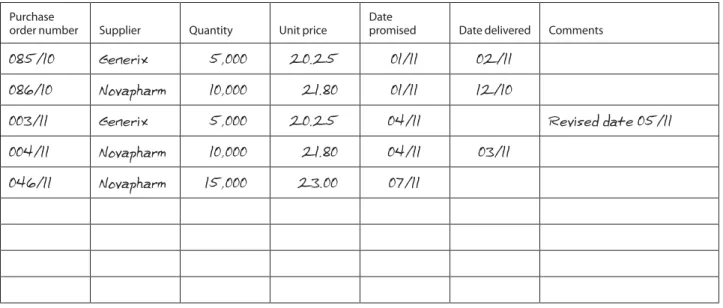
To ensure confidentiality and to avoid accusations of price fixing or undue influence on decisions, the procurement agency must adhere strictly to the closing date and time. No bids should be opened before the date and time specified. A written record should be kept of all bids received, docu-menting the date received and the person who received the bid. The unopened bids should be stored in a locked, secure area until the closing date. The date of bid receipt should also be entered into the procurement management informa-tion system to track the response to tenders. If due dates are approaching and suppliers—particularly those known to be reliable, low-cost sources—have not responded, the pro-curement agency can remind all suppliers of the approach-ing deadline by telephone, fax, or e-mail.
At the specified date and time, the bids should be formally opened, with at least one member of the procurement com-mittee and bidder representatives (if they choose to be pres-ent) in attendance. Specifics of how the bids are opened and documented vary by country—with some procedures man-dated by national regulations. Details such as the bidder’s name and address, and required documentation such as bid form and bid security for each opened bid, are often read aloud. If the bid security has not been deposited, an imme-diate disqualification usually results.
Each opened bid should be logged in a ledger and num-bered for future reference. If possible, writing the number of enclosed pages on the outside of the tender envelope may be useful to avoid confusion during adjudication. Often, a note taker documents the meeting proceedings, and at the end of the meeting, attendees sign the draft minutes, which every-one will receive for record-keeping purposes.
Collating offers for adjudication
The first step in collating offers is to determine which offers, if any, are nonresponsive to tender conditions. Suppliers that have not met the basic requirements related to bidder quali-fication, medicine description, strength, pack size, qual-ity requirements, and delivery date are nonresponsive. If required information has not been provided, the bid is non-responsive. If the tender documents require the supplier’s signed acceptance of contract terms and the supplier has not signed, the bid is nonresponsive.
Information from all responsive bids should be compiled in an adjudication report to allow side-by-side comparison of the offers. Nonresponsive bids should not be entered into the collated adjudication report, but the problems should be documented in writing for review by the procurement com-mittee.