ORIGINAL RESEARCH ARTICLE
Effects of Vaginal Lubricants on
In-Vitro
Progressive Spermatozoa
Motility
Stacey L Wilson
1, Jamila K Adam
1, Suresh Babu Naidu Krishna
1*
Department of Biomedical & Clinical Technology, M L Sultan Campus, Durban-4000, Republic of South Africa
*For Correspondence: E-mail: [email protected]; Phone: +27-31-373-5291
Abstract
Vaginal lubricants are used to solve intercourse difficulties or as sexual enhancers, but recent reports raise questions about their safety in terms of fertility. In this study, twenty semen samples were tested against commercially available vaginal lubricants for progressive spermatozoa motility and vitality with varying exposure time intervals. Results showed that the vaginal lubricant which least affected progressive spermatozoa motility was the oil-based vaginal lubricant, which kept the mean percentage of progressive spermatozoa motility within the minimum normal range of 32%, following 60 minutes of exposure. The silicone-based vaginal lubricant produced similar results to the oil-silicone-based vaginal lubricant, however the progressive spermatozoa motility dropped below the minimum normal range within 60 minutes of exposure. The fertility lubricant did not produce mean progressive motilities that were within the normal minimum range at any of the three time intervals, producing poor results overall. The vaginal lubricant which produced the poorest results was the water-based, which immobilized all of the spermatozoa within 5 minutes of exposure and killed on average 95.23% within 60 minutes. Although further assessment is required, these results highlight potential fertility issues related to the formulation of commercially available vaginal lubricants. (Afr J Reprod Health 2017; 21[3]: 96-101).
Keywords: Dyspareunia, Fertility, Sperm motility, Sperm function, vaginal lubricants
Résumé
Les lubrifiants vaginaux sont utilisés pour résoudre les difficultés des rapports sexuels ou comme agent d‘amélioration de la performance sexuelle, mais des rapports récents posent des questions sur leur sécurité en termes de fertilité. Dans cette étude, vingt échantillons de sperme ont été testés contre les lubrifiants vaginaux disponibles dans le commerce pour la motilité progressive des spermatozoïdes et leur vitalité avec des intervalles de temps d'exposition variés. Les résultats ont montré que le lubrifiant vaginal qui a le moins affecté la motilité progressive des spermatozoïdes était le lubrifiant vaginal à base d'huile, qui maintenait le pourcentage moyen de motilité progressive des spermatozoïdes dans la gamme minimale normale de 32%, après 60 minutes d'exposition. Le lubrifiant vaginal à base de silicone a produit des résultats similaires au lubrifiant vaginal à base d'huile, mais la motilité progressive des spermatozoïdes a chuté en dessous de la plage minimale normale dans les 60 minutes suivant l'exposition. Le lubrifiant de fertilité n'a pas produit de motilités progressives moyennes qui se situaient dans la plage minimale normale à l'un des trois intervalles de temps, ce qui a donné de mauvais résultats dans l'ensemble. Le lubrifiant vaginal qui a produit les résultats les plus pauvres a été l'eau, qui a immobilisé tous les spermatozoïdes dans les 5 minutes de l'exposition et a tué en moyenne 95,23% en 60 minutes. Bien qu'une évaluation supplémentaire soit nécessaire, ces résultats mettent en évidence les problèmes potentiels de fertilité liés à la formulation de lubrifiants vaginaux disponibles dans le commerce. (Afr J Reprod Health 2017; 21[3]: 96-101).
Mots-clés: Dyspareunie, fertilité, motilité de sperme, fonction de sperme, lubrifiants vaginaux
Introduction
Vaginal products need to be designed for women‘s convenience. The sexual lubricant a woman uses can encourage her pleasure in a variety of ways. Women who are trying to conceive are at higher risk of experiencing vaginal dryness due to factors such as stress and having planned intercourse in
been made in this research area over the past few years and at present, the anatomy, physiology, microflora and secretions of the vagina are well understood3. The vagina, in addition to being a genital organ with functions related to conception, serves as a potential route for drug administration. Mainly used for local action in the cervico-vaginal region, it has the potential of delivering drugs for systemic effects and uterine targeting4.
Vaginal lubricants are available over the counter (OTC) and are frequently used by women in order to allow the minimizing of dyspareunia (difficult or painful sexual intercourse) or to enhance sexual pleasure5. These products are often marketed as water-based gels due to their interesting technological properties (e.g., easiness to produce and scale-up ability, versatile mechanical and rheological properties and affordability), bio adhesive properties, general condom compatibility, high user acceptability and the usually favorable safety profile of this semi-solid dosage form6, 7. Other lubricant products based on different pharmaceutical systems are also available, but may present various disadvantages. For example, oil-based products are incompatible with latex condoms8, while those containing silicone are usually more expensive. Lubricants typically incorporate ingredients with GRAS status (generally recognized as safe substances, under 21 CFR part 182) or that are otherwise identified as non-toxic at recommended concentrations9. There are many lubricants, with varying compositions, marketed around the world. Despite being marketed as ―sperm friendly‖, some have been shown to be detrimental to sperm function.
There is a dearth of documentation of the human safety of vaginal lubricants. Many developing countries lack the capacity to monitor and review the safety of pharmaceutical products, and often rely on guidance from more stringent regulatory bodies such as U.S Food and Drug Administration (FDA) or the European Medicines Agency (EMA)10,11. The FDA and EMA traditionally list lubricants as medical devices and exclude these products from extensive pre-clinical and clinical testing as otherwise required for drug products. Recent in vitro and in vivo studies on animals suggest that water-based lubricants are not
hyperosmolarity12 that can lead to toxic effects and eventually lead to increase in the acquisition and transmission of sexually transmitted pathogens such as HIV12. These results highlight the potential of many top selling brands of sexual lubricants to cause epithelial injury due to their hyperosmolarity. Thus necessitating the importance of performing more rigorous safety testing on these products. Other properties of lubricants should also be considered, specifically, including intrinsic ingredient toxicity and ph. In this last case, deviations from the normal vaginal pH in the healthy adult (3.5–4.5) are considered as potentially harmful13.
In this study, commercial vaginal lubricant gel products available locally in South Africa were selected and evaluated in-vitro on progressive spermatozoa motility to assess to the safe use of vaginal products for conceiving couples.
Experimental section
Semen specimen
Twenty semen specimens were obtained from patients presenting to the Durban Fertility Clinic, South Africa for diagnostic semen analysis. Semen specimens were obtained by masturbation following 2-7 days of sexual abstinence and were analysed within 2 hours of collection according to the WHO guidelines14. Exclusion criteria included aspermia, oligozoospermia, hypospermia, asthenozoospermia, samples not produced via masturbation, contaminated samples, patients who were on medication that may affect semen parameters and patients younger than 18 years of age.
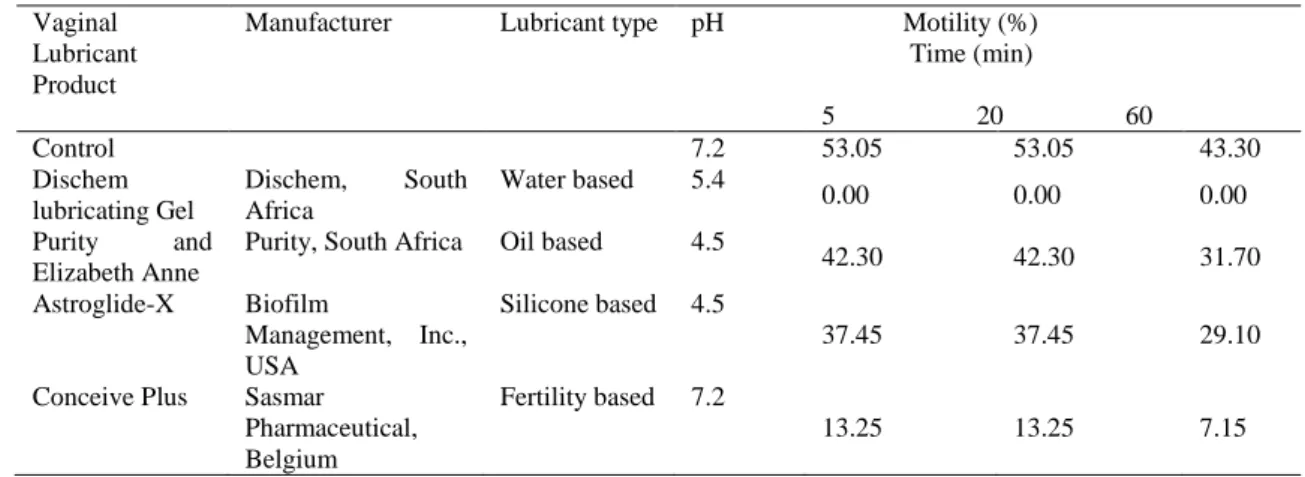
Table 1: The Effect of Vaginal Lubricants on Progressive Spermatozoa Motility
Vaginal Lubricant Product
Manufacturer Lubricant type pH Motility (%) Time (min)
5 20 60
Control 7.2 53.05 53.05 43.30
Dischem lubricating Gel
Dischem, South Africa
Water based 5.4
0.00 0.00 0.00
Purity and Elizabeth Anne
Purity, South Africa Oil based 4.5
42.30 42.30 31.70
Astroglide-X Biofilm
Management, Inc., USA
Silicone based 4.5
37.45 37.45 29.10
Conceive Plus Sasmar Pharmaceutical, Belgium
Fertility based 7.2
13.25 13.25 7.15
Values are the mean percentages of progressive spermatozoa motility at different time intervals (p<0.05).
(Nikon, USA). Following semen analysis to determine viability in the study, 0.5 ml of semen sample was pipetted into a sterile test tube containing 0.5 ml of different vaginal lubricants (one test tube for each vaginal lubricant and an undiluted sample) and incubated at 37oC and 6% CO2 in an incubator (Thermo Forma,) for
progressive spermatozoa motility to be assessed at varying time intervals of 5, 20 and 60 min. The undiluted semen sample acted as control. Two hundred spermatozoa in two groups of a hundred each were assessed and averaged to obtain a percentage of progressive, non-progressive and immotile spermatozoa. The counting process was repeated at 5 min, 20 min and 60 min of incubation for each of the 5 study samples per participant. All experiments were carried out in triplicates.
Statistics
All determinations were performed in triplicate unless otherwise stated. All analyses were performed using SPSS 23.0 software (SPSS Inc., Chicago, IL, USA), t-test and ANOVA test was performed and interpreted using the values. A p-value <0.05 was considered as significant.
Results
Mean progressive spermatozoa motility following exposure to different vaginal lubricants is shown in Table 1.
The water based lubricant (Dischem lubricating gel) had baseline 0.0. Progressive spermatozoa motility for control was higher than all of the other variables (water-based, oil-based, silicone-based, fertility lubricant) tested. The fertility lubricant (Conceive Plus) upon exposure at 5 and 20 min had the largest range and decreased after 60 min. Following the 20 min mark, all the samples exhibited decreasing behaviour. All of the p-values are less than 0.05 (p<0.05), indicating that the differences observed between the pairs (control and different lubricants) are significant.
The overall comparison of the 4 types of lubricants and the control were analysed using the ANOVA test. The null hypotheses claim that overall, there is no difference in the overall means of the 4 types of lubricants and the control. The alternative hypotheses claim that overall, there is a significant difference in the overall means of the 4 types of lubricants and the control (p = 0.000).
Discussion
trend was found across the control and all 4 lubricants over the three time intervals. The oil-based vaginal lubricant was the closest in relation to the control values. The silicone-based vaginal lubricant and oil-based vaginal lubricant values were in close proximity to each other. The water-based vaginal lubricant and fertility lubricant were the poorest when compared to the control values with respect to progressive spermatozoa motility.
The high progressive spermatozoa motility of undiluted control samples was in compliance with the normal range for progressive spermatozoa motility as per WHO guidelines14. Descriptive statistics showed that the mean progressive motility of control sample was greater than the 4 vaginal lubricants under study. Furthermore, progressive motility of control sample at 60 min exposure was still within the normal range of 32%. The results are in agreement with Aitken et al15 and Schuffner et al16 who reported a loss of motility and increased occurrence of apoptosis following incubation of semen at 37oC. Although spermatozoa have the ability to survive for up to 5 days in the female reproductive tract it must be stated that this survival rate is subject to the spermatozoa having the ability to swim out of the seminal plasma, which pools at the cervix following ejaculation; and reaching the fallopian tubes where tubal fluid has the optimal environment and nutrients for spermatozoa to survive until an oocyte is ovulated.
The oil-based vaginal lubricant produced the second highest mean percentage of progressive spermatozoa motility at various time intervals with a statistically significant decrease in the progressive spermatozoa motility. This could be due to the fact that the oil-based vaginal lubricant did not homogenise with the semen samples upon long exposure times and separated into two-distinct heterogeneous layers, thereby not fully exposing all spermatozoa to the acidity of the oil-based vaginal lubricant but leaving some spermatozoa exposed to the neutral pH of the semen protecting them from this deleterious effect17. This study corroborates the findings of Anderson et al.18 who suggested that light oils have minimal detrimental effects on spermatozoa motility.
The silicone-based vaginal lubricant produced the third highest mean percentage of progressive spermatozoa motility at different time intervals of exposure. This shows that within an hour of the semen sample being exposed to the silicone-based vaginal lubricant the progressive spermatozoa motility fell out of the normal range of 32% set by the WHO. A statistically significant decrease in progressive spermatozoa motility was found in the silicone-based samples.
Progressive spermatozoa motility of the samples diluted with fertility lubricant did not fall within the normal range of 32% set out by the WHO (Table 1) at varying time intervals. This could be due to the osmolality of the fertility lubricant being different to that of semen19. The osmolality of vaginal lubricants is dependent on the use of glycols, which are added to lubricants as moisturisers and result in an increased osmolality. Hypo-osmotic fluids promote swelling of spermatozoa in the absence of volume regulation20 rendering them unable to penetrate and migrate through vaginal mucus21. This could be the factor resulting in the slow progression of spermatozoa in the samples diluted with fertility lubricant, which contained glycerol (a type of glycol) as an ingredient.
The water-based vaginal lubricant had the lowest mean progressive spermatozoa motility at all three time intervals (0%) demonstrating that the samples diluted with the water-based vaginal lubricant did not at any time fall within the normal range of progressive spermatozoa motility of 32% as set out by the WHO. Spermatozoa motility was not detected in the samples diluted with water-based vaginal lubricant. Water water-based lubricants are made up of water and glycerine, which may contribute to its damaging properties as glycerine has been shown to dissolve the flagellar membrane on sperm tails18,22.
Conclusion
affected progressive spermatozoa motility was the oil-based lubricant, which kept the mean percentage of progressive spermatozoa motility within the minimum normal range of 32% as set out by WHO even following 60 min of exposure. The silicone-based vaginal lubricant displayed similar results to the oil-based vaginal lubricant; however the progressive spermatozoa motility was low to minimum normal range within 60 min of exposure. The fertility lubricant did not produce mean progressive motilities that were within the normal minimum range, generating poor results overall. The vaginal lubricant which produced the lowest results was the water-based, which immobilized all of the spermatozoa within 5 min of exposure and killed on average 95.23% within 60 min. The results generated from this study suggest that vaginal lubricants do have a significant negative effect on progressive spermatozoa motility, which could be creating an additional obstacle for couples trying to conceive. However, it is worthwhile for couples suffering from the problem of vaginal dryness to avoid using these products and attempt a non-pharmacological approach for curbing vaginal dryness. Further research is needed that focuses on testing spermatozoa motility using advanced techniques like electron microscopy which would allow researchers to determine precisely how vaginal lubricants functionally affect spermatozoa flagella motility in-vitro. It is recommended that couples, especially those who have difficulty in conceiving, should be aware of the detrimental effects of such lubricants available over the counter and avoid their use.
Limitations
Only lubricant brands available from one major branch of adult shops and selling well in Durban were included in this analysis. Popular lubricants used by women in other geographical settings have not been included in this study. No analysis of the ingredients of the various assayed lubricants was performed and it is possible that some ingredients may interfere with spermatozoa motility. The ingredients and preservatives of the various lubricants have not been individually assessed for their toxicity.
Conflict of Interest
The authors declare that they have no conflict of interest.
Contribution of Authors
Stacey performed the experiment. Jamila conceived and designed the study. Suresh, Jamila collected and analysed the data. The manuscript is prepared by Suresh. All authors approved the manuscript.
References
1. Sharma R, Biedenharn KR, Fedor JM and Ashok A. Lifestyle factors and reproductive health: taking control of your fertility. Reproductive Biology and Endocrinology: RB&E. 2013; 11:66-66.
2. Mesen TB, Steiner AZ. Effect of vaginal lubricants on natural fertility. Current Opinion in Obstetrics and Gynaecology. 2014; 26(3):186-192.
3. Vermani K, Garg S. The scope and potential of vaginal drug delivery. Pharmaceutical science & technology today. 2000; 3(10):359-364.
4. Das Neves J, Bahia M. Gels as vaginal drug delivery systems. International Journal of Pharmaceutics. 2006; 318(1):1-14.
5. Mowat A, Newton C, Boothroyd C, Demmers K and Fleming S. The effects of vaginal lubricants on sperm function: an in vitro analysis. Journal of assisted reproduction and genetics. 2014; 31(3):333-339.
6. Pavelić Ž, Škalko-Basnet N and Schubert R. Liposomal gels for vaginal drug delivery. International journal of pharmaceutics. 2001; 219(1):139-149.
7. Das Neves J, Amaral MH, Bahia MF. Performance of an in vitro mucoadhesion testing method for vaginal semisolids: Influence of different testing conditions and instrumental parameters. European Journal of Pharmaceutics and Biopharmaceutics. 2008; 69(2):622-632.
8. Voeller B, Coulson AH, Bernstein GS and Nakamura RM. Mineral oil lubricants cause rapid deterioration of latex condoms. Contraception. 1989; 39(1):95-102.
9. Banerjee M, Hazra A, Bharitkar Y and Mondal NB. Insights of spermicidal research: an update. JFIV Reprod Med Genet. 2014; 3:138.
10. Geibel S. Condoms and condiments: compatibility and safety of personal lubricants and their use in Africa. Journal of the International AIDS Society. 2013; 16(1).
Pharmacy and Drug Stores in Ishaka, Uganda-a Pilot Assessment of Willingness to Report. 2014. 12. Adriaens E, Remon JP. Mucosal irritation potential of \
personal lubricants relates to product osmolality as detected by the slug mucosal irritation assay. Sexually transmitted diseases. 2008; 35(5):512-516. 13. Neves Jd, Palmeira‐de‐Oliveira R, Palmeira‐de‐Oliveira
A, Rodrigues F and Sarmento B. Vaginal mucosa and drug delivery. Mucoadhesive materials and drug delivery systems. 2014:99-132.
14. Organization WH. WHO laboratory manual for the examination and processing of human semen. 2010. 15. Aitken RJ, Allan I, Irvine DS and Macnamee M.
Andrology: Studies on the development of diluents for the transportation and storage of human semen at ambient temperature. Human reproduction. 1996;11(10):2186-2196.
16. Schuffner A, Morshedi M, Vaamonde D, Duran EH and Oehninger S. Effect of different incubation conditions on phosphatidylserine externalization and motion parameters of purified fractions of highly motile human spermatozoa. Journal of andrology. 2002; 23(2):194-201.
17. Owen DH, Katz DF. A review of the physical and chemical properties of human semen and the formulation of a semen simulant. Journal of andrology. 2005; 26(4):459-469.
18. Anderson L, Lewis S, McClure N. The effects of coital lubricants on sperm motility in vitro. Human reproduction (Oxford, England). 1998; 13(12):3351-3356.
19. Organization WH. Use and procurement of additional lubricants for male and female condoms: WH. 2012. 20. Fetic S, Yeung CH, Sonntag B, Nieschlag E and Cooper
TG. Relationship of cytoplasmic droplets to motility, migration in mucus, and volume regulation of human spermatozoa. Journal of andrology. 2006; 27(2):294-301.
21. Yeung CH, Anapolski M, Depenbusch M, Zitzmann M and Cooper TG. Human sperm volume regulation. Response to physiological changes in osmolality, channel blockers and potential sperm osmolytes. Human reproduction. 2003; 18(5):1029-1036. 22. Wallach E, Amelar RD, Dubin L and Schoenfeld CY.