IN ASSOCIATION WITH:
TRANSIT MARKETING |MOBILITY PLANNERS |PROFESSIONAL TRANSLATION SOLUTIONS i
DRAFT 2014COORDINATED PUBLIC TRANSIT –HUMAN SERVICES
TRANSPORTATION PLAN FOR IMPERIAL COUNTY
IN ASSOCIATION WITH:
TRANSIT MARKETING |MOBILITY PLANNERS |PROFESSIONAL TRANSLATION SOLUTIONS ii
2014 Public Transit—Human Services
Transportation Coordination Plan for
Imperial County
Table of Contents
i
Executive Summary ... viii
This Coordinated Plan’s Purposes ... viii
Context for the Coordinated Plan ... viii
Transportation Resources ... x
Mobility Needs and Gaps ... xii
Strategies of Response and Prioritizing These to Move Forward ... xv
1.0
Introduction ... 1
1.1 Federal Statute and Requirement... 1
1.2 This Document’s Purposes ... 2
1.3 Key Themes of Imperial County’s 2008 Coordinated Plan ... 2
1.4 Public Transit Improvements Since 2008 Coordinated Plan ... 5
2.0 Context for the Coordinated Plan ... 7
2.1 Imperial County Target Populations ... 7
Population Changes among Target Populations... 7
Vehicle Access by Imperial County Residents ... 11
2.2 Distribution of Target Populations within Imperial County ... 12
2.3 SCAG Projections of Growth and Employment ... 15
2.4 Summary Discussion of the Context for Coordinated Transportation Projects ... 15
6.0
3.0 Transportation Resources ... 17
3.1 Public Transit in Imperial County ... 17
Imperial Valley Transit ... 17
Local and Regional Zoned Routes ... 17
Express Routes (Express, Direct, and FAST) ... 18
Remote Zone Routes ... 19
City Circulators ... 21
IVT Fixed-Route Fares ... 21
Yuma County Area Transit ... 22
Public Demand Response Services ... 22
Job Access and Reverse Commute (JARC) and New Freedom Projects ... 24
CalVans Transportation Authority ... 25
3.2 Human Service Transportation Programs ... 25
IN ASSOCIATION WITH:
TRANSIT MARKETING |MOBILITY PLANNERS |PROFESSIONAL TRANSLATION SOLUTIONS iii
Subsidized Transportation... 28
3.3 Private Transportation Providers ... 28
3.4 Transportation Resource Inventory ... 29
3.5 Summary Discussion of Transportation Resources ... 30
4.0
Market Research - Mobility Need and Gap Findings ... 33
4.1 Key Stakeholder Interview Outreach ... 33
Transportation Disadvantaged Populations ... 33
Older Adult Mobility Topics ... 35
Persons with Disabilities Mobility Topics ... 37
Mobility Device, Securement, and Safety Concerns ... 37
College Students ... 39
Veterans in Imperial County ... 40
Border Pedestrian Crossings and Prospective Transit Users ... 41
Medical Trip Needs ... 43
Fort Yuma Indian Reservation and Quechan Tribe Transportation Topics ... 45
Transit Information Topics ... 48
Transportation Facilities Topics ... 48
Existing Coordination Projects and Interests in Imperial County ... 49
4.2 Consumer Intercept Survey ... 50
About the Respondents ... 50
Transportation Used and Needed ... 53
4.3 Agency E-Survey Findings ... 58
About the Responding Organizations ... 58
About the Constituents They Serve ... 59
Transportation Topics and Needs Reported ... 61
Reported to Barriers to Accessing Transportation ... 63
4.4 Workshop with SSTAC Members ... 64
4.5 Summary Discussion of Mobility Needs and Gaps ... 67
About Existing Imperial Valley Transportation Services ... 67
About the Transportation Infrastructure and Capital Improvements ... 69
Overlap with Private Sector Transportation ... 70
Additional Services for Long-Distance Trip Needs ... 70
Range of Information Portals Needed to Inform About Available Transportation Services ... 72
Culture of Collaboration and Cooperation Can Support Coordinated Transportation ... 73
5.1 Framing the Coordinated Plan ... 75
About Existing Imperial Valley Transit Services ... 75
5.2 Imperial County Coordinated Plan Goals ... 78
5.3 Strategies for Implementing Imperial County’s Coordinated Plan Goals ... 79
Goal 1 – Sustain Enhanced Public Transportation, Human Service and Private Transportation Network in Imperial County ... 79
DRAFT 2014COORDINATED PUBLIC TRANSIT –HUMAN SERVICES
TRANSPORTATION PLAN FOR IMPERIAL COUNTY
IN ASSOCIATION WITH:
TRANSIT MARKETING |MOBILITY PLANNERS |PROFESSIONAL TRANSLATION SOLUTIONS iv
Goal 3 – Continue to build collaborative partnerships to leverage available mobility options for
Transportation-Disadvantaged Populations. ... 91
Goal 4 – Provide affordable transportation to transportation-disadvantaged populations ... 96
Goal 5 – Promote and Expand Transportation Information Portals ... 103
5.4 Summary of Imperial County Coordinated Plan Goals and Strategies ... 111
6.0 Priorities for Moving Forward ... 120
Determining Coordinated Plan Priorities ... 120
Prioritized Imperial County Coordinated Plan Strategies ... 121
Short Range Transit Plan Priorities ... 121
Critical Priorities ... 122
High Priorities ... 122
Appendices ... 126
Appendix A – Federal Transit Administration 5310 Fact Sheet ... 127
Appendix B – Transportation Inventory ... 129
Appendix C – Agency E-Survey Questionnaire, English and Spanish Versions ... 142
Appendix D – Common Destinations Facility Listing ... 147
Appendix E –Outreach and 5310 Program Announcement Flyers ... 150
Executive Summary Exhibits
Exhibit ES 1 - Imperial County Households Without a Vehicle………..ixExhibit ES-2 – Imperial County Transportation Resources………..x
Exhibit ES-3 – Imperial County Transit System Map………xi
Exhibit ES-4 – Imperial County Coordinated Plan Goals………xvi
Exhibit ES-5 - Imperial County Coordinated Plan Prioritized Strategies……….xix
List of Tables
Table 1- Summary List of Needs, 2008 Coordinated Plan [Excerpt] ... 4Table 2 - Strategies to Address Gaps and Needs, 2008 Coordinated Plan [Excerpt] ... 5
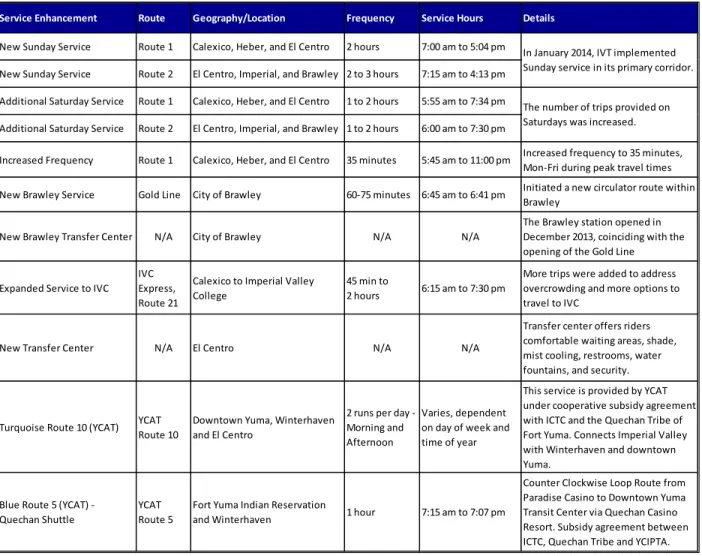
Table 3 - Imperial Valley Transit Service Enhancements as of Spring 2014... 6
Table 4 - Imperial County Target Populations ... 9
Table 5 - Imperial County LEP Populations ... 10
IN ASSOCIATION WITH:
TRANSIT MARKETING |MOBILITY PLANNERS |PROFESSIONAL TRANSLATION SOLUTIONS v
Table 7 - Means of Transportation To Work by Age ... 11
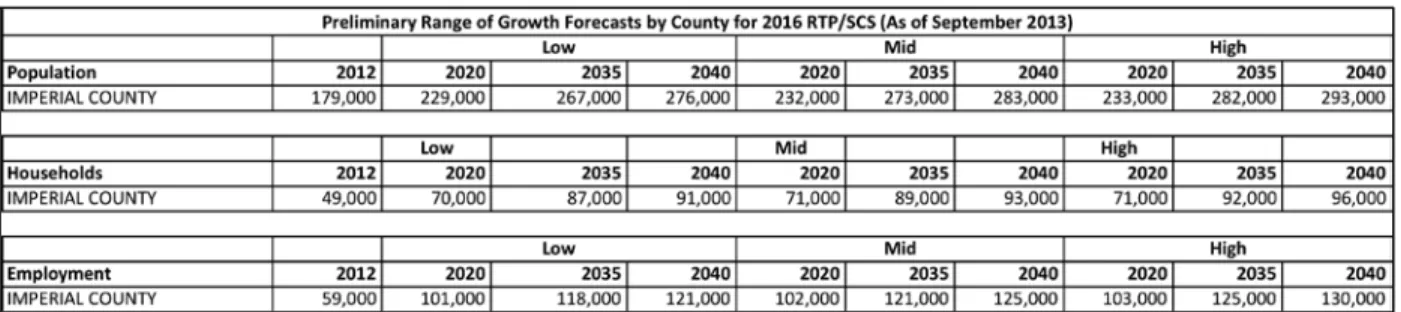
Table 8 - SCAG Imperial County Projections ... 15
Table 9 - IVT Passenger Fares ... 21
Table 10 - FY 2013 Port of Entry Border Crossings: Mexicali Into Calexico ... 41
Table 11 - Agency E-Survey: Respondents ... 58
Table 12 - Agency E-Survey: Titles of Respondents ... 59
Table 13 - Agency E-Survey: Number and Characteristics of Caseload ... 60
Table 14 - Coordinated Plan Goals for Imperial County ... 78
Table 15 - Imperial County Coordinated Plan Goals and Strategies ... 112
List of Figures
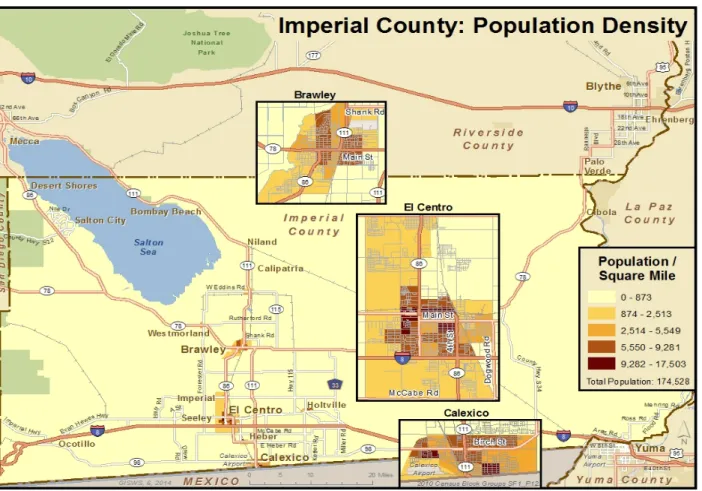
Figure 1 - Imperial County: Population Density Map ... 12Figure 2 - Imperial County Senior Population Density Map ... 13
Figure 3 - Imperial County Density of Low Income Population Map ... 13
Figure 4 - Imperial County: Households Without a Vehicle ... 14
Figure 5 - Imperial Valley Transit Fixed Routes ... 20
Figure 6 - IVT Access Service Area Map ... 23
Figure 7 - Imperial County Transportation Types ... 30
Figure 8 - Key Stakeholder Agencies Interviewed ... 33
Figure 9 - Brawley Transit Transfer Center ... 35
Figure 10 - AAA Office Transportation Information Display ... 36
Figure 11 - Calexico West Border Crossing ... 41
Figure 12 - Calexico Bus Transfer Center at 3rd Street and Paulin Avenue ... 42
Figure 13 - Taxi at New Border Port of Entry ... 42
Figure 14 - Med-Express Trips by San Diego Destination in 2013, n=2,131 Trips... 44
Figure 15 - Intercept Survey: City of Residence ... 51
Figure 16 - Intercept Survey: Education and Employment Status ... 51
Figure 17 - Intercept Survey: Gender of Respondents ... 52
Figure 18 - Intercept Survey: Age of Respondents ... 52
DRAFT 2014COORDINATED PUBLIC TRANSIT –HUMAN SERVICES
TRANSPORTATION PLAN FOR IMPERIAL COUNTY
IN ASSOCIATION WITH:
TRANSIT MARKETING |MOBILITY PLANNERS |PROFESSIONAL TRANSLATION SOLUTIONS vi
Figure 20 - Intercept Survey: Rating of Transportation Difficulty by Trip Type, ... 54
Figure 21 - Intercept Survey: Transit Famliiarity ... 55
Figure 22 - Intercept Survey: Public Transit Used ... 55
Figure 23 - Intercept Survey: Transit Information Sources ... 56
Figure 24 - Intercept Survey: Suggested Improvement Comments ... 57
Figure 25 - Agency E-Survey: Agency Types ... 59
Figure 26 - Agency E-Survey: Reported Familiarity with Public Transportation ... 61
Figure 27 - Agency E-Survey: With what frequency are these trip needs communicated? ... 62
Figure 28 - Agency E-Survey: What level of interest do you have in these transportation projects? ... 63
Figure 29 - Common Destinations Map ... 66
Figure 30 - Volunteer Driver Reimbursement Program ... 102
IN ASSOCIATION WITH:
TRANSIT MARKETING |MOBILITY PLANNERS |PROFESSIONAL TRANSLATION SOLUTIONS vii
DRAFT2014COORDINATED PUBLIC TRANSIT –HUMAN SERVICES
TRANSPORTATION PLAN FOR IMPERIAL COUNTY
IN ASSOCIATION WITH:
TRANSIT MARKETING |MOBILITY PLANNERS |PROFESSIONAL TRANSLATION SOLUTIONS vi
i i
2014 Coordinated Public Transit—Human Services
Transportation Plan for Imperial County
5.0 Executive Summary
This Coordinated Plan’s Purposes
The 2014 Public Transit – Human Services Transportation Coordination Plan Update will address the
following four objectives on behalf of Imperial County:
1. To ensure compliance with law by Imperial County, including Federal Transit Administration
Circular 9070.1G that requires the regular conduct of a Coordinated Plan.
2. To validate past or identify new unmet transportation needsand mobility gaps of the target
groups: older persons, persons with disabilities and persons of low-income. Veterans are also included as their mobility needs may differ from the general public.
3. To engender dialogue between two service sectors—public transportation and human services
– for purposes of identifying coordinated projects to address unmet needs and mobility gaps. The populations of interest here overlap with those of many Imperial County human service agencies. And trip needs described are often those most difficult to make or cannot be made on public transportation. Seeking solutions to these trip needs for Imperial County’s older adults, persons with disabilities and those of low income will require solutions that go beyond what public transportation can do alone, hence the need for this Coordinated Plan.
4. To establish a list of responsive and prioritized mobility projects and strategies,positioning Imperial County stakeholders to pursue grant and specialized transportation funding
opportunities that support such strategies over the next four to five years.
Context for the Coordinated Plan
Chapter 2 reports on the changes to and distribution of this Plan’s target populations throughout Imperial County. The County’s 2012 population of almost 173,500 persons has grown considerably over the previous decade, a 22% increase from 2000, adding an additional 142,000 persons. There are changes among groups within the overall population that will impact the mobility of individuals.
Older adults in Imperial County are 10.6% of the population, at 18,360 persons. The proportion of older adults is increasing at rates faster than for the general population, and three times that of the national growth rate for persons age 65 and older.
IN ASSOCIATION WITH:
TRANSIT MARKETING |MOBILITY PLANNERS |PROFESSIONAL TRANSLATION SOLUTIONS ix
Persons of low income, specifically adults who are at 100% of the federal poverty levels, are 11% of the total population, or 19,000 adults and an additional 3,100 adults age 65 and older. Persons living at 150% of the federal poverty level are sometimes a better measure of low income. These low-income persons total nearly 64,000, or 39% of the County’s 2012 population.
Persons with disabilities are difficult to compare with year 2000 demographics because the U.S. Census changed its reporting on disabilities. Individuals are now asked to identify functional areas with which they have difficulty. Among adults ages 18 to 64, almost 2,300 or 5% of the County’s population report ambulation difficulties, while almost 2,000 adults aged 65 and older report ambulation difficulties. Combined, these 4,300 persons are just under 10% of the County’s overall population and reporting varying mobility problems.
U.S. military veterans number 6,631 persons. Vietnam-era veterans are the largest group, now
beginning to age and some having increasing health-related difficulties. Working-age veterans in Imperial County have an unemployment rate of almost 15%, more than double the national veteran unemployment rate of 7%.
LEP populations, or limited English proficiency are 49,398 individuals, or 31% of the County’s total population, predominately Spanish speakers who speak English less than very well, according to the 2012 American Community Survey. This third of the population are residents only and do not include those who travel daily into Imperial County from Mexico and may also be of limited English proficiency.
Exhibit ES-1
Persons in households without vehicles are almost 3,400 households or 11% of Imperial Counties 49,000 households. Exhibit ES-1 identifies these geographic pockets and areas of high need around the county.
Population and employment projections prepared by the Southern California Association of Governments (SCAG)
anticipate continued growth up to 2040. Growth rates over the next ten years could bring an additional 88,000 to 103,000 residents to the county. SCAG’s employment projections also
DRAFT 2014COORDINATED PUBLIC TRANSIT –HUMAN SERVICES
TRANSPORTATION PLAN FOR IMPERIAL COUNTY
IN ASSOCIATION WITH:
TRANSIT MARKETING |MOBILITY PLANNERS |PROFESSIONAL TRANSLATION SOLUTIONS x
The distribution of Imperial County residents supports provision of transit services with the greatest density of the population living in and around cities of Brawley, El Centro, and Calexico. Nonetheless, there are pockets of persons living throughout the county where it is inefficient and not feasible for Imperial Valley Transit to provide service, given overall low-densities and low ridership potential. Some of these areas include significant identifiable clusters low-income individuals surrounding the Salton Sea and in the Eastern portion of the County.
Transportation Resources
Chapter 3 reports on the available resources that assist in transporting older adults, persons with disabilities, persons of low income, and military veterans throughout Imperial County and to
destinations outside of the county. Exhibit ES-2 identifies the four categories of service, including public and private transportation, as well as human service agency transportation that is either directly
operated or are subsidy and mileage reimbursement programs.
IN ASSOCIATION WITH:
TRANSIT MARKETING |MOBILITY PLANNERS |PROFESSIONAL TRANSLATION SOLUTIONS xi
This array of human service transportation extends and compliments IVT’s growing network of services, its current fixed-route structure represented in Exhibit ES-3 and inclusive of services to remote zones of the county and YCAT‘s Turquoise Line.
DRAFT 2014COORDINATED PUBLIC TRANSIT –HUMAN SERVICES
TRANSPORTATION PLAN FOR IMPERIAL COUNTY
IN ASSOCIATION WITH:
TRANSIT MARKETING |MOBILITY PLANNERS |PROFESSIONAL TRANSLATION SOLUTIONS xii
As presented in Exhibit E-3, Imperial Valley Transit has an extensive fixed-route public transit system of zone-based routes, express routes that provide fast and direct travel for commuters and students, local circulators for travel within cities, and remote-zone routes that provide lifeline service to the more distant communities of the county.
There are many human service transportation programs that include directly operated transportation, contracted transportation and the subsidization of transportation through bus passes, tokens, and direct fare reimbursement to other transportation providers. Private sector fixed-route, agricultural buses and taxis also provide services within and beyond Imperial County for its residents and visitors. A growing vanpool program is helping to support work trips to distant locations.
Appendix B is a Transportation Inventory presenting detail about passenger fares, service area, and other service-related data, including available information on fleet size and annual passenger trips.
Mobility Needs and Gaps
Chapter 4 describes the mobility needs and gaps developed from the Coordinated Plan’s extensive outreach efforts. Overall, responses from about 240 persons inform this discussion. These included interviews with 29 key stakeholder agencies involving about 50 individuals; a 117-person intercept-survey of the public in eight community settings; an agency E-intercept-survey with 44 respondents; and two community workshops with 15 to 20 participants each. Five key areas of findings are summarized here.
About Existing Imperial Valley Transit Services
Of the existing Imperial Valley public transit, there is both considerable awareness and appreciation for its value. Stakeholders from human service agencies and the general public presented evidence of large numbers of transportation-disadvantaged persons for whom the growing network of Imperial County’s public transportation services is very important. Evidence of success of Imperial Valley Transportation (IVT) services lies in its steady and continuing ridership growth. Stakeholders are complimenting drivers and finding the service responsive. There were very few concerns about service reliability or service quality. Riders appreciate what they have and want more, partly because some vehicle trips are beyond capacity on some runs, even with recent increases to service frequency on key routes.
While the central corridor of Imperial Valley is well served, transit riders want more frequent service, and service that goes into neighborhoods and travels within the local community, in addition to along the corridor and between communities. There is confusion about fares, in part a consequence of many public and private individual services, possibly because the IVT zone-based fare policy confuses some. There were some accessibility concerns—desiring more wheelchair capacity on both fixed-route and demand-responsive services—in part related to large numbers of transportation-disadvantaged
customers in wheelchairs, and in part because loading wheelchairs onto transit vehicles filled to capacity is difficult if not impossible.
IN ASSOCIATION WITH:
TRANSIT MARKETING |MOBILITY PLANNERS |PROFESSIONAL TRANSLATION SOLUTIONS xiii
There was some interest in expanded IVT services for both longer weekend hours and on Sundays, but these were less frequently expressed than the desire for more frequent buses that travel closer to home. Some pockets of need in outlying areas were identified, including more frequent service to existing IVT remote zones, as well as north to the Salton Sea communities and west to Ocotillo.
Ensuring that the Coordinated Plan supports and extends existing near-term and long-term planning for growth by the Imperial County Transportation Commission (ICTC) is indicated. Substantial populations of transportation-disadvantaged residents underscore the critical importance of sustaining the existing transportation network and expanding it with available funding sources.
About Transportation Infrastructure and Capital Improvements
Given a population that spends considerable time using public transportation in a climate where temperatures soar, there was high interest in securing additional bus stop amenities, mainly shade and shelter from the sun. Also requested were more benches, stop signs at bus stops that have none, and additional amenities of misters as at the new transfer centers in Brawley and El Centro, drinking fountains and bathrooms.
Pedestrian improvements were identified as needed for the same reasons. Since transit users are also pedestrians, improved sidewalks, signalized street crossings and accessible paths of access surfaced as important needs. Bicycle infrastructure needs were also noted, desiring maximum bike-loading capacity on buses, bicycle-locking stations, and extended bike-path networks.
Finally, regular vehicle replacement and well-maintained vehicles, including functional air conditioning, were among topics identified as critical to safe transport in the rigors of Imperial County’s climate. It was noted that poorly maintained vehicle conditions related largely to private sector transportation, and not to public transit with its more frequent and statutorily required vehicle maintenance and replacement schedules. Ensuring sufficient wheelchair capacity for both public and private transportation was another recurring theme around Imperial County’s transit capital needs.
It is critical then that Coordinated Plan projects support infrastructure improvements, and vehicle replacement and maintenance efforts, to ensure safe and reliable transportation. This will support an effective transportation network of public, private and human service providers that can serve the Coordinated Plan’s target populations.
About Overlap with Private Sector Transportation
Imperial County experiences a high level of private transportation, due to a large market and high demand from the volume of transportation-disadvantaged persons, including the thousands who walk daily across the border between Mexicali and Calexico. These include taxi companies, local fixed-route services, specialized shopping mall shuttles, and agricultural buses that transport day workers to the
DRAFT 2014COORDINATED PUBLIC TRANSIT –HUMAN SERVICES
TRANSPORTATION PLAN FOR IMPERIAL COUNTY
IN ASSOCIATION WITH:
TRANSIT MARKETING |MOBILITY PLANNERS |PROFESSIONAL TRANSLATION SOLUTIONS xiv
fields. Collaboration and cooperation with these services is an ongoing goal but not always easy to realize. Private transportation also includes shared ride and vanpool opportunities, mobility choices that have seen significant growth, both in Imperial County and elsewhere, and have been compellingly aided by advancements in technology.
About More Services for Long Distance Trip Needs
Outlying areas reported as underserved or not served by IVT were identified. Sometimes, stakeholders were unfamiliar with IVT’s existing lifeline levels of service to West Shores, Bombay Beach and Slab City, or they did not know of IVT and YCAT connections to Holtville or Winterhaven to the east, or IVT services to west to Westmoreland and Seeley.
Medical trip needs were most commonly long-distance trips presented to human service personnel, some well aware of Med-Express and its regular four-day-a-week service into San Diego medical facilities. Others, including medical personnel at UCSD Health Sciences facilities and at El Centro
Regional Hospital, Clinicas de Salud, and the VA’s Community Based Outpatient Clinic, were unaware of Med-Express and immediately saw its value. Various stakeholders, including at outreach workshops, reported concern that Med-Express was at capacity with same week or next day trips that could not be scheduled. Administrators at UCSD Health Sciences are interested in continuing dialogue about expanding Imperial County’s non-emergency medical transportation services.
Med-Express supervisors identified strategies for addressing capacity concerns, but prospective riders appear unaware of the system’s ability to add vehicle capacity for those who show up in the early morning hours when a trip is needed. In-home Supportive Services personnel who work with frail, often homebound clients are a potential transportation resource able to assist with needed door-through-door transport, but because there is no mechanism to reimburse mileage and fuel costs, they usually choose not to provide transportation.
Long-distance trips for work purposes are also a challenge for some. One-third of the Intercept survey respondents report they rideshare to work locations, often distant, and half indicate it is sometimes or often difficult to get to work due to lack of transportation. Many agricultural and seasonal workers rely on others for transportation assistance.
Expanding options to individuals for long-distance trip planning and developing more shared-ride opportunities – whether for health care or for work – will aid the Coordinated Plan’s target markets.
About Information Portal Needs
There is high visibility of IVT services and solid awareness of its network among many, reported by human service personnel and demonstrated by high and growing utilization by riders. IVT printed information is available bilingually, clearly of critical importance in a county where 31% of residents are
IN ASSOCIATION WITH:
TRANSIT MARKETING |MOBILITY PLANNERS |PROFESSIONAL TRANSLATION SOLUTIONS xv
Spanish-speaking and of limited English proficiency, while much higher proportions are regular visitors from Mexico. Continued emphasis on this must be a priority, not only because of Federal Title VI regulatory requirements, but simply because it is the language preference of IVT’s ridership base. Stakeholders requested more bus stop information, including at stops that do not have posted schedules, and more information on the buses. There is student interest at Imperial Valley College for Google’s Internet-based Transit Trip Planner capabilities, as well as by human service personnel who would like to plan trips for their consumers. Even while there is limited use of the Internet among many IVT riders, other market segments have online access and would use its capabilities to plan transit trips. IVT’s specialized services, including to the remote zones and the Med-Express program, are not well known by key constituents. Health care personnel, and staff members of human service agencies with clientele in outlying communities, were not aware of these important services. The information-services directory of the Area Agency on Aging, including its dial-a-ride transit access, is one tool indicated to assist, but tighter coordination with ICTC is specified, given the pace of change and expansion of IVT services. Continued attention to the multiple information portals includes a balanced focus on printed materials, bus stop and bus signage, website and trip planner tools, as well as printed directory information. It is important to present current and updated information about the range of transit services available to Imperial County residents and visitors.
Strategies of Response and Prioritizing These to Move
Forward
In response to this breadth of needs surfacing from the Coordinated Plan update process, five goals were constructed and a series of strategies by which to undertake these. These five goals support improved mobility of Imperial County’s older adults, persons with disabilities, persons of limited-means and military veterans. Exhibit ES-4 immediately following presents these five goals and their core elements from which strategies and projects are proposed.
DRAFT 2014COORDINATED PUBLIC TRANSIT –HUMAN SERVICES
TRANSPORTATION PLAN FOR IMPERIAL COUNTY
IN ASSOCIATION WITH:
TRANSIT MARKETING |MOBILITY PLANNERS |PROFESSIONAL TRANSLATION SOLUTIONS xvi
Exhibit ES-4 – Imperial County Coordinated Plan Goals Goal 1 – Sustain Enhanced Public
Transportation, Human Services and Private Transportation Network in Imperial County
This goal supports continued attention to the existing transportation network through careful IVT financial planning, including assessment of high demand services, as well as ongoing dialogue with human service providers and public transit providers to craft high quality grant
applications that bring more Federal transportation funding to specialized transportation projects.
Goal 2 – Strategically Expand IVT Services to Increase Mobility Options When Financially Feasible
This goal builds transit capacity by expanding lVT services: increasing capacity of non-emergency medical transportation by IVT and in partnership with others; implementing IVT Red, Orange and Purple lines; adding Saturday and local
circulators services; and continuing to address capacity issues on key routes.
Goal 3 – Continue to Build Collaborative Partnerships to Leverage Available Mobility Options for Transportation Disadvantaged Populations
This goal envisions development of a Mobility Manager capacity to encourage various Coordinated transportation initiatives, strategies for leveraging funding for expanded services, consideration of a private sector transportation safety monitoring role, and annual agency summits to continue exploration of coordinated transportation projects.
Goal 4 – Provide Affordable Transportation to Transportation Disadvantaged Populations
This goal identifies ways to extend more transportation to the lowest income Imperial County residents through projects that connect them with available transportation subsidy initiatives, enhanced carpool and vanpool options and a mileage reimbursement program to assist with door-through-door transportation.
Goal 5 – Promote and Expand
Transportation Information Portals This goal directs continued attention to transit service information tools useful to the Coordinated Plan’s key ridership groups, including both riders themselves as well as agency personnel and family members who assist them. Information portal projects include website enhancements, trip planning tools and bus stop signage strategies. Chapter 5 presents detailed information about these strategies, including discussion of the roles and responsibilities necessary to implementation. Congressional intent for this Coordinated Plan process was that the implementation responsibilities be shared across service systems. The needs identified in this Plan cannot be met through the public transit system alone but only in partnership and through projects coordinated with interested, willing and able human service agencies and organizations.
Chapter 6 describes the prioritization process that resulted in priorities summarized here and enumerated in Exhibit ES-5 following.
IN ASSOCIATION WITH:
TRANSIT MARKETING |MOBILITY PLANNERS |PROFESSIONAL TRANSLATION SOLUTIONS xvii
Short Range Transit Plan Priorities
ICTC has undertaken development of an extensive short range transit plan (SRTP) to guide the development and monitoring of Imperial Valley Transit, the remote zone transportation services, City Dial-a-Rides and the Med-Express program. Begun during 2010 and concluded in January 2012, the adopted SRTP included a five-year budget of operating and capital expenses and required revenues to sustain existing service while planning for continued service expansion. As is noted throughout this document, IVT has been in a period of considerable expansion. This is due largely to its designation as a small urban area and therefore its eligibility for new Federal Transit Administration funding.
Strategies already identified within the SRTP are largely ICTC’s responsibility to drive their
implementation. These are separated from other strategies not specifically called out in ICTC’s SRTP processes and where implementation responsibilities are likely a coordinated, shared proposition. Critical to all SRTP strategies is to ensure that recent service expansions can be sustained. Various projects associated with that are enumerated in Goal 1 - Sustain Enhanced Public Transportation,
Human Services and Private Transportation Network (Strategy 1.1).
Public outreach findings actively support Goal 2 - Strategically Expand IVT Services to Increase Mobility
Options, leading with prioritization of implementing the local community services of Red, Orange and
Purple lines when funding is secure (Strategy 2.2). Similarly, outreach findings place critical priority on continuing attention to capacity issues (Strategy 2.4) and moving forward with ICTC’s bus stop and path-of-access improvement program (Strategy 2.5). There is interest in Saturday service on IVT routes, but of somewhat lower priority (Strategy 2.4).
Critical Priorities
Human service agencies identified critical priorities through a workshop process and as identified in Exhibit ES-5 following. Among these are strategies that must be led by human service agencies in order to be realized. Strategies receiving the greatest number of “votes” related to two in Goal 4 - Providing
Affordable Transportation to Disadvantaged Populations: providing information and referral services
for low-income families to social service agencies that provided subsidized transit coupons (Strategy 4.1) and secondly, development of a targeted mileage reimbursement program to assist with door-through-door transportation (Strategy 4.3).
From Goal 2 - Strategically Expanding IVT Services to Increase Mobility Options, building sufficient capacity for out-of-town medical trips ranked second among top-rated strategies by participating agencies although it was top-ranked in various other outreach settings (Strategy 2.1).
Also seen as critically important from Goal 3 - Build Collaborative Partnerships to Leverage Mobility
DRAFT 2014COORDINATED PUBLIC TRANSIT –HUMAN SERVICES
TRANSPORTATION PLAN FOR IMPERIAL COUNTY
IN ASSOCIATION WITH:
TRANSIT MARKETING |MOBILITY PLANNERS |PROFESSIONAL TRANSLATION SOLUTIONS xviii
opportunities (Strategy 3.4). This will in part be led by a new Mobility Management function, initially within ICTC but in time possibly in other human service agency settings (Strategy 3.1)
Finally, also rated as of critical priority within Goal 4 – Promote and Expand Transportation Information
Portals was the strategy to create an on-line web portal to provide access to comprehensive information
about local transportation options and programs (Strategy 5.2). Agency personnel recognized the portal as a key tool for “discovering” transit services that exist and to communicate these to their consumers.
High Priorities
Other strategies were identified by human service agency representatives as highly important, although perhaps of second level consideration for implementation. With that said, it is always possible to implement a strategy or project from within this group – in advance of some of the already mentioned strategies – if there are interested, willing and able partners who can do so. In a Coordinated Plan environment, strategies and their prioritization must remain fluid in order to take advantage of discretionary funding opportunities as they present.
Goal 1 - Sustain Enhanced Public Transportation, Human Services and Private Transportation Network
in Imperial County included the strategy of regularly coordinating with major human service agencies
who provide transportation (Stratgey 1.2) that was voted as of high priority, to be enabled by the Mobility Management activities supported by Goal 3 collaborative efforts which ranked as a criticial priority.
Other high priority activiites included Goal 4 – Provide Affordable Transportation to Disadvantaged Populations: enhancing carpool and vanpool matching capabilities for origins and destinations not well served by IVT (Strategy 4.2). Efforts along these lines are already in place with the Calvans program and expansion will serve the target rider groups.
Goal 5 – Promote and Expand Transportation Information Portal has two strategies ranked as high
priority by human services agencies, although each may yet be realized in the near-term and will facilitate riders’ and prospective riders’ use of available transportation. An activity likely undertaken by ICTC, initially in relation to fixed route transit, is to Integrate all Imperial County public transportation into Google Maps trip planner (Strategy 5.1). Also of high priority is provision of route and schedule information at the bus stop, particularly for low-frequency routes (Strategy 5.3). This will be enabled by early implementation of Goal 2’s strategy to identify high priority bus stops for improvement and enhancement. Strategy 5.3 will help to ensure that lower-ridership, outlying area bus stops are also included in an overall, system-wide bus stop program.
Exhibit ES-5 following presentsa listing of the prioritized Imperial County 2014 Coordinated Plan strategies.
IN ASSOCIATION WITH:
TRANSIT MARKETING |MOBILITY PLANNERS |PROFESSIONAL TRANSLATION SOLUTIONS xix
Exhibit ES-5, Imperial County Coordinated Plan Prioritized Strategies
Goal and Strategy
Strategies
Priorities
GOAL 1 – Sustain Enhanced Public
Transportation, Human Services and
Private Transportation Network in
Imperial County
1.1 Financially sustain recent expansion of public transportation
services in Imperial County. SRTP Critical Priority
1.2 Regularly coordinate with major human service agencies that directly provide or subsidize transportation
High Priority
1.3 Promote FTA 5310 grants-making to public transit and human transportation service providers and encourage high quality projects for vehicle replacement, vehicle operations and Mobility Management oriented to older adults and persons with disabilities.
Critical Priority
Goal 2 – Strategically Expand IVT
Services to Increase Mobility
Options When Financially Feasible
2.1 Build capacity for out-of-town medical trips, in partnership with others and to the extent financial resources allow.
Critical Priority
2.2 Implement Red, Orange and Purple Lines, when financially viable. SRTP Critical Priority 2.3 Implement Saturday service on circulators as identified in the
Short Range Transit Plan (SRTP) when financially sustainable.
SRTP High Priority 2.4 Continue to address capacity issues on Calexico and IVT routes as
identified in the SRTP, as funding allows.
SRTP Critical Priority 2.5 Develop a bus stop and path-of-access improvement program to
support mobility of the Coordianted Plan target groups, to implement as financial resources allow.
DRAFT 2014COORDINATED PUBLIC TRANSIT –HUMAN SERVICES
TRANSPORTATION PLAN FOR IMPERIAL COUNTY
IN ASSOCIATION WITH:
TRANSIT MARKETING |MOBILITY PLANNERS |PROFESSIONAL TRANSLATION SOLUTIONS
xx
Goal and Strategy
Strategies
Priorities
Goal 3 – Continue to Build Collaborative
Partnerships to Leverage Available
Mobility Options for Transportation
Disadvantaged Populations Mobility
Options for Transportation
Disadvantaged Populations
3.1 Establish an Imperial County Mobility Management function to move the Coordinated Plan Goals forward. Goal 3 – Continue to
Critical Priority
3.2 Leverage additional funding for expanded transportation services. Critical Priority 3.3 Hold annual mobilty summits to share ideas and explore
coordination opportunities among public, human service and private transportation sectors.
Critical Priority
Goal 4 – Provide Affordable
Transportation to Disadvantaged
Populations
4.1 Provide information and referral service for low-income families to social service agencies that provide subsidized transit coupons for immediate needs.
Critical Priority
4.2 Enhance carpool and vanpool matching capabilities for origins and destinations not well served by IVT.
High Priority 4.3 Establish a targeted mileage reimbursement program to assist
with door-through-door transportation.
Critical Priority
Goal 5 – Promote and Expand
Transportation Information Portals
5.1 Integrate all Imperial County public transportation into Google Maps Trip Planner.
High Priority 5.2 Develop an online Web portal that will provide access to
comprehensive information about local transportation options and programs.
Critical Priority
5.3 Provide route and schedule information at bus stops, particularly for low-frequency routes.
IN ASSOCIATION WITH:
TRANSIT MARKETING |MOBILITY PLANNERS |PROFESSIONAL TRANSLATION SOLUTIONS
xxi
DRAFT2014COORDINATED PUBLIC TRANSIT –HUMAN SERVICES
TRANSPORTATION PLAN FOR IMPERIAL COUNTY
IN ASSOCIATION WITH:
TRANSIT MARKETING |MOBILITY PLANNERS |PROFESSIONAL TRANSLATION SOLUTIONS 1
2014 Coordinated Public Transit—Human Services
Transportation Plan for Imperial County
1.0 Introduction
This introductory section sets forth the statutory requirements of the Imperial County Coordinated Public Transit – Human Services Transportation Plan, presents the key themes and priorities from the 2008 Plan, and the approach undertaken to develop the 2014 Coordinated Plan Update.
1.1 Federal Statute and Requirement
In 2005 the passage of the Safe, Accountable, Flexible, Efficient Transportation Equity Act: A Legacy for Users (SAFETEA-LU, Public Law 109-059) established a new transportation planning requirement for counties and regions. Federal authorization legislation of SAFETEA-LU linked two existing grant
programs—Job Access and Reverse Commute (5316), and Enhanced Mobility of Seniors and Individuals with Disabilities capital program (5310)—with a third initiative called the New Freedom formula grant program (5317). Through a coordinated plan that was to be locally developed at the county or regional level, its intent was to identify the transportation needs and mobility challenges of three populations:
• Individuals with disabilities • Older adults
• Persons of low income
The Coordinated Public Transit – Human Services Transportation Plan, or the Coordinated Plan, brings together human service organizations and public-transit agencies to identify and meet mobility needs of older adults, persons with disabilities and persons of low income. Building upon a history of
coordination requirements within the 5310 programs, the Coordinated Plan process helps leverage and extend scarce transportation resources by coordinating different and often separate “siloed” service systems. Specifically, the Plan is to identify strategies for coordinating services and for meeting mobility needs and gaps, while prioritizing these for implementation.
In 2012 new authorizing legislation, Mobility Action Plan for the 21st Century, Public Law 112-141
(MAP-21) included changes that impacted the Coordinated Plan. MAP-21 repealed both the Job Access and Reverse Commute and New Freedom programs. It retained and strengthened the 5310 program for enhanced mobility, restating the requirement of the Coordinated Plan and providing funding support for the strategies and projects recommended through the Coordinated Plan process. Appendix A includes the Federal Transit Administration (FTA) summary of MAP-21’s 5310 program, and more details about this funding source will be provided in later sections of the Coordinated Plan.
IN ASSOCIATION WITH:
TRANSIT MARKETING |MOBILITY PLANNERS |PROFESSIONAL TRANSLATION SOLUTIONS
2
The significant change introduced by MAP-21 that relates to the Coordinated Plan is that projects funded with program 5310 dollars are “projects in the Coordinated Plan,” not simply derived from it, as had been the case under SAFETEA-LU direction. With regard to howprojects are included in the
Coordinated Plan, recent regulatory guidance says:
“FTA maintains flexibility in how projects appear in the coordinated plan. Projects may be identified as strategies, activities and/or specific projects addressing an identified service gap or transportation coordination objective articulated and prioritized within the plan.” (FTA Circular 9070.1G, pp. V-1)
Indicating that projects also are “developed and approved through a process that include[s]
participation by seniors, individuals with disabilities, representatives of public, private, and nonprofit transportation and human service providers and other members of the general public,” the Coordinated Plan development process was designed to ensure a breadth of public involvement opportunities.
1.2 This Document’s Purposes
The 2014 Coordinated Plan Update will address the following four objectives:
1. Ensure compliance with law by Imperial County, including Federal Transit Administration
Circular 9070.1G that requires the regular conduct of a Coordinated Plan.
2. Validate past or identify new unmet transportation needsand mobility gaps of the target
groups.
3. Engender dialogue between two service sectors—the public-transit provider and the human
service agencies—for purposes of identifying and supporting coordinated projects by which unmet needs and mobility gaps can be addressed.
4. Establish a list of responsive and prioritized projects and strategiesto meet unmet needs and
mobility gaps, positioning Imperial County stakeholders to pursue grant and specialized transportation funding opportunities that support these efforts during the next four years.
1.3 Key Themes of Imperial County’s 2008 Coordinated Plan
Though this is a stand-alone document, the updated Coordinated Plan builds upon the original Imperial County Coordinated Plan developed in 2007–2008. Several issues related to the mobility of the target groups of older adults, persons with disabilities, and persons of low income identified during that process have continuing relevance for Imperial County. Mobility gaps and unmet transit needs identified during 2007–2008 included the following:• Imperial County encompasses vast distances between communities. o Long travel times present difficulties for many riders.
o Same day round-trip travel to San Diego is possible but challenging. • Only lifeline services are available in some areas.
DRAFT 2014COORDINATED PUBLIC TRANSIT –HUMAN SERVICES
TRANSPORTATION PLAN FOR IMPERIAL COUNTY
IN ASSOCIATION WITH:
TRANSIT MARKETING |MOBILITY PLANNERS |PROFESSIONAL TRANSLATION SOLUTIONS
3
o Between El Centro and Winterhaven o In rural areas
o Between Calipatria, Bombay Beach, and other Salton Sea communities. • Reliability concerns with AIM Transit and Brawley Dial-A-Ride
• Instances of morning trip denials on AIM Transit suggest capacity issues. • Lack of service between Winterhaven and Yuma
• Lack of connecting services from small communities in eastern Imperial County to intercity routes
• Lack of transit service in remote communities with small populations, such as Bard, Ripley, and Palo Verde
• Lack of early morning service to get to work and educational programs before 9 a.m. o Imperial Valley Transit introduced a new service in 2008 to address this need. • Lack of late night and early morning transit service
o Workers with non-traditional hours need to travel locally in Imperial, El Centro, Brawley, and Calexico.
• Lack of government, medical, social services in outlying communities means residents must travel long distances to access services.
• Some Winterhaven residents will travel to Arizona for medical trips and pay out-of-pocket instead of traveling to El Centro.
• Transit info is largely distributed by word-of-mouth.
• Spanish speakers have difficulty accessing transit info in their language. • Lack of bilingual printed materials
• Lack of transit info at bus stops • Lack of marked bus stops
• Lack of pedestrian and accessibility infrastructure • Lack of benches and/or shelters at bus stops
• Duplication of service among human service agencies • Duplication of service among public and private operators
All these reported gaps and unmet needs were synthesized into the following table and presented at 2008 community workshops. These workshops enabled participants (members of the public, agency representatives, and transit providers) to confirm and/or comment on the list of needs and to articulate strategies to begin addressing these needs.
Table 1 following presents the Summary List of Needs for Imperial County in 2008, and Table 2 presents the strategies that were developed and ranked according to priority by workshop participants.
IN ASSOCIATION WITH:
TRANSIT MARKETING |MOBILITY PLANNERS |PROFESSIONAL TRANSLATION SOLUTIONS
4 Table 1- Summary List of Needs, 2008 Coordinated Plan [Excerpt]
A prioritization of these strategies is presented below, developed and ranked by workshop participants, on how effectively it met evaluation criteria (H=High priority, M=Medium, L=Low).
DRAFT 2014COORDINATED PUBLIC TRANSIT –HUMAN SERVICES
TRANSPORTATION PLAN FOR IMPERIAL COUNTY
IN ASSOCIATION WITH:
TRANSIT MARKETING |MOBILITY PLANNERS |PROFESSIONAL TRANSLATION SOLUTIONS
5 Table 2 - Strategies to Address Gaps and Needs, 2008 Coordinated Plan [Excerpt]
Strategies Address Documents Gap/Need Feasibility of Implementation Coordination High Priority
Expansion of Imperial Valley Transit H M M
Increase capacity of AIM H M M
Creation of a local circulator shuttle in Brawley that
connects to IVT H M H
Development of consolidated countywide dial-a-ride
services H L H
Development and dissemination of transportation
information, including Spanish language translation H H H Create a 211 line with transit and service information H H
Transportation summit for social service agencies and
transportation providers H H H
Transit/transfer coordination plan for Brawley H M H Replacement and expansion of vehicle fleet and capital
equipment for transportation programs and transit
agencies* H H L-H
Medium Priority
Vanpool program M M H
Medical transportation service within Imperial County H M M Creation of a safe street crossing in Calexico at Highway
111 and Cole M M L
Late night employer-operated shuttle for employees M L L
Low Priority
Subsidized taxi service M M L
Transportation kiosk at mall or plazas L M L
*Additional recommended strategy not identified by workshop participants H = High; M= Medium; L= Low
1.4 Public Transit Improvements Since
2008 Coordinated Plan
There has been impressive change and development of Imperial County’s public transportation network in the intervening six years between the 2008 Coordinated Plan and the present. The conduct of the Short Range Transit Plan of 2011–2012 supported numerous recommendations, many of which have been implemented or are slated to be implemented. Funds have been identified, through a variety of local, state and federal sources, to initiate extensive expanded and new service.
IN ASSOCIATION WITH:
TRANSIT MARKETING |MOBILITY PLANNERS |PROFESSIONAL TRANSLATION SOLUTIONS
6
Table 3 summarizes the system changes that were being implemented as this Coordinated Plan
development process began, in the spring of 2014, including adding new Sunday service and additional Saturday service in the core area, increasing weekday service frequency, developing a local circulator route in Brawley, constructing two new transfer centers, and securing remote lifeline services to various outlying communities within Imperial County.
Table 3 - Imperial Valley Transit Service Enhancements as of Spring 2014
Service Enhancement Route Geography/Location Frequency Service Hours Details
New Sunday Service Route 1 Calexico, Heber, and El Centro 2 hours 7:00 am to 5:04 pm New Sunday Service Route 2 El Centro, Imperial, and Brawley 2 to 3 hours 7:15 am to 4:13 pm Additional Saturday Service Route 1 Calexico, Heber, and El Centro 1 to 2 hours 5:55 am to 7:34 pm Additional Saturday Service Route 2 El Centro, Imperial, and Brawley 1 to 2 hours 6:00 am to 7:30 pm
Increased Frequency Route 1 Calexico, Heber, and El Centro 35 minutes 5:45 am to 11:00 pm Increased frequency to 35 minutes, Mon-Fri during peak travel times New Brawley Service Gold Line City of Brawley 60-75 minutes 6:45 am to 6:41 pm Initiated a new circulator route within
Brawley
New Brawley Transfer Center N/A City of Brawley N/A N/A The Brawley station opened in December 2013, coinciding with the opening of the Gold Line
Expanded Service to IVC IVC Express, Route 21
Calexico to Imperial Valley College
45 min to
2 hours 6:15 am to 7:30 pm
More trips were added to address overcrowding and more options to travel to IVC
New Transfer Center N/A El Centro N/A N/A
Transfer center offers riders comfortable waiting areas, shade, mist cooling, restrooms, water fountains, and security.
Turquoise Route 10 (YCAT) YCAT Route 10 Downtown Yuma, Winterhaven and El Centro
2 runs per day - Morning and Afternoon
Varies, dependent on day of week and time of year
This service is provided by YCAT under cooperative subsidy agreement with ICTC and the Quechan Tribe of Fort Yuma. Connects Imperial Valley with Winterhaven and downtown Yuma.
Blue Route 5 (YCAT) - Quechan Shuttle
YCAT Route 5
Fort Yuma Indian Reservation
and Winterhaven 1 hour 7:15 am to 7:07 pm
Counter Clockwise Loop Route from Paradise Casino to Downtown Yuma Transit Center via Quechan Casino Resort. Subsidy agreement between ICTC, Quechan Tribe and YCIPTA. The number of trips provided on Saturdays was increased. In January 2014, IVT implemented Sunday service in its primary corridor.
DRAFT 2014COORDINATED PUBLIC TRANSIT –HUMAN SERVICES
TRANSPORTATION PLAN FOR IMPERIAL COUNTY
IN ASSOCIATION WITH:
TRANSIT MARKETING |MOBILITY PLANNERS |PROFESSIONAL TRANSLATION SOLUTIONS
7
2.0 Context for the Coordinated Plan
This chapter describes the characteristics and geographic distribution of Imperial County residents who are among the focus of the Coordinated Plan: older adults, persons with disabilities, and persons of low income, as well as military veterans.
2.1 Imperial County Target Populations
Population Changes among Target Populations
As noted, the federal regulatory direction for the Coordinated Plan establishes three groups of interest: • Older adults
• Persons with disabilities • Persons of low income
Additionally, veterans who have served in the military are included as a group whose transportation needs may differ somewhat from the general public, an area of concern to this Coordinated Plan. Imperial County’s total population of 173,487 persons represented a 21.9% increase from the 2000 U.S. Census of 142,361 persons.
Table 6 details current and historical population information for Imperial County, reflecting change between the 2000 census and the 2012 survey by the bureau’s American Community Survey (ACS) data for the target groups, in relation to 2012 ACS five-year estimates.
Older Adults –While the County’s adult population grew by 25.8%, the proportion of persons aged 65 and older grew by 26.5%, almost triple the national growth rate for older adults. This group increased from 14,500 persons over age 65 in 2000, to 18,360 older adults in 2012.
With regard to income, the proportion of older adults at 100% of the federal poverty levels increased from 1.3% to 1.8% of the County’s overall population, a modest increase given the difficult economic times of this past decade. However, the number of older adults in poverty who are above the federal poverty thresholds increased by 60%, from 1,913 to more than 3,100 persons, including almost 17% of all seniors. While other seniors may be above federal poverty income thresholds, many struggle with modest fixed incomes that can impact their transportation choices. Coupled with the functional slowing of older adults, these seniors likely decrease or cease driving. Income levels and functional abilities of older residents each have implications for changes and improvements to Imperial County’s
transportation. It will be important that “senior-friendly” attributes are incorporated into transportation planning.
Persons with Disabilities–Because of changes in how the Census reports disabilities, it isn’t possible to directly compare and report change. However, among Imperial County adults, almost 2,300 report ambulation difficulties, or 5% of the County’s population, and among older adults, just over 2,000
IN ASSOCIATION WITH:
TRANSIT MARKETING |MOBILITY PLANNERS |PROFESSIONAL TRANSLATION SOLUTIONS
8
report ambulation difficulties, which is 4.5% of the County’s population. In combination, these 4,300 individuals are almost 10% of the county’s population. When coupled with other physical disabilities— hearing or vision impairments, cognitive difficulties, self-care and independent living difficulties—the overall count of unique individuals is 4,179 adults and 3,123 older adults. These 7,302 persons are almost one of six County residents, with many likely to have some level of transportation dependency, at least for some trips at some times.
Persons of Low Income –There was an increase in the number of low-income adults, as well as a slight increase in percentage of the County’s residents, from 10.5% to 11.1%, totaling almost 19,222 persons. Low-income persons are reporting incomes at or below the Federal poverty level that varies by
household size, from $11,670 for a one-person household to $23,850 for a household of four. Among older adults, as noted above, lowest income persons age 65 and older increased modestly, to 1.8% of the County’s residents. These may be seniors who are aging at home on fixed incomes.
Together, almost 3,800 individuals are likely to struggle keeping vehicles operational and fueled, and will be more reliant upon public transportation and specialized transportation options.
Veterans – This country’s 22.6 million veterans are a continuing concern to this Coordinated Plan, as America reduces the number of persons in active duty from among the 1.4 million nationally, and as many individuals make their way back to civilian lives. In Imperial County, there are 6,631 veterans (ACS 2012), representing nearly 4% of the total population. Among these, those of the Vietnam era are the largest group, making up 29% of all County veterans. Veterans of World War II are the smallest group, at 7% of all veterans or about 570 individuals.
The U.S. Census Bureau reported that the veterans’ unemployment rate of 8.9% for Imperial County is double that of the national veterans’ unemployment rate of 7%, and three points higher than the Census report of 11.7% for Imperial County’s overall unemployment rate. During the past 12 months, 1%, or 59 individual veterans, were in poverty.
Table 6 presents details of the Coordinated Plan’s target groups, reflecting changes since 2000. Imperial County has grown by 12.2% over the past decade, adding another 5,000 citizens. Important to the Coordinated Plan Update is that the county’s older adult population has grown by a much higher rate of 34%, with older adults both aging in place and moving into Imperial County.
Population data presented uses the American Community Survey (ACS) five-year estimates, 2008 to 2012, since these present the most accurate profiles of rural and smaller geographies such as Imperial County.
DRAFT 2014COORDINATED PUBLIC TRANSIT –HUMAN SERVICES
TRANSPORTATION PLAN FOR IMPERIAL COUNTY
IN ASSOCIATION WITH:
TRANSIT MARKETING |MOBILITY PLANNERS |PROFESSIONAL TRANSLATION SOLUTIONS
9 Table 4 - Imperial County Target Populations
2000 Census Attribute, Summary File 3 2008-2012 American Community Survey
5-Year Estimates [2000 Census] Imperial County People by Category % of Total County Populatio n [2012 ACS] Imperial County People by Category % of Total County Population % Change from 2000 to 2012 TOTAL POPULATION [1] 142,361 100.0% 173,487 100.0% 21.9% ADULTS 18-64 [2] 83,126 58.4% 104,589 60.3% 25.8%
Low-income Adults, Ages 18-64 - 100% Federal Poverty Levels [3]
14,999 10.5% 19,222 11.1%
28.2%
with % of Adults 18-64 18.0% 18.4%
Disability [4] (non-institutionalized) Ages 16-64 "go-outside-home"
disability (2000) 6,391 4.5%
with % of Adults 18-64 7.7%
Disability [4] (non-institutionalized) Ages 18-64 (2010) 10,299 5.9%
with a hearing difficulty 2,156 1.2%
with a vision difficulty 1,977 1.1%
with a cognitive difficulty 3,949 2.3% with an ambulatory difficulty 5,833 3.4% with a self-care difficulty 2,149 1.2% with an independent living difficulty 3,373 1.9%
SENIORS [2] 14,516 10.2% 18,363 10.6% 26.5%
Seniors, ages 65-74 8,689 9,826
with % of all seniors 59.9% 53.5%
Seniors, ages 75-84 4,747 6,427
with % of all seniors 32.7% 35.0%
Seniors, ages 85+ 1,080 2,110
with % of all seniors 7.4% 11.5%
Low Income Seniors, Ages 65+ - 100% Federal Poverty Levels
[3] 1,913 1.3% 3,112 1.8% 62.7%
with % of all seniors 13.2% 16.9%
Disability [4] (non-institutionalized) Ages 65+ "go-outside-home"
disability (2000) 3,449 2.4%
with % of all seniors 23.8%
Disability [4] (non-institutionalized) Ages 65+ (2010) 9,677 5.6%
with a hearing difficulty 3,565 2.1%
with a vision difficulty 2,176 1.3%
with a cognitive difficulty 3,384 2.0% with an ambulatory difficulty 6,827 3.9% with a self-care difficulty 2,950 1.7% with an independent living difficulty 5,228 3.0%
VETERANS [5] 6,631 3.8% n/a
Civilian Population 18 years and over 122,583 70.7%
Veterans By Period of Service
Gulf War (9/2001 or later) veterans 17.8% Gulf War (8/1990 to 2001) veterans 21.9%
Vietname era veterans 29.3%
Korean War veterans 11.0%
World War II veterans 7.3%
Veterans ages 18 to 34 years 1,094 0.6%
Veterans age 35 to 54 years 1,757 1.0%
Veterans age 55 to 64 1,240 0.7%
Veterans age 65 to 74 1,240 0.7%
Veterans age 75 years and older 1,300 0.7% Veteran population unemplolyment rate 9.8%
Veteran population poverty status in the past 12 months 0.4% NOTES:
[1] Census 2000 Summary File 3, Total Population P001. / B01003 Total Population 2012 American Community Survey 5-year Estimates [2] Extrapolated from Census 2000 Summary File 3, Sex by Age P008 / B01001 Sex by Age, 2012 American Community Survey 5-year Estimates [3] Extrapolated from Census 2000 Summary File 3, Poverty Status in 1999 by age P087 / B1701 Poverty Status in the Past 12 Months by Sex by Age 2012 American Community Survey 5-year Estimates
[4] Extrapolated from Census 2000 Summary File 3, Age by types of disability for the civilian non-institutionalized population 5 years & over with disabilities p041 / S1810 Disability Characteristics - 2012 American Community Survey 5-year Estimates
IN ASSOCIATION WITH:
TRANSIT MARKETING |MOBILITY PLANNERS |PROFESSIONAL TRANSLATION SOLUTIONS
10
Limited English Proficient (LEP) Individuals –Another population of relevance to this Plan are the Limited English Proficient, or LEP, groups residing in Imperial County. Like other minority
populations, LEP individuals are often low-income, transportation dependent, and underserved. The FTA is increasing focus on regulations such as Title VI of the Civil Rights Act and Environmental Justice
legislation, which ensure transit providers take meaningful measure to provide access to their services for these populations and include them in public participation processes.
Imperial County is home to a significant Spanish-speaking LEP population, due to its proximity to Mexico and its role as a major port of entry. 49,398 individuals, or 31% of the County’s total population, are Spanish speakers who speak English less than very well, according to the 2012 American Community Survey. Additional LEP groups do exist, but each with negligible number less than 0.2 % of the County’s total populations. These figures are reported in Table 5.
Table 5 - Imperial County LEP Populations
Table B16001: LANGUAGE SPOKEN AT HOME BY
ABILITY TO SPEAK ENGLISH FOR THE POPULATION
5 YEARS AND OVER - Universe: Population 5 years
and over
Imperial County, California
Source: 2008-2012 American Community Survey 5-Year
Estimates
Estimate % of Total
Population
Margin of
Error
Total: 159,658 100.00% ******
Spanish or Spanish Creole: Speak English less than
"very well" 49,398 30.94% +/-1,856
German: Speak English less than "very well" 29 0.02% +/-35 Scandinavian languages: Speak English less than "very
well" 3 0.00% +/-4
Armenian: Speak English less than "very well" 6 0.00% +/-11 Hindi: Speak English less than "very well" 6 0.00% +/-11 Chinese: Speak English less than "very well" 364 0.23% +/-191 Japanese: Speak English less than "very well" 24 0.02% +/-70 Korean: Speak English less than "very well" 270 0.17% +/-36 Mon-Khmer, Cambodian: Speak English less than "very
well" 27 0.02% +/-36
Laotian: peak English less than "very well" 45 0.03% +/-208 Tagalog: Speak English less than "very well" 199 0.12% +/-121 Other Pacific Island languages: Speak English less than
"very well" 37 0.02% +/-43
Other Native North American languages: Speak English
less than "very well" 28 0.02% +/-22
DRAFT 2014COORDINATED PUBLIC TRANSIT –HUMAN SERVICES
TRANSPORTATION PLAN FOR IMPERIAL COUNTY
IN ASSOCIATION WITH:
TRANSIT MARKETING |MOBILITY PLANNERS |PROFESSIONAL TRANSLATION SOLUTIONS
11
Vehicle Access by Imperial County Residents
The availability of vehicles within Imperial County households is examined in Table 6. While ACS data show that the majority of households have access to at least one vehicle, 4% or almost 700 households do not. Most of the households with no available vehicle are one-person and two-person occupied households, but the three-person and four-person households that do not have access to a vehicle is significant, at 12% of total households with no vehicle. The absence of a vehicle in a household may limit an individual’s ability to access employment, medical care, or to complete activities of daily living, especially in areas where public transit or specialized transportation resources are inadequate or inaccessible.
Table 6 - Household Vehicle Availability
Table 7 below summarizes the mode of transportation utilized by the working population. The majority (78%) of all workers are driving alone, while 18% are traveling to work through carpool, public
transportation, bicycle/motorcycle/taxi, or walking. The alternative modes of travel are likely among those used by workers of households with no vehicles. For some individuals, not owing a vehicle represents a lifestyle choice but, for others, the cost of purchasing and maintaining a vehicle is not affordable.