Upregulation of autophagy genes and the unfolded protein
response in human heart failure
Brian C Jensen1,5,7,*, Scott J Bultman1,2,*, Darcy Holley1, Wei Tang6, Gustaaf de Ridder3, Salvatore Pizzo3, Dawn Bowles4, and Monte S Willis5,6,7
1Division of Cardiology, Department of Internal Medicine, University of North Carolina, Chapel
Hill, NC 27599, USA
2Department of Genetics, University of North Carolina, Chapel Hill, NC 27599, USA 3Department of Pathology, Duke University, Durham, NC 27710, USA
4Department of Duke University, Durham, NC 27710, USA
5McAllister Heart Institute, University of North Carolina, Chapel Hill, NC 27599, USA
6Department of Pathology & Laboratory Medicine, University of North Carolina, Chapel Hill, NC
27599, USA
7Department of Pharmacology, University of North Carolina, Chapel Hill, NC 27599, USA
Abstract
The cellular environment of the mammalian heart constantly is challenged with environmental and intrinsic pathological insults, which affect the proper folding of proteins in heart failure. The effects of damaged or misfolded proteins on the cell can be profound and result in a process termed “proteotoxicity”. While proteotoxicity is best known for its role in mediating the pathogenesis of neurodegenerative diseases such as Alzheimer’s disease, its role in human heart failure also has been recognized. The UPR involves three branches, including PERK, ATF6, and IRE1. In the presence of a misfolded protein, the GRP78 molecular chaperone that normally interacts with the receptors PERK, ATF6, and IRE-1 in the endoplasmic reticulum detaches to attempt to stabilize the protein. Mouse models of cardiac hypertrophy, ischemia, and heart failure demonstrate increases in activity of all three branches after removing GRP78 from these internal receptors. Recent studies have linked elevated PERK and CHOP in vitro with regulation of ion channels linked with human systolic heart failure. With this in mind, we specifically investigated ventricular myocardium from 10 patients with a history of conduction system defects or
arrhythmias for expression of UPR and autophagy genes compared to myocardium from non-failing controls. We identified elevated Chop, Atf3, and Grp78 mRNA, along with XBP-1-regulated Cebpa mRNA, indicative of activation of the UPR in human heart failure with arrhythmias.
Address correspondence to: Dr. Monte S Willis, Department of Pathology and Laboratory Medicine, Medical Biomolecular Research Building, Room 2336, Campus Box #7527, Chapel Hill, NC 27599, USA. [email protected].
*Equal contributors.
HHS Public Access
Author manuscript
Int J Clin Exp Med
. Author manuscript; available in PMC 2017 August 07.Published in final edited form as:
Int J Clin Exp Med. 2017 ; 10(1): 1051–1058.
A
uthor Man
uscr
ipt
A
uthor Man
uscr
ipt
A
uthor Man
uscr
ipt
A
uthor Man
uscr
Keywords
Heart failure; unfolded protein response; GRP78; IRE-1; CHOP
Introduction
The cellular environment of the mammalian heart constantly is challenged with
environmental and intrinsic pathological insults, which affect the proper folding of proteins in human heart failure [1]. The effects of damaged or misfolded proteins on the cell can be profound and result in a process termed “proteotoxicity”. While proteotoxicity is best known for its role in mediating the pathogenesis of neurodegenerative diseases such as Alzheimer’s disease, its role in human heart failure also has been recognized [2]. Of note, both exercise [3] and direct induction of autophagy [4] experimentally attenuate both the accumulation of soluble misfolded pre-amyloid oligomers and the heart failure it induces [5, 6].
The unfolded protein response (UPR) has been studied extensively in diabetes and
neurological diseases as a response to the presence and/or accumulation of damaged proteins in the endoplasmic reticulum. The UPR stress response is highly conserved from yeast to mammalian cells and has a protective role in cell survival by eliminating misfolded proteins. However, when its activation is prolonged, the UPR can induce cell dysfunction and death [7]. In the heart, the UPR is not well understood and has been implicated in both protecting and impairing heart function in experimental systems [7].
The UPR involves three branches, each with distinct signaling pathways that enhance protein folding or attenuate protein synthesis and loading of the endoplasmic reticulum (1) PERK; (2) ATF6; and (3) IRE1 [8]. In the presence of a misfolded protein, the GRP78 molecular chaperone that normally interacts with the receptors PERK, ATF6, and IRE-1 in the endoplasmic reticulum detaches to attempt to stabilize the protein [8]. Activation of PERK, ATF6, and IRE-1 occurs upon removal of GRP78. In mouse models of cardiac hypertrophy [9–11], ischemia [12, 13], and heart failure [10, 14], elevations in all three UPR pathways have been reported. In human failing heart tissue, elevated PERK and down-stream CHOP mRNA has been reported from 3 human heart failure samples [15], with elevated spliced variant XBP1 and downstream GRP78 proteins levels reported in 4 human dilated and ischemic cardiomyopathy samples [16]. Interestingly, the identification of elevated PERK and CHOP led to in vitro studies linking PERK activation to SCN5a and Kv4.3 mRNA levels, implicating a link to the sodium current in human systolic heart failure. Systolic heart failure greatly increases susceptibility to arrhythmias, and ventricular
arrhythmia is a common cause of death in heart failure patients. With this in mind, we specifically investigated ventricular myocardium from 10 patients with a history of conduction system defects or arrhythmias for expression of UPR and autophagy genes compared to myocardium from non-failing controls.
A
uthor Man
uscr
ipt
A
uthor Man
uscr
ipt
A
uthor Man
uscr
ipt
A
uthor Man
uscr
Methods
Human heart failure samples and institutional review board (IRB) approval
Human samples are from subjects consented and collected for future research by the Duke Human Heart Repository (Pro00005621). A “Request for Waiver or Alteration of Consent and HIPAA Authorization” was submitted to the Duke IRB for the present study
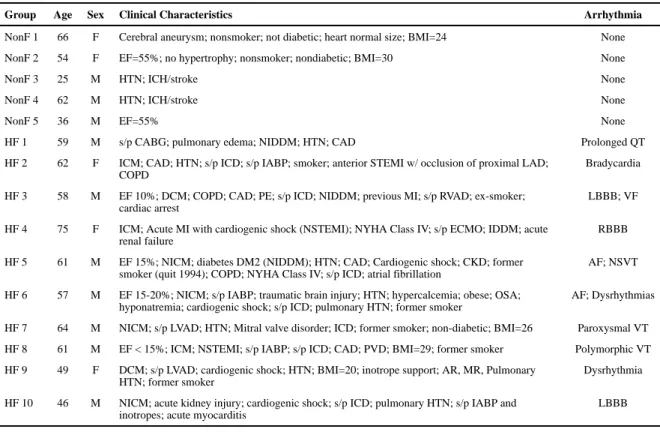
(Pro00060625) and approved (19 February 2015). In parallel, a request for “Exemption from IRB Review” was submitted to the University of North Carolina IRB for the present studies to be performed at UNC (14-3334) and approved (10 March 2015). Heart failure samples were de-identified without PHI and collected from heart transplant recipients at the time of transplant. Non- failing control samples were obtained from organ donors whose hearts were not used for transplant. De-identified heart samples were chosen based on the presence of cardiac conduction system abnormality or arrhythmia, which included prolonged QT, right or left bundle branch block, ventricular tachycardia, and other dysrhythmias, as indicated in Table 2.
RNA isolation and qRT-PCR analysis of mRNA
Cardiac tissues were homogenized using a TissueLyser LT (Qiagen N.V. #69980, Venlo, The Netherlands) according to the manufacturer’s protocols. Approximately 20–40 mg of apical ventricle was homogenized in 1 mL of Trizol (Life Technologies #15596-026, Carlsbad, CA) using a 5-mm stainless steel bead (Qiagen N.V. #69989). Chloroform (200 μL) was added, centrifuged at 12,000 g (15 min at 4°C), isopropanol (0.5 mL) was then added to the aqueous phase, centrifuged at 12,000 g (10 min at 4°C), and the resulting RNA pellet was washed with 1 mL of 75% ethanol, then centrifuged at 7500 g (5 min at 4°C). The resulting pellet was dried and resuspended in RNase-free water. RNA concentrations were then determined by UV spectroscopy (absorbance of 260–280 nm). RNAs (500 ng) were reverse-transcribed using iScript reverse transcription supermix (Bio-Rad Laboratories #170-8841, Hercules, CA). TaqMan gene expression assays were performed using universal TaqMan master mix (Life Technologies #4304437) using the fourteen primer pairs shown in Table 1.
Statistical analysis
SigmaPlot (Systat Software, Inc., San Jose, CA) was used to determine significant statistical difference by Student’s t-test. A P value < 0.05 was considered significant.
Results
The unfolded protein response (UPR) includes signaling by IRE-1, PERK, and ATF6 that are activated when misfolded proteins displace GRP78 from these receptors in the endoplasmic reticulum [17, 18]. We investigated how IRE-1 signaling was affected by measuring spliced Xbp-1 [18] and the XBP-1 regulated expression of the C/EBP (Cebpa) gene expression [19]. Compared to non-failing human heart controls, samples from human heart failure patients did not have increased spliced Xbp-1 mRNA (Figure 1A). However, significant increases in hCebpa mRNA were identified (Figure 2B), consistent with
increased IRE-1 pathway signaling. The relationship between XBP1 and C/EBPb (Cebpb) is a bit more complex, with evidence that C/EBPb induces expression of XBP1 protein [19].
A
uthor Man
uscr
ipt
A
uthor Man
uscr
ipt
A
uthor Man
uscr
ipt
A
uthor Man
uscr
The heart failure samples did not demonstrate any differences in hCebpb mRNA from controls (Figure 2B).
The stress caused in the ER by the presence of unfolded proteins can also cause signaling through PERK, whereby PERK proteins dimerize and undergo autophosphorylation [20]. This autophosphorylation leads to downstream phosphorylation of eIF2 and elevations in CHOP expression by qRT-PCR [21]. We identified significant increases in both Chop and Atf3 mRNA in the human heart failure samples (Figure 1C). Activation of ATF4 increases target gene expression, including the transcription factor CHOP (CCAAT/-enhancer-binding protein homologous protein) [22], which itself induces the expression of Atf3 mRNA [23]. While activation of ATF6 signaling was not directly measured, due largely to the
deficiencies in reliable reagents [22], we determined the mRNA levels of other reported genes involved in the UPR. We identified significant increases in Grp78 (Figure 1D), likely reflecting compensatory upregulation in response to the clear activation of GRP78 and IRE-1 signaling [22]. In summary, the significant increases in Cebpa, Chop, Atf3, and Grp78 mRNA seen in human heart failure provide evidence for activation of the IRE-1 and PERK signaling pathways.
In neurodegenerative diseases (e.g. Alzheimer Disease’s) increases in autophagy ameliorate endoplasmic reticulum stress and the UPR by eliminating misfolded proteins [24]. Both abnormal UPR and impaired autophagy have been implicated in the heart experimentally and are important complementary systems for reacting to misfolded proteins [25]. We therefore investigated the transcriptional regulation of autophagy in these failing human hearts. Central to the regulation of autophagy in heart disease, the Beclin 1 protein functions as a scaffolding protein assembling the Beclin interactome to regulate Class II PI3K/VPS34 activity, which tightly controls autophagy at multiple stages [26]. Autophagy is also regulated at the transcriptional level: increased Atg5, Atg7, Atg12, Bnip3, and Vps34 mRNA enhance autophagy [27]. RT-qPCR analysis of these genes in human heart failure identified significantly increased Beclin1 and Vps34 mRNA (Figure 2A), along with increased Atg5 and Atg7 mRNA (Figure 2B), consistent with increased autophagy.
Discussion
Recent studies have identified the presence of non-functional sodium channels (SCN5A) in heart failure patients, which then get trapped in the endoplasmic reticulum and activate the UPR [15]. Induction of SCN5a variants by angiotensin II or hypoxia activates the UPR to down-regulate the Na+ channel activity, all of which is prevented by inhibiting PERK [15], demonstrating the causal relationship between these SCN5a variants, the UPR, and Na+ channel activity. The activation of the UPR has been reported in dilated (n=21) and ischemic cardiomyopathy patients (n=21) compared to non-failing control hearts, including increases in GRP78, XBP1, and ATF6 [28]. Other studies have identified increases in PERK and CHOP protein levels along with increased mRNA of proteins involved in IRE-1 (increased Cebpa) and CHOP (Chop, Atf3) in heart failure patients (n=3) [15]. Given the close relationship between arrhythmias and the UPR, we interrogated myocardium from heart failure patients with arrhythmias to determine activation of the UPR in the current study. We identified significant increases in myocardial Cebpa, Chop, Atf3, and Grp78 mRNA in
A
uthor Man
uscr
ipt
A
uthor Man
uscr
ipt
A
uthor Man
uscr
ipt
A
uthor Man
uscr
human heart failure providing evidence for activation of the IRE-1 and PERK signaling pathways. In addition, we identified evidence for increases in autophagy in tissue from these patients. Conclusive demonstration of autophagic flux is essentially impossible in human tissue, but these transcriptional changes confirm that the autophagic signaling pathway is intact and active.
The relationship between endoplasmic reticulum stress, activation of the UPR, and autophagy has been described experimentally to be a form of cardioprotection. In previous studies, drugs routinely given to induce the UPR (tunicamycin and thapsigargin) were given at varying doses prior to ischemia-reperfusion injury using a working heart preparation (30 min ischemia followed by 2 hours reperfusion) [29]. These studies found that lower doses of tunicamycin and thapsigargin led to autophagy and induction of GRP78, and were
associated with improved function, reduced infarct size, and decreased apoptosis after ischemia-reperfusion [29]. These studies demonstrated the proof of concept that induction of autophagy by endoplasmic reticulum stress may enhance the cardiac response to injury. In the context of human heart failure, the induction of the UPR and autophagy in this study of samples from end-stage human heart failure patients may represent attempts at
cardioprotection after chronic extreme injury.
Cardiac insults, including oxidized proteins, induce the UPR, which includes the
endoplasmic reticulum chaperone protein GRP78 [30]. GRP78 is found in the endoplasmic/ sarcoplasmic reticulum bound to PERK, IRE1, and ATF6 receptors to prevent their
activation of the UPR [21]. In the presence of unfolded proteins, GRP78 preferentially shifts to these proteins to stabilize their conformation, leaving PERK, IRE1, and ATF6 to regulate survival and apoptotic signaling downstream [21]. Previous studies have suggested that endoplasmic reticulum stress may be a therapeutic target in heart disease, as XBP-1 mediated induction of endoplasmic reticulum chaperones occurs in ischemia reperfusion injury and PERK/CHOP transmits pro-apoptotic signaling [31]. However, their regulation in heart failure has been described in humans only experimentally with increased SERCA expression [32].
Acknowledgments
We would like to thank Dr. Hyung-Suk Kim for assistance with primer design of the RT qPCR probes (UNC Animal Clinical Chemistry Core Facility) and Michael Watson of the Human Heart Repository (Duke University) for support obtaining the human tissue used in the present study. This work was supported by funding from the National Institutes of Health (RO1HL104129 to M.W. and CA125237 to S.B.), a Jefferson-Pilot Corporation (fellowship to M.W.), and the Leducq Foundation (to M.W.).
References
1. Pattison JS, Sanbe A, Maloyan A, Osinska H, Klevitsky R, Robbins J. Cardiomyocyte expression of a polyglutamine preamyloid oligomer causes heart failure. Circulation. 2008; 117:2743–2751. [PubMed: 18490523]
2. Willis MS, Patterson C. Proteotoxicity and cardiac dysfunction--Alzheimer’s disease of the heart? N Engl J Med. 2013; 368:455–464. [PubMed: 23363499]
3. Maloyan A, Gulick J, Glabe CG, Kayed R, Robbins J. Exercise reverses preamyloid oligomer and prolongs survival in alphaB-crystallin-based desmin-related cardiomyopathy. Proc Natl Acad Sci U S A. 2007; 104:5995–6000. [PubMed: 17389375]
A
uthor Man
uscr
ipt
A
uthor Man
uscr
ipt
A
uthor Man
uscr
ipt
A
uthor Man
uscr
4. Pattison JS, Osinska H, Robbins J. Atg7 induces basal autophagy and rescues autophagic deficiency in cryABR120G cardiomyocytes. Circ Res. 2011; 109:151–160. [PubMed: 21617129]
5. Bhuiyan MS, Pattison JS, Osinska H, James J, Gulick J, McLendon PM, Hill JA, Sadoshima J, Robbins J. Enhanced autophagy ameliorates cardiac proteinopathy. J Clin Invest. 2013; 123:5284– 5297. [PubMed: 24177425]
6. Pattison JS, Robbins J. Protein misfolding and cardiac disease: establishing cause and effect. Autophagy. 2008; 4:821–823. [PubMed: 18612262]
7. Liu M, Dudley SC Jr. Role for the unfolded protein response in heart disease and cardiac arrhythmias. Int J Mol Sci. 2015; 17
8. Willis MS, Townley-Tilson WH, Kang EY, Homeister JW, Patterson C. Sent to destroy: the ubiquitin proteasome system regulates cell signaling and protein quality control in cardiovascular
development and disease. Circ Res. 2010; 106:463–478. [PubMed: 20167943]
9. Fu HY, Okada K, Liao Y, Tsukamoto O, Isomura T, Asai M, Sawada T, Okuda K, Asano Y, Sanada S, Asanuma H, Asakura M, Takashima S, Komuro I, Kitakaze M, Minamino T. Ablation of C/EBP homologous protein attenuates endoplasmic reticulum-mediated apoptosis and cardiac dysfunction induced by pressure overload. Circulation. 2010; 122:361–369. [PubMed: 20625112]
10. Okada K, Minamino T, Tsukamoto Y, Liao Y, Tsukamoto O, Takashima S, Hirata A, Fujita M, Nagamachi Y, Nakatani T, Yutani C, Ozawa K, Ogawa S, Tomoike H, Hori M, Kitakaze M. Prolonged endoplasmic reticulum stress in hypertrophic and failing heart after aortic constriction: possible contribution of endoplasmic reticulum stress to cardiac myocyte apoptosis. Circulation. 2004; 110:705–712. [PubMed: 15289376]
11. Yamaguchi O, Higuchi Y, Hirotani S, Kashiwase K, Nakayama H, Hikoso S, Takeda T, Watanabe T, Asahi M, Taniike M, Matsumura Y, Tsujimoto I, Hongo K, Kusakari Y, Kurihara S, Nishida K, Ichijo H, Hori M, Otsu K. Targeted deletion of apoptosis signal-regulating kinase 1 attenuates left ventricular remodeling. Proc Natl Acad Sci U S A. 2003; 100:15883–15888. [PubMed: 14665690] 12. Szegezdi E, Duffy A, O’Mahoney ME, Logue SE, Mylotte LA, O’Brien T, Samali A. ER stress
contributes to ischemia-induced cardiomyocyte apoptosis. Biochem Biophys Res Commun. 2006; 349:1406–1411. [PubMed: 16979584]
13. Thuerauf DJ, Marcinko M, Gude N, Rubio M, Sussman MA, Glembotski CC. Activation of the unfolded protein response in infarcted mouse heart and hypoxic cultured cardiac myocytes. Circ Res. 2006; 99:275–282. [PubMed: 16794188]
14. Isodono K, Takahashi T, Imoto H, Nakanishi N, Ogata T, Asada S, Adachi A, Ueyama T, Oh H, Matsubara H. PARM-1 is an endoplasmic reticulum molecule involved in endoplasmic reticulum stress-induced apoptosis in rat cardiac myocytes. PLoS One. 2010; 5:e9746. [PubMed: 20305782] 15. Gao G, Xie A, Zhang J, Herman AM, Jeong EM, Gu L, Liu M, Yang KC, Kamp TJ, Dudley SC.
Unfolded protein response regulates cardiac sodium current in systolic human heart failure. Circ Arrhythm Electrophysiol. 2013; 6:1018–1024. [PubMed: 24036084]
16. Sawada T, Minamino T, Fu HY, Asai M, Okuda K, Isomura T, Yamazaki S, Asano Y, Okada K, Tsukamoto O, Sanada S, Asanuma H, Asakura M, Takashima S, Kitakaze M, Komuro I. X-box binding protein 1 regulates brain natriuretic peptide through a novel AP1/CRE-like element in cardiomyocytes. J Mol Cell Cardiol. 2010; 48:1280–1289. [PubMed: 20170659]
17. Dufey E, Sepulveda D, Rojas-Rivera D, Hetz C. Cellular Mechanisms of Endoplasmic Reticulum Stress Signaling in Health and Disease 1. ER stress signaling mechanisms: an overview. Am J Physiol Cell Physiol. 2014; 307:C582–94. [PubMed: 25143348]
18. Kitamura M. Endoplasmic reticulum stress and unfolded protein response in renal
pathophysiology: Janus faces. Am J Physiol Renal Physiol. 2008; 295:F323–334. [PubMed: 18367660]
19. Sha H, He Y, Chen H, Wang C, Zenno A, Shi H, Yang X, Zhang X, Qi L. The IRE1alpha-XBP1 pathway of the unfolded protein response is required for adipogenesis. Cell Metab. 2009; 9:556– 564. [PubMed: 19490910]
20. Harding HP, Zhang Y, Ron D. Protein translation and folding are coupled by an endoplasmic-reticulum-resident kinase. Nature. 1999; 397:271–274. [PubMed: 9930704]
A
uthor Man
uscr
ipt
A
uthor Man
uscr
ipt
A
uthor Man
uscr
ipt
A
uthor Man
uscr
21. Wang M, Wey S, Zhang Y, Ye R, Lee AS. Role of the unfolded protein response regulator GRP78/BiP in development, cancer, and neurological disorders. Antioxid Redox Signal. 2009; 11:2307–2316. [PubMed: 19309259]
22. Hiramatsu N, Joseph VT, Lin JH. Monitoring and manipulating mammalian unfolded protein response. Methods Enzymol. 2011; 491:183–198. [PubMed: 21329801]
23. Seimon TA, Kim MJ, Blumenthal A, Koo J, Ehrt S, Wainwright H, Bekker LG, Kaplan G, Nathan C, Tabas I, Russell DG. Induction of ER stress in macrophages of tuberculosis granulomas. PLoS One. 2010; 5:e12772. [PubMed: 20856677]
24. Cai Y, Arikkath J, Yang L, Guo ML, Periyasamy P, Buch S. Interplay of endoplasmic reticulum stress and autophagy in neurodegenerative disorders. Autophagy. 2016; 12:225–244. [PubMed: 26902584]
25. Wang ZV, Hill JA. Protein quality control and metabolism: bidirectional control in the heart. Cell Metab. 2015; 21:215–226. [PubMed: 25651176]
26. Zhu H, He L. Beclin 1 biology and its role in heart disease. Curr Cardiol Rev. 2015; 11:229–237. [PubMed: 25373623]
27. Fullgrabe J, Klionsky DJ, Joseph B. The return of the nucleus: transcriptional and epigenetic control of autophagy. Nat Rev Mol Cell Biol. 2014; 15:65–74. [PubMed: 24326622]
28. Ortega A, Rosello-Lleti E, Tarazon E, Molina-Na-varro MM, Martinez-Dolz L, Gonzalez-Juanatey JR, Lago F, Montoro-Mateos JD, Salvador A, Rivera M, Portoles M. Endoplasmic reticulum stress induces different molecular structural alterations in human dilated and ischemic cardiomyopathy. PLoS One. 2014; 9:e107635. [PubMed: 25226522]
29. Petrovski G, Das S, Juhasz B, Kertesz A, Tosaki A, Das DK. Cardioprotection by endoplasmic reticulum stress-induced autophagy. Antio-xid Redox Signal. 2011; 14:2191–2200.
30. Jain K, Suryakumar G, Prasad R, Singh SN, Ganju L. Myocardial ER chaperone activation and protein degradation occurs due to synergistic, not individual, cold and hypoxic stress. Biochimie. 2013; 95:1897–1908. [PubMed: 23816873]
31. Toth A, Nickson P, Mandl A, Bannister ML, Toth K, Erhardt P. Endoplasmic reticulum stress as a novel therapeutic target in heart diseases. Cardiovasc Hematol Disord Drug Targets. 2007; 7:205– 218. [PubMed: 17896961]
32. Dally S, Monceau V, Corvazier E, Bredoux R, Raies A, Bobe R, del Monte F, Enouf J. Compartmentalized expression of three novel sarco/endoplasmic reticulum Ca2+ATPase 3 isoforms including the switch to ER stress, SERCA3f, in non-failing and failing human heart. Cell Calcium. 2009; 45:144–154. [PubMed: 18947868]
Abbreviations
CHOP CCAAT/-enhancer-binding protein homologous protein
IRE-1 inositol-requiring enzyme 1
GRP78 glucose-regulated protein 78 kDa
UPR unfolded protein response
XBP-1 Xbox binding protein.
A
uthor Man
uscr
ipt
A
uthor Man
uscr
ipt
A
uthor Man
uscr
ipt
A
uthor Man
uscr
Figure 1.
Transcriptional regulation of the unfolded protein response in human heart failure. qRT-PCR analysis of genes involved in the unfolded protein response normalized to Gapdh in
ventricular myocardium from patients with conduction defects or arrhythmias (n=10) and control healthy hearts (n=5). Patients’ clinical data are detailed in Table 2. Data are presented as means ± SEM with significant differences indicated (*, P < 0.05).
A
uthor Man
uscr
ipt
A
uthor Man
uscr
ipt
A
uthor Man
uscr
ipt
A
uthor Man
uscr
Figure 2.
QRT-PCR analysis of autophagy genes in human heart failure. qRT-PCR analysis of genes involved in autophagy normalized to Gapdh in ventricular myocardium from patients with conduction defects or arrhythmias (n=10) and control healthy hearts (n=5). Patients’ clinical data are detailed in Table 2. Data are presented as means ± SEM with significant differences indicated (*, P < 0.05).
A
uthor Man
uscr
ipt
A
uthor Man
uscr
ipt
A
uthor Man
uscr
ipt
A
uthor Man
uscr
A
uthor Man
uscr
ipt
A
uthor Man
uscr
ipt
A
uthor Man
uscr
ipt
A
uthor Man
uscr
ipt
Table 1
Primer Probe sets used on human heart samples
QRT-PCR Primer and Probe sets (human):
Atg5
Forward: CAA GAA GAC ATT AGT GAG ATA TGG
Reverse: GCA AGA AGA TCA AAT AGC AAA CC
Probe: FAT ATG AAG GCA CAC CAC TGA AAT GGC AQ
Atg7
Forward: AGC AGC AGT GAC GAT CGG AT
Reverse: CGT GAA AGA AAT CCC CGG AT
Probe: FTG AGC CTC CAA CCT CTC TTG GGC Q
Atg12
Forward: TAT GTG AAT CAG TCC TTT GCT C
Reverse: CCA GTT TAC CAT CAC TGC CA
Probe: FTC CCC AGA CCA AGA AGT TGG AAC TCQ
Beclin1
Forward: GCA TAT GGC ATG ATA GCC TC
Reverse: TCC ACA TGG CAT TAA TCT CCT
Probe: FAT CAC CAG TAT CTT CAG CCC CAG GQ
Vps34
Forward: GCA CTT GAA CCA GAT AAA ACT GT
Reverse: GCA TGT AAT GCA CAG CCT CT
Probe: FTC CGA CAG GTC TAA GCG GAA TTT ATC CQ
Gabarapl1
Forward: GAC GCC TTA TTC TTC TTT GTC A
Reverse: CTC ATG ATT GTC CTC ATA CAG
Probe: FAC CAT CCC TCC CAC CAG TGC TAC CAQ
Grp78
Forward: GCT TCT GAT AAT CAA CCA ACT G
Reverse: TGT ACC CAG AAG ATG ATT GTC
Probe: FAG GTC TAT GAA GGT GAA AGA CCC CTG Q
Xbp-1 Spliced
Forward: GAA GAG GAG GCG GAA GCC AA
Reverse: GCC TGC ACC TGA CTC AGC A
Xbp-1 Full
Forward: GAA GAG GAG GCG GAA GCC AA
Reverse: TAG TCT GAG TGC TGC GGA CT
Probe: FAC CCG GCC ACT GGC CTC ACT TCA Q
Cebpa
Forward: AGG CTC GCC ATG CCG GGA
Reverse: GCT CCG CCT CGT AGA AGT
A
uthor Man
uscr
ipt
A
uthor Man
uscr
ipt
A
uthor Man
uscr
ipt
A
uthor Man
uscr
ipt
QRT-PCR Primer and Probe sets (human):
Cebpb
Forward: ATA AAT AAC CGG GCT CAG GAG
Reverse: CCT CGG GTG GGT CCC CTT
Probe: FTT AGC GAG TCA GAG CCG CGC ACG Q
Chop
Forward: CTG GAA ATG AAG AGG AAG AAT C
Reverse: TGG TTC TGG CTC CTC CTC A
Probe: FTC ACC ACT CTT GAC CCT GCT TCT CTG Q
Atf3
Forward: TGC CTG CAG AAA GAG TCG GA
Reverse: CTT CTC GTT CTT GAG CTC CT
Probe: FCT GAG CCT TCA GTT CAG CAT TCA CAC Q
Gapdh
Forward: ACC TCA ACT ACA TGG TTT AC
Reverse: GAA GAT GGT GAT GGG ATT TC
Probe: FCA AGC TTC CCG TTC TCA GCC Q
A
uthor Man
uscr
ipt
A
uthor Man
uscr
ipt
A
uthor Man
uscr
ipt
A
uthor Man
uscr
ipt
Table 2
Patient clinical characteristics with arrhythmia description
Group Age Sex Clinical Characteristics Arrhythmia
NonF 1 66 F Cerebral aneurysm; nonsmoker; not diabetic; heart normal size; BMI=24 None
NonF 2 54 F EF=55%; no hypertrophy; nonsmoker; nondiabetic; BMI=30 None
NonF 3 25 M HTN; ICH/stroke None
NonF 4 62 M HTN; ICH/stroke None
NonF 5 36 M EF=55% None
HF 1 59 M s/p CABG; pulmonary edema; NIDDM; HTN; CAD Prolonged QT
HF 2 62 F ICM; CAD; HTN; s/p ICD; s/p IABP; smoker; anterior STEMI w/ occlusion of proximal LAD; COPD
Bradycardia
HF 3 58 M EF 10%; DCM; COPD; CAD; PE; s/p ICD; NIDDM; previous MI; s/p RVAD; ex-smoker; cardiac arrest
LBBB; VF
HF 4 75 F ICM; Acute MI with cardiogenic shock (NSTEMI); NYHA Class IV; s/p ECMO; IDDM; acute renal failure
RBBB
HF 5 61 M EF 15%; NICM; diabetes DM2 (NIDDM); HTN; CAD; Cardiogenic shock; CKD; former smoker (quit 1994); COPD; NYHA Class IV; s/p ICD; atrial fibrillation
AF; NSVT
HF 6 57 M EF 15-20%; NICM; s/p IABP; traumatic brain injury; HTN; hypercalcemia; obese; OSA; hyponatremia; cardiogenic shock; s/p ICD; pulmonary HTN; former smoker
AF; Dysrhythmias
HF 7 64 M NICM; s/p LVAD; HTN; Mitral valve disorder; ICD; former smoker; non-diabetic; BMI=26 Paroxysmal VT
HF 8 61 M EF < 15%; ICM; NSTEMI; s/p IABP; s/p ICD; CAD; PVD; BMI=29; former smoker Polymorphic VT
HF 9 49 F DCM; s/p LVAD; cardiogenic shock; HTN; BMI=20; inotrope support; AR, MR, Pulmonary HTN; former smoker
Dysrhythmia
HF 10 46 M NICM; acute kidney injury; cardiogenic shock; s/p ICD; pulmonary HTN; s/p IABP and inotropes; acute myocarditis
LBBB