NOVEL RISK FACTORS FOR COLLEGE STUDENT BINGE-DRINKING: A BEHAVIORAL ECONOMICS AND SATIR GROWTH MODEL PERSPECTIVE
Patricia A. McGovern
A dissertation submitted to the faculty of the University of North Carolina at Chapel Hill in partial fulfillment of the requirements for the degree of Doctor of Philosophy in the School of Social Work
Chapel Hill 2019
Approved by:
Chair: Jack M. Richman Wen L. Anthony
©2018
iii ABSTRACT
PATRICIA MCGOVERN: Novel Risk Factors for College Student Binge-Drinking: A Behavioral Economics and Satir Growth Model Perspective
(Under the direction of Dr. Jack Richman)
American colleges and universities are experiencing epidemic levels of binge drinking among students (Center for Disease Control and Prevention [CDC], 2016).
Approximately 40% of college students reported at least one binge-drinking episode within the past 30 days (i.e., an episode in which males drink > 5 drinks and females drink > 4 within a 2-hour period [NIAAA, 2019]) (Substance Abuse and Mental Health Administration [SAMHSA], 2017). Although experts agree that college student binge drinking is a public health issue (CDC, 2016; NIAAA, 2016; SAMHSA, 2014), a near two-decade plateau of binge-drinking rates among college students continues (SAMHSA, 2017).
factors must be identified and added to existing explanatory and intervention frameworks to maximize and sustain decreases in college student binge drinking.
The first study systematically reviewed seven peer-reviewed journal articles evaluating behavioral economics-based interventions for college student binge drinking. Findings from the review suggest behavioral economics-based interventions decrease binge drinking among college students. Results also provide support for future studies examining novel behavioral economics intervention targets, such as alternative rewards and delay discounting.
The second paper describes the process for developing measures of alternative rewards, commitment and consistency, and delay discounting in the NESARC-III national dataset (Grant et al., 2014). This paper describes the benefits and challenges associated with developing measures using national secondary datasets. Findings suggest creating reliable and valid measures using pre-existing data is feasible. These findings may inform future studies hoping to study constructs not initially measured in pre-existing secondary datasets. Moreover, the measures created in this study were used in the third dissertation paper.
The third paper explores how novel risk factors influence college student binge drinking within a large national dataset (NESARC-III). Results suggest a relationship across all four models was found between delay discounting and drinking. Two models found a relationship with commitment and consistency. One model found a relationship between alternative rewards and drinking: personal largest consumption of alcohol. Results suggest that by researching novel risk factors, it is possible to broaden the addiction field’s
v
ACKNOWLEDGMENTS
I am profoundly grateful to each of my committee members. In particular, thank you, Dr. Jack Richman, for becoming my dissertation chair. Your kindness, compassion, and patience seemed limitless as we worked together. Even when I was not at my best, you never gave up on me or let me give up on myself. Many challenging transitions occurred this past year. Through all the ups and downs, you established a nurturing space for me to learn. I grew tremendously under your tutelage, and I will miss working with you on this project. This dissertation would not have been completed without your support.
vii
Although I am filled with gratitude, I am also filled with grief over the loss of my original dissertation chair, Dr. Matthew Howard. Over the past three years, I was fortunate to have him as my professor, research advisor, and dissertation chair. He continuously drove me to pursue academic excellence. More importantly, though, he challenged me to live a life of integrity in both my personal and professional pursuits. I miss him dearly.
It is also important to acknowledge the excellent training that I received in the doctoral program. As such, I want to thank Dean Gary Bowen and Drs. Sheryl Zimmerman, Trenette Goings Clark, Gary Cuddeback, David Ansong, Din Chen, Rod Rose, Kirsten Keinz, Betsy Bledsoe, and Mark Fraser. All of you demonstrated excellence in teaching. A special thanks to the Satir leadership team, especially Jean McLendon and Barbara Jo Brothers.
TABLE OF CONTENTS
LIST OF TABLES ………...………...x
LIST OF FIGURES ... xi
INTRODUCTION ... 1
References: Introduction... 5
PAPER I: BEHAVIORAL ECONOMICS AND COLLEGE STUDENT BINGE DRINKING: A SYSTEMATIC REVIEW OF CURRENT INTERVENTIONS ... 8
Introduction ... 9
Methods ... 16
Results ... 20
Discussion ... 36
Limitations and Conclusion ... 39
References: Paper I ... 41
PAPER II: MEASURING SATIR AND BEHAVIORAL ECONOMIC RISK FACTORS OF COLLEGE STUDENT BINGE DRINKING IN THE NATIONAL EPIDEMIOLOGIC SURVEY ON ALCOHOL AND RELATED CONDITIONS (NESARC-III) ... 47
Introduction ... 48
Methods ... 52
Results ... 60
ix
Limitations and Conclusion ... 68
References: Paper II ... 71
PAPER III: USING NOVEL COLLEGE STUDENT RISK FACTORS TO PREDICT BINGE DRINKING... 74
Introduction ... 75
Methods ... 87
Results ... 93
Discussion ... 99
Limitations and Conclusion ... 102
References: Paper III ... 106
SUMMARY ... 115
References: Summary……….120
LIST OF TABLES
Table 1.1 – Databases Searched in the Systematic Review………..….17 Table 1.2 – Methodological Quality of Behavioral Economics-Based Interventions Focused on College Student Binge Drinking………..….22 Table 1.3 – Systematic Review of Studies of Behavioral Economics-Based Interventions
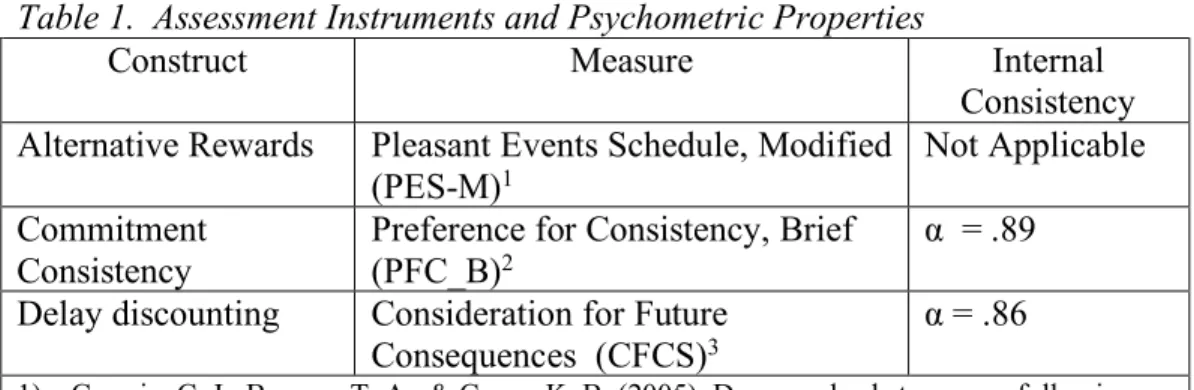
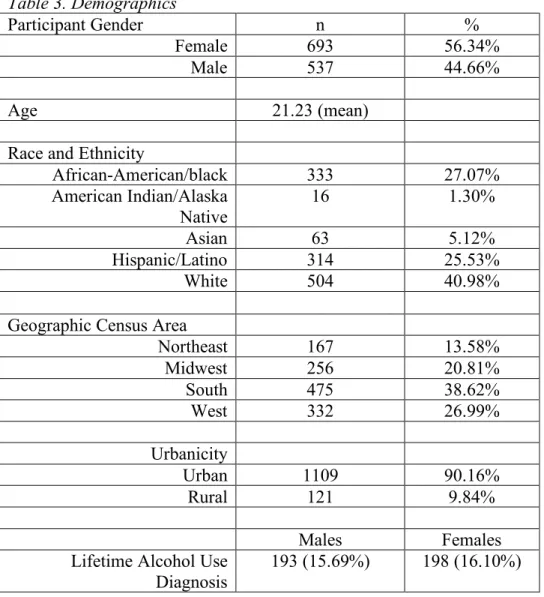
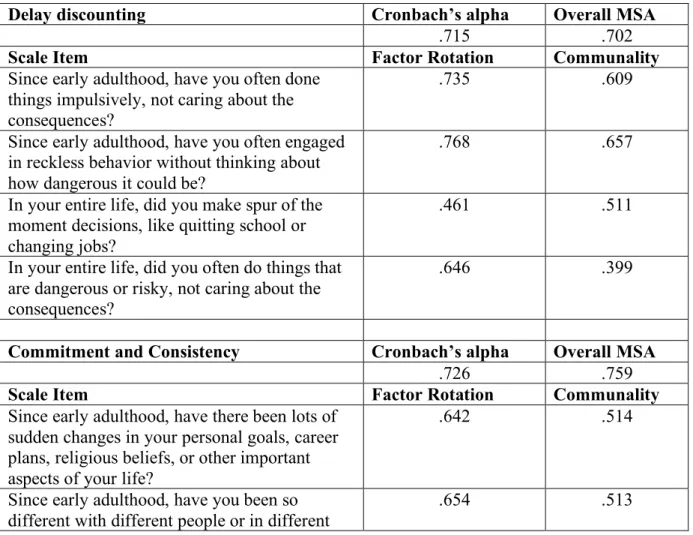
Focused on College Student Binge Drinking………..……...26 Table 2.1 – Assessment Instruments and Psychometric Properties………..……….57 Table 2.2 – NESARC-III Index and Composite Measures of Individual-Level Predictors…..…57 Table 2.3 – Demographics………..………...61 Table 2.4 – Rotated Factor Structure, Communalities, and MSA for the Final One-Factor
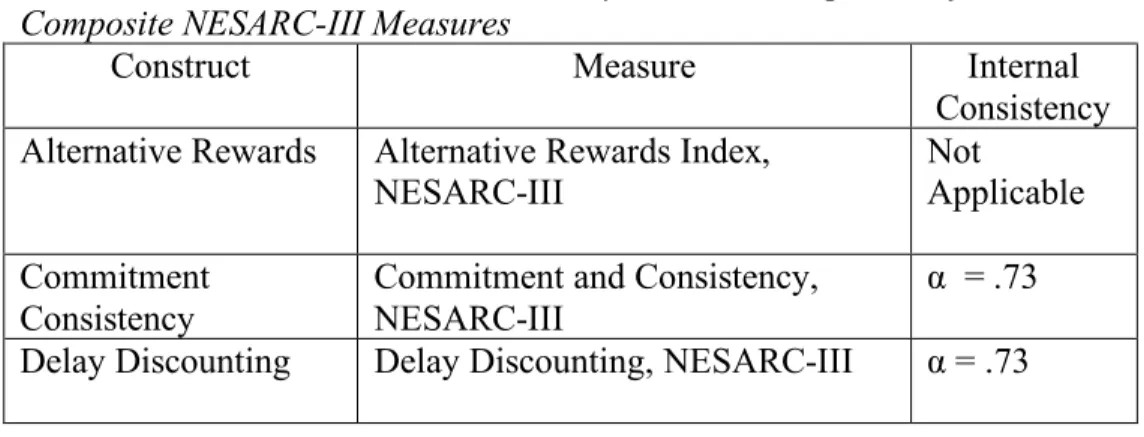
Models for Delay Discounting, Commitment and Consistency and Alternative Rewards…...….72 Table 3.1 – Assessment and Psychometric Properties of Composite NESARC-III
xi
LIST OF FIGURES
INTRODUCTION
NOVEL RISK FACTORS FOR COLLEGE STUDENT BINGE-DRINKING: A BEHAVIORAL ECONOMICS AND SATIR GROWTH MODEL PERSPECTIVE
American colleges and universities are experiencing epidemic levels of binge drinking among students (Center for Disease Control and Prevention [CDC], 2016). Approximately 40% of college students reported at least one binge-drinking episode within the past 30 days (i.e., an episode in which males drink > 5 drinks and females drink > 4 within a 2-hour period [NIAAA, 2019]) (Substance Abuse and Mental Health Administration [SAMHSA], 2017). Binge drinking exceeds recommended daily limits established by NIAAA, categorically aligning itself with alcohol misuse (NIAAA, 2019). Furthermore, alcohol misuse is associated with a range of adverse consequences, including academic problems and failure (Lee, Geisner, Patrick, Neighbors, 2010), alcohol poisoning (Rehm et al., 2003), alcohol-related injuries (Hingson & Zha, 2009), sexual assault fueled by excessive drinking (Neilson, Bird, Metzger, & George, 2018), long-term alcohol use disorders (Dawson, Paulay, & Grant, 2010), and suicide (McCloud, Barbaby, Omu, Drummond, & Abound, 2004). Each year nearly 2,000 students will die as a consequence of excessive drinking (NIAAA, 2016).
2
college students (National Center on Addiction and Substance Use at Columbia University [CASA], 2007).
For instance, brief motivational interventions (BMI) are widely used to treat binge drinking among undergraduates (Murphy et al., 2012ab; Murphy & Dennhardt, 2016). A systematic review by Cronce and Larimer (2011) found that 64% of interventions used on college campuses to target binge drinking are BMIs. However, binge-drinking reductions associated with BMIs are minimal and short-lived (Murphy & Dennhardt 2016; Murphy, Correia, & Barnett, 2007; Murphy et al., 2012a). Moreover, like a majority of interventions, BMIs narrowly target the same risk factors (e.g., alcohol-related beliefs, alcohol-related consequences, and personalized feedback) (Carey, Scott-Sheldon, Carey, & DeMartini, 2007; Scott-Sheldon, Carey, Elliott, Garey, & Carey, 2014). Current intervention that continually target the same risk mechanisms are failing to significantly reduce binge-drinking rates.
Alternatively, behavioral economics interventions target the novel risk mechanisms of alternative rewards and delay discounting to supplement current BMIs. In doing so, behavioral economics-based interventions maximizing binge-drinking reductions and extending non-binge drinking behavioral changes (Dennhardt, 2013; Murphy et al., 2012a; Murphy et al., 2012b). Further, drawing from the Satir growth model, interventions that increase students’ congruence of values, goals, identity, and behavior (i.e., commitment and consistency) reduce rates of college student binge drinking (Conner, Miller, & Brannon, 2014). Interventions that target the novel risk mechanisms of alternative rewards, commitment and consistency, and delay
rewards, commitment and consistency, and delay discounting might influence college student binge drinking and be efficacious intervention targets.
To test these this hypothesis, my dissertation (1) systematically reviewed behavioral economics-based interventions targeting college students binge drinking, (2) based on the systematic review findings, developed composite measures of alternative rewards, commitment and consistency, and delay discounting by using survey questions in the National Epidemiologic Survey on Alcohol and Related Conditions-III (NESARC-III), a national dataset containing information regarding college student drinking behavior, and (3) used the composite measures created to in Paper 2 to determine the impact of alternative rewards, commitment and
consistency, and delay discounting on college student binge drinking. Organization of the Dissertation
This dissertation consists of three papers. The first paper, “Behavioral Economics and College Student Binge Drinking: A Systematic Review of Current Interventions,” reviews seven studies evaluating the effects of behavioral economics-based interventions on college student drinking behavior. The systematic review findings increased my understanding of risk factors commonly targeted by behavioral economics-based interventions. The methodological quality of the included interventions was assessed to determine the rigor of current studies. Findings suggest that behavioral economics-based interventions show promise in decreasing binge drinking among college students.
The second paper, “Measuring Satir and Behavioral Economics Indicators of College Student Binge Drinking in the National Epidemiologic
4
REFERENCES: INTRODUCTION
Borsari, B., & Carey, K. (2006). How the quality of peer relationships influences college alcohol use. Drug and Alcohol Review, 25(4), 361–370.
Carey, K. B., Scott-Sheldon, L. A. J., Carey, M. P., & DeMartini, K. S. (2007). Individual-level interventions to reduce college student drinking: a meta-analytic review. Addictive Behaviors, 32(11), 2469–2494.
CASA National Center on Addiction and Substance Abuse at Columbia University. (2007). Wasting the Best and the Brightest: Substance Abuse at America’s Colleges and Universities. http://www.casacolumbia.org/addiction-research/reports/wasting-bestbrightest-substance-abuse-americas-colleges-universitys
Center for Disease Control and Prevention. (2016). Excessive drinking costs U.S. $250 Billion. In CDC Features. Retrieved September 10, 2016, from
http://www.cdc.gov/features/alcoholconsumption/
Conner, A. E., Miller, M. M., & Brannon, L. A. (2014). A test of the automaticity assumption of compliance tactics: Discouraging undergraduate binge drinking by appealing to
consistency and reciprocity. Communication Quarterly, 62(3), 269–284.
Cronce, J. M., & Larimer, M. E. (2011). Individual-focused approaches to the prevention of college student drinking. Alcohol Research & Health: The Journal of the National Institute on Alcohol Abuse and Alcoholism, 34(2), 210–221.
Dawson, D. A., Pulay, A. J., & Grant, B. F. (2010). A comparison of two single-item screeners for hazardous drinking and alcohol use disorder. Alcoholism, Clinical and Experimental Research, 34(2), 364–374.
Dennhardt, A. A. (2013). The role of affective and behavioral economic factors in predicting response to a brief intervention for alcohol and illicit drug use in college students. (J. G. Murphy, Ed.). The University of Memphis, Ann Arbor. Retrieved from
https://search.proquest.com/docview/1522791845?accountid=14244
Hingson, R. W., & Zha, W. (2009). Age of drinking onset, alcohol use disorders, frequent heavy drinking, and unintentionally injuring oneself and others after
drinking. Pediatrics, 123(6), 1477–1484.
Lee, C. M., Geisner, I. M., Patrick, M. E., & Neighbors, C. (2010). The social norms of alcohol-related negative consequences. Psychology of Addictive Behaviors: Journal of the Society of Psychologists in Addictive Behaviors, 24(2), 342–348.
6
Murphy, J. G., Correia, C. J., & Barnett, N. P. (2007). Behavioral economic approaches to reduce college student drinking. Addiction Behavior, 32(11), 2573-2585.
Murphy, J. G., & Dennhardt, A. A. (2016). The behavioral economics of young adult substance abuse. Preventive Medicine, 92, 24–30.
Murphy, J. G., Dennhardt, A. A., Skidmore, J. R., Borsari, B., Barnett, N. P., Colby, S. M., & Martens, M. P. (2012a). A randomized controlled trial of a behavioral economic supplement to brief motivational interventions for college drinking. Journal of Consulting and Clinical Psychology, 80(5), 876–886.
Murphy, J. G., Skidmore, J. R., Dennhardt, A. A., Martens, M. P., Borsari, B., Barnett, N. P., & Colby, S. M. (2012b). A behavioral economic supplement to brief
motivationalinterventions for college drinking. Addiction Research & Theory, 20(6), 456–465.
National Institute on Alcohol Abuse and Alcoholism (NIAAA). (2016) College Drinking. In Special populations. Retrieved March 16, 2016, from
http://www.niaaa.nih.gov/alcoholhealth/special-populations-co-occurring disorders/college-drinking
National Institute on Alcohol Abuse and Alcoholism (NIAAA). (2019) Drinking Levels Defined. In Overview of Alcohol Consumption. Retrieved March 13, 2019, from
https://www.niaaa.nih.gov/alcohol-health/overview-alcohol-consumption/moderate binge-drinking
Neilson, E. C., Neilson, E. C., Bird, E. R., Metzger, I. W., & George, W. H.
(2018). Understanding sexual assault risk perception in college: Associations among sexual assault history, drinking to cope, and alcohol use, Addictive Behaviors, 78, 178 186. doi:10.1016/j.addbeh.2017.11.022
Rehm, J., Mathers, C., Popova, S., Thavorncharoensap, M., Teerawattananon, Y., & Patra, J. (2009). Global burden of disease and injury and economic cost attributable to alcohol use and alcohol-use disorders. The Lancet, 373(9682), 2223–2233.
Scott-Sheldon, L. A. J., Carey, K. B., Elliott, J. C., Garey, L., & Carey, M. P. (2014). Efficacy of alcohol interventions for first-year college students: a meta-analytic review of
randomized controlled trials. Journal of Consulting and Clinical Psychology, 82(2), 177-188.
Substance Abuse and Mental Health Services Administration (SAMHSA). (2014) National Survey on Drug Use and Health (NSDUH). Table 2.16A—Alcohol use, binge alcohol use, and heavy alcohol use in the past month, by detailed age category: Numbers in thousands, 2013 and 2014.http://www.samhsa.gov/data/sites/default/files/NSDUH
DetTabs2014/NSDUH-DetTabs2014.htm#tab2-16a
8 PAPER 1
BEHAVIORAL ECONOMICS AND COLLEGE STUDENT BINGE DRINKING: A SYSTEMATIC REVIEW OF CURRENT INTERVENTIONS.
The static rates of college student binge drinking suggest current prevention and intervention efforts fail to target critical explanatory risk factors. Treatments that target novel risk factors must be maximize and sustain decreases in college student binge drinking. Although behavioral economics-based interventions successfully shape health behavior (Dai, Milkman, & Riis, 2013; Thaler & Sunstein, 2009), few of these interventions target college student binge drinking (Murphy, Correia, & Barnett, 2007). Thus, this systematic review examined the treatment targets, methodological quality, and outcome findings of behavioral-economic-based interventions targeting college student binge drinking published by 2016. This study reviewed research team credential to determine if social work researchers were designing and implementing the identified interventions. A total of 14 bibliographic
databases were searched, and a total of seven studies met inclusion criteria. Findings from the review suggest behavioral economics-based interventions decrease binge drinking among college students. Results also provide support for future studies examining novel behavioral economics intervention targets, such as alternative rewards, reward value, and delay
Introduction
College student binge drinking is a salient public health issue. Binge-drinking rates remain high with nearly 40% of undergraduates reporting an episode within the past month (Substance Abuse and Mental Health Administration [SAMHSA], 2017).Binge drinking is defined as a male drinking five or more drinks, or a female drinking four or more drinks, on one occasion within the past 30 days. This pattern of drinking exceeds recommended daily limits established by the National Institute on Alcohol Abuse and Alcoholism (2019), categorically aligning binge drinking with alcohol misuse. Indeed, estimates indicate that between 13 to 20% of college students meet the criteria for an alcohol use disorder (AUD), and 13% of students meet criteria for alcohol use disorder (Blanco et al., 2008; SAMHSA, 2014).
Binge drinking is largely considered a socially acceptable behavior in college (National Center on Addiction and Substance Use at Columbia University [CASA], 2007). Nonetheless, binge drinking is associated with severe physical, social, psychological, and economic consequences (National Institute on Alcohol Abuse and Alcoholism [NIAAA], 2016), including alcohol poisoning (Rehm et al., 2009), sexual assault (Mouilso, Fischer, & Calhoun, 2012), academic problems and failure (Lee, Geisner, Patrick, & Neighbors, 2010), suicide (Gonzalez, 2012), and long-term AUDs (Beseler, Taylor, Kraemer, & Leeman, 2017). Binge drinking results in 600,000 hospital-requiring injuries and nearly 2,000 students will die annually as a result (NIAAA, 2016). It is important to note these figures are
10
Students’ grave binge-drinking consequences impact individuals, friends, families, and society. Further, the economic costs associated with college student binge-drinking consequences surpass $24 billion dollars per year in the United States (Center for Disease Control [CDC], 2016). This sum reflects costs associated with justice-involvement, health care, education, and lost employment (CDC, 2016).
For most college students, binge drinking peaks during the college years and slowly declines through the late 20s, a process called maturing out (Slutske, 2005). However, not everyone ages out of binge drinking; nearly 40% of students who binge drink throughout college will continue this behavior in adulthood (Delucchi & Weisner, 2010). Failing to “mature out” of binge leads to serious long-term consequences for many, including adult AUDs (Jennison, 2004); onset of cirrhosis (Yoon, Chen, & Yi, 2014); and liver failure requiring transplants (Singal et al., 2013).
Despite well-documented consequences and social costs, a near two-decade plateau of binge-drinking rates among college students continues (SAMHSA, 2017). These
intractable levels of problematic drinking suggest gaps exist in current prevention and intervention efforts (CASA, 2007). Further exploration of novel interventions that are cost-effective and accessible is needed.
The Current Standard
(1) exploring social drinking norms among college students; (2) comparing the students’ binge-drinking to average rates of drinking among college students across the United States; and (3) examining how students’ binge-drinking consequences impact their personal, social, familial, legal, educational, and financial outcomes; and (4) applying harm-reduction
drinking strategies to reshape students’ drinking patterns (Dimeff, Baer, Kivlahan, & Marlatt, 1999). As in all motivational-interviewing models, the goal of BMIs is to explore students’ ambivalence about binge drinking. Ambivalence is then leveraged to elicit students’ desires to change their drinking behavior (Murphy et al., 2001).
Approximately 64% of colleges target binge drinking with BMIs (Cronce & Larimer, 2011). However, binge-drinking reductions associated with BMIs are minimal and short-lived (Dennhardt, Yuraasek, & Murphy, 2015; Murphy et al., 2012a; Murphy et al., 2015; Skidmore, Murphy, & Martens, 2014). For example, in one randomized controlled trial (RCT) students resumed their pre-intervention binge-drinking habits by six months post-intervention (Murphy et al., 2012a). Moreover, drinking reductions associated with BMIs vary in quantity and duration across studies, and the effect sizes of BMIs are modest (ds =.11-.40) (Carey, Scott-Sheldon, Carey, & DeMartini, 2007). BMIs undoubtedly propel reductions in students’ drinking behavior; however, BMIs as a sole strategy fail to maintain momentum for reducing binge-drinking behavior across time (Cronce & Larimer, 2011). This Murphy and colleagues (2012a) RCT was conducted at a university in the southern United States with 82 college student participants.
A Novel Treatment Approach
12
disciplines of psychology, sociology, cognitive neuroscience, and economics to determine how individuals make decisions (Heshmat, 2015; MacKillop, 2016). The application of behavioral economics frameworks to college student alcohol misuse is an emerging research area. Most current research in this area stems from Murphy and colleagues at the University of Memphis (e.g., Dennhardt et al., 2015; Murphy et al., 2012a; Murphy et al., 2012b; Murphy et al., 2015; Skidmore, Murphy, & Martens, 2014).
Murphy and colleagues (2012b) developed a behavioral economics-based supplement to use in conjunction with a widely administered secondary prevention program called Brief Alcohol Screening and Intervention for College Students (BASICS). BASICS is a BMI that uses a harm-reduction approach to target student binge drinking (Dimeff et al., 1999). Findings suggest that such behavioral economics interventions complement BMIs by
maximizing binge drinking reductions and extending non-binge drinking behavioral changes (Dennhardt et al., 2015; Murphy et al., 2012a; Murphy et al., 2015). Murphy et al.'s (2012a) behavioral economics-based supplement sustained results by identifying how factors related to intertemporal choice (e.g., delay discounting, alcohol reward value, alternative rewards) predict college student alcohol misuse.
Intertemporal choice and delay discounting. Many decisions have implications at multiple time points that will produce either an immediate or delayed reward. These time-bound decisions are considered intertemporal choices, and many, if not most, individuals prefer to choose current rewards over delayed rewards (e.g., Bickel, Jarmolowicz, Mueller, & Gatchalian, 2011; Bickel, Johnson, Koffarnus, MacKillop, & Murphy, 2014a; Thaler &
within the field of addiction (Bickel et al., 2014a). The empirical groundwork for delay
discounting is rooted in Herrnstein’s matching law, which found that individuals’ perceptions of reward value decrease over time (Herrnstein, 1961). The desire to receive immediate rewards over long-term rewards is also called short-term bias (Grossman & Hoskisson, 1998; O’Donoghue & Rabin, 1999).
Discounting delayed rewards over immediate rewards is highly evident in studies of individuals who misuse alcohol. In these studies, participants frequently choose immediate but inferior rewards (i.e., alcohol misuse) over substantive long-term rewards (e.g.,
abstaining from alcohol misuse to pursue a goal or attain money) (Bjork, Hommer, Grant, & Danube, 2004; Kirby & Petry, 2004; Mitchell, Fields, D’Esposito, & Boettiger, 2005; MacKillop, 2016; Petry, 2001; Vuchinich & Simpson, 1998). The preponderance of intertemporal bias and binge drinking studies focus on adults, broadly. Few studies solely focus on undergraduates but limited findings do parallel adult patterns: Undergraduates prefer the immediate rewards of binge drinking to delayed long-term rewards (Dennhardt, Yurasek, & Murphy, 2015; Kollins, 2003; Murphy et al., 2012a; Murphy et al., 2012b). This immediate reward preference influences undergraduates’ decisions to binge drink
(Dennhardt,et al., 2015; Kollins, 2003; Murphy et al., 2012a,b).
14
long-term rewards. When students are engaged in meaningful activities as an alternative to binge drinking (i.e., alternative rewards), their ability to postpone immediate rewards increases. For example, decreased rates of binge drinking were found among students who enrolled in early morning classes or committed to volunteer opportunities (Murphy et al., 2007).
Findings from novel behavioral economics-based interventions. In an RCT, Murphy and Colleagues (2012a) developed a behavioral economics-based drinking intervention that targeted a sample of 82 undergraduate students’ delay discounting and alternative rewards. The study was conducted at a university in the southern United States. The sample consisted of Asian (1.2%), Black (12.2%), Hispanic (2.4%), Native American (1.2), and White students (81.7%), and half of the sample was female.
In this study, Murphy and colleagues (2012a) found that students who received a BMI plus a behavioral economics-based supplement reported significantly greater reductions in binge drinking in comparison to those who received a BMI alone (p = .01). The effect size for the BMI plus a behavioral economics-based intervention was large (d = .82), but the BMI comparison intervention only produced a moderate effect size (d = .49). Furthermore,
Most current behavioral economics-based interventions focus on students’ delay-discounting strategies to increase the salience of long-term gains over short-term rewards
(Dennhardt, 2013; Dennhardt et al., 2015; Murphy et al., 2012a; Murphy et al., 2012b;
Yurasek, Dennhardt, & Murphy, 2015). A majority of interventions also encourage students to engage in alternative rewards (i.e., rewarding activities other than drinking, such as exercise or involvement in student organizations) (Correia, Benson, & Carey, 2005;
Dennhardt, 2013; Dennhardt et al., 2015; Murphy et al., 2012a; Murphy et al., 2012b; Murphy et al., 2015; Murphy, Yurasek et al., 2015).
As stated, the application of behavioral economics to college student alcohol misuse is a growing research area. Few college student binge-drinking interventions leverage behavioral economics-based risk mechanisms (Murphy & Dennhardt, 2016). To date, no study has systematically reviewed how these interventions target malleable mediators. Given the promise shown by behavioral economics-based interventions in reducing college student binge drinking, a systematic review of these interventions is warranted to determine the effective intervention points.
Moreover, social workers are at the frontlines of treatment services delivery, fulfilling 160,000 jobs in the United States healthcare system (Bureau of Labor Statistics, 2016;
16
(Bureau of Labor Statistics, 2017). While social workers deliver a large proportion of mental health and substance use treatment (Bureau of Labor Statistics, 2016), their contributions to developing behavioral economics-based intervention for college students is unknown and merits consideration.
The purpose of this systematic review is to identify and describe behavioral economics-based interventions that target college student binge drinking. In addition, this study seeks to determine if social workers are developing such binge-drinking interventions. The two objectives of the systematic review include (1) identifying targets of behavioral economics interventions; and (2) determining the number of social work researchers implementing behavioral economics-based interventions targeting college student binge drinking.
Methods
Behavioral economics-based interventions targeting college student binge drinking were systematically reviewed. The study’s systematic review methodology followed
guidelines established by Cooper (2010); Cooper and Hedges (1994); and Littell, Corcoran, and Pillai (2008). PRISMA reporting standards (Moher, Tezlaff, & Altman, 2009) informed the development of the systematic review flow chart.
Search strategy. This systematic review’s three broad constructs of interest were: "college student," "binge drinking," and "behavioral economics intervention." In
collaboration with a library scientist, keyword-search strategies were developed to identify research across these construct domains. Search terms were checked against database thesauri to ensure the most appropriate terms were included in the search protocol, and truncation (i.e., the asterisk symbol) was used to capture alternate word endings. A
comprehensive list of search term strategies is contained in Appendix A. The broad search strategies used are as follows:
• College student: (“college student” or “undergraduate”)
• Binge drinking: (“alcohol” or “drink*”)
• Behavioral economics intervention: (“behavioral economic*”)
A total of 14 databases were searched, including: Academic Search Premier, Applied Social Sciences Index and Abstracts, CINAHL, EBSCO, Elsevier, PsycINFO, Psychology Database, PubMed, Social Work Abstracts, Social Science Database, Sociological Abstracts, and Web of Science (see Table 1). Unique accounts were created for all databases. Study references were managed via Paperpile (Paperpile, 2018). For highly relevant articles,
backward literature searches were performed to ensure all relevant research was identified by Table 1. Databases Searched in the Systematic Review
Academic Search Premier PsycINFO
Applied Social Sciences Index and Abstracts
Psychology Database
CINAHL Plus with Full Text PubMed
EBSCO Social Work Abstracts
Elsevier Social Science Database
Google Scholar Sociological Abstracts
18
the study’s search strategy. Forward citation searching was used to determine article impact. The references of high-impact articles and seminal articles were examined to ensure all studies were included in the systematic review. Google Scholar was also used to ensure all relevant articles were retrieved. Searches yielded 121 articles potentially relevant for review. After review of title, abstract, and full text, a total of seven studies fully met inclusion criteria (see Figure 1).
Study records. Search results were uploaded to Paperpile, a web-based reference management program. Paperpile allowed the study to compile, sort, and categorize search results. A doctoral student master coder conducted the searches independently. However, a library scientist reran 20% of the master coder’s searches to ensure the searches were performed correctly.
Coding process. The coding team consisted of a doctoral candidate/master coder and a faculty member. A data extraction form was created to extract relevant study data. The data extraction forms captured data on (1) data collection time points, (2) treatment condition and design, (3) control condition, (4) sample demographics (5) outcome measures, including behavioral economics-based risk mechanisms/targets of intervention, (6) treatment outcomes studied, (7) potential bias, and (8) social work status of researchers. The data extraction form was pilot tested. After the data extraction form was finalized, all cases were coded with dissertation chair review.
economics-based intervention targets, treatment outcomes, limitations, and social work status of researchers. Qualitative pattern descriptions were used to analyze and present findings.
Study methodological quality assessment. Each study was rated using the Methodological Quality Rating Scale (MQRS) to assess included studies’ methodological quality (Miller et al., 1995). This measure is frequently used in systematic reviews of alcohol misuse treatments (Apodaca & Miller, 2003; Vaughn & Howard, 2004). The MQRS assesses 12 dimensions of methodological attributes including (1) group allocation, (2) quality
20 Figure 1. Flow chart for systematic review search result
Results
In this review, a total of seven studies were found to empirically evaluate a behavioral economics-based intervention aimed at decreasing binge drinking among college students.
Records identified through database searching
(n = 119 )
Sc re eni ng In cl u d ed E li gi b ili ty Id en ti fi cat ion
Additional records identified through other sources
(n = 2 )
Records after duplicates removed (n = 88 )
Records screened (n = 33 )
Records excluded because they were:
1) not solely focused on colleges students; 2) lab-based experiments; or 3)
literature reviews (n = 25 ) Full-text articles assessed
for eligibility
(n = 8 ) Full-text articles excluded because they were
dissertations (n = 1 ) Studies included in
Included studies were published from 1993-2016. Sample sizes ranged from 66-133 students. All studies enumerated baseline characteristics of age, gender, and race. Of these studies, all samples focused exclusively on college students (Correia et al., 2005; Dennhardt et al., 2015; Murphy et al., 2012a; Murphy et al., 2012b; Murphy et al., 2015; Murphy et al., 2005;
Yurasek et al., 2015). Six of the studies were conducted at a large public university in the southern United States (Dennhardt et al., 2015; Murphy et al., 2005; Murphy et al., 2012a; Murphy et al., 2012b; Murphy et al., 2015; Yurasek et al., 2015). The seventh study was conducted at a private university in an unknown location (Correia et al., 2005).
The MQRS ratings found that 86% of the studies used a randomized design. All of the studies’ statistical analyses of group differences were acceptable, and all studies provided baseline sample characteristics. Most of the studies (71%) standardized treatment by training clinicians and/or developing treatment manuals, enumerated treatment dropouts (86%), and completed follow-ups with 85% or more of participants (71%). Overall, the study follow-up length rating was adequate, with only 71% of studies following up with participants at the 6-month mark. Attrition was accounted for by 57% of studies. None of the studies employed a multisite design, collected collateral information, received objective verification of drinking (e.g., urinalysis), or had follow-ups conducted by an independent interviewer. Table 2 contains the MQRS scores of included studies’ methodological quality, which ranged from 8 to 12.
22
analytic strategies (e.g., ANCOVA). Further, a total of four studies used a follow-up period of six months (Dennhardt et al., 2015; Murphy et al., 2012a; Murphy et al., 2005; Yurasek et al., 2015). The remaining three studies used a follow-up period of one-month (Correia et al., 2005, Murphy et al., 2012b; Murphy et al., 2015).
Table 2.
Methodological Quality of Behavioral Economics-Based Interventions Focused on College Student Drinking
Methodological quality scale
attributes % (N) Study design
Single-group design 14% (1)
Randomized controlled study 86% (6)
Quality control: intervention manualized, training specified 71% (5) Follow-up rate
85-100% 71% (5)
70-84.9% 0%
<70% 29% (2)
Follow-up length
12 months or longer 0%
6-11 months 71% (5)
Less than 6 months 29% (2)
Contact: Personal contact made with at least 70% of completed follow-ups 86% (6) Collateral: Collateral verification of participants drinking 0%
Dropouts: Dropouts enumerated 86% (6)
Attrition: Accounted for participant attrition 57% (4) Independent: Follow-up conducted by independent interviewers 0%
Analyses: Appropriate statistical analyses 100%
Multisite: Parallel replication at two or more sites 0%
A total of six studies concurrently examined college student dinking and the
alternative rewards and reward value (Correia et al., 2005; Murphy et al., 2005; Murphy et al., 2015). No study determined a hierarchy of rewards alternative to alcohol.
All six RCT studies used an alternative treatment matched to a behavioral economics-based intervention (Correia et al., 2005; Dennhardt et al., 2015; Murphy et al., 2012a;
Murphy et al., 2015; Murphy et al., 2005; Yurasek et al., 2015). Of these studies, five used a BMI plus a behavioral economics-based supplement. The most commonly used behavioral economics-based supplement was the Substance-Free Activity Session (SFAS). The SFAS targets delay discounting and alternative rewards. SFAS targets delay discounting by
encouraging students to consider their drinking behavior in light of their academic and career goals (Dennhardt et al., 2015; Murphy et al., 2012a; Murphy et al., 2012b; Yurasek et al., 2015). Two of the studies used a psychoeducation comparison group (Dennhardt et al., 2015; Yurasek et al., 2015), two used a no change control group (Correia et al., 2005; Murphy et al., 2015), two used a personalized feedback control group (Murphy et al., 2005; Murphy et al., 2015), and one used a relaxation control group (Murphy et al., 2012).
24
discounting was measured with the Delay Discounting Task (DDT) (Dennhardt et al., 2015), the Monetary Choice Questionnaire (MCQ) and Considerations of Future Consequences Scale (CFC) (Murphey et al., 2012a). Alcohol-related problems were measured with the Young Adult Alcohol Consequences Questionnaire (YAACQ) (Dennhardt et al., 2015; Murphy et al., 2012a; Murphy et al., 2015; Yurasek et al., 2015).
Across all RCT studies, behavioral economics-based interventions reduced college student drinking (Correia et al., 2005; Dennhardt, 2015; Dennhardt et al., 2015; Murphy et al., 2012a; Murphy et al., 2015; Murphy et al., 2005; Yurasek et al., 2015). A total of four studies found that behavioral economics-based interventions produced greater reductions in drinking in comparison to either alternative treatments (Murphy et al., 2012a; Murphy et al., 2015; Murphy et al., 2005) or no-change controls (Correia et al., 2005; Murphy et al., 2015). The one quasi-experimental design study used a BMI plus a behavioral economics-based intervention, and the intervention was found to significantly reduce participant drinking (Murphy et al., 2012b).
In addition to drinking outcomes, several of the studies also measure the impact of a behavioral economics-based intervention on students’ delay discounting, alternative rewards, or reward value of alcohol. Alternative rewards scores were found to increase
Of the identified studies, six were conducted by Murphy and colleagues (Dennhardt et al., 2015; Murphy et al., 2012a; Murphy et al., 2012b; Murphy et al., 2015; Murphy et al., 2005; Yurasek et al., 2015). The identified studies were published in addiction, medical, and psychology peer-reviewed journals. No social work researchers were identified in the
25 Table 3.
Systematic Review of Studies of Behavioral Economics-Based Interventions Focused on College Student Drinking
*Refer to footnote for Acronyms/Abbreviations Study Data
collection
n time points
Tx condition and Design
Control condition
Sample Outcome
measures
Results Limitations MQR S score Correia,
C. J., Benson, T. A., & Carey, K. B. (2005) Baseline, 4-weeks, posttx, & 1-month follow-up AI: one individual session after the 4-week survey assessment; instructed to increase physical and/or creative activity and record target behavior over 4-weeks. The AI targets alternative rewards. RCT SR: one individual session after the 4-week survey assessment; instructed to decrease alcohol use and record target behavior over 4-weeks. NCC 133 undergraduate students in a large private university of unknown location (AI: n = 31; SR: n = 33; NCC: n = 41). Mean age = 19.76 (SD = 3.76). Of the participants, 69% were female. The racial characteristics were reported as 22% minority, with no further delineation. No significant differences Drinking behavior was measured with the DDQ. Alternative rewards was measured with the BRF.
AI and SR participants reported significantly greater reductions in DDQ-assessed drinking compared to NCC participants. AI participants reported significant increase in BRF-assessed creative activity in comparison to SR and
Small sample size.
were found among treatment and control groups in baseline demographics or outcome variables. NCC participants. Dennhardt , A. A., Yurasek, A. M., & Murphy, J. G. (2015) Baseline, 1-month, & 6-month follow-up BMI+SFAS: one 30-minute BMI session followed immediately by a 30-minute SFAS session, both 30-minute sessions were delivered by the same clinician per participant. The SFAS condition targeted delay discounting, reward value, and alternative rewards. BMI+ED: one 30-minute BMI session followed immediately by a 30-minute ED session, both 30-minute sessions were delivered by the same clinician per participant. 97 undergraduate students in a large southern public
university (BMI+ED: n = 47;
27
RCT Hispanic/Latin
Murphy, J. G., Correia, C. J., Colby, S. M., & Vuchinich , R. E. (2005) Baseline & 6-month follow-up MI+PFD: one MI-based session to provide personalized drinking feedback and to enhance non-alcohol reinforcement s. MI+PFD targets alternative rewards. RCT PFD: one session to provide personalized drinking feedback. 54 undergraduate students in a large southern public
university (MI+PDF; n = unreported; ED: n =
29 variables. No differences were found between completers and non-completers. Murphy, J. G., Dennhardt , A. A., Skidmore, J. R., Borsari, B., Barnett, N. P., Colby, S. M., & Martens, M. P. (2012) Baseline, 1-month, & 6-month follow-up BMI+SFAS: one 50-minute BMI session followed one week later by 50-minute SFAS session, with one clinician/perso n delivering both sessions. The SFAS condition targets delay discounting and alternative rewards. RCT BMI+RT: one 50-minute BMI session followed one week later by one RT session immediately by a 30-minute SFAS session, with one clinician/perso n delivering both sessions. 82 undergraduate students in a large southern public
31 alcohol consumption Murphy, J. G., Skidmore J. R., Dennhardt A., & Martens M. (2012) Baseline & 1-month follow-up BMI+SFAS: one 50-minute BMI session followed one week later by 50-minute SFAS session, with one clinician/perso n delivering both sessions. The SFAS condition targets delay discounting and alternative rewards. Quasi-experimental design 13 first-year undergraduate students in a large southern public
Murphy, J. G., Dennhardt , A. A., Yurasek, A. M., Skidmore, J. R., Martens, M. P., MacKillo p, J., & McDevitt-Murphy, M. E. (2015)
Baseline, posttx, & 1-month follow-up BMI+PDF: one 50-minute BMI session. BMI+PDF targeted alternative rewards and reward value. RCT e-CHUG: one 40-minute computerized assessment of drinking behavior that also generates feedback about drinking. Assessment only: students’ drinking behavior was assessed. 133 first-year undergraduate students in a large public southern university (BMI+PDF: n = 46; e-CHUG: n = 45;
Assessment only: n = 42). Of the participants, 49.6% were female. The participants were 64.3% White, 29.5% African American, 2.3% Hispanic, .8% Asian, and .8% Native
American. Mean age 18.6 (SD = 1.2). No significant differences were found among treatment and Drinking and marijuana use was measured with the DDQ. The YAACQ was used to assess alcohol-related problems. RDEA calculated students proportion of money spent on alcohol relative to discretionary spending (e.g., RV). The APT assessed the impact of price on substance use consumption . The
33 control groups in baseline demographics or outcome variables. Non-completers reported more drinking at baseline than completers (M = 18.43, SD = 8.9 vs M = 15.51, SD = 14.05). No other baseline differences were found between completers and non-completers. SUV assessed reinforceme nt received from substance and substance-free activities (e.g., AR and RV). Yurasek, A. M., Dennhardt , A. A., & Murphy, J. G. (2015) Baseline, 1-month, & 6-month follow-up BMI+SFAS: one 30-minute BMI session followed immediately by one 30-minute SFAS session, with one clinician/perso BMI+ED: one 30-minute BMI session followed immediately by one 30-minute ED session, with one clinician/perso 97 undergraduate students in a large private university of unknown location (BMI+SFAS: n = 50;
BMI+ED: n =
n delivering both sessions. The SFAS condition targets delay discounting and alternative rewards. RCT n delivering both sessions. 47; Assessment only: n = 42). Of the participants, 59% were female. The participants were 60% White, and 31% African American. Mean age 18.6 (SD = 1.2).
alcohol-related problems. The ARSS-SUV assessed reinforceme nt received from substance and substance-free activities (e.g., AR and RV). No differences between completers and non-completers. BMI+SFAS maintained moderate drinking reductions at the 1-month and 6-month follow-up. BMI+SFAS led to significant reductions in marijuana use in comparison to BMI+ED participants. largely adequate versus exceptional.
Acronyms/Abbreviations: AI = Activity Increase; APT = Alcohol Purchase Task; AR = Alternative Rewards; ARSS-SUV = Adolescent Reinforcement Survey-Substance Use Version; BMI = Brief Motivational Intervention; BRF = Behavior Rating Form; CFC = Consideration of Future Consequences Scale; DASS = Depression, Anxiety, and Stress Scales; DDT = Delay Discounting Task; DDQ = Daily Drinking
Questionnaire; ED = Alcohol/Drug Education Control; MCQ = Monetary Choice Questionnaire; MI = Motivational Interviewing; MPS = Marijuana Problem Scale; NCC = No Change Control; Omax = Maximum Expenditure Value; PBSS = The Protective Behavioral Strategies;
PDF = Personalized Drinking Feedback; posttx = post-treatment; RT = Relaxation Training; RV = Reward Value; RAPI = Rutgers Alcohol Problem Inventory; RDEA = Relative Total Discretionary Expenditure on Alcohol; SFAS = Substance-free Activity Session; SR = Substance Use Reduction; tx = treatment = YYACQ = Young Adult Alcohol Consequences Questionnaire
36 Discussion
Few college student binge-drinking interventions leverage behavioral
economics-based risk mechanisms. Indeed, this systematic review only identified seven studies that
implemented behavioral economics-based interventions. Of the identified studies, five
behavioral economics-based interventions produced greater binge-drinking reductions and
sustained those reductions over a more extended period in comparison to BMIs alone. These
findings are meaningful because BMIs produce middling drinking reductions despite their
wide use (Carey, Scott-Sheldon, Carey, & DeMartini, 2007). Results from this systematic
review suggest that adding behavioral economics supplements increases the impact of BMIs,
which is critical given binge drinking's persistently high prevalence and the negative
consequences associated with excessive alcohol use.
The reviewed behavioral economics-based interventions targeted delay discounting,
alcohol reinforcement, and alternative rewards. All identified studies used students' delay
discounting, alcohol reinforcement, or alternative rewards as interventions points (Correia et
al., 2005; Dennhardt et al., 2015; Murphy et al., 2005; Murphy et al., 2012a; Murphy et al., 2012b; Murphy et al., 2015; Yurasek et al., 2015). Findings suggest that behavioral
economics-based interventions increase students' ability to delay rewards (Dennhardt et al.,
2015; Murphy et al., 2012a; Murphy et al., 2012b; Murphy et al., 2015; Yurasek et al., 2015).
Studies suggest that students who learned to delay rewards were better able to reduce rates of
binge drinking and maintain lower levels of binge drinking over time. This review also found
that behavioral economics-based interventions effectively increase students' alternative
Engagement with meaningful activities alternative to alcohol potentially decreases
students’ risk for binge drinking. These alternative activities include but are not limited to
exercise, the application of artistic creativity, and participation in volunteer organizations
(Correia et al., 2005; Dennhardt et al., 2015; Murphy et al., 2005). Moreover, the value
students placed on alcohol reward value predicted their binge drinking behavior (Murphy et
al., 2015). By helping students reduce the reward value they placed on alcohol, this study
successfully decreased binge drinking outcomes.
Next Steps
Few studies are empirically testing behavioral economics-based interventions to
decrease college student binge-drinking. Moreover, a majority of existing behavioral
economics-based interventions focus on a minority of behavioral economics decision-making
determinants (MacKillop, 2016). This review found all current studies target college students'
delay discounting, alcohol reinforcement, and alternative rewards (Correia et al., 2005;
Dennhardt et al., 2015; Murphy et al., 2005; Murphy et al., 2012a; Murphy et al., 2012b;
Murphy et al., 2015; Yurasek et al., 2015). Hence, the impact of many foundational heuristics
and cognitive biases on college students' decisions to misuse alcohol are unknown.
For instance, behavioral economics frameworks identify neuroscience factors that influence
decision-making, such as self-control, emotional response, and reward response (MacKillop,
2016). However, discussion of neurobiological mechanisms that underlie these factors is
largely absent. Behavioral economics and neuroeconomics would be appropriate research
partners in an effort to fill gaps the application of neuroscience to college student binge
38
that highly motivate students' decision-making (Benson, Little, Henslee, & Correia, 2010;
Gilbert, Murphy, & Dennhardt, 2014). Studies are needed to identify meaningful alcohol-free
rewards. Prevention programs could use this information to develop default activities for
students.
Moreover, most of the reviewed studies followed participants for a maximum of six
months. One of the challenges with college student binge-drinking interventions is that
treatments fail to sustain long-lasting decreases in drinking. Hence, more behavioral
economics-based intervention studies are needed that follow students for a 12-month period
to see long-term effects. In addition, all reviewed studies relied on self-report data, which
may have biased findings. Further, studies did not report detailed treatment information.
Clear treatment protocols are needed to study behavioral economics-based interventions’
therapeutic mechanisms. Finally, a majority of the study samples were small, limiting
statistical power to determine treatment effects. Future studies need larger samples that track
participants over more extended periods of time to determine the true treatment effects of
behavioral economics-based interventions.
At present, no social work researchers are implementing behavioral economics-based
interventions to decrease binge drinking among college students. As the application of
behavioral economics-based interventions to college student alcohol misuse is an emerging
area, social work researchers can empirically test new models and, as a result, become
thought leaders in this research. Clinical social workers deliver a significant proportion of
mental health and substance use services (Bureau of Labor Statistics, 2016), and the reliance
on social workers within behavioral health is expected to increase by 20% over the next five
treatment delivery (Fraher et al., 2018; Fraser et al., 2018; Zerden et al., 2018), there's a need
for social work researchers to be at the forefront in developing impactful and effective
interventions, which could include behavioral economics-based interventions.
Limitations
This review was limited in some ways. Problematically, only seven studies were
found using behavioral economics-based interventions to reduce binge drinking among
college students (Correia et al., 2005; Dennhardt et al., 2015; Murphy et al., 2005; Murphy et
al., 2012a; Murphy et al., 2012b; Murphy et al., 2015; Yurasek et al., 2015). Hence, the studies in the review lack diversity of design and the client populations were relatively homogenous,
potentially limiting generalizability. Moreover, one research group produced a majority of
the studies (i.e., Dennhardt et al., 2015; Murphy et al., 2012a; Murphy et al., 2012b; Murphy et al., 2015; Murphy et al, 2005; Yurasek et al., 2015), and were conducted at a large public
university in the American South. At this time, more researchers need to replicate the
positive results achieved by Murphy and colleagues. Additionally, this review only included
studies that were conducted in the United States, written in English, and published, factors
that limit generalizability and potentially introduce publication bias.
Despite the limitations, behavioral economics-based interventions show promise in
reducing high and persistent rates of binge drinking among college students (Correia et al.,
2005; Dennhardt et al., 2015; Murphy et al., 2005; Murphy et al., 2012a; Murphy et al., 2012b;
Murphy et al., 2015; Yurasek et al., 2015). The reviewed behavioral economics-based
interventions reported moderate effect sizes in comparison to BMIs in reducing binge
40
significantly benefit the addiction field’s understanding of alcohol misuse among college
REFERENCES: PAPER I
Benson, T. A., Little, C. S., Henslee, A. M., & Correia, C. J. (2009). Effects of reinforcer magnitude and alternative reinforcer delay on preference for alcohol during a multiple choice procedure. Drug and Alcohol Dependence, 100(1/2), 161–163.
Beseler, C. L., Taylor, L. A., Kraemer, D. T., & Leeman, R. F. (2012). A latent class analysis of DSM-IV alcohol use disorder criteria and binge drinking in
undergraduates. Alcoholism: Clinical And Experimental Research, 36(1), 153-161. doi:10.1111/j.15300277.2011.01595.x
Bickel, W. K., Jarmolowicz, D. P., Mueller, E. T., & Gatchalian, K. M. (2011). The
behavioral economics and neuroeconomics of reinforcer pathologies: implications for etiology and treatment of addiction. Current Psychiatry Reports, 13(5), 406–415.
Bickel, W. K., Johnson, M. W., Koffarnus, M. N., MacKillop, J., & Murphy, J. G. (2014a).
The behavioral economics of substance use disorders: Reinforcement pathologies and their repair. Annual Review of Clinical Psychology, 10, 641–677.
Bickel, W. K., Koffarnus, M. N., Moody, L., & Wilson, A. G. (2014b). The behavioral- and
neuro-economic process of temporal discounting: A candidate behavioral marker of addiction. Neuropharmacology, 76(Part B), 518–527.
Bjork, J. M., Hommer, D. W., Grant, S. J., & Danube, C. (2004). Impulsivity in abstinent alcohol dependent patients: Relation to control subjects and type 1-/type 2-like traits. Alcohol ,34(2-3), 133–150.
Blanco, C., Okuda, M., Wright, C., Hasin, D. S., Grant, B. F., Liu, S.-M., & Olfson, M. (2008). Mental health of college students and their non-college-attending peers: results from the National Epidemiologic Study on Alcohol and Related
Conditions. Archives of General Psychiatry, 65(12), 1429–1437.
Bureau of Labor Statistics (2016). Occupational employment and wages. In Bureau of Labor statistics Occupational Employment and Wages. Retrieved March 13, 2019, from www.bls.gov/oes/current/oes211022.htm
Carey, K. B., Scott-Sheldon, L. A. J., Carey, M. P., & DeMartini, K. S. (2007). Individual level interventions to reduce college student drinking: a meta-analytic
review. Addictive Behaviors, 32(11), 2469–2494.
CASA National Center on Addiction and Substance Abuse at Columbia University. (2007). Wasting the Best and the Brightest: Substance Abuse at America’s Colleges and Universities. http://www.casacolumbia.org/addiction-research/reports/wasting-best brightest-substance-abuse-americas-colleges-universitys
Center for Disease Control and Prevention. (2016). Excessive drinking costs U.S. $250 Billion. In CDC Features. Retrieved September 10, 2016, from
42
Cooper, H. M. (2010). Research synthesis and meta-analysis: A step-by-step approach (4th ed.). Thousand Oaks, CA: Sage.
Cooper, H., & Hedges, L. V. (Eds). (1994). The handbook of research synthesis. New York, NY: Russell Sage Foundation.
Correia, C. J., Benson, T. A., & Carey, K. B. (2005). Decreased substance use following increases in alternative behaviors: a preliminary investigation. Addictive
Behaviors,30(1), 19–27.
Cronce, J. M., & Larimer, M. E. (2011). Individual-focused approaches to the prevention of college student drinking. Alcohol Research & Health: The Journal of the National Institute on Alcohol Abuse and Alcoholism, 34(2), 210–221.
Dai, H., Milkman, K. L., & Riis, J. (2013). The Fresh Start Effect: Temporal Landmarks Motivate Aspirational Behavior. https://doi.org/10.2139/ssrn.2204126
Delucchi, K., & Weisner, C. (2010).Transitioning into and out of problem drinking across seven years. Journal of Studies on Alcohol and Drugs 71, 210–218.
http://dx.doi.org/10.15288/jsad.2010.71.210
Dennhardt, A. A. (2013). The role of affective and behavioral economic factors in predicting response to a brief intervention for alcohol and illicit drug use in college students. (J. G. Murphy, Ed.). The University of Memphis, Ann Arbor. Retrieved from
https://search.proquest.com/docview/1522791845?accountid=14244
Dennhardt, A. A., Yurasek, A. M., & Murphy, J. G. (2015). Change in delay discounting and substance reward value following a brief alcohol and drug use intervention. Journal of the Experimental Analysis of Behavior, 103(1), 125–140.
Dimeff, L. A., Baer, J. S., Kivlahan, D. R., & Marlatt, G. A. (1999). Brief Alcohol Screening and Intervention for College Students (BASICS): A harm reduction approach. New York, NY, US: Guilford Press.
Fraher, E. P., Richman, E., Zerden, L.D., & Lombardi, B. (2018). Social workers’ roles and functions in integrated care settings: Implications for education, regulation and payment. AmericanJournal of Preventative Medicine, 54(6S3): S281-S289. doi.org/10.1016/j.amepre.2018.01.046
Fraser, M. W., Lombardi, B. M., Wu., S., Zerden, L. D., Richman, E. L., & Fraher, E. P. (2018). Integrated primary care and social work: A systematic review. Journal for the Society of Social Work Research, 9(2), ahead of print. doi:10.1086/697567
Gonzalez, V. M. (2012). Association of solitary binge drinking and suicidal behavior among emerging adult college students. Psychology of Addictive Behaviors: Journal of the Society of Psychologists in Addictive Behaviors, 26(3), 609–614.
Grossman, W. & Hoskisson, R. E., (1998). CEO pay at the crossroads of Wall Street and Main: Toward the strategic design of executive compensation. The Academy of Management Executive (1993-2005), 12(1), 43–57.
Herrnstein, R. J. (1961). Relative and absolute strength of response as a function of frequency of reinforcement. Journal of the Experimental Analysis of Behavior, 4, 267–272.
Heshmat, S. (2015). Addiction: A behavioral economic perspective. New York: Routledge.
Hingson, R. W., & Zha, W. (2009). Age of drinking onset, alcohol use disorders, frequent heavy drinking, and unintentionally injuring oneself and others after
drinking. Pediatrics, 123(6), 1477–1484.
Jennison, K. M. (2004). The short-term effects and unintended long-term consequences of binge drinking in college: A 10 year follow-up study. American Journal of Drug and Alcohol Abuse, 30(3), 659-684.
Kirby, K. N., & Petry, N. M. (2004). Heroin and cocaine abusers have higher discount rates for delayed rewards than alcoholics or non-drug-using controls. Addiction , 99(4), 461–471.
Kollins, S. H. (2003). Delay discounting is associated with substance use in college students. Addictive Behaviors, 28(6), 1167–1173.
Larimer, M. E., & Cronce, J. M. (2007). Identification, prevention, and treatment revisited: Individual-focused college drinking prevention strategies 1999–2006. Addictive Behaviors, 32(11), 2439–2468.
Lee, C. M., Geisner, I. M., Patrick, M. E., & Neighbors, C. (2010). The social norms of alcohol-related negative consequences. Psychology of Addictive Behaviors: Journal of the Society of Psychologists in Addictive Behaviors, 24(2), 342–348.
Littell, J. H., Corcoran, J., & Pillai, V. (2008). Systematic reviews and meta-analysis. New York, NY: Oxford University Press.
MacKillop, J. (2016). The behavioral economics and neuroeconomics of alcohol use disorders. Alcoholism, Clinical and Experimental Research, 40(4), 672–685.
44
Mitchell, J. M., Fields, H. L., D’Esposito, M., & Boettiger, C. A. (2005). Impulsive
Responding in Alcoholics. Alcoholism, Clinical and Experimental Research, 29(12), 2158–2169.
Moher, D., Liberati, A., Tetzlaff, J., Altman, D. G., & PRISMA Group. (2009). Preferred reporting items for systematic reviews and meta-analyses: the PRISMA
statement. PLoS Medicine, 6(7), e1000097.
Mouilso, E. R., Fischer, S., & Calhoun, K. S. (2012). A prospective study of sexual assault and alcohol use among first-year college women. Violence And Victims, 27(1), 78-94.
Murphy, J. G., Correia, C. J., & Barnett, N. P. (2007). Behavioral economic approaches to reduce college student drinking. Addiction Behavior, 32(11), 2573-2585.
Murphy, J. G., Correia, C. J., Colby, S. M., & Vuchinich, R. E. (2005). Using behavioral theories of choice to predict drinking outcomes following a brief intervention. Experimental and Clinical Psychopharmacology, 13(2), 93–101.
Murphy, J. G., & Dennhardt, A. A. (2016). The behavioral economics of young adult substance abuse. Preventive Medicine, 92, 24–30.
Murphy, J. G., Dennhardt, A. A., Skidmore, J. R., Borsari, B., Barnett, N. P., Colby, S. M., & Martens, M. P. (2012a). A randomized controlled trial of a behavioral economic supplement to brief motivational interventions for college drinking. Journal of Consulting and Clinical Psychology, 80(5), 876–886.
Murphy, J. G., Dennhardt, A. A., Yurasek, A. M., Skidmore, J. R., Martens, M. P.,
MacKillop, J., & McDevitt-Murphy, M. E. (2015). Behavioral Economic Predictors of Brief Alcohol Intervention Outcomes. Journal of Consulting and Clinical
Psychology, 83(6), 1033-1043.
Murphy, J. G., Duchnick, J. J., Vuchinich, R. E., Davison, J. W., Karg, R. S., Olson, A. M., … Coffey, T. T. (2001). Relative efficacy of a brief motivational intervention for college student drinkers. Psychology of Addictive Behaviors: Journal of the Society of Psychologists in Addictive Behaviors, 15(4), 373–379.
Murphy, J. G., Skidmore, J. R., Dennhardt, A. A., Martens, M. P., Borsari, B., Barnett, N. P., & Colby, S. M. (2012b). A behavioral economic supplement to brief motivational
interventions for college drinking. Addiction Research & Theory, 20(6), 456–465.
National Institute on Alcohol Abuse and Alcoholism (NIAAA). (2016) College Drinking. In Special populations. Retrieved March 16, 2016, from
http://www.niaaa.nih.gov/alcoholhealth/special-populations-co-occurring disorders/college-drinking
O’Donoghue, T., & Rabin, M. (1999). Doing it now or later. The American Economic Review, 89(1), 103–124.
Paperpile (2018). Internet-based reference management program. In Paperpile Features.Retrieved December, 15, 2018, from
https://paperpile.com/features/reference-manager
Petry, N. M. (2001). Delay discounting of money and alcohol in actively using alcoholics, currently abstinent alcoholics, and controls. Psychopharmacology, 154(3), 243–250.
Rehm, J., Mathers, C., Popova, S., Thavorncharoensap, M., Teerawattananon, Y., & Patra, J. (2009). Global burden of disease and injury and economic cost attributable to alcohol use and alcohol-use disorders. The Lancet, 373(9682), 2223–2233.
Singal, A.K.; Guturu, P.; Hmoud, B.; et al. (2013) Evolving frequency and outcomes of liver transplantation based on etiology of liver disease. Transplantation 95(5):755–760. Skidmore, J. R., Murphy, J. G., & Martens, M. P. (2014). Behavioral economic measures of
alcohol reward value as problem severity indicators in college students. Experimental and Clinical Psychopharmacology, 22(3), 198–210.
Substance Abuse and Mental Health Services Administration (SAMHSA). (2014) National Survey on Drug Use and Health (NSDUH). Table 2.16A—Alcohol use, binge alcoholuse, and heavy alcohol use in the past month, by detailed age category: Numbers in thousands, 2013 and
2014.http://www.samhsa.gov/data/sites/default/files/NSDUH DetTabs2014/NSDUH-DetTabs2014.htm#tab2-16a
Substance Abuse and Mental Health Services Administration (SAMHSA). (2017) Results from the 2016 National Survey on Drug Use and Health (NSDUH).
https://www.samhsa.gov/data/sites/default/files/NSDUH-DetTabs-2016/NSDUH DetTabs-2016.pdf
Slutske, W. S. (2005). Alcohol use disorders among U.S. college students and their non college attending peers. Archives of General Psychiatry, 62, 321–327.
Thaler, R. H. & Sunstein, C. (2009). Nudge: Improving decisions about health, wealth, and happiness (Rev. and expanded ed.). New York;NY: Penguin Books.
Vuchinich, R. E., & Simpson, C. A. (1998). Hyperbolic temporal discounting in social drinkers and problem drinkers. Experimental and Clinical Psychopharmacology, 6(3), 292–305.
46
Yurasek, A. M., Dennhardt, A. A., & Murphy, J. G. (2015). A randomized controlled trial of a behavioral economic intervention for alcohol and marijuana use. Experimental Clinical Psychopharmacology, 23, 332–338.
Zerden L. D., Lombardi, B. M., Fraser, M., Jones, A. & Garcia Rico, Y. (2018). Social work: Integral to interprofessional education and integrated practice. Journal of
PAPER II
MEASURING SATIR AND BEHAVIORAL ECONOMICS INDICATORS OF COLLEGE STUDENT BINGE DRINKING IN THE NATIONAL EPIDEMIOLOGIC SURVEY ON
ALCOHOL AND RELATED CONDITIONS-III (NESARC-III)
The second paper describes the process for developing measures of the novel risk
factors alternative rewards, commitment and consistency, and delay discounting using
National Epidemiologic Survey on Alcohol and Related Conditions-III (NESARC-III), a
national dataset containing information regarding college student drinking behavior (Grant et
al., 2014). Although interventions targeting these novel risk factors show promise in
decreasing rates of college student binge drinking (e.g., Conner, Miller, & Brannon, 2014;
Murphy et al., 2012a; Murphy et al., 2012b), Few valid and reliable measures exist to
examine the relationship between college student binge drinking and alternative rewards,
delay discounting, and commitment and consistency. This paper describes the benefits and
challenges associated with developing measures using national secondary datasets. Findings
suggest creating reliable and valid measures using pre-existing data is feasible. These
findings may inform future studies hoping to study constructs not initially measured in
pre-existing secondary datasets. Moreover, the measure created in this study were used in the