A SOCIAL CONSTRUCTION OF STRUGGLING READERS IN SECONDARY LITERACY TEACHERS: A COLLECTIVE CASE STUDY
SooJin Lee
A dissertation submitted to the faculty at the University of North Carolina at Chapel Hill in partial fulfillment of the requirements for the degree of Doctor of Philosophy in the School of
Education.
Chapel Hill 2019
©2019 SooJin Lee
ABSTRACT
SooJin Lee: A Social Construction of Struggling Readers in Secondary Literacy Teachers: A Collective Case Study
(Under the direction of George Noblit)
The Social Constructionism and New Literacies Studies supported the idea that the concept of (struggling) reader is not a given but is constructed in social interactions. With the literature review, I found that the frequently used term, struggling reader, was ill-defined and felt the need to see how the concept is used in reading classrooms. In this dissertation study using collective case study method, I explored how secondary teachers working with a group of students considered as struggling in reading construct the concept of struggling readers in their discourses and practices with the two guiding questions: (1) How do teachers identify and define the struggling reader in classrooms? and (2) How does this perception assist and inhibit teacher practices? With the analysis, three constructs and four contexts in the social construction of struggling readers in teachers were revealed. The three constructs include (a) reading
assessments, (b) students’ schooling level, and (c) the diverse cultures of students are brought to the classroom were implicated in how teachers thought of struggling readers. Four contexts that affected the social construction of struggling readers in these teachers were (a) a deficit view of student culture, (b) high-stakes standardized testing, (c) everyday communications in school, and (d) absence of teacher education. Inequity from the larger context impacted on the construction of struggling readers in teachers deeply and viciously, by distorting the students' care as
ACKNOWLEDGEMENTS
What I learned during my graduate studies was that a dissertation requires not only one graduate student’s effort and time, but many people’s effort, time, love, and care until its completion.
First of all, I appreciate seven teachers, one ESL specialist, and many students involved and written in this project for allowing me some space in their lives. Without their willingness to help me to participate in their classrooms, this study would not happen at all. Having a stranger in classrooms is not the most comfortable thing to do for everyone, but all of them were more than willing to help me to navigate what was happening in their classrooms.
I want to express my appreciation to my supportive committee – George Noblit, Jim Trier, Jocelyn Glazier, Sherick Hughes, and Kristin Papoi. Their advice, guidance, and endless care made it possible for me to complete this piece. George, I would not stand where I am now without you. I learned how to be a good advisor, a good teacher, a good researcher, and a good mentor from you from the moment I met you. I need more pages (or even books) to list
tears you shed for me. Kristin, I am so grateful to have you in my committee. I enjoyed every moment in the course as a teaching assistant with you.
I also think of my School of Education people. Diana, thank you for reaching out to me when I was in need of financial and emotional support as well as the opportunity for me to work with Pathway to Practice program. Deb and Anne, thank you for helping me to get out of the unhealthy relationship and find a better academic relationship. I want to thank all friends and fellow researchers I met here at Peabody for standing by me: Wenyang, Nitasha, Emily, Lucia, Shuting, Hao, Summer, Esmeralda, Jeanne and many others.
My Chapel Hill friends deserve so much appreciation. John and Susan, thank you for being my family here. You made me feel Chapel Hill as my home. My lovely roommates of 401B – Alex and Seungeun, I remember many nights we shared with movies, conversation, wine, laugh and tear. I could not thank enough my writing group friends – Gigi, Vicky, Wasin, and other group members. Our writing group was my shelter, learning community, and so much more. You literally saved me and my work in many moments. Rochelle and Miodrag, thanks for being my friends here. Also, I cannot skip my lovely Korean friends here as well – Hyeryung, Yejee, Ahrang, Hyeyoung, Jungin, Eunjung, Boguem, Yongsu and many others. Korean Association of Scholars and Students members as well as the Chapel Hill-Durham Korean Language School members.
I thank my family. 사랑하는 가족들 – 엄마, 아빠, 그리고 수빈이, 언제나 믿고
격려해주셔서 감사합니다. 유학을 결심한 순간부터 여정을 마치는 지금까지, 고비마다
TABLE OF CONTENTS
LIST OF TABLES ... xiv
LIST OF FIGURES ... xv
LIST OF ABBREVIATIONS ... xvi
CHAPTER 1: INTRODUCTION ... 1
Background ... 1
Significance of the Study ... 3
Justification of Using the term: Struggling Reader ... 3
Researcher Positionality... 4
Theoretical Framework ... 6
Social Constructionism ... 6
New Literacy Studies (NLS) ... 9
Dissertation Organization ...11
Chapter Summary ...11
CHAPTER 2. LITERATURE REVIEW... 12
Trajectory of a Definition of Struggling Reader in the United States ... 12
Reading Research Attributing Reading Struggles to Readers ... 13
Medical model: something’s wrong with you if you cannot read. ... 14
Behaviorism: readers acquire skills of reading through conditioned learning. ... 14
Linguistics & psycholinguistics: readers have language acquisition. ... 15
Cognitive constructivism: readers make meaning of the texts using
prior knowledge. ... 17
Social learning theory: all readings are structured by social context... 18
Reading Research Understanding Reading Difficulties as a Social Construction ... 20
Sociocultural theory: readers’ difficulties are sociocultural construct. ... 20
Summary ... 24
Definitions of “Struggling Reader” in Current Literacy Research ... 25
Missing Explicit Definition of the Terms ... 30
Use of Different Terms Interchangeably... 32
Use of Struggling Reader as a Universal Term ... 32
Validity of Framing Student Participants as Struggling in Reading ... 33
Summary ... 35
Chapter Summary ... 36
CHAPTER 3. METHODOLOGY ... 38
Research Design... 38
Sampling ... 39
Participants ... 40
Research Site ... 42
Data Gathering ... 44
Individual Interviews ... 46
Focus Group Interview ... 48
Classroom Observation ... 49
Artifacts ... 50
Individual and Focus Group Interview ... 53
Field Notes ... 53
Artifacts ... 54
Triangulation of Data ... 55
Reporting... 55
Chapter Summary ... 55
CHAPTER 4. FOUR CLASSROOMS, SEVEN TEACHERS ... 57
9th Grade Year-long English I with Ms. Orange and Ms. Red ... 58
A Day in Class ... 58
Ms. Orange ... 60
A good reader is a comprehender (and knows how to do school). ... 61
Readers in year-long English I. ... 63
Teaching practice of Ms. Orange. ... 65
We should all be reading teachers and teacher prep has failed to do that... 72
Ms. Red ... 73
A good reader needs good decoding, vocabulary, and comprehension skills. ... 75
Year-long English I student: they are rude. that’s enough. ... 76
Teaching practice for year-long English class. ... 78
Learned teaching by “boots on the ground.” ... 82
9th Grade Year-long English I with Ms. Yellow and Ms. Purple ... 82
A Typical Day ... 83
Ms. Yellow ... 84
A good reader is a good comprehender. ... 84
Teaching strategies for year-long students. ... 88
It wasn’t on pedagogy of what a reader is, it wasn’t on literacy. ... 94
It makes it feel like they're trying to get us to fail. ... 95
10th Grade Year-long English II with Ms. Green and Ms. Purple ... 96
A Typical Day in Class ... 96
Ms. Green ... 98
A reader is… ... 99
Readers in the year-long English II... 100
Teaching practice. ... 107
Challenges. ... 111
It’s a lot of intangibles. ...113
10th Grade American History I with Ms. Blue and Ms. Navy ...115
A Typical Day in Class ...115
Ms. Blue ...116
Reading as a skill-set. ...117
Readers in year-long American History are. ...119
Teaching practice. ... 123
I have learned a lot through teaching. ... 126
Challenges. ... 127
Ms. Navy ... 129
A reader is. ... 130
Struggling readers in year-long English II and other courses. ... 132
Teaching practice. ... 136
A good reader is… ... 144
Readers in the year-long English I are. ... 145
Teaching practice. ... 150
Challenges. ... 154
We have a good team. ... 157
Chapter Summary ... 158
CHAPTER 5. CROSS-CASE ANALYSIS: SOCIAL CONSTRUCTION OF STRUGGLING READER ... 163
Constructs of Social Construction of Struggling Reader in Teachers ... 164
Reading Assessments ... 164
Schooling ... 166
Reading stamina. ... 167
Students’ Cultures ... 169
Parental involvement. ... 170
Contexts of Social Construction of Struggling Readers in Teachers ... 171
Deficit View: Caring Yet Patronizing ... 171
Whiteness (or whiteblindness). ... 172
High-stakes Standardized Tests ... 174
Negative emotions toward standardized test. ... 175
Teaching practices shaped by standardized tests. ... 176
Everyday Communications in Schools ... 178
Teachers’ communication with colleagues: reinforcement. ... 178
Teachers’ communication with students: no resistance. ... 178
Other working conditions. ... 179
Absence of Teacher Education ... 180
Chapter Summary ... 184
CHAPTER 6. CONCLUDING REMARKS... 186
Summary of the Study ... 187
Significance of the Study ... 189
Caring Teachers Hurt More ... 191
Reading Program as Institutionalization ... 192
Implications of the Study ... 193
Implications for Research ... 193
Implications for Practice ... 195
Really, Who Struggles with What? ... 196
APPENDIX A. INITIAL QUESTIONS FOR TEACHER INTERVIEW ... 199
APPENDIX B. INITIAL QUESTIONS FOR STUDENT INTERVIEW... 200
APPENDIX C. FOCUS GROUP GUIDE ... 201
LIST OF TABLES
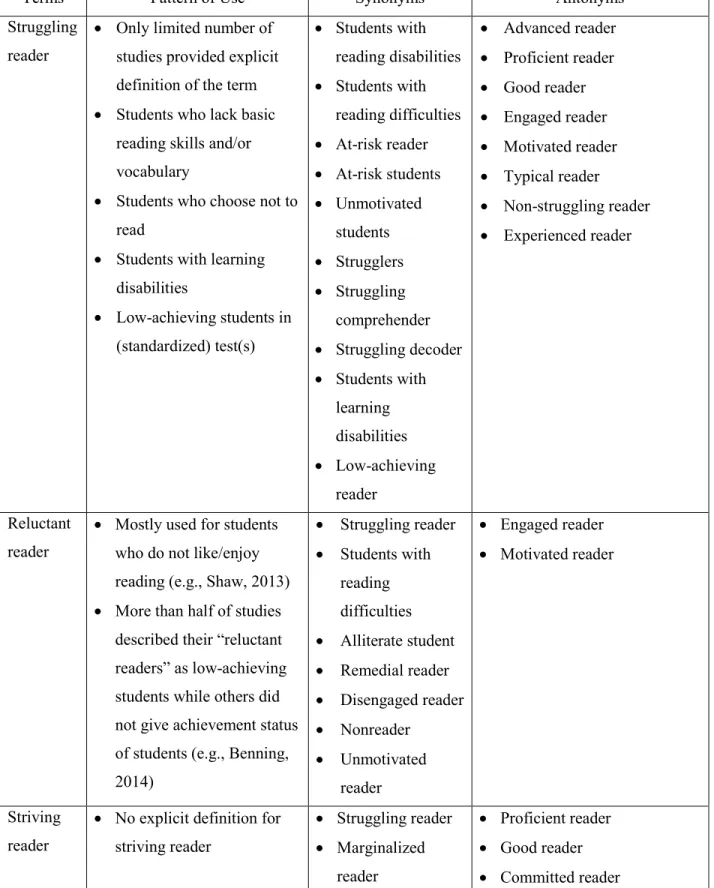
Table 1. Terms referring struggling readers in current reading research ... 26 Table 2. Use of terms referring learners with reading difficulties in literacy
LIST OF FIGURES
Figure 1. Literature of struggling reader ... 13
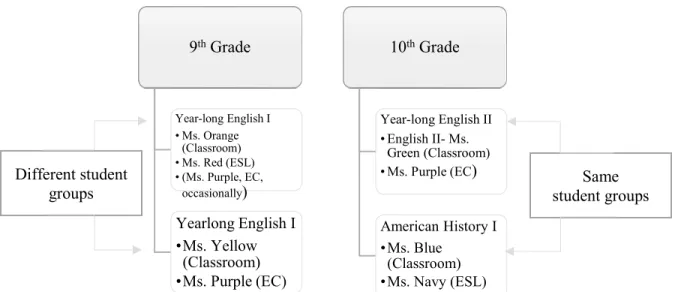
Figure 2. The organization of year-long English classes in the C high ... 43
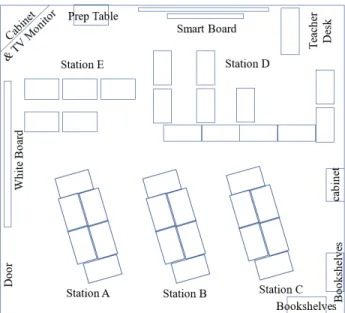
Figure 3. Classroom organization of Ms. Orange’s ... 58
Figure 4. Classroom organization of Ms. Yellow’s ... 82
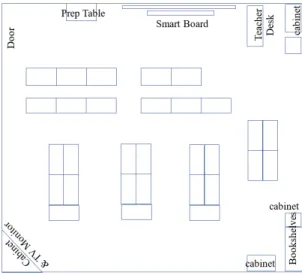
Figure 5. Classroom organization of Ms. Green’s ... 96
Figure 6. Classroom organization of Ms. Blue and Ms. Navy ...115
Figure 7. A model of social construction of struggling readers in teachers ... 164
LIST OF ABBREVIATIONS EC exceptional children
ESL English as a second language NLS new literacy studies
CHAPTER 1: INTRODUCTION
This dissertation aims to explore how secondary teachers working with so-called struggling readers construct their perception of the group of students in their teaching practices with a method of collective case study. I begin this introduction with a study background and a significance of the study. Then I justify my use of the term, and describe researcher positionality as well as a theoretical framework that informed my study. Finally, I outline the organization of the whole dissertation.
Background
Elish-Piper, Matthews, & Risko, 2009; Alvermann, 2006) and even fewer have addressed how it is constructed (e.g. Hall, 2007; Hikida, 2015; Learned, 2014; Triplett, 2007).
Without conceptual agreement amongst experts, this study sought to better understand the idea of struggling reader by looking at the phenomenon in English classrooms in a public high school. The following research questions guided this study: (1) How do teachers identify and define the struggling reader in classrooms? and (2) How does this perception assist and inhibit teacher practices?
To answer the questions above, this study implemented a collective case study, recruiting seven reading practitioners from four English classes of a public high school from a suburban Southeastern state. The reading practitioners included four classroom teachers, an Exceptional Children teacher, and two English as Second Language teachers from one high school. All the teachers were white females who have been working with struggling readers. I draw on four sources of data for this dissertation including classroom observations, interviews of teachers and students, a teacher focus-group interview, and artifacts from the teacher-driven classes from 6 months of classrooms visits.
Each teacher became a single case as well as a part of a collection, being compared to find similarities and differences among cases (Goddard, 2010; Yin, 2010). The analysis was conducted to understand how each teacher constructed their definition of the struggling reader, and how the perception impacted teaching practices. Constructivist grounded theory (Charmaz, 2014) was applied in data analysis to better capture the authentic context of the social
Significance of the Study
Researchers have noted that the fundamental concept in reading research is problematic. These researchers note that the concept of struggling reader is mired in a deficit view of student ability and focuses research on a negative state (Alvermann, 2006; Triplett, 2007). Researchers have also never articulated an agreed upon definitions of struggling reader (Alvermann, 2006). Decades of research and millions of dollars in funded research have been devoted to undefined concept in the name of promoting students’ reading competence. Without some level of
agreement, even on alternative definitions, research in reading can be argued to be simply mindless. Reading researchers do not know what it is that they have been studying.
Such a fundamental problem will not be easily remedied. An entirely new approach is needed. Recent studies attempted to know more about who struggling readers are by explroing the social construction of the concept on the student side (e.g. Hikida, 2015; Learned, 2014). My study initiates a new line of research that seeks to understand and define the concept as enacted in classrooms. My approach is to acknowledge the concept of struggling reader is socially constructed in specific contexts which include deficit perspectives on race, class, and gender. This then means one place to start is examining the concept in practices in schools and
classrooms where the meaning of the concept is contested and negotiated. My study will unpack the concept ‘in situ’ to identify the dimensions and structure of struggling reader as a social practice. Other studies will, of course, be needed – but hopefully my study will set the stage for a highly significant program of research.
Justification of Using the term: Struggling Reader
During my project, I found multiple terms teachers used to refer their students perceived as readers with struggles, but the terms were not successful to describe students in the classroom I observed. I decided to use struggling reader in this dissertation, only because it is common formulation but tried to remain skeptical of it while seeking a better understand the social construction of the phenomenon. The final chapter will revisit the term and explore what might be done to move beyond it and other parallel conceptions.
Researcher Positionality
A researcher is the most important tool in qualitative research (Patton, 2015), and a researcher is constructed by her own sociocultural experiences (Charmaz, 2014). For the reasons, I will address how and why I am interested in this project to reveal both my strengths and
potential biases. I am a female Asian reading researcher, who believes in the sociocultural theory that an individual is influenced by a culture around the person as well as influences to the culture in turn. Also, I agree with Lisa Delpit’s intentional teaching (Delpit, 2006) which suggests education should unpack and teach the institutionalized literacy to students as well as addressing the value of diverse cultures and literacies of theirs. I am very passionate about the population who are identified as struggling reader, and this is because of my experience as a secondary reading teacher back in Korea working with low-achieving readers and as a marginalized international doctoral student who has been and perceived as a struggling reader in the United States.
pop culture. It worked and my students got their highest scores in the school exams. Looking back, I was a good teacher, my intention was good, and my heart for the students was genuine. However, what I believed in was the idea of “teacher savior,” and I didn’t even think that could be condescending until I came to the States.
In America, all my identifiers – my gender, ethnicity, and language – marginalize me here and made me a slow reader and speaker. As an international doctoral student in the United States, I repeatedly got the message from one faculty member that I was not good enough as a doctoral student even though I was engaged in reading research required by the doctoral program, my performance has been good, and I had no diagnosable symptoms related reading. After doubting my ability as a student and blaming myself, I one day received a message listing why I was not a good enough student for her. The list she gave me made me realized that I have been perceived as a struggling reader (and writer) by her due to the cultural differences I brought to the
program. The way she perceived me had an effect on my identity as a reader, and my performance was negatively impacted.
It was a moment of great epiphany. This experience entirely changed me as an educational researcher. I realized that I have never felt struggling readers was a social construction even after reading and agreeing with the literacy research addressing the issues. What I thought was more of how to “help” and “fix” their “problems” which were identified through my own lens as a teacher, without a recognition that my perception could have impacts both on my own practices and on the students’ identities as a reader.
to understand myself as well as having implications for teachers and reading researchers in general. I am well aware of that my passion from personal experience could be the biggest bias, potentially overdetermining what I will see in the research site and how to interpret data. To minimize my potential overdetermination, I will come back to my data and analysis in every step, arguing against my beliefs and try to see if different interpretations or explanations are also possible. It is interpretations of the people being studied, not a researcher’s, which are pivotal interpretations to be pursued in qualitative research (Erickson, 1986).
Theoretical Framework Social Constructionism
This study is following social constructionism as a theoretical framework (Berger & Luckmann, 1991). Even though both social constructionism and social constructivism believe that knowledge is socially constructed, constructionism focus on social context of knowledge construction while constructivist focus on individual cognition (Hruby, 2001). Social
constructionists believe that learning of social knowledge is done throughout one’s life naturally and (too) effectively, preventing learners from recognizing, and thus being able act back upon, what they have learned through their lived experience (Bowers, 1984). Bowers (1984) in his book, The Promise of Theory, suggested five propositions on how students are learning social knowledge through communication in their lived experience. These included:
1. Social reality is shared, sustained and continuously negotiated through communication (p.35). 2. Through socialization the individual’s intersubjective self is built up in a biographically unique way, and it serves as the set of interpretational rules for making sense of everyday life (p.36). 3. Much of the social world of everyday life is learned and experienced by the individual as the natural, even inevitable order of reality. This natural attitude toward the everyday world is experienced as taken for granted (p.39).
4. The individual’s self-concept is constituted through interaction with significant others: the individual not only acquires the socially shared knowledge but also an understanding of who she/he is in relation to it (p.40).
I would explain how these propositions parallel with my research on social construction of struggling reader among teachers (and students) within classroom context.
His first proposition was that “social reality is shared, sustained and continuously
negotiated through communication” (Bowers, 1984, p.35). Teachers share their idea of struggling reader with colleagues and students within school contexts. They share their ideas with
colleagues in professional learning community (PLC) meetings, at the teachers’ lounge, or in hallways. They also share their ideas in classrooms with their students. In classes, teachers give specific instructions about which activities to make a better reader. For the purpose, teachers either allow or ignore students’ behaviors and train them to follow a certain concept of good reader in themselves. Through their teaching, teachers interact with colleagues and students, sustaining their idea of good reader and struggling reader. Of course, the social knowledge constructed in lived experience is not only sustained through interaction, but also revised (Bowers, 1984). When teachers get new knowledge about readers in communication with either teachers or students, the definition of struggling reader is revised itself.
knowledge in the teachers. Once teachers’ knowledge about struggling reader constructed from interactions with colleagues and students, the knowledge becomes part of the teachers’ toolbox to understand and identify students struggling or not.
His third proposition said that “much of the social world of everyday life is learned and experienced by the individual as the natural, even inevitable order of reality. This natural attitude toward the everyday world is experienced as taken for granted” (Bowers, 1984, p.39). With the knowledge, teachers use communication to signal to students what struggling reader does, and what good readers should do in classroom. The teachers take their social knowledge of struggling reader for granted. Colleagues and students also share these social assumptions via
communication, internalize it, and then the social knowledge constructed among them becomes natural and difficult to be noticed. To realize the social knowledge of struggling reader was constructed, teachers and students need to be intentionally reflective. This explains why people use the concept, struggling reader, without definition. People, even scientific researchers, do that because the knowledge is taken-it-for-granted.
His fourth proposition claimed that “the individual’s self-concept is constituted through interaction with significant others: the individual not only acquires the socially shared knowledge but also an understanding of who she/he is in relation to it” (Bowers, 1984, p.40). With
importance of teachers influence on students’ learning in school, the power of teacher perception on students’ self-conceptualization is huge.
Bower’s fifth position is that “human consciousness is characterized by intentionality; it is the intentionality of consciousness that insures that socialization is not deterministic” (Bowers, 1984, p.42). A teacher’s curriculum and instruction for struggling reader and non-struggling reader would be very different, because teachers’ constructed social knowledge of struggling and good reader influences on what they are being conscious of in their classrooms. This
consciousness influences on teachers’ attitudes and practices in classroom, which construct students’ social knowledge of readers, sustaining dominant socio-cultural idea in it.
With Bower’s notion on social knowledge, the use of struggling reader without distinction can be interpreted like this. People (including researcher) might use the term, struggling reader, without definition on the assumption that we all are sharing same social
knowledge of what literacy, reading, and reader is, implying it is an objective and natural concept for everyone. This perspective, however, ignores the nature of literacy as a social knowledge. Literacy researchers (e.g., Cook-Gumperz, 2006; de Castell & Luke, 1983; Gee, 2004, 2015) have suggested that reading is not a mere combination of universal skills, but “a social practice, comprised of interpretive rules and events constructed and learned in institutions” (Luke, 1995, p. 97), and “a historically based ideology and a collection of context-bound
communicative practices” (Cook-Gumperz, 2006, p.1). New Literacy Studies (NLS)
individual human brains, NLS researchers argued that literacy is not a mere acquisition of language-related skills, but a social practice (Street, 2003). Gee (2015) stated:
The NLS argued that literacy was something people did in the world and in society, not just inside their heads, and should be studied as such. It saw literacy as primarily a sociocultural phenomenon, rather than a mental phenomenon. Literacy was a social and cultural achievement centered in social and cultural practices. It was about distinctive ways of participating in social and cultural groups. Thus, it was argued, literacy should be studied in an integrated way in its full range of contexts and practices, not just cognitive, but social, cultural, historical, and institutional, as well. (Gee, 2015, para. 4)
Literacy researchers (e.g., Cook-Gumperz, 2006; de Castell & Luke, 1983; Gee, 2015) who agreed with the sociocultural perspective, along with NLS, have suggested that reading is “a social practice, comprised of interpretive rules and events constructed and learned in institutions” (Luke, 1995, p.97), and “a historically based ideology and a collection of context-bound
communicative practices” (Cook-Gumperz, 2006, p.1).
Street (1985) named the traditional view of literacy, which suggested literacy as neutral and universal, “autonomous.” He argued that the autonomous model “disguises the cultural and ideological assumptions that underpin (p.77)” literacy (Street, 2003). As an alternative, he offered an “ideological model of literacy”, suggesting “literacy is a social practice, not simply a technical and neutral skill; that it is always embedded in socially constructed epistemological principles” (Street, 2003, p.77). Because literacy is constructed heavily depending on the contexts, NLS understands literacies as plural (Gee, 2015; Street, 2003).
certain contexts. The struggles of a reader do not necessarily come from one’s own practices and capabilities but are heavily contextual including perceptions of people who have the power to decide one’s reading performance good or struggling.
Dissertation Organization
After this introduction, chapter 2 details the literature and research that informed my work, and chapter 3 provides the methodology for this collective case study. Findings from individual cases are provided in chapter 4 and findings from a cross-case analysis and discussions are detailed in chapter 5. Finally, concluding thoughts are shared in chapter 6.
Chapter Summary
CHAPTER 2. LITERATURE REVIEW
In this section, I review the literature to see how the definition of reader has been
changed historically in the United States context to support that the concept of struggling reader has been always socially constructed. Then, a systematic review of studies on struggling reader from five representative literacy research journals to explore how struggling reader is constructed – meaning how the concept has been defined and used in current literacy studies.
Trajectory of a Definition of Struggling Reader in the United States In the first half of this section, I review the historical trajectory of the concept of “struggling reader” in impactful theoretical perspectives in the field of U.S. reading research. The perspectives include the medical model of reading, behaviorism, psycholinguistics, cognitivism, constructivism, and sociocultural theory.
Books (e.g., Tracey & Morrow, 2006) and book chapters (e.g., Alexander & Fox, 2013; Allington & McGill-Franzen, 2009; Klenk & Kibby, 2000; Kucan & Palincsar, 2010; Wixon & Lipson, 1991) on the history of reading research follow the trajectory of theories. In addition to reviewing the history of what is a “reader”, studying “what was regarded as problematic
Those previous studies about struggling reader, reading difficulties/disabilities could be grouped into two large categories based on what they attributed the struggles to. First group attributed difficulties/struggles of reading to the readers, while the other group of studies
attributed them to the context around the readers (See figure 1). The first group of studies about struggling readers have longer history – coming from the medical model of reading to the very recent engagement model. They have tried to find what struggling readers lack or do wrong in their reading and fix the readers to be better. What in the reader should be fixed has been changed following their theoretical model—from readers’ eyes to their motivation in reading. The latter group of studies of struggling readers tried to reveal what made certain group of readers to be considered as struggling readers, if any. I offer detailed explanation about how each group of studies has defined struggling readers below.
Figure 1. Literature of struggling reader Reading Research Attributing Reading Struggles to Readers
reading and tried to cure them by appropriate interventions. This idea of fixing or curing
struggling readers started early in the 1900s, and are still dominant in reading education research. Medical model: something’s wrong with you if you cannot read.
To early researchers before 1900, being a reader was a given. If you learn the language, you will be able to read. Because researchers at that time believed reading to be such a natural process, they thought there was something wrong with children who were not able to read. These researchers did not think the reason was coming from the activity of reading itself, so it is not surprising that the first approach to problematic reading was encapsulated by the medical model. The assumption under this model could be described as: if you can see, hear, and think, then you are a reader. Researcher from the medical model tried to find something wrong inside the reader and fix it. This is known as the medical model of reading diagnosis. Among the major variables studied were visual acuity, auditory acuity, general physical status, neurological factors,
emotional/psychiatric factors, and intelligence (Klenk & Kibby, 2000; Wixson & Lipson, 1991). Behaviorism: readers acquire skills of reading through conditioned learning.
Alexander and Fox (2013) described 1950-1965 as the era of conditioned learning. At that time, behaviorism was the most dominant theory in reading research as well as other education research fields. Reading during this period was conceptualized as conditioned behavior, a process susceptible to programming. Learning was seen to be the acquisition of behaviors as a result of certain environmental contingencies, rather than development or growth.
Readers in this phase were expected to acquire skillsets for reading. They could get those skills for reading through conditioned instruction, often linked to reward and punishment. After repeated practice, a child was expected to read without cognitive effort. If readers showed problems in reading skill acquisition, the solution was likely to be an individualized training program, focusing on skill-and-drill (Glaser, 1978).
Linguistics & psycholinguistics: readers have language acquisition.
Psycholinguistics shared the assumption that language develops naturally for humans, which separates them from other animals. Psycholinguists thought that that language was prerequisite in human brain, so reading was something that everyone should be able to do. In other words, learning was conceptualized as a natural process, in the psycholinguists’ view (Alexander & Fox, 2013). It was assumed that, under certain favorable conditions, human beings were biologically programmed to acquire language. This programming involved the existence of mental structures – Language Acquisition Device – designed to perform the complex task of assimilating and integrating the particular linguistic cues provided by a given language community (Chomsky, 1975).
For psycholinguists, language was to be developed through meaningful use, not practiced until it became automatic and engrained in the mind, as behaviorists had proposed.
situations (Goodman & Goodman, 1979). Learning to read was “arriving at facility as a result of a predisposition to seek understanding,” (Alexander & Fox, 2013, p.10) rather than being taught. Readers, in the view of psycholinguists, were those who had the ability to read within
themselves, and the ability would eventually flourish, with meaningful language experiences. Cognitivism: readers proceed a reading process in human mind.
Cognitive theory has played an important role in reading research. For psycholinguists, it still has a strong influence on reading research (Perry, 2012). Cognitive theory, more specifically, information-processing theory, dominated reading from 1976 to 1985 (R. C. Anderson, 1977). Research driven by an information processing model of reading attempts to describe both how information is processed and what mental representations are formed (Just & Carpenter, 1987). This has involved efforts to identify the skills, abilities, and knowledge structures that are critical for performing complex cognitive tasks to build a model of cognition (Wixson & Lipson, 1991). This focus on a search for underlying processes has profoundly influenced the construct of reading disability. “Information-processing perspectives on reading are often so intertwined with perspectives on reading disability that the two are difficult to separate” (Wixson & Lipson, 1991, p.547, emphasis in original text).
In sum, according to the cognitive theory perspective, readers were people who could process the information from the text in their brain. Using their prior knowledge and skills, they make meaning out of the text. Most cognitive researchers tried to find how reading was
processed in human mind. Many research found out constructs of the reading process by comparing “good” and “poor” readers. A “problematic” reader was supposed to experience difficulties in any of those constructs, so the instruction for “problematic” readers based on cognitivist’s view focused on each isolated step of the reading process. Thus, if a student was not excelling in phonemic awareness, an instructor would pull out the student from the class and then train them with phonemic awareness-related activities. Research driven by cognitive theory tried to understand reading as a developmental process, so like other remedies, researchers focused more on emergent readers than older readers. So one legitimate critique for the cognitive reading researchers is that they focus too much on lower-level skills such as decoding and fluency rather than comprehension (Perry, 2012), even though they focused on comprehension more than previous perspectives had.
Cognitive constructivism: readers make meaning of the texts using prior knowledge. Different from social cognitivists, cognitive constructivists regard the individual as the primary agent for construction of knowledge. As the constructive agent, a reader is expected to bring his or her own background knowledge, and experience to the act of reading and draws on them in organizing, selecting, and connecting mental material cued by the text (Davis, 2002).
additions, that people make when they read (Davis, 2002). Literacy educators took these new understandings about reading and developed strategies for enhancing and monitoring
comprehension through active reading processes that stimulated students’ prior knowledge. Schema theory (R. C. Anderson, 1977) and transactional theory (Rosenblatt, 1994) incorporated this perspective.
Social learning theory: all readings are structured by social context.
Readers in social constructivists’ view, sociocognitivists’ view and sociocultural theorists’ view are different from all of the previous theories. Reading is not an individual task, seeking one ultimate meaning any more. Reading, in previous theories, was regarded as a totally neutral and individual practice. Researchers tried to find the causes of “problem” in reading from the reader, physically (medical model) or psychologically (psycholinguistic and cognitive model). As the concept of literacy has been changed from neutral to socially-constructed, the meaning of being a reader has been changed as well.
Social constructivism: readers develop their own reading through social interaction.
with what the learner already knows. At the same time, society or culture surrounding the reader facilitates this process and provides necessary guidance as to how the reader should construct the meaning so that can be coherent with other readers’ in the society. Such work recommended socially oriented learning practices such as group work and peer-led instruction (Hruby, 2002).
Engagement theory: readers are engaged, active knowledge seeker.
Under the umbrella of sociocognitive theory, the rich and impressive body of literature on motivation had formed over the past several decades found its way into the reading community (Guthrie & Wigfield, 2000). One of the characteristics of this motivational research was its social cognitive perspective on student learning (Pintrich & Schunk, 2001). In other words, these motivational factors were not considered in isolation but were studied in relation to other factors such as students’ knowledge, strategic abilities, and sociocultural background and features of the learning context. The result of this infusion of motivation theory and research into the reading literature was a reconceptualization of the student as an engaged or motivated reader (Guthrie & Wigfield, 2000).
The learner was conceptualized as a motivated knowledge seeker (Alexander, 1997), more than passive receptacles of information (Guthrie & Wigfield, 2000). They are active and willful participants in the construction of knowledge (Alexander, 1997). In contrast to the habituated skills of earlier eras, the effective use of strategies was understood to require
The portrait of engaged reader framed by the research had both individualistic and collective dimensions, a reconciliation of information-processing and socio-cultural perspectives of past decades (Guthrie, Van Meter, et al., 1996). Engaged reader are willing to put forth effort and can knowledgeably respond to the demands of a particular situation by using appropriate reading strategies (Alexander & Fox, 2013).
Reading Research Understanding Reading Difficulties as a Social Construction
Traditional theories of literacy, which studies in the previous section followed, assumed that there is one desirable way of reading that can be used as criteria to evaluate a reader to be good or not. With these perspectives, research has been perceiving those readers who were not fitting in the criteria inevitably deficient. Even with the social constructivism, understanding reading as a socially constructed activity, readers were expected to be a better performer in a certain reading performance desired in the dominant ideology through social interaction and engagement.
Different from those perspectives which attributed reading difficulties to so-called struggling readers, studies in this section focused on the context around the readers. Adopting sociocultural theories, those studies pointed out that the concept of reading itself was not an absolute truth, but a socially constructed concept following the society’s dominant ideology. The researchers also pointed out how the idea of “good reading” often marginalized groups of
students who have been underserved, socioculturally and historically rather than addressing and/or solving difficulties of reading.
Sociocultural theory: readers’ difficulties are sociocultural constructs.
readers from those of the traditional theories of literacy. Sociocultural perspectives of literacy do not set a static form of reading or readers. Rather than suggesting forms of good readers, the reading research following sociocultural perspectives of literacies have offered various forms of reading practices of readers in different real-life contexts with different modes of representations of reading. Also, a group of researchers coming from critical literacy has questioned power dynamics in contexts including teachers and peers in classrooms that made a certain group of readers’ identities as struggling readers.
Reviewing strands of sociocultural perspectives in literacy research, Perry (2012) picked literacy as social practice, multiliteracies, and critical literacy as three major sociocultural perspectives of literacy. All three have expanded the border of literacy: literacy as social practices suggested a multiplicity of literacy, multiliteracies expanded the modes of literacies, and critical literacy brought the issue of power, ideology, and agency into literacy research (Perry, 2012).
New Literacies Studies (NLS).
Perry (2012) used the term literacies as social practices, as an equivalent term of New Literacies Studies (NLS). Researchers from NLS understand language as “always comes fully attached to 'other stuff': to social relations, cultural models, power and politics, perspectives on experiences, values and attitudes, as well as things and places in the world” (Gee, 1996, p.vii). Different from the traditional model of reading which consider reading as neutral and
decontextualized skills, researchers from NLS take the sociocultural contexts into account to understand readers’ literacy practices.
contextual, and have many different forms in different cultures (Street, 1984). This
acknowledgment of multiplicity of literacy has enabled reading researchers to investigate and understand how readers reading performances (and struggles) can be context-specific, meaning readers struggling in one context could show proficiency in the other context including different learning environment (e.g., McDermott, 1993, Triplett, 2007) including different relationships between teachers and peers (e.g., Dudley-Marling, 2004; Triplett, 2007; Wortham, 2004) and out-of-school contexts (e.g., Black, 2006; Heath, 1983; Moje et al., 2000). These studies questioned the traditional concept of the good-bad reader dichotomy attributing reading difficulties to readers’ accounts.
Multiliteracies.
In the traditional perspectives of literacy, reading and writing were associated only with print-based performances. Even NLS researchers with sociocultural perspectives have studied primarily on print-based literacy performances (Perry, 2012). A group of researchers, called New London Group, developed the theory of multiliteracies and expanded the border of literacy from print to multimedia including diverse forms of representations including audio, visual, and online (Cope & Kalantzis, 2000). Similar to the NLS, multiliteracies emphasized the real-world
contexts of literacy practices.
Cope and Kalantzis (2000) suggested two arguments of multiliteracies: “The first argument engages with the multiplicity of communications of channels and media; the second with the increasing salience of cultural and linguistic diversity” (p.5). While the increased emphasis on cultural and linguistic diversity is aligning with NLS, the emphasis on the multimodality of literacy is different (Perry, 2012).
not been regarded as readers in the previous print-based reading model, are now included in the group of readers with this view. Multiliteracies has expanded the border of literacies with expanding the representations of literacy as well as the concept of readers. With NLS and multiliteracies, recent research has studied readers literacy performances in online environment (e.g., Coiro & Dobler, 2007; Roswell & Burke, 2009).
Critical literacy.
While both NLS and multiliteracies include power relationships from their orientation questioning the criteria of the traditional model of reading, critical literacy theory especially heavily emphasizes both power and empowerment, and recently have expanded to include issues of agency and identity into the field of literacy research (Perry, 2012). As a critical literacy researcher, Freire (2001) defined literacy as reading both “the word and the world,” suggesting that the literacy embedded power relationship in itself, more than a simple cognitive skill as traditional theories said. Freire argued that it is important “to understand literacy as the relationship of learners to the world” (p.173).
Summary
The concept of “reader” has changed over history based on the theoretical orientation the concept resided in. Historically, many studies have considered reading as a default status,
attributing reading difficulties to struggling reader themselves. In the view of medical model, reading was physiological act. If a child could not read, then researcher tried to find
physiological cause such as visual/auditory deficits. With Behaviorism, readers can read with repeated practice of skills with conditioned instruction. Linguists and Psycholinguists focused on the language acquisition device innate human brain, and readers were expected to be able to read eventually with meaningful language-rich experiences. Cognitivists’ thought reading was a process happening in human brain, and readers were expected to be able to read when they follow the processes of reading. Theories influenced by Social Learning Theory regarded reading as a socially constructed activity. Social Constructivists focused more on the meaning making of reading, and readers were expected to play a role in the reading as an interactional or a
transactional act. Engagement theorists focused on emotional aspect of reading, and expected readers to be engaged and motivated in reading.
Definitions of “Struggling Reader” in Current Literacy Research This study then is about how struggling reader is socially constructed. Clearly, the concept will be constructed differently in different contexts. The purpose of this study is to analyze the social construction process in one specific context.
Before move into the research questions, I first tried to examine what the knowledge about the term has been constructed and used in current reading research since my project can be built upon the idea that academia is still unable to grasp who struggling reader is. A systematic literature review method (Booth, Sutton, & Papaioannou, 2016) was employed to review the studies in the field of reading research. I believe that the systematic literature review method is appropriate for this study because the study can be built upon the analysis of how researchers have framed and investigated a problem or topic, which includes struggling reader. I reviewed not only struggling reader but other terms referring learners with reading difficulties that has been interchangeably used with struggling readers as well to understand how the concept is used in literacy research.
Table 1. Terms referring struggling readers in current reading research
Terms Number of sources
struggling reader 373
reluctant reader 109
nonreader 43
striving readers 29
at risk reader 24
student with reading disabilities 20
less-skilled reader 17
student with reading difficulties 13
remedial reader 13
emerging reader 10
slow reader 10
resistant reader 9
disengaged reader 7
challenged reader 5
delayed reader 5
disabled reader 3
unmotivated reader 3
inefficient reader 1
retarded reader 1
behind reader 0
underachieving reader 0
low-level reader 0
total, 48 articles were searched and chosen from the ERIC and EBSCO databases for the analysis.
An analysis table for each term was generated, including information that helped me figure out how a study framed the terms related to struggling readers. The information included is: (1) full citation, (2) definition of the term, (3) descriptions of the term, (4) descriptions of study participants, (5) terms used as synonyms, and (6) terms used as antonyms.
Analysis for the terms referring learners with reading difficulties showed that those terms were (a) frequently used without explicit definition, and (b) used interchangeably without
Table 2. Use of terms referring learners with reading difficulties in literacy research
Terms Pattern of Use Synonyms Antonyms
Struggling reader
• Only limited number of studies provided explicit definition of the term • Students who lack basic
reading skills and/or vocabulary
• Students who choose not to read
• Students with learning disabilities
• Low-achieving students in (standardized) test(s)
• Students with reading disabilities • Students with
reading difficulties • At-risk reader • At-risk students • Unmotivated
students • Strugglers • Struggling
comprehender • Struggling decoder • Students with
learning disabilities • Low-achieving
reader
• Advanced reader • Proficient reader • Good reader • Engaged reader • Motivated reader • Typical reader • Non-struggling reader • Experienced reader
Reluctant reader
• Mostly used for students who do not like/enjoy reading (e.g., Shaw, 2013) • More than half of studies
described their “reluctant readers” as low-achieving students while others did not give achievement status of students (e.g., Benning, 2014)
• Struggling reader • Students with
reading difficulties • Alliterate student • Remedial reader • Disengaged reader • Nonreader
• Unmotivated reader
• Engaged reader • Motivated reader
Striving reader
• No explicit definition for striving reader
• Struggling reader • Marginalized
reader
Terms Pattern of Use Synonyms Antonyms • Sometimes lower-scored
students (e.g., Dennis, 2009)
• Sometimes students lack reading skills or vocabulary (e.g., Green, 2015)
• Students with disabilities (Smetana, Odelson, Burns, & Grisham, 2009)
• Nonreader • Students with
academic difficulties
• Confident reader • Strong reader
Nonreader (Non-reader)
• No explicit definition of nonreader
• Mostly students who are able to but choose not to read (e.g., Korman, 2013) • Sometimes students who
cannot read due to lack of vocabulary and/or basic reading skills (e.g., Amendum, Amendum, & Almond, 2013)
• Struggling reader • Reluctant reader • Weaker reader • Alliterate
adolescent
• Better reader • Proficient reader • Motivated reader
At-risk reader (Readers at-risk)
• No explicit definition for at-risk reader, but all participants identified as at-risk readers in the studies were screened by scores of test(s)
• Sometimes used with more details
• (e.g., Readers at-risk for reading (comprehension) difficulties)
• Struggling reader • Student with
reading difficulties • Student with
reading disabilities • Poor reader
Terms Pattern of Use Synonyms Antonyms • Low-achievement from
standardized test(s) (e.g., Valencia, Smith, Reece, Li, Wixson, & Newman, 2010) • Some were
diagnosed/documented with learning disabilities (e.g., Nguyen, Leytham, Shaefer, & Gelfer, 2015)
Missing Explicit Definition of the Terms
Most studies did not provide definitions for the terms related to learners with reading difficulties. Not only lacking explicit definitions of the terms, some studies did not even describe why the participants were categorized as learners with reading difficulties before proceeding with their research. If a research piece does not provide a clear definition of terms used, readers cannot have a clear idea on the research context. It is understandable when the term itself
conveys meaning such as reluctant reader, it implies the reader does not like reading. If the term was already defined in academia, such as alliterate (or alliteracy), the absence of explicit
definition could be justified. Studies that used terms with rather vague adjectives, however, such as struggling reader, striving reader, or challenged reader made it hard to get a clear idea of the population to which the term referred. The descriptions for those populations with reading
difficulties in the studies were not specific enough to know much about the participant’ perceived reading difficulties.
becomes more problematic. Studies with effective instructional strategies are supposed to be replicable, so that as many students who experience the same problems can get help. However, no explicit definition or detailed description makes it difficult to know what the research is actually saying. If you are a teacher who needs an effective instructional strategy for students with certain difficulties in reading you could study the research, but you would not be sure if the instructional strategy in that research would work for your students because there is no detailed description or definition of the students. You cannot be sure if the students’ reading difficulties in the research are the same or similar to what your students are experiencing.
The descriptions of struggling reader in the studies were unspecific, making it difficult to know the students’ perceived problem(s). Researchers usually shared the concern that the causes of struggling can be varied for each reader. That is, appropriate support for each difficulty is different for different students. However, the descriptions or definitions of struggling reader in the research reviewed were not specific aside from students who have difficulties in
comprehension – students can struggle because of their basic skills, strategies, language, emotional causes, cultural differences, or etc. Further, at times only the observers identify them as struggling while students themselves do not. Most research reviewed here grouped these students with comprehension difficulties based on a certain type of test and were given the same “treatment.” I am not saying the instruction was not effective. The results showed that the participants’ reading ability was improved. However, still, I cannot ignore the idea that they could become better readers if they received more individualized support based on their own cause of difficulties.
me during literature analysis for this study. There seemed to be no agreement on struggling readers or reluctant readers or other terms amongst studies reviewed. Some used two different
terms interchangeably while others made distinction between the two, which will be addressed in the next section.
Use of Different Terms Interchangeably
There was no definitional distinction amongst different terms referring struggling readers. Not only were those terms indistinguishable, but they were also used interchangeably
without understandable rules or patterns. Struggling reader was used as a substitute for all types of student with diverse reading difficulties. Student with reading difficulties was used
interchangeably with students with reading disabilities and struggling reader, while student with reading disabilities was often used for counterpart groups of struggling readers because they are population in need of special education, not general education. This made me confused. What is the relationship between student with reading difficulties and students with reading disabilities?
There was no clear definitional distinction amongst different terms referring students with reading difficulties. Not only were those terms indistinguishable, but they were also used
interchangeably without any understandable rule or pattern. Using different terms without clear distinction raises same problematic consequences as does using terms without clear definition. It confuses readers, and possibly undermines the validity of the whole research. If there is
difference amongst the terms, then the research should define the terms. If they came from different theoretical framework, then research should provide such information for readers. Use of Struggling Reader as a Universal Term
reading research from within the last ten years. Since reading research did not distinguish reading disabilities from reading difficulties, struggling includes these two sections from its origin—both special education and general education. It gives the term struggling reader many layers, from diagnostic learning disabilities to disengagement from reading. Because struggling reader refers to readers with any difficulty in reading (Alvermann, 2001), naming someone a struggling reader can be misleading. When one is perceived as a struggling reader without further description, the spectrum of its interpretation is wide: the person can have severe learning disabilities that hinder him/her from reading or the person can comprehend very well but choose not to read. Perry (2012), defining “critical literacy,” claimed that if a term is defined too
broadly, it does not mean anything. The argument can be applied to struggling reader in exactly the same way. Is it even academically meaningful?
Is it right that we group diverse, heterogeneous readers who (are perceived to) experience difficulties in reading under one word: struggling reader? It is perhaps not better to use the same labels for an apple and a pear. Using struggling reader for every reader with different challenges simplifies each difficulty, blurs what the actual difficulty is, and makes it difficult to find an appropriate solution or support.
Reading educators and researchers has been concerned that current perspective of struggling readers may oversimplify the nature of reading, suggesting good readers can have reading difficulties under certain situations with certain texts just as struggling reader can (e.g., Alvermann, 2001, 2006; Luke, 1995; Riddle Buly & Valencia, 2002).
Validity of Framing Student Participants as Struggling in Reading
researchers, of struggling readers suggested that struggling readers are low-achieving students. Most population in the research were screened mostly based on standardized tests.
It aligns with Alvermann (2001)’s definition of struggling reader, students who fall below “average” on some measure of reading competence. More specifically, those struggling readers are those who scored below an expected mark on a specific standardized test (or tests) following a local or a state requirement. Even if they scored lower than expected on the test(s), it is not necessarily reflective of problems in their reading. If their score was the problem, then why do we use struggling reader, not struggling test-taker? There is always a chance that students are having difficulties and struggles with a test because of test anxiety, or because of their
unfamiliarity with certain format of test, or any other reason particular to the test itself that hinders those readers from showing their full competence in school reading, especially for tests.
The idea that most struggling reader in reviewed articles are described as low-achieving students seems to show that reading educators are held accountable by standardized tests. Because students’ scoring higher than average is a requirement for reading educators, including researchers and practitioners, the concept of “low-achieving” becomes problematic for reading educators.
All the terms referring to struggling reader have deficit perspectives of readers in them. It is the readers who have problems in reading. Alvarez et al. (2009) found that those terms often blamed the victims, that is, struggling readers are the ones who carry the blame of their reading difficulties and “bear the consequences of ineffective, deleterious, and detrimental actions performed by others” (p.16). If it is not reading that they have problems or difficulties in, then it is not fair to use those terms implying that students do not have competence in reading.
reflective of school administration, school curricula, and instruction that fail to access students' knowledges and strengths (Alvarez et al., 2009; Dennison, 1969). As Alvermann (2001) argued, anyone can struggle at any point with certain texts in different contexts.
It would be nice if one who has challenges with reading can get appropriate support. I believe that the idea of “struggling” reading diagnosis started with good intention as the concept of the “reader” developed. Reading teachers and researchers want every student to be a “good” reader so that they can find any difficulties students may meet during reading activities and help to overcome them. With the accurate naming of the issue to be addressed, without blaming innocent children with false problems, the difficulties associated with problematic reading will be more likely addressed.
Findings from this literature review revealed that the deficit approach to students with reading difficulties are still prevalent in defining and identifying them in literacy research. The notion of reading disability has contributed to identifying individual students’ needs in improving their reading ability and preventing their reading difficulties. However, the notion of reading disability may reproduce the predominant discourse of deficiencies in literacy and mislead our understanding of how we can support the literacy practice of those population in more positive and constructive ways (Dudley-Marling, 2004, 2007; Gee, 2004). I would like to reemphasize Mcdermott & Varenne’s (1995) caution, “everyone in any culture is subject to being labeled and disabled” (p.1) if the population is ill-defined and multiple sociocultural factors are ignored in supporting them.
Summary
representative literacy research journals were reviewed. Analysis for the terms referring learners with reading difficulties showed that those terms were frequently used without explicit definition in the studies, and the terms were used interchangeably without explanation. There was no clear definitional distinction amongst different terms referring students with reading difficulties. More than two thirds of studies used struggling reader as a universal term for learners with reading difficulties. It was also questionable what the learners were really struggling with reading since most studies show their participants were falling below average on some measure of reading competence (Alvermann,2001). There is always a chance that students are having difficulties and struggles with a test (e.g., test anxiety, unfamiliar questionnaire types, etc.) than reading practice per se. Findings from this review revealed that the deficit approach to students with reading difficulties were still prevalent in defining and identifying them in literacy research. The notion of reading disability has contributed to identifying individual students’ needs in improving their reading ability and preventing their reading difficulties. However, at the same time it requires us to reframe the deficit view of readers with reading difficulties.
Chapter Summary
In this chapter, I reviewed the trajectory of the definition of (struggling) reader in the U.S. history, grouping them into two groups following where they attribute reading difficulties to – either struggling readers or contexts. The definition of reader and reading has constantly
CHAPTER 3. METHODOLOGY
This study explores how teachers’ perceptions of struggling readers might influence and/or constrain teaching practice. Guiding questions are: (a) how was the concept of struggling reader socially constructed in high school classrooms? and (b) How does the concept
affect/inhibit teaching practice?
To get answers for these questions, I relied on qualitative research, specifically a
collective case study. Data gathered by direct observation, interview, and a focus group lead me to deeper understanding. Research design and data collection strategies are explained in detail in the sections below.
Research Design
system” (Stake, 1995, p.2) which includes a person or an event in a study. A case study design allows a researcher to incorporate various types of data including both quantitative and
qualitative as long as it helps to better understand the case(s). Because I worked with more than one teacher, the research design for this study is appropriately called a collective case study, meaning more than one case is involved in the research (Goddard, 2010; Yin, 2010) which are then brought together in the final analysis.
In collective case study, cases are selected because they share some similar characteristics that bound themselves (Goddard, 2010). In this research, teachers were selected because all of them were working with the student population identified as struggling readers in their
classroom regardless of their teaching subject or their roles in classroom, and the focal students were selected because they were in these teachers’ classes. Each teacher was studied as a
separate case as well as a part of a set, being compared to find similarities and differences among them (Goddard, 2010). All teachers were in-depth analyzed separately as an independent single case to understand how each teacher constructed their definition of struggling readers, and at the same time I wanted to see if there is any commonalities or differences among the cases and the reasoning behind such. Students in this study were not analyzed as main sources, but their reactions to teacher instructions in classrooms that I observed and the interviews with focal students helped me to understand the relationship they had with the teachers and how the teachers’ conception of struggling reader has affected to students in their classrooms. Sampling
purpose of this project. The Associate Superintendent let me present my research proposal in detail to her and an ESL specialist working with ESL teachers in the district, and they suggested me to a school fitting my research questions.
From there critical cases sampling was used. Critical cases sampling is a type of purposeful sampling, incorporating cases “that permit logical generalization and maximum application to other cases” (Marshall & Ross, 2010, p.115). After the meeting with the director from the county schools and the ESL specialist, I learned about teachers from a high school, who had been working in year-long English classes designed for the students identified as struggling readers. Four classroom teachers, two ESL teachers, and one EC teacher were involved in those
classes. I decided the teachers would be my cases because they had been working with struggling readers. I especially liked that they were willing to support this population with help from the county schools, even though they were not required to do so, and in spite of this decision requiring the teachers to do additional work. I wanted to learn from them and their classes how the concept, struggling readers was constructed in their classrooms, in their lived experiences. I contacted the school with the help with the county schools’ personnel, and the principal and the teachers agreed to participate in the project.
Participants
Seven high school teachers from C High, one ESL specialist from the school district and 13 students from their classes participated in this study. Seven teachers included four classroom teachers, an Exceptional Children (EC) teacher, two English as Second Language (ESL)
Orange, Ms. Yellow, Ms. Navy and Ms. Purple had worked with year-long English I program for three years, while that was a first year working with year-long English classes for Ms. Green, Ms. Blue and Ms. Red.
Along with the teachers from the high school, one ESL specialist (Ms. Sky) from the county schools was also interviewed during the data collection. She helped me from the very beginning stage of this study. She had been in the original meetings with the school district, listening to my research proposal. Ms. Sky helped me to contact and recruit teachers. She knew all the teachers, because she had been working with the high school teachers for three years with this year-long English class. As an ESL specialist of the county schools, she had been working with ESL teachers across the district and running a monthly ESL PLC meeting for elementary and secondary schools in the county and had invited me to one of the meetings. I did not use her as a separate case for my study, but the information she gave was included in my analysis to understand what happened in the year-long English classes.
Because I observed the classrooms, students in the classes participated in the study to the extent that they granted consent to be in the study. These students were in those classes either identified as struggling readers or students with behavior issues. Those who identified as struggling readers were in this course because their teachers in previous year identified them as