A Cumulative Risk Model of Low-Income Families in a Behavioral Parent Training Pilot Study An Honors Thesis Proposal completed in Partial Fulfillment of the requirements for the Honors
Distinction in Psychology Sarah Pittman
The University of North Carolina at Chapel Hill Committee:
Margaret Anton, M.A. Deborah J. Jones, Ph.D., Chair
Abstract
Cumulative risk or the presence of multiple risk factors that can lead to negative life outcomes is linked to the development of early onset behavior problems (e.g. noncompliance, oppositionality, aggression) in young children (Conger et al., 1999; Reno et al., 2006; Shelleby et al., 2014). This study extends this work by examining the link between cumulative risk and treatment outcome in low-income families with a child with clinically significant behavior problems, as well as the extent to which increasing family’s support, competence, and, in turn, autonomy via technology between sessions mitigates risk. Low-income families (N = 22) enrolled in a pilot study that compared a standard treatment program, Helping the Noncompliant Child (HNC; McMahon & Forehand, 2003) with a technology-enhanced version (TE-HNC), which yielded higher levels of treatment engagement and, in turn, boosted treatment outcome (Jones et al., 2014). Contrary to study hypotheses, a relatively high number of barriers did not predict families dropping out of treatment, the effect size of a relatively high number of barriers compared to a relatively low number of barriers on treatment outcomes was small, and families with more barriers took fewer, rather than more, sessions to complete treatment. Consistent with
hypotheses, however, families with low (rather than high) barriers randomized to the TE-HNC (rather than HNC) had the lowest ECBI intensity and problems scores at post-treatment. Findings and future directions are discussed.
Accordingly, this paper will first review the current literature of child externalizing problems in low SES families, including different factors that can contribute to the development and
maintenance of these behaviors. The focus will then shift to a discussion of cumulative risk and how cumulative risk models may be an ideal approach for conceptualizing the impact of
variability in barriers within a high-risk, low SES sample. Finally, the goals and hypothesis of the current study will be highlighted.
Growing up in a low SES family elevates children’s risk for many negative outcomes, including externalizing problems (e.g., noncompliance, oppositionality, aggression). Parents are unable to manage these behaviors, and might unintentionally reinforce them by giving attention to these undesirable behaviors. Behaviors intensify, and parents continue to mismanage child behavior, and this coercive cycle continues (Keenan & Shaw, 1995; Patterson, 2002). It is important to note here that the parent is not being blamed for the development of externalizing problems, just that the parenting style might not be a good fit for the child behaviors. Without treatment, externalizing problems developing in early childhood are associated with problems later in life, including antisocial behavior, poor school outcomes, and delinquency (Plybon & Kliewer, 2001; Reyno & McGarth, 2006; Scaramella, Neppl, Ontai, & Conger, 2008).
2014). According to the theory, low SES families are at a high risk for experiencing multiple stressors, such as a layoff at work, working multiple jobs, and financial difficulties due to their income status. These stressors can compromise parenting and, therefore, have negative
influences on the child (Reyno & McGarth, 2006; Shelleby et al., 2014). In particular, parental stress can contribute to harsher parenting, which can, in turn, influence children to act out and parents to respond even more harshly (Goodrum et al., 2012; Reyno & McGarth, 2006). This can turn into a cycle of a child acting out and parents, due to other stressors, not handling the
situation in an adaptive manner.
Many studies have assessed the risks through which the Family Stress Theory operates in order to exacerbate externalizing problems in young children in low SES families (e.g. Anton et al., 2014; Reyno & McGarth, 2006; Shelleby et al., 2014). Although the field is still developing, several risks have been studied, including parental mental illness, harsh parenting, negative or inconsistent parenting, parent emotion regulation, which are indeed interrelated (e.g. Crandall, Deater-Deckard, & Riley, 2015; Lorber, 2012; Maliken & Katz, 2013); young age of the mother at the time of child birth (e.g. Assini-Meytin, & Green, 2015; Hudgins, Erickson, & Walker, 2014); callous and unemotional traits (CU traits) in the child; and compromises in the parent-coparent relationship (e.g. Conger, Schofield, Neppl, & Merrick, 2013; Reyno & McGarth, 2006; Waller et al., 2012). It is important to note here that although ‘parent’ could mean either a
One factor that can contribute to the development of early onset externalizing problems is parental psychopathology. Maternal depressive symptoms in particular have been correlated with child externalizing problems (Connors-Burrow, Swindle, McKelvey, & Bokony, 2015; Shelleby et al., 2014). Reyno and McGarth (2006) also found that children of mothers with depressive symptoms had poorer outcomes in treatment studies than those who had mothers without psychopathology. This suggests that maternal psychopathology acts not only as a contributor to externalizing problems, but can also be a barrier to treatment and improvement. Low SES parents are at an increased risk for developing psychopathology, such as depressive symptoms, because of the financial burden, which with they often struggle (Shelleby et al., 2014). Parental depressive symptoms can, in turn, contribute to child externalizing problems through the parent-child relationship, including factors such as parental warmth, parental harshness, and chaos in the home (Connors-Burrow et al., 2015; Goodrum et al., 2012; Shelleby et al., 2014; Reyno & McGarth, 2006). Externalizing problem displayed by children can further stress a parent, exacerbating parental mental illness and creating a continuous cycle.
problems (Callahan et al., 2011). This can add another barrier for low SES families, since many low SES neighborhoods also have high rates of crime and danger. Dangerous neighborhoods might influence parenting styles, and this relationship should be investigated in future research. Harsh parenting can become a cycle, particularly for low SES families. One study found that adolescents of low SES families were more likely to become harsh parents, and in turn, have children with higher rates of externalizing problems (Scaramella et al., 2008). These children with higher rates of externalizing problems appeared to exacerbate their parent’s harsh parenting in later data collection (Scaramella et al., 2008). Several other studies have found similar cycles across generations and throughout early childhood (e.g. Conger et al., 2013; Waller et al., 2012).
Emotion regulation, or an individual’s ability to control his or her own experience and expression of emotion, is a factor related to parental psychopathology and parenting that can predict child externalizing behaviors (Rutherford, Wallace, Laurent, & Mayes, 2015). Parents that have difficulties regulating their emotions have a greater risk of developing
psychopathologies, including depression, and engaging in patterns of negative parenting (e.g. overreactivity) (Crandall et al., 2015; Lorber, 2012; Maliken & Katz, 2013). Negative parental emotion expression can contribute to the development of externalizing problems in young children, which can in turn reinforce the parents’ maladaptive emotion regulation (Duncombe et al., 2012; Rutherford et al., 2015). Low SES and the chaos associated with living in a stressful low SES environment can diminish parents’ emotion regulation abilities (Crandall et al., 2015). Difficulties in emotion regulation can make it challenging for parents in BPT programs to inhibit their normal, negative reactions to child behavior (Maliken & Katz, 2013). Parenting
In addition, as well as related to, the parental mental health factors described above, having a child at a relatively young age puts both the young mother and child at risk for a range of negative life outcomes (Hudgins et al., 2014). Young mothers are more likely to engage in negative and abusive parenting styles due to a lack of warmth and knowledge about child needs (Hudgins et al., 2014). As previously discussed, harsher parenting styles can lead to child externalizing behaviors. Young mothers are more likely to have lower educational achievement, be unemployed, be single parents, and therefore more likely to be economically disadvantaged and be low SES later in life than relatively older mothers (Assini-Meytin, & Green, 2015; Hudgins et al., 2014; SmithBattle, 2007). As discussed earlier, being low SES puts families at risk for stress, which can compromise parenting and exacerbate externalizing problems.
In terms of child factors, having callous and unemotional (CU) traits, including a lack of empathy and caring for others, is a child factor that is correlated with early onset behavioral problems. Children who display CU traits are a subset of children with externalizing problems who typically have poorer outcomes and are less likely to benefit from treatment (Markowitz, Ryan, & Marsh, 2014; Phillips, 2004). Studies suggest that CU traits that appear early in childhood remain stable throughout childhood (Waller et al., 2012). Harsh parenting has been correlated with increases in CU traits in children (Waller et al., 2012). This suggests a cycle, as discussed in previous sections of this paper. Data suggest that these children do not respond well to treatment, and even children with more severe behavioral problems at the beginning of
are correlated. This harsh parenting could be a moderator of the relationship between CU traits and SES, although some studies suggest that CU traits are equally detrimental to children across SES (Markowitz et al., 2014).
At a broader family level, poor parent-coparent relationship quality has also been linked to higher rates of externalizing problems in children. The presence of a coparent, or another adult, regardless of martial or relationship status, who assists in child raising, can provide support to parents (McHale et al., 2002; McHale, & Lindahl, 2011), which is why this
relationship has been investigated in previous studies (e.g. Goodrum et al., 2012, Shook et al., 2010). For the purpose of this study, coparent can mean marital partner or any other adult who is actively involved in daily caregiving for the child. Low SES parents are often strained in their relationship with a coparent from the stress of everyday life (Conger at al., 1999). Studies have found that elevate levels of parent-coparent conflict are correlated with elevated levels of child externalizing problems (Goodrum et al., 2012; Shook et al., 2010). Conflict with the coparent can compromise parenting, which can contribute to the development and exacerbation of child problem behavior, as well as strain the parent-child relationship (Conger et al., 1999; Goodrum et al., 2012; Shook et al., 2010).
Finally, beyond parent, child, and family characteristics, household overcrowding is one contextual factor that can contribute to the development and maintenance of externalizing problems in early childhood. Overcrowding is typically defined as more people residing in a household than rooms, excluding bathrooms and hallways (Northerner, Trentacosta, & McLear, 2016). Household overcrowding can add to household chaos, contributing in turn to an
can household chaos compromise parenting, it can also contribute to the development and maintenance of externalizing behaviors in and of itself by creating an inconsistent and
disorganized context for development (Coldwell, Pike, & Dunn, 2006; Dumas et al., 2005; Pike et al., 2006).
no risk, 1 = risk) and summing the scores (Evans et al., 2013). There are several advantages in using a cumulative risk model over other models (Evans et al., 2013). First, cumulative risk models fit well with many of the underlying theoretical models. For example, Bronfenbrenner’s, (1979) Ecological Model proposes that children can experience risk factors across different ecological levels, and cumulative risk models are a way of measuring how children react to an accumulation of these risks across and within levels. In addition, cumulative risk models provide a way to account for multiple and nuanced risk factors affecting families in a relatively
barriers on treatment outcomes, as well as strategies to mitigate the effect of barriers. As such, this study aims to extend the literature on barriers to treatment by comparing an accumulation of barriers within a low SES sample on treatment outcomes as well as the extent to which
technology-enhanced treatment can diminish the effects of these barriers. First, it is predicted that low-income families with relatively more barriers will be more likely to drop out of BPT than families with relatively fewer barriers. This hypothesis is based on the idea that low SES families are more likely to drop out of treatment, particularly ones with more barriers or risks (Lavigne et al., 2010; MacKenzie et al., 2004; Reyno & McGarth, 2006).
Second, it is expected that of the families who complete BPT, those with more barriers, compared to fewer barriers, will benefit less from treatment. Families with multiple barriers have more difficulty engaging in treatment, such as practicing skills, when compared to families with fewer barriers. In turn, it is probable that lower level of treatment engagement results in less child behavior improvement.
Third, it is hypothesized that families with more barriers will take longer to complete BPT that those with less cumulative risk. This is also based on the idea suggesting that families with more barriers are less engaged in treatment. With less engagement (e.g. less skill practice), parents could take longer to master sills, thereby increasing the number of sessions required to complete the program.
Finally, it was predicted that among families who completed BPT, families with
relatively higher cumulative risk will benefit more from and take fewer sessions if randomized to the technology-enhanced BPT arm of the intervention, rather than the standard BPT arm. One promising way of increasing treatment engagement and benefits in low SES families is
for low SES families (Jones et al., 2013; Jones et al., 2015) by providing increased support from and connection to treatment and, in turn, increasing the family’s competence using the skills in the context of everyday life outside of therapy. Therefore, it is predicted that smartphone
enhancements may provide extra support to families navigating a higher number of barriers than families experiencing fewer barriers.
Methods Overview
This study will conduct secondary data analyses using pre-treatment and post-treatment data from a pilot study of a randomized control trial comparing one example of standard BPT program, Helping the Noncompliant Child, (HNC; McMahon & Forehand, 2003), to a
technology-enhanced version (TE-HNC). HNC teaches parents skills to ignore minor not ok behavior, attend to and reward good behavior, give clear instructions, and use time-out when the child fails to comply (Eyberg et al., 2008; McMahon & Forehand, 2003; Reitman & McMahon, 2012). Prior findings revealed TE-HNC group compared to normal HNC group was more
engaged in treatment, had a larger effect size of behavior improvement, and completed treatment in fewer sessions, suggesting the cost-effectiveness of the enhanced treatment (Jones et al, 2014), as well as that almost every family in the technology group had a full response to treatment, and families that used the technology more improved more by the end of treatment (Anton et al., in press). The current study extended these previously published analyses on the sample by examining the aforementioned hypothesis.
Participants
developed for) with disruptive behaviors in the clinical range based on the Eyberg Child Behavior Inventory (ECBI; Eyberg & Pincus, 1999). Families were excluded from the study if the participating child had developmental or physical disabilities that precluded the use of HNC skills; the caregiver had a current diagnosis of substance abuse/dependence, mood or psychotic disorder; or the family had involvement with Department of Social Services related to abuse or neglect.
Twenty-two families enrolled in the study and were randomized into TE-HNC (n=11) and HNC (n=11). Three cases (2 for TE-HNC, 1 for HNC) were used as practice cases; 19 families were included in data analysis for the current study (TE-HNC n=9; HNC n=10). Participating children were on average 5.7 years old (SD = 1.58); caregivers were on average 35.9 years (SD = 8.74).
Procedure
Families were recruited from central North Carolina (NC) through advertisements (e.g. university emails, brochures, bus advertisements), agencies (e.g. churches, schools, YMCA), doctors offices, and word-of-mouth. Interested families completed a brief phone screen to determine if they were eligible initially. Eligible families then completed a more extensive in-clinic baseline assessment to confirm eligibility, gain consent, and gather more data from the family. Families were then randomized into either the HNC group or the TE-HNC group.
questions and criticism; and ignore minor inappropriate behavior. Caregivers are instructed to practice Child’s Game for 15 minutes each day and are encouraged to have their coparent practice as well. When caregivers meet criteria for Phase I they move on to Phase II.
In Phase II, Compliancy Training, caregivers are taught the difference between giving a clear instruction and unclear instructions, the “Clear Instruction” sequence and to use a
nonphysical discipline sequence, “Time-Out”, for instances of noncompliance and other
inappropriate behavior that cannot be ignored. These skills are taught in the context of “Parent’s game” (i.e. parent directed activities), while caregivers continue to practice Child’s game to maintain skills learned in Phase I. Once caregivers meet criteria for Phase II skills, they complete the program.
The TE-HNC program was comprised of the standard HNC program with several smartphone technology enhancements: 1) daily assessment of skills practices which guided mid-week calls and sessions; 2) videorecorded in-home practice sessions for therapist review and feedback; 3) daily reminders regarding skills practices, as well as reinforcing messages regarding progress; 4) video calls with the family midweek to problem solve obstacles to skill practice and progress; and 5) skills video series to model new parenting skills.
Procedures at post-assessment were similar to procedures at the baseline assessments with a few exceptions. Caregivers and their child were compensated $50 for their participation. The TE-HNC group also received a $100 safe return bonus for returning the smartphone at the Post-Assessment.
Measures
low levels of Positive Parenting, Parental Psychopathology, Parental Emotion Regulation, Callous Unemotional traits, Caregiver-Coparent Relationship, Number of People in the
household, and Parent Age at birth of first child. A median split was conducted for each measure in order to divide the sample into a ‘high’ (1) or ‘low’ (0) group for each, then computed to calculate the family’s total risk (Possible Range = 0 – 7).
Low levels of Positive Parenting was measured with the positive parenting subscale (7 items) of the Alabama Parenting Questionnaire (APQ; Shelton, Frick, & Wootton, 1996). Parents rated items about different parenting habits (e.g. “you threaten to punish your child then do not actually punish him/her) on a scale from 1 (never) to 5 (always). Previous studies have found the scale to have good internal consistency and validity, and one study resulted in a preschool revision of the APQ (Clerkin, Marks, Policaro, & Halperin, 2007; Essau, Sasagawa, Frick, 2006). The alpha for this scale was .64.
Parental Psychopathology was assessed using the Beck Depression Inventory- II (BDI-II; Beck, Steer, & Brown, 1996). For the purpose of this study, depressive symptoms were
previous studies (Arnau et al., 2001; Dozois et al., 1998; Steer et al., 1998; Steer et al., 1999). The alpha for this scale was .83.
The Difficulties in Emotion Regulation Scale (DERS; Gratz & Roemer, 2004) was used to measure parents’ difficulties in regulating their emotions. The self-report measure has 6 domains measuring abilities to regulate emotions for a total of 36 items. In this study, the composite score across all domains was used to measure risk. Statements such as “I feel at ease with my emotions” are rated on a likert scale of 1 (almost never) to 5 (almost always). Previous studies have found the DERS to be internally consistent and reliable across different
demographic groups (Fowler et al., 2014; Ritschel, Tone, Schoemann, & Lim, 2015). The alpha for this scale was .94.
The Parenting Convergence Scale was used to assess parent-coparent relationship in this study (PC; Ahrons, 1979). The current 11-item questionnaire was adapted from a 5-point Likert scale to a 4-point Likert scale ranging from 0 (never) to 3 (often). The scale assesses 3 areas of the caregiver-coparent relationship: Communication, Support, and Conflict. For this study, scores on the 3 subscales were summed to produce a single composite score. Previous research has found the scale to have good internal consistency for this scale (Ahrons, 1981). The alphas for the Communication, Support and Conflict subscales were .86, .19, and .75 respectively. The alpha for the scale was .80.
Number of People in the household was measured by asking participants how many people lived with them. Household numbers 5 or above were scored as a risk because it is more than the standard nuclear family (2 parents, 2 children). Given that families were low SES, it is assumed that they do not have a large living space and more members in the household can create chaos (Northerner, Trentacosta, & McLear, 2016).
Age of Parent at first childbirth was calculated by subtracting the oldest child’s age from the parent’s age. Parent ages at first childbirth below 20 years of age were coded as a risk given that it is likely the parent was a teenager during pregnancy.
considered to be in the “clinical range” for disruptive behavior. The ECBI has demonstrated good reliability, internal consistency, and test-retest reliability (Burns & Patterson, 1990, Eyberg
& Robinson, 1983; Funderburk, Eyberg, Rich, & Behar, 2003; Robinson, Eyberg, & Ross, 1980). The alphas for the Intensity Scale and Problem Scale are .859 and .757 respectively.
Number of Sessions. Number of sessions was another outcome variable for this study, and was measured by counting the number of sessions it took each family to complete the mastery-based HNC treatment program.
Analyses
There is much discussion in the literature regarding the importance of strategically capitalizing on and learning from pilot data, given the increasingly costly and time-intensive nature of randomized control trials in which the lag in study findings can exceed 5 years from subject recruitment to publication of findings (e.g., Brown et al., 2009; Ioannidids, 1998; Kumar et al., 2013). Such discussions are particularly salient in technology-enhanced services research, in which such a lag means that advances in the evolution of technology may quickly outpace the feasibility and, in turn, potential scientific or clinical contribution of the data (see Jones, 2014; Kumar et al., 2013; Mohr et al., 2015, for reviews). Accordingly, this study examined overall trends in the data, rather than statistical significance, as a critical first step in better
understanding how variability in cumulative risk within high-risk, low-income samples shapes treatment outcome (Levine, & Hullett, 2002).
In addition, a one-way ANOVA was used to determine if trends towards differences between the total number of barriers for families that dropped out of treatment and those that completed treatment. This was the only analysis that included dropout families; all further analyses excluded them.
Families were then divided into groups of either ‘high barriers’ or ‘low barriers’ using a median split and based on their total barrier score in order to compare change in pre-to-post treatment behavior problems on the ECBI. An analysis of covariance (ANCOVA) was then used to compare the behavior outcome of the two groups, controlling for differences in pre-treatment measurements of behavior. This determined if the ‘low barrier’ group benefited more from BPT than the ‘high barrier’ group.
Next, an ANCOVA was used to compare the average number of sessions needed to complete HNC between the ‘high barrier’ group and the ‘low barrier’ group to determine if more barriers increased the number of sessions necessary to complete treatment.
Finally, an ANCOVA was used to assess the behavioral outcomes of the TE-HNC group compared to the HNC group. Each treatment group was further divided into ‘high barrier’ and ‘low barrier’ for a total of 4 groups. Treatment outcomes based on ECBI scores were compared to determine if there was an interaction between the number of barriers and presence or absence of technology.
Results Demographics
Results of the one-way ANOVA showed that there was no difference in number of barriers between families that dropped out of treatment (M = 3.0, SD = 0.8) and families that completed treatment (M = 3.33, SD = 1.0). A logistic regression was conducted to see if number of barriers was associated with families being more likely to drop out of treatment; however there was no effect of number of barriers on likeliness of families dropping out of treatment (chi squared = 0.37, p = .54, df = 1).
Hypothesis 2: Is the accumulation of barriers associated with treatment outcome?
There was a difference in post-treatment ECBI Intensity Scale between the high barriers group (M = 91.48, SD = 20.5) and the low barriers group (M = 83.17, SD = 16.7). Of note, the high barriers group (M = 161.1, SD = 56.0) had higher ECBI intensity scores at the beginning of treatment than the low barriers group (M = 148.8, SD = 35.2), indicating that more barriers might have been a contributing factor to the development of child externalizing behavior. The effect size for barriers on post-treatment ECBI intensity scores was small (eta squared = .049).
The ECBI Problem Scale also differed between groups at post treatment (High barriers M = 8.75, SD = 7.5; Low barriers M = 6.29, SD = 6.7) when controlling for scores at baseline. The effect size for barriers on post-treatment ECBI problem scores was also small (eta squared = .042).
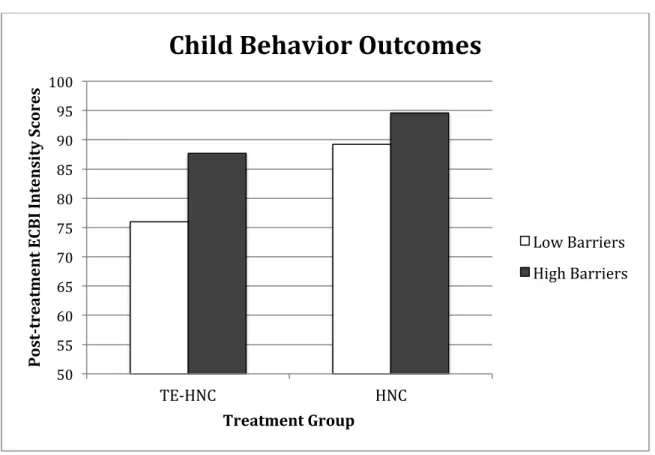
Hypothesis 4: Does technology help most when there is a greater accumulation of barriers? An interaction was found in post-treatment ECBI intensity scores between participants in treatment groups and high versus low barriers groups (see Figure 2). Both high (M = 87.7, SD = 19.2) and low barriers (M = 76, SD = 3.8) groups in TE-HNC had lower ECBI intensity scores post-treatment compared to HNC high (M = 94.6, SD = 24.3) and low (M = 89.2, SD = 21.1) barriers group. The group with low barriers randomized to the TE-HNC had the lowest ECBI intensity (M = 76, SD = 3.8) scores post-treatment.
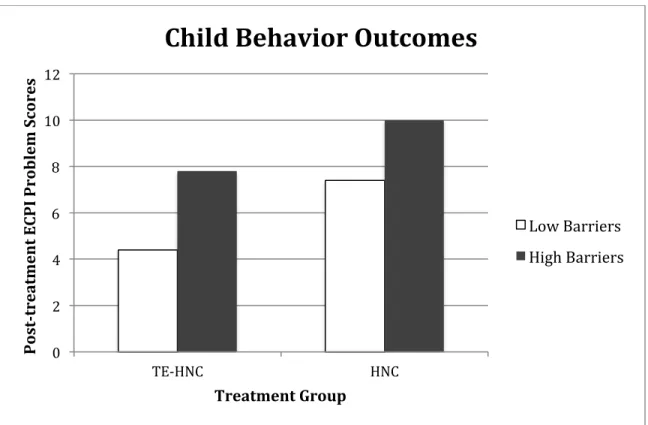
An interaction was found in a post-treatment ECBI problem scores and treatment group as well (Figure 3). Families in the low barriers group randomized to TE-HNC had the lowest post-treatment ECBI problem scores (M = 4.4, SD = 4.7) compared to families in the high
barriers group randomized to TE-HNC (M = 7.8, SD = 6.8), and both the low barriers group (M = 7.4, SD = 8.3) and high barriers group (M = 10.0 SD = 9.0) randomized to the HNC treatment.
Discussion
events (Schnirer & Stack-Cutler, 2012). These life events can accumulate as stress that leads to a literal “tipping point” that becomes unmanageable, preventing them from continuing to
participate in treatment. It is possible, however that other families in the study also experienced a significant life event during the course of the study, and were able to complete treatment; this is unknown due to significant life events not being measured in the current study, which would be important to capture in and examine in future studies.
In analyses associated with hypothesis 2, there was a small effect size of barriers on post treatment outcomes, which provides preliminary data to suggests that the families with more barriers may not benefit from treatment as much as families with fewer barriers. As
hypothesized, stress caused by relatively higher levels of barriers may have interfered with participant’s ability to fully engage in the treatment process, and in turn, benefit as much at post-treatment. Of note, families with high barriers also had higher ECBI scores at baseline
assessment. Families with high barriers could have experienced more stress in their lives,
compromising parenting and contributing to more child externalizing problems, which would be consistent with previous research (e.g. Conger et al., 1999; Reyno & McGarth, 2006; Shelleby et al., 2014).
Contrary to hypothesis three, families with relatively higher barriers completed treatment on average 1 session sooner, rather than later, than families with relatively lower barriers.
more barriers may have expressed to therapists the need to complete treatment sooner due to life stress and therapists accommodating families to prevent drop-out. Although HNC is a mastery-based program, suggesting that all families met program mastery before completion, it will be interesting for example to examine whether the sessions were relatively longer on average with higher relative to lower barrier families. Similarly, it would be interesting in future research to examine whether families with relatively more barriers took more weeks to complete the same or even fewer sessions, due to the need to missed or cancelled and rescheduled sessions.
Finally, as predicted in hypothesis four, both high and low barriers TE-HNC families benefited from treatment more than both of the groups in the HNC treatment, which suggests that the technology enhancement did help mitigate some of the barriers and stress associated with low SES and helped these families engage in and benefit from treatment. Since the high barriers group with the technology enhancement had lower treatment outcomes than the low barriers group, the technology was not able to protect against all stress families experienced from encountering more barriers, which is consistent with discussions in the technology-enhanced services literature more broadly (Jones, 2014). That is, enhancing treatment content between sessions with skills videos, videoconference check-ins, text reminders regarding appointments and practice may help families be more mindful of the importance of using BPT at home and between sessions; however, technology will not necessarily help families to cope with the myriad range of chronic and acute stressors that they encounter routinely
possible that families experienced a range of barriers in addition to the ones included in the current cumulative risk model. Similarly, several exclusion factors (e.g. maltreatment history, severe parent psychopathology) could have restricted the range of barriers within this low-income sample. Second, due to the pilot nature of the parent study, these analyses relied heavily on dichotomous variables, including both to create the risk index, as well as to examine low versus high risks within a low income sample. While such an approach represented a theoretical and practical first step in examining the proposed trends within this at-risk and underserved sample of low income families, dichotomous data by definition loses some of the richness in the variability of the data. As such, trends should be interpreted with caution and viewed as a first step in a plan of research that will be replicated with larger sample sizes.
This study also had its strengths. First, as noted earlier, this study represents an important step in disentangling how an accumulation of stressors may affect treatment outcome within low-income samples. In addition, it expands on prior research on both the effect of stress and risk factors low SES families experience and strategies to minimize stress and assist families in completing treatments. Relative to other studies of this nature with low SES population (e.g. Lavinge et al., 2010), this study had a lower dropout rate, which could be due to technology enhancements alleviating some stress from barriers for participating families. Relieving some of caregivers’ stress may have helped them focus on learning skills and engaging in treatment, which contributed to higher benefits of treatment.
In summary, this line of research will be important to continue with larger sample sizes, potentially greater assessment time points, and a more rounded assessment of the range of
Acknowledgements
References
Achenbach, T. M. (1991). Manual for Child Behavior Checklist 4–18 and 1991 profile. Achenbach, T. M., & Rescorla, L. A. (2000). Manual for the ASEBA Preschool Forms &
Profiles. Burlington: VT: University of Vermont, Research Center for Children, Youth, and Families. Burlington: University of Vermont, Department of Psychiatry.
Ahrons, C. (1979). The binuclear family: Two households, one family. Alternative Lifestyles, 2(4), 499-515. DOI: 10.1007/BF01082682
Ahrons, C. (1981). The continuing coparental relationship between divorced spouses. American Journal of Orthopsychiartry, 51(3), 415-428. DOI:10.1111/j.1939-0025.1981.tb01390.x Anton, M.T., Jones, D.J., Newey, G.A., Cuellar, J., Gonzalez, M., Forehand, R., Honeycutt, A.,
Khavjou, O., Jacobs, M., Edwards, A., & Pittman, S. (in press). Caregiver use of the core components of technology-enhanced HNC: A case series analysis of low-income
families. Cognitive Behavioral Practice. DOI: 10.1016/j.cbpra.2015.04.005 Anton, M., Jones, D. J., & Youngstrom (2015). Socioeconomic Status, Parenting, and
Externalizing Problems in African American Single Mother Homes: A Person-Oriented Approach. Journal of Family Psychology, 29(3), 405-415. DOI:10.1037/fam0000086 Arnau, R., Meagher, M., Norris, M., & Bramson, R. (2001). Psychometric evaluation of the Beck
Depression Inventory-II with primary care medical patients. Health Psychology, 20(2), 112–119. DOI: 10.1037//0278-6133.20.2.112
Assini-Meytin, L. C., & Green, K. M. (2015). Long-Term Consequences of Adolescent Parenthood Among African-American Urban Youth: A Propensity Score Matching Approach. Journal of Adolescent Health, 56(5), 529-535.
Atzaba-Portia, N., Pike, A., & Deater-Deckard, K. (2004). Do risk factors for problem behaviour act in a cumulative manner? An examination of ethnic minority and majority children through an ecological perspective. Journal of Child Psychology and Psychiatry, 45(4), 707-718. DOI:10.1111/j.1469-7610.2004.00265.x
Bagner, D. M., & Graziano, P. A. (2012). Barriers to success in parent training for young children with developmental delay: The role of cumulative risk. Behavior Modification, 37(3), 356-377. DOI:10.1177/0145445512465307
Beck, A.T., Steer, R. A., & Brown, G. K. (1996). Manual for the Beck Depression Inventory–II. San Antonio, TX: Psychological Corporation.
Brown, C. H., Ten Have, T. R., Jo, B., Dagne, G., Wyman, P. A., Muthén, B., & Gibbons, R. D. (2009). Adaptive designs for randomized trials in public health. Annual review of public health, 30, 1-25.
Burns, G.L., & Patterson, D.R. (1990). Conduct problem behaviors in a stratified random sample of children and adolescents: New standardization data on the Eyberg Child Behavior Inventory. Psychological Assessment, 2(4), 391–397. DOI: 10.1037/1040-3590.2.4.391 Callahan, K. L., Scaramella, L. V., Laird, R. D., & Sohr-Preston, S., L. (2011). Neighborhood
Chorpita, B. F., Daleiden, E. L., Ebesutani, C., Young, J., Becker, K. D., Nakamura, B. J., Phillips, L., Ward, A., Lynch, R., Trent, L., Smith, R. L., Okamura, K. & Starace, N. (2011). Evidence-Based Treatments for Children and Adolescents: An Updated Review of Indicators of Efficacy and Effectiveness. Clinical Psychology: Science and Practice, 18(2), 154–172. DOI: 10.1111/j.1468-2850.2011.01247.x
Clerkin, S.M., Marks, D.J., Policaro, K.L., & Halperin, J.M. (2007). Psychometric properties of the Alabama Parenting Questionnaire-preschool revision. Journal of Clinical Child & Adolescent Psychology, 36(1), 19-28. DOI: 10.1007/s10826-013-9730-5
Coldwell, J., Pike, A., & Dunn, J. (2006). Household chaos–links with parenting and child behaviour. Journal of Child Psychology and Psychiatry,47(11), 1116-1122.
doi:10.1111/j.1469-7610.2006.01655.x
Conger, K. J., Rueter, M. A., & Conger, R. A. (1999). The role of economic pressure in the lives of parents and their adolescents: The Family Stress Model. In L. J. Crockett & R. K. Silbereisen (Eds.), Negotiating adolescence in times of social change (pp. 201-223). Cambridge, UK: Cambridge University Press.
Conger, R. D., Schofield, T. J., Neppl, T. K., & Merrick, M. T. (2013). Disrupting
intergenerational continuity in harsh and abusive parenting: the importance of a nurturing relationship with a romantic partner. Journal of Adolescent Health, 53(4), S11-S17. DOI: 10.1016/j.jadohealth.2013.03.014
Connors-Burrow, N. A., Swindle, T., McKelvey, L., & Bokony, P. (2015). A little bit of the blues: Low-level symptoms of maternal depression and classroom behavior problems in preschool children. Early Education and Development, 26(2), 230-244. DOI:
Crandall, A., Deater-Deckard, K., & Riley, A. W. (2015). Maternal emotion and cognitive control capacities and parenting: A conceptual framework.Developmental Review, 36, 105-126.
Dozois, D., Dobson, K., & Ahnberg, J. (1998). A psychometric evaluation of the Beck
Depression Inventory–II. Psychological Assessment, 10(2), 83–89. DOI: 10.1037/1040-3590.10.2.83
Dumas, J. E., Nissley, J., Nordstrom, A., Smith, E. P., Prinz, R. J., & Levine, D. W. (2005). Home chaos: Sociodemographic, parenting, interactional, and child correlates. Journal of Clinical Child and Adolescent Psychology, 34(1), 93-104. DOI:
10.1207/s15374424jccp3401_9
Duncombe, M. E., Havighurst, S. S., Holland, K. A., & Frankling, E. J. (2012). The contribution of parenting practices and parent emotion factors in children at risk for disruptive
behavior disorders. Child Psychiatry & Human Development, 43(5), 715-733.
Egger, H. L., & Angold, A. (2006). Common emotional and behavioral disorders in preschool children: Presentation, nosology, and epidemiology. Journal Of Child Psychology And Psychiatry, 47(3-4), 313-337. DOI: 10.1111/j.1469-7610.2006.01618.x
Essau, C.A., Sasagawa, S., Frick, P.J. (2006b). Psychometric properties of the Alabama Parenting Questionnaire. Journal of Child and Family Studies, 15(5), 597-616. doi: 10.1007/s10826-006-9036-y
Eyberg, S. M., Nelson, M. M., & Boggs, S. R. (2008). Evidence-based psychosocial treatments for children and adolescents with disruptive behavior. Journal Of Clinical Child And Adolescent Psychology, 37(1), 215-237. DOI: 10.1080/15374410701820117
Eyberg, S. M., & Pincus, D. (1999). Eyberg child behavior inventory and Stutter-Eyberg student behavior inventory: Professional manual. Odessa, FL: Psychological assessment
resources.
Eyberg, S.M., & Robinson, E.A. (1983). Conduct problem behavior: Standardization of a behavioral rating scale with adolescents. Journal of Clinical Child Psychology, 12(3), 347–357. DOI:10.1207/s15374424jccp1203_19
Fowler, J. C., Charak, R., Elhai, J. D., Allen, J. G., Frueh, B. C., & Oldham, J. M. (2014). Construct validity and factor structure of the difficulties in emotion regulation scale among adults with severe mental illness. Journal of psychiatric research, 58, 175-180. Freeman, K. A., & DeCourcey, W. (2007). Further analysis of the discriminate validity of the
Parenting Scale. Journal of Psychopathology and Behavioral Assessment, 29(3), 169-176. DOI: 10.1007/s10862-006-9040-y
Funderburk, B.W., Eyberg, S., Rich, B.A., & Behar, L. (2003). Further psychometric evaluation of the Eyberg and Behar rating scales for parents and teachers of preschoolers. Early Education & Development, 14(1), 67–81. DOI:10.1207/s15566935eed1401_5 Gonzalez, M., Jones, D. J., Kinkaid, C. Y., & Cuellar, J. (2012). Neighborhood context and
Goodrum, N. M., Jones, D. J., Kincaid, C. Y., Cuellar, J., & Parent, J. M. (2012). Youth
externalizing problems in African American single-mother families: A culturally relevant model. Couple and Family Psychology: Research and Practice, 1(4), 294-305. DOI: 10.1037/a0029421
Gratz, K. L., & Roemer, L. (2004). Multidimensional assessment of emotion regulation and dysregulation: Development, factor structure, and initial validation of the Difficulties in Emotion Regulation Scale. Journal of Psychopathology and Behavioral Assessment, 26, 41−54.
Havighurst, S. S., Wilson, K. R., Harley, A. E., Kehoe, C., Efron, D., & Prior, M. R. (2013). “Tuning into Kids”: Reducing Young Children’s Behavior Problems Using an Emotion Coaching Parenting Program. Child Psychiatry & Human Development, 44(2), 247-264. Hudgins, R., Erickson, S., & Walker, D. (2014). Everyone Deserves a Second Chance: A Decade
of Supports for Teenage Mothers. Health & social work, 39(2), 101-108.
Hyde, L. W., Shaw, D. S., Gardner, F., Cheong, J., Dishion, T. J., & Wilson, M. (2013). Dimensions of callousness in early childhood: Links to problem behavior and family intervention effectiveness. Development and Psychopathology, 25(02), 347-363. Ioannidis, J. P. (1998). Effect of the statistical significance of results on the time to completion
and publication of randomized efficacy trials. Jama,279(4), 281-286.
Jones, D. J., Forehand, R., Brody, G., Armistead, L. (2002). Psychosocial adjustment of African American children in single-mother families: A test of three risk models. Journal of Marriage and Family, 64(1), 105-115.
parent training as an example. Clinical Psychology Review, 33(2), 241-252. DOI: 10.1016/j.cpr.2012.11.003
Jones, D. J., Forehand, R., Cuellar, J., Parent, J., Honeycutt, A., Khavjou, O., Gonzalez, M., Anton M., & Newey G. A. (2014) Technology-enhanced program for child disruptive behavior disorders: Development and pilot randomized control trial, Journal of Clinical Child & Adolescent Psychology, 43(1), 88-101, DOI: 10.1080/15374416.2013.822308 Jones, D. J., Anton, M., Gonzalez, M., Honeycutt, A., Khavjou, O., Forehand, R., & Parent, J.
(2015). Incorporating mobile phone technologies to expand evidence-based care. Cognitive and Behavioral Practice, 22(3), 281-290. DOI:10.1016/j.cbpra.2014.06.002 Keenan, K., & Shaw, D. S. (1995). The development of coercive family processes: The
interaction between aversive toddler behavior and parenting factors. In J. McCord (Ed.), Coercion and punishment in long-term perspectives (pp. 165–180). New York:
Cambridge University Press
Kimonis, E. R., Bagner, D. M., Linares, D., Blake, C. A., & Rodriguez, G. (2014). Parent training outcomes among young children with callous–unemotional conduct problems with or at risk for developmental delay.Journal of child and family studies, 23(2), 437-448.
Kohen, D. E., Leventhal, T., Dahinten, V. S., & McIntosh, C. N. (2008). Neighborhood disadvantage: Pathways of effects for young children. Child development, 79(1), 156-169.
Lavigne J. V., LeBailly S. A., Gouze K. A., Binns H. J., Keller J., & Pate, L. (2010). Predictors and correlates of completing behavioral parent training for the treatment of oppositional defiant disorder in pediatric primary care. Behavior Therapy, 41(2), 198-211. DOI: 10.1016/j.beth.2009.02.006
Levine, T. R., & Hullett, C. R. (2002). Eta squared, partial eta squared, and misreporting of effect size in communication research. Human Communication Research, 28(4), 612-625. Lorber, M. F. (2012). The role of maternal emotion regulation in overreactive and lax
discipline. Journal of family psychology, 26(4), 642.
Lorber, M. F., Xu, S., Smith SlepA. M., Bulling, L., &O'Leary, S. G. (2014) A new look at the psychometrics of the Parenting Scale through the lens of Item Response Theory, Journal of Clinical Child & Adolescent Psychology, 43(4), 613-626. DOI:
10.1080/15374416.2014.900717
Lundahl, B., Risser, H. J., & Lovejoy, M. C. (2006). A meta-analysis of parent training: Moderators and follow-up effects. Clinical Psychology Review, 26(1), 86-104. DOI: 10.1016/j.cpr.2005.07.004
MacKenzie, E. P., Fite, P. J., & Bates, J. E. (2004). Predicting outcome in Behavioral Parent Training: expected and unexpected results. Child and Family Therapy, 26(2) 37-53. DOI: 10.1300/J019v26n02_03
Maliken, A. C., & Katz, L. F. (2013). Exploring the impact of parental psychopathology and emotion regulation on evidence-based parenting interventions: A transdiagnostic approach to improving treatment effectiveness. Clinical child and family psychology review, 16(2), 173-186.
Markowitz, A. J., Ryan, R. M., & Marsh, A. A. (2014). Neighborhood income and the expression of callous–unemotional traits. European Child and Adolescent Psychiatry,
23(12), 1103-1118. DOI: 10.1007/s00787-014-0663-3
McHale, J., Khazan, I., Erera, P., Rotman, T., DeCourcey, W,. & McConnell, M. (2002). Coparenting in diverse family systems. In: M. Bornstein (Ed.) Handbook of parenting: Vol.3: Being and becoming a parent (2nd ed, pp. 75–107). Mahwah, NJ: Lawrence Erlbaum Associates
McHale, J. P., & Lindahl, K. M. (2011). Coparenting: A conceptual and clinical examination of family systems. American Psychological Association.
McMahon R. J., Forehand R. L. (2003). Helping the noncompliant child: Family-based treatment for oppositional behavior. New York, NY: Guilford Press.
McMahon R. J., Wells K. C., Kotler J. S. Conduct problems. In: Mash E. J., Barkley R. A. (Eds).
Treatment of childhood disorders. 3rd ed. New York: Guilford Press; 2006. pp. 137–268. National Center for Children in Poverty. 2014. Child Poverty. Retrieved from:
http://www.nccp.org/topics/childpoverty.html
Northerner, L. M., Trentacosta, C. J., & McLear, C. M. (2016). Negative Affectivity Moderates Associations Between Cumulative Risk and At-Risk Toddlers’ Behavior
Panter‐Brick, C., Burgess, A., Eggerman, M., McAllister, F., Pruett, K., & Leckman, J. F. (2014). Practitioner Review: Engaging fathers–recommendations for a game change in parenting interventions based on a systematic review of the global evidence. Journal of Child Psychology and Psychiatry, 55(11), 1187-1212.doi:10.1111/jcpp.12280
Patterson, G. R. (2002). The early development of coercive family process. In J. B. Reid, G. R. Patterson, J. Snyder, J. B. Reid, G. R. Patterson, J. Snyder (Eds.) , Antisocial behavior in children and adolescents: A developmental analysis and model for intervention (pp. 25-44). Washington, DC, US: American Psychological Association. doi:10.1037/10468-002 Pelham, W. E., Foster, E. M., & Robb, J. A. (2007). The economic impact of
attention-deficit/hyperactivity disorder in children and adolescents. Ambulatory Pediatrics, 7(1), 121-131.
Phillips, D. M. 2004. Development pathways for children with disruptive behavior disorders (Doctoral Dissertation). University of New Orleans.
Pike, A., Iervolino, A. C., Eley, T. C., Price, T. S., & Plomin, R. (2006). Environmental risk and young children’s cognitive and behavioral development. International Journal of
Behavioral Development, 30(1), 55-66. DOI: 10.1177/0165025406062124
Piquero, A. R., Farrington, D. P., Welsh, B. C., Tremblay, R., & Jennings, W. G. (2009). Effects of early family/parent training programs on antisocial behavior and delinquency. Journal of Experimental Criminology, 5(2), 83-120.
Reitman D., McMahon R. J. (2012). Constance “Connie” Hanf (1917-2002): The mentor and the model. Cognitive and Behavioral Practices, 20(1), 106-116. DOI:
10.1016/j.cbpra.2012.02.005
Reyno, S. M., & McGarth, P. J. (2006). Predictors of parent training efficacy for child externalizing problems- a meta-analytic review. Journal of Child Psychology & Psychiatry, 46(1), 99-111. DOI: 10.1111/j.1469-7610.2005.01544.x
Ritschel, L. A., Tone, E. B., Schoemann, A. M., & Lim, N. E. (2015). Psychometric properties of the Difficulties in Emotion Regulation Scale across demographic groups. Psychological assessment, 27(3), 944.
Robinson, E.A., Eyberg, S.M., & Ross, A.W. (1980). The standardization of an inventory of child conduct problem behaviors. Journal of Clinical Child Psychology, 9(1), 22–29. DOI: 10.1080/15374418009532938
Rutherford, H. J., Wallace, N. S., Laurent, H. K., & Mayes, L. C. (2015). Emotion regulation in parenthood. Developmental Review, 36, 1-14.
Scaramella, L. V., Neppl, T. N., Ontai, L. L., & Conger, R. D. (2008). Consequences of socioeconomic disadvantage across three generations: parenting behavior and child externalizing problems. Journal of Family Psychology, 22(5), 725-733. DOI: 10.1037/a0013190
Scott, S. (2012). Parenting quality and children's mental health: biological mechanisms and
psychological interventions. Current Opinion in Psychiatry, 25(4), 301-306. DOI:
10.1097/YCO.0b013e328354a1c5
Shelleby, E. C., Votruba-Drzal, E., Shaw, D. S., Dishon, T. J., Wilson, M. N., & Gardner, F. (2014). Income and children’s behavioral functioning: A sequential mediation analysis. Journal of Family Psychology, 28(6), 936-946. DOI: 10.1037/fam0000035
Shelton, K.K., Frick, P.J., & Wootton, J. (1996). Assessment of parenting practices in families of elementary school-age children. Journal of Clinical Child Psychology, 25(3), 317-329. DOI: 10.1207/s15374424jccp2503_8
Shook, S. E., Jones, D. J., Forehand, R., Dorsey, S., & Brody, G. (2010). The mother-coparent relationship and youth adjustment: A study of African-American single mother families. Journal of Family Psychology, 24(3), 243-251. DOI: 10.1037/a0019630
SmithBattle, L. (2007). Legacies of advantage and disadvantage: The case of teen mothers. Public Health Nursing, 24(5), 409-420. DOI: 10.1111/j.1525-1446.2007.00651.x
Steer R, Kumar G, Ranieri W, & Beck, A. (1998). Use of the Beck Depression Inventory-II with adolescent psychiatric outpatients. Journal of Psychopathology and Behavioral
Assessment, 20(2), 127–137. DOI: 10.1023/A:1023091529735
Tiano, J. D., & McNeil, C. B. (2005). The inclusion of fathers in behavioral parent training: A critical evaluation. Child & Family Behavior Therapy, 27(4), 1-28.DOI:
10.1300/J019v27n04_01
Waller, R., Gardner, F., Hyde, L. W., Shaw, D. S., Dishion, T. J. & Wilson, M. N. (2012). Do harsh and positive parenting predict parent reports of deceitful-callous behavior in early childhood? Journal of Child Psychology and Psychiatry, 53(9), 946–953. DOI:
10.1111/j.1469-7610.2012.02550.x
Williams Coplin, J., & Houts, A. C. (1991). Father involvement in parent training for oppositional child behavior: Progress or stagnation?. Child & Family Behavior Therapy, 13(2), 29-51. DOI: 10.1300/J019v13n02_03
Westbrook, T. P. R., & Harden, B. J. (2010). Pathways among exposure to violence, maternal depression, family structure, and child outcomes through parenting: A multigroup analysis. American Journal of Orthopsychiatry, 80(3), 386-400.
Willoughby, M. T., Waschbusch, D. A., Moore, G. A., & Propper, C. B. (2011). Using the ASEBA to Screen for Callous Unemotional Traits in Early Childhood: Factor Structure, Temporal Stability, and Utility. Journal of Psychopathology and Behavioral
Assessment, 33(1), 19–30. http://doi.org/10.1007/s10862-010-9195-4
Table 1
Demographic Information
Group N Percent
Caregivers
Female 17 89.5%
Hispanic/Latino 2 10.5%
Black/African American 5 26.3%
White/Caucasian 13 68.4%
Hawaiian/Pacific Islander 1 5.3%
Children
Female 10 52.6%
Hispanic/Latino 3 15.8%
Black/African American 6 31.6%
White/Caucasian 10 52.6%
Black and White 2 10.5%
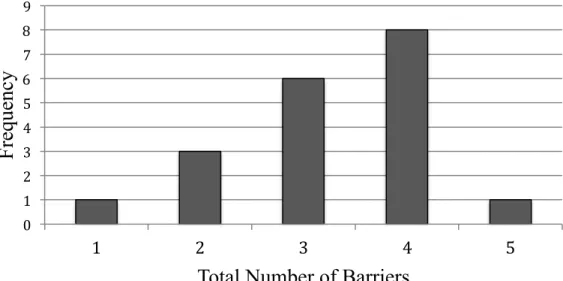
Figure 1
Frequencies of Barriers
0 1 2 3 4 5 6 7 8 9
1 2 3 4 5
F
re
que
nc
y
Figure 2
50 55 60 65 70 75 80 85 90 95 100
TE-‐HNC HNC
P ost -‐t re at m en
t E
CB
I I
n te n si ty S co re
s
Treatment Group
Child Behavior Outcomes
Figure 3
0 2 4 6 8 10 12
TE-‐HNC HNC
P
ost
-‐t
re
at
m
en
t E
CP
I P
ro
b
le
m
S
co
re
s
Treatment Group