Materials at North Carolina Academic Libraries. A Master's Paper for the M.S. in L.S. degree. November, 2009. 37 pages. Advisor: Dr. Sandra Hughes-Hassell.
Academic libraries use many different techniques for determining how to de-select reference materials. However, the area of reference materials is undergoing great change due to a rapid increase in the use of electronic and online resources, necessitating changes in the de-selection process. A survey was taken by reference librarians at academic libraries belonging to the University of North Carolina system who were asked for their opinions on the inventory management techniques used at their institutions, as well as their thoughts on the future of reference materials. The responses reveal a strong shift towards smaller print reference collections and a general shift towards the use of electronic resources over print materials. Print materials are still viewed as retaining value to end-users and are unlikely to disappear in the near future.
Headings:
Library schools - Theses - University of North Carolina at Chapel Hill Academic Libraries - Collection Development
REFERENCE MATERIALS AT NORTH CAROLINA ACADEMIC LIBRARIES
by David J. Dusto
A Master’s paper submitted to the faculty of the School of Information and Library Science of the University of North Carolina at Chapel Hill
in partial fulfillment of the requirements for the degree of Master of Science in
Library Science.
Chapel Hill, North Carolina November 2009
TABLE OF CONTENTS
Introduction...2
Literature Review...3
Methodology...9
Results...12
Conclusions...25
Suggestions for Further Study... 26
Bibliography...28
Appendix...29
TABLES Table 1 - Recruitment Statistics...10
Table 2 - What do you consider to be the most important factor when considering whether or not a print reference book should be removed from the collection?...14
FIGURES Figure 1 - How often does your library perform a weeding project on the reference section?...12
Figure 2 - In your opinion, how important is it that the library maintain a print reference collection?...19
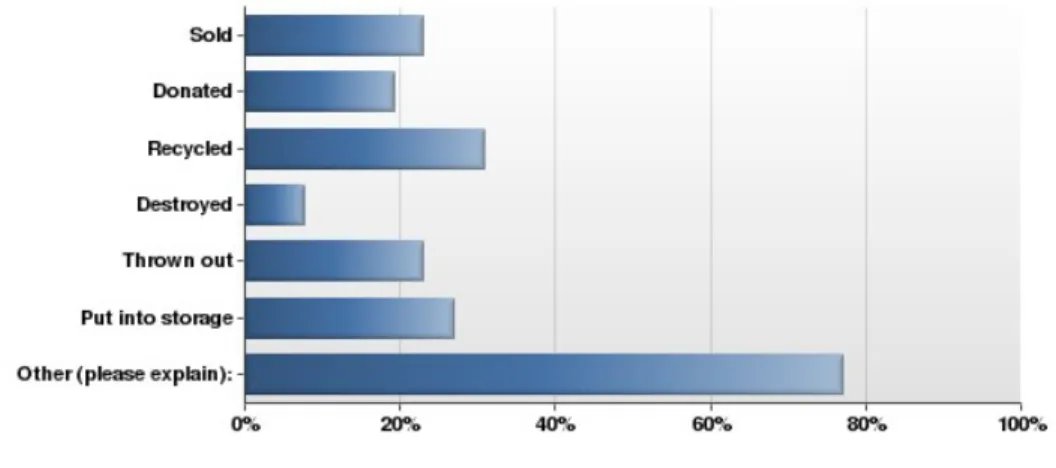
Figure 3 - What does your library do with reference books that have been removed from the collection?...20
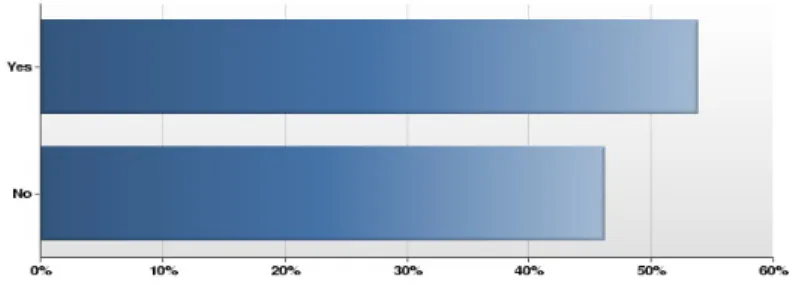
Figure 4 - Does the collection development policy at your library have a section that specifically deals with reference materials?...21
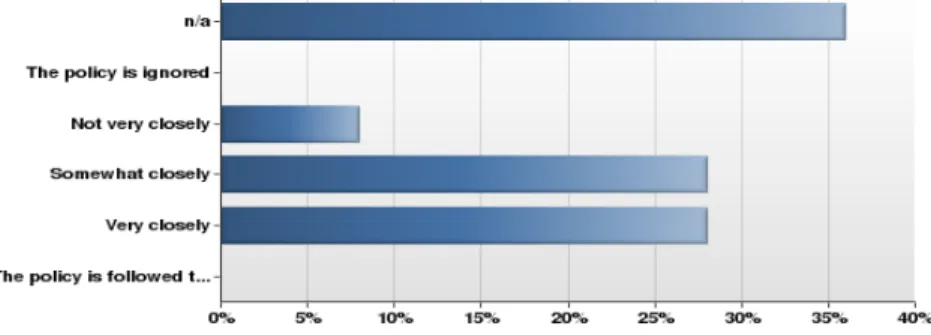
Figure 5 - In your opinion, how closely do staff members at your library follow this policy when weeding reference books?...22
Figure 6 - In your opinion, how effective is the actual method used by your library to weed reference materials?...22
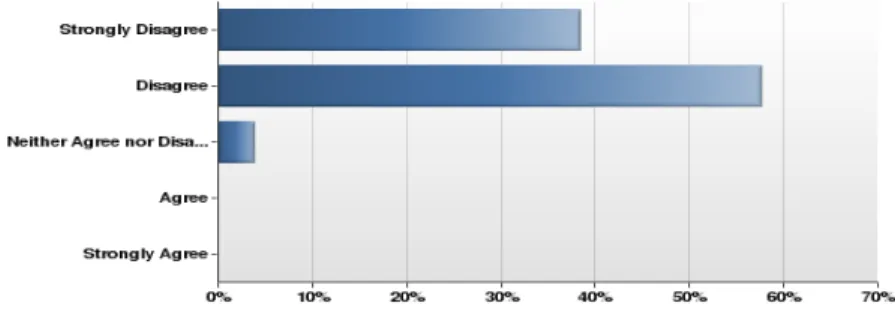
Figure 7 - Soon, all printed reference books will be removed from academic libraries...23
Figure 8 - Electronic reference tools are more useful for most library users than print reference materials...24
Figure 9 - Regardless of usage, it is still important to have a "core" collection of print reference books...25
Figure 10 - Regardless of usage, it is still important to have print reference materials that are part of a special collection...25
Introduction
The area of reference materials is in a state of great change. Over the past decade, the increased use and development of electronic databases and online research tools, along with the explosion of publicly-accessible Internet resources, has fundamentally altered the nature of reference research. As reference information sources shift from print to electronic, each academic library utilizes its own method of determining which
materials are weeded out of a given print reference collection. However, the process of weeding reference books is a fundamentally different process from managing a lending collection. There have been few studies to determine exactly how various institutions go about managing their reference collections.
This study surveys reference librarians at publicly-operated universities in the state of North Carolina in an attempt to answer several questions about inventory management procedures. The first and most pertinent question is to find out what methods librarians at the surveyed institutions actually use when weeding. Closely following this is the question of whether or not each institution's written collection management policy actually has a section stipulating how reference books are to be treated; and, just as importantly, whether or not this policy is actually followed.
reference materials purchased with taxpayer funds.
It is hoped that this study will provide an updated view on the current status of collection management practices in print reference, and thereby provide a glimpse into the future of this ever-changing area.
Literature Review
The first major study of reference weeding was conducted by Engeldinger (1982), and surveyed 377 public services librarians at academic institutions, each of which enrolled at least 1,000 students. Engeldinger's questionnaire focused on the effectiveness of collection development procedures when considering the “existence of a reference collection development policy, weeding policies or practices and the criteria used to determine when material was weeded, how much was weeded, what happened to the discards, and the relevance 'use' of the individual items, available staff, and shelf space”(Engeldinger, 1986, 366). His findings are summarized here:
● Only 21 percent of respondents worked in an institution that had a written reference collection development policy (Engeldinger, 1986, 367).
● Of the remaining 79 percent (institutions without written policies), 36.6 percent of respondents claimed that their departments followed some sort of “unwritten” policy (Engeldinger, 1986, 368). The exact meaning of this and its implications were not explored further by Engeldinger.
have such a policy (Engeldinger, 1986, 369).
The next major example of an academic reference weeding survey was conducted by Biggs (1987), and surveyed 471 heads of reference at randomly-selected academic libraries. This was a more thorough study than Engeldinger's, and divided up
respondents by type of institution into four different categories: member of the
Association of Research Libraries (ARL), non-ARL but doctoral-granting, non-ARL but master's granting, and baccalaureate colleges. The findings of this study, while greater in detail than Engeldinger, proved to be similar:
● Only 25 percent of respondents at ARL-affiliated and non-ARL doctoral
institutions reported the existence of a reference-specific weeding policy; Biggs noted this as striking considering the median size and complexity of ARL libraries. At master's and college institutions, the percentages were 13 and 6 respectively (Biggs, 1987, 70)
● At almost every institution reporting the existence of a reference weeding policy, the policy was said to be well-known and closely followed. Biggs concluded that where written policies do exist and are followed, they are deemed effective by librarians responsible for collection development (Biggs, 1987, 71).
and “informal observation” as the main methods for evaluating patron use (Biggs, 1987, 74)
● If a reference work was available electronically, 37 percent of surveyed ARL institutions would consider not purchasing a print version of that work; this percentage steadily rose when considering doctoral, masters, and baccalaureate institutions (which presumably have smaller print collections and less financial resources). This preference for electronic over print was particularly acute in the area of annually-updated reference works such as scientific abstract indexes; print version of Chemical Abstracts, Biological Abstracts, and Historical
Abstracts were the first print versions to be canceled when electronic versions were available (Biggs, 1987, 77). Note that this paper was written over twenty years ago when electronic information sources were still in development and had limited availability, especially for smaller institutions.
According to the authors, a number of factors contributed to the success of the Virginia Tech weeding project, including:
● Publicizing the weeding project in advance, particularly to teaching and research faculty. Keeping faculty “in the loop” was a key contributor towards avoiding public relations problems when the project was underway. The primary benefit of the publicity, therefore, was that if there were complaints from critics, the library staff could demonstrate that they had made a sincere effort to involve such critics (Metz & Gray, 2005, 274). Faculty engagement in the weeding process was seen as an essential facet of the project, and several faculty members were involved in reviewing de-selection decisions from the very beginning.
● As noted above, having a clear set of criteria to determine which materials were to be weeded allowed the project to both proceed efficiently and served to “assuage public concern by serving as a reminder that a collection is dynamic and de-selection is as vital to the project as de-selection.” (Metz & Gray, 2005, 275). This policy was posted online at the University Libraries website and included guidelines for de-selection within each academic discipline.
Although the project was deemed a success due to the above factors and the number of materials removed, it was not perfect. Most notably, the decision by the University Libraries to be environmentally friendly by, at greater cost, recycling books rather than discarding them, incurred problems because de-selected materials were placed in a marked dumpster outside of the main library branch for weekly removal by a
recycling firm; this visibility caused indignant “dumpster divers”, often students, to remove materials from the dumpster and complain at their having been selected for destruction. This public relations backlash forced the library to place all de-selected books in its annual book sale, although the number of weeded materials actually
purchased in the sale was “negligible” (Metz & Gray, 2005, 276). The authors conclude that however well-intentional and publicized a weeding project is, it is ultimately best to obscure the actual removal of materials; to do otherwise is an invitation for additional criticism.
project was to create a collection “that is alive, attractive, current, and authoritative, even if it had less scope and depth than the previous collection” (Delwiche & Bianchi, 2006, 23).
● Several large print indexes of journal literature were immediately targeted for removal, as they were “seldom used” and were now available through electronic databases. Long-standing reference serial orders were reevaluated and in some cases canceled.
● The remaining print collection was divided into five sections, one for each
reference librarian on the staff, each of whom then went through their section item by item to pull materials to be evaluated for de-selection by the other four
reference librarians. The University of Vermont Libraries 1990 collection development policy served as an overall guide for this process (Delwiche & Bianchi, 2006, 24). Due to time constraints, this process did not consult or survey library users, instead relying on the knowledge and experience of the reference librarians.
This project was, according to the authors, a stunning success, prompting “dramatically increased usage of the collection” and a “rise in the number of interactions between patrons and reference librarians” as the library staff could now direct users toward new resources (Delwiche & Bianchi, 2006, 28). The library also saw a significant financial benefit as a result of the reevaluation of its collection policy and standing orders.
Methodology
In order to study the current state of reference collection management practices at university libraries, an invitation to participate in an online survey was sent out to
reference librarians at fifteen of the seventeen member institutions of the University of North Carolina System (the two smallest UNC member institutions, the UNC School of the Arts and the North Carolina School of Science and Mathematics, did not have identified reference staff and therefore were not surveyed). The recruitment email contained a link to an electronic survey administered by the Odum Institute at the University of North Carolina at Chapel Hill. Both the survey and the recruitment email were evaluated by the Institutional Review Board of UNC to ensure that ethical standards were followed. After minor revisions, the survey was activated and recruitment emails were sent out in mid-October 2009.
recruitment email containing a link to an electronic survey. Although most universities also had collection development staff members separate from the reference staff, it was felt that the references staff would be more intimately acquainted with the print reference collection and its management. For manageability, the study was confined to universities in North Carolina that are part of the UNC system.
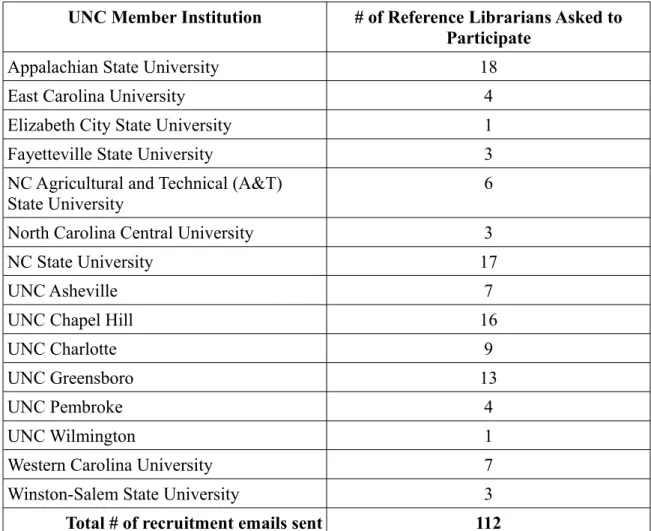
Surveyed institutions and the number of staff members the recruitment email was sent to are summarized below in Table 1.
Table 1: Recruitment Statistics
UNC Member Institution # of Reference Librarians Asked to
Participate
Appalachian State University 18
East Carolina University 4
Elizabeth City State University 1
Fayetteville State University 3
NC Agricultural and Technical (A&T) State University
6
North Carolina Central University 3
NC State University 17
UNC Asheville 7
UNC Chapel Hill 16
UNC Charlotte 9
UNC Greensboro 13
UNC Pembroke 4
UNC Wilmington 1
Western Carolina University 7
Winston-Salem State University 3
The online survey was designed to gather information on the current status of reference inventory management by asking the questions listed below. The recruitment email sent out to potential research participants can be found at the end of this paper as Appendix A. The survey as it appeared online can be found as Appendix B.
1. How often does your library perform a weeding project on the reference section? 2. What do you consider to be the most important factor when considering whether
or not a print reference book should be removed from the collection?
3. Please briefly describe the method your library uses for weeding reference books (i.e., how do you decide what to get rid of?).
4. In your opinion, how important is it that the library maintain a print reference collection?
5. What does your library do with reference books that have been removed from the collection?
6. Does the collection development policy at your library have a section that specifically deals with reference materials?
7. In your opinion, how closely do staff members at your library follow this policy when weeding reference books?
8. In your opinion, how effective is the actual method used by your library to weed reference materials?
9. Please indicate how closely you agree with the following statements: a) Soon, all printed reference books will be removed from academic libraries; b) Electronic reference tools are more useful for most library users than print reference
print reference books; d) Regardless of usage, it is still important to have print reference materials that are part of a special collection.
Results
A total of 34 respondents from the selected institutions replied over a period of two weeks. Because each question was optional and could be skipped, not all questions in the survey received a full 34 replies. The responses to each question posed are as follows:
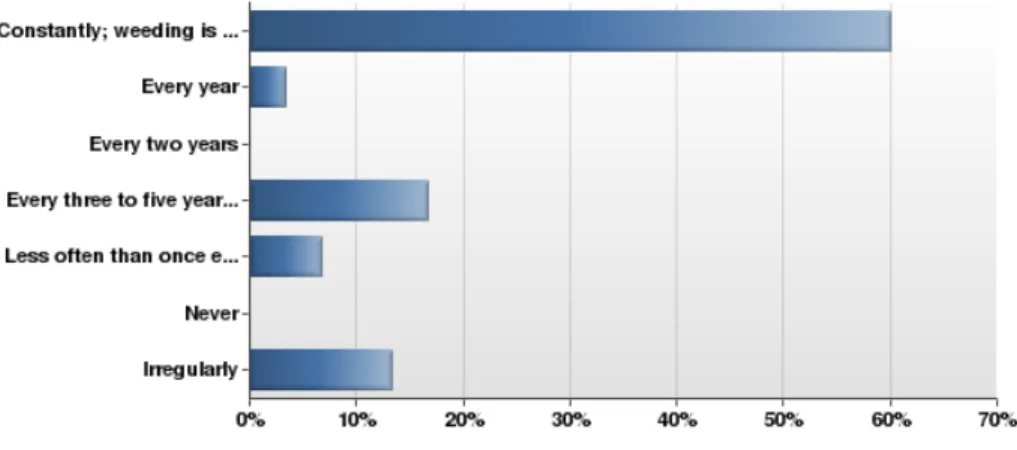
Question 1 (30 responses): How often does your library perform a weeding project on the reference section?
The results for this question are summarized in Figure 1. The majority (60%) state that weeding is an ongoing process at their institution, which indicates that constant collection management is the method of choice for the surveyed institutions, with
Figure 1: How often does your library perform a weeding project on the reference section? (n=30)
Question 2 (28 responses): What do you consider to be the most important factor when considering whether or not a print reference book should be removed from the
collection?
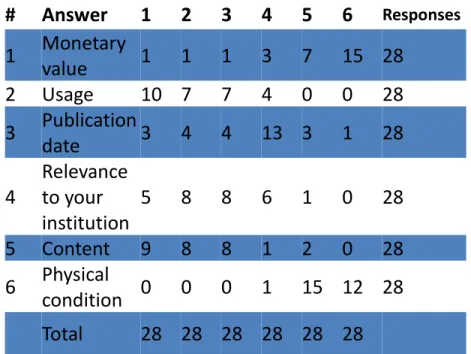
The responses to this question were ranked from a list of possible choices, as follows:
1. Monetary Value 2. Usage
3. Publication Date
4. Relevance to your institution 5. Content
6. Physical Condition
of note is that none of the respondents marked usage or content as the least-important factor.
“Relevance to Institution” is another strong factor across the board; again, nobody ranks it as the least important factor. “Publication date” falls in the middle ranking for respondents, perhaps because it is superseded by “Content” and “Usage”, as an older reference work may still have good content and be widely used. “Monetary Value” was ranked low is the list of important factors; it seems, therefore, that librarians are
pragmatic when it comes to weeding materials and in general do not balk at de-selecting a reference work simply because it happens to have been expensive.
“Physical Condition” was overwhelmingly the least important factor for librarians when weeding, with 27 of 28 (96.4%) of respondents ranking it the least-important or second-to-least-important factor. This seems to imply that librarians are willing to keep a reference work, even if it is falling apart, provided that it is relevant, has good content, etc. Perhaps the respondents assume that such a work will be replaced rather than the title being removed completely from the collection.
Table 2: What do you consider to be the most important factor when considering whether or not a print reference book should be removed from the collection? (n=28)
#
Answer
1
2
3
4
5
6
Responses1
Monetary
value
1
1
1
3
7
15 28
2
Usage
10 7
7
4
0
0
28
3
Publication
date
3
4
4
13 3
1
28
4
Relevance
to your
institution
5
8
8
6
1
0
28
5
Content
9
8
8
1
2
0
28
6
Physical
condition
0
0
0
1
15 12 28
Total
28 28 28 28 28 28
Question 3 (26 responses): Please briefly describe the method your library uses for weeding reference books (i.e., how do you decide what to get rid of?)
Methods reported by respondents are categorized below. Despite the fact that all
of the respondents work for large academic libraries that are part of the same university system, these responses indicate that there is a wide variety in methods of collection management used in reference. Several responses show a reliance on subject specialists, while others divide the reference section among the general reference staff by call number, using very specific procedures of de-selection. Many responses indicate that before a volume is removed, librarians will search electronic databases and nearby institutions or lending cooperatives for that work, to ensure that should the item be removed, a copy can be acquired should a patron require it.
or rely on the thickness of the dust layer atop the books! This kind of ad-hoc weeding procedure is likely more prevalent among smaller libraries; such a lack of direction would inevitably cause problems for larger libraries.
The responses show a clear shift towards slimming down reference collections. Some responses show a shift towards electronic reference tools and e-books, with several responses indicating that their institutions are moving towards all (or mostly) electronic reference tools. Others are transferring weeded reference materials to the general, circulating collection.
None of the responses say anything about their institutions' respective collection management policies. Questions 6 and 7 deal with this issue in more detail.
De-selection done by subject specialists
● “This criteria varies from librarian to librarian. Our library uses the subject liaison model so
each liaison is the one that is responsible for weeding their section. However, other liaisons and the head of reference are consulted during this process for alternative points of view and feedback. And, because each discipline is different as to what is important to have and to keep there is no over-arching checklist or process. Also, reference books are often "weeded" by moving them to the general collection from the reference section.”
● “The considered opinion of the subject specialist with reference to librarians in related fields.” ● “Subject librarians are asked to periodically look through their sections.”
● “Subject specialists in reference go through their areas.” ● “Selectors identify items to be deselected.”
● “Usually it up to the subject specialist. Superseded editions are usually weeded, as are books that are out of date (especially important in health care).”
● “Subject specialists decide.”
● “We are moving to ebooks so print versions of those titles are transferred to the stacks. We move out anything that is out-of-date, no longer relevant to the curriculum, too specialized, or seldom used. Subject specialists make decisions for their call number areas.”
De-selection is done by reference staff assigned to call number ranges, or based on personal experience
librarian reviews each title within her/his assigned area,by a combination of browsing the records online and physically examining the titles. We remove the weeded titles and place them on carts. If we have questions about a title, we ask library colleagues' opinions (the colleagues include collection management bibliographers). Once we've decided to remove a title from reference, we decide whether to move it to the stacks or discard it completely. Sometimes we move titles from print to full text format. Sometimes we will also decide that we need the title, but need a newer edition.”
● “We weed based on personal experience of librarians, their knowledge of how often the books are
used and what the content is.”
● “By scanning the shelves for books that contain information that is out of date and therefore not
useful.”
● “We don't necessary "get rid of" reference books. They are simply moved to the general collection.
We have tried to get reference staff to think of the entire library as their reference collection, not just the books that are in the room where they work. So a book should be in the reference collection if it is frequently consulted by reference staff or patrons.”
● “We discard previous editions when newer edition is available, books that are no longer relevant
to curriculum or users, books with outdated content.”
● “We are terrible about this. Usually it's about space, sometimes it's about the relevance of the materials.”
● “We weeded our collection a few years ago prior to converting our reference area to the Learning Commons. We had to make drastic cuts in reference in the reference collection, but a large majority of what was cut was moved to the circulating collection. The main criteria for keeping it in reference was if we thought it was a truly reference item (facts and figures type of content) that needed to be always readily available in the library. Items that were actually weeded had to have some compelling reason why they were no longer needed - old and replaced by something else, inaccurate, no longer useful, etc.”
Print works are removed when electronic versions become available
● “If something is old, is superseded by a newer (or electronic) version, or isn't judged to be of use
solely within the library, it goes to the stacks. We're trying to make our print reference collection as small as possible and must justify why any given title is kept.”
● “Outdated editions; titles we no longer use or titles with information available easily via the
internet; titles we have cancelled.”
● “We look at how thick the layer of dust is on the top of the book. We also look at
programs/curricula for which the work may be relevant. We are also working to get as many reference books in electronic format as possible.”
mostly. Also whether or not we have the source electronically as well.”
● “Ours is a very old collection-so, the first thing we look at is age of the source, followed by relevance and availability of the information in a database.”
● “Whether or not the information is available in another format (i.e. online); how often it's used; we often weed to the circulating stacks if it's low usage so that it can be checked out.”
● “If title is available electronically in our collection we often weed print.”
● “Is the information available in electronic form? Is the information outdated? Or is there a more
recent edition available? Some items may be kept in the library but sent to the stacks.”
Other institutional holdings are checked to ensure that a de-selected work remains available
● “Major works are retained, high use volumes are retained. When deciding what to weed check
contents against current research and current research topics. Check 3-5 similar institutions (generally UCLA, Michigan, Pennsylvania, Virginia, Duke) to see where they keep the work.”
● “Check to see if we have newer edition. Look for dated materials. Check RCL web to see if it is
listed. If the book is listed in RCL web, we do not weed it.”
● “Is it our last copy? Do we have other formats? Do we have later editions? Total circulation.
What else is available on the topic? Do UNCP and/or FSU have copies? Are nursing materials more than 5 years old? (except nursing history & theory). Is the material dated? May not apply to some disciplines, i.e. history, literature, philosophy, religion. Cost of replacement. Is it a “hot” topic? Do you know of faculty who do research related to the topic? Do you know if it was a gift or something we purchased? Is there still an order record, and was it ordered by a department? How long has the book been gone and are there any holds? Check Choice reviews to see if it was outstanding or highly recommended Who is the publisher? For literature, is it a classic imprint or
edition, part of an authoritative series? i.e., Modern Library, Twaynes, etc.”
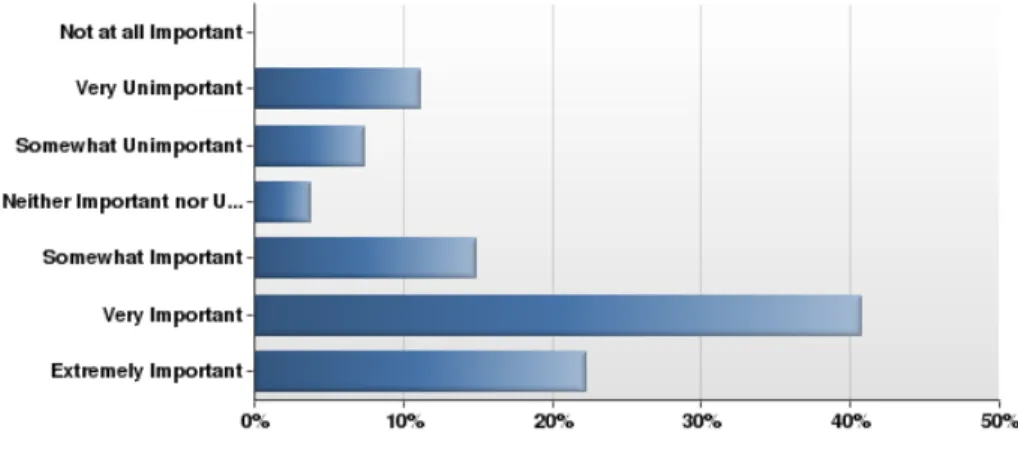
Question 4 (27 responses): In your opinion, how important is it that the library maintain a print reference collection?
Results are summarized in figure 2. The highest number of replies to this question indicate that it is “Very Important” to maintain at least some kind of print reference collection in an academic library. Most telling, however, is that “Very
available (i.e. electronic resources). It would be interesting to see how this number changes in the future.
A small but significant number of respondents (22%) selected print reference as being equal to or less important than “Neither Important nor Unimportant”. This
suggests that a small but significant number of reference librarians see print materials as a thing of the past, soon to be superseded by electronic resources. Whether or not print materials remain an important part of the collection, as other respondents indicate, remains to be seen.
Figure 2: In your opinion, how important is it that the library maintain a print reference collection? (n=27)
Question 5 (26 responses): What does your library do with reference books that have been removed from the collection? Select all that apply.
Figure 3: What does your library do with reference books that have been removed from the collection? Select all that apply. (n=26)
The most common fate of weeded reference materials was not actually not a choice given to the respondents; instead, it was that de-selected materials are transferred to the circulating library collection (in retrospect, that should have been one of the choices on the survey). Nonetheless, this indicates that even when reference books are weeded, they are most likely not being destroyed, put into storage, etc., but rather remain a part of the library collection. The next-highest number of responses went to
“Recycled”, which is interesting in light of the Virginia Tech Libraries weeding project described earlier by Metz and Gray. Although recycling is a more expensive option for libraries than putting books into storage or simply throwing them out, when properly implemented it can deflect criticism by appearing to be environmentally friendly.
Question 6 (26 responses): Does the collection development policy at your library have a section that specifically deals with reference materials?
management information. For example, the table of contents for the collection development policy for Appalachian State University lists the “General Reference
Collection” as “Being Revised”; the actual section is blank (The Collection Development Team, 1998, 40). Note that this policy has not been updated since 1998.
Figure 4: Does the collection development policy at your library have a section that specifically deals with reference materials? (n=26)
Question 7 (25 responses): In your opinion, how closely do staff members at your library follow this policy when weeding reference books?
Figure 5: In your opinion, how closely do staff members at your library follow this policy when weeding reference books? (n=25)
Question 8 (26 responses): In your opinion, how effective is the actual method used by your library to weed reference materials?
Results are summarized in figure 6. Building on the previous question, question 8 seeks to discover the how effective actual collection management methodologies are when dealing with reference materials. Most respondents (65%) indicate that the method used by their institution is “Effective” or at least “Somewhat Effective”, indicating that most of the surveyed institutions seem to be effectively dealing with the ongoing changes in the reference area.
Still, several respondents indicate dissatisfaction with the methods used by their library, with 24% believing that their weeding methods are “Somewhat ineffective” or worse, so there is clearly room for much improvement in some areas.
Question 9 (26 responses): Please indicate how closely you agree with the following statement: Soon, all printed reference books will be removed from academic libraries.
Results are summarized in figure 7. Clearly, the vast majority of respondents to this question feel that printed reference materials will continue to have a place in
libraries, at least in the near future. Despite rapid advances and adoption in the area of e-reference books and other electronic e-reference tools, print materials do not appear to be in danger of disappearing. However, it is important to note that this question only asks about the future existence of print reference materials in libraries, not their use. This is addressed in the next question.
Figure 7: Soon, all printed reference books will be removed from academic libraries. (n=26)
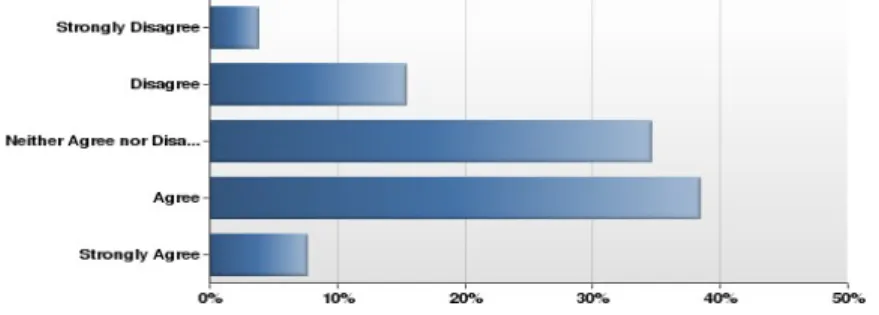
Question 10 (26 responses): [Please indicate how closely you agree with the following statement:] Electronic reference tools are more useful for most library users than print
reference materials.
print to electronic reference resources.
However, a surprisingly large number of respondents (35%) chose to be
ambivalent about this question, neither agreeing nor disagreeing that electronic resources are more useful to users. Possible reasons for this range from a “wait and see” approach, a lack of knowledge on the issue, or a librarian's instinctive, reactionary defense of printed materials that seem to be on the verge of disappearing.
Figure 8: Electronic reference tools are more useful for most library users than print reference materials. (n=26)
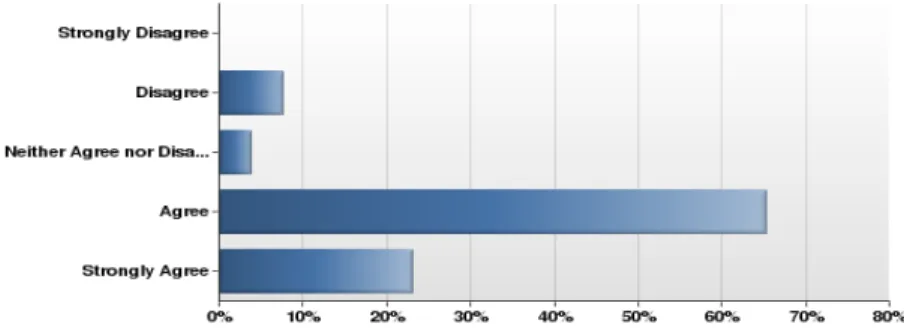
Question 11 (26 responses): [Please indicate how closely you agree with the following statement:] Regardless of usage, it is still important to have a "core" collection of print reference books.
Results are summarized in figure 9. An overwhelming majority of respondents (88%) believe that a “core” set of reference materials should be kept regardless of actual usage. Although this “core” selection is undefined, respondents clearly feel that at least
Figure 9: Regardless of usage, it is still important to have a "core" collection of print reference books. (n=26)
Question 12 (26 responses): [Please indicate how closely you agree with the following statement:] Regardless of usage, it is still important to have print reference materials that are part of a special collection.
Results are summarized in figure 10. A majority of respondents (83%) agree or strongly agree that print reference materials should remain part of special collections. Although 27% of respondents remain ambivalent about this, it seems clear that, although general reference may be moving towards electronic reference sources, special
collections will retain their print materials. This is likely due to the specialized nature of special collections, as collection-specific reference materials may not exist in electronic format or may be prohibitively expensive in that form.
Conclusions
An examination of the survey data and related literature reveals several broad trends in the area of reference material. The first and most obvious conclusion is that reference materials are shifting more and more into the electronic domain, an area seen by a majority of reference librarians as more useful to library users. Overall, electronic reference tools are preferred when making collection development choices during de-selection; if an electronic version of a reference work exists, having a print copy is seen as superfluous.
As a result of this shift to electronic resources, print reference collections are slimming down, in some cases drastically. Although a majority of respondents indicate that print materials still have a place in reference, this feeling is far from absolute certainty, with many feeling that a shift to all or near-all electronic is coming. However, although general reference collections are being cut down in most academic libraries, print materials are unlikely to vanish in the foreseeable future. Most reference librarians seem to agree that even if most reference books are weeded out of their collections, there should still be some print works available, either in the form of a “core” collection or as a special collection.
staff members find it to be an effective tool. A system-wide policy is one possible solution, although this may result in a lack of flexibility considering the differing nature of each academic library in the UNC system. However, it is important that libraries lacking clear reference development policies implement them quickly, lest ongoing changes render their collections as “stagnant” as the former reference collection at the Dana Medical Library described by Delwiche and Bianchi.
Suggestions for Further Study
When the respondents in this study were asked to describe the actual de-selection method used at their institution, several responded that the presence of electronic versions of a particular reference work was an important factor in deciding whether or not to retain a printed work. However, this study did not ask or take into account the cost of electronic versus print resources. For example, if a electronic resource is more expensive than a printed version, but the electronic version is seen by reference librarians as being more useful to end-users (as indicated by this study), how would that affect the selection (or de-selection) process? Does the cost of retaining an electronic work over time as part of a database compare favorably or unfavorably to the one-time purchase cost of a printed work? The economics of electronic resources are clearly an area where study could be done to better enhance our understanding of the cost versus benefits of various reference formats. In a similar vein, one could track the relative cost of print versus electronic reference tools over the past decade to extrapolate future costs. Such research may be of value to librarians involved in collections management.
that even if most other print reference works are superseded by electronic resources, a “core” collection of print reference materials should still be retained regardless of actual usage. But what exactly do reference librarians consider to be a “core” collection? Is this a “ready-reference” collection kept for professional use, or a set of works available to users? What books belong in this “core” collection, and how often are these books actually used by library users? It would also be interesting to study how often
“traditional” print reference books such as general encyclopedias, dictionaries, and so forth are consulted by users in academic libraries, and measurements of such usage might help reference librarians determine which books should be retained in a “core” collection.
A related area for further study would be to measure what resources reference librarians actually use when fulfilling reference requests, and what resources they recommend to users. The results of this research would help to build a sense of the relative value of different resources in a time when the composition of reference tools in academic libraries are changing rapidly. Such research may also direct attention to potentially under-utilized resources that could help libraries during times of financial hardship.
Bibliography
Biggs, M. (1987). Reference Collection Development in Academic Libraries: report of a survey. RQ, 27(1), 67-79.
Delwiche, F. and Bianchi, N. (2006). Transformation of a Print Reference Collection.
Medical Reference Services Quarterly, 25(2), 21-29.
Engeldinger, E. (1986). Weeding of Academic Library Reference Collections: A Survey of Current Practice. RQ, 25(1), 366-71.
Metz, P. and Gray, C. (2005). Perspectives on Public Relations and Library Weeding.
The Journal of Academic Librarianship, 31(3), 273-79.
Appendix A: Recruitment Email
Dear Sir or Madam,
My name is David Dusto, and I am a student at UNC-Chapel Hill conducting a research study about inventory management practices in academic reference collections. You are receiving this email because you are an academic librarian involved in reference; your email address was obtained from the public web site of your institution.
To participate, click the link below to be taken to a short survey. The survey will not collect any personal data that could be used to identify you or your institution, and should take less than ten minutes to complete.
If you have any questions about the study, please contact me at
[email protected]. Thank you, and I hope you choose to participate to help me discover which inventory management practices are the most effective and most widely-used.
http://uncodum.qualtrics.com/SE? SID=SV_cwNu47bYCu2Duza&SVID=Prod
Sincerely,
David Dusto UNC-Chapel Hill
School of Information and Library Science [email protected]
Appendix B: Online Survey
University of North Carolina-Chapel Hill Information about a Research Study
________________________________________________________________________ IRB Study # 09-1910 Consent Form Version Date: 02-03-05
Title of Study: An Analysis of Reference Inventory Management Techniques at Academic Libraries in North Carolina
Principal Investigator: David J Dusto
UNC-Chapel Hill Department: Information and Library Science Faculty Advisor: Dr. Sandra Hughes-Hassell
Study Contact telephone number: 919-434-1462 Study Contact email: [email protected]
_________________________________________________________________
What are some general things you should know about research studies?
You are being asked to take part in a research study. To join the study is voluntary. You may refuse to join, or you may withdraw your consent to be in the study, for any reason, without penalty.
Research studies are designed to obtain new knowledge. This new information may help people in the future. You may not receive any direct benefit from being in the research study. There also may be risks to being in research studies.
Details about this study are discussed below. It is important that you understand this information so that you can make an informed choice about being in this research study. You may ask the researcher any questions you have about this study at any time.
What is the purpose of this study?
The purpose of this study is to determine which inventory management methods are most commonly used in academic libraries, and which methods are considered to be the most effective and useful. The advent of information technology and electronic reference tools has resulted in great changes to print reference collections, and the results of this survey will provide a view of current and future reference inventory management practices.
How many people will take part in this study?
If you decide to participate, you will be one of approximately 120 people in this research study.
How long will your part in this study last?
What will happen if you take part in the study?
You will be presented with a short survey about inventory management practices at your institution. The survey will ask for your opinions on certain subjects, and in some cases there will be written response sections. You are under no obligation to answer any question that you do not want to; participation is entirely voluntary.
What are the possible benefits from being in this study?
Research is designed to benefit society by gaining new knowledge. Your participation is important to help provide an understanding of current practices in reference collection management, but you will not benefit personally from being in this research study.
What are the possible risks or discomforts involved from being in this study?
You should not experience any discomfort or risk while taking the survey.
How will your privacy be protected?
The survey will not ask for or collect any information that could be used to identify you. The online survey tool does record your IP address to prevent someone from taking the survey multiple times; this information will be deleted when the survey period has expired, along with the name and email address used to initially contact you. There will be no follow-up interview, and you will not be contacted once the survey period has expired.
You may take this survey from any computer with Internet access; please take care to be secure in your surroundings to ensure your privacy is maintained.
Will you receive anything for being in this study?
There is no financial compensation for this study. Any information you are able to provide in the survey is greatly appreciated and will help advance the field of library science.
Will it cost you anything to be in this study?
There are no costs for being in the study aside from a few minutes of your time.
What if you have questions about this study?
You have the right to ask, and have answered, any questions you may have about this research. If you have questions or concerns regarding the study, please contact me using the contact information listed above.
What if you have questions about your rights as a research participant?
All research on human volunteers is reviewed by a committee that works to protect your rights and welfare. If you have questions or concerns about your rights as a research subject you may contact, anonymously if you wish, the Institutional Review Board at 919-966-3113 or by email to [email protected].
● Constantly; weeding is an ongoing process ● Every year
● Every two years
● Every three to five years
● Less often than once every five years ● Never
● Irregularly
What do you consider to be the most important factor when considering whether or not a print reference book should be removed from the collection?
Please rank the criteria below by dragging your most important criterion to the top of the list, your second most important criterion below your first, etc.
1 - Monetary value 2 - Usage
3 - Publication date
4 - Relevance to your institution 5 - Content
6 - Physical condition
Please briefly describe the method your library uses for weeding reference books (i.e., how do you decide what to get rid of?)
In your opinion, how important is it that the library maintain a print reference collection?
● Not at all Important ● Very Unimportant ● Somewhat Unimportant
● Neither Important nor Unimportant ● Somewhat Important
● Very Important ● Extremely Important
What does your library do with reference books that have been removed from the collection? Select all that apply.
● Put into storage ● Other (please explain):
Does the collection development policy at your library have a section that specifically deals with reference materials?
● Yes ● No
In your opinion, how closely do staff members at your library follow this policy when weeding reference books?
● n/a
● The policy is ignored ● Not very closely ● Somewhat closely ● Very closely
● The policy is followed to the letter
In your opinion, how effective is the actual method used by your library to weed reference materials?
● Very Ineffective ● Ineffective
● Somewhat Ineffective
● Neither Effective nor Ineffective ● Somewhat Effective
● Effective ● Very Effective
Please indicate how closely you agree with the following statements:
a) Soon, all printed reference books will be removed from academic libraries. ● Strongly Disagree
● Disagree
● Neither Agree nor Disagree ● Agree
● Strongly Agree
● Strongly Disagree ● Disagree
● Neither Agree nor Disagree ● Agree
● Strongly Agree
c) Regardless of usage, it is still important to have a "core" collection of print reference books.
● Strongly Disagree ● Disagree
● Neither Agree nor Disagree ● Agree
● Strongly Agree
d) Regardless of usage, it is still important to have print reference materials that are part of a special collection.
● Strongly Disagree ● Disagree
● Neither Agree nor Disagree ● Agree