Honor Thesis
Radiopaque Iodine-containing Bone Cement Hung VanThanh Nguyen
Mentor: Anne Jackson Dr. Valerie Ashby Group
Department of Chemistry
Abstract:
An iodine-containing, intrinsically radioopaque copolymer was prepared with the potential to be formulated into acrylate-based bone cement; current bone cements are synthesized from methyl methacrylate (MMA) and employ inorganic additives for sufficient contrast, thereby weakening the mechanical properties of the material. Iodine was covalently incorporated into the material via a novel monomer, 3-iodo-2,2-bis(iodomethyl)propyl methacrylate (IIPMA). Copolymers of MMA and IIPMA were synthesized by solution polymerization, yielding products with easily tunable molecular weights (from 100,000 to 450,000 g/mol) and low polydispersity (~1.50). The polymerized material was also easily scalable in iodine content, ranging from 17% to 48 wt%. Polymer microspheres were then fabricated using solvent evaporation, and these spheres can be directly employed as the powder portion of the bone cement.
Introduction:
Developed by Charnley in the 1960s, poly(methyl methacrylate) (PMMA) became the most widely used bone cement due to it being biocompatible but not biodegradable as well as its excellent processability.1The material serves an important role in bone-repair applications, such as hip replacement and vertebral fractures.2The material consists of two portions, the powder part and the liquid part. Mains components of the powder part include pre-polymerized PMMA microspheres, benzoyl peroxide (the initiator), and radiopacifiers (BaSO4or ZrO2); the liquid part, on the other hand, mainly contains the MMA monomer and N,N-dimethyl p-toluidine (the
co-initiator/activator).3,4Upon mixing of the two components, the initiator system is completed, and the polymerization reaction takes place. The mixture is then injected at a certain viscosity, and polymerization is allowed to go to completion inside the patient’s body.5Common injection methods include vertebroplasty or ballon kyphoplasty and upon injection, the material serves as a medium for force (stress/weight) transfer.3
Bone cement, however, is not without limitations. Due to the lack of actual chemical bond between the prosthetic and the bone, septic loosening can be an issue, especially over time.6 Additionally, material mismatch is another disadvantage. The reinforced regions, due to a significantly higher Young modulus from the PMMA material, can lead to an increased
fracturing risk in neighboring regions.7As reported by Heini et al., a 174% stiffness increase is observed in the comparison between the augmented vertebral body and an intact osteoporotic vertebral body.8Furthermore, PMMA itself is not radiopaque; organic radiopaque agents
(commonly BaSO4or ZrO2) are often needed, with large concentrations.3This would in turn lead to weakening of the polymer matrix, or potential cytotoxicity.3,9Moreover, due to the unreacted MMA monomer, affecting the mechanical properties of the material, causing volume shrinkage and toxic leaching over time.4,7Polymerization heat, which can reach as high as 70oC at the center during setting, is another concern, as several detrimental processes take place at this temperature, including thermal necrosis of bone, protein degradation, and tissue damage.7,9
MMA monomer is utilized. Characterization of radiopacity, cytotoxicity, and mechanical properties can then be evaluated.
Due to its intrinsic radiopacity and low toxicity, iodine seems to be the optimal choice for materials with desired inherent radiopacity and biomedical applications. However, iodine’s application is greatly restricted due to its susceptibility to common organic reactions— substitutions and eliminations; solutions to such instability often resolves to the coupling of iodine with aromatic rings, which in turn leads to other disadvantages, with the most common being cytotoxicity. To overcome such barriers, a novel compound with high content (71.4% weight) of stably attached iodine, 3-iodo-2,2-bis(iodomethyl)propyl methacrylate is proposed. Due to the resulting unstable primary carboncation with no plausible rearrangements and the compounds’ steric barrier towards reactive reagents in bimolecular reactions, iodine’s reactivity is greatly reduced, rendering this monomer an outstanding choice for iodinated acrylate
materials.
Experimental:
Material and Method:
NMR spectra were recorded on a Bruker 600 MHz; chemical shifts were reported in δ (ppm) using CDCl3as the solvent and tetramethylsilane (TMS) as the internal standard. The molecular weights and PDIs were acquired via GPC using an Alliance Waters 2695 Separations Module with PMMA standard calibration. DSC data was obtained using TA Instrument’s DSC Q200. TGA characterization was performed on a Perkin Elmer’s Pyris 1 TGA. Particle morphology was acquired using the FEI Quanta 200 FEG ESEM. Particle characterization was performed using ImageJ. Methyl methacrylate (99%, stabilized, ACROS Organics) was de-inhibited before use with aluminum oxide. The polymerization initiator, 2,2’-Azobis(2-methylpropionitrile) (98%, Sigma-Aldrich) was recrystallized twice in methanol prior to use. Pentaerythritol tribromide (98%, TCI), methacryoyl chloride (97%, Aldrich), toluene (anhydrous, 99.8%, Sigma-Aldrich), sodium iodide and sodium dodecyl sulfate were used without further purifications. Preparation of Pentaerythritol Triiodide. The preparation utilized a Finkelstein substitution reaction. To a 2-neck 500-mL flask, a reflux condenser was attached; pentaerythrytol tribromide (10.0 g, 30.8 mmol) and sodium iodide (69.2 g, 462 mmol) were added. The reaction flask was purge with vacuum and nitrogen. Acetone (240 mL) was added to the flask, and the yellow solution was observed to be saturated with NaI. The reaction was allowed to reflux for 5 days at 75oC. The solvent was removed via rotary evaporation; the yellow solid was then dissolved in ethyl acetate and washed with water and 5% sodium thiosulfate solution, resulting in a very lightly yellow organic layer. The solvent was then removed via rotary evaporation, and the light-yellow solid was collected and washed with hexane. The white powder pentaerythritol triiodide (10.5 g, 73.5% yield) was collected via filtration. 1H NMR (600 MHz, CDCl3, δ): 3.72 (s, 2H, HO-CH2), 3.36 (s, 6H, I-CH2).
bath, and methacryoyl chloride (3.37 g, 32.2 mmol) was added slowly via a syringe, resulting in a pink solution. The flask was warmed up to room temperature, and the reaction was allowed to go overnight. The mixture was washed with water and brine, and a light-pink organic layer was collected. The solvent was removed via rotary evaporation. The product mixture was allowed to go through a column packed with silica gel with hexane/ethyl acetate (87.5: 12.5) mobile phase. The collected product fractions (Rf= 0.595) then underwent rotary evaporation for the removal of the solvents, resulting in a white solid. The product was then recrystallized in hexane, yielding white, spiky/rectangular crystals (63.3% yield).1H NMR (600 MHz, CDCl3, δ): 6.11 (s, 1H,
H2C=C), 5.63 (s, 1H, H2C=C), 4.25 (s, 2H, -O-CH2), 3.39 (s, 6H, I-CH2), 1.97 (s, 3H,
C=C-CH3).
Solution Polymerization of Methylmethacrylate (Method 1). Stock initiator solutions were made from AIBN and toluene at various concentrations. To a round-bottom flask, MMA and AIBN solution were added; the flask was freeze-pumped for 4 times and then allowed to warm up to room temperature. The reaction was allowed to go for 20 hours at 100oC. The cooled reaction mixture was dissolved in dimethyl chloride and precipitated in methanol.1H NMR (600 MHz, CDCl3, δ): 3.59 (s, 3H, H3C-O-), 2.08-1.73 (m, 2H, H2C-C), 1.01 (m, 3H, -C-CH3), 0.84
(m, 3H, C-CH3).
Solution Polymerization of 3-iodo-2,2-bis(iodomethyl)propyl Methacrylate/
Methylmethacrylate (Method 1). A stock initiator solution was made from AIBN (0.009196 g) and toluene (24.0 mL). To a round-bottom flask, MMA (0.587 g, 5.85 mmol), IIPMA (0.313 g, 0.585 mmol) and AIBN solution (0.500 mL) were added; the flask was freeze-pumped for 4 times and then allowed to warm up to room temperature. The reaction was allowed to go for 20 hours at 100oC. The cooled reaction mixture was dissolved in dimethyl chloride and precipitated in methanol.1H NMR (600 MHz, CDCl3, δ): 4.04 (m, 2H, H2C-O-), 3.60 (s, 3H, H3C-O-), 3.39
(s, 6H, I-CH2), 2.10-1.65 (m, 2H, H2C-C), 1.29-0.51 (m, 3H, -C-CH3).
Solution Polymerization of 3-iodo-2,2-bis(iodomethyl)propyl Methacrylate/
Methylmethacrylate (Method 2). An initiator solution was made from AIBN (0.009196 g) and toluene (18.0 mL). To a 25-mL Schlenk flask, MMA (5.87 g, 58.5 mmol), IIPMA (2.98 g, 5.58 mmol) and AIBN solution (7.50 mL) were added; the flask was purged with argon for 20 minutes. The reaction was allowed to go for 20 hours at 70oC. The cooled reaction mixture was dissolved in dimethyl chloride and precipitated in methanol.1H NMR was found to be identical to Method 1 copolymers’.
Chain Transfer for Iodinated Monomer Examination (Bulk). For the reference reaction, MMA (0.516 g, 5.15 mmol) and AIBN (0.00720 g, 0.0468 mmol) were added to a round-bottom flask; for the transfer test, MMA (0.516 g, 5.15 mmol), pentaerythritol triiodide (0.218 g, 0.486 mmol) and AIBN (0.00720 g, 0.0468 mmol) were added to a round-bottom flask. The flasks were purged with argon for 20 minutes. The reaction was allowed to go for 20 hours at 70oC. The cooled reaction mixtures was dissolved in dimethyl chloride and precipitated in methanol twice.
(5.18 mL) were added to a 25-mL Schlenk flask. The flasks were purged with argon for 20 minutes. The reaction was allowed to go for 20 hours at 70oC. The cooled reaction mixtures was dissolved in dimethyl chloride and precipitated in methanol twice.
Preparation of Microspheres. A polymer solution in chloroform (0.075 g polymer/mL CHCl3) was prepared; a surfactant solution (2 % w/v SDS in water) was also made. To a 250-mL beaker, the polymer solution (30 mL) and the surfactant (150 mL) were added. The mixture was allowed to stir at 500 rpm for 1 hour (capped); the cover was then removed, and the dispersion was allowed to stir overnight at 500 rpm, resulting in the formation of microsphere upon the
evaporation of the chloroform solvent. The microsphere was collected via filtration then washed with water.
Results and Discussion:
The monomer synthesis was as follow:
Scheme 1. Preparation of Iodine-containing Monomer.
Preparation of Pentaerythritol Triiodide. The Finkelstein substitution afforded 99.7%
conversion, with 73.5% yield. This diffusion-driven reaction worked efficiently. Due to the high solubility of sodium iodide and the low solubility of sodium bromide in acetone, the product (NaBr) precipitated out of the reaction solution; after 5 days reflux, complete reaction was observed. The pure product NMR (Figure S1, supplemental data) with proper signal assignments indicated product of high purity.
Preparation of 3-iodo-2,2-bis(iodomethyl)propyl methacrylate.The esterification afforded 95.2% conversion, with 63.3% yield. The pure product NMR (Figure S2, supplemental data) with proper signal assignments indicated product of high purity.
Solution Polymerization of Methylmethacrylate (Method 1). The polymerization followed the reaction:
Scheme 2. Polymerization of MMA.
Figure 1. Monomer/initiator Ratio versus Molecular Weight for the Polymerization of MMA.
In the second set of experiments, the initiator concentrations were varied; the collected data was as the following:
Figure 2. Initiator Concentration versus Molecular Weight for the Polymerization of MMA.
As observed from Figure 1 and 2, the molecular weights eventually became horizontal after a certain set of conditions. Although in theory, an increased monomer/initiator ratio could lead to an increase in molecular weight, there seemed to be an upper limit. This was due to experimental limitations, which could lead to the introduction of potential chain transfer/terminator such as oxygen or the solvent; at roughly constant amounts throughout trials, due to the decrease in initiator (when increasing the monomer/initiator ratio), the relative effect of these factors increased, limiting the molecular weight. Figure 2, on the other hand, suggested an increase in molecular weight with increasing initiator concentration, which seemed to be in contrast with
0 5 10 15 20 25 30 35 40
0 1000 2000 3000 4000 5000
M ol ec ul ar W ei gh t ( 10 3g/ m ol )
Monomer : Initiator
Monomer:Initiator Ratio vs. MW
0 10 20 30 40 50 60 70 80 90
2 7 12 17
M ol ec ul ar W ei gh t ( 10 3g/ m ol )
Initiator Concentration (10-4M)
theoretical formulation of a chain-growth mechanism. With the same argument, however, it was indicative that at low concentration, the effect of uncontrollable experimental chain terminators was larger, causing the molecular weight to be lowered; an increase in initiator concentration clearly solved the issue. Moreover, since the monomer/initiator ratio was kept constant for this set of experiment, an increase in initiator concentration caused an increase in monomer
concentration and hence, an increase in molecular weight (due to the first order proportional of kinetic chain length to monomer concentration yet only a half-order disproportional to
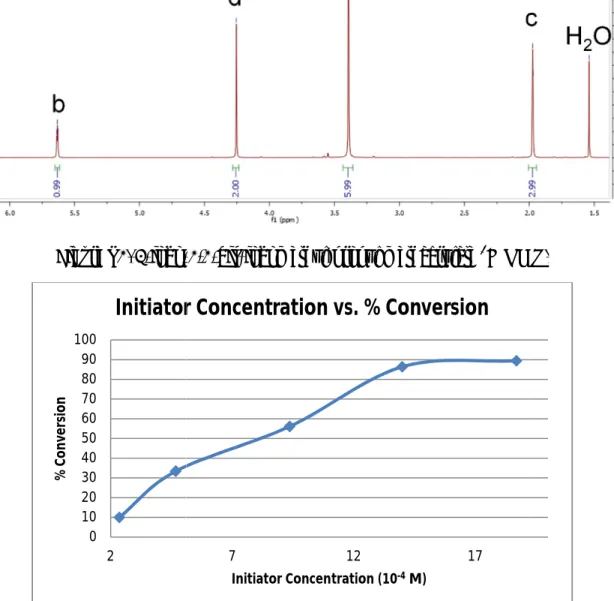
initiator’s).10On a related note, the conversion rate was observed to increase from 32.4% to 89.5% when the initiator concentration increased from 2.34×10⁻⁴M to 18.7×10⁻⁴M (Figure S3, supplemental).
Nevertheless, the preliminary study allowed the optimization of parameters for the
copolymerization, which used a monomer/initiator ratio of 5500:1 and the initiator concentration of 2.34×10⁻³M.
Solution Polymerization of 3-iodo-2,2-bis(iodomethyl)propyl Methacrylate/ Methylmethacrylate (Method 1). The copolymerization followed the reaction:
Scheme 3. Copolymerization of IIPMA and MMA.
Copolymers with different amounts of IIPMA in the feed were synthesized. The following materials were collected:
Table 1. Copolymer Compositions.
Polymer %Weight Iodine Mw(g/mol) Mn(g/mol) PDI
P(MMA0.92-co-IIPMA0.08) 22.3 540,000 360,000 1.50
P(MMA0.86-co-IIPMA0.14) 33.2 515,000 344,000 1.49
P(MMA0.73-co-IIPMA0.27) 47.6 589,000 371,000 1.59
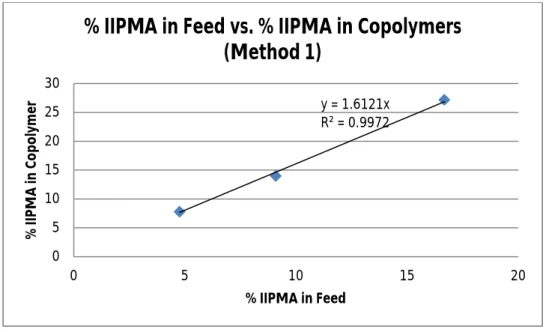
Figure 2. %IIPMA in Feed vs. %IIMPMA in Copolymers (Method 1).
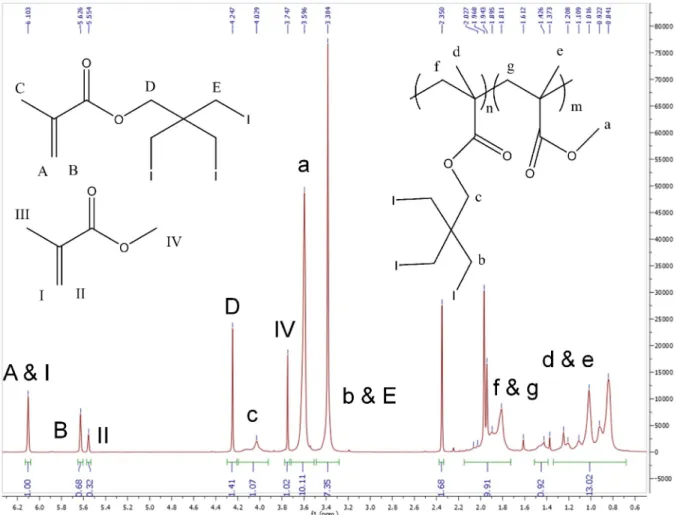
Figure 2 clearly indicated a linear relationship between the percentage of IIPMA in the feed and the final incorporation of IIPMA into the copolymer. The system allowed for a high degree of control of the copolymer composition through the feed composition. Copolymer’s composition was determined using 1H NMR (Figure S4, Supplemental). The reaction, however, was allowed to go for 20 hours; due to the lack of a kinetic study, no information could be inferred in term of the chain sequence distribution. Figure 2 indicated a faster reaction rate of IIPMA compared to MMA (the line’s slope is 1.61, greater than 1). Nevertheless, it did not indicate if the
incorporation was random, alternative, segmented, or blended. A kinetic study must be performed in order to determine this distribution.
The monomer conversions of the final copolymer, however, were counterintuitive. NMR data (Figure S5, Supplemental) suggested a higher conversion of IIPMA compared to MMA. The calculated MMA conversion was 91.1%, whereas the IIPMA conversion was found to be 43.0%. The final polymer composition, however, was 86% MMA and 14% IIPMA; the percent feed of IIPMA was 10%. The data suggested similar conversions, with IIPMA being a bit larger. This was in conflict with the determined conversion, which indicated a much higher conversion of MMA, suggesting some other loss of MMA beside polymerization. The reaction was allowed to go for 20 hours at 100oC, which evaporated MMA (bp = 101oC)11. This loss of MMA increased its conversion, which led to the NMR data; furthermore, the evaporation also invalidated Figure 2 for the same reason. Nevertheless, the experiment suggested that IIPMA can be polymerized into the copolymer with large percent weight of iodine, which was promising for sufficient contrast for the intended application.
Solution Polymerization of 3-iodo-2,2-bis(iodomethyl)propyl Methacrylate/
Methylmethacrylate (Method 2). The synthesis also followed Scheme 3. Copolymers with different compositions of IIPMA were synthesized using a modified procedure to avoid the evaporation of MMA. The following copolymers were collected:
y = 1.6121x R² = 0.9972
0 5 10 15 20 25 30
0 5 10 15 20
% II PM A in C op ol ym er
% IIPMA in Feed
Table 2. Copolymer Compositions (Method 2).
Polymer %Weight Iodine Mw(g/mol) Mn(g/mol) PDI
P(MMA0.94-co-IIPMA0.06) 17.1 632,000 430,000 1.50
P(MMA0.90-co-IIPMA0.10) 27.1 706,000 451,000 1.49
P(MMA0.82-co-IIPMA0.18) 37.9 632,000 405,000 1.56
Copolymers were found to be similar in molecular weight and PDI, indicating the high reproducibility of the procedure; the observed PDIs were also quite low considering a free radical polymerization process. Differences could be the results of different interaction between the copolymers and the column. Because IIPMA was structurally very different from MMA (the GPC calibration standard), it was expected to interact differently with the column; with
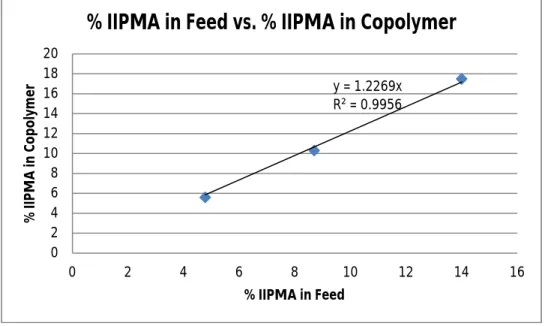
increasing amount of IIPMA in the material, this difference became more apparent and hence, small differences in the molecular weights were observed in Table 2. The incorporation of iodine could also be readily tuned, as indicated by the following plot:
Figure 3. %IIPMA in Feed vs. %IIMPMA in Copolymers (Method 2).
Figure 3 again indicated a linear relationship between the percentage of IIPMA in the feed and the final incorporation of IIPMA into the copolymer, allowing for the iodine content to be easily tunable. Copolymer’s composition was determined similarly via 1H NMR. No information could be inferred in term of the chain sequence distribution due to the lack of a kinetic examination. Figure 3 indicated a faster reaction rate of IIPMA compared to MMA. However, this slope was smaller than Figure 2, indicating that the loss of MMA, if any, was not as apparent. Due to the minimization of MMA evaporation (using a Schlenk flask and Ar purge, running the reaction at 70oC), the reactivity comparison became more reliable. Nevertheless, a kinetic study must still be performed to determine the chain distribution.
The degradation data for the prepared material was acquired via TGA:
y = 1.2269x R² = 0.9956
0 2 4 6 8 10 12 14 16 18 20
0 2 4 6 8 10 12 14 16
% II PM A in C op ol ym er
% IIPMA in Feed
Table 3. Copolymer TGA Data.
Polymer %weight Iodine 5% Degradation (oC) 10% Degradation (oC)
PMMA 0.00 412 433
P(MMA0.94-co-IIPMA0.06) 17.1 417 432
P(MMA0.92-co-IIPMA0.08) 22.2 411 426
P(MMA0.90-co-IIPMA0.10) 27.1 420 433
P(MMA0.86-co-IIPMA0.14) 33.2 404 416
P(MMA0.82-co-IIPMA0.18) 37.9 410 420
As indicated in Table 3, no significant deviations were observed upon the incorporation of IIPMA. Furthermore, the TGA plots were not indicative of the iodine degrading first (from the C-I bond), reflecting the stability of the attached iodine.
Chain Transfer for Iodinated Monomer Examination (Bulk and Solution). The presence of pentaerythritol triiodide, with a very similar structure to IIPMA, was used to test for the chain transfer possibility of the C-I bond; reactions were performed both in bulk and in solution. The collected polymers’ GPC data were as following:
Table 4. Chain Transfer GPC Data.
Polymer Mw(g/mol) Mn(g/mol) PDI
PMMA Reference—Bulk 590,000 300,000 1.97
PMMA Sample (with the presence of CT agent) 615,000 313,000 1.97
PMMA Reference—Solution 516,000 304,000 1.70
PMMA Sample (with the presence of CT agent) 399,000 267,000 1.49
As indicated in Table 4, GPC data was very similar for bulk polymerization, indicating the absence of chain transferring. The solution polymerization’s GPC data, while on the same order, suggested deviations. This comparison led to the possibility of chain transferring to solvent, as no indications of such events occurred in bulk polymerization. The differences between the samples, however, were counterintuitive, as chain transfer could cause an increased PDI; this was, however, the opposite of the GPC data. Hence, such differences might just be due to deviations in experimental procedures, such as the irreducibility of certain conditions, or the purification procedure (unequal amount of dicholomethane or methanol). The NMR data, on the other hand, was identical between the two samples, suggesting the absence of chain transfer (Figure S5 and S6, Supplemental).
Scheme 4. Microsphere Preparation Schematic.12
Parameter optimizations were performed on PMMA. Magnetic stirring was determined to be superior to mechanical stirring due to its reproducible stability; furthermore, due to the process being evaporation-driven, no vigorous stirring was need to prevent aggregation and hence, magnetic stirring was sufficient. The organic phase volume was also varied; an increase in organic phase volume was observed to decrease the particle size. At larger volumes (40-60 mL chloroform, 0.06 g/mL polymer concentration), nanoparticle was observed and hence, irrelevant to our application. At smaller volumes, aggregation was significant due to the rapid precipitation of the polymer upon evaporation (too concentrated solutions). The optimal organic volume for microsphere was found to be 30 mL (0.075 g/mL polymer concentration).
The surfactant concentration was found to have little effect on the particle average diameter:
Figure 4. Surfactant Concentration vs. Particle Average Diameter.
Figure 4 indicated no significant deviation in particle average diameters with increasing SDS concentration. While this is counterintuitive, as particle size was expected to decrease with the increase of surfactant concentration, it was useful to notice that the standard deviation and PDI
0 5 10 15 20 25
0 1 2 3 4 5 6
Pa
rt
ic
le
D
ia
m
et
er
(m
ic
ro
n)
Surfactant Concentration (% w/v SDS)
were very large (Table S1, Supplemental); this could lead to inaccuracy in the statistical value of the average diameters. This large polydispersity, however, was common in solvent evaporation.
Copolymer particles were prepared at 2% SDS, yielding particles with the average diameter of 24.1 ± 11.3 µm, showing no significant deviation compared to PMMA.
Conclusion:
IIPMA was successfully prepared with high conversion and reasonable yield (95.2% conversion, 63.3% yield). Copolymers of IIPMA and MMA were then synthesized with easily tunable % weight iodine (from 18% to 48%) and low PDI (~1.50). Chain transfer was also suggested to be absent. Microsphere of the copolymer was readily fabricated using solvent evaporation. In the next step of the project, copolymerized microsphere will be incorporated into the solid part of the bone cement; the radiopacity of this material will then be evaluated along with cytotoxicity and mechanical property characterizations. The incorporation of IIPMA into the liquid portion of bone cement will also be examined, and a comprehensive comparison will then be deduced. Furthermore, a kinetic study of the copolymerization will be performed in order to determine the specific reactivity of IIPMA as well as the copolymer chain distribution.
References:
1. Kenny, S. M.; Buggy, M. J. Mater. Sci.: Mater. Med. 2003, 14, 923-938.
2. Verlaan, J. J.; Lopez-Heredia, M. A.; Alblas, J.; Oner, F. C.; Jansen, J. A.; Dhert, W. J. A. Comprehensive Biomaterials. 2011, 6, 147-160.
3. Lewis, Gladius; Koole, Leo H.; Hooy-Corstjens, Catharina S. J. van. J. Biomed. Mater. Res., Part B. 2009, 91(2), 537-544.
4. Hasenwinkel, Julie M.; Lautenschlager, Eugene P.; Wixson, Richard L.; Gilbert, Jeremy L. J. Biomed. Mater. Res. 1999, 47(1), 36-45.
5. Kuehn, Klaus-Dieter; Ege, Werner; Gopp, Udo. Orthop. Clin. N. Am. 2005, 36, 17-28.
6. Harris, W. H.; McGann, W. A. J. Bone Joint Surg. Am. 1986, 68(7), 1064-1066.
7. Boger, Andreas; Bohner, Marc; Heini, Paul; Verrier, Sophie; Schneider, Erich. J. Biomed. Mater. Res., Part B. 2008, 86(2), 474-482.
8. Heini, P. F.; Berlemann, U; Kaufmann, M; Lippuner, K.; Fankhauser, C.; van Landuyt, P.
Eur. Spine. J. 2001, 10(2), 164-171.
9. Manero, J. M.; Gil, F. J.; Ginebra, M. P.; Planell, J. A. J. Biomater Appl. 2004, 18(4),
305-319.
10. Odian, George. Principles of Polymerization, 4th ed.; John Wiley & Sons: New Jersey,
2004.
12. Staff, Roland H., Gallei, Markus, Mazurowski, Markus, Rehahn, Matthias, Berger, Rudiger, Landfester, Katharina, Crespy, Daniel.
Supplemental Data:
Figure S1. Pentaerythritol Triiodide
Staff, Roland H., Gallei, Markus, Mazurowski, Markus, Rehahn, Matthias, Berger, Rudiger, Landfester, Katharina, Crespy, Daniel. ACS. Nano. 2012, 10, 9042
Figure S1. Pentaerythritol Triiodide 1H NMR.
Figure S2.
3-iodo-Figure S3. Initiator Concentration versus % Conversion in MMA Polymerization.
0 10 20 30 40 50 60 70 80 90 100
2
%
C
on
ve
rs
io
n
Initiator Concentration vs. % Conversion
-2,2-bis(iodomethyl)propyl methacrylate 1H NMR.
Figure S3. Initiator Concentration versus % Conversion in MMA Polymerization.
7 12 17
Initiator Concentration (10-4M)
Initiator Concentration vs. % Conversion
H NMR.
Figure S5. Chain Transfer Sample
Figure S6. PMMA Reference Sample
Figure S7. Particle Morphology at Different % w/v SDS a) 1% (PMMA) b) 2% (PMMA) c) 3% d) 4% (PMMA) e) 5%(PMMA) f) 2% (P(MMA-co-IIPMA))
b a
c d
Table S1. PMMA Particle Average Diameter at Various SDS Concentration.
SDS Concentration (%
m/v) Average Diameter (micron) Standard Deviation PDI
1% 17.7 13.8 0.602
2% 22.9 14.3 0.391
3% 21.8 18.4 0.711
4% 18.5 12.8 0.480
5% 18.5 14.4 0.608