37
TRACKING OF MOBILE DEVICES IN WIRELESS SENSOR NETWORK USING
CLUSTER PROTOCOL
1P.SELVAM, 2Mr.KANNAN.,M.E.,(Ph.D).,
M.E. (Communication System),
1PG Scholar, 2Assistant Professor,
Department of Communication Systems,
RVS College Of Engineering and Technology, Coimbatore.
ABSTRACT:
Energy consumption and security has become a primary concern in a Wireless Sensor Network. In multi-hop communications, nodes that are near a sink tend to become congested as they are responsible for forwarding data from nodes that are farther away. Thus, the closer a sensor node is to a sink, the faster its battery runs out, whereas those farther away may maintain more energy. This leads to non-uniform depletion of energy, which results in network partition due to the formation of energy holes. As a result, the sink becomes disconnected from other nodes, there by impairing the WSN. Hence, balancing the energy consumption of sensor nodes to prevent energy holes is a critical issue in WSNs. Several studies have demonstrated the benefits of using a mobile sink to reduce the energy consumption of nodes and to prevent the formation of energy holes in wireless sensor networks (WSNs). Particularly in delay-sensitive applications, as all sensed data must be collected within a given time constraint. In this paper, LEACH is proposed, which is a novel algorithm for reducing an energy consumption and also increasing the security of the WSN. LEACH is an energy-efficient routing protocol proposed for routing queries to target regions in a sensor field, In LEACH, the sensors are supposed to have localization hardware equipped, for example, a GPS unit or a localization system so that they know their current positions. The sensors are aware of their residual energy as well as the locations and residual energy of each of their neighbours . LEACH uses energy aware heuristics that are based on geographical information to select sensors to route a packet toward its destination region. LEACH uses a recursive geographic forwarding algorithm to disseminate the packet inside the target region. The novelty of LEACH with respect to other aggregator node election protocols is that it supports asynchronous sensor network applications where the sensor readings are fetched by the base stations after some delay. In particular, the motivation for the design of LEACH was to support reliable and persistent data storage applications. LEACH ensures load balancing, and it supports intra- and inter-cluster routing allowing sensor to aggregator, aggregator to aggregator, base station to aggregator, and aggregator to base station communications.
Keywords: Wireless Sensor networks, LEACH, routing protocol, geographical routing.
1. INTRODUCTION
In the past decades, Wireless Sensor Networks (WSN), one of the fastest growing research areas, has been attracted a lot of research. Typically, a WSN consi sts of a data collection unit (also known as node or base station) and a large number of sensors that can sense and monitor the physical world, and thus it is able to provide rich interactions between a network and its surrounding physical environment in a real-time manner [2], [3]. The capacity-limited power sources of small sensors constrain us from
38
network to collect data. It is shown that by properly setting the trajectory even limited mobility would significantly improve the network lifetime[5]. However, the mobility also brings new issue, i.e., the delay of the data delivery caused by the movement of the node. Some previous proposals tried to avoid this issue by considering the so-called fast mobility, whereas the speed of the node is sufficiently high so that the resulting delay can be tolerated. To this end, we study the delay-bounded node mobility problem of WSNs in this paper. We assume that WSNs are deployed to monitor the surrounding environment and the data generation rate of sensors can be estimated accurately. We constrain the mobile node to a set of node sites. First, we propose a path selection strategy in the mobile node by establishment of Energy efficient hybrid clustering Technique named as LEACH, which is an efficient routing protocol through hybrid-based dynamic clustering mechanism to partition the nodes into clusters and select the cluster head (CH) among the nodes based on the energy, and non CH nodes join with a specific CH based on the network life values. Error recovery has been implemented during the inter-cluster routing in order to avoid end-to-end error recovery. The rest of the paper is organized as follows: We present related work in Section 2. We describe and formulate the optimal path for mobile node propagation and collection in Section 3. In Section 4, Simulations are reported with performance evaluation graph and tables. Finally, Section 5 concludes the paper.
2. RELATED WORK
2.1. Empirical Evaluation of Wireless Localisation when
Using Multiple Antennas:
We show that signal strength variability can be reduced by employing multiple low-cost antennas at fixed locations. We further explore the impact of this reduction on wireless localization by analyzing a representative set of algorithms ranging from finger print matching, to statistical maximum likelihood estimation, to threshold bounding of signal fingerprints, and to multilateration.
Using an indoor wireless tested, we provide experimental evaluation of the localization performance under multiple antennas. We found that in nearly all cases the performance of localization algorithms improved when using multiple antennas. Specifically, the median and the 90th percentile error can be reduced up to 70 percent. Additionally, we found that multiple antennas improve the
localization stability significantly, up to 100 percent improvement, when there are small-scale three-dimensional movements of a mobile device around a given location.
2.2. Multi-Hoping:
Wireless sensor Networks composed of several nodes and they are communicating with each other and describe several paths to several node. Here actually the packet traverses from one node to another node to reach the destination through several paths. Due to this Multi-hop features energy associated with each node can be conserved.
2.3. High Throughput Multi routing in the Wireless net
with path Metric computation
Many applications and areas of wireless sensor nets (WSN), have diverse data traffic with different quality of service (QOS) requirements. So we address the problem in this paper by Employing a High Throughput Metric (HTM), which finds high-throughput paths on multi-hop wireless nets. HTM minimizes the expected total number of packet transmissions (including retransmissions) required to successfully deliver a packet to the ultimate destination.
2.4.Routing towards a mobile node for improving
lifetime in sensor networks
39
proposed algorithm was tested on static and mobile node scenarios with varying speed, and compared with other state-of-the-art routing algorithms in WSN.
2.5.Anonymizing Geographic Ad Hoc Routing for
Preserving Location Privacy
Due to the utilization of location information, geographic ad hoc routing present’s superiority in scalability compared with traditional topology-based routing in Wireless Sensornetworks. However, the consequent solicitation for location presence incurs severe concerns of location privacy, which has not been properly studied. In this paper, we attempt to preserve location privacy based on the idea of dissociating user's location information with its identity. We propose an anonymous geographic routing algorithm which includes three components to avoid the explicit exposure of identity and location in communication without compromising the efficiency guaranteed by geographic routing.
2.6.Map-Aided Fingerprint-based Indoor Positioning:
The objective of this work is to investigate potential accuracy improvements in the fingerprint–based indoor positioning processes, by imposing map-constraints into the positioning algorithms in the form of a–priori knowledge. In our approach, we propose the introduction of a Route Probability Factor (RPF),which reflects the possibility of a user, to be located on one position instead of all others. The RPF does not only affect the probabilities of the points along the pre-defined frequent routes, but also influences all the neighbouring points that lie at the proximity of each frequent route. The outcome of the evaluation process, indicates the validity of the RPF approach, demonstrated by the significant reduction of the positioning error.
3. PROPOSED MODEL – LEACH
Our Assumption
We assume that the sensor network consists of homogeneous sensors and non Homogeneous sensors (in terms of resources). The sensor nodes are deployed in a bounded area, and this area is partitioned into geographical
clusters. We aim at electing a single aggregator per cluster. The density of the network is large enough so that the nodes within each cluster are connected when they use maximum power for transmission. In other words, there exists a route between any pair of sensors of a given cluster that contains only sensors from that cluster. This assumption on the connectivity within a cluster is crucial to the correct operation of LEACH, and it can be satisfied by appropriately choosing the cluster size (given the deployment density of the network and the maximum power range of the nodes).
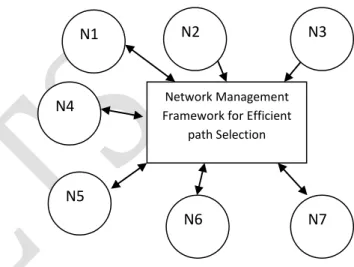
Figure 1: Network Management of the Wireless Sensor
Networks
We further assume the communication time between the node and sensor nodes is negligible, as compared with the node node’s travelling time. Similarly, the delay due to multihop communications including transmission, propagation, and queuing delays is negligible with respect to the travelling time of the mobile node in a given round. Each RP node has sufficient storage to buffer all sensed data. The mobile node is aware of the location of each RP. All nodes are connected, and there are no isolated sensor nodes. Sensor nodes have a fixed data transmission range.
Definition 1 (Delay of data). The delay of data is defined as the time spent by the mobile node moving from one node site to the next node site.
N1
N2
N4
N3
N7
N5
N6
Network Management Framework for Efficient
40
Definition 2 (Network lifetime (T)). The network lifetime (T) is defined as the elapsed time since the launch of this network till the instant that the first node dies.Network Model and Assumption
The WSN has been modelled using a distributed routing protocol utilizing the diverse traffic handling by nodes through aware of their positions. Each node is supposed to be aware of its current node state and forwarding node state in order to route the data to the destination. Wireless SensorNetworks does a packetization to transmit the data to a destination node through intermediate nodes.
3.1. Algorithm: LEACHNode Scheduling algorithm
Input: α = {T=∑ tk}
Output: α| = {T|}
Divide Graph into connected sub graphs.
Apply the SSDR approach to each sub graphs and obtains the optimal node path as well as corresponding routes. Calculate the Source timings stayed in node and Travelling time from Source node to next node until destination node. Choose the Longest network lifetime as best Data travelling Path Calculate linear trajectory, Boundary trajectory and arbitrary trajectory values to prove the Optimal Nodes for Data Travelling. Begin
For k=1: k<m: k++ do
Where k = network life time
M is the mobility of the mobile Node
3.2. Algorithm
Leach has two phase
The set-up phase and the steady-state phase
The set-up phase where cluster heads are chosen
The steady state phase the cluster head is
maintained where data is transmitted between nodes
3.3. Set-up phase algorithm
The algorithm is designed so that each node
becomes a cluster-head at least once
Algorithm – Setup Phase
Each node that elected itself a cluster-head for
current round broadcasts advertisement message to rest of nodes
All cluster-heads transmit advertisement using
same transmit energy
Non-cluster-head nodes must keep receivers on
during this phase to hear advertisement
Now it decides which cluster to belong to for this
round by choosing cluster-head that requires minimum communication energy
In case of ties, random cluster-head was chosen
3.4. Setup to steady phase
After node picks cluster, cluster must inform
cluster head
Cluster head now knows number of members
Cluster head then creates TDMA schedule telling
each node when it can transmit.
Allow components of each non-cluster head node
to be turned off during its transmit time, thus minimizing energy dissipated in individual sensors.
Cluster head now has all data from the nodes in its
cluster, aggregates data and transmit to the base station.
4. CLUSTERING OF THE MOBILE NODE FOR
PATH PREDICTION
41
announcement records the identifier and the position of the originator of the announcement as destination, it records the identifier of the node from which it received the first copy of the announcement as the next hop towards the recorded destination, and it computes and records the power level needed to transmit to this next hop node. The identifier of the next hop is obtained from the lower-layer (e.g., MAC) header of the message encapsulating the announcement.
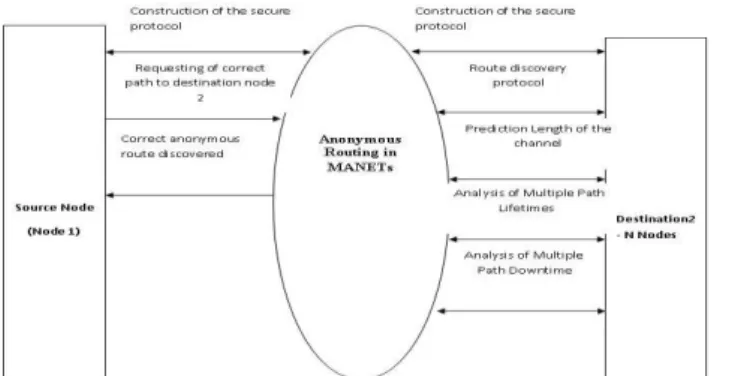
Figure 2: Architecture Diagram of the Proposed Model
The computation of the required power level relies on the fact that the nodes transmit announcement messages with maximum power, and the receiving nodes can measure the power level with which they receive those messages.
LEACH communications to establish routing tables for intra-cluster routing. The inter cluster routing protocol is used to route messages to and from a distant cluster. These messages can be queries from and responses to a distant base station, as well as backup messages destined to distant aggregators that contain replicated data. We recommend using a position-based routing protocol as the intercluster routing protocol for the following two reasons. First, LEACH already makes the assumption that the nodes are aware of their positions, and therefore, this position information can naturally be reused for routing purposes. Second, intercluster routing is concerned with messages that need to be routed (i) to the aggregator of a distant cluster or (ii) to a distant base station. Regarding case (i), in LEACH, the identifier of the aggregator node is not known explicitly outside the cluster, but, instead, one knows only the reference point to which the aggregator happens to be
the closest node. Regarding case (ii), the query messages can contain the geographical position of the base station to which the responses should be sent back. Thus, in all cases, messages need to be routed towards a, position-based routing seems to fit best for inter-cluster routing in LEACH.
4.1System Architecture
Figure 3: System Architecture
5.MODULE DESCRIPTION
Node Creation Route Discovery Data Transmission Clustering Mechanism
5.1 Node Creation
Node Creation is the first module of the Project. The sensor nodes are to be deployed. The number of nodes should be specified by the authorized person. The Size of the nodes also specified at the same time of node creation. The nodes positions identified using x and y-axis. This module is the formation of nodes what all needed for sending and receiving information. One node is assumed as sender node and another node is assumed as receiver node. And some nodes are assumed as information passing nodes.
5.2 Route Discovery
42
sinks are allocated for every cluster for transferring data from one cluster to another. It collects data from a feasible
site and reaches the destination.
5.3 Data Transmission
The sender node sends the information to the receiver node through this module. This module has an option for sending the data packets from one location to the other location. Transmit the data from the source node to destination node through the intermediate nodes which are selected randomly in the network zones. This module is for receiving the information. It checks whether the information is coming from authorized sender and from the correct path. After authentication, the receiver receives the information through the authorized nodes. Leach has a strategy to effectively counter intersection attacks, which have proved to be a tough open issue. Leach can also avoid timing attacks because of its non-fixed routing paths for a source-destination pair. Using “Malicious node detection” scheme to prevent the network from Active attackers.
5.4 Clustering Mechanisms
It is the process of grouping the member's nodes, where each node has an individual group head. Such that, the base station no need to distribute the data to many members. The base station provides authorization data to group head and the group head will distribute to all members. Due to the above process , efficiently manage the confidential data distributed in the network .It proposes a novel clustering algorithm called LEACH to limit the number of member nodes for each cluster head by using a threshold value. The proposed clustering approach selects a cluster head based on a new cost function which considers the residual battery level, transmission range, energy consumption and distance to the mobile sink. Specifically, sensor node(SN) located near the mobile sink trajectory are grouped in small- sized clusters while SNs located farther away are grouped in clusters of larger size.
5.4.1. Effective Nodes Selection
SNs guarantee connectivity of sensor islands with MSs; hence, their selection largely determines network lifetime. SNs lie within the range of traveling sinks and their location depends on the position of the CH and the sensor field with respect to the sinks trajectory. Suitable SNs are those that remain within the MS's range for a relatively long time, in relatively short distance from the sink's trajectory and have sufficient energy supplies.
6. EXPERIMENTAL RESULTS
Implementation and Sensor Node Details:
The LEACH protocol was implemented and tested using construction of network model.
Figure: 4: Packet delivery ratio vs. No. of mobile Nodes
against the Path Discovery
43
involving a mobile node and the impact of network parameters (e.g., the number of sensors, the delay bound) on the network lifetime. The linear trajectory significantly outperforms the other two and would save a relatively long computational time.
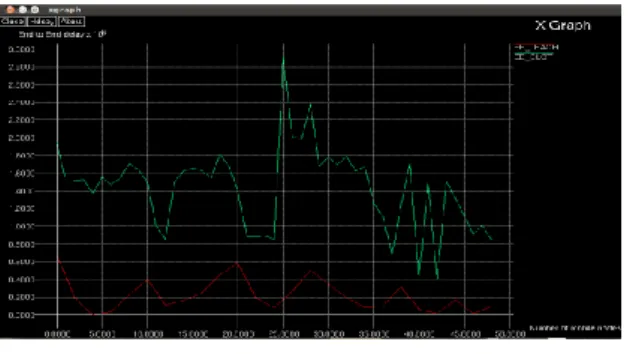
Figure 5: End to End Delay of the Mobile Sensor nodes
vs. Number of the node
In Figure 5, end to end delay and node life time has been calculated based on the transmission distance of the node. The protocol code is a simplified implementation of all the modules except the cluster head (CH). Due to physical limitations of sensor nodes and the difficulties in diverse area deployment, it is extremely difficult to perform as extensive evaluation as done in the simulation study. The aim of this experiment is to practically investigate the feasibility of the protocol. The motivation is neither to evaluate the scalability of the protocol nor to compare it with other protocols, which were already carried out in the previous section. An experimental network of 100 nodes was deployed with one source and two nodes, where one acts as primary and the other as secondary. We fixed the maximum transmission power to 2, resulting in a power range of a few tens of centimetres (less than 1 m). The source node generated a 20 bytes packet each second and transmitted it to the primary node and possibly also to the secondary node. This depends on the packet type, decided upon each transmission. 40 percent of the packets were regular, 20 percent were delay-sensitive, 20 percent were reliability-sensitive, and 20 percent were critical.
7. Conclusion And Future Work
In this paper, a proposed unified framework to analyze the node mobility problem in WSNs with delay constraint. presented a mathematical formulation that jointly considers different issues such as node scheduling, data routing, bounded delay, and so on. The formulation is general and can be extended. However, this formulation is a LEACH and is time consuming to solve directly. Therefore, we discussed several induced sub problems and developed corresponding optimal algorithms. Then, we generalized these solutions and proposed a polynomial-time optimal approach for the origin problem. We show the benefits of involving a mobile node and the impact of network parameters (e.g., the number of sensors, the delay bound, and so on.) on the network lifetime. Furthermore, we study the effects of different trajectories of the node and provide important insights for designing mobility schemes in real-world mobile WSNs. Experiment results show that LEACH can offer independent and high anonymity protection at a low cost when compared to other existing algorithms. It can also achieve comparable routing efficiency to the baseline GPSR algorithm. This method is not completely bulletproof to all attacks like any other anonymity routing algorithm. As for the future work, we plan on extending current work to accommodate networks with multiple nodes. Furthermore, using the centralized optimal algorithm developed in this paper as performance benchmark, we want to design distributed online algorithms for fast execution in large-scale networks and test them in real
world experiments.
REFERENCE
[1] I.F. Akyildiz, W. Su, Y. Sankarasubramaniam, and E. Cayirci, “ASurvey on Sensor Networks,” IEEE Comm. Magazine, vol. 40, no.
8,pp. 102-114, Aug. 2002.
[2] W. Song, R. Huang, M. Xu, B.A. Shirazi, and R. Lahusen, “Designand
Deployment of Sensor Network for Real-Time High-FidelityVolcano Monitoring,” IEEE Trans. Parallel and Distributed Systems,vol. 21, no. 11,
pp. 1658-1674, Nov. 2010. [3] C. Liu, K. Wu, and J. Pei, “An Energy-Efficient Data
CollectionFramework for Wireless Sensor Networks by Exploiting SpatiotemporalCorrelation,” IEEE Trans. Parallel and Distributed
44
[4] M. Perillo, Z. Cheng, and W. Heinzleman, “An Analysis ofStrategies for Mitigating the Sensor Network Hot Spot Problem,”Proc. Second Int’lConf. Mobile and Ubiquitous Systems(Mobiquitous ’05), July 2005. [5] W. Wang, V. Srinivasan, and K. Chua, “Using Mobile Relays
toProlong the Lifetime of Wireless Sensor Networks,” Proc.
ACMMobiCom, Aug. 2005
[6] L. Ruiz-Garcia, L. Lunadei, P. Barreiro, and I. Robla, “A review of
wirelesssensor technologies and applications in agriculture and food
industry:State of the art and current trends,” Sensors, vol. 9, no. 6, pp.