DATA REUSE AND USERS’ TRUST JUDGMENTS: TOWARD TRUSTED
DATA CURATION
Ayoung Yoon
A dissertation submitted to the faculty at the University of North Carolina at Chapel Hill in partial fulfillment of the requirements for the degree of Ph.D. in the
School of Information and Library Science
Chapel Hill 2015
Approved by:
Helen R. Tibbo
Cal Lee
Nancy McGovern
Barbara Wildemuth
ABSTRACT
Ayoung Yoon: Data Reuse and Users’ Trust Judgments: Toward Trusted Data Curation (Under the direction of Dr. Helen R. Tibbo)
Data reuse refers to the secondary use of data—not for its original purpose but for
studying new problems. Although reusing data might not yet be the norm in every discipline, the
benefits of reusing shared data have been asserted by a number of researchers, and data reuse has
been a major concern in many disciplines. Assessing data for its trustworthiness becomes
important in data reuse with the growth in data creation because of the lack of standards for
ensuring data quality and potential harm from using poor-quality data.
This dissertation aims to explore many facets of data reusers’ trust in data generated by
other researchers, focusing on user-defined trust attributes and the judgment process with
influential factors that determine these attributes. Because trust is a complex concept that is
explored in multiple disciplines, this study developed a theoretical framework from an extensive
literature review in the areas of sociology, social psychology, information, and information
systems.
This study takes an interpretive qualitative approach by using in-depth semi-structured
interviews as the primary research method. The study population comprises reusers of
quantitative social science data from public health and social work—the primary disciplines with
The study results suggest different stages of trust development associated with the
process of data reuse. Data reusers’ trust may remain the same throughout their experiences, but
it can also be formed, lost, declined, and recovered during their data reuse experiences. These
various stages reflect the dynamic nature of trust. The user-defined trust attributes that influenced
the formation of trust also suggested various implications for data curation.
The outcomes of this study will contribute to the current research on data reuse and data
curation. Integrating theories and concepts of trust can provide a new theoretical lens to
understand reusers’ behaviors and perceptions. Understanding how data reusers trust data will
also provide insights on how to improve current data curation activities in a user-trusted way,
such as methods that ensure users’ trustworthiness during data curation and develop user
ACKNOWLEDGEMENT
Every time I read the acknowledgment sections of other dissertations, I come across a
phrase such as “this work would have never been possible without such and such’s help.”
However, it wasn’t until I came to write my own acknowledgment that I truly understood what
this sentence really means. This dissertation would really never have been completed without
countless people helping me to get through it. I should first thank all my participants, who gladly
took the time to discuss their thoughts, lives, and research practices to support my research,
despite their busy schedules and time constraints. Without their contributions, this dissertation
would not have been possible.
I want to express my sincere gratitude to my advisor Dr. Helen Tibbo (chair) and other
committee members. By offering her continuous support, encouragement, and the unrelenting
honesty I needed to improve my work, Dr. Tibbo helped me to complete this dissertation. Her
profound knowledge of research and of the profession in general proved invaluable to my
progress. I’d like to thank Dr. Barbara Wildemuth, who gave me tremendous support and advice
in terms of my preliminary studies and this dissertation. I’d also like to offer special thanks to
Dr. Beth Yakel for her guidance and help since 2008 when I started my masters, and for the
opportunity to work on the DIPIR project as a member. I am very grateful to Dr. Cal Lee and Dr.
Nancy McGovern who have offered me comments, critiques, and suggestions that have helped
I want to thank my doctoral colleagues at SILS. We supported each other when things got
dark, not only by working together but also by enjoying our non-doctoral life together. In
addition, the staff at SILS always gave me excellent administrative help while completing this
dissertation.
I would like to express my sincere gratitude and love for my family. To my parents,
Tae-won Yoon and Kyong-ja Choi, for their endless love, support, and trust, which lifted me up when
I felt discouraged. To my beloved sister Hye-young Yoon, for her bright laughter, great humor,
and ever-lasting friendship, which gave me joy when I needed it most (and of course, many
surprise boxes from Korea!). And to my grandmother, Hee-jung Kim, who is now resting in
heaven, for her love and belief in me, which I was not even fully aware of when I was young. To
my parents-in-law, Dong-man Shin and Sook-ja Kim, who always encouraged and supported me
through their love and prayer. Most importantly, I’d like to recognize the invisible and invaluable
support and patience of my husband, Hosop Shin. A single “thank you” is not enough to express
how much your doing this with me means to me.
Finally, I thank God for equipping me, through His Holy Spirit, with the strength,
TABLE OF CONTENTS
LIST OF TABLES ... XI LIST OF FIGURES ... XII
CHAPTER 1. INTRODUCTION AND STATEMENT OF THE PROBLEM ... 1
1.INTRODUCTION AND BACKGROUND ... 1
2.PROBLEM STATEMENT ... 3
2.1. Data reuse and reusers’ trust judgment ... 3
2.2. Data reuse, data curation, and end-‐users’ trust ... 6
3.PURPOSE OF THE STUDY AND SIGNIFICANCE ... 8
4.PROPOSITION OF THE STUDY ... 10
4.1. Understanding data reuse as knowledge reuse ... 10
4.2. Understanding trust as a psychological state and a behavioral indicator ... 12
5.STRUCTURE OF THE DISSERTATION ... 12
CHAPTER 2. LITERATURE REVIEW ... 14
1. DATA REUSE AND TRUST ... 14
1.1. Challenges of data reuse ... 14
1.1.1. Transferring context information of data ... 14
1.1.2. Documentation for data reuse ... 16
1.2. Influencing factors on data reusers’ trust assessment ... 18
1.2.1. Communities of Practice (CoP) ... 18
1.2.2. Epistemic communities ... 20
1.2.3. Data producers ... 22
1.2.4. Individual knowledge, skills, and experiences ... 23
1.2.5. Data elements ... 23
1.2.7. Data repository ... 24
2.DATA CURATION AND TRUST ... 26
2.1. Meaning of data curation ... 26
2.2. Data curation lifecycle and actors in curation activities ... 29
CHAPTER 3. THEORETICAL FRAMEWORK ... 39
1.DEFINITION OF TRUST ... 39
2.PRE-CONDITIONS OF TRUST ... 44
3.TRUST ANTECEDENT ATTRIBUTES ... 45
4.TYPES AND LEVELS OF TRUST ... 48
4.1. Types of trust ... 48
4.1.1. Calculus-based or situational trust ... 48
4.1.2. Cognitive trust ... 48
4.1.3. Emotional or affect-based trust ... 49
4.2. Levels of trust ... 49
4.2.1. Personal or individual trust ... 49
4.2.2. Interpersonal trust ... 50
4.2.3. Relational trust ... 50
4.2.4. Institutional trust ... 51
4.2.5. Societal trust ... 52
5.TRUST DEVELOPMENT ... 53
6.TRUST IN DIGITAL INFORMATION ... 55
CHAPTER 4. RESEARCH METHODS ... 58
1.EPISTEMOLOGICAL STANCE ... 58
2.RESEARCH DESIGN ... 60
2.1. Study sample ... 60
2.2. Unit of analysis ... 63
2.3. Data collection ... 63
2.4. Data analysis ... 66
2.5. Ensuring trustworthiness of qualitative research ... 68
CHAPTER 5. RESEARCH RESULTS ... 71
1.RESEARCH PARTICIPANTS: DEMOGRAPHICS AND CHARACTERISTICS ... 72
2.MOTIVATIONS FOR DATA REUSE AND FINDING TRUSTWORTHY DATA ... 73
2.1. Underlying motivations for reusing data ... 73
2.1.1. The potential of secondary data ... 74
2.1.2. Cost-effectiveness ... 74
2.1.3. Large samples ... 75
2.1.4. Education and training ... 76
2.2. Motivations for finding trustworthy data ... 76
3.THE PROCESS OF DATA REUSE AND TRUST DEVELOPMENT ... 78
3.1. Use of the term trust by participants ... 81
3.2. Initial trust development during data discovery and initial selection ... 82
3.2.1. Process of data reuse: Data discovery and initial selection ... 83
3.2.1.1. Data discovery ... 83
3.2.1.2. Initial selection criteria: Relevancy and usability ... 92
3.2.2. Process of trust development: Initial trust judgment ... 95
3.2.2.1. Prediction ... 96
3.2.2.2. Attribution ... 97
3.2.2.3. Transference ... 104
3.2.2.4. Bonding ... 108
3.3. Provisional trust development from data acquisition, investigation, and understanding data ... 111
3.3.1. Process of data reuse: Data acquisition, investigation, and understanding data ... 113
3.3.1.1. Data acquisition ... 113
3.3.1.2. Data investigation and understanding ... 115
3.3.1.3. Common difficulties ... 121
3.3.2. Process of trust development: Provisional trust judgment ... 124
3.3.2.1. Changes in the data reusers’ initial trust judgments ... 124
3.3.2.2. Confirmation ... 125
3.4. Final trust judgments through problem solving ... 138
3.4.1.1. Original investigators (or their equivalents) ... 139
3.4.1.2. Data-driven community ... 141
3.4.1.3. Colleagues of the participants ... 142
3.4.1.4. Broader scholarly community ... 144
3.4.1.5. Involving statisticians ... 145
3.4.1.6. Data repository ... 146
3.4.2. Process of trust development: Final trust determination ... 147
3.4.2.1. Re-confirmation ... 147
3.4.2.2. Final trust confirmed during data analysis ... 151
CHAPTER 6. DISCUSSION AND CONCLUSION ... 153
1.SUMMARY OF FINDINGS ... 153
2.IMPORTANCE AND NATURE OF TRUST IN DATA REUSE ... 156
2.1. Data reuse and the relevant circumstances of trust ... 156
2.2. The dynamic nature of trust during trust development ... 158
3.TRUST ATTRIBUTES IDENTIFIED DURING THE TRUST DEVELOPMENT ... 161
4.IMPLICATIONS FOR DATA CURATION ... 170
4.1. Overcoming data reusers’ reliance on personal relations and characteristics ... 171
4.2. Importance of data management for users’ trust ... 172
4.3. Roles of original investigators in data management ... 174
4.4. Curating intrinsic properties of data ... 175
4.5. Data reusers’ awareness of the users’ roles ... 178
5.CONTRIBUTION ... 179
6.LIMITATIONS OF THE STUDY ... 183
7.FUTURE STUDIES ... 185
APPENDICES ... 186
APPENDIXA.PARTICIPANTSDEMOGRAPHICINFORMATION ... 186
APPENDIXB.SEMI-STRUCTUREDINTERVIEWQUESTIONS ... 188
LIST OF TABLES
TABLE 1. SCIENTIFIC AND SOCIAL CONTEXTS (CHIN & LANSING, 2004) ... 16
TABLE 2. DEFINITIONS OF DATA CURATION ... 27
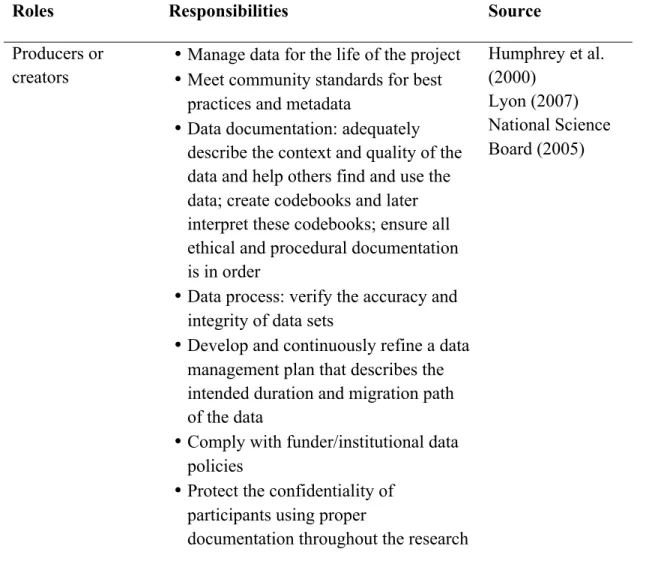
TABLE 3. ROLES AND RESPONSIBILITIES OF PARTIES INVOLVED IN DATA CURATION ... 32
TABLE 4. EXAMPLES OF TRUST DEFINITIONS IN PREVIOUS LITERATURE ... 40
TABLE 5. SUMMARY OF COLLECTED DATA ... 65
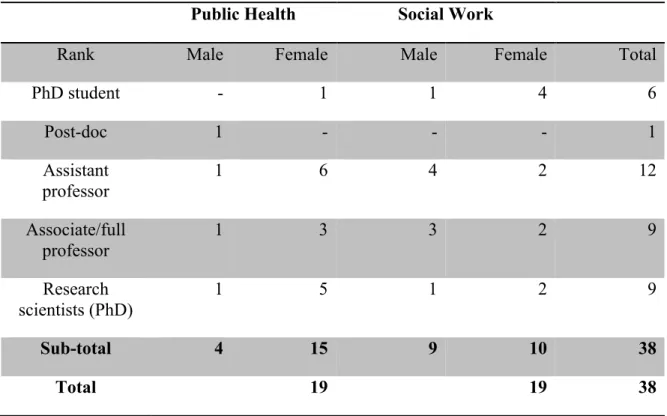
TABLE 6. SUMMARY OF PARTICIPANTS' CHARACTERISTICS ... 73
TABLE 7. DATA ACQUISITION METHODS ... 113
LIST OF FIGURES
FIGURE 1. DCC CURATION LIFECYCLE MODEL ... 31
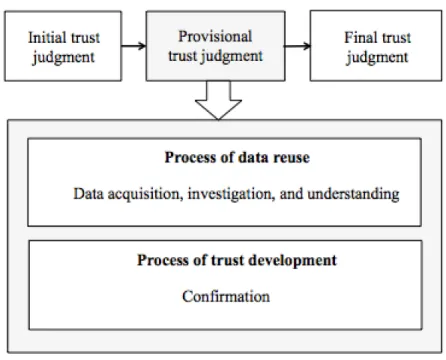
FIGURE 2. TRUST DEVELOPMENT DURING THE DATA REUSE PROCESS ... 79
FIGURE 3. INITIAL TRUST DEVELOPMENT DURING DATA DISCOVERY AND
INITIAL SELECTION ... 83 FIGURE 4. PROVISIONAL TRUST DEVELOPMENT DURING DATA ACQUISITION,
INVESTIGATION AND UNDERSTANDING ... 112
Chapter 1. Introduction and Statement of the Problem
1. Introduction and background
The definition of data varies by discipline, and data come in various formats and types.
The National Research Council (1999) defines data as “facts, numbers, letters, and symbols that
describe an object, idea, condition, situation, or other factors” (p. 15). The National Science
Board (2005) uses the term data as “any information… including text, numbers, images, video or
movies, audio, software, algorithms, equations, animations, models, simulations, etc.” (p. 13).
The National Science Foundation classifies data into four types: (1) observational data (e.g.,
weather measurements and attitude surveys); (2) computational data (e.g., results from computer
models and simulations); (3) experimental data (e.g., results from laboratory studies); and (4)
records (e.g., from government, business, and public and private life) (Borgman, 2010, p. 19).
Despite the different definitions, there is an agreement that data sharing and reuse are
beneficial in scientific research, and attention to data sharing and reuse is growing. Since the
1980s, researchers have been concerned about the issue of data sharing and reuse (e.g., Glaeser,
1990; Fienberg, Martin, & Straf, 1985)—though there was a difference depending on the field—
and the discussions on sharing social science data and their value began even earlier, at the
beginning of the 1960s (Clubb, Austin, Geda, & Traugott, 1985). Discussions of data sharing,
reuse, and curation have been emerging for the past 10 years along with revolutions in the
growth of data in “big science” (Borgman, 2009). Recently, awareness of the challenges and
needs for managing small science data has been developing (e.g., Carlson 2006; Cragin, Palmer,
Carlson, & Witt, 2010; Key Perspectives Ltd., 2010; Shorish, 2012), as well as issues regarding
qualitative data sharing and reuse (see more in Qualitative Inquiry: Research, Archiving, and
Reuse, 2005; IASSIST Quarterly 34(3&4), 2010).
While attention to data sharing and reuse is growing, controversies and challenges still
surround data-sharing practices. Commonly discussed issues and challenges include the
following: 1) no or little rewarding of professional credit (e.g., social recognition, tenure
promotion, data as a publication, etc.); 2) cost of sharing (e.g., time and effort to clean up data,
create documentation and metadata, and check the integrity and consistency of data); 3) concerns
about the misuse of data (e.g., the risk of data being incorrectly interpreted, combined
inappropriately, or incorrectly represented); 4) ethical issues (e.g., concerns about confidentiality
as certain data may contain sensitive personal information); and 5) researchers’ reluctance due to
the researchers’ keen sense of ownership of their data (Baker & Yarmey, 2008; Borgman,
Wallace, & Enyedy, 2007; Campbell et al., 2002; Hilgartner & Brandt-Rauf, 1994; Louis, Jones,
& Campbell, 2002; Niu & Hedstrom, 2008; RIN, 2008; Sieber, 1991; Van House, 2003).
Despite the challenges and barriers, data sharing and reuse have been on the rise, with
efforts to overcome the barriers like data publications (e.g., Costello, 2009; Lawrence, Jones,
Matthews, Pepler, & Callaghan, 2011; Smith, 2009), and with enforcement by funding agencies
(e.g., Wellcome Trust Statement on Genome Data Release, 1997; Wellcome Trust Policy on
Access to Bioinformatics Resources by Trust-funded Researchers, 2001; Sharing Data from
Large-scale Biological Research Projects: A System of Tripartite Responsibility, 2003; ESRC
requirement in 2003; National Science Foundation (NSF)’s new data-management requirements
in 2010). Data repositories, such as the Protein Data Bank and the Inter-university Consortium
for Political and Social Research (ICPSR), also serve as resources for data sharing and reuse
while promoting sharing practices among scientists.
The benefits of reusing shared data have also been asserted by a number of researchers.
Birnholtz and Bietz (2003) and Borgman (2011) argued shared data can be used not only to
validate existing results but also to generate new findings built on the work of others.
Re-analyzed data or data combined with new data can also help to verify published results or arrive
at new conclusions (National Academy of Science, 2009). Thus, research data must be available
for use beyond the purposes for which they were initially collected to enable others to ask new
questions of extant data, advance solutions for complex human problems and the state of science,
reproduce research, and expand the instruments and products of research to new communities
(Borgman, 2010; Borgman, 2011; Hey & Trefethen, 2003; Hey, Tansley, & Tolle, 2009).
Data sharing and reuse are not yet be the norm in every discipline. However, much
research has been recently conducted in the area of recognizing the benefits of sharing and
reusing data. One key issue is addressing and meeting end-users’ current and future needs, as the
fundamental purpose of sharing data is for them to be used by other researchers.
2. Problem statement
2.1. Data reuse and reusers’ trust judgment
Data play a vital role in research because they are used to generate new findings and are
specific gaps in knowledge, and valuable data help researchers to answer their research questions
and/or test hypotheses (Akmon, 2014). Thus, acquisition of the “right” data is significant in all
research because inappropriate data (e.g., data that do not fit the research purpose, poor-quality
data, and so on) may lead to distorted and unreliable results. For data reusers, the process of
acquiring appropriate data for research is different than for researchers who collect their own
data. Reusers need to select reusable and trustworthy data based on given information about the
data.
A previous study identified three criteria of reusability of data: relevancy,
understandability, and trustworthiness (Faniel & Jacobsen, 2010). Relevancy is the degree to
which data answer research questions; understandability refers to whether the intended meaning
of data can be easily perceived; and trustworthiness is the extent to which researchers can trust
data created by others, such as others in different disciplines. While relevancy, usability, and
trustworthiness are the key elements affecting data reusability, assessing data and finding
trustworthy data for reuse are important parts of the research process, especially given the value
and role of data in research.
However, deciding whether data reusers can trust data or not is not a simple job. One
reason for this is the lack of standards for the trustworthiness of data during the process of data
sharing. While other scholarly materials, such as journals or conference publications, have
established systems to validate scholarly outcomes through peer review, validation or peer
review of data has not yet been established as a norm in data sharing and reuse, although
discussions about these processes have emerged (e.g., Kratz & Strasser, 2015). In addition, many
disciplines, including the social sciences, do not conduct data validation or quality checking
people or when data are submitted to a data journal (Callaghan, 2015). Furthermore, few
disciplines where large data sets are the norm (e.g., climate modeling and high energy physics)
conduct thorough investigations on data quality before preserving data in a trusted repository
(Adelman et al., 2010; Callaghan, 2015; Stockhause, Höck, Toussaint, & Lautenschlager, 2012).
At the same time, communications and interactions around data are more dynamic than those
which surround traditional scholarly materials. Researchers do not just rely on cultural and/or
academic institutions to acquire scholarly materials, including data, but also make use of
interpersonal relationships to obtain raw forms of information and data that are not processed,
managed, or curated by professionals. Lastly, because reusers are typically unfamiliar with the
details of data they have not created, the trust they place in data is often dependent on individual
knowledge and experience. As McCall and Appelbaum (1991) pointed out, this means that
reusers must spend significant amounts of time absorbing information about data before using
them (or deciding to use them).
Previous literature suggests that uncertainty and risk are the two conditions relevant to
the concept of trust, and these conditions are apparent in data reuse. Data reusers’ uncertainty
about the data they use and the risk of using inappropriate data for research indicate the need for
understanding data reuse and users’ experiences through the theoretical lens of trust.
Many researchers have argued that trust is fundamental in human relationships and in
society (e.g., Gambetta, 1988; Weber, Malhotra, & Murnighan, 2004), and see trust as an enabler
of cooperative behavior (Gambetta, 1988); trust promotes adaptive network relations (Miles &
Snow, 1992) and reduces harmful conflict (Meyerson, Weick, & Kramer, 1996). This
fundamental significance of trust in society suggests that trust will also play a bigger role in the
data producers, data curators, data reuser communities, and other research communities. Thus,
assessing reusers’ trust in data is a complex process due to the various social, organizational, and
individual factors that influence assessment.
2.2. Data reuse, data curation, and end-users’ trust
Previous research has demonstrated the relationship between data curation and data reuse
and has suggested that well-curated data is an integral part of data reuse. Coates (2014) argued
that, because data are a key piece of the scholarly record, the management of data has an impact
on the integrity of the scholarly record and on the potential for data sharing and reuse. Steinhart
et al. (2008) argued that a well-developed data curation infrastructure, by exposing data for
reuse, would enable new discoveries and ensure access to and preservation of scholarly outputs.
The Digital Curation Centre (DCC) (n.d.) also argued that good practices of data curation can
support data reuse in multiple ways; they ensure that the appropriate steps are taken to make data
available in the first place (i.e., by presenting data and their associated descriptions in forms that
are accessible and understandable to reusers); they prevent the unauthorized use of data (i.e., by
maintaining legal constraints and usage rights); they provide the means of assuring data integrity
and authenticity; and they enable reusers to be able to access high-quality data they can trust.
Given that one of the fundamental purposes of data curation is to support current and
future use, it is important to consider what data curation means to data reusers and how it can
help them. Understanding and meeting reusers’ needs and expectations is important to enhance
data reusability because curators decide what information to collect, provide, and preserve based
on reusers’ needs and expectations. Trust is a useful concept to understand users’ expectations
preparation, and management of data to their sharing and reuse to their preservation—and into
the relations with parties involved in this lifecycle.
Trust is not a new concept in the field of archives, which traditionally is responsible for
the curation of information. Speck (2010) said the concept of trust has been considered an
integral component in the existence of archives, which made people expect a large volume of
scholarly literature to be produced on the subject. However, Speck (2010) argued that
discussions of trust have been limited either to discussions related to the ethics of the archival
professions (e.g., Dingwall, 2004) or to the notion of “trusted” digital information and
repositories. While archival and curation communities have understood the term trust as a
synonym for “reliable” and “authentic” in relation to curation activities (RLG/OCLC, 2002, p.
8), little research exists on how (potential) users perceive the concept of trust in the context of
curation.
Recently, several research studies have investigated users’ trust in repositories where
curation activities are conducted for digital information (as well as data) (e.g., Yakel, Faniel,
Kriesberg, & Yoon, 2013; Yoon, 2014), and in documents within those repositories (Donaldson,
2015). These studies have broadened the understanding of users’ perceptions of trust in data
curation. However, understanding users’ trust in data and data curation requires broader
perspectives and context than simply trust in repositories. The patterns of searching and
consuming data are diverse, and data reusers do not always acquire data through repositories. At
the same time, different stakeholders are engaged in conducting data curation activities,
including data producers through data management planning. This action positions data reusers
in a different context and suggests the possibility that reusers’ trust is not just tied to institutions
essential in this regard and will provide valuable insights into data curation research and the
curation of data in a user-trusted way.
3. Purpose of the study and significance
In light of the importance of trust in the context of data reuse as demonstrated in the
previous section, the proposed study aims to further explore the many facets of data reusers’
trust, focusing on user-defined trust attributes and the judgment process with influential factors
that determine these properties. Specifically, the aims of this study are as follows: (1) to
understand data reusers’ process of reuse; (2) to explore the reusers’ process of developing trust
during data reuse with factors that are influential in this process; and (3) to investigate the nature
of trust attributes and characteristics that are defined by data reusers.
The outcomes of this dissertation study will contribute to the current research on data
reuse and data curation in several ways: in theory, research, and practice. From a theoretical
perspective, integrating theories and concepts of trust can provide a new theoretical lens to
understand data reusers’ behaviors and perceptions. The theoretical framework can offer insight
and a deep understanding of individual researchers’ beliefs, attitudes, thoughts, and perceptions
beyond their behaviors of data reuse. Thus, the theoretical analysis will provide rich
understanding, more than simply describing data reusers’ practices and behaviors.
Second, this study will contribute to different domains of research. The study will
enhance the understanding of the concept of trust by highlighting various facets of trust in the
data reuse context through empirical research. Although previous research has reported assessing
trustworthiness of data is an important part of data reuse processes, less research has been
developed. At the same time, full agreement on the meaning of trust has not yet been reached
across various disciplines and in the data curation community, possibly due to the complexity of
this concept. Thus, exploring data reusers’ trust will add a valuable discussion to the current trust
research.
This study can also provide valuable insights into the domain of scholarly communication
and data curation. Reusing data requires researchers to have a deep understanding of these data
and the different types of communications and interactions with relevant parties, which are often
engaged during the process of understanding. By disclosing scientific communications about
data for reuse, this study will contribute to the research area of scholarly communication. In
addition, understanding data reuse practices and reusers’ perspectives on data is important in data
curation. In data reuse, it is significant to understand data reusers’ needs and expectations and
prepare data in a way that meets these needs and expectations. Data curation research, thus, will
benefit by understanding users’ perspectives and bringing them back to the current curation
research. Knowing how data reusers trust data will provide insights on how to manage data in a
user-trusted way.
Finally, from a practical perspective, this research will help to develop useful guidelines,
recommendations, and standards for improving current data curation activities, such as methods
to ensure trustworthiness of data during the data curation lifecycle and user evaluation criteria for
trustworthiness of data. While the research findings cannot be directly generalized for several
reasons (e.g., samplings and interpretive research, see the section regarding limitations in
Chapter 6), this study can also provide insights and a preliminary understanding for developing
trusted curation practices and standards across different data reuse contexts from reusers’ points
4. Proposition of the study
This study presents two propositions regarding data reuse and the concept of trust. As
there are different approaches to understanding data, data reuse, and trust, it will be useful for
this study if I explain my understanding of these concepts based on past research.
4.1. Understanding data reuse as knowledge reuse
Several studies on data and knowledge imply a potential relationship between data reuse
and knowledge, and these provide a new approach to understanding data reuse as knowledge
reuse. For instance, Markus (2001) articulated data reuse as one of the most prominent examples
of reusing knowledge, and Birnholtz and Bietz (2003) saw the process of understanding data for
reuse as a process of knowledge transfer. According to Gold (2013), using data is a part of a
knowledge process because, “unlike published textual narratives, data by its very nature lends
itself to being moved around, filtered, added to, visualized, and linked with other data as part of
knowledge design process” (p. 5). Unlike the traditional approach that defined the characteristics
of data as explicit and objective and understood data as a product and fact (Galliers & Newell,
2003; Gold, 2013), this new approach views data as not only a product but also a process. Gold
(2013) offered the following explanation:
As the flow of data through their life cycles is studied, it has become more clear
that digital data is not “objective” in any transcendent or permanent sense. Rather
it is the outcome of agreements and decisions that have been used (with a range of
skill and accuracy) to imagine and execute the use of instruments and practices
When data are viewed as a process, reusing data becomes a process of interpretation. As
Birnholtz and Bietz (2003) argued, in knowledge transfer, documentation is inherently
insufficient and thus, no matter how well the data have been documented, they will always
remain an incomplete representation of decisions and choices (Gold, 2013). Thus, the process of
“imagination of data itself,” as Gitelman (2013) referred to it, is necessary to understand data;
“every discipline and disciplinary institution has its own norms and standards for the imagination
of data, just as every field had its accepted methodologies and its evolved structures of practices”
(p. 3).
This approach, which sees data as not a fixed fact but as a process, also aligns with
current discourse on data curation that can help the process of “imagination of data itself” for
both current and future data reusers. Angevaare (2009) argued that curating research data does
not simply mean curating sources but also curating “knowledge,” and Gold (2013) followed by
saying, “the work of curation is a form of participation in the process of knowledge” (p. 8)
because the purpose of data curation is to enable current and future use, which in turn makes it
possible to produce new questions from the managed data (Gold, 2013).
Linking data and knowledge in a data reuse context suggests even greater relevance for
trust and its roles. Previous research demonstrated the importance of trust in a
knowledge-sharing environment. For instance, trust has served as a mediating factor that influences
knowledge sharing and as a factor in the enhancement of knowledge sharing behaviors (e.g., Ho,
Kuo, Lin, & Lin, 2010; Renzl, 2008). The role of trust in communities, such as communities of
practice and epistemic communities, in relation to data reuse, has also been argued. Thus, this
research will discuss data reusers’ trust in more fruitful ways by adopting the approach of
4.2. Understanding trust as a psychological state and a behavioral indicator
Previous studies on trust take various approaches to understand the concept of trust (see
Chapter 3). From my extensive literature review of previous research on trust, I have developed a
working definition of trust that reflects my approach and understanding of trust in the context of
data reuse. The definition was never given to the participants of this study, as they were
encouraged to develop their own understanding of trust based on their experiences and using
their own words. As a working definition, I defined trust as data reusers’ belief that data will
result positive outcomes, leading to the reuse of data in their research. While previous studies
defined trust either as a belief (a mental psychological status) or a behavior (a behavioral
interpretation of trust), I adopted a mixed approach in which trust is considered both a
psychological and a behavioral phenomenon. Data reusers’ trust judgments can be understood as
psychological processes occurring in their minds, and whether they accept and use a certain
dataset can be seen as an indication of trusting behavior.
5. Structure of the dissertation
This dissertation consists of six chapters. Chapter 1 has explained the changes in
scientific scholarship from emerging discussions on data sharing and reuse. These changes and
the growing need for data reuse, as well as the role of data curation to support data reuse, serve
as the motivation for this study. The usefulness of employing the concept of trust, which is the
overarching construct of this dissertation, to understand data reusers’ perceptions and behavior,
has been discussed. Chapter 2 reviews the relevant literature in the area of data reuse and data
curation and their connection to trust. Chapter 3 explores the concept of trust from the extensive
economics, organizational behaviors, and information systems research. Because trust is a
complex concept, understanding the varying approaches to trust is necessary to investigate its
multidimensional nature. Chapter 4 introduces the methodological stance of this dissertation and
interpretative qualitative research, and it describes the main method for data collection and
analysis. Chapter 5 reports and discusses the research results along with important points
emerging from the data analysis. Lastly, Chapter 6 summarizes the research findings and the
contributions of the dissertation, and concludes with the limitations of this study and directions
Chapter 2. Literature Review
1. Data reuse and trust
Not many studies have formally defined the term reuse, but researchers generally
understand it to indicate the use of data by someone who did not collect it. Therefore, reuse
refers to a secondary use of data that is not defined by their original purpose but is intended to
address new problems (Karasti & Baker, 2008; Zimmerman, 2008). Broadly, reuse includes the
reproduction or replication of prior study results as it contributes to the existing knowledge
(King, 1995). Recently, the concept of repurposing has been added to the discussion of data
reuse. In this context, data reuse has been defined as the use of data more than once for the same
purpose, while data repurposing has been described as the use of data for a completely different
purpose (Data Governance and Quality, 2012). Faniel and Jacobsen (2010) pointed out that the
absence of a reuse definition causes major challenges in providing reusable data, even though
other studies have demonstrated that data reuse can be beneficial to researchers.
1.1. Challenges of data reuse
1.1.1. Transferring context information of data
A number of studies have shown the contextual nature of data from the examination of
data reuse practices and also by describing data reusers who search for context information from
sources including journals and colleagues (e.g., Berg & Goorman, 1999; Bishop, 1999; Sandusky
engineering, HIV/AIDS research, and space physics, Birnholtz and Bietz (2003) suggested, “data
are not simple carriers of meaning,” and noted that, “converting raw data into scientific or social
meaning is an active, context-dependent process” (p. 341).
While data-context information is fundamentally important to understanding data for
reuse, transferring contextual information is not a simple process; data cannot be simply handed
off from one research project to another because comprehending data is not simple. Data are
originally created for a specific purpose; a local context is therefore embedded in the data. For
data to be reused beyond the original purpose, they must be moved from the local sphere to the
broader world (e.g., for interdisciplinary research), which creates a distance from the original
context (Zimmerman, 2008). This distance creates problems when reusers try to understand how
data were used (e.g., Berg & Goorman, 1999; Cragin & Shankar, 2006; Faniel & Zimmerman,
2011; Jirotka et al., 2005; Zimmerman, 2008).
In addition, researchers have often argued about the difficulty of deciding what
contextual information is important for reusers beyond the original research purpose (Birnholtz
& Bietz, 2003; Carlson & Anderson, 2007; Markus, 2001). As one way to identify contextual
information, Baker and Yarmey (2008) described the physical environment in which the data
wereproduced, and the technical and social environments associated with obtaining data. Chin
and Lansing (2004) listed more specific scientific and social contexts in which data were created,
including information about physical, technical, and social environments (Table 1). Because this
list was created in the context of scientific-experiment data, it may not apply to all data types
across disciplines, and further research must be conducted in different disciplines.
data from other researchers and other fields, which creates another layer of difficulties of
understanding (Faniel & Zimmerman, 2011).
Table 1. Scientific and social contexts (Chin & Lansing, 2004)
Context information Definition
General dataset properties Owner, creation date, size, format, etc.
Experimental properties Conditions and properties of the scientific experiment that
generated or was applied to the data
Data provenance Relationship of data to previous versions and other data
sources
Integration Relationship of data subsets within a full data set
Analysis and interpretation Notes, experiences, interpretations, and knowledge
generated from the analysis of data
Physical organization Mapping of data sets to physical storage structures such as
a file system, database, or some other data repository
Project organization Mapping of data sets to project hierarchy or organization
Scientific organization Mapping of data sets to some scientific classification,
hierarchy, or organization
Task Research task(s) that generated or applied the data set
Experimental process Relationship of data and tasks to overall experimental
process
User community Application of data sets to different organizations of users
1.1.2. Documentation for data reuse
As previously shown, to enable data reuse, contextual information and knowledge about
the data must transfer from data producers to data reusers. As Niu and Hedstrom (2008) argued,
documentation is one channel for this information. Niu and Hedstrom (2008) defined
documentation as materials accompanying data that provide information about the data, and they
explained that it usually includes codebooks, related bibliographies, data-collection instruments,
and metadata for resource discovery.
themselves can be useful to others; some argue that it has limited use to others (e.g., Birnholtz &
Bietz, 2003; Shankar, 2007; Zimmerman, 2008), while others have demonstrated that it is useful
to reusers (Carlson & Anderson, 2007; Faniel & Jacobsen, 2010). Well-prepared and
well-described documentation, however, enhances reusers’ understanding. Niu and Hedstrom (2008)
explained that documentation helps users decide whether data matches their research interests—
in other words, they aid in assessing relevancy.
Despite the importance of documentation, a number of researchers have reported
problems and challenges with it (e.g., Borgman, 2007, Corti, 2000; Fienberg, Martin, & Straf,
1985; McCall & Applebaum, 1991; Niu & Hedstrom, 2008; Van den Berg, 2005; Zimmerman,
2003). Similar to the challenges of transferring contextual information embedded in data,
documentation can be inherently insufficient. Birnholtz and Bietz (2003) pointed out the innate
challenges of documentation by observing, “Knowledge transfer in this instance is not simply a
matter of sharing a set of instructions, but is a highly social process of learning practices that are
not easily documented” (p. 341).
Borrowing the theory of communication reductionism, Niu (2009) explained that
documentation is inherently inadequate because of the nature of tacit knowledge and
communication reduction. Because tacit knowledge exists in cognizance of the human mind, it is
difficult to formalize. People sometimes know things implicitly. In addition, due to the nature of
communication, it is inevitable to miss information; not everything can be transferred (Carlson &
Anderson, 2007; Niu & Hedstrom, 2008; Niu, 2009). Data producers’ tacit knowledge or
unconscious memories or information about data cannot be documented, even though there are
Another problem is the issue of poor documentation. As discussed above, one of the
challenges of data sharing, from the perspectives of data producers, is that the time and effort to
create documentation is substantial (Baker & Yarmey, 2008). Data producers might not want to
prepare documentation well because of a lack of motivation or because they do not have the
skills to do so. Poor documentation can also result from the misunderstanding of reusers’ needs;
data producers cannot adequately document the data if they are not aware of those needs. For
reusers, insufficient documentation causes a major problem because they either misunderstand
the data or fail to understand them fully.
Some of the challenges of data reuse potentially influence reusers’ trust judgments as
they hinder acquiring a full picture of the data with all necessary information. Issues such as lost
information during knowledge transfer are inherent and may not resolve instantly. However,
other issues, such as identifying context information and documentation can be improved by
good data curation practices and further research in this area.
1.2. Influencing factors on data reusers’ trust assessment
Previous studies have identified and discussed several elements in relation to reusers’
trust assessments. Reusers’ trust judgments are not only related to the properties innate to data
(e.g., technical aspects of data), but also to social aspects. In her study on ecologists, Zimmerman
(2008) found there are social elements in all aspects of data reusers’ experiences. Another
element that plays a role in reusers’ trust judgments is whether the data come from a repository.
1.2.1. Communities of Practice (CoP)
Practice” (CoP) (Van House, Butler, & Schiff, 1998). The term “CoP” was first introduced by
Lave and Wenger (1991), and is defined by three characteristics: a joint enterprise, mutual
engagement, and shared repertoire (Wenger, 1998). Though Lave and Wenger (1991) initially
developed this concept where learning took place through the process of legitimate peripheral
participation, Wenger, McDermott, and Snyder (2002) later redefined CoP as “groups of people
who share a concern, a set of problems, or a passion about a topic, and who deepen their
knowledge and expertise in this area by interacting on an ongoing basis” (p. 4).
This definition has been applied to different communities, not just joint enterprises but
also to other occupational or professional communities, even if geographically distributed (Cox,
2005). Groups that are not directly or geographically connected to each other but still engage in
similar activities and share knowledge are called a “network of practice” (Brown & Duguid,
2001), which can be seen as a part of CoPs. There can be different types of CoPs among
researchers, including the data reuser group itself (e.g., within laboratory, disciplines, interest
groups, and more), whether they are physically connected or geographically distributed as a
group that shares practices, experiences, understandings, technology, and languages. As
members of the group, they learn not only practices of communities but also other members’
views and understanding to share a way of the world (Lave & Wenger, 1991).
Previous studies on CoPs have suggested that CoPs help to share knowledge based on
trust-based relations, which are enhanced by a consensual knowledge base and shared identity
(e.g., Hislop, 2004). Considering data not just as a source but as knowledge can help CoPs of
data reusers form trust within their CoPs. Specifically, they can judge whether they can trust data
depending on whether the data are generated by their CoP. For instance when looking at data
she be trusted to have used accepted methods to collect, analyze, and interpret the data?” “Do we
speak the same language?” “Do they see the world the same way that we do?” (Van House et al.,
1998).
1.2.2. Epistemic communities
“Knowledge communities” or “epistemic communities” are another major source of trust.
Haas (1992) defined epistemic communities as “a network of professionals with recognized
expertise and competence in a particular domain and an authoritative claim to policy-relevant
knowledge within that domain or issue-area” (p. 3) with four characteristics:
(1) A shared set of normative and principled beliefs, which provide a value-based
rationale for the social action of community members
(2) Shared causal beliefs, which are derived from their analysis of practices
leading or contributing to a central set of problems in their domain and which then
serve as the basis for elucidating the multiples linkages between possible policy
actions and desired outcomes
(3) Shared notions of validity—that is, intersubjective, internally defined criteria
for weighting and validating knowledge in the domain of their expertise; and
(4) A common policy enterprise—that is, a set of common practices associated
with a set of problems to which their professional competence is directed,
presumably out of the conviction that human welfare will be enhanced as a
consequence. (Haas, 1992, p. 3)
In addition, Haas (1992) explained that not only natural scientists but also social
communities when they have “a sufficiently strong claim to a body of knowledge that is
valued by society” (p. 16). However, epistemic communities often differ from the
broader scientific communities or disciplines that share a set of casual approaches and
knowledge but lack the shared normative commitments of members of epistemic
communities. Because epistemic communities’ ethical standards arise from their
principled approaches to the issues at hand, their beliefs or goals can be different from the
broader body of communities (e.g. economists as a disciplinary community vs.
Keynesians as an epistemic community) (Haas, 1992, p. 19).
Researchers have often compared this notion of epistemic communities to CoPs,
but others have argued that the role assumed by an epistemic community is distinct from
a CoP as discussed by Brown and Duguid (1991) and Wenger (1998), although there are
overlaps (Arena, Lazaric, & Lorenz, 2006; Lazaric, 2003; Lorenz-Meyer, 2009; Meyer &
Molyneux-Hodgson, 2010). While CoPs tend to be more informal and focus on
“non-intentional knowledge work,” knowledge exchange between experts in epistemic
communities is enabled by the codification of tacit knowledge (Lorenz-Meyer, 2009). In
addition, epistemic communities’ cognitive functions are not limited to the exchange of
tacit knowledge. With substantial authority, epistemic communities extend their roles to
the validation (or invalidation) of a particular practice and dissemination of explicit
knowledge (Arena, Lazaric, & Lorenz, 2006; Lazaric, 2003).
Previous research on social epistemology has suggested that trust is related to members in
epistemic communities taking strong or weak social views on the role of communities as holders
of knowledge (Faulkner, 2010; Poutanen, 2001). As Van House (2002) suggested, epistemic
understanding, which helps members decide who and what is trustworthy. Members can rely on
each other’s assessments of trust, and trust can be transferred to other members. For example,
Jirotka et al. (2005) found that breast-cancer researchers rely on the knowledge of colleagues’
performance in reading mammograms to assess the trustworthiness of sources, in addition to
other elements of judgment. Epistemic communities are even more helpful when it is difficult to
judge unknown data producers’ skill based on the data. In this case, firsthand knowledge of the
skills or values of other researchers affects the assessment of trust and reuse decisions
(Zimmerman, 2008).
1.2.3. Data producers
In addition to seeing data producers as parts of CoPs, other information related to data
producers can be used to judge trustworthiness and make decisions on reuse. Zimmerman (2008)
found that when ecologists use other insights from the field to assess the trustworthiness of data
sources, their first focus is on who originally collected the data. Competence, commitment, and
the reputations of specific data producers are important assessment criteria (Van House, 2002;
Van House et al., 1998). However, when ecologists used personal knowledge about data
producers, the insights did not give an automatic acceptance of data and instead played a
secondary role in data-reuse decisions (Zimmerman, 2008). Just as Faniel and Jacobsen’s study
(2010) proposed other factors influencing data-reuse decisions, the decision-and-assessment
process is not simple, and one factor cannot solely provide total trust on data and acceptance.
However, information about data producers helps lessen reusers’ concerns about data quality
1.2.4. Individual knowledge, skills, and experiences
Reusers’ personal knowledge, skills, and experiences also play a role in trust
assessments. In many cases, reusers deal with uncertainty due to the challenges of data reuse
described in the section above (e.g., missed contextual information and insufficient
documentation). Knowledge and skills from reusers’ own data-collection experiences help them
not only understand the data, but also judge the data quality and trustworthiness (Borgman, 2007;
Zimmerman 2008). Reusers’ knowledge and understanding of the errors that can occur in data
collection were key aspects of their ability to judge data quality in Zimmerman’s study of
ecologists, and judgments on the competence and commitment of data producers can also be
based on reusers’ perceptions and personal knowledge (Zimmerman, 2008).
1.2.5. Data elements
Trust also stems from factors in the data themselves, such as collection methods,
measurements, or variables. Before reusers trust data, they need to know what is being observed
and how. For instance, habitat biologists asked how data-collection instruments were chosen and
how data producers calibrated the instruments before reusing them (Wallis et al., 2007).
Zimmerman (2008) remarked that what is being observed is sometimes the primary source of
trust, which is justified by how it is collected. Knowing how easy (or difficult) data are to collect
affects reuse decisions. For example, if reusers in ecology were suspicious of a certain variable,
they could choose to exclude it (Zimmerman, 2008). Faniel and Jacobsen (2010) also found that
earthquake data reusers’ understanding of how data producers collected and measured data
increased their trust in data reliability.
problems might exist when data are collected. Knowing how problems were resolved during the
collection (or experiment) processes helps reusers know what is valid and what is invalid, which
increases their trust that the data was properly processed (Faniel & Jacobsen, 2010).
1.2.6. Information availability
Because assessing trust of data inevitably requires an in-depth understanding of their
context (Jirotka et al., 2005), the amount of information that can be delivered by any means is
important. As already discussed, information can be obtained through reusers’ previous
knowledge; their familiarity of artifacts and process; perceived competence or honesty of data
producers; or direct interaction with colleagues, experts, or data producers (e.g., Birnholtz &
Bietz, 2003; Van House, 2002). It can also be delivered through documentation, which is the
most ideal situation because information contained within documentation is stable; yet the
memories of data producers can be changeable, partially lost or distorted, while documentation
can provide necessary information without human interaction. Faniel and Jacobsen (2010) found
that earthquake engineering data reusers developed their trust by reviewing documentation.
1.2.7. Data repository
Previous studies found that reusers’ judgment of trust is closely related to data
repositories. Not all data come from repositories, and reusers still acquire data directly from their
peers’ laboratories or their colleagues. Nevertheless, when reusers get data from repositories, it is
important to know how the data are processed (Carlson & Anderson, 2007; Yoon, 2014). In
Carlson and Anderson’s ethnographic studies (2007) on actual data-sharing practices, reusers
wanted to know how the data was “cooked,” and they did not trust them if they could not find
only in eScience but also in digital curation communities (e.g., Chen, 2005; Groth, 2005) that are
still being discussed and developed.
Data repositories in Carlson and Anderson’s studies (2007) attempted to be explicit about
these data processes. They also tried to address the issue of trust by recording and providing
provenance information to reusers. Other organizational attributes, such as the integrity of
repositories, transparency, reputation, and structural assurance that guarantees of preservation
and sustainability were also identified as important trust factors in previous studies (Yakel et al,
2013; Yoon, 2014). One interesting aspect of reusers’ trust in data repositories is the reusers’
perceptions of the roles of repositories. Yoon’s (2014) study suggested that users’ awareness of
repositories’ roles or functions was one factor for developing users’ trust. Sometimes what
reusers assumed about the repository functions was incorrect, but what reusers believed still
influenced their trust.
While trust in repositories has been discussed significantly through the efforts to build
trusted digital repositories (e.g. Trustworthy Repositories Audit & Certification: Criteria and
Checklist (TRAC), nestor: Catalogue of criteria for trusted digital repositories, Data Seal of
Approval (DSA), and so on), whether end users will accept a repository with a solid record as
“trusted” is an area that remains unanswered. Because “trusted digital repositories can be
classified as ‘trusted’ primarily because they meet or exceed the expectations and needs of the
user communities for which they are designed” (Prieto, 2009, p. 603), it is significant to prove
repositories themselves as “trusted” by user communities.
These previous studies have investigated how reusers select data and how trust plays an
For example, in the case study of the NeuroAnatomical Cell Repository (NACR), the identity of
the individual who produced or authored the data was not as important as particulars about the
data itself (Cragin & Shankar, 2006). Cragin and Shankar (2006) observed that understanding the
roles of data and metadata characteristics would be more important in terms of affecting trust and
reuse. In addition, while Faniel and Jacobsen (2010) reported that reusers developed their trust
from documentation and not from other elements (e.g., interaction with colleagues, information
about data producers, etc.), other studies found reusers’ trust is associated with these factors.
Disciplinary differences or types of data might cause these inconsistencies, and more research in
different disciplines and across disciplines is needed.
2. Data curation and trust
As already noted, proper data curation is an integral part of data reuse, as it enhances data
reusability. Over the past decades, much research has been conducted regarding long-term digital
preservation and curation, most of which applies to the needs of cultural institutions, such as
libraries, museums, and archives. More discussions directly related to the preservation and
curation of data are now emerging, although as Duerr et al. (2004) argued, data stewardship (or
curation) is still a fairly new concept.
2.1. Meaning of data curation
The term digital curation is increasingly being used with related terms such as digital
preservation or digital archiving. A challenge in discussing this subject is the lack of a
standardized language. As of yet, there is no international authoritative source of
community-approved definitions of these terms (ICPSR, 2009). In addition, curation often means different
2008; Shorish, 2012). A major barrier, therefore, is the different interpretations and usages of
terminology by different individuals and disciplines (Beagrie, 2008).
Because of their expertise and longstanding tradition of preserving resources, archival
communities have been called to add valuable perspectives on data curation issues (Akmon et al.,
2011), and recently, some archival researchers have begun to pay more attention to data curation
(e.g., Shankar, 2007). Library and Information Science (LIS) research has also been responding
to the new service demands associated with data curation; and the term data curation started
appearing regularly in LIS and archival science literature in the 2000s and has increased notably
since 2004 (Weber, Palmer, & Chao, 2012). A majority of the literature has focused on what
curation means in the context of a specific discipline and why data curation is important. Table 2
presents several examples of proposed definitions of data curation.
Table 2. Definitions of data curation
Source Definition of Data Curation
DCC Maintaining and adding value to a trusted body of digital
information for current and future use ICPSR (2009)
JISC (2003)
Value-added activities to make specific data as understandable and usable as possible to their community
All the processes needed for good data creation and
management, and the capacity to add value to generate new sources of information and knowledge
Lord & MacDonald (2003); Lord,
MacDonald, Lyon & Giaretta (2004)
The activity of managing and promoting the use of data from its point of creation, to ensure it is fit for contemporary purpose, and available for discovery and reuse. (…) Higher levels of curation will also involve maintaining links with annotation and other published materials.
MacDonald & Lord (2003): from the
workshop discussion use; add value to data; managing, improving, enhancing data
Patel & Ball (2008) The active management of digital data and research results
over their entire scholarly and scientific lifetime, both for current and future use
Shreeves & Cragin (2008)
The active and ongoing management of data through its lifecycle of interest and usefulness to scholarship, science, and education, which includes appraisal and selection,
representation, and organization of these data for access and use over time
Several core concepts and agreements on the meaning of data curation emerge from a
review of the definitions. First, data curation is a continuum of activities that support both
current and future data use. Basic curation activities involve organizing, providing access, and
preserving, while continuum activities may reach back from the creation of data to the reuse of
preserved data. Second, in relation to the continuum of activities, curation is the active
management of digital information. This active management (or care) of data over their lifecycle
is the key to the reproducibility, reusability, and potential and long-term value of data (Rusbridge
et al., 2005). Active management often requires the involvement of not only curators but also
data producers (or creators). Curating research data does not simply mean curating sources but
also curating “knowledge,” and the involvement of the interaction between producers, curators,
and consumers (or users) of data is a significant part of this process (Angevaare, 2009). Third,
most of the definitions underscore “adding value” as an important aspect of curation. Curation
functions add value to data so the data become easier to discover, more accessible, richer in
content, and easier to reuse (RIN, 2008). This view of curation goes beyond the enhanced
present-day idea of reuse; it enables the verification of scientific discovery and provides data
platforms for future research (Rusbridge et al., 2005).
Network (RIN) (2008) argued that adding value constitutes more than providing a brief
annotation about context, which includes the followings:
• Annotating data by adding descriptions or other contextual information
• Adding additional data (e.g., combining data from other sources)
• Aggregating and linking to other types of data to produce a new corpus or test bed for
analysis
• Providing metadata to make it easier to discover, access, use, and curate research datasets
• Providing tools for manipulating and using the data
• Curating and preserving datasets.
These activities are the responsibilities of curators or data repositories, but they also
require the engagement of other parties. The question of who should carry out those activities
and when they should take place are central to data curation.
2.2. Data curation lifecycle and actors in curation activities
In practice, different domains might curate data differently, but every domain should
preserve data using common practices, at least at higher levels. Previous studies have identified
current data curation practices in different fields, such as ecological data (e.g., Beagrie,
Chruszcz, & Lavoie, 2008; Borgman, Wallis, & Enyedy, 2006), geospatial data (e.g., Digital
Preservation Coalition, 2009; Erwin, Sweetkind-Singer, & Larsgaard, 2009), social science data
(e.g, Gutmann, Schurer, Donakowski, & Beedham, 2004), and CENS (Center for Embedded
Networked Sensing) data (Wallis, Borgman, Mayernik, & Pepe, 2008), and they have discussed
preservation practices are. Borgman et al. (2007) found the reason in the lack of a common
integrated data infrastructure in many scientific fields, which often results in non-standardized
local data-management practices. Akmon et al. (2011) argued that archival researchers can bring
valuable perspectives to data curation because of their experience with selecting data, preserving
context in order to maintain meaning, and recognizing that digital materials must be addressed
early in the lifecycle.
Despite this support, there are several useful models of data curation or the curation
lifecycle, and all of them aim to provide effective guidance, either to broad disciplines or specific
domains, such as the curation lifecycles proposed by ICPSR (2002) and Green and Gutmann
(2007), which illustrated key considerations at each step from data creation to sharing and
long-term management, and e)Research lifecycle view of data curation proposed by Lyon (2007),
which included formulating ideas and hypotheses for new knowledge extraction. The DCC
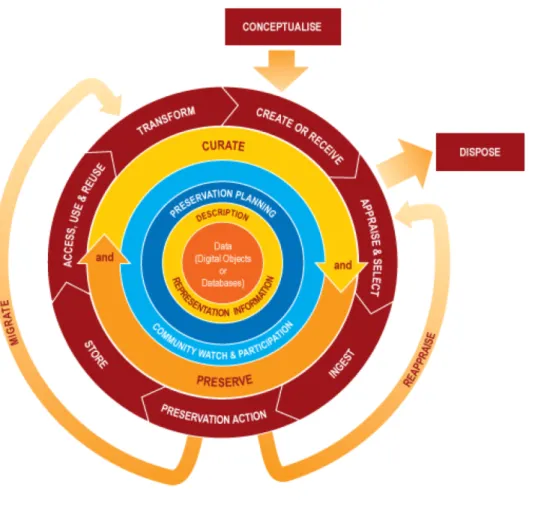
curation lifecycle model is the most well-known model and is often adopted in practices to
identify the necessary activities for data curation (e.g., Heidorn, 2011). The DCC model provides
a high-level overview of the required stages for the successful curation of data from initial
receipt through the iterative curation cycle (Higgins, 2008). This lifecycle consists of different
layers of actions. A full lifecycle is comprised of “sequential actions” beginning with
“conceptualize” and moving clockwise to the next step; “Occasional actions” are the actions
outside the sequential actions and re-order the sequential actions when decisions are made to do
so (Figure 1). These actions are activities that take place around digital objects (data) and can
occur at any time during the curation lifecycle. The actions include: 1) preservation planning; 2)
community watching and participation, such as maintaining a watch on appropriate community
and preservation, such as undertaking the management and administrative actions planned to
promote curation and preservation.
Figure 1. DCC curation lifecycle model
Although the DCC curation lifecycle model provides useful and generalized guidance, it
is not always clear which stakeholders or actors must be involved in the curation lifecycle to
implement all actions identified in the model, as the model focuses on actions rather than actors.
For instance, based upon my analysis of the definition, I argue that data curation means active
management, of which the involvement of data producers, curators, and reusers is the significant