FACTORS INFLUENCING SUPPORT FOR POINT-OF-SALE PROVISIONS OF THE TOBACCO CONTROL ACT: RETAILER AND PUBLIC OPINION
Shyanika Wijesinha Rose
A dissertation submitted to the faculty at the University of North Carolina at Chapel Hill in partial fulfillment of the requirements for the degree of Doctor of Philosophy in the Department of
Health Behavior in the Gillings School of Global Public Health.
Chapel Hill 2014
Approved by: Kurt M. Ribisl Susan Ennett Sherry Emery
© 2014
ABSTRACT
Shyanika Wijesinha Rose: Factors Influencing Support for Point-of-Sale Provisions of the Tobacco Control Act: Retailer and Public Opinion
(Under the direction of Kurt M. Ribisl)
Background: The Family Smoking Prevention and Tobacco Control Act (FSPTCA) of 2009 provided new opportunities to regulate tobacco products at the point-of-sale (POS). Little is known about retailer, public and smoker support for 10 FSPTCA POS policies in five domains (1) minors’ access to tobacco, (2) regulating promotion, (3) product bans (menthol, flavored cigarettes), (4) advertising restrictions, and (5) labeling changes (graphic warnings).
Study 1: This study conducted a survey of 257 tobacco retailers in three counties in North Carolina and linked their opinions about tobacco control policies with audit data of their stores’ compliance with POS policies. Through structural equation modeling and generalized estimating equations, I found that store noncompliance with tobacco control policies was associated both with more retailer barriers to compliance and less support for POS policies. Awareness and Source of information about tobacco control regulations was not associated with compliance.
Study 2: This study surveyed a US nationally representative sample of 17,507
respondents using linear regression to calculate weighted point estimates and identify factors associated with support for POS policies among adult respondents and smokers. For smokers we also examine the interaction of individual characteristics and policy self-interest on support for specific POS policies. Overall, non-smokers had more support than smokers.
held. Policy support varied by provision with the highest support for minor’s access restrictions (over 80%) and the lowest for advertising restrictions like black and white text advertising (23%). Among smokers, policy self-interest moderated the relationship between intention to quit and support for graphic warnings. Other self-interest variables had a direct effect on policy support.
ACKNOWLEDGEMENTS
This dissertation could not have been completed without the help and support of many people. First, my chair, Kurt Ribisl, provided guidance and support in helping me become a tobacco control researcher. He provided a template for how far hard work, creativity, and excellence can take you. Second, to my committee who gave generously of their time and insight and helped me see this project through to completion. Thank you to Susan Ennett who was never too busy to have a moment to provide some practical advice; to Luz McNaughton Reyes, who was always willing to get down into ‘the weeds’ in conceptualizing the issues and making sure the methods were right; to Sherry Emery who generously provided data and guidance and introduced me to new ways of thinking about data and tobacco control; and to John Scott who helped to make sure that I understood the policy process more deeply.
I am also grateful to other faculty and staff in Health Behavior and the school who helped me through the doctoral program and supported my personal and professional aims, particularly Jo Anne Earp, Deb Tate, Geni Eng, Vangie Foshee, and Michael O’Malley.
I also learned a lot from the other students, particular my wonderful cohort. Thanks Ann, Sean, Katie, Emily, Ling-yin, Kari, Emily, and Jessica for enlightening discussions, and
invaluable support.
TABLE OF CONTENTS
LIST OF TABLES ... xi
LIST OF FIGURES ... xiii
LIST OF ABBREVIATIONS ... xiv
Chapter 1 Background and Significance ... 1
1.1 Introduction ... 1
1.2 Specific Aims ... 4
1.2.1 Specific Aims for Study 1 Retailer Opinion ... 4
1.2.2 Specific Aims for Study 2 Public Opinion ... 6
1.3 Significance ... 8
Chapter 2 Literature Review... 9
2.1 Why Tobacco Retailing Matters for Public Health ...10
2.2 Tobacco Retailer Compliance with and Opinions toward Regulations ...11
2.2.1 Retailer Compliance ...11
2.2.2 Retailer Opinions ...13
2.3 Public Support for Regulations ...15
2.4 Support for Regulations and Tobacco Use Behavior ...18
Chapter 3 Conceptual/Theoretical Foundations ...20
3.1 Theoretical Foundations for Study 1 ...26
3.1.1 Theory supporting Compliance as a Dependent Variable ...26
3.1.2 Theory supporting Compliance as an Independent Variable ...28
3.2 Theoretical Foundations for Study 2 ...31
3.3.1 Study 1 Research Aims and Hypotheses ...40
3.3.2 Study 2 Research Aims and Hypotheses ...41
Chapter 4 Methods ...43
4.1 Analysis of Study 1 Retailer Opinions ...43
4.1.1 Measure Development ...44
4.1.2 Analyses for Aim 1 and 2 using Compliance as an Independent Variable ...47
4.1.3 Analyses for Aim 1 using Compliance as a Dependent Variable ...49
4.1.4 Power Analyses ...51
4.2 Analysis of Study 2 Public Opinions ...52
4.2.1 Measure Development ...52
4.2.2 Analyses for Aim 3 ...53
4.2.3 Analyses for Aim 4 ...54
4.2.4 Power analyses ...55
Chapter 5 Study 1 Retailer Opinions about and Compliance with Family Smoking Prevention and Tobacco Control Act Point of Sale Provisions ...57
5.1 Introduction ...57
5.2 Methods ...61
5.2.1 Data Source and Study Population ...61
5.2.2 Respondent Eligibility Criteria ...62
5.2.3 Data Collection and Measures ...63
5.2.4 Data Analysis ...67
5.2.5 Model Building Strategy ...70
5.3 Results ...70
5.3.1 Sample Description ...70
5.3.2 Descriptive Statistics ...72
5.3.4 Results for Compliance as a Dependent Variable ...78
5.4 Discussion ...83
5.4.1 Limitations and Strengths ...86
5.5 Conclusions ...87
Chapter 6 Study 2 Public Support for Family Smoking Prevention and Tobacco Control Act Point of Sale Provisions ...89
6.1 Introduction ...89
6.2 Methods ...92
6.2.1 Sample ...92
6.2.2 Measures ...92
6.2.3 Data Analysis ...95
6.3 Results ...96
6.4 Discussion ... 106
6.5 Conclusions ... 109
Chapter 7 Synthesis/Discussion ... 111
7.1 Synthesis of Findings ... 111
7.1.1 Summary of Findings about Study Aims ... 111
7.1.2 Retailer and Public Support for POS Policies ... 115
7.1.3 Support for Theories of Policy Implementation ... 116
7.2 Strengths and Limitations ... 120
7.2.1 Strengths ... 120
7.2.2 Limitations ... 120
7.3 Future Directions ... 121
7.3.1 Implications for Future Research ... 121
7.3.2 Implications for Public Health Practice ... 122
Appendix A: Data Collection Instruments ... 124
A.2 Study 2 Instruments... 135
Appendix B: Additional Analyses ... 138
B.1 Additional Analyses for Study 1 ... 138
B.2 Additional Analyses for Study 2 ... 143
LIST OF TABLES
Table 1.1 Tobacco Control Act POS Provisions ... 3
Table 3.1 Based on Sabatier and Mazmanian (1980) Framework for Analysis of Policy Implementation ...22
Table 3.2 Mapping Theoretical Constructs onto Study Constructs ...28
Table 4.1 One-factor Solution for Barriers with Compliance ...45
Table 4.2 Item Loadings for CFA of Barriers to Compliance ...45
Table 4.3 One-factor Solution for Level of Support for POS Policies – Study 1 ...46
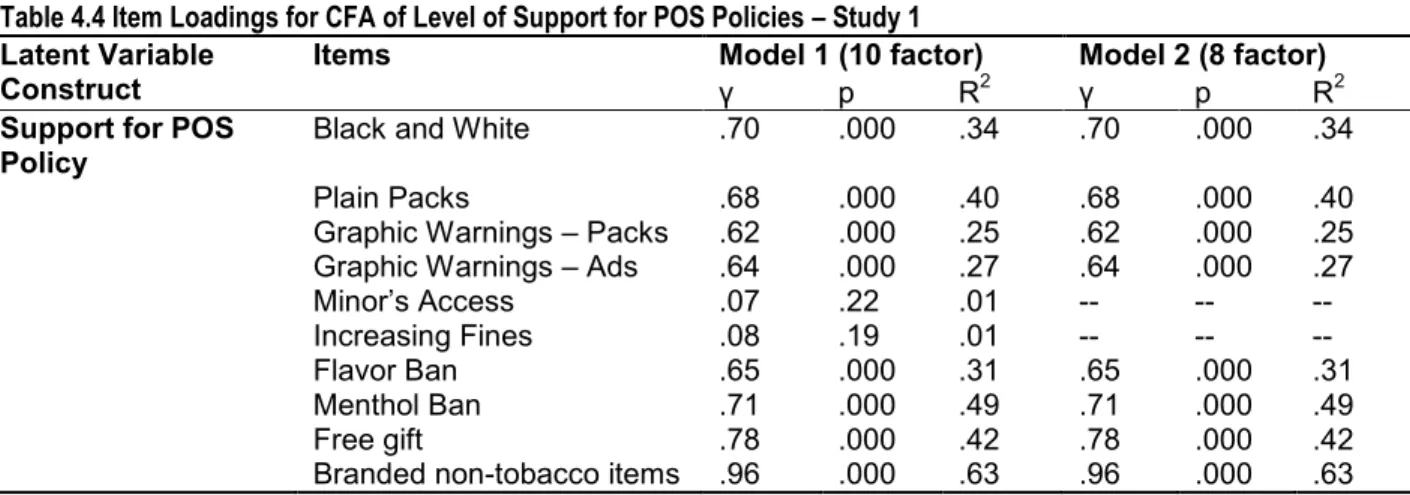
Table 4.4 Item Loadings for CFA of Level of Support for POS Policies – Study 1 ...47
Table 4.5 Model Fit of Aim 2 without Covariates ...48
Table 4.6 Model Fit of Final Model for Compliance as an Independent Variable with Individual, Store, and County-level Covariates ...48
Table 4.7 Power Calculations for Study 1 ...52
Table 4.8 One-factor Solution for Support for POS Policies – Study 2 ...53
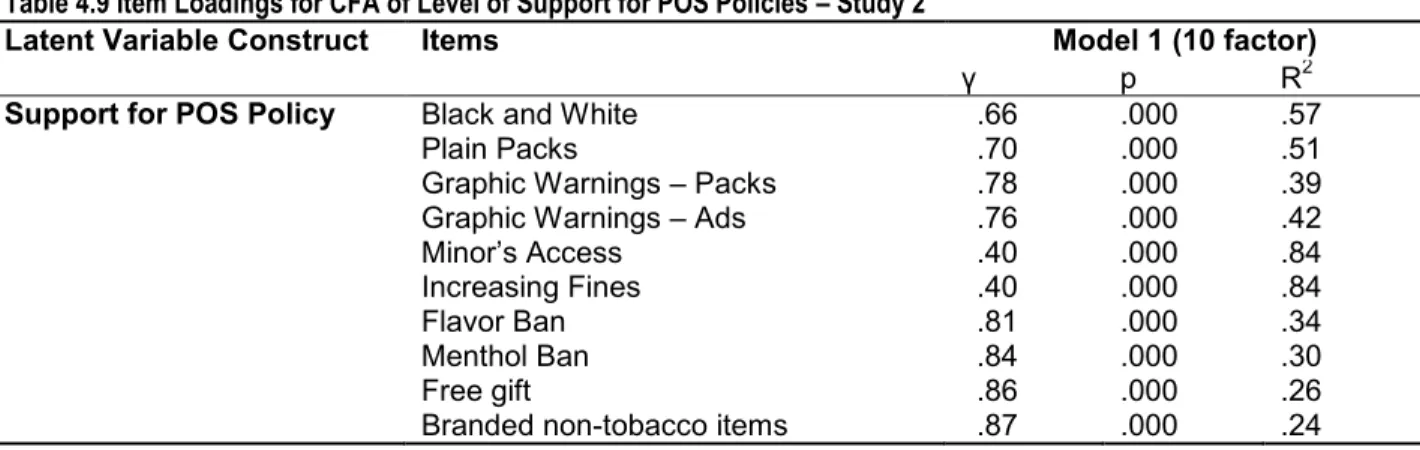
Table 4.9 Item Loadings for CFA of Level of Support for POS Policies – Study 2 ...53
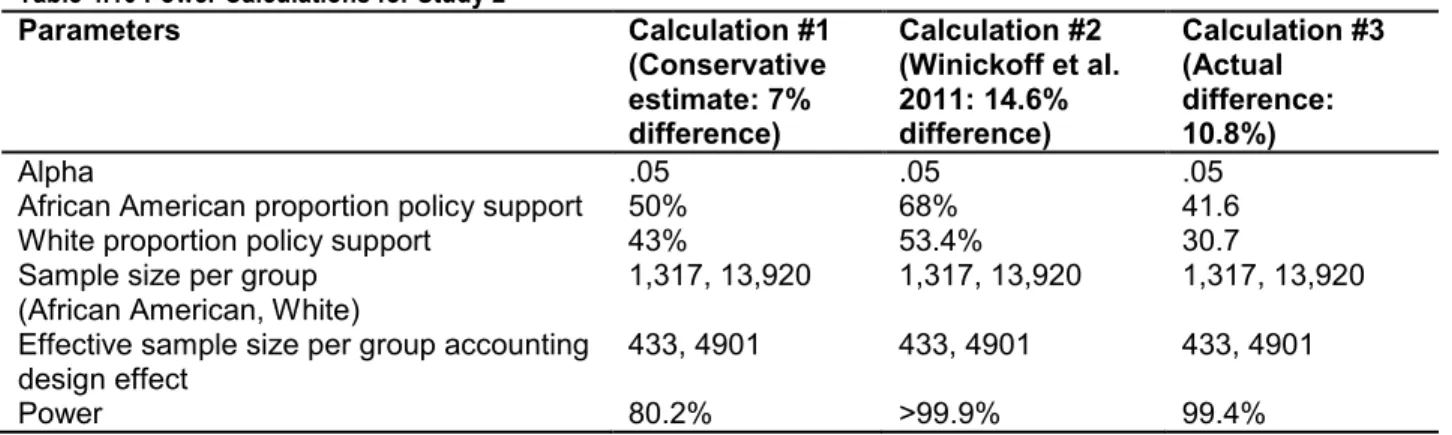
Table 4.10 Power Calculations for Study 2 ...56
Table 5.1 Descriptive Characteristics of Interview Respondents ...72
Table 5.2 Multivariate Structural Equation Model of Barriers, Awareness, Source of Information, and Support for POS Policies ...77
Table 5.3 Barriers, Awareness, and Source associated with Noncompliance with POS Provisions ...80
Table 5.4 Support for POS Policies associated with Noncompliance with POS Provisions ...82
Table 6.1 Specific POS Provision by Domain ...93
Table 6.2 Weighted and Unweighted Characteristics of All Survey Respondents and Smokers Only ...97
Table 6.3 State-level Mean Characteristics of Non-smoker and Smoker Samples ...98
Table 6.5 Point Estimates, Unadjusted, and Adjusted Regression Coefficients for
Scale Score of Support for POS Regulations in Smokers Only Sample ... 102 Table 6.6 Self-interest as a Moderator of the Relationship between Individual
Characteristics and Policy Support† ... 105 Table B.1 Structural Equation Model of Compliance as a Dependent Variable ... 139 Table B.2 Multivariate Structural Equation Model of Barriers, Awareness, Government
Source of Information, and Support for POS Policies ... 140 Table B.3 Barriers, Awareness, and Source associated with Noncompliance with
POS Provisions ... 142 Table B.4 Descriptive Statistics of Visiting Stores or Buying Cigarettes in Stores
LIST OF FIGURES
Figure 3.1 Study 1 Conceptual Model ...31
Figure 3.2 Study 2 Conceptual Model ...36
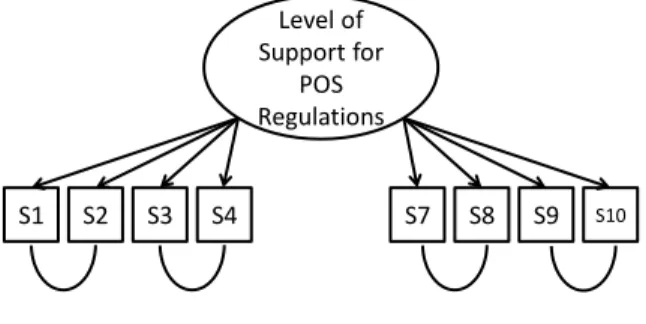
Figure 4.1 Final Model for Level of Support for POS Regulations ...46
Figure 4.2 Final Structural Equation Model with Compliance as an Independent Variable ...49
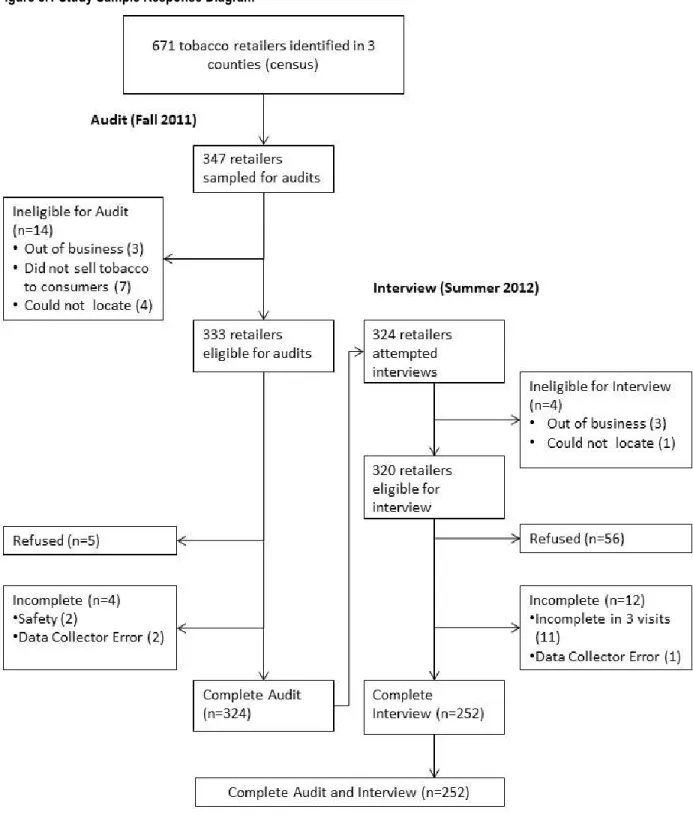
Figure 5.1 Study Sample Response Diagram ...62
Figure 5.2 Brief Conceptual Model Diagram ...68
Figure 5.3 Percent of Respondents who Agreed or Strongly Agreed with Barriers to Compliance with Regulations ...73
Figure 5.4 Percent of Respondents Citing Category as a ‘Usual Source’ of Information about Tobacco Control Regulations ...74
Figure 5.5 Percent Agree or Strongly Agree with Each POS Provision ...75
Figure 6.1 Support for POS Provisions by Smoking Status ...99
LIST OF ABBREVIATIONS
CFA Confirmatory Factor Analysis CFI Comparative Fit Index
CI Confidence Interval
COMMIT Community Intervention Trial for Smoking Cessation CTCP California Tobacco Control Program
CTP Center for Tobacco Products
EPA U.S. Environmental Protection Agency FDA U.S. Food and Drug Administration GEE Generalized Estimating Equations FIML Full Information Maximum Likelihood ICC Intraclass Correlation
ITC International Tobacco Control MLR Robust Maximum Likelihood
NAACP National Association for the Advancement of Colored People
NACS Association of Convenience and Fuel Retailing formerly the National Association of Convenience Stores
NAICS North American Industry Classification System NATO National Association of Tobacco Outlets NCI National Cancer Institute
OR Odds Ratio
POS Point of Sale
QIC Quasi-likelihood under the Independence Model Criterion RCRA Resource Conservation and Recovery Act
SFA Smokefree Air
TCME Tobacco Control in a Rapidly Changing Media Environment TLI Tucker-Lewis Index
TPSAC Tobacco Products Scientific Advisory Committee UIC University of Illinois at Chicago
CHAPTER 1 BACKGROUND AND SIGNIFICANCE
1.1 Introduction
In 2009, Congress passed and President Obama signed into law the Family Smoking Prevention and Tobacco Control Act (“Tobacco Control Act”) (Public Law 111-31),1 providing unprecedented powers to the U.S. Food and Drug Administration (FDA) to regulate tobacco products in the United States.2-4 Historically, both in the US and globally, tobacco retailing has been largely unregulated,5 but the Tobacco Control Act affords a significant opportunity to establish tobacco control regulations at establishments that sell tobacco products, also called the point-of-sale (POS). The FDA released 56 research priorities, and these included
understanding public perceptions of the Tobacco Control Act and FDA’s regulatory authority over tobacco products; knowledge, attitudes, and beliefs about tobacco products; and FDA regulatory authority among vulnerable populations.6 Understanding how new POS regulations are perceived by consumers as well as by retailers can help to fill these research gaps.
Additionally, the opinion of the general public and retailers who are a major interest group in the POS arena can have a significant influence on policy implementation, enforcement, and
maintenance.
I conducted two studies for this dissertation research. In Study 1, Retailer Opinions about and Compliance with Family Smoking Prevention and Tobacco Control Act Point of Sale
Provisions, I examined the opinions of tobacco retailers toward POS provisions of the Tobacco
tobacco policy at the point of sale. Understanding retailer attitudes toward POS regulations can improve government agencies’ and tobacco control advocates’ communications with retailers, direct attention toward retailer training needs, and potentially improve compliance. Both research evidence and tobacco industry documents agree that exposure to tobacco industry marketing, advertising, and promotions in the retail environment prompts smoking initiation, encourages tobacco use, and undermines quit attempts.7,8 Thus, engaging retailers over time as policy implementers can help to improve public health.
Study 2, Public Support for Family Smoking Prevention and Tobacco Control Act Point of Sale Provisions, examined the opinions of the general public to these same provisions
through adding questions to a web survey of a nationally representative sample of 17,507 individuals throughout the US. Public opinion can help to support policy change and is an important predictor of policy implementation.9 Public opinion can influence the policy agenda, influence decision maker support, and be used to promote a public health agenda by
demonstrating public support.9,10 It can also affect retailer compliance by shifting social norms in favor of tobacco control at POS. This study provides opportunities to examine opinions toward POS regulations and to understand how such regulations are perceived by both smokers and nonsmokers.6,11
Table 1.1 Tobacco Control Act POS Provisions
POS Area POS Provision Tobacco Control Act Status Minor’s
Access Fining retailers for selling to minors Federal Enforcement beginning in June 2010. Initial warning letters for violations of youth sales with subsequent fines. All states had prior laws banning sales to minors.
Increasing penalties for
repeated sales to minors Federal enforcement beginning in June 2010. Initial warning letters and subsequent compliance checks of retailers. Civil money penalties can be imposed that increase with repeated sales to minors from $250 to up to $10,000 for a sixth sale to minors.
Promotion Banning gifts with
purchase of cigarettes Banned in June 2010. Banning sales of branded
non-tobacco items (e.g., hats, t-shirts)
Banned in June 2010
Non-tobacco products and services may not bear any branding that is identical or similar to a brand of cigarette or smokeless tobacco
Product Banning cigarette flavorings (except menthol)
All cigarette ‘characterizing flavors’ (except menthol)were banned in September 2009
Banning menthol Menthol cigarettes were specifically exempted from the flavor ban in 2009 but in a 2010 report an FDA scientific advisory panel supported a ban. Docket for public comment received over 170,000 comments in November 2013. FDA has yet to make a ruling on menthol.
Advertising Restricting tobacco advertising to black and white text only
Was slated for implementation in June 2010, labeling and advertising for cigarettes and smokeless tobacco may not use color but may only use black text on a white background. Litigation decided against FDA (Discount Tobacco & Lottery v. United States). March 29, 2012 Sixth Circuit Court of Appeals denied the restriction on the colors used in tobacco advertisements as unconstitutional.
Restricting cigarette packaging to plain packaging
There is currently no restriction in the Tobacco Control Act promoting the use of ‘plain’ packs without any logos or designs though this has been proposed in other countries and implemented in Australia in December 2012.
Counter-advertising Graphic warning labels on packs In the Tobacco control Act for implementation in September 2012, cigarette packs were to have 50% of the front and rear face of the pack showing a graphic warning label. R.J. Reynolds Tobacco Co. v. U.S. Food and Drug Administration, No. 11-1482 (D.D.C.), No. 11-5332 (D.C. Cir.) upheld the FDA’s ability to have graphic warnings on packs but vacated the specific graphic warnings proposed. FDA will likely not appeal this case and will instead propose new warnings that are compliant with court rulings. Implementation timing is uncertain.
Graphic warning labels on ads
1.2 Specific Aims
1.2.1 Specific Aims for Study 1 Retailer Opinion
Retail outlets are one of the main avenues for marketing and promotion of tobacco products in the US.12 In 2011, cigarette companies spent 89% of their marketing budget at POS including retail advertising and price discounting.13 Tobacco advertising especially at the point of sale has four direct effects on smoking by: (1) encouraging youth smoking, (2) increasing daily smoking consumption by smokers by acting as a cue to action, (3) reducing smoker’s motivation to quit, and (4) enticing ex-smokers to start again.14,15 Tobacco Control Act provisions are designed to mitigate these effects at POS in several ways. This includes potentially reducing youth initiation by banning flavored cigarettes and restricting self-service of tobacco products and reducing impulse purchasing by restricting gifts with purchase. Tobacco control advocates have called for additional attention to be paid to implementation and enforcement of existing regulations by anti-tobacco coalitions and activists.16 Prior to the implementation of the Tobacco Control Act, the average retailer violation rate of sales to minors in 2008 was 9.9%; the lowest rate recorded since the implementation of the Synar Amendment in 1992 restricting tobacco sales to youth.17 However, information is still being collected as to how compliant tobacco retailers are with newer Tobacco Control Act POS provisions and little is known about what factors are associated with their compliance.
with ‘street level bureaucrats’ (in this case tobacco retailers) – implementers on the ground that directly influence the extent to which public policies are enacted as planned.23 Theory also suggests that local flexibility and adaptation are necessary conditions for successful policy implementation.24 Thus, engaging tobacco retailers as stakeholders in tobacco control efforts rather than adversaries requires understanding the factors associated with their compliance: (1) tractability of the problem (i.e., how easy or difficult it is for implementers to enact policy), (2) the policy itself, and (3) non-statutory factors affecting implementation including the attitudes of interest groups.25 Few studies of tobacco control retailers have systematically assessed these theoretically driven policy implementation factors related to tobacco control policy – particularly newer POS policies enacted under the Tobacco Control Act of 2009.
The main study objectives are to (1) identify retailer opinions about Tobacco Control Act provisions, (2) identify factors that may be associated with these opinions, and (3) link retailer opinions with retailer compliance. To support these objectives, Study 1 had two main aims: Aim 1. To determine whether retailer compliance with Tobacco Control Act POS provisions
is reciprocally related to awareness of regulations, source of information about regulations, and barriers to regulatory changes (tractability factors) controlling for county, retailer neighborhood, store, and individual respondent factors.
Aim 2. To examine whether retailer Tobacco Control Act compliance is independently and
reciprocally associated with retailer policy support.
Data for this study were collected through interviews of retailers and linked with store audit data assessing compliance with a variety of POS regulations (Grant: Healthy Stores, Healthy Communities, CoI: Kelly Evenson, Kurt Ribisl). Analyses of Healthy Stores data I
appear by store type with higher violation rates in pharmacies vs. grocery store/supermarkets and significant differences across counties in compliance.26 Prior studies of retailers have found that industry influence affects product promotion and advertising volume.32-34 Given new and more stringent tobacco retailer restrictions, it is unclear what type of response may be
generated by the tobacco industry and, in turn, how that response may affect retailers. Gaining additional information from retailers directly can help to understand what factors drive
compliance, which types of Tobacco Control Act regulations have support, the impact of formal sources of information on policy implementation, and how retailers can be reached to promote compliance.
1.2.2 Specific Aims for Study 2 Public Opinion
From a policy advocacy perspective it is important to assess levels of public support for tobacco use policies among both majority and sub-populations. Tobacco control advocates recognize that one key factor affecting the strength of policy implementation and enforcement is level of public support.35 Compliance with regulations is also driven in part by social acceptance, and prior regulatory efforts have met with failure in part due to lack of public support.36 However, little is currently known about public attitudes toward new POS regulations and how these attitudes differ by subgroup. Understanding public support for new regulations can provide public health advocates with information on mitigating negative responses to regulatory
changes, and also identify areas for education and communication with smokers and disparately affected communities about potential impact of such regulations.
regulations than non-smokers,37-39 African Americans have more support than Whites,38,40 and individuals of high-SES have more support than those of low-SES.40,41
Preserving smoker’s rights or choice has often been used as an argument against new tobacco control regulations.42 Thus , particularly among smokers, controlling for behavioral and demographic factors found in other studies,37,43-45 policy self-interest46,47 may be an important moderator of the relationship between individual characteristics and level of support for POS regulations (i.e., the relationship between individual characteristics and policy support may vary for those individuals who are more affected by the policy versus those who are less affected). Policy self-interest can be measured for major POS components of the Tobacco Control Act. Specifically, level of exposure to POS advertising, use of promotions, or use of potentially banned products such as menthol cigarettes, may moderate the relationship between individual characteristics and the level of support for POS regulations among smokers. The purpose of this study is to (1) examine the overall level of support for POS policies among the general public and among smokers, (2) identify which policies have support, (3) identify individual and state level characteristics associated with support, and (4) examine policy self-interest as a moderator of the relationship between individual characteristics and level of support among smokers. Specific aims of study 2 are to:
Aim 3: To determine whether individual race, socioeconomic status, and smoking status are
associated with level of support for Tobacco Control Act regulations among a national sample of smokers and non-smokers.
1.3 Significance
Much of the success of the tobacco control movement over the last 25 years has come through policy changes in multiple arenas including tobacco taxation, clean indoor air,
advertising and promotion, minor’s access to tobacco, and product regulation.18 With the passage of the Tobacco Control Act, tobacco retail establishments are important new avenues for tobacco control regulation. The Tobacco Control Act lifted federal preemption of many “lower level” state and local laws governing the marketing and promotion of tobacco products. Tobacco control advocates at the state and local levels are now also considering new point of sale (POS) regulations that may be stronger or go beyond the scope of federal law. As these regulations are enacted at all levels, there is an urgent need to study the extent of support available for POS regulation among both smokers and nonsmokers and among retailers. No study to date has examined public and retailer support for a broad set of POS regulations and what factors are associated with level of support. In a contested policy environment with multiple messages coming from both pro- and anti-tobacco interests, it is also important to better understand the mechanisms through which individuals form supportive or unsupportive opinions toward POS regulations and what personal factors drive generation of these opinions. Through this study, understanding how support for regulations may differ by individual race, SES, and smoking status characteristics among a large, diverse national sample of smokers and nonsmokers and among a sample of retailers can help to determine how well Tobacco Control Act POS
regulations can be maintained and promoted over time. This understanding can help to better implement new POS policies, mitigate potential negative response to policy change, as well as to identify topics that government and nonprofit organizations should cover when
CHAPTER 2 LITERATURE REVIEW
The next ‘frontier’ in tobacco control policy is POS. Traditional tobacco control strategies used by tobacco control advocates include tobacco taxation, clean indoor air laws, media campaigns, and smoking cessation services.48 Approaches affecting point of sale include minor’s access restrictions, advertising and promotional restrictions, price restrictions, labeling and packaging, and placement of tobacco retailers including density and licensing of outlets. These POS policies may be effective environmental strategies that reduce the impact of tobacco in communities.49 For instance,
Minor’s Access. National studies finding that there is a significant increase in the odds that
youth will discontinue regular smoking for every one unit increase in the strength of youth access laws in their state.50
Advertising restrictions. Modeling studies estimate that comprehensive advertising bans
can lead to 7.4% decrease in cigarette use.51
Graphic warnings. Large graphic warning labels can lead to a 2% decrease in smoking
prevalence and increase in smoking cessation at the population level.48
Product bans. A hypothetical ban on menthol cigarettes may lead to as much as a 9.7%
decrease in population level smoking prevalence by 2050.52
toward various tobacco control policy options including smoke-free air laws, tobacco taxation, minor’s access provisions, and advertising restrictions (Section 2.3), and the evidence linking such opinions to tobacco use behaviors (Section 2.4).
2.1 Why Tobacco Retailing Matters for Public Health
POS advertising and tobacco outlet density remain some of the largest sources of visible cues to smoking in neighborhoods.15,54,55 POS advertising has been associated with initiating smoking among youth, undermining quit attempts and promoting consumption among adults.56 Botvin and colleagues found that along with peer smoking, exposure to advertising was found to be an important correlate of current smoking and intention to smoke in the future; youth who were highly exposed to advertising were 1.93 times more likely to be current smokers than those less exposed.57 Longitudinal studies have found that owning tobacco promotional items and receptivity to tobacco advertising in adolescence was predictive of transition to established smoking in later adolescence58 or young adulthood.59 Additionally, in a longitudinal study, increased exposure to POS advertising among youth was associated with increased odds of smoking initiation at follow-up.60 Among youth, POS advertising and promotion exposure has also been associated with increased positive brand imagery,61 choice of usual brand,62 and progression from experimentation to regular smoking.63 Among adult smokers, POS displays influence unplanned purchases64 and stimulate cravings among former smokers.65 Sensitivity to POS displays was associated with less likelihood of quitting.66
Tobacco retailing is also associated with neighborhood level characteristics. Tobacco retail outlets may contribute to tobacco use disparities by both increasing availability of tobacco products and by serving as an environmental cue to smoke.12 Tobacco outlet density is
associated with neighborhood smoking prevalence.67 Higher levels of tobacco outlet density are found in minority, low education, and low income neighborhoods.68-71
manufacturers spent approximately 89% of their marketing budget – roughly $7.4 billion – on tobacco advertising and promotion at POS primarily through price discounting, POS
advertisement, and retail promotional allowances.13 Living in areas with more retail tobacco advertisements is linked with increased youth smoking and more positive attitudes toward smoking.72 Sales and marketing of tobacco products are also geographically patterned. There are more tobacco advertisements in minority and low income neighborhoods.27,28,73 There is also increased POS promotion of menthol cigarettes in African-American neighborhoods,29,74 and lower cigarette prices in minority communities.75 A meta-analysis of volume of tobacco advertising in African American communities found that there are 2.6 times as many tobacco billboards and large display advertisements at tobacco retailers per person in African American neighborhoods as compared with White neighborhoods.28 A study of seventh graders found that African American and Latino youth were significantly more likely to report exposure to tobacco advertising than youth of other ethnic backgrounds.76 Henriksen and colleagues also found that schools with the most economically disadvantaged students were more likely to be surrounded by higher tobacco outlet density and similarly be exposed to higher levels of tobacco advertising within those outlets 54
2.2 Tobacco Retailer Compliance with and Opinions toward Regulations
2.2.1 Retailer Compliance
Tobacco retailers affect public health through lack of compliance with tobacco control regulations. For example, odds of daily smoking for youth decrease 2% for every 1% increase in average merchant compliance with youth access laws.77 Several studies have also documented lower rates of compliance with minor’s access regulations in racial/ethnic and socioeconomically disadvantaged neighborhoods.30,31
1. restrictions on the sale of flavored cigarettes (excluding menthol); 2. bans on sales of single or loose cigarettes in less than a standard pack 3. bans on sales of smokeless tobacco in less than a standard unit pack;
4. banning labeling on cigarette packs with terms like “light,” “low tar” and “mild” known as “modified risk” products;
5. requiring sales of tobacco products through face-to-face transactions rather than allowing self-service;
6. banning tobacco vending machines in stores frequented by youth; 7. restricting free gifts with purchase,
8. banning sales of branded non-tobacco products such as hats or t-shirts, 9. restricting the use of catalogs offering gifts with proof of purchase; 10. banning certain types of video adverting with color or sound effects 11. banning certain types of audio advertising with sound effects;
12. and restricting advertising of tobacco brand name event sponsorship.
Prior studies looking at a subset of these provisions identified violations of self-service of cigarettes or smokeless tobacco products (from 3-8%).78,79 One study, examining four POS provisions found no difference in compliance between retailers in higher versus lower income neighborhoods.78 A store audit of stores in Canada after implementation of similar sales provisions found that 21% of tobacco retailers were noncompliant with either minor’s access restrictions or with POS provisions; but that there was no correlation between the two types of violations.80 Our prior study is the only one to date to examine all 12 sales and marketing provisions.26 In contrast, in 2011 (the year of the retailer study), the FDA conducted compliance checks in over 20 states (not yet including North Carolina) and issued warning letters or civil penalty letters for repeat violations to only 5% of the retailers visited.81 However, law
inspections are often not conducted based on random samples of retailers to obtain population level estimates of compliance. Additionally, enforcement action is not enough to assess
compliance as some provisions are not being enforced (e.g., sales of modified risk labeled cigarettes),82 assessment of civil monetary penalties is subject to contextual conditions (e.g., number and frequency of violations, severity of violations, existence of training program, among others),83 and enforcement inspections may fail to identify areas of compliance disparities. Independent assessments of compliance are necessary complements to enforcement action; few have been conducted in relation to Tobacco Control Act POS provisions. This study helps fill this gap in the literature and determines retailer level factors that are associated with compliance.
2.2.2 Retailer Opinions
Some work has been done to assess retailer opinions toward POS regulations. Prior qualitative work with alcohol retailers identified three factors associated with compliance with minors’ access to alcohol: (1) understanding and awareness of the rules, (2) ability to comply with the rules, and (3) willingness and motivation to comply.84 Relative to minor’s access to tobacco, negative sanctions may be necessary to ensure compliance. Researchers have found that such provisions are rarely self-enforcing and need continued enforcement through
Tobacco retailers opinions toward regulation and their ability to make changes in the tobacco retail environment exist in a larger socio-normative environment. Prior studies of tobacco retailers find a significant influence of the tobacco industry in the retail environment. Studies of tobacco retailers find that the tobacco industry provides substantial incentives to retailers to promote tobacco products in the retail environment.32,33 These types of ‘slotting fees’ and promotional allowances have been speculated to reduce tobacco prices, promote youth sales by allowing self-service and pilferage, promote a pro-tobacco environment encouraging youth pro-smoking attitudes, and enhance political support by retailers for tobacco industry advocacy.87 Qualitative interviews with retailers have found that about two-thirds of retailers are offered and participate in tobacco industry sponsored incentive programs to promote prime placement of tobacco products and advertisements at POS.33 Additionally some retailers feel that they have little control over the advertisement or promotion of tobacco products in their store once they have signed contracts with the tobacco companies that provide incentives; even those who felt that they had too much tobacco signage were reluctant to make changes to avoid jeopardizing these contracts.71
California retailers who voluntarily stopped sales of tobacco products found that independent pharmacies did so to stop selling a deadly product and independent grocers saw it as consistent with their focus on selling healthy foods.91 Thus, while minor’s access provisions may require active enforcement and negative sanctions for retailers to implement, there may be potential for more positive factors to influence compliance with other POS marketing and advertising
provisions.
However, few studies explicitly asked retailers about their support for tobacco control regulations; particularly concerning newer sales and marketing provisions. A study of large US retailers found that 66% supported minor’s access laws, agreeing that retailers should be penalized for selling tobacco to minors. But, of those, 51% thought that minor’s should also be penalized for buying.92 An Australian study found that 50% of retailers agreed that retailers should be prosecuted for sales to minors.93 Another New Zealand study found that some retailers had support for display bans.94 A qualitative study found retailer opposition to graphic warning signs in stores.95 No other studies document retailer support for sales and marketing provisions; a gap this study fills.
2.3 Public Support for Regulations
Studies also find that policy support may increase with the implementation of regulations.98,100-102 For instance, a longitudinal study of bar and restaurant employees in Norway (which implemented a clean indoor air law in 2004) found that from pre-indoor smoking ban to 4 months and 11 months post-ban there was a significant linear trend toward workers agreeing that they felt positively toward the ban, that a ban was an acceptable way to reduce passive smoking, and that their work conditions had improved.103 Bar and restaurant workers in Scotland also significantly increased support for a smoking ban in public places implemented in 2006 from 69% pre-ban to 79% three months post-ban. Their concern that a ban would
negatively affect business fell from 42% to 18%.104 This result has also been found in the
general public where support for a total smoking ban in pubs/bars in Ireland increased from 13% to 46% pre- to post-implementation.98 Related to POS, a study on several college campuses found over 55% of students supported retail display bans on tobacco products in campus stores; with the highest level of support found for students on campuses with an existing ban.101 A longitudinal study of POS advertising and display bans as they were implemented across Canadian provinces found that support for the bans was higher at final follow-up among
smokers who had been exposed to the bans at baseline versus those who were exposed during or after the data collection period.105
Fewer studies to date have examined support for POS tobacco regulations by subgroup, a strength of the current study. Studies have found relatively higher support for tobacco
regulations among African Americans compared with Whites.38,40,106 For instance, in the
public education measures such as publicizing the dangers of secondhand smoke compared with Whites.40 Studies also find that those with higher education are more supportive of tobacco taxes and smokefree regulations than those with less education.40,41
Related to specific POS provisions in this study, prior studies have found:
Minor’s Access. Support is high in the general public for policies that restrict minor’s
access to tobacco. Among smokers and former smokers, 64% endorsed policies that penalized merchants or youth for violations of youth access laws.97 Additionally, enforcement of minor’s access provisions along with public education about the dangers of smoking have the highest levels of support among both blacks and whites compared with smokefree air policies, tobacco taxation, and advertising and promotion restrictions.40
Promotion. Studies have found that a third to a half of smokers may use price
promotions when purchasing cigarettes.107,108 In a survey of New Yorkers, smokers (41%) were less likely than non-smokers (57%) to support banning price promotions such as coupons and two-for-one deals on cigarette packs.109 Support for bans on free gifts with purchase and on the distribution of branded non-tobacco items (e.g., hats, t-shirts) as now implemented under the Tobacco Control Act (along with other promotional restrictions) have been assessed in various studies utilizing the Smoking Policy Inventory.40,110,111 In a six country study, support for such restrictions was highest in Australia which had comprehensive bans on such provisions and lowest in the US which only had partial or no restrictions on various forms of tobacco advertising and promotions.110 Support for such restrictions has also demonstrated a trend toward higher average support with increasing levels of education.40
Product. Prior findings indicate that support is higher for a ban on flavored cigarettes
non-menthol smokers were 2.73 times (OR 95% CI 1.43, 5.21) more likely to support a ban on menthol cigarettes.106 Another study found support for a menthol ban in a national web survey to be 20%.112
Advertising and labeling. Smokers exhibit high levels of exposure to tobacco advertising
with 90% of a US sample indicating that they noticed tobacco advertising at POS.113 Among Massachusetts adults in 2000, 55% supported restricting tobacco advertising to black and white text; and this level of support remained fairly constant from 1995.114 In a national sample of US smokers, only 24% agreed that cigarettes should be sold in plain packaging.115 Graphic warning labels and advertisements similar to those proposed in the Tobacco Control Act have been implemented in Canada. They have been found to have positive impacts on cessation with 19% of smokers reporting smoking less in response to the warnings.116 Thirty percent of a sample of German smokers supported educational efforts including requiring graphic warning labels on 50% of a cigarette pack.97 A survey of California voters, found that 82% would support requiring graphic warnings to be posted in retail stores.117
No studies to date examine public support among smokers and non-smokers with a comprehensive array of POS tobacco control regulations, few examine differences in support for these POS provisions by subgroup, and few use national data to examine the potential for geographic differences in public support for these provisions. This study can help to fill these gaps.
2.4 Support for Regulations and Tobacco Use Behavior
intention to quit. Some of these studies are cross sectional and thus the causal direction of the relationship is unclear, i.e., whether intention to quit or quit attempts promotes support for policy or the converse.44,45,97
CHAPTER 3 CONCEPTUAL/THEORETICAL FOUNDATIONS
Policy implementation is an area that has received calls for more attention both from a public health as well as from a public policy perspective. In the public health arena, tobacco control advocates have been advised to put more effort toward policy implementation and enforcement, rather than simply the promotion of new policies.16 Studies of retailers find that tobacco control policy at POS (primarily minor’s access restrictions) are not self-enforcing and need ongoing compliance checks to monitor implementation and promote enforcement.16,20,122 Likewise, public policy scholars have called for increased emphasis on theories of policy implementation, and not just policy formation.123,124 Work in the 1970-80s emphasized policy implementation research in addition to the then common approaches of analysis of policy content and formulation, evaluative studies of policy ‘effectiveness,’ and organizational studies focusing on improving performance of political and administrative organization.124
Two different, but complementary, approaches – so called ‘top-down’ versus ‘bottom-up’ – have been identified in this literature.123 Top down approaches focus on the role of the central government in promoting a policy and focus on whether policies were able to achieve their own goals.125 Bottom-up approaches take the view that implementation can be viewed from the perspective of local level implementers, known as ‘street-level bureaucrats,’ and focus more on the problem that the policy was trying to solve rather than the goals of the policy itself.23
environment and to situate the role of public support for such policies within the broader policy implementation process.9,25
This framework is generally taken to be an example of a ‘top down’ approach but efforts by the authors have been made to reconcile the framework with bottom up critiques.125
Additionally, Matland proposes the Ambiguity-Conflict Matrix that finds that Mazmanian and Sabatier’s model is particularly useful in situations of low ambiguity (the policy is clear on what changes are expected) but high conflict (where different actors or stakeholder groups within the policy arena may have deeply held and contradictory views on the policy itself).126
This scenario fits the retail implementation of the Tobacco Control Act well. In this situation, termed political implementation, power is held centrally to promote implementation, but implementation is actually conducted by a diverse set of stakeholders, i.e., tobacco retailers, who may or may not be supportive of implementing the policy. For policy to be implemented under these conditions, the central authority needs to use its power both through coercive means (e.g., fines, penalties) and through bargaining for agreement (e.g., education and communication to gain agreement with policy objectives). Additionally, to promote
implementation, central authorities like FDA need to both support policy proponents (tobacco control advocates), but also thwart opponents (tobacco industry) who are both actively seeking to influence local implementers (tobacco retailers).
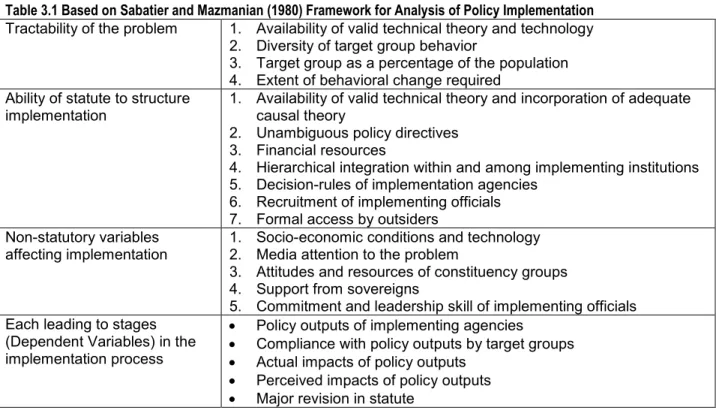
In the Policy Implementation Analysis Framework9 shown in Figure 1.1, three main type of variables (1) tractability of the problem designed to be addressed by the policy, (2) ability of the statute (policy) to structure implementation, and (3) non-statutory variables affecting implementation each influence five stages of the policy implementation process. Each of these stages can be treated as individual dependent variables of policy implementation. In the basic conceptualization, policies are more likely to be implemented (at various stages) when (1) the problem being addressed is tractable, (2) the statute is well designed to promote
Table 3.1 Based on Sabatier and Mazmanian (1980) Framework for Analysis of Policy Implementation
Tractability of the problem 1. Availability of valid technical theory and technology 2. Diversity of target group behavior
3. Target group as a percentage of the population 4. Extent of behavioral change required
Ability of statute to structure
implementation 1. Availability of valid technical theory and incorporation of adequate causal theory 2. Unambiguous policy directives
3. Financial resources
4. Hierarchical integration within and among implementing institutions 5. Decision-rules of implementation agencies
6. Recruitment of implementing officials 7. Formal access by outsiders
Non-statutory variables
affecting implementation 1. Socio-economic conditions and technology 2. Media attention to the problem 3. Attitudes and resources of constituency groups 4. Support from sovereigns
5. Commitment and leadership skill of implementing officials Each leading to stages
(Dependent Variables) in the implementation process
Policy outputs of implementing agencies
Compliance with policy outputs by target groups Actual impacts of policy outputs
Perceived impacts of policy outputs Major revision in statute
Tractability of the Problem. Clearly, some problems to be addressed by policy are more
difficult than others. In this framework, problems have greater tractability when there is a valid theory connecting policy solutions to the problem, there is little variation in the behaviors that cause the problem, the target group is easily identifiable and defined relative to the population, and the amount of behavioral change required by the policy is modest. For instance, an
application of this model to the control of hazardous wastes by the US Environmental Protection Agency (EPA) hypothesized that implementation of the Resource Conservation and Recovery Act (RCRA) was more likely in states that: (1) have less uncertainty associated with hazardous waste control technology, (2) have less uncertainty in relating toxic exposure to health effects (3) have a smaller scope of those affected, and (4) encounter less difficulty in measuring the seriousness of the hazardous waste problem.127
Tractability of the problem measures the extent to which a policy can resolve the
required. I operationalize it as (1) the extent to which retailers experience barriers to compliance with regulations, (2) awareness of regulations, and (3) source of information about regulations. These are necessary conditions for implementing regulations and affect the amount of change that retailers must make. First, retailers may find it difficult to comply with regulations because of structural or logistic barriers. Second, they may be unable to comply if they are unaware of regulations. Finally, their source of information about regulations may influence the extent to which they receive timely and accurate information about compliance requirements.
Additionally, prior studies of retailers support these factors as important for compliance with other tobacco control regulations. Retailers identified barriers to complying with minor’s access provisions such as staff turnover which affected their ability to comply.92 Based on simulation models, awareness of new regulations is associated with merchant compliance with minor’s access provisions by affecting merchant concern for compliance.128 Finally, a study of worksites (including retailer) compliance with smoke-free legislation found that compliance was lower for those citing informal sources such as family and friends as primary sources of
information about the new legislation vs. those citing formal sources.129 Translating to this study, formal sources may include government, tobacco industry, corporate, and trade associations vs. informal sources including media, family and friends, and other retailers. Links between
theoretical and study constructs are shown in Table 3.1.
Ability of Statute to Structure Implementation. For the current study, I describe, but do not examine statutory variables. The policy has already been enacted and these factors did not vary during the study period. Based on the framework, policies are more likely to be
In the case of the Tobacco Control Act, the ability of the statute to structure
implementation has been fairly well specified. Under the Act, the FDA was given regulatory authority to implement the Act. Act statutes were clearly specified with clear penalties for noncompliance.83 The specific research behind many portions of the Act is cited in the
legislation and rests on clear scientific studies and epidemiologic evidence. In cases where the evidence is more ambiguous, the FDA can call for further review of the evidence and synthesis prior to proposing new rule-making. The FDA developed a new congressionally mandated Center for Tobacco Products (CTP) with financial resources for implementation. These financial resources are substantial and $482 million was requested in fiscal year 2013, paid for through user fees imposed on tobacco companies.130 It also issued funding to states to implement compliance checks of tobacco retailers. State inspectors are centrally trained and provided with an FDA inspector badge so that decision rules are clear. Finally, external review is a formal part of the process. A federally mandated scientific advisory panel was created under the legislation to advise FDA on policy implementation. Additionally, all new regulations and enforcement actions are subject to public comment through the Federal Register before Final Rules are promulgated.
Non-Statutory Variables. Under the framework there are two main dynamic processes
maintaining and implementing policy, but can be cyclical. Proximal variables include changing attitudes and resources of constituency groups and of decision makers (‘sovereigns’ and ‘implementing officials’), which can also help to maintain or defeat the implementation of policy.
In summary, Mazmanian and Sabatier suggest that for policy to be implemented ideally it would have clear and consistent policy directives, a valid causal theory and jurisdiction provided, a supportive implementing structure, commitment and skill in top implementing officials, continued support from constituencies and sovereigns, and supportive socioeconomic conditions.25 However, implementation can still occur if not all of these conditions are met or are not met in an optimal way. Mazmanian and Sabatier suggest several patterns or scenarios of implementation corresponding to different patterns of inputs and changes in those factors over time:
Effective Implementation – a pattern of rapidly increasing compliance with
sustained high levels of implementation over time.
Gradual Erosion – increasing compliance to a moderate level followed by start-up
problems and then a gradual erosion of support with subsequent policy implementation failure over time.
Cumulative Incrementalism – modest initial effort with gradual improvements in
compliance and support over time.
Rejuvenation Scenario – Initial pattern similar to the gradual erosion scenario
followed by a change in socioeconomic conditions that precipitate greater support and improved compliance over time.
3.1 Theoretical Foundations for Study 1
3.1.1 Theory supporting Compliance as a Dependent Variable
This study focuses on Mazmanian and Sabatier’s Policy Implementation Analysis Framework to focus on policy implementation from the perspective of tobacco retailers. Retailers are both a ‘target group’ who must implement the policy at the local level but also a ‘constituency group’ with a stake in policy implementation. In this framework, constituency groups are important because they (versus the general public) are more likely to have sustained interest in a policy domain, are more likely to have resources to bring to bear on an issue, and have expertise that allows them to intervene to either oppose or promote policy implementation.
Based on the framework, constituency group attitudes and resources invested in a policy issue may differ based on the amount of behavioral change required and the level of public support for a policy. They may have direct influence by actively participating including by sponsoring lawsuits, testifying before legislative bodies, lobbying, and engaging in public comment. They may indirectly influence the process through engaging in public advocacy campaigns or through media advocacy for or against the policy agency. In the POS policy arena, retail trade associations (e.g., the National Association of Tobacco Outlets (NATO), the Association of Convenience and Fuel Retailing (NACS)) have been active as tobacco industry allies in opposing tobacco policy at point of sale.19,131 However, at the individual retailer-level it is not fully clear how tobacco control policy attitudes are associated with compliance with policy. It is also unclear how strong the ‘attitude-behavior’ link is for tobacco retailers.
thus, where attitudes are weak, behavior may not be consistent with attitude but rather based on situational variables or on what seems to be the most salient aspects of the object.132
Incorporating aspects of the policy implementation framework into these ideas suggest that the extent of behavior change needed by retailers, subjective norms, and how diverse and difficult the required behaviors are to implement are related to retailers opinions about which POS policies are salient to them (i.e., they may not see all provisions as equally important in affecting their business). POS policies such as minor’s access restrictions have been
Table 3.2 Mapping Theoretical Constructs onto Study Constructs
Theoretical Constructs Study Constructs Tractability of the problem
Extent of behavioral change required Barriers
Awareness of regulations
Source of information about tobacco control regulations
Non-statutory variables affecting implementation
Socio-economic conditions County-level:
Retailer county Retailer Neighborhood Level:
% Black residents % Hispanic residents
% Households under family poverty % Residents with bachelor’s degree or
more Store Level:
Store type
Amount of advertising Proximity to schools Individual Level:
Smoking status
Respondent type (owner, manager, clerk) Attitudes and Resources of Constituency
Groups
Retailer Level of Support for POS regulations
Stages in the Implementation Process
Compliance with policy outputs by target groups
Compliance with TCA POS provisions
3.1.2 Theory supporting Compliance as an Independent Variable
self-perception whereby an individual in part posits his/her own attitudes toward an object based on
‘observation’ of his/her own overt behavior.136 This may be particularly the case when internal cues are relative weak, ambiguous or uninterpretable (i.e., individuals do not have strong pre-existing opinions about policy).136
However, a social norms framework implies a feedback process by which policy changes norms, which change behaviors and attitudes, which in turn influence additional behavior change in the population.137 Kelman, in fact, believes that while self-perception or cognitive dissonance processes may be at work, in cases where behavior change appears to influence attitude change that such processes are not necessary.133 Instead, typical processes of attitude formation are still in play including role expectations, social supports, and direct experiences.133
The observational data of retailer compliance in this study was collected first and the items focused on retailer opinions of the Tobacco Control Act were collected subsequently (See Chapter 5 for more details). As a result, the study design suggests that the analysis should examine both directions and assess compliance both as a independent variable associated with opinions and as a dependent variable. Rationale for the reciprocal relationship of compliance as an independent variable of retailer opinions includes the following relationships:
Support for policy. Retailers may comply, even with policies they disagree with (have
negative attitudes towards), due to ideas about the value of the rule of law or fears of negative consequences for noncompliance.138 As policies are implemented and retailers comply with policy due to these external constraints, they may accordingly change their attitudes about the policy itself.133
Barriers. Additionally, as they gain direct experience, if actual barriers are few or have
Awareness. Awareness of legislation may support initial compliance.128 However, awareness can decrease over time with a peak when legislation is passed, without
corresponding decreases in compliance once changes are implemented. For example, a study of workplaces after the introduction of smoke-free workplace legislation in Massachusetts found that compliance at 24 months post ban was associated with awareness of the law (OR 2.2 CI: 1.34, 3.61), but that awareness of the law decreased from 3 months post ban to 24 months post ban (92% to 73% p <.00001) while presence of workplace smoking restrictions stayed constant (83% to 80%, ns).139
Source of information. Additionally, compliance may be associated with source of
information about regulations. It is possible that those who have informal sources may receive little information and thus be less likely to comply. However, theory suggests that it is also possible that once individuals have chosen whether or not to comply they may select a source similar to themselves to ‘bolster’ their existing opinions and justify their decision.140
Figure 3.1 Study 1 Conceptual Model Awareness of POS Regulations Barriers to Compliance Level of Support for POS Regulations
S2 S3 S4 S5 S6 S7 S8 S9 S10
S1
B1 B2 B3
Compliance with TCA POS
Provisions
Controlling for: Socio-economic Conditions
County-Level: • Retailer County Neighborhood Level: • Retailer Neighborhood
Demographics (% Black, % Hispanic, % Family Poverty, % College Education) Store Level:
• Store Type
• Proximity to School • Amount of advertising Individual level:
• Current smoker • Respondent role
Source of Information A im1 A im2 B4
3.2 Theoretical Foundations for Study 2
Geoffrey Rose (1985) advocates population-based intervention approaches versus interventions targeting those at “high risk” in order to improve population health and “shift the whole distribution of exposure in a favourable direction.”141, p. 37 Rose notes that population based interventions are ‘behaviorally appropriate’ because they shift social norms such that maintenance of the new normative behavior no longer requires individual effort. Social norms changes can be useful to reduce smoking prevalence at the population level because everyone as a whole becomes less likely to initiate smoking, more likely to quit, and less likely to
It is important to note that these levels of social norms are not intrinsic in the population. They are modifiable and population attitudes can be changed over time.144 The California Tobacco Control Program (CTCP), a model state program, explicitly uses a social norms paradigm to promote reductions in tobacco use throughout the state.35,145 A logic model of the program shows that increasing support and creating positive attitudes towards tobacco control measures are seen as important outcomes that are necessary to obtain policy enactment and enforcement.137 In this framework, supportive opinions of policies are also necessary over time to promote social norms changes around tobacco use that act to decrease initiation and consumption, promote cessation, decrease tobacco use prevalence and ultimately morbidity and mortality.137 Positive public opinion toward regulation is also important to maintain policy, enhance compliance, and ensure that it is not weakened over time.
Implicit in this model are longstanding debates in the public policy tradition as to the role of public opinion in shaping public policy. Political scientists debate the extent to which public policy is directly shaped by public opinion (‘majoritorian democracy’), by interest groups who represent constituencies (‘interest group politics’), or by knowledgeable elites who promote policies based on scientific evidence or on the basis of social good (‘entrepreneurial politics’).146 Promoting public opinion supportive of regulation is seen as part of a strategy by tobacco control advocates, using entrepreneurial politics, to influence public opinion as a counter to interest group politics practiced by the tobacco industry.146 These types of debates also tap into deeper philosophical questions about the relative role of self-interest or societal interest in promoting policy and shaping opinions toward policy.147
tobacco control regulations can also help to support policy change.149 Interest group politics often pits ideas of social responsibility against ideas of individual self-interest in the contested battle for public opinion about tobacco regulation.150 These types of messages are most evident in communications about the potential for a highly controversial ban on menthol cigarettes. The FDA’s Tobacco Products Scientific Advisory Committee (TPSAC) in 2011 issued a
Congressionally mandated report concluding that “Removal of menthol cigarettes would benefit public health in the United States.”151
Tobacco control advocates have been highly active in promoting such a ban,152-154 and the Congressional Black Caucus155 and some civil rights organizations, including the National Association for the Advancement of Colored People (NAACP), have argued that menthol has been unfairly marketed to African Americans by the tobacco industry and thus keeping it on the market is harmful to African Americans.156 Industry analysts have been dismissive of the need for a ban157 – specifically on the basis of preserving smokers’ choice.158 Other African-American leadership organizations that have been linked with the tobacco industry have spoken out against a ban arguing that it would increase a contraband market for menthol cigarettes and hurt African-American businesses that sell menthol cigarettes.159 Industry-sponsored analyses presented to the TPSAC concluded that a menthol ban would reduce menthol smoking
prevalence by less than 30% due to the possible emergence of a contraband market for menthol cigarettes; and it could reduce population smoking prevalence by 3.5%.151 Other researchers estimate that if 30% of menthol smokers quit after a ban it could decrease
responsibility (e.g., menthol harms the community) or in terms of self-interest (e.g., a menthol ban can help you quit) when promoting and implementing POS regulations.
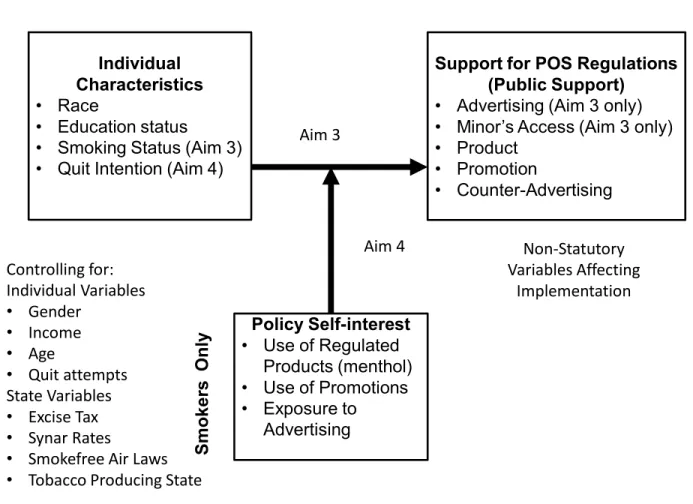
Mazmanian and Sabatier9,25 note public support as an important non-statutory variable affecting policy implementation but provide little guidance on how this occurs. As shown in Figure 3.3, I focus my study on determining which factors are associated with public support for POS regulations. This type of analysis is important to understand the extent to which social norms paradigms and entrepreneurial political approaches by public health advocates are (or could) promote the normative changes needed to support new regulations among different populations (Aim 3). Additionally, using interest group politics, the tobacco industry and industry-funded groups have often tried to promote opposition to tobacco control regulations through asserting ‘smokers’ rights.’42,160 However, smokers are not a monolithic group. Many regret starting to smoke,161 and up to 68% of adult smokers would like to quit.162 Understanding how policy self-interest may moderate the relationship of policy self-interest and level of support for POS regulations among smokers may help promote support for POS policies among those most affected by such regulations (Aim 4).
Figure 3.2 Study 2 Conceptual Model
Support for POS Regulations (Public Support)
• Advertising (Aim 3 only) • Minor’s Access (Aim 3 only) • Product • Promotion • Counter-Advertising Individual Characteristics • Race
• Education status
• Smoking Status (Aim 3) • Quit Intention (Aim 4)
Policy Self-interest
• Use of Regulated Products (menthol) • Use of Promotions • Exposure to
Advertising Sm ok e rs Only Controlling for: Individual Variables • Gender • Income • Age
• Quit attempts
State Variables
• Excise Tax
• Synar Rates
• Smokefree Air Laws
• Tobacco Producing State
Non-Statutory Variables Affecting
Implementation Aim 3
Aim 4
Rationale for each of the proposed self-interest moderators is below:
The relationship of race on support for a ban on menthol cigarettes moderated by
menthol smoking status. Studies have found relatively higher support for tobacco regulations
among African Americans vs. Whites.38,40,106 However, reasons for this pattern are unclear. Findings indicate that smokers (28.4%) have less support for a menthol ban than do never smokers (67.3%).106 Compared with Whites, Blacks were 1.85 times more likely to support a menthol ban (54.8% vs. 68.0%).106 Compared with menthol smokers, non-menthol smokers were 2.73 times (OR 95% CI 1.43, 5.21) more likely to support a ban on menthol cigarettes.106
However, prior studies have not looked at the interaction of race and menthol smoking status on support for a menthol smoking ban. Such an interaction is possible as