ACCELERATING SANITATION: A MIXED METHODS ASSESSMENT OF THE HEALTH MINISTRY’S ROLE IN DEVELOPING COUNTRIES
Jennifer Leigh Platt, MSPH, DrPH
A dissertation submitted to the faculty of the University of North Carolina at Chapel Hill in partial fulfillment of the requirements for the degree of Doctor of Public Health (DrPH) in the Department of Health Policy and Management in the Gillings School of
Global Public Health.
Chapel Hill 2012
Approved by:
James K. Bartram, PhD Nicole Bates, DrPH Sandra B. Greene, DrPH Dean Harris, JD
ABSTRACT
JENNIFER LEIGH PLATT: Accelerating Sanitation: A Mixed Methods Assessment of the Health Ministry’s Role in Developing Countries
(Under the direction of Sandra Greene)
Forty percent of the world’s population (2.5 billion) lives without adequate sanitation, such as a latrine at home (WHO, 2012). Because of poor sanitation, each year millions of people die and millions more get sick. Although sanitation is a public health fundamental, little research has been published regarding the public health role of the health ministry in developing countries in supporting sanitation. Furthermore, little research exists regarding how the health ministry influences sanitation use in developing countries.
This mixed methods dissertation includes a qualitative comparison of three
developing countries and a quantitative analysis of 83 developing countries. The qualitative multi-case comparison of Malawi, Nepal, and Sri Lanka uses a health sector functions framework to compare the level of primary health care (selective, transitional, and
iii
This research advances knowledge by: 1) using the health sector functions framework to evaluate health ministry engagement in sanitation, and 2) examining the relationship between health ministry engagement in sanitation (through PHC level) and increased sanitation use. The literature review and qualitative analysis provide initial evidence that incorporating sanitation into the health sector functions may institutionalize sanitation within the health ministry, which could increase a country’s resilience to natural disasters, prevent outbreaks, and provide support for needed health gains. However, the scope of the qualitative research is limited to the health ministry’s role in institutionalizing sanitation within the health ministry's policies and programs. This research does not consider the efforts of other ministries to institutionalize sanitation. The results show the need for more research
DEDICATION
v
ACKNOWLEDGEMENTS
I am so grateful to the numerous people who supported me in the pursuit of this doctoral work, without whom I could not have accomplished this degree. First, a gracious thank you to my committee, led by Sandra Greene, who provided excellent leadership and encouragement throughout the process. I am also deeply grateful to Jamie Bartram, who as the subject matter expert provided extensive guidance throughout the course of this research. Thanks also to Rich Thorsten, Nicole Bates, and Dean Harris for their thoughtful input. I'd also like to acknowledge the stellar faculty in the department of Health Policy and
Management at UNC's Gillings School of Global Public Health, who had the foresight to develop this nationally renowned program.
Next, I want to thank the research participants who provided candid input, as I could not have written this work without them. Also to the field consultant Han Heijnen, who tirelessly conducted field interviews, and to WaterAid, who funded a portion of this research. I'd also like to thank many others who helped with data analysis, graphic design, editing, moral support, and encouraging words at critical times, including Joe Keefer, Anil Thota, Tim Prinz, Julie Tenenbaum, Angela Brammer, Marissa Streyle, Nancy White, Pat Inman, and numerous others. I am also thankful for The Wild Women, a cadre of incredible women who stood beside me, nourished me, cheered me on, and inspired me to go beyond what I knew I could do, including Mary Lou Addor, Marie Cefalo, Rachel DiSantostefano, Cindy Sink, and Shelly Leslie.
vi
“Team August”—those who coached me and provided thoughtful input while I pushed for the finish line: Nancy McGee, Jen Rosenzweig, and Cecelia Fabrizio.
Finally, and most of all, I am deeply grateful to my family—my parents Mike and Bettye Platt, who have always encouraged me to reach for the stars but loved me
vii
TABLE OF CONTENTS
LIST OF TABLES ... ix
LIST OF FIGURES ... xi
LIST OF ABBREVIATIONS ... xii
Chapter I. INTRODUCTION ...1
Problem Statement ...1
Definitions...2
Benefits and Significance of this Study ...4
Research Questions and Hypotheses ...4
Organization of the Dissertation ...5
II. LITERATURE REVIEW ...6
Part I: Historical Precedents for Health Sector Engagement in Sanitation: Public Health as the Guiding Framework ...8
Part II: The Role of Sanitation within Primary Health Care, Environmental Health, and Public Health Strategies ...13
Conclusion ...26
III. CONCEPTUAL FRAMEWORK AND METHODS ...28
Study Design ...28
Mixed Methods Research ...31
Conceptual Framework: Health Sector Functions Framework ...32
Qualitative Methods: A Multi-Case Comparison of Three Countries ...33
Quantitative Methods: Analysis of Primary Health Care and Sanitation Use ...38
viii
IV. RESULTS ...44
Qualitative Research: A Multi-case Comparison of Three Countries ...44
Quantitative Analysis of PHC and Sanitation Use ...74
V. DISCUSSION ...88
Qualitative Findings ...89
Quantitative Findings ...95
Mixed Methods Integration of Qualitative and Quantitative Results ...97
Limitations and Sources of Bias ...99
Conclusion ...103
VI. PLAN FOR CHANGE ...105
Chapter Overview ...105
Part I: Application of the Health Sector Functions Framework ...105
Part II: Enhancements to the Health Sector Functions Framework ...110
Part III: Implications for Further Research ...115
APPENDIX A: Literature Review Keywords / Search Terms ...118
APPENDIX B: Health Sector Functions Article by Bartram and Platt ...129
APPENDIX C: Informant Interview Questionnaire Used for Qualitative Analysis...136
APPENDIX D: Quantitative Data Analysis Sources ...137
APPENDIX E: How Health Professionals Can Leverage Health Gains from Improved Sanitation Practices ...144
ix
LIST OF TABLES
Table
1. Health Sector Functions and Health Sector Roles ...7
2. Comparison of PHC Level and Sanitation Use in Case Study Countries ...34
3. Transcript Coding Scheme Sample ...36
4. Variables Used in the Study Database ...39
5. Countries Analyzed by Level of PHC in 1990 and 2000...42
6. Total Deaths and Disability-Adjusted Life Years (DALYs) for Sanitation-Related Diseases in Case Study Countries...48
7. Summary of Health Ministry Use of the Health Sector Functions in the Case Study Countries ...73
8. Changes in Mean and Median Improved Sanitation Use from 1990 to 2008 ...76
9. Correlation Between Country Variables from 1990, 2000, and 2008 and Percent Improved Sanitation Use in 1990, 2000, and 2008 ...78
10.ANOVA Addressing the Relationship Between a Country’s Level of Primary Health Care in 1990 and the Percentage of a Country’s Improved Sanitation Use in 2008 (n = 60) ...80
11.ANOVA Addressing the Relationship Between a Country’s Level of PHC in 2000 and the Percent Improved Sanitation Use in 2008 (n = 83) ...81
12.Measures of Central Tendency and Variation in Improved Sanitation Use from 1990 to 2008 ...82
13.Correlation Between Country Variables and the Percent Increase in Improved Sanitation Use from 1990 to 2008 (n = 83) ...83
14.ANOVA Addressing the Relationship Between a Country’s Level of PHC in 1990 and the Percentage-Point Increase from 1990 to 2008 in the Share of a Country’s Improved Sanitation Use (n = 60) ...84
x
16.Measures of Central Tendency and Variation Addressing the Relationship Between the Change in a Country’s Level of PHC in 1990 – 2000 and the Percentage-Point Increase in the Share of Improved Sanitation Use from
1990 to 2008 (n = 59) ...85 17.The Plan for Change ...110 18.Health Sector Functions and Health Sector Roles ...112 19.Expanded Definitions of Health Ministry Roles and Underlying National
xi
LIST OF FIGURES
Figure
1. Triangulation mixed methods research design. ...29
2. Illustration of the scope of qualitative and quantitative research. ...30
3. Qualitative research stages. ...33
4. Interviews by type and category. ...35
5. Quantitative research stages. ...37
6. Flow diagram of countries selected and analyses conducted on PHC and sanitation use. ...41
7. Mortality rate in children under 5 (per 1,000 live births): Three-country and worldwide trends. ...47
8. Sanitation usage comparison: 1990–2008. ...49
9. Word frequency analysis...54
10.Health sector functions to support environmental health and facilitators of function effectiveness. ...67
11.Sanitation use in 1990 compared to increased sanitation use, 1990 to 2008, compared to PHC Level in 1990 and 2000. ...87
12.Recommendations for integrating sanitation within health sector functions and relevant stakeholders. ...111
13.Health sector functions and facilitators with national support mechanisms. ...114
xii
LIST OF ABBREVIATIONS
ANOVA Analysis of Variance
CDD Control of Diarrheal Diseases Program (Nepal) DALY Disability-Adjusted Life Year
DHO District (Public) Health Officer (Nepal)
DWSS Department of Water Supply and Sanitation (Malawi)
ESA/INGO External Support Agency/International Non-governmental Organization FCHV Female Community Health Volunteer (Nepal)
FHW Family Health Worker GDP Gross Domestic Product
GFATM Global Fund for Aids, Tuberculosis, and Malaria GNI Gross National Income
HESP Hygiene Education and Sanitation Program
HIV Human Immunodeficiency Virus/Acquired Immune Deficiency Syndrome
HM Health Ministry professional (code used to identify interviewees) HMIS Health Management Information System
HR Human Resources
HSA Health Surveillance Assistant (Malawi) IMCI Integrated Management of Childhood Illness IRB Institutional Review Board
xiii
MoHP Ministry of Health and Population (Nepal)
MoIWD Ministry of Irrigation and Water Demand (Malawi) MPPW Ministry of Physical Planning and Works (Nepal) or
Ministry of Planning and Public Works (Malawi)
NHEICC National Health Education, Information and Communication Centre NGO Nongovernmental organization (also code identifying interviewees as
NGO representatives)
NHP National Health Plan of Sri Lanka, 2007 - 2016 NHSP Nepal Health Sector Plan
NTD Neglected Tropical Disease ORT Oral Rehydration Therapy
PHAST Participatory Hygiene and Sanitation Transformation PHC Primary Health Care
PHCs Primary Health Centers (Japan) PHI Public Health Inspector
PLWHA People living with HIV/AIDs
PM Prime Minister
SACOSAN South Asia Conference on Sanitation
SM Sanitation Ministry professional (code used to identify interviewees) SWAP Sector Wide Action Plan
UNC University of North Carolina
UNESCO United Nations Educational, Scientific and Cultural Organization UNICEF United Nations Children’s Fund
US United States of America
VDC Village Development Committee (Nepal) WaSH Water, Sanitation, and Hygiene
CHAPTER 1
INTRODUCTION
Problem Statement
Every day, more than 1 billion people defecate in the open. Another 1.4 billion people live without adequate sanitation, such as a latrine at home, and suffer from the resulting disease burden (WHO, 2012). Each year, poor sanitation causes millions of people to die, and infectious diseases morbidity affects millions more. Poor sanitation contributes to 4.6 billion annual cases of diarrhea globally (WHO, 2008a), and in 2008 diarrhea caused nearly 20% of deaths of children under 5 years old in Africa (Black et al., 2010). Childhood undernutrition, another consequence of inadequate sanitation, contributes to more than one-third of all child deaths (WHO & UNICEF, 2010). According to a recent systematic review, sanitation use reduces diarrhea prevalence by 30%, and as much as 60% in extremely poor sanitation environments (Norman et al., 2010). Around the globe, significant efforts are underway to find innovative solutions to increase sanitation use and decrease diarrheal diseases.
2
primary health care and progress in sanitation use in a cross-country comparison of 83 developing countries. If opportunities exist for health ministries to increase involvement in sanitation, then they can provide support for health and economic gains in developing countries.
Definitions
Sanitation Use. For this study, sanitation use refers to the safe management of human excreta, including storage and disposal. Sanitation use is fundamentally lacking in many developing countries and serves as the focal point of this investigation.
Sanitation-related health policies or health programs. These are health policies or programs that include sanitation components, such as requirements, education, or cross-sectoral collaboration. For example, a sanitation-related health policy would require health facilities to have functioning sanitation equipment. An applicable health program would provide education on the importance of sanitation use for people with sanitation-related diseases such as trachoma.
Health ministry. The health ministry is the unit of a country's government responsible for protecting and promoting public health.
Health professional. Individuals trained in the delivery of health or related services pertaining to the identification, evaluation and prevention of diseases.
Health sector. The health sector is the sector within the economy that deals with health-related issues, including the delivery systems, suppliers, and payers.
3
Health systems. Health systems include all the organizations, people, and actions whose primary intent is to promote, restore, or maintain health, including efforts to influence determinants of health and to direct health-improving activities (WHO, 2007). The term
health system also encompasses the information, financing, and governance strategies that support the delivery of prevention and treatment services. The main objective of a health system is to respond to people’s needs and expectations by providing services in a fair and equitable manner (WHO, 2000).
Institutionalize. To establish (something, typically a practice or activity) as a convention or norm in an organization, program, process, or culture.
Primary health care (PHC). The concept of primary, or preventive, health care (PHC) was defined at the World Health Organization’s Alma Ata Conference in 1978. Participating countries endorsed PHC as the key to attain “Health for All.” The Alma Ata convention created a holistic definition of PHC, which includes: “education concerning prevailing health problems and the methods for preventing and controlling them…[including] an adequate supply of safe water and basic sanitation” (WHO, 1978). PHC ranges in scope from selective to transitional to comprehensive. Selective PHC systems focus primarily on immunizations and other targeted, prevention-oriented interventions. Comprehensive PHC systems promote and provide a full complement of PHC services, including immunizations, contraceptive services, skilled birth attendants, prenatal and antenatal care, and
4
care, but not emphasize contraceptive services The case study countries include one of each PHC type: selective (Nepal); transitional (Malawi); and comprehensive (Sri Lanka).
Developing country. A developing country is a country with low income or lower-middle income levels of gross national income per capita (World Bank, 2011).
Benefits and Significance of this Study
Health professionals have many reasons to promote sanitation use as an essential component of human health. For example, proper excrement disposal decreases diarrhea and mitigates diseases such as schistosomiasis and trachoma (Mara et al., 2010). The burden from these diseases in developing countries is substantial. Further, people with sanitation-related diseases impose high costs on health care systems (Hutton et al., 2007).
Prior research, as discussed in Chapter 2, provides scant analysis of health ministry activities to promote and facilitate the use of sanitation. Comparisons between countries using different levels of PHC and sanitation use can identify effective methods and opportunities. As a result, countries could institutionalize their approach to sanitation and improve sanitation use, further progress towards meeting Millennium Development Goal (MDG) Target 7c1, and increase health gains.
Research Questions and Hypotheses
The research focused on the question,
“How Does Health Ministry Engagement in Sanitation Influence Sanitation Use in Developing Countries?”
To investigate the relationship between health ministry engagement in sanitation and sanitation use, I selected a mixed methods approach. Interviews of health and development
1 Target 7c: To reduce by 50% the proportion of the population in 1990 without access to sanitation (UNDP,
5
professionals in three countries provided the basis for the qualitative research. The
quantitative analysis examined the relationship between a country’s use of primary health care and sanitation use in a large sample of developing countries. Chapter 3 provides further rationale for using the mixed methods approach and an explanation of the methods used.
The qualitative research explored the following sub-question:
Q1. What are health ministries in developing countries doing to include sanitation within health sector functions?
The quantitative research tested two hypotheses:
H1. Developing countries with higher level primary health care delivery systems in 1990 and 2000 have increased sanitation use in 2008.
H2. Higher levels of primary health care is associated with increased progress in sanitation use in developing countries from 1990 to 2008.
Organization of the Dissertation
CHAPTER 2
LITERATURE REVIEW
Recent literature asserts that health professionals and, indeed, the entire health sector, play important roles in influencing the use of sanitation (Bartram, 2008; Cronin & Pond, 2008; Bartram & Platt, 2010; Bartram & Cairncross, 2010). Yet little is known about what health ministries do to promote sanitation use, including addressing sanitation use within health ministry policies and programs. Approaches used by health ministries to promote sanitation use can involve education (of both health professionals and the general
population), health policies such as requirements for installation and maintenance in health facilities, and surveillance monitoring to mitigate outbreaks.
This literature review explores what health sectors, ministries, and professionals do to promote sanitation. Sanitation outside the health sector is not within the scope of the
literature review. The discussion includes examples found in nearly 40 countries, primarily in developing countries. Key terms are defined in Chapter 1. To search the literature, the database search terms query (see Appendix A) identified over 300 abstracts. After applying the inclusion and exclusion criteria (see Appendix A), I reviewed 58 papers, 55 of which were considered appropriate for the literature review.
Since the advent of public health, the health sector has played an important role in sanitation. As a result of a divergence between health and environmental functions,
7
include promoting sanitation use. Instead, policymakers often place sanitation programs within engineering-oriented agencies (Heller, 2009). Despite the potential compatibility between the health and sanitation sectors, health professionals do not seem to recognize how each sector may benefit the other. They focus on alleviating diseases and effects caused by diseases rather than environmental sources of disease (Cornell, 1996), and most do not consider sanitation to be their responsibility (Bartram & Platt, 2010).
To address the environmental health-related gaps in health sector roles, Rehfuess et al. (2009) developed a framework (Table 1) that encompasses six functional areas needed to facilitate progress towards environmental health gains: (1) norms and regulations (2)
intersectoral policy, (3) health facilities, (4) disease-specific and integrated programs, (5) disease outbreaks, and (6) impacts, threats and opportunities. Using this framework, Bartram
Table 1. Health Sector Functions and Health Sector Roles
Function Corresponding Health Sector Roles
1.. Norms and Regulations ● Develop health-protecting standards and regulations appropriate to the country’s social, economic, and environmental circumstances ● Monitor implementation and contribution to population health 2. Intersectoral Policy and
Coordination ● Build the capacity to track and influence major policies that impact health ● Employ formal mechanisms for health impact assessments
● Establish effective multi-disciplinary collaboration 3. Health Facilities ● Set standards for health care facilities
● Budget for structural improvements and capacity-building to encourage staff behavioral changes
● Enforce compliance through an independent oversight function 4. Disease-Specific and
Integrated Programs ● Integrate environmental determinants (e.g., sanitation use) into health professional curricula ● Incorporate environmental health actions into health programs ● Work with partners to raise awareness
5. Outbreaks ● Maintain expertise to advise on and conduct outbreak investigations ● Test, implement, and revise procedures, in cooperation with other
actors
● Update regulations and policies accordingly 6. Impacts, Threats, and
Opportunities ● Seek evidence for causal associations between environmental factors (e.g., absence of sanitation) and health ● Assess potential values and harms of technology innovations and
8
and Platt (2010) reviewed health ministry roles in providing safe water, sanitation, and hygiene. For example, health care facilities can provide access to reliable sanitation, health curricula can include materials that address the cumulative adverse impacts of poor
sanitation, and patient protocols for diseases associated with poor sanitation could include preventive measures. No known research has used the health sector functions framework to analyze what specific countries do to include sanitation within the health sector functions.
This dissertation furthers recent research by using the health sector functions framework to analyze three country case studies. The framework provides a set of useful benchmarks for measuring and quantifying health sector involvement in sanitation, as well as other public health functions. This research could help countries identify gaps within their own health ministries and governments to support sanitation use. This chapter reviews the literature in two relevant areas of inquiry:
Part I: Historical precedents for health sector engagement in sanitation: public health as the guiding framework
Part II: The role of sanitation within primary health care, environmental health, and public health strategies
Part I: Historical Precedents for Health Sector Engagement in Sanitation: Public Health as the Guiding Framework
9
is reflected in the experience of a number of developing nations. Several countries integrated sanitation early on into their public health approaches, as shown in Sri Lanka, Japan, Cuba, Costa Rica, Mexico, and Yakima, Washington in the United States.
Sri Lanka’s historical epic of Sinhala kings, the Mahavamsa, describes sanitary
measures taken as early as the 4th century BC to safeguard health when King Pandukabhaya appointed workers to clean the streets and to clear the sewers. In recent history, public health responsibilities in Sri Lanka were granted to local councils upon adoption of the Municipal Councils Ordinance No. 17 of 1865 in Colombo, Kandy, and Galle. Smaller areas were entrusted to the care of Sanitary Boards via the Small Towns Sanitary Ordinance of 1892
(CCPSL, 2001). In 1925, as awareness of the importance of public health increased, curative and preventive services were brought under the control of a Director of Medical and Sanitary Services. Sri Lanka’s approach to preventive health care was established in 1926 upon inauguration of the Health Unit system, first established in Kalutara (DeSilva, 2007; CCPSL 2001). Dr. SF Chellappah (Director of Medical Services from 1942-1948), recognizing the Health Unit system’s significance, noted that this “will become a red-letter day in the history of the island” (CCPSL, 2001). Health Unit responsibilities, which integrated sanitation, included the following:
• Carry out general and health surveys in the various problems in the area • Collection and study vital statistics in the area
• Health education
• Investigate and control infectious diseases • Maternal and child health
10 • Rural and urban sanitation
Sri Lanka’s Health Unit system eventually covered the entire island; as discussed in Chapter 4, this system remains today with few modifications (CCPSL, 2001).
Japan adopted its first Public Health Center Act (PHCA) in 1937, with an update in 1947 to include administrative roles in environmental health. The Community Health Act of 1994 authorizes local government authorities to oversee public health via primary health centers. Japan’s primary health center network targets several sanitation-related tenets: environmental sanitation including sewage and waste disposal, community health education, collecting community health-related statistics, prevention of infectious diseases, laboratory tests on sanitation/environment, and health facilities standards. (Health and Welfare Statistics Association, 2010, as cited in Katsuda et al., 2011). Japan appears to have “institutionalized” its approach to sanitation by including it within most of the health sector functions.
11
developed countries. PHC efforts included interventions for diseases related to sanitation (e.g., diarrhea and helminthiases) and health worker household visits to disadvantaged rural and urban areas. In addition, the Ministry of Health established a Central Sanitary Office (Rosero-Bixby, 1991).
In addition to the long-term sustained sanitation initiatives described, other public health efforts to include sanitation were implemented in response to outbreak-driven crises. The case of Yakima, Washington, US provides an early 20th century example and Mexico a late 20th century example.
A typhoid outbreak in the US in the early 1900s in Yakima, Washington presents a “prime example of the nation’s problems with poor sanitation and public failure to link these conditions with disease” (Casner, 2001). With a mortality rate five times the national average due to poor sanitation, health professionals spearheaded a multi-faceted “Do It Now”
12
worth of local actions and proved the importance of changing individual habits” (Casner, 2001). Typhoid rates decreased by 90% within the first year (U.S. Congress, 1914 as cited in Casner, 2001).
More recently, a national effort in Mexico in the late 20th century illustrates a recent widespread effort to mitigate cholera that commenced upon its re-appearance in the western hemisphere.In January 1991, the Mexican government deemed cholera’s appearance in Latin America a national security problem. To prevent a health crisis, the health ministry mounted a massive intersectoral collaboration initiative, including health (e.g. epidemiological surveillance, laboratory network and patient care) and other sectors (public education and basic sanitation). This experience can be “considered as the operationalization of a new public health system spanning multisectorial activities, involving community participation, political will and with impact on public health and economic issues” (Sepúlveda et al., 2006).
Due to the multi-pronged efforts, Mexico’s cholera incidence between 1991 and 2001 remained less than 17.9 per 100,000 inhabitants and impacted primarily rural areas. Control strategies decreased diarrheal mortality for children under 5 and prevented tourism or economic consequences. The population benefited not only from acquisition of knowledge about preventive measures, but also from modification of risky practices and from
reinforcement of city and municipal drinking water supplies (Sepúlveda, et al., 2006). Despite the historical precedents described for the public health approaches used to combine the sanitation and health sector functions, in the mid-20th century a general divergence between health and sanitation occurred. Roles and responsibilities related to environmental health concerns such as sanitation shifted into the environment or
13
facets of public health, medicine and environmental pollution, diverged. Over time, medical officers’ roles shifted from prevention to treating diseases (Cornell, 1996). Health inspectors became public health officers in the mid-1950s and then environmental health officers in the mid-1970s, often with a primary focus on food inspections (Cornell, 1996). The evolution of these positions mirrored changes in the public focus on health issues and mirrored the medicalization of health in some countries (Starr, 1982).
Today, global health initiatives rarely target sanitation. The Millenium Development Goals (MDGs) target both health and sanitation but connections between the two are rare. Mostly in response to the MDGs, over 100 global health initiatives have launched at the beginning of this century. Most of these initiatives focus on controlling specific diseases: only a small number target sanitation-related programs, such as diarrhea control (World Health Organization Maximizing Positive Synergies Collaborative Group, 2009).
Part II: The Role of Sanitation within Primary Health Care, Environmental Health, and Public Health Strategies
At the same time responsibility for sanitation was generally moving away from the health sector in the mid-seventies, the Alma Ata Declaration, which included preventive measures such as sanitation, was adopted in 1978 (WHO, 1978). The Alma Ata Declaration on Primary Health Care called for “all governments, all health and development workers, and the world community to protect and promote the health of all people of the world.”
Preventive interventions such as sanitation were an essential part of Alma Ata’s vision. Specific excerpts from the declaration included:
14
• Tenet #7.3: [PHC] includes at least: education concerning prevailing health
problems and the methods of preventing and controlling them;…[and] an adequate supply of basic sanitation;
• Tenet #7.4: [PHC] involves, in addition to the health sector, all related sectors and aspects of national and community development, in particular [sectors such as]
public works;
• Tenet #8: All governments should formulate national policies, strategies and plans
of action to launch and sustain primary health care as part of a comprehensive national system and in coordination with other sectors. To this end, it will be necessary to exercise political will, to mobilize the country’s resources and to use available external resources rationally;
Spurred by the Alma Ata Declaration, many countries began to implement PHC (Rohde et al., 2008). Some countries, such as Sri Lanka, responded by revising their existing approaches to PHC (CCPSL, 2001). However, within a year, a seminal article by Walsh and Warren (1979) proposed the use of selective interventions to enable rapid achievement of high use for practices such as immunizations and family planning, prioritized by
cost-effectiveness (Walsh & Warren, 1979). Debate in the global health community ensued about whether countries should focus on selective or comprehensive interventions. Donors
15
implementing PHC, many countries continued the selective approach into the 21st century (Lawn et al., 2008). Furthermore, Walsh and Warren’s cost-effectiveness calculations (1979) were later shown to be misleading because they used gross costs rather than net costs. For example, the calculations underestimated health impacts because they looked at single diseases. Consequently, the results were biased against interventions such as sanitation that produced health gains from multiple diseases (Briscoe, 1984). Later research showed sanitation interventions to be among the most cost-effective available. For example, sanitation promotion was shown to avert 90 DALYs per $1,000USD spent as compared to one to three DALYs averted per $1,000USD for HIV/AIDS antiretroviral therapy
(Laxminarayan, Chow, and Shahid-Salles, 2006). Although the study did not consider sanitation construction costs, the health sector does not usually hold responsibility for construction expenditures (Bartram and Cairncross, 2010).
In spite of a general increased focus on selective interventions, some countries continued to implement or to contemplate a comprehensive approach to PHC. After gaining independence, Namibia “inherited a system of medical services rather than health services. It was curative oriented and waited for the sick to attend” (Iyambo, 1992). Upon the
16
After deciding to implement PHC in the early nineties, Nepal asked Japan to develop and evaluate a pilot maternal and child health (MCH) center in Kavre District, modeled after Japan’s primary health centers, that integrated health education, maternal and child health (MCH) services, family planning, immunization, control of endemic diseases (e.g., diarrhea and malaria), and basic sanitation (Kuratsuji, 1993). Karungula (1992) asserts that the needs of Tanzania’s citizens (such as sanitation) can be met “only by maintaining primary health care as a major part of the country’s development strategy.” Botswana’s health ministry conducted a pilot integration of specialized interventions into PHC network – with health education and sanitation recognized as core components. The pilot project also included latrine installations and monitoring by a health inspector; however, quantitative results were not provided (Ali et al., 1989).
Along with transitioning their health systems to a PHC approach, many countries recognized that health professionals needed training to use preventive approaches, which would include encouraging sanitation use. In addition to understanding preventive medicine, health workers should also understand how to educate their patients (Grant, 1989).
Health education for and by health professionals
17
professionals not only how to treat disease but also how to promote health, stating that less than 1% of the medical education is related to community health, and health education. He advocated that medical schools needed to teach students to promote health in tandem with treating disease, that students should experience different settings (e.g. rural health and urban centers), and that primary health oriented curricula must include community training (Grant, 1989).
The literature search revealed several country systems that provide primary health education for health professionals. In the eighties Tanzania’s Ministry of Health developed a continuing education program that included PHC training, available via distance learning and institutional settings. Distance learning PHC units included environmental sanitation and diarrheal diseases. However Tanzania’s continuing education program suffered from lack of funds, lack of qualified staff, and inadequate support (Pemba & Ndeki, 1994)
Development of health professional training, and integrating service and teaching, were top priorities of Nicaragua’s PHC-driven Unified National Health System, established in 1979. Medical residents could obtain formal training in primary care specialties.
Brigadistas, volunteer health personnel, played a vital role in educating communities and implementing sanitation campaigns. Principal elements of Nicaragua’s new system, such as personnel training and community-oriented primary care, were modeled after the Cuban health system (Braveman & Roemer, 1985).
18
Health education to increase sanitation use (Health Sector Function #4)
Integrated health and education have long served as key components of successful programs to increase sanitation use. Health workers play a vital role in disease management by educating their communities. In Pakistan, over 100,000 Lady Health Workers (LHWs) provide the backbone of the country’s primary health-care (PHC) system. When visiting households, health workers cover a range of concerns related to infectious disease control, including sanitation use. Although specific increased sanitation use was not documented, the LHW programme showed improved health outcomes through reductions in childhood diarrhea. In follow-up evaluations, populations receiving LHW visits had fewer incidents of diarrhea than populations not receiving visits (Barzgar et al., 1997). Similarly, researchers of diarrheal disease interventions in Mexico compared the effects of oral rehydration therapy, increased immunizations, clean water programs, and increased sanitation use between 1978 and 1993. They concluded that improved sanitation produced the greatest reduction in under-5 mortality (Gutierrez et al., 1996). As the authors asserted,
…the only way to change general morbidity and mortality is to invest in holistic public health programs to include both education and sanitation. Furthermore, emphasizing only the potential of oral rehydration therapy (ORT) to reduce diarrheal disease mortality will distract attention from investing in health, more specifically, in sanitation. (Gutierrez et al., 1996, p. 195)
As both of these examples did not describe rigorous methods, more research would be needed to confirm the conclusions reached by Barzghar and Guiterrez et al.
19
commenced in 1985; community members provided assessment, monitoring and education. From 1979-1996 170,496 latrines were installed. Success factors included the use of an integrated health and hygiene education package (Saywell, 1998).
The community health development paradigm, also known as a horizontal approach, emphasizes local community involvement to determinants of health such as sanitation use. Community health clubs (CHC) are reported to provide a cost-effective mechanism to create both a strong demand for sanitation and a culture of health. Fifteen years of pilot projects in Zimbabwe produced substantive results (Waterkeyn & Cairncross, 2005; Waterkeyn, 2010): after health workers provided six months of weekly hygiene promotion sessions, use of sanitation increased substantially (up to 100%). Due to successes in nearby countries, Rwanda’s Ministry of Health in 2010 initiated plans to use CHCs in every village with more than 15,000 residents to address sanitation and other community health concerns. The CHC approach has recently spread to Asia, where the government of Vietnam is establishing CHCs in 5 districts (Waterkeyn, pers. comm. 2011).
Ethiopia’s health extension worker program, launched in 2005, increased PHC delivery from 77% to 90%, with over 30,000 health extension workers trained in disease prevention and rural health promotion. Environmental hygiene and sanitation are one of the four subprograms (Banteyerga, 2011). Use of improved sanitation increased from 14% in 2005 to 21% in 2010. Open defecation decreased from 61% in 2005 to 46% in 2010 (WHO/UNICEF JMP, 2012).
20
Health facilities (Health Sector Function #3)
Evidence of poor sanitation in developing country health facilities exists from the
mid 19th century when Florence Nightingale (1863) stated, “What would be thought in [an
England hospital] without a water-closet, or bath, or means of personal cleanliness? Such a
hospital would be considered as a mere makeshift.” Although sanitation use in health
facilities is paramount to health, no studies found in this review presented discussion and
evidence of current policies related to sanitation in health facilities. Conditions in many
developing country health facilities are dire. As Cronin and Pond (2008) assert, “the health
sector can play a pivotal intermediate role between [health and sanitation] but too often it is
not in a position to take the higher ground due to inaction or inability to prioritize water and
sanitation in even its own most basic facilities.” A cross-case comparison found that
conditions in US Civil War hospitals 1860 are better than present day Sierra Leone (2008),
including adequate sanitation (Crompton et al., 2010).
To mitigate a typhoid outbreak in a Singaporean hospital, stringent measures included proper flushing and disinfection of toilets (Goh et al., 1992). Papua New Guinea’s National Health Plan 1991-1995, which recognized that clear performance guidelines would support quality care and proper planning, primary health service standards require community health workers’ homes to have an external tank and a latrine (National Health Plan 1991-1995 as cited in Garner & Thomason, 1993).
21
Outbreaks (Health Sector Function #5)
Some evidence exists that sanitation-related outbreaks can be lessened in the presence of a strong preventive health network. After Myanmar’s cyclone Nargis in 2008 – the country’s largest natural disaster on record – health services combined with prevention and control measures to mitigate outbreaks. Although incidence of diarrhea, dysentery and ARIs increased, other disease incidence rates and mortality rates remained stable, and disease spikes returned to normal by 2009 (Myint et al., 2011).To avoid outbreaks after the 1995 volcanic eruption in Montserrat, health workers monitored shelter health practices daily and used mass media education (Cooper & Tuitt, 1998). After natural disasters Japan’s primary health center network provides the means to administer crisis response (Fujimoto, 2009 as cited in Katsuda, et al., 2011).
Earlier discussion shows how health professionals can respond en masse to strengthen sanitation use in response to outbreaks. Substantive disease reductions were achieved in the Yakima outbreak, and the incidence of cholera was mitigated in Mexico with a large scale, multi-sectoral sanitation campaign. Recent literature shows increased attention to integrating sanitation into disease-specific interventions.
Sanitation and disease-specific and integrated interventions (Health Sector Function #4)
22
confirming that chemotherapy alone would not break the cycle of schistosomiasis
transmission in high-risk communities in Egypt, researchers explored the use of integrated approach via PHC to increase sanitation use. Although large-scale chemotherapy is an affordable and feasible strategy, integrated control strategies provide permanent
improvement in sanitation to address endemic locales (Curtale, 2010). In a case-control study to evaluate schistosomiasis mitigation in China, routine chemotherapy was supplemented by new interventions including sanitation. Infection rates decreased from 11.3% to 0.7% in one village and from 4.0% to 0.9% in the other (each p < .001). As a result, China’s national schistosomiasis control strategy now embraces comprehensive control measures (Wang et al., 2009).
Trachoma is another disease for which opportunities to integrate sanitation remain largely neglected by the health sector (Montgomery and Bartram, 2010). To combat trachoma, the Amhara (Ethiopia) Regional Health Bureau developed low-cost materials to promote household latrine construction and use, and to train local leaders and health extension workers. Ngondi et al. (2010) describe the use of political support, local policy, and community education to increase household access to latrines rose from 6% to over 50% within one year. Within three years, over one million household latrines were constructed in the region. Follow-up research to explore the exceptional increase in sanitation yielded several findings. First, a substantive predictor of latrine ownership was participation in the health education sessions. Second, as in the Yakima and Mexico examples, a multi-pronged effort that included intense community mobilization and local latrine requirements led to a substantial increase in latrines (Ngondi et al., 2010). By making latrine ownership a
23
also added an element of urgency and legitimacy. Follow-up research showed high prevalence of latrine use more than three years later (Emerson, 2005; Golovaty, 2009).
In a typhoid outbreak in Myanmar, researchers determined that risk factors included pervasive poor latrine conditions. Mitigation measures used by the Disease Control
Implementing Committee included latrine repair, improved surveillance, and education (Aye & Siriarayapon, 2004). A pilot school helminth control program in Egypt recommended using a gradual, step-by-step approach to integrating disease control efforts. The authors also emphasized that health staff and participant communities should assist in the development of educational materials (Curtale et al., 2003).
In numerous articles health ministry staff recommended sanitation improvements to alleviate disease impacts, including shistosomiasis control in Uganda (Kazibwe et al.,, 2010); to mitigate shigellosis in Thailand, MOH staff recommended improved sanitation and health education (Chompook et al., 2006); to reduce and manage trachoma risk in Sierra Leone, NTD staff recommended 36,000 latrines (Koroma et al., 2011); to control NTDs2 in Morocco the authors advocated an integrated approach including sanitation to control transmission to prevent re-emergence (Smits, 2009); to manage diarrhea and upper respiratory infections in Sembabule district Uganda (Mbonye, 2004), the researchers recommended sanitation and health education. An integrated approach and minimal operational costs are believed to contribute to the continued viability of parasite control in the Seychelles (Albonico et al., 1996). In addition to growing evidence for long-term effectiveness, integration can reduce costs and relieve human resource contraints (Smits, 2009).
2 Neglected tropical diseases such as soil-transmitted helminthiasis, shistosomiasis, lymphatic filariasis,
24
As discussed earlier, many current global health initiatives center around disease-specific programs, providing the opportunity to integrate sanitation within existing efforts. In addition to vertical interventions, horizontal interventions used in the late 1900s also offer an opportunity to address sanitation. Consideration of these historical program approaches merits consideration.
Other integrated programs
Other integration efforts used family planning as vehicle to promote sanitation. Umati, which pioneered nonprofit voluntary family planning activities in Tanzania in the late fifties, led efforts to support gaps in Ministry of Health MCH programs through an integrated project designed to address parasite control and nutrition. By responding to community needs, the organization found a means to implement activities such as sanitation promotion. This was accomplished by soliciting community participation, which also facilitated
community ownership. A local steering committee oversaw program efforts (Mamuya, 1985; Rukonge, 1987). Similar integration efforts were carried out by International Planned
Parenthood Federation in Zambia (IPPF, 1989),
Sanitation within public health and environmental health frameworks
In addition to a primary health care-oriented approach to sanitation, a number of countries use a public health or environmental health focus to incorporate sanitation within health sector functions. The U.S. Institute of Medicine‘s seminal report, The Future of the Public’s Health in the 21st Century (1988) recognizes three core functions of public health: assessment, policy development, and assurance.
25
• POLICY DEVELOPMENT – information gathered from assessment used to develop local policies. It includes consideration of:
- Political, organizational and community values
- Information sharing, citizen participation, compromise and consensus building. • ASSURANCE – making sure that needed health services and functions are available.
Sanitation crosses all three functions. Countries such as India have recently initiated a public health approach to advance sanitation-related efforts. Recent initiatives to address poor sanitation in India are based on public health precepts. Chauhan (2011) asserts an urgent need to address India’s “triple burden of disease” from communicable, non-communicable, and emerging infectious diseases must be addressed through an effective public health service to deal with determinants of health such as sanitation. Chauhan blames part of the existing disease burden on inadequate national standards for public health education; however, there has been a recent increase in public health courses in medical colleges. He also recognizes the importance of prevention:
Focusing on clinical services while neglecting services that reduce exposure to disease is like mopping up the floor continuously while leaving the tap
running” (Chauhan, 2011).
In an attempt to address poor health services, India is currently revitalizing its primary health care infrastructure through the National Rural Health Mission (NRHM). The NHRM focuses on providing community-level health care through active engagement of local participants. District health planning now includes integration with broad determinants of health such as sanitation (Dingra and Dutta, 2011).
26
development, Egypt’s Ministry of Health and Population crafted a national environmental health strategy at the beginning of the 21st century. In further recognition of its importance, environmental health was one of four main objectives for the Ministry’s Healthy Egyptians Initiative (Anwar, 2003).
In Peru explosive growth and urbanization depleted the government’s capacity to provide public and environmental resources. As a result, the Ministry of Health established the Directorate of Environmental Health (DIGESA), and created the Urban Environmental Health Project to empower communities to mitigate local hazards (Baffigo et al., 2001). In addition to community ownership, sufficiently-trained human capital comprises another critical piece within environmental health programs.
Palau’s health ministry understood the understood the value of an environmental health approach: ”Environmental health can no longer be on the back burner…begging for survival from year to year…as a hindsight activity.” To address the lack of human resources capacity in environmental health, the ministry created an environmental health certificate program and an incentive-based career ladder (Sengebau-Kingzio, et al., 2005).
Conclusion
27
multi-pronged efforts that offer a means to institutionalize sanitation within health ministry functions.
The review reveals many gaps in understanding about what health ministries do to include sanitation within health sector functions. Much of the research presented is
descriptive. While many of the articles described characteristics of individual functions, such as health facilities (function #3) or disease-specific or integrated programs (function #4) , none reviewed or even mentioned activities that pertained to all six functions. Other than the reviews by Rehfuess et al., (2009) and Bartram and Platt (2010), no articles included a theoretical framework to analyze health sector engagement in sanitation, thus constraining the ability to examine sanitation promotion by the health sector in a holistic manner. Additionally, only a few articles provided concrete data on increased sanitation use due to health ministry interventions, and none used a rigorous approach. Thus, the need exists for greater attention to health sector opportunities to impact sanitation. This research seeks to explore what health ministries in developing countries do to include sanitation within health sector functions and how health ministry engagement influences sanitation use in developing countries.
CHAPTER 3
CONCEPTUAL FRAMEWORK AND METHODS
Study Design
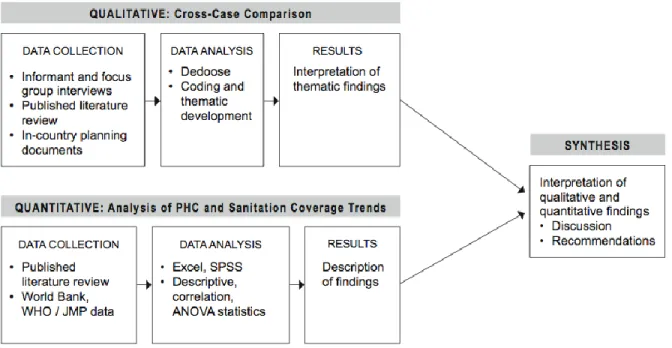
This study uses a triangulation mixed methods design to investigate the relationship between health ministry engagement in sanitation and sanitation use (Figure 1). The purpose of combining the qualitative and quantitative research was to compare health ministry engagement in sanitation with an analysis of the relationship between primary health care and sanitation use, and then to form a synthesis interpretation of the joint findings. The two methods used here are designed to complement each other. Quantitative research summarizes large amounts of data to draw statistical generalizations while qualitative research provides descriptive details to better understand complex phenomena (Trochim, 2005). The qualitative multi-case comparison provides a micro, or close-up, examination of what three health ministries in developing countries do to incorporate sanitation within health sector functions. Informant interviews provided first-hand knowledge and perspectives on programs and policies used to facilitate the use of sanitation.
29
Figure 1. Triangulation mixed methods research design.
(Adapted from Creswell & Plano Clark, 2007)
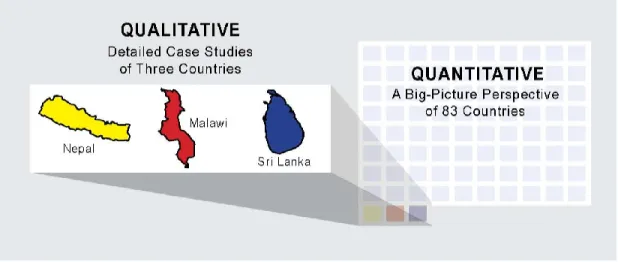
Preventive health measures such as sanitation may be included in primary health care-focused programs. To analyze the relationship between PHC and sanitation, the quantitative analysis provides a macro, or large-scale, assessment of the relationship between level of primary health care and sanitation use. When combined, these two perspectives enable the researcher to compare and contrast large-scale trends to country-specific examples (Figure 2). The country-specific examples will provide the opportunity to probe in depth the use of sanitation within health sector functions, using informant interview data. These data are not accessible through quantitative data or the literature and provide unique, firsthand
30
Figure 2. Illustration of the scope of qualitative and quantitative research.
The qualitative component of the study was a multi-case comparison of what health ministries do to include sanitation within the health sector functions. The multiple case study approach is the study of multiple cases within a larger phenomenon, defined as the "quintain" (Stake, 2006). The quintain for this study is health ministries in developing countries. The multi-case approach helps the researcher understand the quintain's complexities (Stake, 2006). Emphasizing the need for commonality of individual cases than can be bound together, Stake (2006) notes that multi-case comparison studies are “studies of
31
In contrast to the descriptive detail provided by the qualitative research, the
quantitative research provides a statistical snapshot of the relationship between the level of primary health care and sanitation use. Use of the primary health care variable allows comparison on one aspect of a health ministry’s commitment to sanitation, with country-aggregated data. The quantitative investigation used health program indicator data, including coverage, economic and government variables from the World Bank, UNESCO, and
UNICEF, and sanitation use data from the World Health Organization/UNICEF Joint Monitoring Program.
This investigation builds on recent health sector functions research (Rehfuess et al., 2009) by conducting a multi-case comparison of what three developing country health ministries do to incorporate sanitation into health sector functions using the health sector functions framework. This framework provides a holistic approach to assess use of the six functions, and to determine gaps. This investigation also builds on research by exploring the relationship between levels of PHC and sanitation use. Products of this research will be a series of papers for publication and policy briefs for health ministers and policymakers in developing countries.
Mixed Methods Research
32
design challenges and using consistent methods (Creswell & Plano-Clark, 2007). I applied these criteria to establish rigor throughout the investigation.
Conceptual Framework: Health Sector Functions Framework
Rehfuess et al. (2009) proposed six health sector functions needed to address environmental health issues: (1) setting and overseeing the implementation of health-protecting norms and regulations; (2) ensuring that environmental health issues are adequately reflected in intersectoral policy development and implementation; (3)
incorporating environmental health in disease-specific and integrated health programs; (4) practicing environmental health in health care facilities; (5) preparing for and responding to
outbreaks of environment-mediated diseases; and (6) identifying and responding to
emerging threats and opportunities for health (Rehfuess et al., 2009). Table 1 (p. 7) lists the health sector functions and health professional roles within each function. The six health sector functions provide the basis to examine how health ministries include sanitation. For a detailed discussion of the health sector functions and how they relate to sanitation, see How health professionals could lever health gains from improved water, sanitation and hygiene
33
Qualitative Methods: A Multi-Case Comparison of Three Countries
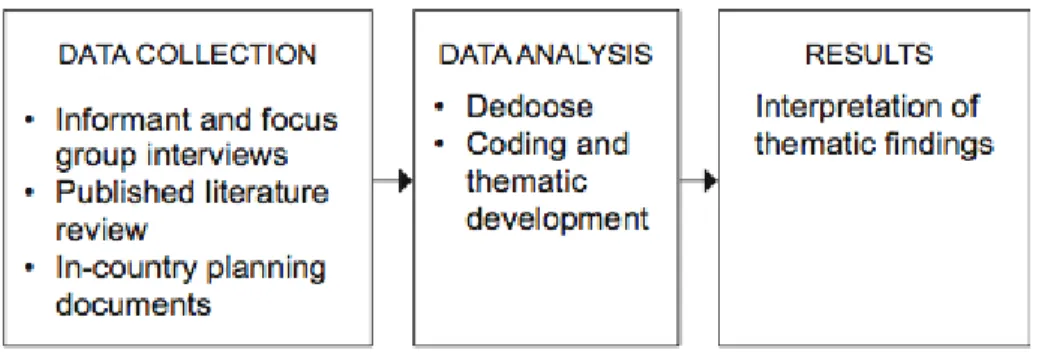
The qualitative component of this study (Figure 3) is an examination of what three
developing country health ministries do to incorporate sanitation into health sector functions.
Figure 3. Qualitative research stages.
(Adapted from Creswell & Plano Clark, 2007)
Data collection
The qualitative data collection first began with selecting three case study countries for the multi-case comparison. Next I determined the study population. Then, I reviewed
literature and in-country planning documents to compare results.
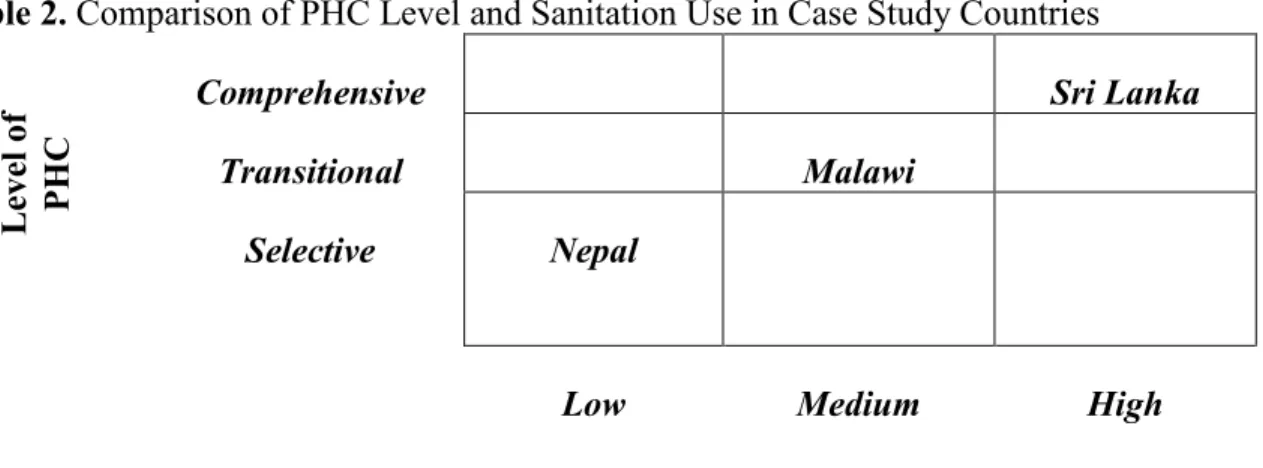
Country selection. The case study countries were a subset of countries used in the research study Institutional Arrangements for Sanitation: What Can and Should the Health Sector Do? conducted by the UNC Water Institute in 2010. To select countries, the original study used a cluster analysis (adapted from Crocker, 2010) to group countries with common characteristics regarding various aspects of sanitation and health systems, such as governance structures, usage of primary health care and sanitation use. Other selection factors included availability of research subjects and the extent of current intersectoral collaborations between sanitation and health. The countries selected for the current analysis were Nepal, Malawi, and Sri Lanka (Table 2): the three countries exhibit different levels of health ministry
34
levels of sanitation use (ranging from low to high). As shown in Table 2, Nepal’s health ministry has less engagement in primary health-related activities, whereas Malawi and Sri Lanka have a higher involvement in prevention. Sanitation use is less in Nepal (31%), moderate in Malawi (56%), and highest in Sri Lanka (91%).
Table2. Comparison of PHC Level and Sanitation Use in Case Study Countries
Comprehensive Sri Lanka
Transitional Malawi
Selective Nepal
Low Medium High
Percent Sanitation Use
Study population. Informant interviews and focus group interviews conducted during
the 2010 Water Institute study provided the qualitative data for this study (see Appendix C). Interview participants were health professionals, sanitation professionals, development professionals from external support agencies (ESAs), international nongovernmental organizations (NGOs), and local NGOs from Nepal, Malawi, and Sri Lanka, as shown in Figure 4. Of the 65 interviewees, 19 (29%) were staff members of national health ministries, 13 (18%) were from national sanitation ministries, 12 (18%) were from in-country NGOs, and 21 (32%) were from external support agencies and international NGOs. Fifteen interview and focus group sessions (42%) were conducted in Malawi, fourteen (39%) in Nepal, and seven (19%) in Sri Lanka.
L
eve
l of
35
Figure 4. Interviews by type and category.
Data analysis
To analyze the qualitative data, I first conducted a manual review of transcripts from the key informant and focus group interviews. The first reading allowed me to become familiar with the data and to start identifying emerging themes. I then loaded the data into Dedoose, a mixed methods analytic software program. I coded excerpts based on the six health sector functions, with additional codes created as needed to describe the data. Dedoose also provided the mechanism to compare responses among different categories of
participants. Further analysis allowed me to evaluate the emergence of repeating themes (Berkowitz, 1997). After coding was completed, I grouped codes by categories (health sector functions, facilitators and barriers, and policy/planning). I reviewed excerpts for their
applicability to these categories. I also evaluated the responses according to their
36
Table 3. Transcript Coding Scheme Sample
Type of Organization Primary Role
HM Health Ministry Policy/Program
SM Sanitation Ministry Policy/Program
ESA/INGO External Support Agency/International Nongovernmental Org.
Advocacy/Financier
NGO Nongovernmental Organization (local)
Advocacy/Program
I coded all of the qualitative data myself. Ideally, more than one person would have coded the data, so that coding results could be compared between raters to test the data quality (inter-rater reliability). To test the reliability of self-coding, I reviewed and coded a random sample of 43 excerpts (10%) a month after the initial coding analysis. The recoding results were in 95% conformity with the initial coding analysis.
Data results
After completing the data analysis, I determined the thematic findings by using word repetition, pawing, and cutting and sorting (Ryan & Bernard, 2003). I also looked for
unexpected conclusions or inconsistencies in results. Next, I triangulated the thematic
findings by comparing the informant interview and focus group data with other sources (Yin, 2009), such as country-specific policy and planning documents and published literature. The use of other sources provided the means to further validate the data collected. Other
validation techniques are discussed below.
Validity and reliability
The qualitative research incorporated several strategies to address validity. To address construct validity, I used data from semi-structured interview questions and coded the
37
participant group responses. When possible, I evaluated how the interview findings converged with other data sources, such as published literature and country policy or planning documents.
To increase the reliability of the qualitative findings, I employed three principles of data collection (Yin, 2009). First, I collected multiple sources of evidence and analyzed their similarities and differences. For example, interview data were compared to literature results. In addition, I analyzed the interview data by comparing health ministry participant responses to responses from “observer” audiences, such as sanitation ministry participants and
representatives of external support agencies. Although this research used previously collected interview data, I managed the project that produced the original data and was able to draw from the initial insights gained from those data. In the previous study, a field consultant conducted all interviews, and a second team member reviewed the notes to increase reliability. Next, I created a database to evaluate, track, and cite all evidence. Third, this paper reviews the entire chain of evidence used, from developing the research questions to determining the research findings.
Figure 5. Quantitative research stages.
38
Quantitative Methods: Analysis of Primary Health Care and Sanitation Use
In contrast to the descriptive detail provided by the qualitative research, the
quantitative research provides a statistical analysis of the relationship between primary health care and sanitation use (Figure 5). Use of the primary health care variable allows perspective on one aspect of the health sector functions framework.
Data collection
39
Table 4. Variables Used in the Study Database
Health Determinants
Government health spending as percent of total health spending–2000 Government health spending as percent of total government spending–2000 Total health spending as percent of GDP–2000
Percent of 1-year-olds with DTP3 immunization–2009
Percent of births attended by skilled health staff–1990, 2000, 2010 Percent of mothers receiving 1+ visits for antenatal care–2009 Percent of mothers receiving 4+ visits for antenatal care–2009 Economic and Government Determinants
Gross domestic product per capita ($/capita) Government effectiveness (World Bank index) Income share held by lowest 10%–2010 Income share held by highest 10%–2010
Percent of total population living on less than $1 per day in international dollars–2008 Water and sanitation aid per capita–2008
Overseas develop aid as percent of gross national income–2009 Education Determinants
Percent of total population completing tertiary education Percent of female population completing secondary education Girls-to-boys ratio in primary and secondary education–2010 Sanitation Status
Percent of population using improved sanitation
Data sources: OECD, World Bank, UNESCO, UNICEF, and WHO/UNICEF JMP, 2010. A full explanation of data sources and definitions is provided in Appendix D.
Country selection
Three parameters were used to select the countries for the quantitative investigation: per-capita gross national income, level of primary health care, and use of improved sanitation (see Figure 6). First, I obtained the list of 210 countries listed in the World Bank’s World Development Indicators database. Because the focus of this research is developing countries, I selected low-income countries, those classified by the World Bank as below $1,005 gross national income (GNI) per capita in 1990, and lower-middle income countries, those with below $3,975 GNI per capita in 1990.
Next, I determined the country-level use of primary health care. A complex array of indicators are used to determine whether a country uses a selective, transitional, or
40
and the percentage of births attended by skilled health staff members (Rohde et al., 2008). Review of the data revealed that immunization coverage was fairly uniform, and the
antenatal care data were sparse. For the purpose of this analysis, I used the “percent of births attended by skilled health workers” as the indicator for level of primary health care, which is recognized as a marker in other research (Kharkee & Jha, 2010; Rohde et al., 2008).
The percent of births attended by skilled health workers also provides information on the availability of health care, or coverage, throughout a country. Although regional or local gaps in coverage may exist, this indicator provides the best available data. The level of primary health care was evaluated as follows: selective PHC countries had fewer than 50% of births attended by skilled health workers, transitional health care countries had between 50 and 80% of births attended, and comprehensive PHC countries had more than 80% coverage of births by skilled health personnel. These ranges and PHC levels match those used by Rohde, et al. (2008).
The final set of data used to select countries for the quantitative analysis was
sanitation use. The earliest WHO/UNICEF JMP comprehensive dataset for sanitation use are from 1990. I selected countries that had sanitation use data ranging from 4% to 90% in 1990. Because the analysis examined the growth in sanitation use between 1990 and 2008, the upper limit was set at 90% to allow some room for increased use in the analysis. After
applying the exclusion criteria for GNI per capita, skilled birth attendance, and sanitation use, 83 countries remained for the quantitative analysis. Sixty of these countries had all
41