ESSAYS ON GREEN MARKETS AND GREEN MARKETING
Kyung Jin Lim
A dissertation submitted to the faculty of the University of North Carolina at Chapel Hill in partial fulfillment of the requirements for the degree of Doctor of Philosophy in the Kenan-Flagler Business School (Marketing).
Chapel Hill 2012
Approved by:
Dr. Sridhar Balasubramanian Dr. Pradeep Bhardwaj
ii ABSTRACT
KYUNG JIN LIM: Essays on Green Markets and Green Marketing (Under the direction of Dr. Sridhar Balasubramanian and Dr. Pradeep Bhardwaj)
Firms develop and market their environment-friendly activities not only to contribute to society but, more importantly, to be perceived as environmentally responsible, capture the willingness to pay of green consumers, and increase profits. At the same time, many firms are convinced that the associated increase in costs and uncertain financial benefits will erode their competitiveness. Environmental developments require firms to identify the sources of improvement and make appropriate adjustments, which often entail extensive analyses and costly alterations. The difficulty in measuring emissions along the entire supply chain and the unclear market response make it difficult for firms to manage their environmental initiatives. Furthermore, with recent developments in markets for greenhouse gas emissions, firms are faced with the task of strategically managing a portfolio of internal and external approaches to optimizing their environmental performance.
iii
iv
TABLE OF CONTENTS
LIST OF TABLES……….………..……vii
LIST OF FIGURES……….………...viii
Chapter I. INTRODUCTION……….………1
II. ESSAY1. UNDERSTANDING GREEN MARKETS AND GREEN INITIATIVES………..……….….……5
Introduction………...……….………5
Green Consumption………...………8
Valuation……..………..…9
Communication………..……..………12
Credibility…………..………..………14
Internal Environmental Management……….……….………15
Green Design………..……….………17
Purchase Management………..……...…………20
Manufacture………...………..………21
Supply Management………....………23
Distribution and Logistics Management………..…………25
External Carbon Management.………26
v
Skepticism………29
Summary and Discussion……….………31
III. ESSAY 2: THE PRODUCT CARBON FOOTPRINT PORTFOLIO….………35
Introduction.……….…35
Related Literature and Contribution………38
Empirical Investigation.………...………40
Design and Method.……… ……...……….………40
Results………...…………...43
Theoretical Model.………...………45
Consumer Utility………..………45
Firm Profits………..………49
Findings and Discussion.……….…………51
Conclusion……….………..57
IV. ESSAY 3: IMPLICATIONS OF THE VOLUNTARY CARBON MARKET IN A COMPETITIVE CONTEXT………...………60
Introduction………..60
Carbon Market………..………..……….61
Related Literature and Contribution…...……….……63
Theoretical Model………...………....……….67
Consumer Utility……….…….………67
Firm Profits……….….………69
Findings and Discussion.……….……71
Conclusion……….……….…….78
vi
vii
LIST OF TABLES
Table
1. Empirical Study Results………..……….………81
2. Model Notation………..………..………82
viii
LIST OF FIGURES
Figure
1. Conceptual Framework……….…………84
2. Experimental Study Stimulus………85
CHAPTER 1 INTRODUCTION
Average global temperature since 1900, an increase of 1.5 degrees Fahrenheit, added to the severity and frequency of weather-related phenomena such as higher temperatures, altered precipitation, and extreme weather events. Most climate models predict a three- to eight-degree rise in global average temperature if atmospheric concentrations of greenhouse gases reach twice pre-industrial levels, something that is expected to happen by 2050 if current trends continue (Lash and Wellington 2007). In 2010, human economic activity in the U.S. alone produced 6.8 billion metric tons of carbon dioxide equivalents of greenhouse gas emissions (EPA 2011). While the developed world is largely responsible for the cumulated emissions to date, this situation is exacerbated by the rapid industrialization of developing economies and is expected to lead to even higher levels of atmospheric greenhouse gases.
2
end of use, and while the U.S. experiments with market-based systems for rewarding firms that go beyond reducing their emissions, the European Union has already established the Emission Trading Scheme restricting firms from emitting certain specified greenhouse gases.
In addition to regulatory pressure, climate change is shaping markets and consumer demand. Increasing number of shareholders already considers environmental impact when measuring financial success, and environmental improvements are being rewarded in the stock market. Consumers also take firm’s environmental efforts into account when making purchasing decisions. More and more companies are being held responsible for the social consequences of their activities by various government, social, and consumer groups, and despite sometimes questionable methods, corporate rankings on their social responsibility attract considerable publicity (Porter and Kramer 2006). In addition, investors have begun to demand more disclosure from companies. For example, the Carbon Disclosure Project, a coalition of institutional investors representing more than US $31 trillion in assets, annually request information from firms about their climate-risk positioning (Lash and Wellington 2007). In response, entrepreneurs and corporate managers are beginning to realize the need to develop innovative and effective environmental strategies that will enable them to position and take advantage of business opportunities.
3
requiring firms to change the way they think about products, processes, technologies, and business models (Nidumolu et al. 2009).
Against this backdrop, this dissertation is composed as follows. In Essay 1, a market-based synthesis of what has been done in the various areas incorporating green is provided. Areas of environmental improvements both internal and external to a firm’s operations, the relevant managerial and operational issues, and more importantly, their market-side
implications are discussed. This enables an overview of a firm’s entire value chain and how environmental issues and initiatives are embedded at each stage and level. Such a framework can enable managers to identify the various green decisions they can be involved in and employ across various stages as well as the associated marketplace implications.
In Essay 2, a closer look is taken to understand how a firm, faced with a market where consumers differentially value the firm’s distinct environment management schemes, can strategically manage a portfolio of product carbon footprint-reducing initiatives. An empirical investigation is first conducted to understand consumer perceptions of different environmental approaches, the findings from which are incorporated into a theoretical model of a firm’s decisions regarding operationally internal and external product carbon footprint-reducing initiatives. Knowledge on the relationship between internal approaches and product quality, operationally independent alternatives to managing product carbon footprints, and consumer heterogeneity in their valuation for distinct green approaches can inform a firm’s design of an ideal portfolio of green initiatives.
4
with existing products, respond when given the option to engage in carbon offsetting as a method to reduce their product carbon footprints, become more environment-friendly, and capture the willingness to pay of consumers. Comparing the results between an asymmetric and a widespread adoption of carbon offsetting on firm profits and aggregate emission can provide an understanding of the conditions under which carbon offsetting leads to a win-win outcome or become a necessary evil.
CHAPTER 2
ESSAY 1. UNDERSTANDING GREEN MARKETS AND GREEN INITIATIVES 2.1Introduction
Increasing corporate attention is being paid to reducing greenhouse gas emissions and making operations more ‘green.’ More than 8,500 corporations in over 135 countries have adopted the Global Compact aimed at making their operations more socially responsible (UN Global Compact 2011), and many CEOs believe that businesses must address climate change (Bielak et al. 2007). Firms have introduced various environmentally friendly offerings such as green electricity, sustainably harvested produce, and low-emission vehicles, and more than 40,000 products produced by over 2,400 U.S. manufacturers have been labeled with Energy Star, indicating their energy efficiency (Energy Star 2008). These initiatives are now viewed as key drivers of financial performance (Luo and Bhattacharya 2006).
6
they have to choose between the social benefits of developing sustainable products/processes and the financial costs of doing so (Nidumolu et al. 2009). However, becoming environment-friendly can lower costs through reductions in inputs and efficient manufacturing, generate additional revenues from better products, and open new business opportunities (Nidumolu et al. 2009).
Research on the various environmental initiatives includes green design, production planning and control for remanufacturing, product recovery, reverse logistics management, green purchasing, and industry ecology. These studies are mostly found in the operations and environmental engineering and economics literature with a general focus on supply chain management. For example, studies on green design emphasizes environmentally conscious design and life-cycle assessment of products and includes design for material and product recovery (e.g. Guide and van Wassenhove 2001; Melissen and de Ron 1999), design for disassembly (e.g. Laperriere and ElMaraghy 1992; Moore et al. 1998), and design for waste minimization (e.g. Jahre 1995; Jayaraman et al. 2003). Another stream of research revolves around green operations and includes operational aspects related to reverse logistics and network design, green manufacturing and remanufacturing, and product return and inventory management (for a review, see Srivastava 2007).
7
challenges such as integrating remanufacturing with internal operations (Ferrer and Whybark 2001), integrating product design, product take-back, and supply chain incentives (Guide and van Wassenhove 2006), understanding competition among remanufacturers (Majumder and Groenevelt 2001), and integrating remanufacturing and reverse logistics with supply chain design (e.g., Fleischmann et al. 2001; Savaskan et al. 2004) have been looked into (for a review, see Srivastava 2007).
On the other hand, marketing and management literature has focused on consumer characteristics including environmental consciousness and altruism as well as the influence of factors such as personal and social norms and attitude toward corporate green initiatives on product valuation and purchase behaviors. These studies have shown consumers to be sensitive to and rewarding toward socially beneficial initiatives (e.g., Arora and Henderson 2007; Sen and Bhattacharya 2001) and provide support for corporate green initiatives as drivers of financial performance (e.g., Luo and Bhattacharya 2006; van Beurden and Gossling 2008). At the same time, differences in consumer receptiveness toward green initiatives, possible skepticism toward corporate green claims (Ottman et al. 2006), and their negative impact on firm performance has also been looked at (e.g., Darke and Ritchie 2007; Wagner et al. 2009).
8
market-side implications within the firm’s value chain. In order to gain a competitive advantage, managers need not only to be able to identify the areas in which firms can focus their environmental efforts but also to understand how the different green initiative within and across the firm’s domain can affect markets and consumers.
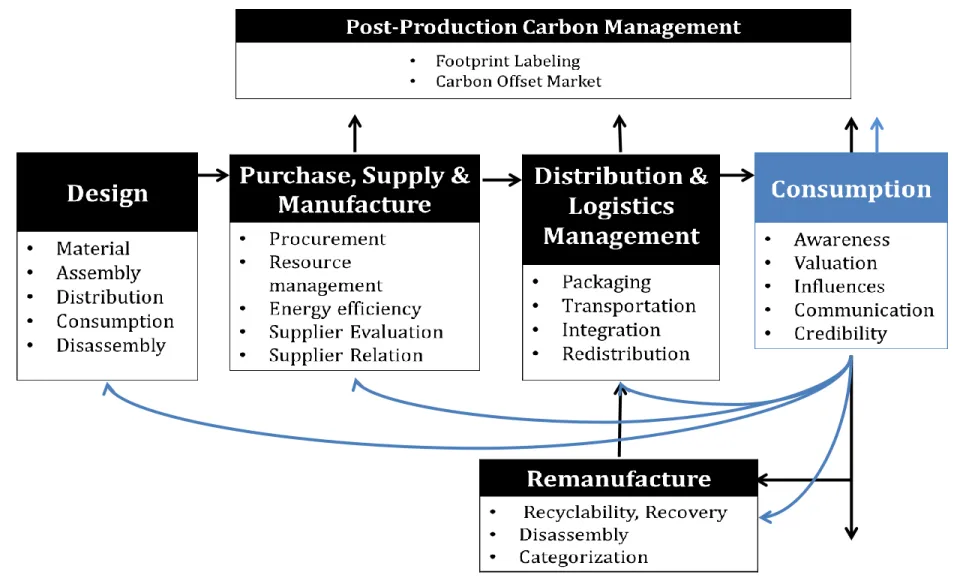
The following essay provides a market-based synthesis of what has been done in the various areas incorporating green. First, an overview is provided of environmentally sensitive markets, their characteristics, and their response to corporate green initiatives. Then, various environmental opportunities within the supply chain across product design, purchasing and supply management, manufacture, and distribution and logistics management are discussed. In addition to operationally internal approaches, the voluntary carbon market and aspects specific to this external mechanism are considered. Figure 1 provides a framework of the topics discussed in this essay – the areas of environmental development within the business model, the associated resource and waste flow, and their relationship with the market.
From a managerial standpoint, understanding consumer response to corporate green initiatives is the key to realizing a competitive and profitable environmental development. This essay enables an overview of a firm’s entire value chain and how environmental issues and initiatives are embedded at each stage and level and the relevant demand-side issues. Such a synthesis will enable managers to identify the various green decisions they can be involved in and employ at various stages as well as the resulting market implications. 2.2Green Consumption
9
consumers, these individuals take environmental elements into consideration when making purchase decisions in markets such as organic produce (Loureiro et al. 2002; Moon et al. 2002), socially responsible investments (Michelson et al. 2004), and green electricity (Roe et al. 2001). Green consumers are willing to pay a premium for the provision and protection of public goods and, more importantly, their environmental concern extends beyond product ingredients and encompasses aspects of manufacturing, usage, and even disposal (e.g., Auger et al. 2003; Ginsberg and Bloom 2004). In short, green consumers care not only about how environment-friendly individual products are but also about the processes through which the products are produced, consumed, and disposed of.
A distinct quality of green consumers is their ability to make relevant connections between environmental issues and their lives (Schlegelmilch et al. 1996). In addition to being aware, green consumers are able to link environmental issues to the products they purchase and consume. Attitude toward an issue and the extent to which consumers believe that their decisions can have a meaningful impact strengthen the connection between environmental issues and consumer response such as intention of use and purchase behavior (e.g., Rios et al. 2006; Straughan and Roberts 1999; Gupta and Ogden 2009; Peattie 2001; Sen and
Bhattacharya 2001). Collectively, research on green consumers has established concern for environmental aspects, relevance with purchase decisions, and perceived effectiveness as factors that influence these consumers in making environment-conscious purchase decisions. Valuation
10
“warm glow” term. Traditional assumptions of rational actors in pursuit of self-interest can only explain a limited portion of environmentally conscious behavior and, in general, free-riding is predicted for public goods. This is because green consumption is often motivated by altruistic, moral, and pro-social reasons. To better account for this, economic research has included an additional benefit to the contributors of public goods (consumers). Recognized as a “warm glow,” this benefit refers to the good/bad feeling from having positively/negatively contributed to society as a result of the purchase decisions. Derived from the theories of altruism (Andreoni 1990) and social decision-making (Akerlof 1997), “warm glow” reflects an environmental conscience, and has been shown to influence purchase and the demand for public goods (e.g., Cleveland et al. 2005; Popp 2001).
Research has also identified normative influences in green decision-making. For example, personal norms, the perceived responsibility for the consequence of one’s action, have been shown to shape environmentally conscious behavior in domains such as recycling (Vining and Ebreo 1992), energy adaptations (Black et al. 1985), and transportation methods (Bamberg and Schmidt 2003). ‘Spillover effects’ of personal norms have even been found across different environmental behaviors (Sparks and Shepard 1992). Similarly, self-concept – how one thinks of oneself as environmentally responsible – has been shown to influence green consumption, over and above the effect of attitude toward the environment and irrespective of past consumption practices (Thorgersen 1999).
11
value in purchase decisions comes from the fact that people often make judgments about others based on the purchases they make (Yoon et al., 2006). Research on social sanctions show, for example, that when contributions to public goods are motivated by the desire for social approval, the extent to which social norms are recognized plays an important role in the level of contribution (e.g., Rege 2004; Nyborg et al. 2006). Experimental studies also provide support for the influence of descriptive norms on the voluntary provision of public goods (e.g., Brekke et al. 2003, Reno et al. 1993).
In terms of functional value, while some environmental attributes are associated with providing a higher quality, most green products are perceived as being of a lower quality (Ginsberg and Bloom 2004). In fact, many attributes such as fuel efficiency and recyclability do have effects that conflict with traditional attributes, such as safety, material consistency, and convenience, which may pose challenges for managers trying to maintain satisfactory levels of both green and traditional attributes in one product (Chen 2001). More importantly, regardless of the actual relationship, consumers have been found to make inherent tradeoffs between environmental attributes and their perception of quality – i.e., consumers assumes lower quality of green products (Luchs et al. 2007). For firms that compete in markets where quality is important, positioning their products on their environmental attributes may damage the established perception of product quality (Sen and Bhattacharya 2001).
12
1994). On the other hand, “negative effects” also exist, where high product quality cannot compensate for a firm’s unethical actions and environmental attributes cannot compensate for inferior quality (e.g., Folkes and Kamins 1999; Barone et al. 2000). These results suggest that consumers may not perceive environmental attributes as independently additive to other product attributes, and in fact, perceive both product quality and environmental performance to be necessary – neither one can fully compensate for the other.
Communication
Firms engage heavily in the communication of their environment-friendly activities through methods such as product labels, press releases, and firm reports to increase visibility and influence green consumers (Luo and Bhattacharya 2006). Developments in information technology now provide consumers with easy access to product- and firm-level information. While this can help facilitate the communication process for firms, if consumers perceive the information as profit-driven, the intended positive effect can be damaged and even lead to an unintended backlash (Roehm and Tybout, 2006).
13
competition can inadvertently create negative inferences for consumers on the environmental performance of firms.
The most widely used communication method is product labels. Although price has also been looked at as reflecting a product’s environmental aspects, unlike traditional price-quality inferences, the relationship between environmental friendliness and price is not as obvious – whereas a low price can indicate poor environmental performance, a high price does not necessarily imply the opposite (Brunk 2010). On the other hand, research has readily established that consumers rely on product labels when making purchase decisions (Ibanez and Grolleau 2008). Consumers respond to the visual and textual information contained in product labels (Tang et al. 2004) and several studies provide evidence of the impact of eco-labels – claims on the environmental friendliness of products – on the consumption of frequently purchased goods (e.g., Bjorner et al. 2004; Teisl et al. 2002). However, eco-labeling is not clearly defined, can encompass different meanings, and are often labeled using different methods (Ibanez and Grolleau 2008). For example, some labels are issued by independent organizations and displayed voluntarily by the firm who submits to inspection or in some way meet the organization’s environmental standards (e.g. Nordic Swan, Germany’s Blue Angel, and Green Seal in the U.S.). Other labels include claims related to environmentally friendly features (e.g., CFC free). These claims may be vague, undefined, unverified and unverifiable, and create consumer distrust and/or even scare away consumers (Ibanez and Grolleau 2008).
14
also indicates that adding more information can create information overload (Scammon 1997). Revealing negative information regarding conventional products and emphasizing the benefits of green alternatives can seem beneficial from a marketing perspective. However, most firms that provide green products also offer conventional versions. For these firms, increasing information disclosure can potentially hurt their existing product lines. If properly executed, labels can aid consumers to make choices that clearly reflect their preferences. However, this can only be achieved if consumers notice, believe, understand, and can use the information presented to them.
In addition to product labels, external channels such as the media, consumer reports, and environmental groups also provide product- and firm-level information to consumers. With the increasing reach of these external channels, firms often face a tradeoff between the level of manageability and the credibility of the communicated messages (Du et al. 2010). This is because consumers are more critical of direct claims by the firm and often perceive them to be biased or in self-interest (Wiener et al. 1990). On the other hand, various external channels – which firms have little or no control over – are perceived by consumers as more credible and can be more effective from a marketing standpoint (Yoon et al. 2006).
Credibility
trade-15
offs (Peattie 2001). At the same time, consumers may be skeptical toward firms’ claims in general and perceive them as profit-driven. In fact, consumers who are most likely to engage in environmentally conscious behaviors have been found to be, by nature, more skeptical of advertising in general (Zinkhan and Carlson 1995).
In addition, although many firms develop and communicate their socially responsible activities, reports of irresponsible conduct and false claims by some firms – “Greenwashing” – give rise to consumer skepticism (Wagner et al. 2009). Furthermore, as firms globalize the length and complexity of their supply chains increases, adding to the difficulty in monitoring and managing the environmental impact of products and production processes (Wagner et al. 2009). Consumers are likely to be exposed to inconsistent information about firm’s stated environmental initiatives and their actual practices. This is especially important since the effect of negative information has been shown to have stronger effects than positive information (Sen and Bhattacharya 2001; Trudel and Cotte 2009).
Firms make increasing efforts to improve and market the environmental performance of their products and operations in order to contribute to environmental protection and, more importantly, to be perceived as environmentally responsible, capture consumer willingness to pay, and increase profits. However, as discussed above, market response to environmental developments can only be achieved with an understanding of what consumers respond to, how they value corporate green initiatives, and what the influencing factors and obstacles are. 2.3Internal Environmental Management
16
as well as in reverse operations such as recycling, and remanufacturing. On the other hand, efficient management of intangible resources includes being able to extract, manufacture and distribute products with less energy, less processing, and in less time. Likewise, minimizing waste applies to both reducing material scrap as well as preventing and/or treating intangible environmental wastes such as atmospheric pollution. Both resource and waste management often have lasting effects across the entire business model and can be implemented at different stages within a firm’s operations and a product’s life.
Environmental initiatives largely begin at the design stage and can impact subsequent stages of a product’s life and firms’ operations. Likewise, developments in the latter stages of the supply chain can have significant implications to the initial product design. Traditionally, firms have focused on environmental management at the product level across the stages prior to consumer purchase. These initiatives were centered on replacing the input materials with more environmentally sound substitutes. However, for many product categories such as energy-dependent appliances, environmental impact depends largely on post-purchase behaviors of consumption and product usage (Gheorghe and Ishii 2007). To fully understand the total environmental impact associated with a product, post-production stages including consumption, collection, remanufacturing, and even disposal need to be considered. For example, recycling post-consumption products can simultaneously reduce material waste and the need for new inputs by substituting resources used in the production of new and
17
forward counterparts, play an ever important role in the overall environmental performance of firms.
The strategic importance of supply chain management has increased even more with increased competition, global purchasing, and outsourcing of a firm’s core and/or non-core activities. The integration of environmental initiatives with supply chain management has gained attention not only as response mechanism to regulatory and market pressure but also as a way to gain a competitive advantage toward higher profits (Wilkerson 2005). Various concepts such as supply chain sustainability (Koplin et al. 2007), environmental management (Handfield et al. 2005), corporate greening (Preuss 2005), green supply (Vachon and Kalssen 2006; Sarkis 2003) corporate social responsibility in supply chains (Maloni and Brown 2006), and environmental supply chain management (Zsidisin and Siferd 2001) are receiving
growing attention in academia, media, and the corporate world. Green Design
Interest in green design across disciplines has led to various concepts such as design for environment, eco-design, environmentally conscious design, life cycle design, and life cycle engineering (Gheorghe and Ishii 2007). Regardless of the terminology, green design refers to the integration of environmental concerns and initiatives into the initial product design to eliminate in-process waste streams before they actually occur (Sroufe et al. 2000). Environmental decisions made up front can impact subsequent stages of the product’s life cycle as well as various operational stages including material selection, production,
18
ensure that the total environmental effect is understood before subsequent and often non-reversible decisions are made (Gheorghe and Ishii 2007).
Foremost, decisions made in product design directly affect material selection. Desired product features impact the selection criteria for raw inputs, which, in addition to regulatory restrictions, the purchase department is faced with. Characteristics of the input materials are especially important for products, which do not require complex manufacturing and are produced closer to the consumer. Total environmental impact of these products depends, to a large extent, on the environmental friendliness of the raw inputs. On the other hand, for products that require more extensive manufacturing, total environmental impact also depends on process efficiency and associated waste streams generated during production. Green design for these products aims at making the production process more efficient – e.g., substituting to more manageable materials and designing products for ease-of-assembly.
19
the product more energy efficient. For example, more than 35 percent of U.S households knowingly purchase Energy Star qualified products and more than 75 percent of these households report being favorably influenced by the Energy Star label (Energy Star 2008).
Even in distribution, environmental impact is affected by product design. In addition to its role of protection and communication of the brand and product information, various aspects of packaging are affected by the design of products (Gheorghe and Ishii 2007). For example, decisions that lead to the use of fragile materials and complex product constructions increase the resources required in the packaging and distribution of the final good, which is further intensified with increases in the transportation distance. Green design decisions must fully consider the potential tradeoffs between environment-friendly inputs and the associated increase in required packaging material. In fact, for many global firms with extensive
transportation distances, substituting raw materials with potentially less environment-friendly but more rigid ones may even prove to be the more environmentally friendly initiative.
20
performance of a prior operational stage and even cause adverse effects. For example,
designing products for disassembly can require additional, otherwise unnecessary, processing, where the waste generated outweigh the benefits of making the disassembly process more efficient.
Decisions made in the design phase and the incorporation of environmental concerns into product design can have differential implications for each of the consecutive stages of the product’s life including its end-of-life. Approaches aimed at making one aspect of the product more environmentally friendly can even lead to a greater net environmental damage. For effective green design implementations, the design team must fully understand the firm’s entire business model, its operational stages and the associated flow of materials and waste. Collaboration and communication across the firm’s supply chain are essential for a complete understanding of the total immediate and eventual effect of product design decisions. Purchase Management
Purchasing is positioned at the early stages of the supply chain and is responsible for material procurement (Zsidisin and Siferd 2001). As discussed in green design, the initial selection of inputs directly impacts the quality of the final good as well as the environmental performance in subsequent stages of the firm’s forward and backward operations. In addition, the characteristics of the inputs determine the nature of tangible waste streams generated throughout the production process and from the end-of-life disposal (Zsidisin and Siferd 2001). Purchasing can also take part in equipment and technology selection, which
21
Externally, material selection is subject to various legal instruments restricting the use of environmentally harmful materials. For example, in the U.S, the RCRA regulation restricts the use of several hazardous and non-hazardous materials. Similarly, the European WEEE and RoHS regulate the treatment of end-of-life wastes, which are direct results of the materials selected up front. Even consumer agencies such as the U.S Consumer Product Safety Commission now regulate the sale and manufacture of more than 15,000 different consumer products from baby cribs to power tools. In response to external regulations and market pressure, many firms have established guidelines to help categorize materials in terms of their environmental soundness.
Whether reactive or proactive, decisions made by the purchase department influence how the product can be designed and the type and level of treatments required in the initial production and remanufacture stages. The role of environmental purchasing lies not only in the selection of environmentally friendly materials, but also in understanding and
incorporating how the characteristics of the materials, within the product’s design, translate to environmental outcomes.
Manufacture
For many firms, the manufacturing system is where the highest volumes of resources are consumed and also where the greatest amount of emissions is generated (King and Lenox 2002). The growing interest in global warming and the fast consumption of natural resources are motivating firms to change their manufacturing strategies and processes to become more environmentally friendly (Barreto et al. 2007). Environmentally responsible manufacturing is aimed at reducing or eliminating the use and generation of environmentally hazardous
22
Resource management within manufacturing can lead to additional cost saving and production increase. This is possible because efficient use of resources enables the firm to prevent unnecessary waste and save additional costs, which would otherwise have been required to treat and dispose of the waste. Firms can also reuse products or components and save costs in a similar manner. Although green manufacturing often does not directly impact the environmental quality of the products offered in the marketplace, if firms are able to efficiently use their resources, technological knowledge, and operations to implement environmental production practices, green manufacturing can help reduce costs, improve production lead times, and/or increase product quality and become a competitive advantage (Barreto et al. 2007).
A direct consequence of a firm’s manufacturing operations, which has been receiving increasing interest over the past few years, is the amount of atmospheric emissions generated. Firms can minimize their emissions from production at both ends of the pipe. At the back end, firm can install filtration systems and scrubbing mechanisms to trap, store, treat, and/or
23 Supply Management
In addition to direct manufacturing, one of the core decisions by firms is whether to outsource parts of the firm’s core or non-core activities. Increased competition, cost pressures, and resource constraints have led many firms in developed countries to set priorities in their supplier selection criteria and switch their spending volumes to developing countries. What began as a predominantly cost-focused strategy has led to the emergence of truly global supply chains (Trent and Moneczka 2003). While it may guarantee lower unit costs, globalizing the supply chain can have significant implications for the firm’s environmental performance. For example, purchasing from suppliers in other countries increases the environmental impact from increased transportation distance and can require additional resources for packaging and handling. In addition, effective implementation of environmental initiatives by the purchasing firm can be hindered by the lack of control and difficulty in close monitoring of its global supply base.
24
being held responsible for the lack of environmental performance of their suppliers, supply management must ensure that their international suppliers comply with their corporate codes of conduct and that environmental misconduct at supplier premises does not occur (Reuter et al. 2010).
A collaborative relationship between a firm and its suppliers is necessary for the effective implementation not only of environmental initiatives, but also for any long-term development of the firm’s production systems as well as supplier capabilities (Handfield et al. 2000). For example, cooperation with suppliers can lead to effective waste reduction,
environmental innovation, cost-effective environmental solutions, development and efficient adoption of new environmental technologies, and can also facilitate consumers understanding of the firm’s environmental performance (e.g., Geffen and Rothenberg 2000; Hall 2000; Veleva et al. 2003). However, the complexity, and procedures for assessing and developing supplier sustainability can be prohibitive, especially for small and medium enterprises (Perrini and Tencati 2006). There is empirical evidence, for example, that collection of suppliers’ environmental information does not necessarily lead to an evaluation of this data but stops as proxy measures in supplier selection (Koplin et al. 2007; Preuss 2007). This limits purchasing’s role to policing rather than integrating and developing the supplier base. Similarly, suppliers’ adherence to the purchasing firm’s standards does not necessarily lead purchasing personnel to be fully engaged in the sustainability agenda (Preuss 2007). For the realization of any long-term environmental performance, the role of supply management is crucial not only in enhancing but even in maintaining and ensuring that its suppliers, whether local or global, understand their roles and are committed to carrying out the firm’s
25 Distribution and Logistics Management
The efficient collection of post-consumption materials, components, and products is necessary for effective environmental management in the reuse, recycle, and remanufacture stages. Reverse logistics ties these concepts together by incorporating reverse distribution with resource management and waste minimization, and involve all the activities associated with the collection and recovery or disposal of used resources (Zsidisin and Siferd 2001). The operations of reverse channels of distribution are receiving increased attention as rampant solid waste pollution frequent energy shortages, and serious materials scarcities are recognized as realities of our modern age (Jayaraman et al. 2003). In addition to being environmentally friendly, effective management of reverse logistic can lead to higher profitability by reducing costs associated with collection, transportation, inventory and warehousing, and categorization (Zsidisin and Siferd 2001).
26
forward and reverse channels and includes the reuse, recycling, remanufacturing, and disposal processes (Beamon 1999).
Unfortunately, reverse operations are almost never as well developed as their forward counterparts and often operate separately with different external parties involved. Moreover, although reusing and recycling materials is environmentally beneficial, unless the costs of operating reverse channels are offset by the financial recovery from these processes, there is little incentive for firms to pursue reverse logistic initiatives, leading firms to simply discard the reusable waste (Zsidisin and Siferd 2001). Incorporating reverse operations can only be effective if, the reverse logistics are efficiently managed with the collaboration and
commitment from all entities involved. By minimizing waste generated in the reverse
channel and ensuring effective reuse, recycle, and remanufacturing within reverse operations, firms can achieve both financial and environmental outcomes.
2.4External Carbon Management
27
level, and does not require firms to undergo physical alterations to their products or processes, providing firms with a more flexible and non-disruptive approach to waste minimization. Carbon Market
Among the various greenhouse gases, carbon dioxide is by far the most dominant, accounting for around 84 percent of the total U.S. emission (EPA 2011). Accordingly, it has been used as the measurement unit for calculating the atmospheric impact of any economic activity – hence the term ‘carbon footprint’ (Carbon Trust 2007a). Carbon footprints can be measured for activities at the individual level as well as at an organizational level. In fact, online calculators now allow individuals to calculate the carbon footprint associated with their lifestyles such as travel and consumption. Specific to products, the product carbon footprint refers to the total volume of greenhouse gas emissions (measured in carbon dioxide equivalents) associated with the product across its entire life cycle from the extraction of raw material, to manufacturing, usage, and even disposal (CenSA 2007). In addition to green electricity, biodegradable packaging and waste, and recycled content, investments in measuring and managing the product carbon footprint have given firms the right to attach a “carbon footprint label” to their products. For example, grocery giant Tesco has initiated carbon footprint labeling on several product categories including orange juice, light bulbs, and washing detergent (Carbon Trust 2007b). Companies including Wal-Mart, PepsiCo, and Coca-Cola have similar initiatives in the works.
28
indicate that consumers are willing to pay premiums of US $30 per night for hotel services that demonstrate superior environmental performance (Rivera 2002), spend 20 percent to 50 percent more for organically produced food products (Barkley 2002), and pay US $3000 to $8000 more for hybrid cars over comparable non-hybrid cars (Walters 2005). This suggests that carbon footprint labels and investments in reducing product carbon footprints can act as important strategic variables for firms to differentiate their products in the minds of the consumers.
Over the last eight years, a worldwide market has developed for greenhouse gas emissions. Known as the carbon market, this market for environmental negative externalities has grown at a rapid speed with increases in the number of intermediaries entering the market (Harris 2007). The size of the carbon market has continued to increase, with the value of the voluntary offset market increasing from US $414 million in 2010 to $569 million in 2011 (World Bank 2012).
29
Just as the carbon footprint can be applied to individuals, the voluntary carbon market allows companies, public bodies, and individual consumers to purchase credits generated from their investments in environmental projects. “Offsets” can be purchased from various governmental or independent intermediaries, who then transfer the payments to fund these projects and are also responsible for their monitoring. By far the most active participants in the voluntary carbon markets are firms, largely offsetting their operational activities (Harris 2007). For firms that go as far as offsetting all of their generated emissions, they become ‘carbon neutral,’ which is even thought to be becoming the ‘it’ commodity (Harris 2007).
Firms communicate their efforts to offset the emissions generated throughout their operations by participation in the voluntary carbon market through carbon footprint labels. Similar to green product labels, carbon footprint labels can inform consumers of the product carbon footprint level, additional efforts in the reduction of the product carbon footprint, and certifications from external monitoring organizations. The branding and labeling services offered by many intermediaries support this trend, enabling logos to be used in marketing material and on products (Harris 2007). However, carbon footprint labels are also susceptible to the same advantages and disadvantages of green product labels.
Skepticism
Attitudes toward the voluntary carbon market in general are mixed. On the one hand, offsetting can generate additional benefits by creating societal awareness through products, which are marketed as low-carbon or even carbon-free. In addition, a critical case for offsets lies in the urgency and scale of the climate change challenge (Harris 2007). Unlike
30
(Harris 2007). Furthermore, as is the nature of market mechanisms, the prices of offsetting will approach the marginal cost of abating at home and make more domestic reductions available (Harris 2007).
On the other hand, it is argued that rather than providing a solution, carbon offsetting provides participants with a ‘right to pollute’ and contributes to increased corporate power (Carbon Trade Watch 2005) allowing firms to buy their way out of their obligations
(Lefevere 2005). It is argued this distracts from truly effective action on climate change, and will not force the fundamental changes required, that will drive change in consumption patterns and fossil fuel use. As such, various organizations recognize a hierarchy of carbon management action, with the importance of internal reductions stressed (Harris 2007). For example, The Carbon Trust, a non-profit organization aimed at helping firms reduce their emissions and become more efficient, conclude that: first, business should focus on reducing their own cost-effective direct emissions; second, that indirect cost-effective emissions up and down the supply chain should be reduce; and third, if appropriate, offsetting should be used (Harris 2007).
Consumer skepticism is especially relevant in the context of carbon footprints and offsetting claims. Specific concerns about carbon offsetting include carbon leakage – where there is an increase in carbon emission in one area as a result of a reduction in another area – and carbon additionality – which refers to the likelihood that an emission-reducing project such as reforestation would have happened in the normal course, even without payments from offsetting. Likewise, controversies regarding the use of carbon footprint labels include the complexity of measuring carbon along the entire supply chain and confusion in
31
generated by pro-social behaviors (Folkes and Kamins 1999; Wagner et al. 2009), and can even generalize to other, broader evaluations of the firm (Darke and Ritchie 2007). Not surprisingly, studies indicate that 60 percent of consumers express doubts about carbon footprint claims by firms (LEK 2007), and 70 percent would value an independent assessment of such claims (Gfk NOP 2006).
2.5Summary and Discussion
Since the 1960’s a rising interest in environmental issues and the environmental impacts of human economic activities including firms’ operations has led to the increase in the size of environmentally conscious, green consumer markets. Green consumers take environmental elements into consideration when making purchase and consumption
decisions. Purchasing green products and/or from environmentally friendly firms can provide emotional, social, and functional value to green consumers. Although product utilitarian attributes are considered as more important, research provides evidence of consumers who are still willing to pay a price premium for products deemed environmentally friendly. More importantly, green consumers often consider environmental aspects as necessary, where greater product quality cannot fully compensate for the lack of environmental responsibility.
Firms can implement environmentally friendly initiatives internally by altering aspects of products or operations to enhance efficient resource usage and minimize wastes. Alternatively, or in addition, firms can participate in external negative externality markets and trade off portions of their intangible waste streams generated throughout their operations. On the one hand, external approaches provide firms with a flexible and non-disruptive
32
consumer skepticism for various reasons including the intangible nature of emissions, the external nature of the offsetting mechanism, and the perception of “paying off” the firm’s responsibilities.
Environmental initiatives in terms of product design and supply chain management are operationally internal approaches to reducing unnecessary resources and minimizing the waste streams generated throughout the firm’s operations. Green design aims at incorporating environmental aspects at the early design phase with an understanding of the direct and indirect effects throughout the product’s life cycle and across the firm’s operations. These initiatives are focused on the flow of tangible materials and their treatments but also impact and are impacted by the management of operational efficiencies. In addition to the product level, implementation across various functions within supply chain management also affect firms’ environmental performances. With the increasing complexity of closed-loop supply chains, purchasing, manufacture, supply management, and logistics management all play focal roles in the realization of any long-term environmental outcome. Firms often neglect the importance of collaboration and communication between their operational functions and the maintaining of full commitment from external entities involved in developing a truly sustainable and competitive supply chain.
33
transaction does indeed lead to an environmental outcome, and whether the resulting outcome is personally relevant. Moreover, the communication method of carbon footprint labels can give rise to consumer skepticism. The actual difficulty in the measurement of emissions at any stage may have consumers question what aspects are included and excluded in the carbon footprint level and how the measurements are calculated.
Organizations pursue green marketing strategies with the realization that an
increasing segment of the customer base is becoming green. Unfortunately, green consumers are also likely to harbor anti-corporate biases and distrust advertisers (Shrum et al. 1995). Such skepticism arise from several issues associated with firm’s green marketing including false advertising, lack of common standards for evaluating environmental claims, and innate negative attitudes often exhibited by green consumers toward corporations (Zinkhan and Carlson 1995). Coupled with the active exchange in product information by green consumers, misleading, inaccurate, or non-defensible claims may be met with backlash whereby the negative perception by green consumers affects not only these consumers but also other consumers through negative word-of-mouth. Therefore, marketers who desire to target green consumers face a dilemma between the potential profitability of green consumers and their somewhat cynical attitudes toward green marketing activities, likeliness to discount
advertising messages and distrust in corporate motives.
34
CHAPTER 3
ESSAY 2. THE PRODUCT CARBON FOOTPRINT PORTFOLIO 3.1Introduction
Increasing corporate attention is being paid to the atmospheric impact associated with products and firms’ operations. More than 8,500 corporations in over 135 countries have adopted the Global Compact aimed at making their operations more environment-friendly (UN Global Compact 2011), and many CEOs believe that businesses must address climate change (Bielak et al. 2007). Now, the atmospheric impact of any economic activity is widely recognized as its ‘carbon footprint.’ In particular, the product carbon footprint refers to the total volume of greenhouse gases associated with the product across its entire life cycle from the extraction of raw material, to the manufacturing process, usage, and even the disposal of the finished good (CenSA 2007). As such, product carbon footprint levels inform consumers on the total environmental impact associated with their purchase and consumption decisions.
36
more likely to buy a product with a low carbon footprint (Gfk NOP 2006), 44 percent would switch to such a product even if it was not their first choice, and 43 percent would pay more for products that help them lower their carbon footprint (LEK 2007). Increasingly, firms are recognizing product carbon footprints as an intangible attribute with which consumers make inferences on the non-experiential environmental performance of products.
A firm can reduce its product carbon footprint in multiple ways. First, the firm can invest in technologies that neutralize or “scrub” emissions generated during the production stage. For example, a firm can force smokestack exhaust to pass through soda lime or a water spray to recapture some of the emissions. Second, the firm can lower the level of emissions created at source by investing in modern, fuel-efficient machinery. Third, with no additional investment, the firm can reduce emissions by lowering the amount of manufacturing and processing a product is subject to. However, this can result in a product with a less appealing finish and, from the consumer’s perspective, in a product of lower real or perceived quality. Finally, the firm can also offset some of its emissions in the carbon market. Carbon offsets can be purchased from governmental or certified independent intermediaries who then then employ the offset payments to support environmental projects, which are aimed at either preventing the release of greenhouse gases into the atmosphere or reducing/recapturing the generated emissions such as alternative energy development and forest expansion.
37
past few years with over 150 intermediaries worldwide (Lovell et al. 2009). The total volume of greenhouse gas emission offset in the carbon market in the year 2007 alone amounted to 65million tons (measured in carbon dioxide equivalents), a value worth US $330 million (Hamilton et al. 2008).
Despite the growth in the carbon market and the flexibility with which firms can take advantage of carbon offsets to manage their product carbon footprints, both carbon footprint information and carbon offsetting activities are susceptible to consumer skepticism. For example, specific concerns about carbon offsetting include carbon leakage – where there is an increase in emission in one area as a result of a reduction in another area – and carbon additionality – which refers to the likelihood that an emission-reducing project such as reforestation would have happened in the normal course, even without payments from offsetting. Likewise, controversies regarding the use of product carbon footprint labels include the complexity of measuring emissions along the entire supply chain and confusion in interpreting the labels. Not surprisingly, studies indicate that 60 percent of consumers express doubts about carbon footprint claims by firms (LEK 2007), and 70 percent would value an independent assessment of such claims (Gfk NOP 2006). These negative effects can easily overwhelm the positive sentiments generated by pro-social behaviors (Folkes and Kamins 1999; Wagner et al. 2009), and can even generalize to broader evaluations of the firm (Darke and Ritchie 2007).
38
distinct environmental approaches. Findings from the empirical study are then incorporated into a theoretical model of a monopolistic firm’s decisions regarding operationally internal and external product carbon footprint-reducing initiatives.
Related Literature and Contribution
Research on the implications of green product offerings have typically adopted a traditional product differentiation model, with firms choosing a level of “green” product quality and then pricing the product (e.g., Amacher et al. 2004; Arora and Gangopadhyay 1995; Conrad 2005). In particular, a large fraction of the research on “green” specifically in terms of atmospheric greenhouse gases and emission reduction is found in the economic resource management literature. While some studies do consider the market implications of emission-managing initiatives, most are focused on the impact of policy and regulations on competition, the environment, and social welfare. Whereas a detailed review is beyond the scope of this essay, some of the issues studied include: voluntary (over)compliance (Arora and Gangopadhyay 1995), commodity tax effects (Cremer and Thisse 1999), allocation of emission permits (Ahlheim and Schneider 2002), minimum unit emission standard (Moraga-Gonzalez and Padron-Fumero 2002), and subsidy/tax policies (Bansal and Gangopadhyay 2003). In addition, the majority of this research assumes that the entire population of
39
Against this backdrop, this essay offers the following contributions. First, previous models typically capture emission management with a single variable. Stated differently, researchers have adopted a ‘does or does not’ view to reducing emissions rather than a more detailed ‘which part and by how much’ perspective. Likewise, existing research does not differentiate consumers in terms of how they evaluate distinct environmental approaches. Knowledge about consumer heterogeneity is important in this context because it can inform the firm’s design of an ideal portfolio of green initiatives. For example, a firm can reduce its product carbon footprint by lowering the level of processing, neutralizing some of its initial emission, or offsetting some of the emission in the carbon market. The firm’s overall green strategy must reflect whether and how consumers differentially value each approach. This essay empirically investigates this issue and incorporates such differences into a theoretical model of a firm’s product carbon footprint-reducing strategy.
40
Third, carbon offsetting is rapidly emerging as a minimally disruptive mechanism that firms can employ to manage their greenhouse gas emissions. In addition, carbon footprint labels provide firms with a way to directly communicate their carbon offsetting efforts to the end consumer. To the author’s knowledge, no research has examined how firms faced with consumers that differentially evaluate alternative approaches to reducing the product carbon footprint must ideally employ this mechanism. This essay sheds light on this issue by analyzing a theoretical model of a monopolist embedded in a market with consumers who have heterogeneous preferences for distinct corporate green initiatives.
The remainder of this essay is organized as follows. The next section describes an exploratory empirical investigation of how consumers differentially value distinct product carbon footprint-reducing initiatives. The study distinguishes between (1) internal approaches that are directly related to a firm’s manufacturing process and (2) external methods that are independent of the firm’s operations. Building on the insights that emerge, a theoretical model is then presented of a monopolist who serves a market where consumers differentially value alternative emission-reducing approaches. Key findings are discussed on decisions regarding product processing and quality, internal and external emission-reducing efforts, and their implications for firm profits, the product carbon footprint, and aggregate emission. 3.2Empirical Investigation
Design and Method
41
of emission reduction) within-subject questionnaire and was conducted online using the Qualtrics software platform in a computer lab setting. A within-subject design was used to track variations in WTP across different emission reduction levels and the method of reduction was presented in random order to account for order effects – none were found.
The methods of reducing the product carbon footprint level used were: technology investments and carbon offsetting. Because of its direct association with the manufacturing process, technology investments were used to represent an operationally internal method of reducing the product carbon footprint. On the other hand, carbon offsetting is independent of the product and its production process and was therefore used to represent an operationally external method of emission reduction. To ensure consequential responses, the study
involved a Vickrey auction – a second price sealed bid auction where the highest bidder wins but pays the second highest bid (Vickrey 1961). Widely applied in WTP studies, this
demand-revealing auction has been shown to effectively reveal true WTP (Kagel and Levin 1993; Noussair et al. 2004). To ensure participant understanding of the Vickrey auction, a description of the auction was presented followed by a verification question – only the data from correct responses was analyzed.
In the study, participants were first asked to indicate their initial bids (WTP measures) for the product.1 Participants were then presented with information about the definition and use of carbon footprint labels and were asked for their bids for the same product with its carbon footprint level (70lb) revealed as in Figure 1 – this was used as the base product in subsequent analyses.2 Two independent sets of questions were then presented in random
1
An illustration of the product along with some general features was provided for all questions – these remained consistent throughout and only the manipulation factors were altered accordingly.
42
order – one manipulating the level of product carbon footprint reduction by internal methods (technology investments) and another manipulating the level of emission reduction by external methods (carbon offsetting). At the beginning of each set, a description of how the approach is able to reduce the product’s carbon footprint was provided and bids were obtained for three emission reduction levels (20%, 40%, and 60%) for both the internal and external emission-reduction conditions.3 Specifically, internal emission reduction was described as follows:
“To reduce the environmental impact associated with its products, the Apparel Company is considering potential investments in efficient technologies. Each investment alternative will result in a different level of carbon footprint associated with its products.”
For external emission reduction, the carbon offsetting mechanism and the fact that, under carbon offsetting, the company does not reduce the amount of atmospheric emissions but instead compensates for some of the emissions through investments in other green initiatives was clarified. A verification question was then asked to check participants’ understanding. Following the verification question, external emission reduction was described as follows:
“If the Apparel Company decides to participate in carbon offsetting, there are several environmental projects toward which the Apparel Company can transfer its carbon offsetting payments. For example, the Apparel Company can choose to transfer its payment to projects involving forestation, wind energy, and hydroelectric power. Regardless of the type or scale of the project, the amount of carbon emission that is absorbed (or prevented) depends on the amount of carbon that the Apparel Company decides to offset.
With different levels of participation in carbon offsetting, the net carbon footprint
associated with each of the Apparel Company's products can be reduced.”
Finally, participants responded to the following control scales: category involvement, perception of corporate claim believability (Sen and Bhattacharya 2001), socially responsible
43
behavior (Webb et al. 2008), and perceived consumer effectiveness (Straughan and Roberts 1999).
Results
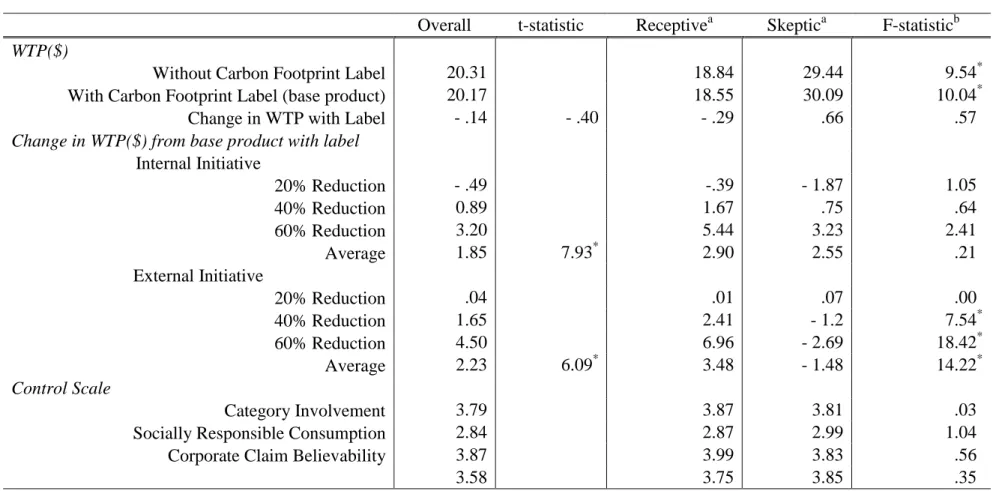
Participants who did not understand the Vickrey auction or the carbon offsetting mechanism were removed from the analyses, resulting in 172 (92.47%) usable responses. With respect to the effect of product carbon footprint labels, no significant difference was found in respondents’ WTP measures before and after revealing the product’s environmental impact (Mbefore = $20.31, Mafter = $20.17; t (171) = – .14, p > .1). Thus, the added factual
information regarding the baseline product carbon footprint level did not influence the valuation of the product (see Table 1 for a tabulation of the findings).
Type of Initiative. Participants showed systematic differences in their response toward the two distinct methods of emission reduction. 60.4 percent of participants increased their WTP measures for both internal and external methods across the three reduction levels – these participants valued both approaches to lowering the product carbon footprint. On the other hand, 10.5 percent of participants increased their WTP measures for internal efforts, but were nonchalant or skeptical toward external carbon offset efforts – their WTP measures did not change or became even lower across the three reduction levels. These results provide support that, even if the net reduction in the environmental impact of the product is the same, consumers may differentially value the method through which the reduction is made.
44
valued internal methods and were skeptical toward external approaches (“skeptic”). No significant difference was found between the two participant types across the above scales (see Table 1). These findings imply that differences in consumer response to the type of green initiative are not culminations of greater environmental concern and/or involvement in environmentally conscious behavior – neither type of consumer can be said to be ‘greener’ than the other.
Overall, no significant difference was found between internal and external carbon footprint-reducing methods in the average valuation for an additional 20 percent emission reduction (Minternal = $1.85, Mexternal = $2.23; t(171) = – 1.36, p > .1).4 Within “receptive”
participants, changes in their WTP measures for an additional 20 percent emission reduction was marginally greater for reductions made through external carbon offsets than technology investments (Minternal = $2.90, Mexternal = $3.48; t(103) = – 1.92, p = .058). Although this
suggest a greater valuation for carbon offsets than internal approaches, the relative
unfamiliarity with carbon offsetting, the detailed explanation of the mechanism provided, and frequent mention of the product carbon footprint may also have contributed to these results.
Carbon Footprint Expectation. More importantly, individual expectations of the appropriate product carbon footprint level differed across respondents (see Figure 2). For example, among the respondents who valued internal efforts, only 60 percent increased their WTP measures for all three levels of emission reduction. On the other hand, 40 percent only increased their WTP measures for higher levels of emission reduction from the baseline (40% and 60%). A similar pattern was found for respondents who valued carbon offsets. These findings suggest that there exists a threshold of appreciation for green initiatives. Consumers
45
may be willing to pay a price premium for emission reduction efforts, but only if the firm exceeds their thresholds in terms of the degree of emission reduction.
The above empirical investigation reveals some key insights that are relevant for the following theoretical model. First, traditional approaches which dichotomize the market into “green” and “non-green” segments can be restrictive since they cannot distinguish between consumers who value some types of environmental approaches but not all. By generalizing consumers who respond to one environmental approach as “green,” firms can overestimate the value of other initiatives since not all of these consumers may respond in the same way. Second, consumer evaluations of a firm’s emission-reducing approach may be subject to a threshold effect – even if consumers are appreciative of firms’ efforts to reduce their product carbon footprint, they may only be willing to pay a price premium for reduction levels that, in their minds, reflect a significant effort on the part of the firm. Finally, consumers may differentially evaluate different types of emission-reducing initiatives even when they ultimately reflect the same level of reduction. Building on these insights, a theoretical model is next presented regarding a monopolist’s decisions related to (1) the degree of product processing (which impact both product quality and the level of product carbon footprint), (2) internal and external carbon footprint reduction efforts, and (3) price.
3.3Theoretical Model Consumer Utility
46
level, a direct consequence of the product manufacturing process – and (2) carbon offsetting. The product manufacturing process affects both product quality and the initial emission level of the product. Specifically, intensive processing yields a higher quality product but also results in greater emissions. This imposes a trade-off for consumers between a private good (quality) and a public good (clean air).
As demonstrated in the empirical section, consumers have different expectations for a product’s carbon footprint level based on their expectations of how the firm should manage its environmental impact. As such, consumers only value environmental efforts that, in their minds, exceed these thresholds and are able to lower the product carbon footprint below their expectations. Consumer expectation of the firm’s environmental efforts and the resulting product carbon footprint is captured in their “tolerance” levels, where the consumer allocates a higher (lower) utility for the product if it is associated a lower (higher) carbon footprint level than their tolerance level. Consumers are distributed uniformly along the interval [0,1], representing heterogeneous tolerance levels.
47
recognizes that consumers may be sensitive toward the approach taken by the firm to make its product more environment-friendly. Whereas the source of skeptic consumers’ resistance to carbon offsetting is not relevant to the model, possible motivations include (1) disbelief in the actual occurrence of effective offsetting despite certification from monitoring bodies and (2) questioning of the personal relevance of those initiatives. Consumers purchase a
maximum of one product unit and Table 2 summarizes all notations used hereafter.
The utility (U) for a purchasing consumer with a tolerance level of θ is expressed as:
(1)
{
and { for Skeptic Consumers for Receptive Consumers
The first term ‘ ’ indicates the utility from tangible characteristics, namely product quality. From a consumer’s perspective, product quality comprises two distinct components: input quality and quality from processing. Input quality refers to the quality of raw materials and is independent of the manufacturing process. As the focus of this essay is specific to product manufacturing and the associated environmental impact, input quality is suppressed and only the process-related dimensions of product quality are considered.5 For every unit increase in processing ( ), product quality increases proportionally by (i.e., total product quality increases by ). Valuation for product quality is assumed equal across consumers – this simplifying assumption helps keep the focus on emission management decisions.
The second term ‘ ’ reflects the change in product valuation from intangible environmental attributes, namely, emissions. Here, indicates the level of initial