A Genetic and Biochemical Approach to Identify Function of Novel Proteins in
Francisella tularensis
Cheryl N. Miller
A dissertation submitted to the faculty of the University of North Carolina at Chapel Hill in partial fulfillment of the requirements for the degree of Doctor of Philosophy in the
Department of Microbiology and Immunology.
Chapel Hill 2013
iii ABSTRACT
CHERYL N. MILLER: A Genetic and Biochemical Approach to Identify Function of Novel Proteins in Francisella tularensis
(Under the direction of Tom Kawula)
Francisella tularensis is a Gram-negative bacterial pathogen that can infect a broad range of hosts and is the etiologic agent of the human disease tularemia. Members of the family Francisellaceae have few close relatives, and about 30% of the F. tularensis genome encodes hypothetical proteins, or proteins with unknown function. We used biochemical techniques and developed genetic tools to identify and characterize two proteins of unknown function in F. tularensis. First we identified a conserved cytoplasmic membrane protein with unknown function, which we termed RipA. In F. tularensis, RipA is required for intracellular growth and virulence in the mouse model of
iv
which was required for pantothenate (vitamin B5) synthesis. PanG is a novel ketopantoate
reductase (KPR) that can convert 2-dehydropantoate to pantoate. Both the homologous gene from Enterococcus faecalis (EF1861) and the analogous gene, panE, from Escherichia coli functionally complemented the Francisella novicida KPR mutant. Using
genetic and chemical complementation we confirmed the in silico predicted genes involved in pantothenate synthesis in Francisella novicida and tularensis and identified a novel KPR, PanG. Together this work provided functional characterization of two F. tularensis proteins that were previously unknown. However, there remain over 500
v
ACKNOWLEDGMENTS
To complete a project of this magnitude requires a network of support, and I am indebted to many people.
I would first like to thank my advisor Tom Kawula, who has been an exceptional mentor throughout my entire graduate career. His passion for science and involvement in graduate education has been inspiring. I will be his 11th PhD student, following 10 outstanding scientists that Tom has mentored though graduate school. Tom has been generous in providing me with opportunities to attend both national and international meetings. I have to give him credit for my postdoctoral offer to work with Jean Celli because he gave me the opportunity to network and participate in five conferences. I appreciate how dedicated he is to his students. His door is always open and he is always interested in discussing and analyzing data. He also has taught me important life lessons, how to balance life, and academia. I am grateful to have had such a fantastic mentor. Tom is an exceptional individual whom I will always look up to.
vi
I would like to thank Corey Quackenbush for being supportive through the whole process and helping me through the toughest moments. I would like to thank Corey especially for his technical computer talents—he helped improve the quality of many figures, taught me how to use Photoshop, and fixed all my computer issues. Corey taught me many formatting techniques that saved me a lot of time, and always was willing to help with computer technology. I would also like to thank Corey for all his patience with me.
I am grateful to my parents, Warner and Cathy Miller for their guidance, encouragement, and interest in my project. I would like to thank my two little sisters Anna and Megan for always believing in me. I enjoyed the times when they came and visited me in North Carolina especially when the whole family was here for Thanksgiving. The time my mom came to run the DNA Day 5K and the time my dad came to bike the 65 mile Cup-n-Cone ride were very special to me. I would also like to thank my parents for supporting and encouraging me to pursue my two passions: science and athletics.
vii
I could always count on my committee to have great ideas. I would like to thank Mariam Braunstein, Tony Richardson, Virginia Miller, Peggy Cotter and Corbin Jones for always having engaging conversations with me about my research, and teaching me how to be a better scientist.
I would also like to thank all my close friends that would play hard with me when I got a chance to step away from lab. I will miss the Thursday bike rides, the races, and the trips to the beach, mountains, and lakes. I would like to thank Martha Clark for making me a serious biker, Jennifer Parks and Thomas Revelle for encouraging me to do my first half iron man, and Curtis Taylor for helping me become a stronger biker with all the Wednesday morning rides.
I would like to thank Dixie, Theresa and Lisa for being such an outstanding administrative staff.
viii DEDICATION
ix
TABLE OF CONTENTS
LIST OF TABLES ... xv
LIST OF FIGURES ... xvi
Chapter 1 ... 1
Francisella tularensis Introduction: History, Epidemiology, Medical Relevance, Taxonomy, Microbiology and Pathogenesis ... 1
History ... 1
Epidemiology ... 3
Medical Relevance ... 3
Taxonomy ... 5
Microbiology ... 7
Function of Two Novel Proteins in Francisella tularensis ... 14
Figures ... 16
Tables ... 20
References ... 23
Chapter 2 ... 33
Effects of the putative transcriptional regulator IclR on Francisella tularensis pathogenesis ... 33
Overview ... 33
Introduction ... 34
x
Bacterial strains ... 36
Cell Culture ... 36
Molecular techniques and allelic exchange ... 37
Gentamicin protection assays ... 38
Mouse infections ... 38
IL-‐1β ELISAs and cytotoxicity assays ... 39
Microarrays ... 39
Quantitative RT-PCR ... 40
Antibiotic sensitivity assays ... 41
Microarray data accession numbers ... 41
Results ... 42
Comparison of iclR alleles among F. tularensis subspecies and construction of iclR deletion mutants ... 42
LVS and SchuS4 iclR deletion mutants are competent for intracellular replication ... 44
LVSΔiclR is not attenuated following intranasal or intradermal inoculation of mice ... 44
SchuS4ΔiclR is not attenuated following intranasal inoculation of mice ... 45
F. novicida U112 iclR transposon mutant is attenuated following intranasal inoculation of mice ... 46
Deletion of iclR does not affect IL-‐1β expression or cytotoxicity of infected cells ... 46
The effects of IclR on gene expression ... 47
Comparison of IclR-‐regulated genes between LVS, SchuS4 and U112 ... 48
The effects of IclR on antibiotic resistance ... 50
Discussion ... 51
Figures ... 55
Tables ... 63
References ... 64
xi
TetR-‐based Gene Regulation Systems for Francisella tularensis ... 69
Overview ... 69
Introduction ... 70
Materials And Methods ... 71
Bacterial strains, transformation and cell culture ... 71
secA mutagenesis and allelic exchange ... 72
Plasmid construction ... 73
Broth culture luminescence assay and SecA depletion assay ... 73
Intracellular induction and ripA growth rescue ... 73
Results ... 74
Discussion ... 79
Figures ... 80
Tables ... 87
References ... 88
Chapter 4 ... 92
RipA modulates the acyl chain specificity and stability of LpxA in Francisella tularensis. ... 92
Overview ... 92
Introduction ... 93
Materials And Methods ... 95
Bacterial Strains ... 95
Whole Genome Sequencing and PCR Verification ... 96
Gentamicin Protection Assay ... 96
Extragenic Suppressor Repair Using Allelic Exchange ... 97
Co-‐immunoprecipitation of LpxA and RipA ... 97
xii
Membrane Purification and Thin Layer Chromatography ... 98
Western Blots ... 99
Lipid A Purification ... 100
Positive Ion Mode Mass Spectrometry on Lipid A ... 101
Negative Ion Mode Mass Spectrometry on Purified Membrane Samples ... 101
Quantitative RT-PCR ... 101
Anhydrotetracycline Inducible Gene Expression System for lpxA and ripA ... 102
Circular Dichroism ... 102
LpxA-‐His6 Purification for Enzyme Assay ... 103
Fluorescent Enzyme Assay for LpxA-‐His6 ... 103
Results ... 104
Extragenic Suppressor Mutation Enrichment in the ∆ripA Background ... 104
LpxA T36N Rescued Growth of ∆ripA in Eukaryotic Cells ... 106
LpxA and RipA Co-immunoprecipitate ... 107
Mass Spectrometry Lipid A Profiles for Wild Type F. tularensis, ΔripA, and ΔripA Suppressor S102 are Similar ... 109
LpxA Protein Levels are Significantly Lower in the ΔripA Strain Compared to Wild Type ... 110
Inducing Expression of lpxA Negatively Affects the ∆ripA Strain ... 111
LpxA T36N is Less Stable than Wild Type LpxA and has Reduced Enzyme Activity ... 112
Discussion ... 114
Figures ... 118
Tables ... 130
References ... 135
Chapter 5 ... 139
PanG, A New Ketopantoate Reductase Involved in Pantothenate Synthesis ... 139
xiii
Introduction ... 140
Materials And Methods ... 143
Bacterial strains and cell culture ... 143
Growth Assays ... 143
Construction of the E.coli double mutant ilvC::flp/panE::kan using FLP/FRT recombination and λ-‐Red recombineering ... 144
F. novicida Coenzyme A levels ... 145
Replacing LVS panD (panDLVS) with F. novicida panD (panDU112) ... 146
Deletion of FTT1388 (panG) in Schu S4 ... 146
Mouse infection ... 146
Results ... 147
Organization of the Francisella pantothenate biosynthesis pathway ... 147
The Francisella panBCD genes are required for growth in the absence of pantothenate ... 148
A new class of ketopantoate reductase found in a number or pathogenic organisms ... 150
Francisella novicida Coenzyme A Levels ... 152
Francisella tularensis LVS is a β-‐alanine auxotroph ... 152
Francisella tularensis Schu S4 ∆panG is a pantothenate auxotroph ... 153
Discussion ... 154
Figures ... 158
Tables ... 170
References ... 172
Chapter 6 ... 177
Discussion, Conclusions, And Future Directions ... 177
xiv
LIST OF TABLES
TABLE 1.1. FRANCISELLA TULARENSIS COMMON AND HISTORICAL NAMES ... 20
TABLE 1.2. WHOLE GENOME SEQUENCING OF FRANCISELLACEAE ... 21
TABLE 1.3. GENOME COMPARISON OF LABORATORY STRAINS ... 22
TABLE 2.1. MICROARRAY GENE EXPRESSION IN LVS∆ICLR ... 63
TABLE 3.1. BACTERIAL STRAINS AND PLASMIDS ... 87
TABLE 4.1. WHOLE GENOME SEQUENCING RESULTS FOR SUPPRESSOR S102 ... 130
TABLE 4.2. INITIAL RATE OF LPXA-‐CATALYZED ACYL GROUP TRANSFER ... 130
TABLE 4.3. BACTERIAL STRAINS, PLASMIDS, AND PRIMERS ... 131
TABLE 4.4 ZERO COVERAGE REGIONS DETECTED BY WHOLE GENOME SEQUENCING ... 133
xv
LIST OF FIGURES
FIGURE 1.1. SCANNING ELECTRON MICROSCOPY OF F. TULARENSIS SUBSPECIES TULARENSIS ... 16
FIGURE 1.2. PHYLOGENY OF FRANCISELLACEAE ... 17
FIGURE 1.3. GEOGRAPHICAL DISTRIBUTION OF FRANCISELLACEAE ... 18
FIGURE 1.4. FLUORESCENCE MICROSCOPY IMAGE FROM INFECTED CELL ... 19
FIGURE 2.1. COMPARISON OF ICLR IN THREE FRANCISELLA STRAINS ... 55
FIGURE 2.2. INTRACELLULAR REPLICATION OF LVS∆ICLR AND SCHUS4∆ICLR ... 56
FIGURE 2.3. RECOVERY OF LVS∆ICLR MUTANT IN MICE FOLLOWING I.N. OR I.D. INOCULATION ... 57
FIGURE 2.4. RECOVERY OF SCHUS4∆ICLR MUTANT IN MICE FOLLOWING I.N. INOCULATION ... 58
FIGURE 2.5. RECOVERY OF U112 ICLR TRANSPOSON MUTANT IN MICE FOLLOWING I.N. INOCULATION ... 59
FIGURE 2.6. IL-‐1Β RELEASE AND CYTOTOXICITY IN MACROPHAGES INFECTION WITH LVS∆ICLR ... 60
FIGURE 2.7. DIFFERENCES IN TRANSCRIPT LEVELS OF GENES IN LVS VERSUS LVSΔICLR ... 61
FIGURE 2.8. ANTIBIOTIC SENSITIVITY OF LVS∆ICLR ... 62
FIGURE 3.1. FRANCISELLA TETRACYCLINE REGULATED PROMOTER ... 80
FIGURE 3.2. MAPS OF THE FTRP-‐LUXCDABE VECTORS ... 81
FIGURE 3.3. THE TETR SYSTEM ... 82
FIGURE 3.4. THE TETR SYSTEM RESCUES LVSΔRIPA INTRACELLULAR GROWTH IN J774A.1 MACROPHAGES ... 84
FIGURE 3.5. THE REVTETR SYSTEM ... 85
FIGURE 3.6. SECA IS ESSENTIAL ... 86
FIGURE 4.1. EXTRAGENIC SUPPRESSOR ENRICHMENT IN J774A.1 MACROPHAGE LIKE CELLS ... 118
FIGURE 4.2. EXTRAGENIC SUPPRESSOR MUTATIONS MAP TO LPXA AND GLMU ... 119
FIGURE 4.3. THE BIOSYNTHETIC PATHWAY OF LPXA AND GLMU ... 120
xvi
FIGURE 4.5. LPXA AND RIPA CO-‐IMMUNOPRECIPITATE ... 122
FIGURE 4.6. LPXA LOCALIZES TO THE INNER MEMBRANE ... 123
FIGURE 4.7. MEMBRANE AND LPS COMPOSITION OF SUPPRESSOR S102 ... 124
FIGURE 4.8. MASS SPECTROMETRY ON LIPID A AND MEMBRANE FRACTIONS ... 125
FIGURE 4.9. RIPA IS NECESSARY FOR STABILITY OF LPXA ... 127
FIGURE 4.10. INDUCED EXPRESSION OF LPXA STOPS ∆RIPA GROWTH ... 128
FIGURE 4.11. CIRCULAR DICHROISM SPECTRA AND ENZYME ASSAY WITH LPXA AND LPXA T36N ... 129
FIGURE 5.1. THE BIOSYNTHETIC PATHWAY IN FRANCISELLA SPECIES AND THE PUTATIVE PANTOTHENATE OPERON. ... 158
FIGURE 5.2. FUNCTIONAL COMPLEMENTATION OF PANB::TN, PANC:TN, PAND::TN, ILVC::TN, AND PANG::TN. ... 160
FIGURE 5.3. PHYLOGENETIC TREE OF KNOWN KETOPANTOATE REDUCTASE PROTEINS AND PANG. ... 161
FIGURE 5.4. GENETIC COMPLEMENTATION OF THE F. NOVICIDA, AND E. COLI KPR DOUBLE MUTANT WITH PANG. ... 163
FIGURE 5.5. F. NOVICIDA COENZYME A LEVELS. ... 165
FIGURE 5.6. F. TULARENSIS SCHU S4, F. TULARENSIS LVS, F. NOVICIDA GROWTH IN PANTOTHENATE DROP OUT MEDIA. ... 166
FIGURE 5.7. REPAIR OF F. TULARENSIS LVS Β-‐ALANINE AUXOTROPHY. ... 167
xvii
LIST OF SYMBOLS AND ABBREVIATIONS
Δ Gene deletion
[θ] Molar ellipticity
ATc Anhydrotetracycline
BHI Brain heart infusion
BMDM Bone marrow-derived macrophages
BSL Biological safety level
CDC Centers for Disease Control and Prevention
CDM Chamberlain’s defined medium
CDS Coding sequence for proteins
CFU Colony forming units
CoA Coenzyme A
DHB Dihydrozybenzoic acid
DNA Deoxyribonucleic acid
ELISA FPI
Enzyme-linked immunosorbent assay Francisella pathogenicity island
FTMS Fourier transform mass spectrometer HPLC High performance liquid chromatography
i.d. Intradermal
xviii
IPTG Isopropyl β-D-1-thiogalactopyranoside
Kdo 3-deoxy-D-manno-octulosonic acid
KPR Ketopantoate reductase
LD50 Median lethal dose
LPS Lipopolysaccharide
LVS Live vaccine strain
MALDI Matrix assisted laser desorption ionization
MCS Multiple cloning site
MOI Multiplicity of infection
NADPH Nicotinamide adenine dinucleotide phosphate
ORF Open reading frame
PAGE Polyacrylamide gel electrophoresis PAMP Pathogen associated molecular patterns
PCR Polymerase chain reaction
PBS Phosphate buffered saline
PFA Paraformaldehyde
PI Post inoculation
RNA Ribonucleic acid
RT-PCR Reverse transcriptase polymerase chain reaction RFU Relative fluorescence units
SDS Sodium dodecyl sulfate
SQ Starting quantity
TLC Thin layer chromatography
TLR Toll-like receptor
xix
U112 Utah 112
UDP Uridine diphosphate
UDP-GlcNAc Uridine diphosphate N-acetylglucosamine Vitamin B5 Pantothenate
Chapter 1
Francisella tularensis Introduction:
History, Epidemiology, Medical Relevance, Taxonomy, Microbiology and Pathogenesis
Francisella tularensis is an extremely small (0.2-0.7 µm), non-mobile,
Gram-negative bacterial pathogen that infects a broad range of organisms, and grows efficiently in the cytoplasm of many different cell types (37, 81). In humans, inhaling as few as 10 F. tularensis organisms can cause the lethal disease tularemia (73). F. tularensis is found predominantly throughout the Northern Hemisphere, but recently tularemia infections have also been reported in areas as far south as Australia (42, 95). According to the CDC about 100 cases of tularemia are reported each year in the United States, which has declined significantly since its discovery in the early twentieth century (1).
History
2
identification of F. tularensis many human infections were identified. The first diagnosed tularemia case was in 1913 when a butcher in Cincinnati developed an eye infection with severe conjunctivitis and yellow necrotic ulcers (76, 97).
Dr. Edward Francis recorded over 14,000 cases of tularemia and determined the distribution of tularemia in the early part of the twentieth century (27). Edward Francis was one of the many scientists to contract the disease during his research. Laboratory acquired tularemia was common and frequently recurrent in the early twentieth century before containment facilities were built and safety protocols were developed.
The bacterium Francisella tularensis and the disease it causes, tularemia, were derived from the word Tulare based upon the location of the initial outbreaks in Tulare County, California. Francisella was derived from Francis in recognition of Dr. Francis’ contributions to our understanding of tularemia epidemiology. Other common names of the disease are listed in Table 1.
While McCoy and Francis were researching tularemia, Dr. Hachiro Ohara, a scientist in Japan, was also studying the same disease in Tokyo. He observed that human cases of the disease were associated with rabbit hunting and dressing (44). Dr. Ohara used his wife, Mme Ohara, as a volunteer to demonstrate that the disease (tularemia) is transmittable by infected rabbits (44).
F. tularensis is now considered a Category A Select Agent based on probability of
3
weapon in the 1960s and destroyed the stockpile in 1973 (61). The Soviet Union continued their weapon production of F. tularensis into the early 1990s.
Epidemiology
Francisella species can survive for weeks in Brackish-water (10), soil (11), moist
straw (64), and animal carcasses (3). The natural reservoir for F. tularensis is currently debated and under investigation, but is thought to be present in protozoa, and in arthropod vectors (38, 83). The broad range of species F. tularensis can infect is numerous and diverse. In particular, F. tularensis commonly infects and kills many small mammals, such as rabbits, aquatic rodents, rats, muskrats, squirrels, lemmings, and mice within days of infection (58). Over 250 other species have been identified, including marsupials, birds, amphibians, and fish (58). Transmission of tularemia to humans can occur by several routes including inhalation, entry through skin abrasions, insect bites, ingestion of contaminated food or water, and contact of infected material with mucus membranes (16). No human-to-human transmission has been reported. Vectors that are known to transmit the disease are ticks, mosquitoes, mites, fleas, and deer flies (25).
Medical Relevance
4
and agglutination experiments were performed and recorded. These experiments on inmates, though an ethically contentious practice, have provided a substantial amount of data on human tularemia infections and prognosis.
The incubation period for tularemia is about 1-14 days depending on route and dose (35). Signs and symptoms generally start to develop between 3-5 days. Symptoms consist of fever, headache, chills, rigors, sore throat, and can also include loss of energy, appetite and weight (73, 74).
The disease manifestations depend on the route of infection, and there are seven clinical types of tularemia. Ulceroglandular tularemia is the most common form of the disease (84) and is often caused by arthropod bites, or by contact with an infected animal. In this case an ulcer develops at the site of infection, and the draining lymph node becomes inflamed. Glandular tularemia is similar to ulceroglandular, but the primary lesion is not evident while the regional or superficial lymph nodes are involved. Ingestion of contaminated food or water can lead to either oropharyngeal or typhoidal tularemia, where the ulcer is located in the throat, or gastrointestinal tract, respectively. Finally, pneumonic tularemia is caused by inhalation of aerosolized F. tularensis and is the most fatal form of the disease (24). F. tularensis can quickly become septic if left untreated and can spread to the lung, liver, and spleen (35).
5
gentamicin, tetracycline and chloramphenicol quinolones (ciprofloxacin) doxycycline (70).
In the United States, the most recent outbreak of tularemia occurred in Martha’s Vineyard in 2000 (11). Fifteen landscapers from Martha’s Vineyard contracted pneumonic tularemia, with one fatality. The individuals infected were mowing and brush cutting, identifying new risk factors for contracting tularemia (24). Most cases occur in rural environments where hunting is common. The number of reported cases of tularemia has declined recently and this is due to both the development of effective antibiotics and a decrease in hunting and trapping.
Although there is no requirement to report tularemia cases in the United States, other countries are recording the number of sera positive individuals (65). In 2009, 2.3% of 2,416 people screened positive for antibodies against F tularensis in a Southern German urban population located in Leutkirch (78). Although tularemia remains relatively rare, it is important to immediately diagnose and treat the disease with such a low infectious dose and a high mortality rate.
Taxonomy
6
classification of F. novicida (46), and throughout this dissertation it will be considered its own species distinct from F. tularensis. The human tularemia cases are caused predominantly by F. tularensis (61). There are three subspecies of Francisella tularensis, each having distinct geographical distribution and disease severity (17).
The most widespread subspecies, F. tularensis subsp. holarctica (type B), is found in Europe, Asia, North America, and Australia and is responsible for the mild cases of human tularemia. F. tularensis subsp. tularensis (type A) has been found almost exclusively in North America, although cases have also been reported in Europe and is responsible for the majority of human fatalities. F. tularensis subsp. mediasiatica has been identified in limited portions of Central Asia and has not been associated with human disease (95).
The whole genome of the most virulent strain Francisella tularensis subspecies tularensis was sequenced in 2005, and consists of a 1,892,819 bp circular chromosome
with G+C content of 32.9% (52). Now with the available affordable sequencing technology there are 18 complete genomes sequenced within Francisellaceae, and 18 whole genome sequencing reads available online (32). Table 1.2 lists the available genome sequences on the Pathosystems Resource Integration Center (PATRIC) (32). In this dissertation, the focus of research is on F. tularensis, but the other species can be helpful tools for understanding the evolutionary differences between highly virulent and less virulent species. Our laboratory conducts research using two subspecies of F. tularensis and one species of F. novicida. F. tularensis subspecies tularensis Schu S4 is
7
was developed in Russia in the 1930s as a vaccine and is a BSL-2 agent (22). The source of the attenuation of the LVS strain is in part due to the loss of pilA, encoding a putative type IV pilin, and FTT0918, encoding an outer membrane protein required for iron acquisition (71). F. novicida is a BSL-2 organism that is rarely associated with human infections and was isolated from water in Utah, USA in the 1950s (69).
Microbiology
8
F. tularensis into macrophage cells (31). However, during opsonizing conditions F.
tularensis has markedly enhanced uptake by looping phagocytosis through interaction
with actin microfilaments and the complement receptor 3 (CR3) (20). The Fcγ receptors, surfactant protein A, class A scavenger receptors and nucleolin have all been identified as important for Francisella uptake (6, 31). It is likely that more receptors have yet to be identified that are important for infection considering the vast array of cell types that can be infected with F. tularensis.
Following uptake, Francisella tularensis resides in a phagosome that sequentially acquires markers of early and late endosomes. F. tularensis can escape the phagosome before lysosome fusion, which is a hallmark of the Francisella intracellular life cycle (16). The key aspect of Francisella pathogenesis is the ability to survive and replicate efficiently in the cytoplasm of the host cell (93). To date only a few Francisella factors have been identified to be required for cytosolic replication including, the purine biosynthesis genes (62) and several genes of unknown function, FTT0369 (dipA) (19), FTT0989 (13), and FTT0181 (ripA) (28). F. tularensis has been shown to grow extracellularly in mice as well, demonstrating the versatility of this organism (26).
F. tularensis Virulence Factors
9
have identified F. tularensis virulence factors including the capsule, Type IV pilus, several proteases, iron acquisition systems, and the most interesting Francisella Pathogenicity Island (FPI) (63, 66, 75, 79, 94). Depending on the subspecies, the comprehensive collection of transposon mutant screens have revealed that 4% to 16% of the genome encodes proteins involved in Francisella virulence and 20% to 49% of these genes are either annotated as hypothetical or encode proteins with unknown function that remain uncharacterized (63).
F. tularensis Pathogenicity Island
10
and it is essential for growth in macrophages and virulence in mice; however the specific function encoded by iglC is unknown (33).
Genome Decay
Acquiring virulence factors by horizontal transfer is one mechanism emerging pathogenic bacteria use to exploit novel intracellular niches. As mentioned above, an example of this was demonstrated with the pathogenicity island in Francisella tularensis. Gene loss can be just as critical to microbial survival as gene acquisition (12). More than 10% of the CDSs in the Schu S4 genome are pseudogenes or gene fragments (52). The F. tularensis genome is in an advanced state of decay and is likely a result from adapting
to a more specific niche inside host cells. The loss of pepO is one of many examples of gene loss in Francisella tularensis that has enhanced pathogenesis. The inactivation of pepO in F. tularensis prevents host vasoconstriction and permits the spread of the
bacteria to systemic sites (36). In addition, numerous restriction / modification systems have been lost in the evolution of the human pathogenic subspecies, which may allow for increase horizontal gene transfer (29).
One mechanism that has contributed to accelerated loss of genes in Francisella species is the activity of insertion sequence elements (IS elements), which encode transposable elements that move within a genome (81). Five IS elements have been identified in the genome of Francisella species and the number of each IS element varies greatly between species (TABLE 1.3) (52, 69).
11
breakpoints found between F. tularensis subsp. tularensis and subsp. holarctica are bordered by IS elements (69). The ubiquitous polyamines spermine and spermidine are environmental signals that activate transcription of IS elements in addition to nearby genes, which is a novel gene regulation mechanism that has been shown to be important during infection to prevent proinflammatory cytokine production (15).
Cell Envelope: Lipid A, LPS, and Capsule
The defining characteristic of Gram-negative bacteria is their cell envelope, which is composed of two membranes—the inner and outer membranes separated by the periplasm that contains a thin peptidoglycan layer. Both the inner and outer membranes are lipid bilayers but have dramatic differences in their structure and composition. The lipid composition in F. tularensis is high relative to other Gram-negative bacteria consisting of 21% lipid relative to total dry weight (4). F. tularensis phospholipids consist mainly of long chain phophadidylethanolamine, phosphatidylglycerol, phosphatidylcholine, and free lipid A (92), while cardiolipin and phosphatidylserine are not present (4).
The outer membrane separates the bacterium from the external environment and is a selective barrier that is critical for bacterial survival inside host cells. F. tularensis is unique in all aspects of its cell envelope. Modifications to the F. tularensis membrane components, such as lipid A, the O-antigen, and the capsule are essential for the successful establishment of infection.
12
core oligosaccharide (KDO), and the third domain is a distal polysaccharide (O-antigen) that varies greatly even between subspecies of F. tularensis (86). Lipid A is referred to as endotoxin in most Gram-negative bacteria because it typically induces a massive cytokine response when recognized by host cell TLR4/MD2 receptors (67). However F. tularensis Lipid A does not induce a cytokine response and is not recognized by TLR4/MD2, because lipid A is modified to avoid host detection. The 4’ phosphate and the 3’ hydroxyacyl are removed to make a tetra-acylated disaccharide of glucosamine with a 1’ phosphate (90, 91). NaxD is a deacetylase that removes the 1’ galactosamine on lipid A in F. tularensis and is critical for growth inside cells (54). Another unique property of F. tularensis lipid A is the majority of lipid A is free of the O-antigen sugars (60, 80, 92). What role free lipid A plays in the pathogenesis of F. tularensis is not fully understood, but could change the host receptors used for adherence and uptake, dictating the fate of the infection (43). In addition to immune evasion, LPS also plays an important positive role in the assembly of many outer membrane proteins and free lipid A may influence the composition of proteins on the surface of the bacteria (51).
The O-antigen sugars help bacteria resist antibiotics, the complement pathway, and other environmental stresses (68). The wbt gene cluster of F. tularensis is involved in O-antigen biosynthesis and contains 15 ORFs (82). In contrast, the gene cluster in F. novicida contained only 12 ORFs. The LPS O-antigens of F. novicida and F. tularensis
13
immunobiological activity in mice when compared to F. tularensis, which can be explained by the difference in the O-antigen sugars composition (50).
In addition to the LPS sugars, the capsule is another barrier that protects many pathogenic bacteria from host detection and destruction. A F. tularensis capsule was identified to be an important virulence factor (40). Mutants lacking the capsule structure have increased sensitivity to serum and are attenuated in mouse models of tularemia (40, 72). The composition and expression of the capsule can change depending on the growth conditions (18). The F. tularensis capBCD locus has partial homology to the locus in B. anthracis that encode proteins needed to synthesize poly-D-glutamic acid capsules,
however no poly-D-glutamic acid capsule has been identified in F. tularensis (57). The F. tularensis capBCD locus is required for intracellular growth and in a mouse model of
tularemia (45). Recent composition analysis and mass spectrometry determined that the capsule is at least in part composed of O-antigen sugars similar the composition of LPS (5). Although the O-antigen sugars have been characterized as part of the composition of the capsule, it will be interesting to identify what molecule the cap locus synthesizes in F. tularensis that are required for virulence.
I have highlighted only a few of the key pathogenic mechanisms used by F. tularensis to cause disease, and recently a substantial amount of progress has been made
14
Function of Two Novel Proteins in Francisella tularensis
With the continued advancement and availability of whole genome sequencing, the list of hypothetical proteins keeps growing. It is important to characterize the function of hypothetical proteins so we can identify better drug targets and develop new strategies to fight disease at the same time we can develop new tools to advance future research in microbiology.
Francisellaceae is only distantly related to all other known gammaproteobacteria (Figure 1). About thirty percent of the F. tularensis genome encodes hypothetical proteins or proteins with unknown function, and many of the unique virulence mechanisms used by F. tularensis to cause disease remain unknown (61). We therefore have focused on identifying and characterizing proteins with unknown function in order to better understand F. tularensis pathogenesis. We characterized the function of two proteins that were initially annotated as hypothetical. We recently elucidated the function of a hypothetical protein, FTL_1914, which we named RipA (28). Through the use of extragenic suppressor mutations we discovered that RipA modulates LpxA stability and activity in F. tularensis (Chapter 4). We also identified the function of a second protein, FTL_1351, which we named PanG (Chapter 5). PanG is novel ketopantoate reductase required for vitamin B5 synthesis in F. tularensis and homologs of panG are found in
other bacterial pathogens: Clostridium difficile, Coxiella burnetii, and Enterococcus faecalis (Chapter 5). Both RipA and PanG are conserved in all sequenced species of F. tularensis and are highly expressed during intracellular growth (93). We also developed
15
16 Figures
17 Figure 1.2. Phylogeny of Francisellaceae
18
Figure 1.3. Geographical distribution of Francisellaceae
19
Figure 1.4. Fluorescence microscopy image from infected cell
20 Tables
Table 1.1.Francisella tularensis common and historical names
Name Location or Dates
Deer-fly fever Utah
Rabbit fever Central States Glandular tick fever Idaho and Montana
Lemming fever Norway
Market men’s disease Washington D.C. Hunter’s disease Central States Ohara’s disease Japan
21
Table 1.2. Whole genome sequencing of Francisellaceae
Genome Name Taxon Id NCBI Genome Status Completion Date
Francisella cf. novicida 3523 676032 Complete 2011-04-08 Francisella cf. novicida Fx1 984129 Complete 2011-04-08 Francisella noatunensis subsp. orientalis str. Toba 04 1163389 Complete 2012-05-10
Francisella novicida FTE 545422 WGS 2008-07-18
Francisella novicida FTG 563990 WGS 2008-10-06
Francisella novicida GA99-3548 442346 WGS 2007-05-31 Francisella novicida GA99-3549 430558 WGS 2007-05-14 Francisella novicida U112 401614 Complete 2006-11-28 Francisella philomiragia subsp. philomiragia ATCC 25015 539329 WGS 2008-12-22 Francisella philomiragia subsp. philomiragia ATCC 25017 484022 Complete 2008-02-11 Francisella sp. TX077308 573569 Complete 2011-06-20 Francisella tularensis subsp. holarctica 119857 Complete 2006-03-02 Francisella tularensis subsp. holarctica 257 412422 WGS 2006-12-18 Francisella tularensis subsp. holarctica F92 1232394 Complete 2012-11-19 Francisella tularensis subsp. holarctica FSC022 430556 WGS 2007-05-14 Francisella tularensis subsp. holarctica FSC200 351581 WGS 2006-11-21 Francisella tularensis subsp. holarctica FTNF002-00 458234 Complete 2007-08-23 Francisella tularensis subsp. holarctica OSU18 393011 Complete 2006-09-20 Francisella tularensis subsp. holarctica OSU18 (Prj:32025) 393011 Complete
22
Table 1.3. Genome comparison of laboratory strains
Property Strain (subspecies)
U112 (novicida) LVS (holarctica) Schu S4 (tularensis)
Genome size (bp) 1,910,031 1,895,998 1,892,819
Pseudogenes 14 303 254
ISFtu1 1 59 53
ISFtu2 18 43 18
23 References
1. (CDC), C. f. D. C. a. P. September 29, 2011 2011, posting date. Reported tularemia cases by year, United States, 1950 - 2010. Centers for Disease Control and Prevention, National Center for Emerging and Zoonotic Infectious Diseases (NCEZID), Division of Vector-Borne Diseases (DVBD). [Online.]
2. Abd, H., T. Johansson, I. Golovliov, G. Sandstrom, and M. Forsman. 2003. Survival and growth of Francisella tularensis in Acanthamoeba castellanii. Applied and environmental microbiology 69:600-606.
3. Airapetian, V. G., A. B. Khachatrian, and A. A. Pogosian. 1957. [Prolonged survival of Pasteurella tularensis in frozen carcass]. Zh Mikrobiol Epidemiol Immunobiol 28:21-25.
4. Anderson, R., and A. R. Bhatti. 1986. Fatty acid distribution in the phospholipids of Francisella tularensis. Lipids 21:669-671.
5. Apicella, M. A., D. M. Post, A. C. Fowler, B. D. Jones, J. A. Rasmussen, J. R. Hunt, S. Imagawa, B. Choudhury, T. J. Inzana, T. M. Maier, D. W. Frank, T. C. Zahrt, K. Chaloner, M. P. Jennings, M. K. McLendon, and B. W. Gibson. 2010. Identification, characterization and immunogenicity of an O-antigen capsular polysaccharide of Francisella tularensis. PLoS One 5:e11060.
6. Balagopal, A., A. S. MacFarlane, N. Mohapatra, S. Soni, J. S. Gunn, and L. S. Schlesinger. 2006. Characterization of the receptor-ligand pathways important for entry and survival of Francisella tularensis in human macrophages. Infect Immun 74:5114-5125.
7. Baron, G. S., and F. E. Nano. 1999. An erythromycin resistance cassette and mini-transposon for constructing transcriptional fusions to cat. Gene 229:59-65. 8. Bell, J. F., C. R. Owen, and C. L. Larson. 1955. Virulence of Bacterium
tularense. I. A study of the virulence of Bacterium tularense in mice, guinea pigs, and rabbits. J Infect Dis 97:162-166.
9. Ben Nasr, A., J. Haithcoat, J. E. Masterson, J. S. Gunn, T. Eaves-Pyles, and G. R. Klimpel. 2006. Critical role for serum opsonins and complement receptors CR3 (CD11b/CD18) and CR4 (CD11c/CD18) in phagocytosis of Francisella tularensis by human dendritic cells (DC): uptake of Francisella leads to activation of immature DC and intracellular survival of the bacteria. J Leukoc Biol 80:774-786.
24
11. Berrada, Z. L., and S. R. Telford, 3rd. 2010. Diversity of Francisella species in environmental samples from Martha's Vineyard, Massachusetts. Microb Ecol 59:277-283.
12. Bliven, K. A., and A. T. Maurelli. 2012. Antivirulence genes: insights into pathogen evolution through gene loss. Infect Immun 80:4061-4070.
13. Brotcke, A., D. S. Weiss, C. C. Kim, P. Chain, S. Malfatti, E. Garcia, and D. M. Monack. 2006. Identification of MglA-regulated genes reveals novel
virulence factors in Francisella tularensis. Infect Immun 74:6642-6655. 14. Buchan, B. W., M. K. McLendon, and B. D. Jones. 2008. Identification of
differentially regulated Francisella tularensis genes by use of a newly developed Tn5-based transposon delivery system. Applied and environmental microbiology 74:2637-2645.
15. Carlson, P. E., Jr., J. Horzempa, D. M. O'Dee, C. M. Robinson, P.
Neophytou, A. Labrinidis, and G. J. Nau. 2009. Global transcriptional response to spermine, a component of the intramacrophage environment, reveals regulation of Francisella gene expression through insertion sequence elements. Journal of bacteriology 191:6855-6864.
16. Celli, J., and T. C. Zahrt. 2013. Mechanisms of Francisella tularensis intracellular pathogenesis. Cold Spring Harb Perspect Med 3:a010314.
17. Champion, M. D., Q. Zeng, E. B. Nix, F. E. Nano, P. Keim, C. D. Kodira, M. Borowsky, S. Young, M. Koehrsen, R. Engels, M. Pearson, C. Howarth, L. Larson, J. White, L. Alvarado, M. Forsman, S. W. Bearden, A. Sjostedt, R. Titball, S. L. Michell, B. Birren, and J. Galagan. 2009. Comparative genomic characterization of Francisella tularensis strains belonging to low and high virulence subspecies. PLoS Pathog 5:e1000459.
18. Cherwonogrodzky, J. W., M. H. Knodel, and M. R. Spence. 1994. Increased encapsulation and virulence of Francisella tularensis live vaccine strain (LVS) by subculturing on synthetic medium. Vaccine 12:773-775.
19. Chong, A., T. D. Wehrly, R. Child, B. Hansen, S. Hwang, H. W. Virgin, and J. Celli. 2012. Cytosolic clearance of replication-deficient mutants reveals Francisella tularensis interactions with the autophagic pathway. Autophagy 8:1342-1356.
25
21. Craven, R. R., J. D. Hall, J. R. Fuller, S. Taft-Benz, and T. H. Kawula. 2008. Francisella tularensis invasion of lung epithelial cells. Infect Immun 76:2833-2842.
22. Dennis, D. T., T. V. Inglesby, D. A. Henderson, J. G. Bartlett, M. S. Ascher, E. Eitzen, A. D. Fine, A. M. Friedlander, J. Hauer, M. Layton, S. R.
Lillibridge, J. E. McDade, M. T. Osterholm, T. O'Toole, G. Parker, T. M. Perl, P. K. Russell, and K. Tonat. 2001. Tularemia as a biological weapon: medical and public health management. Jama 285:2763-2773.
23. Drummond AJ, A. B., Buxton S, Cheung M, Cooper A, Duran C, Field M, Heled J, Kearse M, Markowitz S, Moir R, Stones-Havas S, Sturrock S, Thierer T, Wilson A. 2011. Geneious v5.5. http://www.geneious.com.
24. Feldman, K. A., R. E. Enscore, S. L. Lathrop, B. T. Matyas, M. McGuill, M. E. Schriefer, D. Stiles-Enos, D. T. Dennis, L. R. Petersen, and E. B. Hayes. 2001. An outbreak of primary pneumonic tularemia on Martha's Vineyard. N Engl J Med 345:1601-1606.
25. Foley, J. E., and N. C. Nieto. 2010. Tularemia. Vet Microbiol 140:332-338. 26. Forestal, C. A., M. Malik, S. V. Catlett, A. G. Savitt, J. L. Benach, T. J.
Sellati, and M. B. Furie. 2007. Francisella tularensis has a significant extracellular phase in infected mice. J Infect Dis 196:134-137.
27. Francis, E. 1922. Tularemia francis 1921 - A new disease of man. J Amer Med Assoc 78:1015-1018.
28. Fuller, J. R., R. R. Craven, J. D. Hall, T. M. Kijek, S. Taft-Benz, and T. H. Kawula. 2008. RipA, a cytoplasmic membrane protein conserved among Francisella species, is required for intracellular survival. Infect Immun 76:4934-4943.
29. Gallagher, L. A., M. McKevitt, E. R. Ramage, and C. Manoil. 2008. Genetic dissection of the Francisella novicida restriction barrier. Journal of bacteriology 190:7830-7837.
30. Gallagher, L. A., E. Ramage, M. A. Jacobs, R. Kaul, M. Brittnacher, and C. Manoil. 2007. A comprehensive transposon mutant library of Francisella novicida, a bioweapon surrogate. Proceedings of the National Academy of Sciences of the United States of America 104:1009-1014.
31. Geier, H., and J. Celli. 2011. Phagocytic receptors dictate phagosomal escape and intracellular proliferation of Francisella tularensis. Infect Immun 79:2204-2214.
26
J. R. Schulman, E. E. Snyder, D. E. Sullivan, C. Wang, A. Warren, K. P. Williams, T. Xue, H. S. Yoo, C. Zhang, Y. Zhang, R. Will, R. W. Kenyon, and B. W. Sobral. 2011. PATRIC: the comprehensive bacterial bioinformatics resource with a focus on human pathogenic species. Infect Immun 79:4286-4298. 33. Golovliov, I., V. Baranov, Z. Krocova, H. Kovarova, and A. Sjostedt. 2003.
An attenuated strain of the facultative intracellular bacterium Francisella tularensis can escape the phagosome of monocytic cells. Infect Immun 71:5940-5950.
34. Gray, C. G., S. C. Cowley, K. K. Cheung, and F. E. Nano. 2002. The identification of five genetic loci of Francisella novicida associated with intracellular growth. FEMS microbiology letters 215:53-56.
35. Guthrie, A. L., K. L. Gailbreath, E. A. Cienava, D. S. Bradway, and J. F. Munoz Gutierrez. 2012. Septic tularemia in 2 cottontop tamarins(Sanguinus oedipus). Comp Med 62:225-228.
36. Hager, A. J., D. L. Bolton, M. R. Pelletier, M. J. Brittnacher, L. A. Gallagher, R. Kaul, S. J. Skerrett, S. I. Miller, and T. Guina. 2006. Type IV pili-mediated secretion modulates Francisella virulence. Molecular microbiology 62:227-237. 37. Hall, J. D., M. D. Woolard, B. M. Gunn, R. R. Craven, S. Taft-Benz, J. A.
Frelinger, and T. H. Kawula. 2008. Infected-host-cell repertoire and cellular response in the lung following inhalation of Francisella tularensis Schu S4, LVS, or U112. Infect Immun 76:5843-5852.
38. Hansen, C. M., A. J. Vogler, P. Keim, D. M. Wagner, and K. Hueffer. 2011. Tularemia in Alaska, 1938 - 2010. Acta Vet Scand 53:61.
39. Hatipoglu, C. A., U. Bayiz, S. K. Firat, F. S. Erdinc, N. Tulek, and S. Gedikoglu. 2005. [Case report: a case of tularemia with delayed diagnosis]. Mikrobiyol Bul 39:89-94.
40. Hood, A. M. 1977. Virulence factors of Francisella tularensis. J Hyg (Lond) 79:47-60.
41. Horzempa, J., D. M. O'Dee, D. B. Stolz, J. M. Franks, D. Clay, and G. J. Nau. 2011. Invasion of erythrocytes by Francisella tularensis. J Infect Dis 204:51-59. 42. Jackson, J., A. McGregor, L. Cooley, J. Ng, M. Brown, C. W. Ong, C. Darcy,
and V. Sintchenko. 2012. Francisella tularensis subspecies holarctica, Tasmania, Australia, 2011. Emerg Infect Dis 18:1484-1486.
27
44. Jellison, W. L. 1974. Tularemia in North America, 1930-1974. University of Montana, University of Montana Foundation, Missoula.
45. Jia, Q., B. Y. Lee, R. Bowen, B. J. Dillon, S. M. Som, and M. A. Horwitz. 2010. A Francisella tularensis live vaccine strain (LVS) mutant with a deletion in capB, encoding a putative capsular biosynthesis protein, is significantly more attenuated than LVS yet induces potent protective immunity in mice against F. tularensis challenge. Infect Immun 78:4341-4355.
46. Johansson, A., J. Celli, W. Conlan, K. L. Elkins, M. Forsman, P. S. Keim, P. Larsson, C. Manoil, F. E. Nano, J. M. Petersen, and A. Sjostedt. 2010. Objections to the transfer of Francisella novicida to the subspecies rank of Francisella tularensis. Int J Syst Evol Microbiol 60:1717-1718; author reply 1718-1720.
47. Jones, C. L., B. A. Napier, T. R. Sampson, A. C. Llewellyn, M. R. Schroeder, and D. S. Weiss. 2012. Subversion of host recognition and defense systems by Francisella spp. Microbiol Mol Biol Rev 76:383-404.
48. Kadzhaev, K., C. Zingmark, I. Golovliov, M. Bolanowski, H. Shen, W. Conlan, and A. Sjostedt. 2009. Identification of genes contributing to the virulence of Francisella tularensis SCHU S4 in a mouse intradermal infection model. PLoS One 4:e5463.
49. Kawula, T. H., J. D. Hall, J. R. Fuller, and R. R. Craven. 2004. Use of transposon-transposase complexes to create stable insertion mutant strains of Francisella tularensis LVS. Applied and environmental microbiology 70:6901-6904.
50. Kieffer, T. L., S. Cowley, F. E. Nano, and K. L. Elkins. 2003. Francisella novicida LPS has greater immunobiological activity in mice than F. tularensis LPS, and contributes to F. novicida murine pathogenesis. Microbes Infect 5:397-403.
51. Kloser, A. W., M. W. Laird, and R. Misra. 1996. asmB, a suppressor locus for assembly-defective OmpF mutants of Escherichia coli, is allelic to envA (lpxC). J Bacteriol 178:5138-5143.
28
53. Liu, J., X. Zogaj, J. R. Barker, and K. E. Klose. 2007. Construction of targeted insertion mutations in Francisella tularensis subsp. novicida. Biotechniques 43:487-490, 492.
54. Llewellyn, A. C., J. Zhao, F. Song, J. Parvathareddy, Q. Xu, B. A. Napier, H. Laroui, D. Merlin, J. E. Bina, P. A. Cotter, M. A. Miller, C. R. Raetz, and D. S. Weiss. 2012. NaxD is a deacetylase required for lipid A modification and Francisella pathogenesis. Molecular microbiology 86:611-627.
55. Maier, T. M., R. Pechous, M. Casey, T. C. Zahrt, and D. W. Frank. 2006. In vivo Himar1-based transposon mutagenesis of Francisella tularensis. Applied and environmental microbiology 72:1878-1885.
56. McCoy, G. W. 1911. Studies upon plague in ground squirrels. A plaguelike disease of rodents. Public Health Bulletin 43:53-71.
57. Michell, S. L., R. E. Dean, J. E. Eyles, M. G. Hartley, E. Waters, J. L. Prior, R. W. Titball, and P. C. Oyston. 2010. Deletion of the Bacillus anthracis capB homologue in Francisella tularensis subspecies tularensis generates an attenuated strain that protects mice against virulent tularaemia. J Med Microbiol 59:1275-1284.
58. Morner, T. 1992. The ecology of tularaemia. Rev Sci Tech 11:1123-1130. 59. Nano, F. E., and C. Schmerk. 2007. The Francisella pathogenicity island. Ann
N Y Acad Sci 1105:122-137.
60. Okan, N. A., S. Chalabaev, T. H. Kim, A. Fink, R. A. Ross, and D. L. Kasper. 2013. Kdo hydrolase is required for Francisella tularensis virulence and evasion of TLR2-mediated innate immunity. mBio 4:e00638-00612.
61. Oyston, P. C., A. Sjostedt, and R. W. Titball. 2004. Tularaemia: bioterrorism defence renews interest in Francisella tularensis. Nat Rev Microbiol 2:967-978. 62. Pechous, R., J. Celli, R. Penoske, S. F. Hayes, D. W. Frank, and T. C. Zahrt.
2006. Construction and characterization of an attenuated purine auxotroph in a Francisella tularensis live vaccine strain. Infect Immun 74:4452-4461.
63. Pechous, R. D., T. R. McCarthy, and T. C. Zahrt. 2009. Working toward the future: insights into Francisella tularensis pathogenesis and vaccine development. Microbiol Mol Biol Rev 73:684-711.
64. Pomanskaia, L. A. 1957. [Length of preservation of tularemia bacilli on grain and straw]. Zh Mikrobiol Epidemiol Immunobiol 28:133-139.
29
Western blotting, microagglutination, indirect immunofluorescence assay, and flow cytometry for serological diagnosis of tularemia. Clin Diagn Lab Immunol 11:1008-1015.
66. Qin, A., and B. J. Mann. 2006. Identification of transposon insertion mutants of Francisella tularensis tularensis strain Schu S4 deficient in intracellular
replication in the hepatic cell line HepG2. BMC microbiology 6:69.
67. Raetz, C. R., Z. Guan, B. O. Ingram, D. A. Six, F. Song, X. Wang, and J. Zhao. 2009. Discovery of new biosynthetic pathways: the lipid A story. J Lipid Res 50 Suppl:S103-108.
68. Raetz, C. R., and C. Whitfield. 2002. Lipopolysaccharide endotoxins. Annu Rev Biochem 71:635-700.
69. Rohmer, L., C. Fong, S. Abmayr, M. Wasnick, T. J. Larson Freeman, M. Radey, T. Guina, K. Svensson, H. S. Hayden, M. Jacobs, L. A. Gallagher, C. Manoil, R. K. Ernst, B. Drees, D. Buckley, E. Haugen, D. Bovee, Y. Zhou, J. Chang, R. Levy, R. Lim, W. Gillett, D. Guenthener, A. Kang, S. A. Shaffer, G. Taylor, J. Chen, B. Gallis, D. A. D'Argenio, M. Forsman, M. V. Olson, D. R. Goodlett, R. Kaul, S. I. Miller, and M. J. Brittnacher. 2007. Comparison of Francisella tularensis genomes reveals evolutionary events associated with the emergence of human pathogenic strains. Genome Biol 8:R102.
70. Russell, P., S. M. Eley, M. J. Fulop, D. L. Bell, and R. W. Titball. 1998. The efficacy of ciprofloxacin and doxycycline against experimental tularaemia. J Antimicrob Chemother 41:461-465.
71. Salomonsson, E., K. Kuoppa, A. L. Forslund, C. Zingmark, I. Golovliov, A. Sjostedt, L. Noppa, and A. Forsberg. 2009. Reintroduction of two deleted virulence loci restores full virulence to the live vaccine strain of Francisella tularensis. Infect Immun 77:3424-3431.
72. Sandstrom, G., S. Lofgren, and A. Tarnvik. 1988. A capsule-deficient mutant of Francisella tularensis LVS exhibits enhanced sensitivity to killing by serum but diminished sensitivity to killing by polymorphonuclear leukocytes. Infect Immun 56:1194-1202.
73. Saslaw, S., H. T. Eigelsbach, J. A. Prior, H. E. Wilson, and S. Carhart. 1961. Tularemia vaccine study. II. Respiratory challenge. Arch Intern Med 107:702-714.
30
75. Schulert, G. S., R. L. McCaffrey, B. W. Buchan, S. R. Lindemann, C. Hollenback, B. D. Jones, and L. A. Allen. 2009. Francisella tularensis genes required for inhibition of the neutrophil respiratory burst and intramacrophage growth identified by random transposon mutagenesis of strain LVS. Infect Immun 77:1324-1336.
76. Simpson, W. M. 1929. Tularemia; history, pathology, diagnosis and treatment. Hoeber, New York.
77. Sjostedt, A. 2006. Intracellular survival mechanisms of Francisella tularensis, a stealth pathogen. Microbes Infect 8:561-567.
78. Splettstoesser, W. D., I. Piechotowski, A. Buckendahl, D. Frangoulidis, P. Kaysser, W. Kratzer, P. Kimmig, E. Seibold, and S. O. Brockmann. 2009. Tularemia in Germany: the tip of the iceberg? Epidemiol Infect 137:736-743. 79. Su, J., J. Yang, D. Zhao, T. H. Kawula, J. A. Banas, and J. R. Zhang. 2007.
Genome-wide identification of Francisella tularensis virulence determinants. Infect Immun 75:3089-3101.
80. Telepnev, M., I. Golovliov, T. Grundstrom, A. Tarnvik, and A. Sjostedt. 2003. Francisella tularensis inhibits Toll-like receptor-mediated activation of intracellular signalling and secretion of TNF-alpha and IL-1 from murine macrophages. Cell Microbiol 5:41-51.
81. Thomas, R., A. Johansson, B. Neeson, K. Isherwood, A. Sjostedt, J. Ellis, and R. W. Titball. 2003. Discrimination of human pathogenic subspecies of
Francisella tularensis by using restriction fragment length polymorphism. J Clin Microbiol 41:50-57.
82. Thomas, R. M., R. W. Titball, P. C. Oyston, K. Griffin, E. Waters, P. G. Hitchen, S. L. Michell, I. D. Grice, J. C. Wilson, and J. L. Prior. 2007. The immunologically distinct O antigens from Francisella tularensis subspecies tularensis and Francisella novicida are both virulence determinants and protective antigens. Infect Immun 75:371-378.
83. Titball, R. W., A. Johansson, and M. Forsman. 2003. Will the enigma of Francisella tularensis virulence soon be solved? Trends Microbiol 11:118-123. 84. Treat, J. R., S. D. Hess, K. L. McGowan, A. C. Yan, and C. L. Kovarik. 2011.
Ulceroglandular tularemia. Pediatr Dermatol 28:318-320.
85. Vinogradov, E., W. J. Conlan, J. S. Gunn, and M. B. Perry. 2004.
Characterization of the lipopolysaccharide O-antigen of Francisella novicida (U112). Carbohydr Res 339:649-654.
31
1991. Structure of the O-antigen of Francisella tularensis strain 15. Carbohydr Res 214:289-297.
87. Vojtech, L. N., G. E. Sanders, C. Conway, V. Ostland, and J. D. Hansen. 2009. Host immune response and acute disease in a zebrafish model of Francisella pathogenesis. Infect Immun 77:914-925.
88. Vonkavaara, M., M. V. Telepnev, P. Ryden, A. Sjostedt, and S. Stoven. 2008. Drosophila melanogaster as a model for elucidating the pathogenicity of
Francisella tularensis. Cell Microbiol 10:1327-1338.
89. Wang, Q., X. Shi, N. Leymarie, G. Madico, J. Sharon, C. E. Costello, and J. Zaia. 2011. A typical preparation of Francisella tularensis O-antigen yields a mixture of three types of saccharides. Biochemistry 50:10941-10950.
90. Wang, X., M. J. Karbarz, S. C. McGrath, R. J. Cotter, and C. R. Raetz. 2004. MsbA transporter-dependent lipid A 1-dephosphorylation on the periplasmic surface of the inner membrane: topography of Francisella novicida LpxE expressed in Escherichia coli. J Biol Chem 279:49470-49478.
91. Wang, X., A. A. Ribeiro, Z. Guan, S. N. Abraham, and C. R. Raetz. 2007. Attenuated virulence of a Francisella mutant lacking the lipid A 4'-phosphatase. Proc Natl Acad Sci U S A 104:4136-4141.
92. Wang, X., A. A. Ribeiro, Z. Guan, S. C. McGrath, R. J. Cotter, and C. R. Raetz. 2006. Structure and biosynthesis of free lipid A molecules that replace lipopolysaccharide in Francisella tularensis subsp. novicida. Biochemistry 45:14427-14440.
93. Wehrly, T. D., A. Chong, K. Virtaneva, D. E. Sturdevant, R. Child, J. A. Edwards, D. Brouwer, V. Nair, E. R. Fischer, L. Wicke, A. J. Curda, J. J. Kupko, 3rd, C. Martens, D. D. Crane, C. M. Bosio, S. F. Porcella, and J. Celli. 2009. Intracellular biology and virulence determinants of Francisella tularensis revealed by transcriptional profiling inside macrophages. Cell Microbiol 11:1128-1150.
94. Weiss, D. S., A. Brotcke, T. Henry, J. J. Margolis, K. Chan, and D. M. Monack. 2007. In vivo negative selection screen identifies genes required for Francisella virulence. Proceedings of the National Academy of Sciences of the United States of America 104:6037-6042.
32
96. White, J. D., J. R. Rooney, P. A. Prickett, E. B. Derrenbacher, C. W. Beard, and W. R. Griffith. 1964. Pathogenesis of Experimental Respiratory Tularemia in Monkeys. J Infect Dis 114:277-283.
97. William B. Wherry, a. B. H. L. 1914. Infection of man with Bacterium tularense. Public Health Bull. 43.
Chapter 2
Effects of the putative transcriptional regulator IclR on Francisella tularensis
pathogenesis12
Overview
Francisella tularensis is a highly virulent Gram-negative bacterium and is the
etiological agent of the disease tularemia. IclR, a presumed transcriptional regulator, is required for full virulence of the animal pathogen, F. novicida U112 (46). In this study, we investigated the contribution of IclR to the intracellular growth, virulence and gene regulation of human pathogenic F. tularensis subspecies. Deletion of iclR from the Live Vaccine and SchuS4 strains of F. tularensis subspecies holarctica and tularensis, respectively, did not affect their ability to replicate within macrophages or epithelial cells. In contrast to F. novicida iclR mutants, LVS and SchuS4 ∆iclR strains were equally virulent as their wild type parental strains in intranasal inoculation mouse models of
1 Adapted for this dissertation from Mortensen BL, Fuller JR, Taft-Benz S, Kijek TM,
Miller CN, Huang MT, and Kawula TH. Effects of the putative transcriptional regulator IclR on Francisella tularensis pathogenesis. 2010. Infection and
Immunity. 78:5022-5032.
2 Attributions: Brittany Mortensen performed all the experiments in this chapter with the
34
tularemia. Furthermore, wild type LVS and LVS∆iclR were equally cytotoxic and induced equivalent levels of IL-1β expression by infected bone marrow-derived macrophages. Microarray analysis revealed that the relative expression of a limited number of genes differed significantly between LVS wild type and iclR strains. Interestingly, many of the identified genes were disrupted in LVS and SchuS4 but not in their corresponding F. novicida U112 homologs. Thus, in spite of the impact of iclR deletion on gene expression, and in contrast to the effects of iclR deletion on F. novicida virulence, IclR does not contribute significantly to the virulence or pathogenesis of F. tularensis.
Introduction
Francisella tularensis is a Gram-negative bacterium and the etiological agent of
tularemia or “rabbit fever”. While zoonotic hosts include small mammals such as rabbits and voles, F. tularensis is also found in ticks, mosquitoes, and flies, and can replicate within amoebae as well (24). Human infection with F. tularensis can occur by several routes including bites by arthropod vectors (1, 2, 28), contact with contaminated tissues, ingestion of contaminated food or water (23, 37), or inhalation of aerosolized bacteria (15, 41). F. tularensis is considered a Select Agent by the Centers for Disease Control due to its low infectious dose (as few as 10 organisms) via the pulmonary route and its potential as a biological threat agent (12, 39).
35
attenuated in humans (16), and shares genomic and proteomic similarity with F. tularensis subsp. holarctica and tularensis (44). F. novicida, which does not cause disease in healthy humans, has significant similarity with F. tularensis subsp. holarctica and tularensis and is also used as model organism for studying F. tularensis pathogenesis. Although there are reports of F. novicida causing disease, these cases are commonly associated with immunocompromised individuals (3, 8) However, F. novicida does cause a severe disease in in vivo mouse models (34).
Francisella is known to predominately infect and replicate within macrophages
but also infects and replicates within neutrophils (31), dendritic cells (4) and Type II alveolar epithelial cells (19). After phagocytosis, F. tularensis escapes the phagosome and replicates within the cytoplasm of host cells (9). Numerous in vitro and in vivo screens have identified virulence factors required for this intracellular life cycle (11, 22, 25, 29, 35, 40, 42, 46); however, many of the identified virulence factors have little or no similarity to known proteins of other bacteria and their functions remain, for the most part, unknown.
36
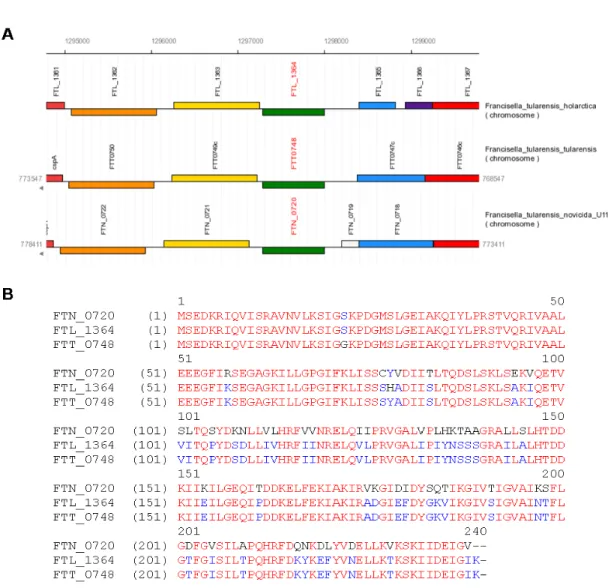
the pathogenicity of the F. tularensis subspecies holarctica and tularensis. We investigated the contribution of IclR homologs in the pathogenicity of F. tularensis subsp. holarctica and tularensis by evaluating the role of IclR in gene expression, host cell interactions and virulence of F. tularensis subsp. holarctica LVS (FTL_1364) and subsp. tularensis SchuS4 (FTT_0748) strains.
Materials And Methods
Bacterial strains
F. tularensis subsp. holarctica LVS was obtained from the CDC, Atlanta, GA. F.
tularensis subsp. tularensis SchuS4 was obtained from BEI Resources. F. novicida U112
was obtained from the American Type Culture 88 Collection (ATCC). An iclR transposon mutant was one of two mutants from the transposon mutant library (21) and was received as a gift from Colin Manoil. All strains were maintained on chocolate agar supplemented with 1% IsoVitaleX (Becton-Dickson), brain heart infusion (BHI) broth supplemented with 1% IsoVitaleX or Chamberlain’s defined medium (CDM) (5). Escherichia coli TOP10 (Invitrogen) were used for cloning purposes. E. coli was
propagated in Luria broth supplemented with hygromycin at 200 µg/ml or kanamycin at 20 µg/ml as necessary for antibiotic selection. All cultures were grown at 37°C.
Cell Culture
37
(ATCC CRL-2785) cells are a tumor cell line derived from mouse primary lung epithelial cells and were cultured in RPMI 1640 supplemented with 10% fetal bovine serum, 2 mM L-glutamine, 1.5 g/L sodium bicarbonate, 10 mM HEPES and 0.1 mM nonessential amino acids. Bone marrow-derived macrophages were generated by flushing bone marrow cells from C57BL/6 mouse femurs and recovered cells were incubated for 6 days on 15 cm2 non-tissue culture-treated dishes in L929 cell-conditioned DMEM. Nonadherent cells were removed by washing with phosphate-buffered saline (PBS) and bone marrow-derived macrophages were recovered from the dish using 1 mM EDTA in PBS.
Molecular techniques and allelic exchange
For both LVS and SchuS4 the iclR deletion was generated by splice overlap extension (SOE) PCR using primers designed to amplify the 5’ and 3’ regions of the iclR locus, which were then annealed to their complementary, homologous genomic DNA tags (17, 20). The subsequent deletion left only the first six amino acids and the stop codon of iclR. Each construct was cloned into the pCR-Blunt II TOPO vector (Invitrogen), verified by DNA sequence analysis, and subsequently cloned into pMP590 (sacB Kanr) using BamHI and NotI restriction sites (17, 27). For allelic exchange, plasmids were electroporated into LVS or SchuS4 and integrants were selected on chocolate agar containing kanamycin (10 µg/ml). Kanr strains were grown overnight and