Original Research Article
Budding nurses readiness for clinical practice: the future is now
Vivanjeet Kaur
1, Varsha Dhama
1, Karamjeet Kaur
1, Malar Kodi S.
2*, Rashmi Rawat
3INTRODUCTION
It is a challenging task to make nursing students super skilled to practice with safety, proficiency and empathetically in today’s swiftly moving health care settings. Fresh graduates upon entering the work force discover that they are not practice proficient and confident enough to steer through the ever changing world of health care settings laden by mounting expectations of patient and workload (Casey et al).1
Nurses’ competence is very much essential for delivering high quality patient care and to cope up with increasing burden on health care system. Nurses work together with all stakeholders including patients, physicians, care providers and insurance companies and eventually improving patient outcomes while reducing the cost of health care in future.2 It is commonly accepted that the
change from a role of a student to a full-fledged professional is a period of pressure, alteration in roles, and reality shock.1 Chappy, Jambunathan, and Mamocha,
have found that registered nurses have reported that they
1Nursing Interns, 2Department of Nursing, 3Nursing Tutor, College of Nursing AIIMS, Rishikesh, Uttarakhand, India
Received: 31 October 2019
Revised: 04 December 2019
Accepted: 11 December 2019
*Correspondence:
Dr. Malar Kodi S.,
E-mail: [email protected]
Copyright: © the author(s), publisher and licensee Medip Academy. This is an open-access article distributed under the terms of the Creative Commons Attribution Non-Commercial License, which permits unrestricted non-commercial use, distribution, and reproduction in any medium, provided the original work is properly cited.
DOI: http://dx.doi.org/10.18203/2320-6012.ijrms20195910
ABSTRACT
Background: Freshly registered nurses’ experience of conversion from student to skilled professionals calls for making significant adjustments to shifting personal and professional roles at the beginning of their career as a nurse. Nursing education is aimed to help students to become beginning practitioners in the field of nursing. This study was taken up to explore the perception of the outgoing nursing students about their readiness to work in the clinical settings after graduation. On completion of graduation, these budding practitioners are anticipated to adjust in the clinical settings rapidly and be proficient of providing innocuous care for patients with multifaceted care needs. It is expected from graduate nurses to be well equipped for clinical practice, but reality may be different and there could be numerous barriers associated with it.
Methods: It was a descriptive cross-sectional survey. A total of 176 outgoing graduate nursing students were selected using total enumerative sampling from different colleges of state of Uttarakhand and were asked to complete a demographic data sheet and self- reported readiness to clinical practice questionnaire.
Results: Results have shown that more than half of the outgoing graduate nursing students were not ready for clinical practice. Most of them recognized sleep disturbance, low salary, lack of time and documenting error as barrier for their readiness to clinical practice.
Conclusions: The findings of the study show that 63.3% of outgoing graduate nursing students were not ready to work in clinical area which is a matter of concern with the rising healthcare needs and increasing demands of the consumers of health. The results call for a change in the working condition for the nursing staff and a raise in wages worth making them to opt for clinical practice.
should get more time in clinical, extra practical skills, variety of experiences within real-life situation, and more of communication session with the doctors during their training period. They also stated that their training program have not equip them sufficiently with the knowledge of pharmacology and pathophysiology content, leadership skills, digital management of health records of patients, allocation of responsibility, managing more number of patient at the same time, or identification of changes in condition of patient (Berkow, Virkstis, Stewart, and Conway, Burns and Poster, Candela and Bowles, Li and Kenward).1 During the graduation period
students develop skills in communication, coping with the realities of the clinical area and deal with various aspects of human behavior. Student develop a positive attitude towards the clinical placement depending on the way they are treated in the area. Retention in the profession is greatly affected by the support and guidance encountered in their clinical posting. There are studies stating that students face various problems during their clinical postings as they are lacking in necessary skills, ambiguity in roles and responsibilities and burden of work. Students find it difficult to accept the gap in education and practice as the work which nurses do in clinical is different from the material taught in their theory classes. Newly graduated nurses develop a dissatisfaction with their job, lack in competency, poor interpersonal skills as a consequence of negative experience in the clinical postings.2
Studies have indicated that 30% to 60% of newly registered nurses change occupations or quit the profession completely during their first year in the profession” and they have specified as being inadequately prepared for practice in clinical settings as one of the reasons for leaving the nursing profession (Heather Dawn Brown, Delaney, Pine and Tart). Clinical learning have been recognized as a fruitful process for growing the student’s willingness for role of beginning professional (McNiesh).3 The existing worldwide dearth of nurses is
unmatched, with demands for round-the-clock nursing professionals mounting more rapidly than the proportion at which the health care services are welcoming newly graduate nurses. The task of substituting the nurses leaving the workplace and desire for information about the ways required to maintain those just inflowing are inspiring health care organizations and nurse managers to discover closely what institutes a quality work atmosphere (Duchscher JB).
With the ever growing and increasing complexity of healthcare, concerns regarding patient safety are of utmost importance. It has been evident that shortage of nurses adversely affects the healthcare outcome. As reported by Agency for Healthcare Research and Quality (AHQR) after conducting a review of several studies that an increase in nurse to patient ratio increases the occurrence of adverse patient outcomes(Kane, Shamliyan, Mueller, Duval, and Wilt).3 There is also an
amplified sense of displeasure with the work settings,
making it difficult to retain nurses in the profession. These issues are noteworthy, but they are aggravated by the requirement for more nurses to care for the progressively rising number of people above the age of 65, who classically have an increased frequency of lingering ailments and ensuing augmented difficulty of care needs (JCAHO).4
The concept of work readiness in nursing is widely accepted as landing in the field with full-fledged clinical skills laden with theoretical knowledge.5 Senior nursing
personals view new graduates unskilled to strongly associate theory to practice and incapable to work autonomously, though they are now licensed to do so. In addition to hitting the ground running, work readiness is a concept that comprises more than a mere focus on competence, skills, and ability. The term is also used to assume the new graduates will also possess generic industry related skills including teamwork; time management; communication skills; social skills and; emotional intelligence (Walker and Campbell).6 Nursing
programs has just recognized the significance of assimilating opportunities (such as clinical involvement with effective guidance and exposure to clinical experiences) that can enable the preregistration nurse to better appreciate the socialization progression of the profession (Hegney, Eley, and Francis).5 Nursing students
find a gap in the clinical atmosphere and the theory in the classroom which leads to change of profession and thus leaving scarcity of professionals in nursing. It is a challenge for the nurse educators to instill motivation and interest in nursing students to find nursing as an alluring profession. Many studies from Taiwan have found that the stressors and the kind of environment faced during their clinical hours are deciding factors to continue in nursing profession.7 To appreciate the willingness of
graduate nurses for clinical practice in a better way, it is imperative to examine senior nursing students’ perceptions of their readiness for practice and what are the barriers which hinder their readiness to work in clinical settings.
METHODS
This was a descriptive cross-sectional study conducted to assess the readiness of outgoing graduate nursing students for clinical practice and the factors affecting the readiness/barriers which are hindering their readiness to clinical practice.
father. Students were also asked about the choice of nursing as a carrier, any other professional course than nursing and also about the family member in nursing profession.
Inclusion criteria
• Outgoing graduate nursing students of the selected Government and Private nursing colleges, who have given the consent to participate in the study.
Exclusion criteria
• Students who were absent during the time of data collection.
Three tools were used to collect data. First tool is demographic data sheet which has 14 items dealing with subject’s demographic profile and selected variables in the study.
Tool to assess the readiness for clinical practice was developed by the researcher. It is a 5-point likert scale consisting of 10 items ranging from 10-50. Subjects scoring more than 75% were marked ready and less than 74% were marked not ready for the clinical practice. Tool to assess the perceived barriers in clinical practice was developed by the researcher. It is a checklist consisting of 17 items which were divided into four domains i.e. functional barriers, structural barriers, socio-cultural barriers and communication barrier. Functional barrier includes 7 items, structural barrier includes 4 items, socio-cultural and communication barrier includes 3 items.
Content validity was done by eight experts in terms of clarity, relevance, appropriateness, relatedness and meaningfulness for the purpose of study. Reliability was established by test re-test method and cronbach’s alpha and the tool was found to be reliable (0.85).
The study was approved by ethics committee, AIIMS, Rishikesh. Written permission was taken from head of respective institutions and written consent was obtained from the participants.
Pilot study was conducted on 16 students by using total enumerative sampling technique at AIIMS, Rishikesh in the month of April 2018. It was found that it is feasible to conduct the final study as no major problems were faced by the investigators during pilot study.
Data collection procedure
After getting the ethical approval from the institute’s ethics committee, permission was taken from the administration of the selected colleges. Subjects were explained about the purpose of the study and were asked to fill the demographic data sheet and self-reported
readiness to clinical practice questionnaire. The data was collected from May 2018 to June 201.
Data analysis
Data was analyzed by using SPSS version 16. Descriptive statistics include mean, frequency, percentage and standard deviation. Chi2 was used to examine the
association between self-reported levels of readiness to clinical practice with their selected socio demographic variables.
RESULTS
Subjects in the study aged between 19-27 years, most of them are between of 22-24. Majority of them (90.9%) were female. Almost all (90.4%) outgoing graduate nursing students belong to Hindu religion. Almost all (96.5%) were unmarried. Majority (76.5%) of outgoing graduate nursing students were living in urban area. Majority of (74.4%) them belongs to nuclear family. 37.5% of subjects have family monthly income between 10,000-30,000 Rs. Most of the fathers of outgoing graduate nursing students were educated up to graduation (40.7%) and most of them are working in government setup (59%). Most of the mothers of outgoing graduate nursing students were educated up to graduation (39.5%) and most of them were housewife (84.7%). More than half of them (57.3%) have chosen nursing as career. Almost all (95%) of them have not done any other professional course other than nursing. Only 21.5% outgoing graduate nursing students have any family member or relative in nursing profession.
Self-reported readiness to clinical practice
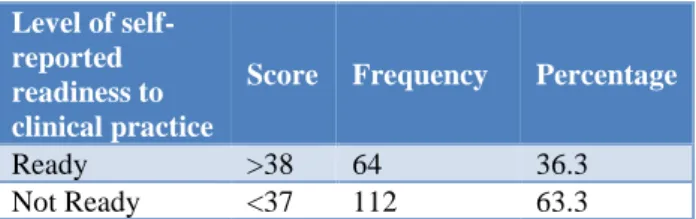
Table 1 shows most of the outgoing graduate nursing students (63.3%) were not ready for the clinical practice and only few (36.3%) of them were ready for clinical practice (Table 1).
Table 1: Level of self-reported readiness to clinical practice.
Level of self-reported readiness to clinical practice
Score Frequency Percentage
Ready >38 64 36.3 Not Ready <37 112 63.3
Barriers to readiness for clinical practice
Table 2: Perceived barriers for readiness to clinical practice.
Barriers Frequency Percentage
Functional barriers
Long working hours 116 65.9
Not getting enough holidays 133 75.6
Disturb sleep pattern 153 86.9
Time involved in documenting error 139 79.0
Fear of being blamed 132 75.0
Medication errors 125 71.0
Difference in behavior 127 72.2
Lack of time 142 80.7
Structural barriers
Low salary 145 82.4
Environmental change 127 72.2
Unsupportive faculty 129 73.3
Interfere with personal choice 130 73.9
Sociocultural barriers Feeling isolated from family members 109 61.9
Disturbed marriage life due to night shift 111 63.1 Communication barriers
Age difference 110 62.5
Family interference 96 54.5
Difference in language 121 68.8
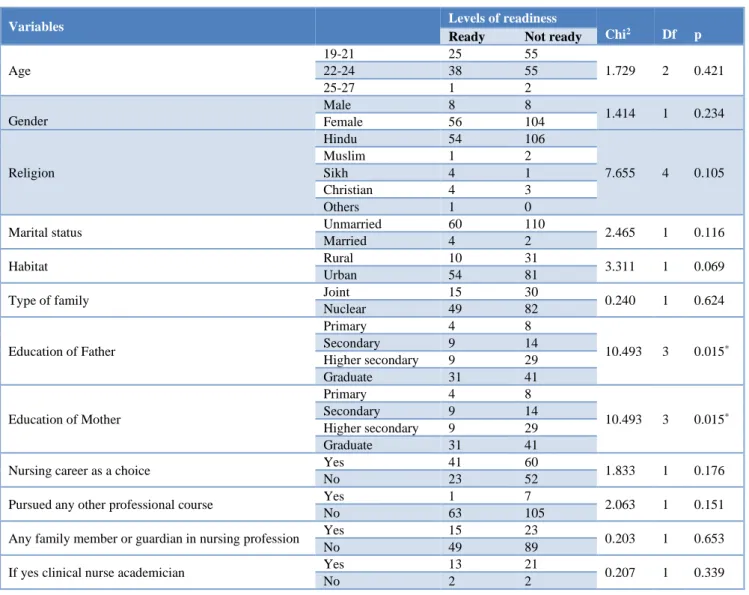
Table 3: Association between self-reported levels of readiness to clinical practice with their selected socio demographic variables.
Variables Levels of readiness
Chi2 Df p
Ready Not ready
Age
19-21 25 55
1.729 2 0.421
22-24 38 55
25-27 1 2
Gender
Male 8 8
1.414 1 0.234
Female 56 104
Religion
Hindu 54 106
7.655 4 0.105
Muslim 1 2
Sikh 4 1
Christian 4 3
Others 1 0
Marital status Unmarried 60 110 2.465 1 0.116
Married 4 2
Habitat Rural 10 31 3.311 1 0.069
Urban 54 81
Type of family Joint 15 30 0.240 1 0.624
Nuclear 49 82
Education of Father
Primary 4 8
10.493 3 0.015*
Secondary 9 14
Higher secondary 9 29
Graduate 31 41
Education of Mother
Primary 4 8
10.493 3 0.015*
Secondary 9 14
Higher secondary 9 29
Graduate 31 41
Nursing career as a choice Yes 41 60 1.833 1 0.176
No 23 52
Pursued any other professional course Yes 1 7 2.063 1 0.151
No 63 105
Any family member or guardian in nursing profession Yes 15 23 0.203 1 0.653
No 49 89
If yes clinical nurse academician Yes 13 21 0.207 1 0.339
Association between self-reported levels of readiness to clinical practice with their selected socio demographic variables.
The data presented in (Table 3) shows that there is a significant association between self-reported level of readiness to clinical practice and family income per month (p=0.015). It shows that those who are having family income of Rs. 30000-50000 are having higher level of self-reported readiness to clinical practice (Table 3).
DISCUSSION
In nursing education, getting enough practical experience within the real clinical settings and with the real patients is a passage through which the students become real professionals. It is widely accepted that transfer of students from theoretical knowledge to practical settings is stressful, challenging, demanding and reality shock.7
Present study have shown that more than 50% of outgoing graduate nursing students were not ready for clinical practice which contradicts the findings of study conducted by Casey et al, on senior nursing student’s perception of their readiness to practice. Students reported incompetency in communicating with patients, family members and other healthcare team members and were not confident enough to solve clinical problems. One of the qualitative studies by Jamshidi et al, reported that students were inadequately ready for clinical practice on account of incomplete knowledge, lacking practical skills and unsatisfactorily developed communication skills.8
It is one of the educators’ foremost accountabilities to treat nursing students appropriately in the clinical settings, promoting higher interest and drive for learning as well as growing their self-confidence.9 Nabolsi et al,
validated in their study that correct behavior and formation of a communication with students are vital elements for nursing instructors to be a role model for students. Teaching that comprises value and respect enables the teaching-learning progression and mingles the students into the nursing profession.10 Baltimore, Sharif
and Masoumi also demonstrated in their study demonstrate that clashes and unsuitable treatment amid the staff and students destructively affect the clinical teaching trend.11,12
Students have perceived disturbed sleep pattern, low salary, Lack of time, Time involved in documenting error and Fear of being blamed as barrier for them not being ready for the clinical practice. As India as resource constraints country and nurses are utilized for various jobs at very low wages and duty hours are also very long that disturb the sleeping pattern of nurses, which makes it difficult for the new nurses to be ready to work in clinical settings. A reasonable wage is a substantial feature in job-seeking behavior and is particularly significant in keeping employees in their present positions. Increasing income to resolve organization’s staff recruitment and retention
problems is an easy-to-implement mediation in the short run (May, Bazzoli, and Gerland).13 When recognizing the
accurate condition of working atmosphere and specialized proficiency of nurses, nursing students would dither to become nurses. There are some factors which make nursing students hesitant to enter into the profession which includes personal factors like interest, career choices, clinical learning experience; work atmosphere factors -stress from work, shift work, and medical legal problems; and administrative factors-inadequate workforce, overwork, poor safety, and insufficient salary.
Low salary cannot mirror the level of accountability and specialized skills, so the heavy workload and unsatisfactory salary deeply affected the nursing students’ choices to become a nurse. In totality, as well as personal and family member’s factors, workplace environment and organizational factors were also involved in the worries for nursing students while deciding whether to pursue nursing as a career. So, in order to retain and allure new graduates to the field policies and work milieu needs to be improved such as low pay and heavy workload.8
There is significant association between self-reported level of readiness to clinical practice and family income per month (p=0.015). It shows that those who are having family income of Rs. 30000-50000 are having higher level of self-reported readiness to clinical practice which might be because of graduates aiming to migrate to other countries and hence paid better for their work in order to maintain their economic wellness.
CONCLUSION
The present study has certain limitations that include total enumerative sampling technique, only selected nursing colleges of Uttarakhand were included, study design was cross-sectional however sample size was sufficient. In a nutshell the present study showed that more than 50% of outgoing nursing graduate students reportedly were not prepared for clinical practice because of certain barriers which needs a call for proper induction before getting into the practice, conducive work environment with optimum level of wages suitable for the job. Similar studies can be done in different geographical area and with larger sample to generate quality evidence for better quality nurses and hence, a better healthcare system.
Funding: No funding sources Conflict of interest: None declared
Ethical approval: The study was approved by the Institutional Ethics Committee
REFERENCES
practicum experience. J Nursing Edu. 2011 Nov 1;50(11):646-52.
2. Shoqirat N, Abu-Qamar ME. Clinical placement in Jordan: qualitative views of final year nursing students. Aus J Adv Nurs. 2013 Jun;30(4):49-58. 3. Kane RL, Shamliyan T, Mueller C, Duval S, Wilt
TJ. Nurse staffing and quality of patient care. Evid Rep Technol Assess. 2007 Mar 1;151(1):115. 4. Joint Commission on Accreditation of Healthcare
Organizations, 2002. Available at. http://www.jointcommission.org/NR/rdonlyres/5C1
38711-ED76-4D6F-909F-B06E0309F36D/0/health_care_at_the_crossroads.p df.
5. Hegney D, Eley R, Francis K. Queensland nursing staffs' perceptions of the preparation for practice of registered and enrolled nurses. Nurse Edu Today. 2013 Oct 1;33(10):1148-52.
6. Romyn DM, Linton N, Giblin C, Hendrickson B, Limacher LH, Murray C, et at. Successful transition of the new graduate nurse. Inter J Nurs Edu Scholar. 2009;6(1).
7. Tseng HC, Wang HH, Weng WC. Nursing students' perceptions toward the nursing profession from clinical practicum in a baccalaureate nursing program-A qualitative study. Kaohsiung J Med Sci. 2013 Mar 1;29(3):161-8.
8. Jamshidi N, Molazem Z, Sharif F, Torabizadeh C, Najafi Kalyani M. The challenges of nursing
students in the clinical learning environment: A qualitative study. Scientific World J. 2016;2016. 9. Nahas VL. Humour: a phenomenological study
within the context of clinical education. Nurse Edu Today. 1998 Nov 1;18(8):663-72.
10. Nabolsi M, Zumot A, Wardam L, Abu-Moghli F. The experience of Jordanian nursing students in their clinical practice. Procedia-Social Behavioral Sci. 2012 Jan 1;46:5849-57.
11. Sharif F, Masoumi S. A qualitative study of nursing student experiences of clinical practice. BMC Nurs. Nov 2005;4(1).
12. Baltimore JJ. The hospital clinical preceptor: Essential preparation for success. J Continu Edu Nurs. 2004 May 1;35(3):133-40.
13. May JH, Bazzoli GJ, Gerland AM. Hospitals' Responses To Nurse Staffing Shortages: Hospitals' actions are having a positive impact, but can it be sustained for the long run?. Health Affairs. 2006;25(1):W316-23.