Eleanor Taylor
Doctorate in Clinical Psychology
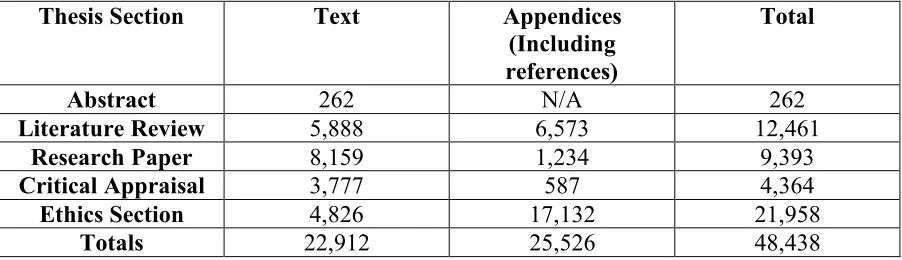
Thesis Section Text Appendices (Including references)
Total
Abstract 262 N/A 262
Literature Review 5,888 6,573 12,461
Research Paper 8,159 1,234 9,393
Critical Appraisal 3,777 587 4,364
Ethics Section 4,826 17,132 21,958
Totals 22,912 25,526 48,438
[image:2.595.73.524.118.248.2]Thesis Abstract
This thesis explores the experiences of patients receiving cardiac support from two different types of ventricular assist device (VAD). The literature review focuses on the decision-making experience of patients and caregivers considering implantation of a left ventricular assist device (LVAD). The LVAD is a type of long-term/durable VAD which enables patients to be discharged from hospital. The literature review employed a thematic synthesis of the qualitative literature arriving at three major themes Context, Mechanism and Outcome. The synthesis proposes that decision-making is affected by Context and Mechanisms for both patients and caregivers which in turn leads to the theme Outcome. Context and Mechanism can be better understood by healthcare professionals by the third theme of Outcome.
The research paper explores the experiences of patients who have undergone short-term ventricular assist device (ST-VAD) support as an emergency procedure. The short-short-term ventricular assist device provides temporary cardiac support while a patient is in hospital. Participants in the research paper completed interviews which were then analysed using an Interpretative Phenomenological Analysis framework. Four superordinate themes are
presented following the participants journey; (1) Crisis and the fragile nature of life, (2) “You adapt, you’ve got no choice”, (3) Moving on, (4) The change in me.
The final section of the thesis comprises the author’s critical appraisal and reflections during the research process. The critical appraisal provides an opportunity for further
This thesis reports research undertaken between April 2016 and October 2017 for the Lancaster University Doctorate in Clinical Psychology. The work presented within this thesis is my own except for those instances where due reference has been given to other authors. This thesis has not been submitted for the award of a higher degree elsewhere.
Name: Eleanor Taylor
Signature
Section one: Literature Review
Title Page 1-1
Abstract 1-2
Introduction 1-3
Rationale for the present review 1-5
Method 1-6
Data Search 1-6
Inclusion and exclusion criteria 1-6
Results of search 1-7
Quality Assessment 1-8
Thematic Synthesis 1-8
Synthesis 1-10
Theme 1: Context 1-11
Theme 2: Mechanism 1-13
Theme 3: Outcome 1-16
Discussion 1-18
Strengths and Limitations of the Review 1-20
Conclusions 1-22
References 1-23
What’s New 1-29
Figure 1. The left ventricular assist device (LVAD). 1-30 Figure 2. Decision tree illustrating patient options and potential outcomes 1-31
Table 1. Systematic Review Search Terms 1-32
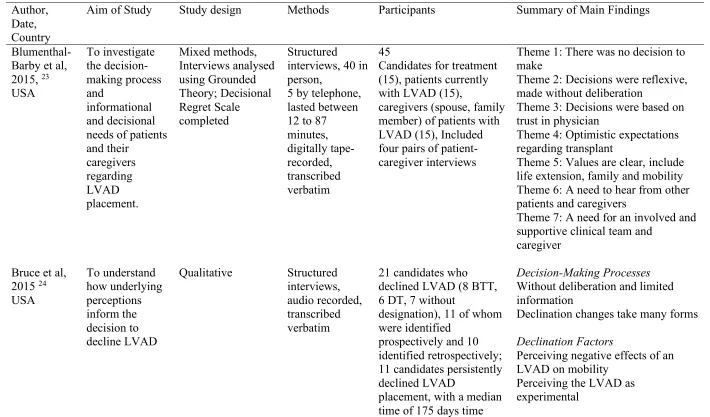
Table 2. Summary of Included articles 1-34
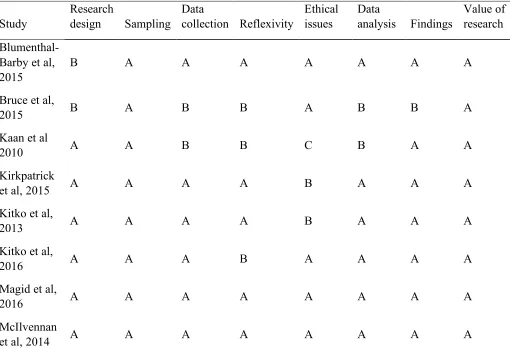
Table 3. CASP qualitative appraisal Scores 1-39
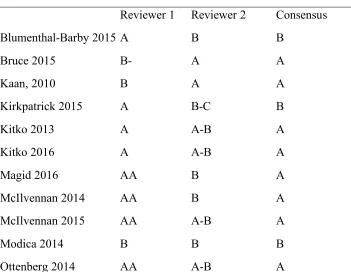
Table 4. Consensus CASP quality scores 1-41
Figure 4. Descriptive Themes 1-42
Table 5. Theme Translational Table 1-43
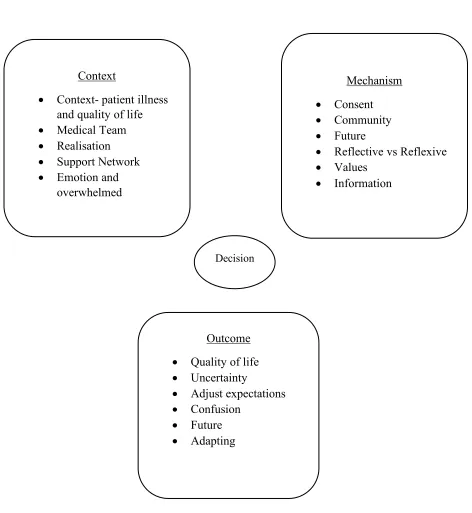
Figure 5. Thematic Diagram 1-44
Appendix 1-A Journal Guidelines for The Journal of Cardiovascular Nursing 1-45
Section Two: Research Paper
Title Page 2-1
Abstract 2-2
Introduction 2-3
Aim 2-6
Methodology 2-6
Study Design 2-6
Participants 2-7
Recruitment 2-8
Data Collection 2-9
Data Analysis 2-9
Reflexive Positioning 2-10
Ethics 2-10
Results 2-11
Theme 1: Crisis and the fragile nature of life 2-11
Theme 2: “You adapt quite quickly, you’ve got no choice” 2-15
Shock 2-15
Love/hate relationship 2-16
Adapting 2-16
Theme 3: Moving On 2-18
They saved my life 2-18
Limbo vs Moving on 2-19
Moving on from Hospital 2-20
Theme 4: The Change in Me 2-21
Discussion 2-23
Clinical Implications 2-26
Limitations 2-28
Conclusion 2-28
References 2-30
What’s New 2-34
Figure 1. Flow chart of participant numbers 2-35
Table 1. Participant Characteristics 2-36
Figure 2. Experiencing ST-VAD: a Journey 2-37
Appendix 2-A: Extract from Geoff’s transcript 2-38
Section Three: Critical Appraisal
Title Page 3-1
Introduction 3-2
My Reflections on VADs and the Research Process 3-5 Professional Development and implications for working in physical health
settings
3-7
Patient-Centred Care 3-8
Ethical and Legal Implications 3-10
Summary 3-11
References 3-12
Section Four: Ethics
Title Page 4-1
Index Page 4-2
Letter of HRA approval 4-3
Research Protocol 4-11
Appendix A. Semi-structured interview schedule 4-23
Appendix B. Participant information sheet 4-26
Appendix C. Staff information sheet 4-29
Appendix D. Consent form 4-31
Appendix E. Poster 4-33
Appendix F. Expression of interest form 4-34
Appendix G. Debrief Sheet 4-35
Appendix H. Letter to participant 4-36
Appendix I. IRAS form 4-37
Appendix J. HRA statement of activities 4-65
Appendix L. HRA favourable opinion letter
Appendix M. IRAS sponsorship letter 4-86
Appendix N. Insurance Document 1 4-87
Appendix O. Insurance Document 2 4-88
Appendix P. Letter of access for research 4-89
Running Head: EXPERIENCE OF LVAD DECISION-MAKING
ˡ See Appendix 1-A for Journal of Cardiovascular Nursing manuscript guidelines Section One: Literature Review
The Experiences of Patients and Carers in Decision-Making for Left Ventricular Assist Device: Thematic Synthesis of Qualitative Studies
Eleanor Taylor
Doctorate in Clinical Psychology Lancaster University
Word Count: 5,920
All correspondence should be sent to: Eleanor Taylor
Doctorate in Clinical Psychology Lancaster University
Lancaster LA1 4YF
Tel: 01524 592970
Email: [email protected]
EXPERIENCE OF L-VAD DECISION-MAKING
Abstract
Background: The use of left ventricular assist device (LVAD) in end stage heart failure is increasingly common. The decision-making process can be complex for patients and
caregivers and there has been a rise in qualitative studies exploring their experiences of this. Objectives: The aim of this study was to synthesise the qualitative literature regarding
patients and caregivers’ experiences of decision-making related to LVAD.
Methods: A search of CINAHL, PubMed, Academic Search Complete, PsychINFO and Web of Science was conducted on the topic of LVAD and decision-making. The articles were synthesised using a formal process of thematic synthesis.
Results: Three domains surrounding LVAD decision-making were identified: Context, Mechanism and Outcome. Context and Mechanism related to specific thoughts and emotions which fed in to the decision. Outcome related to the thoughts and feelings following the decision.
Conclusions: Decision-making surrounding LVAD can be emotive and stressful and there may be factors involved that are not fully supported and understood by healthcare
professionals. As well as the factors which make up Context and Mechanism, it is important for healthcare professionals to understand the “Outcome” described by patients and
caregivers. It can be understood that Outcome can feedback into the understanding of Context and Mechanism and as such aid in tailoring support. Professionals can then support patients and caregivers in the most suitable ways. In this way, “Outcome” feeds back into the understanding of “Context” and “Mechanism”.
EXPERIENCE OF L-VAD DECISION-MAKING
According to the National Heart Failure Audit (2015-2016)1, approximately 900,000 people in the United Kingdom have heart failure. Heart failure encompasses problems with heart function, due to the heart being unable to fill or empty effectively. In the UK the commonest reason for heart failure is the inability of the left ventricle to contract strongly enough to push the blood around the body. This leads to an increase in pressure in the left atrium which prevents the blood leaving the lungs. Symptoms of heart failure include breathlessness, fatigue and swollen ankles.1 Patients with New York Heart Association (NYHA) class IV are considered as having end stage heart failure (exhibit symptoms of heart failure at rest) and are eligible for transplant or LVAD.2 End stage heart failure is also typified by “discomfort with any physical activity”(p. 4) and the need for complete rest.2
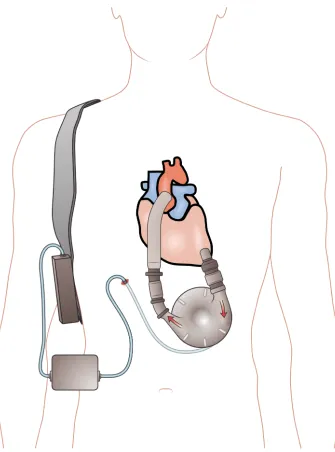
Heart failure can be managed by pharmacological treatment and invasive procedures, such as heart transplant.3 Heart transplant is the treatment of choice for end stage heart failure but there is a scarcity of donor organs. Amongst patients under the age of 60 between 10 and 15 patients per million need a heart transplant. There are sufficient donors for two per million which means that there are around 150 transplants a year in the UK.4,5 Left ventricular assist devices (LVAD) were devised as a bridge to transplant or recovery for those awaiting a donor heart.2 LVADs are implanted pumps that assist the heart in pumping blood throughout the body. These devices have a cable that connects the pump to a controller and power source which is worn outside of the body6 see Figure 1. Left ventricular assist devices (LVADs) have become more common (as a bridge to transplant or recovery) due to the waiting periods for donor hearts or when transplantation is not appropriate (as a destination therapy (DT)).6, 7 In the UK currently LVAD is not licensed as a destination therapy however in other countries such the USA it is. Between 1 April 2004 and 31 March 2014 438 patients were bridged to transplant with LVAD.8
EXPERIENCE OF L-VAD DECISION-MAKING
These devices enable patients to be discharged from hospital. LVAD support is intended to extend life expectancy and improve quality of life for patients with chronic end-stage heart failure.10 However, the patient can experience complications, including
respiratory failure, ventricular arrhythmia, right heart failure, arterial arrhythmia, renal failure, device malfunction, stroke (haemorrhagic or thrombotic), gastrointestinal bleeding and driveline infection. 11 These are serious problems that can impact negatively on quality of life and prognosis for patients supported with LVAD. Ben-Gal and Jaarsma12 state that the new generations of LVAD have a high success rate, however along with the potential medical complications there are lifestyle challenges involved. The patient needs to carry a battery pack, they must not get the battery pack and controller wet and they must avoid damage to the driveline exit site which restricts their movement in bed. The complications and changes to lifestyle need to be fully understood by patients and make the decision-making process of considering LVAD implantation very difficult especially when the alternative is, at best, restricted quality of life . This decision is illustrated in Figure 2.
Insert Figure 2.
A number of studies have been conducted into the impact of living with an LVAD on different aspects of life, such as the psychosocial impact,13,14 life style adjustments15,16 and quality of life.17,18 More recently, a meta-synthesis was conducted into the adaptation and coping of patients with an LVAD.19 It reported four distinct stages: Pre-LVAD, implant hospitalisation, early home adaptation and late home adaptation. During the Pre-LVAD stage patients spoke of wanting to relieve the heavy symptom burden due to heart failure
EXPERIENCE OF L-VAD DECISION-MAKING
personal identity. The patients’ pursuit of independence was often thwarted by complications following implantation.19
The perspective of caregivers has also received attention. A recent qualitative meta-synthesis20 regarding caregivers’ perceptions about caring for an adult LVAD patient reported three stages: “early stage”, “middle stage” and “late stage”. Within each domain there were different themes. Caregiving in the “early stage” involved an “emotional rollercoaster” when understanding how sick the patient was followed by their key role in decision-making regarding LVAD placement (theme: “decision: no option”). Once the LVAD was in place caregivers described where they learnt the necessary skills to look after the patient but were anxious about being able to manage emergencies at home (theme “leave it [the LVAD] at the hospital”). The “middle stage” covered the period at home for
caregivers and patients. Caregivers described “fragility of the patient and the associated anxiety, fear and hypervigilance” followed by “recognition of a need to adapt”. After
caregivers adapted to their new caregiving role they recognised their “transformed life”. The “Late stage” referred to the end of the LVAD; this varied between those who went on to have transplant or those who had LVAD fitted as destination therapy.
Rationale for the present review
Previous qualitative studies and reviews have focused on the impact of LVAD on the experiences of patients and caregivers, their quality of life, adaptation and coping.12-20
However, there has been a recent rise in qualitative studies that have examined the experience and process of decision-making surrounding LVAD, for both patients and caregivers.
EXPERIENCE OF L-VAD DECISION-MAKING
addressed is: “How do patients and caregivers experience and view decision-making related to LVAD?” This review will increase our understanding, which will help multidisciplinary healthcare professionals to support patients and their families’ pre-decision-making, during, and post-decision-making surrounding LVAD.
Method
Data Search
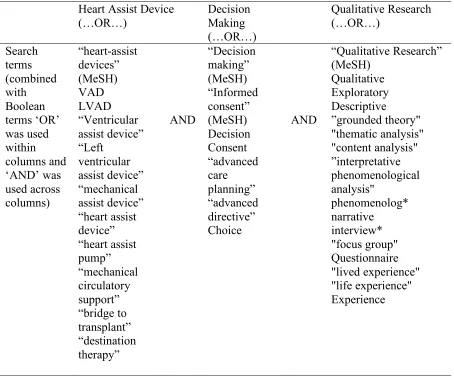
Potential studies for this thematic synthesis were obtained through searching the following databases: CINAHL, PubMed, Academic Search Complete, PsychINFO and Web of Science. Appropriate search terms were used, augmented by using the thesaurus or MeSH terms, and the appropriate Boolean operators, as shown in Table 1. A librarian was consulted to help refine the search terms and strategies to ensure all relevant studies were found. The searches were conducted between the 26th and 31st December 2016.
Table 1: Search terms table Inclusion and exclusion criteria
EXPERIENCE OF L-VAD DECISION-MAKING
patients or caregivers themselves; or (2) where the quotes might be attributed to healthcare professionals.
Results of search
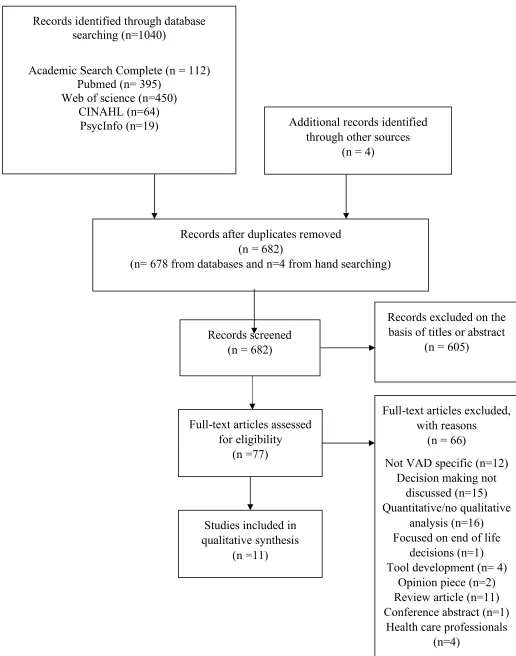
The results of the search strategy are outlined in the PRISMA22 diagram (Figure 2). Initially 678 articles were reviewed using their titles, abstracts, once duplicates were removed. Those that appeared to meet the criteria were subject to detailed analysis via reading full text to determine whether they met the inclusion criteria. Studies were not included if they were: not specifically about VAD, focused on children, were centre reports, reviews or medical
commentaries, quantitative or systematic reviews with economic evaluation. Hand searching the references in the relevant articles yielded two articles that were suitable for inclusion, and two articles were excluded during full text reviewing. When multiple reports of the same study were found, the articles were compared and only selected if each article presented distinct findings based on different study aims and questions about the same material. Following the implementation of the inclusion and exclusion criteria nine articles were relevant. Hand searching of references yielded two further studies. This resulted in 11 papers reporting the experience of decision-making surrounding LVAD of patients (n=167, 22 were the same sample in two studies) and caregivers (n=97).
Figure 2: PRISMA flowchart
EXPERIENCE OF L-VAD DECISION-MAKING
number of participants in any study was 45. The articles considered were not homogenous, differing in their purpose and study design.
Table 2: Article Characteristics
Quality Assessment
The Critical Appraisal Skills Programme (CASP)34 was used to consider the quality of the studies used in the thematic synthesis. The CASP has two screening questions regarding clarity of the aims and appropriateness of the methodology, followed by eight quality
questions that range from in depth methodological appropriateness to ethical relevance. Each of the studies passed the screening questions. Each paper was evaluated using the CASP items in conjunction with the rating system proposed by Downe35 (Table 3).
Table 3: Researcher’s CASP score
An experienced colleague and the researcher independently appraised each of the 11 selected papers and rated them according to the perceived reliability of their conclusions which were discussed as there was initially some discord in ratings. The researcher’s views can be seen in Table 3 and the consensus is shown in Table 4.
Table 4: CASP Consensus
The CASP scores were not used to exclude papers but to compare, examine and critique the research to add context to the results.36 The ratings given are related to the quality of reporting and not necessarily the quality of the study itself. The quality of the studies was good to excellent, with eight papers showing no or few flaws at consensus.
Thematic synthesis
EXPERIENCE OF L-VAD DECISION-MAKING
to achieve analytical abstraction at a higher level by rigorously examining common and overlapping elements.21 This approach takes into account the concerns of both
meta-ethnography and grounded theory.37 Free codes of findings are organized into ‘descriptive’ themes, which are then further interpreted to yield ‘analytical’ themes.38 Thematic synthesis was employed to focus on patient and caregiver experiences of decision-making in the context of LVAD. This methodology was chosen for two reasons. Firstly, it enabled the analysis of substantive literature in decision-making across the duration of LVAD. Secondly, it enabled the description of influencing factors on decision-making for this population and the development of analytical themes that could be applied across the decision timeline.
From an epistemological perspective, thematic synthesis may be classified as critical realist, where our knowledge of reality is mediated by our perceptions and beliefs.39 The technique involves the development of descriptive and analytical themes that aim to “go beyond the primary studies to generate new interpretive constructs, explanations, or
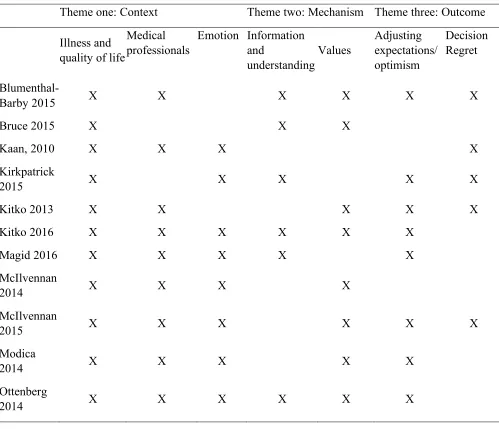
hypotheses”21 (p.1). The chosen thematic synthesis approach involved examining all the text labelled as ‘results’ or ‘findings’ in study reports. The three stage system of thematic synthesis was employed;21 organising line by line codes into descriptive themes and developing analytical themes from them. The individual sources were input into and analysed in NVivo.40 Figure 3 details the descriptive to analytical themes and Table 5 for theme translational table.
EXPERIENCE OF L-VAD DECISION-MAKING
Stage 3: Stage three involved generating analytical themes, going beyond the findings of the primary studies to generate additional concepts, understandings or hypotheses. This iterative process involved sorting and aggregating the descriptive themes until a clear pattern emerged with minimal overlap between the new themes.21
Figure 3: Descriptive to analytical themes Table 5: Theme translational table
Synthesis
Three major themes, with sub-themes, were identified as being central to decision-making:
1. Context (illness and quality of life, medical professionals, emotions) 2. Mechanism(information and understanding, values)
3. Outcome (adjusting expectations, decision regret, optimism)
The relationship between the themes are illustrated in Figure 4. The themes of Context and Mechanism feed into the decision-making process. The Outcome theme concerns the way participants deal with consequences of their decision. For healthcare professionals
understanding the Outcome of decision-making is important in helping the patient to make an informed decision.
Figure 4: Thematic Map
EXPERIENCE OF L-VAD DECISION-MAKING
individual and personal circumstance is the “Context” and the “Outcome” reflects the effects of the decision.
Theme 1: Context
The theme “Context” encompassed the patients’ current level of illness and quality of life as a way to understand decisions regarding the LVAD. Ten of the 11 papers reviewed described quality of life and illness impacting on decision-making.23-32 Low quality of life and high symptom burden would suggest that the LVAD would be a necessary intervention; for example: “…it [heart failure] was killing him. He had no strength. He had no quality of life. He was just existing”31 (p174). Those who declined LVAD believed that although their quality of life was decreasing, LVAD would not improve this sufficiently enough to justify going through the implantation of the LVAD.29 Blumenthal-Barby and colleagues reported: “In rare cases where patients heard about the LVAD option earlier and medical management
was still an option, they preferred to postpone the decision until they absolutely had to.23 (p1185). Indeed, one decliner stated: “I feel good…I haven’t felt like I need something right now” 24 (p838). Decliners also reported that further complications due to LVAD would deter them from the device:
“And I know I’m going to have problems. So you know, like what’s the point? And why would I want to deal with that you know? It’s just…life is complicated enough as it is, you know? I don’t need any more complications”29 (p68).
EXPERIENCE OF L-VAD DECISION-MAKING
good faith, trust and confidence that patients and caregivers had in the medical team. Indeed, Blumenthal-Barby and colleagues quoted the following participant in their study:
“They said that the LVAD is probably the best way to go. And I trust these doctors with his life. And when they said that, that’s what we decided. I didn’t really ask for statistics. I just went with what they said. They said it would work, so I trusted them”23 (p1185).
The way in which the LVAD was explained was also an important factor for patients and caregivers: “I was able to think over the need of implanting an LVAD, because doctors did not communicate this option in an aggressive way; they described its potential as a bridge to
transplant”32 (p224).
The third aspect of context was the emotional nature of making decisions and the stress and anxiety described by patients and caregivers. Caregivers felt less fear and anxiety when the final decision was made by the patient. It was described that “emotion was pervasive”29 (p68) and “patients became emotional and even shed tears during their interviews when recalling the decision-making time period” 30 (p378)but less was understood about the mechanism of emotion during the decision-making process and as such this could be seen as context. Emotion was present for those who accepted and declined the LVAD. One decliner stated; “I just said, when it’s my time I’m ready. (starting to choke up…cry). I mean I know what’s on
the other side. So it doesn’t really bother me” 30(p377). Furthermore at times emotions were unspoken:
“At the time of decision-making, most caregivers reported feeling [destination therapy] LVAD would offer the patient more time and improved quality of life. Less often articulated was the fear that the patient would not survive surgery or would experience persistent
EXPERIENCE OF L-VAD DECISION-MAKING Theme 2: “Mechanism”
The theme “Mechanism” encompassed the thoughts, feelings and attitudes of patients and their caregivers making decisions, whether the decision was to accept or decline an LVAD. Ten of the eleven reviewed papers discussed aspects of the mechanisms of
decision-making.23,24,26-33 Decision makers tended to fall into two categories, those who were
reflexive and would make a decision without deliberation and those who were reflective who would weigh up the risks and benefits of the decision. Thus, according to McIlvennan and colleagues:
“nearly all patients clearly fell into one of two decision-making approaches: (1) an automatic process of decision-making where fear of death and a singular focus on [destination therapy] LVAD as a chance to prolong life over-rode any weighing of additional risks and benefits and (2) a reflective process where participants reasoned through risks and benefits of [destination therapy] LVAD”30 (p77).
Information and understanding
Seven articles reviewed 23,24,26,28-30,33 described the nature of information sharing and understanding of this. For patients, they described the impact of medication and illness on receiving and understanding medication.26,28,30 During decision-making patients and caregivers described that there was a lot of information to take in and people often felt overloaded by the amount and technical nature of the information. One caregiver said:
EXPERIENCE OF L-VAD DECISION-MAKING
There were benefits for caregivers being present when information was discussed, as Blumenthal-Barby and colleagues reported:
“The doctor would say stuff and I would hear what I thought the doctor said. But me hearing it and then trying to tell her [my wife] —I’m telling her what I thought I heard. So, by the time it gets back around to the doctor, he’s confused and we’re all confused”23 (p1186). Caregivers were often the people who helped patients to receive and translate the information that was given regarding decisions. “I have been through so many things with my husband, and I write everything down, and I research. You see this book [referring to book of notes]?
It’s too important. That’s my husband’s life”23 (p1186). Patients and caregivers described that hearing from others both before and after LVAD implantation was important in the decision-making process. Indeed, “talking to other patients who are living with [LVAD for destination therapy] was cited as the most valuable information one could receive” 33 (p372).
Overall caregivers were grateful for the information shared. Patients and caregivers, when asked, described a range of informational needs regarding LVAD placement including change to lifestyle, complications, prognosis and financial.23 Lifestyle included aspects such as changes to mobility, impact on hobbies, the prospect of being a burden or losing
EXPERIENCE OF L-VAD DECISION-MAKING Values
Values played a strong role in decision-making as described in nine of the 11 articles.23,24,27-33 Values related to being able to engage with the world and increase quality of life, to live longer for family, to be with family, and bodily integrity including not wanting to be “opened up” or choosing an LVAD as it enabled them to “keep the same heart”.23,24 For caregivers there was a struggle between wanting the patient to live and respecting the patient’s decision:
“Factors included apprehension about being widowed, a need for help with responsibilities, such as raising grandchildren, or the perceived inability of a family with other recent trauma to cope with further loss. In contrast, a few caregivers focused heavily on their belief that this was an extremely personal decision, and the patient should not be influenced by others’ opinions” 31(p175).
One of the most frequently discussed aspects of decision-making was that “there was no alternative” and “you either want to live or you don’t”23 (p1185). For some patients and caregivers, LVAD signified the only option for patients to continue to live. For those who declined the LVAD they believed that “death was an acceptable alternative to continuing a life of pain or suffering”30 (p377). McIlvennan and colleagues stated that those who used a reflective decision process “viewed death as an option worthy of consideration, examined the meaning of their lives, and reflected on their values, particularly around quality versus
quantity of life preferences”30 (p377). Magid and colleagues described that both accepters and decliners of LVAD wanted to relieve distress. However, acceptors felt that the LVAD would enable this, “Iwantedtobealive or dead. I don'tliketobesick”29 (p67), whereas decliners felt that the LVAD would not “…you are coughing and choking and one day you are up and the next day you're down. It's just… I've had enough of it”29 (p67).
EXPERIENCE OF L-VAD DECISION-MAKING
wasn’t really a deciding factor…but I found out that Vice-President Cheyney had an LVAD in
him and he had it for 12 years before he had a heart transplant…that is a pretty good
indication there that it would work” 30(p378) the information stated by patients in terms of the media was not always accurate. Further values reported by decliners included LVAD effecting mobility, it being an experimental intervention, and concerns that it would affect their chance of receiving a heart transplant. 24
Theme 3: Outcome
The theme “Outcome” encompassed the thoughts, feelings and attitudes of patients and caregivers following the decision. Ten of the eleven articles reviewed reported experiences about the outcome following decision-making. 23, 25-33 Caregivers who had the final decision due to patient illness reported a sense a burden and uneasiness in terms of responsibility for making the right decision;25,27,31 “Wondering if I was doing the right thing …either way it turned out, I was the one that was going to take the brunt of everything, which was scary”25 (p145). For patients, there was low reported decision regret if the decision made was consistent with their values.23 Decision regret was connected to continued illness following LVAD decision. There was a sense that the decision to proceed with LVAD was “just the beginning” and that life was not automatically easier once LVAD was in place. Indeed, the “Outcome” theme related to patients and caregivers needing to adjust expectations following decision-making. When searching for information, patients and caregivers reported that many of the stories online and in the media reported people “returning to normality”. For example, Dick Cheyney was reported to be living well following LVAD implantation and subsequent heart transplant in 2012 which lead to the “Cheyney Effect” and a sense of security for accepting the device.30
EXPERIENCE OF L-VAD DECISION-MAKING
implantation, “no…um I expected to be better. I am not as better as I expected. It is not coming as fast as I want, but I’m told by the professionals that I am on target” 29(p68).
Kitko and colleagues found that participants described “an improved quality of life and decreased symptom burden in the post implantation”28 (p97) but did not feel that the LVAD had met their expectations. Optimism, a positive attitude and dedicated caregiver aided patients post-LVAD implant; Ottenberg and colleagues reported “daily frustrations were tempered by an optimistic spirit and a willingness to be patient with the recovery process”33 (p371). Adapting to the changes brought by the LVAD required resilience.
There was a sense that patients hoped that the LVAD would lead to being symptom free however there were setbacks and barriers in recovery and “good health” such as infections and continuing symptoms.33 These barriers were disheartening for patients and caregivers. Patients could sometimes remember being told there were risks to the LVAD but this had not been taken on board at the time, “I have had as many admissions with my heart failure. I remember them telling me risks but not sure I was listening”28 (p97). Although disheartened by their experience, there was a sense that, for those who had accepted the device, they were “happy to be alive”28 (p97). Caregivers reflected on their experience of living with an LVAD recipient. Although there was some disappointment at the outcome even those who were involved in the decision-making process appeared pragmatic:
“not that I would change my decision but I had to make it without him. He was so sick, he was out of it. The times he is not doing well [with the LVAD], I feel guilty, I wonder if he would have made the same decision”27 (p198).
For those who felt “well” and had not had a number of complications there was a sense that feeling well might not last. Articles also reported patients starting to outlive the
EXPERIENCE OF L-VAD DECISION-MAKING
related to no further treatment options. For those hoping for transplant there was uncertainty as to whether they would be eligible:
“I received the LVAD as a bridge to transplant…I am medically stable and that is good, but now I am not moving on the transplant list … the LVAD is really a double-edge sword because I feel like it is me keeping from getting a heart”28 (p97).
For those who declined LVAD, adjusting expectations included revisiting the initial decision to decline the LVAD: “These candidates explained that, although they made their initial decision reflexively, they were willing to revisit their decision once medical
management no longer provided relief”24 (p837).
Discussion
The current synthesis describes three themes involved with decision-making surrounding LVAD. The themes “Context” and “Mechanism” feed into the decision-making process and the theme “Outcome” refers to the thoughts and feelings following decision. It is important for healthcare professionals to understand the “Outcome” described by patients and
caregivers as this can aid the professionals in supporting patients and caregivers in the most suitable ways. In this way, “Outcome” feeds back into the understanding of “Context” and “Mechanism”.
McIlvennan, and colleagues42 interviewed mechanical circulatory support (MCS) coordinators regarding the preimplantation decision process. These healthcare professionals spoke of the complicated decision that patients make and believed that for optimal decision-making to occur three central components were required:
EXPERIENCE OF L-VAD DECISION-MAKING
careful approach balancing tension between conveying enough detail about the process yet not overwhelming patients”42 (p222).
Sagin and colleagues43 describe the involvement of palliative care specialists in the decision-making phases of LVAD and the increased acknowledgement for the need of advanced care planning from the beginning. In line with this synthesis and studies with healthcare professionals, the timing of information regarding LVAD needs to happen sooner in the heart failure journey. Participants often reported being too sick or overwhelmed to fully comprehend information they were given about the LVAD. By not fully understanding the consequences of information this could lead to decision regret and the need to adjust expectations of life with an LVAD. If information was provided sooner it would enable a more collaborative, balanced decision. During this process, it would be important to include clear discussions regarding end of life care. Although in the UK, LVAD is used as a bridge to transplant, not all patients will recover sufficiently or reach candidacy for transplant.
Edlund and colleagues44 conducted a questionnaire study to investigate patient’s understandings of the LVAD. They reported that patients struggled to understand the procedure and device that they are consenting to which may be heightened for those with lower levels of verbal ability. Information needs to be provided in a range of formats with a balanced view regarding risks and benefits. As discussed in the synthesis, the role of peers would be highly beneficial to the process and enable patients and caregivers to have a clear understanding of the life adjustments that might take place.
multi-EXPERIENCE OF L-VAD DECISION-MAKING
disciplinary healthcare professionals, family/caregivers and peer mentors as well as the patient, 3) information should include risks and benefits in both physical and quality of life aspects for patients and caregivers, 4) information should be clear, up to date and patient preferences respected.
The meta-synthesis regarding adaptation and coping for patients with LVAD19 highlighted the use of emotion-focused and problem-focused coping. Emotion-focused coping included intentionally having a positive attitude, sense of humour and passing on knowledge and support to others going through LVAD implantation. Problem-focused coping related to building skills and routines to live as independently as possible. Both of these styles of coping can be challenged by unexpected complications such as infections or over-protection from caregivers and the impact on the patients’ sense of control and
autonomy. These different coping strategies are part of the context and mechanism of the decision-making process as discussed above. Healthcare professionals need to understand the context and mechanism as it applies to the individual patient and in understanding the
differences in adjusting expectations which could be supported by person-centred healthcare from the outset.
Strengths and limitations of the review
This study incorporated the experiences of decision-making surrounding LVAD support, the choice particularly whether or not to have the device implanted, and used rigorous methods for systematic review that included a comprehensive search of published studies using predetermined criteria. Study reporting was assessed according to the CASP framework which allowed readers to judge for themselves the quality of included studies and
EXPERIENCE OF L-VAD DECISION-MAKING
Reviewer one was from a clinical psychology background and reviewer two was an experienced reviewer from a general medical background. Although there was discord between the initial scores given by the reviewers both reviewers provided similar positive ratings for all the papers. There was a tendency for reviewer one to be more positive overall. These minor differences were resolved through discussion and consensus scores agreed for all papers. This may have been due to different application of the scoring system. The need for discussion ensured that the incision of some papers that might otherwise be excluded.
Ben Gal and Jaarsma12 reported that there may be differences in how patients and families from a range of cultures might perceive the LVAD and the withdrawal process. This could reflect the value related to bodily integrity. As such, it would be beneficial for future research that looks specifically at the views of culturally and linguistically diverse people regarding decision-making about LVAD support. The way that the data has been aggregated by papers in this synthesis means that it is not possible to establish and comment on the cultural homogeneity of the sample.
As the majority of papers in the review originated from the USA broad claims about the generalisability of the results to the worldwide LVAD population should be avoided. The licensing of LVAD across countries is different. The majority of the LVAD decision-making studies highlight the licensing protocols within territories that allow LVAD as destination therapy. This does not mean that decision-making and LVAD information should not be shared in early stages. As in those countries that do not currently employ LVAD as
EXPERIENCE OF L-VAD DECISION-MAKING Conclusions
EXPERIENCE OF L-VAD DECISION-MAKING References
1. Donkor A, McDonagh T, Hardman S. National Heart Failure Audit April 2015-March 2016. London: National Institute for Cardiovascular Outcomes Research. Retrieved from http://www.ucl.ac.uk/nicor/audits/heartfailure/documents/annualreports/annual-report-2015-6-v8.pdf. Published 2016. Accessed August 1, 2017.
2. Clegg AJ, Scott DA, Loveman E, et al. The clinical and cost-effectiveness of left ventricular assist devices for end-stage heart failure: a systematic review and economic evaluation. Health Technol Asses. 2005; 9 (45). Retrieved from
https://www.ncbi.nlm.nih.gov/books/NBK62191/pdf/Bookshelf_NBK62191.pdf. Published 2005. Accessed December 18, 2017
3. National Institute for Clinical Health and Excellence. Chronic heart failure in adults: management CG108. https://www.nice.org.uk/guidance/cg108. Published 2010. Accessed August 1, 2017.
4. Taggart DP, Westaby S. Surgical management of heart failure. BMJ. 1997; 314: 453-454. https://www.ncbi.nlm.nih.gov/pmc/articles/PMC2125997/pdf/9056784.pdf 5. Mahmood AK, Courtney JM, Westaby S, Akdis M, Reul H. Critical review of
current left ventricular assist devices. Perfusion. 2000; 15: 399-420. https://doi.org/10.1177/026765910001500502
6. Slaughter MS, Pagani FD, Rogers JG, et al. Clinical Management of continuous-flow left ventricular assist devices in advanced heart failure. J Heart Lung Transplant. 2010; 29(4S):S1-S39. https://doi.org/10.1016/j.healun.2010.01.011
EXPERIENCE OF L-VAD DECISION-MAKING
8. O’Neill BJ, Kazer MW. Destination to nowhere: a new look at aggressive treatment for heart failure- a case study. Crit Care Nurse. 2014; 32(2):47-55.
https://doi.org/10.4037/ccn2014442
9. Statistics and Clinical Studies, NHS Blood and Transplant, 2015 Annual Report on Ventricular Assist Devices. https://nhsbtdbe.blob.core.windows.net/umbraco-assets-corp/1309/nhsbt_annual_vad_report_2015.pdf. Published January 2015. Accessed December 18,2017.
10. Rizzieri AG, Verheijde JL, Rady MY, McGregor JL. Ethical challenges with the left ventricular assist device as a destination therapy. Philos Ethics Humanit Med. 2008; 3(20): 1-15. https://doi.org/10.1186/1747-5341-3-20
11. Yuan N, Arnaoutakis GJ, George TJ, et al. The spectrum of complications following left ventricular assist device placement. J Card Surg. 2012; 27(5):630-638
https://doi.org/10.1111/j.1540-8191.2012.01504
12. Ben-Gal T, Jaarsma T. Self-care and communication issues at the end of life of recipients of left-ventricular assist device as destination therapy. Curr Opin Support Palliat Care. 2013;7:29-35. https://doi.org/10.1097/SPC.0b013e32835d2d50
13. Hallas C, Banner NR, Wray J. A qualitative study of the psychological experience of patients during and after mechanical cardiac support. J Cardiovasc Nurs. 2009; 24 (1):31-39. https://doi.org/10.1097/01.JCN.0000317472.65671.e2.
14. Marcuccilli L, Casida J, Peters RM. Modification of self-concept in patients with a left-ventricular assist device: An initial exploration. J Clin Nurs. 2013; 22: 2456-2464. https://doi.org/10.1111/j.1365-2702.2012.04332
EXPERIENCE OF L-VAD DECISION-MAKING
16. Overgaard D, Kjeldgaard HG, Egerod I. Life in transition: a qualitative study of the illness experience and vocational adjustment of patients with left ventricular assist device. J Cardiovasc Nurs. 2012; 27(5):394-402.
17. Marcuccilli L, Casida J, Peters R, Wright S. Sex and intimacy among patients with implantable left-ventricular assist devices. J Cardiovasc Nurs. 2011; 26(6):504-511. https://doi.org/10.1097/JCN.0b013e31820e2fae
18. Sandau KE, Hoglund BA, Weaver CE, Boisjolie C, Feldman D. A conceptual definition of quality of life with a left ventricular assist device: results from a qualitative study. Heart Lung, 2014;43:32-40.
https://doi.org/10.1016/j.hrtlng.2013.09.004
19. Abshire M, Prichard R, Cajita M, DiGiacomo M, Dennison Himmelfarb C.
Adaptation and coping in patients living with an LVAD: A metasynthesis. Heart Lung 2016; 45(5): 397-405. https://doi.org/10.1016/j.hrtlng.2016.05.035
20. Magid M, Jones J, Allen LA, et al. The perceptions of important elements of caregiving for an LVAD patient: a qualitative meta-synthesis. J Cardiovasc Nurs. 2016; 31(3):215-225. https://doi.org/10.1079/JCN.0000000000000242
21. Thomas J, Harden A. Methods for the thematic synthesis of qualitative research in systematic reviews. BMC Med Res Methodol. 2008; 8, 45.
https://doi.org/10.1186/1471-2288-8-45
22. Liberati A, Altman DG, Tetzlaff J, et al. The PRISMA statement for reporting systematic reviews and meta-analyses of studies that evaluate healthcare interventions: explanation and elaboration. Br Med J. 2009; 339: b2700. https://doi.org/10.1136/bmj.b2700
EXPERIENCE OF L-VAD DECISION-MAKING
placement: implications for informed consent and shared decision-making. J Heart Lung Transplant. 2015;34:1182-1189. https://doi.org/10.1016/j.healun.2015.03.026 24. Bruce CR, Kostick KM, Delgado ED, et al. Reasons why eligible candidates decline
left ventricular assist device placement. J Card Fail. 2015; 21:835-839. https://doi.org/10.1016/j.cardfail.2015.06.008
25. Kaan A, Young Q-R, Cockell S, Mackay M. Emotional experiences of caregivers of patients with a ventricular assist device. Prog Transplant. 2010; 20:142-147.
https://www.ncbi.nlm.nih.gov/pubmed/20642172
26. Kirkpatrick JN, Kellom K, Hull SC, et al. Caregivers and left ventricular assist devices as a destination, not a journey. J Card Fail. 2015; 21:806-815.
https://doi.org/10.1016/j.cardfail.2015.05.016
27. Kitko LA, Hupcey JE, Gilchrist JH, Boehmer JP. Caring for a spouse with end-stage heart failure through implantation of a left ventricular assist device as a destination therapy. Heart Lung. 2013; 42:195-201. https://doi.org/10.1016/j.hrtlng.2012.10.004 28. Kitko LA, Hupcey JE, Birriel B, Alonso W. Patients’ decision making process and
expectations of a left ventricular assist device pre and post implantation. Heart Lung. 2016; 45:95-99. https://doi.org/10.1016/j.hrtlng.2015.12.003
29. Magid M, McIlvennan CK, Jones J, et al. Exploring cognitive bias in destination therapy left ventricular assist device decision making: a retrospective qualitative framework analysis. Am Heart J. 2016; 180:64-73.
https://doi.org/10.1016/j.ahj.2016.06.024
30. McIlvennan CK, Allen LA, Nowels C, Brieke A, Cleveland JC, Matlock DD.
EXPERIENCE OF L-VAD DECISION-MAKING
31. McIlvennan CK, Jones J, Allen LA, et al. Decision making for destination therapy left ventricular assist devices: implications for caregivers. Circ Cardiovasc Qual
Outcomes. 2015; 8:172-178. https://doi.org/10.1161/circoutcomes.114.001276 32. Modica M, Ferrantini M, Torri A, et al. Quality of life and emotional distress early
after left ventricular assist device implant: a mixed method study. Artif Organs. 2015; 39(3):220-227. https://doi.org/10.1111/aor.12362
33. Ottenberg AL, Cook KE, Topazian RJ, Mueller LA, Mueller PS, Swetz KM. Choices for patients “without a choice”: interviews with patients who received a left
ventricular assist device as destination therapy. Circ Cardiovasc Qual Outcomes. 2014;7:368-373. https://doi.org/10.1161/circoutcomes.113.000660
34. Public Health Resource Unit. Critical Appraisal Skills Programme (CASP): Making sense of evidence. England: Public Health Resource Unit; 2006. http://www.casp-uk.net/#!casp-tools-checklists/c18f8. Accessed November 2016.
35. Downe S. Metasynthesis: a guide to knitting smoke. Evidence-Based Midwifery.2008; 6(1): 4-8.
36. Sandelowski M, Barroso J. Classifying the findings in qualitative studies. Qual Health Res.2003; 13(7): 905-923. https://doi.org/10.1177/1049732303253488
37. Barnett-Page E, Thomas J. Methods for the synthesis of qualitative research: a critical review. BMC Med Res Methodol. 2009; 9:59. https://doi.org/10.1186/1471-2288-9-59 38. Kastner M, Tricco AC, Soobiah C, et al. What is the most appropriate knowledge
synthesis method to conduct a review? Protocol for a scoping review. BMC Med Res Methodol. 2012; 12:114. https://doi.org/10.1186/1471-2288-12-114
EXPERIENCE OF L-VAD DECISION-MAKING
40. NVivo qualitative data analysis Software; QSR International Pty Ltd. Version 11, 2015.
41. Britten N, Campbell R, Pope C, et al. Using meta ethnography to synthesise
qualitative research: a worked example. J Health Serv Res Policy. 2002; 7:209-215. https://doi.org/10.1258/135581902320432732
42. McIlvennan CK, Matlock DD, Narayan MP, et al. Perspectives from mechanical circulatory support coordinators on the pre-implantation decision process for destination therapy left ventricular assist devices. Heart Lung. 2015; 44:219-224. https://doi.org/10.1016/j.hrtlng.2015.01.012
43. Sagin A, Kirkpatrick JN, Pisani BA, Fahlberg BB, Sundlof AL, O’Connor NR. Emerging collaboration between palliative care specialists and mechanical circulatory support teams: a qualitative study. J Pain Symptom Manage. 2016; 52(4):491-497. https://doi.org/10.1016/j.jpainsymman.2016.03.017
44. Edlund JE, Edlund AE, Carey MG. Patient understanding of potential risk and benefit with informed consent in a left ventricular assist device population: a pilot study. J Cardiovasc Nurs. 2015; 30(5):435-439.
https://doi.org/10.1097/JCN.0000000000000188
45. Boothroyd LJ, Lambert LJ, Ducharme A, et al. Challenge of informing patient decision making: what can we tell patients considering long-term mechanical
circulatory support about outcomes, daily life and end of life issues? Circ Cardiovasc Qual Outcomes. 2014;7:179-187.
EXPERIENCE OF L-VAD DECISION-MAKING What’s New?
• LVAD decision-making was understood by the Context (including illness and quality of life) and Mechanism (including patient’s understanding of information).
• People are less likely to regret their decision if it is made in line with their values. • Healthcare professionals should support patients and caregivers along the
EXPERIENCE OF L-VAD DECISION-MAKING
Figure 1. The left ventricular assist device (LVAD). Ventricular Assist Device. Unmodified from Madhero88
(https://en.wikipedia.org/wiki/Ventricular_assist_device#/media/File:Ventricular_assist_devi ce.png) , reproduced under the conditions Creative Commons Licence
(https://creativecommons.org/licenses/by-sa/3.0/).
EXPERIENCE OF L-VAD DECISION-MAKING
Figure 2. Decision tree illustrating patient options and potential outcomes.
Patient has end stage heart
failure
Decision: accept or decline LVAD implantation
Revisit decision to accept LVAD
Decline
Potential Outcomes: Few further options
for treatment May become too unwell for transplant Potential Outcomes:
Ease heart failure symptoms Improve Quality of
Life
May impact candidacy for transplant Physical complications
Lifestyle challenges Accept
If LVAD for destination therapy : Decision to deactivate
EXPERIENCE OF L-VAD DECISION-MAKING
Table 1. Systematic Review Search Terms Heart Assist Device
EXPERIENCE OF L-VAD DECISION-MAKING
Records identified through database searching (n=1040)
Academic Search Complete (n = 112) Pubmed (n= 395)
Web of science (n=450) CINAHL (n=64)
PsycInfo (n=19) Additional records identified through other sources
(n = 4)
Records after duplicates removed (n = 682)
(n= 678 from databases and n=4 from hand searching)
Records screened (n = 682)
Records excluded on the basis of titles or abstract
(n = 605)
Full-text articles assessed for eligibility
(n =77)
Full-text articles excluded, with reasons
(n = 66)
Not VAD specific (n=12) Decision making not
discussed (n=15) Quantitative/no qualitative
analysis (n=16) Focused on end of life
decisions (n=1) Tool development (n= 4)
Opinion piece (n=2) Review article (n=11) Conference abstract (n=1)
Health care professionals (n=4)
Studies included in qualitative synthesis
[image:43.595.59.575.84.740.2](n =11)
Running Head: EXPERIENCE OF LVAD DECISION-MAKING
Table 2. A Summary of the Included Articles in the Thematic Synthesis
Author, Date, Country
Aim of Study Study design Methods Participants Summary of Main Findings
Blumenthal-Barby et al, 2015, 23 USA To investigate the decision-making process and informational and decisional needs of patients and their caregivers regarding LVAD placement. Mixed methods, Interviews analysed using Grounded Theory; Decisional Regret Scale completed Structured interviews, 40 in person,
5 by telephone, lasted between 12 to 87 minutes, digitally tape-recorded, transcribed verbatim 45
Candidates for treatment (15), patients currently with LVAD (15),
caregivers (spouse, family member) of patients with LVAD (15), Included four pairs of patient-caregiver interviews
Theme 1: There was no decision to make
Theme 2: Decisions were reflexive, made without deliberation
Theme 3: Decisions were based on trust in physician
Theme 4: Optimistic expectations regarding transplant
Theme 5: Values are clear, include life extension, family and mobility Theme 6: A need to hear from other patients and caregivers
Theme 7: A need for an involved and supportive clinical team and
caregiver Bruce et al,
2015 24 USA To understand how underlying perceptions inform the decision to decline LVAD
Qualitative Structured interviews, audio recorded, transcribed verbatim
21 candidates who declined LVAD (8 BTT, 6 DT, 7 without
designation), 11 of whom were identified
prospectively and 10 identified retrospectively; 11 candidates persistently declined LVAD
placement, with a median time of 175 days time
Decision-Making Processes
Without deliberation and limited information
Declination changes take many forms
Declination Factors
Perceiving negative effects of an LVAD on mobility
EXPERIENCE OF L-VAD DECISION-MAKING
from LVAD offered to interview; 10 candidates declined for an average of 224 days before agreeing to LVAD placement
Perceiving the LVAD as affecting transplantation
Perceptions about illness severity Importance of bodily integrity
Kaan et al, 2010, 25 Canada
To describe the lived experience of caregivers of patients who were discharged home with a ventricular assist device.
Qualitative,
grounded theory Semi-structured interviews within focus groups.
13 caregivers of 9 patients discharged home with a ventricular assist device. 1 patient died on VAD, 2 explanted and 6 went on to transplant (2 went on to die following transplant)
Fear and Anxiety (including decision-making)
Loss
Burden (including decision-making) Coping (including decision-making)
Kirkpatrick et al, 2015, 26
USA
To characterise quality of life of caregivers and identify burdens and stressors with caregiving Mixed methods, modified grounded theory, Caregiver QOL survey Telephone interviews
42 caregivers interviews, 39 patients consented, 27 providers interviewed
Provider themes:
Prerequisite for an LVAD: a competent caregiver to handle a “heavy burden”
Specific requirements
Emotional bind: caregivers during the decision-making process
Extent of preparation
Post-implantation social and psychologic burdens
The value of psychological and social support
Kitko et al, 2013, 27 USA To describe experiences of spousal caregivers of Qualitative, Inductive methodology Semi-structured interviews, phone interviews
10 caregivers (LVAD DT)
Adaptation within the role as a caregiver
EXPERIENCE OF L-VAD DECISION-MAKING patients with
stage D heart failure from Pre-LVAD to Post-LVAD
Decision for LVAD implantation made
Caring for a spouse with an LVAD-DT
Kitko et al, 2016, 28 USA
To examine patients’ pre-implantation decision-making and pre and post-implantation expectations of LVAD Longitudinal qualitative design, Descriptive thematic analysis Semi-structured interviews, Participants were interviewed individually monthly for up to two years or until the patient’s death
15 participants who received an LVAD, 5 implantation for DT, 10 implantation as BTT
Three consistent themes in both DT and BTT participants.
Pre-implantation: No choice
Post-implantation: I thought I would be doing better
Post-implantation: I feel good, but now what?
Magid et al, 2016, 29 USA
To explore the influence of cognitive bias on the LVAD decision-making process Qualitative, Framework analysis, inductive/deductive approach, reanalysed
interview data from previous study (McIlvennan et al, 2014)
Semi-structured interviews
22 patients, 15 accepted, 7 declined
State dependence (high current state of suffering)
Acceptors: • Anchoring • Availability
• Optimism bias/affective forecasting
• Halo effect
Decliners:
EXPERIENCE OF L-VAD DECISION-MAKING McIlvennan
et al, 2014, 30 USA To understand the decision-making processes of patients who accept or decline LVAD Qualitative, Mixed inductive/deductive approach Semi-structured interviews
22 patients, 15 accepted, 7 declined
Dominant decision processes: “there was no choice” versus “I thought about it an awful lot”
Secondary influences: Severe illness Relationships Spirituality Finances Clinician Bias Media McIlvennan et al, 2015, 31 USA To understand the caregivers’ experiences and identify their needs related to decision-making surrounding DT LVAD Qualitative, Mixed inductive/deductive approach Semi-structured interviews
17 caregivers, 16
caregivers of accepters of LVAD, 1 caregiver of LVAD decliner
Decision Context
• Tension: hope and reality • Years of Poor Health • Sense of Urgency
• Ineligibility for Transplant Decision Process
• Tension: Wanting loved one to live and wanting to respect their wishes
• Influences of relationships with the clinicians
• Making the decision Decision Outcome
• Tension: gratitude and a feeling of burden
• Reflecting on the decision
Modica et al,
2015, 32 Italy Investigate quality of life, psychological
Mixed methods Quantitative questionnaires,
28 patients with an LVAD, 22 implantation
Concepts influencing LVAD acceptance:
EXPERIENCE OF L-VAD DECISION-MAKING symptoms in conjunction with the emotional and cognitive reactions to LVAD implantation, and device acceptance and acceptability in the early period after implant.
Qualitative in-depth
unstructured interviews
as BTT, 6 implantation as destination therapy.
The experience the disease
The peculiar nature of the heart as diseased organ
Doctor-patient communication The opportunity to share the experience
Psychological characteristics of the patient
Ottenberg et al, 2014, 33 USA
To better understand the perceptions of patients about their care from before to after LVAD implant as DT
Qualitative,
thematic analysis In person semi-structured interviews, lasting 45 minutes, audio-recorded,
12 patients, median time from DT implantation to interview was 1.37 years, caregivers welcomed but not formally enrolled in the study
Theme 1: Preparedness planning Theme 2: new lease on life Theme 3: optimizing support networks
Running Head: EXPERIENCE OF LVAD DECISION-MAKING
Table 3. Researcher’s Critical appraisal of study quality using the CASP qualitative appraisal tool.
Study
Research
design Sampling Data
collection Reflexivity
Ethical issues
Data
analysis Findings
Value of research
Blumenthal-Barby et al, 2015
B A A A A A A A
Bruce et al,
2015 B A B B A B B A
Kaan et al
2010 A A B B C B A A
Kirkpatrick
et al, 2015 A A A A B A A A
Kitko et al,
2013 A A A A B A A A
Kitko et al,
2016 A A A B A A A A
Magid et al,
2016 A A A A A A A A
McIlvennan
EXPERIENCE OF L-VAD DECISION-MAKING McIlvennan
et al, 2015 A A A A A A A A
Modica et al
2014 B B B C B B B B
Ottenberg et
al, 2014 A A A A A A A A
Running Head: EXPERIENCE OF LVAD DECISION-MAKING
Table 4: Consensus CASP Quality Scores
Reviewer 1 Reviewer 2 Consensus
Blumenthal-Barby 2015 A B B
Bruce 2015 B- A A
Kaan, 2010 B A A
Kirkpatrick 2015 A B-C B
Kitko 2013 A A-B A
Kitko 2016 A A-B A
Magid 2016 AA B A
McIlvennan 2014 AA B A
McIlvennan 2015 AA A-B A
Modica 2014 B B B
Ottenberg 2014 AA A-B A
EXPERIENCE OF L-VAD DECISION-MAKING
Decision Context
• Context- patient illness and quality of life • Medical Team • Realisation • Support Network • Emotion and
overwhelmed
Mechanism • Consent • Community • Future
• Reflective vs Reflexive • Values
• Information
Outcome • Quality of life • Uncertainty
• Adjust expectations • Confusion
[image:52.595.68.540.107.620.2]• Future • Adapting
EXPERIENCE OF L-VAD DECISION-MAKING
Table 5: Theme Translational Table of Main Themes and Sub-themes and the related papers
Theme one: Context Theme two: Mechanism Theme three: Outcome
Illness and quality of life
Medical professionals
Emotion Information and understanding Values Adjusting expectations/ optimism Decision Regret
Blumenthal-Barby 2015 X X X X X X
Bruce 2015 X X X
Kaan, 2010 X X X X
Kirkpatrick
2015 X X X X X
Kitko 2013 X X X X X
Kitko 2016 X X X X X X
Magid 2016 X X X X X
McIlvennan
2014 X X X X
McIlvennan
2015 X X X X X X
Modica
2014 X X X X X
Ottenberg
Running Head: EXPERIENCE OF LVAD DECISION-MAKING
“Context” • Illness and Quality
of life, • Medical
professionals • Emotion
“Outcome” • Adjusting
Expectations/ Optimism • Decision Regret
“Mechanism” • Information and understanding, • Values
[image:54.595.71.507.91.471.2]Decision Making
EXPERIENCE OF L-VAD DECISION-MAKING
Appendix 1-A Journal Guidelines for The Journal of Cardiovascular Nursing
The primary objective of The Journal of Cardiovascular Nursing (JCN) is to foster expert, evidence-based clinical practice of cardiovascular nurses by publishing outstanding clinically relevant cardiovascular research, and state-of-the art, systematic reviews of the cardiovascular research literature. Issues address the physiological, psychological, and social responses of cardiovascular patients and families in a variety of environments.
Publication Policy
JCN publishes unsolicited articles (research reports, brief reports, systematic reviews of the literature, instrument development papers, and articles on innovations in practice) on any
cardiovascular topic. We also publish Brief Reports, which are shorter versions of research articles and which can include pilot or preliminary results, negative findings, descriptions of study designs (and which can include baseline participant characteristics), validation of an existing instrument, and descriptions of unique clinical trial or intervention study methods. We do not publish quality improvement projects because the knowledge gained is not generalizable beyond the local setting. Authors are encouraged to submit (1) original research articles and brief reports; (2) analytical, systematic reviews that codify existing knowledge; (3) instrument development papers and testing of the psychometric properties of new instruments; (4) clinical articles that synthesize information in a specific area or guide the practice of specialists in the field; and (5) articles describing
innovations in practice that are evidence-based. The decision to accept or reject an article will be based on the judgment of the editors and of peer reviewers.
Manuscript Submission
Online manuscript submission: All manuscripts must be submitted online through the Web site at http://jcn.edmgr.com/. First-time users: Please click the Register button from the menu on the Web site and enter the requested information. After successful registration, you will be sent an e-mail indicating your user name and password. Note: If you have received an e-mail from us with an assigned user ID and password, or if you are a repeat user, do not register again, just log in. Once you have an assigned ID and password, you do not have to reregister, even if your status changes (i.e., author or reviewer). Authors: If you are submitting a manuscript for the first time please review the Author Tutorial. Please click the Log-In button from the menu at the top of the page and log in to the system as an author. Submit your manuscript online according to the author instructions. You will be able to track the progress of your manuscript through the system. If you experience any problems, please contact the JCN Editorial Manager, Jeanine Vezie at
No Special Formatting Required for Manuscripts Prior to Acceptance.
In order to increase ease of submission, JCN has moved to allowing authors to submit manuscripts without following many of our reference and other format guidelines until the manuscript is
accepted for publication. We all have experienced the frustration of formatting a manuscript according to specific journal guidelines, only to have to reformat it if it is not accepted for publication in that journal. Thus, when submitting a manuscript for review, you need not follow many of the specific guidelines. However, please review the Manuscript Contents section below for a few formatting guidelines as we do require double spacing of manuscripts at all stages of review.