Re
v
iew
Hallucinogen persisting perception disorder: what do we know after
50 years?
John H. Halpern
*, Harrison G. Pope, Jr
Harvard Medical School, Biological Psychiatry Laboratory, Alcohol and Drug Abuse Research Center, McLean Hospital, 115 Mill Street, Belmont, MA 02478-9106, USA
Received 10 May 2002; received in revised form 29 July 2002; accepted 19 August 2002
Abstract
‘Flashbacks’ following use of hallucinogenic drugs have been reported for decades; they are recognized in DSM-IV as ‘Hallucinogen Persisting Perception Disorder (Flashbacks)’, or HPPD. We located and analyzed 20 quantitative studies between 1955 and 2001 examining this phenomenon. However, many of these studies were performed before operational criteria for HPPD were published in DSM-III-R, so they are difficult to interpret in the light of current diagnostic criteria. Overall, current knowledge of HPPD remainsvery limited. In particular (1) the term ‘flashbacks’ is defined in so many ways that it is essentiallyvalueless; (2) most studies provide too little information to judge how many cases could meet DSM-IV criteria for HPPD; and consequently (3) information about risk factors for HPPD, possible etiologic mechanisms, and potential treatment modalities must be interpreted with great caution. At present, HPPD appears to be a genuine but uncommon disorder, sometimes persisting for months or years after hallucinogen use and causing substantial morbidity. It is reported most commonly after illicit LSD use, but less commonly with LSD administered in research or treatment settings, or with use of other types of hallucinogens. There are case reports, but no randomized controlled trials, of successful treatment with neuroleptics, anticonvulsants, benzodiazepines, and clonidine. Although it may be difficult to collect large samples of HPPD cases, further studies are critically needed to augment the meager data presently available regarding the prevalence, etiology, and treatment of HPPD.
# 2002 Elsevier Science Ireland Ltd. All rights reserved.
Keywords: Flashbacks; Hallucinogen persisting perception disorder; Hallucinogens; LSD; Toxicity; Adverse reactions
1. Introduction
Reports of ‘flashbacks’ following the use of halluci-nogenic drugs date back for decades in both the scientific and popular literature. Indeed, after ingesting mescaline more than 100 years ago,Ellis (1898)reported prolonged sensitization to ‘‘the more delicate phenom-ena of light and shade and color’’. It was not until 1986, with the American Psychiatric Association’s (American Psychiatric Association, 1986) publication of the revised third edition of theDiagnostic and Statistical Manual of
Mental Disorders (DSM-III-R), that standardized
op-erational diagnostic criteria for ‘flashbacks’ were of-fered, under the diagnosis of ‘posthallucinogen perception disorder’. These criteria were slightly mod-ified for DSM-IV (American Psychiatric Association, 1994) under the diagnosis of ‘Hallucinogen Persisting Perception Disorder (Flashbacks)’ (HPPD), and are as follows:
A) The reexperiencing, following cessation of use of a hallucinogen, of one or more of the perceptual symptoms that were experienced while intoxicated with the hallucinogen (e.g., geometric hallucina-tions, false perceptions of movement in the
periph-eralvisual fields, flashes of color, intensified colors,
trails of images of moving objects, positive after-images, halos around objects, macropsia and micro-psia).
* Corresponding author. Tel.:/1-617-855-3703; fax:/ 1-617-855-3585
E-mail address: [email protected](J.H. Halpern).
www.elsevier.com/locate/drugalcdep
B) The symptoms in Criterion A cause clinically significant distress or impairment in social, occupa-tional, or other important areas of functioning. C) The symptoms are not due to a general medical
condition (e.g., anatomical lesions and infections of the brain, visual epilepsies) and are not better accounted for by another mental disorder (e.g., delirium, dementia, Schizophrenia) or hypnopom-pic hallucinations.
To strictly meet these criteria, an individual must display several attributes. First, hallucinogen use must precede the syndrome; if an individual has pre-existing perceptual symptoms that persist and/or evolve after hallucinogen intoxication, a diagnosis of HPPD is not justified. Moreover, DSM-IV suggests in its text that HPPD persists ‘‘long after the use of hallucinogens has stopped’’ (p. 313). Thus, symptoms lasting only days after hallucinogen ingestion are presumably insufficient to represent HPPD.
Second, the word ‘reexperiencing’ in criterion A, together with the requirement for ‘distress or impair-ment’ in criterion B, suggests that perceptual phenom-ena should be sufficiently striking to be outside the range of normal experience. Simply seeing bright spots in front of one’s eyes upon entering a dark room, for example, probably should not qualify for the diagnosis of HPPD.
Third, as indicated in criterion C, alternative etiolo-gies for unusual perceptual experiences must be con-sidered before diagnosing HPPD. DSM-IV citesvisual epilepsies, migraine, delirium, dementia, schizophrenia, and hypnopompic hallucinations as specific disorders to rule out. Less clear in DSM-IV is whether to exclude acute intoxication with other drugs that might cause visual disturbances. On the one hand, DSM-IV specifies that ‘‘the person must. . . show no current drug toxi-city. . .’’ (p. 233), but the same text specifies that the abnormal perceptions may be ‘‘triggered’’ by ‘‘various drugs’’ (p. 233). Despite these somewhat contradictory statements, prudence dictates withholding the diagnosis of HPPD in cases where current or prior use of a drug may be causing or contributing to aberrant perceptual experiences. Other conditions to be ruled out before diagnosing HPPD should be posttraumatic stress dis-order (PTSD) and depersonalization and derealization associated with severe anxiety and depression. Finally, one must exclude other hallucinogen-induced disorders recognized by DSM-IV, such as hallucinogen-induced psychotic, mood, or anxiety disorders.
We applied the above standards to studies of indivi-duals with hallucinogen-induced flashbacks. In the paragraphs below, we assess the extent to which these cases meet modern criteria for HPPD. We conclude with a summary of the present state of knowledge about the epidemiology, etiology, and treatment of HPPD.
2. Methods
2.1. Survey methods
We surveyed the literature (using MEDLINE 1966/ present, and the references from these collected MED-LINE-sourced papers) for all studies of ‘flashbacks’ or persistent drug-induced perception disorders meeting the following criteria: (1) at least eight cases were presented of individuals who had ingested hallucino-gens; and (2) the individuals were assessed in some quantitative manner for the presence of perceptual phenomena reminiscent of hallucinogen intoxication. We then assessed whether the study subjects appeared to meet current DSM-IV criteria for HPPD, as discussed above. In one respect, however, we were more ‘generous’ than DSM-IV, in that we included cases even where the perceptual experiences did not induce distress or im-pairment. For all studies meeting our criteria, we attempted to summarize information about the halluci-nogens used by the subjects, the phenomenology of the flashback experience, information about comorbid psy-chiatric and medical disorders, and any information about treatments administered.
2.2. Screening results
We screened a total of 85 publications that tentatively met our criteria. Of these, 11 were excluded because they were review articles or commentaries not reporting original or quantitative data on specific subjects ( Abra-ham and Aldridge, 1993; AbraAbra-ham et al., 1996; Fischer, 1971, 1977; Lowry, 1969; McGee, 1984; Sandison et al., 1954; Schwarz, 1968; Smart and Bateman, 1967; Wesson and Smith, 1976; Zeidenberg, 1973); 25 were excluded for containing fewer than eight cases (Abraham and Mamen, 1996; Alarcon et al., 1982; Aldurra and Crayton, 2001; Anderson and O’Malley, 1972; Cohen and Ditman, 1963; Cohen, 1966; Creighton et al., 1991; Denson, 1967; Frosch et al., 1965; Harley-Mason et al., 1958; Juve, 1972; Kleber, 1967; Lerner et al., 1998, 1997, 2001; Markel et al., 1994; Matefy, 1973; McGuire et al., 1994; Morehead, 1997; Sadoff, 1973; Saidel and Babi-neau, 1976; Shick and Smith, 1970; Thurlow and Girvin, 1971; Young, 1997; Worarz, 1993); and ten were excluded for describing flashbacks associated with other drug use and/or providing insufficient evidence that subjects had ingested hallucinogens (Annis and Smart, 1973; Favazza and Domino, 1969; Keeler, 1967; Keeler et al., 1968; Smith, 1968; Tennant and Groesbeck, 1972; Ungerleider et al., 1966; Weil, 1970; Welpton, 1968; Wentworth-Rohr, 1970). We also excluded 12 studies describing various visual phenomena and electroence-phalographic changes associated with hallucinogen use, but which did not explicitly present subjects experien-cing perceptual abnormalities occurring after acute J.H. Halpern, H.G. Pope, Jr / Drug and Alcohol Dependence 69 (2003) 109/119
hallucinogen intoxication had subsided (Abraham, 1980; Abraham and Wolf, 1988; Apter and Pfeiffer, 1957; Fischer et al., 1969; Gastaut et al., 1953; Holiday et al., 1965; Kawasaki and Purvin, 1996; Krill et al., 1960; Landis and Clausen, 1954; Ostfeld, 1961; Wikler, 1954; Woody, 1970). A total of 20 qualifying studies remained to be analyzed, which were reported across 29 separate publications.
3. Results
The highlights of the 20 qualifying studies are summarized inTable 1, which is structured to emphasize
the various criteria, outlined above, necessary for the
rigorous diagnosis of HPPD. In the text below, we present further details of these investigations.
Cooper (1955) described eight psychiatric patients (with unspecified diagnoses), treated with an unspecified number of weekly doses of LSD, who reported persis-tent inappropriate mood swings, spatial and temporal distortions, changes in body image, ‘‘regression to childish behavior’’, and occasional auditory andvisual illusions or hallucinations. These symptoms generally resolved within 1 day, but one patient complained of continuous symptoms for 3 weeks. It is unclear whether any patients experienced the specific perceptual phe-nomena required for a diagnosis of HPPD, nor whether symptoms re-emerged in subsequent months.
Cohen (1960)sent a questionnaire to 62 investigators who had administered LSD or mescaline to patients or to normal volunteers. Forty-four questionnaires were returned, summarizing experience with 5000 subjects. Investigators were asked to report ‘‘any major compli-cations’’ encountered. Four subjects were described as having ‘‘fleeting afterimages’’ following mescaline ad-ministration; no such cases were mentioned among subjects administered LSD. Although the questionnaires did not specifically inquire about symptoms of HPPD, the absence of any spontaneous responses suggestive of HPPD is striking.
Frosch et al. (1965) and Robbins et al. (1967)
reviewed 34 LSD-related psychiatric admissions to Bellevue Hospital in New York from 1965 to 1966, finding 11 (32%) with ‘‘spontaneous return of perceptual distortions or feelings of depersonalization similar to those experienced under the influence of LSD’’. This represents perhaps the first case series approaching the current diagnosis of HPPD. However, at least 8 patients had been psychotic prior to any LSD use. It is not clear to what degree the subgroup experiencing flashbacks and the subgroup with psychosis overlapped.
Horowitz (1969) described three types of flashbacks: spontaneous return of perceptual distortions (e.g., see-ing halos around people; seesee-ing the sidewalk undulat-ing); increased susceptibility to spontaneous imagery
(seeing a green iguana under the investigator’s chair); and recurrent unbidden images (examples of which are not furnished by the investigators). Among 31 subjects interviewed in the Haight-Ashbury drug-using commu-nity of San Francisco, eight (26%) reported flashbacks, but one had never used hallucinogens, and six were diagnosed with other psychiatric disorders, including two with ambulatory schizophreniform psychosis. Ap-parently all eight subjects were continuing to usevarious drugs at the time of evaluation; some were apparently intoxicated with other drugs, such as marijuana and secobarbital, when flashbacks occurred.
Barron et al. (1970) reported ‘‘recurrences of ‘trip phenomena’,’’ lasting up to 3 months, in 11 (55%) of 20 community hallucinogen users recruited by advertise-ment. The most common symptoms noted were brief episodes of depersonalization, disorientation, and the spontaneous appearance of color hazes or curtains. Some subjects also described recurrentvisual hallucina-tions of ‘‘devils’ faces’’, peculiar, transient, tactile phenomena (itching skin), and episodes of anxiety, depression or paranoid thought, all of which were claimed as first experienced during hallucinogen intox-ication. At the time of interview, 100% of subjects were active marijuana users, and 80% active amphetamine users; alcohol use is not reported.
Blumenfield (1971) examined 431 US Air Force recruits who acknowledged illicit substance use. Of these, 94 reported flashbacks, defined as ‘‘the return of the effects of an hallucinogenic drug after the immediate effects of the drug have worn off’’. Despite this definition, ten of the 94 recruits were said to have flashbacks from non-hallucinogens (five from marijuana use alone and five from either amphetamine or barbi-turate ingestion). Specific symptoms of flashbacks are not described, and history of alcohol abuse is not reported. Importantly, the author notes that the findings might have been influenced by malingering to avoid military service during the Vietnam War.
Table 1
Research of hallucinogen-induced ‘‘flashbacks’’
Citations Sample Hallucinogen ingested/dose/ no. times used
Other drugs ingested
Cases with FB
Nature of FB
Evidence for alternative explanation
Other drugs?
Psychiatric illness noted? Medical illness?
Cooper, 1955 8 patients LSD/50/500mg/NS NS 8 R(V) NS Psychiatric patients NS
Cohen, 1960 5000 patients orvolunteers identi-fied in survey of 44 investigators
LSD/25/1500mg/1/80;
Mescaline/200/1200 mg/NS
NS 4 (see text)
NS NS Primarily psychiatric patients NS
Frosch et al., 1965; Rob-bins et al., 1967
34 psychiatric inpatients LSD/200/400mg/1/100 Al/Am/B/MJ/NS 11 P/R(V) NS All psychiatric inpatients; 11 with
active psychosis
NS
Horowitz, 1969 31 ‘‘representative members of the drug-using community’’
LSD/NS/3/15/NS in 25
cases; no LSD in 6 cases
Am/B/MJ/NS 8 P/R Yes 2/8 ambulatory schizophreniform psychosis; 4/8 other diagnoses
NS
Barron et al., 1970 20 community LSD users LSD/B300/1200‘‘street
mg’’/8/250
Am/MJ/N/NS 11 P/R NS ‘‘No psychotic or organic illness’’ NS
Blumenfield, 1971 431 US Air Force basic trainees who admitted to drug use
422 tried NS/NS/1 Am & B (14%)/N (16%)/MJ/NS
94 R Yes (see text)
Malingering and ‘‘underlying psy-chosis’’
NS
McGlothlin and Arnold, 1971
247 subjects given LSD in research or psychotherapy
LSD/25/700mg/0/20;
‘‘strong’’/NS/NS
Al/Am/C/MJ/O/ S/T
5 (see text)
R No 50% of subjects in psychotherapy; 32 hospitalized
NS
Moskowitz, 1971 8 military prisoners LSD/NS/2 NS 8 P/R NS 3 personality disorders NS Stanton and Bardoni,
1972; Stanton et al., 1976
2001 US Army personnel NS Am/B/MJ/O/NS 95 NS Yes (see text)
NS NS
Matefy and Krall, 1974 44 college students LSD/NS/NS NS 22 P/R(V) Yes Some with prior ‘‘mental health treatment’’
No
Heaton and Victor, 1976, 1976
32 community hallucinogen users LSD/NS/ median 150 NS 16 NS NS No prior psychiatric hospitalization NS
Holsten, 1976 91 inpatients with drug abuse LSD/ NS/1/1000in 65
cases
Al/Am/O/MJ 53 P/R Yes (see text)
Unclear; all were psychiatric inpa-tients
NS
Naditch, 1974; Naditch and Fenwick, 1977
483 male ‘‘drug users’’ LSD/NS/NS in 235 cases MJ (92%)/NS 64 NS NS NS No
Matefy et al., 1978, 1979; Matefy, 1980
87 college students LSD/NS/NS in 63 cases NS 34 P/R(V) Yes NS No
Yager et al., 1983 280 U.S. Army soldiers ‘‘unfit for military service’’
LSD/NS/NS in 179 cases Al/B/C/I/MJ/O 146 R Yes Unclear (see text) No
Abraham, 1983, 1984; Abraham and Wolf, 1988
123 psychiatric patients and some staff
LSD/100mg/NS; mescaline/ NS/NS
AL/C/MJ/N/S (see text) P/R Yes Most subjects were psychiatric pa-tients
Yes
Hemsley and Ward, 1985 29 hospitalized polydrug abusers LSD/NS/NS NS 15 P(V) NS NS NS Abraham and Duffy,
1996, 2001
44 HPPD outpatients, 88 matched healthy controls
LSD/NS/16 (range: 1/871) NS 44 P/R NS NS Yes
Batzer et al., 1999 110 alcohol dependent inpatients from a 6-week treatment program
LSD/NS/1/100 Al/NS 27 NS NS All subjects with alcoholism NS
Lerner et al., 2000 8 psychiatric outpatients c/o HPPD LSD/NS/NS S/NS 8 R Yes All subjects with polysubstance use disorder; NS
No
Alalcohol; Amamphetamine; Bbarbiturates; Ccocaine; C/O‘complaining of’; FBflashbacks; Iinhalants; MJcannabis; Nnarcotics; NSnot stated; Oopiates; Psymptoms persisted beyond one month; Rsymptoms described as the re-experiencing of hallucinogen intoxication; Ssedative/hypnotics; Sxsymptoms; Ttobacco; (V)variable: symptoms persisted beyond one month for only some subjects or symptoms only partially described as the re-experiencing of hallucinogen intoxication; %percentage of subjects reporting active drug use.
J.H.
Halpern,
H.G.
Pope,
Jr
/
Drug
and
Alcohol
Dependen
ce
69
(2003)
109
/
119
substantial evidence of a causal relationship between the LSD experiences and the incidents described.’’
Moskowitz (1971)reported using haloperidol success-fully to treat flashbacks in eight military prisoners. Overall, he found that one third of LSD users in this prison experienced ‘‘spontaneous recurrences (flash-backs) of LSD reactions’’. The case descriptions suggest that several subjects also possessed chronic psychotic symptoms, which raises the possibility that some of the cases may have been due to an underlying primary psychotic disorder.
Stanton and Bardoni (Stanton, 1972; Stanton and Bardoni, 1972; Stanton et al., 1976) administered an anonymous questionnaire to 2001 male soldiers entering or exiting the Vietnam War in November, 1969. Although 95 soldiers reported flashbacks, one had used no drugs at all, and at least 26 others had apparently never used a hallucinogen. The nature of flashback symptoms and time from last use of halluci-nogens are also not specified.
Matefy and Krall (1974) recruited through campus newspaper advertisements 44 college students with a history of hallucinogen use; 22 (50%) reported subse-quent episodes of flashbacks. Many of these cases appear to meet criteria for HPPD; however, one subject attributed flashbacks to prior hashish use, and another to prior ‘nondrug’ events. Also, episodes of depression (19%), paranoia (26%), and anxiety/tension (17%) were claimed as typical flashback effects.
Heaton and Victor recruited 32 hallucinogen users, 16 reporting flashbacks and 16 denying flashbacks, for studies of expectancy (Heaton, 1975) and Minnesota Multiphasic Personality Inventory (MMPI) profiles (Heaton and Victor, 1976). The authors describe flash-backs as ‘‘the transient recurrence of psychedelic drug symptoms after the pharmacologic effects of such drugs have worn off and a period of relative normalcy has occurred’’. However, the paper does not describe the specific symptoms reported by the subjects, and it appears some may have had underlying psychotic disorders independent of their LSD exposure. For example, the investigators mention one subject as isolative and preferring to sleep in area parks, and another as a hermit who spent 6 months living in a cave.
Holsten (1976) interviewed 91 young drug abusers consecutively admitted to a Norwegian hopspital. Of 65 subjects with a history of hallucinogen use, 50 (77%) reported flashbacks. Two subjects described flashbacks after marijuana use exclusively and one after sniffing organic solvents. On 1.5/4-year follow-up, 35 subjects still experienced flashbacks. The perceptual symptoms detailed in this paper appear very similar to those of HPPD, but it is unclear how many subjects may have had psychiatric or medical disorders other than drug abuse prompting initial hospitalization.
Naditch (1974) and Naditch and Fenwick (1977)
interviewed 483 male drug users through an unspecified system of chain referrals; 235 admitted to experimenting with LSD. Anonymous questionnaires were then dis-tributed, asking subjects whether they ‘‘had ever experi-enced flashbacks or spontaneous recurrences of the LSD experience non-volitionally’’. Among the 235 LSD users, flashbacks were reported by 28% (either 65 or 66 subjects; only percentages are provided). Thirty-six percent of these ‘‘flashbackers’’ found their experiences ‘‘disruptive of their normal behavior’’ and 16% stated that they sought clinical treatment for flashbacks. The questionnaire assessed current drug use, which appar-ently was as frequent as once per day, but specific details are not furnished. Interestingly, the authors speculate that 57% of flashbackers showed features of hysterical conversion.
Matefy et al. (1978, 1978)andMatefy (1980)recruited 87 subjects, primarily college students, by advertisement; 63 were ‘‘psychedelic drug users’’, of whom 34 (54%) acknowledged ‘flashbacks’ in response to an initial interview question regarding ‘‘. . .recurrences of sensa-tions, feelings, and thoughts which were previously experienced during the drug trip. These experiences recur at some time after the last ingestion of the psychedelic drug and after a period of relative nor-malcy’’. Only 20 (59%) of the 34 subjects described ‘‘perceptual illusions’’ as a feature of their flashbacks; the other common features reported were depersonali-zation (18 subjects), anxiety, tension, or panic (15), disorientation or confusion (15), and ‘‘union with the world’’ (14). Thus, a majority of the subjects do not appear to meet the specific perceptual criteria required for HPPD. Also, 22 (65%) subjects had flashbacks triggered by marijuana or alcohol*/raising the question of how often flashbacks were experienced as part of the intoxication with another drug.
Abraham (1983)interviewed 53 LSD users, obtained by advertisement at a busy, hospital-based walk-in emergency psychiatric service, and documented 16 types
of visual disturbances, compatible with previous
litera-ture reports of ‘flashbacks’, lasting weeks or longer after last LSD exposure. He then assessed these visual disturbances in a fresh sample of 70 LSD users and 40 controls, matched for age, race, sex, marital status, level of education, household size, and history of psychosis, again recruited from the emergency service or from clinic staff. LSD users were defined as ‘any person having used LSD’, regardless of whether the subjects attributed any clinical problems to prior LSD use. Mean (S.D.) time from last LSD use was 1.9 (0.3) years. Visual disturbances occurring significantly more often in LSD users than controls included geometric pseudohallucina-tions, perceptions in the peripheral field, flashes of color, intensified colors, trailing phenomena, imagistic pseudohallucinations, positive afterimages, halos around objects, macropsia, and micropsia. However, each of these symptoms was found in at least one of the control subjects who had never used hallucinogens. Although subjects with neurological disorders or acute drug intoxication were excluded, 22.9% of LSD users and 20% of controls were reported to have a history of psychosis and 14.2% of LSD users and an unspecified number of controls were current psychiatric inpatients. Statistically significant differences between LSD users and controls did exist with history of narcotic addiction (21.5% LSD users vs. 2.6% controls) and using mar-ijuana more than once a day (27.9% vs. 8.3%). Active drug use was not reported. The two greatest triggers for flashbacks were entering a dark environment (16%) and intention (14%), but many subjects reported flashbacks when intoxicated with another drug, such as marijuana, amphetamines, or alcohol.
In a subsequent communication, Abraham (1984)
noted that one of the LSD users complaining of flash-backs in the study was later diagnosed with temporal lobe epilepsy and responded to treatment with carba-mazepine. In another communication (Abraham, 1986), he offered further details about eight other study participants experiencing flashbacks: four had ‘‘conco-mitant anxiety or panic disorders’, ‘three had major affective disorders’, and seven ‘had temporoparietal abnormalities. . .according to conventional tests and according to brain electrical activity mapping (BEAM) studies’’. Abraham and Wolf (1988) also administered visual function tests of dark adaptation (DA) and critical flicker frequency (CFF) to 24 LSD users and 20 controls from the above sample. The LSD users exhibited depressed CFF and reduced sensitivity to light during DA (both significant at PB/0.0001). Although the LSD users had used many other types of drugs, LSD was more strongly associated with visual disturbances than any other category of drug use. Notably, 20 (83%)
of the LSD users were psychiatric patients, although patients with neurological or metabolic disorders were excluded.
Hemsley and Ward (1985) administered questions about LSD intoxication and flashbacks to 29 poly-drug abusers admitted to an inpatient drug dependence unit. Fifteen subjects reported experiencing ‘‘flashbacks or other drug effects after the drug should have worn off’’. The symptoms, frequency, and duration of flashbacks are not reported. The frequency, but not the persistence, of flashbacks was associated with extent of LSD use and number of ‘‘bad trips’’.
Abraham and Duffy (1996) reported electroencepha-lographic findings in a new sample of 44 individuals with HPPD who were self-referred, seeking consulta-tion, or referred by clinicians. The subjects in this study were probably more rigorously diagnosed than those in any of the other studies reviewed here. All were required to meet DSM-III-R criteria for HPPD; they specifically had to show absence of hallucinations prior to their first LSD use. Subjects were also excluded if they displayed evidence of current psychosis, a medical history that could account for visual hallucinations, a prior diag-nosis of a seizure disorder, or use of any psychoactive drug within 10 days prior to evaluation. The subjects exhibited a mean of 8.1 different forms of visual disturbances following LSD use, and a mean duration of symptoms of about 9 years. They had used LSD a median of 16 times. On electroencephalogram, they demonstrated alpha acceleration and shortened flash visual evoked response latency as compared to 88 carefully screened control subjects. In a later study (Abraham and Duffy, 2001), apparently using most of the same subjects, the same investigators found differ-ences in EEG spectral coherence between 38 individuals with flashbacks and 33 controls.
Batzer et al. (1999) administered a questionnaire to 110 patients, admitted into a 6-week alcoholism treat-ment program, regarding extent of LSD use and experiences with 9 specificvisual phenomena commonly described in HPPD. Thirty-five subjects reported past LSD use, and of these, 27 (77%) reported at least one of
the visual phenomena mentioned in the questionnaire.
However, 16 (21%) of the 75 patients denying LSD use also reported at least one visual phenomenon.
Lerner et al. (2000) recruited eight polysubstance users who ‘‘fulfilled DSM-IV diagnostic criteria for HPPD’’ to study the potential benefits of treatment with clonidine. All complained of HPPD for at least 3 months and were also drug-free for at least 3 months, confirmed by random urine screens. Patients were reported to improve in Clinical Global Inventory scores over 2 months of treatment, but no details regarding their specific symptoms are provided.
4. Discussion
4.1. Studies reviewed
We located and reviewed 20 studies presenting quantitative information on individuals with ‘flash-backs’ following hallucinogen use and then examined whether these cases met current criteria for the DSM-IV diagnosis of HPPD. Most of this literature is at least 20 years old, with only a few papers published in the last several years. The studies use a wide variety of methodology, sometimes not extending much beyond the level of simple anecdotal case series. Additionally, most studies were performed prior to the publication of operational diagnostic criteria for HPPD, and thus understandably lack many details required for a formal diagnosis of HPPD. In particular, information on current medical or psychiatric conditions or use of other illicit substances and alcohol is not typically reported. In addition to these studies of actual cases, we have also reviewed a number of additional papers that address the issue of HPPD in general, although it should be noted that these papers are subject to the same limitations as the studies of cases summarized above. Consequently, conclusions must be limited.
4.2. General findings
Several general impressions emerge from our review. First, the term ‘flashback’ has been defined in so many ways that it has becomevirtually useless. Some studies describe specific recurrent perceptual phenomena, simi-lar to those enumerated in DSM-IV criterion A for HPPD, but most studies also include other psychiatric symptoms, such as panic attacks, psychosis, mood changes, depersonalization, dissociation, or experiences of ‘unity’ and transcendence, under the heading of ‘flashbacks’.
Second, when we restrict consideration to reports of specific perceptual abnormalities similar to those speci-fied in DSM-IV for HPPD, the studies vary widely in their estimated prevalence of such abnormalities in hallucinogen users. Some, such as Cohen (1960) and
McGlothlin and Arnold (1971), reportvirtually no such phenomena in series of hundreds or thousands of cases, whereas others report rates as high as 33% (Moskowitz, 1971) and 77% (Holsten, 1976) among individuals who have taken LSD. In general, it appears that individuals administered LSD in therapeutic or research settings are far less likely to develop HPPD than individuals using LSD illicitly. This lower incidence has been attributed to the fact that ‘‘individuals (both normal volunteers and patients) are carefully screened and prepared, super-vised, and followed up, and given judicious doses of pharmaceutical quality drug’’ (Strassman, 1984). Ap-parent differences may also be attributable to selection
bias in some studies, in that symptomatic individuals were more likely to come to the investigators’ attention. Finally, the variety of definitions for the term ‘flash-backs’ almost certainly contributes to the heterogeneity of published results.
Third, the information provided in most studies is too limited to allow the reader to determine how many subjects truly displayed HPPD. For example, as shown in Table 1, it is often unclear whether symptoms occurred exclusively following hallucinogen intoxica-tion. It is also difficult to rule out other medical or psychiatric conditions that might cause ‘flashbacks’, including current intoxication with another drug, neu-rological conditions, current psychotic or affective disorders, malingering, hypochondriasis, or even other anxiety disorders such as posttraumatic stress disorder (PTSD). PTSD poses a special quandary, since some of its diagnostic criteria resemble the criteria for HPPD.
Despite all of these reservations, it seems inescapable that at least some individuals who have used LSD, in particular, experience persistent perceptual abnormal-ities reminiscent of acute intoxication, not better attri-butable to another medical or psychiatric condition, and persisting for weeks or months after last hallucinogen exposure.
4.3. Etiology
The data remain unclear as to what might cause these phenomena. Three principal explanations emerge from the literature. First, the perceptual phenomena de-scribed by some individuals with ‘flashbacks’ might simply represent a heightened awareness of normal
visual phenomena (Horowitz, 1969; Wesson and Smith,
1976). For example, one psychiatrist reported that he was able to personally induce symptoms similar to those of his own patient with HPPD by suspending his ‘‘habitual state of consciousness’’ (Genova, 2000). These symptoms included ‘‘visual ‘trails’ of moving objects, various line-shape illusions such as level bookshelves slanting, ‘aeropsia’ (a sense of bright whiteness in the air between [individuals] and observed objects), and ‘dan-cing bright spots’ originating between the letters and words on a printed page’’.
Na-ditch and Fenwick, 1977), or ‘‘situationally induced exacerbation[s] of more pervasive personality character-istics’’ (Heaton and Victor, 1976).
After excluding these types of cases, we are left with a core of ‘strict’ HPPD cases, where a neurological or psychiatric diathesis in some individuals leads to
persis-tentvisual phenomena long after hallucinogen exposure.
The mechanism of these cases remains uncertain. Abra-ham et al. (1996), for example, hypothesizes that HPPD is a ‘‘disinhibition ofvisual processing related to a loss of serotonin receptors on inhibitory interneurons’’. It remains puzzling, however, why there is no apparent correlation between the number of episodes of halluci-nogen exposure and the presence of flashbacks ( Hor-owitz, 1969; McGlothlin and Arnold, 1971; Stanton and Bardoni, 1972; Abraham, 1983). If flashbacks are attributable to ‘kindling’ or some similar phenomenon, one might expect that individuals with massive halluci-nogen exposure would show higher rates of HPPD than individuals with only a few exposures*/but this does not appear to be the case.
Of course, cases of ‘flashbacks’ reported in the various studies may well represent combinations of the three possible types described above, with milder cases perhaps often representing simple heightened awareness of normal visual phenomena, and more severe cases involving frank neurological or psychiatric abnormal-ities.
Another possibility is that biological co-factors may combine with the residual effects of hallucinogens to produce HPPD phenomena. For example, several reports have noted that the use of other drugs such as cannabis may trigger flashbacks in some individuals. Although we have questioned whether such episodes are ‘true’ HPPD in the sense of being purely related to hallucinogen use, it seems likely that some instances of HPPD may require other intoxicants as co-factors.Weil (1970), for example, describes eight patients who complained of ‘‘recurrence of hallucinogenic sympto-matology (‘flashbacks’)’’ only while intoxicated with cannabis. Among other possible co-factors are alcohol (Batzer et al., 1999), psychostimulants (Strassman, 1984), both of which have been reported to trigger or worsen HPPD. To extend this hypothesis to the molecular level, hallucinogen exposure may combine with other psychoactive substance exposure to disregu-late genes linked to processing ofvisual and other cues. Indeed, Abraham (1983) noted that 22.9% of the 70 LSD users he studied had a history of psychosis, and LSD does alter the genetic expression of the neuror-eceptors involved in the pathophysiology of psychosis (Nichols and Sanders-Bush, 2002). Cannabis may do likewise, as the central cannabinoid receptor gene, CNR1, was recently found to be associated with susceptibility for hebephrenic schizophrenia in a Japa-nese cohort (Ujike et al., 2002).
4.4. Prevalence
Unfortunately, the data do not permit us to estimate, even crudely, the prevalence of ‘strict’ HPPD. The prevalence might bevery low; for example, as mentioned earlier, studies examining subjects given LSD in research settings (where subjects were screened to exclude those with serious psychiatric or medical pathology) have reported few instances of flashbacks (Cohen, 1960; McGlothlin and Arnold, 1971). We ourselves have had similar experiences in a study screening for residual neuropsychological effects from peyote among Navajo in the Native American Church (Halpern et al., 2001), who regularly ingest this mescaline-containing cactus as a religious sacrament. In approximately 500 Native American Church members screened for our study, who had taken peyote on at least 100 occasions over years or decades, none has described symptoms sugges-tive of HPPD. Moreover, we have found no reports of HPPD with hallucinogenic ‘designer drugs’ or with hallucinogen-analog ‘club drugs’, with the possible exception of three reports of various types of ‘flash-backs’ following use of MDMA (Creighton et al., 1991; McGuire et al., 1994; Worarz, 1993). Finally, although millions of doses of hallucinogens have been consumed by millions of individuals since the 1960s, (SAMHSA, Office of Applied Studies, 2000, 2001), few large reported series of HPPD cases have appeared.
4.5. Treatment
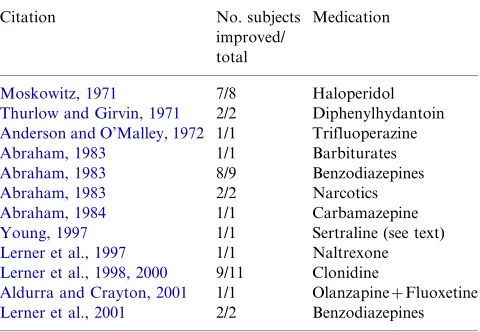
Despite its apparent rarity, HPPD still can cause substantial morbidity for some individuals*/leading to the question of potential treatments. Unfortunately, the literature on this point remains largely anecdotal; some cases have been reported to improve with the use of sunglasses (Abraham, 1983), psychotherapy (Abraham et al., 1996), behavior modification (Matefy, 1973), or
various pharmacological agents (Table 2). Conversely,
worsening of HPPD has been reported in at least 12 subjects receiving phenothiazines (Abraham, 1983; Schwarz, 1968), four patients receiving the atypical antipsychotic risperidone (Abraham and Mamen, 1996; Morehead, 1997), and four other cases were reported to worsen with serotonin-selective reuptake inhibitors (Markel et al., 1994). No randomized con-trolled trial has as yet assessed the efficacy of any pharmacological agent in patients with HPPD.
Further studies, meeting modern methodological standards, will be critical to resolve these questions. Such studies should attempt to screen large numbers of hallucinogen users for ‘flashbacks’, and then follow up individuals reporting these phenomena. Samples of subjects meeting rigorous DSM-IV criteria for HPPD, and whose symptoms are not potentially attributable to other substance use or to medical or psychiatric J.H. Halpern, H.G. Pope, Jr / Drug and Alcohol Dependence 69 (2003) 109/119
abnormalities, should then be investigated further to better understand the etiology and treatment of this inadequately studied condition.
Acknowledgements
Supported in part by NIDA Grants K23-DA00494 and DA-10346, The Heffter Research Institute, and the Multidisciplinary Association for Psychedelic Studies. The authors wish to thank Henry Abraham, M.D. and Neal Goldsmith, Ph.D. for reviewing an earlierversion of this paper.
References
Abraham, H.D., 1980. A chronic impairment of colourvision in users of LSD. Br. J. Psychiatry 140, 518/520.
Abraham, H.D., 1983. Visual phenomenology of the LSD flashback. Arch. Gen. Psychiatry 40, 884/889.
Abraham, H.D., 1984. LSD flashbacks (Letters to the Editor*/In Reply). Arch. Gen. Psychiatry 41, 632.
Abraham, H.D., 1986. Do psychostimulants kindle panic disorder? Am. J. Psychiatry 143, 1627.
Abraham, H.D., Aldridge, A.M., 1993. Adverse consequences of lysergic acid diethylamide. Addiction 88, 1327/1334.
Abraham, H.D., Duffy, F.H., 1996. Stable quantitative EEG differ-ence in post-LSDvisual disorder by split-half analysis: evidence for disinhibition. Psych. Res. Neuroimaging 67, 173/187.
Abraham, H.D., Duffy, F.H., 2001. EEG coherence in post-LSD
visual hallucinations. Psych. Res. Neuroimaging 107, 151/163. Abraham, H.D., Mamen, A., 1996. LSD-like panic from risperidone in
post-LSDvisual disorder. J. Clin. Psychopharmacol. 16, 228/231. Abraham, H.D., Wolf, E., 1988. Visual function in past users of LSD:
psychophysical findings. J. Abnorm. Psychol. 97, 443/447. Abraham, H.D., Aldridge, A.M., Gogia, P., 1996. The
psychophar-macology of hallucinogens. Neuropsychopharpsychophar-macology 14, 286/ 298.
Alarcon, R.D., Dickinson, W.A., Dohn, H.H., 1982. Flashback phenomena: clinical and diagnostic dilemmas. J. Nerv. Ment. Dis. 170, 217/223.
Aldurra, G., Crayton, J.W., 2001. Improvement of hallucinogen persisting perception disorder by treatment with a combination of fluoxetine and olanzapine: case report. J. Clin. Psychopharma-col. 2, 343/344.
American Psychiatric Association, 1986. Diagnostic and Statistical Manual of Mental Disorders, III-R. American Psychiatric Press, Inc., Washington, D.C.
American Psychiatric Association, 1994. Diagnostic and Statistical Manual of Mental Disorders, IV. American Psychiatric Press, Inc., Washington, D.C.
Anderson, W., O’Malley, J., 1972. Trifluoperazine for the trailing phenomenon. J. Am. Med. Assoc. 220, 1244/1245.
Annis, N.M., Smart, R.G., 1973. Adverse reactions and recurrence from marijuana use. Br. J. Addict. 68, 315/319.
Apter, J.T., Pfeiffer, C.C., 1957. The effect of the hallucinogenic drugs LSD-25 and mescaline on the electroretinogram. Ann. N.Y. Acad. Sci. 66, 508/514.
Barron, S.P., Lowinger, P., Ebner, E., 1970. A clinical examination of chronic LSD use in the community. Compr. Psychiatry 11, 69/79. Batzer, W., Ditzler, T., Brown, C., 1999. LSD use and flashbacks in
alcoholic patients. J. Addict. Dis. 18, 57/63.
Blumenfield, M., 1971. Flashback phenomena in basic trainees who enter the US Air Force. Mil. Med. 136, 39/41.
Cohen, S., 1960. Lysergic acid diethylamide: side effects and complica-tions. J. Nerv. Ment. Dis. 130, 30/40.
Cohen, S., 1966. A classification of LSD complications. Psychoso-matics VII, 182/186.
Cohen, S., Ditman, K.S., 1963. Prolonged adverse reactions to lysergic acid diethylamide. Arch. Gen. Psychiatry 8, 475/480.
Cooper, H.A., 1955. Hallucinogenic drugs. Lancet 268, 1078. Creighton, F.J., Black, D.L., Hyde, C.E., 1991. ‘Ecstasy’ psychosis and
flashbacks. Br. J. Psychiatry 159, 713/715.
Denson, R., 1967. Dissociative delirium after treatment with lysergide. CMAJ 97, 1222/1224.
Ellis, H., 1898. Mescal: a new artificial paradise. Contemporary Review 73:130/141 (reprinted in The Smithsonian Institution Annual Report 1898, pp. 537/548).
Favazza, A.R., Domino, E.F., 1969. Recurrent LSD experience (flashbacks) triggered by marijuana. Univ. Mich. Med. Cent. J. 35, 214/216.
Fischer, R., 1971. The ‘flashback’: arousal-statebound recall of experience. J. Psychedelic Drugs 3, 31/39.
Fischer, R., 1977. On flashback and hypnotic recall. Int. J. Clin. Exp. Hypn. XXV, 217/235.
Fischer, R., Hill, R.M., Worshay, D., 1969. Effects of the psychedy-sleptic drug psilocybin onvisual persception. Experientia 25, 166/ 167.
Frosch, W.A., Robbins, E.S., Stern, M., 1965. Untoward reactions to lysergic acid diethylamide (LSD) resulting in hospitalization. N. Engl. J. Med. 273, 1235/1239.
Gastaut, H., Ferrer, S., Castells, C., 1953. Action de la die´thylamide de l’acide d-lysergique (LSD-25) sur les functions psychiques et l’e´lectroence´phalogramme. Confina Neurol. 13, 102/120. Genova, P., 2000. The Thaw: 24 Essays in Psychotherapy. Dorrance
Publishing, Pittsburgh, pp. 17/19.
Halpern, J.H., Pope, H.G., Jr, Sherwood, A., Hudson, J.I., Yurgelun-Todd, D., 2001. Neuropsychological effects of long-term halluci-nogen use in Native Americans (abstract). Drug Alcohol Depend. 63 (S1), S62.
Harley-Mason, J., Laird, A.H., Smythies, J.R., 1958. The metabolism of mescaline in the human. Confina Neurol. 18, 152/155. Heaton, H.K., 1975. Subject expectancy and environmental factors as
[image:9.595.42.282.99.265.2]determinants of psychedelic flashback experiences. J. Nerv. Ment. Dis. 161, 157/165.
Table 2
Reports of psychopharmacological treatment of HPPD
Citation No. subjects
improved/ total
Medication
Moskowitz, 1971 7/8 Haloperidol
Thurlow and Girvin, 1971 2/2 Diphenylhydantoin
Anderson and O’Malley, 1972 1/1 Trifluoperazine
Abraham, 1983 1/1 Barbiturates
Abraham, 1983 8/9 Benzodiazepines
Abraham, 1983 2/2 Narcotics
Abraham, 1984 1/1 Carbamazepine
Young, 1997 1/1 Sertraline (see text)
Lerner et al., 1997 1/1 Naltrexone
Lerner et al., 1998, 2000 9/11 Clonidine
Aldurra and Crayton, 2001 1/1 OlanzapineFluoxetine
Heaton, H.K., Victor, R.G., 1976. Personality characteristics asso-ciated with psychedelic flashbacks in natural and experimental settings. J. Abnorm. Psychol. 85, 83/90.
Hemsley, D.R., Ward, E.S., 1985. Individual differences in reaction to the abuse of LSD. Person. Individ. Diff. 6, 515/517.
Holiday, A.R., Hall, F.M., Sharpley, R.P., 1965. The effects of lysergic acid diethylamide: 1. Critical flicker frequency. Proc. West. Pharmacol. Soc. 8, 48/50.
Holsten, F., 1976. Flashbacks: a personal follow-up. Arch. Psychiatr. Nervenkr. 222, 293/304.
Horowitz, M., 1969. Flashbacks: recurrent intrusive images after the use of LSD. Am. J. Psychiatry 126, 565/569.
Juve, J.L., 1972. Bad drug trips and flashbacks. Child Welfare LI, 41/ 50.
Kawasaki, A., Purvin, V., 1996. Persistant palinopsia following ingestion of lysergic acid diethylamide (LSD). Arch. Ophthalmol. 114, 47/50.
Keeler, M.H., 1967. Adverse reaction to marijuana. Am. J. Psychiatry 124, 674/677.
Keeler, M.H., Reifler, C.B., Liptzin, M.D., 1968. Spontaneous recurrence of marijuana effect. Am. J. Psychiatry 125, 384/386. Kleber, H.D., 1967. Prolonged adverse reactions from unsupervised
use of hallucinogenic drugs. J. Nerv. Ment. Dis. 144, 308/319. Krill, A.E., Wieland, A.M., Ostfield, A.M., 1960. The effect of two
hallucinogenic agents on human retinal function. Arch. Ophthal-mol. 64, 724/733.
Landis, C., Clausen, J., 1954. Certain effects on mescaline and lysergic acid on psychological functions. J. Psychol. 38, 211/221. Lerner, A.G., Oyffe, I., Issacs, G., Mircea, M., 1997. Naltrexone
treatment of hallucinogen persisting perception disorder. Am. J. Psychiatry 154, 437.
Lerner, A.G., Finkel, B., Oyffe, I., Merenzon, I., Sigal, M., 1998. Clonidine treatment for hallucinogen persisting perception disor-der. Am. J. Psychiatry. 155, 1460.
Lerner, A.G., Gelkopf, M., Oyffe, I., Finkel, B., Katz, S., Sigal, M., Weizman, A., 2000. LSD-induced hallucinogen persisting percep-tion disorder treatment with clonidine: an open pilot study. Int. Clin. Psychopharmacol. 15, 35/37.
Lerner, A.G., Skladman, I., Kodesh, A., Sigal, M., Shufman, E., 2001. LSD-induced hallucinogen persisting perception disorder treated with clonazepam: two case reports. Isr. J. Psychiatry Relat. Sci. 38, 133/136.
Lowry, J.V., 1969. Mental health services for misusers of drugs in California. Ca. Ment. Health Res. Digest 7, 99/107.
Markel, H., Lee, A., Holmes, R.D., Domino, E.F., 1994. LSD flashback syndrome exacerbated by selective serotonin reuptake inhibitor antidepressants in adolescents. J. Pediatr. 125, 817/819. Matefy, R.E., 1973. Behavior therapy to extinguish spontaneous recurrences of LSD effects: a case study. J. Nerv. Ment. Dis. 156, 226/231.
Matefy, R.E., 1980. Role-play theory of psychedelic drug flashbacks. J. Consult. Clin. Psychol. 48, 551/553.
Matefy, R.E., Krall, R.G., 1974. An initial investigation of the psychedelic drug flashback phenomena. J. Consult. Clin. Psychol. 42, 854/860.
Matefy, R.E., Hayes, C., Hirsch, J., 1978. Psychedelic drug flashbacks: subjective reports and biographical data. Addict. Behav. 3, 165/ 178.
Matefy, R.E., Hayes, C., Hirsch, J., 1979. Psychedelic drug flashbacks: attentional deficits? J. Abnorm. Psychol. 88, 212/215.
McGee, R., 1984. Flashbacks and memory phenomena: a comment on ‘‘Flashback phenomena*/Clinical and diagnostic dilemmas’’. J. Nerv. Ment. Dis. 172, 273/278.
McGlothlin, W.H., Arnold, D.O., 1971. LSD revisited: a ten-year follow-up of medical LSD use. Arch. Gen. Psychiatry 24, 35/49.
McGuire, P.K., Cope, H., Fahy, T.A., 1994. Diversity of psycho-pathology associated with use of 3,4-methylenedioxymethamphe-tamine (‘Ecstasy’). Br. J. Psychiatry 165, 391/395.
Morehead, D.B., 1997. Exacerbation of hallucinogen-persisting per-ception disorder with risperidone. J. Clin. Psychopharmacol. 17, 327/328.
Moskowitz, D., 1971. Use of haloperidol to reduce LSD flashbacks. Mil. Med. 136, 754/756.
Naditch, M.P., 1974. Acute adverse reactions to psychoactive drugs, drug usage, and psychopathology. J. Abnorm. Psychol. 83, 394/ 403.
Naditch, M.P., Fenwick, S., 1977. LSD flashbacks and ego function-ing. J. Abnorm. Psychol. 86, 352/359.
Nichols, C.D., Sanders-Bush, E., 2002. A single dose of lysergic acid diethylamide influences gene expression patterns within the mam-malian brain. Neuropsychopharmacology 26, 634/642.
Ostfeld, A.M., 1961. Effects of LSD 25 and JB 318 on tests ofvisual and perceptual functions in man. Fed. Proc. 20, 876/883. Robbins, E., Frosch, W.A., Stern, M., 1967. Further observations on
untoward reactions to LSD. Am. J. Psychiatry 124, 393/395. Sadoff, R.L., 1973. LSD, alcohol, and homicide. J. Am. Med. Assoc.
225, 1123.
Saidel, D.R., Babineau, R., 1976. Prolonged LSD flashbacks as conversion reactions. J. Nerv. Ment. Dis. 163, 352/355.
SAMHSA (Substance Abuse and Mental Health Services Administra-tion), Office of Applied Studies, 2000. Year-end 1999 emergency department data from the Drug Abuse Warning Network. DHHS (SMA) 00-3462. National Clearinghouse for Alcohol and Drug Information, Rockville, MD.
SAMHSA (Substance Abuse and Mental Health Services Administra-tion), Office of Applied Studies, 2001. Summary of Findings From the 2000 National Household Survey on Drug Abuse. DHHS (SMA) 01-3549. National Clearinghouse for Alcohol and Drug Information, Rockville, MD.
Sandison, R.A., Spencer, A.M., Whitelaw, J.D.A., 1954. The ther-apeutic value of lysergic acid diethylamide in mental illness. J. Ment. Sci. 100, 491/507.
Schwarz, C.J., 1968. The complications of LSD: a review of the literature. J. Nerv. Ment. Dis. 146, 174/186.
Shick, J.F.E., Smith, D.E., 1970. Analysis of the LSD flashback. J. Psychedelic Drugs 3, 13/19.
Smart, R., Bateman, K., 1967. Unfavourable reactions to LSD: a review and analysis of the available case reports. CMAJ 97, 1214/ 1221.
Smith, D.E., 1968. The acute and chronic toxicity of marijuana. J. Psychedelic Drugs 2, 37/47.
Stanton, M.D., 1972. Drug use in Vietnam: a survey among army personnel in the two northen corps. Arch. Gen. Psychiatry 26, 279/286.
Stanton, M.D., Bardoni, A., 1972. Drug flashbacks: reported fre-quency in a military population. Am. J. Psychiatry 129, 751/755. Stanton, M.D., Mintz, J., Franklin, R.M., 1976. Drug flashbacks. II.
Some additional findings. Int. J. Addict. 11, 53/69.
Strassman, R.J., 1984. Adverse reactions to psychedelic drugs: a review of the literature. J. Nerv. Ment. Dis. 172, 577/595.
Tennant, F.S., Groesbeck, C.J., 1972. Psychiatric effects of hashish. Arch. Gen. Psychiatry 27, 133/136.
Thurlow, H.J., Girvin, J.P., 1971. Use of antiepileptic medication in treating ‘flashbacks’ from hallucinogenic drugs. CMAJ 105, 947/ 948.
Ujike, H., Takaki, M., Nakata, K., Tanaka, Y., Kodama, M., Fujiwara, Y., Sakai, A., Kuroda, S., 2002. CNR1, central cannabinoid receptor gene, associated with susceptibility to hebe-phrenic schizophrenia. Mol. Psychiatry 7, 515/518.
Ungerleider, J.T., Fisher, D.D., Fuller, M., 1966. The dangers of LSD: analysis of seven months’ experience in a university hospital’s psychiatric service. J. Am. Med. Assoc. 197, 109/112.
Weil, A.T., 1970. Adverse reactions to marijuana: classification and suggested treatment. N. Engl. J. Med. 282, 997/1000.
Welpton, D.F., 1968. Psychodynamics of chronic lysergic acid diethylamide use. J. Nerv. Ment. Dis. 147, 377/385.
Wentworth-Rohr, I., 1970. Marijuana flashback: a clinical note. Psychother. Theory Res. Pract. 7, 236/237.
Wesson, D.R., Smith, D.E., 1976. An analysis of psychedelic drug flashbacks. Am. J. Drug Alcohol Abuse 3, 425/438.
Wikler, A., 1954. Clinical and electroencephalographic studies on the effects of mescaline, N-allylnormorphine and morphine in man. J. Nerv. Ment. Dis. 120, 157/175.
Woody, G.E., 1970. Visual disturbances experienced by hallucino-genic drug abusers while driving. Am. J. Psychiatry 127, 683/ 686.
Worarz, N., 1993. ‘Ecstasy’-induced psychotic depersonalization syndrome. Nervenarzt 64, 478/480.
Yager, J., Crumpton, E., Rubenstein, R., 1983. Flashbacks among soldiers discharged as unfit who abused more than one drug. Am. J. Psychiatry 140, 857/861.
Young, C.R., 1997. Sertraline treatment of hallucinogen persisting perception disorder. J. Clin. Psychiatry 58, 85.