University of Warwick institutional repository:
http://go.warwick.ac.uk/wrap
A Thesis Submitted for the Degree of PhD at the University of Warwick
http://go.warwick.ac.uk/wrap/58570/
This thesis is made available online and is protected by original copyright.
Please scroll down to view the document itself.
Interventionism and the
Exclusion Problem
By Yasmin Bassi
Thesis submitted for the degree of Doctor of Philosophy
University of Warwick
Department of Philosophy
1. Introduction ... 1
1.1 Background ... 1
1.1.1 The Current Problem ... 9
1.1.2 Aim of Thesis ... 11
1.1.2.1 Why Interventionism? ... 12
1.2 Outline of Thesis ... 16
2. The Exclusion Problem and Non-Reductive Physicalism ... 21
2.1 Introduction ... 21
2.2 Commitments of Non-Reductive Physicalism: Causal Closure ... 24
2.2.1 What Does ‘Physical’ Mean? ... 25
2.2.1.1 An Argument Against Microphysical Reduction ... 28
2.2.1.2 The ‘Object View’ ... 30
2.2.1.3 The ‘Via Negativa’ View ... 32
2.2.2 Is Causal Closure True? ... 34
2.2.2.1 Implications for Non-Reductive Physicalism ... 40
2.3 Commitments of Non-Reductive Physicalism: Supervenience ... 42
2.3.1 Weak Supervenience ... 43
2.3.2 Strong Supervenience ... 47
2.3.2.1 The Implications of SSmn ... 49
2.3.2.2 Some Potential Problems with SSmn ... 51
2.4 Conclusion ... 55
3. The Exclusion Problem and Its Assumptions ... 57
3.1 Introduction ... 57
3.2 The SP Concept of Causation ... 58
3.2.1 Kim and the Assumption of SP ... 61
3.3 The Assumption of SP and the Exclusion Problem ... 65
3.3.1 The Assumption of SP and the Exclusion Principle ... 71
3.3.2 Overdetermination: Some Further Issues ... 80
3.3.2.1 Bennett’s Argument against Overdetermination ... 81
3.3.2.2 Exclusion All Over Again ... 86
4.2 Interventionism Outlined and Clarified ... 100
4.2.1 Invariance ... 106
4.2.2 Interventions ... 116
4.2.3 Causal Explanation ... 121
4.3 Interventionism versus the SP Concept of Causation: Problems for the SP Concept ... 131
4.3.1 Is Sufficient Production Necessary for Causation? ... 133
4.3.2 Is Sufficient Production Sufficient for Causation? ... 145
4.4 Interventionism versus the SP Concept of Causation: Problems for Interventionism ... 149
4.4.1 Overdetermination ... 150
4.4.2 Non-Paradigmatic Causation and Causation by Omissions (and insensitivity as a solution to these problems) ... 155
4.5 Remaining Problems ... 168
4.5.1 The Problem of Anthropocentricism ... 168
4.5.2 The Problem of Realism ... 170
4.5.3 The Problem of Circularity ... 175
4.6 Conclusion ... 177
5. Interventionism and Mental Causation ... 179
5.1 Introduction ... 179
5.2 An Interventionist Account of Mental Causation ... 181
5.2.1 Invariance and Realization Independent Dependency Relations (RIDR) .... 184
5.2.2 Contrastive Focus ... 197
5.3 A Solution to the Exclusion Problem ... 202
5.3.1 A Physicalist Solution? ... 205
5.3.2 A Satisfactory Solution? ... 212
5.4 Alternative Manipulationist Accounts of Mental Causation and the Problem of Realism ... 217
5.4.1 List and Menzies and the Problem of Realism ... 220
5.4.2 Campbell and the Problem of Realism... 232
5.5 Conclusion ... 240
6. Interventionist Causal Exclusion and the Underdetermination Argument ... 242
6.1 Introduction ... 242
6.2.1.2 Some Further Worries ... 265
6.3 The Underdetermination Argument ... 266
6.4 Conclusion ... 280
7. Conclusion ... 282
7.1 Summary ... 282
7.2 Implications for Mental Causation ... 286
Bibliography ... 290
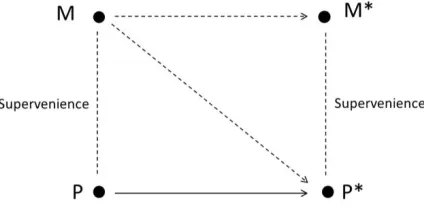
Figure 3.1: Exclusion ………71
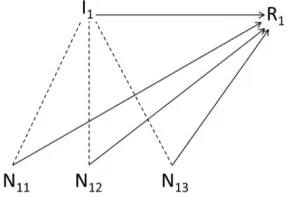
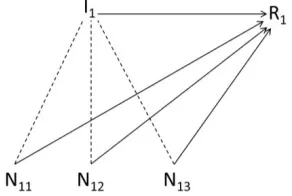
Figure 5.1: RIDR/Intention I1 ………190
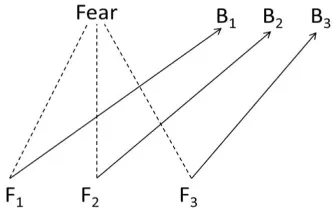
Figure 5.2: Non-RIDR/Fear ………..192
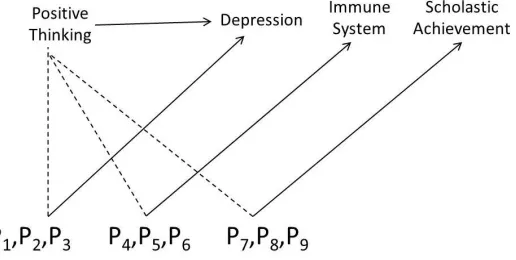
Figure 5.3: Minimal RIDR/Positive thinking ………194
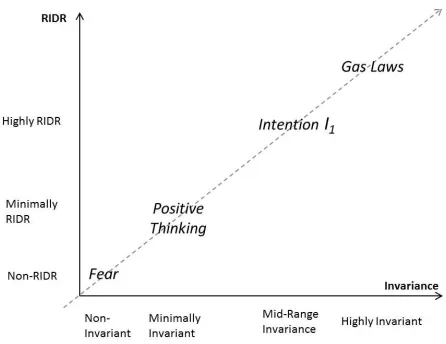
Figure 5.4: The Scale of Invariance and RIDR ………...195
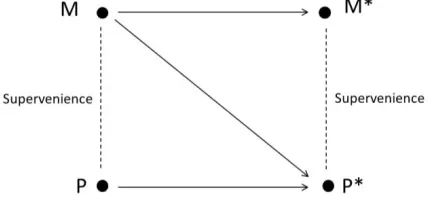
Figure 6.1: Supervenient Mental Causation ………...247
Figure 6.2: Cholesterol ………..256
Figure 5.2: Non-RIDR/Fear ……….…….270
Many thanks to my supervisor, Christoph Hoerl, for providing invaluable feedback and guidance that has helped to develop this thesis. My thanks also go to Johannes Roessler and Bill Brewer, who I was fortunate enough to be supervised by for a period of time. Many thanks also to Naomi Eilan, Matthew Soteriou, Guy Longworth, Peter Poellner and Michael Baumgartner and many fellow graduate students in the philosophy department for helpful comments and discussions.
Jaegwon Kim (1998a, 2005) claims that his exclusion problem follows a priori for the non-reductive physicalist given her commitment to five apparently inconsistent theses: mental causation, non-identity, supervenience, causal closure and non-overdetermination. For Kim, the combination of these theses entails that mental properties are a priori excluded as causes, forcing the non-reductive physicalist to accept either epiphenomenalism, or some form of reduction. In this thesis, I argue that Kim’s exclusion problem depends on a particular conception of causation, namely sufficient production, and that when causation is understood in interventionist terms, the non-reductive physicalist can avoid the exclusion problem. I argue that Woodward’s (2003, 2008a, 2011a) version of interventionism not only provides an account of mental causation that avoids the exclusion problem, but argue that it also upholds all of the minimal commitments of non-reductive physicalism, thereby providing a successful non-reductive
physicalist solution to the exclusion problem.
In Chapter 2, I argue that all five theses are minimal commitments of non-reductive physicalism that cannot be rejected in order to avoid the exclusion problem. Chapter 3 identifies the assumptions that I take to underlie the exclusion problem. Chapter 4 introduces and outlines the central features of
Woodward’s (2003) interventionism and Chapter 5 argues that Woodward’s
interventionist account of mental causation provides a solution to the exclusion problem. I examine two alternative interventionist accounts of mental causation1
that fail to provide satisfactory solutions to the exclusion problem and conclude
that Woodward’s account therefore provides the only satisfactory account of mental causation and solution to the exclusion problem. Chapter 6 addresses some challenges proposed by Michael Baumgartner (2009, 2010) and argues that the interventionist is able to defend her position against these objections and uphold the interventionist solution to the exclusion problem outlined in this thesis.
1. Introduction
1.1 Background
Since Descartes and the emergence of the modern ‘mind-body’ problem,
questions surrounding the causal role of the mental have been commonplace in
the philosophical literature. The problem of mental causation for Descartes is
well known: if the mental and the physical are distinct substances, where the
former is immaterial and un-extended and the latter is material and spatially
extended, how is causal interaction between such distinct substances possible? It
is widely accepted that the thesis of causal closure - the thesis that every physical
effect has a sufficient physical cause - makes Cartesian dualism an untenable
thesis. However, as we will see, the problem of mental causation did not
disappear with dualism, but rather, a new set of problems emerged that are still
widely debated today.
With the thesis of causal closure accepted as part of common scientific
understanding by the middle of the twentieth century, physicalism - the view that
there are no non-physical entities or substances and that everything1 is either
1 In Chapter 2, I add a caveat to this definition of physicalism, since as Papineau (2001) points out, the formulation of physicalism that follows from the thesis of causal closure does not necessarily entail the view that everything is physical, but need only entail the view that
physical, or else is dependent upon the physical - became the received view2. It
was the work of those such as Place (1956), Feigl (1958), Smart (1959), Putnam
(1960), Davidson (1963), Lewis (1966) and Armstrong (1968) (Papineau, 2001)
that contributed to physicalism becoming the near orthodox position in
philosophy that it is today.
According to Papineau (Ibid), this emergence of physicalism in the
1950’s and 1960’s can be attributed to the fact that the thesis of causal closure became available as a key premise in the arguments for physicalism at that time.
Although there are different formulations of physicalism that follow from the
thesis of causal closure, each of which have different implications for mental
causation, I focus on the theory of physicalism as it follows from the Causal
Argument, advocated, for instance, by Papineau (2004). Moreover, following
recent discussion on mental causation, I refer, for the most part, to causation as
between properties, or more accurately, property instantiations (more on this
below), rather than, for example, as between events or states. With this in mind,
the Causal Argument for physicalism can be formulated as follows:
1. Mental properties have physical effects.
2. All physical effects have sufficient physical causes.
3. The physical effects of mental properties aren’t always overdetermined
by metaphysically distinct, sufficient causes.
Conclusion: Mental properties are identical to, or supervene on physical
properties.
As an illustration, consider a paradigmatic case of mental causation: my
conscious desire for a cup of tea causes me to reach for the kettle. Now,
according to causal closure, this physical effect, namely my reaching for the
kettle, already has a sufficient physical cause, which by definition is enough to
bring about the occurrence of the effect. If we then want to avoid the systematic
overdetermination of physical effects (by two metaphysically distinct, sufficient
causes) we must either identify mental causes with physical causes or accept the
supervenience of mental causes on physical causes, hence the physicalist
conclusion of the Causal Argument.
Now, as it is formulated above, the Causal Argument generates two
broadly physicalist conclusions, one being that mental properties are identical to
physical properties and the other being that mental properties supervene3 on
physical properties. Before exploring these two physicalist positions further, it is
important to emphasise that what is common to all physicalist positions is their
physicalist ontology: all physicalists hold that every concrete particular and
entity is physical, therefore disavowing the existence of disembodied souls,
spirits, and so on. As we shall see, the difference between these two physicalist
positions concerns the question of whether there can be genuinely distinct,
non-physical, e.g. mental, properties.
The first of the physicalist positions, namely reductive physicalism, holds
that there are no distinctively mental properties. There may of course be mental
predicates and mental levels of description, but these do not correspond to mental
properties, but correspond instead to physical properties (Baker, 2009: 2).
According to reductive physicalists, mental property types, such as beliefs,
intentions and desires are identical and reducible to physical property types.
What does reduction in this context amount to? There are a variety of forms of
reduction discussed in the literature4, but for the purposes of this thesis, we may
simply appeal to the notion of explanatory reduction, which involves the idea
that a set of properties, S, reduces to another set of properties, P, if S can be
exhaustively explained in terms of P.
We can then see that the issue of mental causation under reductive
physicalism becomes fairly straightforward: if mental properties just are physical
properties, then it is no wonder that they can have physical effects. However, in
giving up on the idea that there are distinct mental properties that can have
distinct causal roles in relation to physical effects, the reductive physicalist
essentially gives up on mental causation; under reductive physicalism, mental
causation just collapses into physical causation.
For many, reductive physicalism is too strong. If reductive physicalism
entails giving up on the idea that what we think can and does have a real and
distinct effect in the physical world, then for many, this is so much the worse for
reductive physicalism. The second physicalist position that can be generated
from the Causal Argument is therefore non-reductive physicalism, which upholds
the physicalist ontology, whilst positing the existence of distinct mental
properties that can have distinct causal roles in the physical world.
4 For instance, as Daniel Stoljar (Fall 2009) points out, reduction is often taken to involve the idea that one theory reduces to another if it is possible to logically derive the first from the second
with appropriate ‘bridge laws’ (see, for example, Nagel (1961)). Alternatively, reduction is often taken to involve the idea that “the properties expressed by the predicates of (say) a psychological
theory are identical to the properties expressed by the predicates of (say) a neurological theory.”
It was the multiple realization arguments of Putnam (1975a) in particular5
that provided the support for non-reductive physicalism. Very roughly, these
arguments suggest that the idea that mental property types are identical to
physical property types is implausible, given that it seems possible for the same
mental property type to be ‘realized’6 by a wide variety of physical property
types. For example, it seems possible that both a human being and an octopus
could share the property of being in pain, while it is unlikely that the physical
properties that ‘realize’ the property of being in pain in those animals share any
common physical features. These arguments suggested that it is not possible to
identify a mental property type with one physical property type and hence
supported the existence of irreducible and hence distinct mental properties.
However, multiple realization arguments on their own are not sufficient
for non-reductive physicalism. This is because even if one thinks that multiple
realization makes reductive physicalism implausible and that there are therefore
distinct mental properties, those mental properties may simply be mere
epiphenomena, i.e. contrary to our intuitions, mental properties do not actually
causally influence anything. Moreover, if they are mere epiphenomena then this
would seem to undermine the idea that they are genuinely distinct; if mental
properties do not contribute anything new in addition to physical properties, then
in what sense can they be considered as ‘real’, distinct properties? Central to non-reductive physicalism then is the idea that if mental properties are to be
5 The work of Fodor (1974), Nagel (1974) and Jackson (1986) was also influential in the rise of non-reductive physicalism.
considered as genuine and irreducible features of the world, they must have
genuine and irreducible causal powers.7 As Kim puts it,
“For unless mentality made causal contributions that are genuinely novel,
the claim that it is a distinct and irreducible phenomenon over and beyond
physical-biological phenomena would be hollow and empty. To be real,
Alexander has said, is to have causal powers; to be real, new, and
irreducible, therefore, must be to have new, irreducible causal powers.”
(Kim, 2003b: 203-204)
If these distinct and irreducible properties are not identical to physical
properties then what relationship do they bear to the physical that respects the
physicalist ontology, whilst avoiding reduction? The answer for most
non-reductive physicalists is some form of supervenience. I examine the thesis of
supervenience in detail in Chapter 2 and establish exactly which form of
supervenience the non-reductive physicalist is committed to, but for now, it will
be helpful to point out that all forms of supervenience that are consistent with
physicalism entail the metaphysical dependence of mental properties on physical
properties. (As it is often put, supervenience entails that there can be no
difference at the mental level without a difference at the physical level.)
In virtue of what does the supervenience relationship hold? The idea that
mental properties are ‘realized’ by physical properties is an idea that gained popularity with the multiple realization arguments of the 1960’s, but what does realization entail? For now, we can simply think of ‘realization’ as synonymous with ‘instantiated’, or ‘implemented’ (Kim, 2003b: 194) and on this reading, it is plausible to assume that physical realization entails supervenience (Ibid: 195).
The specific nature of this ‘instantiation’, in particular, the modal force with
which it holds, will become clearer when we look at supervenience in more detail
in Chapter 2, but for now, we can appeal to the idea that mental properties
supervene on and are realized by physical properties in the sense described
above.8 Thus, supervenience (and realization) allow the non-reductive physicalist
to uphold the physicalist ontology, whilst making room for irreducible and
distinct mental properties. Kim sums up these physicalist commitments in the
following passage:
“Stated as a thesis about properties, physical primacy in this sense comes
to this: all mental properties are instantiated in physical particulars. Thus,
although there can be, and presumably are, objects and events that have
only physical properties, there can be none that have only mental
properties alone; mentality must be instantiated in physical systems.”
(Ibid: 193)
8 Although it was the theory of functionalism that first emerged from the multiple realization arguments against reduction, it need not be assumed that all non-reductive physicalists who endorse supervenience and multiple realization are thereby committed to functionalism. The
discussion in this thesis is neutral as to whether mental properties are purely ‘functional’
What then are the key commitments of non-reductive physicalism? As I
discuss in Chapter 2, non-reductive physicalists can be defined as minimally
committed to the following five theses:
1. Mental causation, the thesis that mental properties have physical effects.
2. Non-identity, the thesis that mental properties are not identical to physical
properties.
3. Supervenience, the thesis that mental properties supervene on physical
properties.
4. Causal closure, the thesis that every physical effect has a sufficient
physical cause.
5. Non-overdetermination, the thesis that the effects of mental causes are
not systematically overdetermined by two metaphysically distinct,
sufficient causes.
I will not discuss the thesis of non-overdetermination in detail until
Chapter 3, but for now, it is worth pointing out why overdetermination would not
be a plausible model for mental causation. Consider a classic case of
overdetermination: two riflemen each shoot a victim simultaneously, causing his
death. In this case, the effect, (namely the death of the victim), would still have
occurred if the first rifleman had failed to fire and vice versa for the second
rifleman. Although possible, it seems that such cases of overdetermination would
be extremely rare. The idea then that the physical effects of mental causes are
metaphysically distinct causes, each of which is sufficient for its occurrence,
seems highly unlikely and implausible.
1.1.1 The Current Problem
As a theory that is physicalist in its ontology, whilst positing the
existence of irreducible and distinct mental properties, thereby making room for
the possibility of mental causation, non-reductive physicalism is the favoured
view among physicalists today. Ironically though, it is out of non-reductive
physicalism that the current problem concerning mental causation emerged. This
is the exclusion problem, advocated most widely by Jaegwon Kim (1998a, 2005).
So, what exactly is the exclusion problem?
As an illustration, consider again the apparently paradigmatic example of
mental causation introduced above: my conscious desire for a cup of tea causes a
physical effect, namely my reaching for the kettle. Now, the problem according
to Kim is that the thesis of causal closure states that this physical effect already
has a sufficient physical cause. Moreover, supervenience states that the supposed
mental cause of this effect necessarily supervenes on this physical cause. Given
thesis 2, the thesis of non-identity, it seems that we are left with two causes (one
mental and one physical) of the same physical effect. Then, in order to avoid
overdetermination, (thesis 5), we would be forced to exclude one of the causes
and according to Kim we are a priori9 forced to exclude the mental cause, since
the physical cause must be preserved in order to uphold causal closure. For Kim,
it follows that the non-reductive physicalist must accept either
epiphenomenalism or reductionism and since Kim claims that the latter is more
plausible than the former, the non-reductive physicalist is apparently forced to
accept some form of reduction.
If it is correct, the exclusion problem does not therefore just render
mental causation and non-reductive physicalism incompatible, but it also
provides an argument against non-reductive physicalism itself. As Kim writes,
“Non-reductive physicalism, like Cartesianism, founders on the rocks of mental
causation.” (Kim, 2003b: 193). Moreover, this conclusion is thought to be so
forceful because it is thought to follow a priori from the minimal commitments
of non-reductive physicalism. Since I argue that all of these theses are in fact
minimal commitments, what solution is available to the non-reductive
physicalist?
Before answering this, let us consider why it is important to find a
solution to this problem. Note that what is at stake in the exclusion problem is the
idea that our mental states, such as our intentions, beliefs and desires, in virtue of
their mental properties, have real effects in the physical world. Without this idea,
concepts such as free will, autonomy and moral responsibility would seem empty
of content (if what we think and choose does not, after all, have a real effect in
the world, then in what sense can we be held responsible for the actions that we
perform?). Moreover, mental causation forms an intrinsic part of our concept of
rational agency. Given the strong reasons that we have for being physicalists and
for holding onto mental causation, providing a coherent, non-reductive
physicalist account of mental causation that avoids the threat of
epiphenomenalism, or reduction, is therefore an important task to undertake and
1.1.2 Aim of Thesis
In this thesis, I aim to provide a non-reductive physicalist solution to the
exclusion problem. I argue that Kim’s exclusion problem depends on a particular conception of causation as sufficient production10 and that when causation is
understood in interventionist terms, the exclusion problem can be avoided. After
identifying the assumptions that I take to underlie the exclusion problem, I argue
that Woodward’s (2003, 2008a, 2011a) version of interventionism not only provides an account of mental causation that avoids the exclusion problem, but
argue that it also upholds all of the minimal commitments of non-reductive
physicalism, thereby providing a successful non-reductive physicalist solution to
the exclusion problem. An important theme of this thesis is therefore providing a
solution to the exclusion problem that is genuinely physicalist. Moreover, I argue
that other attempts to solve the exclusion problem that also appeal to broadly
interventionist theories of causation, such as those proposed by List and Menzies
(2009) and Campbell (2007, 2008a, 2008b, 2010) fail to provide satisfactory
solutions to the exclusion problem, since these theories introduce a problematic
kind of anti-realism into their theories. I conclude that Woodward’s
interventionist account of mental causation therefore provides the only
satisfactory non-reductive physicalist account of mental causation and solution to
the exclusion problem.
In order to support this hypothesis, I will need to establish what the
minimal commitments of non-reductive physicalism are and what their
implications are for the status of mental causation and the exclusion problem. I
will need to identify the assumptions that underlie the exclusion problem and
demonstrate how they contribute to this problem. I will also need to present a
convincing argument to undermine these assumptions. Finally, I will need to
demonstrate that interventionism provides an account of mental causation that
not only avoids the exclusion problem, but also upholds all of the minimal
commitments of non-reductive physicalism and address any objections that arise
for this theory.
1.1.2.1 Why Interventionism?
Before moving on to present the outline of this thesis, it will be helpful to
make clear why it is that I appeal specifically to the theory of interventionism to
provide a solution to the exclusion problem. I examine the theory of
interventionism in detail in Chapter 4, but for now it will be helpful to make the
following points.11 Firstly, note that when I refer to interventionism throughout
this thesis, unless otherwise stated, I refer to the specific version of
interventionism proposed by James Woodward in his (2003)12. According to
Woodward, the distinguishing feature of all causal relationships is that they are
potentially exploitable for the purposes of control and manipulation. Very
roughly, in order for X to cause Y it is necessary and sufficient that there is some
intervention on X that changes Y. As Woodward puts it13, “(M) X causes Y if and
11 It is important to be clear that in discussing interventionism, my aim in this thesis is not to provide a comprehensive analysis of causation itself (any such analysis would be well beyond the scope of this thesis), but rather, in appealing to interventionism I hope to shed light on the exclusion problem and demonstrate that it provides a successful non-reductive physicalist solution to this problem.
12 In Chapter 6, I appeal to a slightly modified version of interventionism, presented in Woodward (2011a).
only if there are background circumstances B such that if some (single)
intervention that changes the value of X (and no other variable) were to occur in
B, then Ywould change.” (Woodward, 2008a: 222)
Why do I appeal to this theory of causation? Firstly, and perhaps most
importantly, I demonstrate that interventionism is able to uphold all of the
minimal commitments of non-reductive physicalism and therefore provide a
viable non-reductive physicalist account of mental causation and solution to the
exclusion problem. Secondly, I demonstrate that Woodward’s specific version of interventionism is the only version of interventionism that provides a satisfactory
solution to the exclusion problem, since it is the only interventionist account that
is able to avoid serious problems concerning realism. More generally, I appeal to
interventionism over other counterfactual theories of causation because it
provides the most coherent account of causation in general and is able to best
deal with common objections raised against counterfactual theories (for example,
the problem of overdetermination).14
As we will see, this interventionist account of causation (and mental
causation) is “metaphysically modest” (Woodward, 2003: 121)15, for example, in comparison to a conception of causation that posits the transfer of some
14In comparison to, for example, Lewis’ (1973b, 2000) counterfactual theory of causation. There have been many responses in recent years (for example, Loewer (2007), Shapiro and Sober (2007), Yablo (1992), List and Menzies (2009), Raatikainen (2010), Campbell (2007, 2008a, 2008b, 2010) to name but a few) that argue somewhat similarly that when causation is understood in counterfactual terms (or more specifically, in broadly interventionist terms), the exclusion problem can be blocked. I will not discuss all of these alternative theories in this thesis
(I do discuss List and Menzies’ (2009) and Campbell’s (2007, 2008a, 2008b, 2010) theories in
Chapter 5 in relation to the problem of realism), but again appeal to Woodward’s specific version
of interventionism because it provides the most independently coherent account of causation and because these theories fail to either provide genuinely non-reductive physicalist solutions to the exclusion problem, or fail to provide satisfactory solutions to the exclusion problem.
conserved physical quantity as a necessary condition for causation16. However, I
will argue that this “metaphysically modest” (Ibid) account is the only one we can give as serious physicalists, given that it is only by being “metaphysically
modest” (Ibid) that this account is able to uphold all of the minimal commitments of non-reductive physicalism. For example, I demonstrate that interventionism
provides an account of causation by which supervenient mental properties can
count as genuine causes, in addition to their physical realizers. I show that this
account respects the theses of causal closure and non-overdetermination by
guaranteeing that mental properties cannot contribute to or interact with the
sufficient physical causes of physical effects, or qualify as metaphysically
distinct productive causes of those effects. I demonstrate that this account also
upholds causal closure in the sense that it remains true that every physical effect
has a sufficient physical cause, even when causation is understood in
interventionist terms. And finally, I demonstrate that this account nonetheless
upholds the theses of non-identity and mental causation, since it assigns
genuinely distinct causal roles to mental properties, such as intentions, beliefs
and desires.
As I have said, although I argue that this account is the only one we can
give, given the minimal commitments of non-reductive physicalism, an
important theme of this thesis will nonetheless be to demonstrate that this
“metaphysically modest” (Ibid) account of mental causation does provide a
satisfactory account of mental causation and solution to the exclusion problem.
There is one further aspect of interventionism that is worth discussing at
this stage and this concerns the question of what ontology interventionism
operates with, or slightly differently, what the causal relata are on the
interventionist account of causation.
According to interventionism, the relata of causation can be best
understood as variables that can take different values. For example, in the causal
claim ‘Smoking causes cancer’, the cause variable ‘smoking’ may take one of
only two values, namely ‘smokes’/‘does not smoke’, or may take one of many
different values, for example, ‘smokes five cigarettes a day’/‘smokes ten
cigarettes a day’, while the effect variable ‘cancer’ may take one of only two
values, namely ‘develops cancer’/‘does not develop cancer’. What then is the
relationship between variables and property instantiations, which as I mentioned
above, are most commonly invoked as causal relata in the mental causation
debate?
As Woodward explains, we may simply understand variables as
properties that can have more than one value. For example, the property of
having mass may take the particular values of having a mass of 10kg, 5kg, or 2kg
and so on, while the property of having some belief may take one of only two
values, relating either to the presence or absence of the belief. It will therefore be
possible to speak both in terms of causation between property instantiations
(following Kim) and in terms of causation between variables (following
Woodward). Variables may also represent events or states, which are also
invoked in the mental causation debate, but for the sake of continuity, I will
follow Kim and will refer, for the most part, to causation between property
instantiations.
Unlike, for example, the theories of Davidson (1967) and Hornsby (2003,
For example, we may define an effect on one occasion as a property and on
another occasion as a complex action or event. This will often be guided by the
goal of the enquirer and the context of the causal claim. However, there is an
important sense in which it does ‘matter’ to interventionism how we ‘pick out’
causes and effects. This is because according to interventionism, to the extent
that two variables enter into exactly the same manipulability relations, or more
specifically, the same invariance relations, (the notion of invariance will be
explained in detail in Chapter 417) in relation to some effect, it is appropriate, in
interventionist terms, to consider them as the same cause. By the same token, in
so far as two variables enter into distinct manipulability relations (i.e. distinct
levels of invariance) in relation to some effect, it is appropriate, in interventionist
terms, to consider them as genuinely causally distinct, i.e. as causes that cannot
be identified or reduced. These ideas will be explored throughout the thesis.
1.2 Outline of Thesis
The thesis is organised as follows. In Chapter 2, I examine, in detail, the
five minimal commitments of non-reductive physicalism that apparently lead to
the exclusion problem. After briefly outlining how the exclusion problem is
generated from these theses, I examine the thesis of causal closure in detail and
argue that despite facing potentially serious problems and despite having had a
complex history, it is in fact a minimal commitment of non-reductive
physicalism. I also examine the thesis of supervenience in order to establish
exactly which form of supervenience the non-reductive physicalist is minimally
17 For the moment, it will be useful to point out that according to interventionism, invariance is
committed to and examine its implications. Although I will not discuss the thesis
of non-overdetermination until Chapter 3, assuming that the idea that the
physical effects of mental causes are not systematically overdetermined is fairly
plausible, I conclude that all five theses are in fact minimal commitments of
non-reductive physicalism that cannot be rejected in order to avoid the exclusion
problem.
Chapter 3 examines the assumptions that I take to underlie the exclusion
problem. I examine Kim’s exclusion argument in detail and argue that despite its
apparent inevitability, in order to generate the exclusion problem from these
minimal commitments, Kim requires the assumption of sufficient production, i.e.
the assumption that causation is identical to sufficient production. I demonstrate
that when this assumption is combined with the theses of causal closure,
supervenience and non-overdetermination, the exclusion problem becomes
inevitable. However, I show that without this assumption, these minimal
commitments do not a priori lead to the exclusion problem. Since I go on to
undermine this assumption, this allows the non-reductive physicalist to put
forward a positive account of mental causation that upholds all of the minimal
commitments of non-reductive physicalism, whilst avoiding the a priori threat of
causal exclusion that follows once one accepts this assumption.
In Chapter 4, I introduce Woodward’s (2003) interventionist theory of
causation. The main objectives of this chapter are as follows: 1. To present
interventionism as a coherent theory of causation and in particular, to examine
those features of this theory that are especially relevant to my argument in
Chapter 5, in which I present the interventionist account of mental causation as a
assumption of sufficient production. 3. To address any potential objections to the
theory. The goal of this chapter is therefore to be left with a coherent theory of
causation that can be used to provide a satisfactory solution to Kim’s exclusion
problem and which undermines the assumption of sufficient production, thereby
demonstrating that the non-reductive physicalist need not accept Kim’s a priori
exclusion problem.
In Chapter 5, I outline Woodward’s interventionist account of mental
causation and demonstrate that it not only avoids the exclusion problem, but also
upholds all of the minimal commitments of non-reductive physicalism, thereby
providing a successful non-reductive physicalist solution to the exclusion
problem.
More specifically, I demonstrate that interventionism not only provides
an account of mental causation by which both mental and physical properties can
qualify as causes of the same effect, but that when causation is understood in
interventionist terms, mental properties can actually be considered as preferable
causes of their effects, in comparison to their subvenient physical realizers. Most
importantly, I demonstrate that when causation is understood in interventionist
terms, the question of mental causation becomes an entirely a posteriori, not a
priori question. Moreover, I demonstrate that this account provides a satisfactory
account of mental causation and solution to the exclusion problem and compare
this account to two alternative manipulationist accounts of mental causation18,
which I argue fail to provide satisfactory solutions to the exclusion problem. I
conclude that Woodward’s interventionist account of mental causation therefore
provides the only satisfactory account of mental causation and solution to the
exclusion problem.
Chapter 6 then addresses a series of challenges proposed by Michael
Baumgartner (2009, 2010) to the interventionist response to the exclusion
problem. Baumgartner claims that far from securing the causal status of mental
properties and providing a non-reductive physicalist solution to the exclusion
problem, interventionism actually generates a new kind of exclusion problem,
which rests on weaker premises than the original Kimian formulation of the
problem.Moreover, Baumgartner (2010) argues that the proposed interventionist
solution to this novel interventionist exclusion problem leads to an
‘underdetermination’ of mental causation, making this supposed solution not fit
for the purposes of the non-reductive physicalist.
I begin by providing an outline and analysis of the debate between
Baumgartner (2009) and Woodward (2011a). I demonstrate that although
Woodward’s solution involves modifying the definition of interventionism proposed in his (2003), (which I appeal to in Chapters 4 and 5 of this thesis), it
does offer a genuine solution to Baumgartner’s a priori interventionist exclusion
argument. In the second half of the chapter, I present my argument against
Baumgartner’s (2010) underdetermination argument. I demonstrate that by clarifying the metaphysical implications of interventionist mental causation and
by clarifying the conditions under which we can acquire empirical evidence for
mental causation, the non-reductive physicalist who hopes to use interventionism
as a solution to the exclusion problem can avoid Baumgartner’s
underdetermination argument. In fact, I will demonstrate that this discussion
2003: 121) account of mental causation that I will outline in Chapter 5. I
conclude that the interventionist is therefore able to defend her position against
both of Baumgartner’s objections and uphold the interventionist solution to the
exclusion problem outlined in Chapter 5.
2. The Exclusion Problem and
Non-Reductive Physicalism
2.1 Introduction
It is claimed, most notably by Jaegwon Kim (1998a, 2005), that the
exclusion problem arises specifically for non-reductive physicalists because of
their commitment to the following five apparently inconsistent theses:
1. Mental causation, the thesis that mental properties have physical effects.
2. Non-identity, the thesis that mental properties are not identical to physical
properties.
3. Supervenience, the thesis that mental properties supervene on physical
properties.
4. Causal closure, the thesis that every physical effect has a sufficient
physical cause.
5. Non-overdetermination, the thesis that the effects of mental causes are
not systematically overdetermined by two metaphysically distinct,
sufficient causes.
How then, according to Kim, does the exclusion problem follow from
these five theses of non-reductive physicalism?1 In order to illustrate this,
consider again the example introduced in the previous chapter: suppose that on
some occasion my desire for a cup of tea causes me to reach for the kettle. This
seems to be a paradigmatic case of mental causation; my conscious desire for a
cup of tea causes a physical effect, namely my reaching for the kettle. Now, the
problem according to Kim is that causal closure (thesis 4) states that this physical
effect already has a sufficient physical cause and supervenience (thesis 3) states
that the supposed mental cause of this effect necessarily supervenes on this
physical cause. Given thesis 2, the thesis of non-identity, it seems that we are left
with two causes (one mental and one physical) of the same physical effect. Then,
in order to avoid overdetermination (thesis 5), we would be forced to exclude one
of the causes and according to Kim we are a priori forced to exclude the mental
cause, since the physical cause must be preserved in order to uphold causal
closure. For Kim, it follows that the non-reductive physicalist must accept either
epiphenomenalism or reductionism and since Kim claims that the latter is more
plausible than the former, the non-reductive physicalist is apparently forced to
accept some form of reduction. There seems, therefore, to be a distinctive
problem of mental causation for non-reductive physicalism. How then can the
non-reductive physicalist avoid this problem?
One obvious solution would be to argue that one (or more) of the five
theses is not actually a minimal commitment of non-reductive physicalism.
Given that theses 1 and 2 are the theses that non-reductive physicalists are
interested in defending, it would seem that the only option would be to reject one
of the remaining theses, namely causal closure, supervenience or
non-overdetermination. This could, in theory, provide the non-reductive physicalist
thesis of causal closure, mental properties would not necessarily stand in causal
competition with the physical properties that realize them. Or, without the thesis
of supervenience, we would not be forced to accept that mental causation entails
physical causation, which appears to lead to the exclusion problem when
combined with the other minimal commitments.
However, in the remainder of this chapter I argue that causal closure and
supervenience are in fact minimal commitments of non-reductive physicalism
that cannot be rejected in order to overcome the exclusion problem. The chapter
is organised as follows. In Section 2.2, I examine causal closure in detail and
argue that despite facing potentially serious problems (Section 2.2.1) and despite
having had a complex history (Section 2.2.2), it is in fact a minimal commitment
of non-reductive physicalism (Section 2.2.2.1). In Section 2.3, I examine
supervenience in detail and establish exactly which form of supervenience the
non-reductive physicalist is minimally committed to. In Section 2.3.2.1, I
examine the implications of this form of supervenience and in Section 2.3.2.2, I
examine some problems that arise. Although I will not discuss the thesis of
non-overdetermination until the next chapter, assuming that the idea that the physical
effects of mental causes are not systematically overdetermined is fairly plausible,
I conclude that all five theses are in fact minimal commitments of non-reductive
physicalism that cannot be rejected in order to avoid the exclusion problem.
2.2 Commitments of Non-Reductive Physicalism: Causal Closure
Before examining the thesis of causal closure in detail, it is important to
establish exactly which formulation of causal closure we are dealing with. This is
because, as E.J Lowe (2000) observes, there are in fact many formulations of
causal closure that can be found in the literature, each of which is not necessarily
equivalent to the others. For the purposes of the argument in this thesis, the
following formulation will be sufficient:
Causal Closure: every physical effect has a sufficient physical cause.2
The implications of this formulation will become clearer in the sections
below, but it essentially implies that every physical effect has a physical cause
that is sufficient, i.e. enough to determine or explain3 its occurrence. Lowe
provides the following definition of the notion of a ‘sufficient’ cause:
2I define causal closure in this specific way, rather than, for example, as the thesis that ‘every
physical effect is sufficiently determined by purely physical prior occurrences’ (which, as will become clear, is entailed by causal closure) because Kim appeals to this formulation in his exclusion argument. So, although the arguments in this thesis do not depend on any particular formulation of causal closure, this formulation will be most useful for the purposes of my argument. However, it is important to emphasise that although I define causal closure in this specific way (as the thesis that ‘every physical effect has a sufficient physical cause’), it should not be assumed that causal closure thereby entails a particular conception of causation as sufficient production, or determination, since I argue (in Chapter 3) that it is precisely this assumption that leads Kim to generate the exclusion problem. Nevertheless, I suggest that it is still possible (and useful) to define causal closure in this specific way, since I demonstrate in Chapter 5 that it is true that every physical effect has a sufficient physical cause, even when causation is understood in interventionist terms. I argue that the crucial difference between the interventionist and Kim is that for the former, the fact that physical causes are, by their very nature, sufficient to determine the occurrence of their effects, is simply an empirical fact about physical causation, rather than something that constitutes their causal status. Importantly, I demonstrate that it is only when one makes this latter assumption that the exclusion problem becomes inevitable for the non-reductive physicalist. These ideas will be explored in further detail throughout the thesis.
3 By explanation here I
“…I understand a sufficient physical cause of a given event to be a non -empty set of physical events, each of which is a cause of the given event
and all of which jointly causally necessitate the occurrence of the given
event.” (Ibid: 575)
One also finds the thesis of causal closure described as the view that the
physical domain is ‘closed’ in the sense that one never has to leave that domain
in order to explain any physical effect. For example, it is possible to provide a
sufficient explanation of the movement of my arm towards the tea cup on my
desk in purely physical terms, for example, by referring to the neuronal processes
in my brain, the stimulation of my nerve fibres, the contraction of my muscles
and so on. By contrast, for example, note that the economic realm is not closed,
since there are economic effects that have non-economic causes, such as the
effect of a natural disaster on the state of the economy. With this formulation of
causal closure in mind, I will now examine this thesis in detail.
2.2.1 What Does ‘Physical’ Mean?
To begin, it is first necessary to address the question of exactly what is
meant by the term ‘physical’ in the thesis ‘every physical effect has a sufficient
Mellor, 1990) have argued that it is not actually possible to formulate a coherent
definition of the physical on which to ground causal closure (and, as I argue, to
consequently ground physicalism). As David Papineau concisely captures the
problem, “The causal-closure thesis presupposes some prior concept of the physical realm. Some commentators argue that the unclarity of this concept
empties the causal-closure thesis of content…” (Papineau, 2009: 57)
Now, one answer to the question of what the physical is appeals to the
idea that we should define the physical by reference to those properties that are
expressed by paradigmatic physical theories, such as chemistry and physiology.
If we then define the physical by reference to the properties that are expressed by
what is arguably the paradigm physical theory, namely physics, we seem to have
two options. We can either define physical properties as those properties that are
expressed by our best current theory of physics, or else we could define physical
properties as those properties that would be expressed by an ideal or future
physics. However, this presents us with a dilemma, which is formulated by Crane
and Mellor (1990)4: if we define physical properties as those properties that can
be expressed by our best current theory of physics, it implies that any properties
that we may discover at a later time could not count as physical and also implies
that current physics is complete and completely accurate, which most accept is
simply not true. On the other hand, if we define physical properties as those
properties that would be expressed by an ideal or future physics then we will not
know what the physical is until we know which properties such a future theory
would cover. Thus, if we try to define the physical in terms of the paradigm
physical theory, namely physics, we have the choice of either accepting that our
best current theory of physics is complete and completely accurate (which most
accept is simply not true) or accepting that we do not know what the physical is;
hence the dilemma.
It seems that this dilemma would have fairly serious consequences for
causal closure, given that this thesis makes essential reference to the notion of the
physical. As Papineau put it, without a prior, coherent definition of the physical,
this thesis would appear to be empty of content.
In order to avoid this conclusion, what the physicalist will therefore need
to prove is that they can provide a definition of the physical that can feature in
the thesis of causal closure (and consequently ground physicalism), which does
not appeal to the properties of either a current or future physics. What this will
essentially involve is resisting the idea that all physical properties can be reduced
to (i.e. explained exhaustively in terms of) the properties of physics5, an idea that
Papineau (2008) calls ‘microphysicalism’6, as opposed to physicalism. Luckily, I do not think that the physicalist need be committed to any such view.
Before demonstrating this, it is worth considering where the motivation
for microphysicalism might come from. As Papineau (Ibid) points out, the idea
of physicalism does seem prima facie distinct from the idea of microphysicalism;
the latter says that all properties that have physical effects are either identical to
or supervene on the microphysical properties of physics, whilst the former says
that all properties that have physical effects are either identical to or supervene
5 This follows since we need only be committed to a definition of the physical which appeals to physics if we think that all physical properties ultimately reduce to the properties of physics. 6 This theory is called
on physical properties, but leaves unspecified which kinds of physical properties
they are.
Nevertheless, there is something intuitively appealing about the idea that
physics can provide a complete explanation of all physical properties, in a way
that other physical sciences cannot. This intuition seems to be based on the fact
that physics tells us that all matter is constituted by small particles and are
subject to fundamental laws, which are the subject matter of physics. There is
therefore a sense in which physics deals with the ‘ultimate’ reality of objects, which in turn are the subject matter of macro-level physical sciences, such as
physiology and biology. This appears to give physics a certain ontological
authority over other physical sciences and may lend support to the idea that all
physical properties ultimately reduce to the properties of physics.7
2.2.1.1 An Argument Against Microphysical Reduction
However, many physicalists reject the idea that all physical properties are
reducible to the microphysical properties of physics. For example, Kim (1998a:
85) argues that macro-level physical properties, such as the property of having a
mass of 10kg, or the property of being a H2O molecule, have causal powers that
do not reduce to the properties of physics.
Is Kim right to argue that macrophysical properties are not reducible to
the microphysical properties of physics? In order to demonstrate that Kim is
correct, we can appeal to Putnam’s famous example of the square peg, captured in the following passage by Bill Brewer (2011):
“…compare Putnam’s (1978) famous observation that the best
explanation of the fact that a given one inch square peg passes through a
one inch square hole and not through a one inch round hole is given by
citing its size and shape. All other things being equal, it is precisely this
property – one inch squareness – whose presence facilitates, and absence obstructs, its passage. Any proposed move in the direction of
scientific-physical explanation by appeal to lattices of elementary particles and the
like reduces this robust modal generality. For one inch square pegs of
quite different materials equally pass through a one inch square hole and
not through a one inch round hole, regardless of the fact that the
scientific-physical properties involved in explanation of their motion and
interaction are quite different; and whatever their scientific-physical
differences may be – within reason – appropriately sized pegs that are not square will not pass through a one inch square hole, and square pegs
greater than one inch in side will not do so either. Thus, all other things
being equal, the scientific-physical differences between pegs that do, and
pegs that do not, pass through a one inch square hole but not through a
one inch round hole, are explanatorily unified as those in which the peg is
one inch square versus those in which it is not.” (Brewer, 2011: 78)
What this example illustrates, and what Brewer captures so concisely, is
that there are macrophysical properties, such as the property of ‘one-inch
squareness’, which cannot be reduced to the microphysical properties of physics. For example, there are certain facts about this macrophysical property, such as its
explained in terms of the microphysical properties of physics, thereby
undermining the microphysicalist thesis. This example therefore offers a solution
to Crane and Mellor’s dilemma, since it illustrates that it is possible, in theory, to provide a definition of the physical that does not appeal to the properties of either
current or future physics.
How then should we define the physical if it is not by reference to the
properties of physics? This question needs to be addressed, since although I have
suggested that it is possible to avoid Crane and Mellor’s dilemma, we still need
to provide a positive definition of the physical if we are to avoid the charge that
the theses of causal closure and physicalism are ‘empty’ of content.
2.2.1.2 The ‘Object View’
One promising option is to appeal to what Daniel Stoljar (Fall 2009,
2010) calls the ‘Object View’ of the physical, which defines physical properties
as follows:
“A property is physical iff: it either is the sort of property required by a
complete account of the intrinsic nature of paradigmatic physical objects
and their constituents or else is a property which metaphysically (or
logically) supervenes on the sort of property required by a complete
account of the intrinsic nature of paradigmatic physical objects and their
constituents.” (Stoljar, Fall 2009)
According to this view, we should define physical properties as those
of paradigmatic physical objects, such as tables, rocks and chairs. For example, if
it is true that the properties of having mass and extension are properties required
to provide a complete account of the intrinsic nature of tables and rocks, then
these properties should be counted as physical.
Now, the immediate appeal of this theory is that it defines physical
properties by reference to our ordinary, common sense conception of a physical
object and since we do seem to have a pre-theoretical understanding of what
physical objects are, for example, they are the ordinary objects that we are
presented with in perceptual experience8, the Object View will accord with our
ordinary, intuitive understanding of what it is to be physical. However, two
immediate worries arise.
Firstly, there is the worry that this definition is viciously circular, since it
appeals to the properties of physical objects to define what a physical property is.
In response, we can appeal to the following point from Stoljar. As Stoljar
explains, this definition avoids the problem of being viciously circular since we
are not strictly using the same definition of the physical in both cases. This is
because although we have a clear understanding of what it is for an object to be
physical, (physical objects are the objects that we are presented with in ordinary
perceptual experience), we do not likewise have a clear understanding of what it
is for a property to be physical. For example, although we can easily understand
what it is for an object to be square (through perceptual experience), we do not
likewise have a clear understanding of what it is for a property to be square,
since a property is simply not the kind of thing that can be square. Stoljar’s
solution is to suggest that although properties are not physical in exactly the
same way that objects are, they are derivatively similar in the sense that we can
define a physical property as one that is a ‘distinctive’ property of a paradigm
physical object. This definition therefore avoids the problem of being viciously
circular.
Secondly, there is the worry that this view could not provide us with a
complete definition of the physical, since there are presumably intrinsic
properties of paradigmatic and non-paradigmatic physical objects that we are not
aware of. Moreover, without such a complete definition, it seems that we would
once again run into the problem identified by Crane and Mellor, since one could
argue that without a complete definition of the physical, we would not know
what the physical is.
Once again, in response, I suggest that we can appeal to the following
point from Stoljar. As Stoljar correctly observes, this objection, and the one
noted above, would only be fatal to the Object View if we supposed that it could
provide a complete and exhaustive definition of the physical. However, there is
no reason to suppose that the Object View should provide such a definition.
Instead, what Stoljar suggests we should expect from the Object View is that it
simply provides a deeper understanding of what it is to be physical.
2.2.1.3 The ‘Via Negativa’ View
There is another way to avoid the problem that the Object View could not
provide us with a complete definition of the physical, which is to appeal to the
(Spurrett & Papineau 1999)9. According to Spurrett and Papineau, for the
purposes of the thesis of causal closure (and for the purpose of appealing to
causal closure as a key premise in the argument for physicalism) it is not vital
that we know exactly what the physical domain does include, but rather it is only
vital that we know exactly what it will not include. More specifically, it is only
vital that we know that the physical will be non-mental. For example, if we begin
with an idea of what we mean by ‘mental’, such as intentional or sentient, we can then define the physical as specifically non-intentional and non-sentient.
This would help us to avoid the problem identified above, since although
the Object View cannot provide a complete inventory of all physical properties,
the Via Negativa argument claims that this is not necessary in order to provide a
definition of the physical that can feature in the thesis of causal closure, since for
that purpose, we only need to know that physical properties are non-mental, for
example non-intentional, non-sentient, etc.10
It is important to be clear that I am not suggesting that this negative
definition could provide an exhaustive definition of the physical. Stoljar
identifies some obvious problems that would arise from this position. Firstly, it
would suggest that everything non-physical is mental, which is not something
that the physicalist would want to be committed to, given that there do appear to
be genuinely non-physical and non-mental properties, such as mathematical
properties. Secondly, if we wanted to avoid this problem by extending the list of
9 Montero & Papineau (2005) put forward a similar argument.
10 As Papineau (2001) explains, this definition of the physical is helpful for the purposes of causal closure since if we define physical properties as specifically non-mental, then assuming that the physical domain is in this specific sense complete, causal closure will be sufficient to ground
physicalism. As Papineau puts it, “provided we can be confident that the ‘physical’ in this sense