SELECTIVE AND REVERSIBLE BLOCKING OF THE
LATERAL LINE IN FRESHWATER FISH
BY HANS ERIK KARLSEN AND OLAV SAND
Department of Biology, University of Oslo, Blindern, Oslo 3, Xonvay
Accepted 15 June 1987
SUMMARY
Fish possess two separate systems for detection of low-level sound and water motions in the low-frequency range: the inner ear and the lateral line. The relative roles of these systems in normal fish behaviour is still not clear. There is, for instance, a lack of experimental evidence showing the involvement of the lateral line and the inner ear in detection of infrasound, in directional hearing in the near field, and in detection and attack of swimming prey below the surface. To provide a useful tool for such studies, we have developed a pharmacological method for selective and reversible blocking of the lateral line in the roach (Rutilus nttilus). By recording multi-unit activity from the lateral line nerve and microphonic potentials from the inner ear, we have shown that cobalt ions in the external water may completely block the mechanosensitivity of the lateral line without affecting the utricular microphonic activity. This inhibiting effect of Co2+ is antagonized by Ca2+, making the ratio between these ions the important blocking factor. For practical work, we recommend 12-24h exposure to 0-lmmolP1 Co2+ at a Ca2+ concentration of less than 0-1 m m o i r1. The fish showed no sign of general behavioural disorders even after 1 week in this solution, and the microphonic sensitivity of the inner ear was not reduced. The blocking effect of Co2+ was clearly reversible, and the recovery was dependent upon both the duration of the Co2+ exposure and the Ca2+ concentration of the recovery solution.
INTRODUCTION
Fish are able to detect low-level water motion with both the lateral line and the inner ear. However, the relative involvement of these sensory systems in normal fish behaviour is still not clear. The lateral line has traditionally been considered responsible for detecting disturbances of extremely low frequency, whereas percep-tion of sound in the upper part of the detectable frequency range was thought to depend on the inner ear (see Sand, 1984). However, it has recently been suggested that the inner ear may show high sensitivity even for frequencies below 1 Hz, although involvement of the lateral line in the detection of infrasound has not been excluded (Sand & Karlsen, 1986). The major acceleration components of the local ^ydrodynamic flow fields generated by swimming goldfish are between 1 and 20 Hz
250 H. E. KARLSEN AND O. SAND
(Kalmijn, 1987; Kalmijn & Enger, 1987), making both the lateral line and the inner ear likely candidates for detection of swimming prey below the surface.
Directional hearing in fish is commonly thought to depend on vectorial weighing of the direct motional input to the otolith organs (see Schuijf, 1981). However, most natural sound sources are dipoles, and a single detection of the direction of particle motion will not, therefore, provide adequate information for source localization in the acoustic near field (Kalmijn, 1987). At extremely close range the lateral line may, nevertheless, give the information necessary for estimation of the position of a dipole source.
It is evident from the considerations above that more information is needed about the functional relationship between the lateral line and the inner ear. A method for specific and reversible blocking of one of these sensory systems would be helpful in gathering such information. Surgical methods for destruction of the lateral line have been frequently applied. However, complete elimination of the system, including the organs on the head, is not easy without causing severe side effects. Total surgical elimination of the lateral line system has therefore rarely been attempted (Dijkgraaf, 1973; Schuijf & Siemelink, 1974). This method has, furthermore, the disadvantage that it is not reversible. A pharmacological method thus seems more promising. Ototoxic antibiotics may be employed for the blocking of hair cell function (Wersall & Flock, 1964; Harada, Musso & Mira, 1967; Matsuura, Ikeda & Furukavva, 1971; Konishi, 1979; Kroese & van den Bercken, 1982), although this effect is irreversible after prolonged exposure (Wersall, Bjorkroth, Flock & Lundquist, 1973; Brown & Feldman, 1978; Hudspeth, 1983). Heavy metals, for instance Co2 +, have been shown to block the mechano-sensitivity of superficial neuromasts in both amphibians (Sand, 1975) and fish (Baumann & Roth, 1986). This effect of Co2+ is completely reversible, and is also antagonized by Ca2+. It has, however, not been tested whether Co2+ in the external medium is able to block the hair cells of canal organs where the canal fluid contacts the exterior through pores only. The canal organs will, nevertheless, be more exposed than the hair cells of the inner ear, which may be influenced by agents added to the external medium only if these enter the circulatory system to a sufficient degree. It is therefore likely that selective blocking of the lateral line may be achieved by adding a suitable concentration of the inhibiting agent to the external medium.
In the present paper we have tested the effects of different Co +/Ca2 + ratios in the external water on the mechano-sensitivity of the lateral line and the inner ear in the roach, Rutilus rutilus. We show that it is possible to block the lateral line sensitivity completely at a Co2+ concentration which is tolerable to the fish, without affecting the sensitivity of the inner ear. This effect of Co2+ is reversible.
MATERIALS AND METHODS
Experimental animals
sides of the body the canals possess one pore and one neuromast per lateral line scale. A number of superficial neuromasts are in addition situated on each of these scales. The lateral line nerve in roach has one main branch along each side of the trunk, and this nerve innervates both canal organs and superficial neuromasts. Afferent fibres from superficial neuromasts show a high degree of convergence. At the level of the pectoral fin, where recordings were made, fibres innervating canal organs therefore dominate. The detailed anatomy of the lateral line system in the roach will be described elsewhere (H. E. Karlsen, in preparation).
The roaches used in this study ranged in length from 12 to 18cm. The fish were stored in large tanks with a continuous flow of dechlorinated tap water at 8—10°C. The electrophysiological recordings were performed under amytal anaesthesia (Keys & Wells, 1930). The barbiturate was given intraperitoneally (50mgkg~'), and produced a deep anaesthesia for several hours without blocking the respiratory movements.
Recording from the lateral line nerve
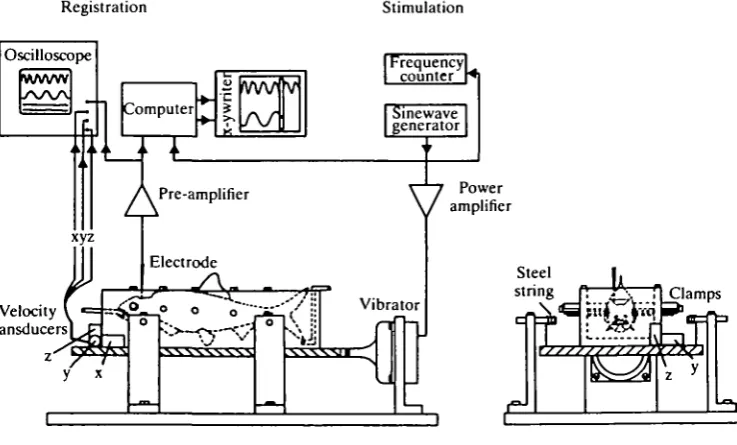
The methods for recording from the lateral line nerve and mechanical stimulation of the lateral line have previously been described in more detail (Sand, 1981). A sketch of the experimental set-up is shown in Fig. 1. The anaesthetized fish was fixed side-down on the angled bottom of a chamber recirculated with the test solutions. The water inlet was also used for artificial respiration of the fish. A superficial incision was made above the lateral line nerve at the level of the pectoral fin, and the nerve was dissected free for a length of 0-5-1 cm. Only the part of the fish posterior to the operated area was submerged during these experiments.
252
Stimulation
H. E. KARLSEN AND 0 . SAND
Registration
Amplifier
Ball vibrator Electrode
Fig. 1. The experimental arrangement for testing the mechano-sensitivity of the lateral line in the roach. See text for details.
Lateral line stimulation
Recording of utricular micmphonic potentials
The method employed in these experiments is illustrated in Fig. 2. The anaesthetized fish was clamped with five pairs of steel bars in a fish holder attached to a vibrating table, as previously described (Sand & Michelsen, 1978). The foremost pair clamped the fish head securely just above the eyes. The table was suspended by four steel strings, and horizontal vibration of the table parallel to the long axis of the fish was achieved using an electromagnetic vibrator. Vibration of the fish in air effectively stimulates the otolith organs, and constitutes a good simulation of the kinetic part of sound stimulation in water (Enger, Hawkins, Sand & Chapman, 1973; Sand, 1973). The movements of the table were measured with three orthogonally positioned velocity transducers. Below 100 Hz the vibrations were linear with negligible vertical wobbling, and the recordings were restricted to this frequency range.
The skull was opened dorsally, and the brain carefully removed by suction. The utriculus and parts of the semicircular canals were then exposed, and microphonic potentials were recorded with carbon fibre microelectrodes (Armstrong & Millar, 1979; Fox, Armstrong & Millar, 1980) from the anterior part of the utriculus. The tips of the electrodes were sharpened by etching (Armstrong, Fox & Millar, 1980) to facilitate penetration of the utricular membrane. The electrode was connected to standard recording equipment. We recorded from the utriculus since it is directly accessible once the brain has been removed, while the pars inferior is situated in a groove in the skull floor covered by a thin bony shield. Moreover, the utriculus in the
Registration Stimulation
Oscilloscope
WWW
Computer •c
K
Frequency! counter r*
Velocity transducers!
• Power amplifier
[image:5.451.43.412.378.600.2]Clamps
254 H. E. KARLSEN AND O. SAND
Ostariophysi is at least as sensitive to horizontal vibrations as the sacculus, whereas the lagena is less sensitive (Fay, 1984). The electrode was fixed to a light-weight manipulator firmly clamped to the fish holder, causing negligible relative movements between the fish and electrode at the frequencies employed. The microphonic potentials are presented as dB re 1 /zV rms.
Test solutions
The fish were exposed to standard fresh water with varying added amounts of C0CI2 and CaCl2- The standard fresh water had the following composition (in m m o i r1) : KC1, 0-025; KNO3, 005; NaH2PO4, 0-05; NaCl, 0-2; MgSO4, 0-1
(Kishimoto, 1966; Sand, 1975). The pH was adjusted to 7-2 with NaOH. Water with no added CaCl2 is called Ca +-free in the present study, although atomic absorption measurements showed that such water nevertheless had a Ca2+ level of 1-lOjUmoir1.
RESULTS
Effects of Co2+ on the lateral line mechano-sensitivity
Initially the effects of Co2+ were studied during continuous recordings from the lateral line nerve. Before switching to the test solution, the mechano-sensitivity of the lateral line was measured in water from the storage tank. The vibrating ball was then slowly moved directly above the canal, and the recorded spike activity usually became synchronized to the stimulus for a few separate and rather restricted ball positions directly above individual pores. At these positions, ball vibration also increased the firing frequency. The location of these sensitive spots indicated that recordings were mainly obtained from canal organs rather than from superficial neuromasts. The effects of Co2+ were then tested at the optimal ball position, and the stimulus intensity was kept at a sub-maximal level at 4xlO~4cm.
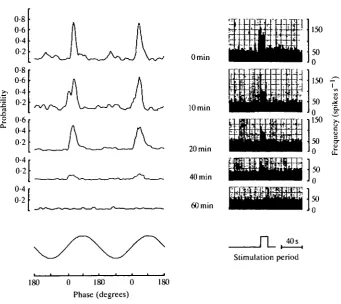
Fig. 3 demonstrates the effect of switching to Ca2+-free fresh water with 1 m m o i r1 Co2 +. The response to vibrational stimuli showed a gradual decline. After 60 min no responses were evoked by this type of stimulation, whether measured as increased firing rate or as the degree of synchronization. However, pipette stimulation still produced weak responses for a further period of 10—15 min before the mechano-sensitivity was completely blocked. Co2+ treatment also reduced the spontaneous firing rate during the initial 10-20min. However, to avoid losing sensitive units owing to possible decline of spike amplitudes, the window discrimi-nator was adjusted during the experiment to keep the recorded spontaneous activity constant.
o
0-8 0-6 0-4 0-2
0-8 0-6 0-4 0-2
0-6 0-4 0-2
0-4 0-2
0-4 0-2
Omin
lOmin
20min
40min
60min
40s
i Stimulation period
180 0 180 0 Phase (degrees)
180
Fig. 3. T h e inhibiting effect of 1 mmol 1 Co + in Ca +free solution on the m e c h a n o
-sensitivity of the lateral line. T h e left part presents probability plots, showing the degree of synchronization between ball vibration and spike activity, and the increase in spike frequency induced by the 50 Hz vibrational stimulus parallel to the canal is shown to the right. T h e estimated amplitude of the water displacements at the lateral line just beneath the ball was kept constant at 4 x 1 0 ~4c m . Recordings are presented at different times after
switching from normal fresh water to the test solution. T h e preparation showed no sensitivity to this stimulus after 6 0 m i n exposure.
To test if this effect of Co + was reversible, the test solution was changed to Co + -free standard fresh water with 1 mmol P1 Ca2+ immediately after complete blocking had been achieved. All the fish then displayed weak responses to massive pipette stimulation within 10-30 min, whereas the responses to ball vibration started to reappear after 1—2h.
[image:7.451.57.399.64.368.2]256 H. E. KARLSEN AND O. SAND
100-g,
80-
60-i
•Q 40
2 0
-0
0 10 2 0 3 0 4 0 5 0 6 0 70 80 Exposure time to Co2+ (min)
Fig. 4. Time course of the inhibiting effect of 1 mmoll"1 Co2 + in Caz+-free solution on the mechano-sensitivity of the roach. The response to the same stimulus as described in Fig. 3 was measured either as synchronization index ( T ) or increased firing frequency ( • ) . The mean values ± S.D. for five fish are included, and both types of response were evidently blocked by Co2+ to a similar degree.
the lateral line canal. In most cases both sides of the fish were tested. During the exposure period, the fish were kept separate in tanks containing 25 1 of test solution. To minimize the influence of the presence of the fish on the ionic composition of the water, the test solution was changed after each exposure.
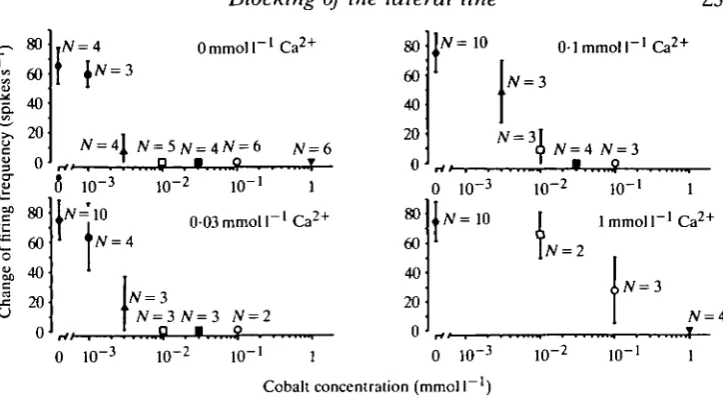
Fig. 5 presents the results from the experiments testing the blocking effect of 24 h of exposure to standard fresh water with different Coz +/Ca2 + ratios. A Co2+ concen-tration of 0-03mmoll~' was sufficient to block completely the mechano-sensitivity in test solutions containing 0-03mmoll~' Ca + or less. Even 0-OlmmolP1 Co2+ completely blocked the response to ball vibration at this Ca + concentration, whereas massive pipette stimulation evoked a small increase in the firing frequency. Fig. 5 clearly shows that elevation of the Ca2+ concentration effectively antagonized the inhibiting effect of Co2 +, and Table 1 summarizes the main results from this series of experiments. At effective Co2+/Ca2+ ratios complete blocking may, of course, be achieved after shorter exposure than 24 h. The mechano-sensitivity was, for instance, completely abolished after 12h in fresh water containing Olmmoll"1 Co2+ and 0-03 mmol 1~ Ca +. However, the relationship between the necessary exposure time and the different Co2 +/Ca2 + ratios was not studied further.
OS c U 80 60 40 20 0 80 60 40 20 0 t/v ="»
t 1^= 31 y
Af = 4l N = 5 N=4N =
, " p f jp
8 io~3
IN =10
If...
io~2
003 mmol I"1 Ca2+
0 10
f
/V=3N=3 N = 3 N=2
Q • O
80 60 40 20 0 80 60 40 20 0
1"
=
10U=3
10- 2 10- 1
lmmoir
r
11 Caa2 +' = 2
- 3 10- 2 10- 1 1 0 10- 3 10- 2 10- 1
Cobalt concentration (mmol 1 ')
Fig. 5. Blocking of the lateral line mechano-sensitivity by 24 h exposure to water with different Co2 +/Ca2 + ratios. The response to the same stimulus as described in Fig. 4 is presented as mean values ± S.D. of the increased firing rate. The number of fish tested at each ratio is indicated on the figure. The inhibiting effect of Co2 + was clearly antagonized
in a competitive manner.
by C a2 +
[image:9.451.45.407.58.259.2]When using Co2+ to block the mechano-sensitivity of the lateral line in behavioural experiments, it is desirable to employ a concentration sufficiently high to provide a reasonable safety factor. However, the concentration must, of course, be below the level giving disordered behaviour. Long-term exposure to 1 mmol 1 Co proved lethal to the fish, which died after 1—2 weeks. However, no general behavioural change was observed in roaches after 1 week in 0-1 mmol I"1 Co2 +. It is reasonable to suggest that Co might disturb the ionic transport across the gills, thus inducing hypotonicity of the body fluids in freshwater fish. In agreement with this notion, the dying fish exposed to 1 mmol 1~ Co + for 1 week showed a decline of the plasma
Table 1. Summary of the blocking effect of Co2+ on the lateral line mechano-sensitivity at different Ca2+ concentrations
Cobalt concentration (mmoll"1)
Calcium concentration (mmoll ') 0 003 01 1
1 01 003 001 0003 - P - P - P - P - p
The symbol — indicates that none of the tested fish showed responses to vibrating ball stimulation.
The symbol + indicates that some or all of the tested fish displayed sensitivity to this type of Stimulus.
258 H. E. KARLSEN AND O. SAND
Pipette stimulation 1 min
2 0 0 " ^
100 S.
3 O"
a
Fig. 6. Post-stimulus depression of the spontaneous firing rate after pipette stimulation in a fish exposed to water containing 0 1 mmol I"1 Co2+ and 0 0 3 mmol I"1 Ca2+ for 24 h. No excitation was seen during the stimulation, which instead was followed by a reduced firing rate for about 8 min.
chloride concentration to about 50% of the control values. However, the plasma osmolality and chloride concentration showed no change after 1 week of exposure to 0-1 mmol I"1 Co2+ in Ca2+-free fresh water at 8°C.
To study the recovery of mechano-sensitivity after complete blocking of the lateral line, the fish were initially exposed to Ca +-free solution with CM mmoll"1 Co + for 24 h. Thereafter the fish were transferred to standard fresh water with different Ca + concentrations, and throughout the recovery period different fish were taken out for measurement of the mechano-sensitivity of the lateral line. No recovery was seen after 24h in Ca2+-free solution, whereas weak responses to massive pipette stimulation were evident after only 3h in water containing 1 mmoll"1 Ca2+. However, an amazingly long period of 2—3 weeks was needed to reach normal sensitivity to vibrating ball stimulation.
Effects ofCo2+ on the inner ear microphonic potentials
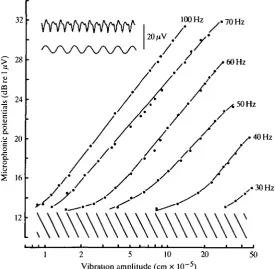
Fig. 7 presents stimulus—response curves for utricular microphonic potentials recorded from a roach taken directly from the storage tank. The potentials were evoked by vibrating table stimuli of different frequencies. To test if Co2+ added to the external medium affected the microphonic sensitivity, a group of fish was exposed to Ca2+-free water containing 1 mmol I"1 Co2+ for 24h. A comparable control group was kept in standard fresh water for the same period. This Co2+ treatment is far in excess of that needed for complete inhibition of the mechano-sensitivity of the lateral line. Fig. 8A shows the stimulus—response curves at 75 Hz for both the exposed group and the control fish, and it is evident that the Co2+ treatment had no effect on the microphonic sensitivity.
32
CD
•a 24
.y 20
C o o. o
u
ii 16
12
VYVYVWWVVW
100 Hz •70 Hz60 Hz
50 Hz
40 Hz
,•30 Hz
2 5 10 20 Vibration amplitude (cm x 10~5)
[image:11.451.89.365.68.337.2]50
Fig. 7. Stimulus-response curves for utncular microphonic potentials evoked by vibrating a roach in air at different frequencies. Hatching indicates the electric background noise. Inset: sample recording of microphonic potentials (upper trace) during 70 Hz vibrations of 5x 10~5cm (lower trace).
DISCUSSION
It is clear from the present experiments that it is possible to block completely the mechano-sensitivity of the canal lateral line organs in the roach by Co2+ treatment. Only the trunk organs were tested, although the roach also has separate lateral line canals and a large number of superficial neuromasts on the head. However, the head canals communicate with the exterior through pores in a similar way to the canals on the trunk, and it is reasonable to assume that Co2+ added to the external water also inhibits the head organs.
260 H. E. KARLSEN AND O. SAND
30 A
5 26
u ffl •a
^ 22
8.
1814
10
\ \ \ \ \ \ \ \ \ \ \ \ \ \ \ \ \ \ \ \ \
B
\ \ \ \ \ \ \ \ \ \ \ \ \ \ \ \ \ \ \
2 5 10 20 50 2 5 10 20 Vibration amplitude (cm x 10~5)
Fig. 8. Utricular microphonic responses of different roaches to 75 Hz vibrations. Hatching indicates mean electric background noise. (A) Open symbols represent fish exposed to Ca2+-free fresh water containing l m m o i r1 Co for 24h; filled symbols represent data from control fish. (B) Comparable recordings from three roaches exposed to Caz+-free test solution containing 0-lmmoll"1 Co2+ for 5 days. The microphonic sensitivity was clearly not reduced by the Co2 + treatment.
Co2 +/Ca2 + ratio. High Co2+ concentrations have toxic effects on the fish: the roach died after 1—2 weeks exposure to 1 mmol I"1 Co2 +. However, no behavioural disorders were observed after 1 week in water containing 0-1 mmol I"1 Co2 +, whereas complete blocking of the lateral line was observed after 12 h if the Ca2+ concentration was kept below CM mmol 1~'. A similar blocking solution and exposure time may therefore be recommended for behavioural experiments.
the duration of Co2+ exposure and the Ca2+ concentration of the recovery solution. In the present experiments, recovery' periods between a few hours and 2-3 weeks were required to reach full restitution after a complete block of the lateral line. However, the minimum recover}' time to reach normal sensitivity was not studied in detail for the different blocking protocols.
The physiological mechanism for the blocking effect of Co2+ on the hair cell sensitivity and the antagonizing effect of Ca2+ is still not clear (Sand, 1979). Co2+ is a well-known competitive inhibitor of Ca2+ fluxes through membrane channels (Hagiwara & Byerly, 1981), and Ca2+ is probably involved at several levels in the hair cell transduction process. This ion may be an important carrier of the receptor current in lateral line hair cells (Sand, 1975; Baumann & Roth, 1986), or it may modify the permeability of the transducer membrane to other ion species (Russell & Sellick, 1976). Ca + may also be important for maintaining the stiffness of the stereocilia (Orman & Flock, 1983) or the mechanical properties of the cytoskeleton (Hudspeth, 1983).
This work was supported by grants from The Norwegian Council for Science and the Humanities and The Nansen Foundation.
REFERENCES
ARMSTRONG, J. M. & MILLAR, J. (1979). Carbon fiber microelectrodes. jf. Seurosci. Melh. 1, 279-287.
ARMSTRONG, J. M., Fox, K. & MILLAR, J. (1980). A method for etching the tips of carbon fiber microelectrodes. .7- Xeurosci. Melh. 2, 431-432.
BAUMANN, M. & ROTH, A. (1986). The C a+ + permeability of the apical membrane in neuromast hair cells. J . comp. Physiol. 158A, 681-688.
BROWN, R. D. & FELDMAN, A. M. (1978). Pharmacology of hearing and ototoxicity. A. Rev. Phannac. Toxicol. 18, 233-252.
DIJKGRAAF, S. (1973). A method for complete and selective surgical elimination of the lateral-line system in the codfish, Gaclus moHiua. Experienlia 29, 737.
ENGER, P. S., HAWKINS, A. D., SAND, O. & CHAPMAN, C. J. (1973). Directional sensitivity of
saccular microphonic potentials in the haddock..7. exp. Biol. 59, 425-434.
FAY, R. R. (1984). The goldfish ear codes the axis of acoustic particle motion in three dimensions. Science 225, 951-954.
Fox, K., ARMSTRONG, J. M. & MILLAR, J. (1980). The electrical characteristics of carbon fiber microelectrodes. J. Xeurosci. Melh. 3, 37-48.
HAGIWARA, S. & BYERLY, L. (1981). Calcium channels. A. Rev. Xeurosci. 4, 69-125.
HARADA, Y., MUSSO, E. & MIRA, E. (1967). Action of streptomycin, dihydrostreptomycin,
neomycin and kanamycin on the ampullar receptors of the frog. Ada oto-laryngol. 64, 327-337. HARRIS, G. G. & VAN BERGEUK, W. A. (1962). Evidence that the lateral line organ responds to
water displacements. J . acousl. Soc. Am. 34, 1831-1841.
HUDSPETH, A. J. (1983). Mechanoelectrical transduction by hair cells in the acousticolateralis sensory system. A. Rev. Xeurosci. 6, 187-215.
KALMUN, A. J. (1987). Hydrodynamic and acoustic field detection. In Sensory Biology of Aquatic Vertebrates (ed. J. Atema, A. N. Popper, R. R. Fay & \V. N. Tavolga). New York: Springer-Yerlag (in press).
KALMUN, A. J. & ENGER, P. S. (1987). A linear electrolytic displacement transducer for the recording of hydrodynamic flow fields of biological origin. J. acousl. Soc. Ajn. (in press). KEYS, A. B. & WELLS, N. A. (1930). Amytal anesthesia in fishes. J . Pharniac. exp. Ther. 39,
262 H. E. KARLSEN AND O. SAND
KISHIMOTO, V. (1966). Repetitive action potentials in X'itella internodes. Plant Cell Phvsiol. 7, 547-558.
KONISHI, T. (1979). Effects of local application of ototoxic antibiotics on cochlear potentials in guinea pigs. Ada oto-laryngol. 88, 41-46.
KROESE, A. B. A. & VAN DEN BERCKEN, J. (1982). Effects of ototoxic antibiotics on sensory hair cell functioning. Hearing Res. 6, 183-197.
MATSUURA, S., IKEDA, K. & FURUKAWA, T . (1971). Effects of streptomycin, kanamycin, quinine and other drugs on the microphonic potentials of goldfish sacculus.J'n/).^. Phvsiol. 21, 579-590. ORMAN, S. & FLOCK, A. (1983). Active control of sensory hair mechanics implied by susceptibility
to media that induce contraction in muscle. Hearing Res. 11, 261-266.
RUSSELL, I. J. & SELLICK, P. M. (1976). Measurement of potassium and chloride ion concentrations in the cupulae of the lateral lines in Xenopus laevis. J. Phvsiol., Land. 251, 245-255.
SAND, O. (1973). Directional sensitivity of microphonic potentials from the perch ear. J. exp. Biol. 60, 881-899.
SAND, O. (1975). Effect of different ionic environments on the mechano-sensitivity of the lateral line organs in the mudpuppy. J. com p. Phvsiol. 102, 27-42.
SAND, O. (1976). Microphonic potentials as a tool for auditory research in fish. In Sound Reception in Fish (ed. A. Schuijf & A. D. Hawkins), pp. 27-48. Amsterdam: Elsevier.
SAND, O. (1979). The role of Ca2+ in the hair cell transduction process. Ada phvsiol. scand. (Suppl.) 473, 20.
SAND, O. (1981). The lateral line and sound reception. In Hearing and Sound Communication in Fishes (ed. W. N. Tavolga, A. N. Popper & R. R. Fay), pp. 459-480. New York:
Springer-Verlag.
SAND, O. (1984). Lateral-line systems. In Comparative Physiology of Sensory Systems (ed. L. Bolis, R. D. Keynes & S. H. P. Maddrell), pp. 3-32. Cambridge: Cambridge University Press.
SAND, O. & KARLSEN, H. E. (1986). Detection of infrasound by the Atlantic cod. jf. exp. Biol. 125, 197-204.
SAND, O. & MICHELSEN, A. (1978). Vibration measurements of the perch saccular otohth.J. comp. Phvsiol. 123, 85-89.
SAND, O., OZAWA, S. & HAGIWARA, S. (1975). Electrical and mechanical stimulation of hair cells in the mudpuppy..7- comp. Phvsiol. 102, 13-26.
SCHUIJF, A. (1981). Models of acoustic localization. In ileanng and Sound Communication in Fishes (ed. \V. N. Tavolga, A. N. Popper & R. R. Fay), pp. 267-310. New York:
Springer-Verlag.
SCHUIJF, A. & SlEMELINK, M. (1974). Theability of cod (Gadus morhua) to orient towards a sound source. Experienlia 30, 773-774.
WERSALL, J., BJORKROTH, B., FLOCK, A. & LUNDQUIST, P. G. (1973). Experiments on ototoxic
effects of antibiotics. Ada oto-laiyngol. 20, 14-41.
WERSALL, J. & FLOCK, A. (1964). Suppression and restoration of the microphonic output from the lateral line organ after local application of streptomycin. Life Sci. 3, 1151-1155.
WILKENS, L. A. & WOLFE, G. E. (1974). A new electrode design for en passant recording, stimulation and intracellular dye infusion. Comp. Bwchem. Phvsiol. 48A, 217-220.