1
Dealing With Social Desirability Bias: An Application To Charitable
Giving
ABSTRACT
Purpose - This paper aims to address the issue of survey distortion caused by one of the most common and pervasive sources of bias, namely social desirability bias (SDB). Despite 50 years of research, there are still many unanswered questions about its conceptualisation and operationalisation. We argue that traditional measures of SDB are inadequate and that the context in which the research is being conducted should be reflected in the measures employed. Hence, we develop and validate a
multi-dimensional scale that may be used to measure the degree of SDB present in responses to giving surveys.
Design/methodology/approach – Following initial scale development procedures a convenience sample of 820 donors to a national charity was employed to refine the resultant scale items. Exploratory factor analysis and reliability tests were conducted to establish the dimensionality of the new scale and its reliability. Using a separate
sample of 1500 active donors, the scale was then subject to confirmatory procedures to test its predictive validity.
Findings – The findings support the assertion that SDB is a multi-dimensional construct consisting of six dimensions. However, in the context of postal surveys we find that Self Deception and the degree of Intrinsic Benefit accruing to a donor are the primary determinants of the level of SDB an individual will exhibit. We also highlight the significance of the SDB issue since in our survey, 65% of respondents were found to over-report their giving.
Originality/value - This is one of the first published studies that has been able to explore the predictive validity of a SDB scale. The work has expanded our
understanding of the determinants of SDB and provided an instrument that may now be employed to reduce a significant proportion of this error in giving surveys. Keywords – social desirability bias, validity, giving surveys, misreporting
2 INTRODUCTION
As nonprofit practitioners become increasingly concerned about the accuracy of surveys measuring charitable giving (MacQuillin, 2005), empirical analyses of the quality and comparability of data on charitable giving are beginning to emerge (Rooney et al., 2004; Wilhelm, 2007). In the U.K. Slack (2008), for example, has highlighted evidence of wide discrepancies in the findings of studies of charity giving examining similar timeframes. One research agency, BMRB Access, reported a huge fall in the percentage of UK society giving to charity each year, down from 80% to 66% (in the period 2003-2005), while a second agency, nfpSynergy, suggested that participation in giving was static. There are also marked discrepancies in the reported amounts that people give, leading to estimates of giving that are simply not reflected in the sector’s accounts (MacQuillin, 2005). It appears that respondents routinely claim in surveys that they are significantly more generous than they actually are.
This paper aims to address the issue of survey distortion caused by one of the most common and pervasive sources of bias, namely social desirability bias (SDB). Crowne and Marlowe (1960) define the motive behind socially desirable responding as
3
face a conflict between a desire to tell the truth and a desire to appear to the interviewer to be in the socially desirable category’ (p9). Respondents typically resolve this conflict by biasing their answer in the direction of social desirability. In the case of giving they might thus claim to give more to charity than is actually the case, or claim to be giving to charity when in fact they do not.
Despite 50 years of research there are still many unanswered questions about how to conceptualise social desirability bias (SDB) and how best to detect and measure it in social research. Much of the early literature assumes that it is uni-dimensional, but more recently authors have posited a two-factor (Paulhus, 1984; 1991) and even a multi-dimensional model (Beretvas et al., 2002). There is also an increasing awareness that the nature of SDB might vary by context and that generic approaches to
conceptualising and operationalizing SDB are therefore problematic (Fisher, 2000).
These ongoing debates complicate the selection of an appropriate scale to measure the extent of social desirability bias in surveys. This paper will delineate what causes respondents to respond in a socially desirable way and thus facilitate the development of a reliable and valid scale to measure the magnitude of this phenomenon. The domain of individual giving provides the context for our investigation.
MEASURING SOCIAL DESIRABILTIY BIAS
4
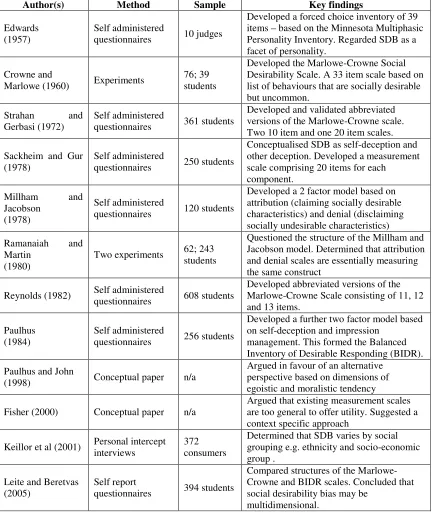
phenomenon as a dimension of personality rather than as a category of response bias per se. Drawing items from the Minnesota Multiphasic Personality Inventory and the Manifest Anxiety Scale he created an inventory of items which was oriented towards the admission or denial of symptoms of maladjustment (e.g. my sleep is fitful and disturbed) and thus reflective of clinical diagnostic criteria. The selection of such extreme items was criticised by Crowne and Marlowe (1960) who also drew items from personality inventories but focussed instead on items that did not reflect
psychopathology or abnormality. Their resultant scale consists of 33 items addressing facets of human behaviour sanctioned culturally but thought improbable to occur (e.g. ‘I have never intensely disliked anyone’ or ‘I never resent being asked to return a favour’). Agreement with these statements would indicate socially desirable responding.
Insert Table 1 Near Here
5
factor analysis, not the unidimensionality assumed by the original authors (see also Leite and Beretvas 2005).
Other authors have developed this work. Millham and Jacobson (1978) proposed a two-factor model of social desirability. They partitioned the scale items in the Marlowe-Crowne scale into ‘attribution’ and ‘denial’ subscales. ‘Attribution’ responses refer to claiming socially desirable characteristics for the self whereas ‘denial’ responses involve disclaiming undesirable characteristics applied to the self. However, subsequent testing for positive and negative items revealed that the case for separating the attribution and denial components of social desirability is weak and that they may in fact refer to the same construct (Ramanaiah and Martin, 1980).
Paulhus (1984) also suggested a two-factor model and developed a new 40 item scale called the Balanced Inventory of Desirable Responding (BIDR). The first factor is based on ‘self-deception positivity/ enhancement’ which is an overly favourable but honest self-presentation that is linked to personality factors such as anxiety,
achievement motivation and self-esteem. The second factor is an impression
management component that results from situational demands or transient motives to present oneself in a positive light (Paulhus and Reid, 1991). Subsequent research studies have drawn similar distinctions but have applied different labels to the constructs. For instance, Sackeim and Gur (1978) preferred to use the terms ‘self deception’ and ‘other deception’.
6
generic measurement instrument can be developed and applied. By contrast Fisher (2000) argues that social desirability scales are too general to be associated with specific consumption behaviour. In order to improve the effectiveness of these scales the author argues that more context specific scales items should be seriously
considered as respondents may exhibit different levels of social desirability across differing contexts. The determinants may also vary. In this paper, we answer this call by developing a scale capable of detecting individuals likely to give socially desirable responses when reporting their charity giving behaviour.
SOCIAL DESIRABILITY BIAS AND GIVING
Given that surveys and interviews are likened to conversations (Converse and Schuman, 1974; Berinsky, 2004) individuals may try to create a good impression on others when responding to sensitive questions (Grice, 1975). Indeed the concept of face has been used by a number of researchers to explain communication behaviours (Oetzel et al., 2001) and face management theory has been used to good effect in reducing the effect of socially desirable responding (Holtgraves et al., 1997). As charitable giving is seen as a socially desirable thing to do (Sargeant et al., 2000), it is likely that impression management or ‘other deception’ will play a role in the
responses individuals give to questions probing this issue. We therefore posit:
7
It is also possible that some respondents who give socially desirable responses may not necessarily be setting out to impress the researcher. Much of the extant SDB literature alluded to above posits a link between socially desirable responding and a stable personality trait. Some individuals may thus be pre-disposed toward what Sackheim and Gur (1987) refer to as ‘self-deception’ which manifests itself in ‘honest’
presentations that are nevertheless positively biased. The difference here is that the respondents believe these positively biased descriptions to be true (Paulhus, 1984; Zerbe and Paulhus, 1987). The misreporting occurs because individuals are acting to protect their self beliefs and self esteem (Paulhus, 1986; Randall and Fernandes, 1991). We therefore posit:
H2: The greater a donor’s propensity for self-deception the greater will be the degree of their socially desirable responding in giving surveys.
While our preceding discussion has mirrored the content of extant studies of SDB, we believe that there are a range of additional factors that have the capacity to influence the degree of this form of bias in giving surveys. Notable here is the concept of involvement. While some forms of giving may be spontaneous and uncommitted requiring little thought, many donors give because they are passionate about the cause, or because it relates to important personal needs, values and interests (Sargeant and Woodliffe, 2007). Giving in this context is therefore more likely to be a higher involvement decision. Many authors have noted a strong relationship between involvement and information processing (Batra and Ray, 1986; MacInnis and Jaworski, 1989) and Toh et al. (2006) in a large scale study of consumer diary
8 context of giving we therefore posit:
H3: The higher the level of involvement that donors experience with their giving (to charity X) the greater will be the degree of their socially desirable
responding in giving surveys.
In the context of giving it is also worth examining the nature of the exchange between charity and donor. Numerous researchers have noted that benefit can accrue from the act of making a donation (e.g. Bendapudi et al. 1996, Andreoni 2001). In general these may be categorised as being either extrinsic or intrinsic. In respect of the former, donations can often be facilitated by a nonprofit offering a tangible benefit to the donor. This might range from an invitation to a celebrity event and networking opportunities to something as mundane as receiving the charity’s communications or having access to the organization’s services, as is the case in many membership scenarios. Indeed the literature makes numerous references to the extrinsic rewards that can accrue from giving and the role that these can play in achieving donations (Collard, 1978; Andreoni, 2001). Since this category of rewards is extrinsic individuals may place a greater emphasis on the nature of the reward rather than the gift per se. As this conflicts with normative beliefs (Frumkin 2006) it would follow in these
circumstances that individuals would be more likely to respond in a socially desirable manner when asked to describe giving motivated in this way.
9
The rewards from giving may also be intrinsic in the sense that many individuals give to feel good about themselves or to offset a negative mood state. Andreoni (1989, 1990), for example, refers to the ‘warm glow’ that accrues from giving. Indeed the existence of emotional benefits is well established in the literature (Cialdini et al., 1987; Wegener and Petty, 1994; Bendapudi et al., 1996). As the pay off for this form of giving is psychological it would follow that individuals are internally focused and thus less likely to be concerned about the perceptions of others. They are also acting in a manner consistent with normative beliefs. Socially desirable responding may be reduced as a consequence. We therefore posit:
H5: The greater the desire of intrinsic benefit a donor perceives from their giving the lower will be their degree of socially desirable responding in giving surveys.
10
is likely that when it becomes so, the individual may claim to have given a normative amount and thus offer socially desirable responses when questioned on the issue. We therefore posit:
H6: The greater a donor’s interest in societal norms the greater will be their degree of socially desirable responding in giving surveys.
Scale Development
As the goal of this research was to develop a measure of social desirability bias in the context of giving surveys, the use of existing scales was often inappropriate. A high degree of tailoring was necessary in the case of the scales designed to measure
impression management, self deception and the influence of social norms. New scales were required in the case of the other constructs listed above. As a consequence scale development procedures were initiated in order to ensure the validity and reliability of the measures. An initial pool of 52 items was derived from the literature to measure the constructs. This items pool was then subjected to scrutiny by a panel of judges who were both charity donors (and thus target raters) and experts in the field (i.e. two doctoral students, two senior market research professionals and two practitioners in charity research). Each judge was provided with a definition of each construct (developed from the literature) and asked to rate each item in terms of its
11
A convenience sample of 820 donors to a national charity was selected for this purpose. A postal survey was initiated and a usable response rate of 19% achieved. The procedure began with an analysis of alpha co-efficients for each set of
antecedents. Items were deleted which improved corresponding alpha scores to the point where all retained items had corrected item to total correlations greater than 0.4 (Zaichowsky, 1985). This reduced the scale items to a total of 19. Alpha reliabilities were all moderately high and acceptable at about 0.8 (Nunnally and Bernstein, 1994). The retained items were then subject to an exploratory factor analysis with a
VARIMAX rotation. The Kaiser-Meyer-Olkin test of sampling adequacy and Bartlett test of sphericity indicated that the data were appropriate for the application of
principal components analysis. Exploratory principal component analyses identified six dimensions with eigenvalues exceeding 1. This result was also confirmed by Cattell’s Scree Test. The finalized scales and their associated alpha scores are reported in Appendix 1. It should be noted that a number of different extraction and rotation methods were explored and the choice of method had no significant effect on the final results.
Scale Validation
12
animal welfare charity in the UK. The original item concerning the annual report was removed since this particular organization did not circulate this to donors. Responses were measured on a 5-point Likert scale. After one mailing, 444 replies were returned, representing a 29.6 per cent response rate, of which 410 were complete and suitable for analysis. Giving histories (drawn from the charity database) were matched post hoc to questionnaire responses (using donors’ names) making it possible to add in the actual amounts given to the organization for comparison against self reports.
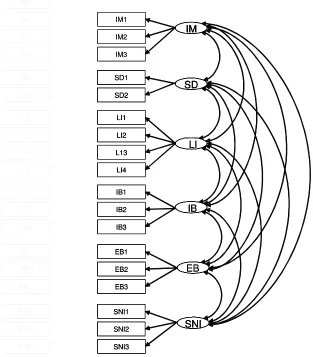
Initial observation of the data indicated that none of the observed variables were significantly skewed or highly kurtotic. The possibility of outliers in the data was also considered but none were identified. Our measurement model for social desirability bias consisted of 6 exogenous variables and 18 manifest indicators. As indicated in Figure 1 these variables were: 1) Impression Management (IM), 2) Self Deception (SD), 3) Level of Involvement (LI), 4) Extrinsic benefit (EB), 5) Intrinsic benefit (IB), 6) Social Norm Influence (SNI).
Insert Figure 1 Near Here
13
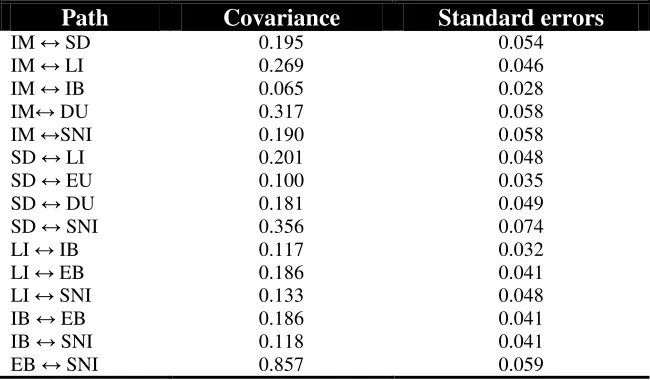
was found to be 0.88. In addition, all six antecedents were positively correlated. However, a closer examination indicated that there was a high degree of correlation between the ‘Impression Management’ and ‘Extrinsic Benefit’ constructs raising a question about discriminant validity.
Insert Table 2 Near Here
Burnkrant and Page (1982) recommend a series of tests to help clarify whether such factors should either stand alone or be combined. In this study, this procedure compared the existing model (χ2 =604.4, df = 271, p<.00), in which all the six antecedents of social desirability bias construct were allowed to correlate, to another model in which ‘Impression Management’ and ‘Extrinsic Benefit’ were hypothesised to have a unity correlation that depicted them as unidimensional (χ2 =701.4, df = 272, p<.00). A chi-square difference test between the two structures supported the earlier exploratory study and established that the two should be considered as discrete factors (∆χ2 =100, df = 1, p<.00).
The measurement work completed to this point therefore confirms the internal consistency and integrity of the factor structure proposed by the initial scale development procedures. The social desirability construct is shown to be
multidimensional and the proposed antecedents may be regarded as conceptually distinct. We therefore provide a valid and reliable scale that can be used to measure the degree of SDB in giving surveys. It is important to recognize, however, that there are a variety of methods that may be employed to capture giving data including
14
of this paper to investigate each of these methods. To examine the relationship between the antecedents of social desirability bias and their impact on reported
patterns of giving we focus below on one such method, namely self-reporting in postal surveys. To develop a criterion against which to test the predictive validity of the scale we compare self reports of the level of an individual’s giving in the past 12 months (by mail, or through direct debit) with the amounts recorded on the participating charity’s database. We employ the difference between these two figures as our dependent variable. Further analysis indicated that the distribution of this measure was slightly skewed. Accordingly, a log transformation was undertaken to improve the normality of the data. This is an approach consistent with Lindahl and Winship (1992).
An initial analysis of the dependent variable indicated that only 11.8% of respondents were able to report their giving accurately. 22.4% under-reported, while 65.3% of respondents over-reported the amounts they had given. Interestingly, the margin of over-reporting was considerably higher than for under-reporting. The highest reported level of under-reporting was found to be only £50, while the highest level of over-reporting was found to be £385. Little wonder then that surveys of giving frequently estimate levels of income for the charity sector far in excess of that reported
(collectively) in annual accounts.
Predicting Social Desirability Bias
15
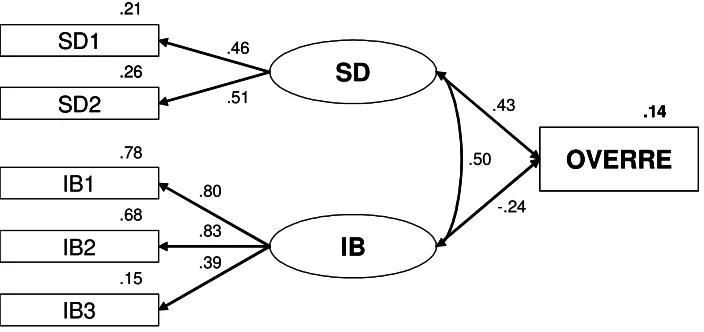
more parsimonious approach would provide a stronger fit to the data (GFI = 0.98; AGFI = 0.93; CFI = 0.96; RMSEA = 0.075). The resultant model is depicted in Figure 2a. This analysis was then repeated focusing on predicting only over-reports of giving (i.e. rather than mis-reporting). Since the incidence and impact of over-reporting is much higher than the converse, this seemed an appropriate next step. The resultant model is depicted in Figure 2b and it achieves a similarly high degree of fit (χ2= 9.6; df = 7; p = .05; GFI = 0.98; AGFI = 0.94; CFI = 0.98; RMSEA = 0.051), with an increase in R square from 0.11 to 0.14. In both models the role of Self Deception and Intrinsic Benefit are highlighted. In the case of the former it would appear that individuals with a predisposition to self deception are significantly more likely to over-estimate their giving. By contrast, individuals who gain a psychological utility from giving are significantly less likely to provide an over-estimate. The model explains 11% of the variation in the dependent variable, indicating that a range of other factors are at work. Notable among these is likely to be a lapse in memory and hence an inability to recall the amounts donated.
Insert Figure 2a Near Here
Insert Figure 2b Near Here
16
of whether age and gender has any impact on the likelihood and/or degree of social desirability bias (Snell et al., 1999; Ray and Lovejoy, 2003).
DISCUSSION AND IMPLICATIONS
In this study we have developed and validated a new measure of SDB, for use specifically in the context of giving surveys. Although extant work has posited un-dimensional or bi-un-dimensional models of the construct we have argued that the drivers of social desirability bias may vary significantly from context to context. In the case of giving we have hypothesised that six dimensions should be of interest to researchers. The first two of these, impression management and self deception, reflect the extant literature and in particular the work of Paulhus (1984) and Sackheim and Gur (1978). To these dimensions we add a consideration of the level of involvement, extrinsic and intrinsic benefit and the extent to which an individual might be open to social
influence. The scale development procedures outlined above result in a valid and reliable scale that may be used by researchers working in the domain of giving to detect SDB in their findings.
17
relevance in other contexts. Impression management, for example, may have more relevance where giving is reported face to face (Oetzel et al, 2001), while the issue of involvement may have greater relevance to the domain of major gifts (Sprinkel-Grace, 2005) or to those higher value givers who view themselves as ‘investors’ in
philanthropy (Institute for Philanthropy, 2003). Equally, extrinsic benefits may play a greater role in the membership context (Bendapudi et al., 1996) where they can frequently form the core of the exchange (MacMillan et al., 2005). Finally, it is possible that social norms may play a role in specific segments of society with some groups being more susceptible to this category of influence than others (Keillor et al., 2001). Thus, while we find no evidence to support H1, H3 H4 and H6 we would argue that they may not yet be rejected as there are sufficient grounds in the literature for believing that they may play a role in other giving contexts.
In the case of postal surveys of general charitable donors, however, we find that only self deception and the extent to which an individual perceives a psychological or ‘intrinsic’ benefit are significant determinants of SDB. The inclusion of these scales in giving surveys would therefore afford researchers some utility in predicting the
misreporting of behavioural data. Individuals scoring highly (lowly) on each of the scales can either be omitted from subsequent analysis, or have a weighting applied to their self-reported figures. While this will clearly not remove reporting errors from giving datasets it should greatly reduce or eliminate the component of this that is due to SDB.
18
applicability of approaches such as that of the Crowne and Marlowe (1960) scale. Our results clearly demonstrate the need to move beyond the generic to examine the likely roots of SDB in particular sets of circumstances. As an example, we find no evidence of impression management, but we do find evidence that those individuals whose giving is intrinsically motivated by the warm glow accruing from having made a charitable contribution are significantly less likely to exaggerate their generosity. It is likely that in undertaking their giving such individuals are internally focused and thus less likely to see their donations as something that would be of a concern to others.
In the context of postal surveys self deception appears to have the highest positive influence on respondents’ over-reporting. This may be explained in part by the work of Shang et al. (2008). The authors determined that the act of giving is regarded as a moral act and that it can play a role in bolstering an individual’s moral identity. As people give they begin to see themselves are more caring, generous, helpful etc. and hence more moral. Indeed, giving can be undertaken with the goal of reducing the discrepancy between a person’s actual and desired moral identity. Individuals may therefore engage in more supportive behaviours such as giving or volunteering time to maximize this utility. Of course they might derive similar utility from deceiving themselves about the degree to which they have adopted these desirable behaviours.
19
individual might deceive themselves about the level of this engagement (Arnett et al., 2003).
Understanding the determinants of SDB in each form of giving research will be essential if the charity sector is to develop accurate measures of giving and in particular measures of giving by different sections of the community. While the aggregate levels of income reported in charitable accounts now available through Guidestar UK provide for the first time an accurate assessment of the sector’s income, this data tells us little about the origins of this income and the forms and channels of giving that garner this generosity. This additional level of detail is vital to inform public policy and it is also vital for charity fundraisers seeking to understand more about the behaviour of various supporter segments and the solicitation strategies that might be employed with each. There will therefore always be a role for surveys of giving and as this work has demonstrated, misreporting in this context is a major problem. With 65% of individuals over-reporting their giving and over-reporting to a significantly higher degree than individuals under-report, the derivation of accurate data is problematic. The current work has expanded our understanding of this dynamic and provided an instrument that may now be employed to reduce a significant
proportion of this error.
LIMITATIONS AND DIRECTIONS FOR FUTURE RESEARCH
20
responding may vary by context and thus vary by category of cause. While our results are persuasive it would be helpful to replicate our findings across different categories of charity and cause such as medical, children, environment etc. It would also be valuable to explore the utility of our general scale to other modes of giving survey, notably telephone and face to face interviewing. As we indicate above it is likely that a number of additional dimensions may be relevant and other aspects of our scale would therefore offer utility.
Attention should also be devoted to identifying the other determinants of misreporting. We explain a comparatively modest proportion of the variation in our dependent variable by reference to SDB. While the balance may be to due to a failure of memory (Burt and Popple, 1998) our results suggest that this explanation is inadequate.
Inaccurate recall of the amounts given would reasonably be expected to vary normally around the actual level of donation. This is not the case, over-reporting is considerably more prevalent. Recent work in psychology suggests that this may be due to ‘false consensus’ in that when people fail to recall their behaviour they fill the gap by what they consider to be normative and the now well studied, ‘better than average effect’ where individuals typically consider themselves to perform better than the average in many critical respects (Marks and Miller,1987 ; Epley and Dunning, 2000).
21 REFERENCES
Anderson, J. C. and Gerbing, D. W. (1988), “Structural equation modeling in practice: A review and recommended two-step approach,” Psychological Bulletin, Vol 103, No 3, pp. 411-423.
Andreoni, J. (1989), “Giving with impure altruism: Applications to charity and Ricardian equivalence”, Journal of Political Economy, Vol 97, No 6, pp. 1447-1458.
Andreoni, J. (1990), “Impure altruism and donations to public goods: A theory of warm-glow giving”, The Economic Journal, Vol 100, No 401, pp. 464-477.
Andreoni, J. (2001), “The economics of philanthropy”, in Smelser, N. J. and Baltes, P. B. (Eds.), International Encyclopedia of the Social and Behavioural Sciences, Elsevier, London.
Arnett, D. B., German, S. D. and Hunt, S. D. (2003), “The identity salience model of relationship marketing success: the case of nonprofit marketing”, Journal of Marketing, Vol. 67, pp. 89-105.
Bardwell, W. A. and Dimsdale, J. E. (2001), “The impact of ethnicity and response bias on self report of negative affect”, Journal of Applied Biobehavioural Research, Vol. 6, No. 1, pp. 27-38.
Barger, S. D. (2002), “The Marlowe-Crowne affair: short forms, psychometric structure and social desirability”, Journal of Personality Assessment, Vol.79, No. 2, pp. 286-305.
Batra, R. and Ray, M. L. (1986), “Affective response mediating acceptance of advertising”, Journal of Consumer Research, Vol. 13, pp. 234-249.
Bendapudi, N., Singh, S. N. and Bendapudi, V. (1996), “Enhancing helping behaviour: an integrative framework for promotion planning”, Journal of Marketing, Vol. 60, pp.33-49.
Beretvas, S. N., Meyers, J. L. and Leite, W. L. (2002), “Reliability generalisation study of the Marlowe-Crowne social desirability scale”, Educational and Psychological Measuremen,t Vol. 62, No. 4, pp. 570-589.
Berinsky, A. J. (2004), “Can we talk? self-presentation and survey response”, Political Psychology, Vol. 25, No. 4, pp. 643-659.
Brace, I. (2004), Questionnaire Design: How to Plan, Structure and Write Survey Material for Effective Market Research. Kogan Page, London.
Burnkrant, R.E. and Page, T.J. (1982), “An examination of the convergent, discriminant and predictive validity of Fishbein's behavioral intention model,” Journal of Marketing Research, Vol.19, No.4, pp.550-561.
Burt, C.D.B. and Popple, J.S. (1998), “Memorial distortion in donation data”, The Journal of Social Psychology, Vol. 153, pp. 724-733.
Churchill, G. A. (1979), “A paradigm for developing better measures of marketing constructs”, Journal of Marketing Research, Vol. 16, pp. 64-73.
Cialdini, R. B., Arps, K., Fultz, F. and Beaman, A. (1987), “empathy based helping: is it selfishly or selflessly motivated?” Journal of Personality and Social Psychology, Vol. 52, pp. 749-758.
22
Collard, D. (1978), Altruism and Economy, Oxford University Press, New York. Converse, J. M. and Schuman, H. (1974), Conversation at Random: Survey Research
as Interviewers See It, Wiley, New York.
Crowne, D.P. and Marlowe, D. (1960), “A new scale of social desirability independent of pscyhopathology”, Journal of Consulting Psychology, Vol. 24, pp. 349-354. Edwards, A. L. (1957), The Social Desirability Variable in Personality Assessment
and Research, Dryden Press, New York.
Epley, N. and Dunning, D. (2000), “Feeling holier than thou: are self serving
assessments produced by errors in self or social prediction,” Journal of Personality and Social Psychology, Vol. 79, No. 6, pp861-875.
Fischer, D. G. and Fick, C. (1993), “Measuring social desirability: short forms of the marlowe-crowne social desirability scale”, Educational and Psychological Measurement, Vol. 53, pp. 417-424.
Fisher, R. J. (2000), “The future of social-desirability bias research in marketing”, Psychology & Marketing, Vol. 17, No. 2, pp. 73-77.
Frumkin, P. (2006), Strategic Giving: The Art and Science of Philanthropy, University of Chicago Press, Chicago, Ill.
Gouldner, A. W. (1960), “The norm of reciprocity: a preliminary statement”, American Sociological Review, Vol. 25, No. 2, pp. 161-79.
Grice, H.P. (1975), “Logic and conversation”, in Cole, P. and Morgan, J. L. (Eds), Syntac and Semantics 3: Speech Act, Academic, New York, pp. 41-58.
Holtgraves, T., Eck, J. and Lasky, B. (1997), “Face management, question wording and social desirability”, Journal of Applied Social Psychology, Vol. 27, No. 18, pp. 1650-1671.
Institute for Philanthropy (2003), Who Are The Givers? Institute for Philanthropy, London.
Keillor, B., Owens, D. and Pettijohn, C. (2001), “A cross-cultural/cross-national study of influencing factors and socially desirable response biases. International Journal of Market Research, Vol. 43, pp. 63-84.
Latane, B. (1981), “Psychology of social impact”, American Psychologist, Vol. 36, No. 4, pp. 343-56.
Lee, L., Piliavin, J.A. and Call, V.R.A. (1999), “Giving, time, money and blood: similiarities and differences”, Social Psychology Quarterly, Vol. 62, No. 3, pp. 276-290.
Leite, W. L. and Beretvas, S. N. (2005), “Validation of scores on the Marlowe-Crowne social desirability scale and the Balanced Inventory of Desirable Responding”, Educational and Psychological Measurement, Vol, 65, No. 1, pp.140-154. Lindahl, W. E. and Winship, C. (1992), “Predictive Models for Annual Fundraising
and Major Gift Fundraising”, Nonprofit Management and Leadership, Vol. 3, No. 1, pp. 43-65.
MacInnis, D. J. and Jaworski, B. J. (1989), “Information processing from
advertisements: towards an integrative framework”, Journal of Marketing, Vol. 53, pp. 1-23.
MacMillan, K., Money, K., Money, A. and Downing, S. (2005) “Relationship marketing in the not-for-profit sector: an extension and application of the
806-23 818.
MacQuillin, I. (2005), “Where research goes wrong”, Professional Fundraising, November 2005, pp. 19.
Marks, G. and Miller, N. (1987), “Ten years of research on the false-consensus effect: an empirical and theoretical review,” Psychological Bulletin, Vol. 102, No. 1, pp72-90.
Millham, J. and Jacobson, L. I. (1978), “The need for approval”, in London, H. and Exner, J. E. (Eds), Dimensions of Personality, pp. 365-390, Wiley, New York. Moschis, G.P. and Churchill, G.A. (1978), “Consumer socialisation: a theoretical and
empirical analysis”, Journal of Marketing Research, Vol. 15, pp. 599-609. Nancarrow, C., Brace, I. and Wright, L.T. (2001), "Tell me lies, tell me sweet little
lies"*: dealing with socially desirable responses in market research * Fleetwood Mac”, The Marketing Review, Vol. 2, pp. 55-69
Nunnally, J. C. and Bernstein, I. H. (1994), Psychometric Theory (3rd Ed.). New York: McGraw-Hill.
Oetzel, J., Ting-Tommey, S., Masumoto, T., Yokochi, Y., Pan, X., Takai, J. and Wilcox, R. (2001), “Face and facework in conflict: a cross-cultural comparison of China, Germany, Japan and the United States”, Communication Monographs, Vol. 68, No. 3, pp. 235-258.
Paulhus, D.L. (1984), “Two-component models of socially desirable responding”, Journal of Personality and Social Psychology, Vol. 46, pp. 598-609.
Paulhus, D.L. (1986) “Self Deception and Impression Management in Test
Responses”, in A. Angleitner and J.S. Wiggins (Eds), Personality Assessment Via Questionnaire: Current Issues in Theory and Measurement, Springer-Verlag, Berlin.
Paulhus, D. L. (1991), “Measurement and control of response bias”, in Shaver, P. R. and Wrightsman, L. S. (Eds), Measures of Personality and Social Psychological Attitudes, Vol. 1, pp. 17-59, Academic Press: San Diego.
Paulhus, D. L. and John, O. P. (1998), “Egoistic and moralistic biases in self-perception,” Journal of Personality, Vol 66, 1025-1060.
Paulhus, D.L. and Reid, D.B. (1991), “Enhancement and denial in socially desirable responding”, Journal of Personality and Social Psychology, No. 60, pp. 307-317. Pritchard, M.P., Havitz, M.E. and Howard, D.R. (1999), “Analyzing the commitment –
loyalty link in service contexts”, Journal of the Academy of Marketing Science, Vol. 27, No. 3, pp. 333-48
Ramanaiah, N. V. and Martin, H. J. (1980), “On the two-dimensional nature of Marlowe Crowne social desirability scale”, Journal of Personality Assessment, Vol. 44, pp. 507-514.
Randall, D.M. and Fernandes, M.F. (1991) “The social desirability response bias in ethics research”, Journal of Business Ethics, Vol.10, pp. 805-817.
Ray, J.J. and Lovejoy, F.H. (2003), “Age-related social desirability responding among Australian women”, The Journal of Social Psychology, Vol. 143, pp. 669-671. Reynolds, W. M. (1982), “Development of reliable and valid short forms of the
24
Rooney, P., Steinberg, K. and Schervish, P. G. (2004), “Methodology is destiny: the effect of survey prompts on reported levels of giving and volunteering”, Nonprofit and Voluntary Sector Quarterly, Vol. 33, No. 4, pp. 628-654.
Sackeim, H. A. and Gur, R. C. (1978), “Self-deception, self-confrontation and
consciousness”, in Schwartz, G. E. and Shapiro, D. (Eds), Consciousness and Self-Regulation: Advances in Research, Vol. 2, pp. 139-197, Plenum Press, New York. Sargeant, A., Ford, J. and West, D.C. (2000), “Widening the appeal of charity”,
International Journal of Nonprofit and Voluntary Sector Marketing, Vol, 5, No. 4, pp.318-332.
Sargeant, A. and Woodliffe, L. (2007), “Gift giving: an interdisciplinary review”, International Journal of Nonprofit and Voluntary Sector Marketing, Vol.12, No. 4, pp.257-307.
Shang, J., Reed, A. and Croson, R. (2008) “Identity-based gender congruency effect on donations,” Journal of Marketing Research, Vol. XLV, pp1-10.
Slack B (2008) “Dispute over findings of giving surveys,” Professional Fundraising, June, pp.2.
Snell, A.F., Sydell, E.J. and Lueke, S.B. (1999), “Towards a theory of applicant faking: integrating studies of deception”, Human Resource Management Review, Vol. 9, pp.219-242.
Sprinkel-Grace, K. (2005), Beyond Fundraising: New Strategies for Nonprofit Innovation and Investment, John Wiley, Hoboken, NJ.
Strahan, R. and Gerbasi, K. C. (1972), “Short, homogeneous versions of the Marlowe-Crowne social desirability scale”, Journal of Clinical Psychology, Vol. 28, pp. 191-193.
Sudman, S. and Bradburn, N.M. (1982) Asking Questions: A Practical Guide to Questionnaire Construction. Jossey- Bass, San Francisco.
Toh, R. S., Eunkyu, L. and Hu, M.Y. (2006), “Social desirability bias in diary panels is evident in panelists’ behavioral frequency”, Psychological Reports, Vol. 99, No. 2, pp. 322-334.
Wegener, D. T. and Petty, R. E. (1994), “Mood management across affective states: the hedonic contingency hypothesis”, Journal of Personality and Social
Psychology, Vol. 66, No. 6, pp. 1034-1048.
Wilhelm, M. O. (2007), “The quality and comparability of survey data on charitable giving”, Nonprofit and Voluntary Sector Quarterly, Vol. 36, No. 1, pp. 65-84. Zaichkowsky, J. L. (1985), “Measuring the involvement construct”, Journal of
Consumer Research, Vol. 12, pp. 341-352.
Zerbe, W. and Paulhus, D. (1987), “Socially desirable responding in organizational behavior: A reconception,” Academy of Management Review, Vol 12, pp.
25
Table 1:Chronological Overview of Key Studies of Social Desirability Bias
Author(s) Method Sample Key findings
Edwards (1957)
Self administered
questionnaires 10 judges
Developed a forced choice inventory of 39 items – based on the Minnesota Multiphasic Personality Inventory. Regarded SDB as a facet of personality.
Crowne and
Marlowe (1960) Experiments
76; 39 students
Developed the Marlowe-Crowne Social Desirability Scale. A 33 item scale based on list of behaviours that are socially desirable but uncommon.
Strahan and Gerbasi (1972)
Self administered
questionnaires 361 students
Developed and validated abbreviated versions of the Marlowe-Crowne scale. Two 10 item and one 20 item scales.
Sackheim and Gur (1978)
Self administered
questionnaires 250 students
Conceptualised SDB as self-deception and other deception. Developed a measurement scale comprising 20 items for each
component.
Millham and Jacobson
(1978)
Self administered
questionnaires 120 students
Developed a 2 factor model based on attribution (claiming socially desirable characteristics) and denial (disclaiming socially undesirable characteristics)
Ramanaiah and Martin
(1980)
Two experiments 62; 243 students
Questioned the structure of the Millham and Jacobson model. Determined that attribution and denial scales are essentially measuring the same construct
Reynolds (1982) Self administered
questionnaires 608 students
Developed abbreviated versions of the Marlowe-Crowne Scale consisting of 11, 12 and 13 items.
Paulhus (1984)
Self administered
questionnaires 256 students
Developed a further two factor model based on self-deception and impression
management. This formed the Balanced Inventory of Desirable Responding (BIDR).
Paulhus and John
(1998) Conceptual paper n/a
Argued in favour of an alternative perspective based on dimensions of egoistic and moralistic tendency
Fisher (2000) Conceptual paper n/a
Argued that existing measurement scales are too general to offer utility. Suggested a context specific approach
Keillor et al (2001) Personal intercept interviews
372 consumers
Determined that SDB varies by social grouping e.g. ethnicity and socio-economic group .
Leite and Beretvas (2005)
Self report
questionnaires 394 students
Compared structures of the Marlowe-Crowne and BIDR scales. Concluded that social desirability bias may be
26 Table 2: Model estimation results
Path Covariance Standard errors
IM ↔ SD 0.195 0.054
IM ↔ LI 0.269 0.046
IM ↔ IB 0.065 0.028
IM↔ DU 0.317 0.058
IM ↔SNI 0.190 0.058
SD ↔ LI 0.201 0.048
SD ↔ EU 0.100 0.035
SD ↔ DU 0.181 0.049
SD ↔ SNI 0.356 0.074
LI ↔ IB 0.117 0.032
LI ↔ EB 0.186 0.041
LI ↔ SNI 0.133 0.048
IB ↔ EB 0.186 0.041
IB ↔ SNI 0.118 0.041
27 Figure 1: Measurement model of SDB
28
Figure 2a: Predicting differences between actual and reported giving (for those who misreport)
[image:28.595.120.472.329.495.2]29 Appendix 1
Impression Management
1. I look forward to receiving communications from Charity X (e.g. magazines and reviews of progress)
2. I always take the trouble to read the Charity X’s annual report 3. I enjoy reading communications from Charity X
4. I always read the information that he Charity X sends me
Cronbach Alpha: 0.90
Self Deception
1. I believe I give more to Charity X than many Charity X supporters 2. I would describe myself as a very generous person
Cronbach Alpha: 0.74
Level of Involvement
1. It is really important that everyone in society supports Charity X 2. I wish more people would support Charity X
3. The work Charity X does is an important part of my life 4. Supporting Charity X is really important to me
Cronbach Alpha 0.74
Extrinsic Benefit
1. I feel I receive a tangible benefit from supporting Charity X 2. I support Charity X in order to be kept up to date on its campaigns
3. Supporting Charity X gives me access to high quality information about animal welfare
Cronbach Alpha 0.84
Intrinsic Benefit
1. Donating to Charity X makes me feel good
2. I give to Charity X because I would feel guilty if I didn’t 3. If I never gave to Charity X I would feel bad about myself
Cronbach Alpha 0.76
Social Norm Influence
1. I like to support causes that I know many other people support 2. I like to support causes that are well known
3. I like to support a cause that is well recognised by others
Zoe Lee is Teaching Associate and currently she is lecturing Marketing and Principles of Management at the Department of Management, University of Bristol. She has had conference papers in the Annual Conference at the European Marketing Academy, and the Academy of Marketing. Her research interests include survey data accuracy, brand management and merger and acquisition of nonprofit organizations. Zoe Lee can be contacted at: [email protected]