• No results found

Assessing the effectiveness of enhanced psychological care for patients with depressive symptoms attending cardiac rehabilitation compared with treatment as usual (CADENCE): study protocol for a pilot cluster randomised controlled trial

N/A
N/A
Protected

Academic year: 2020

Share "Assessing the effectiveness of enhanced psychological care for patients with depressive symptoms attending cardiac rehabilitation compared with treatment as usual (CADENCE): study protocol for a pilot cluster randomised controlled trial"

Copied!
15
0
0

Loading.... (view fulltext now)

Full text

(1)

S T U D Y P R O T O C O L

Open Access

Assessing the effectiveness of enhanced

psychological care for patients with

depressive symptoms attending cardiac

rehabilitation compared with treatment as

usual (CADENCE): study protocol for a pilot

cluster randomised controlled trial

Suzanne H. Richards

1*

, Chris Dickens

1

, Rob Anderson

1

, David A. Richards

1

, Rod S. Taylor

1

, Obioha C. Ukoumunne

2

,

David Kessler

3

, Katrina Turner

4

, Willem Kuyken

5

, Manish Gandhi

6

, Luke Knight

6

, Andrew Gibson

7

,

Antoinette Davey

1

, Fiona Warren

1

, Rachel Winder

1

, Christine Wright

1

and John Campbell

1

Abstract

Background:Around 17 % of people eligible for UK cardiac rehabilitation programmes following an acute coronary syndrome report moderate or severe depressive symptoms. While maximising psychological health is a core goal of cardiac rehabilitation, psychological care can be fragmented and patchy. This study tests the feasibility and acceptability of embedding enhanced psychological care, composed of two management strategies of proven effectiveness in other settings (nurse-led mental health care coordination and behavioural activation), within the cardiac rehabilitation care pathway.

Methods/Design:This study tests the uncertainties associated with a large-scale evaluation by conducting an

external pilot trial with a nested qualitative study. We aim to recruit and randomise eight comprehensive cardiac rehabilitation teams (clusters) to intervention (embedding enhanced psychological care into routine cardiac rehabilitation programmes) or control (routine cardiac rehabilitation programmes alone) arms. Up to 64 patients (eight per team) identified with depressive symptoms upon initial assessment by the cardiac rehabilitation team will be recruited, and study measures will be administered at baseline (before starting rehabilitation) and at 5 months and 8 months post baseline. Outcomes include depressive symptoms, cardiac mortality and morbidity, anxiety, health-related quality of life and service resource use. Trial data on cardiac team and patient recruitment, and the retention and flow of patients through treatment will be used to assess intervention feasibility and acceptability. Qualitative interviews will be undertaken to explore trial participants’ and cardiac rehabilitation nurses’views and experiences of the trial methods and intervention, and to identify reasons why patients declined to take part in the trial. Outcome data will inform a sample size calculation for a definitive trial.

Discussion:The pilot trial and qualitative study will inform the design of a fully powered cluster randomised controlled trial to evaluate the effectiveness and cost-effectiveness of the provision of enhanced psychological care within cardiac rehabilitation programmes.

(Continued on next page)

* Correspondence:[email protected]

1University of Exeter Medical School, St Lukes Campus, Exeter, EX1 2LU, UK

Full list of author information is available at the end of the article

(2)

(Continued from previous page)

Trial registration:ISRCTN34701576 (Registered 29 May 2014)

Keywords:Depression, Coronary heart disease, Multimorbidity, Behavioural activation, Mental health care coordination, Cardiac rehabilitation, Randomised controlled trial, Qualitative interviews

Background

Prevalence of depression and associated outcomes for patients with acute coronary syndromes

Major depression is common among people with coron-ary heart disease. Most research has focused on patients with acute coronary syndromes (ACS), among whom prevalence rates for depression are around 20 % as de-termined by studies using rigorous clinically structured research interviews [1]. Rates of depression have also been shown to be elevated in individuals following cor-onary artery bypass grafting [2], patients with unstable angina [3] and patients with chronic heart failure [4]. These rates greatly exceed those seen in the UK general population (2.6 % [5]), suggesting that the associations between coronary disease and depression may be causal (direct or indirect).

The nature of the association between depression and coronary disease is complex. Depression can predate an ACS, approximately doubling the risk of subsequent in-cident ACS [6, 7], and worsen associated heart failure [8] or cardiac mortality [9]. Depression that predates an ACS is predicted by younger age, female sex, lack of so-cial support, ongoing life difficulties and a past psychi-atric history [10]; these are similar to risk factors for depression in the general population. Depressive symp-toms may occur after an ACS, so-called ‘new onset’ depression [10]; approximately 20 % of individuals after a recent myocardial infarct (MI) develop depressive symptoms in the 12 months following their cardiac event.‘New onset’depression is not associated with the usual risks for depression, but is predicted by negative illness representations relating to the ACS and ongoing cardiac symptoms [10, 11]. Mechanisms underpinning the association between depressive symptoms and poor cardiovascular outcomes may include biological and be-havioural processes, or may be confounded by shared genetic vulnerability, environmental stresses, or persev-erative negative cognitive processes [12].

Depression among people with an established ACS is an important predictor of negative medical outcomes including poorer health-related quality of life [13, 14], greater morbidity and mortality [15–18], greater use of routine and unscheduled health care [19, 20] and greater health care costs [21]. Some studies have indi-cated that the timing of onset of depressive symptoms with regards to cardiac-related hospitalisation may be

important in determining health outcomes. In particu-lar,‘new onset’ depression that develops following an MI has the greatest association with subsequent mor-tality [21–24]. It remains unclear, however, whether

‘new onset’ depression is particularly ‘cardiotoxic’ or whether its apparent associations with poor cardiac outcomes is confounded [23] by, for example, the se-verity of the underlying cardiac disease or due to a re-tention bias, with patients suffering with premorbid depression dying before reaching follow-up [9].

Usual care for patients with cardiac disease and depression

In the UK, the NHS routinely offers multidisciplinary cardiac rehabilitation (CR) to patients who experience an acute cardiac event. CR follows a seven-stage stand-ard patient care pathway (stages 0–6, Fig. 1) [25, 26]. Guidance on the recommended content of standard care is published by the British Association for Cardio-vascular Prevention and Rehabilitation (BACPR) [26]. Core components include: education; exercise and physical activity; diet and weight management; medical management; and psychological support. In 2010–2011 a national CR audit [27] identified 290 operationally distinct, locality-based comprehensive cardiac rehabili-tation programmes (CCRPs; stages 2–5). These teams undertake patient assessments (including mental health status), then generate and implement CR care plans.

Patient attrition across the CR pathway is high. Al-though around 17 % of patients screen positive for depres-sive symptoms when attending an initial, locality-based CCRP assessment (stages 2–3), around half of these will not proceed to CCRP. Despite the burden of depressive symptoms, only 10 % of CR services report direct psych-ology input [27] and patients’depression usually remains untreated [28]. Locally agreed referral protocols provid-ing for access to psychological care at either the tertiary

(stage 1) or community (stages 2–5) level may be

agreed. However, the precise content of such protocols and the consistency of their implementation remain un-clear from audit data.

(3)

managed in primary care and involves the use of stepped care algorithms, and access to psychological or pharma-cological interventions of proven effectiveness.

In general populations, cognitive behavioural therapy (CBT) and antidepressant medication (ADM) are the two treatments with most evidence of effectiveness, and both are recommended by the National Institute for Clinical Excellence (NICE) [29, 30]. However, there are problems with ADM, which include side-effects, poor patient adherence and relapse risk on ADM discontinu-ation. Service-user organisations and policy think tanks advocate greater availability of psychological therapies, which many people prefer [32]. CBT, which is of similar efficacy to ADM [33], has several advantages: it is con-sistent with many service users’ preferences for non-pharmacological treatment, and it modifies the illness trajectory as its benefits continue after the end of treat-ment by teaching skills to prevent depressive relapse in the long term. However, CBT has several potential dis-advantages. Not all patients may engage or adhere to CBT, due to a multiplicity of reasons (e.g. burden of homework, feelings of confusion or upset at revisiting painful or difficult emotions and situations during ther-apy) [34]. CBT requires extensive training to deliver competently, and is typically offered only by specialist CBT therapists. The high costs of training and employ-ing sufficient therapists may limit attempts to access CBT. The recent ‘Improving Access to Psychological Therapies’ (IAPT) [35, 36] programme in England has done much to enhance access and recovery rates which are at approximately 50 %. However, IAPT does not reach into specialist CR settings where brief and access-ible psychological treatments may have much to offer.

One such psychological treatment is that of Behav-ioural Activation (BA). BA is postulated to alleviate

depression by focusing directly on changing behaviour based on behavioural theory [37]. This theory states that depression is maintained by avoidance of normal activities. As people withdraw and disrupt their basic rou-tines, they become isolated from positive reinforcement opportunities in their environment. They may then end up stuck in a cycle of depressed mood, decreased activity and avoidance [37]. BA systematically disrupts this cycle, initiating action in the presence of negative mood, when people’s natural tendency is to withdraw or avoid [38]. Al-though CBT incorporates some behavioural elements, these focus on initiating behavioural experiments to test specific beliefs. In contrast, BA targets avoidance from a contextual and functional approach not found in CBT, focusing on understanding the function of behaviour and replacing it accordingly. BA also explicitly priori-tises the treatment of negatively reinforced avoidance and rumination. Furthermore, the BA rationale is easier to understand and operationalise for both patients and mental health workers than CBT, where activity is also increased but the primary techniques focus on chan-ging maladaptive beliefs [39]. Its focus on context and functioning is also closely aligned to the ethos of CR services. The relative simplicity of BA treatment makes it relatively straightforward to train nurses without mental health training in its application [40–42]. The study team includes the expertise in respect of the design, training, and delivery of a BA-based intervention [41–43].

Rationale for current research

There is a lack of clear evidence of efficacy for conven-tional treatments for depression in patients with ACS. Trials of the antidepressants sertraline, citalopram and mirtazapine have shown small or no effect on depres-sion among patients with ACS [44–46]. Efficacy of

Stage 3

Develop care plan

Stage 2

Assess patient

Stage 0

Identify and refer patient

Stage 1

Manage referral and

recruit

Stage 4

Deliver rehab programme

Stage 6

Discharge & transition to long term management

Stage 5

Conduct final assessment

Patient presents

Patient discharge

[image:3.595.58.540.89.279.2]
(4)

psychological treatments, which are usually preferred by patients, remains unclear. Recent systematic reviews [47, 48] report modest but significant reductions in de-pression for patients with coronary disease receiving psychological treatment, although the methodological quality of studies selected is such that it precludes firm conclusions regarding which treatments are most ef-fective. Several high-quality randomised controlled tri-als (RCTs) in patients with ACS and depression have not confirmed the benefits of psychological therapy in this population. In the large ENRICHD trial, CBT plus citalopram led to very small improvements in depres-sion that were not sustained [49]. Similarly, the CRE-ATE trial found that interpersonal psychotherapy was no better than standard care [44]. In contrast, the CODIACS Vanguard trial RCT [50, 51] found that a pa-tient preference intervention (management options available included problem-solving therapy delivered by a centralised service offered via phone or the web, ADM, both or neither) combined with a stepped care algorithm significantly improved depressive symptoms at 6-months post randomisation. However, these results must be interpreted with caution as the sample size was small (n= 150), and no conclusions can be drawn regarding the effectiveness of individual therapeutic options available as part of the preference intervention. No trials to date have evaluated the effectiveness of BA in patients with an ACS and‘new onset’depression.

Most intervention studies have recruited participants immediately following an acute cardiac event, and the complexity of depression in that period may have con-tributed to the lack of treatment response. The reasons for the limited benefits of conventional depression treatments in patients with coronary disease are not clear. First, depression that starts after an ACS is differ-ent from depression in the general population. Post-ACS depression does not have the usual risk factors as seen in the general population, but is associated with ongoing cardiac symptoms, and increased concerns about health [10, 11], which may act to reduce the re-sponse to conventional treatment [45]. Second, conven-tional psychological treatments, such as CBT, that encourage recall of past experience and that challenge maladaptive thoughts, may be too traumatic for people who have suffered a recent, serious threat to life. Third, conventional psychological therapies available through IAPT are considered expensive and may not be widely available to patients with CHD. Indeed, a recent quali-tative study of patients [52] concluded that manage-ment of depression should be embedded within CR teams rather than as another source of referral. UK CR programmes experience significant patient attrition at each stage of the rehabilitation pathway, with over half of patients dropping out before locality-based CCRP

commences. Given this attrition, for the 17 % of pa-tients with depressive symptoms who actually attend at least one assessment with a CCRP,‘another outward re-ferral’ for psychological care may simply be a further barrier to accessing timely care. If a low-intensity psy-chological treatment, such as BA, has the potential to be safely and effectively [38, 40–42, 53, 54] embedded within the CCRP, this could holistically tackle the depressive symptoms at the same time as physical re-habilitation as part of patient case management. Simi-larly, acknowledging that attrition from rehabilitation is high even in patients who attend an initial CCRP as-sessment, we also believe that any attempt to enhance psychological care should include training CR nurses (who routinely screen for depressive symptoms) to apply evidence-based referrals for those who elect not to attend rehabilitation. Such mental health care coordination will also be in place for patients completing CCRP (including BA), but whose symptoms do not respond.

Study aims and objectives

The overarching aim of this pilot study is to test the methods and procedures required to undertake a fully powered evaluation of the clinical effectiveness and cost-effectiveness of CR teams implementing an enhanced psychological care intervention (EPC) for patients with

‘new onset’depressive symptoms using CR services com-pared with CR services delivering usual care. Specific ob-jectives are:

1. To quantify the flow of patients (i.e. eligibility, recruitment and attrition rates) from the cardiac event to the 8-month follow-up for patients entering the CR care pathway, and in particular, to document the flow of those patients who agree to take part in the pilot trial

2. To collect participant outcome data in order to estimate the standard deviation for continuous outcomes to inform sample size calculations for a definitive trial

3. To establish the data collection methods required to support a definitive economic evaluation 4. To gather qualitative evidence from patients

(including participants who did or did not adhere to the EPC, and those who declined to take part in the trial) and CR nurses on the acceptability of EPC, and on the appropriateness of study methods and procedures. Information will also be sought on the content of usual psychological care within CR teams

Methods/Design

(5)

cluster randomised controlled trial (RCT) and nested qualitative interview study.

Pre-pilot feasibility study

Although the focus of this paper is to report the design of the pilot trial, a brief summary of the feasibility study is provided here. The feasibility study (completed March 2015 prior to commencing the pilot trial) employed a mixed-method design to develop and assess an EPC intervention and to undertake preliminary testing of its implementation. Observations of usual care, a before and after observational study, and qualitative interviews with staff and service users were undertaken. The EPC intervention was developed working with four nurses from three NHS CCRP services (stages 2–5; see Fig. 1) from South West England. Nine eligible patients (i.e. in-dividuals with ‘new onset’ depression) were recruited, and both staff and patients were invited to comment on the feasibility and acceptability of implementing and/or experiencing EPC. Additional CR process data was re-corded, including participant attendance at, and adher-ence with the CCRP with embedded EPC. The findings from this feasibility study were used to refine and de-velop the EPC intervention and the pilot trial methods. Specifically, qualitative and observational data, consid-ered along with findings arising from discussions with lay representatives, identified the need to reduce the intensity of the BA component of the EPC delivered by CR nurses operating within the context of routine care. The EPC intervention to be delivered in the pilot study will thus retain the nurse acting as a mental health care coordinator, using clearly defined clinical decision-making points and applying evidence-based referral pathways, with the BA component delivered as a participant-led BA intervention, actively supported by the CR nurse.

Pilot cluster randomised controlled trial

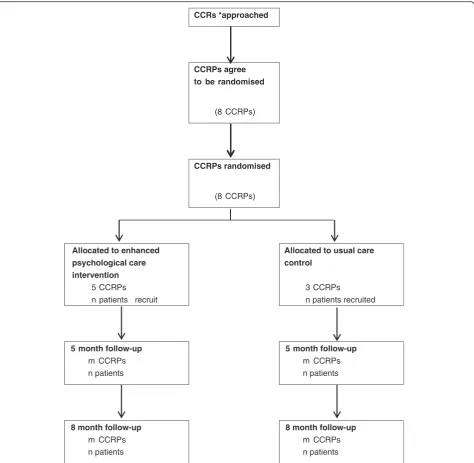
An external pilot cluster RCT [56, 57] will be undertaken, including the piloting of economic data collection, and a qualitative interview study. A Consolidated Standards of Reporting Trials (CONSORT) diagram describing the flow of participants through the study is presented in Fig. 2.

Trial interventions

Usual care (control) intervention

Usual care is defined here as the standard CR rehabilita-tion commencing at the point of assessment undertaken by a CR specialist nurse from a locality-based CCRP (stages 2–3). Of patients invited to attend CCRP, around 41 % attend structured sessions within 2–10 weeks (stage 4) [27]. Treatment as usual in CCRPs typically includes intensive rehabilitation for 1–2 sessions per week for ap-proximately 8 weeks. Sessions generally last around

2 hours and include structured exercise, education (e.g. managing lifestyle and cardiac risk) and some psycho-logical input (e.g. relaxation, stress management) in order to meet the core standards of care described by BACPR [26]. On exiting CCRP, a final assessment (stage 5) and discharge arrangements will be made to community ser-vices (stage 6).

There is debate as to what constitutes standard psy-chological care within CR [27], and a core objective is to clarify this definition. National audit data found that psy-chological expertise within locality-based CCRPs is un-common (< 10 %). In the feasibility study, some patients with depressive symptoms were referred to a clinical psychologist. However, no systematic approach was rou-tinely adopted to identify patients as being suitable for referral. The decision was pragmatic, being based on a combination of reviewing depression scores obtained in standard CCRP assessments, discussions with patients, and clinical judgment regarding who might benefit from referral. Informal discussions with mental health special-ists and CR staff suggest that there is considerable vari-ation in local CCRP protocols across the UK.

Enhanced psychological care (treatment) intervention

Based on our feasibility findings, we propose to embed EPC within existing CR care pathways, with referrals to existing community mental health services as appropri-ate. CR nurses from operationally distinct ‘clusters’ – locality-based CCRPs (see Fig. 1, stages 2–5) will be trained to deliver EPC based on a nurse training man-ual developed and refined during the feasibility study. The CR nurse will implement mental health care co-ordination [29, 30], including an embedded participant-led BA programme [38, 40–42, 53, 54]. Pre-existing participant and nurse training materials used by the co-applicant (DAR), in previous research, were adapted during the feasibility phase following an iterative process of qualitative data collection with trainers, CR nurses and patients, combined with lay and clinical ad-visors’feedback.

(6)

On identifying an eligible individual, the nurse will explain what evidence-based treatment options are available. This includes BA self-help materials sup-ported by the nurse, GP referral, referral to local IAPT services, and/or referral to specific cardiac patient psy-chological support services where available. Nurses will coordinate care by monitoring symptoms of depression and anxiety, assessing risk to self or others and agreeing a plan of care with participants that may include BA and/or referral to GP, IAPT or other therapeutic agen-cies as described above.

As part of this care coordination protocol, all partici-pants will be offered nurse-supported self-help using a par-ticipant BA manual. The self-help BA manual consists of a structured programme aimed at enabling participants to re-engage with sources of positive reinforcement from their environment and to develop future strategies for managing their depressive symptoms. The manual adopts a functional analytical approach, aiming to help the partici-pant develop an understanding of behaviours that might interfere with meaningful, goal-oriented behaviours (e.g. negative avoidant behaviours). The manual also explains CCRPs agree

to be randomised

(8 CCRPs)

(8 CCRPs)

Allocated to enhanced

psychological care intervention

5 CCRPs n patients recruit

Allocated to usual care

control

3 CCRPs

n patients recruited

5 month follow-up

m CCRPs n patients

5 month follow-up

m CCRPs n patients

8 month follow-up

m CCRPs n patients

8 month follow-up

m CCRPs n patients

CCRs *approached

CCRPs randomised

[image:6.595.63.538.87.550.2]
(7)

how to self-monitor mood, and then to identify patterns of behaviour associated with their depression. Participants are encouraged to develop alternative behaviours which are goal- orientated, targeting routine, pleasurable, and ne-cessary activities, and activity scheduling of these identified behaviours.

Although our pilot intervention involves a participant-led self-help BA manual, the CR nurses will actively sup-port participants. The CR nurses will attend a 2-day training course delivered by experienced mental health practitioners, during which they will receive training on the key techniques of mental health care coordination, managing safety and risks, and BA. This training will allow nurses to actively support participants during care coordination and as they work through the BA manual alongside their CR programme. Nurses will also be pro-vided with a session-by-session guide, detailing the types of care coordination tasks which might be relevant for participants as they move through their 6–8 week struc-tured programme (Additional file 1). This guide is flex-ible to accommodate participant preferences for care. Nurses who are delivering EPC to study participants will also receive bi-weekly clinical supervision by an experi-enced mental health practitioner.

For those participants who complete CCRP (stage 5), structured details of the care received will be sent to their GP. All participants, including those receiving BA and whose depressive symptoms do not respond, will be given an opportunity to review their management op-tions with the nurse. Here, treatment response is defined as achieving a minimally important clinical difference (MICD) for the PHQ-9 equivalent to a 5-point reduction in score [60]. It is important to note, however, that some people who achieve such a MICD may remain above the PHQ-9 diagnostic threshold (≥10). As part of their care coordination, these individuals will be referred for con-tinuing mental health management.

Randomisation and allocation concealment

An external pilot cluster RCT [56, 57] will be under-taken, seeking to recruit and randomise eight CCRPs (clusters) to a treatment or a control arm in a 5:3 ratio. The randomisation ratio was informed by data emer-ging from our feasibility study, including the need to ensure that sufficient nurses and patients have EPC ex-posure to support the aims of the qualitative process evaluation. Randomisation will be conducted using the stratifying variables of CR team setting (hospital-based, community-based, or mixed hospital and community), and monthly throughput of new patients assessed for CR at stages 2–3, facilitating division into small and large teams. Team setting has been selected as a strati-fying variable because our feasibility study suggested that teams working in hospital and community settings

may encounter different resource issues that could affect the delivery of EPC. Throughput of new patients into CR services has been selected as a stratifying vari-able, as this is an indicator of team workload, and will ensure that sufficient participants are recruited into each trial arm.

Randomisation will be carried out by a statistician, in-dependent from the researchers recruiting CR teams, using computer-generated random numbers. A cluster randomised design, as opposed to individual participant randomisation, is essential to avoid contamination be-tween trial arms (i.e. intervention participants coming into direct contact with controls and sharing aspects of their treatment). Our EPC intervention involves training CR nurses to apply mental health care coordination with embedded participant-led BA. Once trained, it would be very difficult operationally for the nurse to apply structured care coordination to only a subset of eligible participants (as would be required with individual randomisation).

Settings and study population

CCRP recruitment procedures

Eight locality-based CCRPs in South West England will be recruited and randomised. Teams who took part in the feasibility study will be excluded. A two-stage ap-proach to local CCRP recruitment will be employed. We will write to the lead CR nurse in each of the 20 oper-ationally distinct CCRPs in South West England provid-ing detailed information about the study and invitprovid-ing their participation. In each of the geographical areas the recruitment letter will be co-signed by the trial chief investigator and the local co-applicant. Each team indi-cating an interest in participation will receive a briefing visit, where the trial design and methods will be ex-plained by the researcher, and the staff will be given an opportunity to ask questions about what might be in-volved, before being asked to provide written consent to participate in the study.

Nurses in teams allocated to the CCRP with EPC intervention arm will receive EPC and self-harm risk management training (total of two full days) before they start to recruit patients. EPC-trained nurses will be su-pervised regularly by experienced specialist clinicians/ BA practitioners.

Participant eligibility criteria

(8)

grafting (CABG)), with or without heart failure [61]. Patients with a new episode of depressive symptoms identified through nurse screening at the start of CCRP using the PHQ-9 [58, 62] (score 10 or more) are poten-tially eligible for inclusion. Patient exclusion criteria in-clude: individuals reporting having been actively treated for depression (psychological or drug therapy) within the previous 6 months, or where there is evidence of al-cohol or drug dependency, being acutely suicidal, or having poorly controlled bipolar disorder or psychosis/ psychotic symptoms based on a clinical review (seeking external confirmation from the GP or other clinicians as required). No language exclusion will be applied; we anticipate that the majority of patients will have suffi-ciently good English language skills to engage with EPC. However, consistent with routine practice in delivering psychological therapy, NHS translation resources will be employed to assist participants where required.

Patient participant recruitment procedure

The CR nurse will apply a structured checklist to ascer-tain participant eligibility based on our inclusion/exclu-sion criteria. Eligible participants will be invited to take part in the trial by the CR nurse, and given brief study information to take away and review. The nurse will also ask permission to pass the individual’s contact details on to the study researcher. The researcher will then contact the patient within 7 days to discuss study participation and provide them with a detailed Participant Informa-tion Sheet. The researcher will arrange to visit the po-tential participant to obtain written consent and baseline assessment before the participant commences CCRP (stage 4). Potential participants will be reminded of their right to refuse participation, or to withdraw from the study at any time without it affecting their clinical care.

Sample size

Using UK national audit data (2010–2011), 55,452 pa-tients (for MI, PCI, CABG) undertook phase 3 CR from 280 teams: an average of 200 patients per team per year. Assuming 17 % have depressive symptoms [27], this equates to 35 eligible patients per team each year. The participant consent rate will be established through piloting as no relevant UK data, applicable to cluster tri-als, are available. Two RCTs (individual randomisation) from the US, exploring psychological/drug therapy in cardiac rehabilitation settings, observed highly variable

consent rates of 85 % (150/177 – Vanguard CODIACS

study) [51] and 37 % (2481/6854 – ENRICHD study)

[49]. Based on the patient throughput and rates of de-pressive symptoms observed in our feasibility study, and an assumed participation rate of 50 %, we aim to recruit 64 patients through the eight teams in 6 months. This sample size is sufficient to estimate a follow-up

percentage as low as 50 % with margin of error ±12.8 % based on the width of the 95 % confidence interval (CI), and as high as 90 % with a margin of error of ±9.3 % based on the lower bound of the 95 % CI. We do not plan to use estimates from the pilot of the intra-cluster (intra-CR team) correlation coefficients (ICCs) for key outcomes to plan the sample size for the definitive trial as the pilot sample is small and estimates will be impre-cise. Using national audit data (2010–2011; 6272 patients; 119 CR teams), we estimate the ICC for depression to be 0.047 (95 % CI: 0.034 to 0.062). This ICC estimate and CI will be used to inform the sample size calculations for the definitive trial.

Data collection

Participants in both arms will complete baseline mea-sures prior to commencing CCRP, and then two face-to-face follow-up interviews with a researcher at 5 and 8 months post randomisation (Fig. 2). Blinding of pa-tients, practitioners or researchers extracting data on study outcomes is not possible in this cluster design, but the final analysis will be carried out by a statistician who is blind to treatment allocation. Data will be collected on process measures, patient-reported outcomes, and re-source use and costs.

Process measures

Process data relating to participant throughput and intervention fidelity will be collected.

To ascertain study eligibility and recruitment we will ask CR nurses to report the numbers of patients: attend-ing an initial CCRP nurse assessment, the proportion identified with depressive symptoms during this assess-ment, the prevalence of ‘new onset’(as opposed to exist-ing) depression and the number of patients who were eligible for study participation. Of eligible patients, we will describe: the number offered study entry; the num-ber who later agreed to be contacted by a researcher; and who subsequently consented to take part and under-went a baseline interview with a researcher. We will also capture data on participant socio-demographic charac-teristics (age, sex, ethnicity/preferred language) and clin-ical condition resulting in a CR referral to document how well we have engaged with service users from di-verse backgrounds, such as non-English speakers.

(9)

CCRP, and the type of psychological referrals made (if appropriate).

Participant-reported outcomes measures

Measures are selected on the basis of evidence of their validity in this population, and to ensure coverage of key areas from a clinical and patient perspective (with input from our lay and clinical advisors).

Baseline assessment only This assessment includes some measures that will not be repeated at follow-up. The revised clinical interview schedule (CIS-R) [63, 64] will be administered to ascertain a clinical diagnosis of depression. This score will not determine study eligibil-ity, but will allow its comparison to the other patient-reported measures of depression symptom severity ascertained using the Beck Depression Inventory (BDI-II) (described below). Some short questions to ascer-tain, and account for, participant treatment preferences [65] will be included. We will extract data from clinical records (GP, CCRP) relating to known cardiac risk fac-tors (body mass index (BMI), blood pressure, glycosyl-ated haemoglobin (HbA1c), lipids, smoking status) as recorded at the participant’s latest clinical assessment prior to recruitment.

Baseline and follow-up measuresAlthough we will re-quest that NHS providers inform us of any participant deaths, we will also tag their NHS records to ensure we capture any cardiac- and non-cardiac-related deaths be-tween baseline and the 8-month follow-up. At the last follow-up we will also request that the date and last re-corded known cardiac risk factors in CCRP records are extracted. At the same time we will contact the partici-pant’s GP to request that they extract the same data from primary care records, and that they summarise the incidence of any new cardiac events, i.e. death and/or hospital admissions for ACS or revascularisation proce-dures (CABG or PCI), or mental health events (e.g. self-harm, suicidality) arising since study enrolment. In addition to being outcomes, these data will be part of the safety monitoring of serious adverse events (SAEs) and adverse events (AEs).

The baseline and follow-up interviews will include self-reported cardiac- and non-cardiac- related morbid-ity and smoking status, antidepressant medication use [66], and resource use. Depressive symptoms will be measured using the BDI-II [67, 68], a 21-item self-report instrument measuring symptom severity with an emphasis on affective and cognitive symptoms. Higher scores represent greater depression severity (range 0–63), and minimal (0–13), mild (14–19), moderate (20–28) and severe (29–63) symptom severity ranges have been speci-fied. The Beck Anxiety Inventory [69, 70] will be applied

as anxiety is commonly comorbid with depression. This 21-item, self-report measure asks patients to report anx-iety symptoms over the last week from 0 (none: it did not bother me at all), 1 (mildly: it did not bother me much), 2 (moderately: it was very unpleasant, but I could stand it), and 3 (severely: I could barely stand it). Item scores are summed with total scores of 8–15, 26–25, and 26–63 taken as cut-off points defining categories for mild, moderate, or severe anxiety respectively. Health-related quality of life will be assessed using both generic and disease-specific measures. The 5-item EuroQoL (EQ-5D) [71] is a standardised generic measure of health-related quality of life, which is suitable for use in people with a wide range of health conditions, and is recom-mended by NICE for economic evaluations alongside clinical trials. We will also administer the HeartQoL [72, 73], a tool comprising 14 items, with 10-item phys-ical and 4-item emotional subscales, which are scored from 0 (poor health-related quality of life) to 3 (better). To assess when and how participants become activated over the course of their EPC, we will administer the 9-item Behavioral Activation for Depression Scale–Short Form (BADS-SF) [74] at baseline, and the 5-month and 8-month follow-up assessments. The BADS-SF is a 9-item tool, where each 9-item is rated from 0 (not at all) to 6 (completely). The total score ranges from 0 to 54, with high scores representing greater activation. Finally, participant experiences of care will be assessed at the 5-month follow-up only, using the 8-item, self-reported Client Satisfaction Questionnaire (CSQ-8) [75] and an adapted version of the NHS Friends and Family Test (FFT). The CSQ items use a 4-point Likert scale (1 to 4) response set, with the total scores ranging from a possible 8 to 32; and higher values indicating greater satisfaction. The FFT consists of a single item with a 5-point rating scale (‘Extremely likely’ to ‘Extremely un-likely’) and two free-text items (‘What was good about your experience?’and‘What would have made your ex-perience better?’).

Economic evaluation

(10)

team records, social care records) and participant self-report using the Service and Resource Use Questionnaire (SRUQ). The SRUQ will be adapted from the Client Services Receipt Inventory [76], with input from our lay advisors. The completeness, validity and reliability of participant-reported versus routine administrative data will be compared in relation to the types/amounts of health care/service used over the follow-up periods planned for a definitive trial.

Statistical analysis plan

Trial data will estimate CR team recruitment and pa-tient study completion rates. As this is a pilot study we will not report definitive estimates of effectiveness and costs; our primary aim is to document the adequacy of trial procedures, intervention acceptability and out-come measures. All pilot study data will be collected [77] and reported according to the CONSORT exten-sion for cluster randomised trials [78]. Recruitment, intervention and control uptake, outcome completion rates, and drop out will be reported (with 95 % CIs). We will compare the recruitment rate and participant characteristics at baseline between the trial arms to as-sess whether there is evidence of selection bias result-ing from (cluster) randomisresult-ing teams before participant recruitment [79]. Patient outcome data (including re-source use) will be analysed descriptively (e.g. means, standard deviations (SDs)) for each arm at each follow-up and we will report outcome effect sizes (i.e. between-group mean differences and 95 % CIs) based on an intention-to-treat analysis. We will explore the impact of patient preferences documented at baseline in the analysis. We will also conduct an exploratory sensitivity analysis reporting between-group outcomes in the sub-groups of patients who do, or do not attend, cardiac rehabilitation programmes.

Qualitative interview study

Data collection

Several methods of data collection will be used. The re-searcher will observe staff training to identify what is-sues nurses appear to struggle with and what practical concerns they have about EPC. Observations will be re-corded through extensive field notes. Nurses trained in EPC will be invited to take part in an interview towards the end of EPC delivery (once they have gained experi-ence in delivering the intervention), to explore their views on the nurse manual, and to assess their views and experiences of delivering EPC within existing pro-grammes. These interviews will be held by an experi-enced qualitative interviewer (RW) following a topic guide. Interviews will be conducted either by telephone or on a face-to-face basis, as the teams will be based across a large geographical area and telephone interviews can be

used to gather the same material as those held face-to-face [80]. Written consent will be secured from those interviewed in person and verbal consent will be gained from those interviewed by telephone. It is predicted that up to 15 nurses will be involved in delivery of EPC in the five CCRPs allocated to the intervention arm. The aim will be to interview around 10 of these nurses.

In-depth interviews will be conducted with patients re-cruited to the trial who subsequently agree to take part in qualitative interviews. When sampling these patients we will aim for maximum variation in relation to trial arm, age, CR team, gender, socio-economic background, depression score at baseline and adherence to the inter-vention. Participants will be interviewed shortly after they have completed their 5-month follow-up measure-ments in case the interview process influences their views of the intervention or trial. Participants will be given an opportunity to ask questions before the inter-view takes places, and written informed consent will be obtained prior to commencing. All interviews will be conducted by RW following a topic guide. Individuals will be interviewed by telephone or on a face-to-face basis, and verbal or written consent secured respectively. It is predicted that about 30 participants recruited to the trial will be interviewed (10 usual care, 12 completers and 8 non-completers of EPC).

Interviews will also be held with patients who declined to take part in the trial to identify reasons for their deci-sion. These interviews will usually be held by telephone to encourage participation. The data gathered will indi-cate ways to maximise recruitment and to reflect upon how representative individuals in the trial are of other CR patients. About 10 ‘decliners’ will be interviewed early on in the trial.

Qualitative analysis plan

Data collection and analysis will proceed in parallel. All interview data will be audio-recorded, transcribed verba-tim and analysed thematically with the aid of NVivo, and using an approach based on a framework approach [81]. Analysing the data thematically will enable compar-isons to be made within and across the interviews, and for the views of staff and patients to be compared and contrasted regarding specific topics, such as intervention acceptability.

Ethical and governance considerations

(11)

approvals were obtained prior to commencing fieldwork from: the Royal Cornwall Hospitals NHS Trust; Somerset Partnership NHS Foundation Trust; Taunton and Somer-set NHS Foundation Trust; Torbay and South Devon NHS Foundation Trust; University Hospitals Bristol NHS Foundation Trust; University Hospitals Coventry and Warwickshire NHS Trust; Weston Area Health Trust; and Yeovil District Hospital NHS Foundation Trust. Any protocol amendments will be notified through existing pathways in the UK NRES and NHS research gov-ernances system, and the trial team will ensure that all participating CCRPs, staff and patients, and trial registries are informed of any changes to the protocol.

This study is registered with a trials registry (ISRCTN34701576) and has been adopted by the UK Comprehensive Research Network (UKCRN ID: 17105). All researchers and nurses involved in participant recruit-ment will undertake Good Clinical Practice (GCP) training.

Data management

All personal information obtained about patients or staff for the purposes of recruitment or data collection will be held in accordance with the UK Data Protection Act, 1998. Each participant will be assigned a research num-ber and all outcome data will be encrypted and stored without the participant’s name or address. Electronic study records will be stored in a SQL server database managed by the Peninsula Clinical Trial Unit (PenCTU), hosted on a secure server maintained by Plymouth Uni-versity. Access to electronic data will be permission-based, with access to identifiable information limited to those processing questionnaires and performing initial screening activities. Copies of study data retained at par-ticipating sites will be securely stored for the duration of the study prior to archiving. Electronic copies of any let-ters or e-mails sent to study participants will be stored securely on a password-protected computer at the Uni-versity of Exeter, and paper-based information held in a locked filing cabinet in the research team offices. Names and participant details will not be passed onto any third parties and no named individuals will be included in the write-up of the results. The only time personal informa-tion would be passed on to a third party (i.e. the patient’s GP) would be if we considered there to be risk of serious harm to a research participant and safety protocols need to be activated.

All study data will be kept for 10 years under secure conditions on University of Plymouth and University of Exeter servers. We will seek consent from participants for core outcome data from the pilot study to be re-leased in an anonymised form to an independent data repository (for example, the UK Data Archive) following publication of the key planned outcome papers.

Safety of participants and researchers

While we believe the study has minimal implications for health care staff, participants will have been found to have depressive symptoms and it is, therefore, appropri-ate to have a safety policy in place regarding the man-agement of potentially serious adverse events (e.g. self-injury or suicidality). The Participant Information Sheet will let the person know that if we are very concerned about their safety or someone else’s safety we may need to break confidentiality and inform their GP.

Involvement in research interviews where participants are asked to reflect on their health issues can, in some cases, cause distress. Should any such difficulties occur during a research interview, the researcher will offer support to the person involved. Should a participant ap-pear significantly upset and at risk as a result of the interview, the researcher will (with permission) advise the individual’s GP of this distress and encourage the person to seek further support from the support network available to them. Should there be any concern that a participant is likely to cause harm either to themselves or another person, their GP will be notified immediately by a senior clinician from the study team. Since re-searchers will be conducting interviews alone with par-ticipants, potentially in the participant’s own home, it will be important to have safeguards in place to protect both participant and researcher. Disclosure and Barring Service checks will be performed on any researcher tak-ing part to ensure that they are an appropriate person to be working with vulnerable adults. To ensure the safety of researcher and patient, a lone-worker policy will be applied, providing a mechanism for ensuring that the exact whereabouts of researchers and patients engaged in research activities is known.

Patient and public involvement

(12)

and accompanying training manual. This helped en-sure the acceptability of the intervention to patients. Four lay advisors also attend our project management meetings on a quarterly basis and actively participate in decisions related to the ongoing running of the pro-ject. A key area of future involvement will be in dis-semination plans. Our lay advisors will work with us to proactively shape the BACPR standards, ensuring that the needs of patients with depression are embed-ded within the core service descriptions. When sitting on committees, lay advisors will have equal voting rights compared with academic/clinical members. Lay advisors will be paid costs for travel and for time spent at meetings in line with INVOLVE guidance on good practice. AG will support lay advisors attending meetings and/or identify appropriate training opportunities. This will maximise the ability of our lay representatives to ac-tively contribute to our work.

Project oversight

JC (chief investigator) and SR (scientific lead) will supervise and oversee the strategic development and progress of the project, liaising with the wider team and methodological leads on a routine basis. All research fel-lows will be based in Exeter (with JC and SR) and will manage the day-to-day aspects of the research relevant to their own role, supported by an administrator at peak periods of fieldwork activity. KT will provide qualitative expertise and supervision, RA is the health economics lead, OCU is the statistics lead, and AG will lead PPI en-gagement. Monthly project management meetings will be organised to ensure co-applicants and two lay advi-sors are kept informed of progress and contribute to the ongoing steering of the research.

As this is a pilot trial, a data monitoring committee has not been convened. A Trial Steering Committee (TSC) with independent chair will be appointed in ac-cordance with MRC guidelines. Members will represent an appropriate range of perspectives and expertise (e.g. two lay advisors, clinicians, methodologists), meeting at critical points in the project timeline. The TSC will monitor the scientific quality, ethics and general pro-gress of the project, and will monitor the SAE/AE data emerging from the study.

Project timeline

The project commenced on 1 April 2014 and is sched-uled to complete in July 2016. The feasibility study was reported in May 2015. Preparatory work for the pilot trial, including CR team recruitment, commenced January 2015. Cluster randomisation took place in April 2015, and intervention training delivered to the five CR teams in June–July 2015. Participant recruitment commenced July 2015 and is scheduled to complete by the end of 2015.

Follow-up data and qualitative interviews will take place between September 2015 and June 2016. Data analysis will commence in January 2016, with the final report due in July 2016.

Discussion

This paper presents the study protocol (version 4, 19 June 2015) for the CADENCE study, reported to satisfy the Standard Protocol items: Recommendations for Interventional Trials (SPIRIT) guidelines (Additional file 2). This study will provide important information supporting the development and subsequent evaluation of psychological treatment for patients identified with depressive symptoms following an ACS or revasculari-sation procedure. Our EPC intervention involves train-ing CR nurses in the application of evidence-based mental health care co-ordination algorithms, and in how to actively support and monitor patients working through a BA self-help manual with associated tasks. While both mental health care co-ordination and BA have previously been demonstrated to be effective treat-ments for patients with depression, their application to busy CR settings and patients is untested. A crucial element of this research will be to examine the feasibil-ity and acceptabilfeasibil-ity of implementing mental health care management strategies within the routine care. Study outcomes will inform the design of a definitive clinical trial that will provide evidence of the effective-ness, cost-effectiveness and acceptability of embedding psychological care within the CR care pathway.

This study was funded in response to a commission-ing brief from the Health Technology Assessment board of the UK the National Institute for Health Re-search (NIHR; project reference 12/189/06), which identified this research area as an important knowledge gap and which sought to investigate an intervention embedded within routine care. We will disseminate our findings widely, to ensure this research will guide policy-makers and clinicians in the future development and organisation of psychological care for patients with depressive symptoms engaging with CR services. We anticipate that data on acceptability will be of immedi-ate interest to patients and their families, professionals responsible for the design and implementation of CR services, and to the professional body (BACPR) respon-sible for defining core services and standards of care within NHS CR services.

Trial status

(13)

Additional files

Additional file 1:Guide for session planning for nurses delivering enhanced psychological care as part of a comprehensive cardiac

rehabilitation programme.(DOCX 44 kb)

Additional file 2:SPIRIT Checklist: CADENCE study protocol

(version 4, 19 June 2015).(DOCX 61 kb)

Abbreviations

ACS:acute coronary syndrome; ADM: antidepressant medication; AE: adverse event; BA: behavioural activation; BACPR: British Association for Cardiovascular Prevention and Rehabilitation; BADS-SF: Behavioral Activation for Depression Scale–Short Form; BDI-II: Beck Depression Inventory; BMI: body mass index; CABG: coronary artery bypass grafting; CBT: cognitive behavioural therapy; CIS-R: revised clinical interview schedule; CR: cardiac rehabilitation; CRRP: comprehensive cardiac rehabilitation programme; CSQ-8: Client Satisfaction Questionnaire (CSQ-8); EQ-5D: EuroQoL Index; FFT: Friends and Family Test; GP: general practitioner; IAPT: Improving Access to Psychological Therapies; ICC: intra-cluster correlation coefficient; MI: myocardial infarct; MICD: minimally important clinical difference; NHS: National Health Service; NICE: National Institute of Clinical Excellence; NIHR: National Institute for Health Research; PCI: percutaneous coronary intervention; PHQ-9: Patient Health Questionnaire-9; PPI: patient and public involvement; SAE: serious adverse event; SRUQ: Service and Resource Use Questionnaire.

Competing interests

RST is an author on a number of other Cochrane reviews of cardiac rehabilitation and co-chief investigator on the REACH-HF programme of research, which is developing and evaluating a home-based CR intervention for people with heart failure and their carers (NIHR PGfAR RP-PG-0611-12004). None of the other authors have any competing interests to declare.

Authors’contributions

JC was chief investigator and co-conceived and designed the study with the involvement of SHR, CD and DAR. MG, LK and RST provided clinical expertise regarding cardiology and cardiac rehabilitation service organisation and CD, DK and WK designed the enhanced psychological care intervention under the lead of DAR. SHR was the scientific lead and drafted the study protocol. SHR and CW jointly secured ethics and NHS research and development approvals with input from RW and AD, and the methodological leads for qualitative (KT), statistical (OU), economic (RA) and PPI (AG) elements of the study design. The study researchers (CW, RW) drafted materials to support the study implementation and ethic review, and developed methods to ensure successful implementation of the study protocol. The study researchers (AD, RW, CW) will collect the patient and nurse data. FW is the trial analyst, contributing to the development of both statistical and economic analysis plans. SHR drafted the manuscript. All authors contributed to editing of the final manuscript and the refining of its intellectual content. All authors read and approved the final manuscript.

Acknowledgements

This project was funded by the UK NIHR Health Technology Assessment Programme (project number 12/189/06). The Royal Devon and Exeter NHS Foundation Trust is acting as trial sponsor. The Funding Agency and Trial sponsors have not been substantively involved in the design, or data acquisition for this research, nor the drafting of this manuscript; the views and opinions expressed in this paper are those of the authors and do not necessarily reflect those of the Health Technology Assessment Programme, NIHR, NHS or the Department of Health.

Rob Anderson, John Campbell, Christopher Dickens, David Richards, Suzanne Richards, Rod Taylor, Obioha Ukoumunne, and Fiona Warren are centrally funded by the University of Exeter Medical School. David Kessler and Katrina Turner are funded by the University of Bristol, Andrew Gibson by the University of the West of England, and Willem Kuyken by Oxford University. Manish Gandhi and Luke Knight are funded by the Royal Devon and Exeter NHS Foundation Trust. Antoinette Davey, Rachel Winder and Christine Wright are employed by the University of Exeter Medical School on the above funding award. David Richards, Rod Taylor and Obioha Ukoumunne are also supported by the NIHR Collaboration for Leadership in Applied Health Research and Care South West Peninsula.

We would like to thank the external members of the CADENCE Trial Steering Committee for their ongoing advice and support for the project: Professor Glyn Lewis (University College London), Professor Anne Rogers

(Southampton University), Professor Gill Furze (Coventry University, President of BACPR), Dr Sally Kerry (Queen Mary University of London), Rev Paul Lanham (patient representative), Mr Ron Grant (patient representative). We are also grateful to our Patient and Public Involvement group for their insightful advice and input throughout the trial.

We would like to thank both the staff and patients of our participating CR programmes who are giving generously of their time to support the study and complete data collection materials. We also thank staff from the NIHR Clinical Research Network South West Peninsula and our sponsors, the Royal Devon and Exeter NHS Foundation Trust, who continue to provide us with valuable advice and support in the conduct of this trial.

Author details

1University of Exeter Medical School, St Lukes Campus, Exeter, EX1 2LU, UK. 2NIHR Collaboration for Leadership in Applied Health Research and Care for

the South West Peninsula, University of Exeter Medical School, St Luke’s Campus, Exeter EX1 2LU, UK.3School of Social and Community Medicine, University of Bristol, Oakfield House, Oakfield Grove, Clifton, Bristol BS8 2BN, UK.4School of Social and Community Medicine, University of Bristol,

Canynge Hall, Whatley Road, Bristol BS8 2PS, UK.5University Department of

Psychiatry, University of Oxford, Warneford Hospital, Oxford 0X3 7JX, UK.

6Royal Devon and Exeter NHS Foundation Trust, Barrack Road, Exeter EX2

5DW, UK.7Health and Social Sciences, University of the West of England,

Frenchay Campus, Coldharbour Lane, Bristol BS16 1QY, UK.

Received: 4 November 2015 Accepted: 16 January 2016

References

1. Thombs BD, Ziegelstein RC, Pilote L, Dozois DJ, Beck AT, Dobson KS, et al. Somatic symptom overlap in Beck Depression Inventory-II scores following myocardial infarction. Br J Psychiatry. 2010;197(1):61–6.

doi:10.1192/bjp.bp.109.076596.

2. Connerney I, Shapiro PA, McLaughlin JS, Bagiella E, Sloan RP. Relation between depression after coronary artery bypass surgery and 12-month outcome: a prospective study. Lancet. 2001;358(9295):1766–71. doi:10.1016/S0140-6736(01)06803-9.

3. Lesperance F, Frasure-Smith N, Juneau M, Theroux P. Depression and 1-year prognosis in unstable angina. Arch Intern Med. 2000;160(9):135460. 4. Rutledge T, Reis VA, Linke SE, Greenberg BH, Mills PJ. Depression in heart

failure a meta-analytic review of prevalence, intervention effects, and associations with clinical outcomes. J Am Coll Cardiol. 2006;48(8):1527–37. doi:10.1016/j.jacc.2006.06.055.

5. Singleton N, Bumpstead R, O’Brien M, Lee A, Meltzer H. Psychiatric morbidity among adults living in private households, 2000. London: HMSO2001 Feb–May. Report No.: 0954-0261 Contract No.: 1-2. 6. Rugulies R. Depression as a predictor for coronary heart disease. a review

and meta-analysis. Am J Prev Med. 2002;23(1):51–61.

7. Wulsin LR, Singal BM. Do depressive symptoms increase the risk for the onset of coronary disease? A systematic quantitative review. Psychosom Med. 2003;65(2):20110.

8. Dickens C, McGowan L, Percival C, Douglas J, Tomenson B, Cotter L, et al. Association between depressive episode before first myocardial infarction and worse cardiac failure following infarction. Psychosomatics. 2005;46(6): 523-8. doi:http://dx.doi.org/10.1176/appi.psy.46.6.523.

9. Leung YW, Flora DB, Gravely S, Irvine J, Carney RM, Grace SL. The impact of premorbid and postmorbid depression onset on mortality and cardiac morbidity among patients with coronary heart disease: meta-analysis. Psychosom Med. 2012;74(8):786801.

10. Dickens CM, Percival C, McGowan L, Douglas J, Tomenson B, Cotter L, et al. The risk factors for depression in first myocardial infarction patients. Psychol Med. 2004;34(6):1083–92.

11. Dickens C, McGowan L, Percival C, Tomenson B, Cotter L, Heagerty A, et al. Negative illness perceptions are associated with new-onset depression following myocardial infarction. Gen Hosp Psychiatry. 2008;30(5):414–20. 12. Dickens C. Depression in people with coronary heart disease: prognostic

(14)

13. Dickens CM, McGowan L, Percival C, Tomenson B, Cotter L, Heagerty A, et al. Contribution of depression and anxiety to impaired health-related quality of life following first myocardial infarction. Br J Psychiatry. 2006;189:367–72. doi:10.1192/bjp.bp.105.018234.

14. Dickens C, Cherrington A, McGowan L. Depression and health-related quality of life in people with coronary heart disease: a systematic review. Eur J Cardiovasc Nurs. 2012;11(3):26575. doi:10.1177/ 1474515111430928.

15. Barth J, Schumacher M, Herrmann-Lingen C. Depression as a risk factor for mortality in patients with coronary heart disease: a meta-analysis. Psychosom Med. 2004;66(6):802–13. doi:10.1097/01.psy.0000146332.53619.b2.

16. Nicholson A, Kuper H, Hemingway H. Depression as an aetiologic and prognostic factor in coronary heart disease: a meta-analysis of 6362 events among 146 538 participants in 54 observational studies. Eur Heart J. 2006; 27(23):276374.

17. van Melle JP, de Jonge P, Spijkerman TA, Tijssen JG, Ormel J, van Veldhuisen DJ, et al. Prognostic association of depression following myocardial infarction with mortality and cardiovascular events: a meta-analysis. Psychosom Med. 2004;66(6):814–22. doi:10.1097/01.psy.0000146294.82810.9c. 18. Meijer A, Conradi HJ, Bos EH, Thombs BD, van Melle JP, de Jonge P.

Prognostic association of depression following myocardial infarction with mortality and cardiovascular events: a meta-analysis of 25 years of research. Gen Hosp Psychiatry. 2011;33(3):20316.

19. Dickens C, Katon W, Blakemore A, Khara A, McGowan L, Tomenson B, et al. Does depression predict the use of urgent and unscheduled care by people with long term conditions? A systematic review with meta-analysis. J Psychosom Res. 2012;73(5):334–42. doi:10.1016/j.jpsychores.2012.08.018. 20. Frasure-Smith N, Lesperance F, Gravel G, Masson A, Juneau M, Talajic M,

et al. Depression and health-care costs during the first year following myocardial infarction. J Psychosom Res. 2000;48(4-5):471–8.

21. Rutledge T, Vaccarino V, Johnson BD, Bittner V, Olson MB, Linke SE, et al. Depression and cardiovascular health care costs among women with suspected myocardial ischemia: prospective results from the WISE (Women’s Ischemia Syndrome Evaluation) Study. J Am Coll Cardiol. 2009;53(2):176–83. 22. de Jonge P, van den Brink RH, Spijkerman TA, Ormel J. Only incident

depressive episodes after myocardial infarction are associated with new cardiovascular events. J Am Coll Cardiol. 2006;48(11):2204–8. doi:10.1016/j. jacc.2006.06.077.

23. Dickens C, McGowan L, Percival C, Tomenson B, Cotter L, Heagerty A, et al. New onset depression following myocardial infarction predicts cardiac mortality. Psychosom Med. 2008;70(4):4505. doi:10.1097/PSY. 0b013e31816a74de.

24. Parker GB, Hilton TM, Walsh WF, Owen CA, Heruc GA, Olley A et al. Timing is everything: the onset of depression and acute coronary syndrome outcome. Biological Psychiatry. 2008;.64(8):pp. doi:10.1016/j.biopsych.2008. 05.021 18602090.

25. NICE commissioning guides. Cardiac rehabilitation services. London 2013 01 November 2013.

26. British Association for Cardiovascular Prevention and Rehabilitation. The BACPR standards and core components for cardiovascular disease prevention and rehabilitation 2012. London, UK: British Cardiovascular Society ; 2012.

27. NACR. National Audit of Cardiac Rehabilitation: 2012. London, UK: British Heart Foundation; 2012.

28. Dickens C, McGowan L, Percival C, Tomenson B, Cotter L, Heagerty A, et al. Depression is a risk factor for mortality after myocardial infarction: fact or artifact? J Am Coll Cardiol. 2007;49(18):1834–40.

doi:10.1016/j.jacc.2007.01.075.

29. National Collaborating Centre for Mental Health. Depression in adults with a chronic physical health problem (NICE Clinical Guideline 91). London: National Institute for Health and Clinical Excellence; 2009.

30. National Collaborating Centre for Mental Health. Depression: the treatment and management of depression in adults (NICE Clinical Guideline 90). London: National Institute for Health and Clinical Excellence; 2009. Report No.: 9781849360999 (pbk.).

31. National Collaborating Centre for Mental Health. Common mental disorders: the NICE guidance on identification and pathways to care (NICE Guideline 123). London: National Institute for Health and Clinical Excellence; 2009. Report No.: 9781849360999 (pbk.).

32. Bird A. We need to talk: the case for psychological therapy on the NHS. UK: Mental Health Foundation; 2006.

33. DeRubeis RJ, Hollon SD, Amsterdam JD, Shelton RC, Young PR, Salomon RM, et al. Cognitive therapy vs medications in the treatment of moderate to severe depression. Arch Gen Psychiatry. 2005;62(4):409–16.

34. Barnes M, Sherlock S, Thomas L, Kessler D, Kuyken W, Owen-Smith A, et al. No pain, no gain: depressed clientsexperiences of cognitive behavioural therapy. Br J Clin Psychol. 2013;52(4):347–64. doi:10.1111/bjc.12021. 35. Layard R. The case for psychological treatment centres. Br Med J. 2006;

332(7548):10302.

36. London School of Economics. The Depression Report. A new deal for depression and anxiety disorders. London: London School for Economics; 2006.

37. Jacobson NS, Martell CR, Dimidjian S. Behavioral activation treatment for depression: returning to contextual roots. Clinical Psychology: Science and Practice. 2001;8(3):255–70. doi:10.1093/clipsy.8.3.255.

38. Addis M, Martell C. Overcoming depression one step at a time: the new behavioral activation approach to getting your life back. Oakland, CA, US : New Harbinger Publications ; 2004.

39. Beck A, Rush AJ, Shaw B, Emery G. Cognitive therapy of depression: a treatment manual. The Guilford clinical psychology and psychotherapy series. New York: Guilford Press; 1979.

40. Ekers D, Richards D, McMillan D, Bland JM, Gilbody S. Behavioural activation delivered by the non-specialist: phase II randomised controlled trial. Br J Psychiatry. 2011;198(1):66–72. doi:10.1192/bjp.bp.110.079111.

41. Richards D. Behavioural activation. In: Bennett-Levy J, Richards D, Farrand P, Christensen H, Griffiths K, Kavanagh D, et al., editors. Oxford guide to low intensity CBT interventions. Oxford: Oxford University Press; 2010. p. 141–50.

42. Richards D, Farrand P, Chellingsworth M. National Curriculum for the Education of Psychological Wellbeing Practitioners (PWPS). Lancashire: British Association for Behavioural & Cognitive Psychotherapies; 2011. 43. Richards D, Whyte M. Reach Out: National programme educator

materials to support the delivery of training for practitioners delivering low intensity interventions. London: Rethink, National Mental Health Development Unit, 2009.

44. Lespérance F, Frasure-Smith N, Koszycki D, Laliberté M, et al. Effects of citalopram and interpersonal psychotherapy on depression in patients with coronary artery disease: the Canadian cardiac randomized evaluation of antidepressant and psychotherapy efficacy (create) trial. JAMA. 2007;297(4): 36779. doi:10.1001/jama.297.4.367.

45. Glassman AH, OConnor CM, Califf RM, Swedberg K, Schwartz P, Bigger Jr JT, et al. Sertraline treatment of major depression in patients with acute MI or unstable angina. JAMA. 2002;288(6):7019.

46. van Melle JP, de Jonge P, Honig A, Schene AH, Kuyper AM, Crijns HJ, et al. Effects of antidepressant treatment following myocardial infarction. Br J Psychiatry. 2007;190:4606.

47. Whalley B, Rees K, Davies P, Bennett P, Ebrahim S, Liu Z, et al. Psychological interventions for coronary heart disease. Cochrane Database Syst Rev. 2011; 8, CD002902. doi:10.1002/14651858.CD002902.pub3.

48. Baumeister H, Hutter N, Bengel J. Psychological and pharmacological interventions for depression in patients with coronary artery disease. Cochrane Database Syst Rev. 2011;9, CD008012. doi:10.1002/14651858. CD008012.pub3.

49. Berkman LF, Blumenthal J, Burg M, Carney RM, Catellier D, Cowan MJ, et al. Effects of treating depression and low perceived social support on clinical events after myocardial infarction: the Enhancing Recovery in Coronary Heart Disease Patients (ENRICHD) Randomized Trial. JAMA. 2003;289(23):310616. 50. Whang W, Burg MM, Carney RM, Freedland KE, Bigger JT, Catellier D et al.

Design and baseline data from the vanguard of the Comparison of Depression Interventions after Acute Coronary Syndrome (CODIACS) randomized controlled trial. Contemporary Clinical Trials. 2012;33(5):1003-10. doi:http://dx.doi.org/10.1016/j.cct.2012.05.005.

51. Davidson KW, Bigger JT, Burg MM, Carney RM, Chaplin WF, Czajkowski S et al. Centralized, stepped, patient preference-based treatment for patients with post-acute coronary syndrome depression: CODIACS Vanguard Randomized Controlled Trial. Journal of the American Medical Association: Internal Medicine. 2013:1-8. doi:10.1001/jamainternmed.2013.915. 52. Simmonds R, Tylee A, Walters P, Rose D. Patients’perceptions of depression

and coronary heart disease: a qualitative UPBEAT-UK study. BMC Fam Pract. 2013;14(1):38.

53. Cuijpers P, van Straten A, Warmerdam L. Behavioral activation treatments of depression: a meta-analysis. Clin Psychol Rev. 2007;27(3):31826.

Figure

Fig. 1 UK cardiac rehabilitation care pathway. UK Department of Health’s ‘0–6 Stage Patient Pathway of Care’ for cardiac rehabilitation services [83]
Fig. 2 Consolidated Standards of Reporting Trials (CONSORT) diagram. CONSORT diagram (with cluster extension) for the CADENCE pilotrandomised controlled trial (RCT)

References

Related documents