Proceedings of the 56th Annual Meeting of the Association for Computational Linguistics (Long Papers), pages 197–207 197
A Corpus with Multi-Level Annotations of Patients, Interventions and
Outcomes to Support Language Processing for Medical Literature
Benjamin Nye
Northeastern University [email protected]
Junyi Jessy Li
UT Austin
Roma Patel
Rutgers University [email protected]
Yinfei Yang∗ No affiliation
Iain J. Marshall
King’s College London [email protected]
Ani Nenkova
UPenn
Byron C. Wallace
Northeastern University [email protected]
Abstract
We present a corpus of 5,000 richly anno-tated abstracts of medical articles describ-ing clinical randomized controlled trials. Annotations include demarcations of text spans that describe the Patient population enrolled, the Interventions studied and to what they were Compared, and the Out-comes measured (the ‘PICO’ elements). These spans are further annotated at a more granular level, e.g., individual in-terventions within them are marked and mapped onto a structured medical vocab-ulary. We acquired annotations from a di-verse set of workers with varying levels of expertise and cost. We describe our data collection process and the corpus itself in detail. We then outline a set of challeng-ing NLP tasks that would aid searchchalleng-ing of the medical literature and the practice of evidence-based medicine.
1 Introduction
In 2015 alone, about 100 manuscripts describ-ing randomized controlled trials (RCTs) for med-ical interventions were publishedevery day. It is thus practically impossible for physicians to know which is the best medical intervention for a given patient group and condition (Borah et al., 2017; Fraser and Dunstan, 2010;Bastian et al., 2010). This inability to easily search and organize the published literature impedes the aims ofevidence based medicine (EBM), which aspires to inform patient care using the totality of relevant evidence.
∗
* now at Google Inc.
Computational methods could expedite biomedi-cal evidence synthesis (Tsafnat et al., 2013; Wal-lace et al.,2013) and natural language processing (NLP) in particular can play a key role in the task. Prior work has explored the use of NLP meth-ods to automate biomedical evidence extraction and synthesis (Boudin et al.,2010;Marshall et al., 2017; Ferracane et al., 2016; Verbeke et al., 2012).1 But the area has attracted less attention than it might from the NLP community, due pri-marily to a dearth of publicly available, annotated corpora with which to train and evaluate models.
Here we address this gap by introducing EBM-NLP, a new corpus to power NLP models in sup-port of EBM. The corpus, accompanying doc-umentation, baseline model implementations for the proposed tasks, and all code are publicly avail-able.2 EBM-NLP comprises ∼5,000 medical ab-stracts describing clinical trials, multiply anno-tated in detail with respect to characteristics of the underlying trial Populations (e.g., diabetics), In-terventions (insulin), Comparators (placebo) and Outcomes (blood glucose levels). Collectively, these key informational pieces are referred to as PICO elements; they form the basis for well-formed clinical questions (Huang et al.,2006).
We adopt a hybrid crowdsourced labeling strat-egy using heterogeneous annotators with vary-ing expertise and cost, from laypersons to MDs. Annotators were first tasked with marking text spans that described the respective PICO ele-ments. Identified spans were subsequently
anno-1
There is even, perhaps inevitably, a systematic review of such approaches (Jonnalagadda et al.,2015).
tated in greater detail: this entailed finer-grained labeling of PICO elements and mapping these onto a normalized vocabulary, and indicating redun-dancy in the mentions of PICO elements.
In addition, we outline several NLP tasks that would directly support the practice of EBM and that may be explored using the introduced re-source. We present baseline models and associ-ated results for these tasks.
2 Related Work
We briefly review two lines of research relevant to the current effort: work on NLP to facilitate EBM, and research in crowdsourcing for NLP.
2.1 NLP for EBM
Prior work on NLP for EBM has been limited by the availability of only small corpora, which have typically provided on the order of a cou-ple hundred annotated abstracts or articles for very complex information extraction tasks. For example, the ExaCT system (Kiritchenko et al., 2010) applies rules to extract 21 aspects of the reported trial. It was developed and validated on a dataset of 182 marked full-text articles. The ACRES system (Summerscales et al., 2011) pro-duces summaries of several trial characteristic, and was trained on 263 annotated abstracts. Hint-ing at more challengHint-ing tasks that can build upon foundational information extraction, Alamri and Stevenson (2015) developed methods for detecting contradictory claims in biomedical papers. Their corpus of annotated claims contains 259 sentences (Alamri and Stevenson,2016).
Larger corpora for EBM tasks have been de-rived using (noisy) automated annotation ap-proaches. This approach has been used to build, e.g., datasets to facilitate work on Information Re-trieval (IR) models for biomedical texts (Scells et al., 2017; Chung, 2009; Boudin et al., 2010). Similar approaches have been used to ‘distantly supervise’ annotation of full-text articles describ-ing clinical trials (Wallace et al.,2016). In contrast to the corpora discussed above, these automati-cally derived datasets tend to be relatively large, but they include only shallow annotations.
Other work attempts to bypass basic extraction tasks and address more complex biomedical QA and (multi-document) summarization problems to support EBM (Demner-Fushman and Lin, 2007; Moll´a and Santiago-Martinez,2011;Abacha and
Zweigenbaum, 2015). Such systems would di-rectly benefit from more accurate extraction of the types codified in the corpus we present here.
2.2 Crowdsourcing
Crowdsourcing, which we here define opera-tionally as the use of distributed lay annotators, has shown encouraging results in NLP (Novot-ney and Callison-Burch,2010;Sabou et al.,2012). Such annotations are typically imperfect, but methods that aggregate redundant annotations can mitigate this problem (Dalvi et al., 2013; Hovy et al.,2014;Nguyen et al.,2017).
Medical articles contain relatively technical content, which intuitively may be difficult for per-sons without domain expertise to annotate. How-ever, recent promising preliminary work has found that crowdsourced approaches can yield surpris-ingly high-quality annotations in the domain of EBM specifically (Mortensen et al.,2017;Thomas et al.,2017;Wallace et al.,2017).
3 Data Collection
PubMed provides access to the MEDLINE database3which indexes titles, abstracts and meta-data for articles from selected medical journals dating back to the 1970s. MEDLINE indexes over 24 million abstracts; the majority of these have been manually assigned metadata which we used to retrieved a set of 5,000 articles describing RCTs with an emphasis on cardiovascular diseases, can-cer, and autism. These particular topics were se-lected to cover a range of common conditions.
We decomposed the annotation process into two steps, performed in sequence. First, we ac-quired labels demarcating spans in the text de-scribing the clinically salient abstract elements mentioned above: the trial Population, the Inter-ventions and Comparators studied, and the Out-comes measured. We collapse Interventions and Comparators into a single category (I). In the sec-ond annotation step, we tasked workers with pro-viding more granular (sub-span) annotations on these spans.
For each PIO element, all abstracts were anno-tated with the following four types of information.
1. Spansexhaustive marking of text spans con-taining information relevant to the respective PIO categories (Stage 1 annotation).
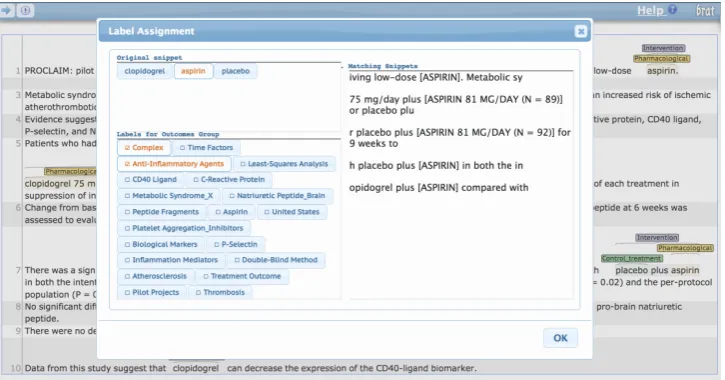
Figure 1: Annotation interface for assigning MeSH terms to snippets.
2. Hierarchical labelsassignment of more spe-cific labels to subsequences comprising the marked relevant spans (Stage 2 annotation).
3. Repetitiongrouping of labeled tokens to dicate repeated occurrences of the same in-formation (Stage 2 annotation).
4. MeSH terms assignment of the metadata MeSH terms associated with the abstract to labeled subsequences (Stage 2 annotation).4
We collected annotations for each P, I and O element individually to avoid the cognitive load imposed by switching between label sets, and to reduce the amount of instruction required to be-gin the task. All annotation was performed using a modified version of the Brat Rapid Annotation Tool (BRAT) (Stenetorp et al.,2012). We include all annotation instructions provided to workers for all tasks in the Appendix.
3.1 Non-Expert (Layperson) Workers
For large scale crowdsourcing via recruitment of layperson annotators, we used Amazon Mechan-ical Turk (AMT). All workers were required to have an overall job approval rate of at least 90%. Each job presented to the workers required the an-notation of three randomly selected abstracts from our pool of documents. As we received initial re-sults, we blocked workers who were clearly not following instructions, and we actively recruited the best workers to continue working on our task at a higher pay rate.
4MeSH is a controlled, structured medical vocabulary
maintained by the National Library of Medicine.
We began by collecting the least technical an-notations, moving on to more difficult tasks only after restricting our pool of workers to those with a demonstrated aptitude for the jobs. We obtained annotations from ≥ 3 different workers for each of the 5,000 abstracts to enable robust inference of reliable labels from noisy data. After performing filtering passes to remove non-RCT documents or those missing relevant data for the second annota-tion task, we are left with between 4,000 and 5,000 sets of annotations for each PIO element after the second phase of annotation.
3.2 Expert Workers
To supplement our larger-scale data collection via AMT, we collected annotations for 200 abstracts for each PIO element from workers with advanced medical training. The idea is for these to serve as reference annotations, i.e., a test set with which to evaluate developed NLP systems. We plan to enlarge this test set in the near future, at which point we will update the website accordingly.
For the initial span labeling task, two medi-cal students from the University of Pennsylvania and Drexel University provided the reference la-bels. In addition, for both stages of annotation and for the detailed subspan annotation in Stage 2, we hired three medical professionals via Up-work,5 an online platform for hiring skilled free-lancers. After reviewing several dozen suggested profiles, we selected three workers that had the fol-lowing characteristics: Advanced medical training (the majority of hired workers were Medical
tors, the one exception being a fourth-year medi-cal student); Strong technimedi-cal reading and writing skills; And an interest in medical research. In ad-dition to providing high-quality annotations, indi-viduals hired via Upwork also provided feedback regarding the instructions to help make the task as clear as possible for the AMT workers.
4 The Corpus
We now present corpus details, paying special at-tention to worker performance and agreement. We discuss and present statistics for acquired annota-tions on spans, tokens, repetition and MeSH terms in Sections4.1,4.2,4.3, and4.4, respectively.
4.1 Spans
For each P, I and O element, workers were asked to read the abstract and highlight all spans of text including any pertinent information. Annota-tions for 5,000 articles were collected from a total of 579 AMT workers across the three annotation types, and expert annotations were collected for 200 articles from two medical students.
We first evaluate the quality of the annota-tions by calculating token-wise label agreement between the expert annotators; this is reported in Table2. Due to the difficulty and technicality of the material, agreement between even well-trained domain experts is imperfect. The effect is magni-fied by the unreliability of AMT workers, moti-vating our strategy of collecting several noisy an-notations and aggregating over them to produce a single cleaner annotation. We tested three differ-ent aggregation strategies: a simple majority vote, the Dawid-Skene model (Dawid and Skene,1979) which estimates worker reliability, and HMM-Crowd, a recent extension to Dawid-Skene that in-cludes a HMM component, thus explicitly lever-aging the sequential structure of contiguous spans of words (Nguyen et al.,2017).
For each aggregation strategy, we compute the token-wise precision and recall of the output la-bels against the unioned expert lala-bels. As shown in Table3, the HMMCrowd model afforded mod-est improvement in F-1 scores over the standard Dawid-Skene model, and was thus used to gener-ate the inputs for the second annotation phase.
The limited overlap in the document subsets an-notated by any given pair of workers, and wide variation in the number of annotations per worker make interpretation of standard agreement
statis-Outcomes
Physical Health
Pain
Adverse Effects
Mortality
Mental/Behavioral Impact
Mental Health
Participant Behavior
Satisfaction With Care
Non-health Outcome
Quality of Intervention
Resource Use
[image:4.595.322.515.61.313.2]Withdrawals from Study
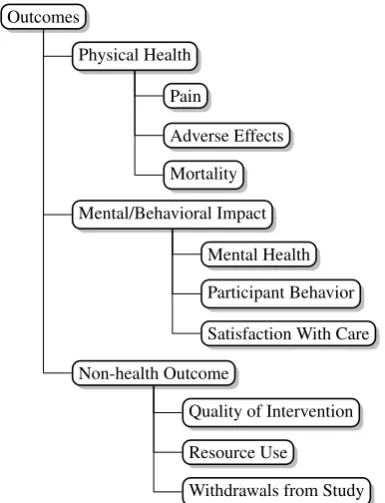
Figure 2: Outcome task label hierarchy
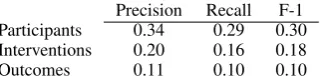
tics tricky. We quantify the centrality of the AMT span annotations by calculating token-wise preci-sion and recall for each annotation against the ag-gregated version of the labels (Table4).
When comparing the average precision and re-call for individual crowdworkers against the ag-gregated labels in Table 4, scores are poor show-ing very low agreement between the workers. De-spite this, the aggregated labels compare favorably against the expert labels. This further supports the intuition that it is feasible to collect multiple low-quality annotations for a document and synthesize them to extract the signal from the noise.
On the dataset website, we provide a variant of the corpus that includes all individual worker span annotations (e.g., for researchers interested in crowd annotation aggregated methods), and also a version with pre-aggregated annotations for con-venience.
4.2 Hierarchical Labels
For each P, I, and O category we developed a hier-archy of labels intended to capture important sub categories within these. Our labels are aligned to (and thus compatible with) the concepts codi-fied by the Medical Subject Headings (MeSH) vo-cabulary of medical terms maintained by the Na-tional Library of Medicine (NLM).6 In
PFourteen children (12 infantile autism full syndrome present, 2 atypical pervasive developmental disorder) between 5 and 13 years of age
Text Label MeSH terms
– Fourteen SAMPLESIZE(FULL) – children AGE(YOUNG)
– 12 SAMPLESIZE(PARTIAL)
– autism CONDITION(DISEASE) Autistic Disorder, Child Development Disorders Pervasive – 2 SAMPLESIZE(PARTIAL)
– 5 and 13 AGE(YOUNG)
I20 mg Org 2766 (synthetic analog of ACTH 4-9)/day during 4 weeks, or placebo in a randomly assigned sequence.
Text Label MeSH terms
– 20 mg Org 2766 PHARMACOLOGICAL Adrenocorticotropic Hormone, Double-Blind Method, Child Development Disorders Pervasive
– placebo CONTROL Double-Blind Method
ODrug effects and Aberrant Behavior Checklist ratings
Text Label MeSH terms
– Drug effects QUALITY OFINTERVENTION – Aberrant Behavior
[image:5.595.76.524.75.288.2]Checklist ratings MENTAL(BEHAVIOR) Attention, Stereotyped Behavior
Table 1: Partial example annotation for Participants, Interventions, and Outcomes. The full annotation includes multiple top-level spans for each PIO element as well as labels for repetition.
Agreement Participants 0.71 Interventions 0.69 Outcomes 0.62
Table 2: Cohen’sκbetween medical students for the 200 reference documents.
Participants Precision Recall F-1
Majority Vote 0.903 0.507 0.604 Dawid Skene 0.840 0.641 0.686 HMMCrowd 0.719 0.761 0.698
Interventions Precision Recall F-1
Majority Vote 0.843 0.432 0.519 Dawid Skene 0.755 0.623 0.650 HMMCrowd 0.644 0.800 0.683
Outcomes Precision Recall F-1
Majority Vote 0.711 0.577 0.623 Dawid Skene 0.652 0.648 0.629 HMMCrowd 0.498 0.807 0.593
Table 3: Precision, recall and F-1 for aggregated AMT spans evaluated against the union of expert span labels, for all three P, I, and O elements.
tion with domain experts, we selected subsets of MeSH terms for each PIO category that captured relatively precise information without being over-whelming. For illustration, we show the outcomes label hierarchy we used in Figure2. We reproduce the label hierarchies used for all PIO categories in the Appendix.
At this stage, workers were presented with ab-stracts in which relevant spans were highlighted, based on the annotations collected in the first an-notation phase (and aggregated via the
HMM-Precision Recall F-1 Participants 0.34 0.29 0.30 Interventions 0.20 0.16 0.18
[image:5.595.340.502.340.381.2]Outcomes 0.11 0.10 0.10
Table 4: Token-wise statistics for individual AMT annotations evaluated against the aggregated ver-sions.
Span frequency
AMT Experts Participants 34.5 21.4 Interventions 26.5 14.3 Outcomes 33.0 26.9
Table 5: Average per-document frequency of dif-ferent token labels.
Crowd model). This two-step approach served dual purposes: (i) increasing the rate at which workers could complete tasks, and (ii) improving recall by directing workers to all areas in abstracts where they might find the structured information of interest. Our choice of a high recall aggrega-tion strategy for the starting spans ensured that the large majority of relevant sections of the article were available as inputs to this task.
[image:5.595.356.481.442.493.2]inter-annotator agreement is reported in Table6.
[image:6.595.337.495.62.210.2]Agreement Participants 0.50 Interventions 0.59 Outcomes 0.51
Table 6: Average pair-wise Cohen’s κ between three medical experts for the 200 reference doc-uments.
With respect to crowdsourcing on AMT, the task for Participants was published first, allowing us to target higher quality workers for the more technical Interventions and Outcomes annotations. We retained labels from 118 workers for Partici-pants, the top 67 of whom were invited to continue on to the following tasks. Of these, 37 continued to contribute to the project. Several workers pro-vided≥1,000 annotations and continued to work on the task over a period of several months.
To produce final per-token labels, we again turned to aggregation. The subspans annotated in this second pass were by construction shorter than the starting spans, and (perhaps as a result) informal experiments revealed little benefit from HMMCrowd’s sequential modeling aspect. The introduction of many label types significantly in-creased the complexity of the task, resulting in both lower expert inter-annotator agreement (Ta-ble6and decreased performance when comparing the crowdsourced labels against those of the ex-perts (Table7.
Participants Precision Recall F-1
Majority Vote 0.46 0.58 0.51 Dawid Skene 0.66 0.60 0.63
Interventions Precision Recall F-1
Majority Vote 0.56 0.49 0.52 Dawid Skene 0.56 0.52 0.54
Outcomes Precision Recall F-1
[image:6.595.339.499.428.468.2]Majority Vote 0.73 0.69 0.71 Dawid Skene 0.73 0.80 0.76
Table 7: Precision, recall, and F-1 for AMT la-bels against expert lala-bels using different aggrega-tion strategies.
Most observed token-level disagreements (and errors, with respect to reference annotations) in-volve differences in the span lengths demarcated by individuals. For example, many abstracts con-tain an information-dense description of the pa-tient population, focusing on their medical con-dition but also including information about their sex and/or age. Workers would also sometimes fail
Figure 3: Confusion matrix for token-level labels provided by experts.
to capture repeated mentions of the same informa-tion, producing Type 2 errors more frequently than Type 1. This tendency can be seen in the overall token-level confusion matrix for AMT workers on the Participants task, shown in Figure3.
In a similar though more benign category of er-ror, workers differed in the amount of context they included surrounding each subspan. Although the instructions asked workers to highlight minimal subspans, there was variance in what workers con-sidered relevant.
Precision Recall F-1 Participants 0.39 0.71 0.50 Interventions 0.59 0.60 0.60
[image:6.595.96.269.491.601.2]Outcomes 0.70 0.68 0.69
Table 8: Statistics for individual AMT annotations evaluated against the aggregated versions, macro-averaged over different labels.
For the same reasons mentioned above (lit-tle pairwise overlap in annotations, high variance with respect to annotations per worker), quantify-ing agreement between AMT workers is again dif-ficult using traditional measures. We thus again take as a measure of agreement the precision, re-call, and F-1 of the individual annotations against the aggregated labels and present the results in Ta-ble8.
4.3 Repetition
Span frequency
Participants AMT Experts
TOTAL 3.45 6.25
Age 0.49 0.66
Condition 1.77 3.69
Gender 0.36 0.34
Sample Size 0.83 1.55
Interventions AMT Experts
TOTAL 6.11 9.31
Behavioral 0.22 0.37
Control 0.83 0.94
Educational 0.04 0.07
No Label 0.00 0.00
Other 0.23 1.12
Pharmacological 3.37 5.19
Physical 0.87 0.88
Psychological 0.29 0.19
Surgical 0.24 0.62
Outcomes AMT Experts
TOTAL 6.36 10.00
Adverse effects 0.45 0.66
Mental 0.69 0.79
Mortality 0.23 0.33
Other 1.77 3.70
Pain 0.18 0.27
[image:7.595.339.499.63.106.2]Physical 3.03 4.25
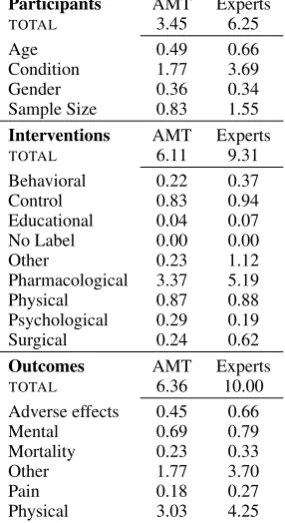
Table 9: Average per-document frequency of dif-ferent label types.
be able to differentiate between novel and reiter-ated information, especially in cases such as com-plex interventions, distinct measured outcomes, or multi-armed trials. Merely identifying all occur-rences of, for example, a pharmacological inter-vention leaves ambiguity as to how many distinct interventions were applied.
Workers identified repeated information as fol-lows. After completing detailed labeling of ab-stract spans, they were asked to group together subspans that were instances of the same informa-tion (for example, redundant meninforma-tions of a partic-ular drug evaluated as one of the interventions in the trial). This process produces labels for repeti-tion between short spans of tokens. Due to the dif-ferences in the lengths of annotated subspans dis-cussed in the preceding section, the labels are not naturally comparable between workers without di-rectly modeling the entities contained in each sub-span. The labels assigned by workers produce rep-etition labels between sets of tokens but a more sophisticated notion of co-reference is required to identify which tokens correctly represent the en-tity contained in the span, and which tokens are superfluous noise.
As a proxy for formally enumerating these en-tities, we observe that a large majority of
start-Precision Recall F-1 Participants 0.40 0.77 0.53 Interventions 0.63 0.90 0.74
[image:7.595.111.254.75.337.2]Outcomes 0.47 0.73 0.57
Table 10: Comparison against the majority vote for span-level repetition labels.
ing spans only contain a single target relevant to the subspan labeling task, and so identifying repetition between the starting spans is sufficient. For example, consider the starting intervention span ”underwent conventional total knee arthro-plasty”; there is only one intervention in the span but some annotators assigned theSURGICALlabel to all five tokens while others opted for only”total knee arthroplasty.”By analyzing repetition at the level of the starting spans, we can compute agree-ment without concern for the confounds of slight misalignments or differences in length of the sub-spans.
Overall agreement between AMT workers for span-level repetition, measured by computing pre-cision and recall against the majority vote for each pair of spans, is reported in Table10.
4.4 MeSH Terms
The National Library of Medicine maintains an extensive hierarchical ontology of medical con-cepts called Medical Subject Headings (MeSH terms); this is part of the overarching Metathe-saurus of the Unified Medical Language System (UMLS). Personnel at the NLM manually assign citations (article titles, abstracts and meta-data) in-dexed in MEDLINE relevant MeSH terms. These terms have been used extensively to evaluate the content of articles, and are frequently used to fa-cilitate document retrieval (Lu et al.,2009;Lowe and Barnett,1994).
In the case of randomized controlled trials, MeSH terms provide structured information re-garding key aspects of the underlying studies, ranging from participant demographics to method-ologies to co-morbidities. A drawback to these an-notations, however, is that they are applied at the document (rather than snippet or token) level. To capture where MeSH terms are instantiated within a given abstract text, we provided a list of all terms associated with said article and instructed workers to select the subset of these that applied to each set of token labels that they annotated.
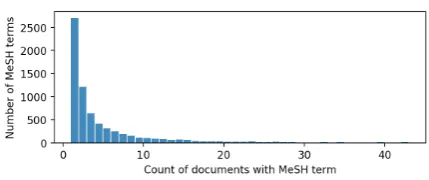
re-Figure 4: Histogram of the number of documents containing each MeSH term.
Inst. Freq 10% 25% 50% Participants 65 24 7 Interventions 106 68 32
Outcomes 118 108 75
Table 11: The number of common MeSH terms (out of 135) that were assigned to a span of text in at least 10%, 25%, and 50% of the possible docu-ments.
quire a medical background to understand, thus rendering this facet of the annotation process par-ticularly difficult for untrained (lay) workers. Per-haps surprisingly, several AMT workers voluntar-ily mentioned relevant background training; our pool of workers included (self-identified) nurses and other trained medical professionals. A few workers with such training stated this background as a reason for their interest in our tasks.
The technical specificity of the more obscure MeSH terms is also exacerbated by their sparsity. Of the 6,963 unique MeSH terms occurring in our set of abstracts, 87% of them are only found in 10 documents or fewer and only 2.0% occur in at least 1% of the total documents. The full distri-bution of document frequency for MeSH terms is show in Figure4.
To evaluate how often salient MeSH terms were instantiated in the text by annotators we consider only the 135 MeSH terms that occur in at least 1% of abstracts (we list these in the supplementary material). For each term, we calculate its ”instan-tiation frequency” as the percentage of abstracts containing the term in which at least one annotator assigned it to a span of text. The total numbers of MeSH terms with an instantiation rate above dif-ferent thresholds for the respective PIO elements are shown in Table11.
5 Tasks & Baselines
We outline a few NLP tasks that are central to the aim of processing medical literature generally and
to aiding practitioners of EBM specifically. First, we consider the task of identifying spans in ab-stracts that describe the respective PICO elements (Section5.1). This would, e.g., improve medical literature search and retrieval systems. Next, we outline the problem of extracting structured infor-mation from abstracts (Section 5.2). Such mod-els would further aid search, and might eventually facilitate automated knowledge-base construction for the clinical trials literature. Furthermore, au-tomatic extraction of structured data would enable automation of the manual evidence synthesis pro-cess (Marshall et al.,2017).
Finally, we consider the challenging task of identifying redundant mentions of the same PICO element (Section 5.3). This happens, e.g., when an intervention is mentioned by the authors re-peatedly in an abstract, potentially with different terms. Achieving such disambiguation is impor-tant for systems aiming to induce structured repre-sentations of trials and their results, as this would require recognizing and normalizing the unique interventions and outcomes studied in a trial.
For each of these tasks we present baseline models and corresponding results. Note that we have pre-defined train, development and test sets across PIO elements for this corpus, comprising 4300, 500 and 200 abstracts, respectively. The lat-ter set is annotated by domain experts (i.e., per-sons with medical training). These splits will, of course, be distributed along with the dataset to fa-cilitate model comparisons.
5.1 Identifying P, I and O Spans
We consider two baseline models: a linear Condi-tional Random Field (CRF) (Lafferty et al.,2001) and a Long Short-Term Memory (LSTM) neu-ral tagging model, an LSTM-CRF (Lample et al., 2016;Ma and Hovy,2016). In both models, we treat tokens as being either Inside (I) or Outside (O) of spans.
For the CRF, features include: indicators for the current, previous and next words; part of speech tags inferred using the Stanford CoreNLP tagger (Manning et al.,2014); and character information, e.g., whether a token contains digits, uppercase letters, symbols and so on.
[image:8.595.73.288.60.150.2]CRF Precision Recall F-1 Participants 0.55 0.51 0.53 Interventions 0.65 0.21 0.32
Outcomes 0.83 0.17 0.29
LSTM-CRF Precision Recall F-1
Participants 0.78 0.66 0.71 Interventions 0.61 0.70 0.65
[image:9.595.98.267.62.144.2]Outcomes 0.69 0.58 0.63
Table 12: Baseline models (on the test set) for the PIO span tagging task.
LogReg Precision Recall F-1
Participants 0.41 0.20 0.26 Interventions 0.79 0.44 0.57
Outcomes 0.24 0.21 0.22
CRF Precision Recall F-1 Participants 0.41 0.25 0.31 Interventions 0.59 0.15 0.21
[image:9.595.339.499.63.106.2]Outcomes 0.60 0.51 0.55
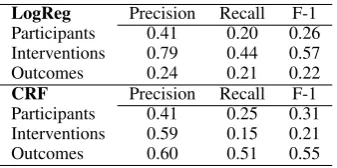
Table 13: Baseline models for the token-level, de-tailed labeling task.
each token index, which is then passed to a CRF layer for prediction. We also exploit character-level information by passing a bi-LSTM over the characters comprising each word (Lample et al., 2016); these are appended to the word embedding representations before being passed through the bi-LSTM.
5.2 Extracting Structured Information
Beyond identifying the spans of text containing in-formation pertinent to each of the PIO elements, we consider the task of predicting which of the detailed labels occur in each span, and where they are located. Specifically, we begin with the start-ing spans and predict a sstart-ingle label from the cor-responding PIO hierarchy for each token, evaluat-ing against the test set of 200 documents. Initial experiments with neural models proved unfruitful but bear further investigation.
For the CRF model we include the same fea-tures as in the previous model, supplemented with additional features encoding if the adjacent tokens include any parenthesis or mathematical operators (specifically:%,+,−). For the logistic regression model, we use a one-vs-rest approach. Features include tokenn-grams, part of speech indicators, and the same character-level information as in the CRF model.
5.3 Detecting Repetition
To formalize repetition, we consider every pair of starting PIO spans from each abstract, and assign
Precision Recall F-1 Participants 0.39 0.52 0.44 Interventions 0.41 0.50 0.45
[image:9.595.98.267.189.273.2]Outcomes 0.10 0.16 0.12
Table 14: Baseline model for predicting whether pairs of spans contain redundant information.
binary labels that indicate whether they share at least one instance of the same information. Al-though this makes prediction easier for long and information-dense spans, a large enough majority of the spans contain only a single instance of rel-evant information that the task serves as a reason-able baseline. Again, the model is trained on the aggregated labels collected from AMT and evalu-ated against the high-quality test set.
We train a logistic regression model that op-erates over standard features, including bag-of-words representations and sentence-level features such as length and position in the document. All baseline model implementations are available on the corpus website.
6 Conclusions
We have presented EBM-NLP: a new, publicly available corpus comprising 5,000 richly anno-tated abstracts of articles describing clinical ran-domized controlled trials. This dataset fills a need for larger scale corpora to facilitate research on NLP methods for processing the biomedical liter-ature, which have the potential to aid the conduct of EBM. The need for such technologies will only become more pressing as the literature continues its torrential growth.
The EBM-NLP corpus, accompanying docu-mentation, code for working with the data, and baseline models presented in this work are all publicly available at:http://www.ccs.neu. edu/home/bennye/EBM-NLP.
7 Acknowledgements
This work was supported in part by the National Cancer Institute (NCI) of the National Institutes of Health (NIH), award number UH2CA203711.
References
Abdulaziz Alamri and Mark Stevenson. 2015. Au-tomatic detection of answers to research ques-tions from medline. Proceedings of the work-shop on Biomedical Natural Language Processing (BioNLP), pages 141–146.
Abdulaziz Alamri and Mark Stevenson. 2016. A corpus of potentially contradictory research claims from cardiovascular research abstracts. Journal of biomedical semantics, 7(1):36.
Hilda Bastian, Paul Glasziou, and Iain Chalmers. 2010. Seventy-five trials and eleven systematic reviews a day: how will we ever keep up? PLoS medicine, 7(9):e1000326.
Rohit Borah, Andrew W Brown, Patrice L Capers, and Kathryn A Kaiser. 2017. Analysis of the time and workers needed to conduct systematic reviews of medical interventions using data from the prospero registry. BMJ open, 7(2):e012545.
Florian Boudin, Jian-Yun Nie, and Martin Dawes. 2010. Positional language models for clinical infor-mation retrieval. InProceedings of the 2010 Con-ference on Empirical Methods in Natural Language Processing, pages 108–115. Association for Com-putational Linguistics.
Grace Y Chung. 2009. Sentence retrieval for abstracts of randomized controlled trials. BMC medical infor-matics and decision making, 9(1):10.
Nilesh Dalvi, Anirban Dasgupta, Ravi Kumar, and Vib-hor Rastogi. 2013. Aggregating crowdsourced bi-nary ratings. In Proceedings of the International Conference on World Wide Web (WWW), pages 285– 294. ACM.
Alexander Philip Dawid and Allan M Skene. 1979. Maximum likelihood estimation of observer error-rates using the em algorithm. Applied statistics, pages 20–28.
Dina Demner-Fushman and Jimmy Lin. 2007. An-swering clinical questions with knowledge-based and statistical techniques. Computational Linguis-tics, 33(1):63–103.
Elisa Ferracane, Iain Marshall, Byron C Wallace, and Katrin Erk. 2016. Leveraging coreference to iden-tify arms in medical abstracts: An experimental study. InProceedings of the Seventh International Workshop on Health Text Mining and Information Analysis, pages 86–95.
Alan G Fraser and Frank D Dunstan. 2010. On the im-possibility of being expert. British Medical Journal, 341:c6815.
Dirk Hovy, Barbara Plank, and Anders Søgaard. 2014. Experiments with crowdsourced re-annotation of a pos tagging data set. InProceedings of the 52nd An-nual Meeting of the Association for Computational Linguistics (volume 2: Short Papers), volume 2, pages 377–382.
Xiaoli Huang, Jimmy Lin, and Dina Demner-Fushman. 2006. Evaluation of PICO as a knowledge represen-tation for clinical questions. InAMIA annual sym-posium proceedings, volume 2006, page 359. Amer-ican Medical Informatics Association.
Siddhartha R Jonnalagadda, Pawan Goyal, and Mark D Huffman. 2015. Automating data extraction in sys-tematic reviews: a syssys-tematic review. Systematic re-views, 4(1):78.
Svetlana Kiritchenko, Berry de Bruijn, Simona Carini, Joel Martin, and Ida Sim. 2010. Exact: automatic extraction of clinical trial characteristics from jour-nal publications. BMC medical informatics and de-cision making, 10(1):56.
John Lafferty, Andrew McCallum, and Fernando CN Pereira. 2001. Conditional random fields: Prob-abilistic models for segmenting and labeling se-quence data.
Guillaume Lample, Miguel Ballesteros, Sandeep Sub-ramanian, Kazuya Kawakami, and Chris Dyer. 2016. Neural architectures for named entity recognition. InProceedings of NAACL-HLT, pages 260–270.
Henry J Lowe and G Octo Barnett. 1994. Understand-ing and usUnderstand-ing the medical subject headUnderstand-ings (mesh) vocabulary to perform literature searches. Jama, 271(14):1103–1108.
Zhiyong Lu, Won Kim, and W John Wilbur. 2009. Evaluation of query expansion using mesh in pubmed. Information retrieval, 12(1):69–80.
Xuezhe Ma and Eduard Hovy. 2016. End-to-end se-quence labeling via bi-directional lstm-cnns-crf. In
Proceedings of the 54th Annual Meeting of the As-sociation for Computational Linguistics (Volume 1: Long Papers), pages 1064–1074, Berlin, Germany. Association for Computational Linguistics.
Christopher D. Manning, Mihai Surdeanu, John Bauer, Jenny Rose Finkel, Steven Bethard, and David Mc-Closky. 2014. The stanford corenlp natural language processing toolkit. InProceedings of the 52nd An-nual Meeting of the Association for Computational Linguistics, ACL 2014, June 22-27, 2014, Baltimore, MD, USA, System Demonstrations, pages 55–60.
Iain Marshall, Jo¨el Kuiper, Edward Banner, and By-ron C. Wallace. 2017. Automating Biomedical Ev-idence Synthesis: RobotReviewer. InProceedings of the Association for Computational Linguistics (ACL), System Demonstrations, pages 7–12. Asso-ciation for Computational Linguistics (ACL).
Diego Moll´a and Maria Elena Santiago-Martinez. 2011. Development of a corpus for evidence based medicine summarisation.
An T Nguyen, Byron C Wallace, Junyi Jessy Li, Ani Nenkova, and Matthew Lease. 2017. Aggregating and predicting sequence labels from crowd anno-tations. In Proceedings of the conference. Associ-ation for ComputAssoci-ational Linguistics. Meeting, vol-ume 2017, page 299. NIH Public Access.
Scott Novotney and Chris Callison-Burch. 2010. Cheap, fast and good enough: Automatic speech recognition with non-expert transcription. In Hu-man Language Technologies: The 2010 Annual Conference of the North American Chapter of the Association for Computational Linguistics, pages 207–215. Association for Computational Linguis-tics.
Marta Sabou, Kalina Bontcheva, and Arno Scharl. 2012. Crowdsourcing research opportunities: lessons from natural language processing. In Pro-ceedings of the 12th International Conference on Knowledge Management and Knowledge Technolo-gies, page 17. ACM.
Harrisen Scells, Guido Zuccon, Bevan Koopman, An-thony Deacon, Leif Azzopardi, and Shlomo Geva. 2017. A test collection for evaluating retrieval of studies for inclusion in systematic reviews. In Pro-ceedings of the 40th International ACM SIGIR Con-ference on Research and Development in Informa-tion Retrieval, pages 1237–1240. ACM.
Pontus Stenetorp, Sampo Pyysalo, Goran Topi´c, Tomoko Ohta, Sophia Ananiadou, and Jun’ichi Tsu-jii. 2012. Brat: a web-based tool for nlp-assisted text annotation. InProceedings of the Demonstra-tions at the 13th Conference of the European Chap-ter of the Association for Computational Linguistics, pages 102–107. Association for Computational Lin-guistics.
Rodney L Summerscales, Shlomo Argamon, Shangda Bai, Jordan Hupert, and Alan Schwartz. 2011. Au-tomatic summarization of results from clinical trials. In Bioinformatics and Biomedicine (BIBM), 2011 IEEE International Conference on, pages 372–377. IEEE.
James Thomas, Anna Noel-Storr, Iain Marshall, By-ron Wallace, Steven McDonald, Chris Mavergames, Paul Glasziou, Ian Shemilt, Anneliese Synnot, Tari Turner, et al. 2017. Living systematic reviews: 2. combining human and machine effort. Journal of clinical epidemiology, 91:31–37.
Guy Tsafnat, Adam Dunn, Paul Glasziou, Enrico Coiera, et al. 2013. The automation of systematic reviews. BMJ, 346(f139):1–2.
Mathias Verbeke, Vincent Van Asch, Roser Morante, Paolo Frasconi, Walter Daelemans, and Luc De Raedt. 2012. A statistical relational learning ap-proach to identifying evidence based medicine cate-gories. InProceedings of the Joint Conference on Empirical Methods in Natural Language Process-ing and Computational Natural Language LearnProcess-ing,
pages 579–589. Association for Computational Lin-guistics.
Byron C Wallace, Issa J Dahabreh, Christopher H Schmid, Joseph Lau, and Thomas A Trikalinos. 2013. Modernizing the systematic review process to inform comparative effectiveness: tools and meth-ods. Journal of comparative effectiveness research, 2(3):273–282.
Byron C Wallace, Jo¨el Kuiper, Aakash Sharma, Mingxi Brian Zhu, and Iain J Marshall. 2016. Ex-tracting PICO sentences from clinical trial reports using supervised distant supervision. Journal of Machine Learning Research, 17(132):1–25.