A Study on Impact of GST in Construction
Industry
Akshay ss1, Tincy Anna Yohannan2
1
M-Tech student, SriVellapally Natesan College of Engineering, Kattachira, Kerala
2
Assistant Professor, Department of Civil Engineering, Sri Vellapally Natesan College of Engineering, Kattachira, Kerala
Abstract: The implementation of GST in India on 01 july 2017. The aim of this study is the GST effect associated on construction capital cost and it influences towards the housing developer and housing property price. And also provide suggestions and initiatives that can soften the GST impact on kerala. A total of 120 questionnaire were collected, data were analyzed using SPSS software. From the analysis it concludes that, building materials, labour cost and prize of building are the major construction impact gain from the GST implementation. Increment on housing property price in which end buyer is the one who suffer the price increment.
Keywords: GST, Anova, Construction industry Questionnaire, RII, SPSS.
I. INTRODUCTION
A. General
GST is the crucial form of Indirect Taxation which is said to be the indirect taxation reform ever since our Independence. The Goods and Service Tax is levied on the manufacture, sale and consumption of the goods and services. Tax policies play an important role on the economy through their impact on both efficiency and equity.A good tax system should keep in view issues of income distribution and, at the same time, also endeavor to generate tax revenues to support government expenditure on public services and infrastructure development.
The purpose of this study is to identify the perception of the construction industry towards the implementation of the goods and services tax. The others purpose of this research is to investigate the pricing effect from the perspectives of the construction industry. Introduction of goods and service tax (GST) by the government of India has led to a lot of ambiguity in the Construction industry. To arrive at a conclusion, detailed studies starting from the gestation phase to the handover phase would depict in detail where are the area of concern where the cost of project has affected due to GST implementation.
B. Proposed GST Rate
The GST council has agreed upon the 4 rate structure for levying tax on various goods and services i.e. 5%, 12%, 18% and 28%. It is expected that the rate of GST that may be applicable on this sector would be mostly 12%. There may not be any further abatement/ composition on this rate. Although this rate will be little on the higher side as compared to current tax rates which is between 6% to 10%, however this impact could largely get reduced due to ease in credits availability.
C. Research Objectives
This study is aim to identify the possible impact of GST implementation towards the construction cost which will then give an influence to the housing developer and the housing value.
D. Need for Study
Contribution of industrial sector to GDP is 29% of the total GDP. In this 29%, construction industry contributes to 11% of the industry sector. This seems to be a big digit when it comes to revenue generation of the nation.
II. METHODOLOGY This chapter is divided into different section
Process of Working on the Project is as follows: -
1) Literature review
2) Factors identification
3) Questionnaire preparation
4) Questionnaire survey
5) Data analysis using SPSS software
6) Conclusion and recommendations
A. Identification of Factors
There are thirty plus literature are studied were done, on the basis of literature survey top factors are identified and listed out. The main factors classified as construction site cost, construction hard cost, labour cost, equipment cost and construction soft cost
B. Questionnaire Sampling
Due to the limitation, the total population for this study were focused on the construction developers and their ongoing projects at Ernakulam, Thiruvananthapuram, Kozhikode, Kollam andTrissur. Simple random approach was selected as the list of sampling frame had been created. Sample sizes larger than 30 and less than 500 are appropriate for most research. Here the total ongoing projects on these cities are 287 projects and to provide questionnaire survey it gets sampled to a total of 100 ongoing projects.
C. Questionnaire Preparation
A questionnaire was designed based on the objectives of the study, which are the impacts of demonetisation and GST on construction industry. A questionnaire survey was developed to get the opinion and understanding from the experienced respondents regarding the demonetisation and GST on construction industry.
1) Questionnaire Outline: The questionnaires are all classified into 2 sections:
a) Section A: Company and respondent profile
b) Section B: Impacts of demonetization and GST on construction industry.
Based on the literatures and factors considered, a questionnaire was designed as a measurement tool for impacts. The thirty factors were adapted to measure impacts of demonetisation and GST on construction industry. Also the respondents were asked to rate their level of argument according to 5 point scale (Likerts scale) according to level of contributing.
D. Rating Scale
Table 1: Likerts scale
SCALE IMPORTANCE
1 No effect
2 Slight effect
3 Significant effect 4 Very significant effect 5 Extremely significant
E. Relative Importance Index (RII)
Relative Importance Index (RII) method was used as data analysis method to assess the relative importance of cost overrun factors. A five-point Likert Scale was adopted. Results of analysis was presented in the next chapter. The relative importance index, RII, was computed for each factor to identify the most and the least significant cost overrun factors in residential building. The causes were examined and the ranking of their attributes was done using the Relative Importance Index (RII). The relative importance index is given as:
Rii= ∑
×
Where,
Rii = Relative Important Index
W = Weighting given to each factor by the respondents (ranging from 1 to 5) A = Highest weight (here 5)
F. Data Analysis
This study will adopt the Statistical Packages for Science Social (SPSS) version 20 for interpretation to identify the most impact gain to the construction capital cost from the GST implementation.
III. DATA ANALYSIS
A. General
The computer software plays a vital role in analysing the collected data. The software would give an efficient result for our work study. The analysis software is discussed in detail.
B. Statistical Package For Social Sciences
SPSS trends provide the power and flexibility required by experienced time series analysts, while at thesame time being easy enough for those not familiar with time series techniques to use and master quickly. Its power and flexibility can be seen in the wide variety of identification, estimation, forecasting and diagnostic methods available and the opportunity for continuous interaction during the model-building process and the ability to quickly create new series as functions, transformation or components of the observed series for further analysis
C. Survey Analysis
[image:3.612.120.495.341.504.2]From total of 120 survey forms distributed, only 100 were returned duly completed and could be utilized in this project study. Table 3.1 and Table 3.2 represent the detailed background of the respondents that participated in this project study.
Table 3.1 Respondents status
SL DESIGNATION NO: OF
RESPONDED % OF RESPONDED
1 Managing Director, Executive
Director 5 12.5
2 Project Manager, General
Manager, Assistant Manager 21 52.5
3 Senior Engineer, Site Engineer,
Supervisor 10 25
4 Finance Manager, Finance
Controller, Finance Accountant 4 10
5 Others 0 0
Total 40 100
From Table 3.1, it can be identified that the group who give the most feedback to the questionnaire is from the group of project executive, project manager and assistant of project manager which consist of 77.5% out of 40 respondents. It can be concluded that, project executive, project manager and project assistant are the one who actively respond to the distributed questionnaire.
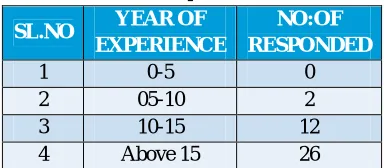
Table 3.2: Experience status
SL.NO YEAR OF
EXPERIENCE
NO:OF RESPONDED
1 0-5 0
2 05-10 2
3 10-15 12
4 Above 15 26
[image:3.612.210.402.588.672.2]IV. RESULT AND DISCUSSION
A. Ranking of factors
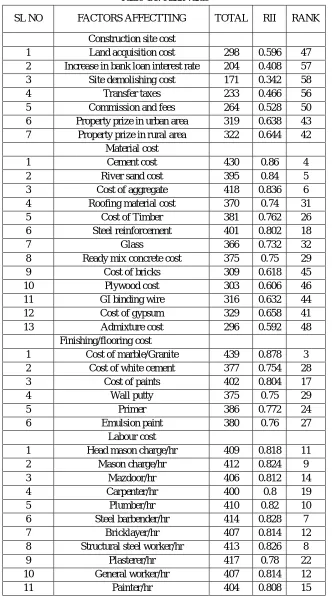
[image:4.612.142.474.135.735.2]Questionnaire survey was conducted and factors are analyzed by using SPSS software and they are ranked based on Rii value
Table 4.1: Rank value
SL NO FACTORS AFFECTTING TOTAL RII RANK
Construction site cost
1 Land acquisition cost 298 0.596 47
2 Increase in bank loan interest rate 204 0.408 57
3 Site demolishing cost 171 0.342 58
4 Transfer taxes 233 0.466 56
5 Commission and fees 264 0.528 50
6 Property prize in urban area 319 0.638 43
7 Property prize in rural area 322 0.644 42
Material cost
1 Cement cost 430 0.86 4
2 River sand cost 395 0.84 5
3 Cost of aggregate 418 0.836 6
4 Roofing material cost 370 0.74 31
5 Cost of Timber 381 0.762 26
6 Steel reinforcement 401 0.802 18
7 Glass 366 0.732 32
8 Ready mix concrete cost 375 0.75 29
9 Cost of bricks 309 0.618 45
10 Plywood cost 303 0.606 46
11 GI binding wire 316 0.632 44
12 Cost of gypsum 329 0.658 41
13 Admixture cost 296 0.592 48
Finishing/flooring cost
1 Cost of marble/Granite 439 0.878 3
2 Cost of white cement 377 0.754 28
3 Cost of paints 402 0.804 17
4 Wall putty 375 0.75 29
5 Primer 386 0.772 24
6 Emulsion paint 380 0.76 27
Labour cost
1 Head mason charge/hr 409 0.818 11
2 Mason charge/hr 412 0.824 9
3 Mazdoor/hr 406 0.812 14
4 Carpenter/hr 400 0.8 19
5 Plumber/hr 410 0.82 10
6 Steel barbender/hr 414 0.828 7
7 Bricklayer/hr 407 0.814 12
8 Structural steel worker/hr 413 0.826 8
9 Plasterer/hr 417 0.78 22
10 General worker/hr 407 0.814 12
12 Concreter/hr 403 0.806 16
Equipment and machinery cost
1 Excavator/backhoe 400 0.8 19
2 Marble/granite polisher 388 0.776 23
3 Concrete mixer 366 0.732 32
4 Bar cutter/bending machine 382 0.764 25
5 Concrete vibrator 357 0.714 35
Construction soft cost
1 Marketing fees 334 0.668 40
2 Insurance fees 242 0.484 54
3 Engineering fees 337 0.674 39
4 Legal fees 235 0.47 55
5 Architectural fees 340 0.68 38
Miscellaneous cost
1 Cost for safety materials 364 0.728 34
2
Changes in government regulation
and laws 286 0.572 49
3 Ineffective planning and scheduling 259 0.518 51
4 Design changes 247 0.494 53
5 Total construction cost 393 0.786 21
6 Duplicating of billing 345 0.69 36
7 Wiping out of small builders 342 0.684 37
8 Price of building 456 0.912 1
9 End buyers price 446 0.892 2
10 Demand of materials 252 0.504 52
From Table 4.3, it shows that majority of the construction capital elements do achieve a high frequency in which the GST do lead to an increment on the construction capital cost. The topmost rii score rated among all of the construction capital elements was encountered to construction building materials and floor finishing cost, value ranging from 0.86 to 0.72. Furthermore, the second greatest rii score that been rated to 0.78 was belonging to the labour cost. While the 3rd and 4thhighest mean score that rated 0.71 and 0.50listed to the three elements from the construction hard cost of equipment and machinery and two elements from the construction soft cost which are excavator/backhoe, marble/granite polisher, concrete mixer, marketing fees and insurance fees. Additionally, the elements that rated the lower high means score in the range from 0.47to 0.34 can be concluded that the elements does get the cost increase after the GST implementation but it is not the significant increase.
B. Analysis and Result of Regression in SPSS
The multiple regression analysis were done based on the most importance factors that were previously identified. Both backward and forward regression analysis (BRM and FRM) can be used for cost overrun. From the literature review, backward regression is more valid and applicable than the forward regression analysis.
Table 4.2: model summery Model Summary
Model R R Square Adjusted R
Square Std. Error of the Estimate
1 .954a 0.91 0.908 1.26496
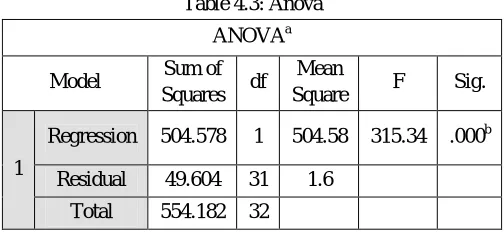
[image:5.612.128.486.619.685.2]Table 4.3: Anova
ANOVAa
Model Sum of
Squares df
Mean
Square F Sig.
1
Regression 504.578 1 504.58 315.34 .000b
Residual 49.604 31 1.6
Total 554.182 32
[image:6.612.180.432.81.197.2]The Anova table, which reports how well the regression equation fits the data (i.e., predicts the dependent variable). This table indicates that the regression model predicts the dependent variable significantly well. At the "Regression" row the "Sig." column indicates the statistical significance of the regression model. Here, p = 0.00001, which is less than 0.05, and indicates that, overall, the regression model statistically significantly predicts the outcome variable (i.e., it is a good fit for the data).
Table 4.4: coefficients of variables and T-test statistics
Coefficientsa
Model
Unstandardized Coefficients
Standardized Coefficients
t Sig.
B Std.
Error Beta
(Constant) 0.05 0.211 0.236 0.815
x3 1.1 0.084 0.184 13.097 0
x1 1.08 0.091 0.192 11.861 0
x6 0.91 0.078 0.182 11.744 0
x7 0.88 0.072 0.163 12.264 0
x5 0.9 0.054 0.204 16.723 0
x4 1.12 0.097 0.19 11.64 0
x2 0.96 0.089 0.183 10.818 0
The coefficients table provides us with the necessary information to predict GST from factors considered, as well as determine whether these factors contributes statistically significantly to the model (by checking at the "Sig." column). Furthermore, the values in the "B" column under the "Unstandardized Coefficients" was used to present the regression equation as:
GST =1.1x3+1.08x1+.901x6+.88x7+0.9x5+1.12x4+0.96x2
Thus the regression model has a strong correlation coefficient R equal 0.954 and the coefficient of determination R square equal 0.91 which is a best fit which means that 91% of the total variation in GST can be explained by the model. It has to be noted that two of the previously considered top five input factors were only considered by the model developed.
V. CONCLUSION
In overall, the objectives of this study has successfully conducted and achieved where the data collected had also been analysed. A questionnaire based survey was conducted from owners, site engineers and contractors from various companies. Totally 100 responses were collected through online and personal, analyzed by using SPSS. From the findings, researcher had identified that the building materials and building property cost are the major construction cost component that get the significant impact due to GST implementation.
VI. SUGGESTIONS
Transferring all the cost increment to the end buyers is the priority decision among all of the developers. However such a measure will result in an increment of the housing property prices and thus is unadvisable. Hence, discussion on this particular is meaningless. The initiatives such as using in-house sources is not an effective measurement to soften the GST impact as professional soft cost is just a small portion in a project. However, such small portion saving can help an organisation to allocate on the other operation field. Besides, in order to push up the sales rate, promotion is necessary. For an example give a discount from 5-10% for those who can clear their instalment in once time although developer will get losses, but at least it can soften the overall business capital flow. Additionally, the late claiming issues can be overcome if an organisation establishes a GST specialist department to handle all GST related issues. Although investment in a new department may be costly initially, however it can provide a positive return in the long run.
VII. ACKNOWLEDGMENT
We are really thankful to all the teaching and non-teaching staff of Sri VellapallyNatesan College of Engineering for supporting us throughout this work.
REFERENCES
[1] R.Shanker(2017)Impact and Implication on VoriousIndusries in Indian Economy Journal of Internet Banking and Commerce, 2-22.
[2] Meet H. Rawal1, T.J. Patel, and V. V. Vishwakarma (2017) Building construction: before and after International Journal of Research in Engineering and Technology (IJRET), 2, 156-165.
[3] Ramesh kumar and Naveen(2017) Impact of demonitisation and gst on construction industry International Journal of Research in Engineering and Technology (IJRET),5,3349-3354.
[4] Zainal, R, Teng, T. C and Mohamed, S. (2016). Construction Costs and Housing Prices: Impact of Goods and Services Tax. International Journal of Economics and Financial Issues, 6(7S), 16-20.
[5] Azith, Y. (2017). GST Impact On Housing And Construction Industry. International Journal of Research, 4(10), 768-770.
[6] Kawle, P. S and Aher, Y. L. (2017). GST: An economic overview: Challenges and Impact ahead. International Research Journal of Engineering and Technology, 4(4), 2760-2763.
[7] Dani S. (November 20, 2016). A Research Paper on an Impact of Goods and Service Tax (GST) on Indian Economy. Business and Economics Journa , 6. [8] Poonam, M. (2017). GOODS AND SERVICES TAX IN INDIA: AN. 6th International Conference on Recent Trends in Engineering, Science and Management
, 9.
[9] Zainala, R. Tengb, T. C and Pinc, Y. S. (2016). The Effects of GST (Goods and Services Tax) on Construction Capital Costs and Housing Property Pricesinternational soft science,19, 1335-1987.
[10] Sui Pheng, L and Loi, C. P. (1994). Implementation of the goods and services tax (GST) in the Singapore construction industry. Journal of Property Finance, 5(3), 41-58.